Our Milky Way galaxy appears to have flipped 90 degrees long ago. But why?

The Milky Way's spiral disk may have flipped over by 90 degrees, in turn altering the solar system's orbit around the center of the galaxy.

Spiral galaxies such as the Milky Way have two main, visible, structural components: a disk that encapsulates most of its stars, gas and the central black hole, and a more diffuse halo of older stars that encapsulates the disk.

However, the Milky Way's stellar halo has always been a bit of an oddity. The European Space Agency's Gaia mission measured the motion of the halo's stars to find they rotate slowly compared to other material within the spiral disk. Now, supercomputer models led by Kirill Batrakov of the University of Durham have found what triggers this: galactic mergers and spiral disks becoming flipped over.

In their simulations, Batrakov and colleagues tracked the evolution of 25 Milky-Way-like galaxies across billions of years. They found that those which had slowly spinning haloes also experienced head-on mergers with other galaxies and had their disk flipped at some point.

"We already know that the Milky Way had a massive head-on collision in the past with a galaxy known as Gaia-Sausage-Enceladus," Batrakov said in a statement. "So, we think that the Milky Way disk likely flipped in the past."

Gaia-Sausage-Enceladus was a dwarf galaxy with more than 10 billion times the mass of our sun that slammed into the Milky Way between 8 billion and 11 billion years ago. The evidence for this collision was also found in Gaia's measurements of the motions of stars. The colliding galaxy's strange name comes in part because as it was ripped to pieces by the Milky Way's gravity, its stars were channeled onto highly elongated, sausage-shaped streams that our galaxy incorporated into its halo.

This collision was the last major impact that our Milky Way galaxy experienced, but maybe not the last major event that it experienced. At some point, the Milky Way's disk seems to have also flipped, but what caused this is uncertain. Also of note: The simulations showed that galaxies whose disks flipped hadn't always experienced a merger.

"We think that there might possibly be different mechanisms driving the disk flips," Batrakov told Space.com. "At this point, we are not sure which scenario applies to the Milky Way specifically and a further investigation is needed on the precise mechanics of disk flips."

These two mechanisms — the merger and the flip — would both contribute to the slower spinning halo. The head-on merger sees lots of stars from the Gaia-Sausage-Enceladus galaxy get thrown into the halo but on trajectories strongly misaligned with the disk. So, relative to the disk, they collectively rotate more slowly.
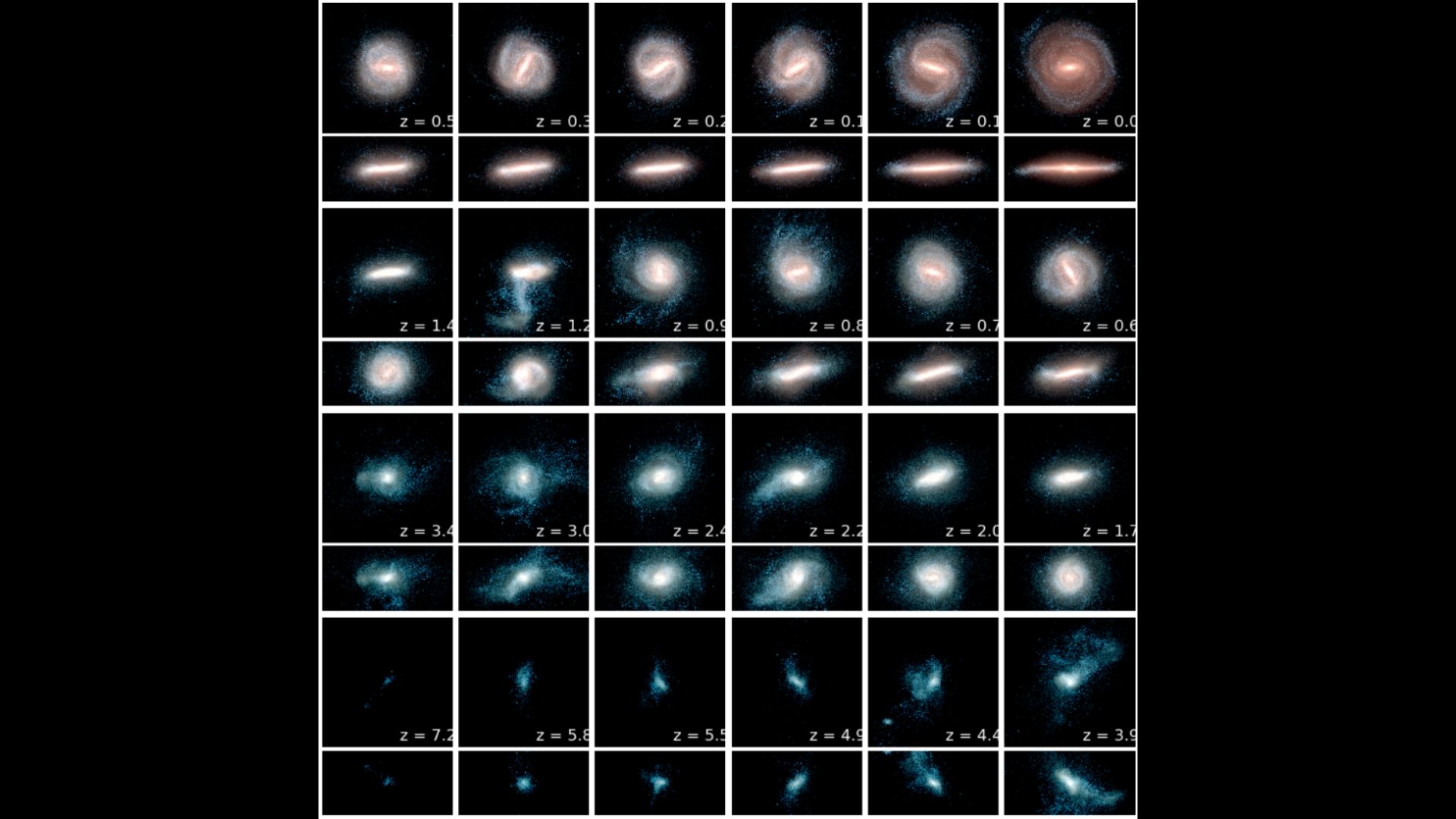
Various boxes showing the progression of a flipping galaxy.

An example of the history of a simulated galaxy that has experienced a head-on merger and a disk flip (seen between redshifts – denoted by z – 1.4 and 0). (Image credit: Auriga Project)

The disk flip leads to a similar situation. In the simulations, the flip is measured with respect to the space around the galaxy, but as the orientation of the disk changes relative to the halo, the halo doesn't immediately reorient with it and takes its time to synchronize its rotation with the disk. Hence, this misalignment results in the halo having less coherent rotation relative to the new orientation of the disk.

If the disk flip occurred during the solar system's lifetime, then it could have impacted our own orbit around the galactic center.

"A disk flip means that most of the Milky Way's stars once moved on very different trajectories than they do today, possibly even our sun, meaning our 'stable' spot in the galaxy might not have been so stable for the solar system's whole lifetime," said Batrakov.

Much of what we understand about other galaxies comes from our knowledge of the Milky Way and its story.

"Finding that its disk flipped adds a new chapter to that story, one we must account for when placing the Milky Way in a broader context of other galaxies," said Batrakov, who recognizes just how incredible it is that we can infer this story through careful observations billions of years after the fact.

"What excites me most is that this complex history can be reconstructed just from present-day observations," he said.

Batrakov presented his work at the Royal Astronomical Society's National Astronomy Meeting, being held at the University of Birmingham between July 20 and July 24.
Galaxy cluster’s magnetic field reconstructed for 1st time with record-breaking astronomy map

For the first time, astronomers have reconstructed the magnetic field of an entire cluster of galaxies, from its central nucleus to its outer limits.

The record-breaking achievement is the product of the deepest-ever observations of the galaxy cluster Abell 2255, located around a billion light-years away — and those observations are thanks to the European radio telescope LOFAR (Low Frequency Array).

Abell 2255 has long been known for its complexity in radio waves. Its vast, diffuse radio emissions are created by particles called electrons racing at near-light, or relativistic, speeds and interacting with magnetic fields of galaxies in the cluster. Thus, using Abell 2255 as a cosmic laboratory to study the universe in radio waves could lead scientists to a better understanding of how magnetic fields come about and evolve. These observations could also help paint a picture of the dynamics of hot gas in galaxy clusters. This could reveal how the largest structures in the universe are constructed.

As part of the LOFAR Galaxy Cluster Ultra-Deep Field project, this team used 224 hours of radio image collection to discover that the distribution of large-scale magnetic fields throughout Abell 2255 (which itself stretches out for several million light-years) are not randomly distributed. Instead, these magnetic fields seem to be organized by the motion of gas that occurred during the formation of this galactic cluster.

"Obtaining very sensitive images of galaxy clusters at radio wavelengths is crucial to understanding how electrons are accelerated to relativistic speeds and magnetic fields are amplified on large cosmic scales," team leader Andrea Botteon, of the Italian National Institute for Astrophysics (INAF), said in a statement. "The complexity of these studies is due to the elusiveness of the radio signal from electrons moving in very weak magnetic fields. We believe that the mechanism that 'turns on' these gigantic radio emissions is linked to the formation process of galaxy clusters."

Botteon added that for this research he and his colleagues combined the deepest radio observations ever made with an innovative data analysis technique that allowed them to reconstruct the shape of a galaxy cluster's magnetic field for the first time.

"The coherence of the magnetic field lines observed in some regions of the cluster suggests that the morphology of the field is intimately linked to the dynamics of the gas in which it resides, where it can be 'stretched' or 'compressed' by the motions associated with the formation of the cluster itself," Botteon said.

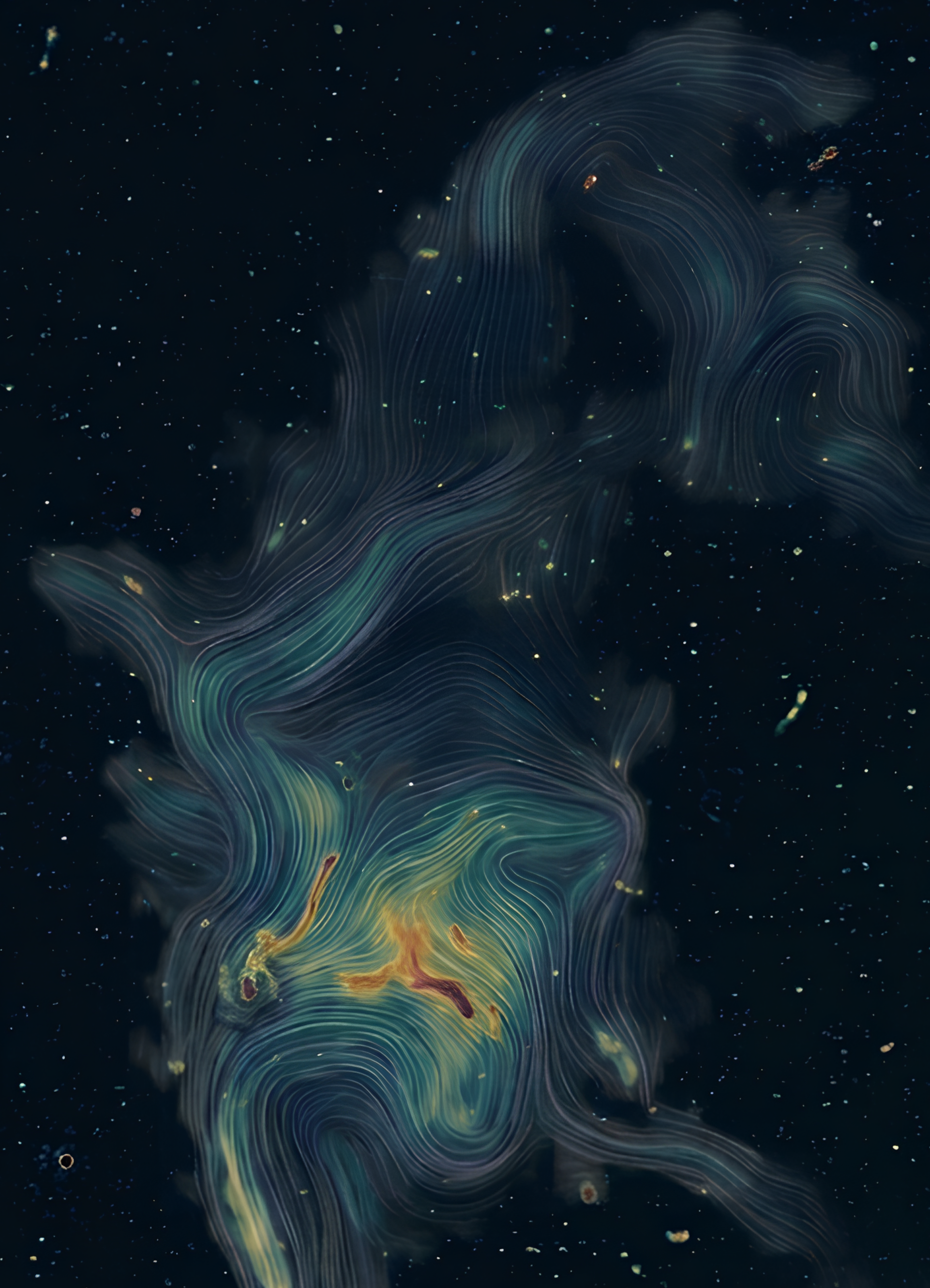
Blue and yellow swirls against a section of space.

The invisible texture of the magnetic field in the central region of the galaxy cluster Abell 2255. (Image credit: A. Botteon et al. (INAF), A&A 2026)

This analysis revealed that, in some regions, the magnetic fields follow very specific directions, stretching radially along extended radio emissions. In contrast to this, in regions dominated by shock waves, magnetic fields are orientated at tangents. This suggests magnetic fields in Abell 2255 are carved out by the same dynamics that allow clusters to accrete gas and grow.

This serves as the first observational evidence that the same mechanisms that allow galaxies to grow and cluster, creating the largest structures in the universe, also shape their magnetic fields.

The team's research has been accepted for publication in the journal Astronomy & Astrophysics and is available as a pre-peer-reviewed paper on the repository site arXiv.

Infant stars celebrate their independence with cosmic fireworks| Space photo of the day for July 3, 2026

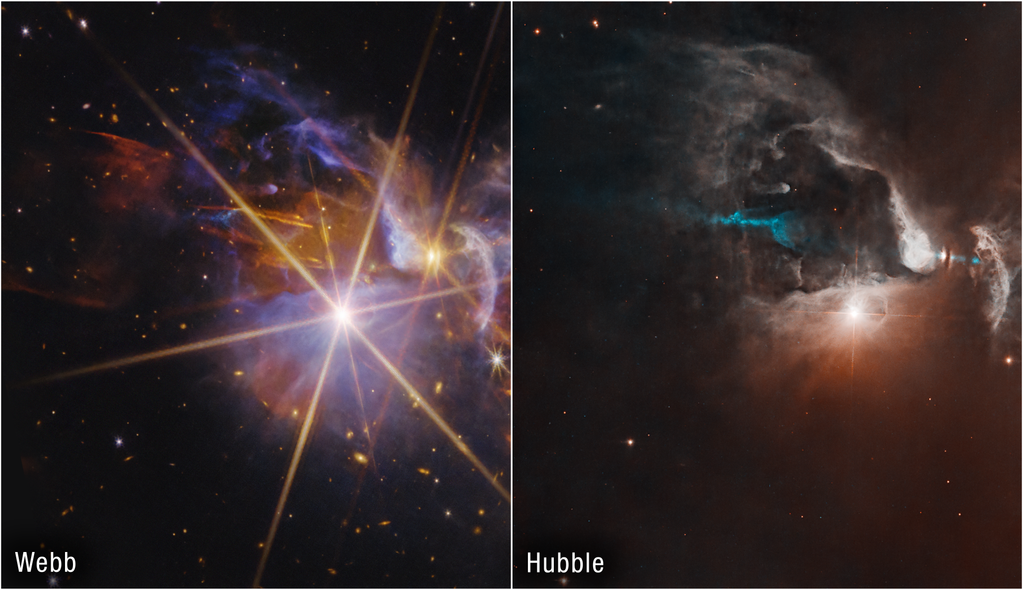
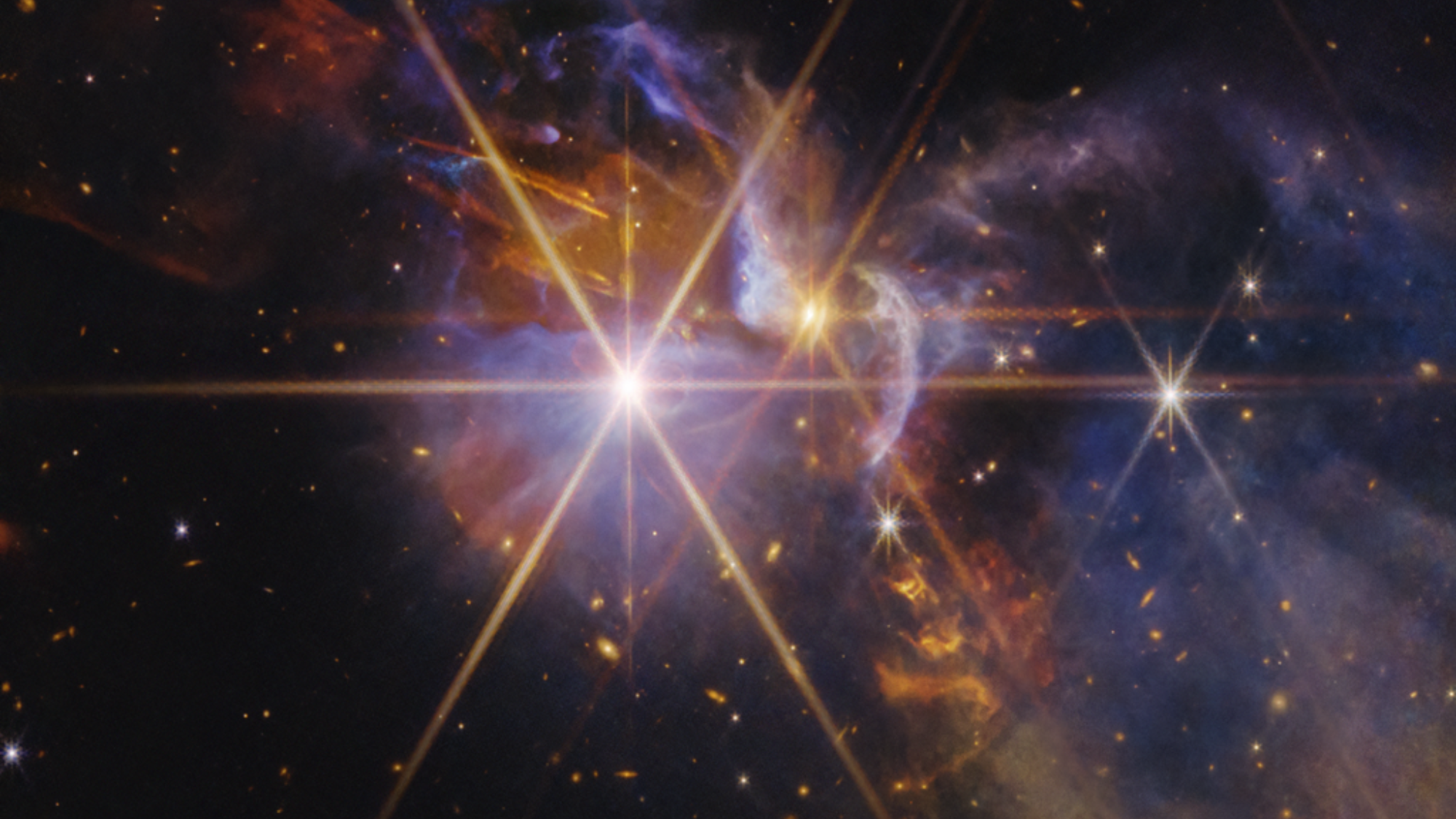
The protostars of the star system FS Tau as seen by the JWST (Image credit: NASA, ESA, CSA, STScI; Image Processing: Alyssa Pagan (STScI))

Infant stars or "protostars" celebrate their independence with cosmic fireworks in a stunning new image from the James Webb Space Telescope (JWST).

NASA released this image to celebrate the 250th anniversary of the birth of the U.S. It is a fitting tribute as the protostars break away from the molecular cloud in which they formed to become fully fledged stars in their own right.

Protostars are born when patches in vast molecular clouds cool and form clumps, collapsing under their gravity. Protostars continue to gather material from these prenatal clouds until they have enough mass to trigger the nuclear fusion of hydrogen into helium in their cores, the process that defines what a main-sequence star is.

What is it?

The protostars sit in a region known as FS Tau, located around 450 light-years away, which has become a popular target for astronomers aiming to study the evolution of low-mass stars.

Why is it incredible?

Though previously well studied, it has taken the incredible infrared observing power of the JWST to peer through the thick clouds of star-forming gas and dust in FS Tau and visualize the protostars of this region in great detail.

One of the aims of this research is to investigate the impact that radiation and outflows of material from low-mass stars have on their environment. The outflows occur as protostars gather matter from their surroundings, occasionally blasting out some of this matter.

The JWST image of FS Tau reveals gaps between the outflows that support the theory that protostars gather or "accrete" matter in discrete episodes, between which they lie dormant.

A comparison between the observations of FS Tau by NASA’s Hubble and JWST. (Image credit: NASA, ESA, CSA, STScI; Image Processing: Alyssa Pagan (STScI))

The effect of protostar outflows on their environment can be seen in the JWST image via the prominent blue ridges. These represent gas that has been shunted by outflows, creating dense regions of matter that reflect light from proximate protostars.

The result is cosmic fireworks that put even the most impressive July 4 celebrations to shame. But at least we get hot dogs.

Stunning new NASA space telescope images reveal the universe in red, white and blue for America 250

NASA's Chandra X-ray Observatory has released four stunning images of cosmic wonders, depicted in red, white and blue to coincide with the United States' 250th anniversary on July 4.

The four images reveal superheated gas in a distant galaxy cluster, the swirling spiral galaxy known as Messier 94, a glowing nebula found in our own Milky Way galaxy, and the Cassiopeia A supernova remnant, respectively.

Along with the colorful cosmic images, the Chandra team produced sonifications in which the data collected by the powerful X-ray telescope was translated into sound. In this case, the sonifications turn these images into celestial music, mapping X-ray data into different audio frequencies and musical instrument sounds.

Galaxy cluster ZwCl 0024+1652

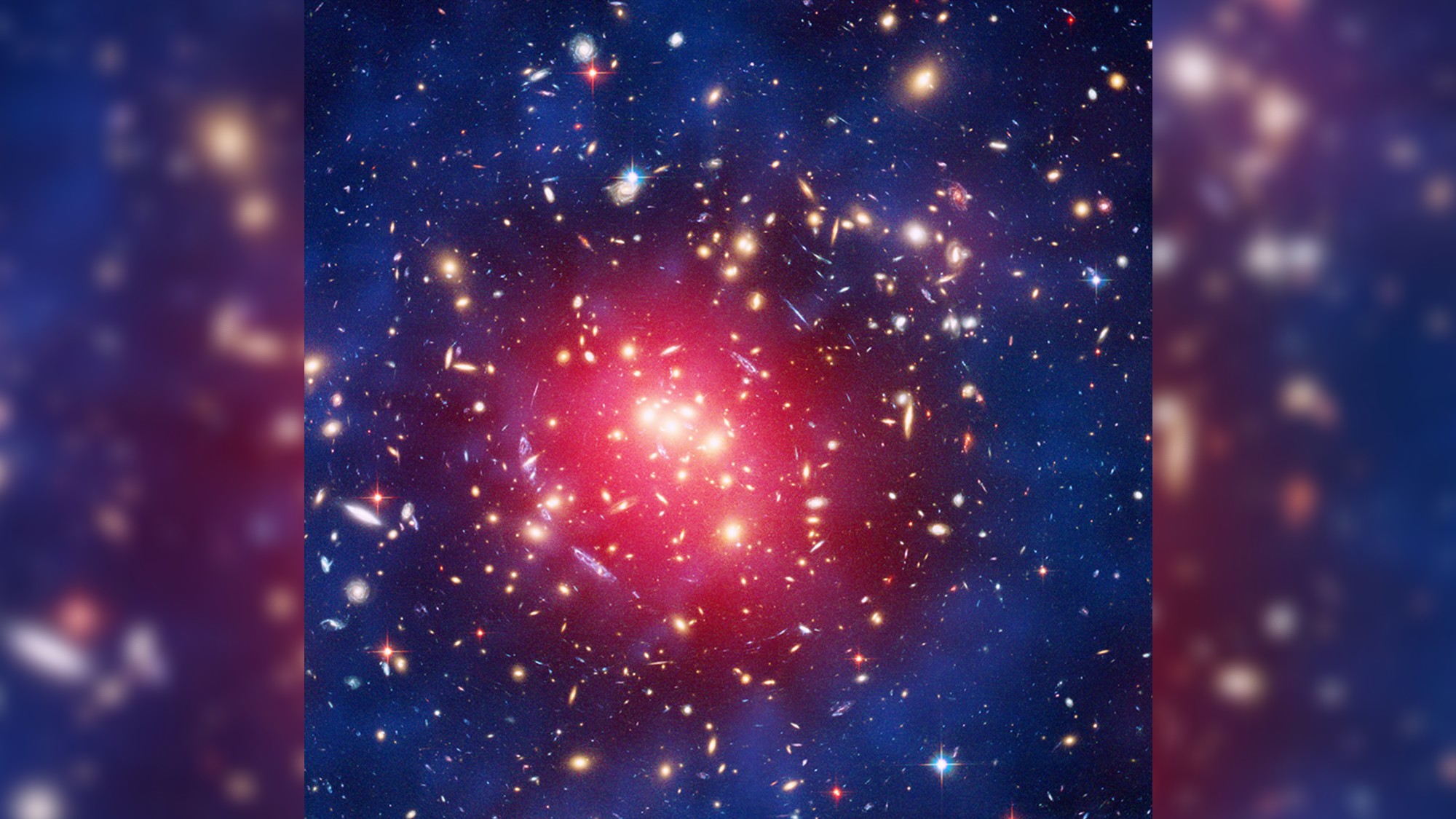
In this image, the galaxy cluster ZwCl 0024+1652 comes alive in vibrant blues and reds. The red in the image is produced from X-ray data collected by Chandra, revealing vast amounts of superheated gas surrounding these galaxies, found some 4 billion light-years from Earth in the Pisces constellation.

This image combines X-ray data from Chandra along with optical data from the Hubble Space Telescope, depicted here in blue. The Hubble data reveals the presence of dark matter, according to a statement from NASA.

Because dark matter does not interact with light, astronomers can't image it directly; its presence can be detected through the gravitational influence it has on surrounding matter that does interact with light.

An image of galaxy cluster ZwCl 0024+1652 that combines X-ray data from Chandra along with optical data from the Hubble Space Telescope. (Image credit: NASA/CXC/SAO; Optical and Dark Matter: NASA/ESA/M.J. Jee; Image Processing: NASA/CXC/SAO/L. Frattare)

Messier 94

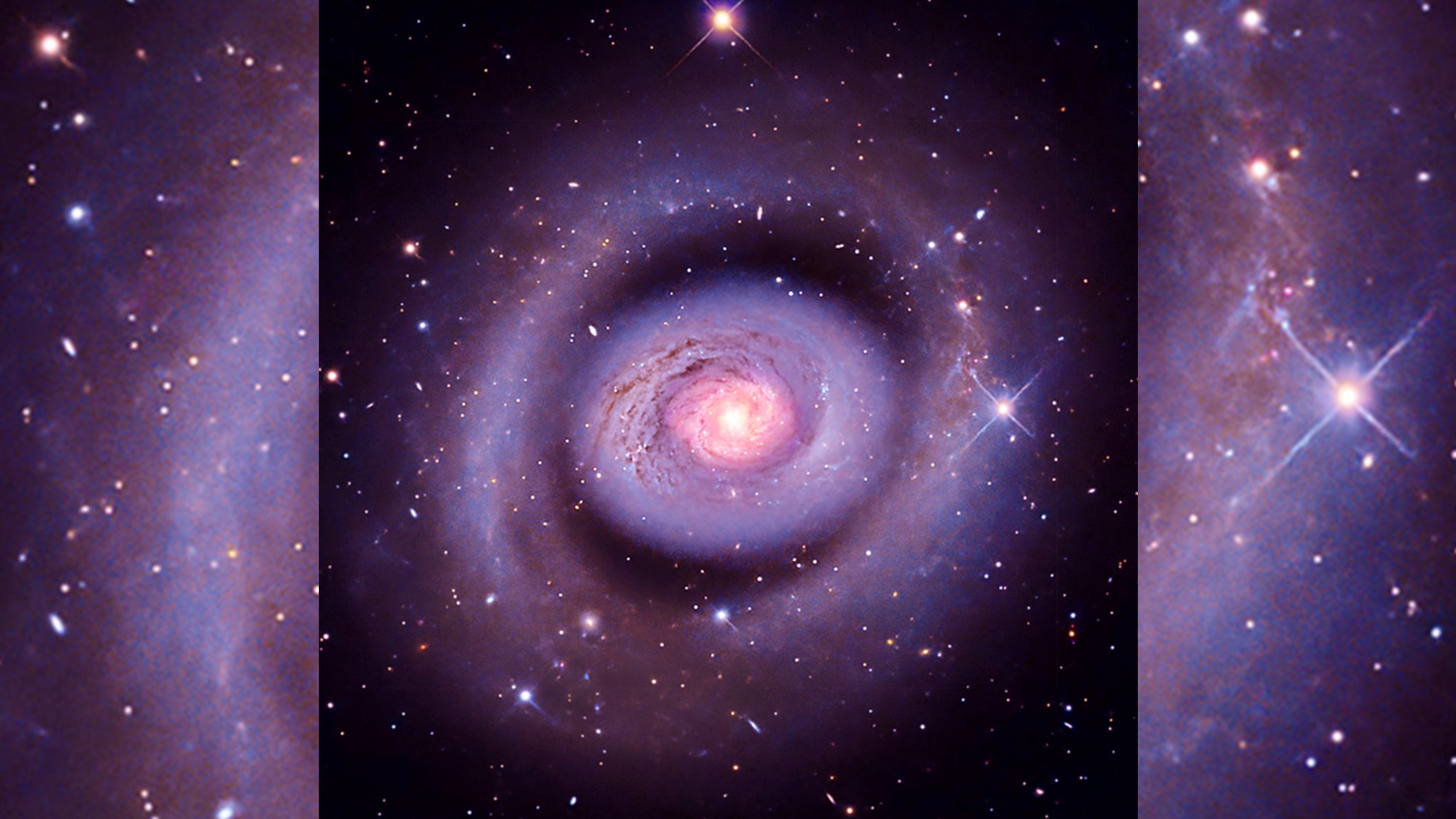
Chandra also peered deep into the 'eye' of the spiral galaxy Messier 94 (M94, or NGC 4736), sometimes colloquially referred to as the Cat's Eye Galaxy. This galaxy is found some 16 million light-years away in the constellation Canes Venatici, the "Hunting Dogs."

In this swirling image, X-ray data collected in space by Chandra was combined with visible light photography taken by telescopes here on Earth. The images show the distinctive inner region of Messier 94, known as a starburst ring, in which new stars are being born.

M94 is also notable for its curious lack of dark matter, according to NASA. "Astronomers do not know why it lacks the normal amount of dark matter, but the galaxy has been the subject of extensive study as a result," the agency wrote in a statement.

An image of galaxy NGC 4736, also known as Messier 94, produced through a combination of visible light telescope imagery and data collected by NASA's Chandra X-ray observatory. (Image credit: X-ray: NASA/CXC/SAO; Optical:Brian Brennan and Remi Lacasse; Image Processing: NASA/CXC/SAO/L. Frattare and K. Arcand)

Nebula NGC 3603

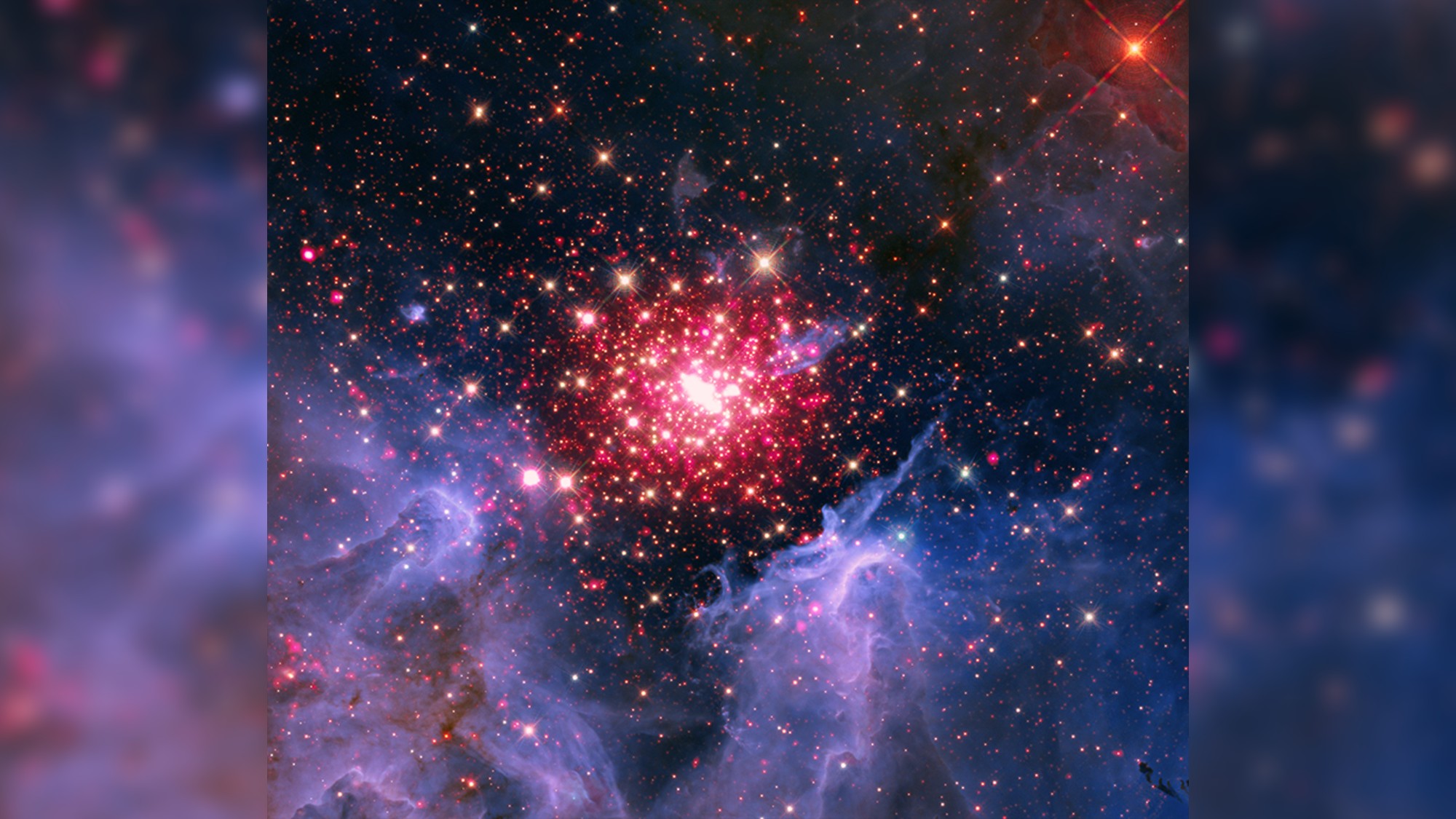
This image combines X-ray data from Chandra with optical, infrared, and ultraviolet light from NASA's Hubble Space Telescope to reveal the twinkling cluster of gases and thousands of stars known as NGC 3603.

This nebula, found in our own Milky Way galaxy, is a vast region of gas and dust surrounding a dense concentration of massive stars. NGC 3603 is located 20,000 light-years away from our solar system in the Carina constellation, a Southern Hemisphere constellation named after the Latin word for a ship's keel.

NGC 3603 contains some of the most massive stars in the known universe, according to NASA. "These huge stars live fast and die young, burning through their hydrogen fuel quickly and ultimately ending their lives in supernova explosions," the agency pointed out in a prior statement about the nebula.

An image of the nebula known as NGC 3603, combining X-ray data from NASA's Chandra X-ray observatory with optical, infrared, and ultraviolet light from NASA's Hubble Space Telescope. (Image credit: NASA/CXC/SAO; Optical and Dark Matter: NASA/ESA/M.J. Jee; Image Processing: NASA/CXC/SAO/L. Frattare)

Cassiopeia A

When some stars die, they explode in massive events known as supernovas. The light from one of the most well-known examples of a supernova reached Earth in the 17th century, appearing as a bright point of light in the Cassiopeia constellation. But because this exploded star is located some 11,000 light-years away from Earth, it means that the supernova actually occurred over 10,000 years ago, according to NASA.

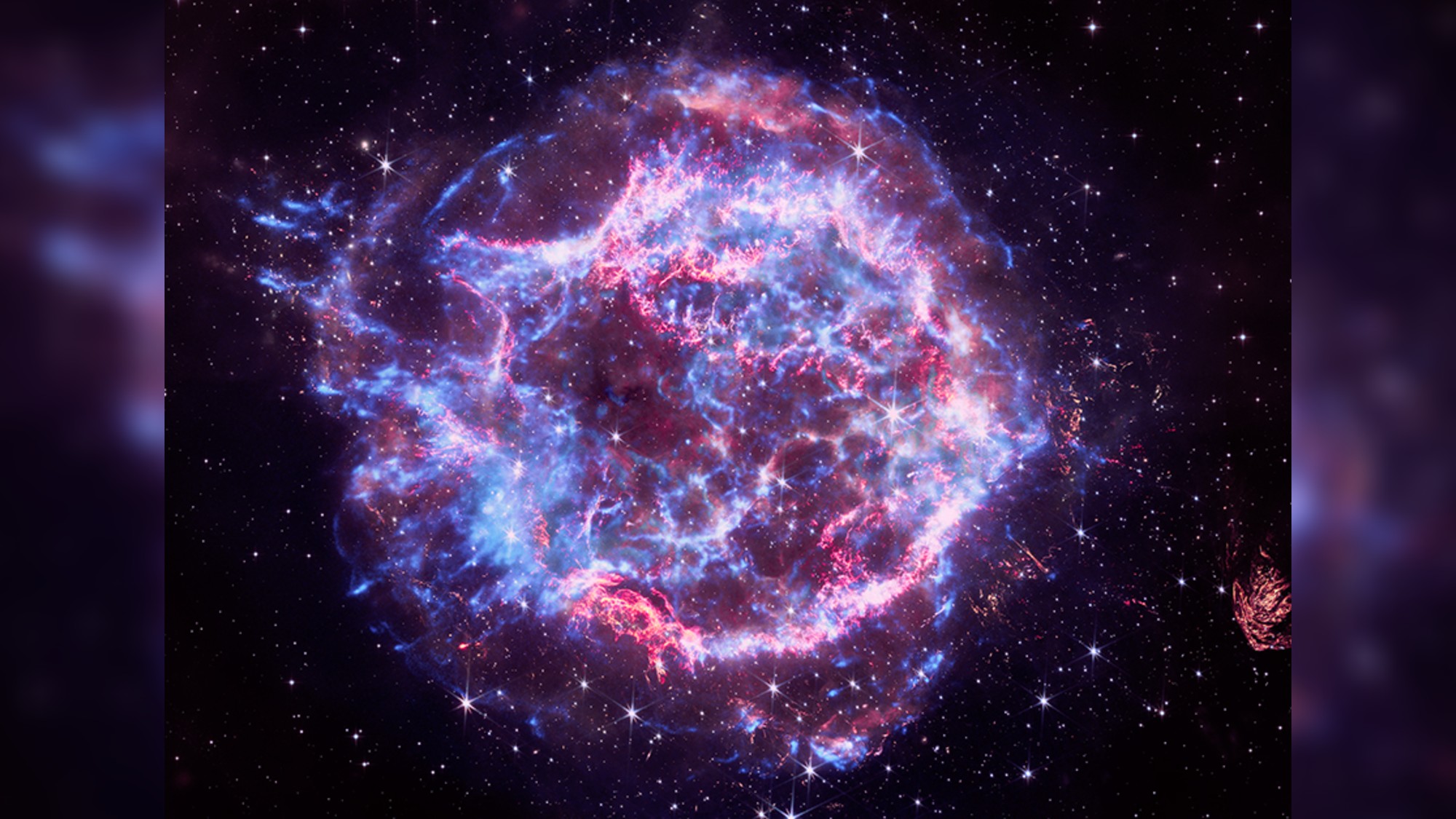
Today, the leftover gases from that supernova are known as Cassiopeia A. Astronomers believe the star that produced the supernova was somewhere in the neighborhood of 15 to 25 times more massive than the sun.

In the image below, Chandra's X-ray data was combined with infrared light gathered by the James Webb Space Telescope to help visualize the luminous shell of gas in reds, whites and blues.

A new image of the supernova remnant Cassiopeia A produced by combining infrared light gathered by the James Webb Space Telescope with X-ray data produced by NASA's Chandra X-ray observatory. (Image credit: NASA/CXC/SAO; IR: NASA/ESA/CSA/STScI; Image Processing: NASA/CXC/SAO/L. Frattare and K. Arcand)

The James Webb Space Telescope peered into one of the universe’s oldest galaxy clusters, and scientists can’t explain what they saw

Using the James Webb Space Telescope, astronomers have spotted a massive and densely packed galaxy cluster at "cosmic noon." The fact that this cluster is so highly evolved could change theories of cosmic evolution, as it seems to exist before such structures were thought to be possible.

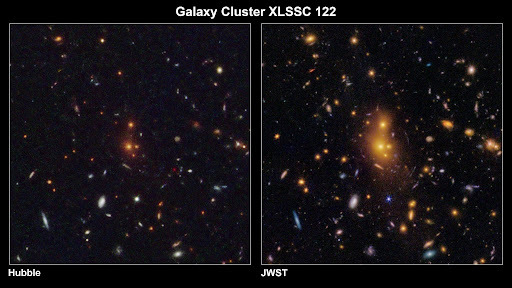
Designated XLSSC 122 and first seen in 2014, the cluster immediately stood out to the team in James Webb Space Telescope (JWST) data because, being so large and concentrated, it resembled the galactic clusters found much closer to our own galaxy. However, this cluster is seen as it was around 10.4 billion years, just around 3.4 billion years after the Big Bang, a time when such structures were theorized to have only just begun to assemble.

Even more excitingly, XLSSC 122 is acting as a gravitational lens and is aligned with even more distant galaxies, amplifying their light and making them easier to study.

"When we got those first images back from JWST, we said, 'wow, look at this, there's strong lensing coming from this cluster!' XLSSC 122 has now set the record for the most distant galaxy cluster displaying strong lensing, which is a valuable tool for astronomers," team leader Kyle Finner of the California Institute of Technology said in a statement.

What is gravitational lensing and why is it so useful?

Gravitational lensing was first predicted by Albert Einstein in his 1915 theory of gravity, known as general relativity. General relativity says that objects with mass cause the fabric of space and time to warp. Think of this as being akin to placing a bowling ball on a stretched rubber sheet. Gravity arises from this curvature.

The greater the mass of the object, the more extreme the curvature and thus the greater the gravitational influence of that object.

But there is another consequence. Light normally travels in a straight line, but spacetime is the track that it follows. If spacetime is curved, then the path of light is also curved. The closer that light travels to an object of great mass, the more its path swerves.

That means when an object of great mass, in this case XLSSC 122, comes between Earth and a more distant light source, light from that background source arrives at our telescopes at different times based on the path it took around the intermediate object. This amplifies light from the background source and has been used by the JWST team to great effect in the study of ancient galaxies.

When the Hubble Space Telescope previously studied XLSSC 122, it wasn't able to capture images that showed it was a strong gravitational lens; it took the tremendous observing power of the JWST to determine this.

A two-panel image shows a distant galaxy cluster as observed by NASA's Hubble Space Telescope and JWST.

Two-panel image shows a distant galaxy cluster as it has been observed by NASA's Hubble Space Telescope and JWST. (Image credit: NASA, ESA, CSA; Kyle Finner (Caltech/IPAC) Image processing: Robert Hurt (Caltech/IPAC-SELab) )

The strong lensing of this early galaxy cluster could also help unravel the mystery of dark matter. Effectively invisible because it doesn't interact with light, dark matter does interact with gravity. Plus, because it outweighs the "ordinary matter" that makes up stars, planets, moons, and gas clouds in galaxies by a ratio of five to one, dark matter makes the largest contribution to the lensing effect of galaxies and galactic clusters like XLSSC 122.

This means that gravitational lensing can be used to study the distribution of otherwise invisible dark matter in galaxy clusters, which is a vital element of galactic evolution, as it is thought that galaxies and galaxy clusters gather along vast filaments of dark matter. The hunt is now on for more lensing clusters like XLSSC 122, and if they are found so early in the universe's history, a major revision of cosmology may be on the cards.

"Strong lensing is a way to measure the dark matter without actually seeing the dark matter. It gives us a sensitive probe of our cosmological models,” said Finner. "It's still early in the JWST era, and if we can start to get data on tens or hundreds of these types of objects at this stage in the universe, then we can really start putting our cosmological models to the test."

The team's results were presented on June 17, 2026, at the 248th meeting of the American Astronomical Society. The research is available as a paper published in The Astrophysical Journal Letters.

Strange glowing ‘bow-and-arrow’ structure may be a giant cosmic shock wave created by a supersonic galaxy collision

A bizarre radio galaxy discovered by a citizen scientist has left astronomers puzzled, revealing a never-before-seen "bow-and-arrow" structure that could offer rare insight into how galaxies are reshaped by colossal shock waves as they plunge through galaxy clusters.

Named RAD-BAARG (short for Radio Bow-And-Arrow Radio Galaxy), the object spans nearly 1.8 million light-years across, making it almost 18 times wider than the Milky Way. Its unusual structure was first identified by a citizen scientist participating in the RAD@home Astronomy Collaboratory, which allows volunteers to review telescope data and flag unusual features that might otherwise be missed.

Astronomers say they haven't seen anything like it. "The structure of this source is unlike that of any radio galaxy I have seen in the last 25 years," the University of Mumbai's Ananda Hota said in a statement published by the Royal Astronomical Society. The statement adds that astronomers believe the structure may be "one of the clearest known radio signatures of a giant bow shock generated by a galaxy falling supersonically into a cluster environment."

Following its discovery, researchers studied the object using observations from the LOFAR (Low Frequency Array) Two-meter Sky Survey (LoTSS), one of the deepest low-frequency radio surveys ever conducted and particularly well suited to detecting faint, diffuse radio emissions.

Unlike typical radio galaxies, which produce two relatively symmetrical jets of charged particles powered by supermassive black holes, RAD-BAARG has a dramatically lopsided appearance. One jet feeds a wedge-shaped region that curves backward into an enormous arc, while the other twists into an S-shaped structure before fading into a long tail. Together, the features resemble a bow with an arrow drawn across it, according to the statement.

The radio-emitting plasma from RAD-BAARG appears to illuminate an otherwise extremely faint, extended feature. At these low radio frequencies, aged and diffuse electron populations become more visible, allowing astronomers to trace structures that are otherwise invisible at optical or higher radio frequencies, making surveys like LoTSS especially powerful for identifying and confirming such diffuse emission.

Researchers believe the extreme asymmetry may be linked to the galaxy's motion through a dense galaxy cluster. As it falls toward the cluster's center, it likely moves at supersonic speeds through the hot, diffuse gas that fills the space between galaxies. This motion is thought to generate a bow shock that compresses magnetic fields and charged particles, reshaping the radio-emitting plasma into large-scale structures.

an aerial view of a round plot of land circled by a canal. on the round plot of land are arrays of square-shaped pieces of glass

The LOFAR array in the Netherlands is the world's largest and most sensitive radio telescope. (Image credit: LOFAR/ASTRON/CC BY 3.0)

The team also found that RAD-BAARG resides in a complex "multi-halo" environment containing several overlapping reservoirs of hot gas, making it an especially valuable system for studying how galaxy clusters influence radio galaxies.

"LOFAR allows us to see this faint, low-surface-brightness emission in remarkable detail," Pratik Dabhade, co-lead author of the study from the National Center for Nuclear Research in Poland, said in the statement.

"With LoTSS DR3 and the future Square Kilometre Array Observatory (SKAO), we may find many more systems where radio galaxies reveal otherwise invisible interactions between jets, galaxies, and their environments."

If confirmed, RAD-BAARG could become a key example of how extreme cluster environments reshape radio galaxies, providing new insight into how supermassive black hole jets interact with their surrounding environments.

The findings were published June 22 in the journal Monthly Notices of the Royal Astronomical Society: Letters.

This is the largest and most detailed image of our Milky Way — with over 60 million stars and 50 exoplanet systems

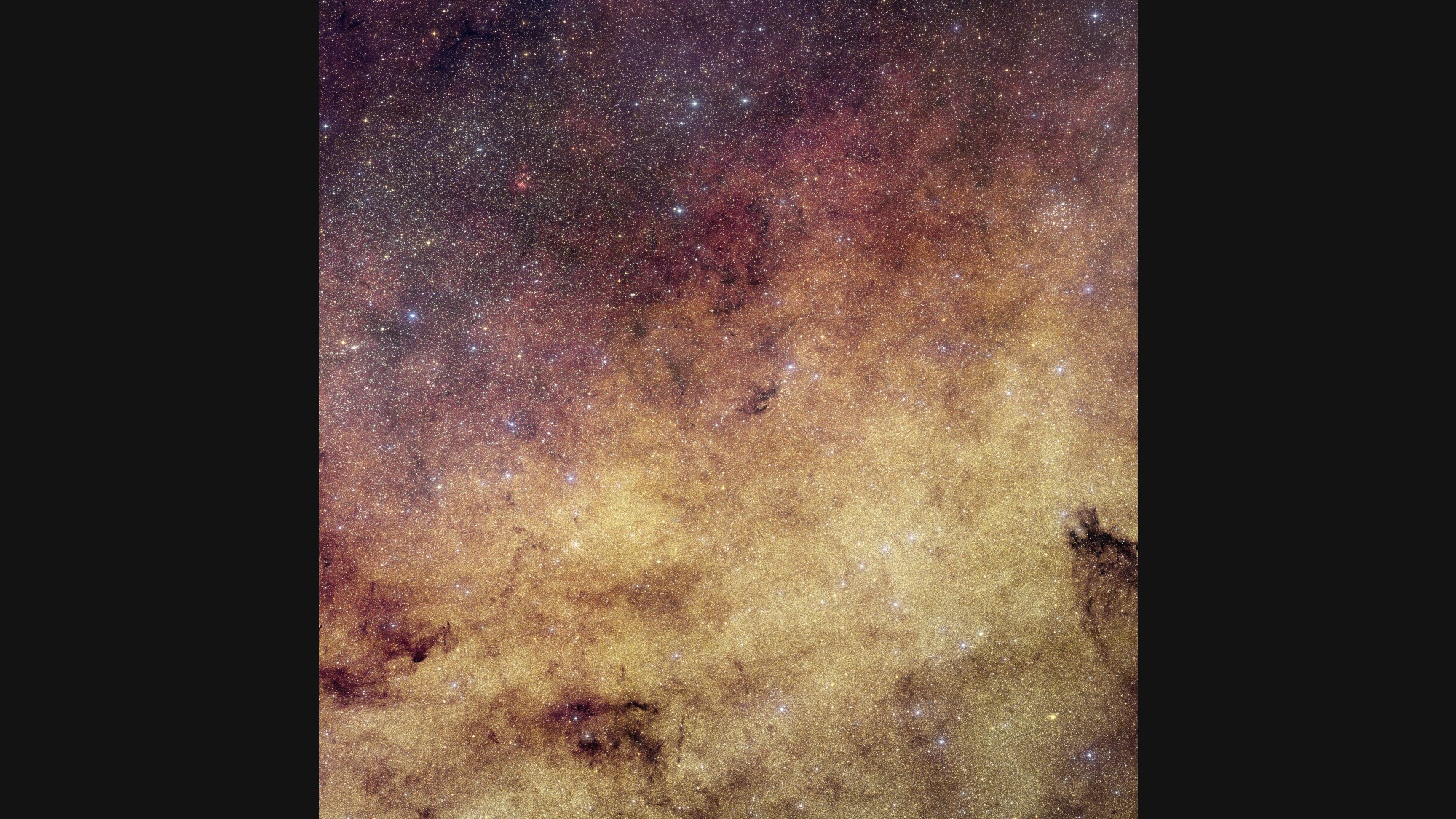
In 2025, the European Space Agency dark universe detective spacecraft Euclid turned its attention to the heart of the Milky Way for just 26 hours. In just over one day, Euclid was able to create the largest and most detailed photo of this region of our galaxy ever made.

The image, packed with 60 million stars, could help scientists hunt for extrasolar planets, exoplanets, in this region known as the galactic bulge.

Euclid is designed to study dark energy, the mysterious force that drives the accelerating expansion of the universe, by studying distant galaxies. That means the space telescope is powerful enough to distinguish individual stars in the central bulge of the Milky Way. Other telescopes fail to do this because they are too blinded by the densely packed stars in this region.

a dense field of stars

The largest high-resolution photo ever made of our Milky Way galaxy's center in visible light. It was taken on March 23, 2025 by the European Space Agency's Euclid space telescope. (Image credit: ESA/Euclid/Euclid Consortium/NASA, CFHT, image processing by J.-C. Cuillandre and E. Bertin (CEA Paris-Saclay))

Euclid was requested to monitor the central bulge of the Milky Way to assist astronomers in the hunt for exoplanets because this is the perfect region for so-called "microlensing" events to occur.

"To catch microlensing, you need to observe parts of the sky that are crowded with stars, such as close to the center of our galaxy," team leader Jean-Philippe Beaulieu of the Institut d'Astrophysique de Paris in France said in a statement.

Microlensing is a weak form of gravitational lensing that occurs when objects with mass cause the very fabric of space to warp. When light from a background source passes through this warping of space, its path is curved. This can be used to study the background source; for example, scientists have used it to great effect with the James Webb Space Telescope (JWST) to study some of the most distant and early galaxies. However, the curvature of light from background sources can also be used to detect faint objects like planets.

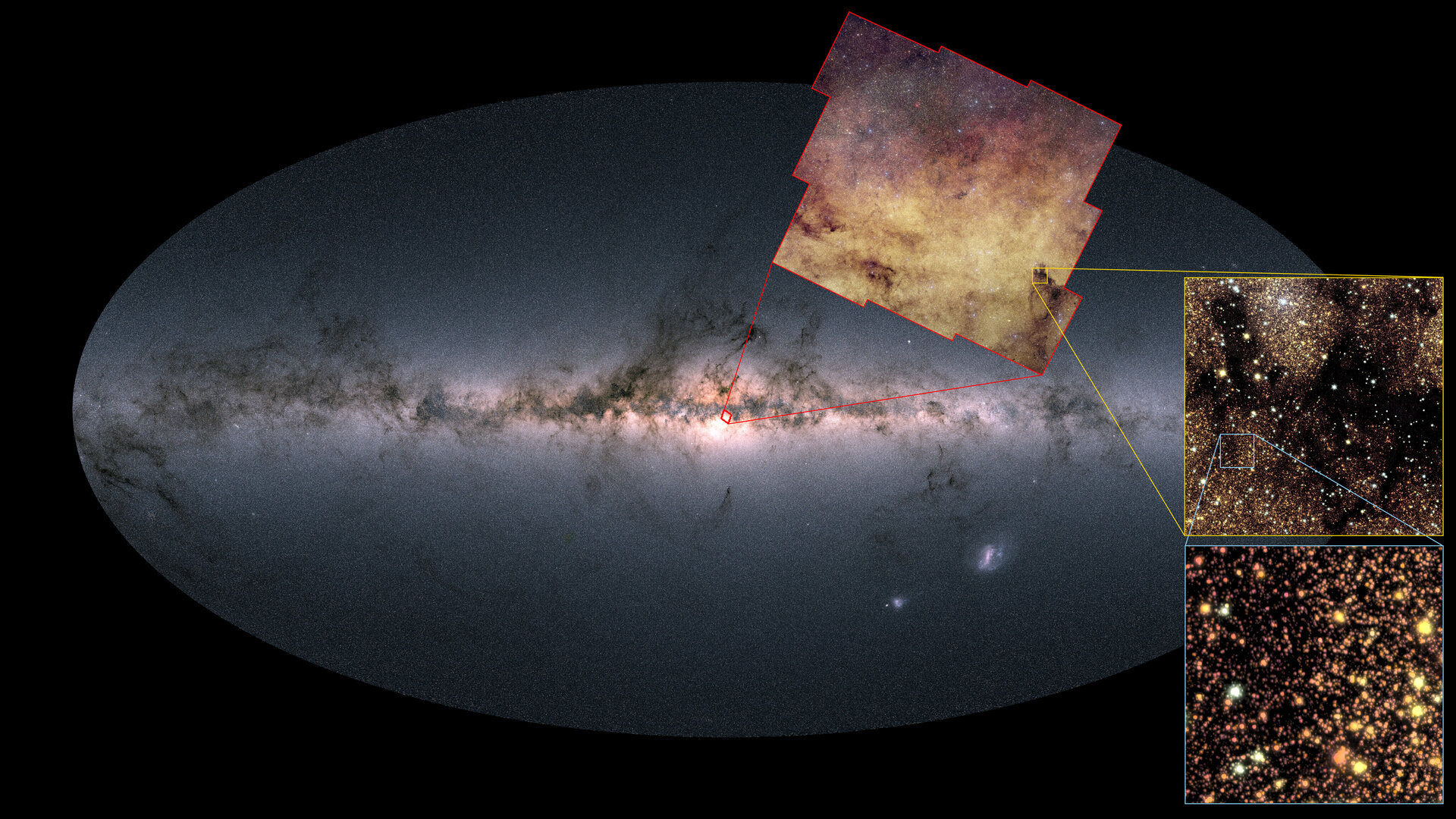
The location of Euclid’s new image of the galactic bulge is visible on Gaia’s map of the entire sky.

The location of Euclid’s new image of the galactic bulge is visible on Gaia’s map of the entire sky. (Image credit: ESA/Euclid/Euclid Consortium/NASA, CFHT, ESA/Gaia/DPAC,image processing by J.-C. Cuillandre and E. Bertin (CEA Paris-Saclay))

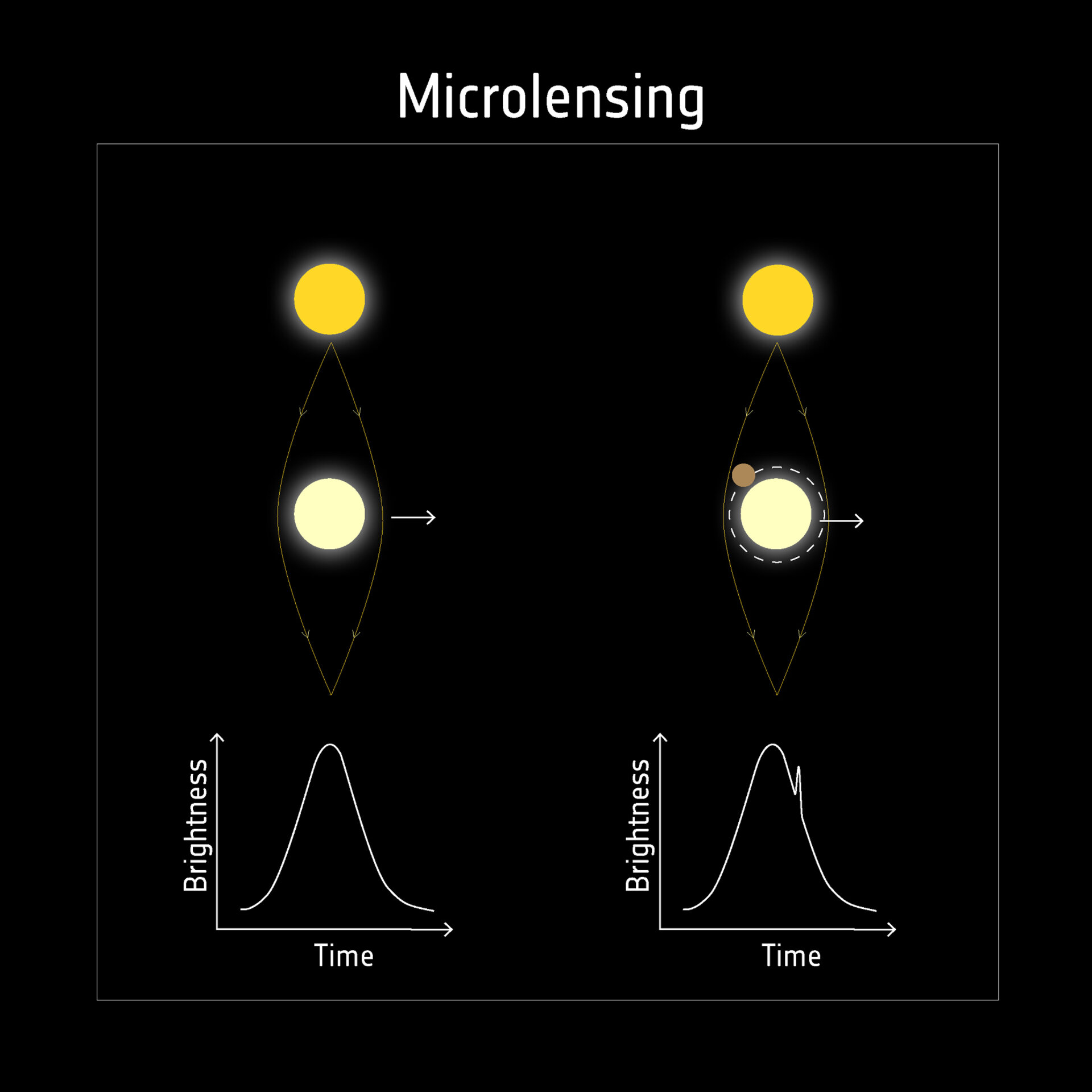
Spotting planets using microlensing requires one star to pass in front of another and act as a gravitational lens. The presence of a planet causes a tiny perturbation in the lensing of light from the background star. It's a small effect, but one that has been used very effectively in the detection of exoplanets.

"During the last twenty years, almost 300 exoplanets have been discovered using this technique, all with ground-based telescopes and all towards the center of our galaxy," Beaulieu said. "This image from Euclid includes 51 known planetary systems – and it will assist in studying many more that will be found."

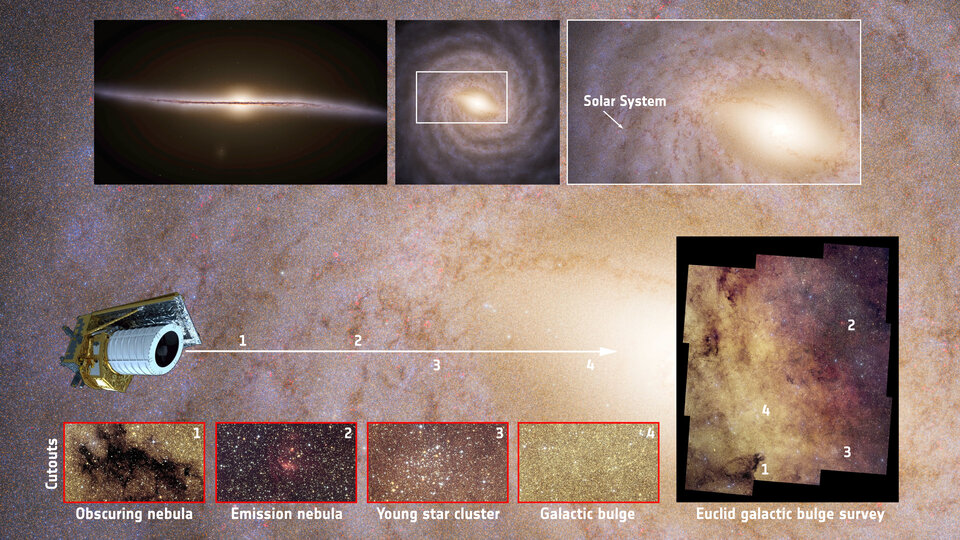
This infographic places Euclid’s galactic bulge survey in the broader context of the Milky Way’s structure, using data from ESA’s Gaia mission.

This infographic places Euclid’s galactic bulge survey in the broader context of the Milky Way’s structure, using data from ESA’s Gaia mission. (Image credit: Euclid images: ESA/Euclid/Euclid Consortium/NASA, CFHT, image processing by J.-C. Cuillandre and E. Bertin (CEA Paris-Saclay); Milky Way artist impressions: ESA/Gaia/DPAC, Stefan Payne-Wardenaar))

Despite Euclid's study of the central bulge pointing the way forward in observing new microlensing events, there are no such events in the data from the ESA spacecraft. That is because detecting such events takes around 20 days.

Instead, it will be up to telescopes like the forthcoming Nancy Grace Roman Space Telescope to observe this region for longer periods and compare with this day's worth of Euclid data to find microlensing events.

"In 24 hours, Euclid has already captured the stars involved in all the future microlensing events that the Roman space telescope will detect, but before the stars and planets involved have aligned," team member Natalia Rektsini of the Institut d'Astrophysique de Paris said.

"This means that anyone who detects a microlensing event in the same region, for example, with Roman, will be able from now on to use Euclid data as a time reference in the past and see how the stars looked before they overlapped. Since Euclid can clearly separate individual stars, one can then measure how fast they move over time and use that information to confirm the existence of a planet and determine its mass. This would not be possible with data from one point in time."

A diagram shows how microlensing can be used to detect planets

A diagram shows how microlensing can be used to detect planets (Image credit: ESA)

One reason this is so exciting to exoplanet hunters is that other techniques used to spot these distant worlds tend to excel at detecting hot and massive planets close to their host stars.

Microlensing, however, can be used to detect more diminutive planets much farther from their host stars and with chillier temperatures. That means it could be used to detect ice giants like Uranus and Neptune in wide orbits around central bulge stars.

"This result shows what a relatively small, dedicated team can achieve within a large international mission," says Valeria Pettorino, Euclid Project Scientist at ESA.

"That's why this Euclid data will be a time reference for past and future missions and enable studies of exoplanets and their masses. This data can also be used for other scientific applications, from brown dwarfs and binary stars to stellar motions and dust across our galaxy."