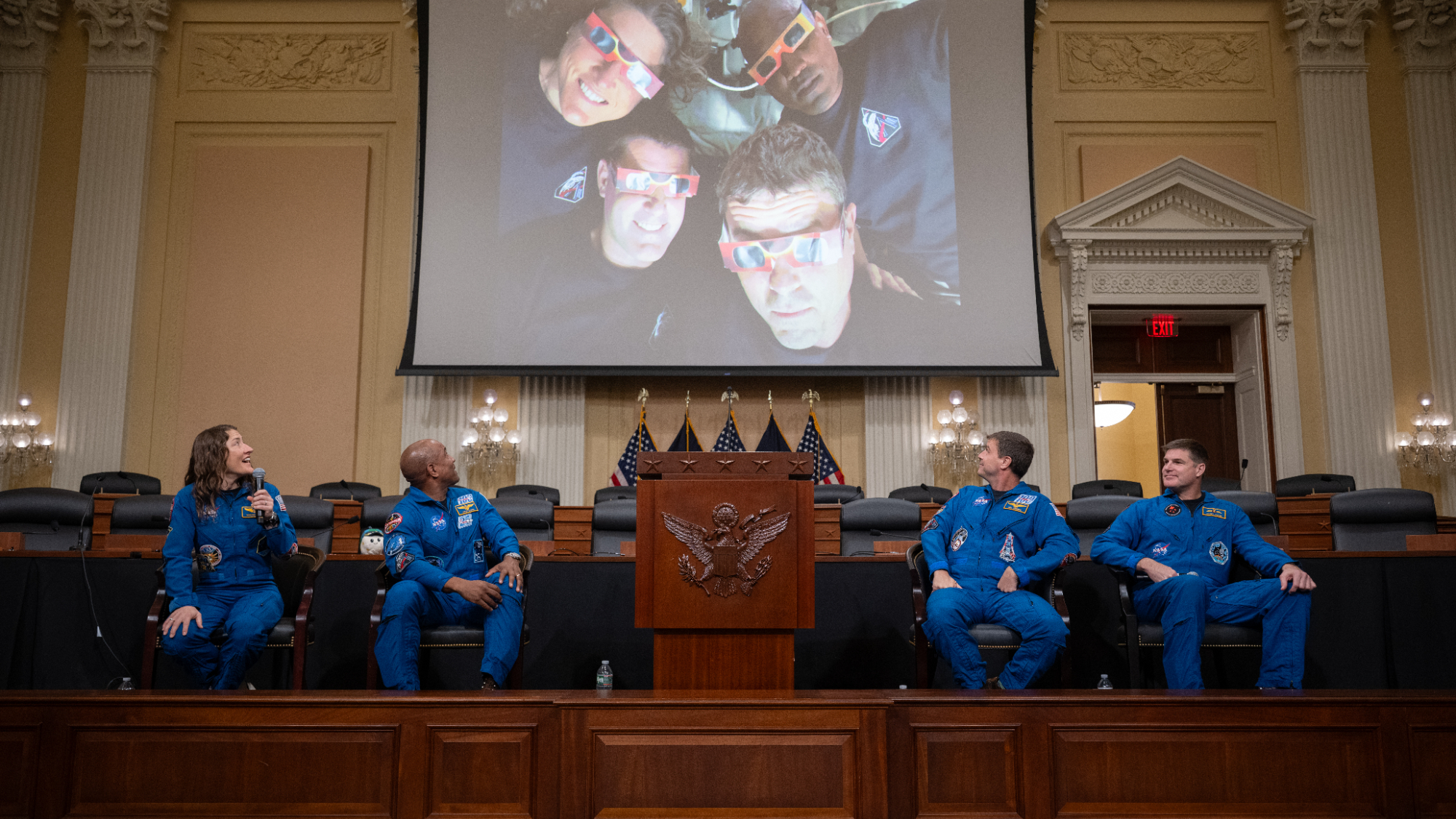
The Artemis 2 astronauts look up at footage from their flight during a visit to Capitol Hill. (Image credit: NASA/Joel Kowsky)
As we reflect on this past July 4 weekend, and America's 250th birthday, we look to NASA's Artemis II astronauts, who recently reflected on their historic mission during a visit to Capitol Hill.
What is it?
Following their return to Earth from a 10-day journey around the moon in April, NASA's Artemis II astronauts headed to Capitol Hill.
This photograph, captured on May 12, shows the crew — from left to right, NASA astronauts Christina Koch (mission specialist), Victor Glover (mission pilot), Reid Wiseman (mission commander) and Canadian Space Agency astronaut Jeremy Hansen (mission specialist) — showing off a photo from their mission to congressional staff at the Cannon House Office Building in Washington, D.C. In the photo, the four astronauts are wearing what look like eclipse glasses in the Orion capsule that they rode to space and back.
The presentation was part of a larger visit by the astronauts, who went to Capitol Hill to speak with U.S. politicians and staff about their mission.
Why is it incredible?
NASA's Artemis II mission had a profound impact on the public. The first crewed mission of NASA's Artemis program, and the first mission to the moon since the Apollo program ended over 50 years ago, Artemis II was a big step forward in human spaceflight.
But its success went well beyond the mission itself. The public really connected with the astronauts, and this mission seemed to ignite a fresh, new excitement about space overall.
In going to Capitol Hill and speaking with policymakers, the astronauts were able to share some of the experiences that the public connected to so deeply. For federal funding and support of science and spaceflight activities to continue, it's important for policymakers to understand what happens in space, and on these missions, and the many benefits that can come from even a single flight.
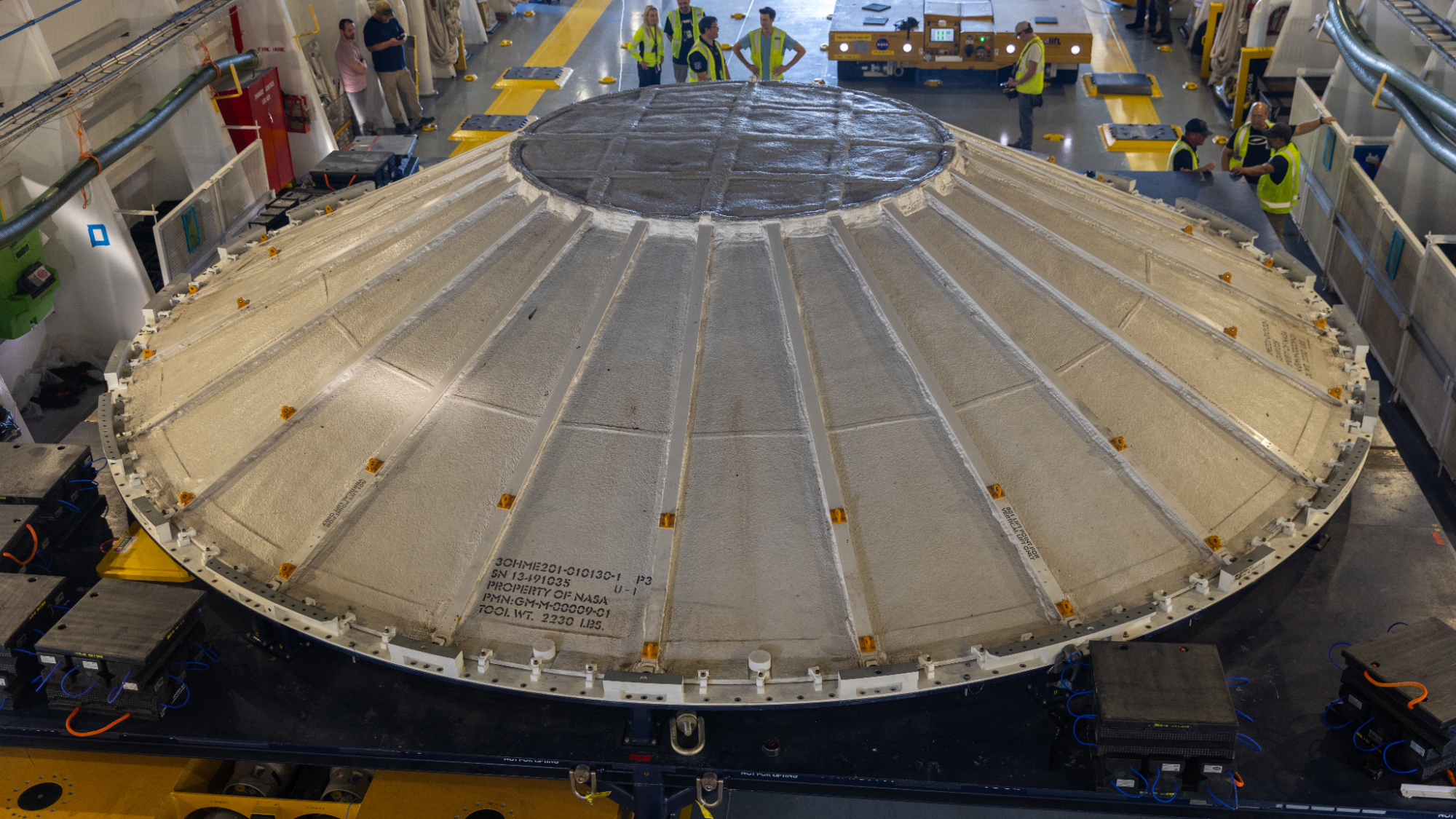
The weather cover for the Artemis 3 SLS core stage arrived at NASA's Kennedy Space Center. (Image credit: NASA/Amber Jean Notvest)
Did a flying saucer just land at NASA? It sure looks like it.
This is actually the weather cover for the core stage of NASA's Space Launch System (SLS) rocket, which is currently gearing up to launch the Artemis 3 mission in mid-2027.
What is it?
Aboard NASA's Pegasus barge, floating out in the Atlantic ocean, sits what looks like a classic, sci-fi movie UFO flying saucer. With some flashing lights, this thing flying around in the sky would cause quite a commotion. But it's actually a critical piece of hardware for NASA's Artemis program returning humans to the moon.
The Pegasus barge is a large cargo ship — it's a whopping 310 feet (94.4 meters) long — designed to carry the massive core stage of NASA's SLS megarocket. As the agency marches forward with its plans for Artemis 3, a crewed flight to low Earth orbit that will serve as a key test ahead of future missions to the moon, the SLS prepares for launch.
Once stacked on the launch pad at NASA's Kennedy Space Center in Florida, this flying saucer will actually serve as a weather cover, protecting the rocket's core stage and its thermal systems from the often turbulent and unpredictable weather on the Space Coast.
Why is it incredible?
It is always fun when science fiction and science fact meet. The design of this weather cover could not be closer to the flying saucer designs that have flown across screens in sci-fi flicks for the 1950s and '60s to today. It's interesting to wonder whether these familiar images of flying saucers somehow inspired this functional design.
But however inspiration struck, this weather cover will serve an incredible purpose. It will shield the rocket's core stage, the tallest rocket stage NASA has ever built, which holds hundreds of thousands of gallons of propellant and supports the weight of the rocket's upper stage, payload, and the Orion crew capsule. The safety of the Artemis astronauts and the success of these missions depend on the rocket launching perfectly, and every single piece, including this weather cover, are part of ensuring that success.
It's unclear when Boeing will be able to send more astronauts to the International Space Station, a new NASA audit warns.
Technical issues with Boeing Starliner's spacecraft, across two uncrewed flights and a two-astronaut test mission known as Crew Flight Test (CFT), come under scrutiny in a new report about NASA's Commercial Crew Program from the agency's Office of the Inspector General (OIG).
"Many of these [Starliner] issues are related to three longstanding technical challenges that have prevented Boeing from obtaining the human-rating certification — helium leaks, propulsion systems failures and parachute anomalies," states the OIG report, which was released today (June 30).
"The helium leaks and propulsion systems failures remain unresolved as of March 2026, and NASA is uncertain as to when this testing will be completed or human-rating certification for the Starliner will be obtained," the report adds.
The NASA OIG performed the audit to evaluate the performance of both companies that NASA contracted to fly astronauts to and from the International Space Station (ISS). The auditor found that NASA will need to purchase more flights from those vendors, SpaceX and Boeing, "to continue to fully crew the ISS through 2030," and offered feedback on how the two companies have been doing so far.
SpaceX has been flying astronauts successfully since 2020 and is readying to send its 13th operational crewed mission (known as Crew-13) to the orbiting complex in September. Boeing, however, has just one astronaut flight under its belt — CFT, which launched in June 2024 and encountered multiple problems, resulting in NASA having to bring the two astronauts back home on a SpaceX Crew Dragon capsule instead of Starliner.
Starliner has therefore not been certified to fly astronauts yet. The company has decided that the capsule's next mission will be uncrewed, and there is not yet a launch date for it.
NASA ultimately reclassified Starliner's first crewed flight as a Type A mishap, the most serious type in human spaceflight, in February 2026. The fact that it took 21 months for the agency to do so is concerning, according to both the OIG and the Aerospace Safety Advisory Panel for NASA.
OIG said "ambiguity" in NASA requirements for a Type A mishap led to this gap, which also induced "delays, increased costs and potential performance and safety issues on future flights," according to the new report.
The authors added that underperformance on CFT can be traced to NASA's overconfidence in the spacecraft design, "unrealistic launch and flight test schedules" made by Boeing and accepted by NASA, and "pressure to adhere to this aggressive schedule." And these issues were compounded by NASA not exercising "data rights," which would have let the agency look at "flight-simulation-training failures" that likely would have helped with crew safety ahead of launch.
"Going forward, NASA's ongoing workforce constraints may further hinder oversight, resolution of technical issues, and flight certification schedules," the OIG report states, alluding to effects that the auditor foresees from budget-related workforce cutbacks at NASA.
The bulk of the report discusses Starliner, but SpaceX also had "a variety of its own technical challenges" in the earlier days of the Dragon program, OIG noted. That said, SpaceX has helped NASA deal with Boeing's delays, while collecting "$17 million in additional costs to accelerate spaceflights originally planned for the Starliner," the OIG noted.
NASA concurred with all of OIG's recommendations to the agency going forward, which are:
Delay payments to Boeing until Starliner's human-rating certification completes;
Create a schedule with Boeing for the next Starliner flights;
Document and resolve all of the CFT issues in "NASA's mishap information system" and update the schedule for Starliner with these issues in mind;
Make private company flight-simulation testing on hardware and software changes accessible to NASA;
Make NASA's mishap-classification requirements more clear;
Prioritize NASA hiring efforts to focus on "critical skillsets" related to commercial crew and to the expected decommissioning of the ISS.
LOS ANGELES — The space shuttle Endeavour is absolutely breathtaking in its 20-story new home at the California Science Center's brand-new Air & Space Center, which is set to open on Nov. 13, the museum announced on Wednesday (June 24).
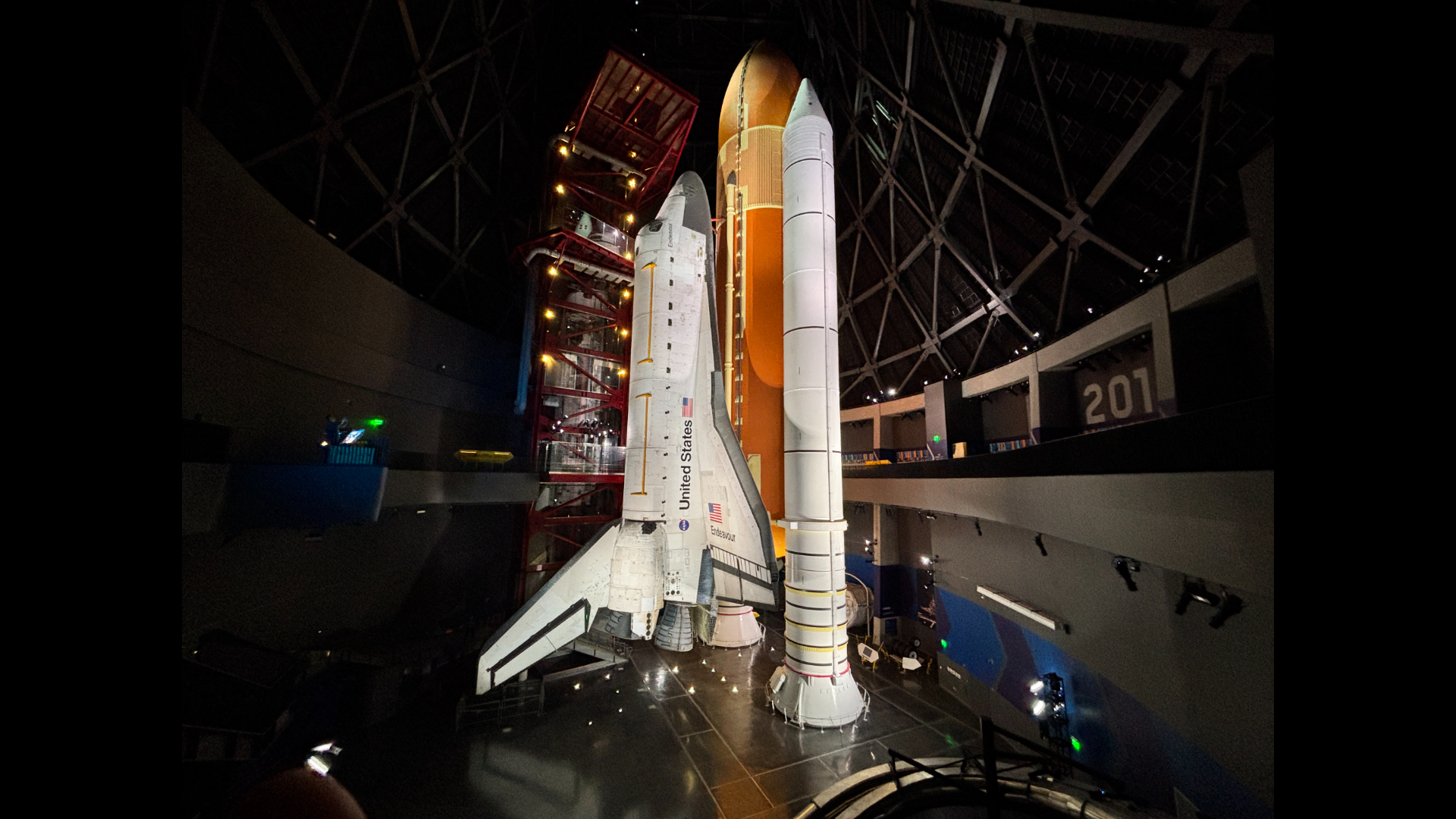
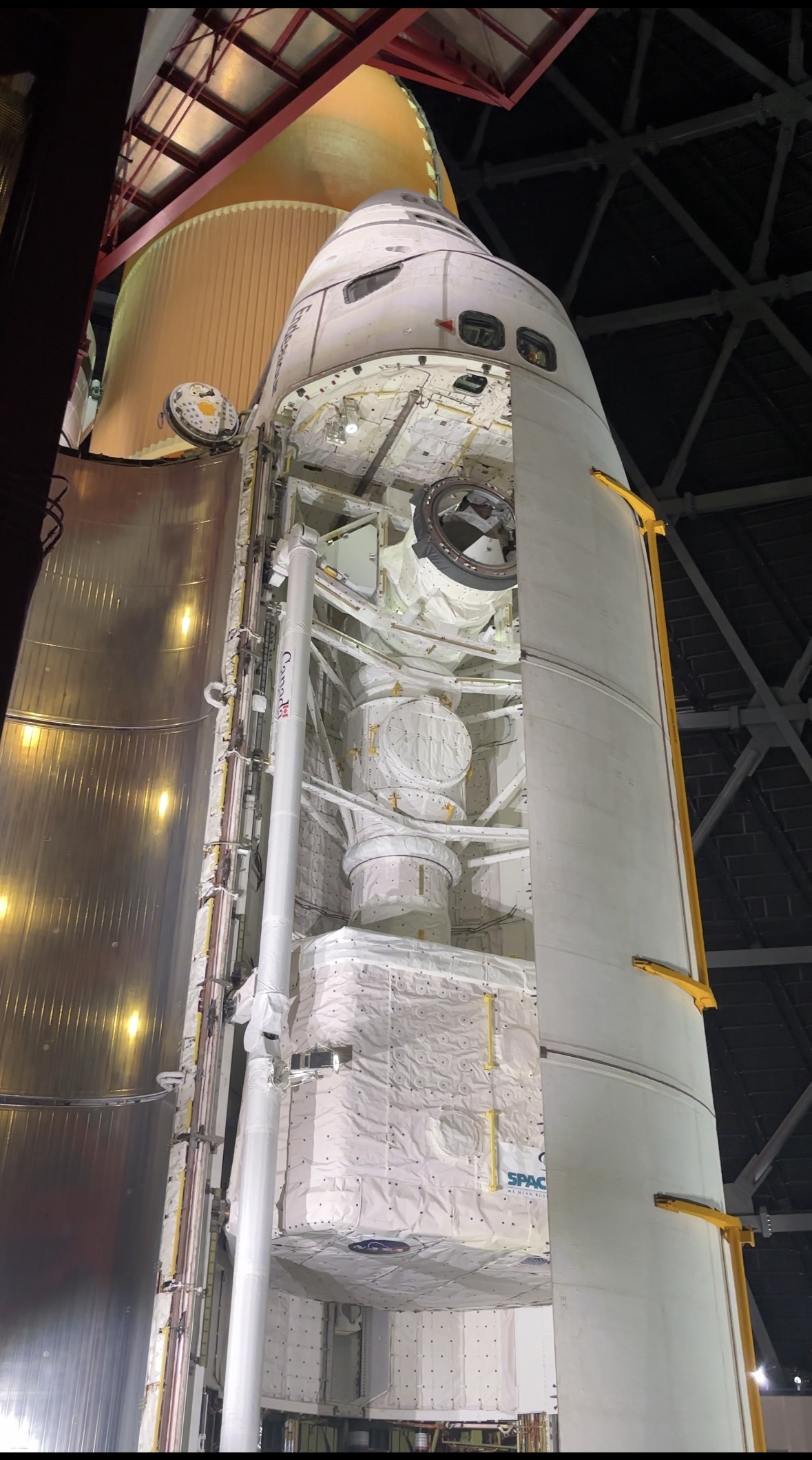
After over three decades of ideation, development and construction, the California Science Center has officially announced an opening date for its brand-new Samuel Oschin Air & Space Center, which will feature the space shuttle Endeavour. On Wednesday, I got to peek behind the curtain to see Endeavour's new home inside the center, where it stands in a "ready to launch" position, towering at nearly 200 feet (61 meters) tall — a truly spectacular focal point. The shuttle is even complete with real solid rocket boosters and the last flight-qualified external fuel tank (ET-94).
"It's been a lot of years to get here, and it's a dream come true," Lynda Oschin, the chairman of the board and secretary of the Mr. and Mrs. Samuel Oschin Family Foundation, told Space.com about this massive exhibition finally coming together.
"They're going to be in tears, they're going to be shaking, and they're going to be proud," Oschin added, referring to how she expects guests to react to Endeavour in its new home. And having just seen it for the first time in all its glory, standing upright with its fuel tank and rocket boosters seemingly ready to launch, I can attest: She is absolutely right.
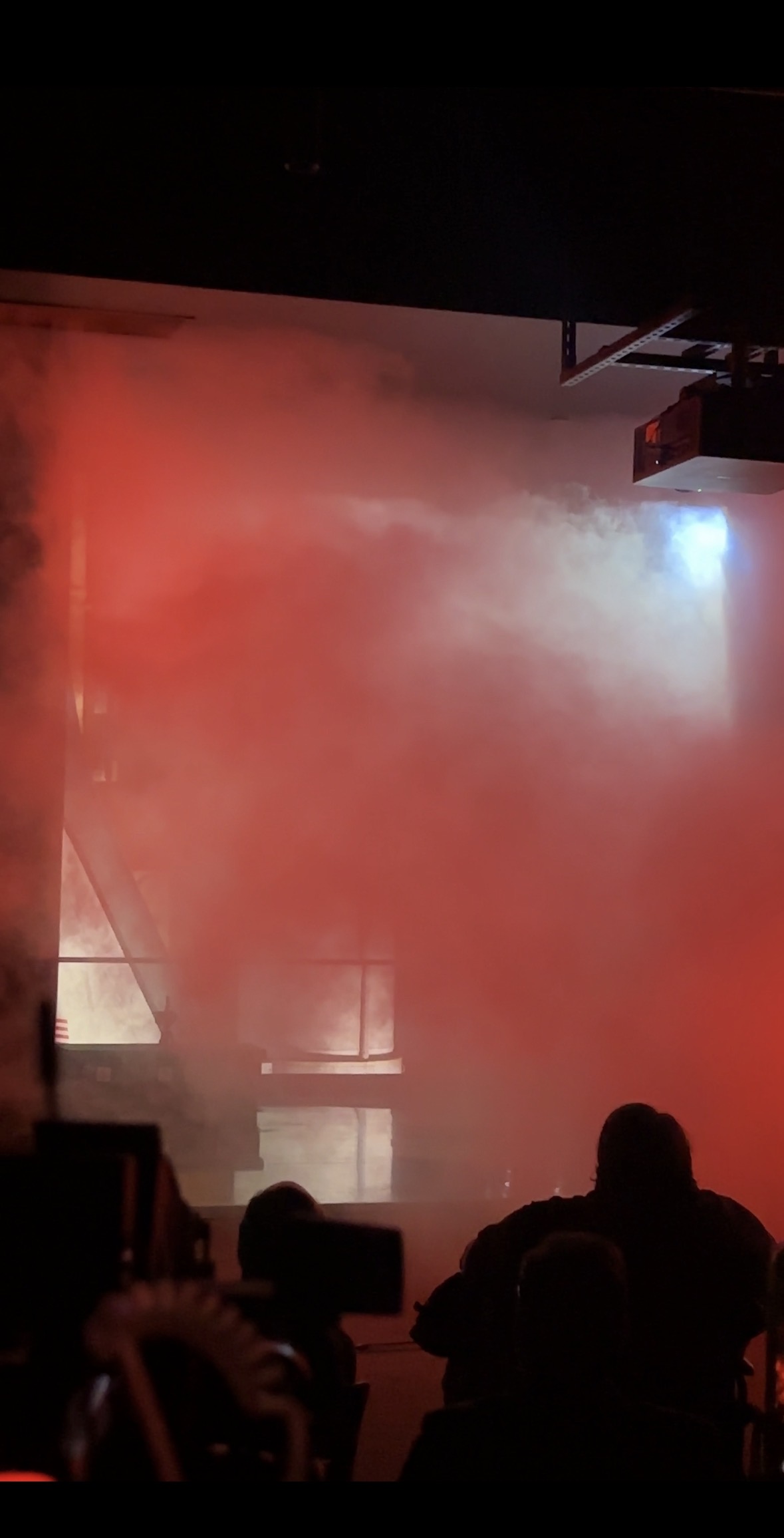
Before you even step foot into the shuttle room, there is a short video that is played that takes you through the history of the shuttle program while bringing to life the fiery excitement of a shuttle launch. In a dramatic cloud of smoke, the shuttle room is revealed and there isn't a single person who isn't in absolute awe. Endeavour is hypnotizing. With the boosters and fuel tank, its already massive stature becomes almost larger than life.
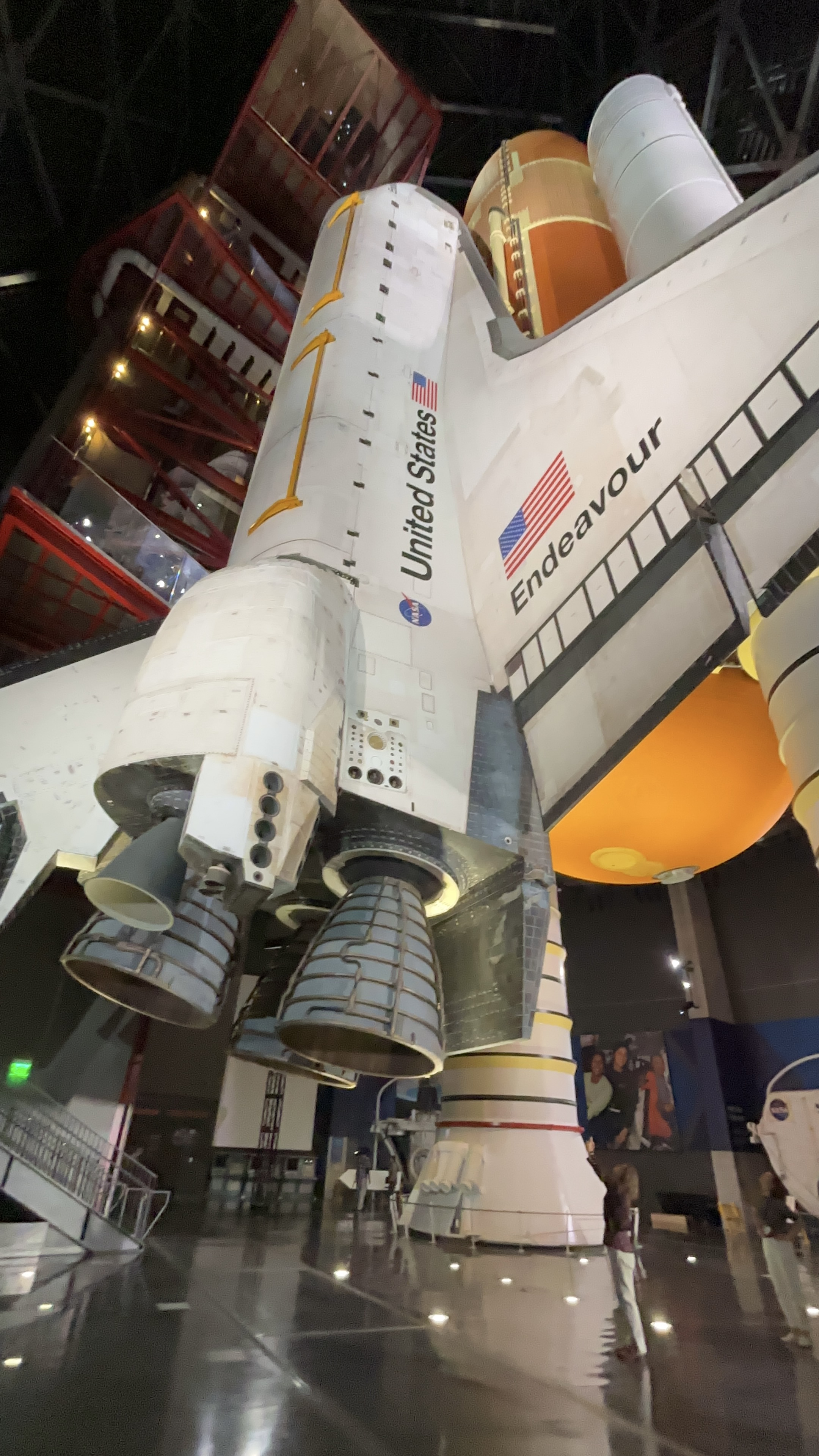
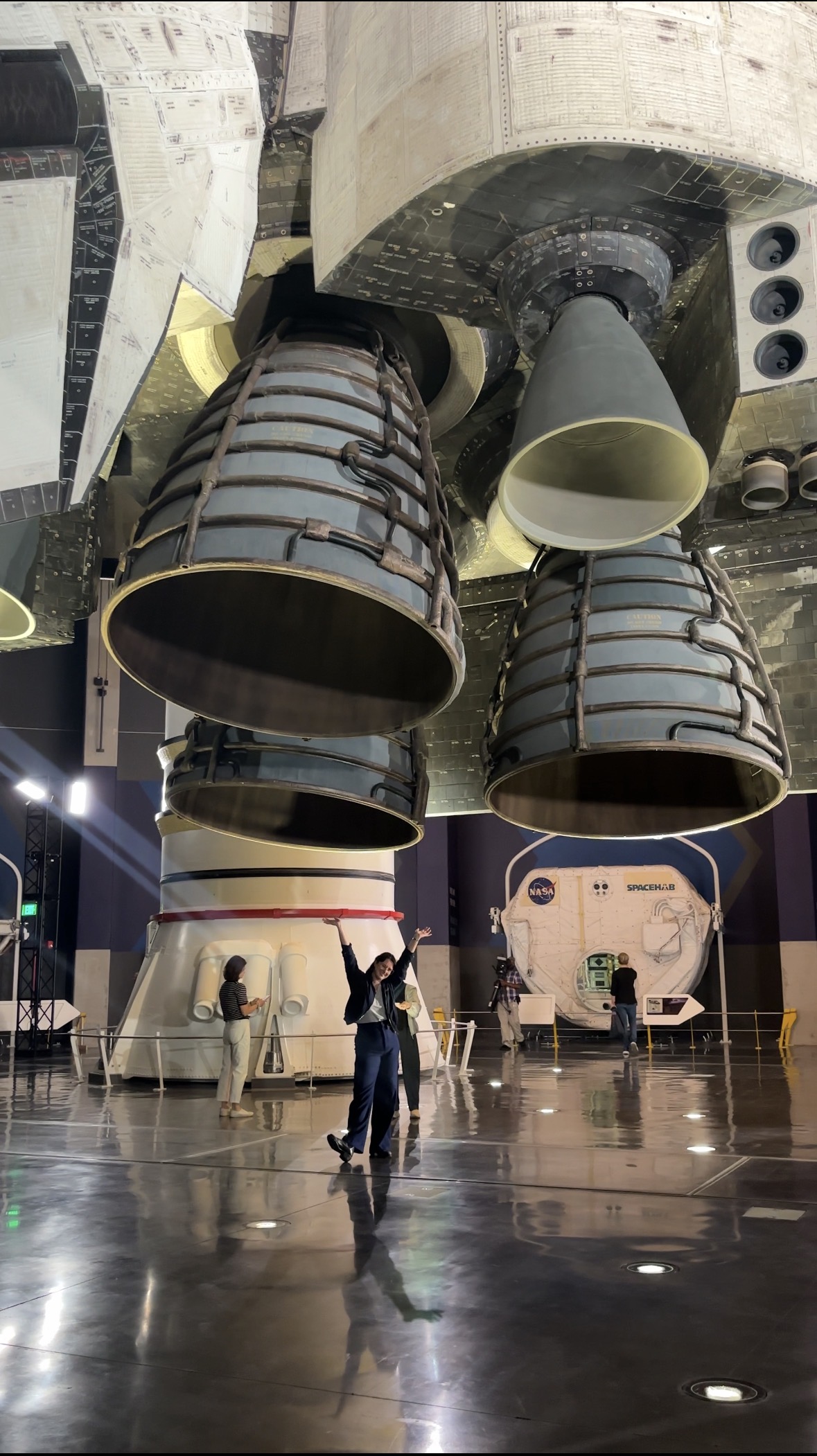
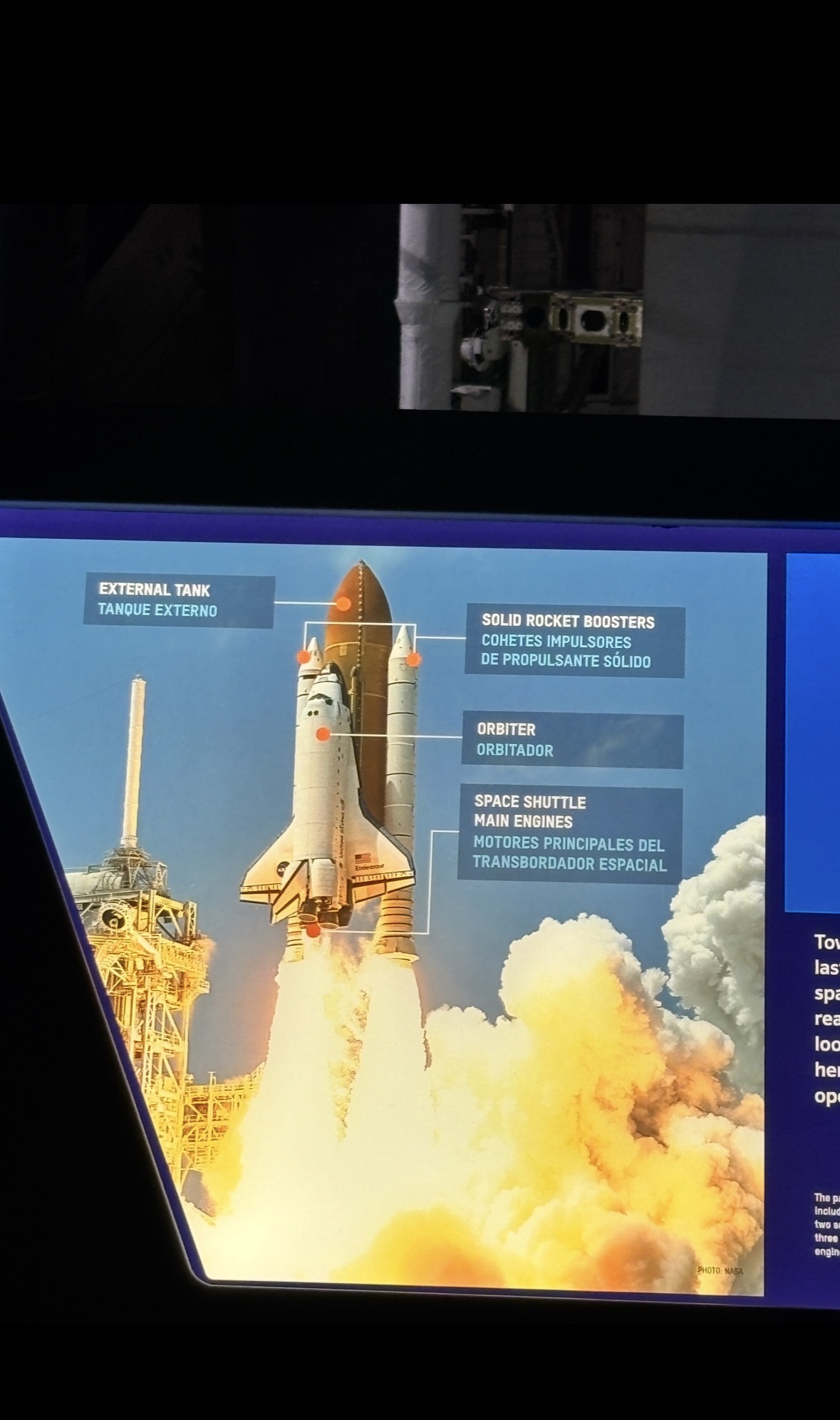
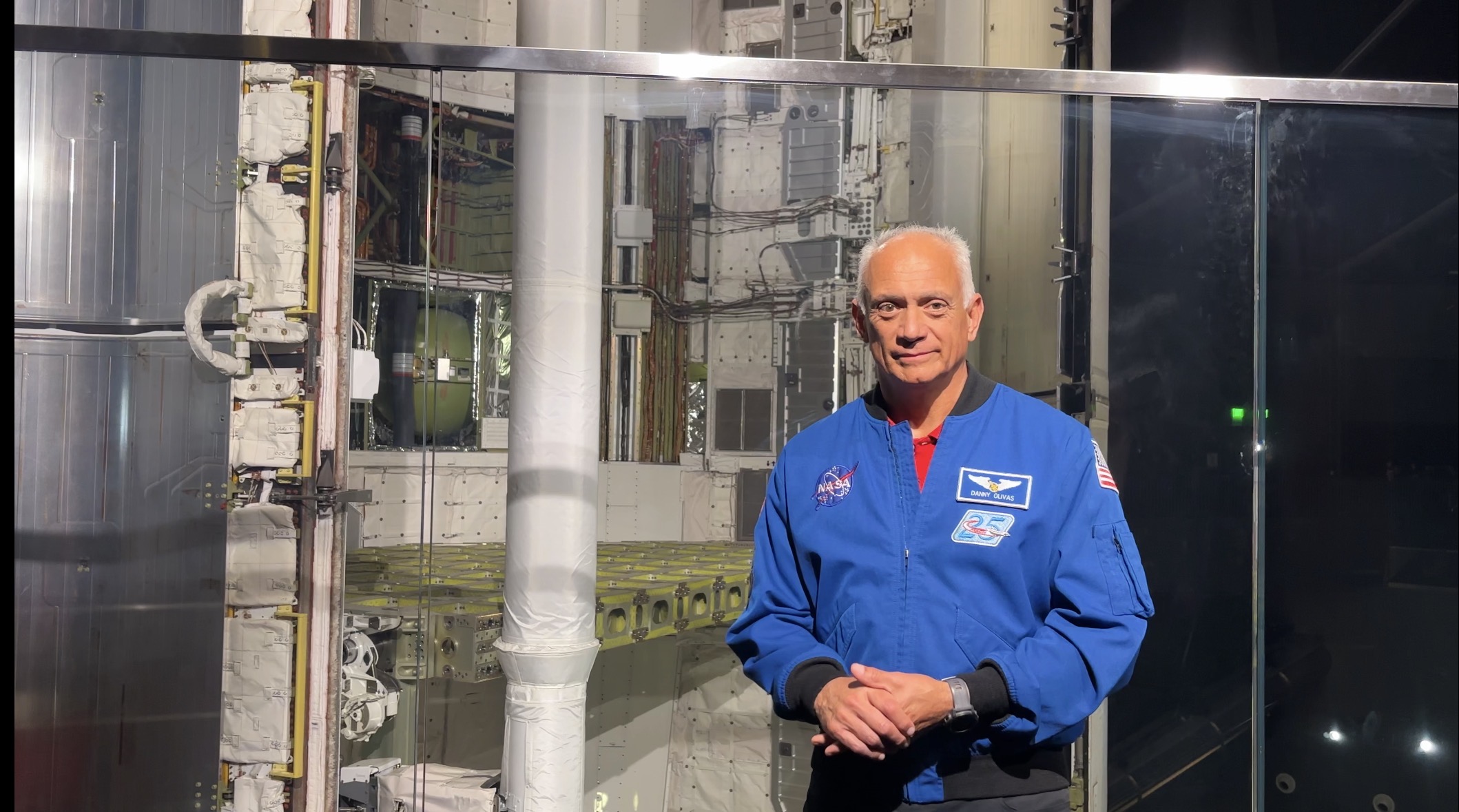
The space shuttle Endeavor is larger than life in its new museum home. Space.com/Chelsea GohdThe space shuttle Endeavor, in all its glory. Space.com/Chelsea GohdThe interior of the space shuttle Endeavor.Space.com/Chelsea GohdSpace.com reporter Chelsea Gohd demonstrates that you can stand underneath the shuttle engines. Space.com/Chelsea GohdA cloud of red "smoke" concludes the video presentation and masks the reveal of the space shuttle Endeavor. Space.com/Chelsea GohdAn infographic showing the configuration of the shuttle.Space.com/Chelsea GohdFormer NASA astronaut Danny Olivas stands with the space shuttle Endeavor. Space.com/Chelsea Gohd
A walkway takes you all the way around the shuttle, which is open on one side so you can clearly peer into its many layers, seeing wires and other details. You can also walk down to a lower floor, where you can stand underneath the shuttle and inspect it from every angle you might want. And surrounding the shuttle itself are a variety of interactive exhibits like a shuttle landing simulator (good luck), the tires from Endeavour's final landing, and more.
"I'm a child of the Apollo era, and I remember having a plastic Apollo Saturn V rocket that I carried with me everywhere, and that was after going to Johnson Space Center, visiting the space center there," retired NASA astronaut John "Danny" Olivas told Space.com. "inspiration happens through exposure, and there's nothing, I think, more impressive than standing next to the space shuttle stacked the way that they've done here at the California Science Center."
And Endeavour is special in this respect: No other museum has a space shuttle orbiter that's mounted vertically, in the launch position.
One aspect of the California Science Center that stands out is its accessibility, as the museum (including the brand-new air and space center) is entirely free to the public — and it's on the metro line, which kids in L.A. can ride for free. Many museums and similar institutions strive for and value accessibility, and this center really takes that to heart, keeping even new installations like the shuttle free to visit. "California Science Center has opened up accessibility for inspiration to the next generation of space explorers," Olivas said.
And while NASA moves forward with its Artemis moon program, Olivas, who flew on two shuttle missions (STS-128 and STS 117), is confident that the lessons and history of the space shuttle program will carry on in inspiring that next generation.
"One of the things that really touches my heart about the space shuttle program is that it ushered in an age of diversity in space exploration that we had not seen prior," Olivas said. "We got an opportunity to see so many firsts — so many firsts of Americans being able to see themselves in the astronauts that flew in space, and that opened the door to so many people like myself, recognizing that wow, yeah, I can become an astronaut."
The new Air & Space Center was first imagined as part of a museum expansion plan all the way back in 1993. Over 30 years later, the futuristic building stands a whopping 20 stories tall to accommodate the towering Endeavour, which immediately grabs the focus of anyone walking into the building.
After NASA's space shuttle program ended in 2011, the agency worked to turn itsretired shuttles into museum attractions. Endeavour first arrived at the California Science Center in October of 2012. Thousands watched as the spacecraft rolled through the streets of Los Angeles on the back of a slow-crawling transporter, a 12-mile (19 kilometers) trek from Los Angeles International Airport to the California Science Center that took the craft 68 hours.
Four years later, in 2016, ET-94, the shuttle's external fuel tank, arrived. And seven years after that, in 2023, two solid rocket boosters arrived and the shuttle was taken off display, where it had sat for over a decade, as preparations began for its new home in the Air & Space Center.
"Now, with the stunning display of Endeavour in launch configuration, the Samuel Oschin Air & Space Center will give us a clear, greater platform than ever before to accomplish our mission to stimulate curiosity and inspire science learning in everyone," said Jeffrey Rudolph, president and CEO of the California Science Center. This "will be the only place in the world to see a complete space shuttle system, with the flown orbiter Endeavour mated to real solid rocket boosters and the only remaining flight-qualified external tank, ET-94."
While Endeavour is the clear centerpiece of the building, the Samuel Oschin Air & Space Center will be chock-full of a wide variety of other space artifacts. The building is split into three sections that guests will be able to explore: air, space and shuttle. Relics from throughout spaceflight history, interactive exhibits, and immersive, educational experiences fill the space. Currently, 1.6 million people visit the California Science Center each year, so even if this number were to remain the same, this building has to be ready for a big and diverse crowd from around the world.
One new mission is setting out to study menstruation in microgravity for the first time ever.
Forty-six years ago, NASA engineers asked Sally Ride if 100 tampons was the right amount to send with her for a six-day spaceflight. Though people laugh at that fact today, there has still never been any scientific study dedicated to studying menstruation in space. But a non-profit called Operation Period aims to change that. Led by Gen-Z researchers, this non-profit works to provide what its founder Manju Bangalore calls "menstrual freedom," which she says would mean everyone can have easy access to menstrual products. Meanwhile, the organization also aims to tackle the wider issues that leave people without such access in the first place. With its upcoming suborbital mission Operation Period-01 (OP-01), this ambitious team is taking their cause into microgravity. On OP-01, the mission's founder will launch to space to conduct the research themselves on a Virgin Galactic suborbital flight in 2027.
In conducting their work here on Earth, Operation Period found that "there were still some of those same gaps in spaceflight medicine," Manju Bangalore, the founder and executive director of Operation Period and research astronaut in training for OP-01, told Space.com. " I want all menstruators to be able to live life with their full dignity and reach their fullest potential, and that includes astronauts."
With a background in physics and astronomical engineering as well as with training in bioastronautics and having spent time working at NASA, Bangalore brings her love of space to this cause. She and Priya Abiram, the Director of Research at Operation Period's Redshift Lab, feel so strongly about their message, even 9 years since the pair founded their non-profit; in fact, with this mission, the two will become some of the youngest South Asian women to travel to space.
"On a personal level, I've always been fascinated by space and human space exploration. It's what's always excited me as a child, and I've kept that curiosity going," Bangalore said. "I didn't think those two missions would ever combine into this. It wasn't something I ever planned, but I'm very grateful to lead this historic mission to advance menstrual health in this way."
And just as this team is excited to bring their research into a suborbital environment, Virgin Galactic is excited to be expanding the range of microgravity science the non-profit supports. "This mission with Operation Period is a powerful example of how Virgin Galactic can continue to support real-time, in-flight scientific investigation into long-overlooked areas of human health, helping advance more inclusive and innovative exploration that delivers insight for both space and life on Earth," Virgin Galactic director of system analysis & research Amber Favaregh said in an emailed statement.
Recently, Operation Period expanded to include a research wing, and this mission will be conducted under that umbrella. The team was not yet able to share specific details on the exact protocol that will be conducted during the mission, information they said will be shared at a date closer to launch, but they did share the current issues that this research aims to begin to address.
Currently, astronauts typically choose to fully suppress their periods during their spaceflights, through hormonal IUDs or oral contraceptive pills. While that is a choice astronauts might continue to make in the future, without data to show the reality of dealing with a period in space, astronauts are left with fewer choices with their own bodies. Comprehensive data on menstruation in space will also be important if astronauts are to complete longer spaceflights or even extended stays on the moon. While the mission has not yet revealed its priorities and exactly what data it will collect, with such limited data on menstruation in space, there is a lot of knowledge to be gained.
While "the data that we have, although limited, says that it is generally safe to menstruate, in terms of long duration missions, we don't have quantitative data," Bangalore said. "We don't have enough data to continue to assist with patient resource allocation for mission planners."
Historic missteps like the "100 questions" moment with Sally Ride highlight an issue that could have big effects on future, longer-term missions. Sure, having a ridiculous number of backup products would ensure that there is no need unaddressed, mass considerations for spaceflight are extremely serious and future missions will need to have better data to know what will be needed in a microgravity environment.
And just like with other science in space, the research conducted in microgravity will also be used on Earth. The pair aim to collect menstruation data that will benefit astronauts as well as people back on our home planet. .
"I think on Earth, there's a lot of gaps right now in menstrual health research," Bangalore said. As just one example, she cited recent findings that menstrual product companies were reporting incorrect absorbency of their products because they were testing products with saline, which is very different from menstrual blood. "This was potentially leading to doctors to underdiagnosed heavy menstrual bleeding, which right now the stats say affects 20% of American menstruators," Bangalore said.
With this being the first mission of its kind, OP-01 will not answer every question that remains about menstruation and space, but it will bring data to a conversation decades in the making. "Our hope is to continue to iterate this research so that we can do future suborbital flights, as well as orbital flights, to continue to create larger data sets," Bangalore said. "I think the point of preliminary studies is to be able to know what questions to ask in the future, so we don't expect that this suborbital flight will solve everything or create all the data that we need, right, but we hope that this will be a good stepping stone."
Momentum for this research was actually sparked by many millions of views on a viral social media video in which Bangalore conducted an early version of a menstrual fluid dynamic experiment in a low-gravity environment aboard a parabolic flight.
This viral moment "ended up being a really cool kind of 'in' to continue talking about destigmatizing periods," she said. "Through that, I got to talk more about the gaps in spaceflight medicine, in terms of menstrual health."
NASA astronaut Jessica Meir captured a breathtaking view of auroras on Earth from orbit while sheltering with her fellow astronauts in a SpaceX Dragon spacecraft.
"If a major meteor shower outburst or storm is forecast during a mission or crew activity, the mission would be delayed or the crew kept inside until the outburst or storm is over."
In June 1983, Sally Ride became the first American woman to fly to space. Nearly three decades later, we learned that she had also been an LGBTQ trailblazer.