SpaceX launched 24 more of its Starlink satellites into low Earth orbit on Sunday (June 28), continuing to expand its broadband internet relay network.
A Falcon 9 rocket carrying the new batch (Group 17-40) launched from Space Launch Complex 4 East at Vandenberg Space Force Base in California. Liftoff took place at 12:09 p.m. EDT (1609 GMT or 9:09 a.m. PDT local time).
The Starlink satellites reached orbit about nine minutes after leaving the ground and were on track to be deployed by the Falcon 9 upper stage about an hour later.
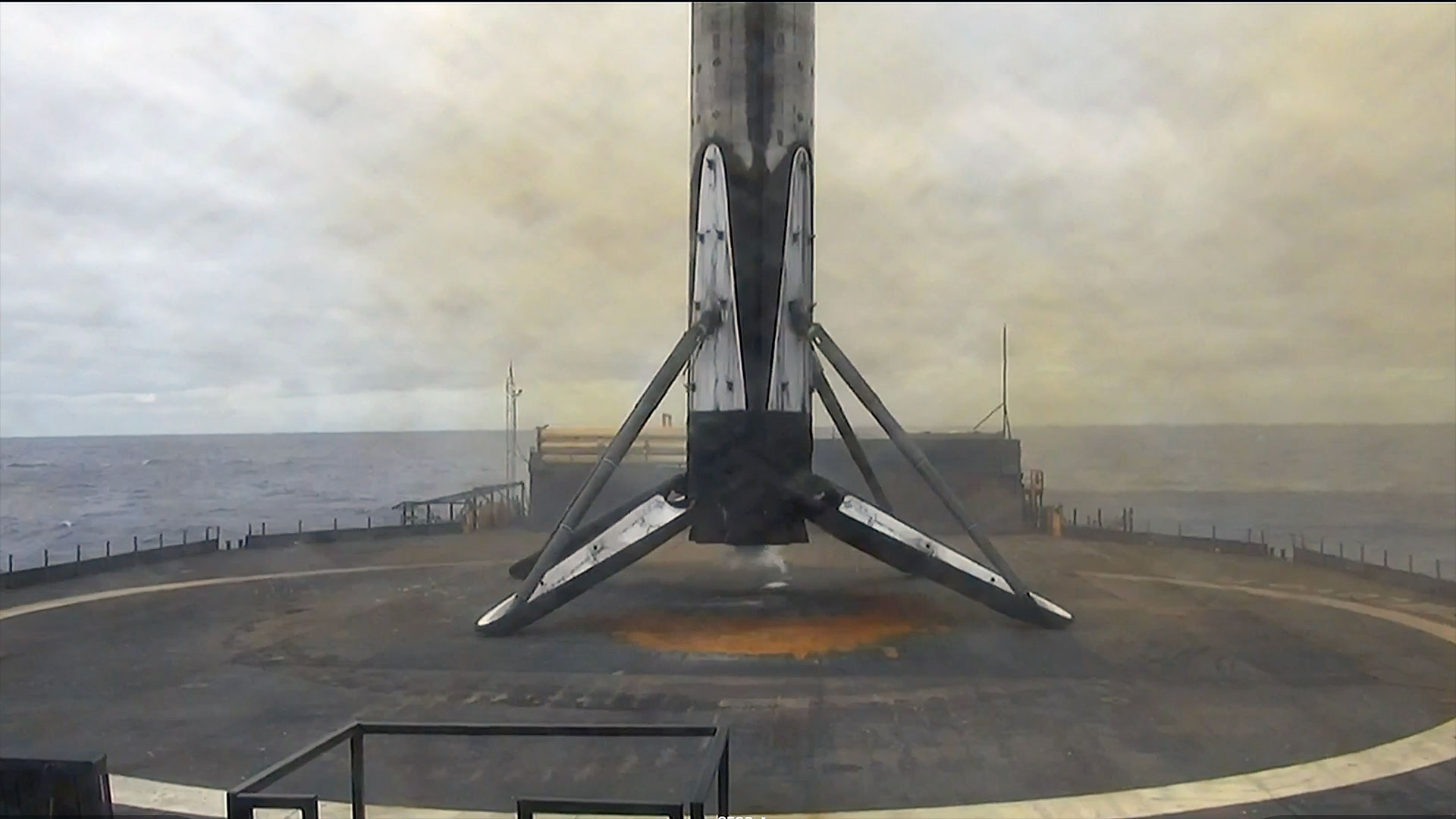
The first stage of a SpaceX Falcon 9 rocket is seen after landing on its four legs atop the autonomous droneship "Of Course I Still Love You" in the Pacific Ocean off the coast of California on Sunday, June 28, 2026. (Image credit: SpaceX)
The rocket's first stage (Booster 1088) completed its 17th flight, touching down on the autonomous droneship "Of Course I Still Love You" positioned in the Pacific Ocean.
The 24 satellites increased the total number of active relays in the Starlink network to more than 10,700, according to tracker Jonathan McDowell. The Starlink service provides access to the internet to people around the world, as well to in-flight wifi and cell-to-satellite service providers.
Sunday's launch was SpaceX's 75th Falcon 9 mission in 2026.
SpaceX launched a big SiriusXM radio satellite to orbit from Florida's Space Coast on Sunday night (June 28).
A Falcon 9 rocket topped with the 15,400-pound (7,000 kilograms) SXM-11 spacecraft lifted off from Cape Canaveral Space Force Station Sunday at 10:25 p.m. EDT (0225 GMT on June 29).
The Falcon 9's first stage came back to Earth for a landing about 8.5 minutes after launch as planned, touching down in the Atlantic Ocean on the SpaceX drone ship "A Shortfall of Gravitas."
SiriusXM's SXM-11 satellite deploys from the upper stage of a SpaceX Falcon 9 rocket on June 28, 2025. (Image credit: SpaceX)
According to a SpaceX mission description, it was the 17th flight for this particular booster, which is designated B1085.
The Falcon 9's upper stage, meanwhile, continued carrying SXM-11 to an elliptical geosynchronous transfer orbit, where it was deployed on schedule, 34.5 minutes after liftoff.
SXM-11 will now circularize its distant path around our planet and join SiriusXM's satellite-radio fleet, which currently consists of seven spacecraft.
SpaceX has now launched four of those spacecraft to date. The others were SXM-8 in June 2021, SXM-9 in December 2024 and SXM-10 in June 2025, all of which also rode to orbit on Falcon 9 rockets.
SpaceX has launched 76 Falcon 9 missions so far in 2026. The vast majority of those flights — nearly 80% of them — have been dedicated to building out the company's Starlink broadband megaconstellation in low Earth orbit.
Editor's note: This story was updated at 2:30 a.m. ET on June 28 with news of successful launch, rocket landing and satellite deployment.
Blue Origin is hard at work at its Cape Canaveral launch pad, collecting debris and repairing the damage after an explosive accident last month.
The company's New Glenn rocket exploded during a fueling test last month at Launch Complex-36 (LC-36). The resulting fireball laid waste to the surrounding facility, and erupted in a burst with a glow visible more than 100 miles (160 kilometers) away. In the aftermath, Blue Origin CEO Dave Limp voiced confidence that, despite the setback, the company would bring New Glenn back to the pad for a launch before the end of the year.
He doubled down on that assessment in an X post on Thursday (June 25), which featured a timelapse video of the work done at LC-36 over the past few weeks. "Huge shoutout to the team who have been working 7x24" Limp said. "We have started reconstruction and still plan to fly again this year."
Quite a sight to see the progress this team has made since May 28. Wreckage recovery from start to finish was completed in 9 days, and all debris has been cleared from Launch Complex 36. Huge shoutout to the team who have been working 7x24. We have started reconstruction and… pic.twitter.com/2plAi8fb22June 25, 2026
In his post, Limp said that all the debris has now been cleared from LC-36, and that all the wreckage from New Glenn and the surrounding facilities was collected within nine days of the explosion.
The speedy cleanup is a positive step toward Blue Origin's goal of launching New Glenn again by the end of 2026, but it's still an ambitious undertaking. Similar incidents, like the explosion of SpaceX's Falcon 9 at LC-40 in 2016, have taken up to twice as long to recover from. For Blue Origin, though, there's a lot on the line.
NASA has contracted the company's Blue Moon spacecraft as one of the agency's crewed Artemis lunar landers, and Blue Moon has been designed to launch on New Glenn. NASA is targeting late 2027 for the launch of Artemis 3, which depends on astronauts aboard an Orion capsule rendezvousing with Blue Moon in low Earth orbit to demonstrate docking maneuvers and spacecraft interoperability ahead of future missions to land astronauts on the lunar surface.
Orion will also dock with SpaceX's Starship during Artemis 3, if all goes to plan. NASA initially selected Starship as the lunar lander for Artemis 4 and 5, but delays in the development of the huge vehicle prompted NASA to reopen its considerations about which lander would fly the landing missions ahead. Should either Starship or Blue Moon not be ready in time to launch for Artemis 3, their builders risk losing out on the chance to return American astronauts to the moon.
About a month has passed since the first launch of SpaceX's "Version 3" Starship rocket, and the spaceflight company has already begun testing on its next such vehicle.
SpaceX recently transported Ship 40, the upper stage in line to launch Starship's upcoming Flight 13 demonstration mission, to the Massey test site at its facilities in Starbase, Texas. Secured at its base, Starship performed a full-duration burn of one of its central Raptor 3 engines that lasted about 15 seconds.
The test, called a static fire, is meant to confirm that the spacecraft's engines are in working order ahead of an actual launch. SpaceX posted a video of the test on X today (June 26). The Ship upper stage is equipped with six Raptor 3 engines — three sea-level engines, and three configured for optimized flight in the vacuum of space. The vehicle uses all six during ascent, but only a single sea-level engine during the final phase of its landing burn.
Starship is SpaceX's super-heavy lift rocket, designed to be completely reusable. Its most recent test flight launched on May 22, completing a mostly successful demonstration of the vehicle's upgraded V3 hardware. At 408 feet (124.4 meters) tall, Starship V3 is the biggest, most powerful iteration of the launch vehicle to date, and is the first to sport SpaceX's new Raptor 3 engines.
Despite a few malfunctions during the V3 debut last month, including failure of the rocket's Super Heavy booster to maneuver its way to a soft ocean splashdown as planned, SpaceX deemed the launch a successful test of the upgraded vehicle's new systems. In addition to the full outfit of Raptor 3s, V3 is equipped with enhanced aerodynamic grid fins, refined thermal protections, an increased fuel capacity and docking nodes to facilitate propellant transfer in space.
That last capability is especially critical for Starship's success. Ship is capable of reaching low Earth orbit (LEO) using its onboard fuel, after Super Heavy lofts the stage through Earth's atmosphere, but once there, it can't fly much farther. (Note: Starship hasn't actually reached orbit yet. All of its launches to date have been suborbital.) To fly beyond LEO, Ship requires refueling from additional Starship launches designed to top off its tanks, a critical function of the giant spacecraft that SpaceX has yet to demonstrate, but that's expected to change this year.
Full duration single-engine static fire test of Starship pic.twitter.com/nfR8PvHpzeJune 26, 2026
SpaceX has been contracted by NASA to provide Ship as the lander to deliver astronauts to the moon as a part of the agency's Artemis program. To get there, NASA says the spacecraft will require at least 15 refueling flights. The first of those landing missions, Artemis 4, is scheduled for late 2028. Ship is also scheduled to launch as part of Artemis 3, during which astronauts aboard NASA's Orion spacecraft will dock with the lander to practice maneuvers with the mated vehicles, but is not expected to require refueling flights for that mission.
The recent static fire with Ship 40 means SpaceX is progressing toward Starship's next full flight campaign, which will feature engine tests with all six of Ship 40's Raptors and all 33 of Super Heavy's. The company hasn't yet released any details about the upcoming Flight 13, but the company will likely attempt to launch the mission before the end of the summer.
China is set to expand its space station from three to six modules in the coming years and add a co-orbiting Hubble-class space observatory, even as the International Space Station approaches the end of its lifetime.
The three-module, T-shaped Tiangong space station was assembled in orbit across 2021 and 2022 and has hosted numerous three-astronaut Shenzhou crews, but China is now set to expand the orbital outpost with new modules, citing growing research demands and more frequent crew and cargo missions. As previously reported by Space.com, the planned expansion will see Tiangong grow into a "double-T" shape, with the addition of the multipurpose module and two new experiment modules, and allow China to extend the scale of operations aboard the station.
"This expansion has always been part of the original plan," Qian Hang, a researcher with China Aerospace Science and Technology Corporation (CASC), told Chinese media. State media Xinhua reported that the first phase of the expansion will see the launch of a new 20-ton-class multifunctional module, which will dock with Tiangong's Tianhe core module.
Additional docking ports on the new modules will allow Tiangong to welcome more spacecraft and provide greater operational flexibility when needed. "If the missions get more intensive, we risk 'queuing' for docking ports and lack sufficient emergency buffer space," Qian said.
China is developing new, low-cost cargo options for Tiangong, while its new Mengzhou spacecraft, which could debut later this year, can carry seven astronauts to low Earth orbit. The Shenzhou spacecraft, which is currently used for China's crewed missions, can carry three astronauts to Tiangong.
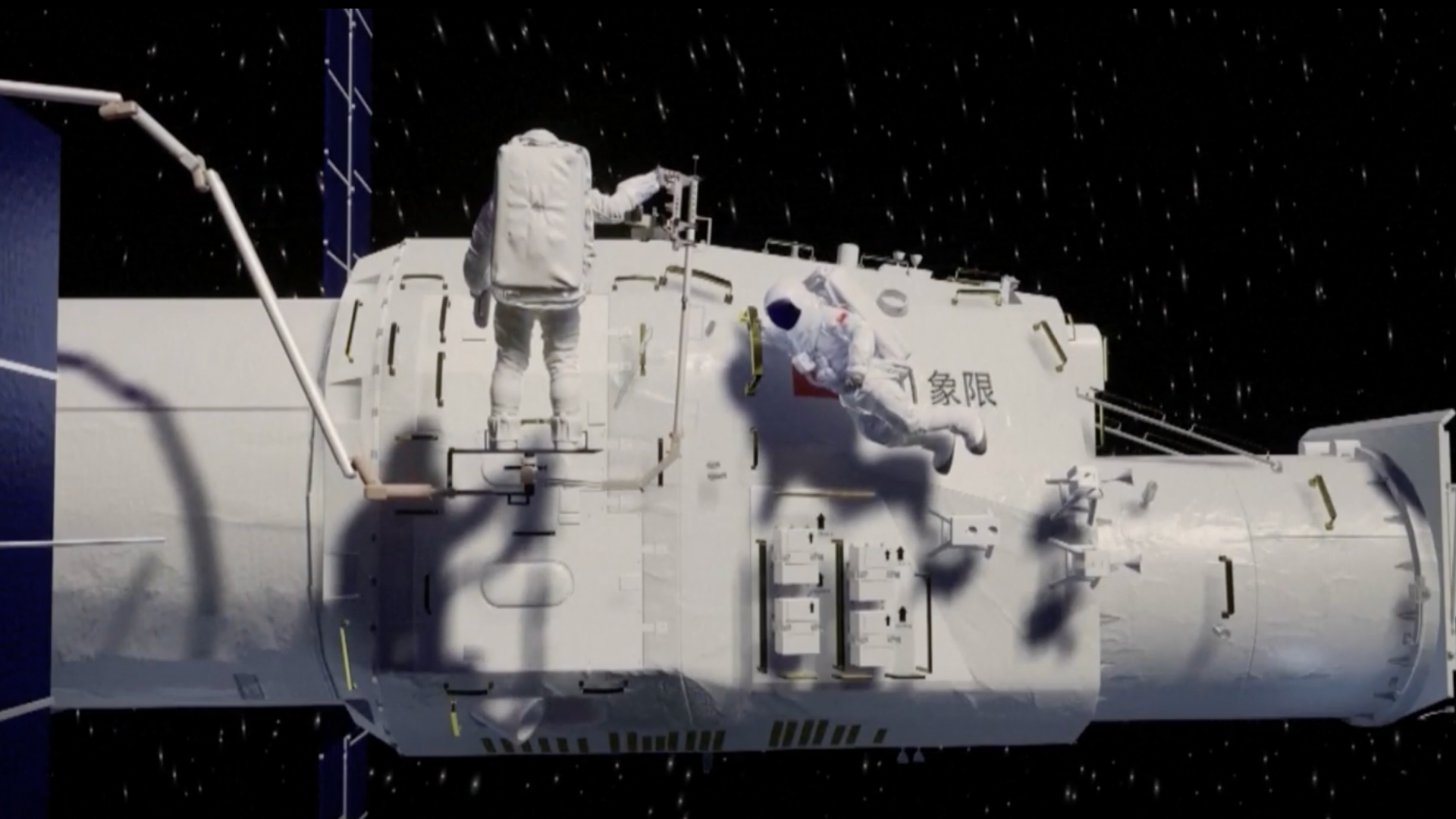
Before the arrival of a new module, however, the first new addition to Tiangong is expected to be Xuntian, a bus-sized space observatory with a 2-meter (6.6 feet) diameter primary mirror, slightly smaller than that of the Hubble Space Telescope.
Xuntian is scheduled for launch in 2027 and boasts a field of view around 300 times larger than that of Hubble, meaning it will be able to study and map around 40% of the heavens during its planned 10-year lifetime using its 2.5-billion-pixel camera. Xuntian will share a similar orbit with Tiangong, meaning it will be able to dock with the space station for maintenance, refueling, repairs and potentially upgrades.
Screenshot from an animation showing Chinese astronauts servicing the Xuntian Space Telescope outside the Tiangong Space Station. (Image credit: CCTV)
While the U.S. is mulling a variety of plans for commercial stations that host astronauts in orbit after the ISS is retired, China would have the largest permanent outpost in orbit with Tiangong. According to Yang Hong, chief designer of the space station system, the planned expansion would take Tiangong from a mass of 90 tons to 180 tons.
On paper, it seems like the math would be clear. A nearly 22-year-old space telescope, well past its prime, is falling out of space after decades of hunting the biggest explosions in the universe. Rest in peace, right?
After all, it would cost NASA $30 million to save the telescope, called the Swift Observatory, which the agency launched in 2004 on a planned two-year mission. Some of us have cars that we've replaced far sooner for much less. And now, higher-than-expected drag on the satellite from Earth's outer atmosphere (caused by solar storms) will pull Swift out of orbit by year's end. So why not accept the inevitable fiery demise of the observatory when it plunges back to Earth?
Swift, it turns out, is still worth it, according to NASA. The observatory has spent over two decades as a sort of orbital sentinel that scans the cosmos for gamma-ray bursts, ready to quickly point itself at the short-lived — but insanely powerful — space explosions at a moment's notice. No other off-Earth observatory, not even the famed Hubble Space Telescope or James Webb Space Telescope, can perform such a feat of astronomy. So NASA is launching a rescue mission on June 30, one led by the company Katalyst Space using its new Link spacecraft.
"We didn't want to set the precedent that anything that comes out of orbit has to be boosted, because it is part of our space ecosystem to have things deorbit frequently," Shawn Domagal-Goldman, NASA's Astrophysics Division director, told reporters during a Swift rescue mission briefing on June 17. "But this was not just any spacecraft; this is an observatory with unique capabilities for astrophysics … It is a swift observatory that can quickly pivot across the night sky to find things that go boom in the night."
A sentinel in the night
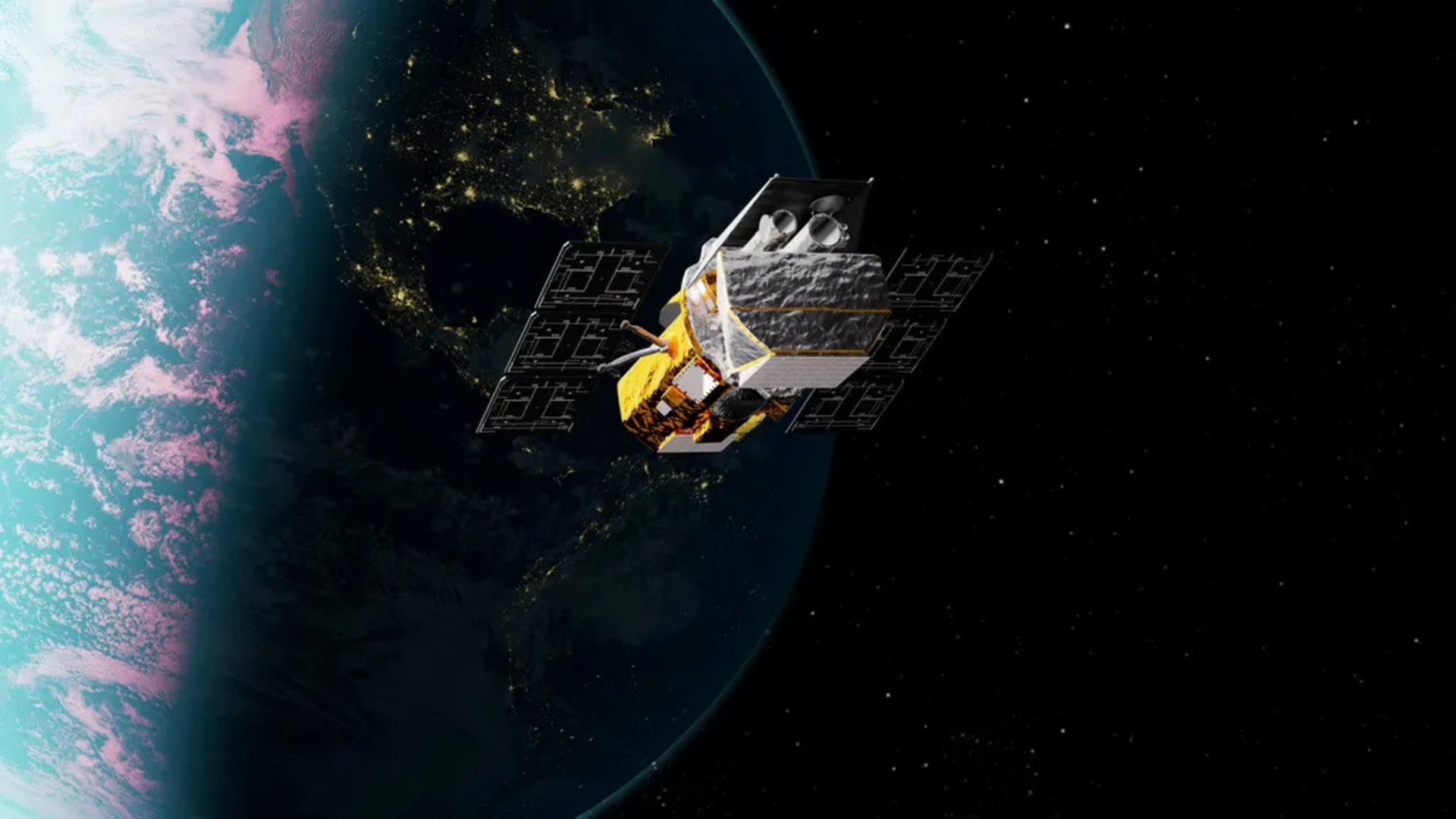
NASA’s Neil Gehrels Swift Observatory, shown in this artist’s concept, orbits Earth as it studies the ever-changing universe. Launched in 2004, the space telescope's days are numbered as it is falling out of space. (Image credit: NASA’s Goddard Space Flight Center Conceptual Image Lab)
NASA originally built and launched Swift in 2004 for $250 million. Since then, the observatory has served as a first responder of sorts to rapidly spot distant gamma-ray bursts that can last mere seconds, yet unleash more power than our sun will in its entire lifetime. Because of its success, Swift's mission has been extended repeatedly.
"The name is not an acronym. It comes from the ability to rapidly and autonomously repoint its narrowfield X-ray and UV [ultraviolet] telescopes almost anywhere on the sky," Swift Principal Investigator Brad Cenko told reporters during the June 17 briefing. (NASA renamed Swift the Neil Gehrels Swift Observatory in 2018 after the mission's first principal investigator, who died a year earlier.)
"The universe is a very dynamic place. Somewhere in the cosmos, a massive star explodes every second," he added. "And over time, our exceptional operations team, led by Penn State, has found new and innovative ways for the satellite to rapidly respond to these discoveries."
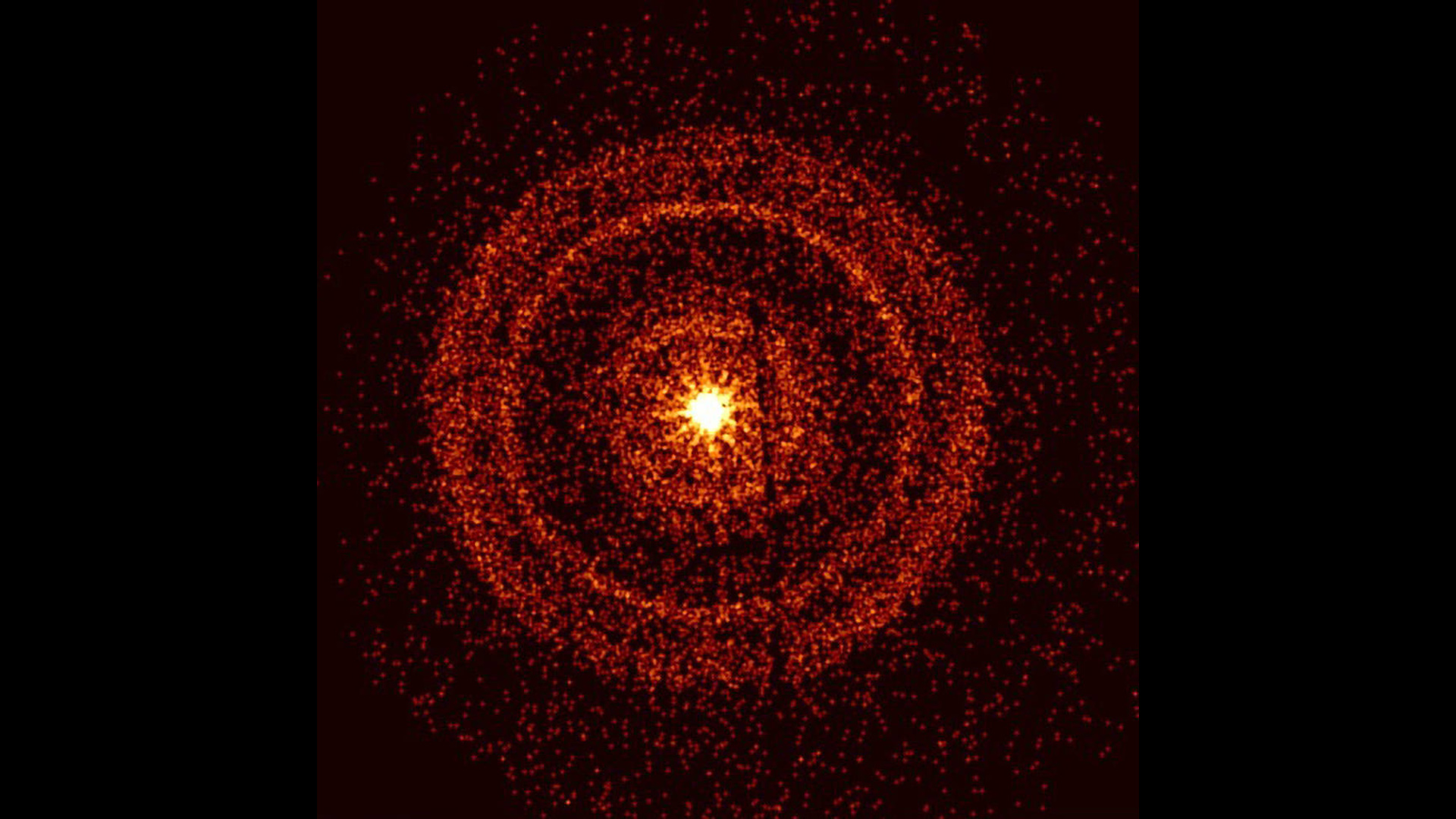
Rings of cosmic dust set alight by the BOAT, the most energetic cosmic explosion ever observed by Swift and other space telescopes. (Image credit: NASA/Swift/A. Beardmore (University of Leicester))
The Hubble Space Telescope can capture sharper photos than Swift, but it takes up to two days to point Hubble at a new target, Cenko said. It takes Swift mere minutes. "It really is NASA's first responder, and by working together in this complementary manner, the NASA astrophysics portfolio can tackle questions that would be impossible for any single facility to answer," Cenko added.
Observations from Swift helped confirm that the heaviest elements in our universe, including precious metals like platinum and gold in your rings and necklaces, were forged by the explosive power associated with gamma-ray bursts (which scientists think are produced by supernovas and neutron-star mergers). In 2022, Swift discovered a gamma-ray burst so bright, scientists nicknamed it the "BOAT," short for Brightest of All Time. At the time,it was the most powerful space explosion ever seen.
But now Swift is falling back to Earth on a trajectory at an increasing rate and will burn up in our atmosphere soon, if nothing is done.
Katalyst to the rescue with Swift Boost
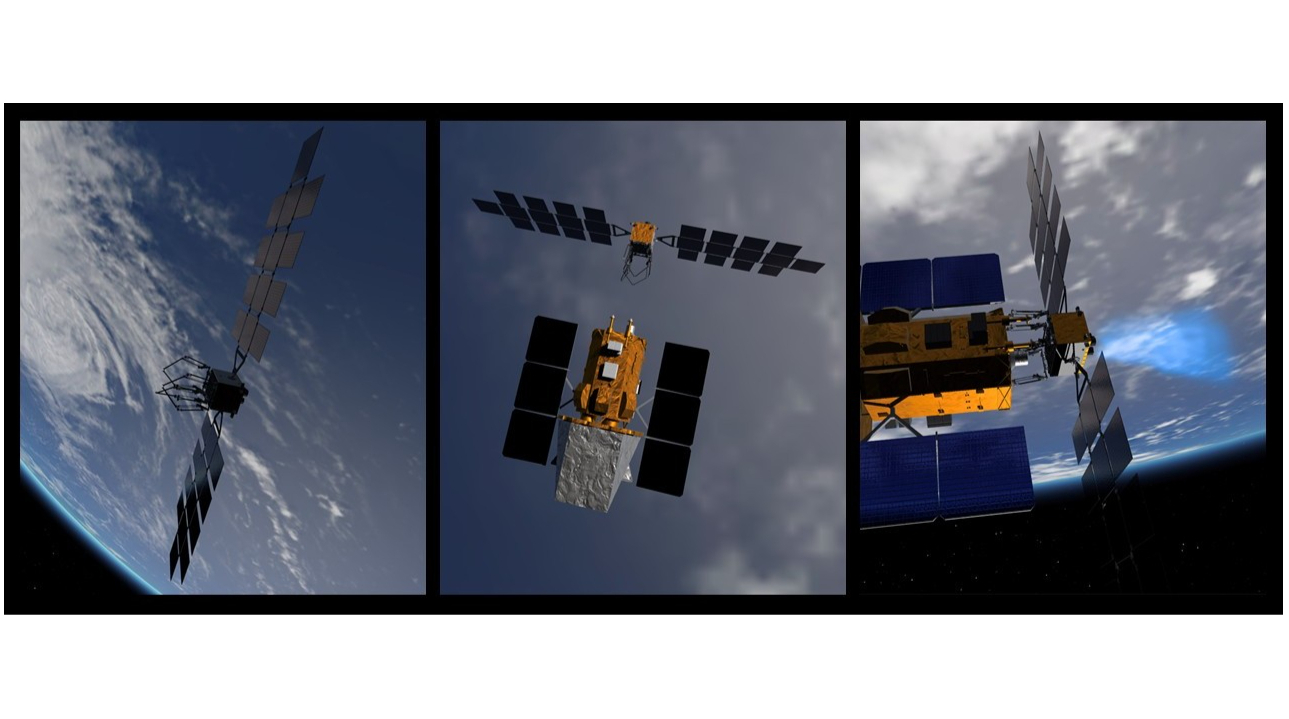
Artist's illustration of Katalyst Space Technologies' Link servicing spacecraft approaching and capturing NASA's Swift space observatory on an orbit-boosting mission. (Image credit: Katalyst Space Technologies)
NASA's Swift rescue mission, called Swift Boost, is now scheduled to launch Tuesday (June 30) — about 3 days later than originally planned — on the last-ever Pegasus XL rocket, an air-launched booster built by Northrop Grumman. It will be carried aloft by the last L-1011 Stargazer carrier plane, which Northrop also operates, on a flight out of the U.S. military's Reagan Missile Test Site on Kwajalein Atoll in the South Pacific's Marshall Islands.
To rescue Swift, NASA has turned to the untested Arizona-based company Katalyst Space, which the space agency picked to fly the Swift Boost mission just nine months ago, in September 2025. That is a mindbogglingly short time in which to build a brand-new spacecraft, then launch it on a rendezvous mission to a space observatory that was never built to be rendezvoused with, and then push the Swift telescope to a higher orbit — one that will guarantee at least five or more years of science life, if successful.
It's a huge bet, and something that's never been done before. Even Swift's top scientist has butterflies in his stomach.
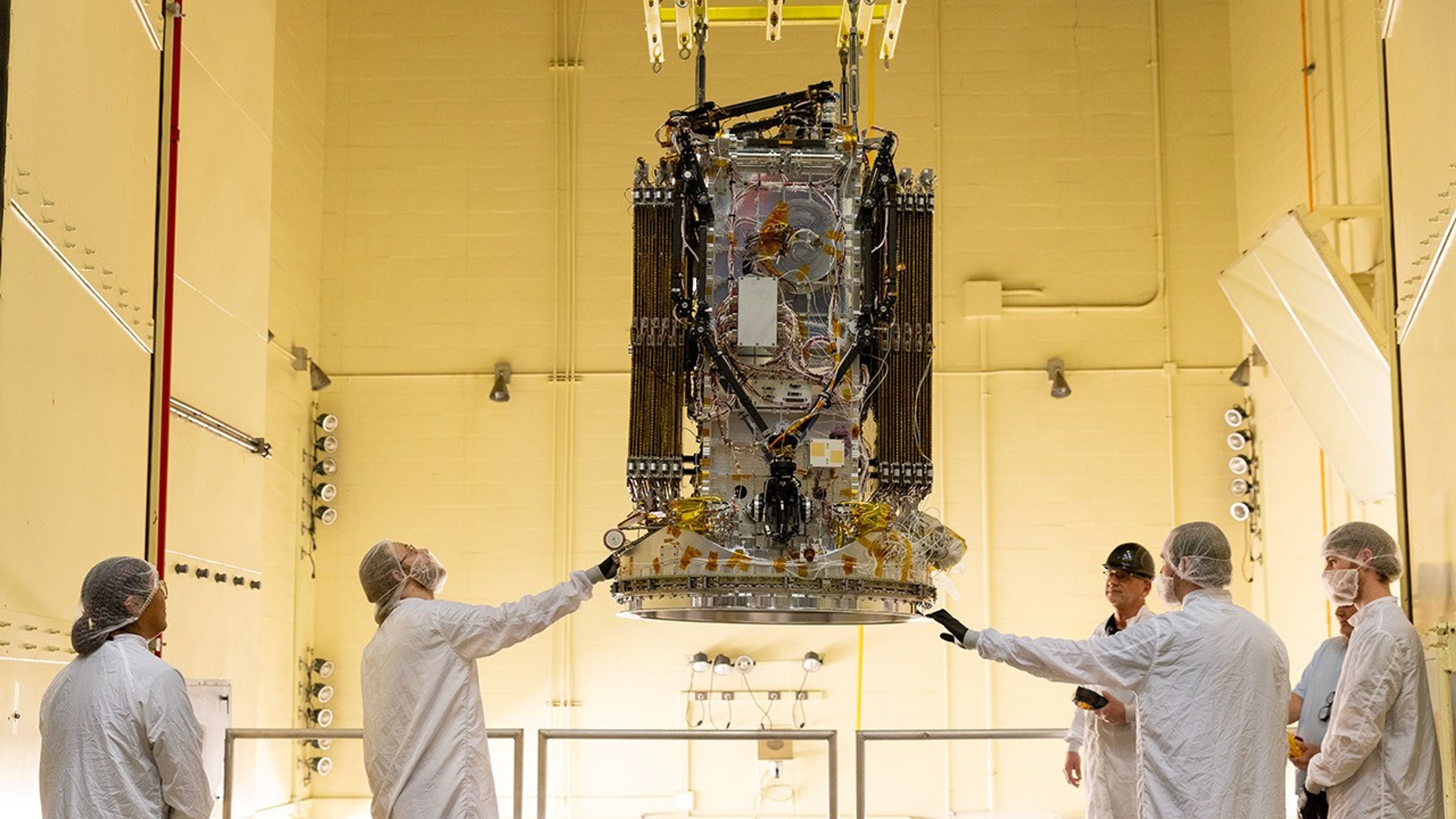
Engineers from Katalyst stabilize their LINK robotic servicing spacecraft as it moves into a vibration chamber at NASA's Goddard Space Flight Center. It will launch on June 27, 2026. (Image credit: NASA/Scott Wiessinger)
"Absolutely, no doubt. Been some sleepless nights, a number of them," Cenko told Space.com in an interview last week. "On the other hand, working with this team of folks gives me great confidence."
Cenko and NASA's Swift mission team have worked closely with Katalyst mission managers and engineers on the Swift Boost mission. Katalyst calls its rescue ship Link. It's a small spacecraft about the size of a refrigerator that has three main ion engines, three robotic arms and a suite of sensors and thrusters to attempt to capture the falling Swift observatory. Link has gone from a blank sheet of paper to a finished spacecraft attached to a rocket viaan "unprecendented development timeline," its Katalyst builders said.
"That is something that we were able to do, because every part of this mission has been driven by the exceptional urgency provided by the Swift requirements," said Kieran Wilson, Link's principal investigator at Katalyst. The top requirement: Be ready to launch before Swift falls out of space.
A risky plan
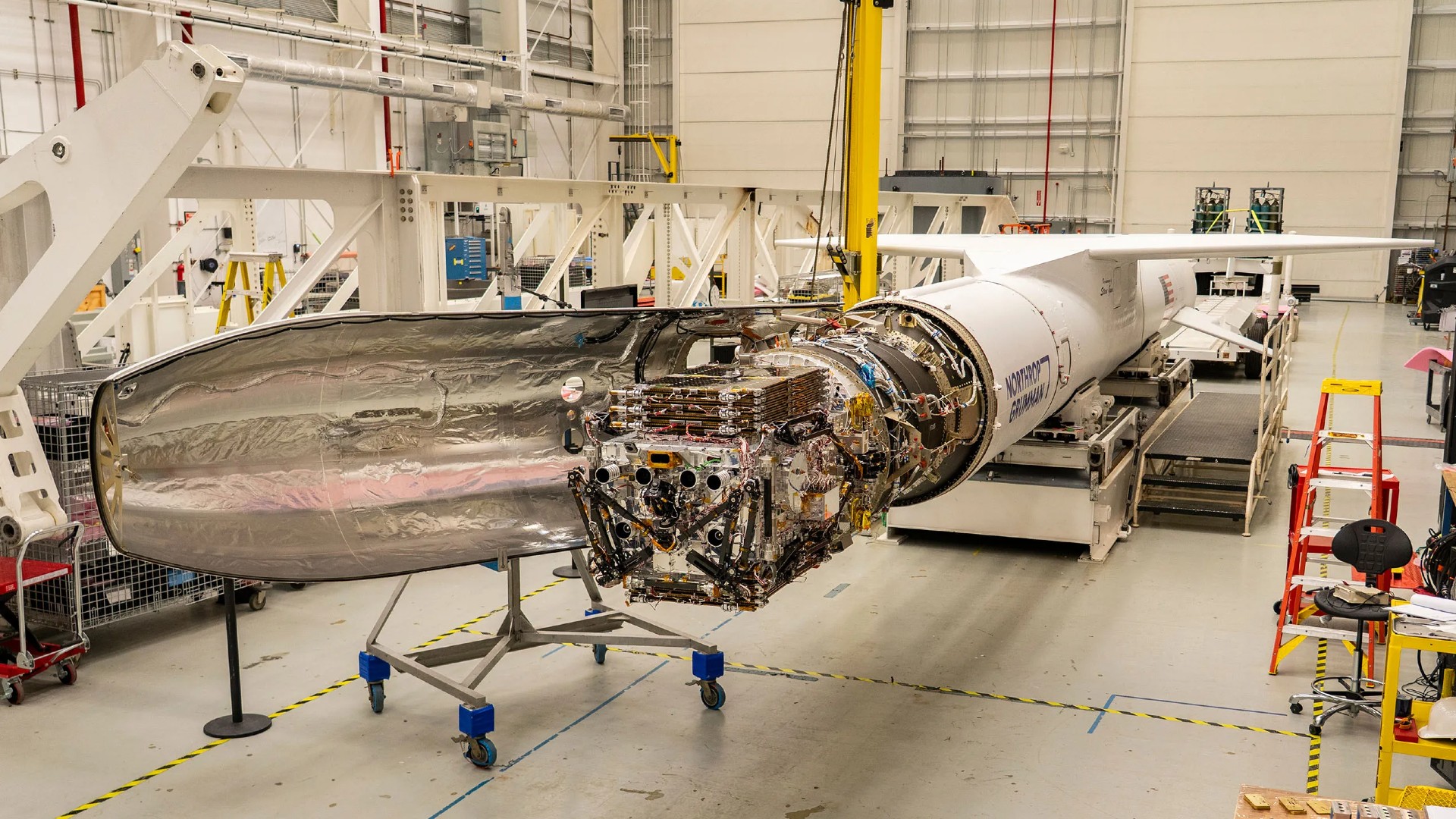
Katalyst Space's LINK robotic servicing satellite awaits encapsulation inside a Northrop Grumman Pegasus XL rocket on June 8, 2026, at NASA's Wallops Flight Facility in Virginia. Liftoff is set for June 30 at 6:23 a.m. EDT (1023 GMT) from the Reagan Missile Test Site on Kwajalein Atoll in the Marshall Islands of the South Pacific. (Image credit: NASA/Ron Beard)
Swift was originally placed in an orbit 375 miles (600 kilometers) above Earth when it launched in 2004. The spacecraft has no engines of its own to maintain its orbit. It's now on a path to fall below 186 miles (300 km) in altitude by October. At that point, Katalyst's Link may not be able to reach Swift in time to save the space telescope.
Testing and computer modeling have been key to try and iron out all the kinks in the mission.
"We've been relying on NASA expertise to ensure that we're not making silly mistakes along the way and maximize our probability of success," Wilson said.
"There's a lot of very simple things that can go wrong, and we're adding a lot of additional complexities to the program, but we've been through an aggressive test campaign over the last few months," he added.
After launch, Link will spend several weeks in orbit conducting a series of tests to ensure it is ready to try and save Swift. If all goes well, it will then rendezvous with Swift, grapple on with its robotic arms, and spend up to three months slowly raising the observatory's orbit.
If Katalyst succeeds in saving Swift, the company will have done something never accomplished in space history: reboosting an ailing space telescope using a spacecraft developed in less than a year to rescue a target that was meant to be left in space on its own forever. Katalyst sees big business in such a service, and already has a U.S. Space Force contract to demonstrate a similar capability for larger spacecraft using its new Nexus vehicle. That mission will launch in 2027.
And if Katalyst doesn't succeed? Then Swift will fall out of space on its own, something the space observatory is already going to do anyway.
Those are stark all-or-nothing stakes, but ones that Cenko can accept. The science team even put Swift in a low-power mode in February, halting all research operations to help slow its drag-induced descent.
"I also remind myself that the alternative here is that we reenter the Earth's atmosphere, so in that sense, you know, the risk here is relatively low," Cenko told me. "Maybe we can't be doing science for a few more months. But trading that against the potential benefit of many years of upsurge? That is a no-brainer."
Editor's note: This story was updated at 4 p.m. ET to reflect the new launch date and time for Swift Boost. The mission will now launch no earlier than Tuesday, June 30, at 6:23 a.m. EDT (1023 GMT).
Rocket Lab launched the "Ten Owl of Ten" mission from New Zealand today (June 26), adding to Japanese company Synspective's imaging constellation.
An Electron rocket lifted off from Rocket Lab's Launch Complex-1 (LC-1) in New Zealand today (June 26) at 1:43 p.m. EDT (1743 GMT; 5:43 a.m. on June 27 local New Zealand time).
As its name suggests, the "Ten Owl of Ten" mission sent up Synspective's 10th synthetic aperture radar (SAR) satellite, which will expand the company's network above Japan to provide imaging data for use in city planning, monitoring infrastructure and responding to natural disasters.
A Rocket Lab Electron launches a Strix Earth-observing radar satellite for the Japanese company Synspective from New Zealand on June 26, 2026. (Image credit: Rocket Lab)
The launch was Rocket Lab's 12th so far in 2026, and the ninth for Electron this year (the other flights were performed by the HASTE rocket, a suborbital variant of Electron). Electron, Rocket Lab's workhorse small-lift launch vehicle, stands 59 feet (18 meters) tall and can launch payloads weighing up to 661 pounds (300 kilograms) to low Earth orbit (LEO).
Synspective has booked Electron to launch the entirety of its Strix constellation, with 17 more on the rocket's manifest expected to launch before 2030. The satellites are named after a genus of owls, drawing inspiration from the birds' visual acuity.
Like their namesake, the Strix satellites' SAR antennas allow the spacecraft to collect Earth-observation data in every lighting condition (and also through cloud cover, which the birds can't quite match).
The patch for Rocket Lab's "Ten Owl of Ten" mission. (Image credit: Rocket Lab)
Each Strix satellite weighs about 220 pounds (100 kg), and stretches to 16.4 feet (5 meters) wide with its SAR antenna fully deployed. Each satellite has an on-orbit lifespan of about five years, according to Synspective's website. The spacecraft cruise in LEO between 15 and45 degrees of inclination.
If all goes according to plan, Electron will deliver the "Ten Owl of Ten" Strix to an inclination of 42 degrees, at a LEO altitude of 343 miles (552 kilometers).
Electron's second stage separated about 2 minutes, 40 seconds after liftoff today, with the third or "kick" stage taking over about nine minutes into flight. Payload separation occurred on schedule 45 minutes later, around T+1 hour after liftoff.
Editor's note: This story was updated at 1:50 p.m. ET on June 26 with news of successful liftoff, then again at 3:35 with news of satellite deployment.
Once again, SpaceX has looked to the stars for naming inspiration.
Elon Musk confirmed on Tuesday (June 23) that SpaceX will call its planned AI satellite megaconstellation "Starmind".
The choice should come as no surprise, as it continues the company's long-running stellar naming theme. Here's a rundown:
Starship: SpaceX's next-generation launch vehicle, the biggest and most powerful rocket ever built. Starship is designed to be fully and rapidly reusable, a breakthrough that Musk thinks will make Mars settlement economically feasible
Starbase: The company's facility in South Texas, which serves as Starship's manufacturing and launch hub. In May 2025, Starbase became an incorporated city.
Starlink: SpaceX's broadband network in low Earth orbit. Starlink is by far the biggest satellite constellation ever assembled; it currently consists of nearly 10,700 active units, and the number is growing all the time.
Stargaze: SpaceX's space situational awareness system, which uses Starlink satellites to monitor traffic in low Earth orbit.
Starshield: A modified version of the Starlink satellite that flies national security missions for the U.S. government, focusing on Earth observation, communications and payload-hosting tasks.
Starfall: SpaceX's newly unveiled uncrewed return capsule, which is designed to carry materials from orbit safely down to Earth.
Starfactory: The huge Starship production facility at Starbase, which covers about 1 million square feet (93,000 square meters).
Starmind is perhaps the most ambitious of all of these stellar projects. If everything goes according to plan, the megaconstellation will be about 100 times bigger than the current version of Starlink.
"By directly harnessing near-constant solar power with little operating or maintenance costs, these satellites will transform our ability to scale compute," Musk wrote in a February 2026 update about the company's planned AI network.
"It's always sunny in space!" he added. "Launching a constellation of a million satellites that operate as orbital data centers is a first step towards becoming a Kardashev II-level civilization, one that can harness the sun's full power, while supporting AI-driven applications for billions of people today and ensuring humanity's multi-planetary future."
The "star" theme has apparently supplanted a previous SpaceX nomenclature convention. The company named its original rocket line "Falcon" after the Millennium Falcon, Han Solo's ship in the "Star Wars" universe, then followed this same birds-of-prey theme for the vehicles' engines ("Merlin" and "Kestrel"). The company's next-gen engine, the one that gets Starship off the ground, still follows this older custom: it's called "Raptor."
SpaceX launched another batch of its Starlink satellites from California's central coast on Wednesday night (June 24).
A Falcon 9 rocket lifted off from Vandenberg Space Force Base on Wednesday at 11:30 p.m. EDT (8:30 p.m. local time; 0330 GMT on June 25), carrying 24 of the broadband spacecraft to low Earth orbit (LEO).
The Falcon 9's first stage came back to Earth about 8.5 minutes after launch as planned, touching down in the Pacific Ocean on the SpaceX drone ship "Of Course I Still Love You."
A SpaceX Falcon 9 rocket launches 24 Starlink satellites to orbit from California's Vandenberg Space Force Base on June 24, 2026. (Image credit: SpaceX)
According to a company mission description, it was the 25th flight for this particular booster, which is known as B1081.
The rocket's upper stage, meanwhile, continued hauling the 24 satellites to LEO. The spacecraft were deployed there on schedule, just under 62 minutes into flight, according to SpaceX.
Wednesday's launch was the 74th Falcon 9 liftoff of the year, and the 59th of 2026 devoted to building out the Starlink megaconstellation. Starlink is by far the biggest satellite network ever assembled; it currently consists of nearly 10,700 active units, and the number goes up all the time.
SpaceX has launched two non-Falcon 9 missions this year as well. On April 29, a Falcon Heavy lofted the Viasat-3 F3 telecom satellite. And the company's Starship megarocket launched on its 12th-ever test flight on May 22.
Editor's note: This story was updated at 2:40 a.m. ET on June 25 with news of successful launch, rocket landing and satellite deployment.
SpaceX just launched a brand-new return capsule that it has been developing in the dark.
That vehicle, called Starfall, lifted off atop a Falcon 9 rocket this morning (June 23), on a test mission designed to show that it can fly in a controlled fashion and survive the fiery trip down through Earth's atmosphere.
The demonstration flight may have caught some space fans by surprise, for SpaceX has revealed little about Starfall to date. And that air of secrecy extended through today's launch; the company cut off its webcast about 10 minutes after liftoff, a practice usually associated with national security missions.
SpaceX provided a very brief overview of Starfall today, saying via X that the new vehicle "will enable affordable, routine access to the microgravity environment for scientific research and in-space manufacturing."
Details about the vehicle are harder to come by — but we have some, thanks to an environmental assessment published by the U.S. Federal Aviation Administration (FAA) last month. That report looked at the potential environmental impact of two Starfall demonstration reentries, one or both of which was set in motion by today's launch. (It's unclear how many Starfall vehicles the Falcon 9 lofted on this initial flight.)
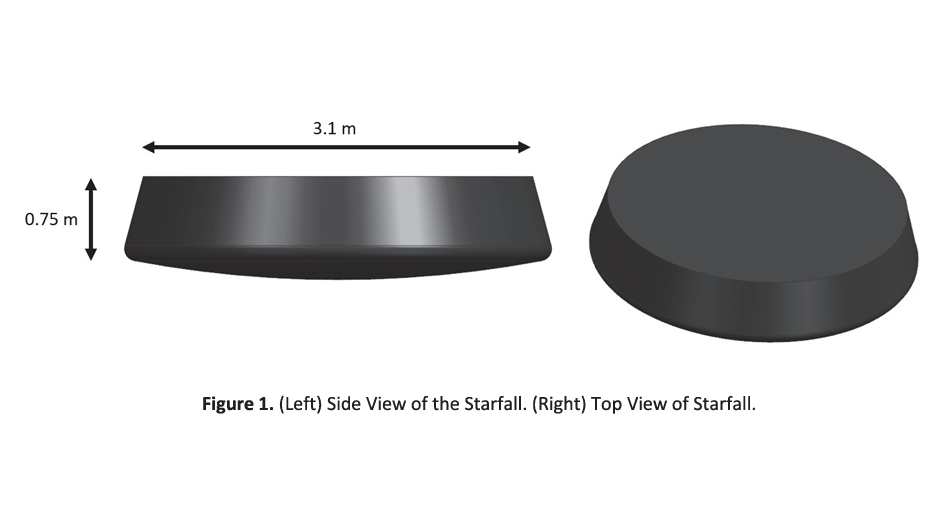
According to the FAA document, Starfall is a disk-shaped spacecraft that stands about 2.5 feet (0.75 meters) tall, with a diameter of 10.2 feet (3.1 m). It weighs roughly 4,600 pounds (2,100 kilograms) and can carry about 2,200 pounds (1,000 kg) of payload. The vehicle can launch on both the workhorse Falcon 9 and Starship, the megarocket SpaceX is developing to help humanity settle the moon and Mars, among other tasks.
Starfall consists of two parts: an aluminum "top plate" that weighs about 3,090 pounds (1,400 kg) and a detachable carbon-fiber heat shield. Cargo rides in the top plate, which features a payload bay 8.2 feet long, 4.9 feet wide and 1.6 feet tall (2.5 by 1.5 by 0.5 m).
For comparison, SpaceX's Dragon capsule, which routinely flies people and cargo to and from the International Space Station, stands about 14.7 feet (4.5 m) tall, with a diameter of 13.0 feet (4.0 m). Dragon can haul about 13,230 pounds (6,000 kg) to low Earth orbit and bring 6,600 pounds (3,000 kg) back down, according to its SpaceX specifications page.
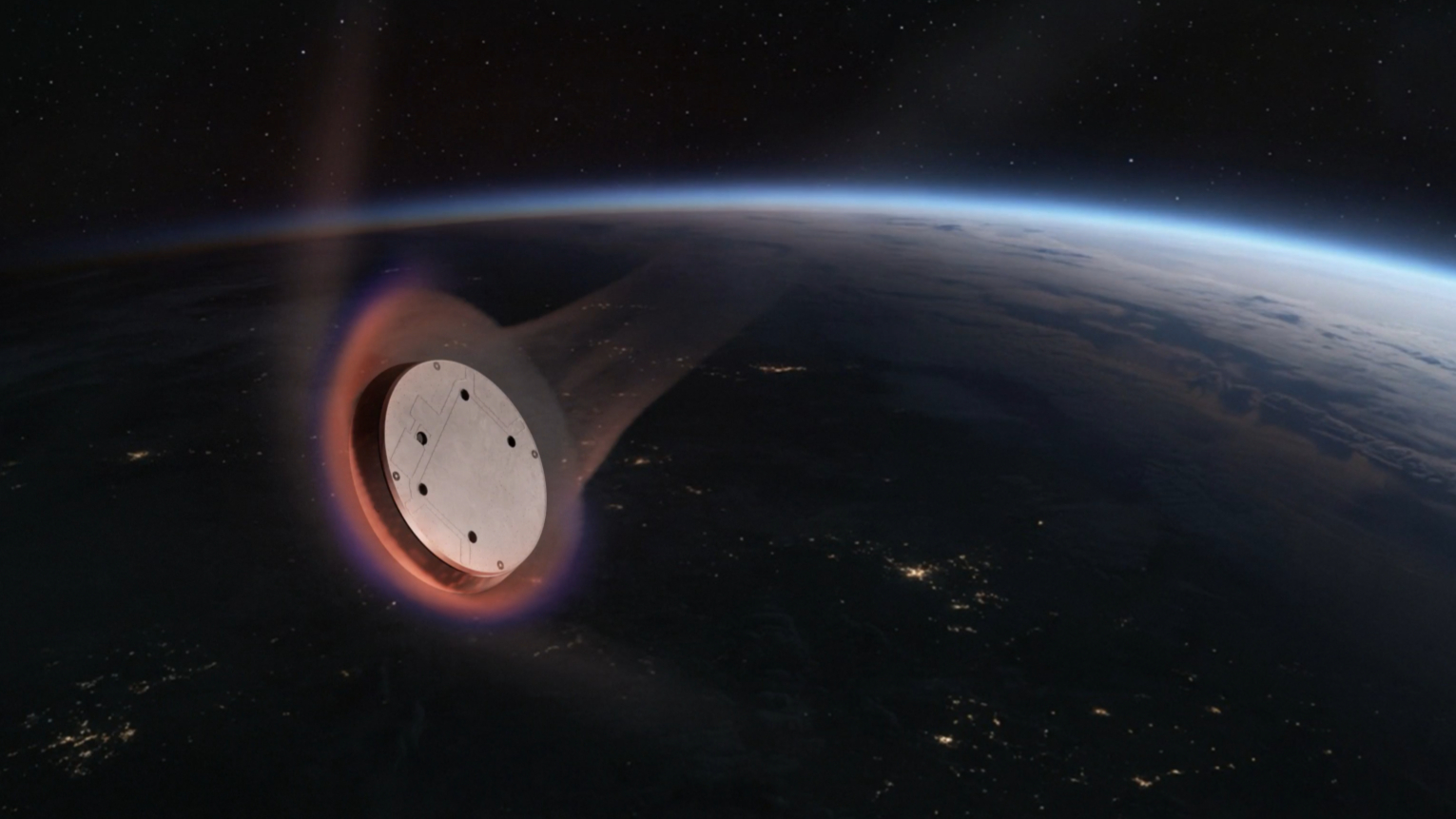
Artist's illustration of a SpaceX Starfall capsule reentering Earth's atmosphere. (Image credit: SpaceX)
Starfall is not capable of carrying astronauts. And, in another departure from Dragon, the newly debuted return vehicle does not have a traditional propulsion system.
It has only "an attitude control system which uses compressed inert gas (for example, compressed nitrogen gas) to perform small attitude control maneuvers, such as pointing the capsule's heat shield in the correct direction to safely reenter Earth's atmosphere," the FAA's assessment reads.
"Capsules do not have the ability to de-orbit themselves and can only control their attitude," it adds. "Individual capsules would reenter Earth's atmosphere on a pre-planned trajectory and splash down with the assistance of parachutes."
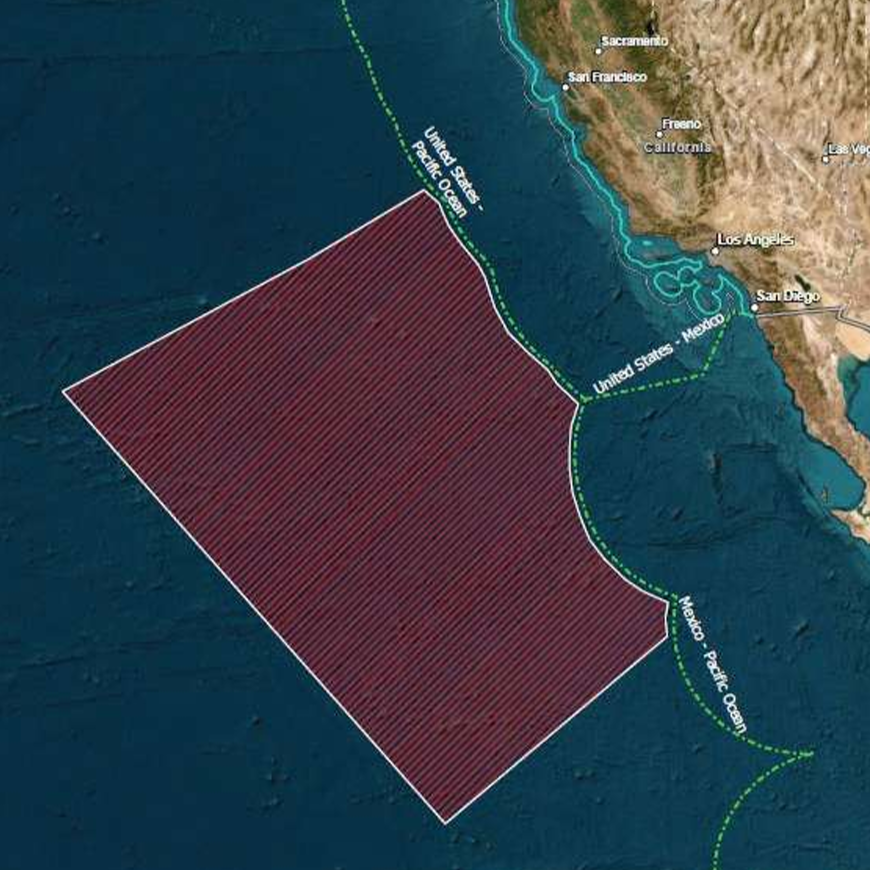
That splashdown — at least of the first two Starfall vehicles — will take place in the open Pacific Ocean, about 700 nautical miles (1,300 kilometers) off the west coast of the United States. Starfall, and its cargo, will then be collected by recovery boats.
SpaceX has two main goals for Starfall, according to the FAA document. The vehicle will "enable point-to-point delivery of critical cargo through space on rapid timelines" and also "create a self-sustaining commercial in-space manufacturing market by offering access to microgravity and vacuum, loiter on orbit, and safe return from orbit as a service at scale."
An illustration of a Starfall vehicle from an Environmental Assessment published by the Federal Aviation Administration. (Image credit: Federal Aviation Administration (FAA).)
SpaceX isn't alone in pursuing these opportunities. For example, the California-based company Varda Space has already launched and landed five of its 650-pound (300 kg) "W-series" spacecraft, which are designed to be both orbital mini-factories and return capsules.
And another California outfit, Outpost Space, is developing a line of "CarryAll" return vehicles that can get very large payloads — those weighing up to 22,000 pounds (10,000 kg) — down from space with pinpoint accuracy, within 80 feet (25 m) of a target anywhere on Earth.
The CarryAll Block 3 will be a "flagship vehicle for in-space manufacturing and warehousing, Earth return, military resilience and humanitarian aid," Outpost's website states.
SpaceX is targeting an area 700 nautical miles (1,300 km) off the United States West Coast for Starfall splashdowns. (Image credit: Federal Aviation Administration (FAA))
So SpaceX is not breaking new ground with Starfall. But the company is poised to play a leading role in the nascent Earth-return field, thanks to its launch dominance and vertical integration.
The Falcon 9 flew a whopping 165 times in 2025, after all, and SpaceX envisions launching Starship thousands of times per year when that massive rocket comes fully online. So it shouldn't be too difficult for SpaceX to send hundreds of Starfall vehicles up and then back down again, delivering space-made pharmaceuticals and other high-value goods to customers around the world.