SpaceX launches 81 satellites to orbit from California, lands rocket on ship at sea

SpaceX launched a passel of satellites to orbit early Tuesday morning (July 7).

A Falcon 9 rocket carrying 81 payloads lifted off from California's Vandenberg Space Force Base on Tuesday at 3:12 a.m. EDT (0712 GMT; 12:12 a.m. local California time), kicking off a mission SpaceX called Transporter-17.

As that name suggests, Transporter-17 was the 17th flight of SpaceX's Transporter rideshare program. The company operates another rideshare series as well, called Bandwagon, which has launched four missions to date.

The 20 Transporter and Bandwagon missions that flew before Transporter-17 sent more than 1,800 payloads to Earth orbit. Transporter-1 lofted 143 of those back in January 2021, which remains the global single-launch record.

The 81 payloads that went up on Transporter-17 included "cubesats, microsats, hosted payloads and orbital transfer vehicles carrying eight of those payloads to be deployed at a later time," SpaceX wrote in a mission description.

Perhaps the biggest satellite riding the Falcon 9 on Tuesday was CAS500-4, a South Korean Earth-observation craft that tips the scales at about 1,100 pounds (500 kilograms).

The satellite, whose name is short for "Compact Advanced Satellite 500-4," is the fourth member of a planned five-satellite CAS500 fleet in low Earth orbit (LEO). CAS500-4 will help the South Korean government monitor crops and forests, among other tasks.
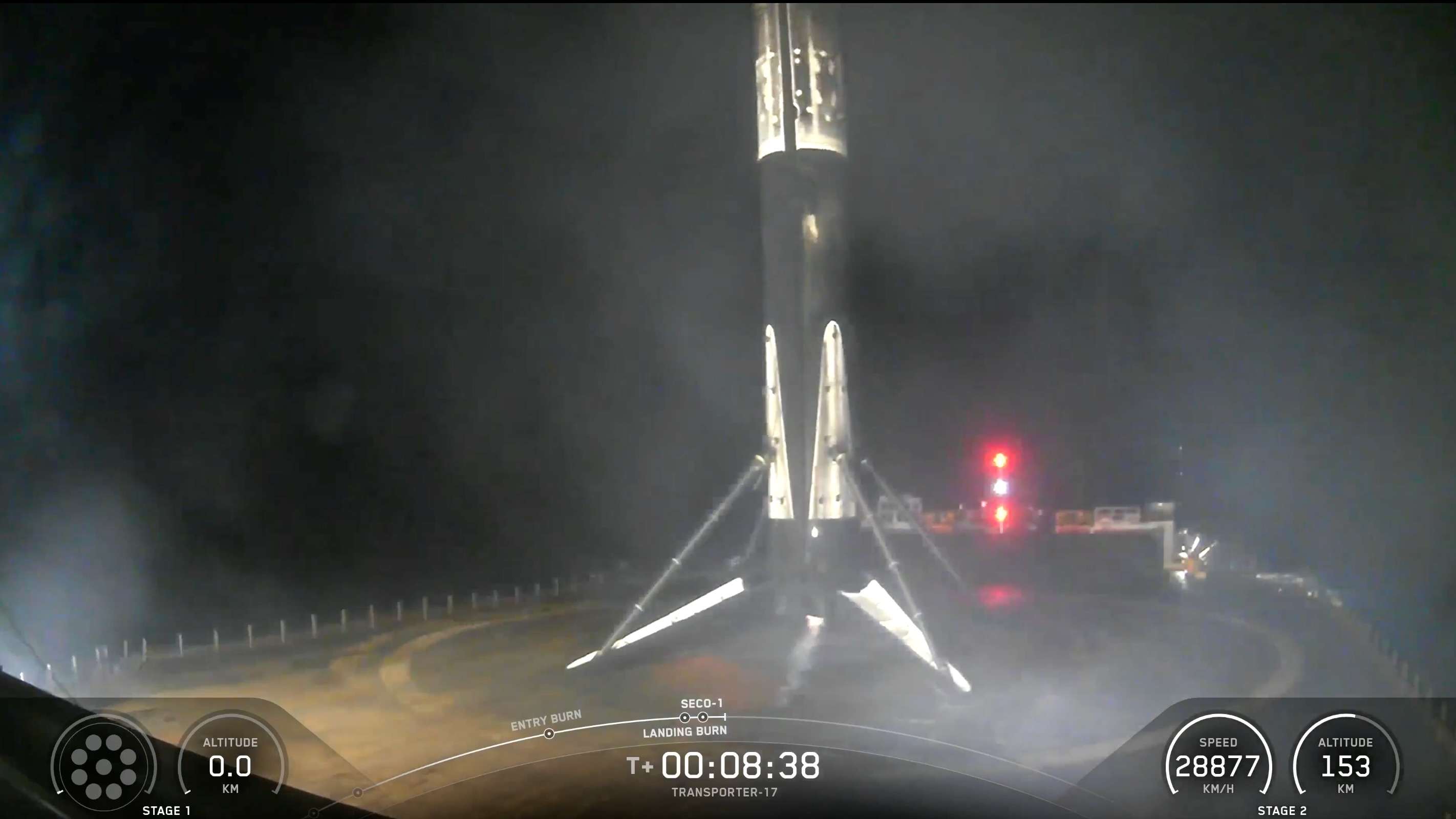
a black and white rocket rests on the deck of a ship at sea at night

The first stage of a SpaceX Falcon 9 rocket rests on the deck of a drone ship shortly after launching the Transporter-17 rideshare mission from Vandenberg Space Force Base in California on July 7, 2026. (Image credit: SpaceX)

The first stage of the Transporter-17 Falcon 9 landed about 8.5 minutes after launch on the SpaceX droneship "Of Course I Still Love You," which was stationed in the Pacific Ocean. It was the 11th flight for this particular booster, according to the company's Transporter-17 mission description.

The Falcon 9's upper stage, meanwhile, continued hauling the 81 payloads to LEO, where they'll be deployed starting about 50.5 minutes after launch. CAS500-4 won't be released until nearly 2.5 hours after liftoff.

Transporter-17 was the 79th Falcon 9 launch of 2026. Nearly 80% of this year's missions have been devoted to building out Starlink, SpaceX's giant broadband constellation in LEO.

Editor's note: This story was updated at 3:25 a.m. ET on July 7 with news of successful launch and rocket landing.
Unidentified metal spheres found on Australian beach are ‘debris from a foreign rocket body’, space agency says

Mysterious metallic-looking spheres have appeared on a northeastern Australian beach, prompting the Australian Space Agency to warn residents to be on the lookout for what they state is likely space debris.

Australia is investigating the possible space debris incident in conjunction with authorities in Queensland as well as the National Emergency Management Agency, the country's space agency wrote on X late on Sunday (July 5).

"The recovered objects appear to be pressure vessels from a space launch vehicle. The agency has identified the likely source," the statement read in part. "The objects' location and characteristics are consistent with debris from a foreign rocket body that recently re-entered the atmosphere from orbit."

The agency advised residents not to touch the pieces, which might be hazardous, and to report them immediately if found. "The agency is continuing to engage with international authorities to formally confirm the launch vehicle and launching state," the statement added.

The objects washed up in Forrest Beach, which is in Queensland — the northeastern state of Australia facing the Coral Sea, and somewhat near Papua New Guinea. So far, there has been no public analysis of these pieces by companies or individuals who track space debris, nor any public acknowledgement by a foreign space agency or group.

Based only on proximity, there are a few weekend launch possibilities from China, although the orbits and timings would have to be checked. China launched a Long March 6 rocket with satellites on Saturday (July 4), as well as a Long March 8A with another satellite group on Sunday (July 5).

China also test-fired a submarine missile in the Pacific Ocean on Monday (July 6), Reuters reported, although the timing of that appears to fall after the debris was found.

China has also been scrutinized in recent months for its practice of leaving rocket stages in orbit rather than deliberately bringing them into Earth's atmosphere, including in a recent report by LeoLabs and online posts by retired SDA orbital debris analyst Jim Shell.

1 private spacecraft intercepts another on Space Force’s groundbreaking ‘Victus Haze’ mission

A U.S. Space Force mission pitting two satellites against each other has been deemed a success, completing its first tactical intercept of an orbital target.

The news comes less than two weeks after Rocket Lab broke a spaceflight readiness record, launching the company's Pioneer-class Puma satellite aboard an Electron rocket on June 19, delivering the second spacecraft of the Space Force's Victus Haze mission just 16 hours and 42 minutes after receiving notice. The mission's first satellite, True Anomaly's JACKAL-0004 vehicle, was launched to orbit on a SpaceX Falcon 9 rocket in May, where it awaited the yet-unannounced launch of its counterpart.

Once Puma reached space as well, the vehicles were tasked with rapid acquisition, rendezvousing and assessment operations to simulate the interception and characterization of potential adversary spacecraft. Space Force's Space Systems Command put a 72-hour deadline for the orbital sortie's successful completion, which wrapped up 11 hours ahead of schedule, according to a True Anomaly statement.

It's Space Force's second Tactically Responsive Space (TacRS) mission. The first, Victus Nox, was launched by Firefly Aerospace in September 2023, and was focused on space domain awareness capabilities. The tactical engagement of two spacecraft in orbit on Victus Haze is a brand-new accomplishment for the Space Force, which continues to fortify its orbital posture against a rising threat of potential "non-compliant satellites," according to a Rocket Lab statement.

During its mission to hunt down Puma, Jackal was able to demonstrate several critical capabilities, including proximity operations and satellite image identification. "Jackal performed exactly as designed, demonstrating precise propulsion burns and nominal ingress, successful closed-loop tracking, precision pointing, imaging and characterization of the target before egressing to its base orbit," the True Anomaly statement said.

According to the Space Force, the two spacecraft participated in several space domain awareness threat-response scenarios and "dynamic engagements with the other."

“Victus Haze is primed to further demonstrate our readiness to lean on our commercial partners to deny, disrupt, and counter any adversarial advantage — no matter where they try to operate in space,” acting Space Force portfolio acquisition executive Col. Bryon McClain said in the Space Force statement.

Once mission operations began, True Anomaly handed control of Jackal over to the company's "space superiority software," Mosaic, which executed planning of the sortie with Puma. Puma's vehicle platform, Pioneer, was designed, launched and operated by Rocket Lab.

"Victus Haze proves that responsive launch and responsive characterization are a single capability. Acquire a new object within hours, close the geometry, and deliver the imagery. The next step is cadence: faster, more often, and across more orbits," True Anomaly's press release said.

SpaceX Falcon 9 rocket launches 24 Starlink satellites from California (video)

SpaceX grew its Starlink network by 24 more satellites on Wednesday evening (July 1) with a launch from California.

A Falcon 9 rocket carrying the two dozen new relay spacecraft (Group 17-46) lifted off from Space Launch Complex 4 East at Vandenberg Space Force Base at 10:58 p.m. EDT (0258 GMT on July 2 or 7:58 p.m. PDT local time). About an hour later, SpaceX confirmed the satellites were successfully deployed in low Earth orbit.

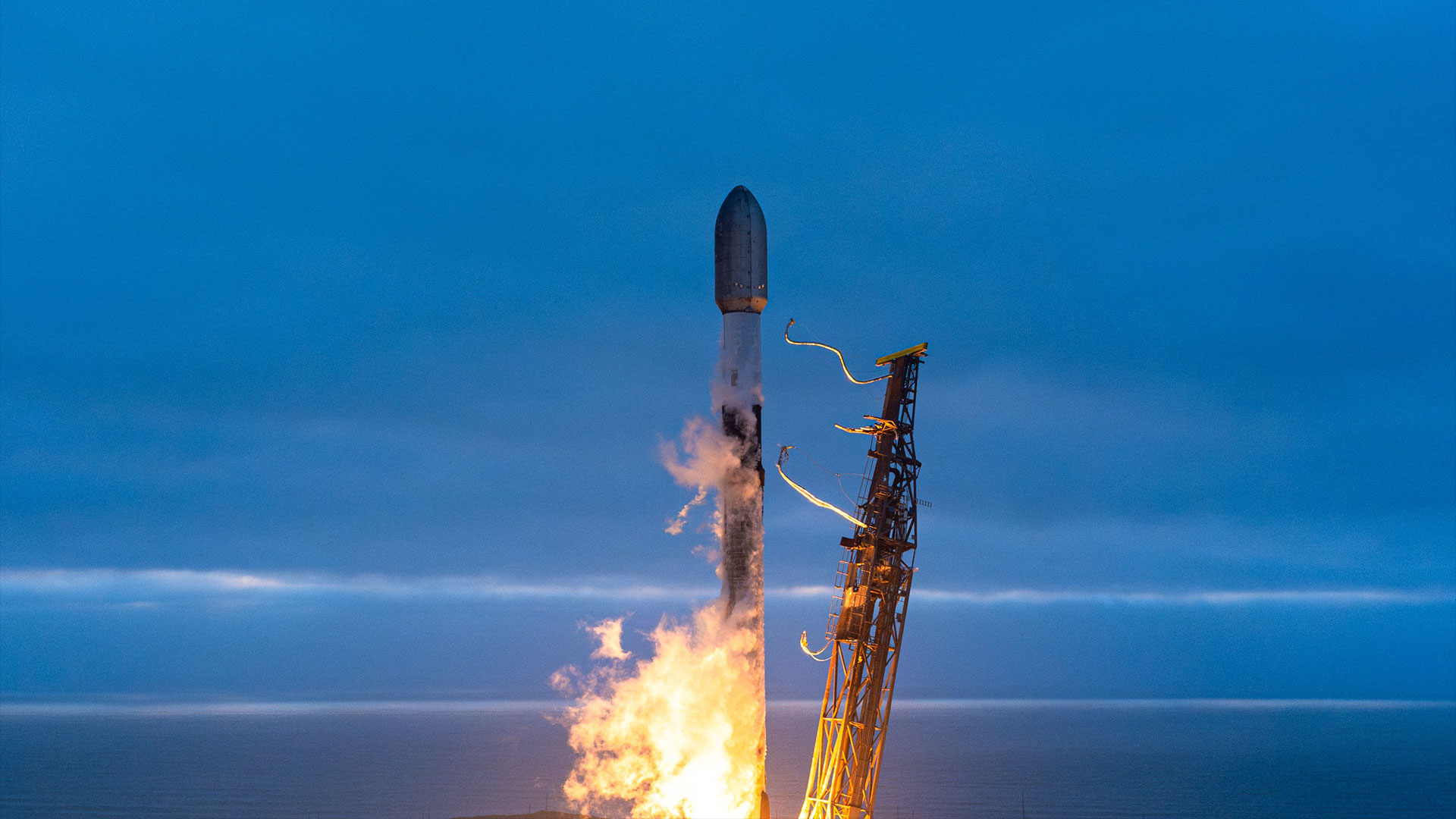
A white and black rocket launches into an overcast evening sky from an ocean-side pad.

A SpaceX Falcon 9 rocket carrying 24 Starlink satellites launched from Vandenberg Space Force Base in California on Wednesday, July 1, 2026. (Image credit: SpaceX)
Previous Booster B1100 launches

NROL-105 | 5 Starlink missions

The Falcon 9's first stage (Booster 1100) completed its seventh flight to space and back, landing on the drone ship "Of Course I Still Love You" positioned in the Pacific Ocean.

SpaceX's Starlink megaconstellation now totals more than 10,700 active satellites, according to tracker Jonathan McDowell. The service supports connectively around the globe, as well as in-flight and direct-to-cell services.

Wednesday's launch was SpaceX's 79th Falcon 9 liftoff of the year.

SpaceX fires up all 6 of Starship’s engines ahead of 13th test flight (video)

Less than a week after its last test, SpaceX's latest Starship spacecraft went back to the stand for engine checkouts ahead of a coming test flight.

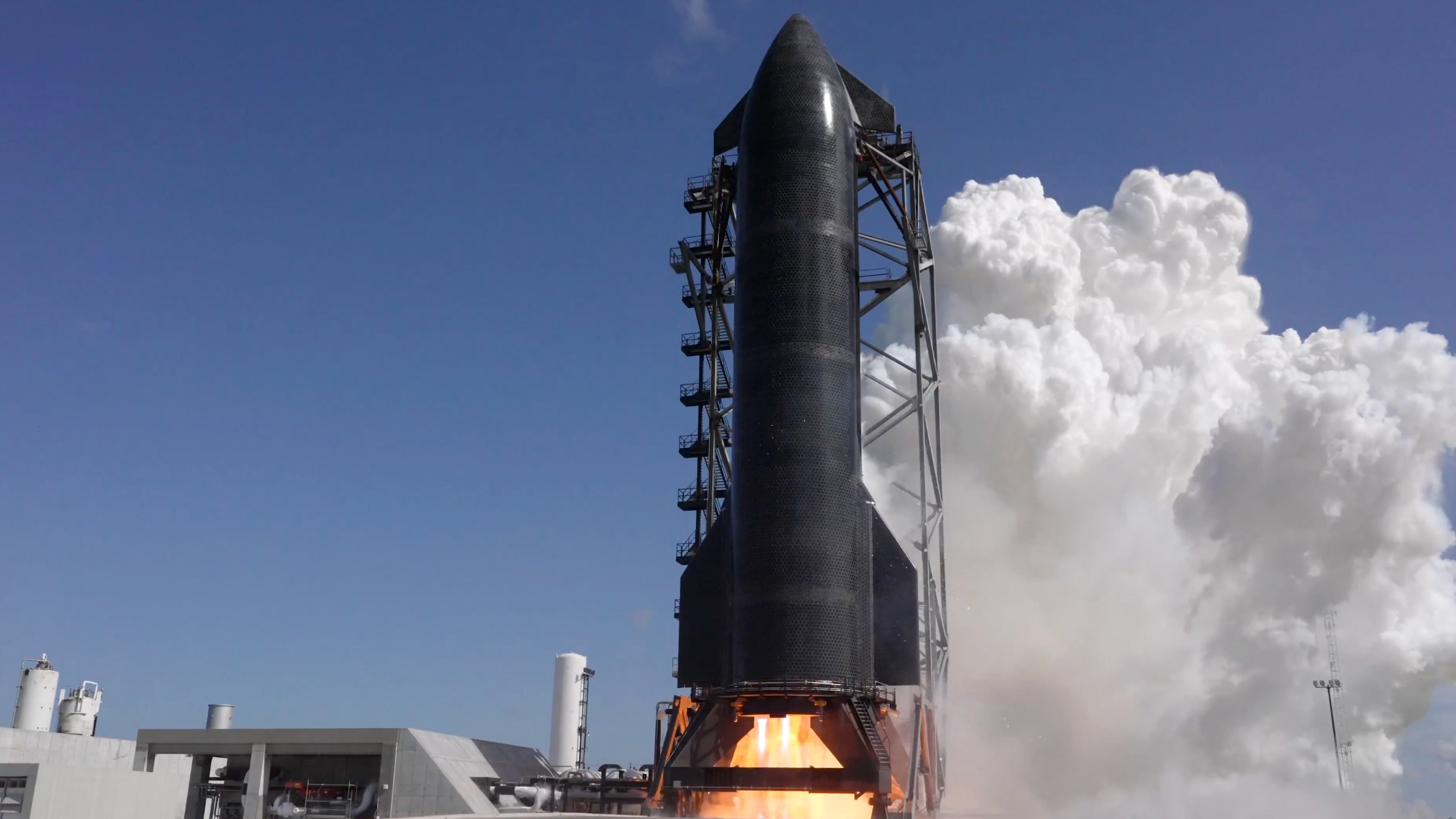
The upper stage for SpaceX's giant Starship rocket, referred to simply as "Ship" — Ship 40, in this case — underwent a static-fire test of all six of its Raptor engines at the company's Massey site in Starbase, Texas. Ship 40 is in line for the 13th test flight of a fully stacked Starship, which is expected within the next month or so.

SpaceX posted a video of the engine test to its X account on Thursday (July 2), showing several angles of the ignition sequence and all six engines (Ship is equipped with three sea-level and three vacuum-optimized Raptors) firing to simulate flight-like conditions on the vehicle.

SpaceX conducts a static fire test with Ship 40, the upper-stage spacecraft slated to fly Starship's 13th test flight. The company posted this imagery on X on July 2, 2026.

SpaceX conducts a static fire test with Ship 40, the upper-stage spacecraft slated to fly Starship's 13th test flight. (Image credit: SpaceX)

Ship 40 conducted its first-ever static fire last week, lighting a single Raptor for about 15 seconds. This more recent test involved all six Raptors and lasted a full minute, according to SpaceX.

Ship 40 will take part in the second "Version 3" (V3) Starship launch; SpaceX debuted the updated rocket prototype during a test flight on May 22. That mission went smoothly, for the most part, but it wasn't a complete success; the rocket's Super Heavy booster failed to maneuver its way to a soft ocean splashdown as planned. So the upcoming Flight 13 will likely mirror much of the flight path and mission objectives as Flight 12, including relighting one of Ship's Raptor engines in space.

Starship is SpaceX's super-heavy lift rocket, designed for seamless landing and reuse. The more capable V3 stands 408 feet (124.4 meters) tall — about 5 feet (1.5 m) taller than V2 — and is the biggest, most powerful rocket ever to fly.

Once development is complete and the vehicle is fully operational, SpaceX has big plans for the rocket, including the expansion of its Starlink satellite-internet network in low Earth orbit and landing NASA astronauts on the moon as a part of the Artemis program. The spacecraft will also be capable of delivering heavier payloads to orbit than any other rocket in history.

The success of this most recent engine test puts SpaceX one step closer to Starship Flight 13. Next steps ahead of that launch will include rolling the mission's Super Heavy booster to the pad at Starbase for engine tests of its own. Super Heavy sports 33 Raptor engines at its business end, which produce nearly 20 million pounds of thrust at liftoff. Should Super Heavy's static fire tests go smoothly, Flight 13 could happen as early as August.

Atlas V rocket launches 29 Amazon Leo broadband satellites to orbit from Florida (video)

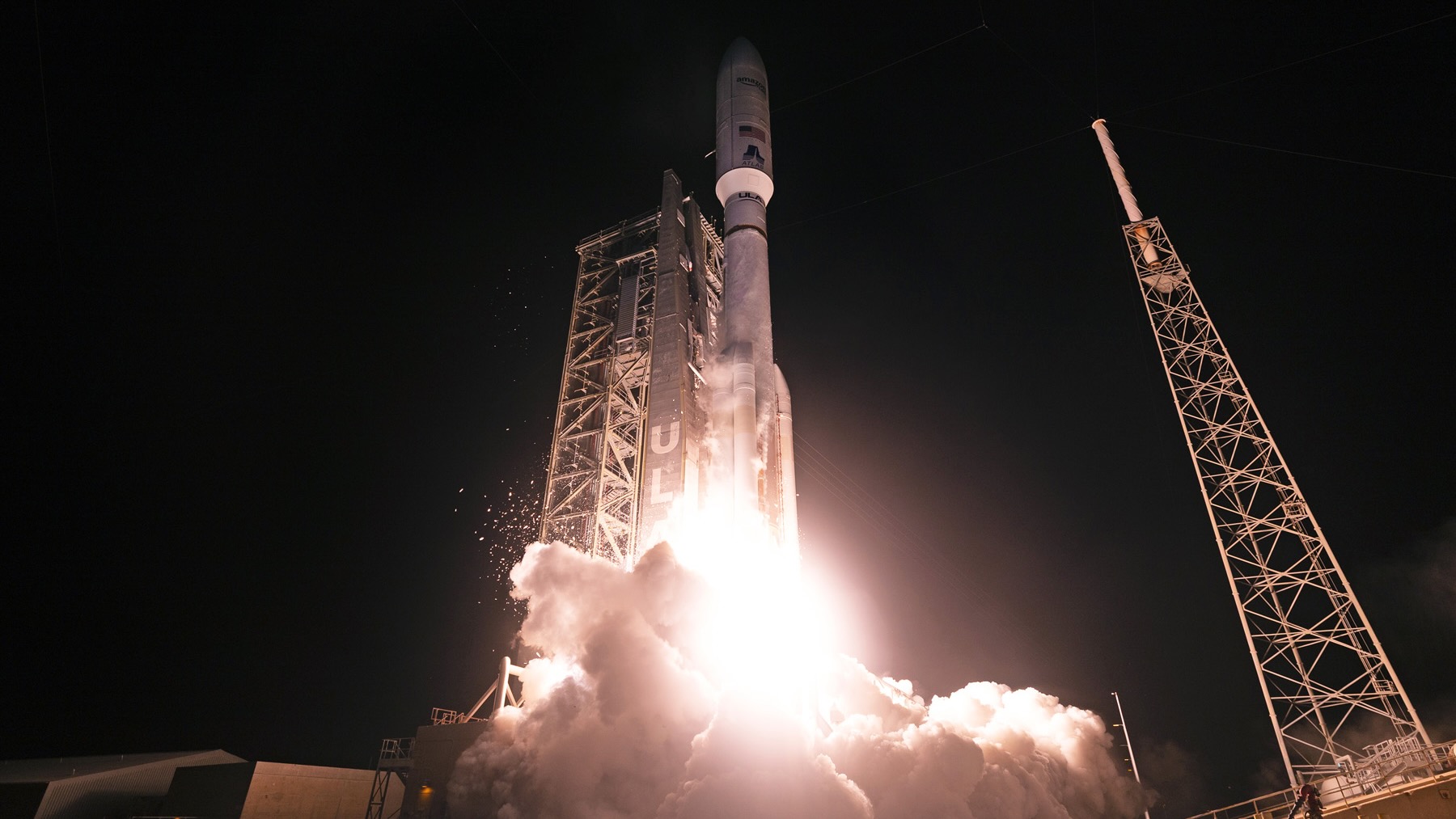
United Launch Alliance (ULA) launched another batch of Amazon's internet satellites to orbit early Thursday morning (July 2).

An Atlas V rocket carrying 29 Amazon Leo spacecraft lifted off from Florida's Cape Canaveral Space Force Station on Thursday at 12:30 a.m. EDT (0430 GMT).

All of the satellites were successfully deployed in low Earth orbit (LEO) as planned, ULA announced 70 minutes after liftoff.

A United Launch Alliance Atlas V rocket launches 29 Amazon Leo satellites from Cape Canaveral Space Force Station on July 2, 2026.

A United Launch Alliance Atlas V rocket launches 29 Amazon Leo satellites from Cape Canaveral Space Force Station on July 2, 2026. (Image credit: ULA)

Amazon Leo is the Amazon's broadband megaconstellation in LEO (hence the name), which will eventually consist of about 3,200 satellites. It will compete with SpaceX's Starlink network, which has nearly 11,000 satellites at present and is growing all the time.

About 400 Amazon Leo craft have reached orbit on a total of 15 missions to date, atop three different rockets — the Atlas V, SpaceX's Falcon 9 and Arianespace's Ariane 6.

The Atlas V has been the most active of this trio, conducting nine of the liftoffs for the megaconstellation, which was originally known as Project Kuiper. (The first of those Atlas V launches lofted two prototype satellites, not operational craft, which explains why Thursday's mission was called Amazon Leo 8 rather than Amazon Leo 9.)

The Atlas V that flew on Amazon Leo 8 was the 551, the most powerful variant of the rocket. The numbers mean that it sports five solid rocket boosters, a 5-meter-wide (16.5 feet) payload fairing and a Centaur upper stage with a single engine.

The 29 Amazon Leo satellites that went up on Thursday weighed a total of about 18 tons, tying the record for the heaviest load ever launched by an Atlas V. That mark was set on the Amazon Leo 5 mission in early April and has been equaled multiple times since.

Editor's note: This story was updated at 2:50 a.m. ET on July 2 with news of successful launch and satellite deployment.

Rocket Lab aborts launch of Japanese Earth-observing radar satellite at last second

Update for 11 p.m. ET on June 30: Rocket Lab tried to launch "The Grain Goddess Provides" mission at 9 p.m. EDT on June 30 but aborted the attempt at the last second. It's unclear at the moment what caused the abort or when the company will try to fly again.

Rocket Lab will launch a Japanese Earth-observing radar satellite to orbit tonight (June 30), and you can watch the action live.

An Electron rocket carrying the QPS-SAR-13 satellite is scheduled to lift off from Rocket Lab's New Zealand site tonight at 9 p.m. EDT (0100 GMT and 1 p.m. local New Zealand time on July 1).

You can watch the launch live here at Space.com courtesy of Rocket Lab, or directly via the company. Coverage will begin about 30 minutes before liftoff.

a black and white rocket stands on a launch pad beneath a blue sky

A Rocket Lab Electron stands on the pad shortly after a launch abort on June 30, 2026. (Image credit: Rocket Lab)

Japan-based iQPS is building a constellation of 36 satellites in low Earth orbit that study Earth using high-resolution synthetic aperture radar (SAR). SAR spacecraft can peer through clouds and gather data at night as well as during the day.

Tonight's launch, which Rocket Lab calls "The Grain Goddess Provides," will be the eighth, out of a total of 15, that it will perform to assemble iQPS' constellation.

If all goes according to plan tonight, Electron will deploy the iQPS satellite — which is nicknamed Mikura-I, after a Japanese goddess associated with abundance and prosperity — about 50 minutes after liftoff, into a circular orbit 357 miles (575 kilometers) above Earth.

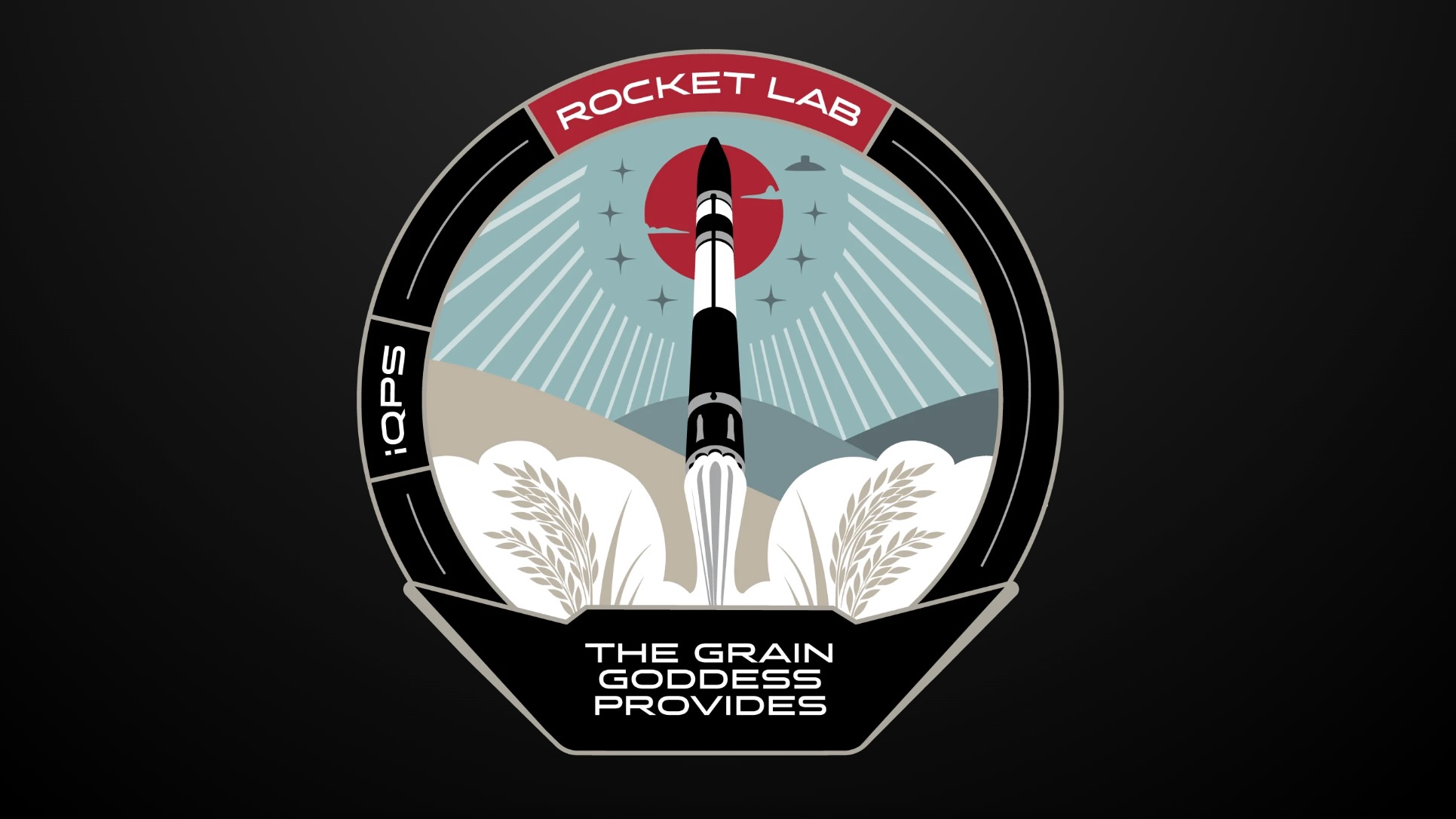
a circular space mission patch showing a white and black rocket launching with a red sun in the background

The patch for Rocket Lab's "The Grain Goddess Provides" mission, which is scheduled to launch on June 30, 2026. (Image credit: Rocket Lab)

"The Grain Goddess Provides" will be Rocket Lab's 92nd mission to date and its 13th of 2026 already. The vast majority of these launches have involved the 59-foot-tall (18-meter-tall) Electron, which gives small satellites dedicated rides to orbit. A small number have been performed by HASTE , a suborbital version of Electron that helps customers test hypersonic technologies.

Tonight's launch will come just a day after Rocket Lab made a big business move: On Monday (June 29), Rocket Lab announced that it's acquiring the communications company Iridium for $8 billion.

"By combining our launch capability and satellite manufacturing with @IridiumComm’s global satellite communications network and rare spectrum, Rocket Lab becomes a fully integrated, self-launching, tier-1 space power, delivering critical communications capability to millions of users worldwide," Rocket Lab said via X on Monday.

Blue Origin starts rebuilding launch pad damaged by New Glenn rocket explosion — and it will look very different when it’s done

Blue Origin has started rebuilding the launch pad damaged by an explosive accident last month, but the company is working from a very different blueprint this time around.

The company's huge New Glenn rocket exploded on May 28 during a routine engine test at Launch Complex 36A (LC-36A) at Florida's Cape Canaveral Space Force Station. The rocket was destroyed, as were some important pieces of pad infrastructure, including the lightning tower and the transporter-erector, which hauled New Glenn from its integration facility to the pad and raised it vertical upon arrival.

Blue Origin has vowed to bounce back quickly, aiming to fly the 320-foot-tall (98-meter) New Glenn again by the end of the year. Getting LC-36A rebuilt is a high priority, for the pad is currently New Glenn's only jumping-off point. And Blue Origin has made significant progress on this front the company announced today (June 30).

"Hardware recovery and debris removal operations are complete, and reconstruction of the pad has started," the company's CEO, Dave Limp, said in a statement today.

Reconstruction will not create a facsimile of the original LC-36A, however. Blue Origin is building a new version of the pad, one that lines up with a new concept of operations (ConOps) for New Glenn launches.

"We're moving to a horizontal/vertical hybrid configuration to get us flying again this year at 36A," Limp said via X today. "Let me explain what that means. We mate the stages horizontally in the Integration Facility (IF). Then we bring the integrated vehicle out to the pad, use a crane to perform the vertical breakover, and mate the payload once New Glenn is vertical. This new ConOps has the added benefit of increasing our flight cadence as well."

So the refurbished LC-36A will have a crane rather than a transporter-erector, and payload mating will occur at the pad rather than inside the IF.

According to Limp, Blue Origin had already been planning to employ this "hybrid" ConOps for the super-heavy version of New Glenn that it's developing, called the 9X4. That name references the engine configuration of the coming vehicle: nine of Blue Origin's BE-4s on its first stage and four BE-3Us in its upper stage.

The current version of New Glenn is a 7X2. It can haul about 50 tons (45 metric tons) of payload to low Earth orbit. The 9X4 will be able to carry 77 tons (70 metric tons) to LEO and will also feature a bigger payload fairing — one that's 28.5 feet (8.7 meters) wide rather than 23 feet (7 m).

Blue Origin had already been developing another Cape Canaveral pad, LC-36B, to accommodate 9X4 launches. That pad is being readied for the "hybrid" ConOps as well, according to Limp.

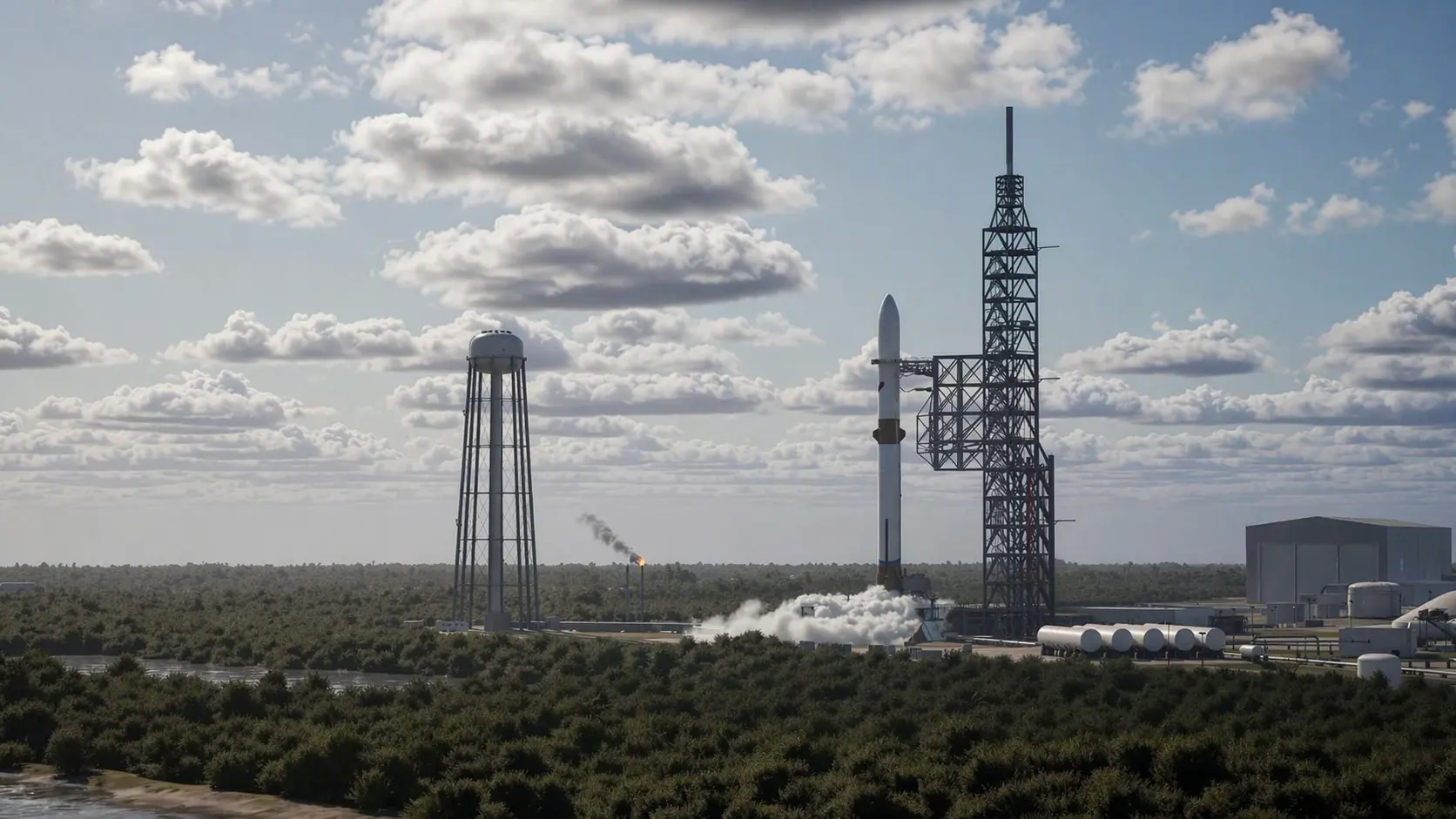
illustration of a big white rocket launching into a cloudy blue sky

Artist's illustration of Blue Origin's New Glenn launching from the reconstructed Pad 36A at Cape Canaveral Space Force Station in Florida. (Image credit: Blue Origin)

Today's update also let us know that Blue Origin has made some progress in its investigation into the May 28 anomaly, though more work needs to be done.

"The vehicle is highly instrumented with extensive data from multiple camera angles and sensors, giving us confidence in our ability to identify and correct the root cause," Limp wrote. "Early analysis points to the aft section of the first stage."

‘The start of a new era’: Rocket Lab buying satellite-communications company Iridium for $8 billion

California-based launch company Rocket Lab has inked a landmark $8 billion deal to acquire long-time satellite communications giant Iridium.

Rocket Lab has brought a variety of companies into its space systems architecture in recent years, but none of those previous purchases were as notable as the acquisition announced today (June 29). Rocket Lab and Iridium settled on the purchase at $54 per share, equating to an $8 billion deal for the legacy satellite operator.

"This is a defining moment for the space industry and the start of a new era of strategic, accelerated growth for Rocket Lab and Iridium," Rocket Lab CEO Peter Beck said in a statement. The merger folds another area of expertise into Rocket Lab's growing, vertically integrated operations and creates a stream of continued revenue from Iridium's existing subscribers.

Iridium is a Virginia-based communications company that operates a constellation of L-band satellites in low Earth orbit (LEO) that provide a global network of voice, Internet of Things, aviation, maritime, defense and emergency communications services to more than 2.5 million customers. It was founded by Motorola, via the company's efforts in the 1980s to establish a handheld global satellite phone network.

Iridium operated one of the first large commercial LEO constellations, but the success didn't last; the company went bankrupt in 1999. Iridium later rebuilt its constellation through the $3 billion Iridium NEXT campaign, launching 75 replacement satellites aboard SpaceX rockets between 2017 and 2019. Soon, that network will be operating under Rocket Lab's supervision.

The newly announced agreement comes as Rocket Lab ramps up its business ventures, as well as its dealings with the U.S. government as a national defense contractor. Within just the last month, Rocket Lab passed a major test in its program to deliver a constellation of advanced missile warning and tracking satellites for the U.S. Space Force (USSF), broke a responsive readiness record by executing a Tactically Responsive Space launch within 16 hours and 42 minutes of receiving notice from USSF's Space Systems Command, and announced its selection by NASA for three different science missions to launch in 2027.

Now that it's bringing Iridium under its umbrella, Rocket Lab is making even bigger plans. Instead of just supporting Iridium's existing network, Rocket Lab is planning its expansion. "We will go far beyond maintaining a legacy; we are going to build upon it to pioneer next-generation space applications and deliver sought-after capabilities to existing and new customers," Beck said. That includes Iridium's next-generation direct-to-device satellite network and the capabilities it will add to Rocket Lab's potential national security contributions.

"By marrying Iridium's deep heritage, trusted infrastructure, and highly-sought-after spectrum with Rocket Lab's extensive and proven launch and manufacturing capabilities, we have the capability to unlock entirely new markets," Beck said.

NASA launches rescue mission to save Swift space telescope from burning up in Earth’s atmosphere

An air-launched Northrop Grumman Pegasus XL rocket has flown for the very last time, sending a private spacecraft on a rescue mission to save one of NASA's most iconic space telescopes from falling back to Earth.

The Swift Boost mission successfully launched the LINK satellite, built by Arizona-based Katalyst Space Technologies, on Friday (July 3) at 4:36 a.m. EDT (0836 GMT), according to NASA. LINK will rendezvous with NASA's Neil Gehrels Swift Observatory and tow it to a stable orbit, saving it from impending destruction as its trajectory dips farther into the atmosphere.

The Pegasus XL rocket was released from Northrop Grumman's L-1011 Stargazer jet above the Marshall Islands before igniting its engine and carrying LINK into orbit. The successful launch came after previous attempts were called off due to weather and a software issue affecting the rocket's navigation system.

Pegasus is a three-stage, solid rocket-propelled launch vehicle that measures 55 feet in length (16.9 meters), capable of delivering up to 1,000 pounds (454 kg) into low-earth orbit (LEO). Following its separation from the Stargazer, the rocket's stages are ignited in sequence to reach its intended altitude in about 10 minutes.

Pegasus debuted in 1990, and has since flown 45 missions. Its aerial deployment and flexibility to take off from different airfields allows the rocket to enter hard-to-reach orbital inclinations that are inaccessible from many major spaceports. That's one of the reasons Pegasus is launching LINK, a robotic servicing satellite that can reach Swift's low 20.6-degree inclination relative to Earth's equator.

Another reason NASA chose the Pegasus rocket for this mission was time, which is running out for Swift. The $500 million Swift Observatory was launched in November 2004 to study gamma-ray bursts and other high-energy events across the universe. And, despite its more than 20 years of operation, Swift is still providing scientific value.

Its orbit, though, has begun to dip dangerously low, where recent solar activity has increased atmospheric drag at higher LEO altitudes and will soon overcome the spacecraft, dragging it to its ultimate demise. Swift, unfortunately, was not designed to be serviced, and wasn't built with the thrusters it needs to raise its own orbit.

Enter LINK.

After its release from Pegasus' payload bay and initial systems checkouts, the Katalyst spacecraft will begin its long course to rendezvous with Swift. Before beginning its final approach, LINK will spend two to three weeks performing observations of Swift to assess optimal grapple points on the observatory.

Stargazer flight path prior to Pegasus XL deployment. (Image credit: Northrop Grumman)

LINK measures about 4.9 feet (1.5 m) tall, and is equipped with three robotic arms that will be used to capture Swift, which stretches about 12.7 feet (3.9 m). Once a grab-point is chosen and Swift secured, LINK will fire a set of gentle ion thrusters that will slowly raise the pair's orbit over the next several months.

LINK is poised to be the first private spacecraft to attempt to capture an uncrewed U.S. government satellite. NASA selected Katalyst for the task in September 2025, with less than a year to carry out LINK's design, manufacture and testing. Despite its urgency and the relative short notice to get LINK in orbit, the entire Swift rescue mission and launch only cost NASA $30 million.

"While NASA could have allowed Swift to re-enter the atmosphere, the situation presented an opportunity to demonstrate a key capability for the future of space exploration. This daring approach also extends Swift’s scientific lifetime and is more affordable than replacing the observatory’s unique capabilities," NASA states on the Swift Boost mission page.

The goal is to return Swift to its original altitude of about 373 miles (600 km), which will extend the observatory's life expectancy by a number of years, provided its systems continue to operate as designed.