Metal spheres found in Australia show how little we still know about falling space debris, experts say

Once again, the "Land Down Under" is on the apparent uptick for falling space debris.

In early July, the Australian Space Agency reported that objects recovered, dubbed "space balls," are likely pressure vessels from a space launch vehicle. Six spherical pieces of space junk were found in the small seaside community of Forrest Beach, near Ingham. Australian Queensland Fire Department crews swung into action to assist partner agencies following the discovery of the potentially hazardous objects. Scientific teams safely secured a number of the items, establishing a 165 feet (50-meter) "exclusion zone" around them to assure public safety. The nature and origin of the debris are still being investigated.

This latest incident is part of an unwanted legacy of being the "fall guy" for space remains, from the U.S. Skylab space station debris that fell into Western Australia in 1979; a chunk of a SpaceX Dragon trunk found in New South Wales in 2022; a pressure vessel that washed up in Perth from an Indian booster in 2023; along with a section of Chinese Jielong-3 rocket in October 2025.

In fact, these incidents are becoming so common that the Australian Space Agency has put together a trio of steps to take if suspected space debris is discovered:

  • Step 1: Do not handle the debris. Space objects are built from a range of materials that may be hazardous. They should only be handled by appropriately trained and equipped professionals.
  • Step 2: Contact the local authorities if (a) the situation is potentially urgent (e.g. there is a life-threatening situation) or (b) otherwise contact the 24/7 Police Assistance Line for further advice.
  • Step 3: Notify the Australian Space Agency, who may support authorities with technical expertise, liaise with foreign counterparts and operators, and advise on the country's treaty obligations. The ASA can advise local authorities on the appropriate response to a confirmed space debris event.

Indeed, if an item is definitely found to be space debris, the Australian Government has worldwide obligations to notify the launching authority of its discovery, and upon request, may be required to return the space junk.
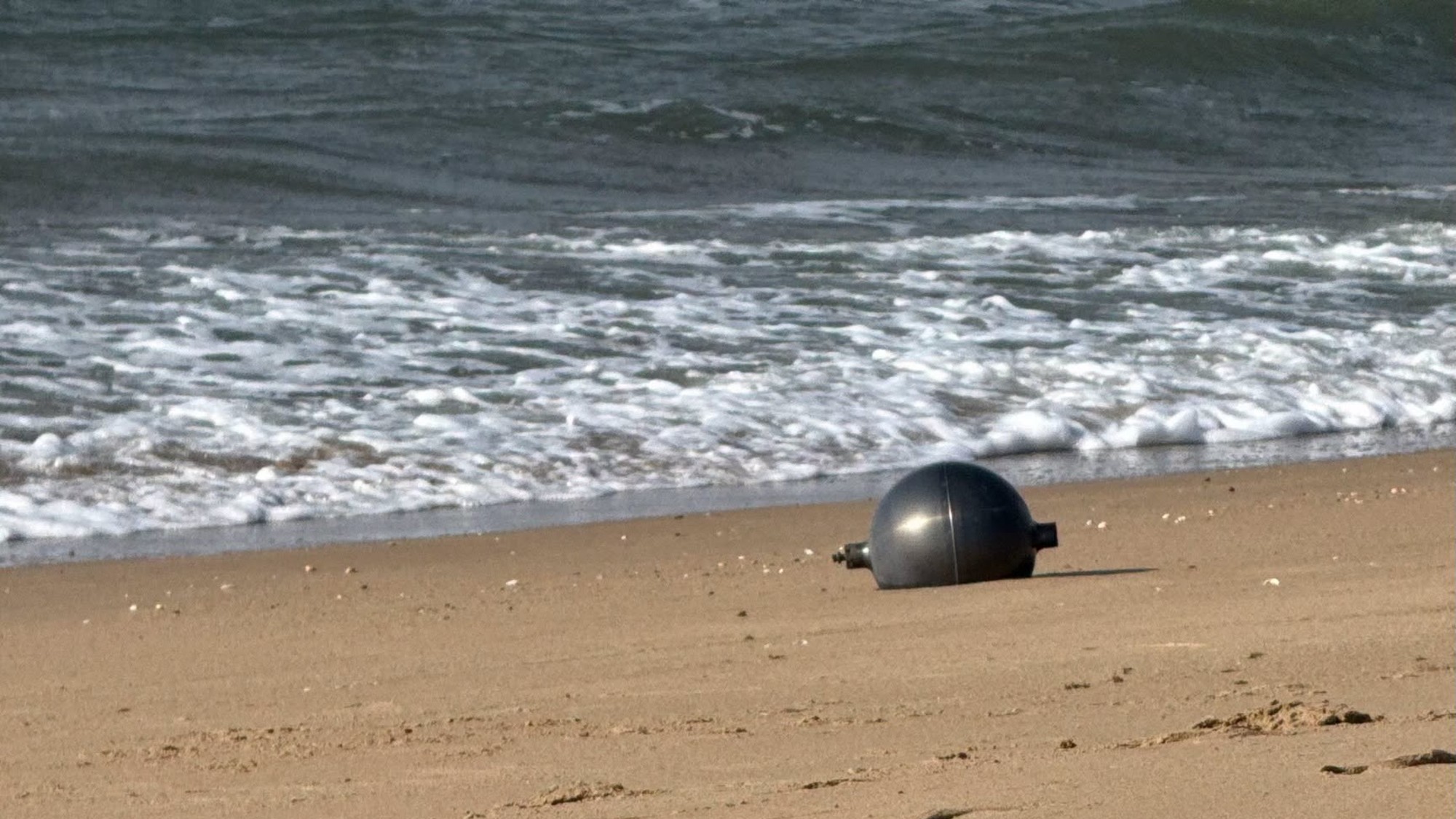
a metallic sphere on a sandy beach

A metallic sphere found in Australia in July 2026 is believed to be space debris. (Image credit: Queensland Fire Department)

"Even if they heat up, they don't care."

For Marlon Sorge, executive director of the Aerospace Corporation's Center for Orbital and Reentry Debris Studies (CORDS), it's no surprise that the recent so-called space balls endured their plunge from space.

"Very often they will be made of something like titanium which is really good at surviving," Sorge told Space.com. "In spite of them being metal, they tend to decelerate more than, say, a solid hunk of metal. They can 'float down' a little bit more gently than some other things," he said.

Sorge said that this class of space debris decelerates quicker, and also once on the surface the pieces are also more recognizable than broken up chunks of metal. Furthermore, if made of titanium, "even if they heat up, they don't care." In other words, they tend to survive reentry intact.

There's more awareness in the space debris study community that materials like titanium are potentially an issue, said Sorge. If you go to something like Composite Overwrapped Pressure Vessels (COPV), also commonly used in manufactured space hardware, that too is an issue you have to deal with, he said.

Bigger picture

But ultimately, many of these debris concerns could be mitigated with more responsible behaviors from space agencies and launch providers, Sorge said.

"In the bigger picture with [rocket] upper stages," Sorge added, "just don't let them randomly reenter. Bring them down via controlled reentry and then if they are survivable it doesn't matter because you dump them somewhere where there aren't any people."

As for the Australian-found space leftovers, these tanks are clearly coming from non-controlled reentry events, said Sorge, dropping out of the sky and washing up onshore.

Over the years, the Aerospace Corporation has studied recovered pressure vessels like those from the Australian affair. The welcome mat is open for contributions from countries that are on the receiving end of space objects, Sorge advised.

Some information can be gleaned from such appraisals, like what shape the recovered debris is in, what degree of temperatures they were exposed to. Also, such a hands and eyes-on look can point out what they didn't experience, which is also useful data, Sorge said.

If observers could track and observe incoming debris on its way down, it could be extremely helpful in identifying points of origin. That's currently a challenge, Sorge said. "If we get an impact location and a time of reentry that really helps us figure out what's going on," he said.

On the whole, there's a lot more attention being paid to the implications stemming from reentering, human-made, space leftovers.

"The real challenge is that this is still an area that we don't completely understand. We get surprises now and again," Sorge concluded, "because we know only so much. There's certainly a lot more awareness now than earlier years to be proactive in thinking about this."
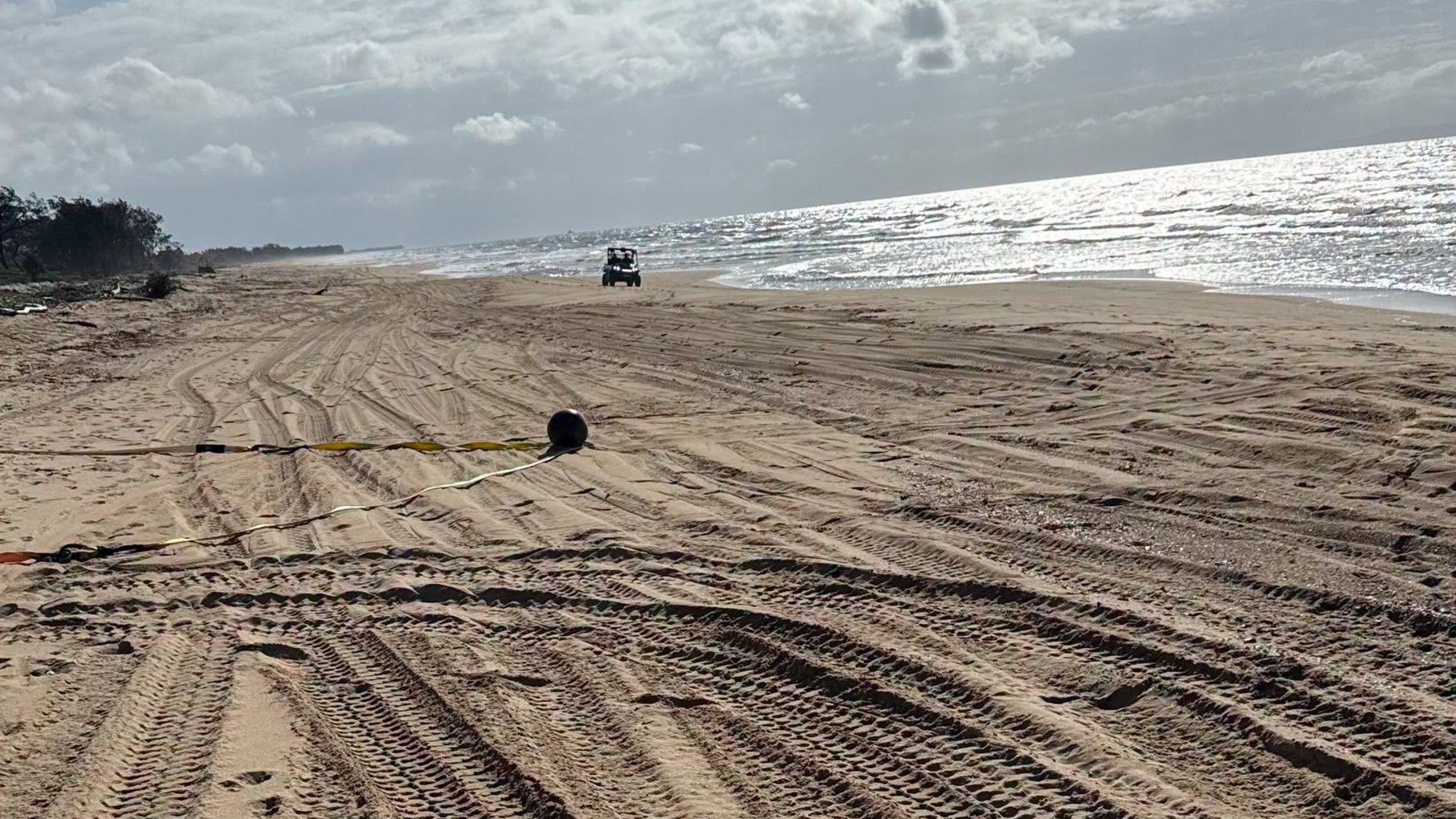
a metallic sphere on a sandy beach

A metallic sphere found in Australia in July 2026 believed to be space debris. (Image credit: Queensland Fire Department)

Atmospheric drag wins

"It may seem surprising that pieces of the same rocket can show up in Australia, Canada or on a farm in Africa, but that's actually what we'd expect," said Michelle Hanlon, executive director of the Center for Air and Space Law at the University of Mississippi School of Law.

"Objects in low Earth orbit pass over much of the planet as the Earth rotates underneath them. If a reentry isn't controlled, the exact point where it finally comes down can shift by thousands of kilometers depending on when atmospheric drag finally wins," Hanlon told Space.com.

Since most of the Earth is ocean, that's where most debris ends up, Hanlon said. "Every now and then, though, a tough piece survives and lands somewhere people can find it  — or lands in the ocean and gets swept swiftly to shore."

Country of origin?

Hanlon said that the pressure vessels like those found in Australia are a good example.

"They're built to withstand enormous pressures, so they are also among the pieces most likely to survive reentry. That's why they seem to turn up so often," said Hanlon.

Why are recovered space debris so hard to identify, their country-of-origin?

"I'm not sure stamping everything with a country-of-origin is the answer," said Hanlon. "Many of these objects can already be identified by their design, serial numbers or by matching them to launch and registration records. And there's no guarantee a label would even survive reentry."

For Hanlon, the bigger issue is traceability. "Can authorities quickly figure out what the object is, whether it poses any danger and which state should be contacted? Better information-sharing and better tracking would be far more useful than a 'Made in' stamp," Hanlon said.

"One thing I'd also point out is that we're seeing more of these simply because we're launching a lot more things into space. That's actually a sign of how active the space sector has become, not necessarily that it's becoming less safe," said Hanlon.

Even if reentries go exactly as planned 99.9 percent of the time, more launches mean more reentries, which means more chances that a particularly durable piece survives and lands somewhere unexpected.

All-in-all, the Australian incident of space balls is another sobering reminder that space activities don't end when a mission does, Hanlon concluded. "End-of-life disposal is now just as much a part of responsible space operations as launch."

This recent debris incident has a bit of a cosmic coincidence to it, too, Hanon added. "It's funny that we're having this conversation just as 'Spaceballs: The New One' is gearing up."

The sequel is being filmed in Australia.

SpaceX Falcon 9 rocket sends Starlink satellites to orbit a day after rare launch abort

Twenty-four Starlink satellites reached low Earth orbit on Tuesday (July 21), a day later than originally scheduled due to a last-second rocket engine abort.

SpaceX at first tried to launch the broadband internet relay units on a Falcon 9 rocket on Monday morning (July 20), but an unexpected engine cutoff at the point of ignition scrubbed the day's attempt. The company did not provide a reason for the abort.

By Tuesday, whatever the problem was had been addressed and the Falcon 9 was ready to fly. It liftoff off at 10:49 a.m. EDT (1449 GMT; 7:49 a.m. PDT local time) from Space Launch Complex 4 East at Vandenberg Space Force Base in California. About an hour later, after a normal ascent, the new Starlink batch (Group 17-39) were deployed into their intended orbit.

"Deployment of 24 Starlink satellites confirmed," SpaceX posted on social media.

Previous Booster B1082 missions:

USSF-62 | OneWeb Launch 20 | NROL-145 | 18 Starlink missions

The Falcon 9 rocket's first stage, Booster 1082, completed its 23rd mission by touching down atop the droneship "Of Course I Still Love You" positioned in the Pacific Ocean.

The Starlink network provides worldwide access to the internet, especially to areas where other means of connection are not possible. The megaconstellation also enables in-flight wifi and direct-to-cell services for select providers.

Tuesday's Starlink launch was SpaceX's 85th Falcon 9 launch of the year. SpaceX experienced a similar but unrelated last-second abort on its first attempt at launching its 13th test flight of its Starship megarocket on Thursday (July 16). That flight has now been rescheduled for Thursday (July 23).

SpaceX launches satellite repair drone with 10-foot robotic arms to Earth orbit (video)

SpaceX launched a trailblazing satellite-servicing mission today (July 21).

A Falcon 9 rocket lifted off from Florida's Cape Canaveral Space Force Station today at 5:15 p.m. EDT (2115 GMT).

SpaceX called today's launch MRV-MEV, because it's sending up a Mission Robotic Vehicle and three Mission Extension Pods (MEPs). These spacecraft will be operated by SpaceLogistics, a subsidiary of Virginia-based aerospace giant Northrop Grumman.

two large robotic arms are attached to a spacecraft in a white-walled clean room

Northrop Grumman integrated the robotics payload, developed by the Naval Research Laboratory (NRL), onto its Mission Robotics Vehicle at the company’s Dulles, Virginia facility. (Image credit: Northrop Grumman)

MRV-MEV is headed to geostationary orbit (GEO), 22,236 miles (35,786 kilometers) above Earth. At this altitude, orbital speed matches the velocity of our planet's rotation, allowing spacecraft to "hover" over the same patch of ground continuously. For this reason, GEO is a popular destination for spy, communications and weather satellites.

The new mission will work to extend the lives of such satellites. The MRV is equipped with two 10-foot-long (3 meters) robotic arms, a system developed by the U.S. Defense Advanced Research Projects Agency (DARPA) with the help of the Naval Research Laboratory. The spacecraft will use those arms to attach the MEPs — the first three ever to launch — to three separate satellites in GEO.

"Once installed, the MEP uses electric propulsion to provide orbit control and momentum unloading for a client satellite," Northrop Grumman wrote in an MEP fact sheet. "The MEP is controlled by the customer via a self-contained C- or Ku-band telemetry and command system, and [is] capable of providing up to eight years of life extension for a typical 2,000 kg satellite in GEO."

The Australian satellite operator Optus booked one of the MEPs, and Intelsat hired out the other two, according to Tech Times.

The MRV and MEPs will reach GEO separately. When it's rendezvous time, the robotic-armed spacecraft will grab an MEP and ferry it over to its client satellite, Tech Times reported. The MRV will then remain in GEO after it has installed the third MEP, waiting for other such "satellite jetpacks" to reach orbit.

In addition to installing MEPs, the MRV "can relocate, inspect, repair and upgrade spacecraft while in orbit," Northrop Grumman's website states.

"MRV includes a Northrop Grumman-developed Passive Refueling Module (PRM), the first refueling interface standard approved by the U.S. Space Force, which enables MRV to be refueled in orbit," it adds. "With advanced robotics technology and Northrop Grumman's proven experience in satellite servicing, the mission delivers an unprecedented capability and new class of system that can continuously evolve to support novel or increasingly advanced missions for our nation, making assets in space more resilient."

That "proven experience in satellite servicing" consists of two previous Northrop Grumman projects. Mission Extension Vehicle-1 (MEV-1) — the first-ever commercial satellite-servicing spacecraft — launched in October 2019 and successfully rendezvoused with its target in GEO (the communications satellite Intelsat 901) four months later. MEV-2 launched in August 2020 and docked with Intelsat 10-02 the following April.

Neither MEV-1 nor MEV-2 used Mission Extension Pods, however. Each of those previous efforts employed a single servicing craft, which made its way to the target satellite, docked and performed life-extension duties on its own.

All went according to plan during the launch: The Falcon 9's upper stage deployed the MRV 35.5 minutes after liftoff and the three MEPs at 10-minute intervals after that, according to SpaceX.

In a departure from most Falcon 9 missions, there was not a first-stage landing today.

"Due to the additional performance needed to launch these payloads to geosynchronous transfer orbit, this will be the 32nd and final flight for the Falcon 9 first stage booster supporting this mission, which previously launched CRS-24, Eutelsat HOTBIRD 13F, OneWeb 1, SES-18 and SES-19, and 27 Starlink missions," SpaceX's MRV-MEP mission description reads.

SpaceX's rocket-reuse record is 36 flights, set earlier this month during a Falcon 9 launch of the company's Starlink internet satellites.

MEV-MEP was SpaceX's second launch of the day. The company also sent 24 Starlink craft to orbit atop a Falcon 9 from California this morning.

Editor's note: This story was updated at 5:23 p.m. ET with news of successful liftoff. It was then updated again at 11:05 a.m. ET on July 22 with news of successful payload deployment, and to note DARPA's key role in this mission.

SpaceX targets July 23 for crucial Starship Flight 13 test launch after abort

SpaceX has pushed the next launch of its Starship megarocket back a few more days.

Elon Musk's company is now targeting Thursday (July 23) for Flight 13 of Starship, the giant, fully reusable vehicle it's developing to help get people to the moon and Mars, among other spaceflight tasks.

If all goes to plan, the 408-foot-tall (124.4 meters) Starship will lift off from SpaceX's Starbase site in South Texas on Thursday during a 90-minute window that opens at 6:45 p.m. EDT (2245 GMT; 5:45 p.m. local Texas time). You can watch the action live here at Space.com, courtesy of SpaceX.

It will be the second launch attempt for Starship Flight 13. The first came last Thursday (July 16) and ended in an abort, which occurred just as the giant rocket's 33 first-stage Raptor engines were firing up.

"To be confident of a good flight, 2 Raptors will be removed & replaced. Most probable launch timing is early next week," Musk said on July 16 via X, the social media platform he owns.

SpaceX first targeted today (July 20) for Flight 13's second try. On Sunday (July 19), however, the company announced that it had pushed that date back to no earlier than Thursday.

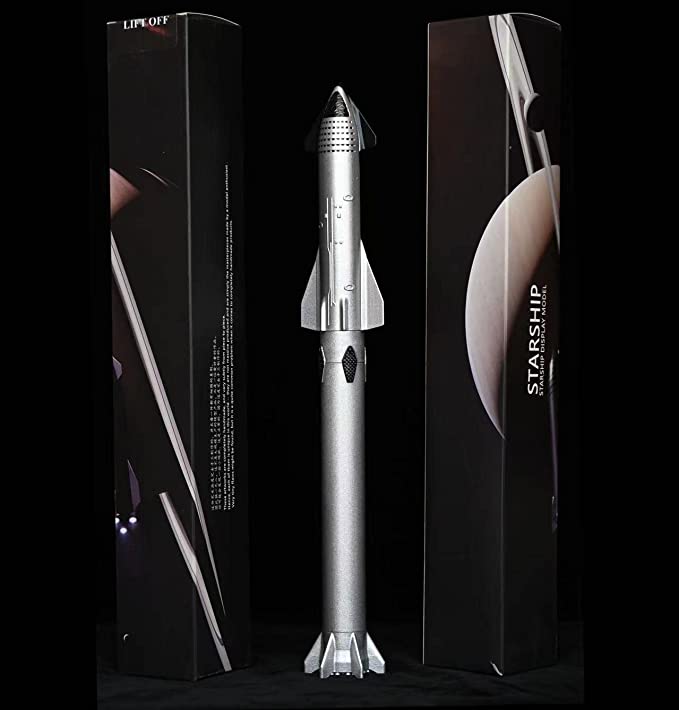
Starship Die Cast Rocket Model Was $47.99 Now $39.99 on Amazon.

Even if you can't see SpaceX's Starship in person, you can score a model of your own. Standing at 13.77 inches (35 cm), this is a 1:375 ratio of SpaceX's Starship as a desktop model. The materials here are alloy steel and it weighs just 225g.View Deal

Flight 13 will be the second launch of Starship Version 3 (V3), the latest, most advanced iteration of the megarocket. V3 is the variant that will land astronauts on the moon for NASA's Artemis program and fly SpaceX's first Mars missions, if all goes to plan.

The plan for the upcoming suborbital launch is similar to that of Flight 12, which lifted off on May 22. Starship's Super Heavy first stage will aim to steer itself back to Earth for a controlled splashdown in the Gulf of Mexico, while the Ship upper stage will do the same halfway around the world, off the coast of Western Australia.

SpaceX accomplished the latter objective on Flight 12 but not the former; Super Heavy suffered engine issues during its return to Earth and ended up hitting the Gulf waters hard.

Flight 13 will do a few new things, however. For example, it will carry 20 of SpaceX's next-gen Starlink V3 internet satellites, which have never flown to space before. SpaceX plans to build a constellation of 100,000 Starlink V3 spacecraft in low Earth orbit over the coming years, and Starship will do all of the heavy lifting.

These 20 Starlinks won't stay aloft for long, however. Since Ship is flying on a suborbital trajectory, the satellites will come back to Earth relatively quickly — about 20 minutes after deployment, according to SpaceX's Flight 13 mission description.

Starship debuted in April 2023. All of its test flights to date have been suborbital.

Twice in a row: SpaceX rocket aborts launch at last second again (video)

That's two last-second launch aborts in a row for SpaceX.

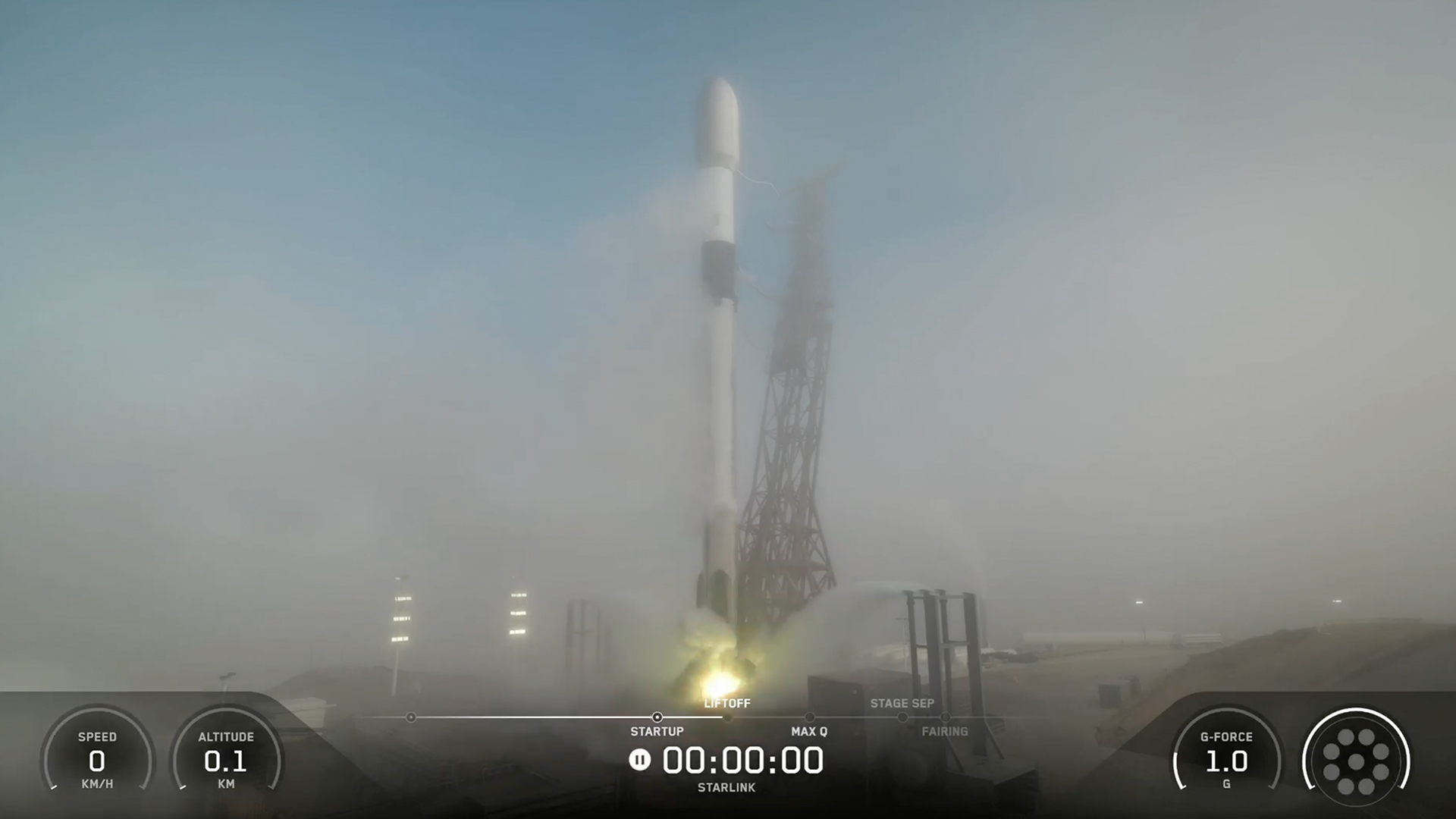
One of the company's Falcon 9 rockets tried to loft 24 Starlink internet satellites from Vandenberg Space Force Base in California this morning (July 20), but the attempt was aborted just as the first-stage engines started firing up.

Something similar happened on Thursday afternoon (July 16), when SpaceX attempted to launch the 13th test flight of its Starship megarocket.

a white rocket upright on a launch pad, partially obscured by fog

A SpaceX Falcon 9 rocket tries to launch 24 Starlink satellites from Vandenberg Space Force Base on July 20, 2026. The launch aborted at the last second. (Image credit: SpaceX)

The two events likely have little in common other than a proximity in time. They involved two very different vehicles, after all: The workhorse Falcon 9 is the most reliable and active rocket on the planet; it has already launched 84 times this year, with zero failures.

Starship, on the other hand, remains in the development-and-testing phase. SpaceX has high hopes for the giant vehicle, which combines full reusability with unprecedented brawn. (It's the biggest and most powerful rocket ever built.)

The two vehicles are also powered by different engines. The Falcon 9's first stage employs nine Merlin 1Ds, whereas Starship's Super Heavy booster uses 33 next-gen Raptors.

SpaceX decided to swap out two of those Raptors ahead of the next Flight 13 launch attempt, which is scheduled for Thursday afternoon (July 23).

The Vandenberg Starlink launch, meanwhile, is back on the docket for Tuesday morning (July 21). It's scheduled to lift off during a nearly four-hour window that opens at 10 a.m. EDT (1400 GMT; 7 a.m. local California time), according to a SpaceX mission description.

Rocket launch costs have dropped 96% since 1960. How low can they go?

The costs of space launch have fallen 96% in the past six decades and have the potential to plummet by nearly as much by 2040, a new study finds.

However, such an improvement might get hampered by a number of challenges, such as the rise of space debris in orbit or a single company monopolizing commercial space launch, researchers added.

Although previous analyses of space launch suggested that costs had dropped over time, one major problem with these prior studies was that they "considered the cost of the rockets, but not how much they launched during their lifetimes," study co-author Francesco Nicoli, an associate professor of political economy at the Politecnico University of Turin in Italy, told Space.com. This meant this earlier work failed to accurately track the average costs of reaching space.

a big black and white rocket launches into a blue sky, with a lake in the foreground

Before commercial launch: A NASA Saturn V rocket launches on May 14, 1973, carrying the Skylab 1 space station into orbit. (Image credit: NASA)

In the new study, the researchers developed the largest dataset of rocket launches to date, covering 4,405 launches from 1960 to 2025. This included more than 330 different rocket configurations devised by developers in the United States, Russia, China, India, Europe, Japan, Australia, Brazil, Israel, Iran, South Korea and Ukraine.

The investigators found that, in 2024 U.S. dollars, the average cost of sending 2.2 pounds (1 kilogram) to orbit dropped from $87,023 in 1960 to $3,868 in 2025 — a decrease of 96%.

All in all, the rate at which the space-launch industry learned to reduce costs was among the fastest recorded in any industry to date, the investigators noted. They calculated that each time the cumulative payload of the entire space-launch industry doubled, the average cost of sending 2.2 pounds (1 kg) to orbit decreased by 21.2%.

This learning rate exceeds that seen with solar panels, "a technology that is now frequently taken as the benchmark for cost reduction," study co-author Alessio Terzi, an assistant professor of public policy at the University of Cambridge in England, told Space.com.

The researchers suggested two major causes behind this drop in costs. "First, the end of the Cold War and the shift to so-called 'New Space,' meaning the use of space for commercial purpose, seems to have accelerated the rate of learning — in the Cold War era, countries launched with their national launchers no matter the cost," Terzi said. "Second, our data shows an acceleration in the learning rate of space since the launch of the Falcon 9 of SpaceX, and the advent of reusability at scale."

Assuming this trend holds, the investigators estimated the average cost of space launch would fall to $1,600 per 2.2 pounds (1 kg) by 2030 and $300 by 2040. "There is still significant scope for further cost reductions going forward," Terzi said.

Of course, past performance is no guarantee of future results. There are at least three factors that could slow or reverse this cost trajectory, the researchers said.

First, space junk poses a growing problem for the launch industry. Space debris is typically zipping at speeds of about 16,800 mph (27,000 km/h), and so can inflict massive damage on anything in orbit. The problem space junk poses gets worse when collisions spawn even more debris, eventually cluttering space with high-speed shrapnel, a scenario nicknamed the "Kessler syndrome" after NASA scientist Donald Kessler, who predicted it in 1978.

Second, at the global level, SpaceX is currently responsible for roughly 75% of the total payload sent to orbit. The investigators noted there are strong economic incentives for a would-be monopolist to charge higher prices to potential clients. This in turn would reduce the total payload sent to orbit, slowing the future evolution of average launch costs.

Finally, the current climate of increasing geopolitical tensions is likely to make governments around the world cautious when it comes to depending too heavily on a single U.S. company for space launch. This may bring back Cold War dynamics, as nations pursue independent access to orbit, even if this means using more expensive home-based rocket technology, the researchers said.

All in all, "there is a strong feeling, perhaps exemplified by the recent record-breaking mega-IPO of SpaceX, that space is at a structural break point — a moment where trends are accelerating," Terzi said. "Forecasting at moments of structural break is very hard in general, and therefore also in our case."

The scientists detailed their findings July 14 in the journal PNAS Nexus.

Another reusable rocket? Japan launches, lands RV-X prototype (video)

Japan has succeeded in the first-ever flight test of its RV-X experimental reusable rocket prototype.

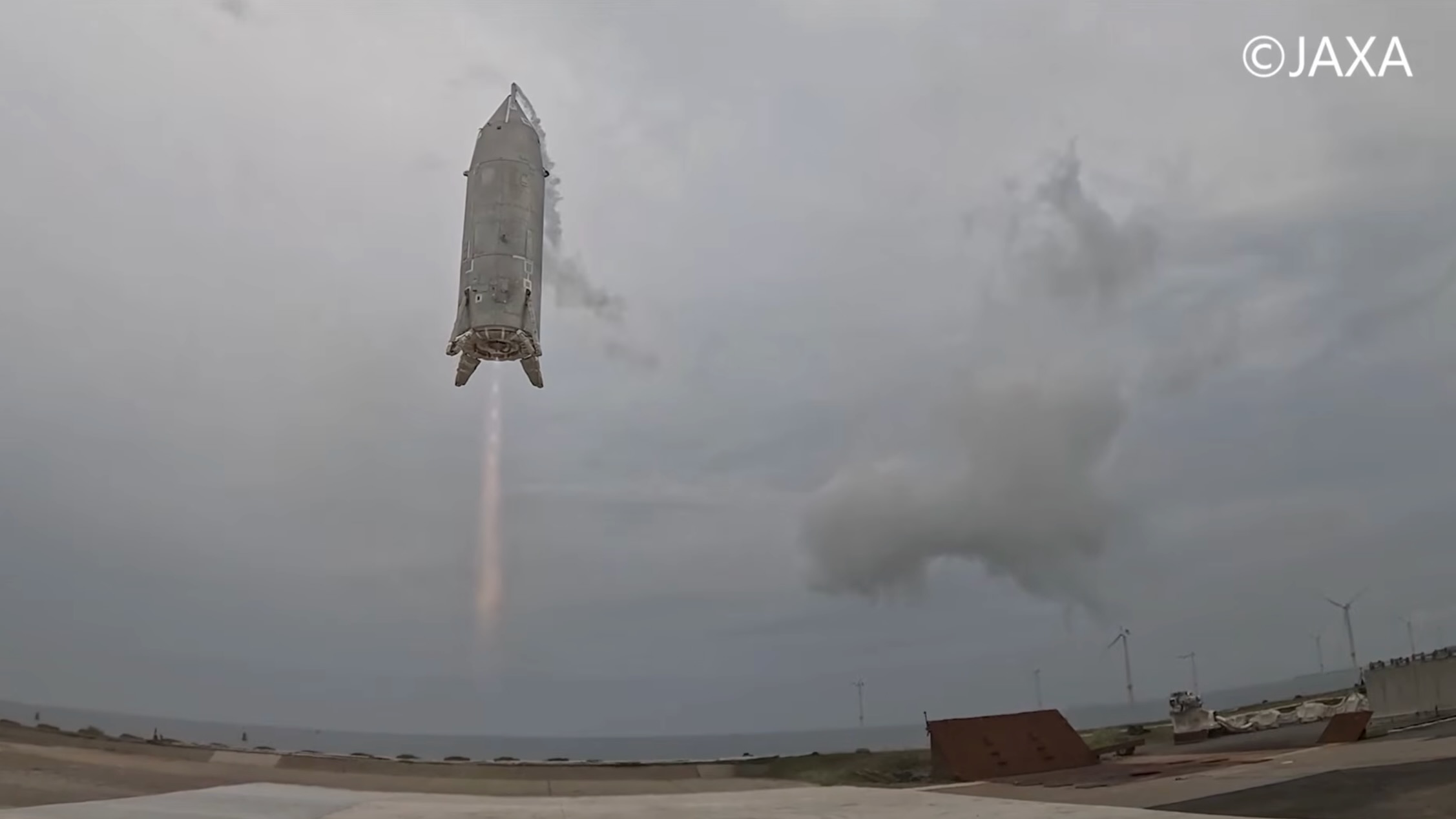
The launch — or hop, considering its duration and distance — took place at the Japan Aerospace Exploration Agency's (JAXA) Noshiro test facility on July 11 and lasted about 40 seconds. The 24-foot-tall (7.3 meters) test vehicle, powered by a single engine, rose just over 33 feet (10 m) in the air and traveled a horizontal distance of approximately 50 feet (15 m) across the site's concrete pad before touching down softly on the side opposite its liftoff point.

The short test flight went exactly as planned and puts JAXA and its partners one step closer to the development of a technological spaceflight achievement only ever accomplished by a small handful of orbital rockets — SpaceX's Falcon 9, Falcon Heavy and Starship, Blue Origin's New Glenn and, most recently, China's Long March 10B.

a conical silver rocket hovers about 15 feet above the ground in a cloudy sky

Japan's RV-X reusable rocket prototype takes its first hop, on July 11, 2026. (Image credit: JAXA)

JAXA's RV-X is being developed and operated in conjunction with Japan's Mitsubishi Heavy Industries and is a precursor vehicle to a single-stage reusable flight experiment project called CALLISTO. CALLISTO is a joint venture involving JAXA, France's space agency CNES and the German Aerospace Center (DLR) to design and build a single-stage rocket capable of vertical launch, landing, refurbishment and reuse. That vehicle will itself be a pathfinder rocket as JAXA seeks its own entry into the cost-saving playing field of reusable launch services.

Japan's most advanced rocket in operation, the H3, was introduced in 2023 but wasn't designed for reusability. The H3 is more efficient and cost-effective than its H-2A predecessor, which was retired last year. But two of the new rocket's eight launches have not been fully successful, and it falls short in its cost-effectiveness compared to more advanced reusable rocket stages. So JAXA is hard at work on the H3's future replacement.

"Reusable rockets require consideration of operational feasibility," JAXA's website says. "By repeatedly verifying maintenance, operation, vehicle movement and launch pad setup using an actual experimental vehicle in preparation for flight tests, we were able to establish operational procedures that will contribute to the repeated operation of future rockets."

The test, and the RV-X vehicle itself, slightly resemble a similar flight article from SpaceX's early Starship development days. The "Starhopper" Starship prototype was compared to a water tower during its first "hopper" test in 2019. The first time the stumpy, three-legged, steel Starhopper jumped off the ground at SpaceX's Starbase facility in South Texas, it flew about 65 feet (20 m) straight up and back down.

Starhopper's success paved the way for higher jumps for longer durations as SpaceX honed Starship's early design, and the same is planned for RV-X. Now that JAXA's test rocket has completed its first 33-foot (10 m) hop, Japan's space agency is looking higher, too. RV-X's next launch is expected to fly as high as 330 feet (100 m), with another lateral crossover and hover included in its flight before landing.

‘The dawn of a new space era’: Vikram-1, India’s 1st private orbital rocket, aces debut launch

An Indian company just made spaceflight history.

Skyroot Aerospace successfully launched its Vikram-1 rocket to low Earth orbit (LEO) early Saturday morning (July 18), making India just the third country with a private orbital launch capability. The other two are established space powers — the U.S. and China.

"It is the dawn of a new space era," one of Skyroot's commentators said during the company's launch webcast on Saturday.

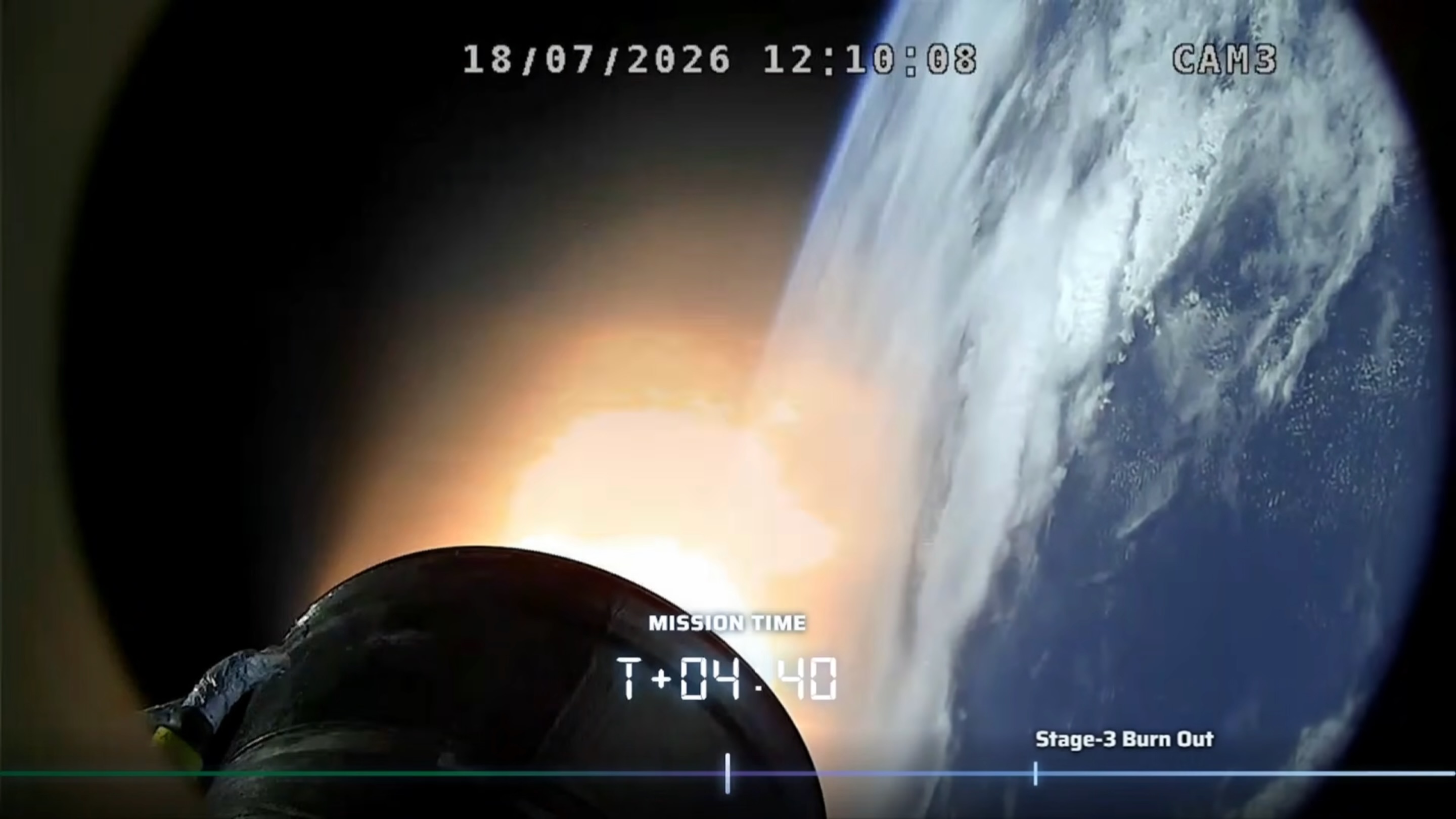
The view from the third stage of a rocket in earth orbit, with our planet in the background

The view from the third stage of Skyroot Aerospace's Vikram-1 rocket during its debut launch on July 18, 2026. (Image credit: Skyroot Aerospace)

Skyroot Aerospace is based in the central Indian city of Hyderabad and was founded in 2018. The company made history for the first time four years later with its Vikram-S suborbital rocket, becoming the first private Indian outfit ever to reach space.

Vikram-1 is the next step for Skyroot: an orbital vehicle. The four-stage, seven-story-tall rocket is a small-satellite launcher; it can haul about 770 pounds (350 kilograms) of payload to LEO, according to the company.

"The small satellite launch market is deeply constrained on the supply side," Skyroot co-founder and CEO Pawan Kumar Chandana said in an emailed statement on Thursday (July 16).

"At the same time, the demand for services enabled by satellites in space will only continue to grow, and that is where Skyroot's opportunity lies," added Chandana, who, like company co-founder Naga Bharath Daka, used to work for the Indian Space Research Organisation.

The company began exploiting that opportunity on Saturday morning, with a test flight called Aagaman (Sanskrit for "Arrival"). The main goal was to see how Vikram-1 and its various systems performed during flight. But the rocket also carried some customer payloads, which were scheduled to be deployed at an altitude of 280 miles (450 kilometers).

Those payloads included a technology demonstration from the German company DCUBED; the Solaras S3 nanosatellite pathfinder from Indian startup Grahaa Space; and Embrace, a robotic arm built by the Indian company Cosmoserve Space that's designed to capture space debris.

Vikram-1 also carried Skyroot's SCOPE satellite, which collected a variety of data to help the company assess the rocket's performance during flight. There were two symbolic payloads on board as well — a small, 18-karat gold rocket from the artist Ajay Kumar Mattewada and "Cosmic Bloom," which was designed by Cosmos Diamonds, a company that makes jewelry using lab-grown gems.

Aerial view of a large, low-slung warehouse-like building with a rocket standing outside it

Aerial view of Skyroot Aerospace's Infinity Campus in Hyderabad, India, showing a life-size model of the company's Vikram-1 rocket outside. (Image credit: Sumil Sudhakaran/Skyroot Aerospace)

All of them made it to space safe and sound. Vikram-1 lifted off from the Satish Dhawan Space Centre, on the Indian barrier island of Sriharikota, on Saturday at 2:35 a.m. EDT (0635 GMT; 12:05 p.m. India Standard Time), roaring off the pad in a flash thanks to its first-stage solid rocket motor.

The rocket performed as planned, sticking to a nominal trajectory and deploying the payloads right on schedule. Vikram-1 had ticked all of its boxes by just 17 minutes after liftoff, leading to a pronouncement from mission control.

"The Vikram-1 Aagaman mission is a grand success," the mission director said, eliciting cheers from the folks in the room.

It was a big moment for Skyroot and for India, and it augurs big things to come, according to Lt. Gen. AK Bhatt (retired), Director General of the Indian Space Association.

"The successful orbital launch of Skyroot Aerospace’s Vikram-1 (Mission Aagaman) is a defining milestone for India’s space journey," Bhatt said in an emailed statement shortly after the mission wrapped up. "By executing the nation's first fully private orbital flight, Skyroot has shattered legacy boundaries, demonstrating that our domestic industry is primed to handle end-to-end space missions."

Editor's note: This story was updated at 3:25 a.m. ET on July 18 with news of successful launch and satellite deployment.

Astronauts just launched on a Soyuz rocket with an energy-drink ad on it, continuing a Russian tradition

Astronauts just flew to Earth orbit space atop a rocket emblazoned with an energy-drink ad.

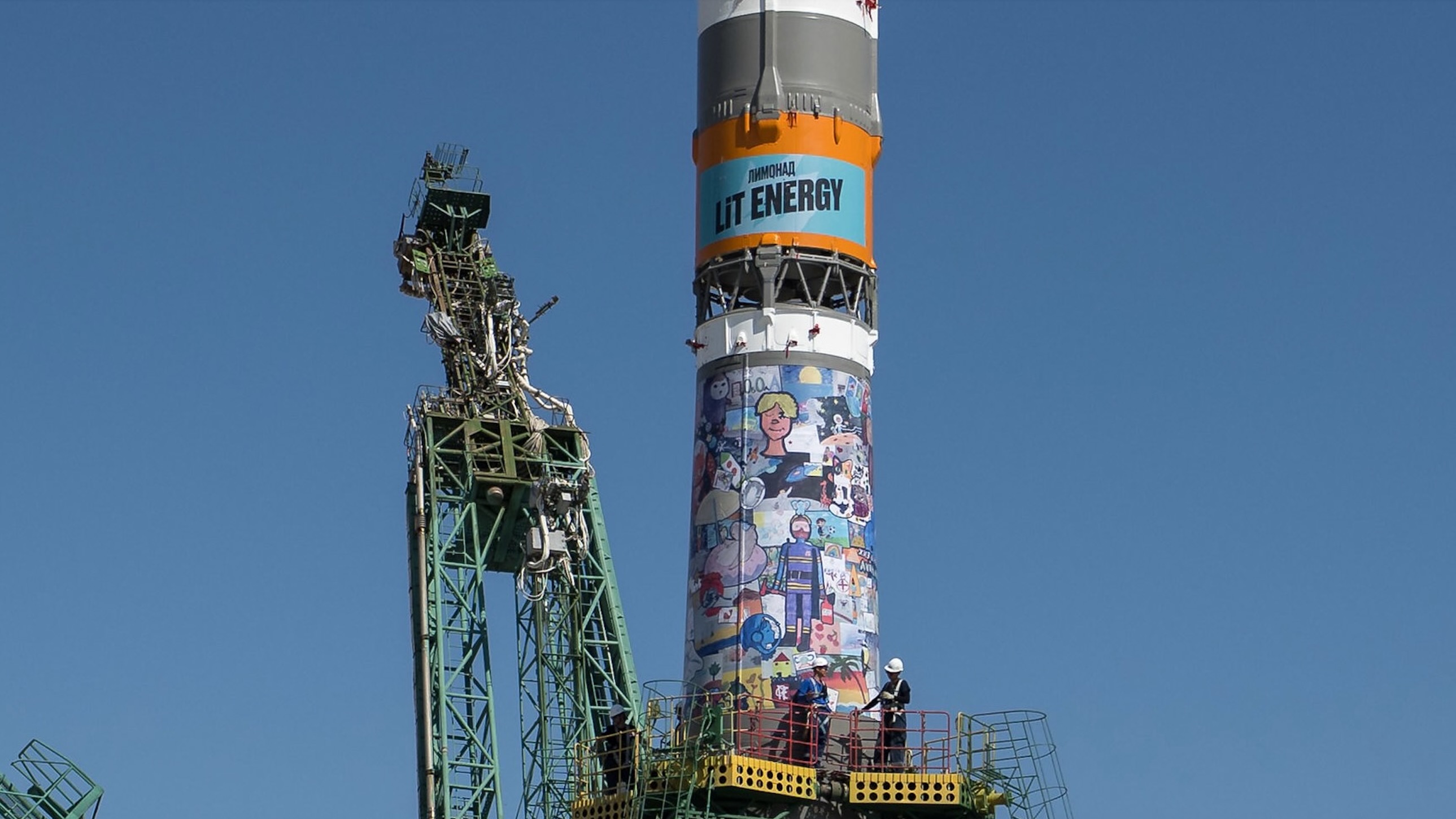
The Soyuz MS-29 launch to the International Space Station on Tuesday (July 14), from the Russian-run Baikonur Cosmodrome in Kazakhstan, used a Soyuz rocket festooned with ads for Лимонад ("Lemonade") LIT ENERGY. The ads are visible in shots of the rocket's rollout on July 11, published here and here via NASA's Flickr account.

The Soyuz used for the launch also featured drawings from children with cancer — as well as the phrase "Life has no end" — to advertise the Unity Charitable Foundation, according to a Russian-language state media report machine-translated into English. The campaign is part of a series in support of the foundation that began in November 2025, the media report added.

Zoomed-in view of the Soyuz rocket that launched NASA astronaut Anil Menon and two cosmonauts to the ISS on July 14, 2026. This shot shows the ad for Lit Energy.

Zoomed-in view of the above photo, highlighting the ad for Lit Energy. (Image credit: NASA/Bill Ingalls)

To be sure, the Russian space agency Roscosmos (like other space agencies) often adorns its rockets with colorful artwork and logos that may not necessarily result in payment. In June 2018, for example, a Soyuz launched with a FIFA World Cup logo that may have been a publicity campaign to advertise the soccer competition, which was occurring that month in Russia.

While there have been some experiments by other space agencies regarding advertising — anyone remember the space cola wars? — here are a few notable examples from Russia and its predecessor state, the Soviet Union.

  • A 1990 cosmonaut launch, partly for the Tokyo Broadcasting Service, carried a Japanese journalist from TBS — as well as advertisements on the side of the Soviet Soyuz rocket. Sony, Unicharm and Pocari Sweat patches were also reportedly flown on the mission.
  • After the breakup of the Soviet Union, the Mir space station featured advertisements for companies like RadioShack, Pepsi and Israel's Tnuva Milk.
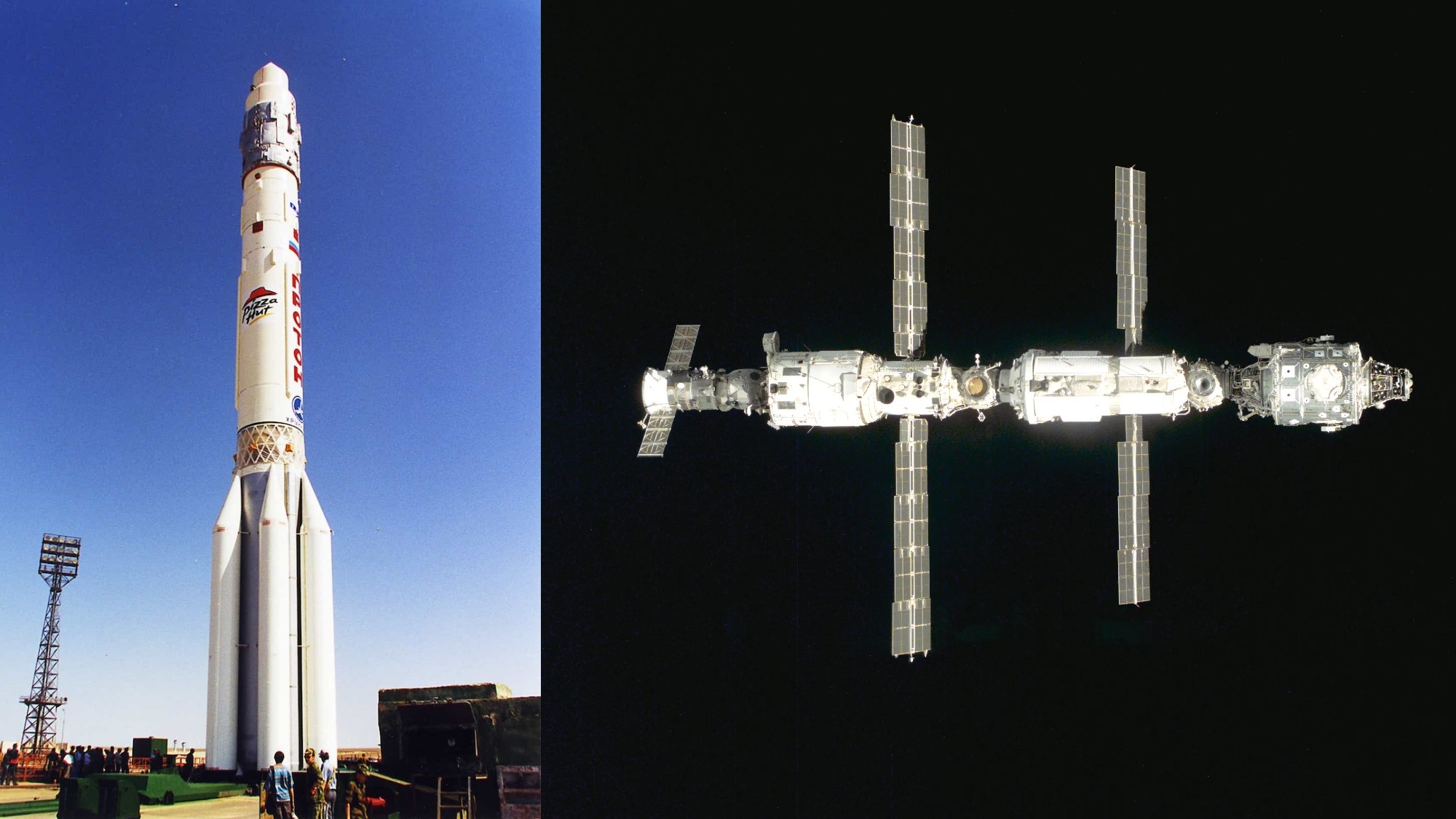
  • A Pizza Hut ad flew on a Russian Proton rocket in 2000 for roughly $1.25 million (nearly $3 million in today's dollars). The restaurant chain then followed up in 2001 with a special space pizza delivery — but using salami, as it is more shelf-stable than pepperoni.

a white rocket on a launchpad with a pizza hut logo on it

A Pizza Hut ad on a Russian Proton rocket that launched the Zvezda service module to the International Space Station (seen on far left in the above ISS photo). (Image credit: Khrunichev State Research and Production Space Center/NASA)

So Russia's practice of launching ads into space is not new. However, Ars Technica has suggested that contractions in the Russian economy led to very recent changes in the country's laws for space advertising that could lead to more examples like this.

Russia's unsanctioned invasion of Ukraine in February 2022 caused many international partnerships in space (and other projects) to fall apart, which Ars believes may have led to Russian President Vladimir Putin's authorization for recurring space ads. The new legislation was cited on Roscosmos' Telegram account in October 2025, the Ars report added.

"According to the amendments, Roscosmos has been granted the right, effective January 1, 2026, to place advertising on space objects owned by both the state corporation itself and federally," said the Roscosmos statement, according to Ars. "The amendments will create a mechanism for attracting private investment in Russian space exploration, and reduce the burden on the state budget."

Roscosmos and NASA continue to work together on the ISS despite sanctions imposed after the invasion of Ukraine, which is ongoing. And Tuesday's launch marked a milestone in that cooperation, as NASA Administrator Jared Isaacman became the first with his title to attend a Soyuz launch in eight years.

SpaceNews noted that Isaacman and Roscosmos Director General Dmitry Bakanov had the first reported face-to-face meeting between the agency heads since the last in-person NASA chief visit, for an October 2018 launch. After the meeting between Isaacman and Bakanov, Russia announced a two-year extension of its ISS commitment, to 2030, as well as an agreement in principle to continue offering NASA astronauts seats on the Soyuz in exchange for seats on commercial U.S. vehicles, among other developments.

SpaceX’s Starship Flight 13 test launch aborts at last second (video)

Update for 12:15 p.m. ET on July 20: SpaceX is now targeting Monday (July 23) for the launch of Starship Flight 13, during a 90-minute window that opens at 6:45 p.m. EDT (2245 GMT).

Starship wasn't quite ready to fly today (July 16).

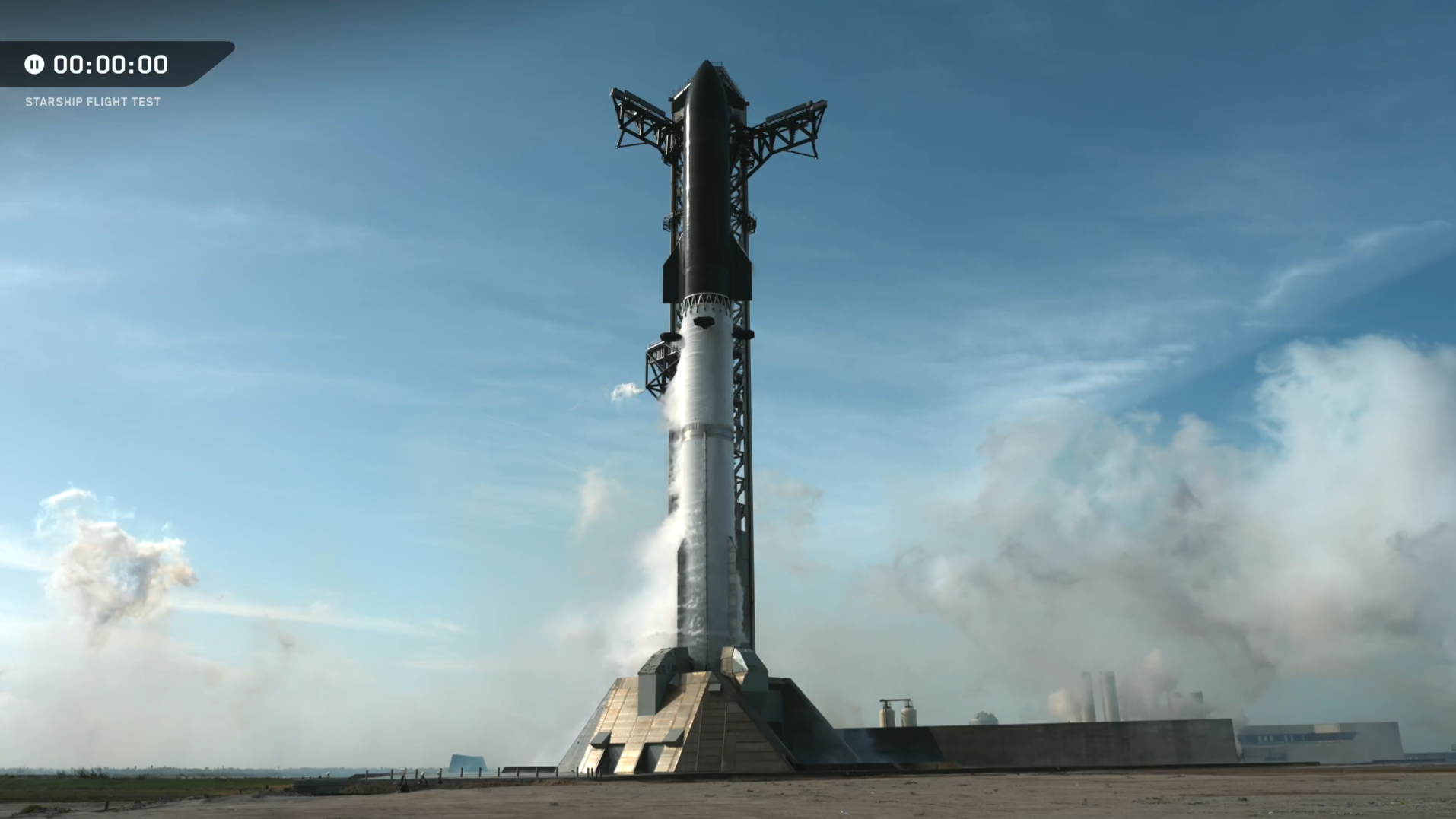
SpaceX tried to launch the Starship megarocket on its 13th test flight today but couldn't quite pull it off. Something went wrong just as the giant vehicle's 33 first-stage Raptor engines started to fire up, and an abort was triggered.

"We'll take some time, dig into what triggered that abort once the booster was igniting to launch, and then we'll figure out what our path forward is going to be," SpaceX's Dan Huot said during the company's launch webcast today.

Tall rocket blue sky

SpaceX's second V3 Starship vehicle tries to launch on July 16, 2026. The attempt was aborted at the last second. (Image credit: SpaceX)

It didn't take long for SpaceX to narrow in on the root cause and address it.

"To be confident of a good flight, 2 Raptors will be removed & replaced. Most probable launch timing is early next week," company founder and CEO Elon Musk said this evening via X, the social media platform he owns.

Starship Flight 13 will fly from SpaceX's Starbase site in South Texas. Today's attempt occurred at 6:45 p.m. EDT (2245 GMT; 5:45 p.m. local time), right at the beginning of a 90-minute launch window.

Starship Die Cast Rocket Model Was $47.99 Now $39.99 on Amazon.

Even if you can't see SpaceX's Starship in person, you can score a model of your own. Standing at 13.77 inches (35 cm), this is a 1:375 ratio of SpaceX's Starship as a desktop model. The materials here are alloy steel and it weighs just 225g.View Deal

Flight 13 will be the second test launch of Starship Version 3 (V3), an upgraded variant of the megarocket designed to get it up to operational status.

V3's first jaunt, Flight 12 on May 22, was mostly successful, but there were a few issues. For example, Starship's Super Heavy first stage didn't steer itself back for a controlled splashdown in the Gulf of Mexico as planned, and the Ship upper stage wasn't able to relight one of its Raptor engines in space.

Starship V3 will get a second chance on Flight 13, whose goals are similar to those of Flight 12: Get Super Heavy down on target in the Gulf and send Ship most of the way around the world, for a controlled splashdown of its own off the coast of Western Australia. (Ship pulled that off on Flight 12.)

There are a few new objectives, however.

The most notable is the payload suite flying on Flight 13 — 20 of SpaceX's next-gen Starlink V3 internet satellites. The company wants to build a constellation of 100,000 Starlink V3 spacecraft in low Earth orbit using Starship, and Flight 13 will mark the satellites' first-ever trip to space.

They won't stay up there, however; the spacecraft will be deployed on Ship's suborbital trajectory and will crash back to Earth after about 20 minutes, according to SpaceX.

Six of the 20 Starlinks going up on Flight 13 will be equipped with cameras, to image Ship's heat shield. SpaceX did this with a couple of V2 Starlinks on Flight 12 as well.

Editor's note: This story was updated at 9:38 p.m. ET on July 16 with information from an Elon Musk X post.