SpaceX’s next Starship launch will lift off on Sept. 22 and aim to reach orbit for 1st time

We now have a launch date for Starship's most ambitious mission to date.

SpaceX announced today (Sept. 15) that it's targeting Sept. 22 for the first orbital flight of Starship, the fully reusable megarocket that the company is developing to help humanity settle the moon, Mars and more.

Liftoff, from SpaceX's Starbase site in South Texas, will occur during a 75-minute window that opens at 8:15 a.m. EDT (1215 GMT and 7:15 a.m. local Texas time). You can watch it live here at Space.com when the time comes.
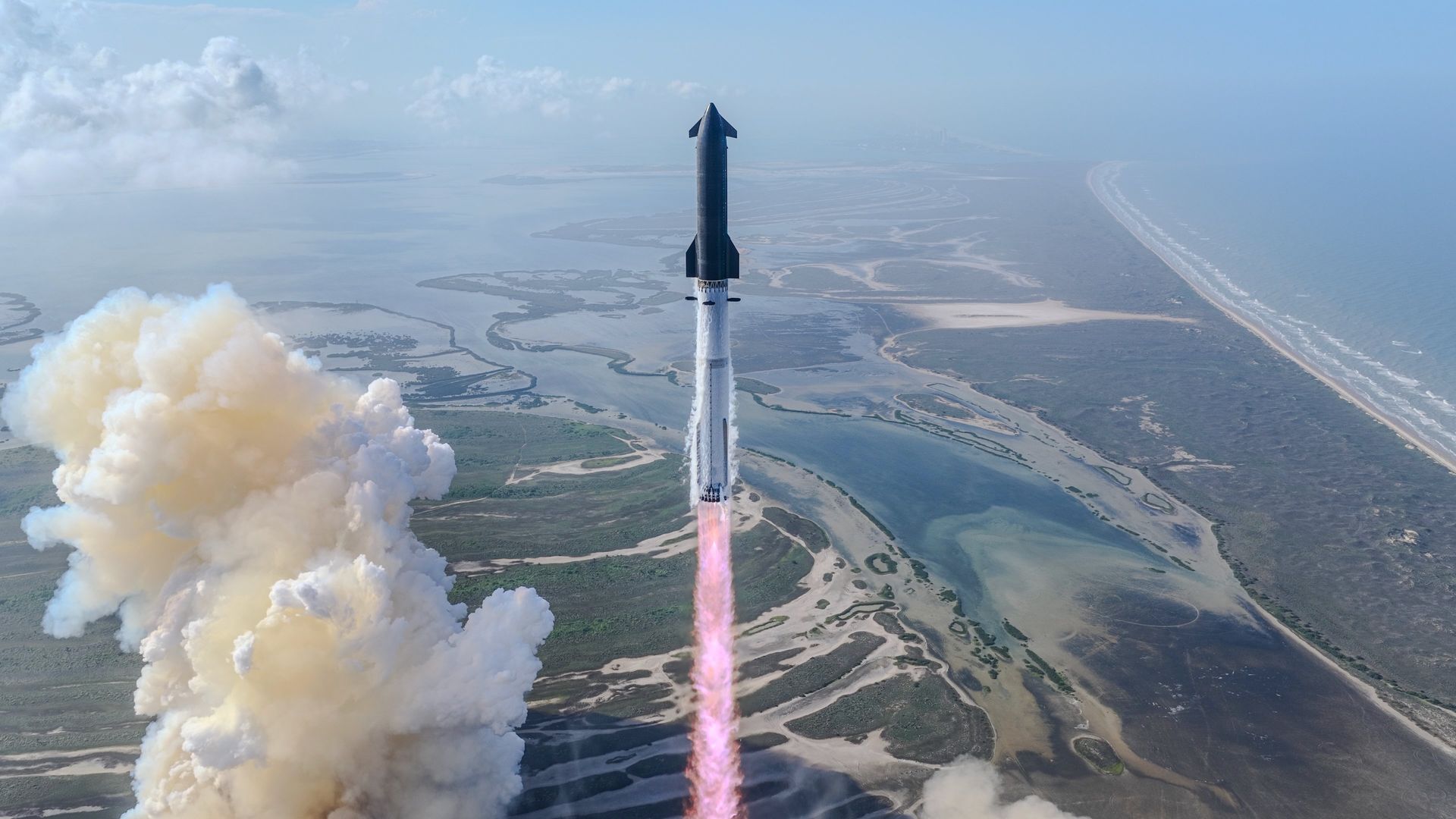
SpaceX's Starship megarocket launches on its 12th test flight, on May 22, 2026.

SpaceX is targeting Sept. 22 for Starship's first-ever orbital launch, a landmark flight that will deploy 26 Starlink satellites and last about 10 hours. (Image credit: SpaceX)

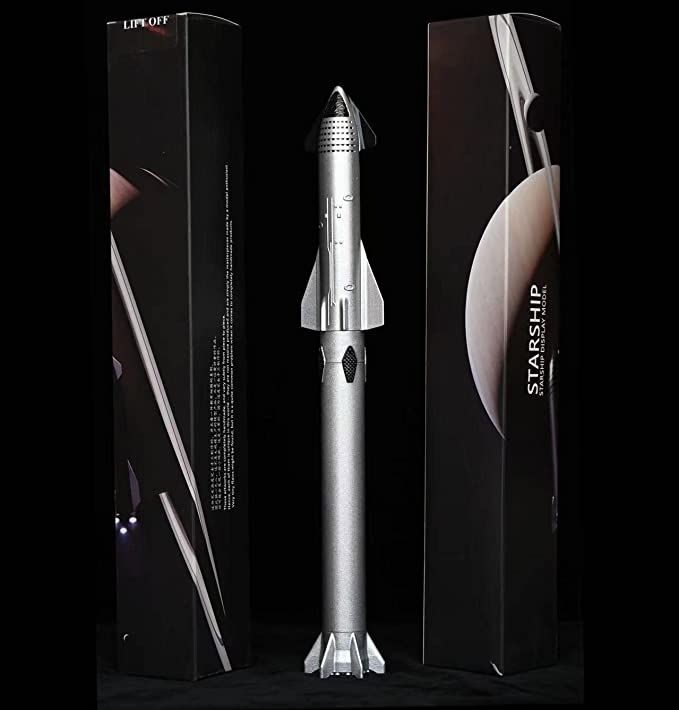
Starship Die Cast Rocket Model Was $47.99 Now $39.99 on Amazon.

Even if you can't see SpaceX's Starship in person, you can score a model of your own. Standing at 13.77 inches (35 cm), this is a 1:375 ratio of SpaceX's Starship as a desktop model. The materials here are alloy steel and it weighs just 225g.View Deal

The upcoming flight will be the 14th overall for Starship, which debuted in April 2023 and has flown twice so far in 2026. But the 408-foot-tall (124-meter-tall) vehicle's first 13 jaunts were all suborbital, so Flight 14 will be a landmark.

"By going to orbit, the next phase of developing Starship to be fully and rapidly reusable can begin," SpaceX wrote in a Flight 14 mission description.

"This will also mark the first time we plan to deploy Starlink V3 satellites into the constellation, delivering a payload that will dramatically expand connectivity speeds and reliability around the world," the company added.

Starlink, SpaceX's network of broadband satellites in low Earth orbit, currently consists of more than 11,000 active spacecraft. None of those are the larger, more capable V3 version, which are designed to launch on Starship.

Flight 14 will carry up 26 of these next-gen craft — the first of many, if all goes to plan. SpaceX founder and CEO Elon Musk has said the company wants the Starlink megaconstellation to eventually consist of 100,000 V3 satellites.

Three of the Starlink craft launching on Flight 14 have been outfitted with cameras and will photograph the heat shield on Starship's upper stage, known as Ship, after deployment. SpaceX will use this imagery to study and potentially improve the heat shield, which protects Ship during its return trip through Earth's atmosphere.

If all goes according to plan on Sept. 22, the 171-foot-tall (52-m-tall) Ship will complete six orbits of Earth at an altitude of about 171 miles (275 kilometers). The vehicle will then maneuver its way to a splashdown in the Pacific Ocean west of Chile about 10 hours after launch, SpaceX wrote in the mission description.

That's a very different plan than previous Starship flights. On those suborbital missions, Ship stayed aloft for just 65 minutes or so, did not complete an orbit of Earth and came down in the Indian Ocean, off the coast of Western Australia.

But Flight 14 will be more of the same for Starship's first-stage booster, known as Super Heavy. If all goes to plan, the giant rocket will splash down in the Gulf of Mexico about seven minutes after liftoff, as it has done on a number of previous flights.

So there will be no catch — of either Ship or Super Heavy — by the "chopstick" arms of Starbase's launch tower on Flight 14. SpaceX has pulled off tower catches of Super Heavy on three occasions to date but has never done so with Ship. This recovery method will eventually be the norm on Starship flights, leading to faster and more efficient reuse of the vehicle, Musk has said.

So, while Flight 14 aims to check a very big box — reaching orbit — other milestones will be reserved for future flights. A Ship tower catch will be among the most anticipated, along with refueling the vehicle in orbit, something that will be required for missions to the moon, Mars and beyond.
SpaceX launches 2nd classified mission for US Space Force in less than a week (photos)

SpaceX launched its second classified mission for the U.S. Space Force in less than a week tonight (Sept. 16).

A Falcon 9 rocket lifted off from California's Vandenberg Space Force Base today at 9:07 p.m. EDT (6:07 p.m. local California time; 0107 GMT on Sept. 17).

We don't know much about tonight's mission, which was called USSF-259. SpaceX's webcast didn't shed any light of note; it ended shortly after the Falcon 9's first stage returned to Earth for a landing in the Pacific Ocean atop a drone ship about 8.5 minutes after launch.

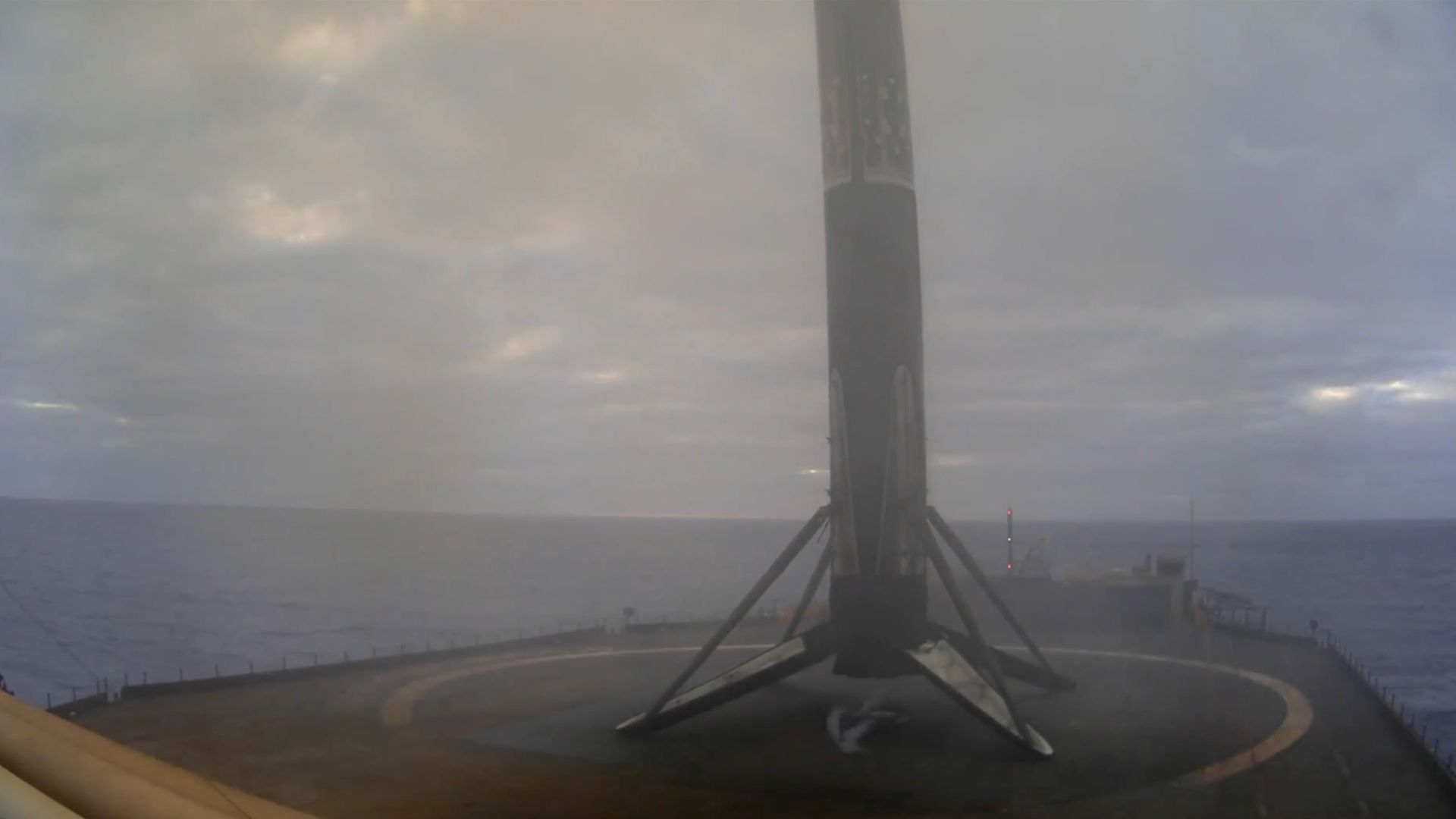
a rocket rests on the deck of a ship at sea

The Falcon 9's first stage rests on the deck of a drone ship shortly after launching the USSF-259 mission for the U.S. Space Force on Sept. 16, 2026. (Image credit: SpaceX)

That touchdown was the 13th for this particular booster, which is designated 1097. One of the booster's previous landings was a big milestone for SpaceX. This past April, B1097 pulled off SpaceX's 600th touchdown of an orbital-class rocket, during a launch that sent 25 of the company's Starlink internet satellites to low Earth orbit.

Tonight's mission was the second that SpaceX has flown for the U.S. Space Force in a six-day span: A Falcon 9 launched the similarly classified USSF-153 from Vandenberg on Sept. 10.

Previous Booster 1097 missions

Sentinel-6B | Twilight | NROL-172 | Transporter-17 | 8 Starlink missions

Tonight's launch was SpaceX's 110th of 2026. The vast majority of the company's flights so far this year — 106 of them, in fact — have been performed by the workhorse Falcon 9.

The powerful Falcon Heavy has launched twice in 2026, as has SpaceX's next-gen megarocket, Starship. Both Starship liftoffs this year have been suborbital test flights. The next Starship launch, which is expected to occur in the next two weeks, will apparently take the vehicle orbital for the first time.

Editor's note: This story was updated at 11:50 p.m. ET on Sept. 15 with the new launch date of Sept. 16. It was updated agai at 9:28 p.m. ET on Sept. 16 with news of successful launch and rocket landing.

Vega C rocket launches 2 European Earth-observing satellites to orbit from South America (video)

Two European Earth-observing spacecraft lifted off from South America tonight (Sept. 14).

A Vega C rocket carrying the FLEX and Copernicus-3C satellites launched from Europe's Spaceport in Kourou, French Guiana at 9:21 p.m. EDT (10:21 p.m. local time in Kourou and 0121 GMT on Sept. 15).

Both FLEX and Sentinel-3C were deployed as planned. They were released at an altitude of about 509 miles (820 kilometers), and both were flying freely by 116 minutes after launch.

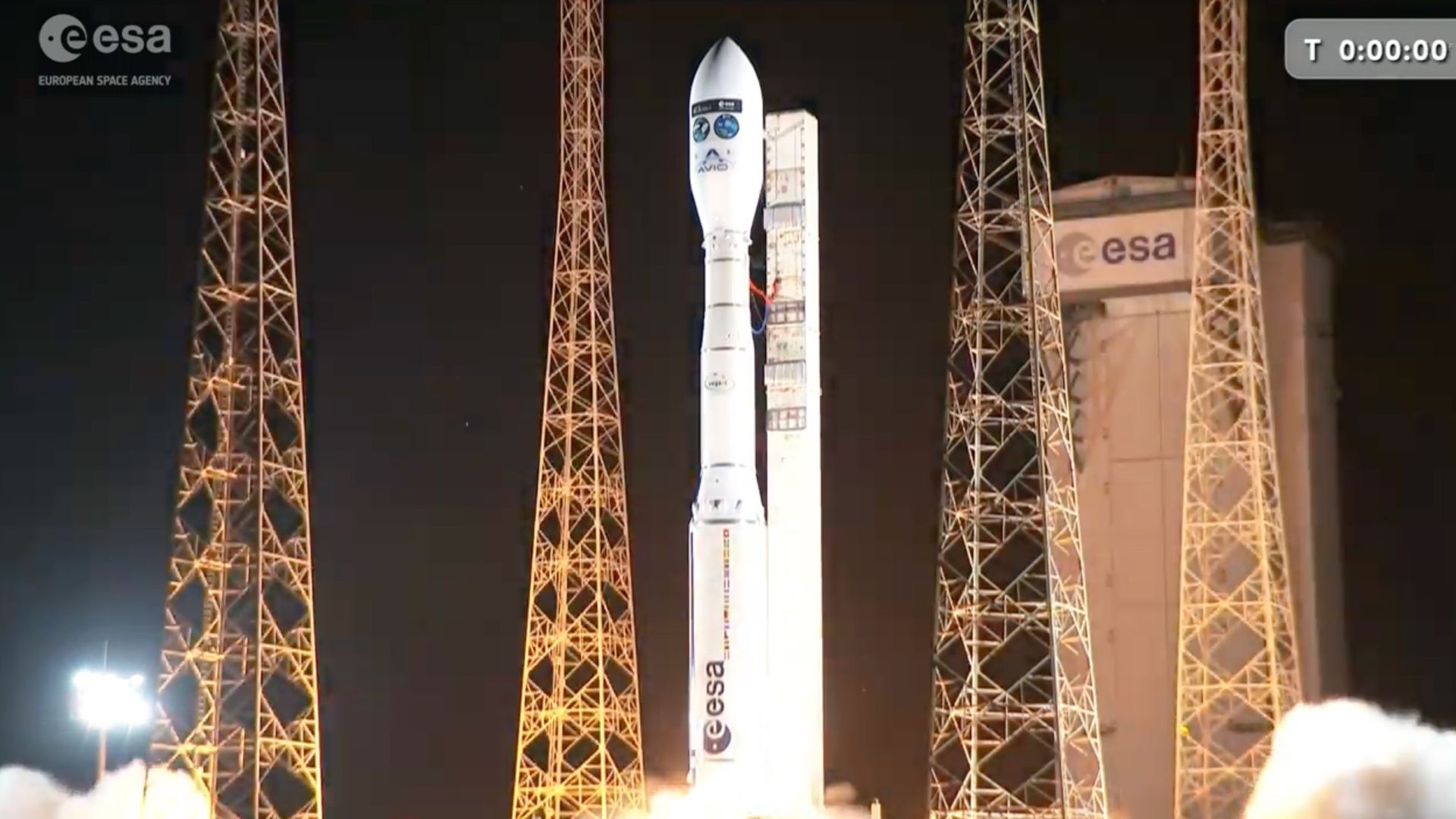
A Vega C rocket launches the FLEX and Sentinel-3C Earth-observation satellites to Earth orbit from Kourou, French Guiana on Sept. 14, 2026.

A Vega C rocket launches the FLEX and Sentinel-3C Earth-observation satellites to Earth orbit from Kourou, French Guiana on Sept. 14, 2026. (Image credit: ESA/Avio)

The 875-pound (397-kilogram) FLEX will detect and monitor vegetation fluorescence, which explains its name (a shortening of "Fluorescence Explorer"). By doing so, it will map plant photosynthetic activity — something no satellite can do at the moment, according to ESA.

FLEX's data will be important not only "for a better understanding of the global carbon cycle, but also for agricultural management and food security," ESA wrote in a FLEX mission desription. "This is of particular relevance due to demand the growing world population is placing on the production of food."

Sentinel-3C is part of the European Union's Copernicus Earth-observation program. The 2,520-pound (1,1143-kg) satellite will continue the Sentinel-3 line, which is aging but still going strong in low Earth orbit; Sentinel-3A and Sentinel-3B, which launched in 2016 and 2018, respectively, remain active.

"Like its two older siblings in orbit, Sentinel-3C carries a suite of cutting-edge instruments that measure systematically Earth’s oceans, land, ice and atmosphere to monitor and understand large-scale global dynamics," ESA wrote in a Sentinel-3C description. "It provides essential information in near-real time for ocean and weather forecasting."

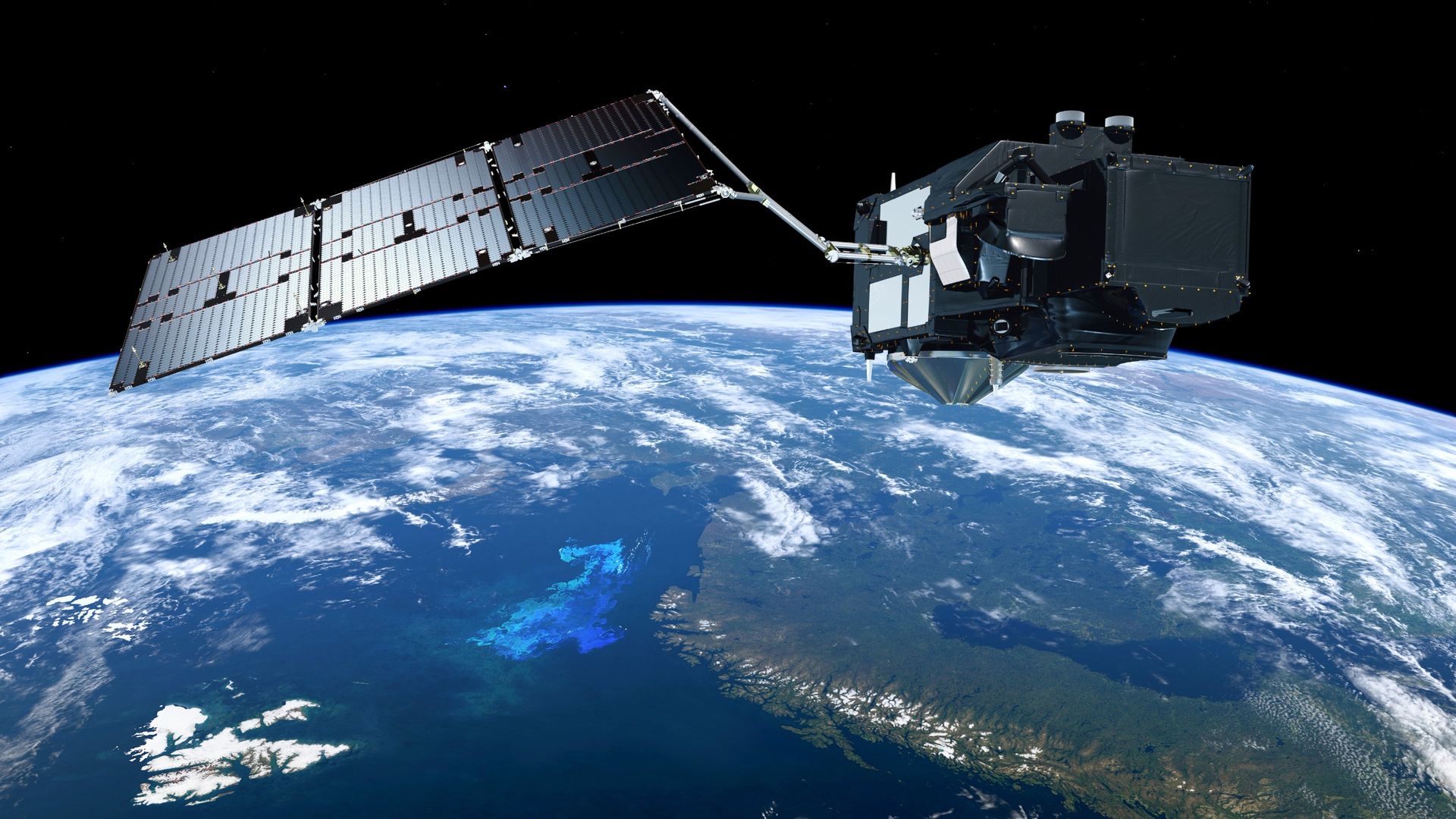
illustration of a boxy silver satellite flying over earth

Artist's illustration of a Sentinel-3 satellite in orbit. (Image credit: ESA/ATG medialab)

The 115-foot-tall (35-meter-tall) Vega C debuted in July 2022 and had seven flights under its belt before today, six of them successful.

The rocket was developed by the European Space Agency and originally operated by the France-based company Arianespace. The Italian outfit Avio now runs the vehicle's liftoffs, however; today's launch was the second Avio has managed.

Editor's note: This story was updated at 9:35 p.m. ET with news of successful liftoff, then again at 1:10 a.m. ET with news of successful satellite deployment.

SpaceX launches 3 telecom satellites to orbit on 700th Falcon mission of all time (video)

SpaceX lofted three telecom satellites to orbit today (Sept. 13) on a milestone mission for the company.

A Falcon 9 rocket lifted off from Florida's Cape Canaveral Space Force Station today at 2:49 p.m. EDT (1849 GMT), carrying the final three satellites for Luxembourg-based SES' O3b mPOWER constellation.

It was the 700th mission to date for SpaceX's Falcon rocket family, according to the company. That family first spread its wings in March 2006 when the Falcon 1 debuted. The Falcon 1 flew a total of five times, twice successfully, before giving way to the workhorse Falcon 9 in 2010. The Falcon 9 has conducted the vast majority of the family's flights; the only other member, the still-active Falcon Heavy, has launched 13 times to date.

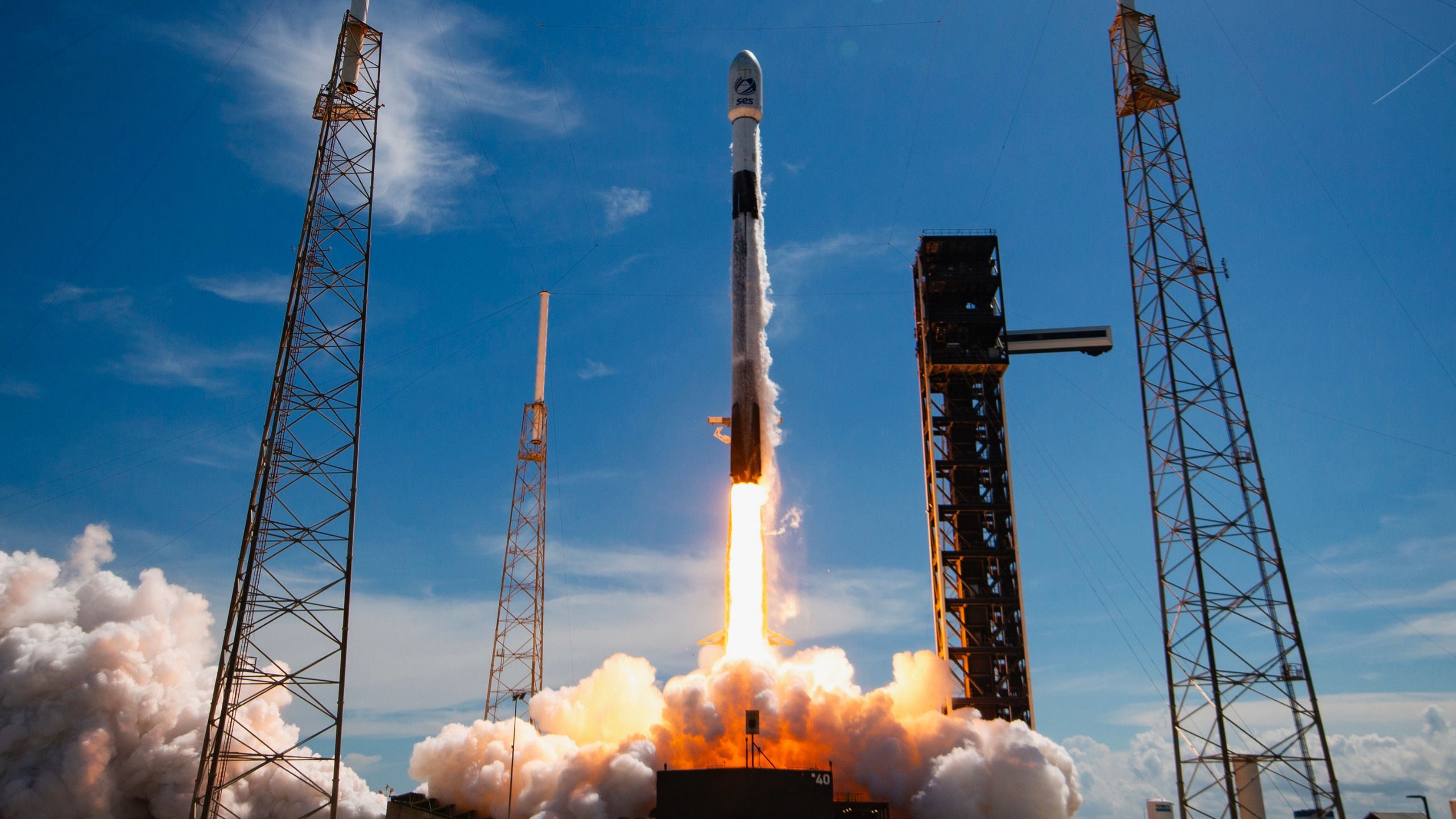
A SpaceX Falcon 9 rocket launches three O3b mPOWER satellites for the telecom company SES from Florida on Sept. 13, 2026.

A SpaceX Falcon 9 rocket launches three O3b mPOWER satellites for the telecom company SES from Florida on Sept. 13, 2026. (Image credit: SpaceX)

The Falcon 9's first stage came back to Earth a little less than nine minutes after launch today, landing in the Atlantic Ocean on the SpaceX drone ship "A Shortfall of Gravitas." It was the 29th flight for this particular booster, which is designated B1080.

The rocket's upper stage, meanwhile, continued hauling the O3b mPOWER trio to medium Earth orbit (MEO). The satellites were deployed as scheduled, being released at an altitude of 5,000 miles (8,000 kilometers) over a 14-minute span starting roughly 33.5 minutes after launch.

SES already operates 10 O3b mPOWER satellites in MEO. The spacecraft that went up today will complete the constellation, which is "purpose-built to deliver predictable low latency, exceptional throughput and unprecedented flexibility for industries where uptime isn’t optional," according to the company.

"It transforms how networks operate by pairing advanced software defined satellites with an intelligent ground and software ecosystem — ensuring guaranteed performance, even as global bandwidth demands surge," the company wrote.

The O3b mPOWER satellites, which are built by Boeing, weigh about 3,750 pounds (1,700 kilograms) apiece. SpaceX has launched all of them, on six Falcon 9 launches beginning in December 2022.

Previous Booster 1080 missions:

Ax-2 | Euclid | Ax-3 | CRS-30 | SES ASTRA 1P | NG-21 | 22 Starlink missions

Today's launch was SpaceX's 107th orbital mission of the year. The Falcon 9 has performed 105 of those flights, with the Falcon Heavy conducting the other two.

SpaceX has also launched two suborbital test flights of its Starship megarocket in 2026 and is gearing up for the third, which apparently will take the giant vehicle orbital for the first time.

SpaceX launches classified mission for the US Space Force from California (video)

SpaceX launched a secret mission for the U.S. Space Force today (Sept. 10) from California's central coast.

A Falcon 9 rocket lifted off from Vandenberg Space Force Base today at 11:42 a.m. EDT (1542 GMT; 8:42 a.m. local time), kicking off a mission called USSF-153.

The rocket's first stage came back to Earth about 8.5 minutes later, landing in the Pacific Ocean atop the SpaceX drone ship "Of Course I Still Love You." It was the 27th flight for this particular booster, which is designated B1801. The record for a SpaceX rocket is 37, set last month during a launch of the company's Starlink internet satellites.

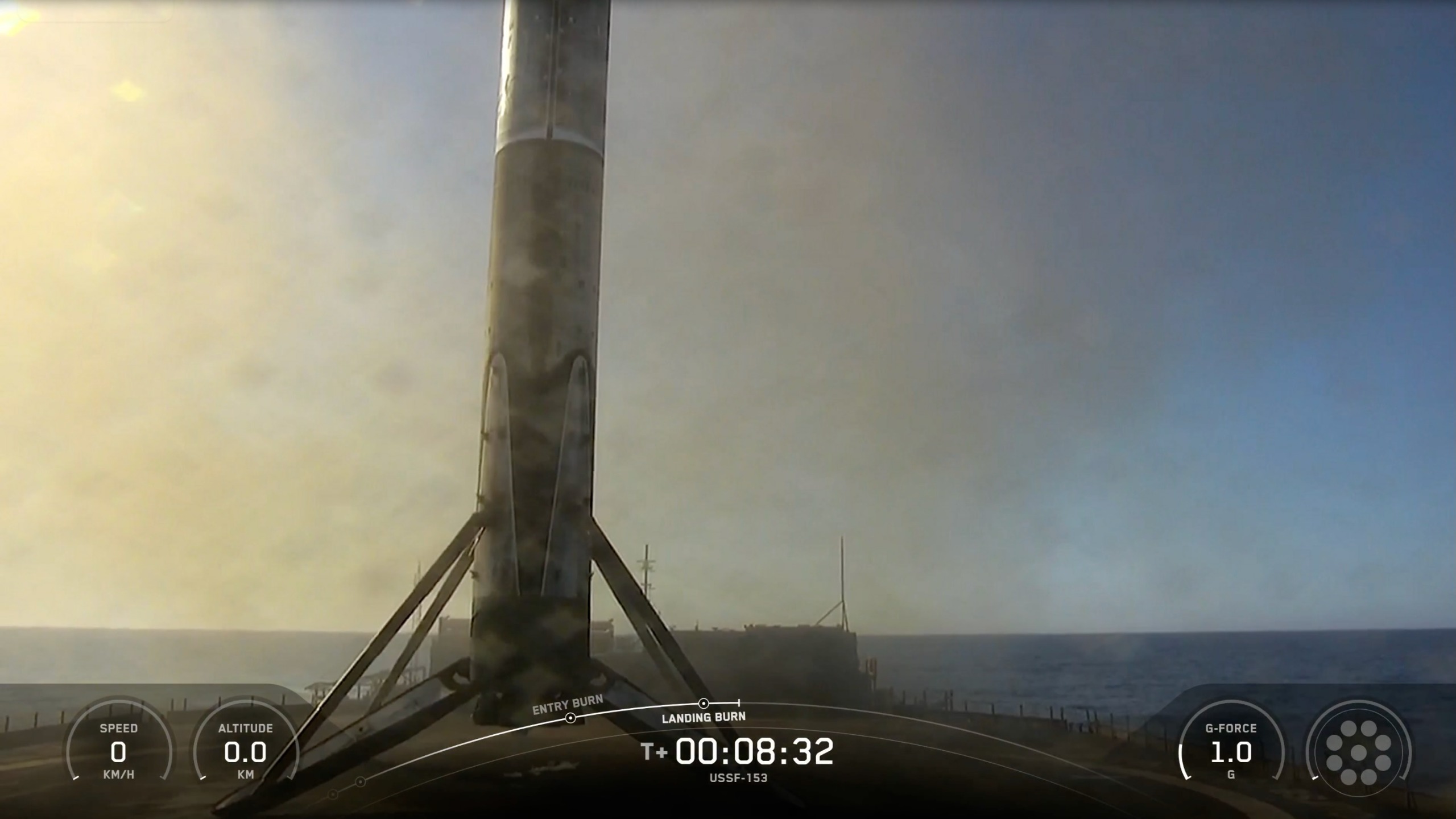
a black and white rocket rests on the deck of a ship at sea

The first stage of a SpaceX Falcon 9 rocket rests on the deck of a drone ship after launching the USSF-153 mission from Vandenberg Space Force Base in California on Sept. 10, 2026. (Image credit: SpaceX)

USSF-153 is a classified mission, so little is known about its payloads — what they are or where exactly they're headed. We didn't get much clarity from the webcast, which ended shortly after the Falcon 9's first stage landed.

However, the location of that touchdown provided some potentially useful information about USSF-153, according to NextSpaceflight.com.

The mission might be carrying "a batch of classified LEO [low Earth orbit] satellites for a U.S. government entity based on SpaceX's Starshield satellite bus, based on locations of rocket stage drop zones being exact fits with previous Starlink Group 15 launches," the outlet wrote.

"Starshield leverages SpaceX's Starlink technology and launch capability to support national security efforts," SpaceX wrote in a description of the Starshield program.

Previous Booster 1081 launches

Today's launch was the 104th Falcon 9 mission of 2026. Eighty of the rocket's flights this year have been dedicated to building out the Starlink megaconstellation, which currently consists of more than 11,000 active spacecraft.

Editor's note: This story was updated at 11:55 a.m. ET on Sept. 10 with news of successful launch and rocket landing.