SpaceX ignites giant Super Heavy booster engines ahead of daring Starship launch (video)

SpaceX is shooting for new heights with its upcoming Starship test flight, and the booster tapped for the mission is in its final stretch of preparations before the mission.

The Super Heavy booster for Flight Test 15, Booster 22, underwent a static test fire on Sunday (Oct. 25), igniting all of its Raptor 3 engines for about 15 seconds. "Full duration 33-engine static fire for the Super Heavy booster preparing for Flight 15," SpaceX said in a post on X.

The test is a beginning of final checks on the first-stage vehicle, which will be mated with the Flight 15 upper stage, Ship 42, ahead of launch, but not before the spacecraft completes some tests of its own.
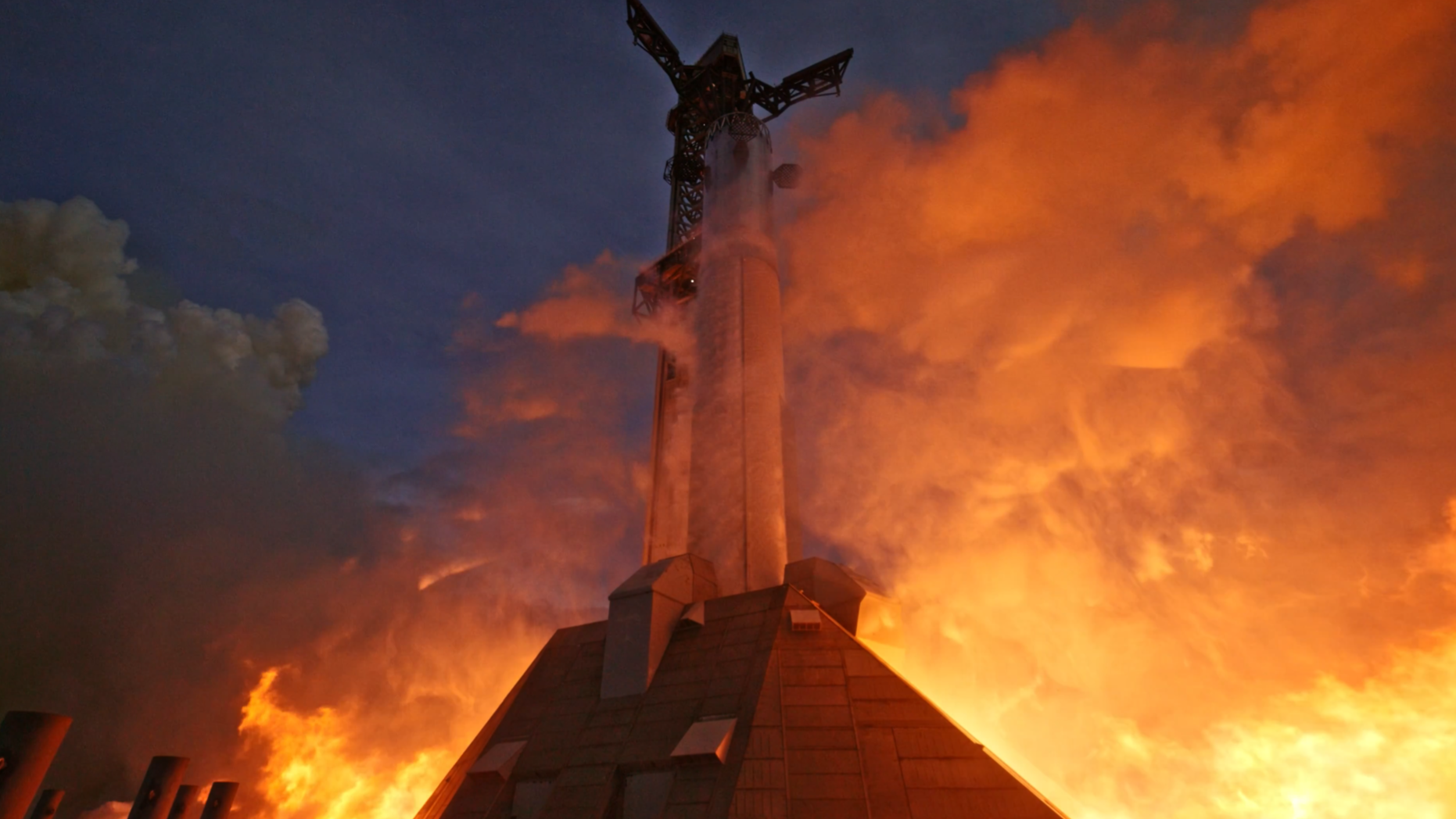
fire erupts from below a giant chrome cylinder with three grid fins, next to a tower.

SpaceX conducts a static-fire test with the Flight 15 Starship Super Heavy B22 at its Starbase site in South Texas on Oct. 25, 2026. (Image credit: SpaceX)

Ship 42 will also complete a series of tests as the next Starship launch approaches, including a static engine fire and final systems checks. SpaceX CEO Elon Musk has stated that SpaceX will attempt the first launch tower catch of a ship upper stage on Flight 15, which, if successful, would be a significant step forward for the company's goal to mature Starship to full reusability.

SpaceX's confidence in its ability to catch both the Super Heavy and Ship stages has been building this year, following three launches so far in 2026. Its most recent (Sept. 28) mission, Flight 14, reached orbit for the first time and performed the successful deployment of 26 next-generation Starlink V3 satellites, marking the first operational payloads delivered to orbit by the spacecraft. Starlink V3 satellites are too big to fit aboard the company's workhorse Falcon 9 rocket.

Flight 14 wasn't without setbacks, however. An upper-stage Raptor engine shut down prematurely during ascent, prompting SpaceX to cut the planned 10-hour mission short. Ship, nevertheless, completed a controlled reentry and splashed down in the Pacific Ocean about three hours after liftoff.

Flight 15 could carry another batch of V3 Starlinks, though SpaceX has not officially confirmed a payload. Beginning to upgrade its global network with the fast V3 satellites, however, is a major reason SpaceX is pushing to bring Starship into regular service.

Starship's development also has implications for NASA's Artemis program, which has contracted SpaceX to develop a modified Ship upper stage capable of landing astronauts on the surface of the moon.

NASA recently updated the timeline of milestones SpaceX needs to accomplish with Starship before a lunar lander version will qualify to carry crews, with a significant demonstration mission coming up next summer on Artemis III.

The next Artemis mission will launch astronauts to Earth orbit aboard NASA's Orion spacecraft, which will dock with both lunar lander vehicles over the course of about two weeks (in addition to Starship, NASA contracted Blue Origin's Blue Moon spacecraft as a another lunar lander for the program).

SpaceX is also working toward an uncrewed lunar landing demonstration ahead of NASA's planned return of astronauts to the moon on Artemis IV, targeted for 2028. Which lander will be chosen for that mission is still undetermined, and SpaceX and Blue Origin are both still vying for the first crewed Artemis landing.

Beyond Flight 15, SpaceX hopes to demonstrate additional milestones before the end of 2026, including Starship's first launch from Florida and potentially the first re-flight of an upgraded V3 Super Heavy booster.

Booster 22's engine test marks the beginning in a series of tests leading up Flight 15, which, if recent Starship campaigns are any example, could lift off sometime in mid-to-late November.
SpaceX launches Starlink satellites from California as Falcon 9 cadence slows (video)

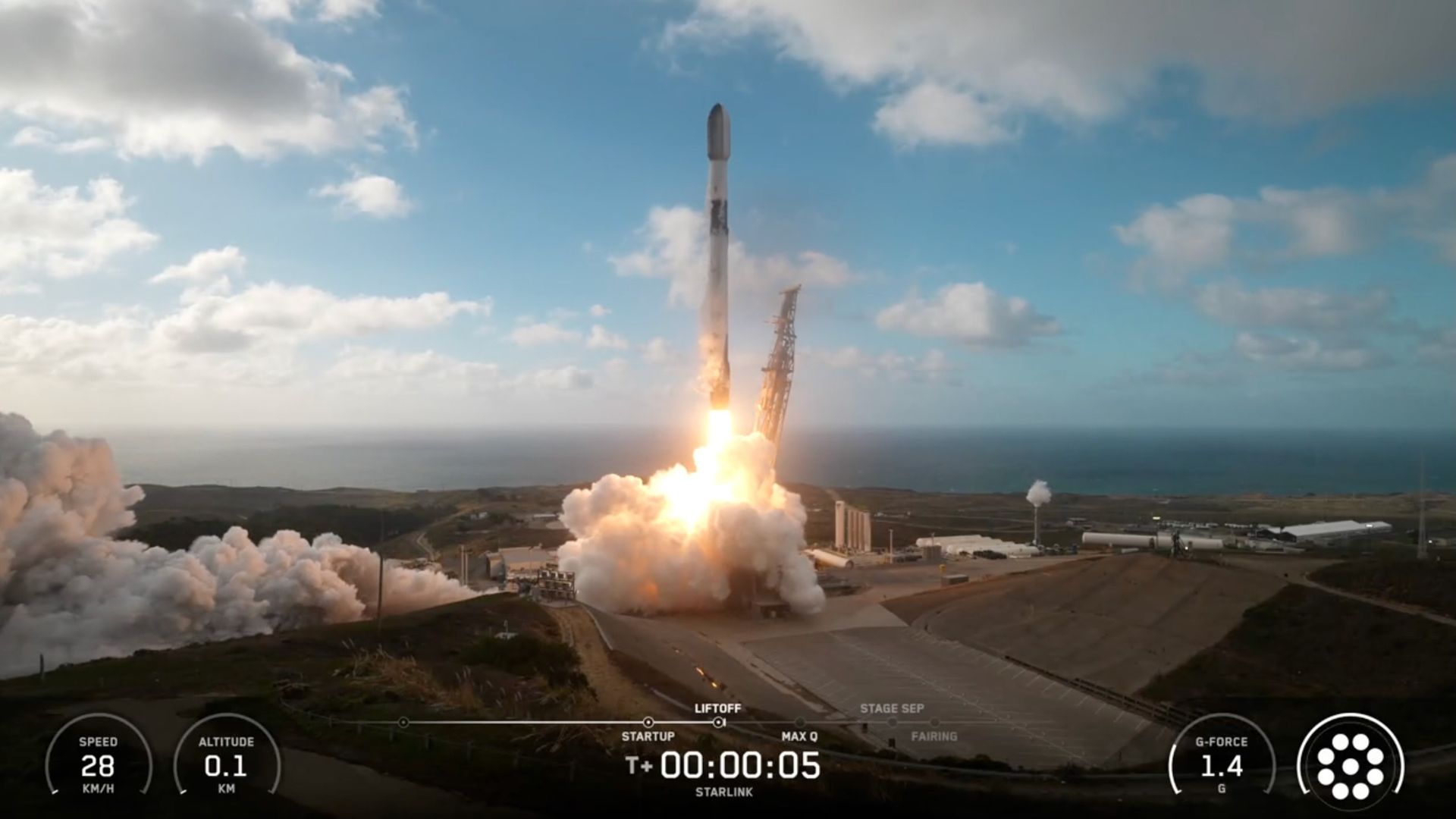
SpaceX launched its newest batch of Starlink broadband internet satellites today (Oct. 23) from the California coast.

The spacecraft, Starlink Group 15-15, were stacked 27 high inside the payload fairing of a SpaceX Falcon 9 rocket, which lifted off from Pad 4E at Vandenberg Space Force Base at 6:48 p.m. EDT (2248 GMT; 3:48 p.m. local time in California).

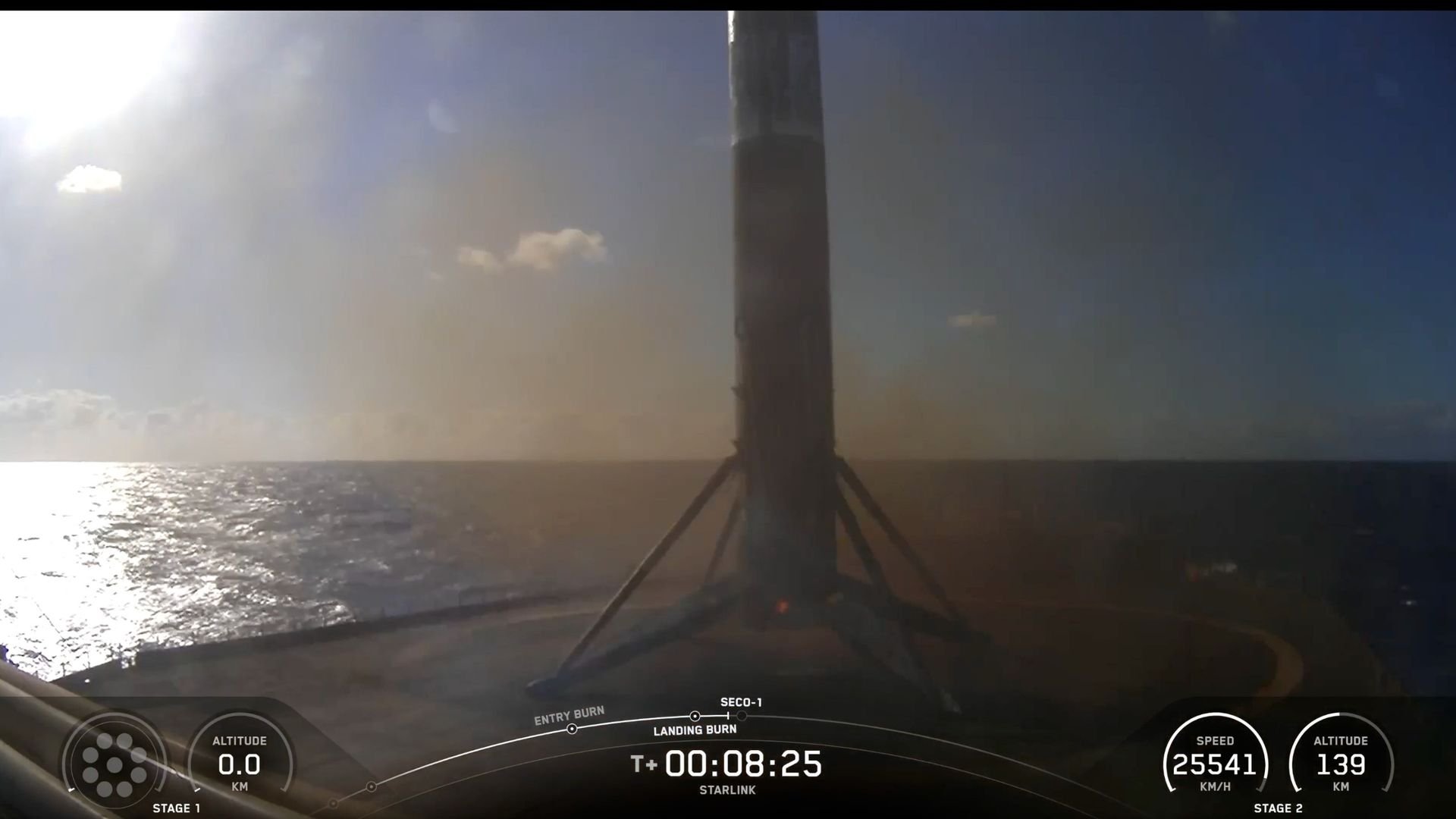
The rocket's first stage booster, designated B1063, executed its main engine cutoff and stage separation about 2.5 minutes into flight, sending the second stage to continue onward to low Earth orbit (LEO). The vehicle's two-piece protective payload fairing was jettisoned just before T+3 minutes.

A SpaceX Falcon 9 rocket launches 27 Starlink satellites from California on Oct. 23, 2026.

A SpaceX Falcon 9 rocket launches 27 Starlink satellites from California on Oct. 23, 2026. (Image credit: SpaceX)

The booster, meanwhile, reoriented for its descent back to Earth. As the mission clock passed 8 minutes, B1063 began its landing burn, and it touched down about 20 seconds later on SpaceX's droneship "Of Course I Still Love You." This was the 36th launch and landing for B1063, which notably launched NASA's DART asteroid-smashing mission in November 2021.

The Falcon 9's upper stage completed its first engine burn shortly after B1063 landed and will coast for about 45 minutes before initiating a second and final orbital insertion burn. Following that burn's execution, deployment of the vehicle's 27 satellites into LEO is scheduled to begin 62 minutes after launch.

a black and white rocket rest on the deck of a ship at sea

The Falcon 9's first stage, shortly after its drone-ship landing on Oct. 23, 2026. (Image credit: SpaceX)
Previous Booster B1063 launches

Today's Starlink liftoff adds to SpaceX's growing constellation of more than 11,000 active spacecraft. But Starlinks aren't launching quite as often as they used to, as SpaceX shifts its focus from the Falcon 9 to its bigger and more powerful Starship rocket.

Starship is designed for full reusability and is equipped with a payload bay outfitted to accommodate SpaceX's upgraded Version 3 Starlink satellites, which are too large for the workhorse Falcon 9. Starship is still under development, but once the rocket begins operational flights (and that day is getting closer), SpaceX plans to phase out the Falcon 9 and its Falcon Heavy variant almost entirely.

Falcon 9's 100th launch of 2026 was the Starlink 10-49 group from SpaceX's pad at Cape Canaveral Space Force Station, which was later revealed to be the final Falcon 9 Starlink mission that would fly from Florida's Space Coast. The same might soon be true for Starlink launches from the West Coast as well.

The reduction in missions lifting off from Florida has slowed Falcon 9's Starlink launch cadence considerably. At their peak, these missions were flying every two to three days. But the most recent one before today lifted off 11 days ago, and that launch itself was the first Starlink mission in more than three weeks.

Today's launch was the 116th Falcon 9 flight so far in 2026, with about three-quarters of those being dedicated to Starlink. The reduced cadence will likely solidify 2025 as the Falcon 9's busiest year ever, with 165 launches completed. At its current rate, the Falcon 9 is expected to fly just under 150 missions by the end of this year.

Rocket Lab launches 3 ‘Hawk’ satellites to orbit to gather signals intelligence (video)

Rocket Lab launched a trio of private signals-intelligence satellites to orbit today (Oct. 23).

The mission lifted off aboard an Electron rocket from Rocket Lab’s New Zealand launch site today at 3:11 a.m. EDT (0711 GMT; 8:11 p.m. local time in New Zealand).

The Electron carried three "Hawk" satellites for the Virginia-based company HawkEye 360, which explains the name Rocket Lab gave to the mission: "We're Not Hawking Around."

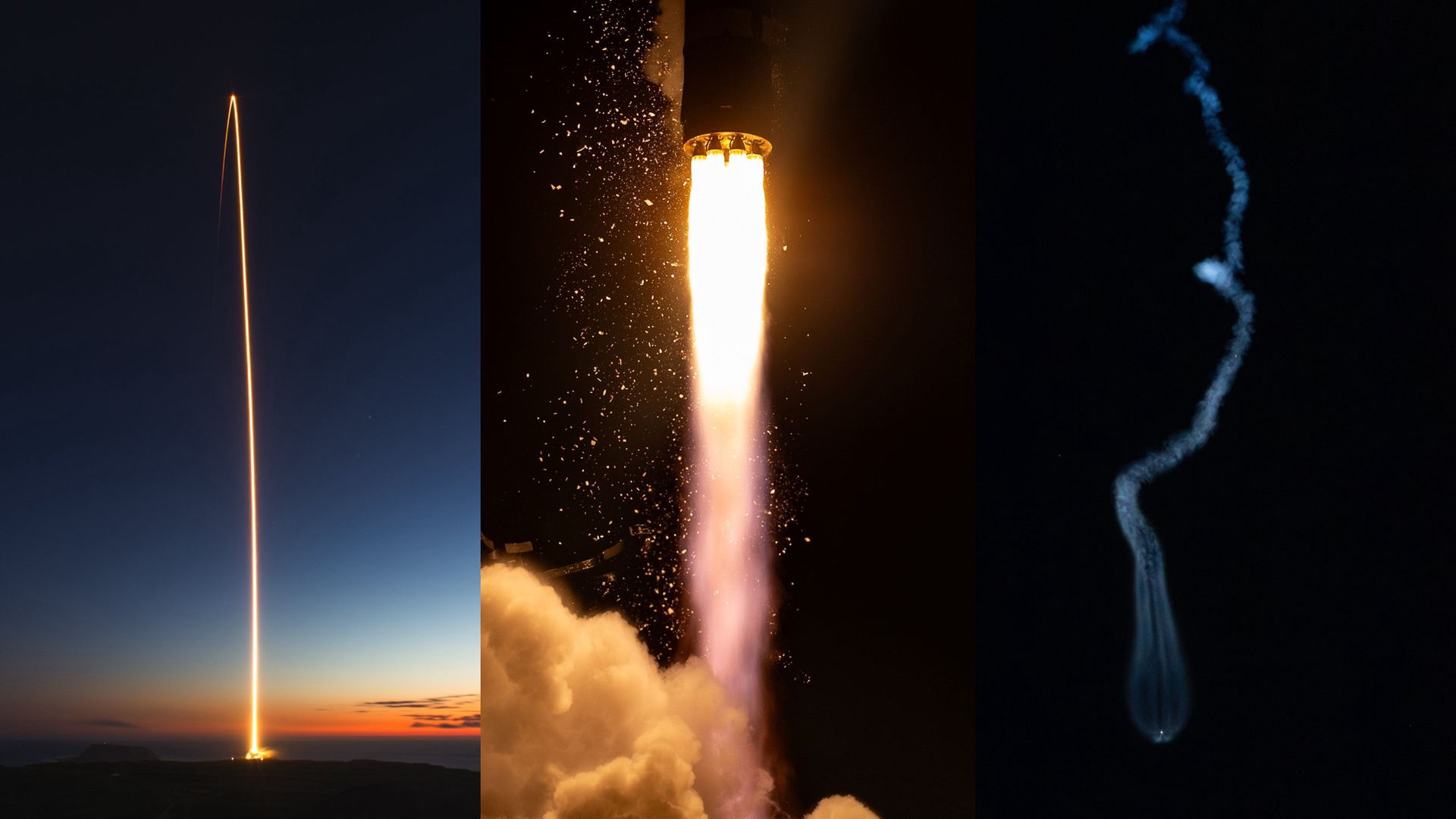
A three-panel image show a streak shot, engine shot and jellyfish from a rocket launch.

Rocket Lab launched a trio of private signals-intelligence satellites to orbit today (Oct. 21), the 19th mission of the year for the California-based company. (Image credit: Rocket Lab)

If all goes according to plan, the three Hawks will be deployed into low Earth orbit (LEO), at an altitude of 323 miles (520 kilometers). Once up there and commissioned, the satellites will scan the globe for radio frequency (RF) emissions.

"Operating in clusters of three, HawkEye 360's satellites collect signal data from across the RF spectrum for maritime tracking, GNSS jamming detection, radar monitoring, communications mapping and space defense," Rocket Lab wrote in a mission description.

HawkEye 360 provides this data to the U.S. government and its allies "to enable faster, better decision-making," according to the company. "Our space-based collection, proprietary signal processing and AI-powered analytics transform knowledge of the RF spectrum into a strategic advantage."

a circular mission patch featuring a hawk in front of a yellow sun with the words

The patch for Rocket Lab's "We're Not Hawking Around" mission. (Image credit: Rocket Lab)

HawkEye 360's first satellites launched in 2018, and the company has now sent nearly 50 of them to LEO. The most recent Hawk launch before "We're Not Hawking Around" came just two days ago; three of the satellites went up on SpaceX's Bandwagon-5 rideshare mission.

"We're Not Hawking Around "was Rocket Lab's 98th launch to date and its 19th of 2026 so far. Sixteen of this year's flights have been performed by the two-stage, 59-foot-tall (18 meters) Electron. The other three have been conducted by HASTE, a suborbital variant of Electron that allows customers to test technologies in a hypersonic flight environment.

Europe’s Space Rider vehicle comes crashing down during drop test

Europe has dropped the ball on the prototype for its first reusable spacecraft. Or, rather, the prototype itself was dropped — on purpose — but the outcome of its fall was not what engineers had hoped for.

The incident occurred during an Oct. 6 drop test of the full-scale Space Rider model, from the European Space Agency (ESA). The robotic vehicle's initial drogue parachute deployed successfully, but its main parafoil detached during deployment, leaving the prototype unable to slow its descent before crashing into the ground, according to ESA officials. The cause of the failure remains under investigation.

"Following several successful tests using representative vehicle masses, the latest system-level drop test in October was not completed as planned due to an anomaly during the parafoil deployment sequence," an ESA spokesperson confirmed in an email to Space.com. "An independent investigation is ongoing to determine its root cause and inform the next steps."

Space Rider is being developed as Europe's first reusable orbital spacecraft — an uncrewed vehicle designed to carry scientific experiments to orbit for up to two months, then return them to Earth for analysis. Its method of return, though, differs from that of any other spacecraft in operation today. Space Rider''s wingless, lifting-body design relies on a steerable parachute, or parafoil, to maneuver toward its landing area. This allows it to perform runway-style touchdowns, as opposed to other, less accurate parachute-aided recoveries in current practice.

This month's drop test was intended to demonstrate that ability, which is a critical requirement for Space Rider's planned reuse after missions in orbit, but the impact of its failure may not end up disrupting its ultimate development timeline. According to Géraldine Naja, ESA's director of space transportation, the vehicle's other remaining qualification tests aren't holding back its path to launch.

"We hope that this test will not damage, or let's say lead us to modify, the remaining schedule and qualification activities," Naja said during an ESA Council media briefing on Oct. 22. "In any case, the remaining qualification activities are not on the critical path of the development of the Space Rider."

Naja described the incident as an unfortunate but important event. "We have had many successful tests before, but testing and validation is part of the development of a space system," she said.

The lost vehicle was a full-scale test model assembled to evaluate Space Rider's descent and landing systems. The minivan-sized mockup reproduced the size and flight characteristics of its reentry module, with avionics to control its autonomous guidance and navigation systems, but the vehicle was far from a space-ready article.

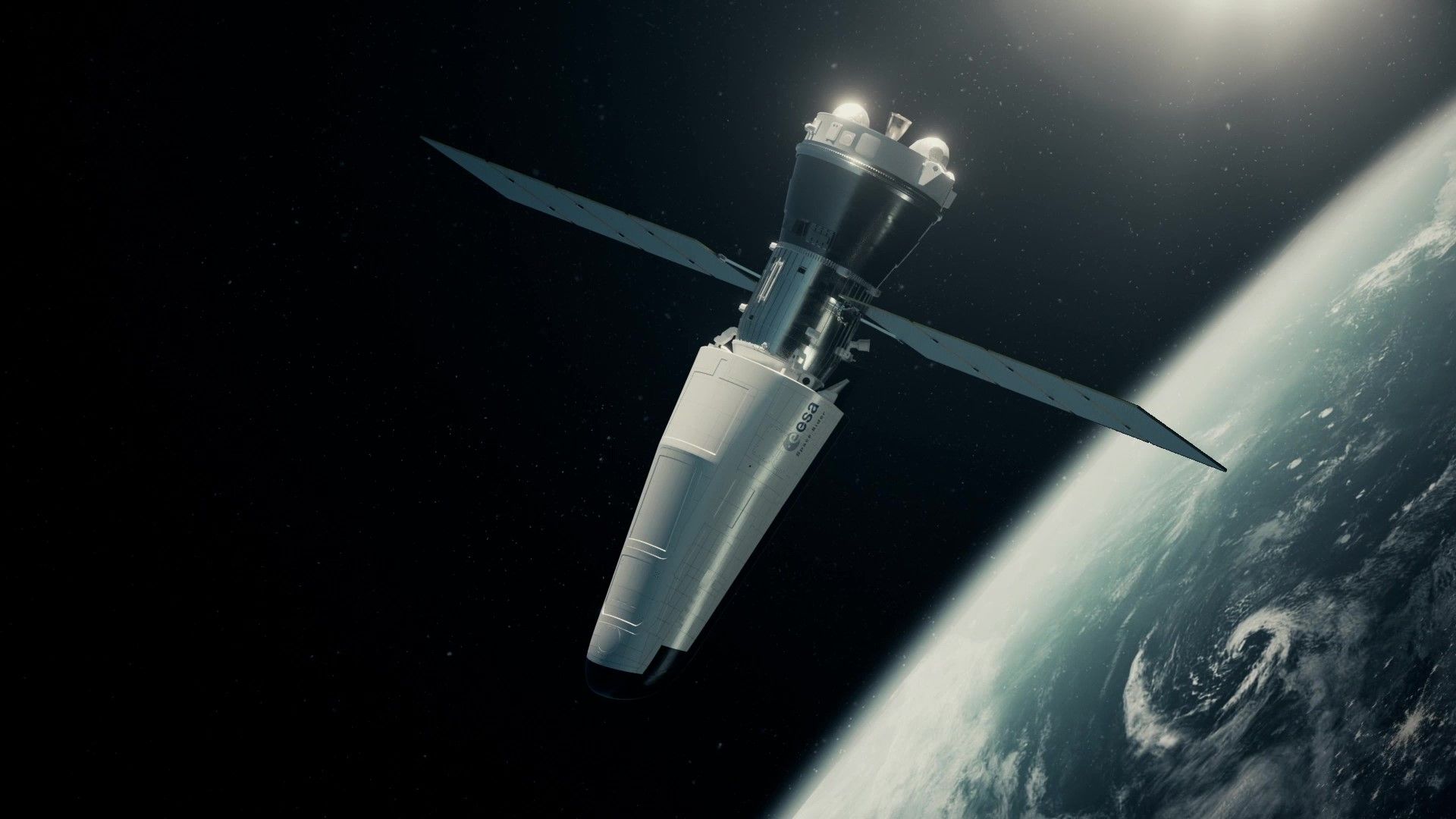
Render of ESA's Space Rider orbiter. (Image credit: European Space Agency)

The Oct. 6 test took place at a military range on the Italian island of Sardinia, where the mockup was released from a helicopter at an altitude of approximately 2 miles (3 kilometers). According to Naja, the vehicle's initial drogue parachute triggered as expected and began slowing the Space Rider mock-up's descent before its larger, steerable parafoil was supposed to unfurl. The parafoil, however, detached during deployment, leaving the vehicle in freefall before impacting the ground. ESA has subsequently recovered all the craft's components.

This month's event was the first drop test since an unsuccessful attempt in May, when a sensor flagged an issue during preparations, prompting engineers to abort the test before the model was released. Following that, Space Rider's testing range, operated by Italy's Ministry of Defense, was unavailable from June through September.

Space Rider's descent and landing qualification campaign began in 2025, with previous successes demonstrating its parafoil deployment and autonomous capabilities. Beyond its landing systems, Space Rider also underwent separate thermal protection testing earlier this year, exposing its heat-shield materials to temperatures around 2,900 degrees Fahrenheit (1,600 degrees Celsius) in plasma wind tunnel trials.

ESA has targeted Space Rider's first orbital mission for later this decade.

SpaceX will attempt 1st-ever double Starship rocket catch on next test launch, a ‘profound technology milestone,’ Elon Musk says

SpaceX will soon notch a huge spaceflight milestone, if all goes according to plan.

The company will try to catch both stages of its Starship megarocket during the vehicle's next test flight, which is targeted for next month, founder and CEO Elon Musk announced during SpaceX's quarter 3 (Q3) earnings call today (Oct. 20).

If SpaceX succeeds, this "will be the first time that an orbital launch vehicle has been fully recovered," Musk said. "The only way that we can extend consciousness beyond Earth on a sustained basis is with a fully reusable orbital launch vehicle. So this is, I think, a profound technology milestone in the history of civilization and consciousness."

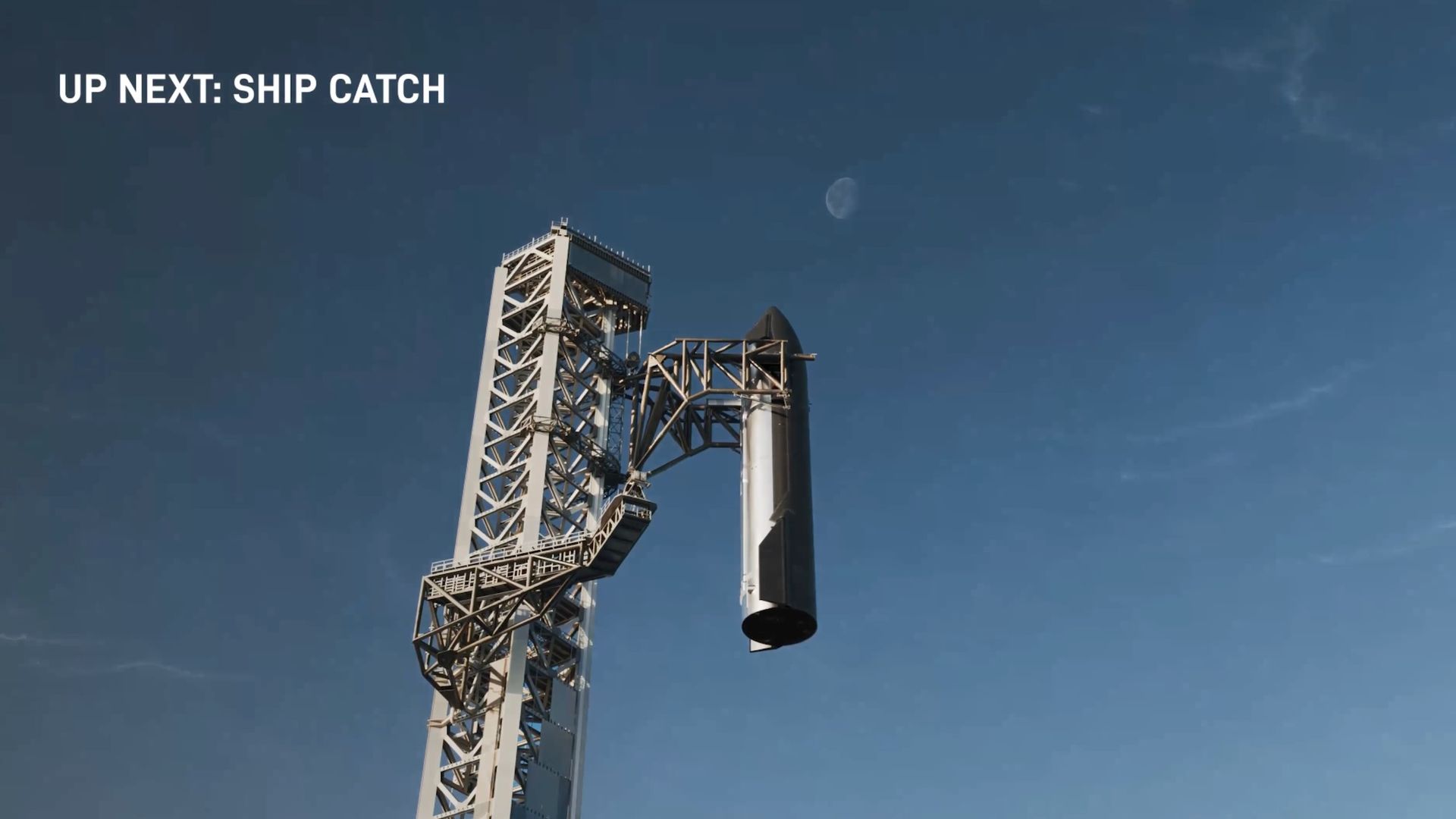
illustration of a silver spacecraft suspended in midair by the metallic arms of a launch tower

Artist's illustration of SpaceX catching the upper stage of its Starship megarocket, something the company expects to do on the vehicle's 15th test flight. (Image credit: SpaceX)

Starship is the biggest and most powerful rocket ever built, standing more than 400 feet (122 meters) tall when fully stacked.

As Musk noted, both of its stages — the Super Heavy booster and Ship spacecraft — are designed to be fully and rapidly reusable, a breakthrough that SpaceX thinks will make Mars settlement and other grand exploration feats economically feasible.

Starship's recovery strategy is different than that for SpaceX's Falcon 9 and Falcon Heavy rockets, which are partially reusable. (The latter two rockets have expendable upper stages). Falcon 9 and Falcon Heavy boosters come back to Earth on landing pads near the launch site or on ships at sea downrange. Super Heavy and Ship, however, will steer themselves directly back to their launch tower, which will capture each vehicle with its "chopstick" arms.

This will allow SpaceX to inspect, refurbish and refly Starship at an accelerated rate, which is a priority for the company: Musk has said he envisions launching Starship more than 10,000 times per year by 2030.

Starship has conducted 14 test flights to date, and SpaceX has pulled off chopstick catches with Super Heavy on three of them. The company has not yet tried to catch Ship, which is a more difficult proposition, as the upper stage travels higher, farther and faster than the booster does.

Still, Musk is confident that SpaceX will pull off a Ship catch on the first try. (He did not give a specific target date for Flight 15, saying only that it was expected next month.)

"I'd say it's more likely than not that this succeeds next flight," he said. "And if not, we have a steady stream of Starship flight attempts through the end of this year, and and then accelerating next year."

Success would mean back-to-back Starship flights with huge milestones. On Flight 14, which occurred on Sept. 28, Ship reached orbit for the first time ever. It also deployed 26 of SpaceX's Starlink Version 3 satellites — the first 26 members of a next-gen broadband constellation in low Earth orbit that will eventually consist of about 100,000 spacecraft.

The Starship Flight 15 preview was something of an aside during today's call. The event primarily served to announce SpaceX's financial performance during Q3, the three-month stretch that ended on Sept. 30.

And that performance was strong, company representatives said. SpaceX recorded revenues of $14.6 billion during Q3, an increase of 161% from the $5.6 billion earned during Q3 of 2025. The company had a net income of $4.4 billion during Q3, $5.5 billion better than the result from the same stretch last year, when SpaceX lost $1.1 billion.

Just $1.8 billion of 2026 Q3 revenue came from SpaceX's launch division. The vast majority was generated by two other segments — connectivity (services provided by its Starlink megaconstellation) and artificial intelligence (or, as the Trump administration has recently rebranded it, "superintelligence").

SpaceX thinks these latter two segments will continue to boom. That's why it's building the infrastructure to support thousands of Starship launches per year — to loft lots of Starlink satellites and AI data centers to Earth orbit. And the company believes that it's positioned to really start raking in the cash, starting as soon as next year.

"In a nutshell, what this implies for SpaceX annual recurring revenue by the end of '27 is somewhere between 500 billion [dollars] and a trillion," Musk said.

SpaceX launches its ‘Starfall’ return capsule for 2nd time ever (video)

SpaceX just launched its mysterious "Starfall" return capsule for the second time ever.

Starfall was one of 32 payloads on the company's Bandwagon-5 rideshare mission, which launched atop a Falcon 9 rocket at 7:04 a.m. EDT (1104 GMT) today (Oct. 20) from Cape Canaveral Space Force Station in Florida.

SpaceX has been relatively quiet about Starfall, which debuted this past June on a Falcon 9 launch from the Cape.

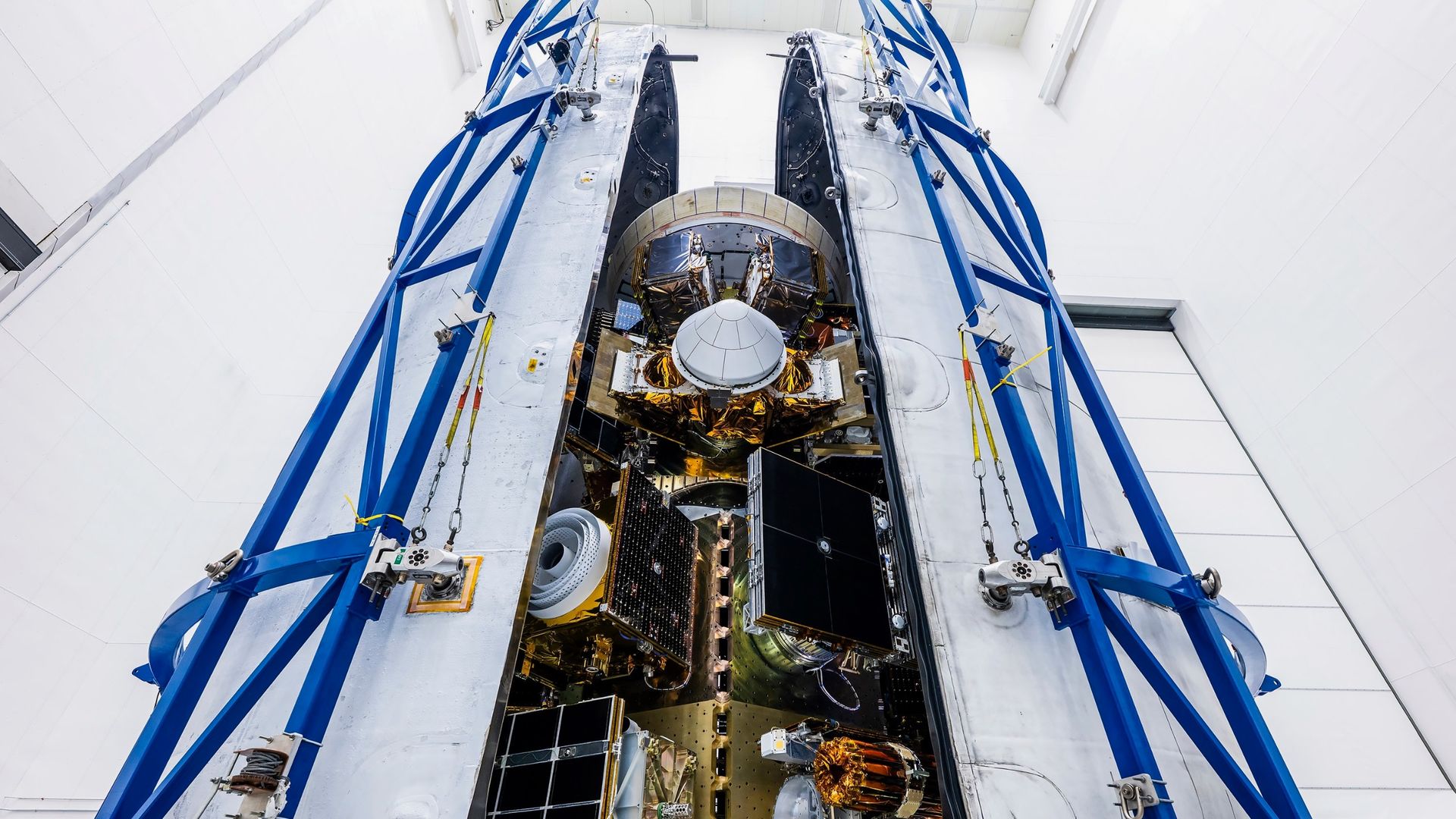
photo of a stack of satellites being processed for launch inside a large white clean room

The payloads of SpaceX's Bandwagon-5 rideshare mission, seen in a prelaunch photo. The company's Starfall capsule sits at the very top of the stack. (Image credit: SpaceX)

That June 23 flight was a dedicated demonstration mission for Starfall, designed to show that the capsule can fly in a controlled fashion and survive the harrowing downward trip through Earth's atmosphere.

And those will be Starfall's main jobs. The vehicle "will enable affordable, routine access to the microgravity environment for scientific research and in-space manufacturing," SpaceX in a June 23 X post, one of the few public statements the company has made about Starfall.

Indeed, most of the details that we have about the capsule come from an environmental assessment that was published by the U.S. Federal Aviation Administration in May.

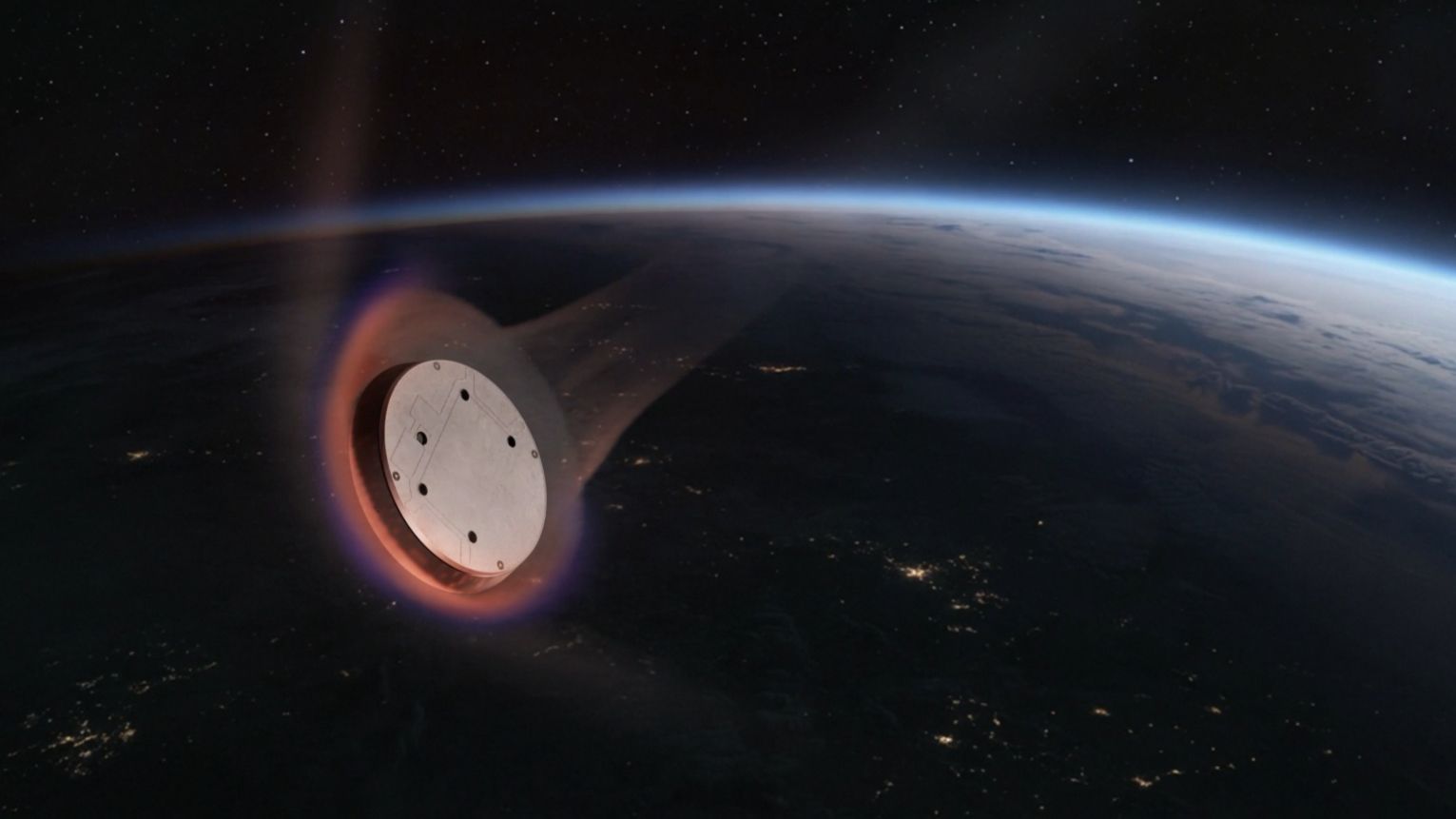
According to that document, the disk-shaped Starfall is roughly 2.5 feet (0.75 meters) tall and 10.2 feet (3.1 m) wide. It weighs about 4,600 pounds (2,100 kilograms) and can bring 2,200 pounds (1,000 kg) of payload back down to Earth.

a flat space capsule reenters Earth's atmosphere

Artist's illustration of a SpaceX Starfall capsule reentering Earth's atmosphere. (Image credit: SpaceX)

Starfall wasn't the only return capsule that went up on Bandwagon-5. Among the other 31 payloads on the flight was W-Series 7, the latest orbital "mini-factory" built and operated by the California company Varda Space Industries.

The W-Series capsules are designed to both host the production of valuable goods such as pharmaceuticals and bring them safely down to Earth, Varda has said.

The other payloads on Bandwagon-5 are a mix of "cubesats and microsats," according to SpaceX's mission description. Among the latter is Pelican-12, a sharp-eyed Earth-observation satellite built by the San Francisco company Planet.

The 32 payloads were deployed over a two-hour span beginning about 57 minutes after launch. Starfall will be the last to separate, releasing from the Falcon 9's upper stage two hours and 48 minutes post-liftoff.

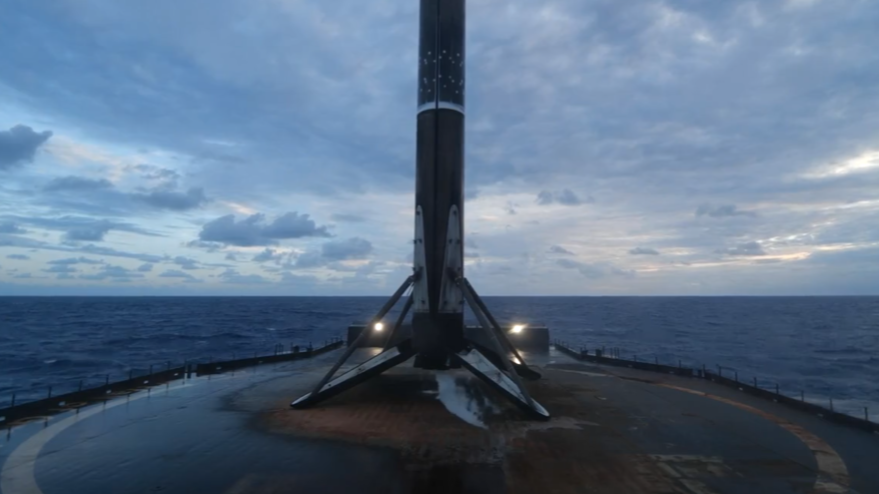
The Falcon 9's first stage, meanwhile, came back to Earth as planned on Bandwagon-5. It touched down about nine minutes after launch, coming down in the Atlantic Ocean atop the SpaceX drone ship "A Shortfall of Gravitas." It was the 19th mission for this particular booster, according to the company.

A sooty booster stands on 4 legs on a barge at sea.

(Image credit: SpaceX)

Bandwagon is one of two SpaceX rideshare programs. The other, known as Transporter, has been busier, flying 18 missions to date.

The first Transporter mission, which lifted off in January 2021, delivered 143 payloads to Earth orbit, a single-launch record that still stands.

Japan launches historic MMX sample-return mission to Mars’ moon Phobos (video)

Japan's groundbreaking mission to Mars is officially underway, headed to the Red Planet's mysterious moons Phobos and Deimos for a historic sample-return attempt.

The Martian Moons eXploration (MMX) mission launched today (Oct. 19) from Tanegashima Space Center in Japan, riding an H3 rocket that lifted off from Pad-2 at Tanegashima's Yoshinobu Launch Complex at 3:41 p.m. EDT (1941 GMT; 4:41 a.m. local time in Japan on Oct. 20).

The JAXA (Japan Aerospace Exploration Agency)-led MMX mission is bound for Mars orbit, where it will study the planet's two moons, Phobos and Deimos. If everything goes according to plan, MMX will become the first spacecraft to land on and return samples from Phobos for study back on Earth, which scientists think could shed light on a decades-old mystery about the moons' origins and reveal clues about the formation of the early solar system.

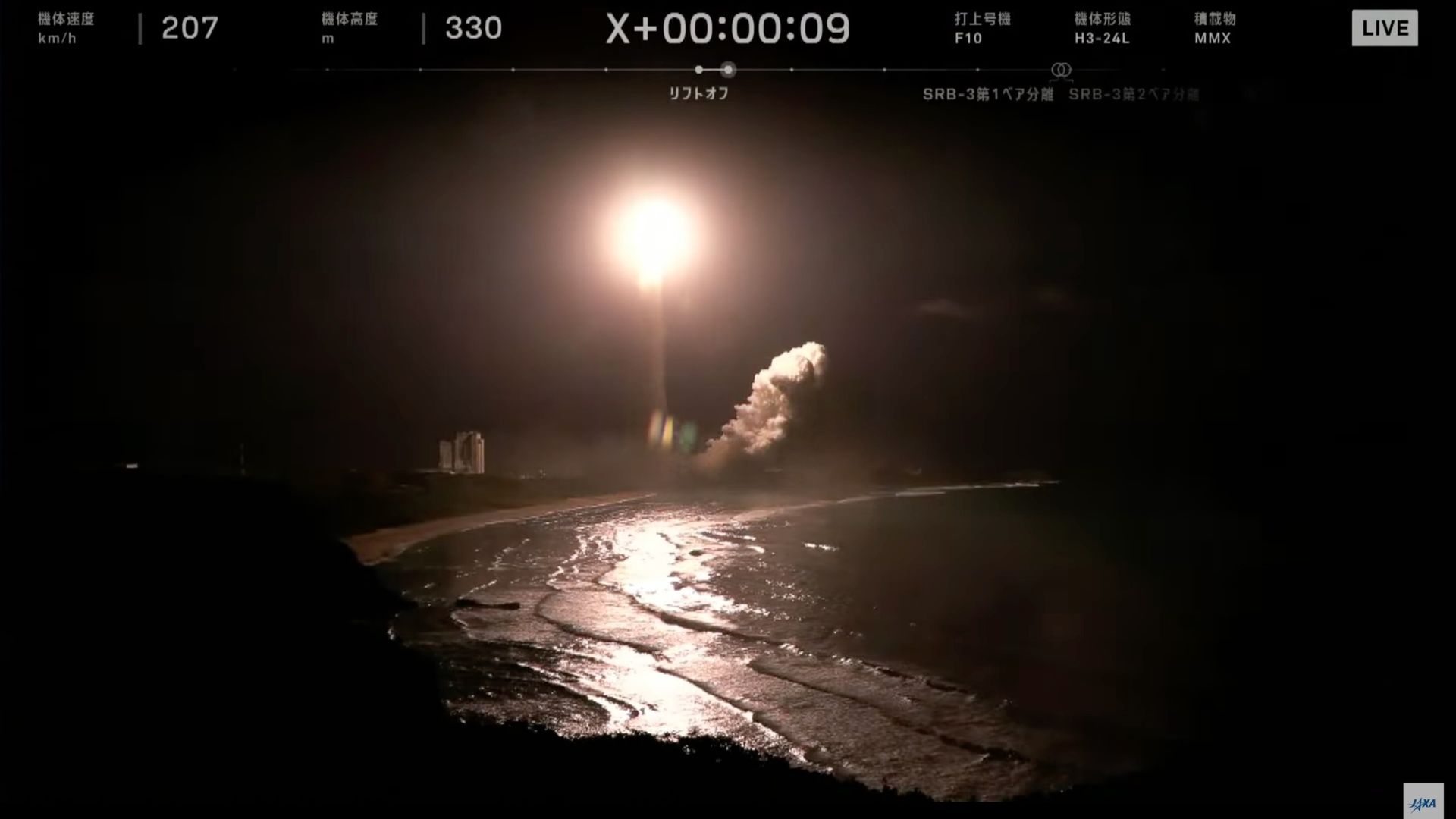
a rocket launches into a night sky from a seaside pad (Image credit: JAXA)

It was the 10th liftoff of Japan's expendable, two-stage H3 rocket, which was jointly developed by JAXA and Mitsubishi Heavy Industries. After clearing its launch pad today, the 207-foot-tall (63 meters) launch vehicle flew a nominal trajectory through its ascent corridor over the Pacific Ocean, jettisoning its four solid boosters in pairs just before the flight clock reached two minutes. The rocket shed its payload fairings about one minute and 20 seconds later, exposing MMX to the vacuum of space for the first time.

H3's first stage, powered by two LE-9 rocket engines, channels a mixture of liquid hydrogen and liquid oxygen to produce a combined thrust of 331,000 pounds (1,471 kN), according to Mitsubishi Heavy Industries. As the mission clock approached T+5 minutes, H3 executed its main engine cutoff procedure and separated from the second stage, which ignited its engines for a 5.5-minute burn about 10 seconds later.

All continued to go to plan after that. The H3's upper stage ignited its engine for a second time for a trans-Mars injection burn about one hour and four minutes after liftoff, a maneuver that lasted roughly six minutes and 25 seconds and took MMX to a maximum velocity of about 24,145 mph (38,858 kph).

MMX was released from the rocket's upper stage right on schedule, about one minute after the completion of that burn and roughly 71 minutes after liftoff. The success elicited loud cheers in mission control, which viewers saw and heard on JAXA's launch webcast.

MMX is now under its own power, and on course for Mars. The interplanetary transit will last about 10 months, with the spacecraft scheduled to arrive at the Red Planet in August 2027. When it does, MMX's propulsion module will execute an orbital insertion burn to place itself in a quasi-satellite orbit (QSO) around Phobos, which places MMX within the space around the moon as both circle Mars.

MMX will spend about three years in the Martian system, devoting much of that time to studying the 14-mile-wide (22 km) Phobos with its science instruments. The spacecraft also carries the IDEFIX rover, a joint effort of the space agencies of France and Germany, which is scheduled to deploy to the surface of Phobos in late 2028 or early 2029.

After a mapping campaign to select suitable landing sites, MMX will perform two separate touchdowns on Phobos to collect and stow samples in the spacecraft's return capsule. Following its second landing and sample collection, MMX will briefly return to QSO with Phobos before transferring to a more elongated orbit around Mars that intersects with the planet's smaller moon, Deimos, which is just 8 miles (14 km) in diameter.

During the last several months of its time around Mars, MMX will perform a series of Deimos flybys before departing for Earth in November 2030. If all goes according to plan, the MMX sample-return capsule will land in Australia in 2031.

Scientists are counting on those samples, and other data collected during MMX's time around Mars, to answer a decades-old question surrounding the Martian moons' origins. Competing theories and conflicting evidence point to two possibilities for how Mars got its moons.

Their near-circular, equatorial orbits suggest a narrative similar to how Earth's moon is thought to have formed — as a result of a massive planetary impact between Mars and some other giant space rock, which broke off pieces of the planet that eventually coalesced to form the natural satellites that orbit there today.

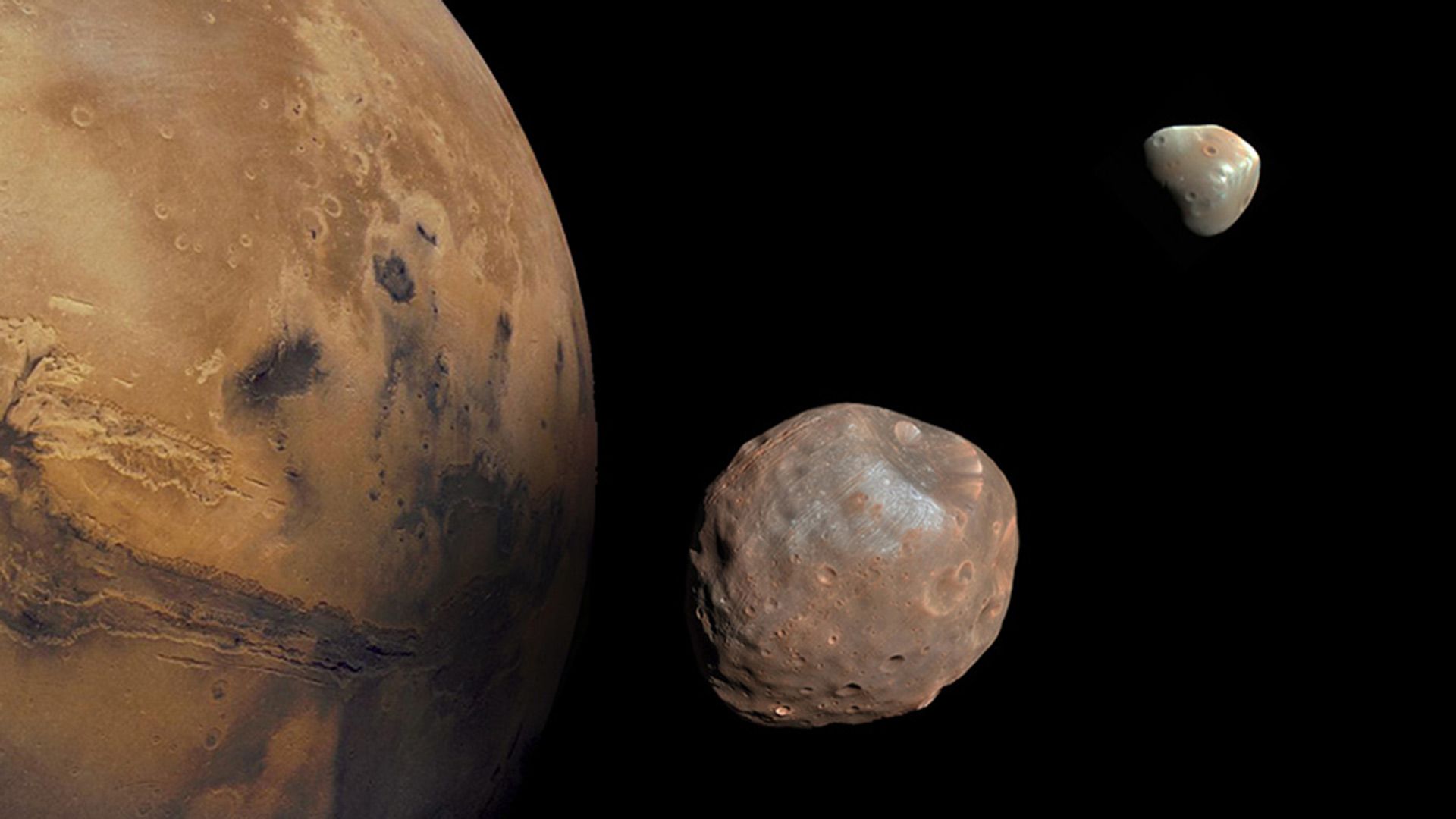
A composite image with Mars and its two moons, Phobos and Deimos. (Image credit: NASA/JPL/University of Arizona)

Neither Phobos nor Deimos is spherical, isntead; both are oblong and lumpy, like potatoes. That fact — along with their chemical composition, as far as we have been able to tell using telescopic spectroscopy — point to the possibility that Phobos and Deimos were asteroids from the early solar system that were captured by Mars' gravitational pull. Figuring out the moons' true origin story would provide key clues about Mars' geological past, the solar system's early history and the formation of the inner planets, mission team members have said.

Once the MMX samples are safely returned to Earth, scientists will study their composition and mineralogy, then compare such chemical fingerprints with those of Martian rocks and asteroid material. These analyses, combined with data collected by MMX during its mission, will help nail down the origin of Phobos — and by extension, Deimos. — by

While JAXA leads MMX, the mission is an international effort, with interagency partnerships between JAXA, NASA and the European Space Agency (ESA), as well as U.S. and European companies, which supplied a handful of the spacecraft's scientific hardware and communications equipment.

NASA's contributions to MMX include the Mars-moon Exploration with Gamma rays and Neutrons (MEGANE, pronounced "meh-gah-nay") device, which is a gamma-ray and neutron spectrometer built by the Johns Hopkins Applied Physics Laboratory (APL); a Honeybee Robotics-built pneumatic sampler; and communications support using the agency's Deep Space Network.

NASA has also invested approximately $87 million through the end of the mission, which includes funding for United States scientists and astromaterials experts on the MMX team. The agency is getting something concrete for such contributions: At least 15% of the planned 10-gram (0.35 ounces) returned Phobos sample will be reserved for NASA's study. Those materials will be transferred and maintained at the agency's Johnson Space Center in Houston for analysis and long-term preservation.

MMX is not the first Phobos sample-return project to take flight, by the way. That distinction goes to Russia's Phobos-Grunt ("Phobos-Soil") mission, which launched in November 2011 but failed to get out of Earth orbit due to a rocket glitch. The 14.5-ton spacecraft eventually crashed back to Earth over the Pacific Ocean in January 2012.

Editor's note: This story was updated at 5 p.m. ET on Oct. 19 with news of MMX's successful separation from the H3 rocket's upper stage.

Rocket Lab pushes 1st launch of next-gen Neutron rocket to 2027

We'll have to wait a bit longer to see Rocket Lab's next-gen launcher fly.

The California-based company just announced that it's pushing the debut of its powerful, partially reusable Neutron rocket from late 2026 into 2027 due to a manufacturing issue.

"We believe Neutron is going to be a game-changer, and taking the time now to solve these challenges means we're in a better position to deliver a rocket that's ready to meet the needs for the industry for years to come," Rocket Lab founder and CEO Peter Beck said in a video the company posted on YouTube late on Tuesday (Oct. 13).

Beck explained the issue in depth in that seven-minute video. It concerns the cabon-fiber propellant domes in Neutron's first stage — the large caps for the vehicle's fuel tanks, which hold liquid oxygen and liquid methane.

Rocket Lab makes the domes using an automated fiber placement machine, "which lays down the carbon with speed and accuracy," Beck said.

The company noticed a problem, however, after curing a recently manufactured forward (front-facing) dome: Inspectors found some voids within the carbon-fiber layers.

The voids "don't necessarily mean that the dome would fail in flight, but our practice is to proceed only when we believe the system has the appropriate margins," Beck said. "Possible success isn't our standard."

After analysis and testing, Rocket Lab added some "mitigations" to the dome-manufacturing process — a tweak that has done the trick, according to Beck.

"We've since run another carbon composite section called the aft dome through this new process, and I'm pleased to report that it has resulted in the highest quality carbon composite dome to date, and we've solved the problem," he said.

Rocket Lab still needs to build a new forward dome, then cure and inspect it — steps that are expected to be complete by the end of the year, according to Beck. The company then needs to incorporate that hardware into a complete Neutron first stage, and then subject that stage to a battery of tests. If all goes to plan, that will all be done during the first quarter of 2027.

"From there, we expect to be in good shape to share a new target launch date," Beck said.

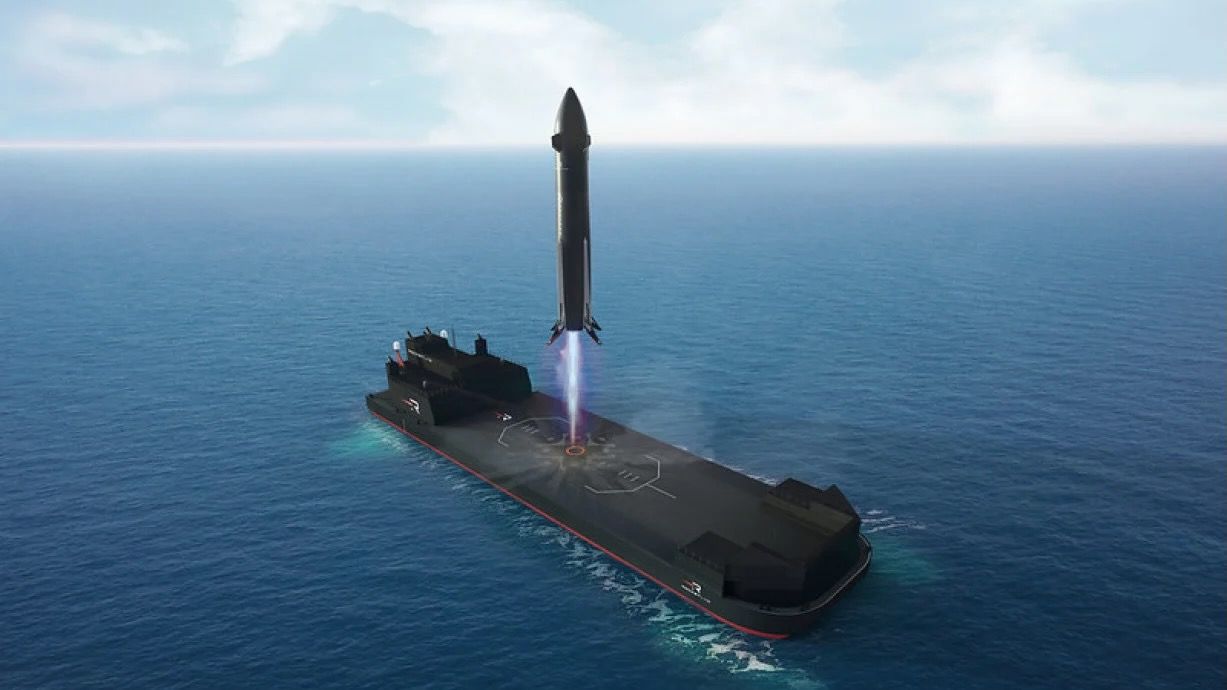
illustration of a large black rocket landing on a ship at sea

Artist's illustration of Neutron's first stage coming down for a landing on a ship at sea. (Image credit: Rocket Lab)

The newly announced delay is the latest setback for Neutron, which Rocket Lab announced in 2021. Back then, the company — which also flies the workhorse Electron small-satellite launcher — targeted a 2024 debut for the 141-foot-tall (42 meters) Neutron, which features a reusable first stage.

That timeline has been pushed back multiple times — to 2025, then to early 2026 and then, after a fuel tank ruptured during a pressure test, to late 2026.

Rocket Lab has been been steadfast throughout, stressing that it will not rush the development of a vehicle that it sees as vital to its future success.

"There's significant demand for what Neutron has to offer, including some new contracts we'll be able to talk about soon," Beck said in the video. "Those customers understand that a reliable rocket is far more valuable than an early one, and we're grateful for their trust."

SpaceX launches classified mission for the US Space Force (video)

SpaceX launched a classified mission for the U.S. Space Force from California this evening (Oct. 15).

A Falcon 9 rocket lifted off from Vandenberg Space Force Base today at 8:01 p.m. EDT (5:01 p.m. local time; 0001 GMT on Oct. 16), rising into clear blue skies above the Golden State's central coast.

Such visibly striking launches are far from guaranteed; Vandenberg and its scenic surroundings are often blanketed by fog, making rocket watching in the area a dicey proposition.

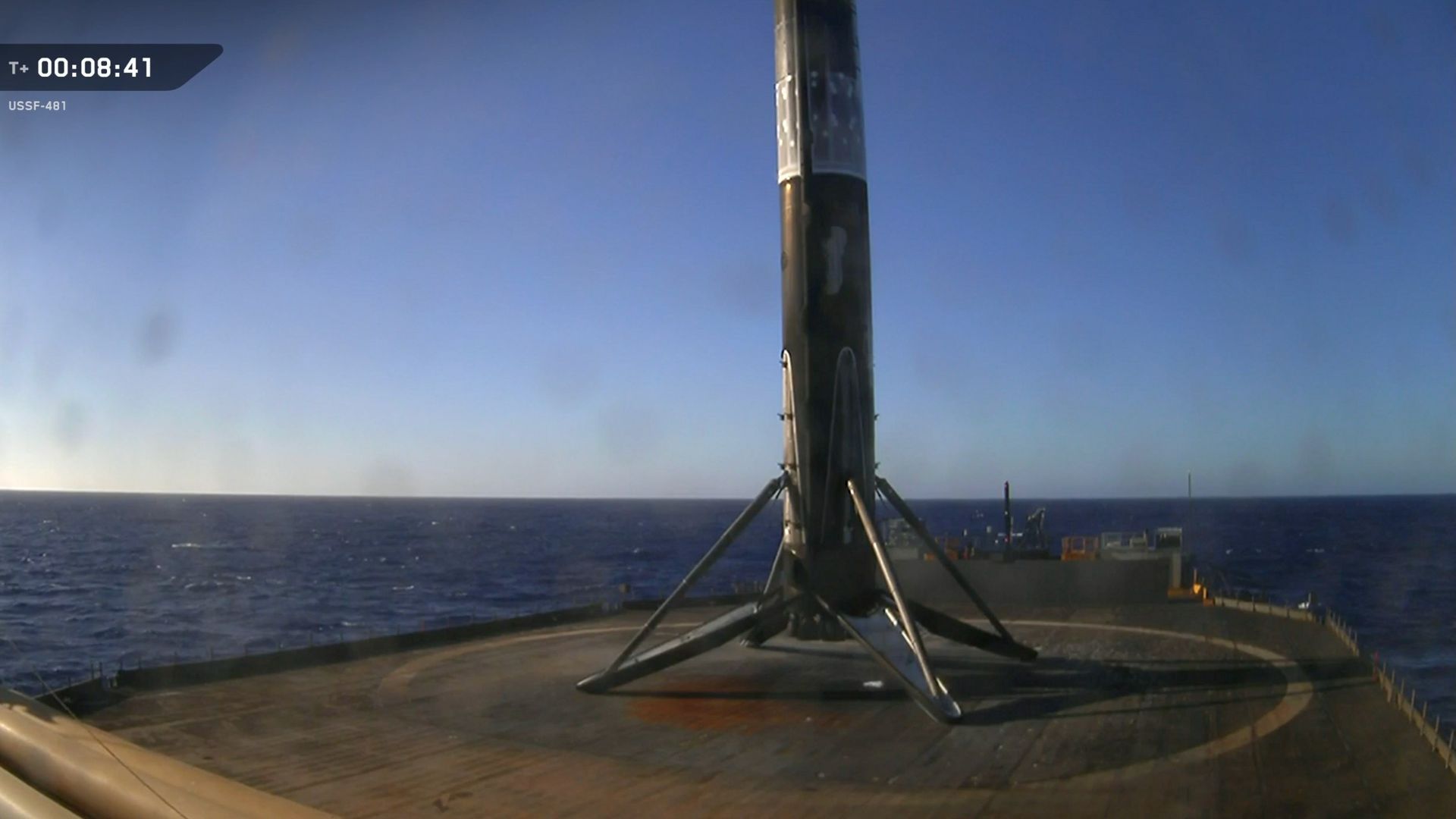
a black and white rocket rests on the deck of a ship at sea

The Falcon 9's first stage rests on the deck of a drone ship shortly after launching the USSF-481 mission on Oct. 15, 2026. (Image credit: SpaceX)

This evening's launch kicked off the USSF-481 mission, which is delivering mysterious payloads to an undisclosed location in the final frontier.

SpaceX didn't provide much more info during its launch webcast; it ended just after the Falcon 9 first stage's landing, which occurred as planned about 8.5 minutes after launch on the drone ship "Of Course I Still Love You," which was stationed in the Pacific Ocean.

USSF-481 was the 28th flight for this particular booster, which is designated 1081. Sixteen of its previous 27 launches were devoted to building out SpaceX's Starlink broadband megaconstellation in low Earth orbit, according to a SpaceX mission description.

Previous Booster 1081 missions

USSF-481 was the 114th Falcon 9 mission of the year. The vast majority of the rocket's flights in 2026 — more than 70% of them — have been Starlink missions.

SpaceX has also launched its Falcon Heavy and Starship rockets three times so far this year. Falcon Heavy is an operational vehicle, but the fully reusable Starship remains in the test-flight phase. It reached orbit for the first time on its most recent launch, which occurred on Sept. 28.

Editor's note: This story was updated at 8:30 p.m. ET on Oct. 15 with news of successful launch and rocket landing.

SpaceX wants to launch Starship more than 450 times per year from South Texas

SpaceX wants to start flying its Starship megarocket a lot more often.

The company has requested permission to launch Starship from its Starbase site in South Texas up to 456 times per year. That's a big jump from the currently allowed cadence of 25.

The U.S. Federal Aviation Administration (FAA) is in the early stages of reviewing the request. Today (Oct. 14), the agency announced "its intent to prepare a Programmatic Environmental Impact Statement, open a public scoping period and hold public scoping meetings for SpaceX’s proposal."

Starship, which stands more than 400 feet (122 meters) tall, is the biggest and most powerful rocket ever built. It's also designed to be fully and rapidly reusable, a breakthrough that SpaceX believes will revolutionize spaceflight.

The megarocket has flown 14 times to date, all of them test flights from Starbase, which is near the Texas border city of Brownsville. On the most recent jaunt, which lifted off on Sept. 28, Starship reached orbit for the first time and deployed 26 Starlink V3 satellites — the first members of a new broadband constellation that could eventually consist of 100,000 spacecraft.

Assembling that network will require a lot of Starship launches. And even more will be needed to build SpaceX's planned Starmind AI megaconstellation, which Elon Musk has said will harbor a million satellites. Indeed, the world's richest man has said that SpaceX is targeting more than 10,000 Starship liftoffs per year by 2030.

Not all of those flights will originate from Starbase, which hosts two orbital pads. SpaceX is working to get three Starship pads up and running on Florida's Space Coast, and the company aims to break ground on a $100 billion, 12-pad complex in Louisiana next year.

Each operational Starship launch will also feature two landings. Both of the vehicle's elements — the Super Heavy booster and Ship upper stage — are designed to return to the pad after liftoff, where they will be caught by the tower's "chopstick" arms. So SpaceX's proposal for 456 launches from Starbase per year includes a request for approval for 912 landings.

SpaceX plans to work up to this cadence in two phases, according to the FAA. Phase 1 "would include up to 100 annual launches and up to 200 annual landings (100 of Starship and 100 of Super Heavy)," the agency wrote. "Launches and landings could occur any day or time of the week."

Phase 2 covers 456 launches and 912 landings, which would occur only Monday through Friday, though at any time on those days.

The FAA will hold five "public scoping meetings" about the proposal next month, four of them in person in the Starbase area and one of them virtual.

There will be two in-person meetings on Nov. 17 at Texas Southmost College, one from 1-3 p.m. local (Central) time and the other from 5:30-7:30 p.m. Two in-person meetings will follow on Nov. 19, at the same two times but at a different location: the Port Isabel Event & Cultural Center.

The virtual meeting will be held Nov. 18, from 5:30-7:30 p.m. Central time. Registration is required for all of these meetings, even the virtual one. You can register here.