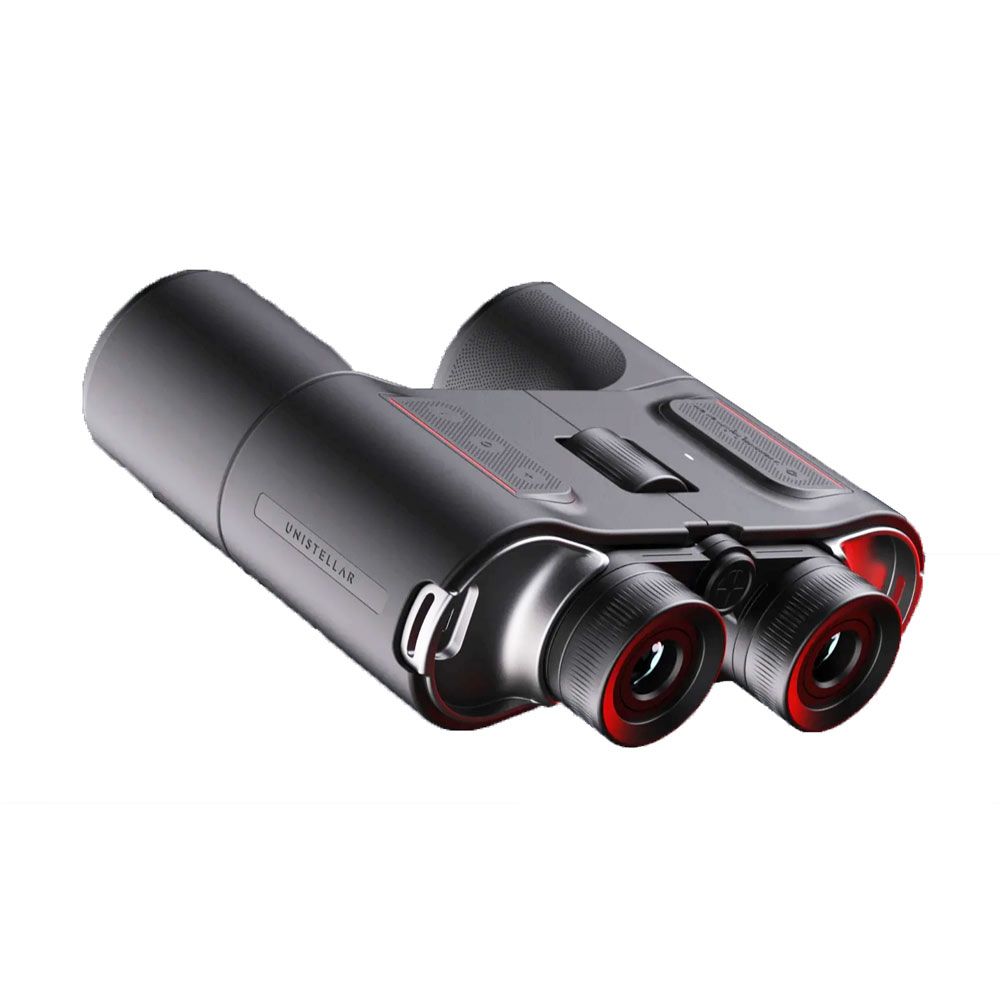
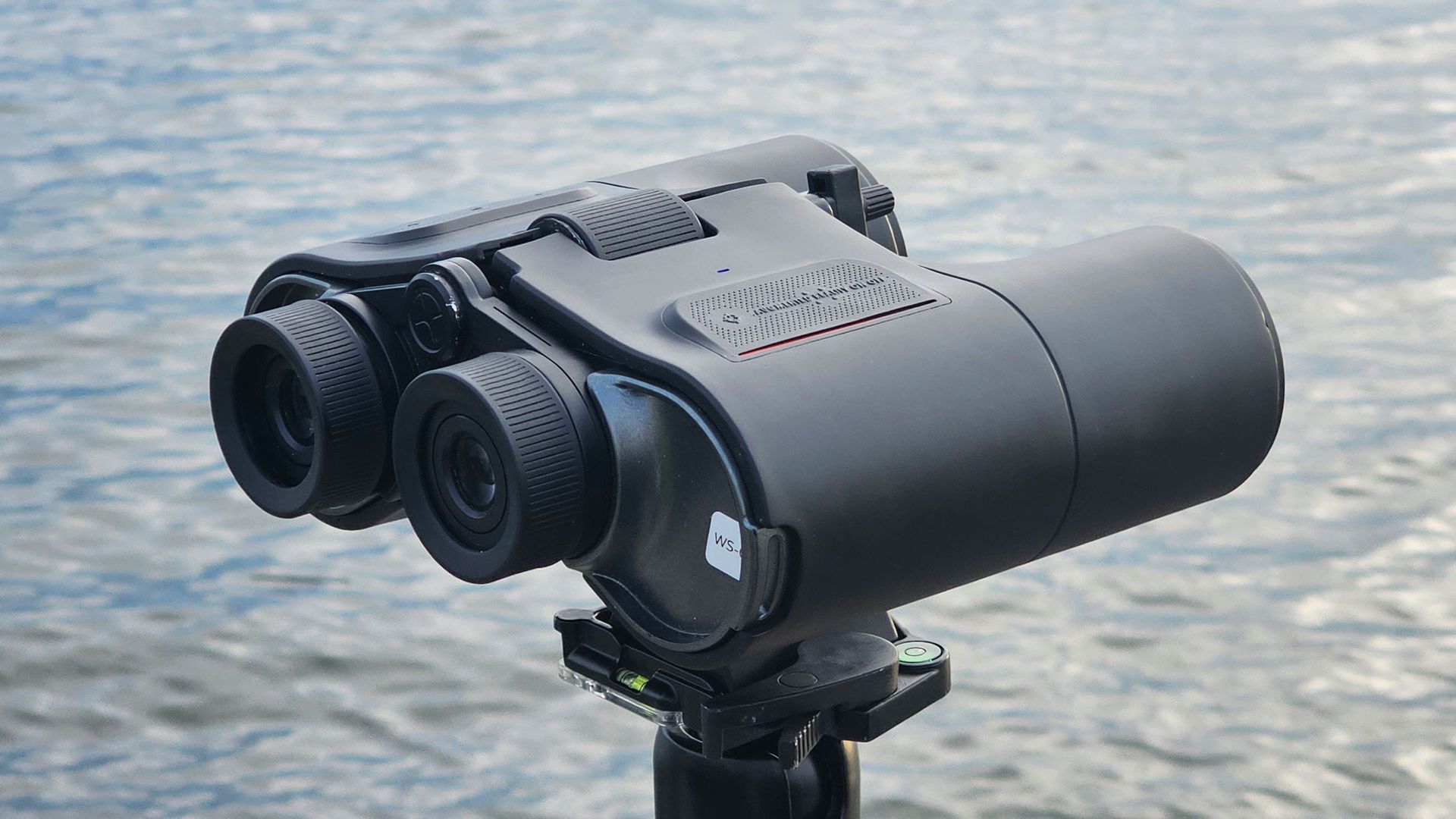
Unistellar announced that pre-orders were opening for the highly-anticipated Envisions at this year's IFA 2026 conference in Berlin and have delivered more details on the type of functionality customers can expect. The 10x50 smart binoculars can be used with or without the augmented reality (AR) overlay which is able to recognise constellations, planets and deep-sky objects in real time, with more functionality expected to be released within the coming months.
Pre-order now for guaranteed delivery before Christmas.
The Envisions are the highly anticipated augmented reality (AR) smart binoculars from Unistellar, with night sky object recognition from a database of over 1,000 astronomical targets, shareable target lock and guided navigation mode. Functionality to identify natural landmarks, paths and shelters is expected in the coming months.
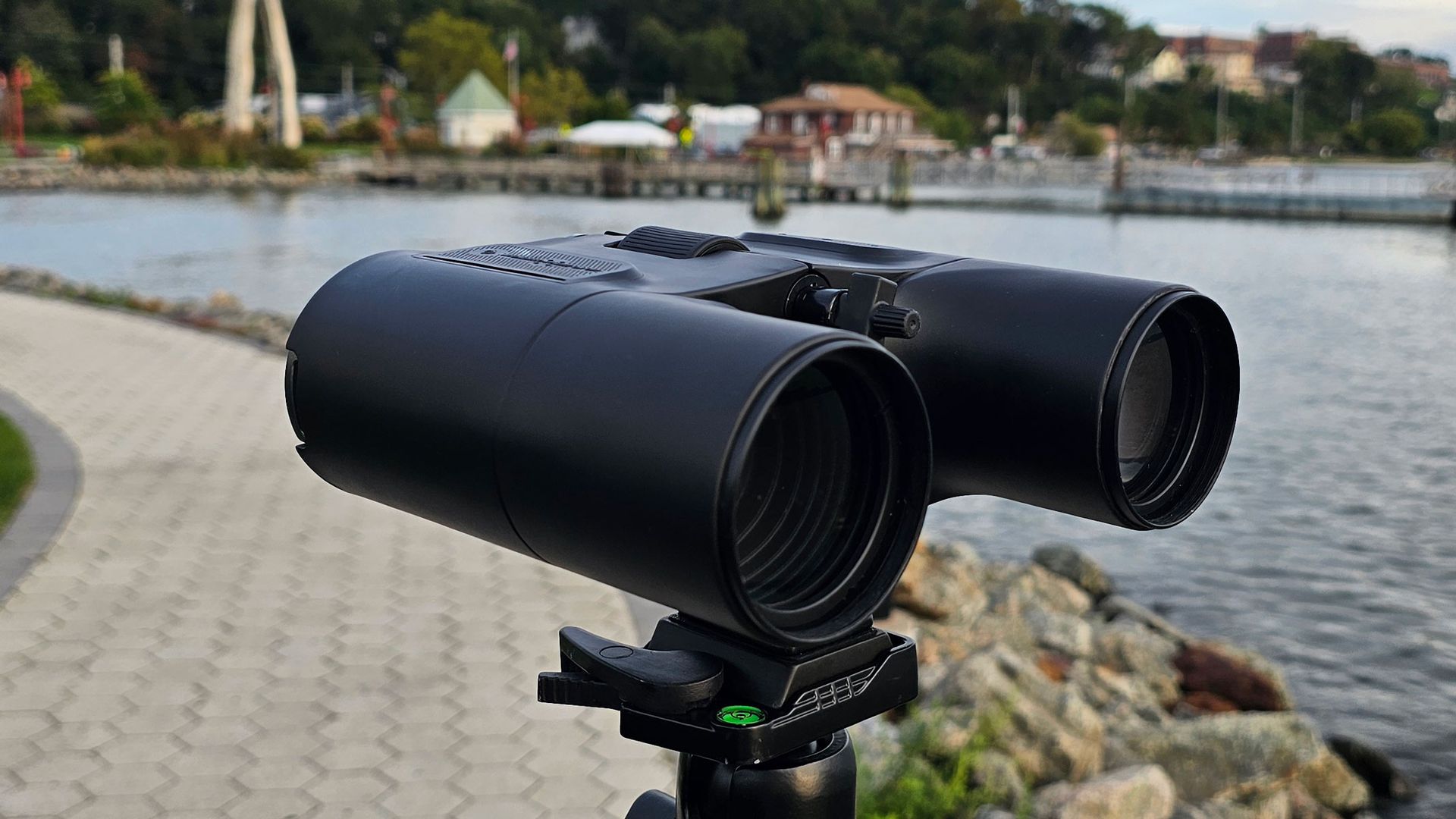
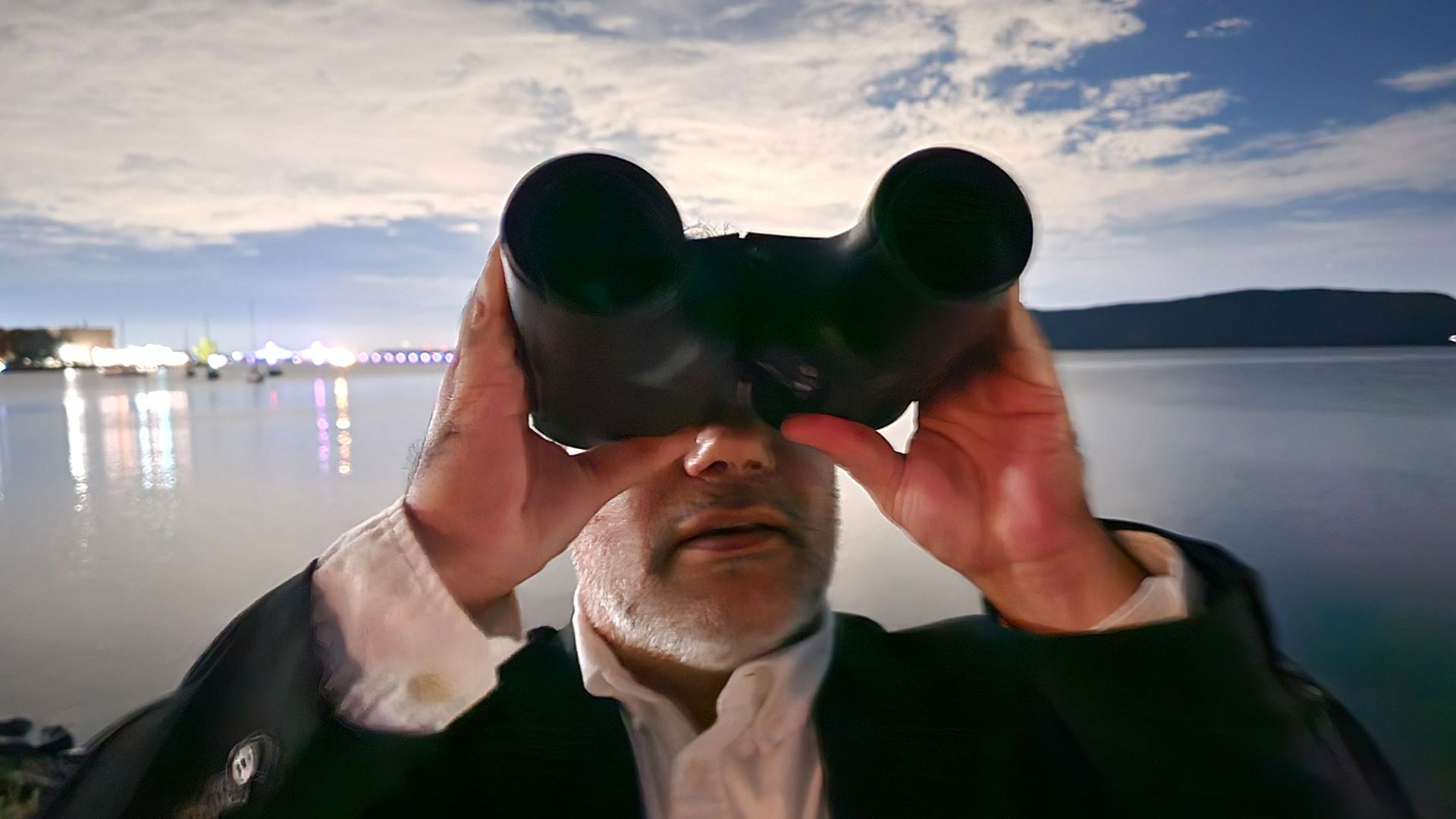
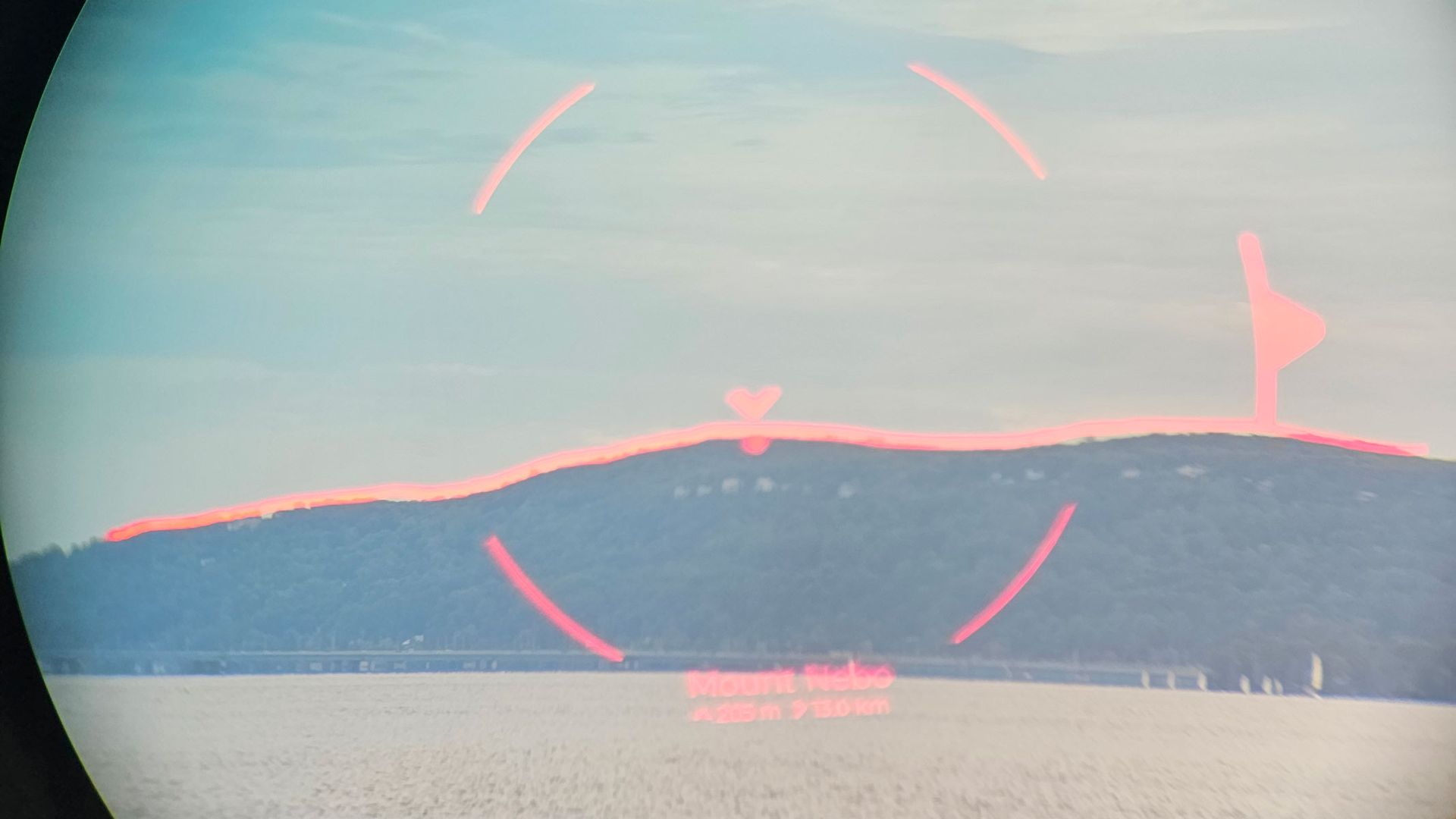
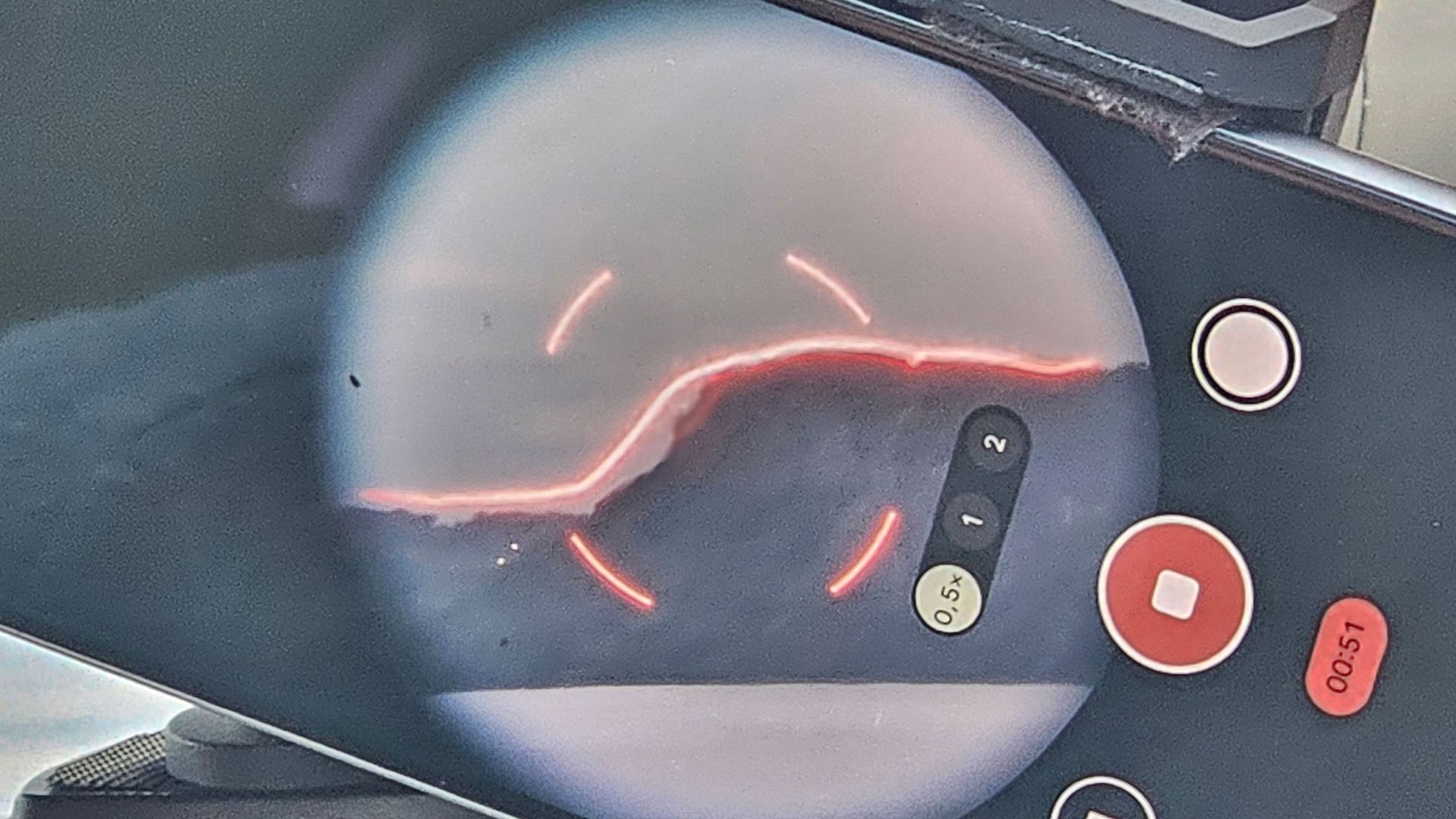
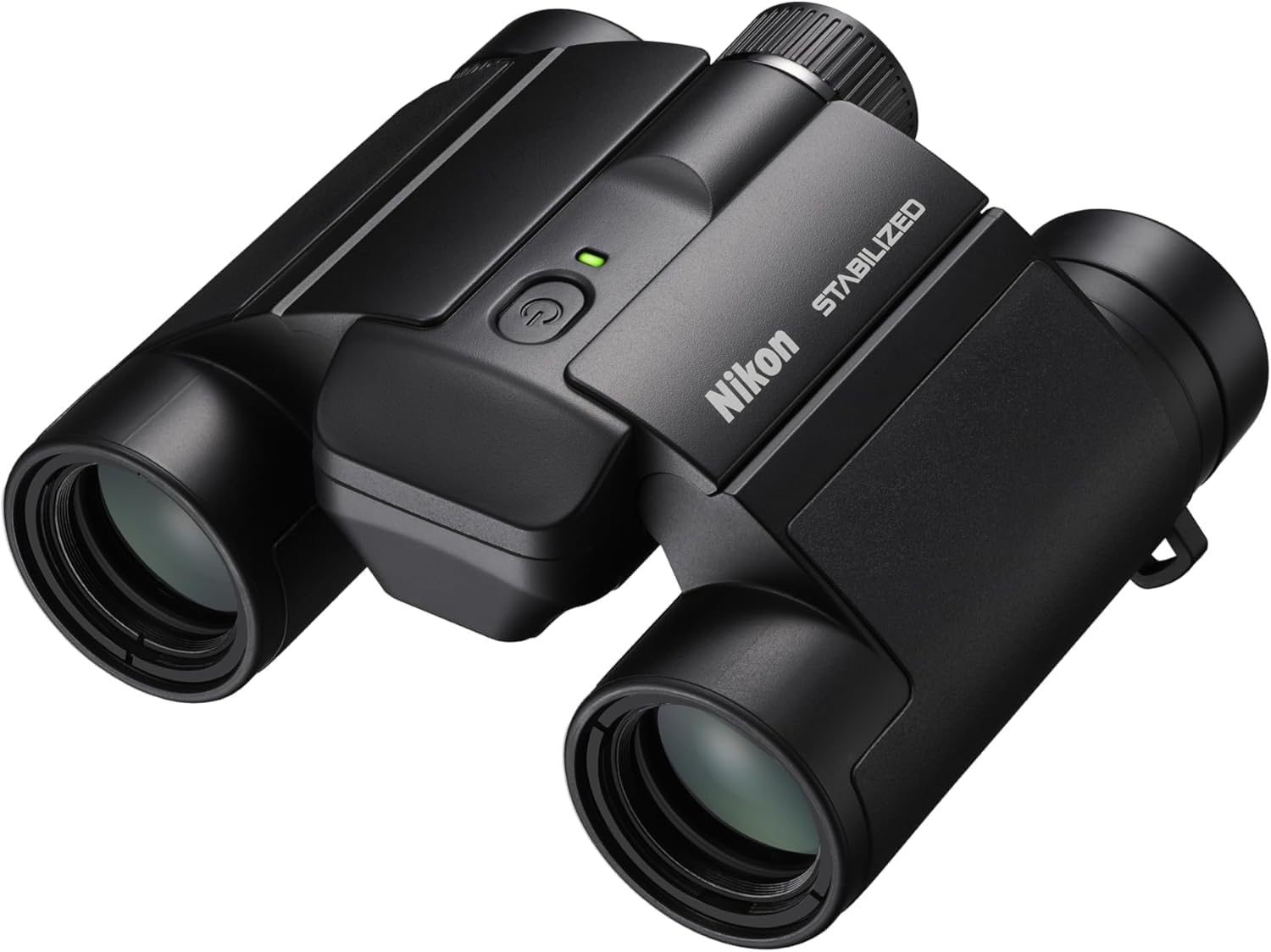
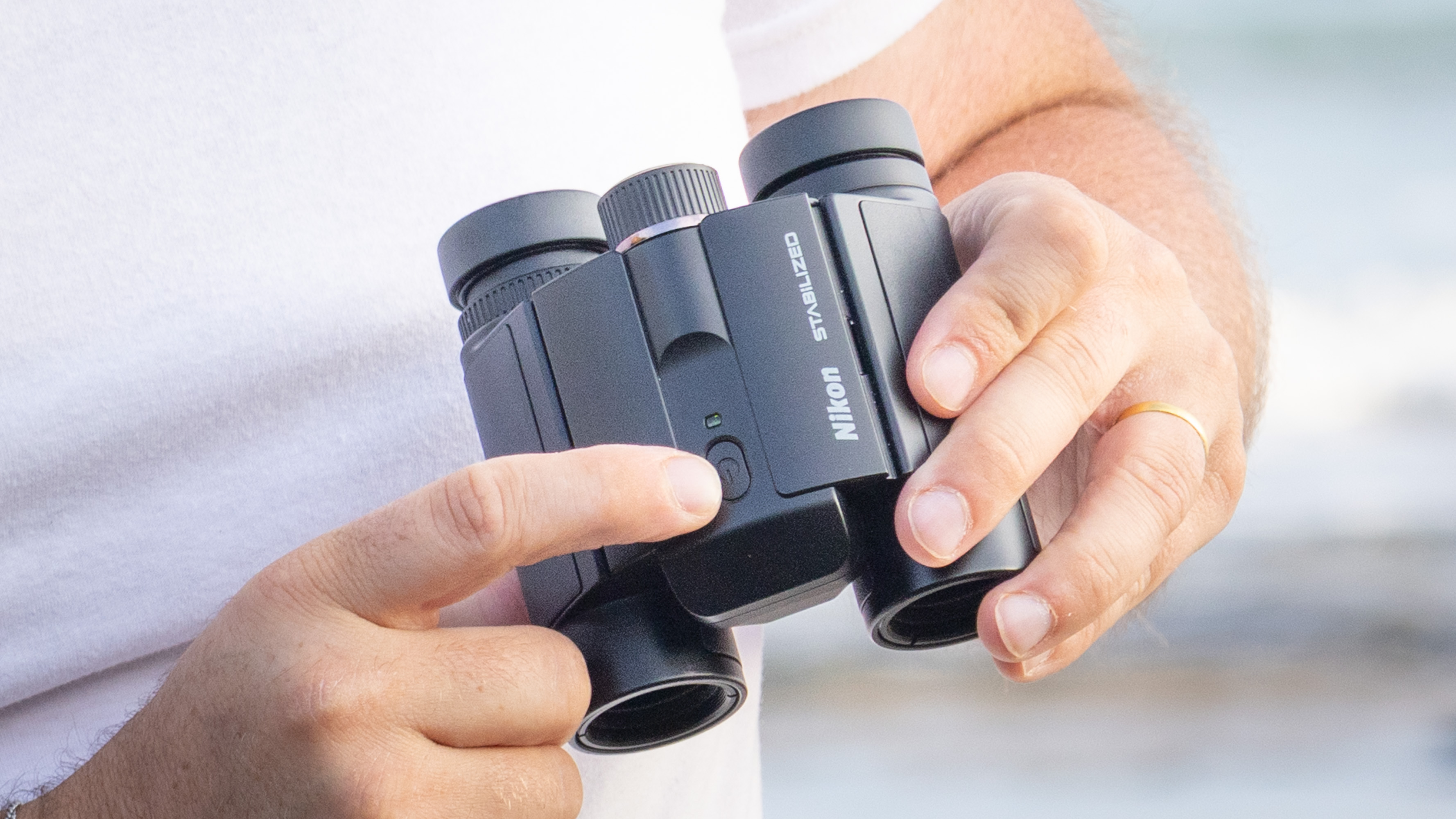
Our editor-in-chief Tariq Malik was very impressed with them during a demo and thought they felt like something from Star Trek. Tariq Malik / FutureControls on the right hand side of the model allow you to activate the AR overlay or just use them as regular 10x50 binoculars.Tariq Malik / FutureAt 10x magnification and with 50mm objective lenses, these smart binoculars also hit the key specs for stargazing binoculars even without the augmented reality (AR) overlay.Tariq Malik / FutureGuided navigation mode when paired with the Unistellar app helps guide you toward specific night sky objects that you want to observe.Tariq Malik / FutureOn top of night sky object identification, functionality for identifying geographical features is expected to be released soon. Tariq Malik / FutureThe red augmented reality (AR) overlay displays the name of your chosen target and helps you identify new parts of the natural world.Tariq Malik / Future
Unistellar have already shown their muscle in the smart telescope department with the Odyssey, eQuinox 2and eVscope 2 delivering easy and professional astrophotography to beginner and intermediate stargazers alike. Now they are pushing into the world of smart binoculars with the release of the Unistellar Envision smart binoculars.
These binoculars are "smart" in a different way to the rest of Unistellar's products. They use augmented reality to help users identify constellations, stars and deep sky objects, with a red overlay displaying names and information within the 10x magnified view. Our editor-in-chief got his hands on a pair of Envisions last year and was struck by how sci-fi they felt, likening them to something from Star Trek.
Whilst connected to the Unistellar smartphone app, users can select "Guided Navigation Mode" which guides them to their chosen target. This can also be used for custom targets that the user selects and can be used during shared viewing to help others find the same target. Functionality for geographical landmark identification is expected to be released in the coming months and subsequent software updates are expected to introduce new and exciting uses.
This Unistellar Envision pre-order guarantees delivery before Christmas, so if there is a stargazing obsessed loved one in your life, these smart binoculars could be the perfect gift. They are ideal for those who love adventuring and prefer dynamic skywatching with a new tool that boasts over 1,000 astronomical targets of interest and more than 200,000 visible stars in its database.
Key features: 10x magnification, 50mm objective lenses, porro prism design, weight 2.65 lbs (1.2 kg), five-hour AR battery life, operates without battery as classic binoculars, six-degree field of view, BaK-4 fully multi-coated optics, 1,000+ astronomy targets, +1,000,000 terrestrial targets (functionality expected to be released within the coming months).
Product launched: 2025
Price history: Unistellar did offer the binoculars for $999 for those who pre-ordered them last year but the current selling price is $1,499.
Reviews consensus: We tried them out before general release and were impressed with their augmented reality (AR) overlay which helped us identify stars and a geographical target.
Jase Parnell-Brookes has reviewed a huge range of skywatching optics, including the best telescopes, binoculars and image-stabilized binoculars. As our trusted authority and expert tester, when they recommend a product and you're in the market for it, their opinions and recommendations are worth paying attention to.
In their Nikon Stabilized 12x25 binoculars review, Jase reckoned they were without doubt the best compact image-stabilized (IS) binoculars they had ever tested. Right now they have $73 off and are at the best price we've seen since Black Friday 2025.
Jase awarded them with a perfect 5-star rating, which was mostly thanks to their excellent stabilization, their unobtrusive controls and incredibly small form factor. They also earned a place on our best binoculars guide as the best compact IS binoculars. This Best Buy deal is worthy of your attention if you're in the market for an incredibly versatile pair of binoculars that deliver still views in a compact body.
Save $73 on these pocket-sized image-stabilized (IS) binoculars from Nikon. They offer a strong 12x magnification and are portable enough to just slip into your pocket. In our review, we noted that the compact size and amazing IS system delivered amazing stargazing performance and earned them a perfect five-star review.
The Nikon Stabilized 12x25 S binoculars are incredibly compact and are a handy pair to take wherever you go. Kimberley LaneThe smaller objective lenses mean that the image looks a stop darker than viewing with the naked eye. Kimberley LaneThe eyecups rotate freely to adjust the amount of eye relief. Kimberley LaneThe binoculars are incredibly lightweight, considering their onboard image-stabilization system. Kimberley Lane
These image-stabilized (IS) binoculars punch well above their weight. Tipping the scales at a feathery 13.9 oz (395 g), they pack effortlessly into any bag, giving you rock-steady views wherever you roam. While the compact objective lenses yield a slightly dimmer view than the naked eye, they still deliver fantastic, crisp performance for casual stargazing.
In their testing, Jase managed to see the Andromeda galaxy (M31) with averted vision and the Orion nebula (M42), so these are worth taking out with you at night for a better look at the stars and some of the brighter deep sky objects.
They are also relatively cheap in the image-stabilized world where models can easily go for $1000 and up, depending on the model. Jase was happy to recommend these over another compact IS model, the Canon 8x20 IS binoculars, and they are actually lighter and smaller too. With their silky smooth steadying and clear views, they highly recommended them for anyone looking to get image-stabilized binoculars but doesn't want to spend big bucks.
Key features: 12x magnification, 25mm objective lens diameter, 4.5-degree angular field of view, 12.3mm eye relief, 13.9 oz (395 g) weight.
Product launched: November 2024
Price history: The Nikon Stabilized 12x25 binoculars usually retail for $699.95 on Amazon. This deal from Best Buy beats the Amazon price easily and, at just $626.95, is the best price we've seen since Black Friday 2025.
✅ Buy it if: You are looking for an affordable way into image-stabilized binoculars and need a pair that you can slip into your pocket.
❌ Don't buy it if: You need really high magnification or bigger objective lenses. For more powerful image-stabilized binoculars, try the Canon IS 15x50 binoculars.
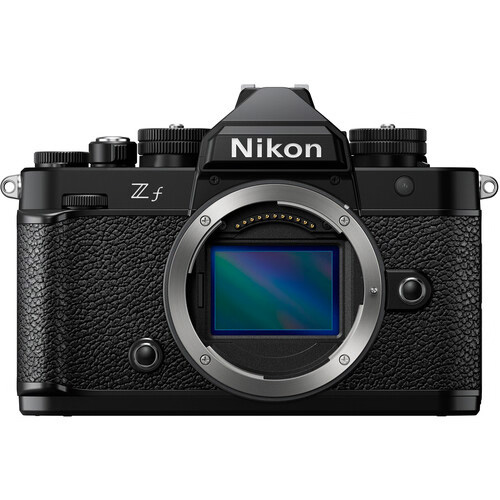
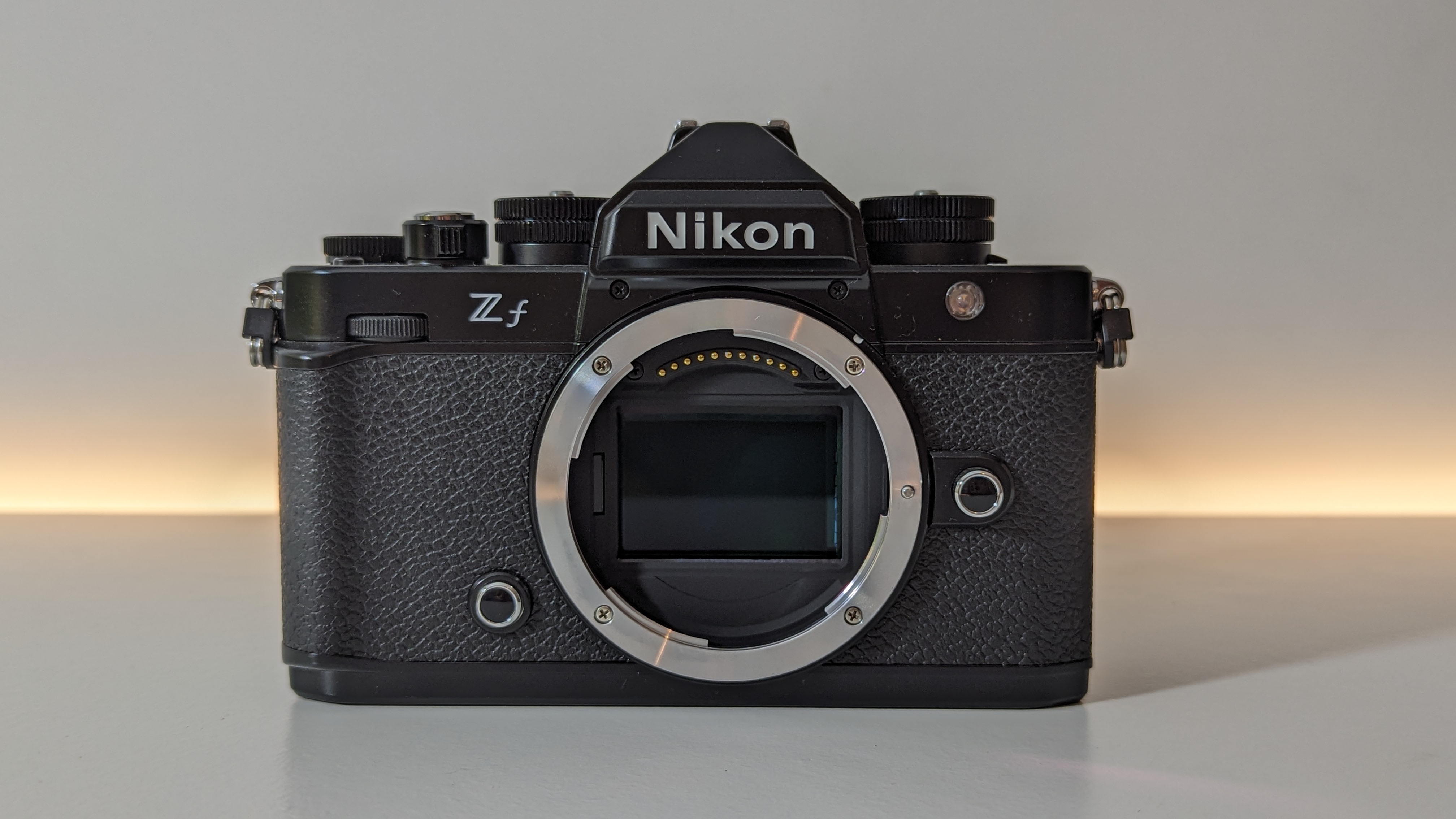
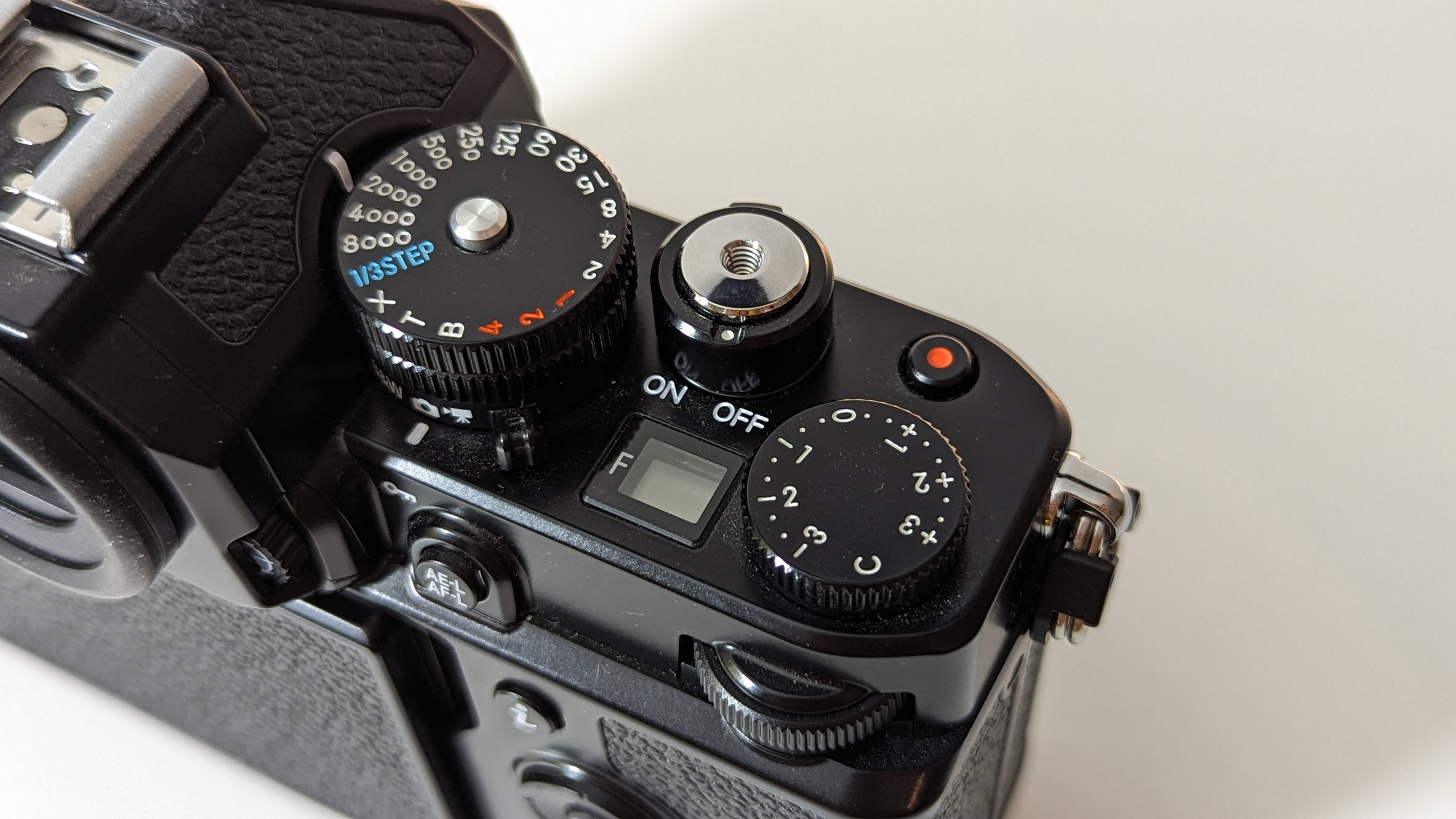
Looking for a quality camera that marries style and performance? Look no further than the Nikon Zf. Despite its vintage looks, it's one of the best Nikon cameras you can buy and with its excellent low-light performance, we also rank it as one of the best astrophotography cameras. Now, thanks to this deal, it's the cheapest it's been since last year's Black Friday.
In our Nikon Zf review, our expert called it "A great buy that offers excellent value for money when compared with some of the much more expensive Nikon models." Now less than $1,800, this is a steal for astrophotographers and photographers in general.
Save $453 on this impressively capable Nikon Zf camera. It isn't just a great low-light performer, it's an excellent all-rounder. Its retro-aesthetic is a bonus for those who miss the look and feel of film cameras. View Deal
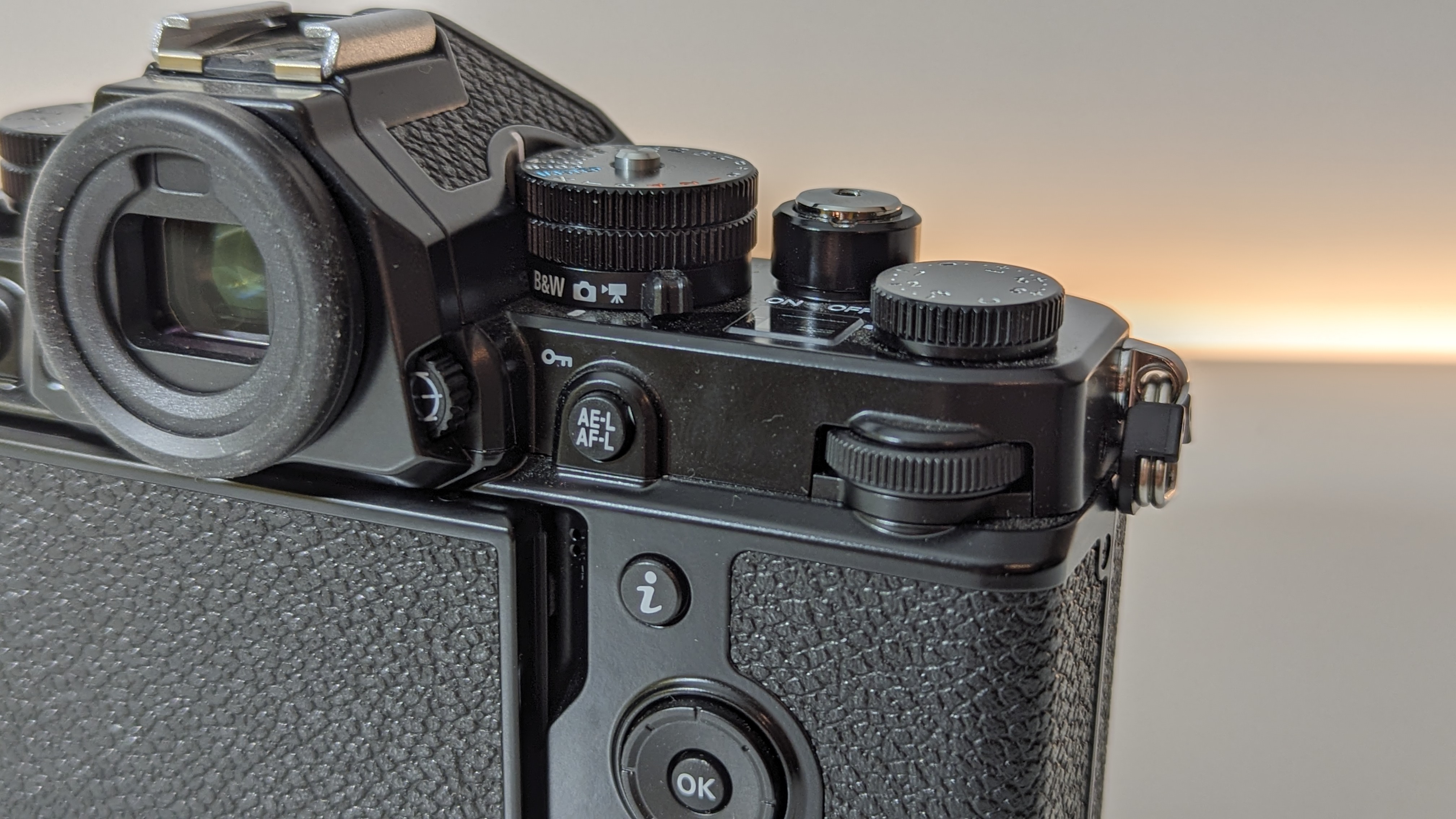
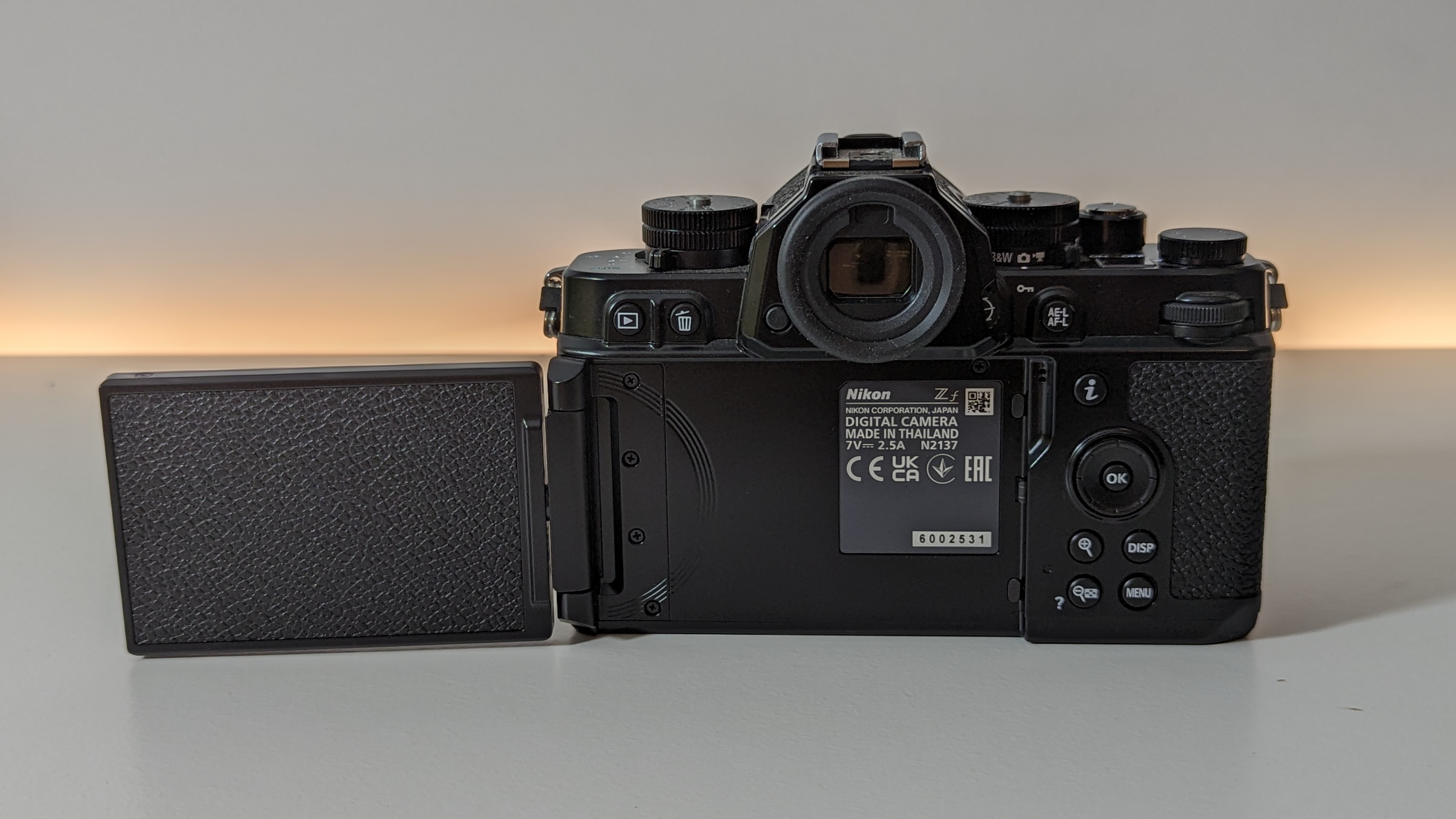
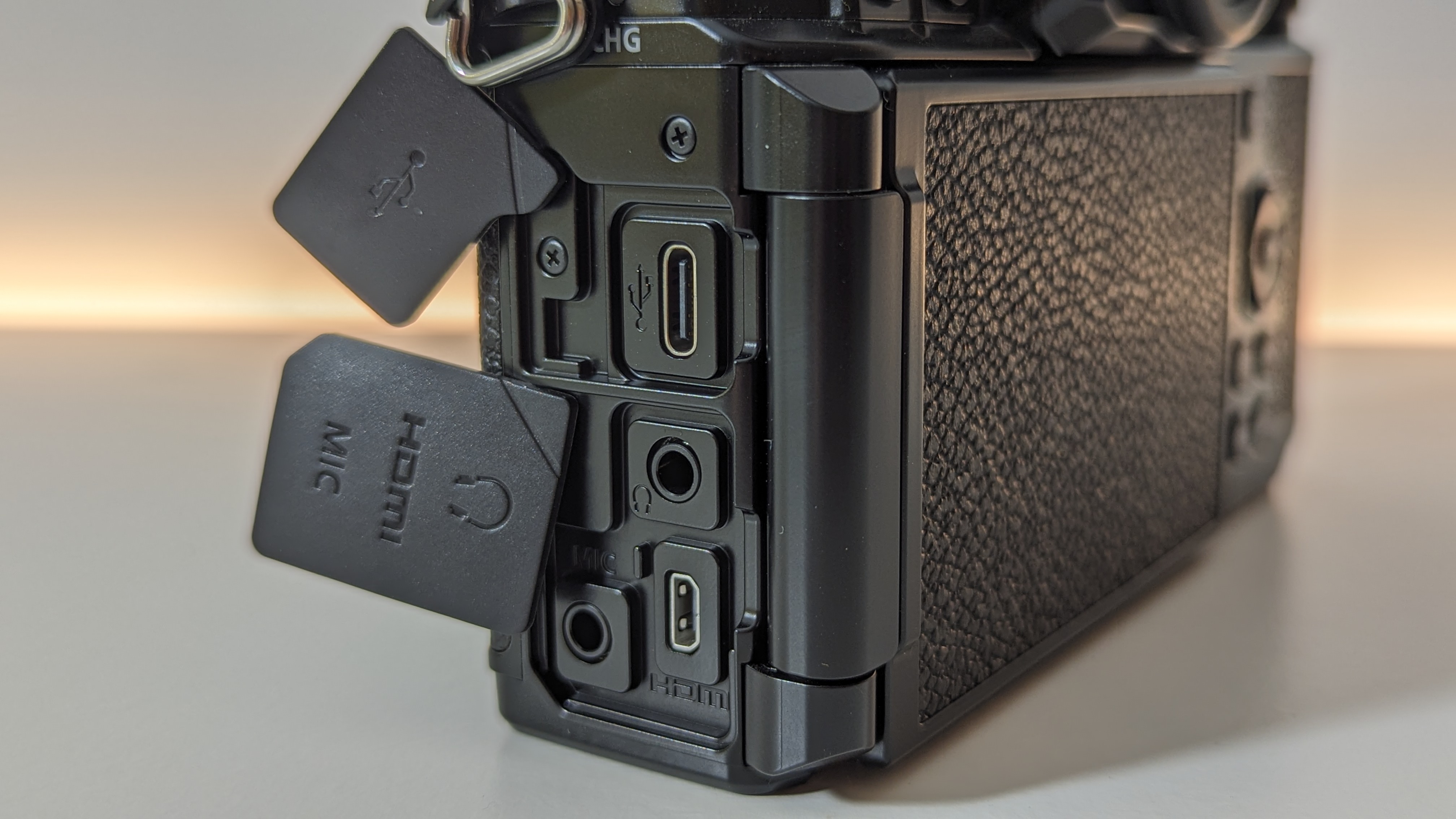
Couple the Nikon Zf with a suitable lens and you've got a camera that excels at astrophotography. FutureFutureFutureFutureFuture
What's not to love about this Nikon Zf camera? We ranked it as the best camera under $2,000, before inflation pushed it past that price point, and this deal makes it the cheapest it's been since last Black Friday.
Not only does this full-frame mirrorless camera offer excellent low-light performance, so much so that we think it's one of the best cameras for astrophotography, it's a brilliant all-rounder too.
In their Nikon Zf review, expert Jase Parnell-Brookes awarded it four-and-a-half stars, discovering that its strengths go far beyond its vintage stylings, remarking that "It delivered an impressive dynamic range and performed well in various lighting scenarios."
And, while you can point and shoot, the Nikon Zf is packed with controls designed to enhance your experience. From changing the ISO and ISO sensitivity, through to switch to black-and-white mode, you have complete control over your images. That much choice may seem daunting but the buttons and dials are intuitive enough that using them becomes second nature.
There are Nikon cameras out there that can beat its 24.5 MP images, but you'd have to spend significantly more. The Nikon Z8, for example, is over half as much again. If you want to make your money count, the Nikon Zf is the camera to buy. However, you'll have to hurry if you want to make the most of this deal. As we write this, there are just a handful of units left in stock.
Key features: 24.5 MP FX CMOS Sensor, Z mount, 100-64000 (expandable to 204,800) ISO, 4K UHD 30p video, 1 lb 9.1 oz / 710 g weight, 1SD UHS-II + MicroSD UHS-I card slots.
Product launched: September 2023
Price history: This is the cheapest this camera has been all year. It last dropped to around this price last Black Friday.
Reviews consensus: Reviewing theNikon Zf, we awarded it four-and-a-half stars praising, in particular, its low light performance and how it stacks up to Nikon's more expensive cameras. We were also impressed by its vintage appearance, replicating the look of a film camera. Its Amazon reviews are just as positive, with just a few purchaser complaining about its weight.
I've got three telescopesin my home, but the Celestron FirstScope is my first stop when it comes to stargazing. Now this super-portable, beginner-friendly tabletop scope is $60 at Amazon, even cheaper than Prime Day!
What makes the Celestron FirstScope so fantastic? It's all down to ease of use and portability. There's next to no assembly and once you've unboxed it, you can pick it up in one hand and head outside.
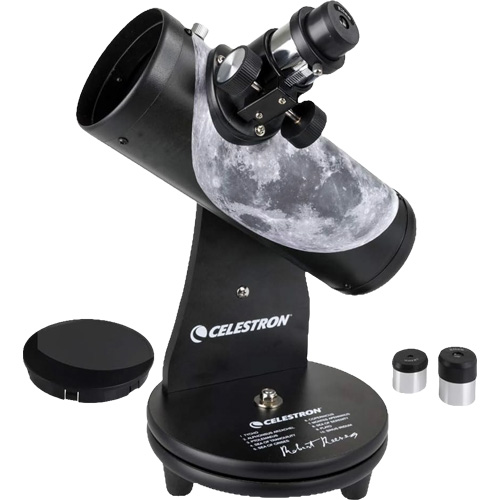
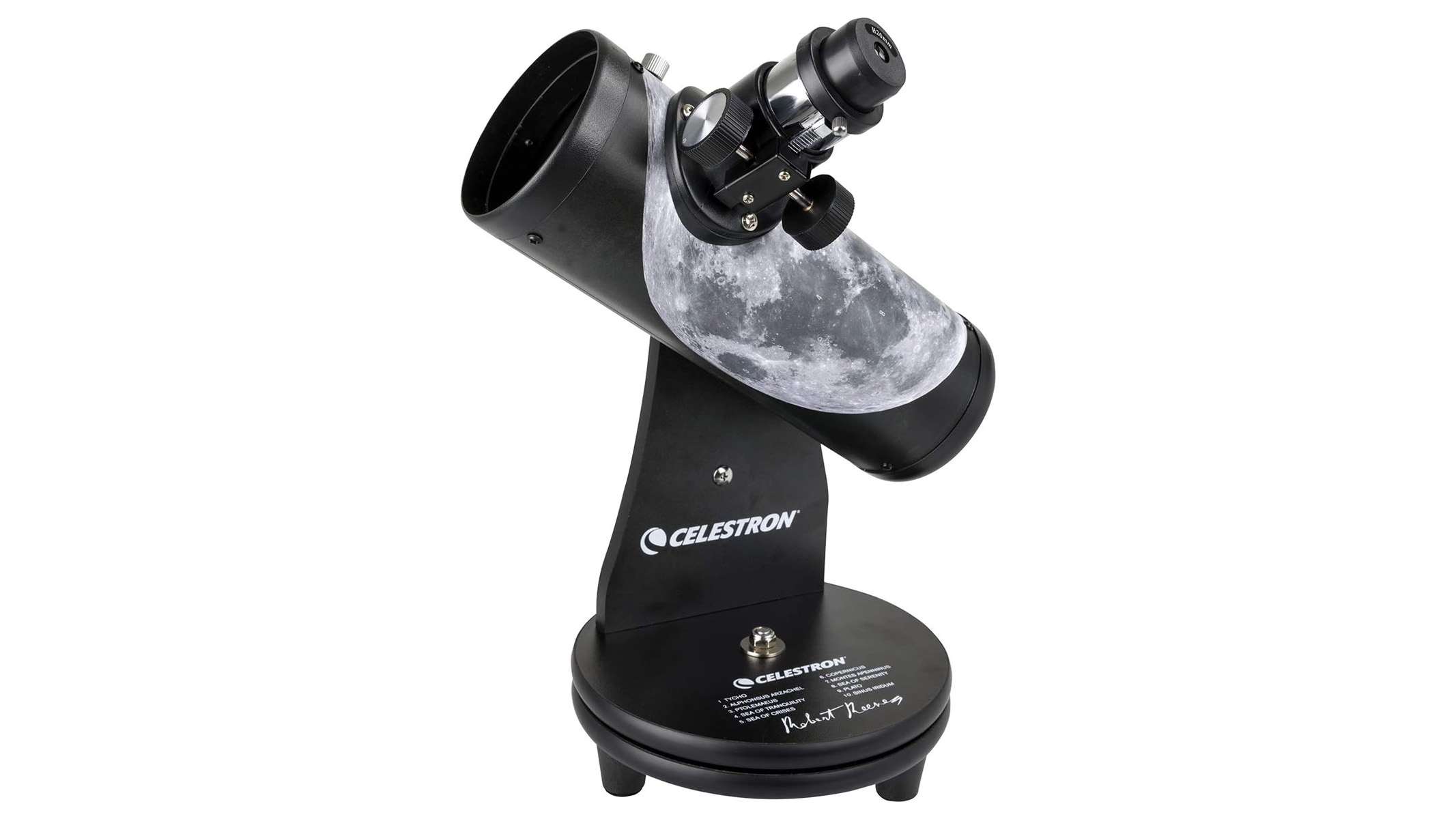
Save $15 on this moon-themed Celestron Firstscope which, with 76mm aperture and tabletop mount, is ideal for quick stargazing sessions as well as introducing children to a new hobby. View Deal
The Celestron Firstscope is a small but perfectly formed scope, great for a quick spot of skywatching. (Image credit: Celestron)
Even though I've got two bigger telescopes in my home, a Skyatcher Classic 200Pand a Bresser Solarix 114/500, I wouldn't dream of parting with my Celestron FirstScope. This tabletop scope is so easy to use and so portable, you can just grab it, head outside and get stargazing.
No fuss, no mess, no scraping the door frame because folding the tripod down seems like too much work. It's also small enough that you can sling it in a backpack, ideal for hopping on your bike and pedalling away from light pollution.
It comes with 20mm and 4mm eyepieces, but you can also trade up to any of the best eyepieces. As a tabletop telescope you'll need to find something to rest it on but a wall or even a trash can will do. And if you're a beginner, or buying for children, you'll be delighted with how the FirstScope performs. We think it's the best tabletop telescope for kids.
The lack of a finderscope is slightly disappointing but you can purchase one separately and, even without one, this is an impressively capable telescope, at a price that won't break the bank. It really is that simple. Want to watch Saturn at opposition this Oct. 4? Grab your FirstScope, perch it on a table or wall, and home in on this ringed planet. It's excellent for moonwatching too, especially if you're short on time. We think this is the best tabletop telescope for kids and beginners will love it too.
Key features: Newtonian reflector with Dobsonian mount, 2.99-in (76mm) aperture, 11.81in (300mm) focal length, 20mm and 4mm eyepieces.
Product launched: March 2009
Price history: This is even cheaper than Prime Day, when the Celestron FirstScope dropped to $70.
Reviews consensus: Reviewing the Celestron Firstscope, we awarded it four stars, saying "It exudes portability, ease of use and a price that's not going to break the bank." That sentiment still stands and its Amazon reviews are just as positive. At this price, it's a steal.
The Celestron StarSense Explorer DX 130AZ is one of the best telescopes for beginner-to-intermediate stargazers who want to view deep-sky objects and appreciate assistance in manually locating the targets.
In our Celestron StarSense Explorer DX 130AZ review, our expert tester Damian Peach awarded it an impressive 4 out of 5-star. Damian noted that it was an exquisite telescope for the beginner and added that the StarSense Explorer telescope was fully equipped, supplied with just about everything the skywatcher needs for a successful observing session under the stars.
It only missed out on the perfect score as Damian felt it would benefit from additional high-powered eyepieces to achieve more detailed views. However, at this discounted price, it's one of the best beginner-friendly telescopes you could ever want to own.
StarSense Explorer DX 130AZ Telescope: was $499.95 now $414.99 Save $84 The StarSense Explorer DX 130AZ is ourbest telescope for deep-space observing in our best budget telescopes guide. While a great choice for viewing nebulas and galaxies, it's also a great choice for viewing distant planets. We awarded it four stars for its crisp views and user-friendliness with the StarSense app that helps you locate your chosen night sky target easily. The 5.1-inch (130 mm) aperture can gather plenty of light for a bright and detailed image, no matter what you are observing.
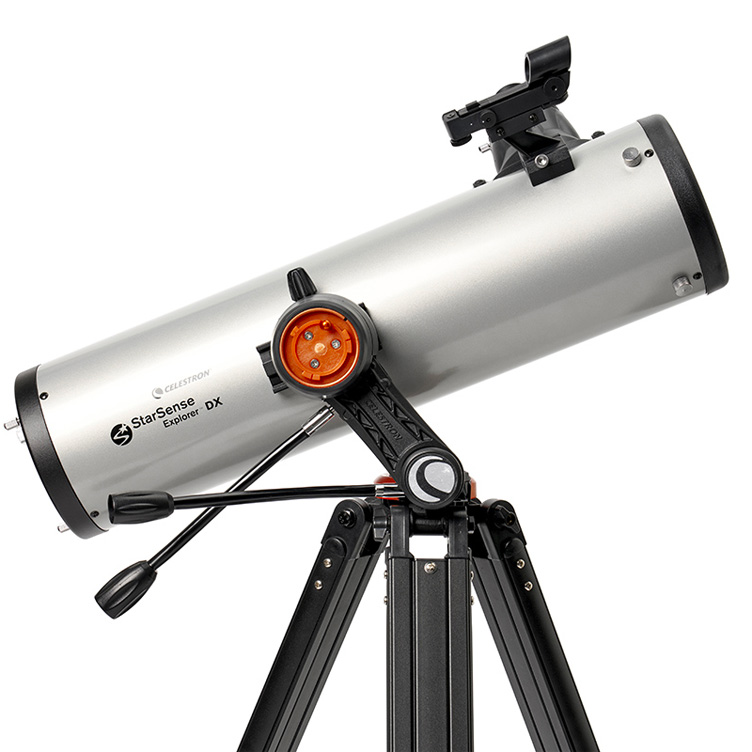
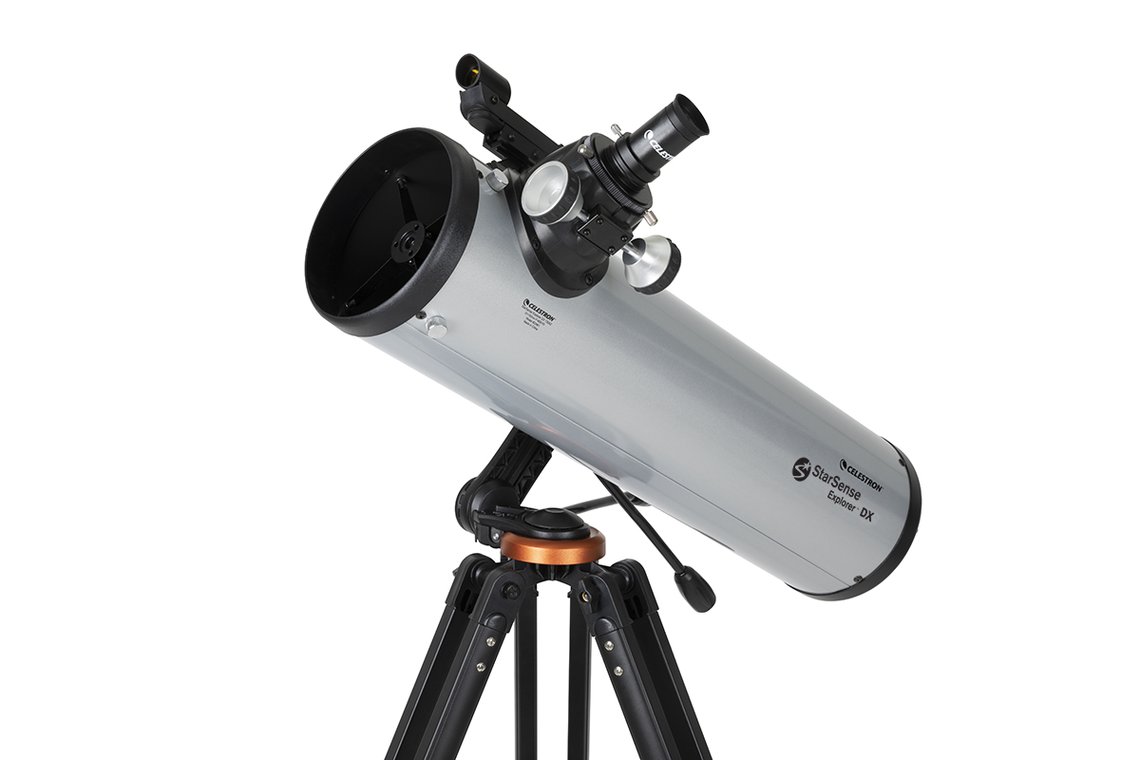
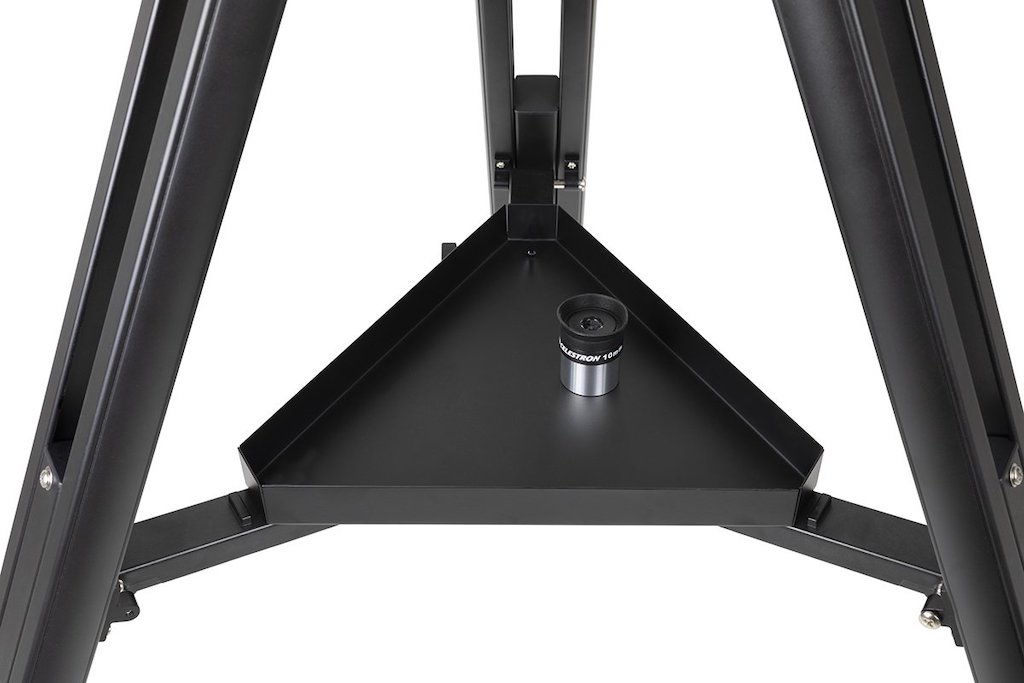
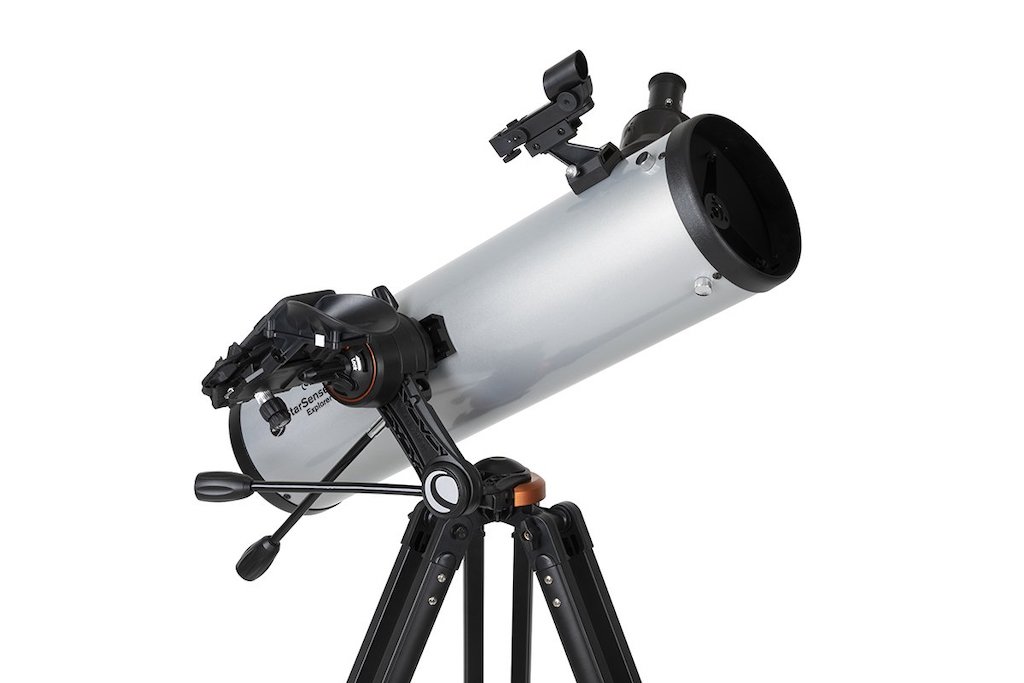
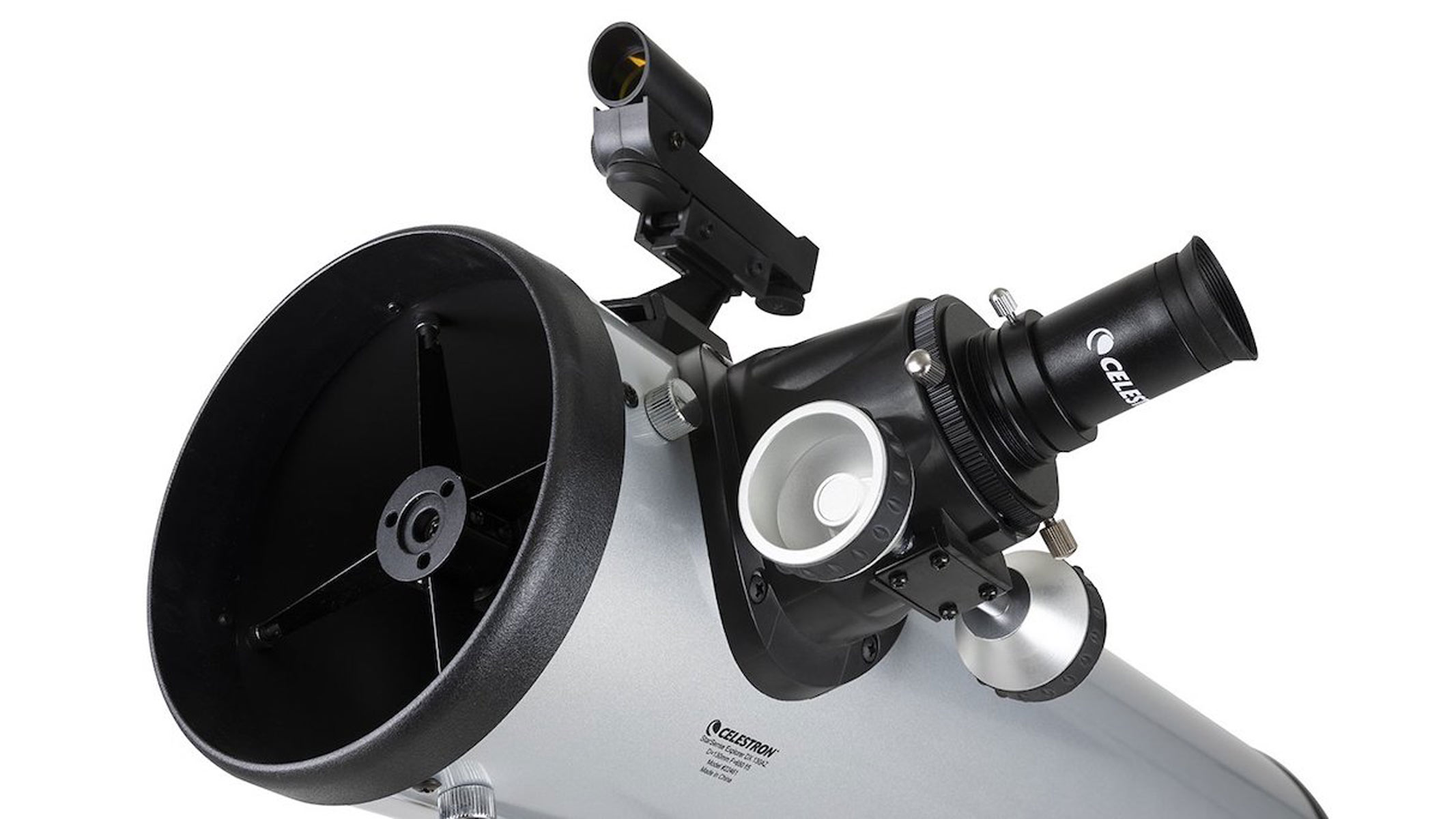
The Celestron StarSense Explorer DX 130AZ telescope has a 5.1-inch (130 mm) aperture.CelestronThe tripod included with the telescope has a handy tray for storing extra eyepieces for different celestial targets.CelestronThe alt-azimuth mount is an easy-to-operate mount and works well with the StarSense app for locating targets.CelestronThe Celestron StarSense Explorer DX 130AZ features a finderscope for helping to locate and center your target.Celestron
Ideal for entry-level stargazers, the Celestron StarSense Explorer DX 130AZ uses its clever StarSense smartphone app to streamline finding targets in the night sky. While it lacks the fully automated GoTo tracking found on some of the best smart telescopes, its substantial 5.1-inch aperture gathers plenty of light—delivering brighter, sharper, and more detailed views than most automated competitors.
One of its standout features is the clever mount-integrated smartphone dock, which takes the hassle out of locating faint deep-space targets. Fueled by real-time GPS tracking and your phone's camera, the StarSense app generates a live sky map that leads you straight to any celestial object. By replacing tedious star charts with turn-by-turn guidance, it lets you spend your time actually observing the universe rather than searching for it—earning it a top spot in our best budget telescope guide for astronomers of all experience levels.
Price history: Before today's telescope deal, the best price we've seen on the Celestron StarSense Explorer DX 130AZ telescope was $379 during the Prime Day sales in June. The MSRP is $499.95, which makes the current on-sale price of $414.99 a significant saving on what is a seldom-discounted model.
Reviews consensus: In our Celestron StarSense Explorer DX 130AZ review, we awarded this telescope four stars for its user-friendly interface and impressive views, making it an ideal choice for beginners who want a modern and simple way to explore the night sky.
✅ Buy it if: You want a user-friendly telescope for beginners that uses smartphone technology to help you navigate the night sky to observe planets and deep space objects.
❌ Don't buy it if: You want a fully automated smart telescope or prefer a more traditional method of navigating the night sky.
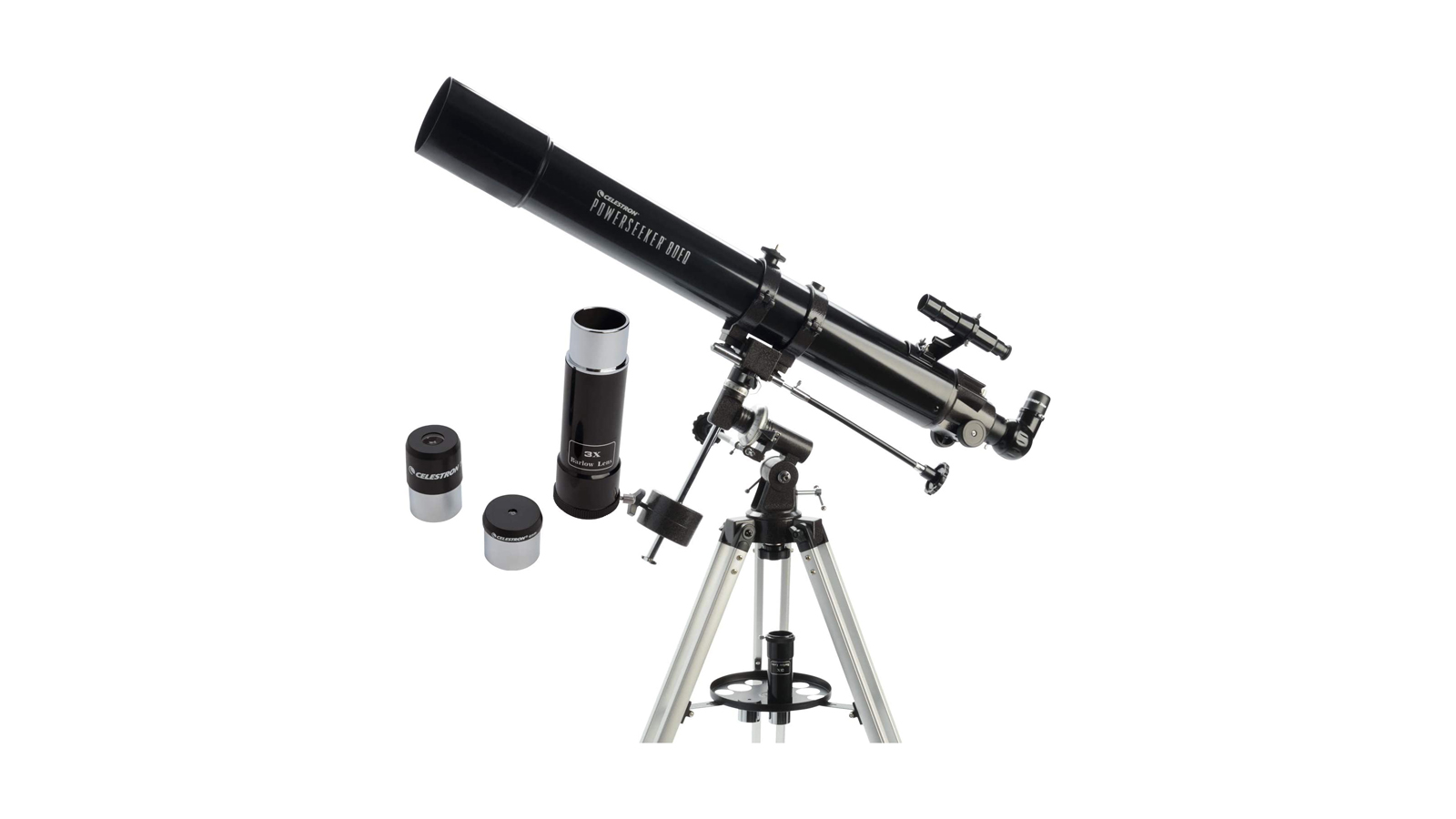
A partial lunar eclipse takes place this Aug. 27-28 and this beginner-friendly Celestron PowerSeeker 80EQ telescope, nearly $50 off at Walmart, will let you zoom in on what promises to be a stunning sight.
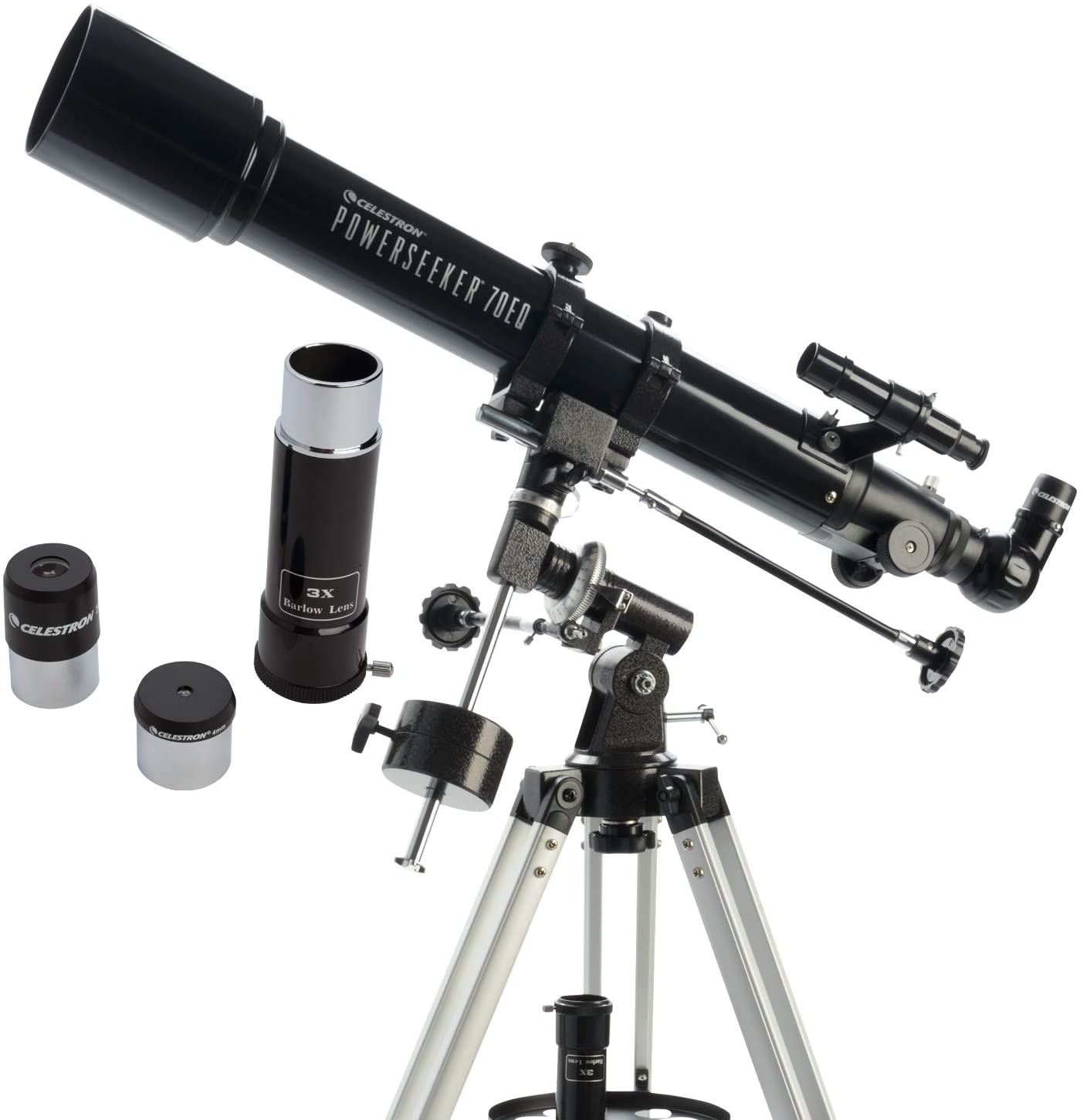
Ideal for exploring our own solar system, the Celestron PowerSeeker 80EQ comes with 20mm and 4mm eyepieces, a 3x Barlow lens, a German equatorial mount, finderscope and Starry Night astronomy software. In short, it has everything you need to get stargazing.
It's perfect for newcomers to the hobby, adults and children alike, or those on a budget. And, this October 4, it'll let you experience Saturnat opposition, when the planet is at its brightest.
Save $49 on a beginner-friendly telescope that's suitable for moon-gazing or exploring our planetary neighbors. View Deal
The Celestron PowerSeeker 80EQ is a great entry-level telescope, and this deal makes it an even more appealing prospect. (Image credit: Amazon)
Where do you start if you want to get into astronomy? This Celestron PowerSeeker 80EQ telescope is a good jumping-on point, particularly if you're on a budget. At $150, it's ideal for beginners and older children and, with some supervision, young stargazers.
It has everything you need to get started; the 20mm and 4mm eyepieces will provide magnifications of 45x and 225x respectively, enough to pick out the moon's major craters and zoom in on the planets in our solar system.
As a refractor telescope, it won't invert the image, so you can also use it for nature watching. And while the Barlow lens will likely push the telescope's practical limits, it's a neat bonus, as is Celestron's Starry Night software, which contains over 36,000 objects to explore.
Key features: 80mm objective, manual EQ mount and tripod, 20mm, 4mm and 3x Barlow lenses, 13.9 lbs (6.3 kg) weight
Price history: This is the cheapest the Celestron PowerSeeker 80EQ has been in nearly two years.
Review consensus: The Celestron PowerSeeker 80EQ has been well received by purchasers, with Amazon reviews praising how beginner-friendly it is, suitable for spotting the Moon and planets.
✅ Buy it if: You want a beginner-friendly telescope that won't break the bank.
❌ Don't buy it if: You want to look beyond our solar system. Instead, consider one of the best deep space telescopes.
Top 5 things to see in the night sky with binoculars — ranked by an expert
Beyond simple naked-eye observing, a pair of the best binoculars are the most accessible way to experience the night sky. They are affordable (although pricier models are available), very easy to use compared to telescopes and they offer a wide range of celestial sights, from our solar system neighbors to distant deep-sky objects. They are great for both beginners, casual observers and even veteran stargazers who want to grab a quick look or spend time sweeping through the Milky Way.
So what are the best night-sky targets for binocular users? There are so many, but we’ve done our best to whittle them down to five of the best that provide a good sense of what can be seen through binoculars. We’ve also accounted for different apertures and magnifications to make sure there’s something for everyone, even kids
The moon
Binoculars can get you great views of the moon. (Image credit: Getty Images)
The moon is the ideal starting point for observing with binoculars. As a large target full of intricate features that appear differently depending upon the illumination, the moon rewards return visits, and you’ll never grow bored.
Even low-magnification, smaller-aperture binoculars will show some interesting details. Small 8x40 or 7x50 binoculars are sufficient; you certainly wouldn’t want to go as low as, say, 8x25 because the moon would appear small. While larger magnifications can improve the view, unless you have the binocular mounted on a tripod, the shake from jittery hands can look like moonquakes. If you don’t have a tripod, an alternate solution is to use image-stabilized (IS) binoculars, where the binoculars’ internal electronics are able to remove the jitter from the image, making the view more static.
The illumination on the moon changes across a 29.5-day cycle as the sun rises and sets over the lunar landscape, with phases cycling from new to first quarter, then to full and last quarter and finally back to new again. Often, the best time to observe a particular feature on the moon is when it is dawn or dusk at that location, and the sun angle is low, casting stark shadows. Otherwise, it is difficult to see the relief when the sun is overhead.
Jupiter’s moons
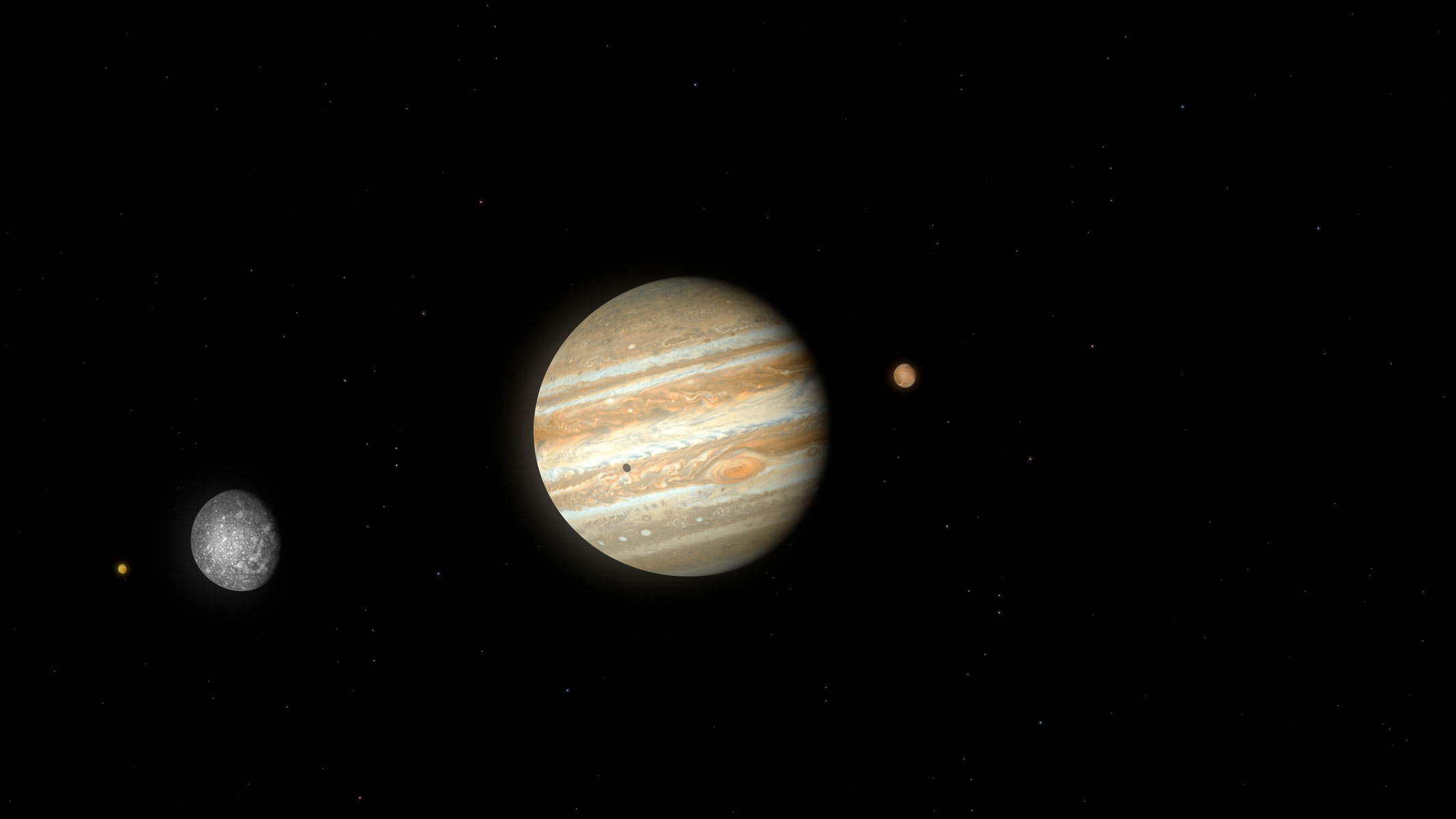
Jupiter and (some) of its moons in orbit. Through binoculars views will be less detailed and smaller, but the moons are still visible. (Image credit: Getty Images)
Earth’s moon isn’t the only moon in the solar system that can be seen through binoculars.
A simple pair of 8x40s or 10x50s will be sufficient to watch the four largest moons of Jupiter — Io, Europa, Ganymede and Callisto — circle around the Jovian giant. Unfortunately, these binoculars won’t be enough to show you the belts of Jupiter or its Great Red Spot, but its four large moons, known as the Galilean moons, because they were discovered by Galileo, will appear as pinpricks of light on either side of Jupiter.
It’s fun to follow in Galileo’s footsteps and watch the moons orbiting Jupiter, sometimes disappearing from view as they move behind the giant planet, or pass in front of it. Binoculars will not be powerful enough to show the moons transiting against the face of Jupiter, though — Jupiter is too bright, and the contrast is not great enough. The other 91 moons of Jupiter are far too small and faint to be seen in binoculars.
Mizar and Alcor
The Big Dipper constellation houses the stars Mizar and Alcor. (Image credit: Spike Silvernail/Getty Images)
In the handle of the pan-shaped Big Dipper (part of Ursa Major) is the pair of stars called Mizar and Alcor. They make a lovely visual double, easily seen with the naked eye, and they really pop when viewed through 10x50 binoculars, with Mizar the brightest at magnitude 2 and Alcor a little fainter at magnitude 4.
Some double stars are just visual doubles, meaning they are many light-years apart and unrelated, but they just happen to be very close to each other on the night sky as seen from our line of sight. Not so with Mizar and Alcor, which are physically bound by gravity as they orbit each other. However, view Mizar and Alcor through binoculars, and you will get a glimpse of the true magnificence of this system. Large binoculars will show that Mizar is also a double star. Resolving Mizar as two stars is probably pushing it in 10x50s, but a pair of 20x80 binoculars will give you a better chance of splitting them, with image-stabilized binoculars, if you have them, giving you the edge.
There’s even more in the Mizar and Alcor system than what binoculars can show. Both stars in the Mizar system are also doubles, as is Alcor, making this a six-star system in total! Sadly, these extra companions are so close together that not even telescopes can split them. But there are plenty of other doubles for you to hunt down with binoculars. The trick is to find double stars that have a wide enough separation to be resolvable by 10x50 binoculars. Try also Epsilon Lyrae and Alpha Librae, also called Zubenelgenubi, meaning ‘southern claw’, as it was once associated with the constellation Scorpius the Scorpion, before being moved into Libra the Scales.
Auriga’s open clusters
The tadpole nebula, IC 410, in the constellation Auriga. Averted vision, powerful magnification and a tripod are a must to see this with binoculars. (Image credit: Getty Images)
Auriga the Charioteer is a constellation famed for two things: its brilliant yellow star Capella (the sixth brightest in the entire night sky), and its array of magnificent open clusters, notably Messier 36, 37 and 38.
Open clusters are young clusters of stars that were born together and are now gradually dispersing, and Auriga’s open clusters are some of the best and brightest of their kind in the night sky.
A pair of 10x50 binoculars can have a field of view between 5 and 7 degrees, depending upon the model. For the larger field, it’s possible to squeeze all three of Auriga’s open clusters into the same view!
To find the clusters, first drop down from Capella to alight on the bright star Elnath, which is actually Beta Taurii in the constellation of Taurus the Bull. You can find Elnath easily with the unaided eye. Switching to binoculars, look about three-quarters of the way along the line between Capella and Elnath. You should see six fainter stars of magnitude 6 forming a curve. Follow that curve west, and you’ll come across two other magnitude 6 stars close to M38, which appear as a hazy patch whose diffuse light is made from a multitude of faint stars. This is the case for all three clusters. Most of M38’s stars are not resolvable in binoculars, but some certainly are in 10x50s, and switching to larger aperture binoculars or an image-stabilized model will help to reveal more.
Just 2.5 degrees to the south-east is the next cluster, M36, which overall is brighter than M38. Through 10x50s look for eight or ten stars; again, large binoculars will reveal more.
Finally, M37 is located a little further away. The constellation of Auriga has an obvious five-sided shape marked by its main stars and Elnath. Draw an imaginary line between Elnath and Auriga’s bright star at its lower left, magnitude 2.6 Theta Aurigae. Messier 37 is found about halfway along and just outside of this line. Another hazy patch, it is the densest of the three clusters, but most of its individual stars are fainter than in M36 and M38, so M37 will need larger binoculars, say 25x100, to get the best out of it.
After spending time looking at the three clusters, sweep your binoculars along the splendor of the winter Milky Way, in which Auriga sits. Through binoculars, the vast star fields of the Milky Way are spellbinding.
The Andromeda Galaxy M31
This is a typical view of the Andromeda galaxy (M31) that you can easily achieve with binoculars, but dark skies and averted vision aid detail. (Image credit: Omid Qadrdan)
The Andromeda Galaxy (Messier 31) is the closest large spiral galaxy to our Milky Way galaxy, located 2.5 million light-years away. That means it is large and relatively bright in our night sky, making it a great target for binocular users. If you are observing from a dark site away from city lights, you will probably be able to see it with the naked eye.
If you can’t or are having trouble knowing where to look: - Use the stars of the nearby constellation Cassiopeia to find it. Cassiopeia has the shape of the letter ‘W’. Use the bottom star on the right of the W — the brightest star in Cassiopeia, Alpha Cassiopeiae or Schedar — to... - Point down towards Andromeda and its bright star Beta Andromedae, or Mirach. - Now using 10x50 binoculars, move north-west until Mirach is at the bottom-left of your field of view and the star Mu Andromedae is at the top-right. - Then move your binoculars the same distance in the same direction again, and you should find the Andromeda Galaxy.
While you won’t be able to resolve its spiral arms, you will see a smudge of light that is its disk, and a brighter core. Also look out for its two companion galaxies, M32 beneath it and M110 to the top-right. Both appear as fuzzy stars and, depending on how dark your observing site is, you may need to use averted vision to see them (looking at them out of the corner of your eye). Larger binoculars, say 25x100, will show M31 and its companions much more easily, though you’ll need a tripod to take their weight.
The night sky is not an impenetrable “blanket of stars.” There is depth and detail that can be navigated and known, probed and plundered for rewards — and the best way to do all of that is with a manual telescope. Sure, you can get a motorized computerized “go-to” telescope and even one of the best smart telescopes that self-align and do all the work for you. Arguably, they also take much of the reward and leave you none the wiser. Can users of smart telescopes find Polaris, the North Star? Probably not. Do they know where the fabulous images of nebulae they produce actually come from? It’s doubtful.
Manual telescopes don’t find celestial objects for you — you find them yourself. However, it’s the only way to build sky literacy. Observing manually connects you to a long tradition of stargazers who learned the patterns of the sky by heart.
The learning curve can be steep, even with one of the best beginner telescopes. Knowing where to point a manual telescope is a challenge for beginners. With narrow fields of view, it’s easy to miss even bright targets unless you understand where objects are, how to navigate the sky and how to move your telescope.
All telescopes use lenses and/or mirrors to collect and focus light. There are several types of telescope — the main two being refractors and reflectors — as well as Dobsonians and catadioptrics (Schmidt-Cassegrains and Maksutov-Cassegrains). Let’s assume you already have one of the best telescopes. How does it move? There are two mount types — alt-azimuth and equatorial — each of which moves differently and has its own learning curve.
To lessen any confusion, here’s everything a beginner needs to know about observing the night sky with a manual telescope, and a glossary of telescope terms.
1. Understand the night sky
A reflector telescope is ideal for observing deep-sky objects. (Image credit: Getty)
The night sky is not static. Thinks of it as a celestial sphere surrounding a rotating globe; as Earth rotates, the stars appear to move across the sky — rising in the east and setting in the west, just like the sun — which is why objects drift out of a telescope’s field of view over time.
Since it’s not static, the celestial sphere requires two coordinate systems to help you understand this movement and find objects in the night sky:
Altitude and azimuth: typically shortened to Alt-Az, these describe where something is based on your position, with altitude meaning how far up in the sky an object is, and azimuth, where it is from left to right.
Right ascension and declination: typically shortened to RA/Dec, these are fixed coordinates that rotate with the celestial sphere, similar to longitude and latitude on Earth.
2. Manual telescope mounts and how to use them
This Skywatcher 200P is a powerful tool for surveying the night sky. (Image credit: Josh Dury)
A mount allows you to manually move and position a telescope. They come in two primary flavors: alt-azimuth (alt-az) and equatorial (EQ). However, pointing a telescope at the night sky and hoping you hit on something will not work because a telescope’s narrow field of view makes even very bright objects hard to see unless they’re precisely centered. Here’s why both mounts exist and how best to use them.
Alt-Azimuth mounts: Best for beginners and found on almost all low-cost models, these are simple (alt-az) mounts that move a scope up and down and left and right. Intuitive, easy to use and quick to set up, the constant adjustments required to track an object make it less accurate. That said, you could easily use an alt-az mount your entire life and never notice.
Locate a bright object, such as the moon, a planet or a bright star like Rigel, Vega or Arcturus, then use the finder scope or red-dot finder to roughly align the telescope.
Begin with your lowest magnification eyepiece‚ typically 25mm on a beginner’s model, for the widest field of view. Once your target is centered, you can switch to higher magnification, such as 10mm.
Move the telescope ever so slightly every few minutes to keep the object centred. If the object is drifting through the field of view from left to right, place it on the far left to keep it in view for as long as possible.
Use a manual telescope as a stargazing tool. (Image credit: Getty Images)
Equatorial mounts: A step-up choice, EQ mounts follow the sky’s natural motion. With one axis tilted to align with Polaris, the North Star (in the Northern Hemisphere), an EQ mount hence moves in sync with Earth’s rotation. While EQ mounts allow smoother tracking, particularly at high magnification, they are nevertheless complicated (and somewhat intimidating) to set up and typically include a counterweight, making them heavy and more expensive.
Understand that perfect polar alignment is not necessary for visual observing — getting as close as you can is fine.
In the Northern Hemisphere, point the telescope mount roughly north and set the mount’s tilt to match your location's latitude, using Polaris, the North Star, as a rough guide to true north.
Once aligned, track objects with a single slow-motion control, which keeps them centered for much longer and makes high-magnification viewing much easier.
3. Using a manual telescope for the first time
Once you've mastered viewing the night sky, astrophotography could be your next step. (Image credit: Getty Images)
Taking a telescope outside for the first time is as much about learning about the night sky as it is about your telescope. Assemble it indoors in daylight and test your finder scope or red dot finder on a distant object. Once it’s dark, place the lowest-power eyepiece (say, 25 mm) on your telescope, which will give you the widest field of view. Here is what — and what not — to do:
Standing still is how to get cold, so you’ll likely need to dress more warmly than you think.
Let your eyes adjust to the dark (which takes about 20 minutes), then preserve your night vision by using a red flashlight and avoiding smartphone screens (though some stargazing apps have a red light mode).
Be unambitious: Set aside a few hours to learn the absolute basics of using your finderscope, pointing the scope and centering and tracking objects.
Be patient, resisting the temptation to use too much magnification too quickly.
Don’t give up on faint objects, using the averted vision technique (looking to the side of an object) to help your eyes collect more light.
4. How to find objects with a manual telescope
You can minimise light pollution by seeking out countryside, fields and other less inhabited areas. (Image credit: Damian Peach)
You’re a stargazer interested in the night sky, not telescopes. Look at the night sky. Find a bright anchor star or constellation — maybe the moon, Saturn, Jupiter, Vega, Sirius, Orion’s Belt or the Big Dipper — then, using a simple star chart or astronomy app in night mode, trace a visual path to your target. Don’t feel bad about just stargazing for 15 minutes while you figure out where you are — that’s why you’re here. Know where you’re going to move the telescope before you touch it. Navigating from bright stars to fainter objects is how to be a successful manual observer. With practice, even the faint fuzzies will be within your reach; many manual observers with moderate experience can tell you exactly where, say, the Andromeda Galaxy is in the night sky, even though they can’t actually see it with their own eyes.
With just a few sessions, your skills will improve quickly, and you’ll recognize stars, constellations and patterns more easily — and every object you get in the crosshairs of your manual telescope will feel like your own discovery.
A quick telescope glossary
There are some terms every telescope user needs to know to appreciate how they work and why they’re designed as they are.
Term
Description
Aperture
The diameter of a telescope’s primary lens or mirror. A larger aperture means more light.
Eyepiece
The lens you look through; swap between them to change magnification.
Field of view
The visible area in the eyepiece; wider is better for finding objects.
Finder scope
The small, low-power scope mounted on the side of the telescope tube, which helps aim your telescope (also called a red dot finder).
Focal length
The distance light travels inside the telescope, which affects magnification.
Magnification
The mistaken obsession among beginners. Technically, it’s the focal length of the telescope divided by the focal length of the eyepiece. However, higher magnification isn’t always better, especially when you’re trying to locate and track an object. Start wide, then zoom in.
Slow-motion controls
Knobs or cables that let you finely adjust the telescope’s aim once you’ve roughly located an object.
It's a good time to be a Lego Star Wars fan. Not only are there a bunch of Mandalorian movie tie-in sets to look forward to, but there are eight brand new sets out, as part of Lego's new Smart Play system. Aimed at kids, these new Smart Play sets are designed to make play more interactive than ever before by introducing light and sound effects without the need for app support.
The key element of these Smart Play sets is an interactive, audio- and light-equipped Smart Brick. The Smart Brick responds to printed tags on other bricks and minifigures. If a particular tag is in range, it will interact with it, making the appropriate sounds or light actions that the tag tells it to. So you can have this Lego Smart Play Throne Room Duel & A-Wing set playing the Imperial March.
Sounds cool? It absolutely is, which is why it's frustrating that Lego has yet to give us any Lego Marvel Smart Play sets. Marvel's Guardians of the Galaxy alone is packed with quotable lines and effects; who wouldn't want a tiny Lego Groot that spoke with Vin Diesel's voice? You could pitch Captain Marvel against Galactus, with Ralph Ineson's voice booming out of a Smart Brick.
Instead, Lego has pivoted to Pokémon. Where's the Infinity Gauntlet when you need it? The good news is that the eight currently available Lego Star Wars Smart Play sets offer plenty in the way of fun.
Smart Play All-in-One Sets
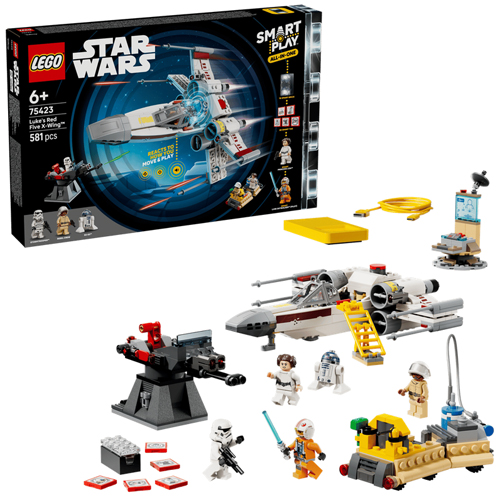
Lego Star Wars Smart Play: Luke’s Red Five X-Wing: $89.99 Aimed at kids aged six and above, Luke's Red Five X-Wing is pure playset territory. While the X-Wing is the feature here, it also comes with lots of smaller builds, including a command center, a refueling station and an Imperial turret. Along with the Smart Brick and charter, it also comes with five Smart Tags and two Smart Minifigures (Luke Skywalker and Princess Leia). There's also a Stormtrooper minifigure, a Rebel Crew member and R2-D2, although these don't have Smart functionality.
The X-Wing will make sounds and light up when it's flown through the air, and with a Smart Brick in situ, the turret will make appropriate battle sounds. Providing you move the Smart Brick around, the command center and refuel station can make sounds, too.View Deal
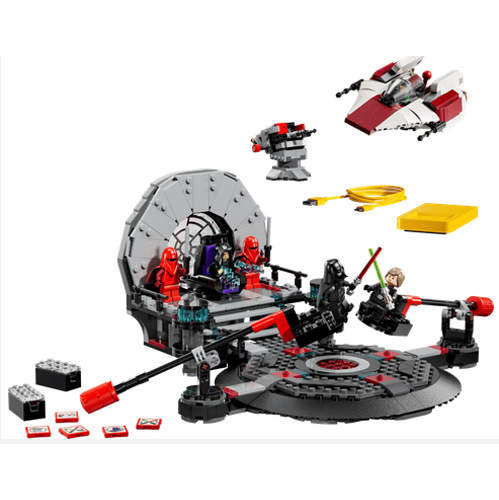
Lego Star Wars Smart Play: Throne Room Duel & A-Wing: $159.99 The Throne Room Duel is the most expensive Smart Play set yet, but that's because it comes with not one, but two Smart Bricks. There are also three Smart Minifigures (Luke Skywalker, Darth Vader and Emperor Palpatine), five Smart Tags and the necessary charging stand and cable combo. At $159.99 / £139.99, it's a little on the pricey side, but I think this offers the best, most comprehensive use of the Smart Brick, with a wealth of interactive features baked into the set.
The Throne Room Duel & A-Wing comes with two battle podiums, where the Luke Skywalker and Darth Vader minifigures can be placed to have an epic lightsaber duel. Thanks to the Smart Brick, you can enjoy realistic battle sounds as they fight. The A-Wing can also make blaster sounds as it attacks, but my favorite feature here is the throne, which will play the Imperial March.View Deal
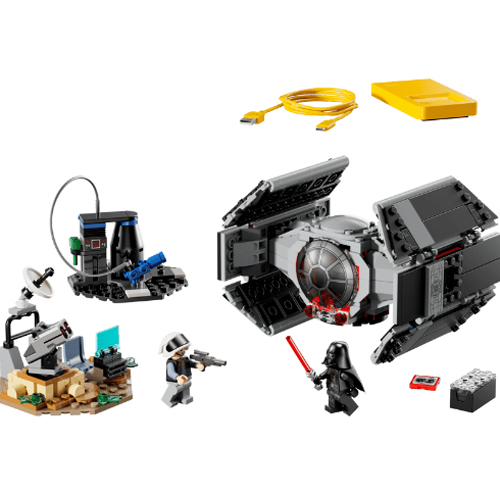
Lego Star Wars Smart Play: Darth Vader’s TIE Fighter: $69.99 At $69.99 / £59.99, the Darth Vader’s TIE Fighter is the most inexpensive way to get your hands on an All-in-One Smart Play set, and it's a pretty nice set, too. Aimed at kids aged 8+, it features an iconic TIE Fighter ship, along with a refueling station and a Rebel outpost. The included Darth Vader minifigure is equipped with a Smart tag, too, so he can be interacted with, and there's also a Rebel Fleet Trooper, although he has no Smart functionality.
With the Smart Brick installed in the TIE Fighter, it will make appropriate sounds and display light effects as it's flown through the air, interacting with the way a child moves it around. It will also make refueling sound effects, should you interact with the brick-built refueling station. The TIE Fighter itself has a cockpit with room to sit Darth Vader, and also working stud blasters.View Deal
Smart Play Compatible sets
Lego Star Wars Smart Play: Millennium Falcon: $99.99 Yes, it's yet another Millennium Falcon set. Made up of 885 pieces and costing $99.99 / £89.99, it's a little smaller than the most recent Millennium Falcon playsets we've had, but it's still every bit as eye-catching — and this one comes with the added bonus of Smart Play compatibility. All four of its minifigures (Chewbacca, Han Solo, C-3PO and Luke Skywalker) are Smart-enabled, and it also comes with four Smart Tags that allow the Millennium Falcon itself to make various sounds and light effects, including the sound of the hyperdrive, laser battles, explosions and more.
The roof of the Millennium Falcon can lift off, revealing a full interior, where you'll find space for minifigures to sit, a Holochess board and space to practice Lightsaber skills. On the outside of the ship, you'll find blasters and plenty of detail, which makes this model look every bit like the real thing. Even without a Smart Brick, then, this is a great playset with plenty for youngsters to interact with.View Deal
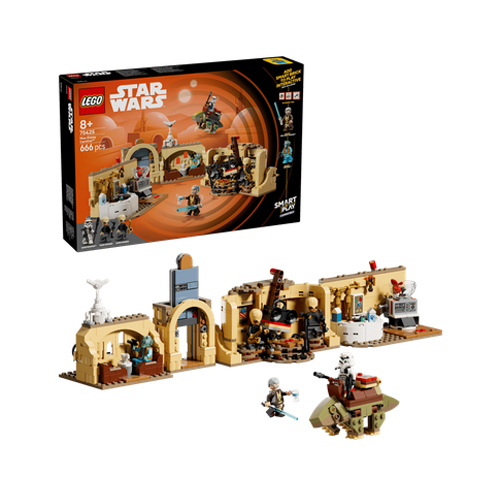
Lego Star Wars Smart Play: Mos Eisley Cantina: $79.99 The Mos Eisley Cantina is undoubtedly one of the most iconic locations in the Star Wars universe. This playset may be considerably scaled down, particularly in comparison to the now-retired UCS Mos Eisley Cantina, but at 666 pieces, it's a good size for a playset aimed at kids eight and above. It features a bar, a seating area, a dance stage and a buildable Dewback — everything needed for some wonderfully imaginative play.
Helping things along are the Smart Play compatible features. Obi-Wan Kenobi and Greedo minifigures are Smart-enabled, three additional Smart Tags allow a wealth of interaction. The Dewback can make walking and sleeping sounds, while the Cantina itself can play music and the sound effects of drinks being mixed.
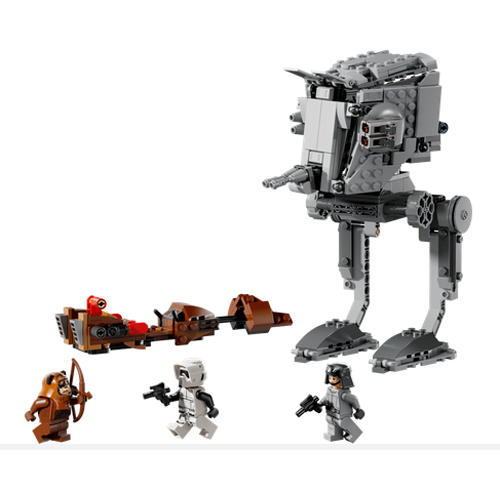
Lego Star Wars Smart Play: AT-ST Attack on Endor: $49.99 One of the cheaper Smart Play sets to be released, this 347-piece set allows youngsters to build an AT-ST, a speeder bike and three minifigures (Wicket the Ewok, AT-ST Driver and Scout Trooper). Of the three, Wicket features Smart functionality, and there are also two Smart Tags which can bring the AT-ST to life.
Wicket has several moods and reactions that can be played when in range of a Smart Brick, and the AT-ST can make a variety of battle and movement sounds, activated by putting it in motion. Without a Smart Brick, the AT-ST can still be interacted with thanks to an opening cockpit, a moving head and fireable stud shooters.View Deal
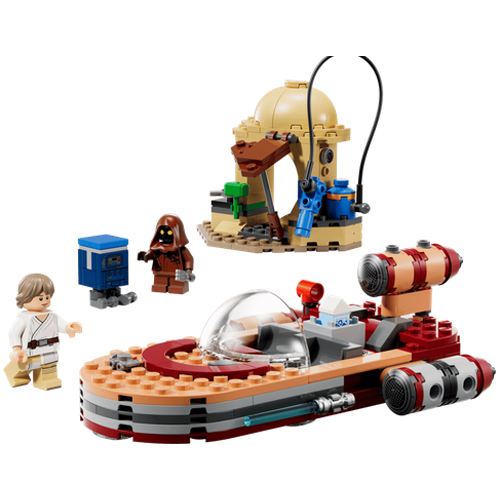
Lego Star Wars Smart Play: Luke’s Landspeeder: $39.99 Costing just $39.99 / £34.99, Luke's Landspeeder is the cheapest of all the Smart Play compatible sets available so far. And it's one of the most iconic builds, with Luke's Landspeeder being immediately recognizable. It's a small set, with only 215 pieces, but with an age rating of 6+, it's an ideal build for younger children who may be new to Lego or less confident builders.
It comes with two minifigures (Luke Skywalker and Jawa), with Luke being Smart Play enabled. There's also one Smart Tag, which allows the Landspeeder to make motion sounds as it's moved, and refuel sounds when kids interact with the included refuel station mini build. Perfectly sized for small hands, Luke's Landspeeder is ideal for swooshing through the air, and even without a Smart Brick to bring it to life, kids can use their imaginations to make this a worthwhile play experience.View Deal
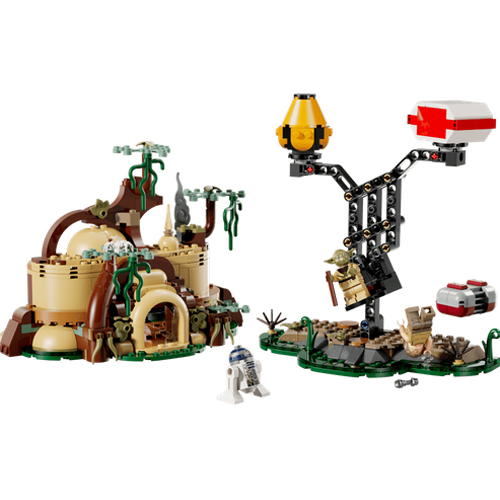
Lego Star Wars Smart Play: Yoda’s Hut and Jedi Training: $69.99 An iconic set from Star Wars: The Empire Strikes Back, and something we've seen in numerous Star Wars titles since, we love Yoda's Hut. Its natural appearance, covered in trees and hidden in the swamp, makes it stand out from the usual industrial appearance of Star Wars' ships and buildings. And it's the home of everyone's favorite Yoda: what's not to like? The last time we had a Yoda’s Hut playset was back in 2018, so it's a well overdue release.
The included Yoda and Luke Skywalker minifigures are Smart-enabled, and there's also an R2-D2 minifigure included to complete the trio. Smart Tags within the set allow for cooking sounds to come from Yoda's hut, while kids can enjoy 'force' sounds as Yoda and Luke complete their Jedi training. It's a very nice-looking set, and I'd wager that adults will enjoy this as a display piece if they aren't interested in interacting with the Smart Play functionality — but you may be missing out if you don't enjoy the many interactive sounds that the set can produce with a Smart Brick present.View Deal
When it comes to space exploration, rockets are probably one of the coolest things you'll learn about as a kid. Zooming off into space, traveling to new planets and searching for potential life are all things that feel like they should be impossible. For any age of space enthusiast, it's pretty darn cool. For kids, though, learning about rockets can mark an amazing introduction, sparking a lifelong love of space. But, while real rockets aren't really obtainable, kids can always start out with model rocketry.
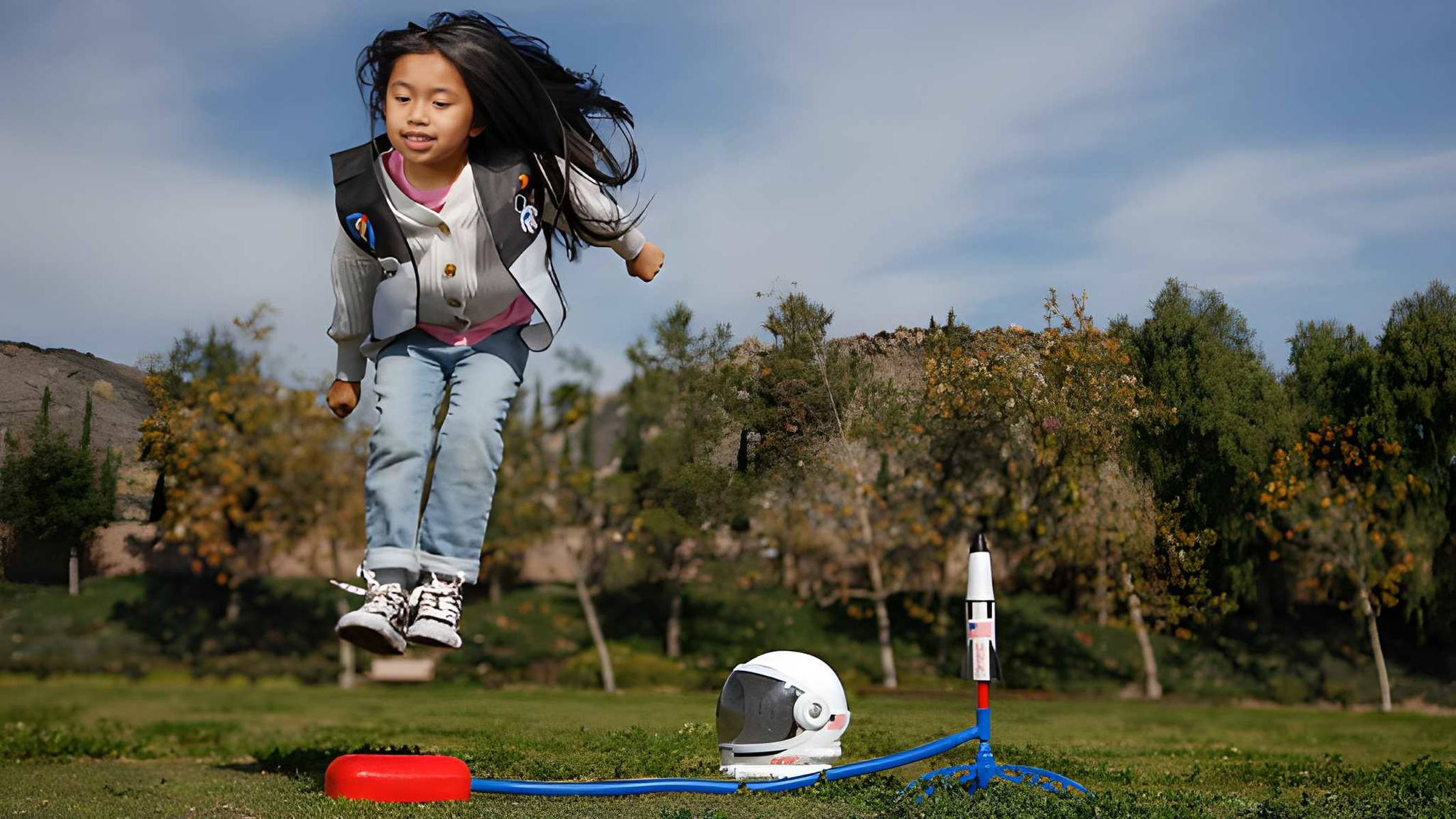
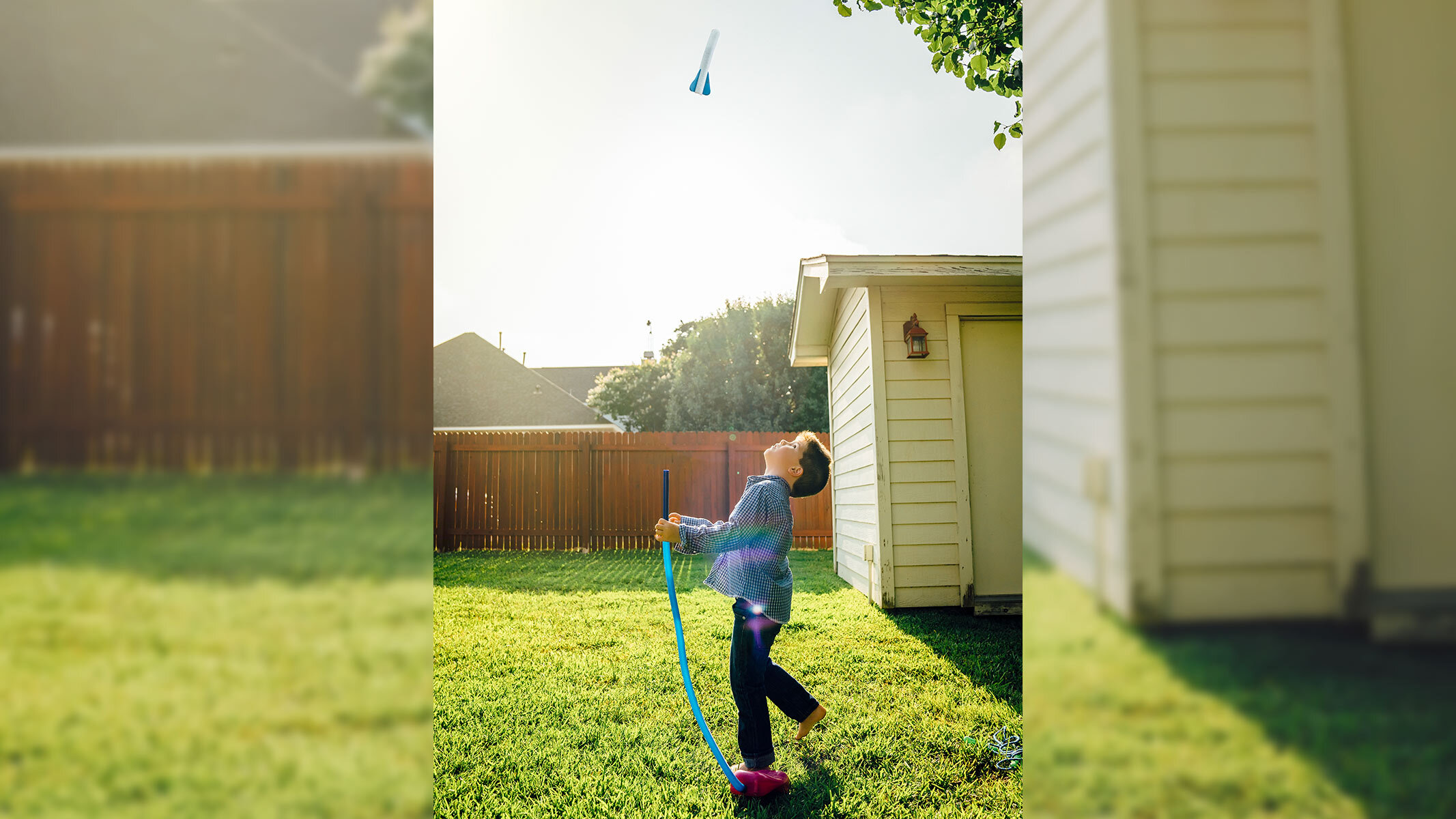
One of the most child-friendly, affordable and safest ways to get into this hobby, though, is by trying out Stomp Rockets. These toy rockets can be propelled into the air by a simple stomp onto a launcher, hence the name. Attached with a flexible hose, when you compress the launcher, it releases the air into the rocket and makes it fly. A fairly simple concept, but one that can be a lot of fun for kids and very educational (without feeling like you're learning).
Best stomp rockets you can buy today
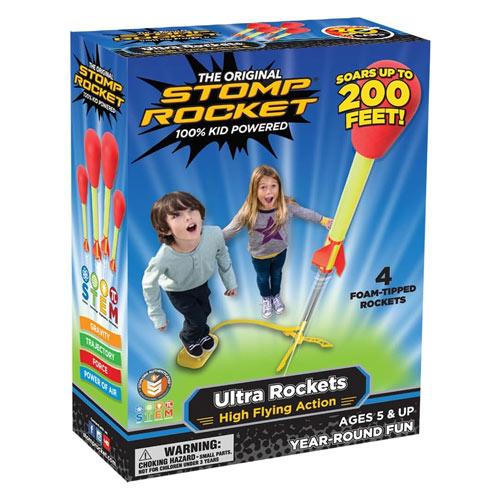
Stomp Rocket Ultra Rocket Launcher: $19.99 For slightly older kids, aged 5 and up, the Stomp Rocket Ultra can reach heights of up to 200 feet. This time, they lose the cone nose of usual rockets, adopting a foam-tipped rounded tip to make sure they don’t hurt anybody when flying back down to the ground.View Deal
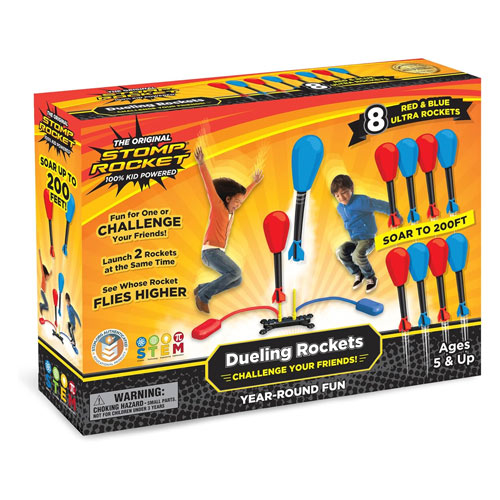
Stomp Rocket Original Dueling Rocket Launcher: $29.99 If playing with Stomp Rockets with friends and family is on the agenda, then the Original Dueling Set comes with eight rockets ready to battle. You can launch two rockets at the same time and compete on who gets theirs the highest. And they can reach heights of up to 200 feet if you stomp them hard enough, which is almost 20 stories high.View Deal
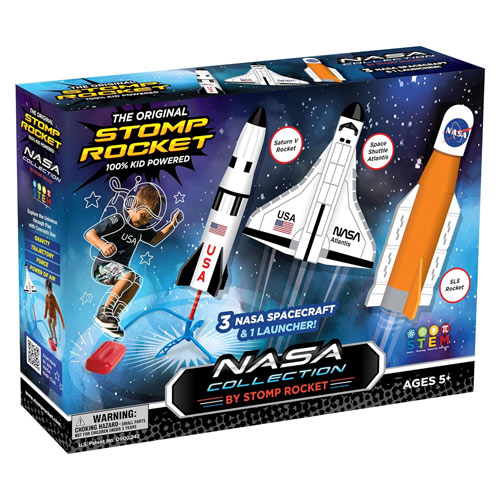
Stomp Rocket NASA Space Collection Rocket Launcher: $29.99 If your kid is a big fan of NASA, then this Stomp Rocket Space Collection comes with three NASA rockets styled like the Saturn V Rocket, Space Shuttle Atlantis and SLS Rocket. Plus, the adjustable launch stand lets kids experiment with different trajectories and forces, creating their own experiments.View Deal
Stomp Rocket Super High-Performance X-Treme Rocket Launcher: $19.99 This set is recommended for ages 9-13 because of just how high it’s capable of going, which isn’t all that surprising to hear since it’s considered to be the ‘Super High-Performance X-Treme’ version. It even comes with its own special X-Treme rockets to reach heights of up to 400 feet.View Deal
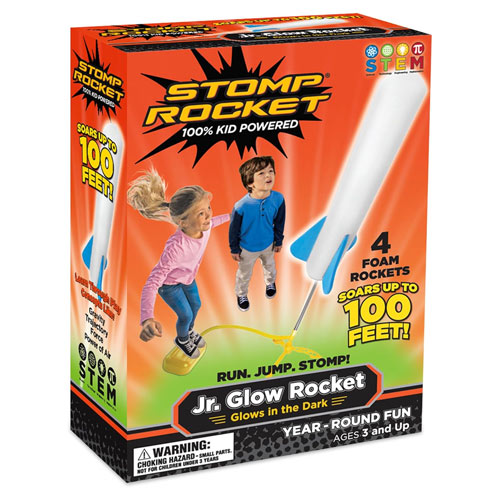
Stomp Rocket Jr Glow Rocket Launcher: $17.99 Part of the Jr range, the Glow Rockets come in a pack of four, reaching up to 100 feet in the air. You can also pay an extra $2 to secure three more rockets in the next size up. Listed as the number one bestseller in Toy Foam Blaster Sets on Amazon, they’re a lot of fun and carry that same 100% kid-powered tagline.View Deal
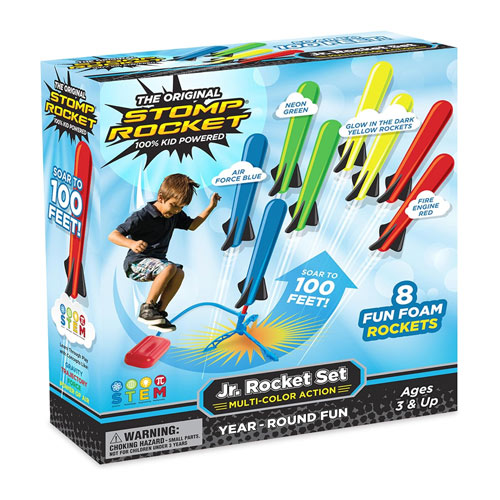
Stomp Rocket Jr Multi-Color Rocket Launcher: $27.99 Part of the Original Stomp Rocket collection, these Jr Multi-Color Rockets are the best starter rockets for kids aged 3 and up. You get eight rockets in the pack and four different colors: Air Force blue, neon green, glow-in-the-dark yellow and fire engine red. A great introduction to experimenting with gravity and force without having to spend more than $30. View Deal
With such simple mechanics behind it and no need for batteries, electronics or even assembly, it's a lot of fun without having to put in too much effort. So, when it comes to kids getting into it, it's a pretty perfect combination.
Model rocketry as a hobby can range anywhere from building your very own rocket from scratch to wiring up an actual engine to make it fly. And, while there are plenty of the best model rocket sets, these may be too advanced for children. So, before you hit the more advanced stages of model rocketry, it's best to find a place to start that feels more beginner-friendly. And there's a variety of different Stomp Rockets you can buy, like the NASA collection Rocket Launcher for $29.99 and the Super High-Performance X-Treme Rocket Launcher for $26.99. We'll jump into exactly what's great about Stomp Rockets below.
They are easy to use
Stomp rockets are a great way to kindle your child's interest in STEM. (Image credit: Getty Images)
The first thing to talk about when it comes to Stomp Rockets is how easy they are to use. Each Stomp Rocket kit usually comes with the rocket, a launch stand, a flexible hose and a launcher — and that's about it. There's no need for batteries, cords or plugs, meaning using them outside is super streamlined and not at all technical. Plus, you'll be urging your kids to get outside to play because, depending on how hard you stomp, rockets can reach up pretty high into the air, sometimes up to 400 feet (depending on age suitability).
Stomp Rockets are also 100% kid-powered, which is a huge deal for little kids who want to practise independence and feel confident in what they're learning about. To help with this, each box comes with a selection of rockets to stomp with. If kids lose any of them, or if they just want to load them up and stomp them over and over again without having to run around picking them up first, then it's easy.
In comparison, other model rocketry can come with an abundance of intricate pieces that can feel overwhelming or too complicated, or there are ignition-based model rockets, like the ones found amongst the best model rocket sets, that can be very technical.
While that's great for model rocketry hobbyists as they get older, the Stomp Rockets are a great place to start for younger kids because of how truly simple they are. Plus, they also encourage a lot of activity from your kids, jumping and running about to blast off. And if there's one thing we know for sure about kids, they've got a lot of energy!
They're about as safe as it gets
Stomp rockets are completely kid-powered and don't require batteries, special fuel or anything that might need adult supervision. (Image credit: D&L Company)
One of the biggest draws to Stomp Rockets is how safe they are to use. As I already mentioned, they're so safe in fact that kids can power them all by themselves. As the Original Stomp Rocket Jr. Rocket Set for $27.99 puts it directly on the box: “100% Kid Powered”.
There's no assembly required; the rockets and accompanying accessories are often made from simple foam and plastic, and the height they travel tends to vary depending on the age on the box. All solid reasons that your kid can play and experiment with them without adults needing to get too involved. For the Jr. Rocket Set, for example, it's suitable for 3 years and up, traveling to heights of 100 feet. For something more advanced, but still accessible, the Stomp Rocket Original Dueling Rockets is for ages 5 and up, reaching up to 200 feet in the air.
You'll notice that the only safety concern with Stomp Rockets seems to relate to how high they launch up into the air. That's why the Super High-Performance X-Treme Rocket Launcher I mentioned earlier recommends use for ages 9-13 only, reaching up to 400 feet. But they also adopt a rounded-out nose, rather than a tip, to ensure safe landing.
As kids get older, they might want to experiment with more advanced model rockets, including those with a launch pad and ignition switch. This is where safety protocol and adult supervision are essential, as they're considered a lot more dangerous. As NASA advises in their Beginner's Guide to Aeronautics: “At NASA, we take safety very seriously in everything that we do. Safety is the first mission in flying, whether it is flying the Space Shuttle, an experimental aircraft, or a model rocket. You must always be aware of the people and things around you that can be harmed by your rocket, or which can harm you or your rocket.”
Stomp rockets are relatively inexpensive
A simple design means stomp rockets are inexpensive and make a great gifts for kids. (Image credit: Getty Images)
Amongst the selection of Stomp Rockets we've researched online, they tend to range between $15-$30 and that's incredibly affordable when it comes to model rocketry. But why are they a lot cheaper? Well, they're a lot simpler and require far fewer parts, especially considering they come fully assembled. If you run out of rockets, you can also purchase refills that'll only cost you around $10-$20, depending on the model and how many you buy.
With more expensive model rockets, the price can jump up when you're buying kits that need to be built. Additionally, you'll be spending more on acquiring extra parts or upgrades to existing model rocket kits. A pack of model rocket engines can cost you as much as a whole kit of Stomp Rockets. Engine starters, igniter plugs, launch pads, and controllers are all things that can cost you money.
When you're just getting started, model rocket kits will also require you to have your own tools to build them. And tools are unlikely to be something you'd have your kids own when they're just learning, and they're only little. So, you can save yourself money there, too (for now).
Don't be surprised by their limitations
Want to extra educational value to the' stomp rocket experience? NASA has instructions on how to build your own. (Image credit: NASA JPL)
Of course, if you're not spending the money on all these additional extras, you're also not getting them. With Stomp Rockets, they're pretty basic kits that don't come with a lot of additional extras and that is one of their limitations. They won't reach incredible heights, they won't deploy parachutes to float safely to the ground, and they certainly won't let out any exhaust when they fly skyward. But they're also incredibly safe and that's why they're better suited for younger children.
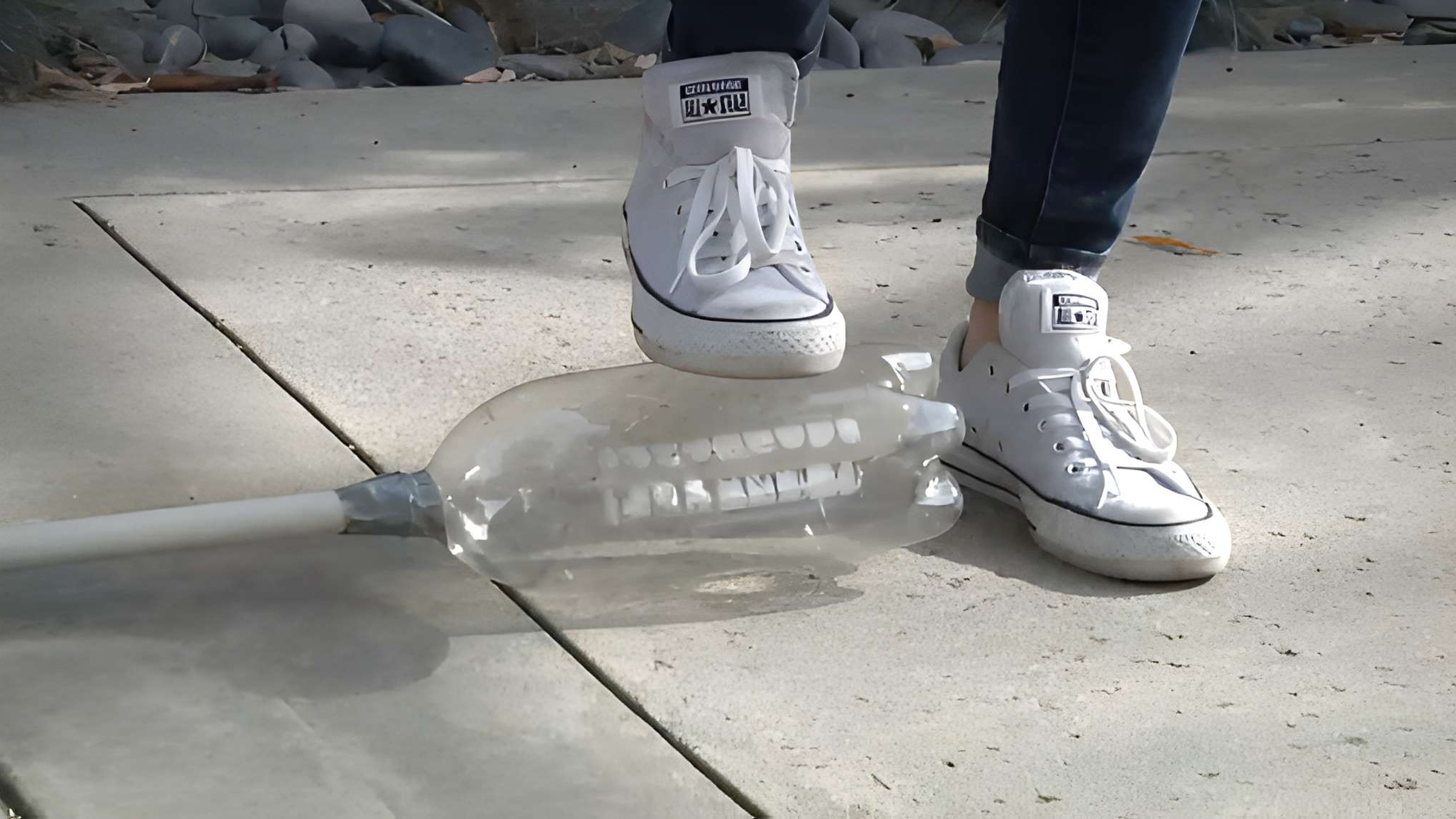
If you are missing out on the building perspective of Stomp Rockets, NASA’s Jet Propulsion Laboratory does offer an online lesson for teachers to practice in class, creating the nose cone, fuselage and fins while powering it with a simple empty water bottle. However, this is targeted at grades 4 and up.
They might not always fly as high as you want and they might be susceptible to breaking given their foam construction, but it can't be doubted that they're easy for younger kids to use and a great introduction to model rocketry without stressing about safety, price or fun.
Stomp Rocket Jr Multi-Color Rocket Launcher: $27.99 Part of the Original Stomp Rocket collection, these Jr Multi-Color Rockets are the best starter rockets for kids aged 3 and up. You get eight rockets in the pack and four different colors: Air Force blue, neon green, glow-in-the-dark yellow and fire engine red. A great introduction to experimenting with gravity and force without having to spend more than $30. View Deal
Stomp Rocket Jr Glow Rocket Launcher: $17.99 Part of the Jr range, the Glow Rockets come in a pack of four, reaching up to 100 feet in the air. You can also pay an extra $2 to secure three more rockets in the next size up. Listed as the number one bestseller in Toy Foam Blaster Sets on Amazon, they’re a lot of fun and carry that same 100% kid-powered tagline.View Deal
Stomp Rocket Ultra Rocket Launcher: $19.99 For slightly older kids, aged 5 and up, the Stomp Rocket Ultra can reach heights of up to 200 feet. This time, they lose the cone nose of usual rockets, adopting a foam-tipped rounded tip to make sure they don’t hurt anybody when flying back down to the ground.View Deal
Stomp Rocket Original Dueling Rocket Launcher: $29.99 If playing with Stomp Rockets with friends and family is on the agenda, then the Original Dueling Set comes with eight rockets ready to battle. You can launch two rockets at the same time and compete on who gets theirs the highest. And they can reach heights of up to 200 feet if you stomp them hard enough, which is almost 20 stories high.View Deal
Stomp Rocket NASA Space Collection Rocket Launcher: $29.99 If your kid is a big fan of NASA, then this Stomp Rocket Space Collection comes with three NASA rockets styled like the Saturn V Rocket, Space Shuttle Atlantis and SLS Rocket. Plus, the adjustable launch stand lets kids experiment with different trajectories and forces, creating their own experiments.View Deal
Stomp Rocket Super High-Performance X-Treme Rocket Launcher: $19.99 This set is recommended for ages 9-13 because of just how high it’s capable of going, which isn’t all that surprising to hear since it’s considered to be the ‘Super High-Performance X-Treme’ version. It even comes with its own special X-Treme rockets to reach heights of up to 400 feet.View Deal