A company just produced kidney and liver tissue in space for the first time, using a method called bioprinting, which 3D-prints living tissue.
The announcement comes from California-based Auxilium Biotechnologies, whose AMP-1 orbital bioprinter made the breakthrough. The bioprinter used cell and tissue designs from the Wake Forest Institute for Regenerative Medicine in North Carolina.
"The ability to manufacture multiple tissue types alongside clinically relevant medical products highlights both the versatility and scalability of our technology," Auxilium CEO Jacob Koffler said in a statement today (July 9).
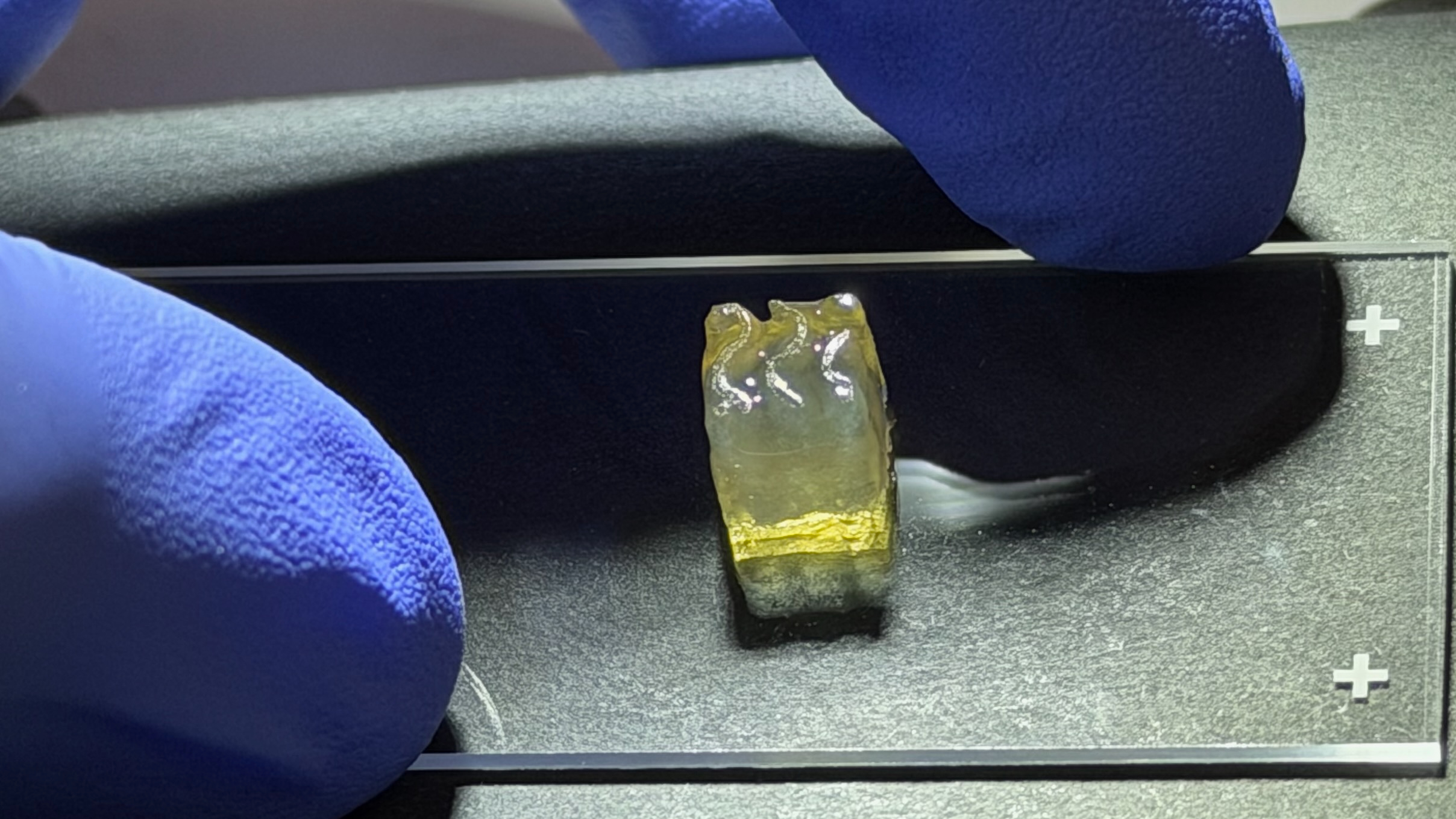
Auxilium Biotechnologies successfully bioprinted kidney and liver tissues aboard the International Space Station, marking the first time either tissue type has been manufactured in space. (Image credit: Auxilium Biotechnologies)
The experiments took place aboard the International Space Station in June. In addition to bioprinting kidney, liver, and cartilage tissues, the AMP-1 machine also created 28 nerve repair implants. The bioprinted materials returned to Earth on a SpaceX Dragon cargo capsule that splashed down in the Pacific Ocean on June 17.
"Successfully bioprinting living liver and kidney tissue aboard the International Space Station marks an important step forward for regenerative medicine," WFIRM director Anthony Atala said in a statement today (July 9). "The uniform cell distribution achieved aboard the space station points to real possibilities for manufacturing medical devices and tissues in space."
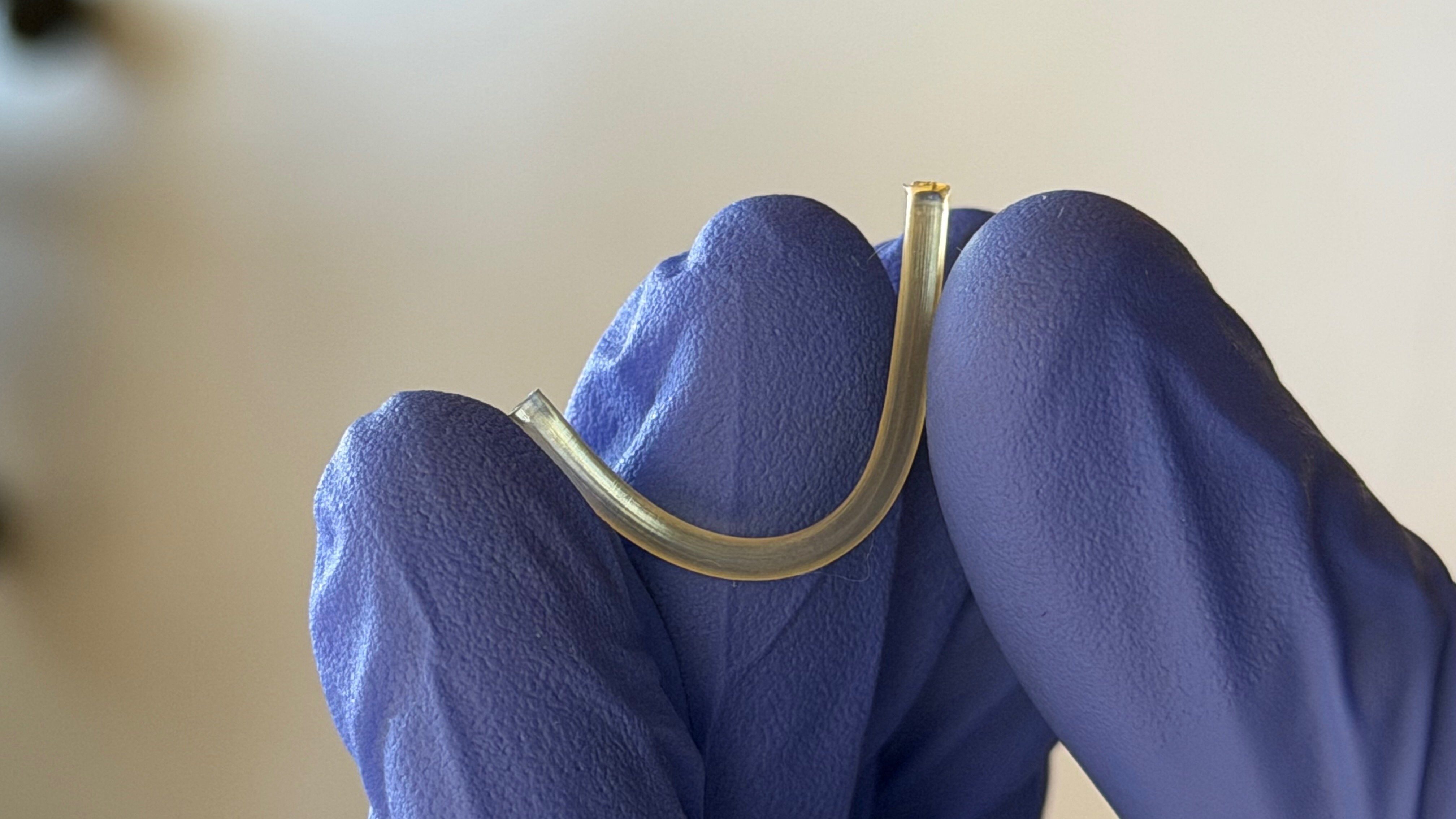
Auxilium Biotechnologies successfully completed the first-ever mission to bioprint both medical implants and biological tissues during a single spaceflight aboard the International Space Station. This image shows a nerve repair implant. (Image credit: Auxilium Biotechnologies)
This wasn't the first bioprinting experiment to be conducted on the ISS. For example, in 2018, Russian cosmonaut Oleg Kononenko tested a machine called the "Bioprinter Organ.Aut," which successfully assembled cartilage cells using a magnetic field.
However, Auxilium’s AMP-1 bioprinter is the first tool that has produced multiple types of tissue in space, as well as the first to make kidney and liver tissue in the final frontier. Auxilium says this flexibility will be important as commercial interests expand manufacturing hubs in space for biotech, healthcare and advanced materials development.
"This mission marks an exciting step forward for in-space biomanufacturing and demonstrates what can be achieved when innovative technology is paired with strong collaboration," Isac Lazarovits, Auxilium's engineering vice president, said in the same statement.
"Demonstrating multiple product classes and meaningful production volume within a single mission is an important milestone as we continue advancing toward routine manufacturing operations in orbit," Lazarovits continued.
We've found an incredible streaming deal for you. Peacock TV has cut a year-long Premium subscription plan from $131.88 to just $109.99. It's 12 months for the price of 10, and the lowest price we've seen since Black Friday last year.
There are also exciting new additions, including Season 2 of The Undeclared War, and Season 3 of The Ark, scheduled to premiere on July 30, 2026.
Save 17% on an annual subscription to a very popular streaming platform. Peacock TV is NBCUniversal's streaming service, and it offers over 50 always-on channels. It's home to some big sci-fi names, and you can also watch a ton of live sports. So, as streaming deals go, this is right up there with the best available.View Deal
Fans are eagerly anticipating the third season of The Ark following season 2’s thrilling cliffhanger finale, where the crew of Ark One discovered a habitable, human-friendly planet. However, evidence of an ancient alien civilization and a frantic distress call from deep space instantly cut those celebrations short.
Season 3 begins with Captain Garnet (Christie Burke) splitting her crew to answer that urgent distress call, leaving the remaining members behind to defend Homebase 1 from the new planet's unknown secrets.
Peacock TV also packs a massive array of hit movies and captivating documentaries, including Unidentified with Demi Lovato, exploring UFO sightings, declassified government documents, and extraterrestrial mysteries.
If you're traveling abroad over the summer, you'll most likely find your Peacock TV viewing blocked by geo-restrictions.
The best way to continue your regular viewing as if you're at home and ensure you don't miss any of your favorite sci-fi shows is to use a VPN. NordVPN has discounted its highly rated VPN plans by as much as 75%, with a bonus of three free months on top.
The Complete Plan is the most popular option from Nord, and it works out at just $4.49 a month or $121.23 over the two years, when you take into account the extra three months.
Peacock TV key features: 10 months for the price of 12, over 50 always-on channels, great sci-fi content, live sports, multiple news channels, year-long subscription.
Price history: Before today's deal, the price of the popular Premium plan was $131.88. It's now just $109.99 and works out at just $9.16 on a one-year plan. We think this streaming deal represents great value for a service that will always offer you something you can watch.
✅ Buy it if: You want a low-cost streaming deal, and you're into sci-fi, sports, or you like your news.
❌ Don't buy it if: None of the above applies to you, but in truth, this is great value, and we believe it's worth getting.
We test and review VPN services in the context of legal recreational uses. For example: 1. Accessing a service from another country (subject to the terms and conditions of that service). 2. Protecting your online security and strengthening your online privacy when abroad. We do not support or condone the illegal or malicious use of VPN services. Consuming pirated content that is paid for is neither endorsed nor approved by Future Publishing.
Houston-based company Venus Aerospace announced today (June 8) the closing of its "Series B" financing round, which raised $91 million to evolve its rotating detonation rocket engine (RDRE) from functioning prototype to a scalable propulsion system with multiple applications.
Venus completed a demonstration launch with its test vehicle in May 2025, accomplishing the first such flight from U.S. soil powered by an RDRE. At scale, the company envisions a wide variety of uses for the design, including powering aircraft up to Mach 6 straight off the runway, orbital transfer vehicles for satellites in space, and as the engine for future spacecraft capable of landing on extraterrestrial worlds like the moon.
The newest financing round was anchored by Houston-based venture capital firm Mercury Fund, with contributions from a handful of other investors, including Lockheed Martin Ventures. Venus co-founder and CEO Sassie Duggleby called the funding "an important step" toward maturing the RDRE for production.
"Our customers need propulsion systems that go farther, can be produced reliably and are built on supply chains they can trust," she said in a statement. "We are advancing that capability with American engineering and manufacturing talent to strengthen U.S. defense, expand space access and support the future of high-speed flight."
RDREs differ from conventional rocket engines in the way they ignite and expel their propellants. Typical engines burn fuel as part of a controlled process inside a combustion chamber, which is directed through the engine nozzle and bell. RDREs use a ring-shaped combustion chamber and feature a continuously circulating detonation wave, which produces higher pressure and increased thrust while burning less fuel, in theory.
RDREs aren't a new concept, but designing a functional model had more or less evaded all attempts outside science fiction — until Venus' demonstration launch last year. That flight also caught the attention of former NASAdeputy administrator and space shuttle astronaut Pam Melroy, who joined the company's board of directors four months later.
"What differentiates our RDRE is not just that it works, but that it has flown at high thrust and was designed with scale, manufacturability and mission integration in mind," Venus co-founder and CTO Andrew Duggleby said in the same statement. "Our propulsion architecture combines efficiency, throttling, reusability and manufacturability in a way that customers need for real defense and space missions. We are focused on translating technical progress into reliable systems for operational use."
New Zealand company Zenno Astronautics has tested a first-of-its-kind torquer based on superconducting magnets to maintain the position of a satellite in space.
Superconducting magnets can convert solar energy directly into momentum in space and provide a source of acceleration that needs no fuel, but until recently, the technology was too large and complex to fit on a satellite. That's no longer the case.
Zenno Astronautics, a spin-off from the University of Auckland, has flown its new "Supertorquer" system on the Mira satellite built by California-based start-up Impulse Space. The tests began shortly after Mira's launch in November last year aboard the SpaceX Transporter 12 mission and saw the shoebox-size device perform with flying colors, Zenno Astronautics CEO and founder Max Arshavsky, told Space.com.
"It's a technology that allows a spacecraft to not tumble violently in space and point in the right direction," Arshavsky said. "The unit has multiple super-conducting magnets that are positioned in different axes. When we power up the magnets, they generate a magnetic field, which interacts with Earth's magnetic field, and because we can control the magnetic field on the satellite, we can control the way in which it turns with respect to Earth."
Superconducting magnets are made of coils of superconducting wire that have zero electrical resistance and can therefore conduct much larger currents than normal wires. That larger current translates into a greater magnetic force. There is, however, a catch: Superconducting materials need to be cooled to extremely low temperatures to gain their wonder properties.
In labs on Earth, the cooling requires tanks of cryogenic liquids like liquid helium or liquid nitrogen. Those cannot be used aboard a satellite. Instead the system must expel all heat from its surroundings into outer space.
"The magnets need to operate at minus 200 degrees Celsius [minus 328 degrees Fahrenheit]," Arshavsky said. "But even though space is cold, the satellite is actually not. It's about 20 degrees C, pretty warm, because we are pointing at the sun."
The unit housing the superconducting magnets is wrapped in layers of insulation and fitted with a heat pump that removes all the excess heat from the system. Every time the satellite needs a push, the superconducting coils power up, drawing energy from a battery charged by the satellite's solar panels.
"It's converting solar energy straight into useful work," Arshavsky said. "Energy is the one thing that is abundant in space, and you can use it to energize the magnet to create a magnetic acceleration device. It gives you acceleration without fuel."
Zenno Supertorquer is set to become the world’s first superconducting product for space. It is scheduled for launch on SpaceX Transporter-15, currently targeting November 28, 2025 (PT). pic.twitter.com/aw2we9caxGNovember 27, 2025
In the future, Zenno Astronautics plans to launch larger systems that could enable spacecraft to dock in space or conduct close proximity operations using just the power of their solar-powered superconducting magnets. Arshavsky envisions powerful magnets that could someday propel spacecraft on missions to the moon and Mars using only solar power.
"Once you have super-conducting technology available in space, you can then create very strong magnetic fields, and you can use them for various use cases," he said. "You can accelerate things in space very fast or change the trajectory of a satellite completely without fuel."
"We are essentially looking to remove all reliance on Earth's resources so that we can build a sustainable industry in space," Arshavsky said.
Powerful superconducting magnets could also provide a solution to the problem of cancer-causing cosmic radiation that explorers will encounter during stays on the moon or trips deeper into space.
"When we go to space, we get hurt by radiation, and these superconducting magnets can create umbrellas of magnetic fields around the spacecraft to protect the interior," said Arshavsky. "So we can shield people in space from that radiation."
Zenno Astronautics company plans to fly a larger demonstrator on an undisclosed mission later this year.
Editor's note: The original version of this story referred to the newly tested device as a thruster. That wording is not technically correct and, at 11 a.m. ET on July 10, was therefore changed to "torquer."
The past 250 years of optical telescopes have seen revolutionary discoveries and technology that the telescope's inventor, a seventeenth century spectacle-maker by the name of Hans Lippershey, maybe wouldn't have believed possible.
When we look back through the annals of telescope history, we find that a significant turning point came, coincidentally, just five years after the United States' Declaration of Independence was christened.
It was back in England, in 1781. William Herschel had just made what was possibly the greatest astronomical discovery the world had seen up to that point: a new planet, Uranus. The fact that Herschel had found a seventh planet from the sun was revolutionary in itself. All the other planets, from Mercury to Saturn, had been known since antiquity, obvious in the night sky to the naked eye.
Uranus, on the other hand, isn't really visible without optical aid, and its discovery illustrated the power of the telescope to dramatically widen our vistas. Moreover, Herschel found the new planet using a 6.2-inch (157-millimeter) reflecting telescope that he had constructed himself. He was looking through it from the back garden of his home in the Somerset city of Bath.
Herschel was a prolific builder of telescopes, polishing and shaping their speculum mirrors. The 6.2-inch telescope was a midget compared to some of his other beasts, including the famous discovery machine that was the 20-foot, or -meter, in focal length telescope with its 18-inch (457-mm) aperture, and the less successful 40-foot (12-meter) telescope.
Herschel proved that telescopes could do serious science. "As a self-taught astronomer, William Herschel transformed the reflecting telescope from what had generally been thought of as a scientific toy into a serious scientific tool," British science historian Robert Smith of the University of Alberta in Canada told Space.com. "At the root of all Herschel's efforts is his telescope building, because he had to build these big telescopes himself."
Refractors and reflectors
Telescopes come in two main forms: the reflector and the refractor.
Reflectors use mirrors to reflect light to a focal point where the eyepiece is located; refractors use lenses to focus light. In the 18th and 19th centuries, British reflectors like Herschel's were the dominant telescope category, as exemplified by those constructed by the likes of Liverpool's William Lassell and Ireland's Third Earl of Rosse, William Parsons. However, across the English Channel in mainland Europe, refractors, which at the time were optically higher quality, were dominant instead.
"You have to distinguish what's going on in Britain with what's going on elsewhere," said Smith.
Lassell built reflectors with apertures of 24 and 48 inches (61 and 122 centimeters). And the great Leviathan of Parsonstown in Ireland is Lord Rosse's own behemoth, still standing today as a UNESCO World Heritage Site. While the likes of Lassell and Lord Rosse were wealthy, self-taught "grand amateur" scientists, in Europe refracting telescopes were used by academics at universities to make precise measurements of the cosmos, from the orbits of double stars to the distance to stars using parallax.
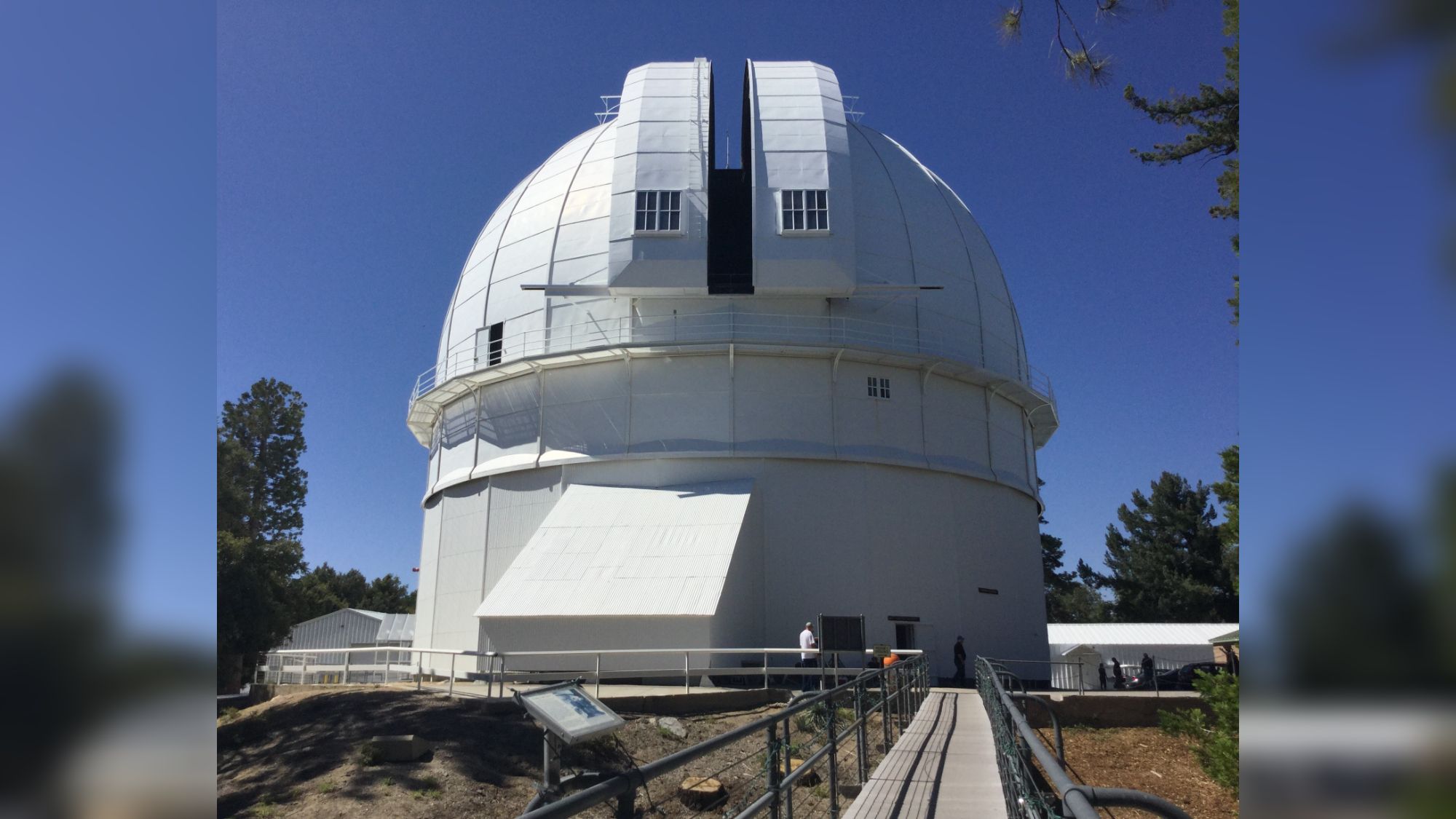
The dome of the giant Hooker Telescope. (Image credit: Craig Baker/Wikimedia Commons, CC BY-SA 4.0)
"On the European continent, refractors were used by professional astronomers whose focus was on precision, whereas for Lassell and Rosse the focus was on collecting more light to see fainter objects," said Smith.
In comes the U.S.
Building large refracting telescopes had its challenges and led to a period referred to as the "Telescope Race," where prestige was equally a motivation alongside science. The "race" was won by the 40-inch (one-meter) refractor at Yerkes Observatory in Chicago in 1897, which cost $500,000 at the time (about $20 million in today's money) and was provided by financier Charles Yerkes who made his money developing Chicago's public transport system, often resorting to bribery in order to win franchises.
Businessmen building telescopes was nothing new, of course: William Lassell made fortunes from brewing, but he also used his own telescopes. What was different now was that men wealthy beyond anyone's dreams saw observatories as vanity projects rather than as scientific instruments to use themselves. The introduction of substantial sums of American money provided by wealthy businessmen was a sea change in both the building of telescopes and the fortunes of astronomy in the U.S.
"I have argued that in the 1880s, America was a bit of an astronomical backwater compared to Europe, but by the 1920s the United States had become the leading nation, certainly in terms of observational astronomy," said Smith.
It wasn't just Yerkes. In California, wealthy landowner James Lick founded the Lick Observatory on Mount Hamilton after being dissuaded from his original plan to build a giant pyramid as a monument to himself in downtown San Francisco. Percival Lowell, obsessed with his delusions about canals on Mars, founded the Lowell Observatory in Arizona in 1894. And on Mount Wilson in California, something big was stirring in part thanks to benefactor John Hooker.
Reflectors come of age
Size has always been a driving force, a challenge and a problem for telescope builders. Even today, the Yerkes refractor is still the champion refractor, only rivaled by the one-meter Swedish Solar Telescope on La Palma, but even this is stepped down from 42 inches to 39 inches (107 cm to 99 cm). The issue is twofold: the thicker the lens, the more the incoming light is attenuated and hence the greater the light loss, so you lose any benefits a large lens might provide. Plus, the heavier a lens is, the more it will sag and deform, destroying its ability to focus properly.
This glass ceiling, if you'll pardon the pun, was circumvented by reflecting telescopes following a vital development in the mid-1800s. Herschel and his peers had been using mirrors made from speculum, which is a reflective and slightly toxic (thanks to the small quantities of arsenic added to the copper and tin mix) metal that is prone to tarnishing easily. Herschel had to polish his telescope mirrors frequently to keep them spick and span.
Then in the 1850s scientists Léon Foucault and Carl August von Steinheil figured out a way to add a thin layer of silver to glass, creating mirrors that were much more reflective than speculum, that weighed less and which didn't tarnish. This paved the way for building bigger and better reflectors, fulfilling the promise of the work started by William Herschel.
One key figure in the resurgence of the reflecting telescope around the turn of the 20th century was the astronomical optician George Ritchey, most famous today for being one half of the duo who invented the Ritchey–Chrétien telescope design that is popular with amateur astronomers, particularly planetary imagers, and which is also employed on dozens of professional telescopes including the largest ground-based telescopes currently in operation.
Technicians grinding the 16-foot (five-meter) mirror of the Hale Telescope at Caltech in 1945. (Image credit: Wikimedia Commons)
Ritchey had built a 0.6-meter (24-inch) reflector at Yerkes before he was hired by George Ellery Hale, who was the director of Mount Wilson Observatory. On Mount Wilson Ritchey designed a 1.5-meter (60-inch) reflector in 1908 and then what would be the largest telescope in the world at that time, the 2.5-meter (100-inch) Hooker Telescope, made possible thanks to a generous financial gift from John Hooker. The Hooker Telescope saw its first light in 1917.
"If I had to pick one key optician around about 1900, I would pick George Ritchey," said Smith. "Though Ritchey's innovative approach sometimes became too innovative for Hale. Maybe 'firing' is too strong a term, but Ritchey left Mount Wilson because he just didn't get on with Hale."
A revolution in cosmology
Despite the parting of ways, Ritchey's legacy was secure because the Hooker Telescope transformed astronomy and cosmology, thanks to the work of Mount Wilson staff astronomer Edwin Hubble and his colleague and assistant, Milton Humason. Thanks to the sheer resolving power of the Hooker Telescope, Hubble was able to resolve the mysterious spiral nebulae as galaxies in their own right, proving that galaxies other than our Milky Way exist.
He was able to confirm their distance by using the Hooker Telescope to identify individual stars in those galaxies, stars we call Cepheid variables, which have a particular relationship between their period of variation and their peak brightness. The work of Henrietta Swan Leavitt tells us that the longer a Cepheid's period of variability, the brighter they become, and knowing how luminous they should be, Hubble could compare that to how bright they appeared in the night sky through the Hooker Telescope and then deduce how far away they and their galaxies must be. Hubble and Humason later measured the redshifts of these galaxies, finding they are almost all moving away from us and that the cosmos is expanding.
The Hooker Telescope was superseded by the Hale Telescope, named after the Mount Wilson director and which has a 5.1-meter (200-inch) mirror and came into operation on Mount Palomar in 1949. The Hale Telescope remained the largest optical telescope in the world until 1975 and the Soviet Union's six-meter BTA-6 telescope, and this wasn't beaten until 1993 and the construction of the first of the twin 10-meter telescopes of the Keck Observatory on Mauna Kea in Hawaii. At this size, mirrors have to be composed of multiple individual segments rather than being cast as one solid mirror because gravity would otherwise cause the mirror to deform.
During the second half of the twentieth century, astronomers began to identify the best locations for giant optical telescopes, away from the smog and light pollution of cities whose urban sprawl was growing so great that not even Californian mountaintops could escape them. Today, the best telescopes in the world cluster atop Mauna Kea, on numerous peaks in Chile's Atacama Desert, and in the Canary Islands.
How the Hubble Space Telescope democratized astronomy
For the most exceptional views, you can't beat space itself. In orbit above our obscuring atmosphere, or stationed 1 million miles (1.6 million kilometers) away at the L2 Lagrange point, space telescopes enjoy unprecedentedly clear views of the cosmos. The most recent space telescopes include the James Webb Space Telescope and, launching in September, the Nancy Grace Roman Space Telescope, but the most famous of all is of course the Hubble Space Telescope.
Launched in 1990, Hubble continues against all the odds to push the frontiers of science.
"Its output is staggering," said Smith. It has made over 1.7 million individual observations in the past 36 years, and 23,000 research papers based on those observations have been published by a total of nearly 29,000 astronomers.
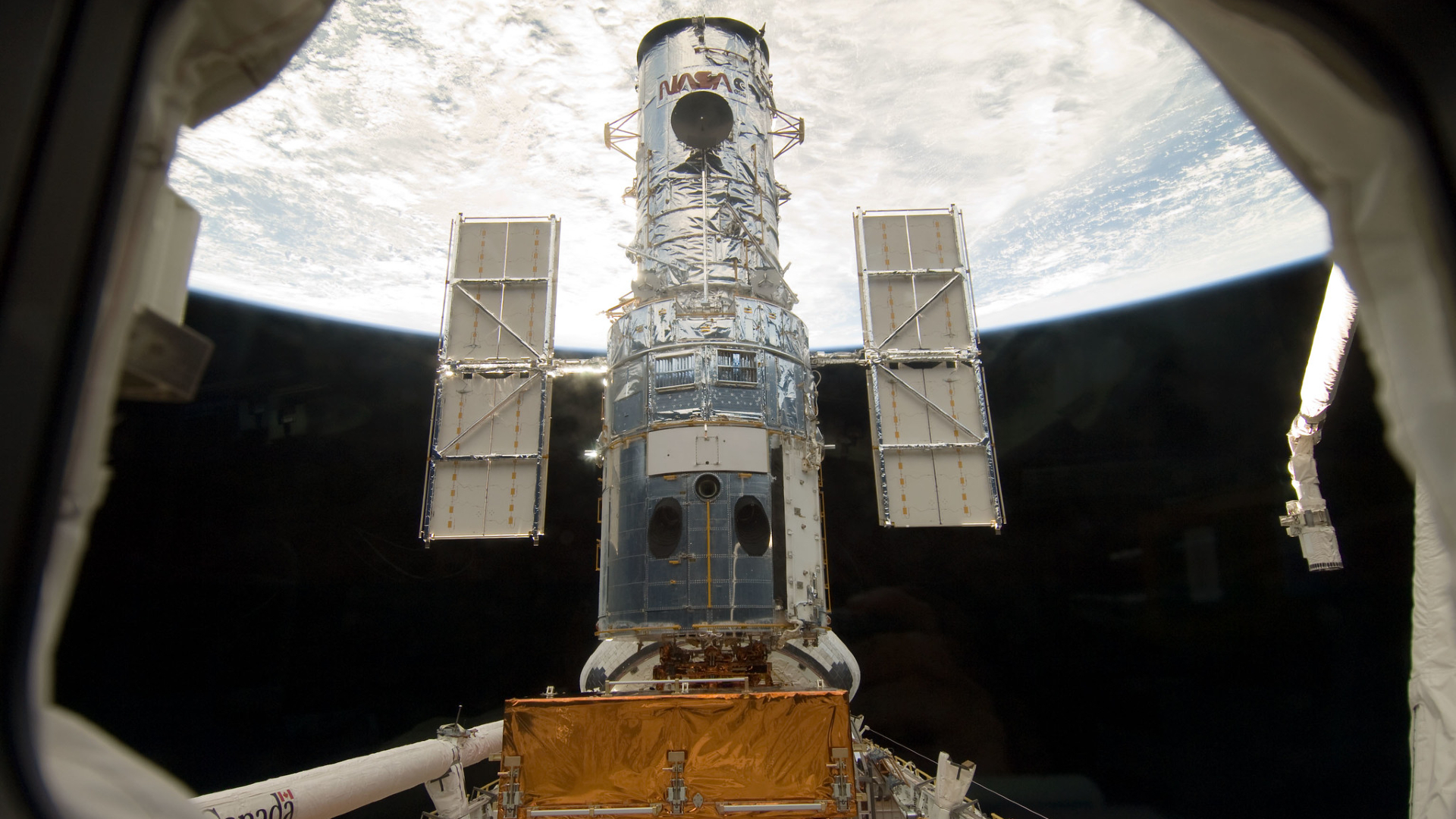
The Hubble Space Telescope stands tall in the cargo bay of the Space Shuttle Atlantis following its capture and lock-down in Earth orbit. (Image credit: NASA)
"This is the democratization of astronomy," said Smith, and it completes a transformation in astronomy over 250 years in the making. Back when the United States was being founded, astronomers were generally lone wolves, self-taught and self-motivated like William Herschel. Then, throughout the nineteenth century astronomy increasingly became the purview of wealthy men, and even moving into the twentieth century, astronomical discovery was confined to a small group.
"For example, in the early 20th century, the only people who had access to the Mount Wilson telescopes were the staff at the Mount Wilson Observatory, and if you were not on staff then you just couldn't use the largest telescopes in the world, so as an observational astronomer you would be at a disadvantage," said Smith.
While this began to change in the latter half of the twentieth century, with organizations such as the European Southern Observatory and the National Optical Astronomy Observatory (now NOIRLab) giving access to telescopes to a wider swathe of people, the Hubble Space Telescope has really spearheaded this democratization.
"People all over the world can use Hubble," said Smith. "It opens up so many possibilities for astronomical research, with thousands of people using it."
From well-heeled enthusiasts to businessmen looking for a legacy, astronomical research has now truly become accessible to people worldwide thanks to the largest telescopes in space and on Earth. Perhaps that is the ultimate achievement of the past 250 years of telescopes.
Engineers looking for safe water and recycled air for astronauts should look no further than nature, according to one team of researchers.
Oysters and other forms of "biogenerative" life support systems, which use living beings for food, water recycling and air regeneration, are under study at Pennsylvania's Harrisburg University with Monolith Space, a small company featured on the This Week in Space weekly podcast with Space.com's Tariq Malik and author Rod Pyle in March.
The shelled creatures aren't the only ones Harrisburg researchers are looking at: students and researchers are also examining algae, mollusks and even finfish. Hydroponics, or growing plants in water, is another approach. Monolith founder Jacob Scoccimerra, who is based in D.C., said the research is not only crucial for future astronaut living, but also unique among food projects in space. To the best of his knowledge, oysters have not yet flown in space, he told Space.com in an e-mail.
"There are no dedicated facilities on the ISS capable of studying this, currently, that being a dedicated aquarium-like facility with environmental control," he noted. The ISS previously did have an aquatic habitatuntil 2012, he said, but he described it as small (less than 3 liters or 0.8 gallons) and studying "primarily small finfish."
"Other aquatic organisms have been studied in a variety of non-specialized hardware," he said of space research more generally, but noted there is "no facility that is large enough to host organisms like oysters."
That's where a new prototype is coming in; Harrisburg and Monolith are together creating a closed-loop aquaculture system for marine organisms, which Scoccimerra said is roughly one-third of the way through NASA's technology readiness levels describing readiness for spaceflight.
Specific applications of the research for astronaut missions are still being determined, but the university described the system as an "automated, closed-loop aquaculture system to grow and study marine organisms that may be beneficial candidates for space nutrition and research." That said, the university also notes that oysters "provide natural water filtration", suggesting a possible use during long-duration missions.
Harrisburg's Rachel Fogle (an associate professor) and Glenn Williams (an instructor), provided guidance on the prototype, which uses oyster spat (baby oysters) and then helps the oysters grow into adulthood. The prototype was demonstrated publicly April 8.
"The project has essentially closed since we presented the results on campus," Scoccimerra said. "Since closure, the oyster habitat has been set up at Monolith's office in D.C., where the oysters are continuing to be fed and monitored."
Harrisburg University and Monolith LLC hosted a prototype demonstration of an oyster habitat on April 8, 2026. (Image credit: Harrisburg University/Monolith LLC)
NASA subject matter experts also gave insight on the system design, which will continue to be refined for the agency's payload interface requirements that govern ISS launch requirements, as well as those for newer commercial space stations when they are ready. (This does not guarantee a future space-station launch, but gives the oyster project more potential for that in the future.)
"Our pathway is to launch a smaller experiment first to ISS or similar platform, and then build from there," Scoccimerra said. "It is less a technical feasibility, and more of a need to study them. Historically aquatic biology has not been studied significantly in space compared to microbial, human, and plant biology."
The research is taking place as NASA pushes hard to return astronauts to the surface of the moon as a part of the agency's Artemis program, for a more permanent presence around the end of the decade. In January, the agency also identified "food and nutrition for Mars and sustained lunar" as one of the priority items in its civil space shortfall ranking, which targets areas for tech development.
While oysters in space appear to be a newer research opportunity, Harrisburg states that humans have been eating these creatures for 100,000 years, based on archaeology findings. An example from this era, using shellfish, has been found in South Africa, according to Archaeology Magazine.
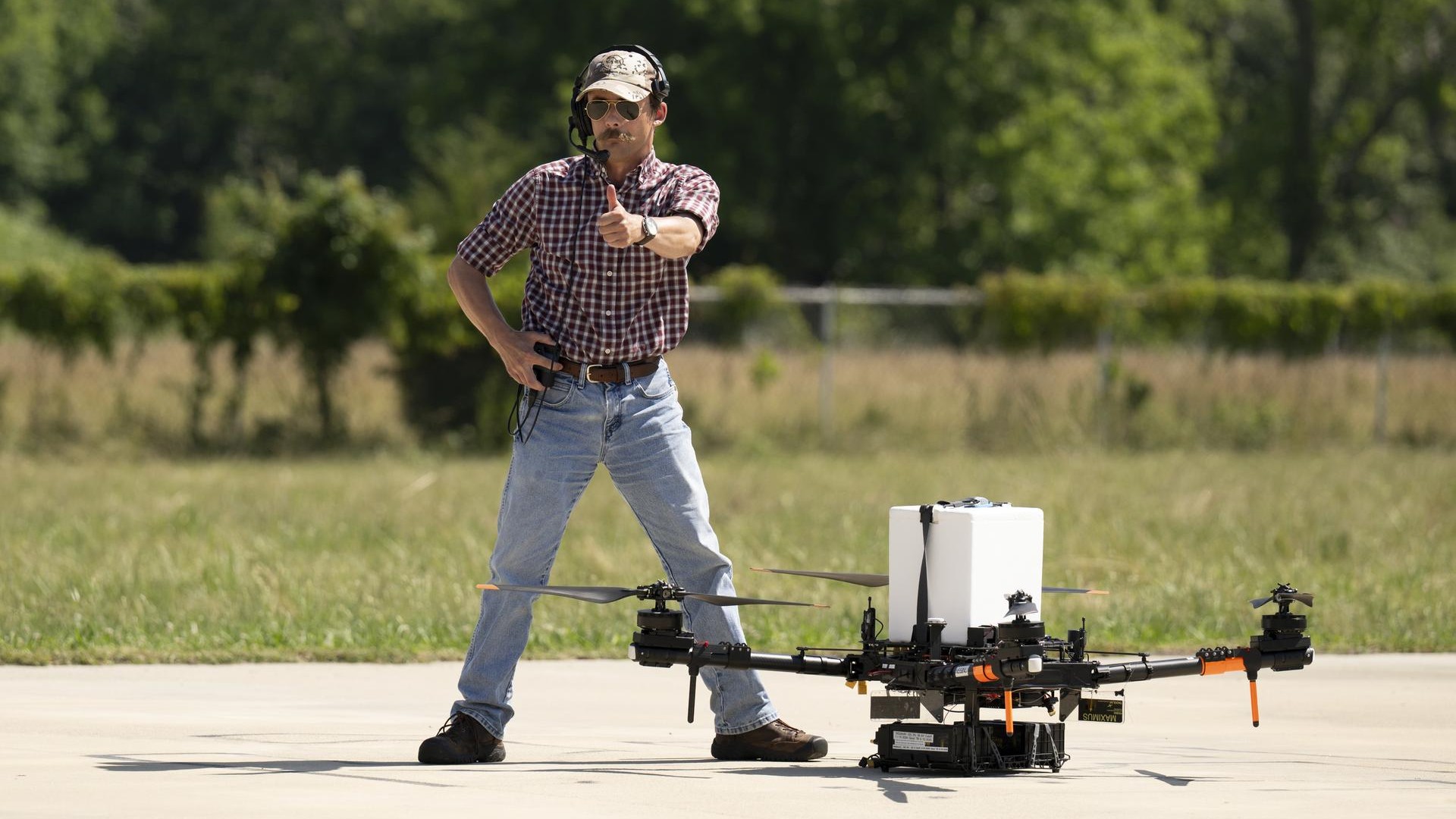
NASA is hoping to use drones to speed up organ delivery for transplant patients.
A flight test earlier this month at NASA's Langley Research Center in Virginia saw a drone pick up a kidney and fly it for the first time beyond "line of sight", or the distance from which a drone is visible by an operator. Keeping a line of sight on a drone is a typical requirement for flight safety, but NASA is developing tools that may allow these machines to fly further away from operators in populated environments more regularly.
The kidney on the June 5 flight test was not viable for organ transplantation, which is why the agency and partner United Network for Organ Sharing were able to use it, according to WTKR. If all goes to plan with future tests conducted with NASA Langley, however, UNOS aims to fly organ-bearing drones as far as 15 miles (24 km), in between hospitals for example, to allow for swift and safe delivery to waiting patients. The drone collaboration was created to "explore faster, more reliable ways to transport donor organs using advanced aviation technologies", according to space agency materials published in April.
Drones may have a better ability than larger aircraft to navigate ground logistics or maneuver in dense or hard-to-reach delivery areas. What's more, drones might be able to do so faster than aircraft, which is crucial: organs can only last so long during transportation.
The test used additional radios on the drones intended to allow pilots to keep an eye on the drones even while out of sight. "What that means, more or less, is we're going to have the pilot in command be about a mile away inside of a control room," Kyle Smalling, an aerospace engineer at NASA Langley, told WAVY.com.
NASA Langley partnered with UNOS, a non-profit organization that manages the U.S. organ transplant system, to conduct the first-of-its-kind organ transport drone test with a human kidney on June 5, 2026 at Langley Research Center in Hampton, Va. (Image credit: NASA/Ryan Hill)
Smalling added that this test met Federal Aviation Administration (FAA) requirements and took place on a NASA Langley flight range known as the City Environment Range Testing for Autonomous Integrated Navigation or CERTAIN, presumably for additional safety.
The flown kidney will eventually be assessed for "factors such as temperature stability and potential tissue damage caused by a lack of blood flow," NASA officials wrote in April about the June 5 flight test.
Beyond that, agency officials said they are hoping to explore "operational feasibility and scalability" for flying drones to patients as a "last-mile service" from a long-distance delivery, sort of in a similar way to how Amazon may be bringing packages to doors after initial shipment by truck.
"This is a chance to apply NASA Langley technology to a real-world problem that can save people's lives who are waiting for transplants," John Koelling, director of Langley's aeronautics research directorate, said in the statement.
"There's nothing more rewarding than seeing your technical work have a positive impact on people's lives."
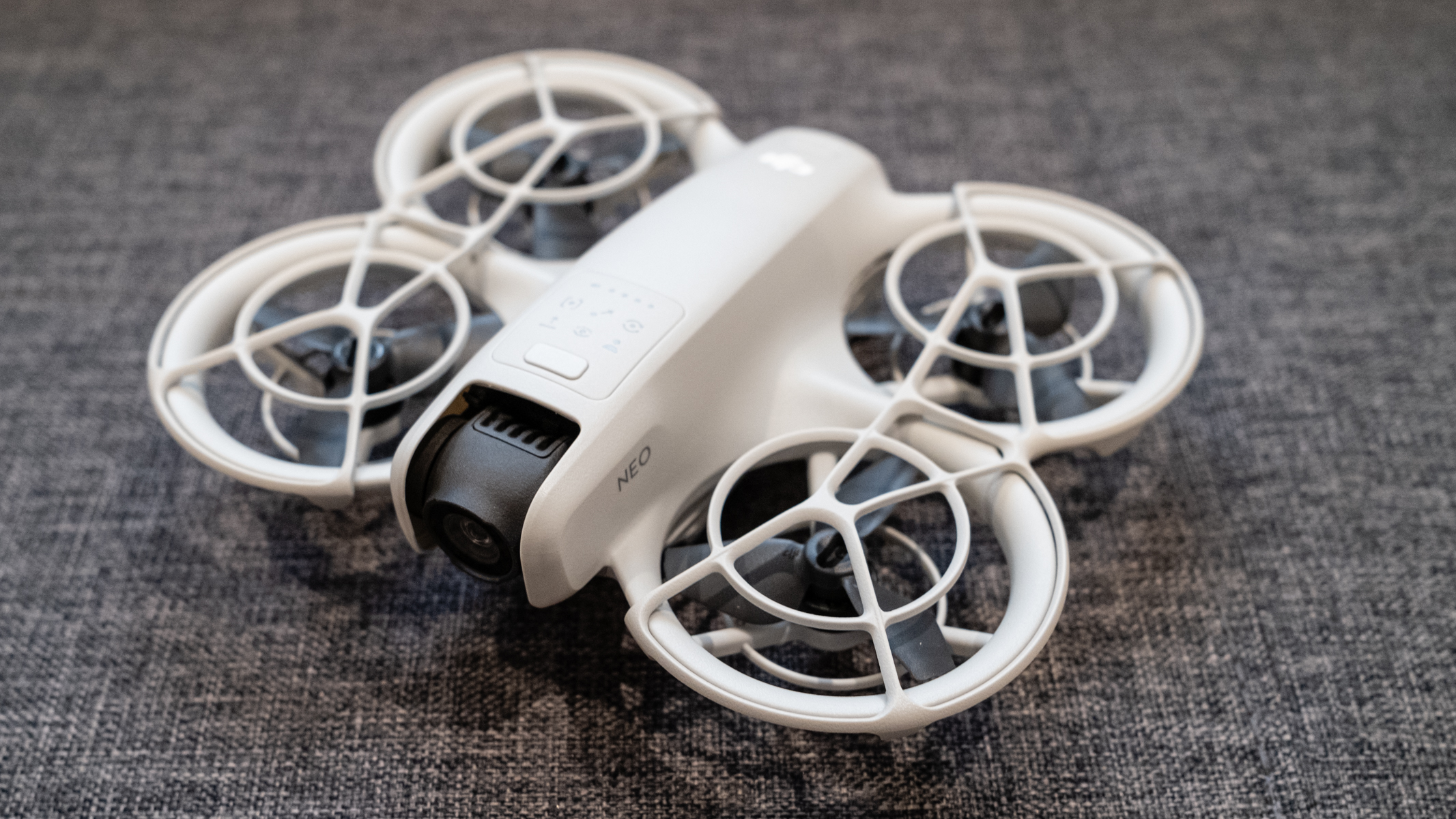
If you've been looking for a good time to take the leap into the drone world, the 30% discount on this sub-250 g beginner drone might be enough to tempt you.
Before the release of the DJI Neo 2, we ranked the DJI Neo as the best DJI drone for simplicity. Our drone expert, James Abbott, gave it four out of five stars in his hands-on DJI Neo review, noting that not only is it a lot of fun to operate, but it also makes drone flight as simple or as complicated as you would like, thanks to the multiple control options.
Because the DJI Neo is sub-250g, you don't have to worry about registering it under the current drone regulations. At this price, you can't go wrong, even if you're a seasoned drone pilot looking for a backup or just something that tracks you and your adventures autonomously.
Save $60 on this sub-250 g, beginner-friendly drone, which is super easy to use and can capture 4K video as it flies, either under your direct control (via the DJI app) or autonomously. View Deal
Check out our Amazon Prime Day hub, where we bring you the best deals of Prime Day 2026, including early Prime Day deals.
This DJI Neo is a superb entry-level drone, and is a pleasure to fly. James AbbottJames AbbottJames AbbottJames AbbottJames Abbott
For $140, you get nearly everything you need to get flying: a charger, a screwdriver and spare propellers.
You fly the drone using the DJI Fly app on your mobile phone, but, luckily for beginners (or anxious pilots), you don't worry about losing it. On top of its return-to-home capability, you can instruct it to fly in pre-programmed patterns or even track you autonomously as you go about your business for a fairly generous 18-minute flight time.
You can capture 4K video in 30FPS of your adventures, and a 12MP 1/2-inch sensor will capture snaps of whatever you see from above.
You will see from our best drone guide that DJI is one of the leading names in the drone industry.$139 from Amazon is a really good price considering its capabilities and overall ease of use.
This deal is still live for Amazon Prime Day 2026. Prime Day ends June 26, and we're not sure if this discount will last beyond that. We expect it to increase back to $170, if not to full price.
We have all the best deals on drones, technology, and skywatching gear in our Prime Day hub, which will be regularly updated by our deal-hunting experts through this evening.
Key features: Up to 18 minutes flight time, 4.76 oz / 135 g weight, video capture up to 4K 30FPS / FHD 60FPS, 117.6-degree FOV
Product launched: September 2024
Price history: $139 is the cheapest we have seen this drone for. before deopping to $139, it was on offer. Given that the Neo 2 is out now, when the DJI Neo is gone, it's gone.
Reviews consensus: In our DJI Neo review, our expert awarded it four stars, singling out its simplicity as a highlight. Its 4000+ Amazon reviews are even more positive, with purchasers praising its sheer ease of use, value for money and video quality.
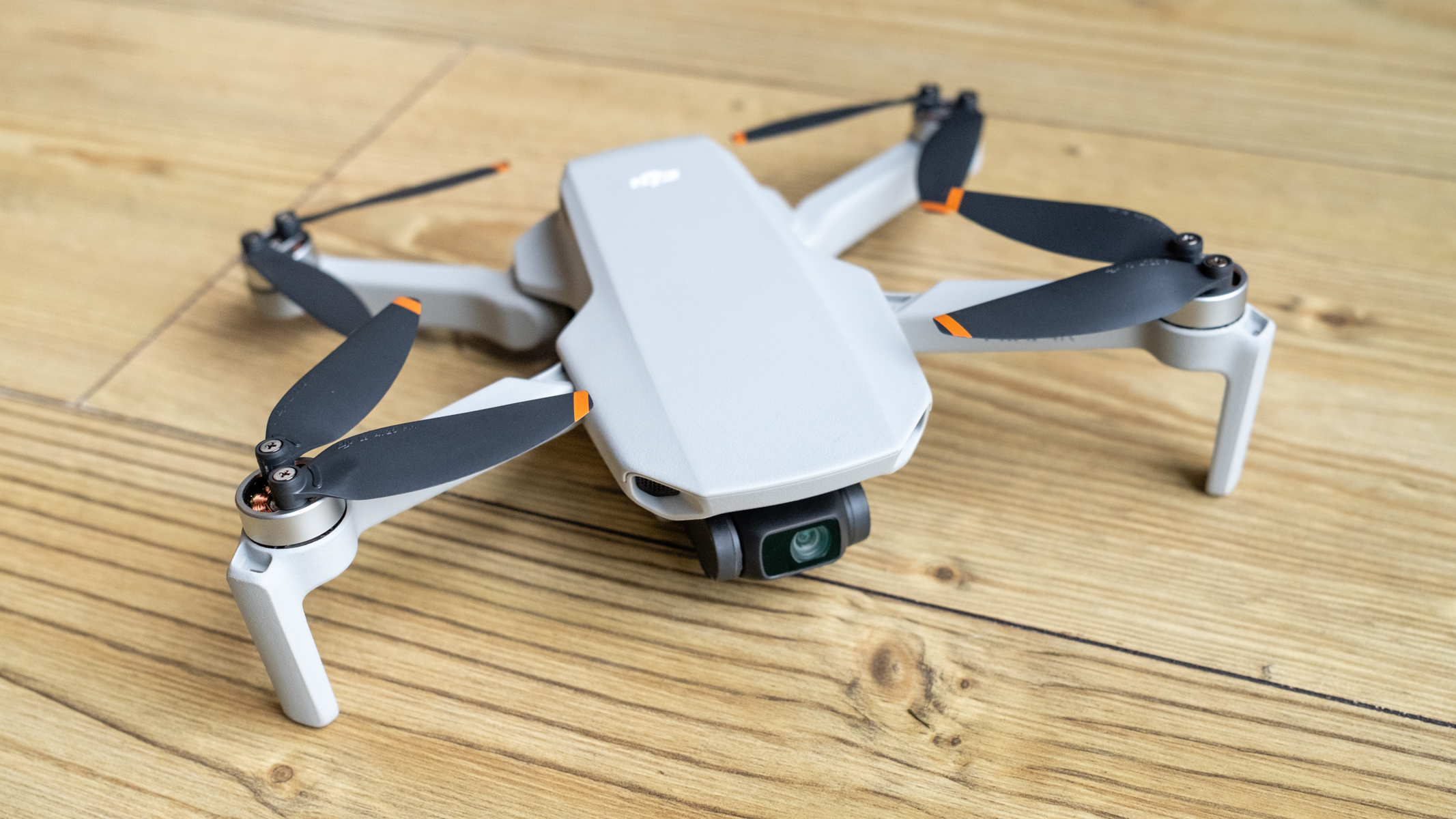
DJI and Amazon really are knocking it out of the park with their Prime Day Deals. The DJI Neo is superb value right now, but for just $256 you can net the superior DJI Mini 4K, which our expert said "Offers everything you could possibly need in a drone while providing ease of use and reliability."
DJI is one of the most trusted and acclaimed, drone manufacturers, and the DJI Mini 4K is another gem, appearing in our best drones, best beginner drones, and best camera drones guides. It's so beginner friendly, handling well in high winds, and captures 12MP photos in RAW and JPEG formats and 4K video in 30FPS. This bundle includes an additional battery and case, adding extra value to already great deal. There's also a Fly More Combo bundle which includes a three batteries and a battery charger.
Save $133 on this superb, lightweight drone, which is super easy to use and capable of capturing 4K as it flies, either under your direct control (via app) or independently. View Deal
Save $155 on this DJI Mini 4K bundle, which includes three batteries for 90 minutes of flight time, a case, and a charger to charge up the batteries you're not using. View Deal
Check out our Amazon Prime Day hub, where we bring you the best deals of Prime Day 2026, including early Prime Day deals.
Unfolded here for flight, the DJI Mini 4K can be easily packed away . James AbbottThe DJI Mini 4K won't take up much space when it's touched down. James AbbottThe RC-N1 controller doesn't have a screen but, instead, uses your mobile phone. James AbbottThe DJI Mini 4K in its more compact ,slumbering form. James AbbottAt a hair under 250g, you don't need to register your DJI Mini 4K drone. James Abbott
This DJI Mini 4K is an amazing deal if you're new to drone flying or are just looking for a hobby drone to complement a top-tier model. In his review of the DJI Mini 4K, expert James Abbott awarded it a fantastic five stars, praising virtually every aspect of this drone.
With a 1/2.3-inch 12MP CMOS sensor and support for 4K/30fps (or 60fps at 1080p) video capture, you'll get brilliant birds-eye views of the world, and you can even use pre-programmed flight patterns for hands-free video capture.
Of course, you can also assume direct control and, by clipping your phone to the included remote, you'll see exactly what the drone sees. While there is no collision avoidance or follow-me subject tracking, it handles wind well and its return to home feature means it won't just plummet to earth when its battery gets low.
With two batteries included, you can fly for up to an hour and you also get a case for extra portability. This drone punches above its price tag at full price, but at $256, this is an unmissable deal.
Key features: 8.7 oz / 249 g weight, 7 x 5.55 x 5.47 inches / 178 x 141 x 139 mm size unfolded, 62 min flight time total (2 batteries), video up to 4K at 30FPS, photos up to 48MP
Product launched: April 2024
Price history: This is the absolute lowest we've seen this drone at, and with an extra battery included, it's a complete steal.
Reviews consensus:Reviewing the DJI Mini 4K, our expert gave it an amazing five stars, praising its performance, ease of use and value for money. He remarked that, for beginners, it "offers everything you could possibly need in a drone while providing ease of use and reliability." Its Amazon reviews are similarly effusive.
TechRadar: ★★★★½ | Space: ★★★★★| Digital Camera World: ★★★★★
Looking for a superb Prime Day Deal? This DJI Neo drone was a good deal at $30 off, but now you can now save $60 on this beginner-friendly drone. That's double the discount!
It's easy to transport and, thanks to its sub-250g, you don't have to worry about registering it under the current drone regulations.
In our DJI Neo review, our expert James Abbott awarded it four stars, calling it "incredibly easy to use and fun." And, prior to the release of the DJI Neo 2, we ranked it as the best DJI drone for simplicity. At this price, you can't go wrong!
Save $60 on this superb, lightweight drone, which is super easy to use and capable of capturing 4K as it flies, either under your direct control (via app) or independently. View Deal
Check out our Amazon Prime Day hub, where we bring you the best deals of Prime Day 2026, including early Prime Day deals.
This DJI Neo is an excellent entry-level drone, and is a joy to fly. James AbbottJames AbbottJames AbbottJames AbbottJames Abbott
If you're a beginner, you'll be in high-flying heaven with the DJI Neo. For $170, you get nearly everything you need to get flying: a charger, a screwdriver and spare propellers.
You fly it via the DJI Fly app on your mobile phone, though you don't have to be super-attentive for fear of losing it; aside from its return to home facility, you can instruct it to fly in patterns or even track you (not as sinister as it sounds, I promise).
With an 18-minute flight time, it can capture 4K video in 30PS and a 12MP 1/2-inch sensor will capture snaps of whatever you see from above.
DJI is one of the leading names in the drone industry, and its products appear regularly in our best drone guide. At $169 from Amazon, this drone is a steal considering its capabilities and overall ease of use. This deal is already live ahead of Amazon Prime Day 2026, which starts tomorrow and runs until June 26. We have all the best deals across drones, technology and skywatching gear on our Prime Day hub, so stay tuned there for low prices.
Key features: Up to 18 minutes flight time, 4.76 oz / 135 g weight, video capture up to 4K 30FPS / FHD 60FPS, 117.6-degree FOV
Product launched: Sept 2024
Price history: We saw the DJI Neo drop to $159, but this is still an excellent deal. And, given the Neo 2 is out, when it's gone, it's gone.
Reviews consensus: In our DJI Neo review, our expert awarded it four stars, singling out its ease of use as a major plus. Its Amazon reviews are even more positive, with purchasers praising its sheer value.