SpaceX rocket’s moon crash highlights ‘a tangible operational risk’ of lunar settlement

The moon dust has settled after a 4.5-ton SpaceX rocket body slammed into terrain near Einstein Crater on Aug. 5.

That impact site was imaged by South Korea's moon-orbiting Danuri spacecraft, as well as by NASA's Lunar Reconnaissance Orbiter (LRO). Reportedly, a Chinese commercial space debris monitoring satellite tracked and recorded the 5,400-mph (8,690-kph) moon punch, too.

Wandering through space for over a year, the leftover Falcon 9 upper stage had sent Firefly Aerospace's Blue Ghost-1 lander on its way to the moon back on Jan. 15, 2025. Also sent moonward on that flight was the Hakuto-R Mission 2's Resilience, a robotic lunar lander developed by the Japanese company ispace. While the moon has reclaimed its serenity, the implications of the uncontrolled collision continue to reverberate.

Close encounter

Interestingly, there was also the prospect of a too-close-for-comfort conjunction of the Falcon 9 upper stage and Danuri.

"We noticed roughly late June that there is an incoming Falcon 9 upper stage toward the moon, and also knew that it would be close to Danuri," Eunhyeuk Kim, a senior researcher at the Korea Aerospace Research Institute (KARI), told Space.com.

There was a huge uncertainty in the predicted trajectory of the upper stage, Kim said, while the orbit information of South Korea's Danuri lunar orbiter was quite accurate. "Therefore, we could not neglect the probability of an incoming and close encounter."
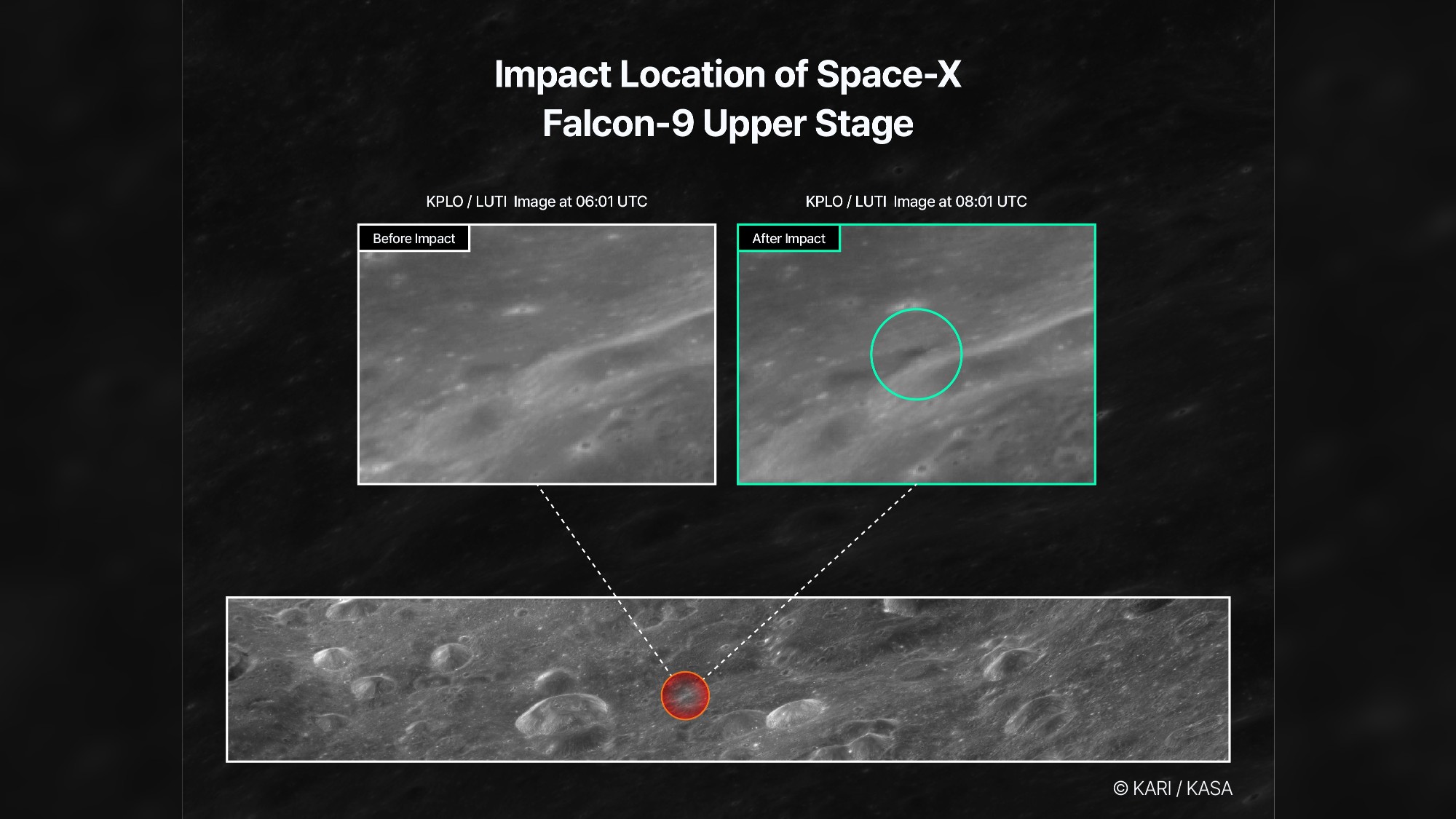
a photograph of a grey mottled surface on which a dark oval area is circled in white

Before-and-after imagery of the impact site. (Image credit: KARI)

Spacecraft maneuver

However, around mid July, the KARI/Danuri team performed a maneuver of the spacecraft in preparation of a near-total lunar eclipse on Aug. 28, said Kim. That eclipse will see 96% of the moon's visible surface passing through Earth's dark umbral shadow.

Kim said that the orbiter's maneuver brought a slight change in the phase of the spacecraft's orbit, which canceled the probable conjunction between the upper stage and Danuri.

At the time of the Aug. 5 impact, Danuri was flying over the moon's south pole area, far away from the hit zone, said Kim.
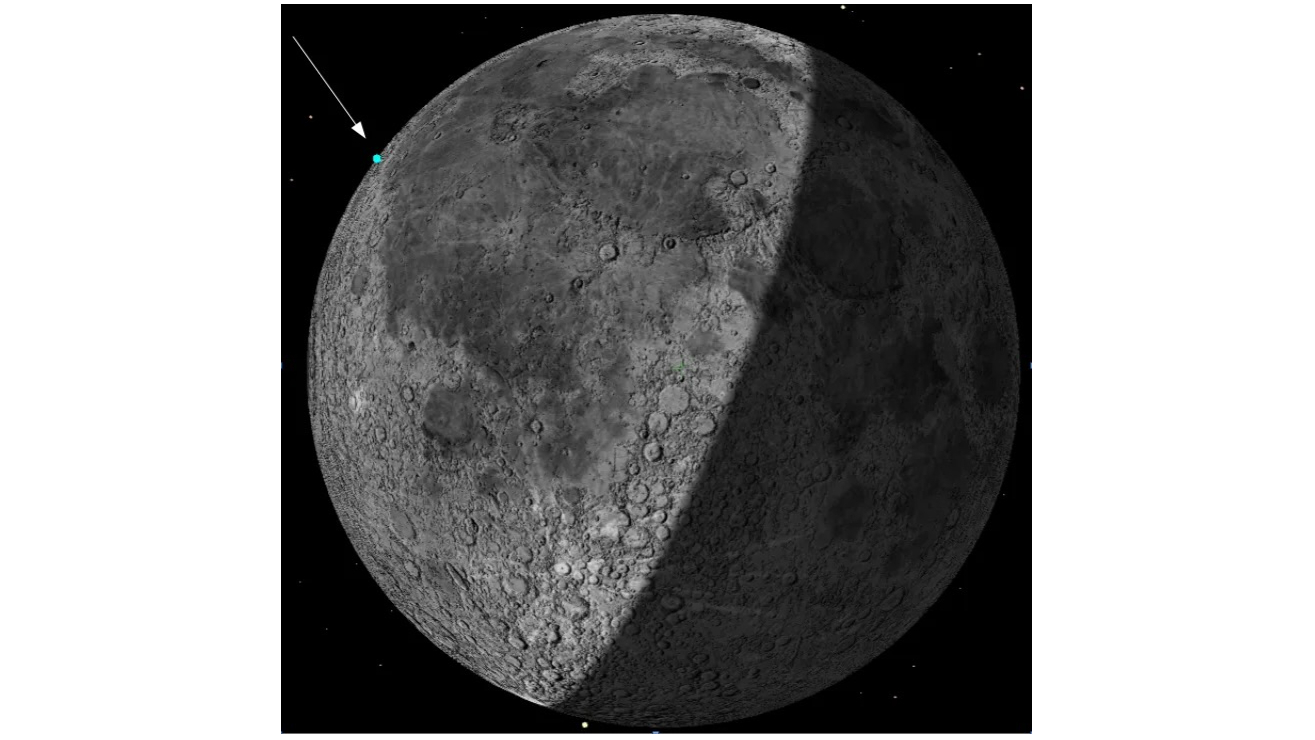
Illustration of the moon, with a white arrow pointing to a spot on its upper lefthand limb

Illustration of the moon, with an arrow pointing to the Falcon 9's upper stage impact site on Aug. 5, 2026. (Image credit: Bill Gray/Project Pluto)

High-speed ejecta

Dean Sladen is a quality manager and aerospace engineer in the United Kingdom for Accu Components, a high-precision manufacturing firm.

"As space agencies and private companies build out permanent lunar infrastructure, uncontrolled rocket stages evolve from a minor nuisance into a tangible operational risk," Sladen told Space.com. "A direct hit is the obvious worst-case scenario, but distant impacts also generate ground shocks and high-speed ejecta that can degrade sensitive equipment over time."

Sladen noted that lunar impacts have been a constant throughout history, with meteorites and comets bombarding the surface unhindered by an atmosphere. "Over the past 65 years, artificial objects have added a new dynamic to these events," he added.
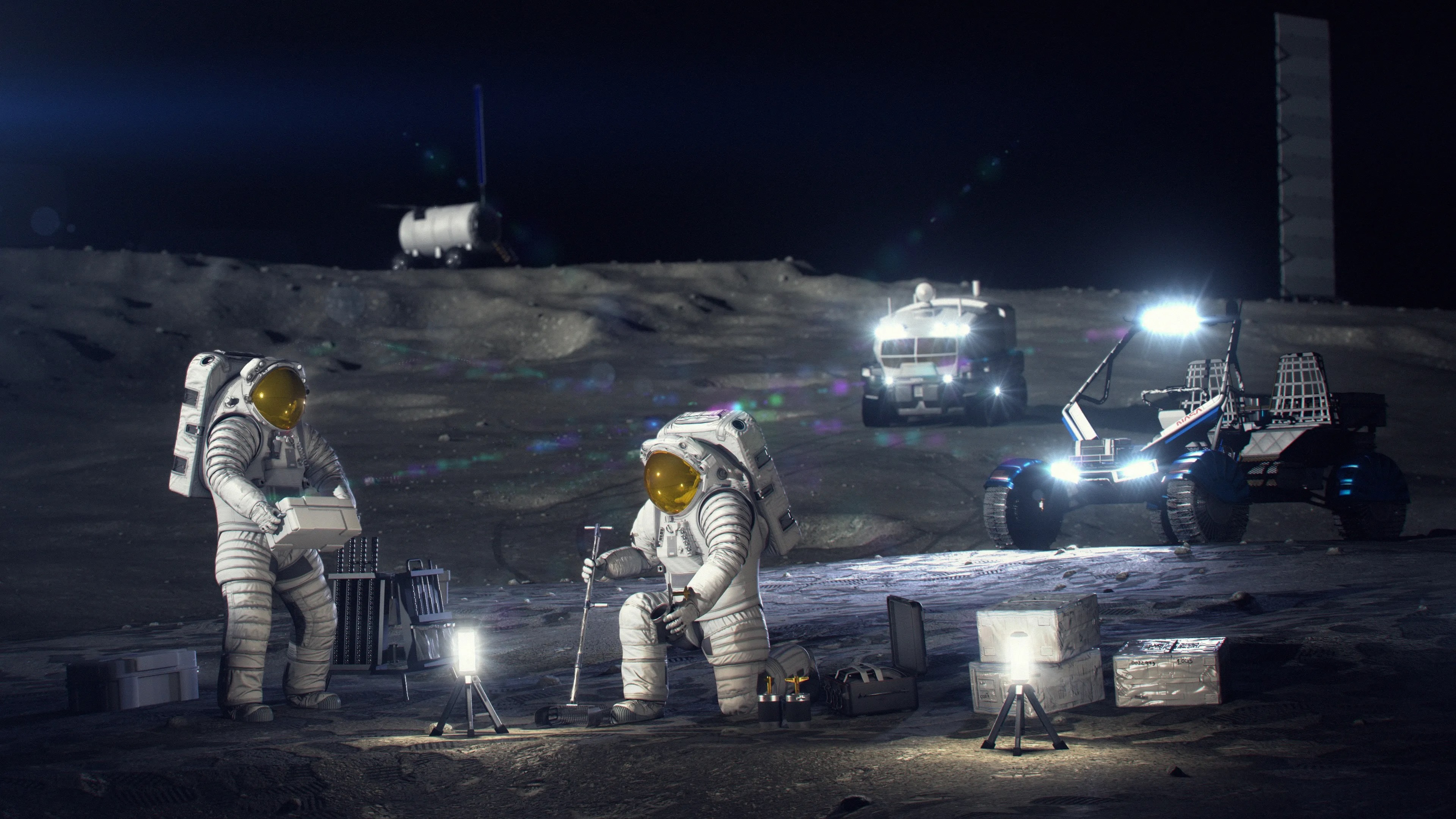
An artist’s concept of astronauts working on the lunar surface.

An artist’s concept of astronauts working on the lunar surface. (Image credit: NASA)

Genuine hazard

Even modest hardware impacts permanently alter the lunar landscape, said Sladen. Given the moon's lack of a substantial atmosphere, there is no air resistance to slow debris down. An impact therefore hurls high-speed ejecta (fine regolith and rock fragments) across vast distances at bullet-like speeds.

"While this isn't a major threat to isolated missions today, as we establish permanent lunar infrastructure, high-velocity ejecta poses a genuine hazard to surface habitats, solar arrays and working astronauts," Sladen said.

To mitigate this issue, Sladen suggested that the industry will likely need designated impact zones or strictly controlled, targeted de-orbit protocols to ensure that spent hardware lands far from active installations.

"That said, human-made debris is only half the equation," Sladen continued. "Natural meteorites remain an ongoing background threat, and, while massive natural strikes are rare, they hit at significantly higher speeds and carry far more energy," Sladen said. "Controlling our own hardware is simply the part of the risk profile we actually have the power to manage."

Plume detections

In the meantime, while the Falcon 9 impact was tough to see from Earth, several observations from our planet reported the detection of sodium and lithium gas above the crash site.

The European Southern Observatory's (ESO) Very Large Telescope (VLT) in Chile, for example, saw the aftermath of the impact. The ESO reported that a chemical fingerprint of the impact was visible for five to 10 minutes, with an enormous plume of lunar material stirred up due to the hard-hitting hardware.

"I'm happy that ESO recorded some evidence of it through VLT, and Danuri has found the exact impact location," said William Jo, a graduate research assistant at the University of Texas, Austin who performed some pre-strike computer simulations.

"What we've learned so far is that the plume was too faint to see against the bright lunar surface, and only a large observatory telescope could pick some parts of it out against the dark sky, which is exactly what happened," Jo told Space.com. "The plume must have shot out high," he said, "and I'd like to know how high, or even whether we can replicate the signals."

Targets of opportunity

"Telescopes make the best spaceships," pointed out Elaina Hyde, director of the Allan I Carswell Observatory at York University in Canada. "We are always on the lookout for 'targets of opportunity' like this event."

Hyde organized a livestream event, training the observatory on the collision locale. They were unable to spot the impact, however.

"The lunar collision was not on our regular research program, but when it happened, we put it as a high-priority item to observe if the weather was clear," Hyde said. "Anything that happens quickly like this is often a target of opportunity, because you do not get a long time to plan the observation."

"However, since it was not visible from our location in Toronto, our 'null' or non detection can actually help to limit the estimates on how big the dust plume was and perhaps some of its properties," said Hyde.
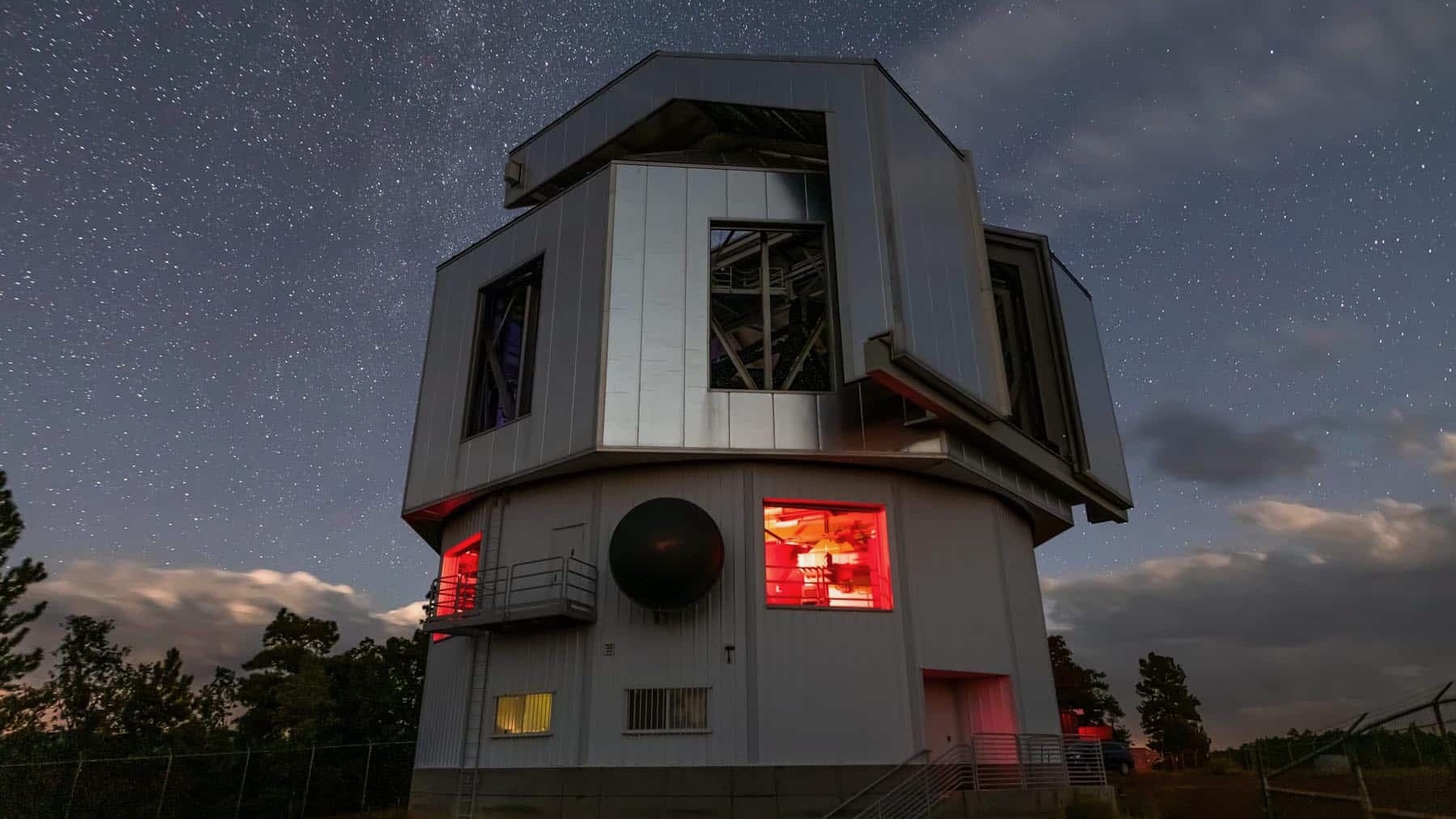
The Lowell Discovery Telescope (LDT) in Arizona.

(Image credit: Lowell Observatory)

Impact response

Also on the moon impact watch were observers using Lowell Observatory equipment in Arizona.

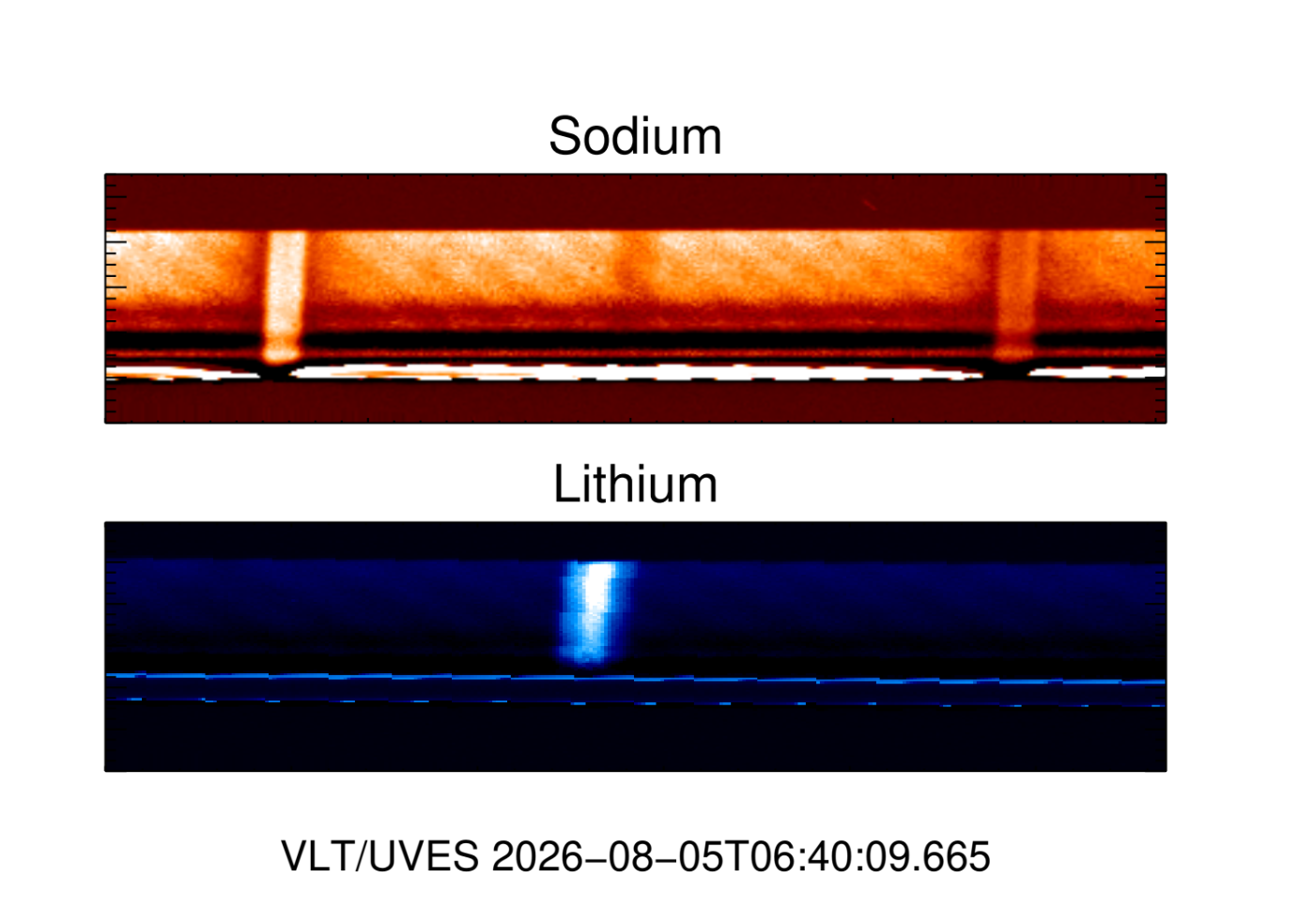
These researchers managed to measure a response from the rocket stage impact, spotting a sizable sodium and lithium gas plume that lasted between five and 10 minutes after impact, reported Carl Schmidt, an assistant research professor at Boston University's Center for Space Physics.

Observers at the 4.3-meter Lowell Discovery Telescope (LDT) in Happy Jack, Arizona used a long slit spectrograph to detect the plume. Graduate students from Boston University continue to analyze data gleaned from the moon wallop.

Bright lithium plume

"At LDT, we saw a bright lithium plume from the rocket body and fainter sodium [signature], likely from the surface itself," Patrick Lierle of Boston University told Space.com. "The bright lithium plume extends more than halfway up our field of view." The LDT results are also credited to Emma Lovett, a Boston University graduate student.

William Jo said he's looking forward to the release of observational data about the impact before he and colleagues can refine their lunar ejecta simulation model.

"That data, combined with our simulations, could tell us things like the composition of the lunar material, what orientation the impact hit at, and so on," Jo said.
SpaceX serious about building factories on the moon: ‘It’s going to happen,’ Elon Musk says

As usual, SpaceX is dreaming big.

The company plans to build factories on the moon, using robots to do much of the heavy lifting, Elon Musk said on Tuesday (Aug. 4) during SpaceX's first-ever quarterly earnings call.

"We are going to land a lot of tonnage on the moon," he said. "We're going to build the factories on the moon. The robots will be helpful with that."

This is not a newly revealed vision; Musk first laid it out in February, in a blog post that announced SpaceX's purchase of xAI, a company that the billionaire entrepreneur founded in 2023. But Musk doubled down on it this week, showing investors that off-Earth manufacturing is very much front-of-mind for SpaceX.

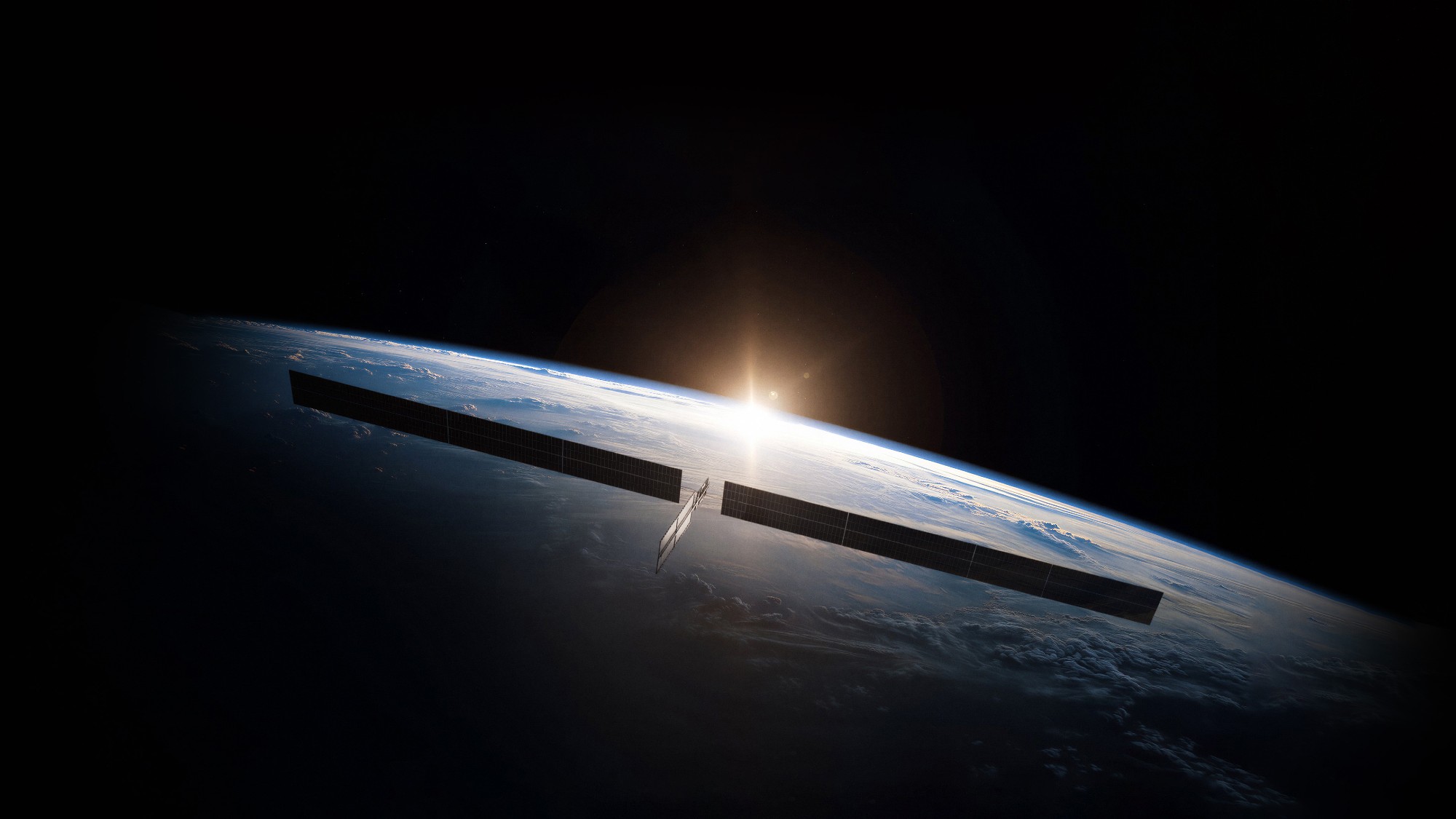
The factories in question will build SpaceX's Starmind AI satellites, if all goes according to plan. The company aims to operate a million-strong Starmind constellation in Earth orbit in the coming years, and then go farther afield with the craft after that.

Eventually, SpaceX wants to launch locally made Starmind satellites off the lunar surface using electromagnetic mass drivers — basically, extremely powerful rail guns.

"Using robots on the moon to scale up manufacturing on the moon — which, I know it sounds, like, super sci-fi right now, but it's going to happen — will enable us to build the mass accelerator on the moon," Musk said.

"And if you have a mass accelerator on the moon, and you have solar and radiator production on the moon, you can — I know this sounds totally nuts — but you can you can probably scale to 1,000 times the economy of Earth in terms of intelligence launched to space, but probably, you know, maybe even a million times," he added.

"Solar and radiator production" refers to the manufacture of key Starmind satellite components: solar panels to power them and radiators to dump the large amounts of heat they'll produce into the vacuum of space.

A rendering of one of SpaceX's planned

A rendering of one of SpaceX's planned "Starmind" AI satellites in orbit. (Image credit: SpaceX)

Musk didn't provide details about the robotic lunar labor force. But he's presumably counting on Optimus, a humanoid robot built by another one of his companies, the carmaker Tesla. Musk has previously said that SpaceX will launch some Optimus units to Mars in the near future, to help pave the way for human settlement of the Red Planet.

Those robots will fly on Starship, SpaceX's fully reusable next-gen megarocket, which is currently gearing up for its 14th test flight. Indeed, Starship is key to most of the company's plan's both in Earth orbit and beyond.

"Starship aims to quadruple payload capacity and reduce launch costs by 10 times compared to our Falcon 9 rocket, unlocking significant capabilities across all of our business segments," SpaceX Chief Financial Officer Bret Johnsen said during Tuesday's earnings call.

"We continue to make progress building the infrastructure required to support thousands of Starship launches per year, including accelerating Raptor and launch vehicle production, the buildout of our gigabays, and making significant progress towards activating multiple launch pads at Starbase and in Cape Canaveral at Pad 39A and Pad 37," he added. (Raptor is the engine that powers Starship, and Starbase is SpaceX's South Texas site, which serves as the current hub of Starship manufacturing, testing and launch activities.)

Tuesday's call was a landmark for SpaceX — its first as a publicly traded company. Musk founded SpaceX as a private concern in March 2022 and took it public this past June, via the richest IPO in history.

The IPO raised $86 billion and valued SpaceX at $1.77 trillion. Only six American companies had higher market capitalizations at the time — NVIDIA, Apple, Alphabet (Google), Microsoft, Amazon and the semiconductor manufacturer Broadcom. (Market caps fluctuate all the time, going up and down with companies' stock prices.)

The main point of Tuesday's call was to discuss SpaceX's first-ever earnings report, which covered the second quarter of this year. The company's revenue over that stretch was $7.8 billion, a 92% increase over the same period in 2025, according to the report. SpaceX lost more money than it made during Q2 2026, but the shortfall was considerably smaller than in Q2 2025 — $541 million versus $1.0 billion.

SpaceX rocket’s impact crater on the moon spied by Korean lunar orbiter (photos)

The final resting place of SpaceX's moon-smashing rocket has been found.

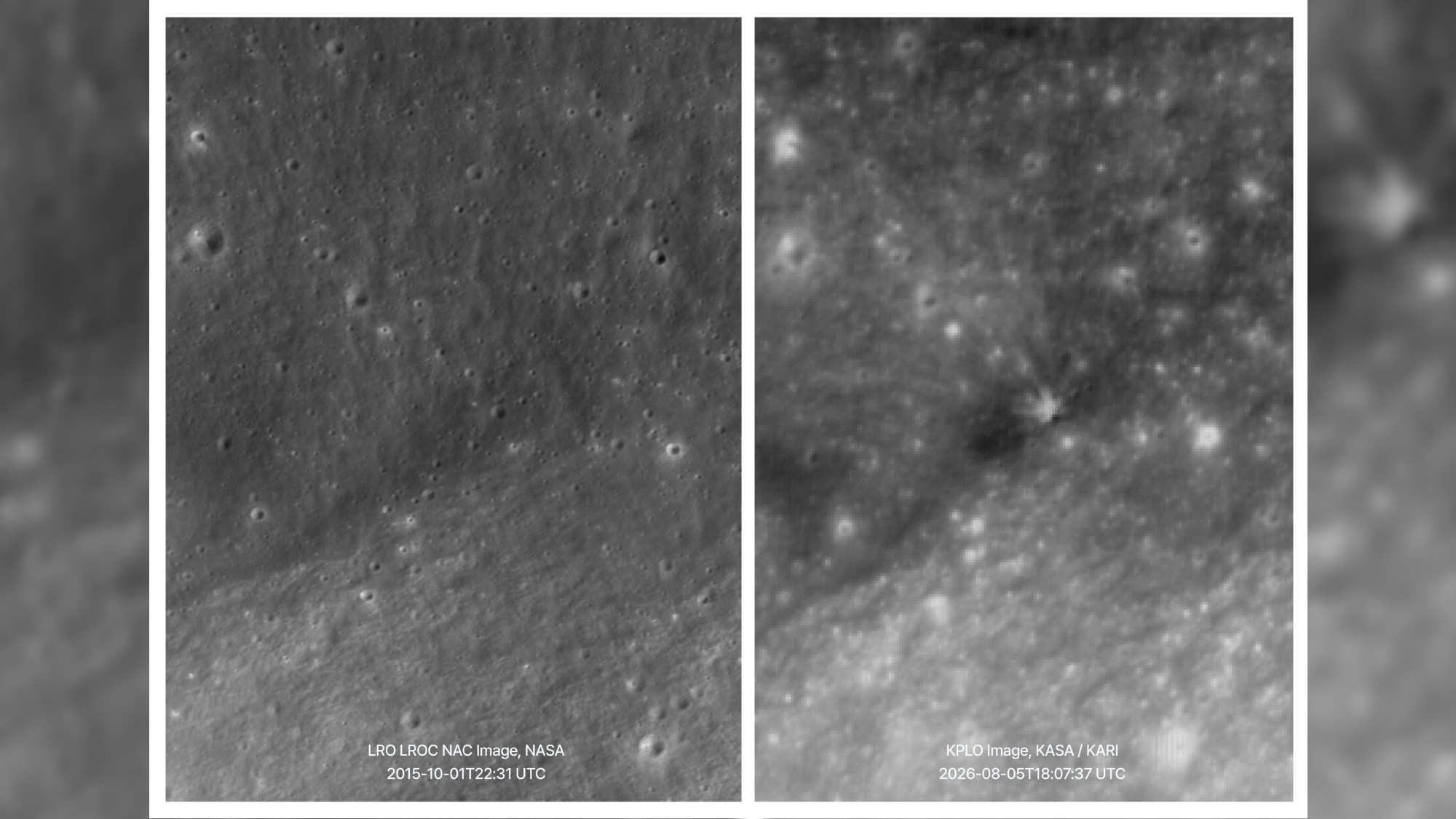
The Korea Pathfinder Lunar Orbiter, known as Danuri, has captured imagery of the crater blasted out by the Falcon 9 upper stage that slammed into the moon early on Wednesday morning (Aug. 5).

"Danuri began observations about 30 minutes before the collision and, through orbit control, passed over the impact site multiple times, conducting a total of 8 imaging sessions," officials with the Korea Aerospace Research Institute (KARI) said via X this morning (Aug. 6). "Through this observation, changes in the terrain around the impact site and traces of ejecta spread were confirmed."

"Danuri secured both pre-collision and immediate post-collision footage, enabling analysis of changes caused solely by the collision and providing important research data," they added in the X post, which shared several before-and-after images of the impact site.

a photograph of a grey mottled surface on which a dark oval area is circled in white

Before-and-after imagery of the impact site. (Image credit: KARI)

The Falcon 9 in question launched on Jan. 15, 2025, sending two private robotic moon landers — Firefly Aerospace's Blue Ghost and ispace's Resilience — to a high, moon-crossing Earth orbit. The duo then made their own way to the moon; Blue Ghost landed successfully on March 2 of that year, but Resilience crashed during its touchdown attempt.

The Falcon 9's first stage came back to Earth shortly after liftoff for recovery and reuse, as such boosters commonly do. Falcon 9 upper stages, by contrast, are expendable. SpaceX usually disposes of them in Earth's atmosphere, but the upper stage on the Blue Ghost-Resilience mission used almost all of its fuel getting its payloads to their distant destination. So the 8,800-pound (4,000 kilograms) rocket body remained up there, orbiting Earth — until solar activity and gravitational forces pushed it on a collision course for the moon.

a photograph of a grey mottled surface on which a dark oval area is circled in white

Another before-and-after image, with the "before" photo taken by NASA's Lunar Reconnaissance Orbiter back in 2015. (Image credit: KARI)

That collision occurred at 2:34 a.m. EDT (0634 GMT) on Wednesday, according to KARI officials — right in line with predictions. Scientists calculated some other parameters ahead of time as well. For example, the rocket body probably hit the moon at about 5,400 mph (8,690 kph), gouging out a crater up to 89 feet (27 meters) wide.

The new observations by Danuri, as well as future work by other lunar probes, will help verify such predictions.

"The observation data secured by Danuri will be linked with follow-up observations from NASA's Lunar Reconnaissance Orbiter (LRO) and utilized in international collaborative research," KARI officials said in the X post.

It may be that some ground-based telescopes caught the impact as well. Astronomers at the Instituto de Astrofísica de Andalucía in Spain believe they captured a video of ejected material blasting off of the lunar surface around the predicted time of impact:

The Falcon 9 upper stage wasn't the first rocket body to slam into the moon. The third stage of a Chinese Long March 3C crashed into the lunar surface on March 4, 2022, for example. And the third stage of NASA's Saturn V rocket gouged out craters during multiple Apollo moon missions.

Danuri is South Korea's first lunar probe. The spacecraft launched on Aug. 4, 2022 atop a Falcon 9 and began circling the moon four months later. It carries six payloads, five of them provided by Korean universities and research organizations. The sixth is a NASA instrument called ShadowCam, which hunts for signs of water ice in permanently shadowed regions at the lunar poles.

SpaceX’s Falcon 9 wasn’t the first rocket to crash into the moon. Here’s a rundown

A spent rocket body hitting the moon made headlines this week, but the reality is that the unplanned collision by a SpaceX upper stage was just the latest in a long history of human-made objects meeting their end by impacting the lunar surface.

Astronomers around the world kept their telescopes trained on the moon early Wednesday morning (Aug. 5), when the rocket stage from a January 2025 U.S. commercial lunar landing mission was calculated to strike the celestial body. Though the fate of the SpaceX Falcon 9 part was unintentional — solar activity and gravitational forces caused the stage to slam into the moon — the impact offered a rare opportunity to try to observe the flash from the impact and the plume of lunar material it sent flying.

By noon (EDT) on Wednesday, there were no confirmed reports of the impact being caught on film, but a telescope in Chile spotted the debris plume, according to the Associated Press.

"This rare occurrence has decades of history, going back to the Apollo era," wrote Jared Isaacman, NASA's administrator, in a post to his social media accounts. "The reality is that meteoroids strike the lunar surface hourly, with impacts comparable to this upper stage occurring roughly every six days."

Inventorying the impacts

The moon is peppered with the scattered metal remains of missions that missed their mark, came down too quickly or were purposefully sent careening into the regolith to learn more about the makeup of Earth's natural satellite.

In fact, the very first mission to successfully fly by the moon was intended to be an impactor. The former Soviet Union's Luna 1 probe was designed to hit the moon but instead zoomed past its target and entered orbit around the sun on Jan. 2, 1959.

Luna 2, launched nine months later, became humanity's first object to reach the lunar surface, purposefully slamming into Sinus Lunicus ("Bay of Lunik"), along the southeastern edge of Mare Imbrium, on Sept. 14, 1959.

The U.S. followed suit, though not as NASA intended, with the Ranger 4 probe impacting the far side of the moon on April 26, 1962. The mission had included an impactor, but both it and its lander failed to operate due to a failure to deploy the spacecraft's solar arrays.

Once humans began arriving on the moon with NASA's Apollo program, scientists found another reason to direct spent rocket and spacecraft stages into a collision course with the surface. Beginning with Apollo 11 in 1969 and concluding with Apollo 16 in 1972, seismometers were placed on the moon to measure natural "moonquakes" and the effects on the moon when the missions' Saturn SIV-B stages and Apollo lunar module descent stages made hard landings.

The data collected helped geologists learn more about the interior makeup of the moon, including that a rocky mantle exists under the outer crust.

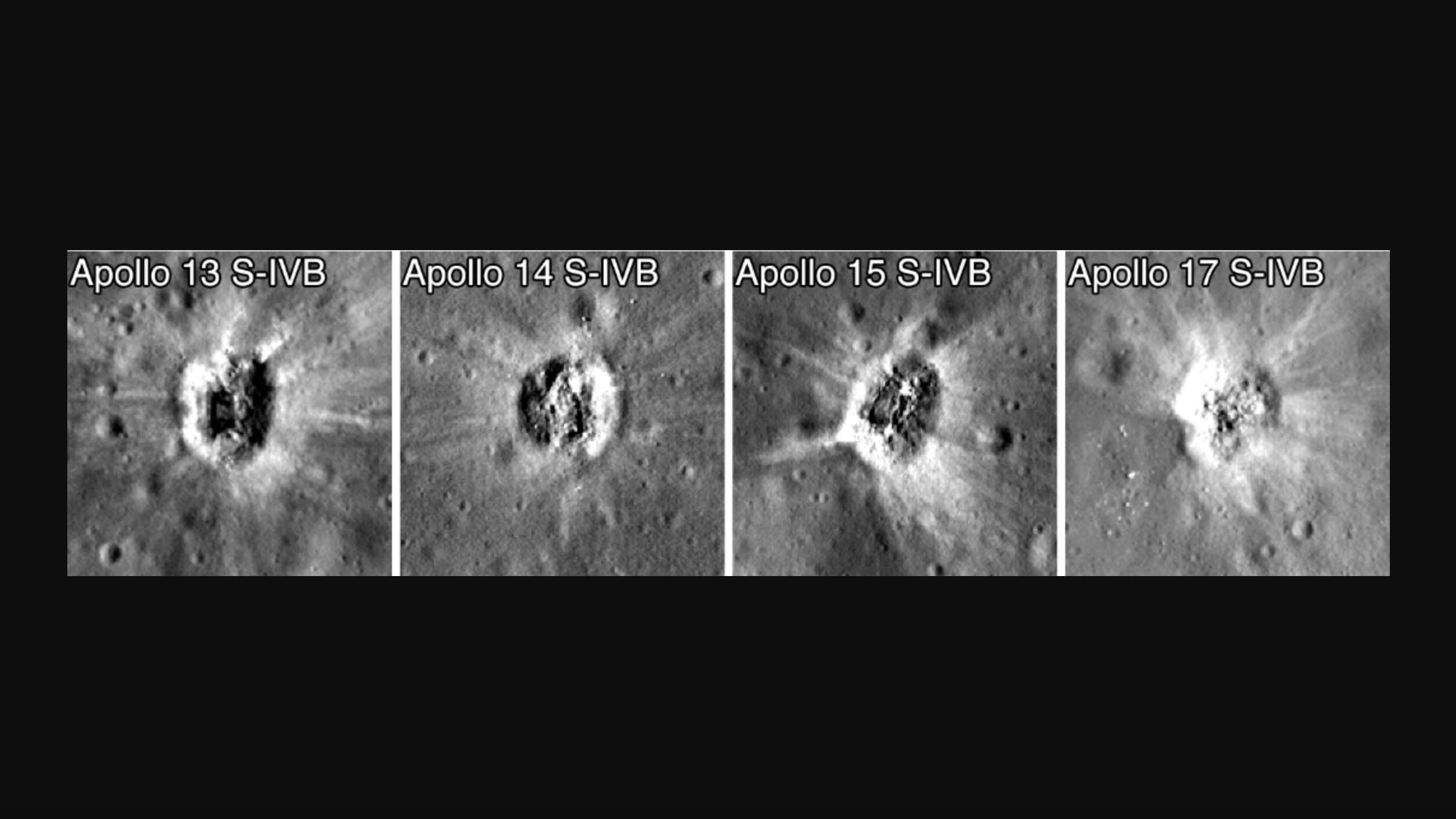
four side-by-side images of moon craters, seen from space by a lunar orbiter

These four images, captured by NASA's Lunar Reconnaissance Orbiter, show craters formed by impacts of Apollo SIV-B stages. Crater diameters range from 35 to 40 meters (38.2 to 43.7 yards) in the longest dimension. (Image credit: NASA/Goddard/Arizona State University)

After Apollo, planned impacts (and missions) slowed down, if not outright stopped, but the SpaceX collision on Wednesday was not the first in more than 50 years. Between 1993 and today, 11 probes — four from China, three from Japan, two from the U.S. and one each from India and the European Space Agency (ESA) — were intentionally deorbited at the end of the end of their missions around the moon.

Some of these impacts were performed to discard the craft, but others — like Lunar Prospector, LCROSS and Chandrayaan-1 — helped confirm the presence of water by examining the resulting plume.

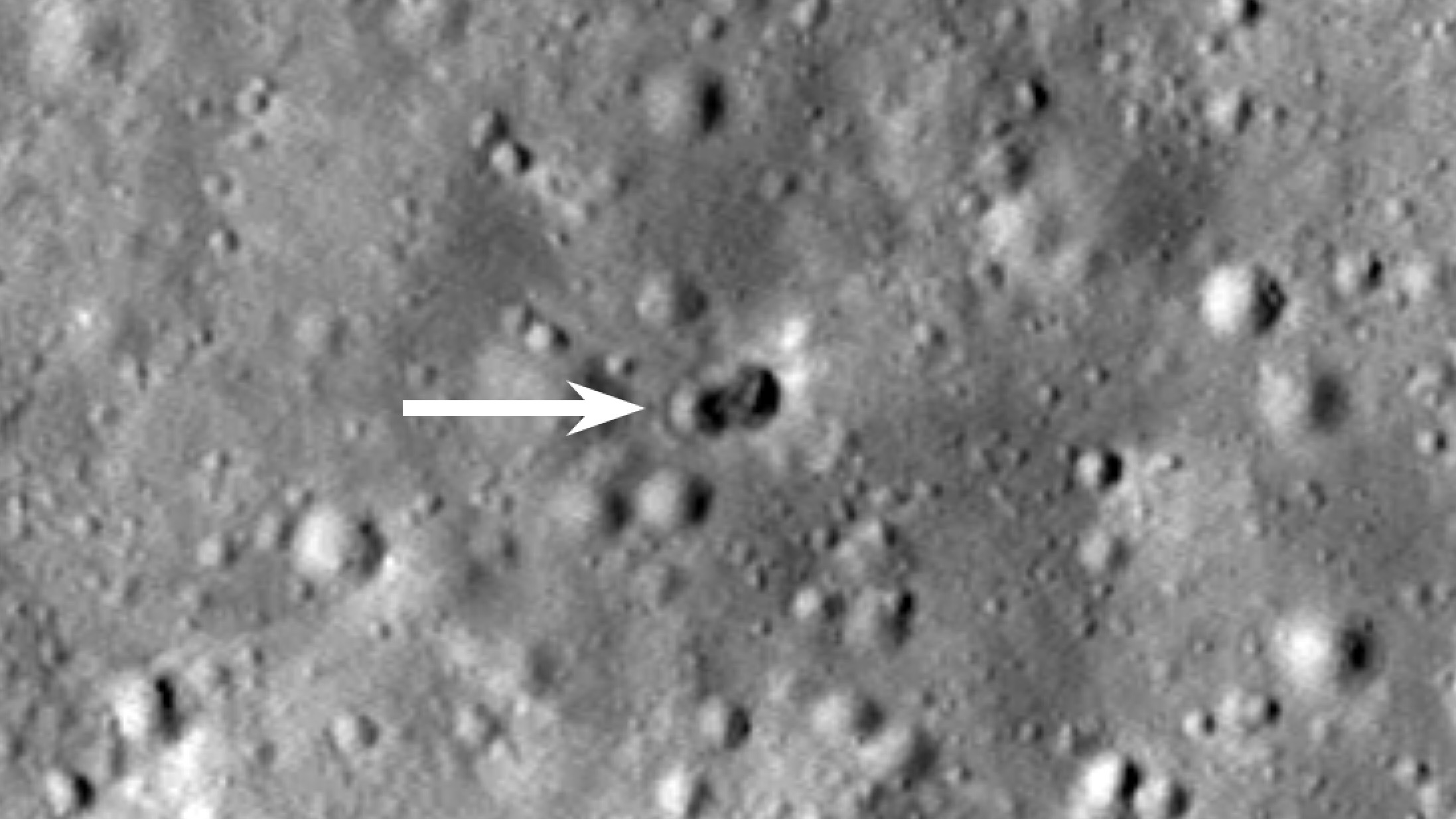
Unintentional collisions are fewer in number, as are rocket stages, but are not unprecedented. A rocket body that hit the moon's far side in March 2022, leaving behind a small double crater, was later identified as a Long March 3C rocket that launched China's Chang'e 5-T1 mission around the moon in 2014.

Litter versus liability

Without a large human population on the moon, the risk that these planned and unplanned impacts present at current is minimal. But the concern rises as NASA and other world space agencies, as well as commercial interests, begin to increase the pace on establishing their now-planned sustainable facilities for astronauts to live and work on the lunar surface.

"The future lunar base will incorporate reusable spacecraft that not only deliver astronauts and payloads, but also become part of the infrastructure itself," Isaacman said in his post, referring to how reuse can be a way to reduce the number of vehicles needed to be discarded of on the moon.

The Artemis Accords, an internationally agreed-upon set of standards led by NASA and currently signed onto by 70 countries, also includes a provision for its members that spacecraft and their associated rocket components must be disposed of safely.

A SpaceX rocket just crashed into the moon. Now, the race is on to get a look at the impact site

Early this morning, a SpaceX rocket slammed into the moon at seven times the speed of sound. Now, lunar orbiters are trying to get a look at the aftermath.

This morning (Aug. 5) at about 2:35 a.m. EDT (0635 GMT), the upper stage of a SpaceX Falcon 9 rocket crashed into the moon. To dissect what exactly happened, scientists are looking for imagery of the crash site, with the help of a couple of moon probes.

"NASA’s Lunar Reconnaissance Orbiter and NASA’s ShadowCam instrument on the Korea Pathfinder Lunar Orbiter will look for opportunities to capture before‑and‑after imagery of the impact site," NASA spokesperson Rob Garner, of NASA's Goddard Space Flight Center in Maryland, told Space.com. "Image availability depends on several factors, including the impact location, lighting conditions, and when each spacecraft’s orbit next carries it over the area, which may take a few days to receive any imagery."

While you've likely seen the first stages of Falcon 9 rockets gracefully land back on Earth for reuse, the rocket's 9,000-pound (4,000 kilograms) upper stage is disposable. Typically, it's sent to burn up in our atmosphere after its missions are over.

However, that wasn't possible with this rocket, which launched two private lunar landers — Firefly Aerospace's Blue Ghost and Tokyo-based ispace's Resilience — to a high, moon-crossing Earth orbit in January 2025. The Falcon 9 upper stage used most of its fuel getting to this distant location and couldn't make it back to deorbit in Earth's atmosphere.

So the company performed a different maneuver to take care of this upper stage, Julianna Scheiman, director of NASA science and Dragon programs at SpaceX, said during a press conference on Aug. 3.

"For high-energy missions, we need to perform a different maneuver to ensure the second stage itself is safe per the appropriate rules and regulations, and so we did that here," she said.

But the rocket body was still subject to natural forces, which acted on it over time.

"What has happened is, essentially, a mixture of solar activity and gravity forces have put it on a path towards the moon," Scheiman said.

The Falcon 9 upper stage ended up slamming into the moon this morning at about 5,400 mph (8,690 kph). It likely blasted out a crater up to 89 feet (27 meters) wide, according to scientists' calculations.

This was certainly not the original intended outcome for this rocket. But it presents an opportunity for researchers, who plan to take advantage of it to learn more about the moon.

"NASA’s Meteoroid Environments Office will attempt to image the impact around the predicted time using ground‑based telescopes at the agency's Marshall Space Flight Center in Huntsville [Alabama]," Garner added. "Because the impact flash and plume are expected to be faint, the chance of seeing anything from Earth remains low, and local weather can affect observations as well. Any data collected will help scientists better understand impacts from artificial objects and the potential effects on future lunar exploration."

Today's impact took place on the sunlit side of the moon, the brightness of which made observations difficult for skywatchers hoping to watch the crash from afar with telescopes. But the two lunar orbiters might be able to see not just the crash and impact crater but also the plume of dust kicked up by the rocket's death dive.

So far, observations from Earth have revealed some information. Scientists at the Lowell Observatory in Flagstaff, Arizona reported detections of a lunar plume from the impact.

"We can safely say that we measured a response from the rocket stage impact as a sodium and lithium gas plume a few 10’s of kilometers in size lasting between 5 and 10 minutes after impact," Carl Schmidt told Inside Outer Space's Leonard David.

Sodium and Lithium observations of lunar plumes from lunar impact by SpaceX rocket.

Detections by the Lowell Observatory in Flagstaff, Arizona, show evidence of a plume on the moon caused by the impact of a SpaceX rocket on Aug. 5, 2026. (Image credit: Carl Schmidt/Lowell Observatory)

Such images of the event would provide "an opportunity to test pipelines for measuring flash properties to locate impact events seismically, and to better understand the multi-modal hazards posed to future lunar infrastructure and astronauts from space debris impacting the moon," researchers led by Benjamin Fernando of Los Alamos National Laboratory in New Mexico wrote in a recent paper discussing the then-upcoming event.

So hold tight, as researchers are now eagerly collecting and analyzing the images captured by these orbiters, and we might get images of the rocket crash, the lunar plumes and remaining aftermath soon.

A 9,000-pound SpaceX rocket will crash into the moon tonight. Will you be able to see it?

A discarded SpaceX Falcon 9 upper stage is on a collision course with the moon, and skywatchers may be wondering whether they'll be able to witness the rare event firsthand when it slams into the lunar surface early Wednesday morning (Aug. 5).

The 45-foot-long (13.8-meter), 8,000-pound (4,000-kilogram) rocket stage, left over from the January 2025 launch of Firefly Aerospace's Blue Ghost and ispace's Hakuto-R lunar missions, is expected to strike the moon at about 2:35 a.m. EDT (0635 UTC) on Aug. 5. Traveling at roughly 5,400 mph (8,700 km/h), the impact will occur near the moon's western limb, close to Einstein Crater on the moon's Earth-facing side.

While the collision itself is unlikely to be visible from Earth, observers may have a chance to spot what's known as an ejecta plume rising above the lunar surface. Depending on the force of the impact, debris could be blasted high enough above the moon to stand out against the blackness of space, making it briefly visible to observers on Earth, according to Project Pluto. "Maybe we'll see the flash. Maybe we'll see rocks ejected from the crater. Maybe we'll even see both," astronomer Bill Gray, who first identified the rocket stage's eventual lunar collision, wrote on his Project Pluto website.

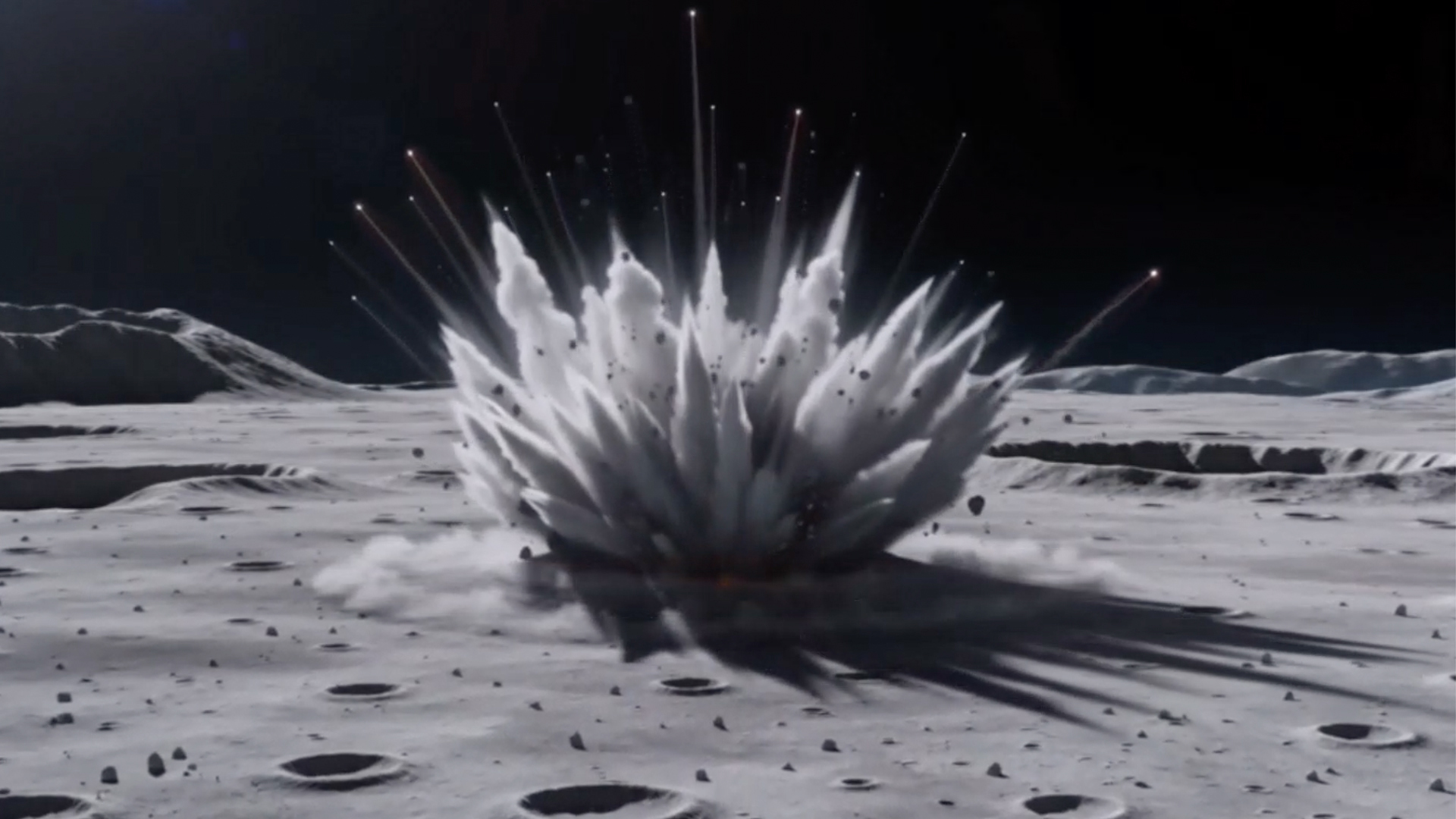
an impact on a grey, dusty surface kicks up a plume of dust and rocks into a black sky

A notional illustration of what a rocket stage impact on the moon might look like. Created by Tony Dunn (Orbitsimulator.com) using Seedance AI. (Image credit: Created by Tony Dunn (Orbitsimulator.com) using Seedance AI)

The rocket is expected to strike a sunlit portion of the moon near its edge as seen from Earth. Any flash from the impact itself is expected to be washed out by the bright lunar surface.

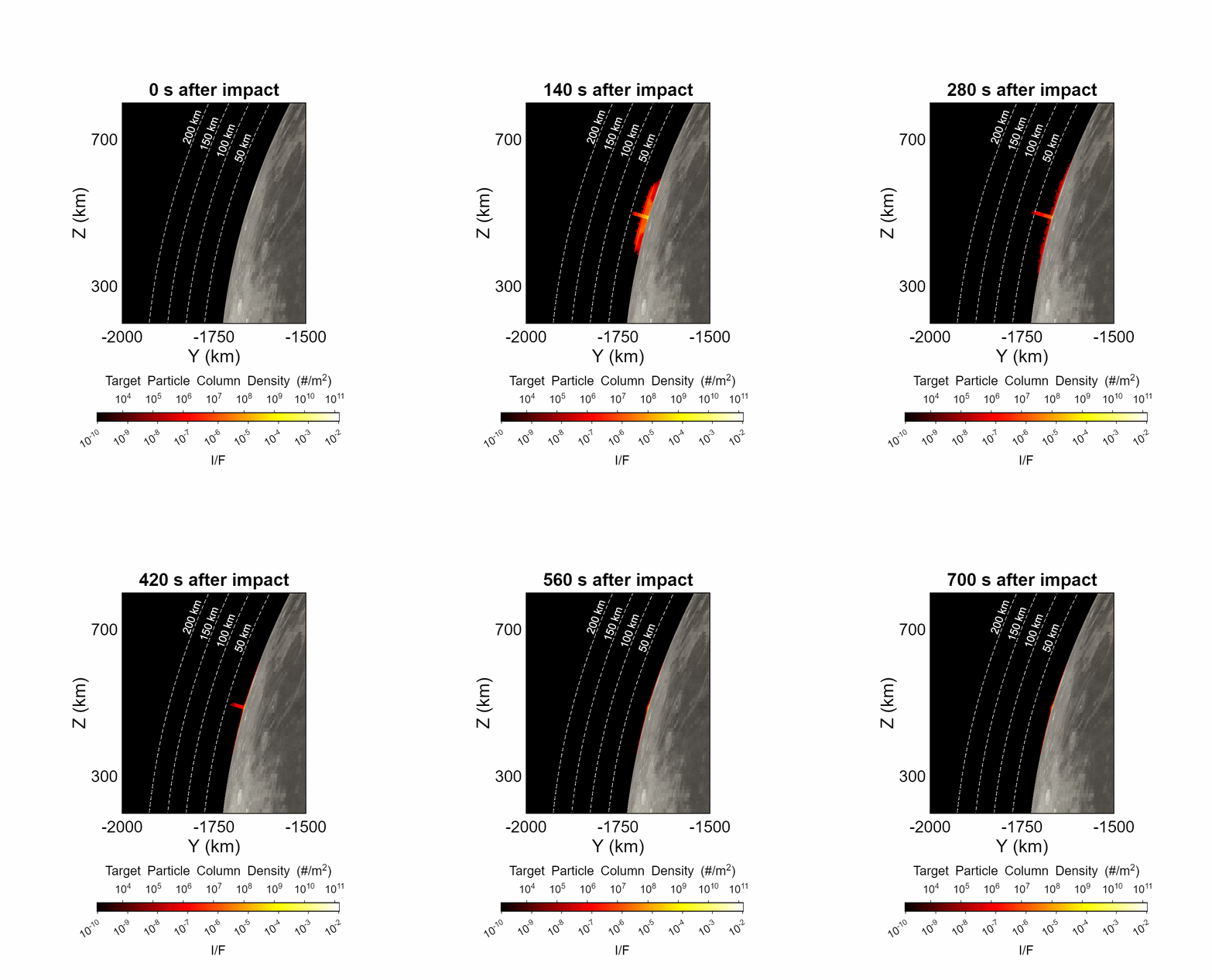
an animation showing a red plume expanding upward from a mottled grey surface

An animation predicting the evolution of the target ejecta column density, rendered on the lunar surface at the predicted impact site near Einstein crater by William Jo et al. (Image credit: William Jo/UT Austin)

However, material blasted high above the lunar horizon could briefly become visible against the darkness of space, creating a faint plume that advanced amateur astronomers may be able to capture with sufficiently large telescopes and cameras. Recent simulations suggest the central ejecta plume could climb as high as 60 miles (100 kilometers), though whether it will be detectable from Earth remains uncertain.

Even if conditions cooperate, viewing won't be ideal for much of North America. At the time of impact, the moon will sit only about 40 degrees above the southeastern horizon for observers along the U.S. East Coast, giving skywatchers a relatively low viewing angle before dawn. Observers in parts of South America may have more favorable viewing conditions, with the moon higher in the sky during the event, according to Project Pluto.

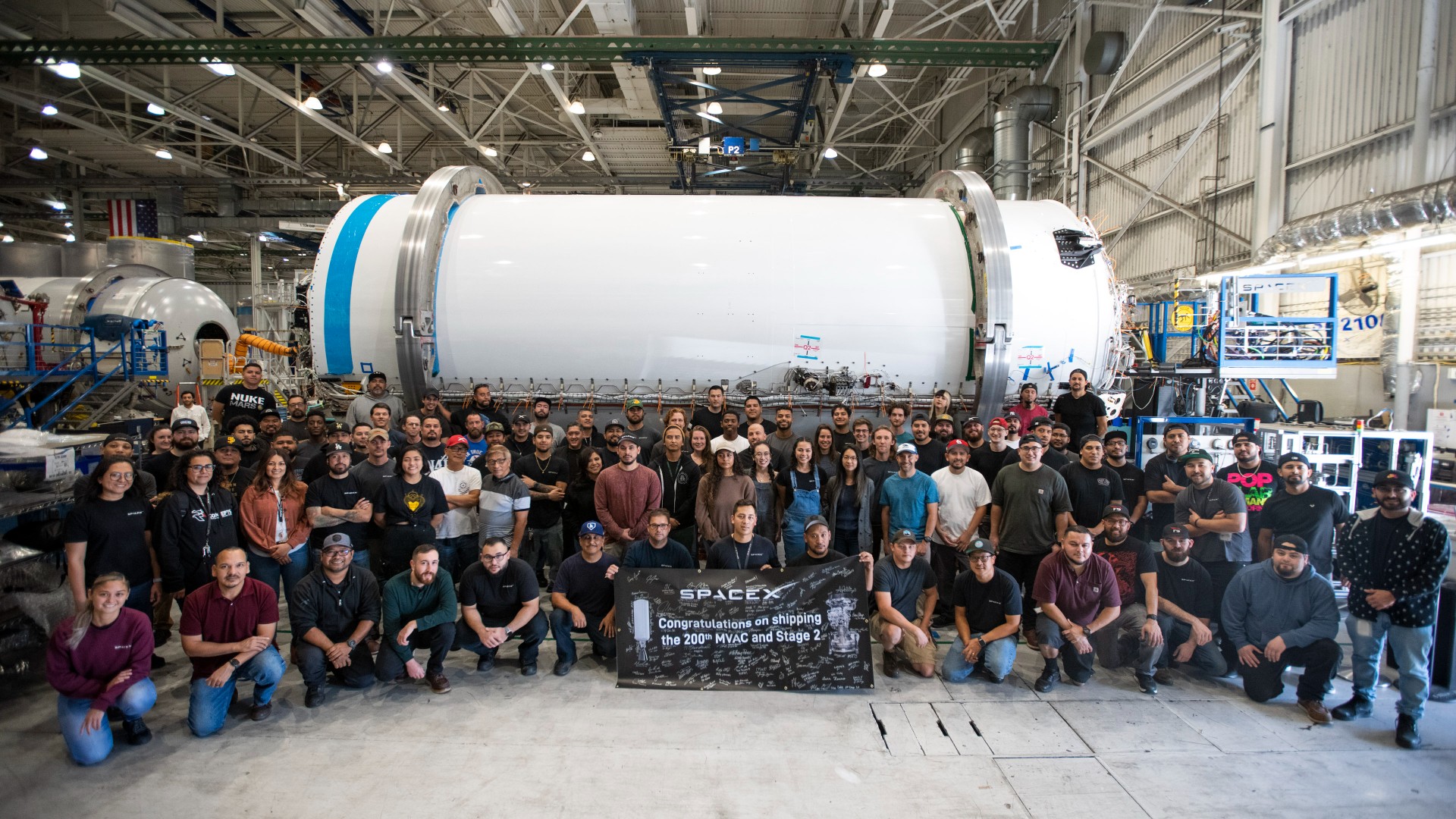
dozens of people smile for a portrait in front of a large white cylinder in a massive warehouse

A SpaceX photo of one of the company's Falcon 9 second stages, taken in 2022. A similar second stage is expected to impact the moon on Aug. 5, 2026. (Image credit: SpaceX)

Regardless of whether the impact can be seen from Earth, several spacecraft will be watching from much closer vantage points.

South Korea's Danuri lunar orbiter is expected to observe the impact in real time, offering a unique view from lunar orbit. Meanwhile, NASA's Lunar Reconnaissance Orbiter (LRO) will photograph the impact site before and after the collision, allowing researchers to measure the newly formed crater and compare it with other human-made impacts on the moon.

Whether or not the ejecta plume is spotted from Earth, researchers say the accidental crash represents a valuable scientific opportunity. Unlike natural meteoroids, the hollow aluminum rocket stage will strike the moon with well-known size, mass and velocity, giving scientists a rare chance to test models of how impacts excavate lunar material and create craters.

The observations could also help researchers better understand the hazards posed by space debris as both crewed and robotic missions to the moon become increasingly common, if all goes according to plan.

A SpaceX rocket will crash into the moon this week. Why is it on a collision course?

This rocket wasn't supposed to die so dramatically.

On Wednesday (Aug. 5) at about 2:35 a.m. EDT (0635 GMT), the upper stage of a SpaceX Falcon 9 rocket will slam into the moon, blasting out a crater about 89 feet (27 meters) wide.

The rocket body has been loitering lazily high above Earth for more than 18 months. What jolted it out of its unremarkable senescence and put it on a kamikaze course for the moon?

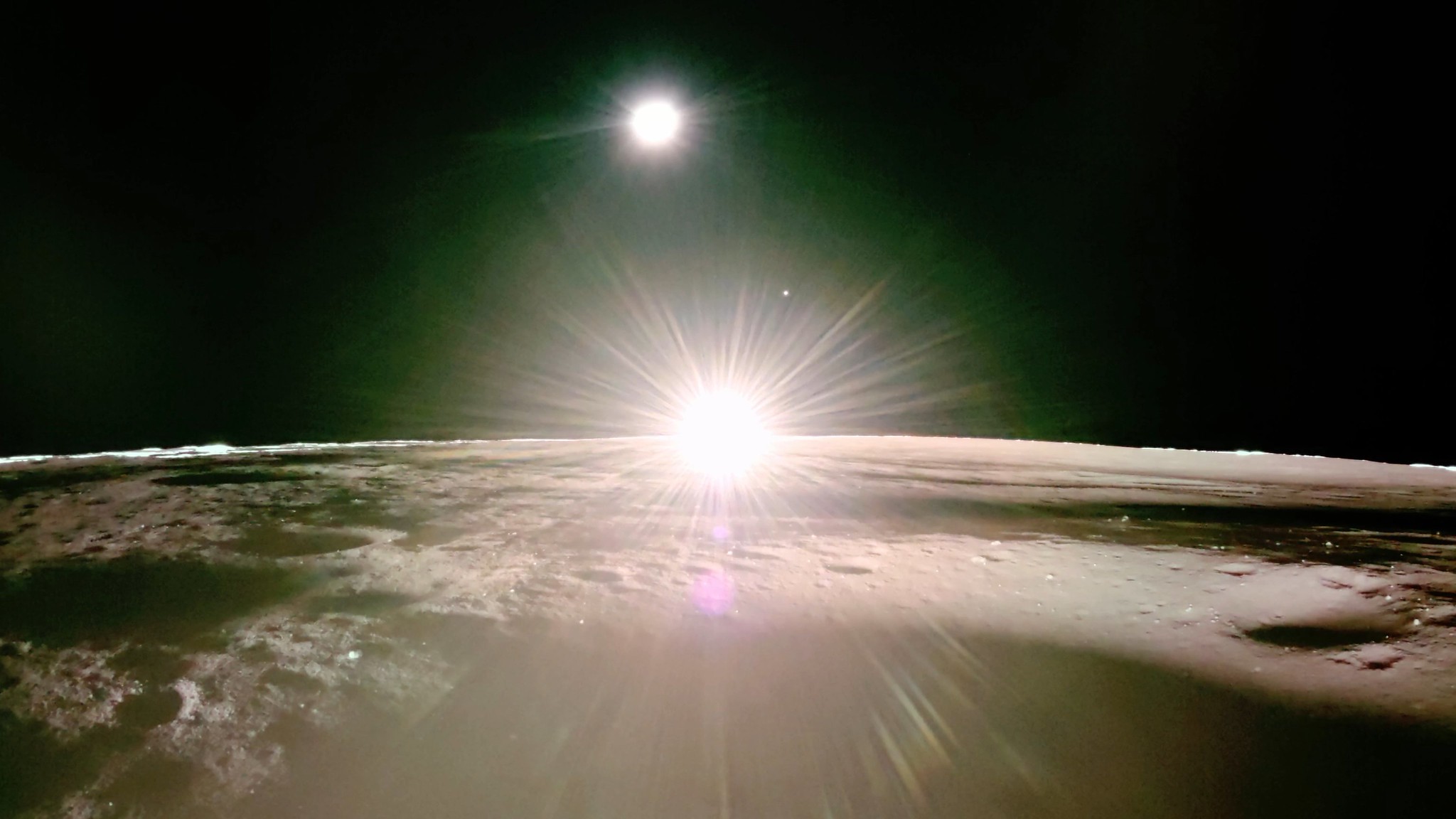
Firefly Aerospace's Blue Ghost moon lander captured this view of a lunar sunset, with Earth and Venus also visible, on March 16, 2025.

Firefly Aerospace's Blue Ghost moon lander captured this view of a lunar sunset, with Earth and Venus also visible, on March 16, 2025. (Image credit: Firefly Aerospace)

It didn't take much, as the rocket regularly crossed into the moon's neck of the woods.

The Falcon 9 launched in January 2025, carrying aloft two private robotic lunar landers — Firefly Aerospace's Blue Ghost and Resilience, which was built by the Tokyo-based company ispace. (Blue Ghost landed successfully and carried out its historic mission, but Resilience crashed during its touchdown attempt.)

Falcon 9 first stages are famously reusable, but the vehicle's upper stages fly just once. SpaceX usually deorbits these rocket bodies shortly after launch, guiding them back for controlled destruction in Earth's atmosphere. That wasn't possible on the Blue Ghost-Resilience launch, however, as getting the lunar probes to their distant deployment point used up almost all of the upper stage's fuel.

As a result, the 8,800-pound (4,000 kilograms) rocket body "was abandoned in a moon-crossing high-Earth orbit," according to a recent study about the coming impact led by Benjamin Fernando of Los Alamos National Laboratory in New Mexico.

dozens of people smile for a portrait in front of a large white cylinder in a massive warehouse

A SpaceX photo of one of the company's Falcon 9 upper stages, taken in 2022. A similar second stage is expected to impact the moon on Aug. 5, 2026. (Image credit: SpaceX)

SpaceX performed "a different maneuver [than deorbiting] to ensure that the second stage itself is safe per the appropriate rules and regulations," Julianna Scheiman, director of NASA science and Dragon programs at SpaceX, said today (Aug. 3) during a press conference discussing the company's Crew-13 astronaut launch to the International Space Station, which is targeted for Sept. 12.

That maneuver did not lock the hunk of space junk into a stable location, however; natural forces still acted upon it and, it turns out, changed its trajectory.

"What has happened is, essentially, a mixture of solar activity and gravity forces have put it on a path towards the moon," Scheiman said.

Astronomers and lunar scientists are looking forward to the upcoming impact, even though it will occur on the sunlit side of the moon and therefore likely won't be visible to most observers here on Earth (though skywatchers with good telescopes might be able to catch a glimpse of the resulting ejecta plume).

The event "provides an opportunity to test pipelines for measuring flash properties to locate impact events seismically, and to better understand the multi-modal hazards posed to future lunar infrastructure and astronauts from space debris impacting the moon," Fernando and his colleagues wrote in their paper.

Those hazards won't be purely hypothetical for much longer, if all goes to plan: NASA aims to build a base near the moon's south pole over the coming decade via its Artemis program, and to keep that outpost staffed over the long haul. Scheiman said that SpaceX is looking into ways to minimize the chances that spent rocket bodies could rain down on an occupied moon in the future.

"It's one of the things that we're working in partnership with NASA and the other appropriate agencies," she said. "What is the best future disposal path for high-energy missions that are in the sun-Earth-moon system?"

closeup of a double crater on the moon, with a large white arrow pointing at it

The double crater created on the moon by the March 2022 crash of the upper stage of China's Long March 3C rocket. (Image credit: NASA/Goddard/Arizona State University)

This Falcon 9 won't be blazing an entirely new trail to the moon. The third stage of NASA's Saturn V moon rocket struck the lunar surface on multiple Apollo missions, for example. And, on March 4, 2022, a mysterious rocket body slammed into the moon, blasting out a weird double crater.

That shape revealed the impactor's identity — the upper stage of the Long March 3C rocket that sent China's uncrewed Chang'e 5-T1 mission around the moon in October 2014.

A SpaceX rocket will crash into the moon this week, and scientists aren’t sure what to expect

On Aug. 5, Earth's moon is due for a human-made, high-speed impact from an identified flying object: a spent SpaceX Falcon 9 upper stage. The event will lead to a literal "dust up" on the lunar landscape.

That Falcon 9 upper stage is a leftover from the launch that sent Firefly's Blue Ghost-1 lander to the moon on Jan. 15, 2025. Onboard the same flight was the Hakuto-R Mission 2, called Resilience, a robotic lunar lander developed by the Japanese company ispace.

And according to a new study by an international team published on the open-source arXiv server, the resulting impact plume may briefly be bright enough to see against the dark sky near the moon's edge. That means it might be visible to moongazers with sufficiently sensitive telescopes.

This head-on collision of the errant stage is expected to occur near the Einstein and Bell craters near the western lunar limb. It may well be visible to ground and space-based assets. Indeed, putting aside all the unknowns and modeling uncertainties, some specialists suggest if you've got the time and observational prowess, it might be worth a look.

Visible ejecta spike

Using special physics simulations to model the impact, William Jo, a graduate research assistant at the University of Texas, Austin and colleagues predict the debris plume from the impact will have the central ejecta spike reaching roughly 47 miles to over 60 miles (75 kilometers to 100 kilometers) altitude.

"Our calculations suggest the plume should be several orders of magnitude brighter than the dark-sky background for the first few minutes after impact," Jo told Space.com. "So the plume should be visible, though I'd stress this is a single nominal case. The real one will look different, and the numbers are on the optimistic side. But the point worth making is that the flash isn't really the story here."

Jo emphasized that there's great slam-dunk science to be had. "Watching this one gives us a rare chance to open up ejecta-plume science and calibrate those models against a real event, which matters for every future thing we deliver to the moon," Jo said.

an animation showing a red plume expanding upward from a mottled grey surface

An animation predicting the evolution of the target ejecta column density, rendered on the lunar surface at the predicted impact site near Einstein crater by William Jo et al. (Image credit: William Jo/UT Austin)

Implications for future moon missions

According to new research led by Benjamin Fernando of the Los Alamos National Laboratory in New Mexico, the impact flash and resultant ejecta plume are "potentially observable" from ground- and space-based observational facilities.

"This event provides an opportunity to attempt the recording of an artificial impact in real-time; although many of the properties of the event (such as visual magnitude) are imprecisely predicted at present," Fernando and colleagues report.

Moreover, this rocket stage meets moon occasion yields an opportunity to test a pipeline for localizing impacts on the lunar surface for future seismic experiments, investigating the dust and plume dynamics from impact events on the moon, and considering hazards from artificial space debris impacts that future astronauts on the lunar surface might have to avoid, Fernando and team members point out.

"The maximum ballistic range of resolved particles is found to be slightly under 1,000 km, which is far enough to be significant from the perspective of presenting a hazard to future astronauts or infrastructure across much of the lunar surface," Fernando et al wrote in the study.

dozens of people smile for a portrait in front of a large white cylinder in a massive warehouse

A SpaceX photo of one of the company's Falcon 9 second stages, taken in 2022. A similar second stage is expected to impact the moon in August 2026. (Image credit: SpaceX)

Before and after

Brent Garry is a project scientist for NASA's Lunar Reconnaissance Orbiter (LRO) at Goddard Space Flight Center in Greenbelt, Maryland. LRO will be passing over the projected rocket stage crash site about seven days prior to the impact and about seven days after the impact, Garry explains.

"After the impact we might have a little bit more knowledge of where it is. We can do some additional targeting about a week after the impact and get some targeting over where the site is," said Garry, as noted in earlier Space.com reporting.

Meanwhile, Jo at the University of Texas, Austin underscores the fact that a spent rocket stage is a hollow, spacecraft-like body, and there are very few impact models for human-made objects like it. They seem to produce very different plumes than natural impactors, like asteroids or comets do. But Jo stresses that the real scientific contributions will come by studying the moments after the impact.

"My concern is that most observers will stop at the sub-second flash and never track down the ejecta, which is the part that should actually be visible, and where the science is."

BALLS on the moon: China set to launch Africa’s 1st lunar science mission in 2029

China's Chang'e-8 moon lander mission scheduled for 2029 could send Africa's first space exploration mission to the lunar south pole.

Under the Africa2Moon venture, the Bounced African Low Lunar Sphere, or BALLS for short, is a technology demonstrator in which a trio of spherical probes on the lunar surface will form a radio astronomy array at the moon's south pole region. Each of the metal spheres contains low-frequency radio telescope antennas that will search for signals from some of the oldest and most distant parts of the universe.

Astronomers say the lunar far side is the most radio-quiet site in Earth's vicinity, a location perfect for "listening" to the universe without interference. The BALLS array will work together to observe low frequency radio signals from space that are not observable from the surface of the Earth, according to Carla Mitchell, mission director of the Africa2Moon initiative and Africa Program manager at the South African Radio Astronomy Observatory (SARAO). The moon is an ideal place to perform such studies, they said, as the low frequency signals to be measured are unobservable from Earth due to interference created by our planet's atmosphere.

Pathfinder

The Africa2Moon project was selected by the Chinese National Space Administration in April 2025 as one of nearly a dozen of Chang'e-8's international payloads.

BALLS will enable observations below 20 megahertz (MHz) that are inaccessible from Earth due to ionospheric distortion and radio interference. Low-frequency radio waves (below about 50 MHz) come from some of the oldest and most distant parts of the universe.

The BALLS array will serve as pathfinder hardware for future lunar technologies and radio astronomy experiments. They will also act as a technology demonstrator for the full Africa2Moon mission, which plans for an array of 55 antennas to be deployed on the far side of the moon.

From paperwork to hardware

"As a little girl I thought space was not possible for people in Africa. I never thought I would be here today, presenting our lunar mission at NASA," said Mitchell.

Mitchell detailed years of team work on the BALLS initiative, rolling forward from paperwork to hardware, speaking July 22 at the NASA Exploration Science Forum 2026, held at NASA's Ames Research Center and staged by the NASA Solar System Exploration Research Virtual Institute (SSERVI).

SARAO is the national radio astronomy facility of South Africa, operating and managing such facilities as MeerKAT and the South African Square Kilometer Array (SKA) project. SARAO is involved in a range of cosmic inquiries, from pulsar research to studying fast radio bursts, dark matter and dark energy.

two smiling people pose for a picture next to a spherical metal device

Carla Mitchell, mission director for Africa's Bounced African Low Lunar Sphere, and South African Radio Astronomy Observatory engineer, Japie Ludick, with one of the BALLS spheres that underwent testing. (Image credit: Africa2Moon)

Spaced out

Once deployed on the moon, the BALLS trio would be spaced out on the lunar surface. Signals captured from the BALLS array are to be communicated to the Chinese lander and then relayed back to Earth for further processing.

Each of the BALLS consists of a spherical gyroscope-like frame made of interlocking rings, encasing two large triangular solar panel arrays with a grid-like surface texture. The panels are oriented in opposite directions — one pointing upward and one downward — giving the structure a tetrahedron-like inner form.

The mission is led by the Foundation for Space Development Africa in collaboration with SARAO, the South African National Space Agency, the National Institute for Theoretical and Computational Sciences, as well as institutions in Kenya, Ghana, Botswana and across the continent.

Teams at Petrawell in Cape Town, Aerospace Systems Research Institute at the University of KwaZulu-Natal and Electronic Systems Laboratory at Stellenbosch University were involved in manufacturing the components of the structural and functional BALLS models. They were assembled in April 2026, to be delivered to China's Chang'e-8 team for testing.

"The power of collaboration, education and hope cannot be underestimated for Africa's future in space science and technology," she said.

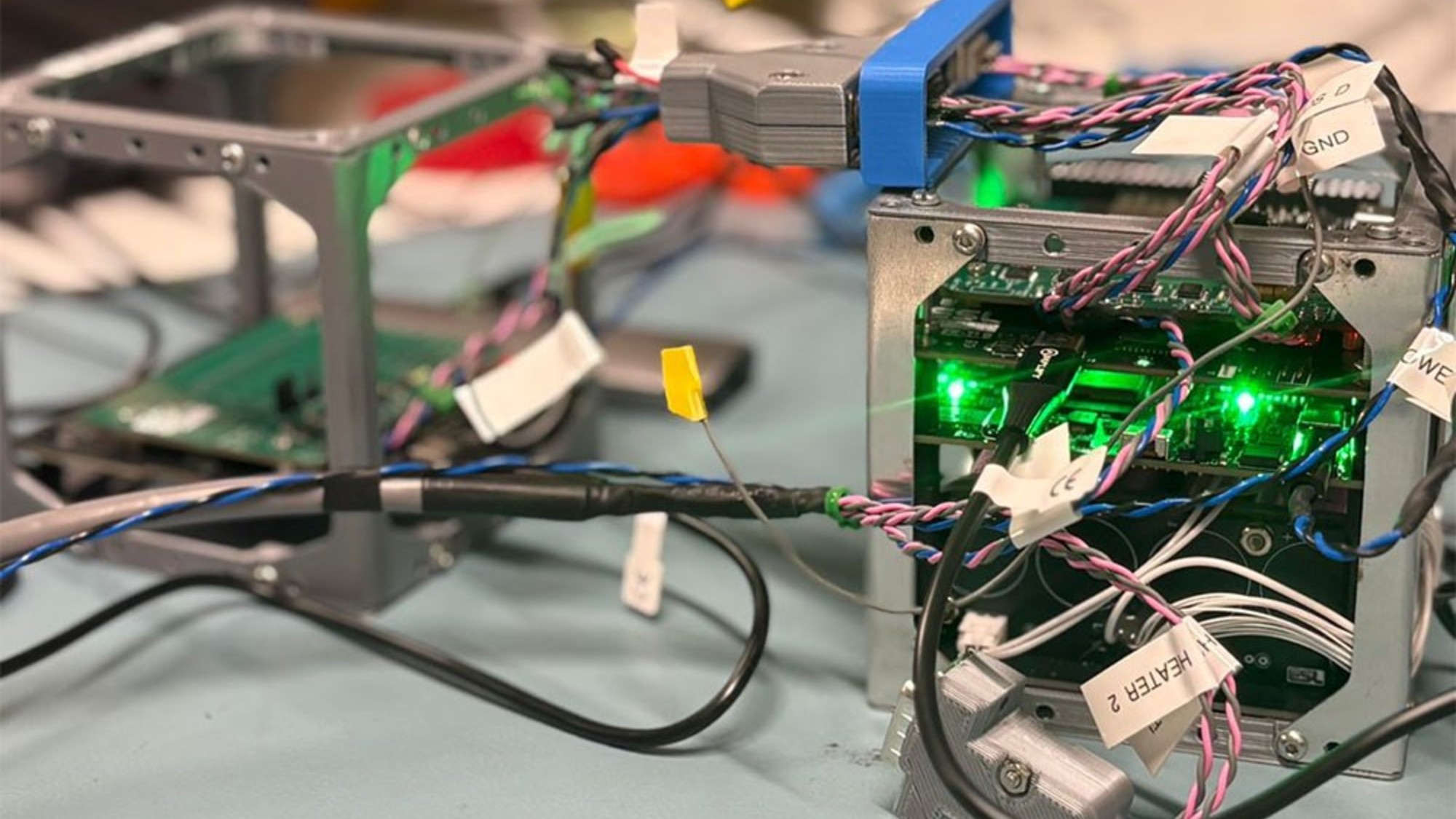
a bundle of wiring inside a metal frame

The BALLS electronics functional model built by the Stellenbosch University team. During the testing phase, the test model sent data between the model and a mock lander unit. (Image credit: Africa2Moon)

Looking to a second mission

As for the full Africa2Moon mission consisting of 55 antennas emplaced on the far side of the moon, Mitchell said they would require a launch as with the first mission.

"So yes, it would probably be contingent on China partnering again with us," Mitchell told Space.com.

The design of the second mission instruments would be a little different too.

"We would want to have them a little larger in diameter and so they would have to go in a flat version that will deploy into a ball versus the current version that travels as a ball, due to space constraints," Mitchell said.

"The deployment onto the lunar surface would also be different, as in self-deploying from the lander as opposed to a robot deployment. This would enable a faster and more random and further dispersed deployment pattern, which enhances the science," she said.

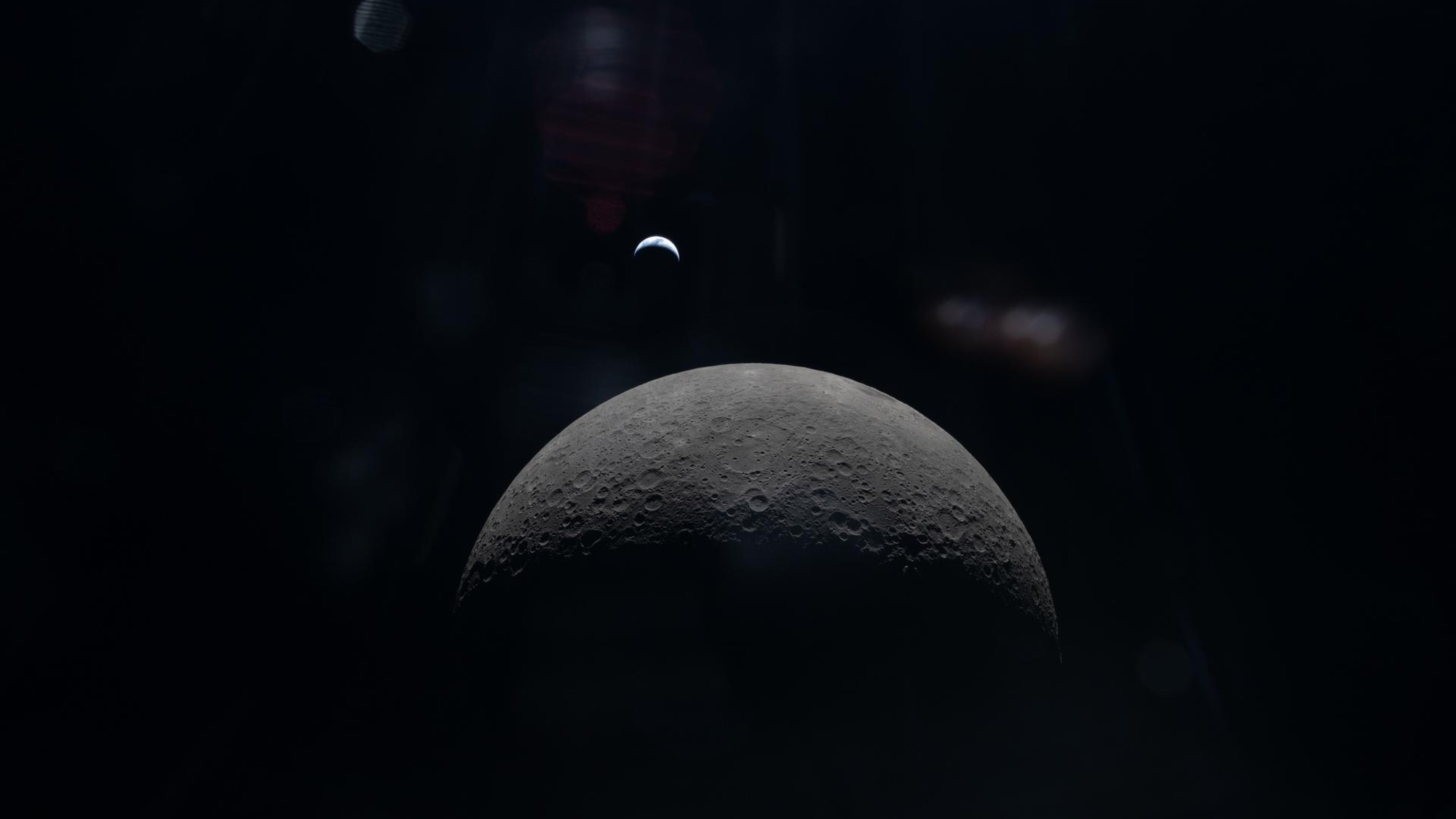
a dark grey crescent on a black background with a blue-white crescent visible in the far distance

A faint view of a crescent Earth above the horizon on the moons far side as seen by the crew of NASA's Artemis II mission in April 2026. (Image credit: NASA)

Shoe-string budget

"I am amazed that it is being done on a shoe-string budget by volunteers. This demonstrates the inspiration of space and if this is successful, it will ignite the reality of space on the African continent," said Clive Neal, a lunar science exploration specialist and professor in civil and environmental engineering and Earth sciences at the University of Notre Dame.

Attending Mitchell's talk at the recent forum at Ames Research Center, Neal said the broader lunar exploration community is willing to help if needed.

"Her talk was inspirational," Neal said, "especially as the broader planetary science community over here [in the U.S.] is moaning about the lack of funding!"

A seed that flew around the moon grew into this tree in NYC

NEW YORK — Madison Square Park in midtown Manhattan is home to some 44 tree species. And on a Thursday afternoon blanketed in wildfire smoke, a small crowd gathered to see one in particular. The slender American sweet gum looked unassuming, especially compared to the enormous English elm neighboring it. But this tree had a secret: it had traveled 1.3 million miles before landing in New York.

The sapling was germinated from one of 1,000 seeds NASA sent aboard the uncrewed Artemis I mission, which saw a space capsule orbit the moon in 2022. Just a few years later, the same kind of capsule would take the famous Artemis II crewmembers on the same journey. Hundreds of these "moon trees" have been planted across the U.S. in the last two years as the space agency drums up excitement for future Artemis missions, which aim to return humans — and not just seeds — to the lunar surface by 2028.

Steph Lucas, director of horticulture for the Madison Square Park Conservancy, applied with NASA for a moon tree seedling in 2023. The request was finally granted in 2025. "We were so thrilled," Lucas told Space.com. The tree grew quietly for a year before the conservancy unveiled its presence with a "birthday party" extravaganza on Thursday (July 16).

Madison Square Park's moon tree is part of a legacy spanning back to NASA's original lunar program. In 1971, astronaut Stuart "Smoky" Roosa brought about 500 seeds aboard the Apollo 14 moon mission. These seeds later grew into saplings that NASA distributed to parks, arboretums and historic sites across the globe. A seed from one of these first-generation moon trees even attended the new tree's birthday party.

The event also featured a celestial-themed garden, poetry reading, a gallery of children's artwork, launch-able foam rockets and, of course, birthday cake — enough for about 100 people.

However, the party had fewer guests than expected. A thick plume of smoke from wildfires raging in Canada blew southward and tinted the sky above New York orange. The air quality plummeted, and many people chose to remain indoors for their health. Some of those who did turn up wore KN95 masks.

A young boy drawing with crayons also has temporary space tattoos on his arm.

There were many ways to celebrate the moon tree's birthday. (Image credit: Courtesy of Madison Square Park Conservancy)

Three cakes, the middle of which has a Happy Birthday moon tree sign.

The moon tree's birthday cake. (Image credit: Courtesy of Madison Square Park Conservancy)

In a strange way, the atmosphere was fitting. The specter of climate change hung heavy over the city, and it was very much on Lucas' mind as she was vying for the conservancy's moon tree selection. NASA offered five different species of moon tree: Douglas fir, Loblolly pine, Sequoia, London plane and American sweet gum. Lucas requested an American sweet gum over a more cold-hardy London plane tree, even though its current range falls slightly south of New York City. Sweet gums are well-adapted to wet, temperate conditions, and as the climate warms in the coming decades they will likely feel right at home in Manhattan. "We think that this will be a better selection as the future goes on," said Lucas.

Stuart Roosa himself was a former smokejumper for the US Forest Service, a job that involves dropping from a helicopter into the heart of an active wildfire to fight it. He agreed to bring along those first moon seeds as a love letter to future generations on Earth. That's the spirit the Madison Square Park Conservancy hopes to channel.

"Space inspires us, right? And plants can be inspiring too," Lucas said. After a year of growth, the park's moon tree is now firmly rooted and standing tall without supports. Gazing at it through the wildfire haze, Lucas mentioned that the young tree seems by all accounts to be thriving. Its progress, she said, brings her hope. "We can always work towards a better future."