Physicists, mathematicians and philosophers have been exploring the possibility of going forward to the future or back to the past
‘Silo’ season 3’s Ashley Zuckerman and Jessica Henwick share the secret to their on-screen chemistry (interview)
In Apple TV’s "Silo" season 3, we lunge back 352 years to the Before Times to see how the greatest engineering project in the history of the world began… and would end.
Center stage in this dark sci-fi drama are ambitious Congressman Daniel Keene (Ashley Zukerman) and journalist Helen Drew (Jessica Henwick), the pre-apocalypse duo we were first introduced to in Season 2's final episode.
In that scene, the handsome couple met on a first date in a Washington, D.C. restaurant in the aftermath of a dirty bomb that had irradiated the city.
Daniel and Helen play pivotal roles in "Silo's" elaborate conspiracy to save humanity, helping to orchestrate a colossal project in Georgia to build a controlled network of survival bunkers that will last centuries until the Earth somehow becomes habitable again after a mysterious calamity. Wait, that sounds familiar...
Zukerman and Henwick create a completely believable relationship as they’re reluctantly drawn into this mind-boggling plot to save the human race. We connected with them to learn details about cultivating their chemistry and intimacy on the show.
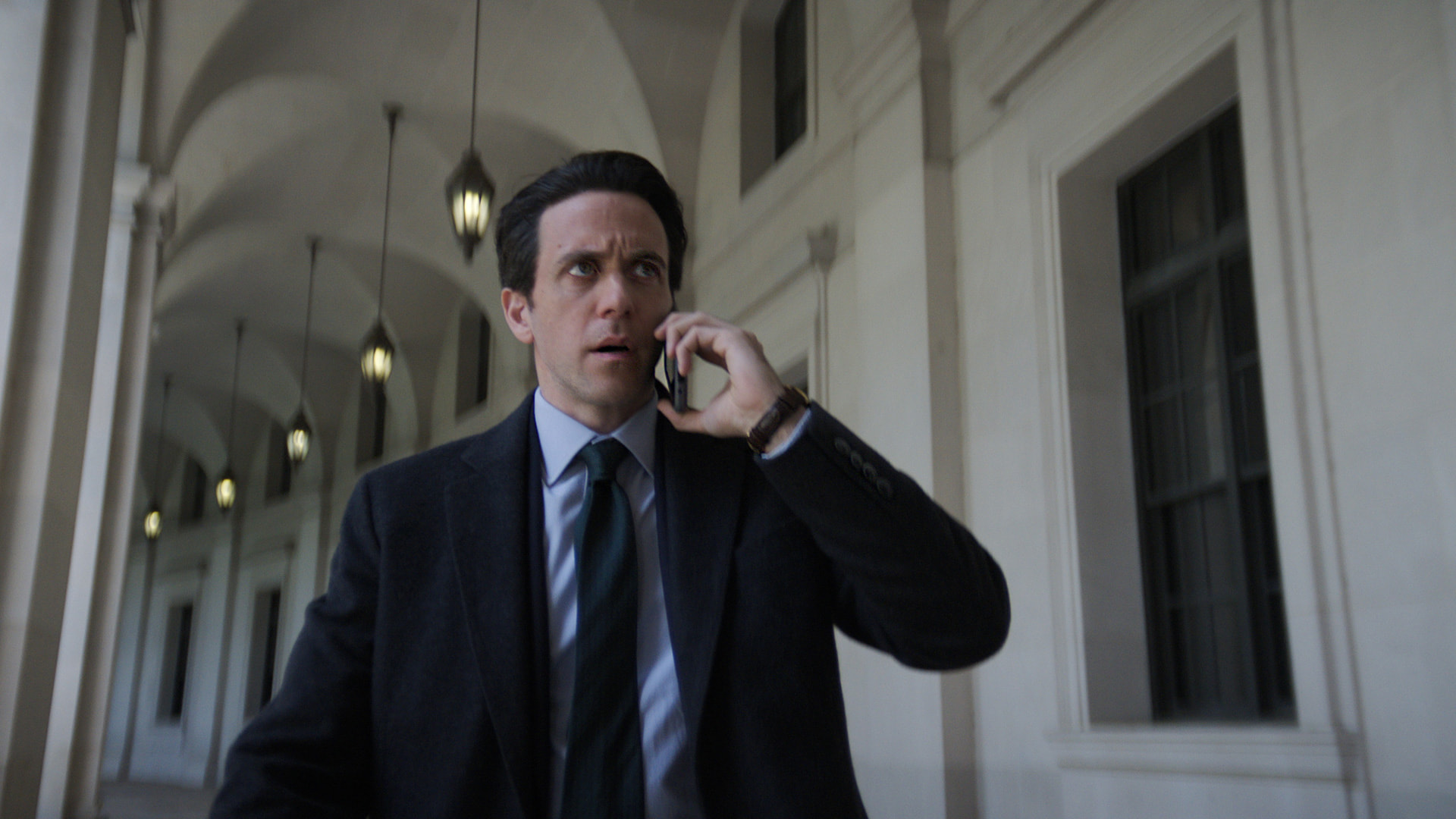
"It's nothing we worked to generate; it was really just there from the beginning," Zukerman tells Space. "We hung out, and we certainly didn’t hang out for the purpose of building that chemistry. I think we got very lucky to find a teammate to be able to do that with."
"We share the same taste and work ethic," elaborates Zuckerman. "When you go on a journey that’s this big with someone, and we shot every day for four months together, we just always had each other’s backs, and there was an immense amount of unconditional respect and excitement. I’m not the kind of actor that could fake it."
Henwick discussed the complexities of her resourceful character and her expanded role in season 3 by exploring what she drew from to compose a layered Helen.
"It was my memory of working on the school newspaper when I was 14," she explains. "And also my natural inclination to ‘Spanish Inquisition’ everyone. I do feel quite an affinity to journalists. I always love to ask questions, and I want to know why and want to understand things. I’m really curious about the world. I didn’t feel like I had to generate much for Helen. I actually felt like she was very close to me."

"Silo"'s impressive set design certainly helped the cast immerse themselves in the doomsday world of author Hugh Howey's dystopian novels and in this lavish Apple TV adaptation.
"I'm sort of a terrible guest to sets, especially if I'm a part of the production," Zukerman adds. "I have to remember to sit in wonder for a second at the scale of the operation. Usually I just try to live as the characters live. Then I'm so thankful that you actually get to live in a real space, especially in a sci-fi, which is not our real world.
"Where the drawers open and when you're looking at something, you're not looking at a blue screen or a green screen, you're actually able to experience life as close as you can within this alternate reality."
Likewise, Henwick absorbed "Silo's" immense scope and scale right from the start.
"I've done a lot of fantasy and sci-fi where I’m stuck in front of a green screen, or there's a tennis ball on a stick, and you have to follow it, and that's the spaceship," she shares. "It was nice to be on a show where so much of it was done practically. I remember the first day going to visit the stairs, and that blew my mind. It is a massive set, one of the biggest sets I've been on."
Executive produced by Graham Yost, “Silo” Season 3 is now streaming on Apple TV.

Watch Silo on Apple TV+:
Apple TV+: $12.99/month (7-day free trial)
Apple TV & Peacock Premium: $14.99/month
How mental exhaustion changes the choices you make
Neuroscientists show how the brain weighs effort against reward when we're mentally fatigued
SpaceX launches 24 Starlink satellites to orbit in wake of Starship test flight (video)
SpaceX launched 24 more satellites for its Starlink network on Saturday (July 25), a day after demonstrating it could do the same on its next-gen rocket.
A Falcon 9 rocket carrying Starlink group 17-51 lifted off at 11:51 a.m. EDT (1521 GMT or 8:51 a.m. PDT local time) on Saturday from Space Launch Complex 4 East at Vandenberg Space Force Base in California.
About an hour later, the 24 broadband internet satellites were deployed into low Earth orbit (LEO), as planned.
Previous Booster B1100 launches
NROL-105 | 6 Starlink missions
The launch marked the eighth flight of the Falcon's 9 first stage (Booster 1100), which touched down on the "Of Course I Still Love You" droneship, stationed in the Pacific Ocean.
The successful launch raised the total number of active Starlink satellites to 10,865, according to satellite tracker Jonathan McDowell. That number had been 20 units higher for about 20 minutes on Friday, when SpaceX conducted a deployment and operations trial during the 13th test flight of its Starship launch vehicle.
The Starship test was planned to be short-lived but was successful in providing data to support NASA's decision to fly Starlink systems on its Artemis III crewed mission to LEO, which is scheduled to fly next year.
Saturday's launch was SpaceX's 87th Falcon 9 mission of the year.
On this day in space! July 28, 1851: The 1st photo of a total solar eclipse was taken by a Prussian daguerreotypist
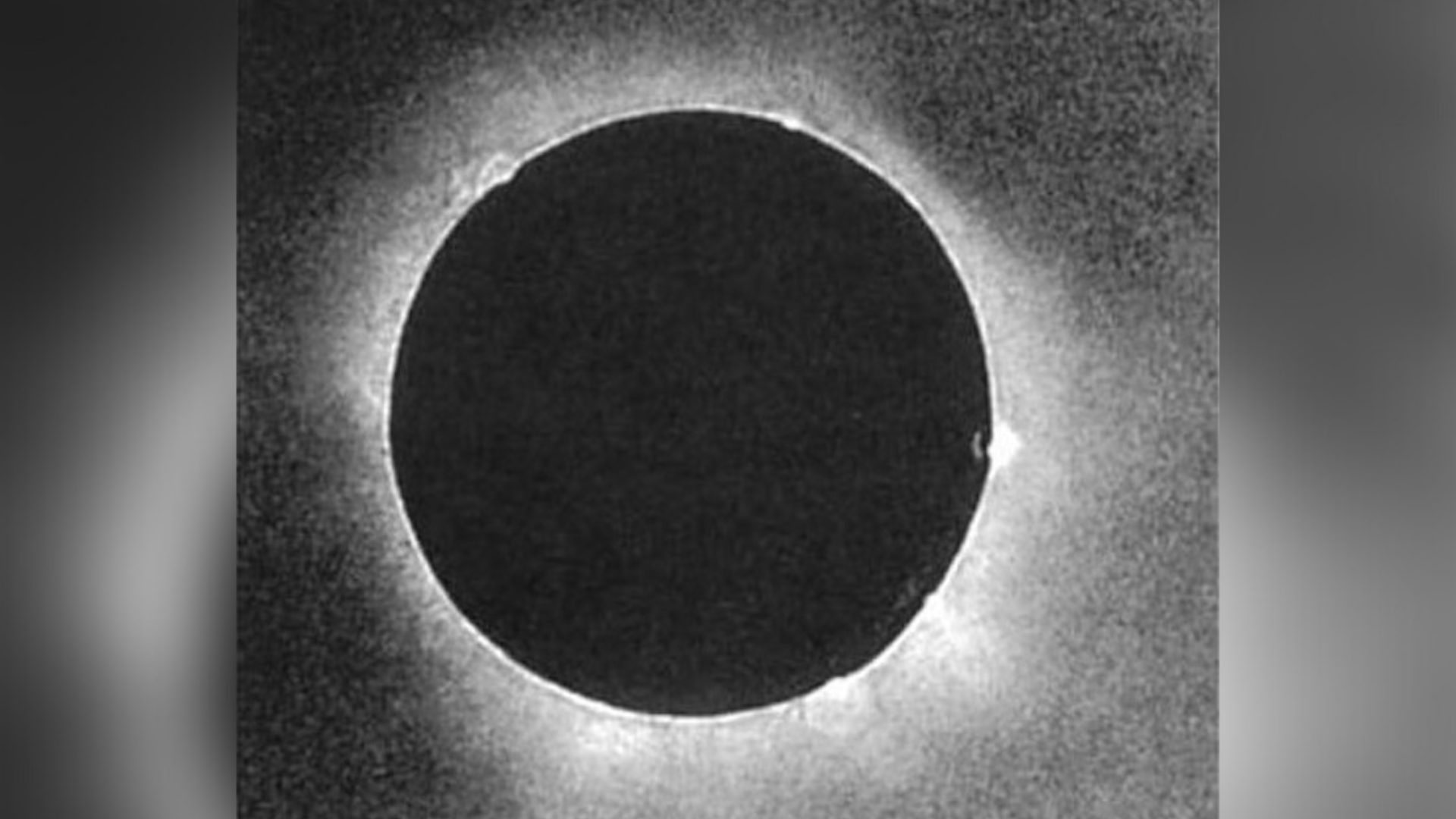
On July 28, 1851, the first-ever photo of a total solar eclipse was recorded by a Prussian daguerreotypist named Johann Julius Friedrich Berkowski.
Daguerreotypy is an old photographic process that uses silver-plated copper treated with chemical fumes that make it light-sensitive. Previous attempts to take photos of solar eclipses failed to show the contrast between the sun's corona and the dark disk of the moon.
Using a small, 6-centimeter telescope, Berkowski captured an 84-second exposure starting right after the moon moved completely in front of the sun.
Why it mattered
Until Berkowski, total solar eclipses were something people saw once and never again. The ability to document a solar eclipse visually opened the door for scientists to study the solar event - and the sun - like never before. (Not to mention, make a rare astronomical phenomenon more accessible to people unable to see it.)
To be clear, many photographers did try to capture solar eclipses before Berkowski, but those attempts were often overexposed or underexposed. But Berkowski's daguerreotype was detailed enough that in 2005, 154 years, it was hailed as the first correctly exposed image of the sun's corona, the super-hot outer atmosphere of the sun that is visible around the moon during totality.
Today, more than 170 years later, the advent of digital cameras — and even smartphones — has put the ability to photograph a solar eclipse literally in the palm of our hands. Our Editor-in-Chief Tariq Malik has seen two total solar eclipses (in 2017 and 2024), and managed to snap the 2024 eclipse with a smartphone with no training at all (and a bit of luck).
By the way, the next total solar eclipse is coming on Aug. 12 and will be visible across parts of Greenand, Iceland and Spain. To find out how you can capture a totality photo of your own during a total solar eclipse, check out our solar eclipse photography guide and gear up with our best solar eclipse photography equipmetnt for 2026.
And DON'T FORGET! If you're observing a solar eclipse on your own, you'll need eclipse glasses for safety.
Want more space history? Check out our full On This Day In Space video archive on YouTube.
ISS meets Venus in incredible daylight photo | Space photo of the day for July 28, 2026
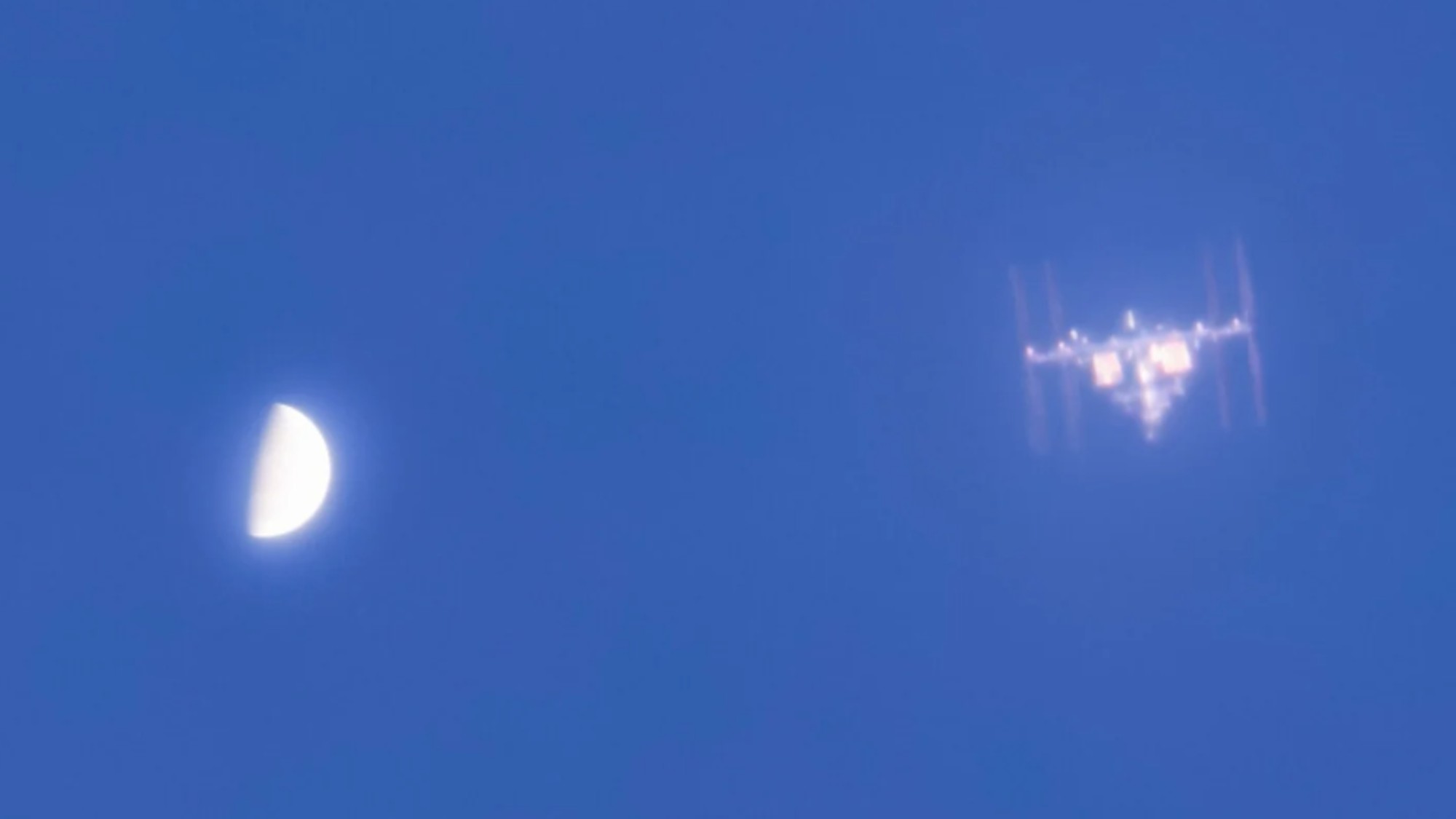
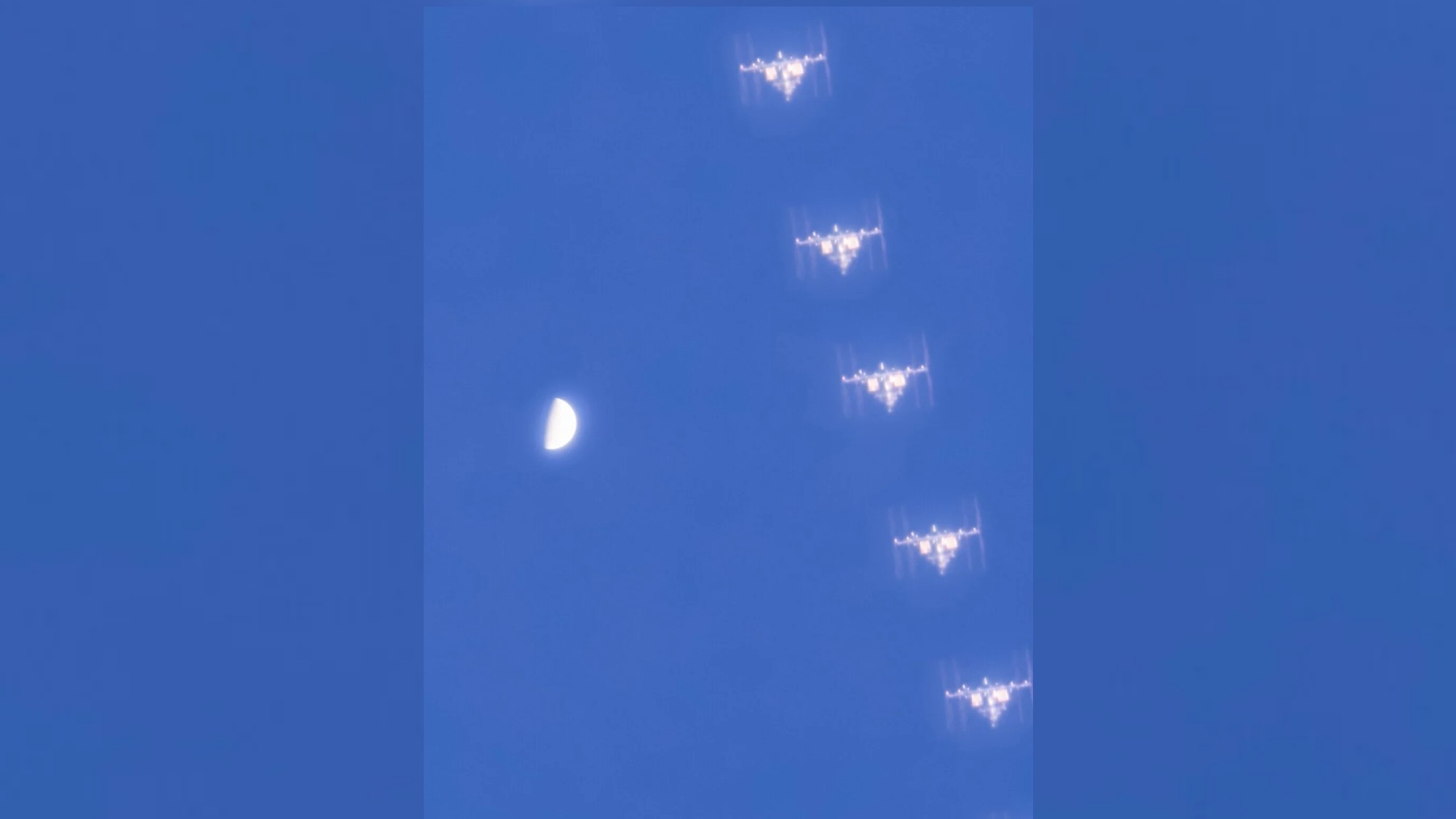
An astrophotographer captured a breathtaking scene as the International Space Station zoomed by Venus in the daytime sky.
What is it?
Photographer AJ Smadi set up the scene on July 18 in a park near Seattle, Washington. Smadi used a 9.25" (23.5 cm) Celestron Schmidt-Cassegrain Telescope and a ZWO ASI662MC camera equipped with an ultraviolet and infrared filter to capture the incredible image.
But this isn't the first time Smadi has pulled off such a feat. Just over a year ago, the photographer captured the ISS beside Venus in a photo that was selected by NASA as one of its Astronomy Photos of the Day.
"The thing that inspired me to capture Venus with the ISS is the fact that nobody has done it before," Smadi told Space.com by email. "After having realized this in April 2025 following my first time capturing the pair together, I was determined to best my own achievement," Smadi said.
Smadi regularly photographs the ISS but says the clarity differs greatly depending on the stability of the air and its distance.
Why is it incredible?
Capturing Venus, the ISS, or any other object in space (other than the moon) during the daylight hours takes careful planning and a deep understanding of astrophotography techniques and filters.
The ISS travels at a mind-boggling 4.6 miles per second (7.5 km per second) and is 84 million miles (135 million kilometers) away from Venus, so lining up a photograph of the two seemingly side-by-side is no easy feat and takes painstaking planning.
For more of AJ Smadi's work, including photos of the ISS transiting the sun, the moon, and passing by Saturn, visit his Instagram.
BALLS on the moon: China set to launch Africa’s 1st lunar science mission in 2029
China's Chang'e-8 moon lander mission scheduled for 2029 could send Africa's first space exploration mission to the lunar south pole.
Under the Africa2Moon venture, the Bounced African Low Lunar Sphere, or BALLS for short, is a technology demonstrator in which a trio of spherical probes on the lunar surface will form a radio astronomy array at the moon's south pole region. Each of the metal spheres contains low-frequency radio telescope antennas that will search for signals from some of the oldest and most distant parts of the universe.
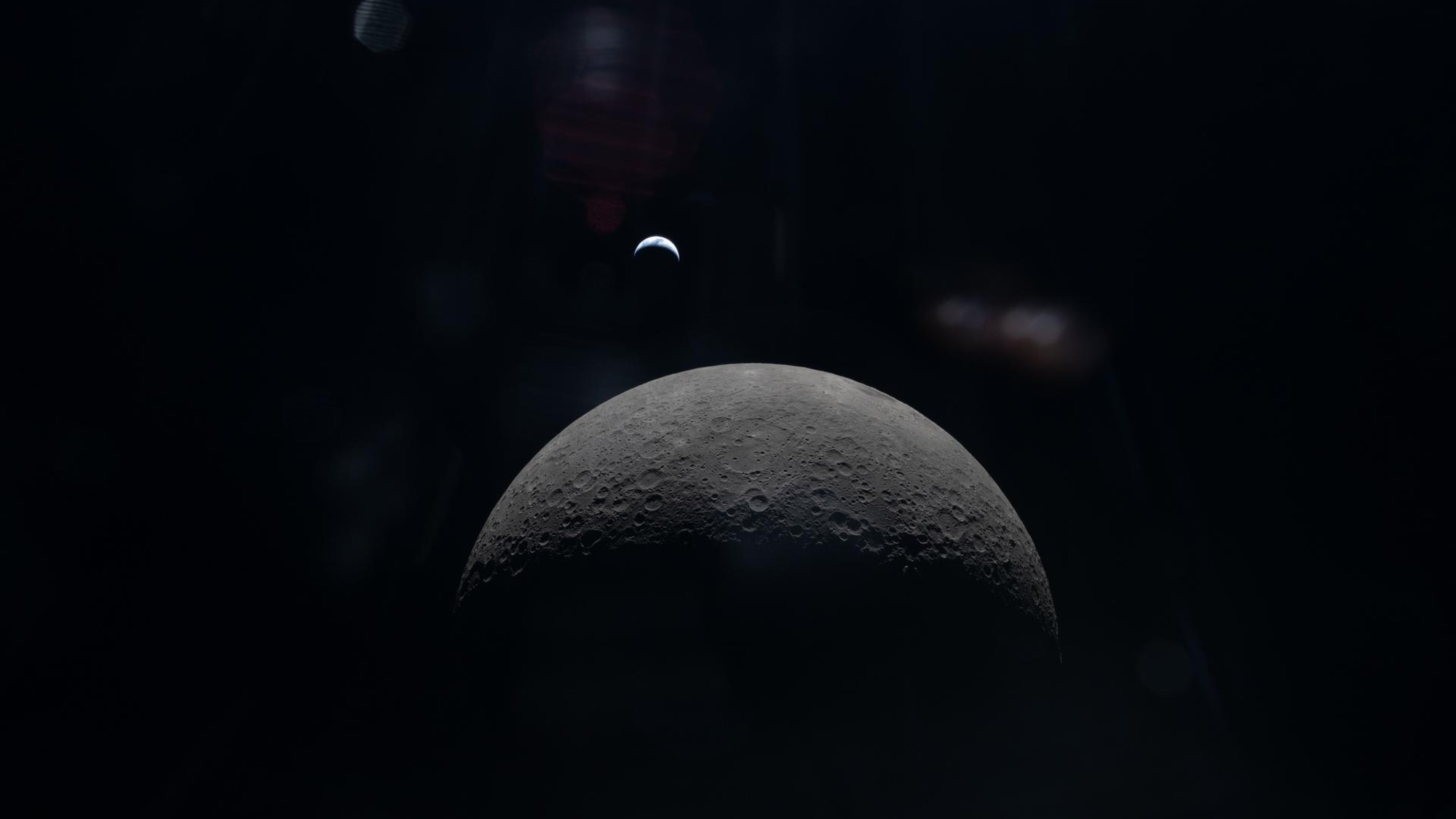
Astronomers say the lunar far side is the most radio-quiet site in Earth's vicinity, a location perfect for "listening" to the universe without interference. The BALLS array will work together to observe low frequency radio signals from space that are not observable from the surface of the Earth, according to Carla Mitchell, mission director of the Africa2Moon initiative and Africa Program manager at the South African Radio Astronomy Observatory (SARAO). The moon is an ideal place to perform such studies, they said, as the low frequency signals to be measured are unobservable from Earth due to interference created by our planet's atmosphere.
Pathfinder
The Africa2Moon project was selected by the Chinese National Space Administration in April 2025 as one of nearly a dozen of Chang'e-8's international payloads.
BALLS will enable observations below 20 megahertz (MHz) that are inaccessible from Earth due to ionospheric distortion and radio interference. Low-frequency radio waves (below about 50 MHz) come from some of the oldest and most distant parts of the universe.
The BALLS array will serve as pathfinder hardware for future lunar technologies and radio astronomy experiments. They will also act as a technology demonstrator for the full Africa2Moon mission, which plans for an array of 55 antennas to be deployed on the far side of the moon.
From paperwork to hardware
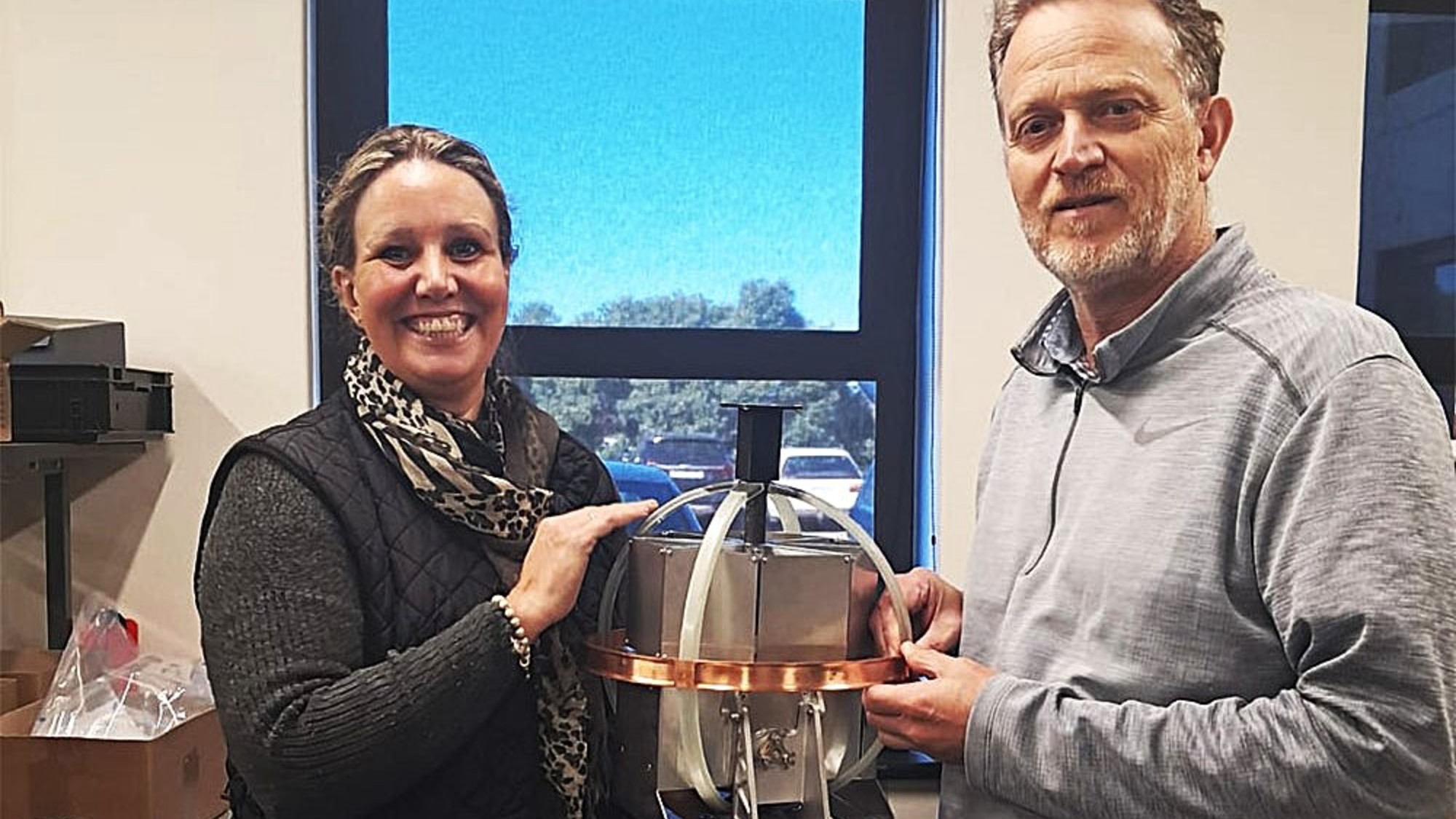
"As a little girl I thought space was not possible for people in Africa. I never thought I would be here today, presenting our lunar mission at NASA," said Mitchell.
Mitchell detailed years of team work on the BALLS initiative, rolling forward from paperwork to hardware, speaking July 22 at the NASA Exploration Science Forum 2026, held at NASA's Ames Research Center and staged by the NASA Solar System Exploration Research Virtual Institute (SSERVI).
SARAO is the national radio astronomy facility of South Africa, operating and managing such facilities as MeerKAT and the South African Square Kilometer Array (SKA) project. SARAO is involved in a range of cosmic inquiries, from pulsar research to studying fast radio bursts, dark matter and dark energy.
Spaced out
Once deployed on the moon, the BALLS trio would be spaced out on the lunar surface. Signals captured from the BALLS array are to be communicated to the Chinese lander and then relayed back to Earth for further processing.
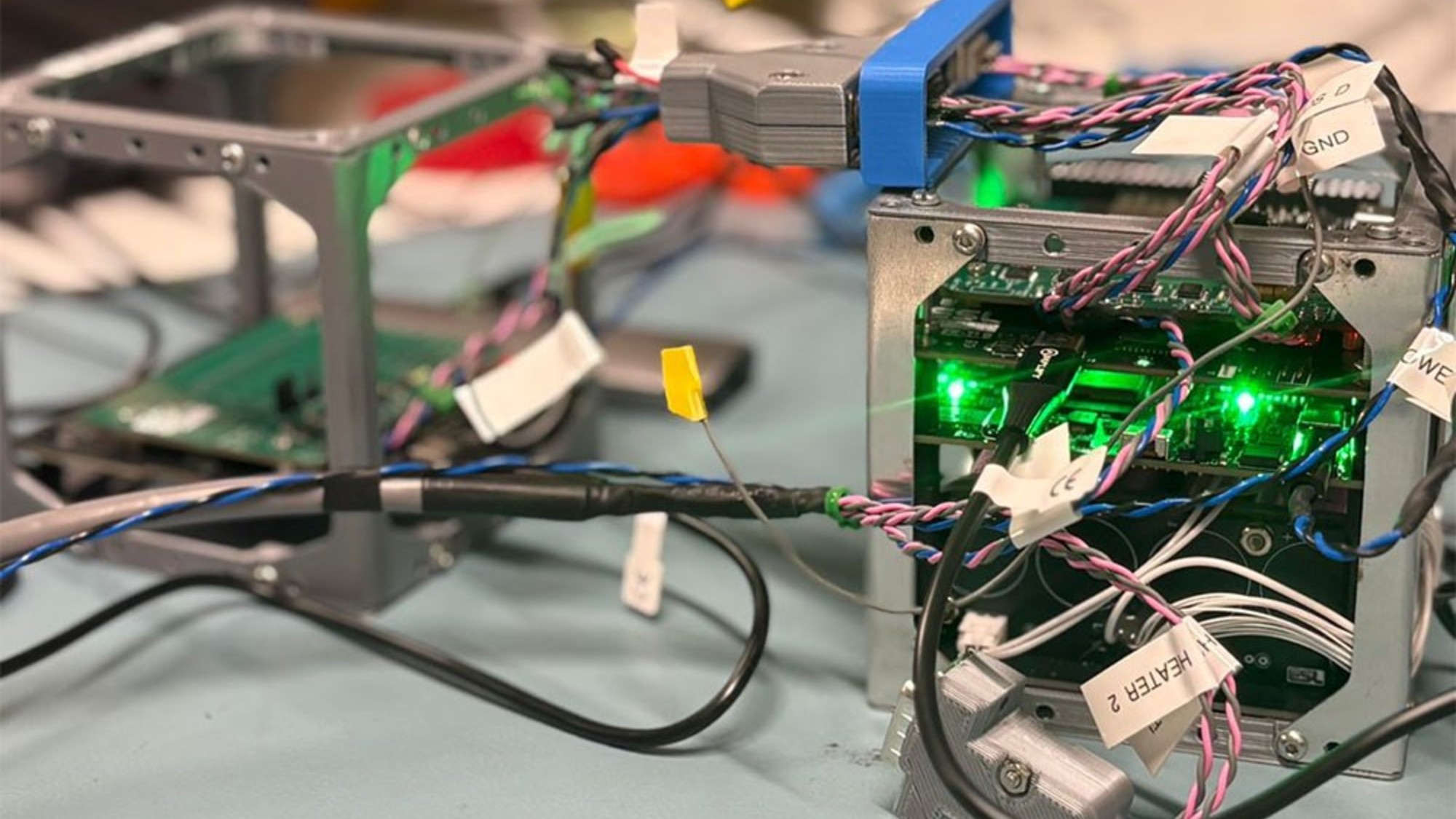
Each of the BALLS consists of a spherical gyroscope-like frame made of interlocking rings, encasing two large triangular solar panel arrays with a grid-like surface texture. The panels are oriented in opposite directions — one pointing upward and one downward — giving the structure a tetrahedron-like inner form.
The mission is led by the Foundation for Space Development Africa in collaboration with SARAO, the South African National Space Agency, the National Institute for Theoretical and Computational Sciences, as well as institutions in Kenya, Ghana, Botswana and across the continent.
Teams at Petrawell in Cape Town, Aerospace Systems Research Institute at the University of KwaZulu-Natal and Electronic Systems Laboratory at Stellenbosch University were involved in manufacturing the components of the structural and functional BALLS models. They were assembled in April 2026, to be delivered to China's Chang'e-8 team for testing.
"The power of collaboration, education and hope cannot be underestimated for Africa's future in space science and technology," she said.
Looking to a second mission
As for the full Africa2Moon mission consisting of 55 antennas emplaced on the far side of the moon, Mitchell said they would require a launch as with the first mission.
"So yes, it would probably be contingent on China partnering again with us," Mitchell told Space.com.
The design of the second mission instruments would be a little different too.
"We would want to have them a little larger in diameter and so they would have to go in a flat version that will deploy into a ball versus the current version that travels as a ball, due to space constraints," Mitchell said.
"The deployment onto the lunar surface would also be different, as in self-deploying from the lander as opposed to a robot deployment. This would enable a faster and more random and further dispersed deployment pattern, which enhances the science," she said.
Shoe-string budget
"I am amazed that it is being done on a shoe-string budget by volunteers. This demonstrates the inspiration of space and if this is successful, it will ignite the reality of space on the African continent," said Clive Neal, a lunar science exploration specialist and professor in civil and environmental engineering and Earth sciences at the University of Notre Dame.
Attending Mitchell's talk at the recent forum at Ames Research Center, Neal said the broader lunar exploration community is willing to help if needed.
"Her talk was inspirational," Neal said, "especially as the broader planetary science community over here [in the U.S.] is moaning about the lack of funding!"
Scientists get best-yet glimpse of Betelgeuse’s companion star
After decades of hints and speculation, scientists have at last unveiled the hidden companion to the iconic star Betelgeuse
Betelgeuse, Betelgeuse! Astronomers capture clearest image yet of famous star’s elusive companion
Astronomers have used the Very Large Telescope (VLT) in the Atacama Desert region of Northern Chile to discover the strongest evidence yet that the famous star Betelgeuse has a companion star. That means after a century of investigation, scientists are closer than ever before to conclusively identifying Betelgeuse as a binary system composed of two stars, Betelgeuse A and Betelgeuse B.
Betelgeuse is a red colored star visible with the naked eye in the constellation of Orion and located around 650 light-years from Earth. Astronomers initially proposed the existence of another star orbiting Betelgeuse around 100 years ago in an attempt to explain the familiar star's strange dimming, which has been observed for over 1,000 years. While other teams have gathered evidence of the existence of Betelgeuse B, this new image is the clearest ever direct observation of the star. The scientists behind the discovery are thrilled.
"This is the conclusion of a century-long quest," team leader Miguel Montargès of the Observatoire de Paris, France, said in a statement. "We have shown that Betelgeuse is not single; it is accompanied by a faint stellar companion. I jumped from my chair when I saw the processed images."
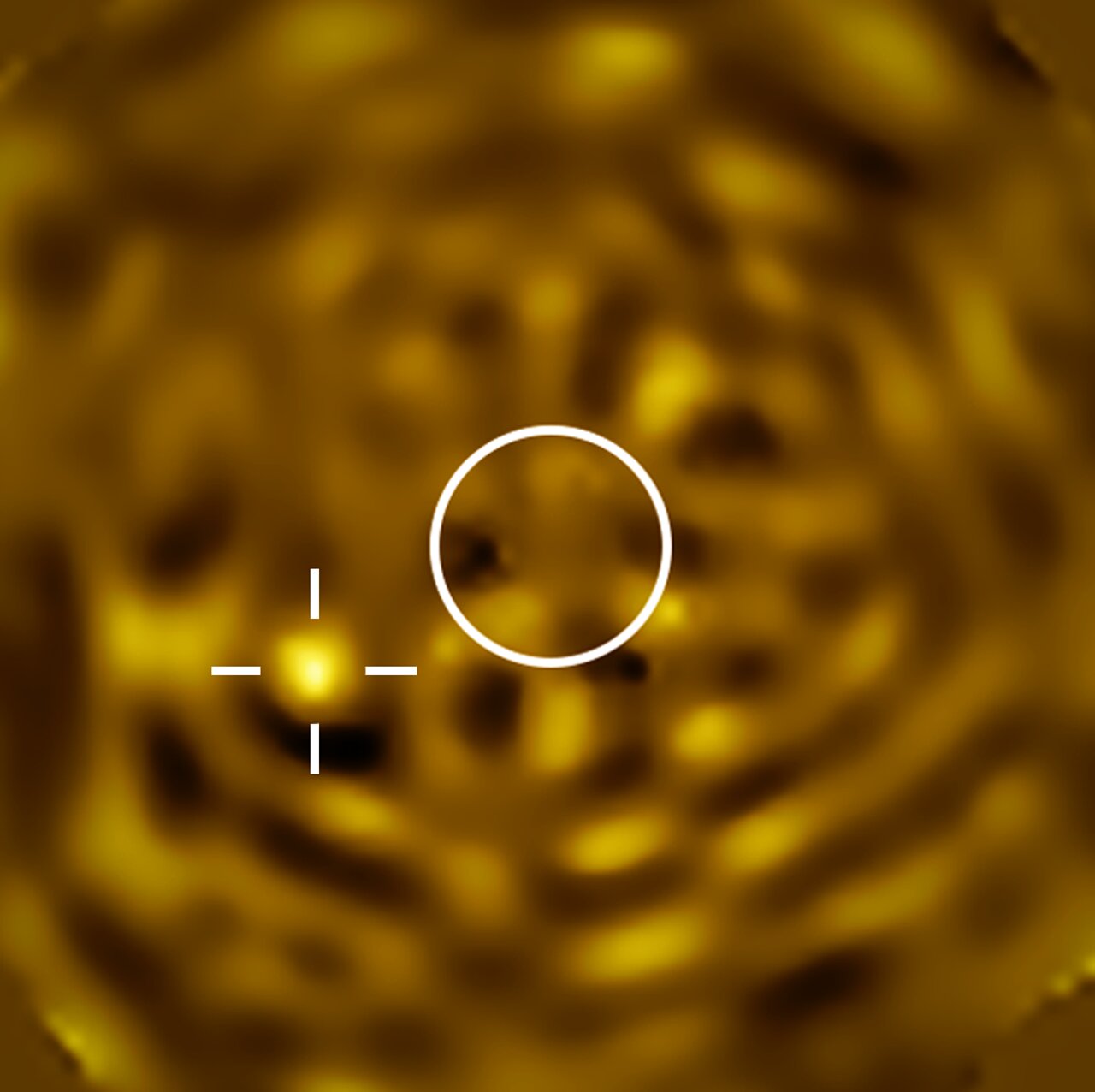
The discovery of this new evidence of Betelgeuse B follows two papers published in 2024 that suggested this elusive stellar companion would be at its furthest from Betelgeuse A in December of that year. With that clue in hand, Montargès and colleagues set about hunting it.
"Honestly, I thought we did not have the sensitivity to detect Betelgeuse B as it was predicted," Montargès said. "Because it is more massive than predicted, we see it!"
Betelgeuse B had previously been theorized to be around the same mass as the sun, but these new observations reveal that this elusive star has instead around two to three times the mass of our star.
"The fact that we can still discover a nearby companion, more massive and brighter than the sun, around such a well-studied star is remarkable," Montargès added. "These are among the best moments in science: seeing something new, unexpected."
Capturing Betelegeuse B was only possible thanks to the VLT's SPHERE instrument, which features a coronagraph that blocks out the light of a planetary system's star. Combined with the advanced optics on the instrument, this allows scientists to measure the wavelength and polarity of light both coming directly from the star and being reflected off of any nearby planets. But that's not all SPHERE can do.
"It is remarkable to see how SPHERE and advanced post-processing techniques, originally developed to find exoplanets, also excel at detecting a companion around a massive, evolved star like Betelgeuse," team member Anthony Boccaletti, also an astronomer at the Observatoire de Paris, said.
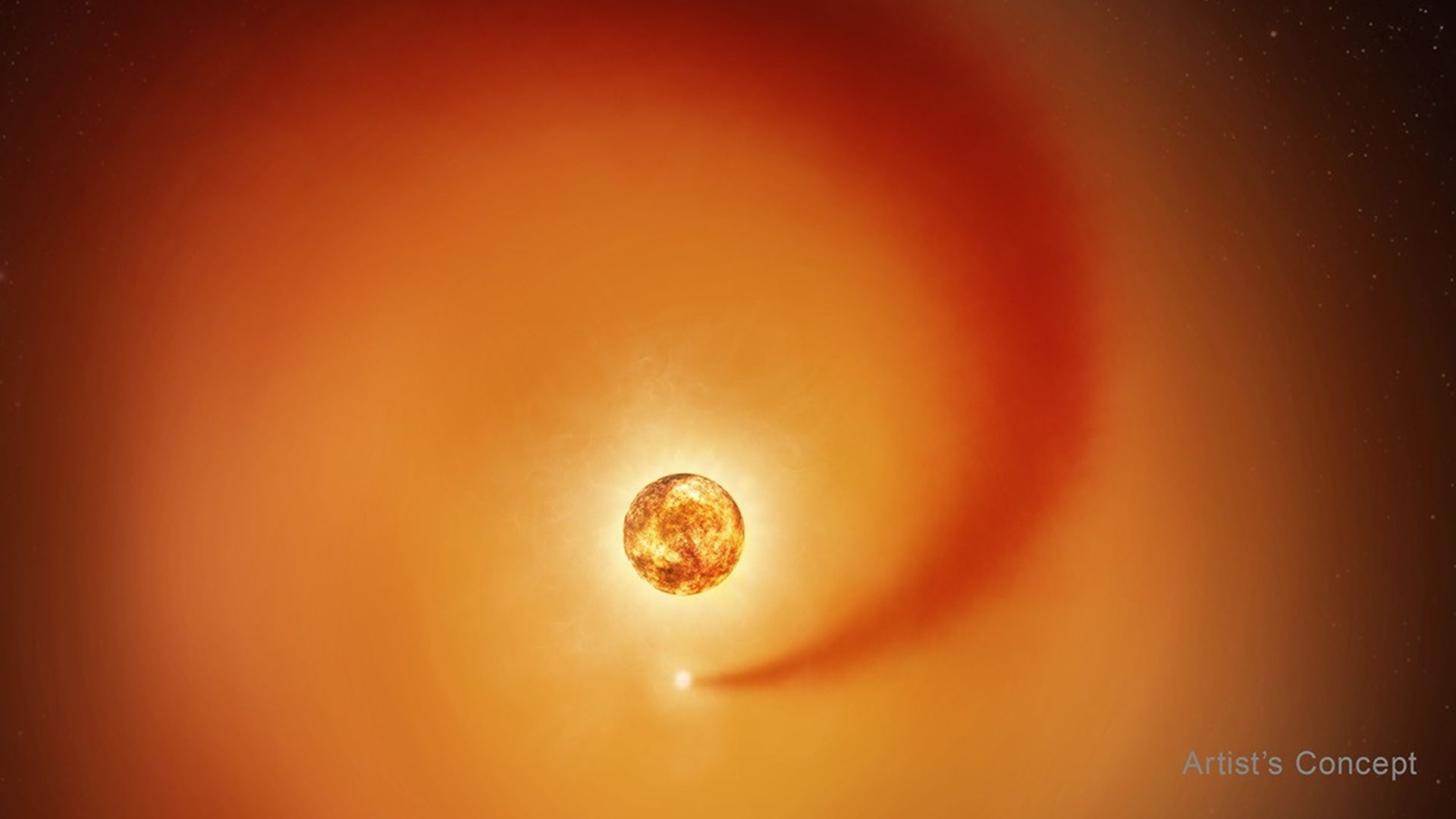
There are still many questions to answer regarding Betelgeuse B. The team still needs to solidly confirm that what they have seen is actually a companion star, and they would also like to know how the presence of this star could shape the future of Betelgeuse A.
This red supergiant star nearing the end of its evolution gained notoriety a few years ago when its sudden and rapid brightening led to speculation it was about to suffer an explosive death.
"To be certain that the companion is really there, we still need to observe it in one year on the other side of the star, but there is very little space left for doubt," Montargès said. "The question is truly open whether this companion is going to have an impact on the evolution of the red supergiant."
The team's research was published on Tuesday (July 28) in the journal Astronomy & Astrophysics.
‘Crazy idea’ succeeds: Scientists monitor space junk with radio telescopes
Radio telescopes are designed to listen for signals from the stars and from distant galaxies, but scientists are also pointing out that these instruments can also track objects somewhat closer to home: junk in Earth's orbit.
Engineers have used the famed radio telescope at Jodrell Bank in the U.K. as part of an international plan to watch high-altitude space debris. Normally, old satellites and bits of spacecraft stuck up in geostationary orbit are too high up for our normal ways of watching space debris. However, said international project, called Long Baseline Multistatic Radar (LBMR), successfully used a radio telescope to get around this problem.
"That's the first time that's ever been done," Simon Garrington, associate director of Jodrell Bank, said in a video about the project.
A pressing problem
It's hardly a secret that junk is rapidly piling up in Earth's orbit — dead satellites, rocket remnants, rubble from satellite collisions or anti-satellite missile tests, and more. And as we keep filling Earth's orbit with thousands more satellites each year, we're also increasing the risk that one is struck by a debris fragment. We need to track this debris.
Most satellites exist in low Earth orbit (LEO) below altitudes of 1,250 miles (2000 kilometers), and indeed space debris is more concentrated at LEO. Still, there’s good reason to be just as concerned about debris in the much higher geostationary orbit (GEO), which falls 22,500 miles (36,000 kilometers) in altitude. Crucial communications and weather satellites lie in GEO, for instance, and space debris doesn't need to come in great quantities to pose a threat — just one unfortunate strike can cripple a satellite.
This leaves debris-hawks with a conundrum. They typically track space junk in LEO with radar, but most ground-based radar systems aren't sensitive enough to watch GEO's heights. Instead, they rely on optical telescopes to see objects in GEO. These telescopes are good for tracking larger objects (larger than about 4 inches, or 10 centimeters, across), but they can't resolve smaller objects as well as radar can. Yet these smaller objects can be just as deadly and destructive as their larger counterparts. If we want to see them with radar, we'll need especially sensitive receivers.
Fortunately, that equipment already exists, too — that's where radio telescopes can help.
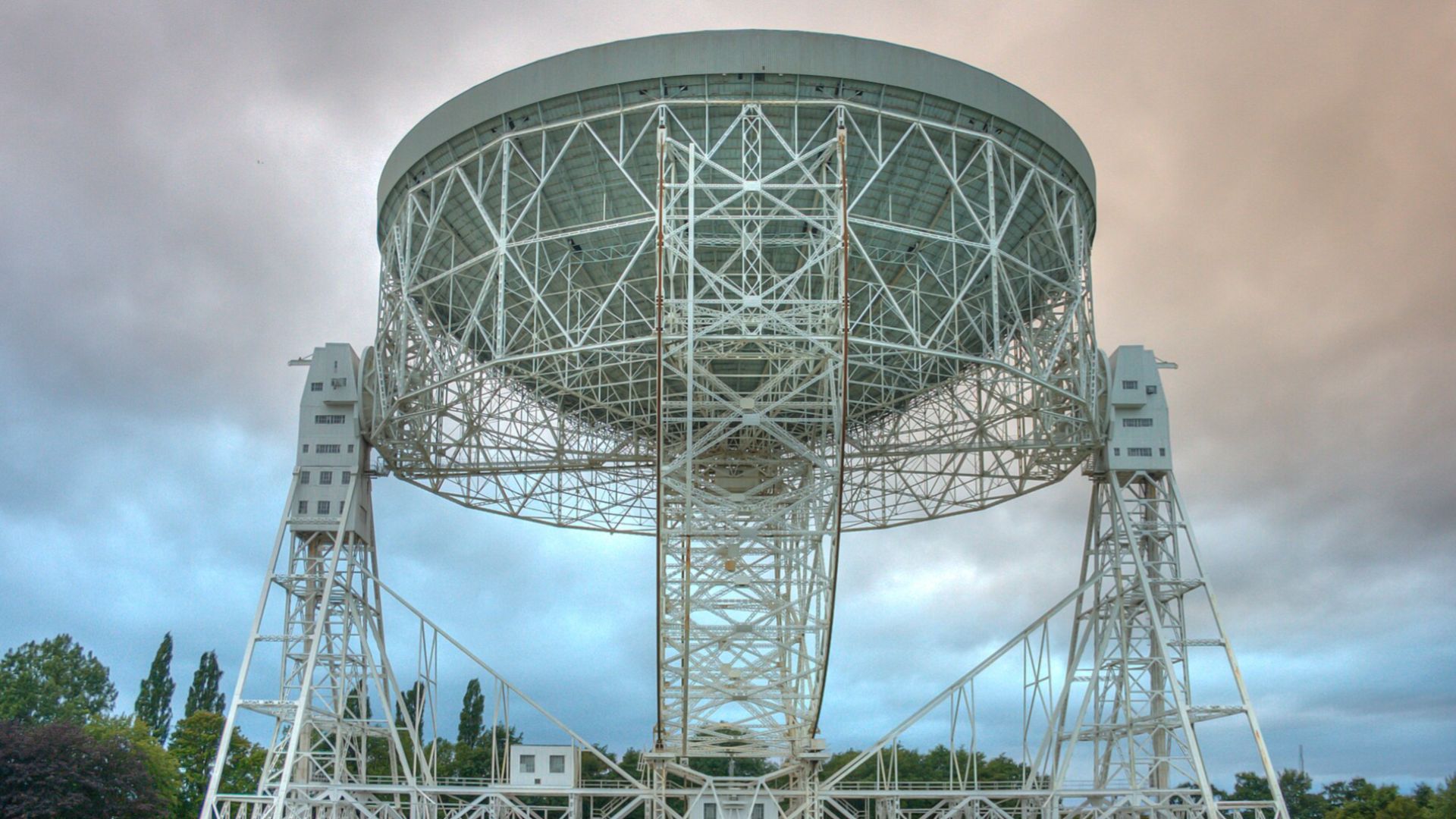
Engineers have tried debris-watching with radio telescopes as early as the 1990s, but LBMR, backed by NATO and the U.K. Space Agency, wanted to go further and watch debris in real time.
LBMR's engineers drew up a scheme to make this work. They would broadcast radio waves with a radar installation at the Massachusetts Institute of Technology's Lincoln Laboratory in the U.S. These radio waves would glance off debris and fall back into the dishes of U.K. radio telescopes such as the Lovell Telescope at Jodrell Bank. Back on the ground, the radio telescope's signal would be processed and analyzed in real time.
Aligning a radar transmitter with a radio telescope on the far side of an ocean, then processing its signals, is far easier said than done.
"This idea started about seven years ago. It sounded at that time like a crazy idea, because we had no synchronization. We had assets on one end of the ocean and other assets on the other end of the ocean," said Marco Martorella, an electronic engineer at the University of Birmingham and another member of LBMR, in a video. "But we were crazy enough to continue."
This required years of work, but the researchers have now successfully demonstrated that they can receive a signal with a single antenna. This has allowed them to track the distance to a piece of debris, and how quickly that distance is changing, in real time.
Next, the LBMR researchers hope to demonstrate that they can receive radar reflections of the same object with multiple radio telescopes at once. This, the researchers say, would allow debris-hawks to use the radio telescope technique to truly track debris in three dimensions.