A mysterious incident over the southern Indian Ocean forced a U.S. Air Force aircraft to turn around due to an unnamed hazard in space.
According to several New Zealand-based news outlets, a U.S. Air Force (USAF) C-17 Globemaster transport aircraft left Christchurch Airport on New Zealand's South Island on Tuesday (Aug. 18) bound for McMurdo Station in Antarctica. Aircraft trackers using flight radar software noticed the C-17 turn around over the ocean some two hours into its flight.
According to a statement from New Zealand's Civil Aviation Authority given to the country's Stuff news outlet, the C-17 turned around after the Russian Air Traffic Management Corporation issued a notice advising of "space activity, potentially hazardous to aviation en route to Antarctica." It still remains unknown what that activity might have entailed, and the USAF has yet to issue a statement.
The U.S. Federal Aviation Administration (FAA) issued a NOTAM (Notice to Airmen) on Aug. 10 for a large region of airspace over Australia and the Indian Ocean known as the Melbourne Flight Information Region, or YMMM. The notice states that, beginning on Aug. 14, "Russian aerospace activities will take place" and that there is "possible debris" in several areas throughout the massive YMMM airspace.
It's possible that the notice that caused the C-17 to turn around was related to this NOTAM, which was still active as of Tuesday.
A NOTAM issued by the FAA on Aug. 14 stating there was "possible debris" due to "Russian aerospace activities" throughout a large region of airspace covering Australia and the Indian Ocean. (Image credit: FAA)
There is precedent that might give some clues as to what that aerospace activity might have been.
In the last few years, pieces of falling space debris reentering Earth's atmosphere have caused several airspace closures. In November 2022, for example, the core stage of a Chinese Long March 5B rocket fell to Earth in an uncontrolled reentry over Spain, prompting multiple airspace closures out of caution.
In January 2025, SpaceX's Starship exploded on its seventh test flight, raining fiery debris over the Atlantic Ocean near the Turks and Caicos islands. The FAA activated a "Debris Response Area" near the falling debris, causing some aircraft to have to divert to secondary airports due to low fuel.
A U.S. Air Force C-17 Globemaster set to leave Antarctica for New Zealand from McMurdo Station, Antarctica on Nov. 12, 2016. (Image credit: MARK RALSTON/AFP via Getty Images)
That same month, a study published in the journal Scientific Reports found there is a 26% chance of "an uncontrolled space debris reentry in busy airspaces" due to the sharp increase in space traffic in recent years. But experts say much more data is needed to determine how to mitigate risks and how to respond in the event of such debris incidents.
Of course, there remains the chance that Russia's notice to air crews wasn't caused by falling space debris at all. Governments regularly issue similar notices when they are testing weapons that fly to high altitudes, such as ballistic missiles.
Typically, however, such tests are planned far in advance, meaning any notices would have been issued long before the USAF's C-17 took to the air.
Eighteen years later, it still gives me a jump scare, even though I know it's coming.
Agent Mulder, hot on the trail of a group of murderers who are harvesting their victims' organs, breaks into a makeshift laboratory in an attempt to save an abducted woman. He finds a gruesome scene of bodies on ice and surgeons, scalpels in hand, preparing to transplant the villain's head onto the abducted woman's body. Mulder turns and — there it is! The villain's severed head on ice! And it opens its eyes.
It sounds less like a scene out of a science fiction mystery series and one more suited to a horror film. And that's precisely why Chris Carter, creator of "The X-Files", is revisiting the 2008 film "The X-Files: I Want to Believe" in a new R-rated director's cut coming to Hulu on Aug. 14.
Space.com got the chance to speak with Carter about the upcoming director's cut and the inspiration behind revisiting the standalone "X-Files" film nearly two decades after its release.
"I wanted to make the scary movie that I always had intended to make, intended to direct, and this is more in line with that," Carter told Space.com. "It gave me a chance to remember the making of the movie and what I had intended it to be, and how different it was from that original vision."
The director's cut features a new addition to the film's title — "The X-Files: I Want to Believe — Vrach Frankenshteyn". Carter said the name at the end (Russian for "Doctor Frankenstein") is a way of alluding to the tone and themes that he intended to focus on in the original film.
"It's a Frankenstein story, and the original inspiration for it was a doctor in Cleveland, Ohio, who transplanted the head of a monkey onto another monkey, and I thought that is perfect X-Files territory," Carter said.
Chris Carter on the set of the 2008 film "The X-Files: I Want to Believe." (Image credit: 20th Century Studios/Walt Disney Co.)
Carter's original version of the film was re-edited two times in order for it to be released with the PG-13 rating that 20th Century Fox (now 20th Century Studios) insisted upon.
"When we first made the movie, we had a vision, and we tried to bring it to life. And when we took it to the executives at 20th Century Fox, they said, 'This isn't a PG-13 movie. This is torture porn.'
"And so we cut it back to what we thought was a PG-13 movie to placate the executives, and then we gave it to the motion picture censors, and they said this isn't a PG-13 movie."
With many of the horror elements cut or toned down, the 2008 theatrical release ended up focusing quite a bit of time on the relationship between Mulder and Scully — a fan-favorite part of the series for sure, but not one that Carter intended to be so central to "I Want to Believe."
David Duchovny and Gillian Anderson as FBI agents Fox Mulder and Dana Scully in "The X-Files: I Want to Believe — Vrach Frankenshteyn." (Image credit: 20th Century Studios/Walt Disney Co.)
The film's plot centers on a group of women who go missing. When a disgraced priest begins having supernatural visions of the missing women, agents Mulder and Scully come out of retirement to take on another case full of mysteries and unexplained events. Their investigation finds them uncovering an illegal organ harvesting operation, bizarre life extension experiments conducted by a murderous mad scientist, and unexplained supernatural occurrences and synchronicities: classic "X-Files" fare.
But despite being rooted in the long-running themes of the nine-season series, the film is accessible for first-time "X-Files" viewers or casual fans (or its underrated spin-off).
Rather than diving into the dense, overlapping conspiracies that form the series' core mythology of alien invasion and the government cover-up that keeps it a secret, "The X-Files: I Want to Believe — Vrach Frankenshteyn" is what is referred to as a "monster of the week" story. It's a standalone plot that doesn't require a deep knowledge of the series or its mythology to enjoy.
David Duchovny, Gillian Anderson and Chris Carter on the set of the 2008 film "The X-Files: I Want to Believe." (Image credit: 20th Century Studios/Walt Disney Co.)
Interestingly, the film breaks with the tradition of director's cuts featuring loads of deleted scenes and footage that never made it past the cutting room floor. It actually features a shorter runtime than the theatrical release.
"And everyone asks me that; why is it with most directors' cuts they're always longer because they throw everything in that got cut out. In this case, I felt it could be streamlined a little," Carter said. "I lightened up a little bit on the Mulder and Scully relationship beats and focused more on the horror movie that we really wanted to make."
In keeping with "X-Files" tradition, the director's cut also leaves many of its core mysteries and supernatural elements unresolved. That central theme, the ongoing search for truth and meaning in a sometimes mysterious and unexplainable universe, reflects Carter's own views.
"I really think of science as a search for God, and there are so many big questions that are unanswered, and we are trying to find the answers to those things," Carter said. "And will those answered questions bring us closer to an idea or a how it how it all began? What came before the Big Bang?"
Gillian Anderson as Dana Scully in "The X-Files: I Want to Believe — Vrach Frankenshteyn." (Image credit: 20th Century Studios/Walt Disney Co.)
Perhaps in a case of life imitating art, another key theme of "The X-Files" has made its way into the halls of the White House and Capitol Hill in recent years.
Does that mean the truth is really out there? It certainly shows that we, as a nation, want to believe. But whatever the case may be, it is that same wonder, the same drive to question authority and probe the unknown, that drives Chris Carter to explore "The X-Files" after more than three decades.
"In every conspiracy is the kernel of truth, and that's interesting to me as a storyteller," Carter said.
"The X-Files: I Want to Believe — Vrach Frankenshteyn" debuts on Hulu on Aug. 14, 2026.
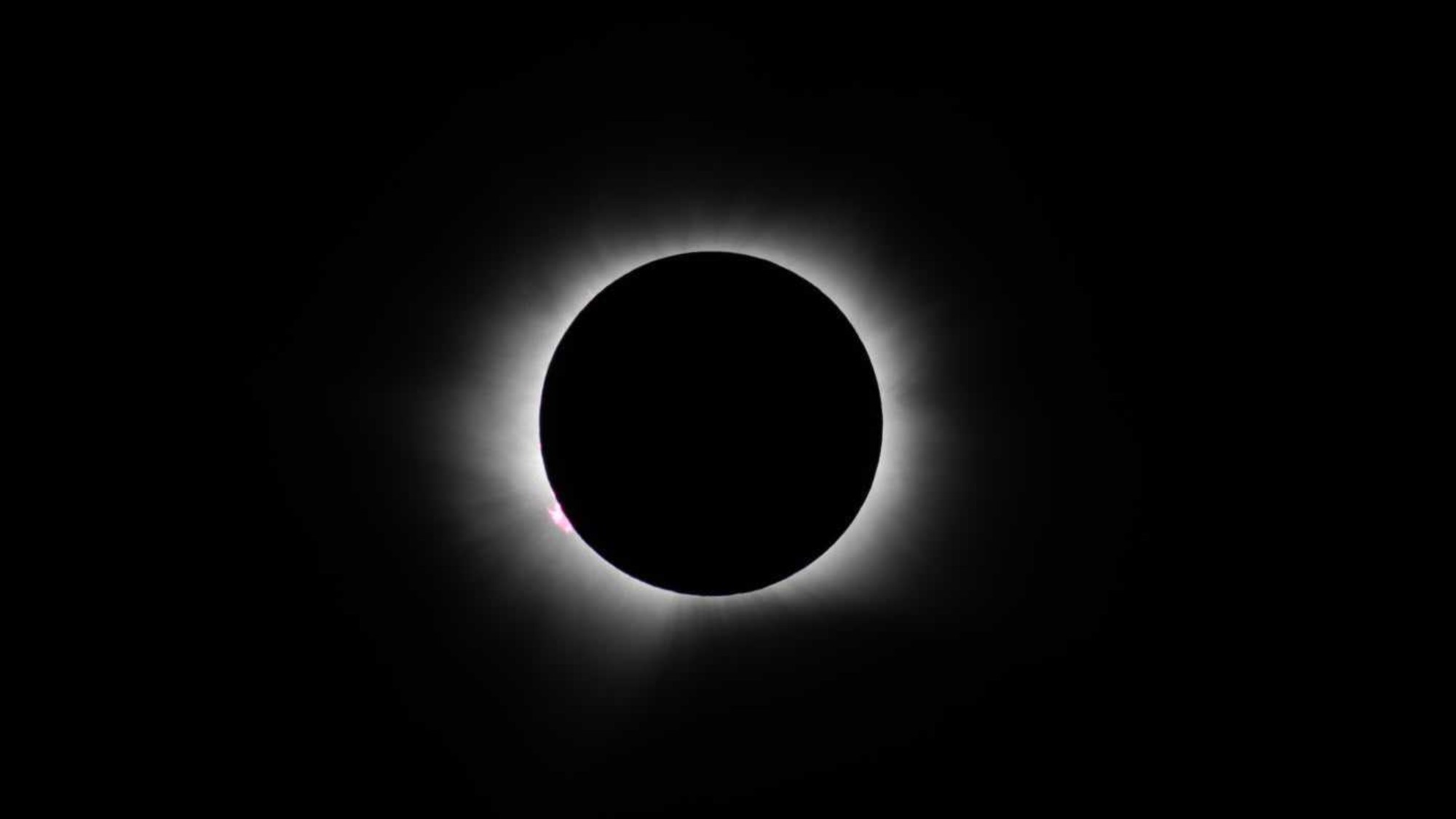
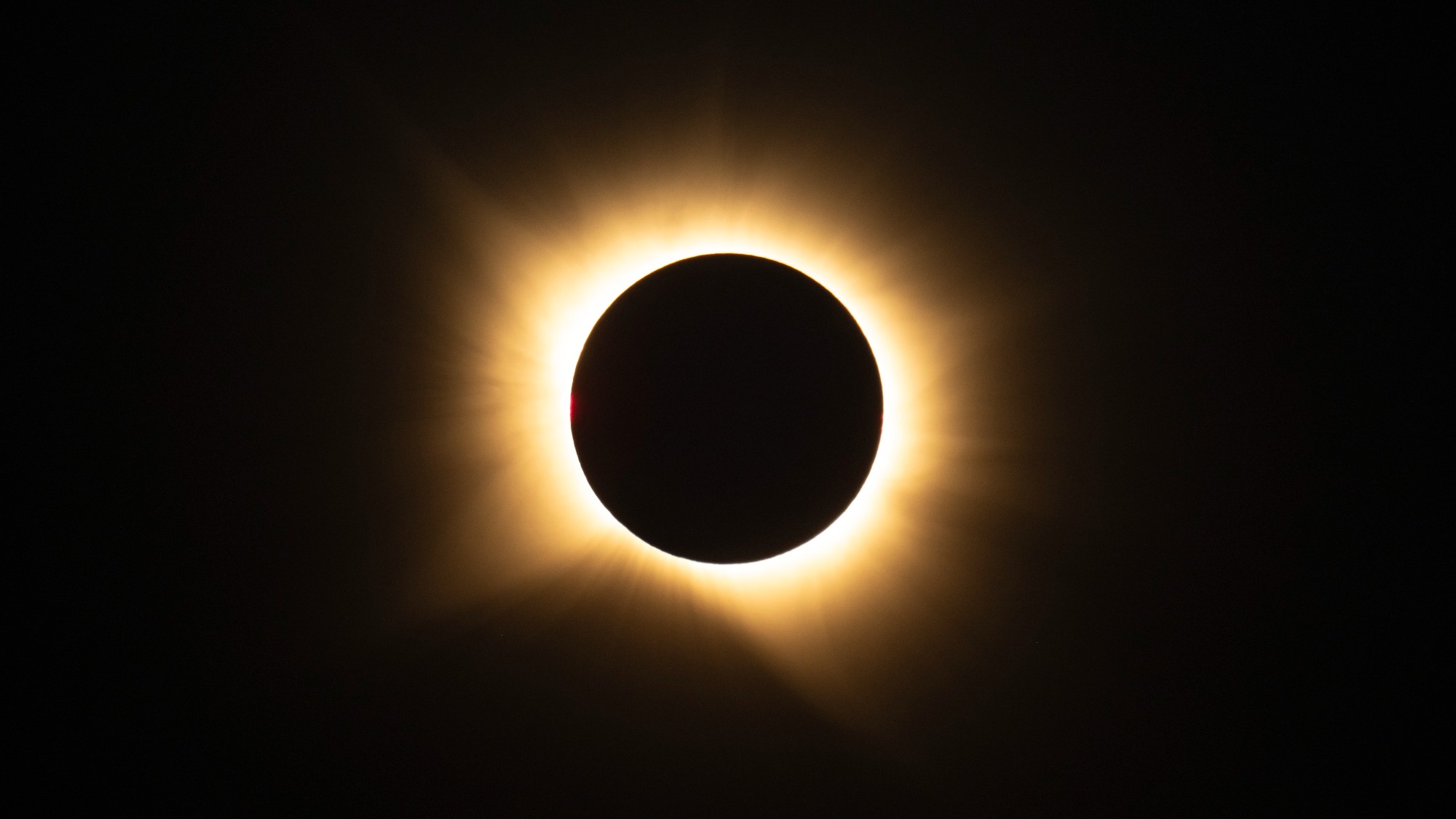
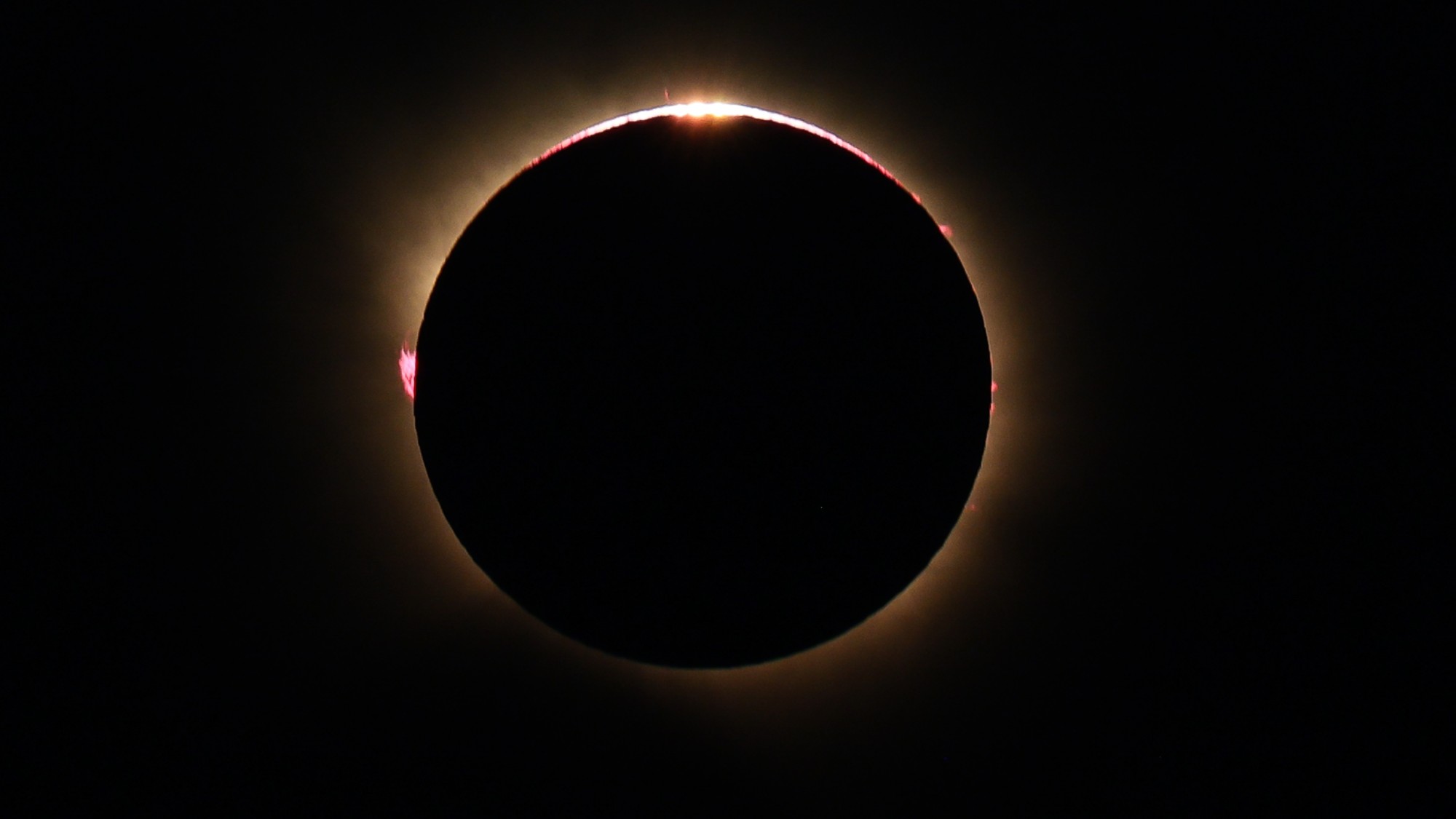
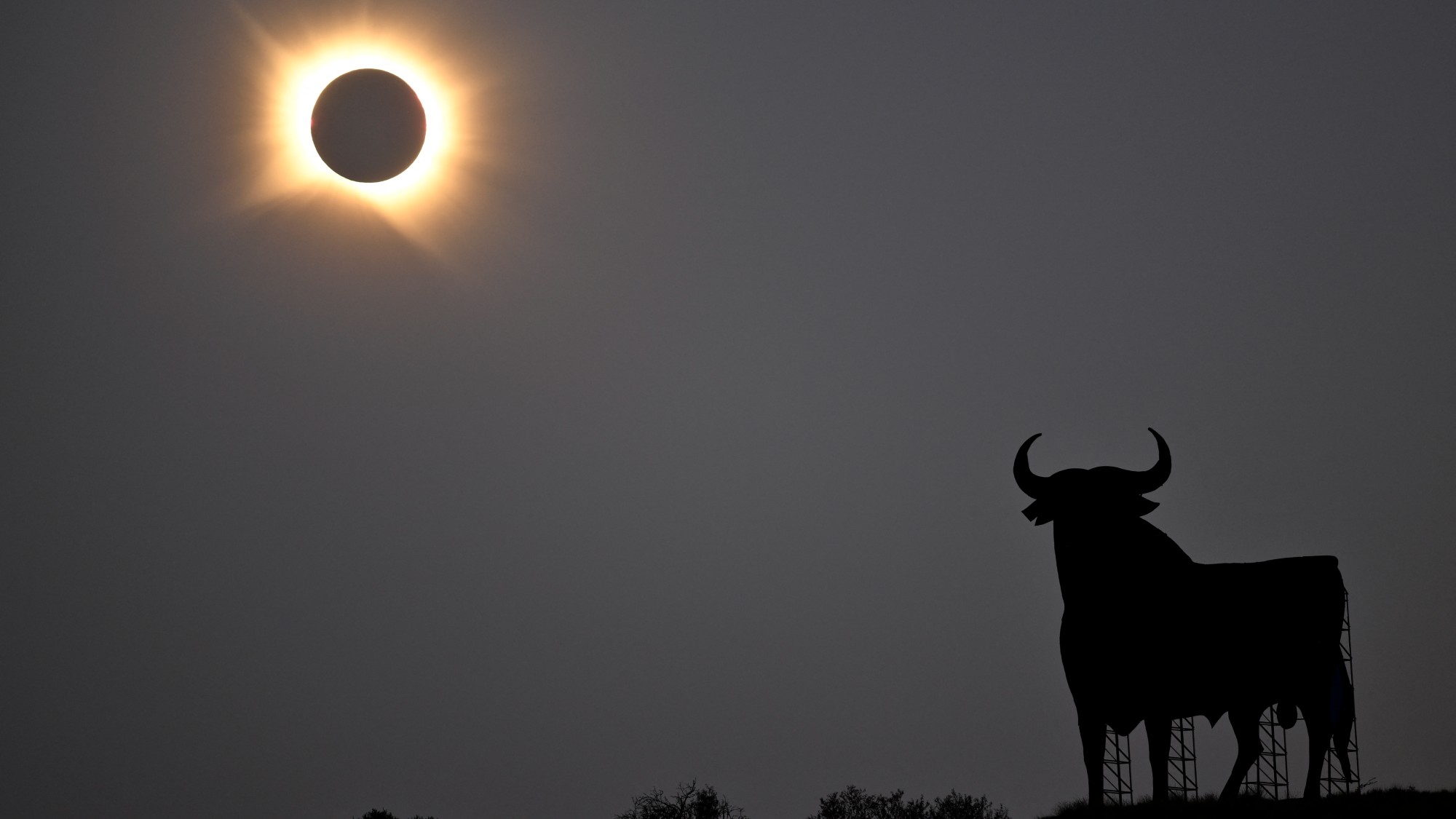
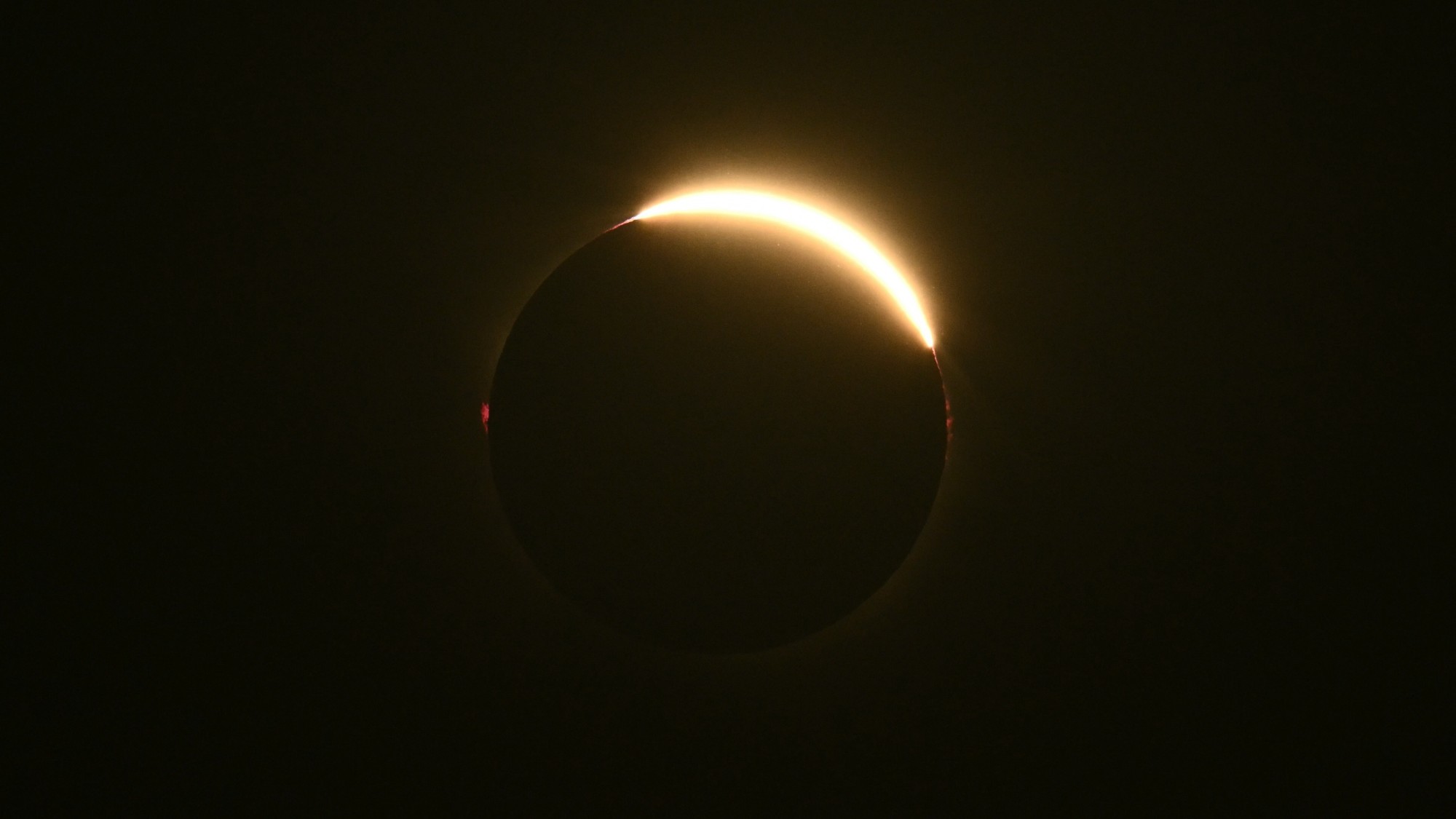
Total solar eclipses are incredible moments in time, but they are fleeting. As the moon passes directly in front of the sun and its shadow sweeps across Earth's surface, the temperature drops and the light takes on an eerie twilight quality. Birds and other animals go quiet. It's a spectacle unlike any other. And for millions today who were lucky enough to be in the path of totality across Greenland, Iceland and Spain, that's exactly what they experienced.
"I cannot believe what I just witnessed. I knew what to expect — I've seen thousands of photos but nothing compares to that feeling you get when you watch the sun transform before your very eyes," Space.com skywatching editor Daisy Dobrijevic said after watching the eclipse from the deck of the MS Spitsbergen on the HX Expeditions eclipse voyage in Scoresby Sund, Greenland on Aug. 12, 2026.
The sun during a total solar eclipse as seen from the deck of the MS Spitsbergen on the HX Expeditions eclipse voyage in Scoresby Sund, Greenland on Aug. 12, 2026. (Image credit: Daisy Dobrijevic/Future)
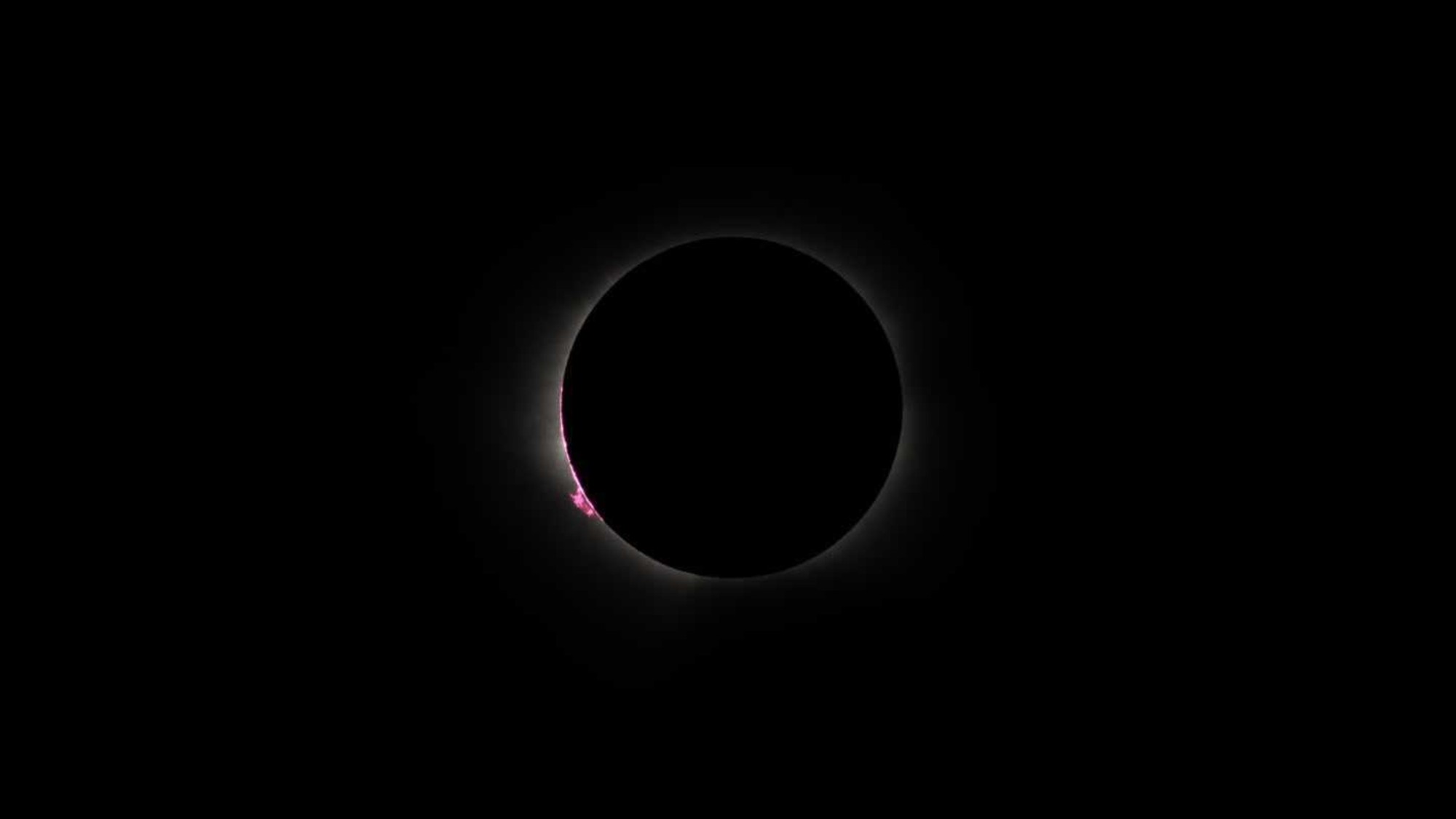
"It looked so big in the sky with the delicate corona streaming out into the abyss. Jupiter, Mercury and Venus even joined in the show. The huge prominence was the icing on the cake," Dobrijevic added.
"This is something I will never forget and I feel privileged to have experienced it in one of the most remarkable environments on Earth and alongside an incredible group of people aboard HX Expedition's MS Spitsbergen."
The sun during a total solar eclipse as seen from deck of the MS Spitsbergen on the HX Expeditions eclipse voyage in Scoresby Sund on Aug. 12, 2026. (Image credit: Daisy Dobrijevic/Future)
The 182 mile-wide (293-kilometer) path of totality — the line "drawn" on the face our our planet by the moon's shadow — began near Siberia over the Arctic Ocean and first arced down into eastern Greenland.
From there, the path stretched across western Iceland and then into northern Spain where millions gathered to witness the spectacle.
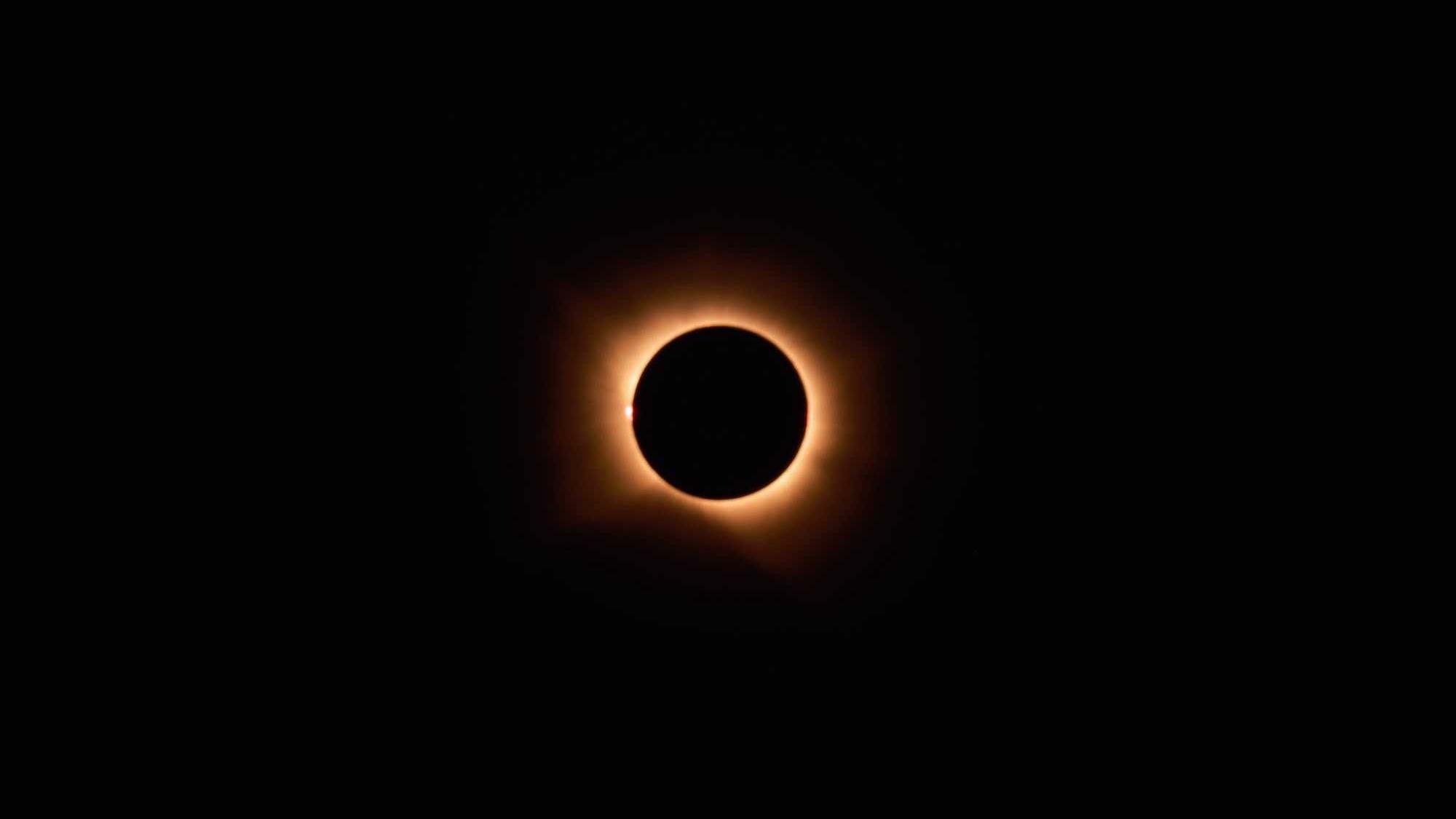
"It was the most incredible thing I've seen in my entire life," said Space.com skywatching writer Anthony Wood after witnessing the eclipse from Valoria la Buena, Spain alongside a team of citizen scientists from the Dynamic Eclipse Broadcast initiative. "It feels like it really shouldn't be happening. It strikes the lizard part of your brain that just tells you that this shouldn't be real."
A total solar eclipse as seen in Valoria la Buena, Spain on Aug. 12, 2026. (Image credit: Anthony Wood/Future)
The path then crossed the Balearic Islands just east of Spain before ending over the Mediterranean Sea as the sun set.
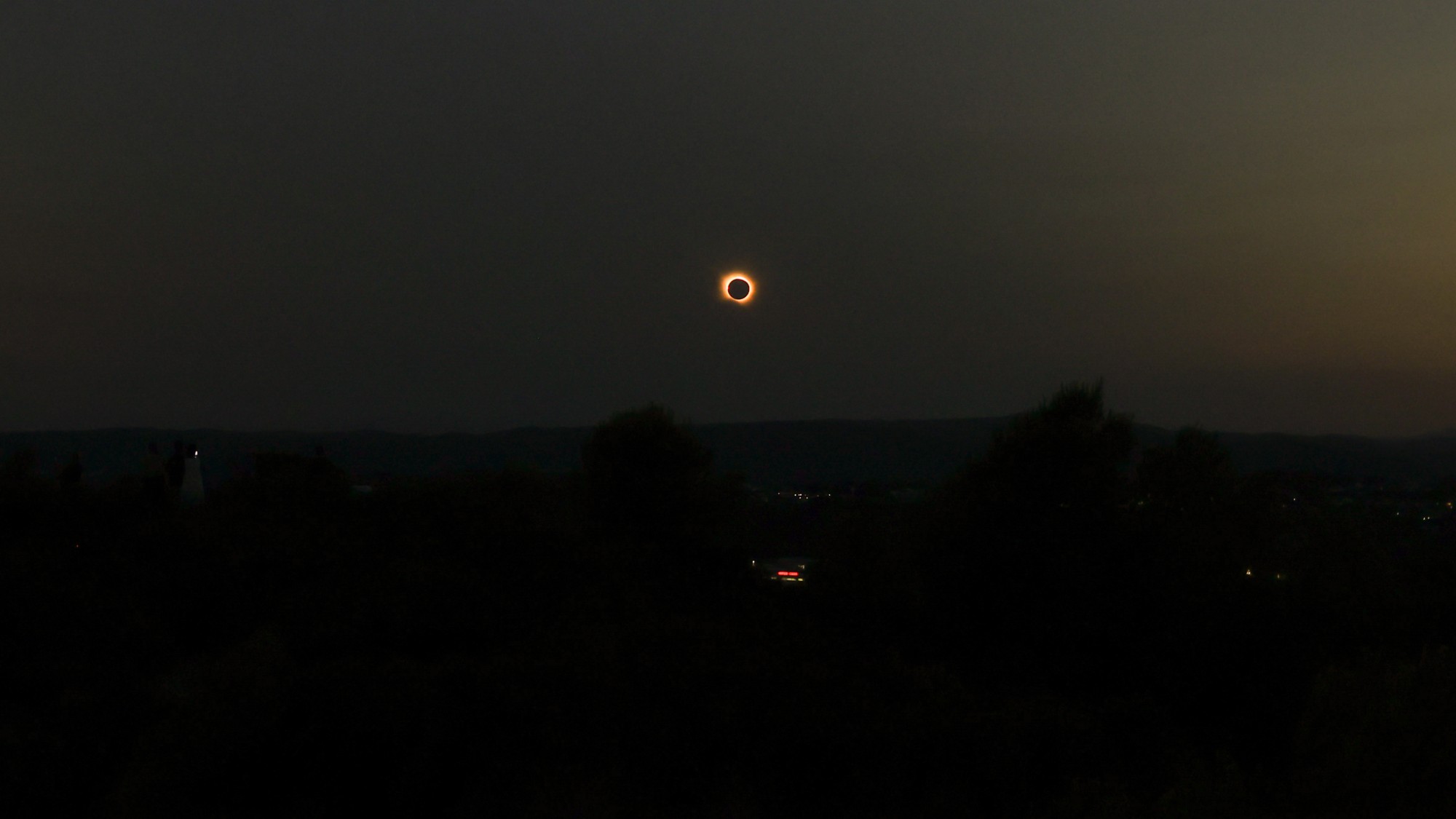
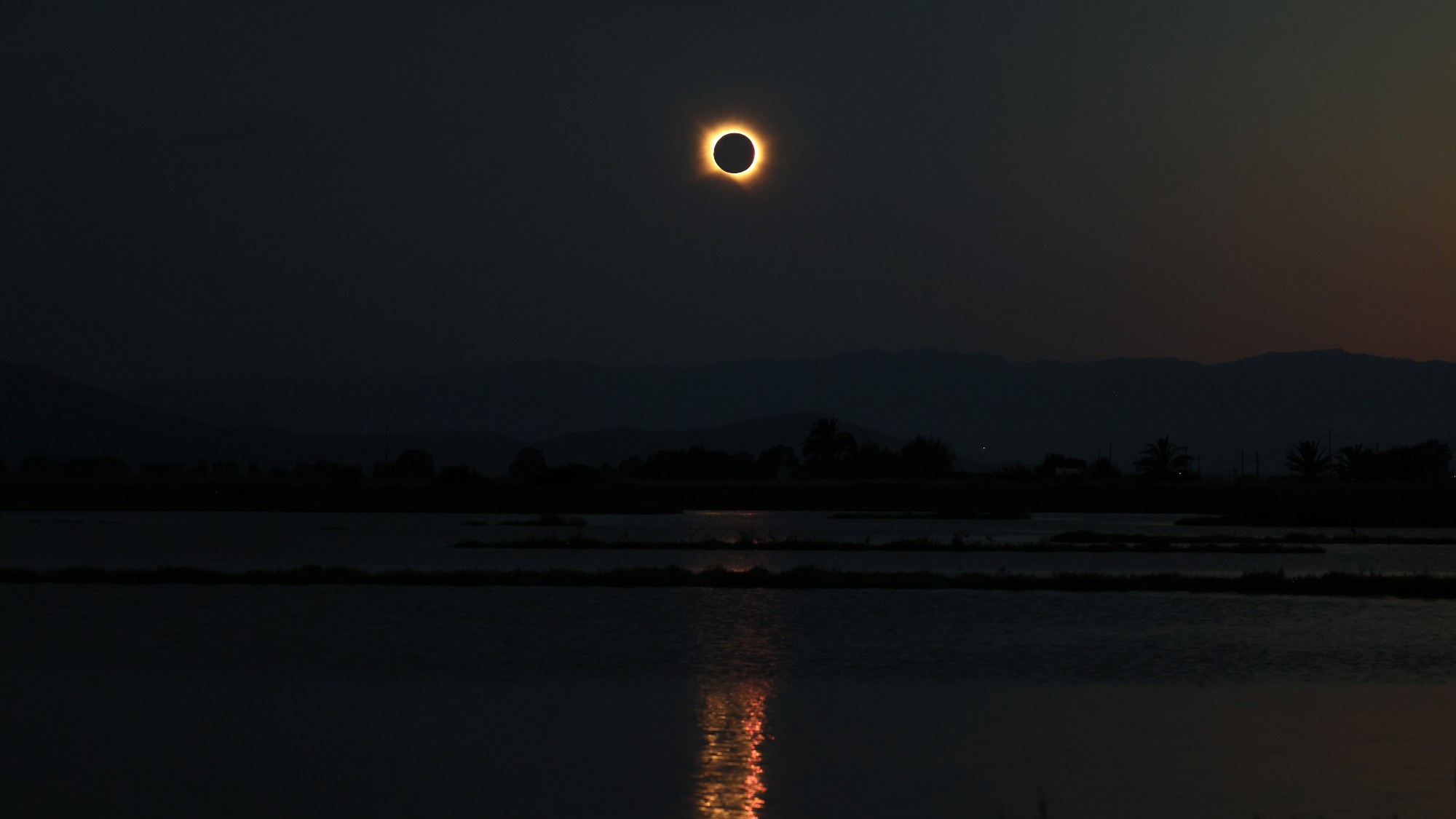
A total solar eclipse is seen above the mountains on Aug. 12, 2026 in Segur de Calafell, Spain. (Image credit: Eric Alonso/Getty Images)
Eclipse-watchers inside the narrow path of the moon's shadow were given a rare naked-eye glimpse of the sun's outer atmosphere, known as the corona. Witnessing the crown-like shape of the corona stretching away from the dark shadow of the moon is one of the most breathtaking moments of an eclipse. Photographs don't do it justice, as they rarely do.
A total solar eclipse is seen from San Millán de los Caballeros, Spain, Aug. 12, 2026. (Image credit: Bill Ingalls/NASA via Getty Images)
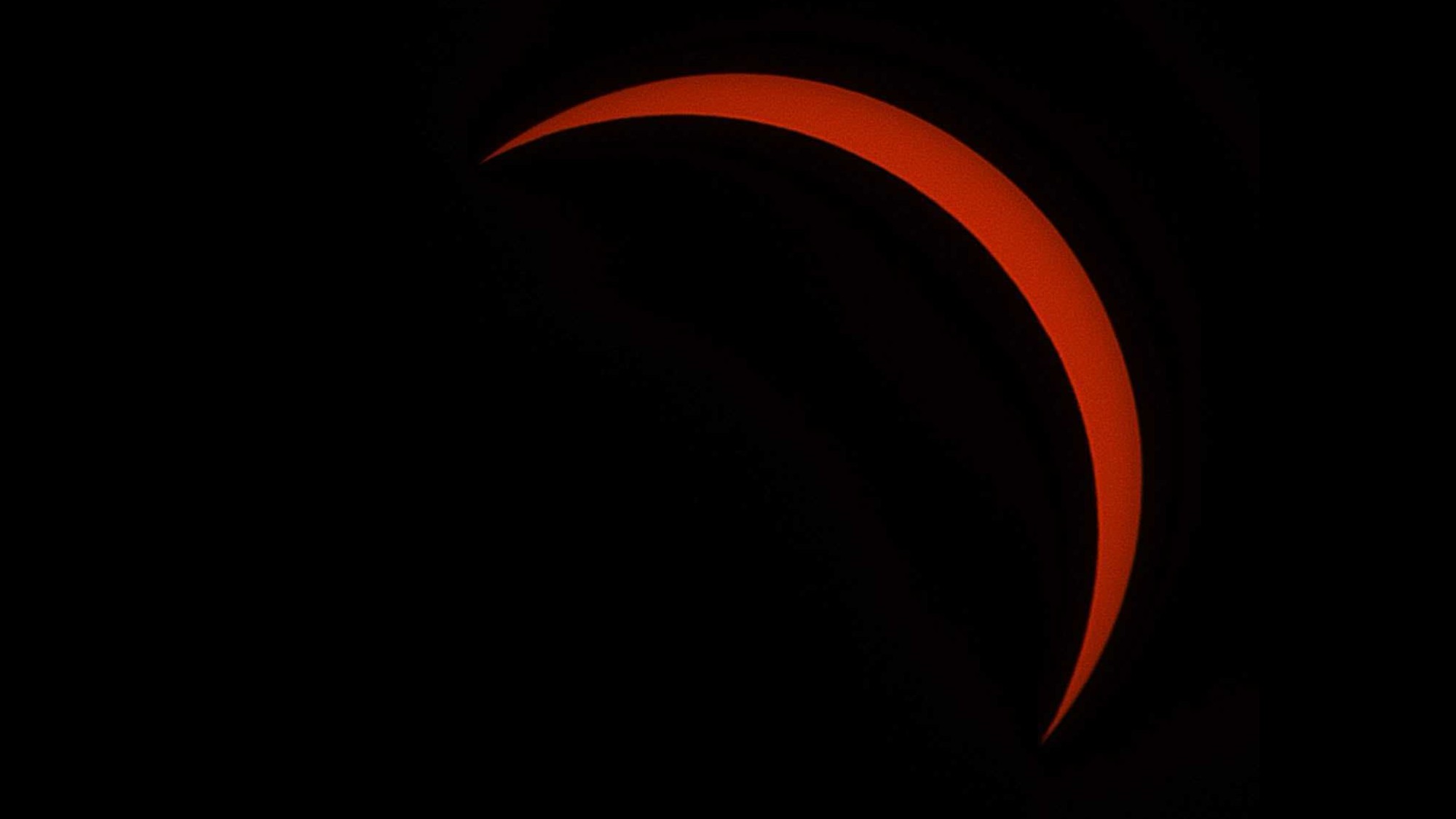
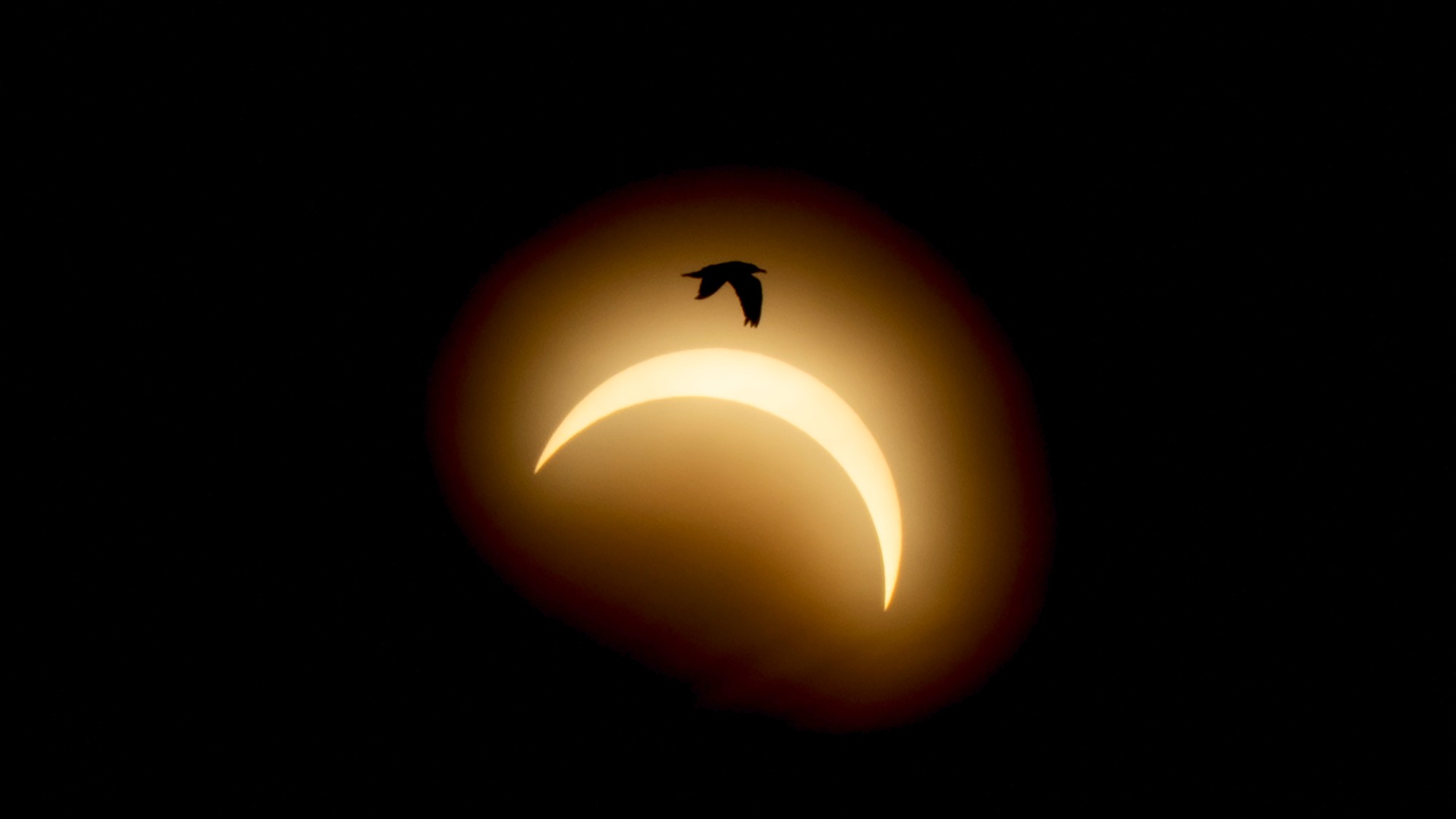
Outside of the path of totality, skywatchers throughout Europe and Scandinavia were able to catch a glimpse of a partial solar eclipse — in which the moon appears to take a "bite" out of the sun.
Space.com's Harry Bennett captured the partial eclipse from a hilltop in Somerset, England, shooting the scene with a Unistellar Equinox 2 smart telescope equipped with a solar filter.
A partial solar eclipse as seen on Aug. 12, 2026 from Kelston Roundhill in Bath, Somerset, England. (Image credit: Harry Bennett/Future)
The partial solar eclipse was also visible for much of the northeastern United States and as far west as Michigan. Much of Canada got to witness the partial eclipse too, and so did Alaska.
A total solar eclipse on Aug. 12, 2026 as seen from Segur de Calafell, Spain. (Image credit: Leon Neal/Getty Images)
What causes a total solar eclipse?
A total solar eclipse happens when the moon passes directly in front of the sun as seen from Earth. When this alignment happens, the moon casts its shadow along a line known as the path of totality. Only within this stripe will you be able to experience full totality.
The sun's corona glows as the moon completely blocks the Sun during the totality phase of the total solar eclipse as seen from San Asensio, La Rioja region, on Aug. 12, 2026. (Image credit: Ander Gillenea / AFP via Getty Images)
Another factor to consider is that the moon has an elliptical, or oval-shaped, orbit. This means that it's sometimes closer to Earth than other times. Total solar eclipses only occur when the moon is at just the right distance from Earth, making it appear the same size in the sky as the sun (or even slightly larger). This obscures the blinding light of the sun, allowing viewers to glimpse our star's outer atmosphere, or corona.
The moon passes over the sun's horizon during a partial solar eclipse at Abbadia, le Château Observatoire in Hendaye, southwestern France, on Aug. 12, 2026. (Image credit: Philippe Lopez / AFP via Getty Images)
When the moon is a bit farther away from Earth, it appears relatively smaller. And when solar eclipses fall on a date when the moon is at this greater distance from our planet, the moon doesn't completely block the sun. This creates what's known as an annular solar eclipse, or a "ring of fire" in the sky.
A total solar eclipse is seen on Aug. 12, 2026 in the Riet Vell Nature Reserve in Amposta, Spain. (Image credit: James Breeden/Getty Images)
When is the next total solar eclipse?
The next total solar eclipse will occur on Aug. 2, 2027 and will be visible throughout a 160-mile-wide (258-kilometer) path that crosses southern Spain, northern Morocco, northern Algeria, northern Tunisia, northeast Libya, central Egypt, the northeastern tip of Sudan, southwest Saudi Arabia, Yemen and the northeastern tip of Somalia.
Outside of this path, a partial solar eclipse will be visible to most of Europe, much of the African continent, the Middle East, Southeast Asia, eastern Canada and parts of Maine.
A partial solar eclipse is seen at the Mariager Fjord in Denmark, on Aug. 12, 2026. (Image credit: Bo Amstrup / Ritzau Scanpix / AFP via Getty Images)
In North America, the next total solar eclipse will take place on March 30, 2033, and will be visible from Alaska. Looking farther out, the U.S. states of Montana, South Dakota, North Dakota, and areas of Canada will witness a total solar eclipse on Aug. 23, 2044.
Submit your eclipse photos!If you captured a photo of the Aug. 12 total solar eclipse and would like to share it with Space.com's readers, send photos, videos, a brief description of your experience, and your name, location and content usage permission release to spacephotos@space.com.
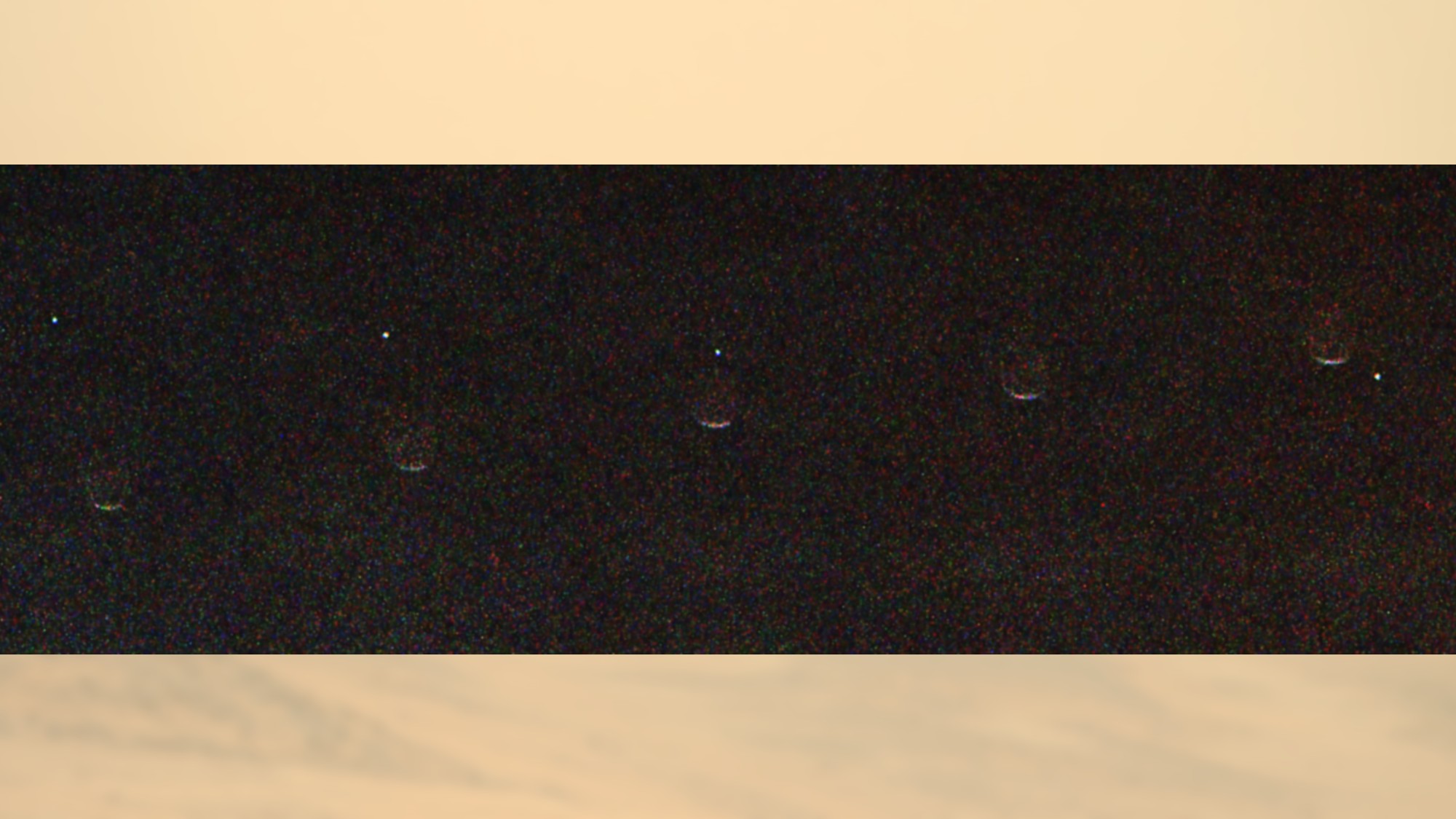
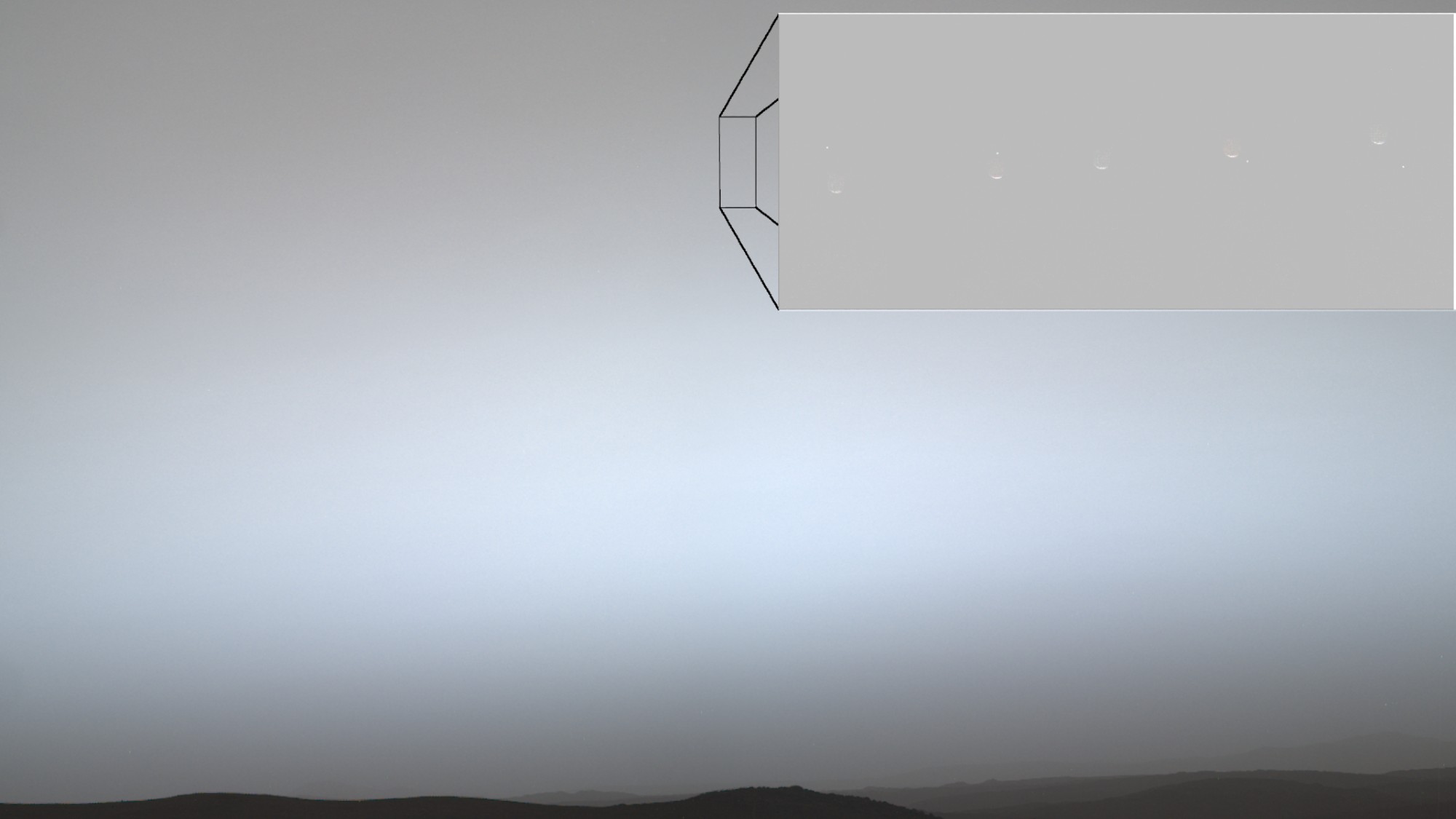
A composite image captured by NASA's Perseverance rover on July 2, 2026 showing Earth (the bright dot) passing behind Mars' moon Phobos in the Red Planet sky. (Image credit: NASA/JPL-Caltech/ASU/MSSS/SSI)
NASA's Perseverance rover witnessed a rare event recently, when Earth briefly disappeared behind Mars' moon Phobos in the Red Planet sky.
What is it?
These new composite images were released by NASA's Jet Propulsion Laboratory (JPL) and taken on July 2, 2026, the 1,907th Martian day of Perseverance's mission. They consist of nine different images taken by the rover's Mastcam-Z instrument as it pointed up into the hazy Martian sky, watching our planet, seen here as a pale dot, cross behind the Mars moon Phobos.
This type of event is known as an occultation, from the Latin word occultare, meaning "to hide." On Earth, the most common type of occultation occurs when our moon passes in front of background stars or when planets pass behind the moon.
Mars has two moons, Phobos and Deimos. Phobos is the larger and innermost moon. Both are lumpy and irregularly shaped, and astronomers aren't sure whether they came from the asteroid belt or were formed from an ancient impact near or on the Red Planet.
A composite of nine different images captured by NASA's Perseverance rover on July 2, 2026 showing Earth (the bright dot) passing behind Mars' moon Phobos in the Martian sky. (Image credit: NASA/JPL-Caltech/ASU/MSSS/SSI)
Why is it incredible?
The image took careful preparation and required Perseverance to be in the right place at the right time.
"Phobos crosses the Martian sky three times a day, and Earth is visible for months at a stretch, but catching one directly behind the other takes planning and a little luck," said Mark Lemmon, a Mastcam-Z co-investigator at the Space Science Institute.
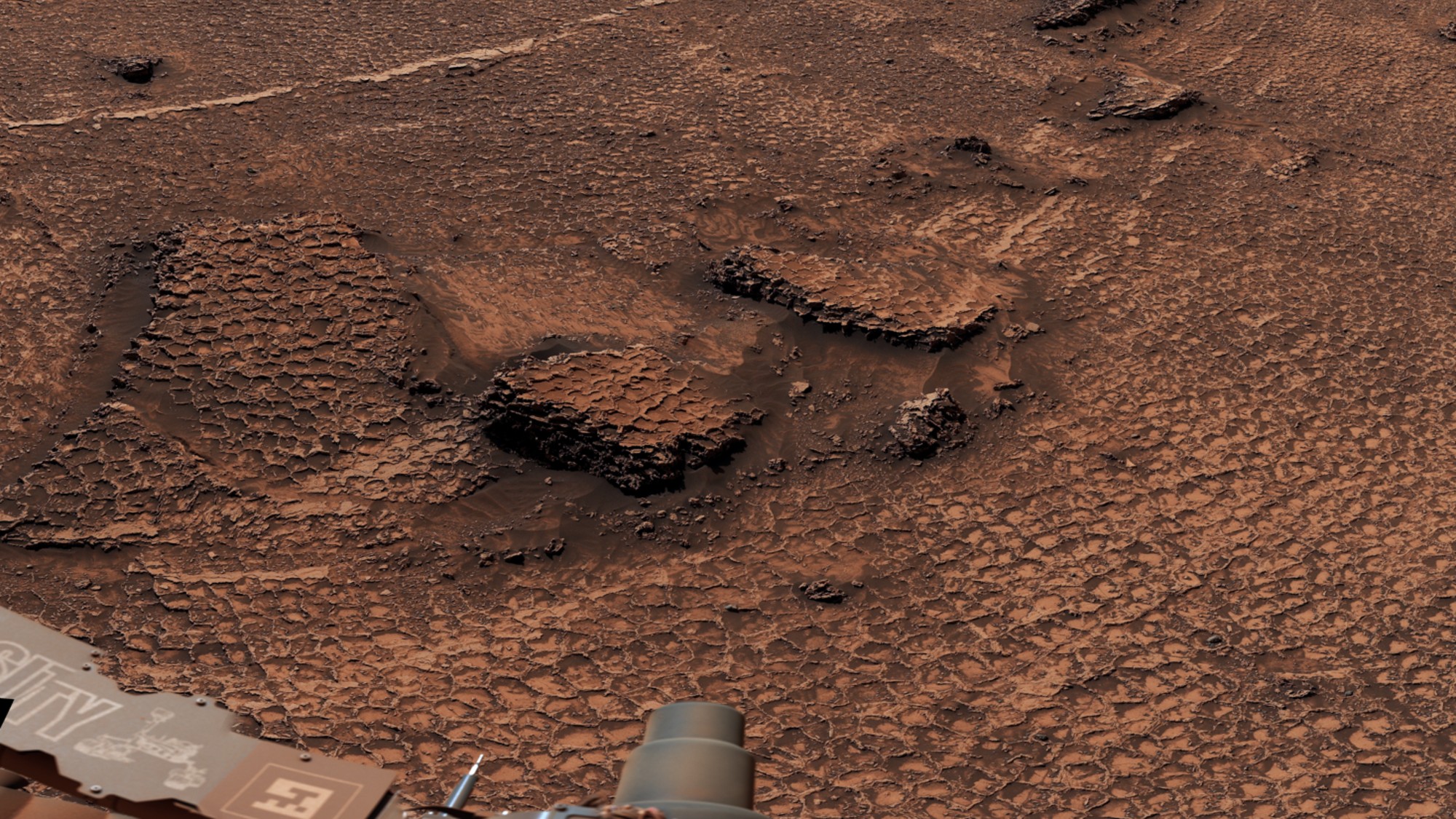
A close-up of the polygon fractures discovered by NASA's Curiosity Mars rover highlights their honeycomb-like textures. (Image credit: NASA/JPL-Caltech/MSSS)
NASA's Curiosity Mars rover spotted surprising shapes in the Red Planet soil while exploring a large valley.
What is it?
These images were captured on June 19 and 20, 2026, or the 4,930th and 4,931st Martian days of Curiosity's mission. They show honeycomb-like patterns referred to as "polygonal fractures" found in a valley on Mars known as Valle Grande. They measure about 1.5 to 3 inches (4 to 8 centimeters) across.
While Curiosity has seen other curious geometric patterns on Mars before, scientists were surprised by this most recent find.
"We've seen a lot of fascinating landscapes through Curiosity's eyes, but this sea of polygons took our breath away," project scientist Ashwin Vasavada of NASA's Jet Propulsion Laboratory said in a statement. "We measured their shapes and chemistry carefully and are hopeful there are clues in the data as to how these features formed."
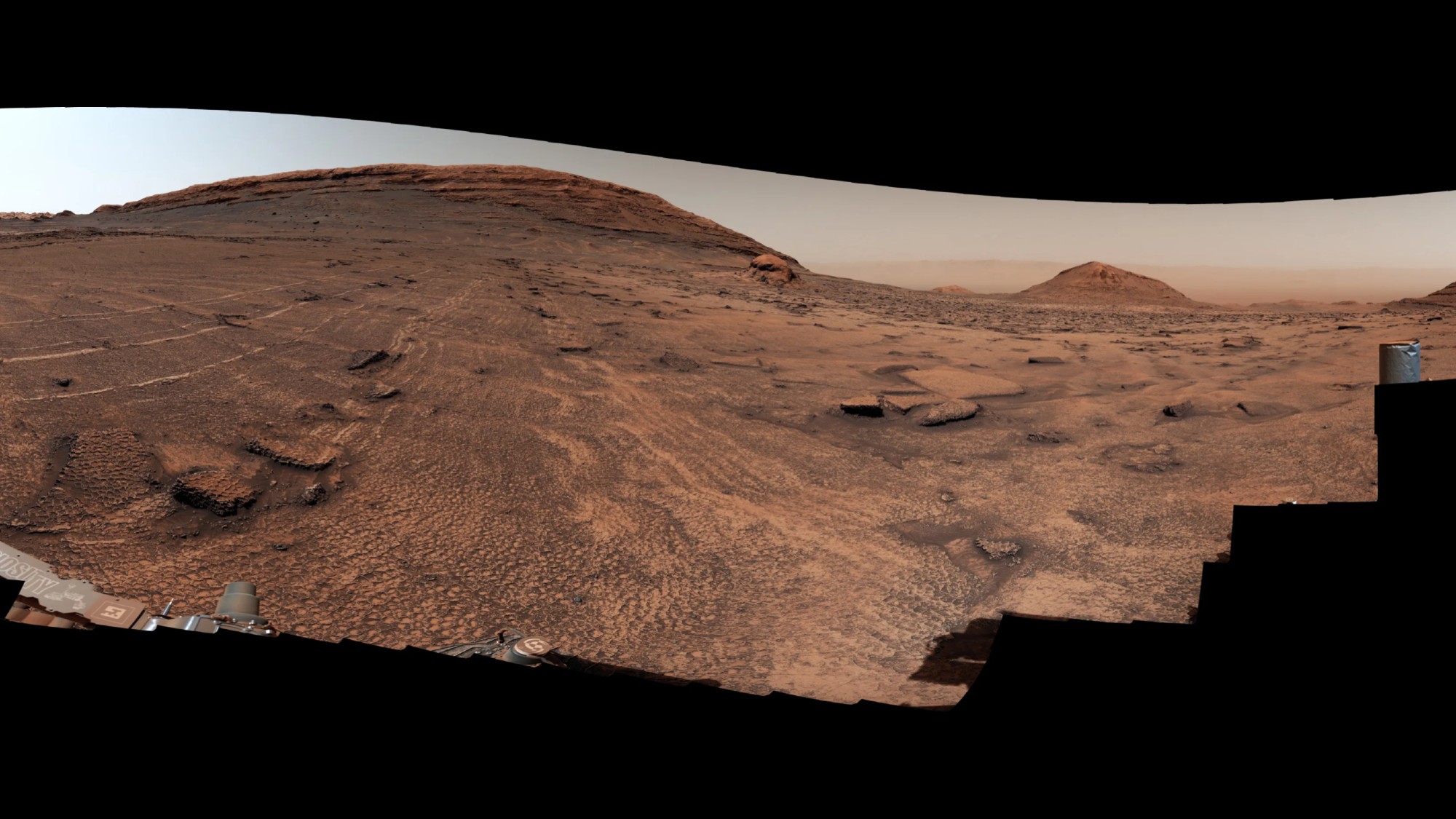
A panorama taken by NASA's Curiosity Mars rover showing a large field of hexagonal shapes in the Martian soil. (Image credit: NASA/JPL-Caltech/MSSS)
Why is it incredible?
This field of polygons in Valle Grande extends as far as Curiosity's instruments could see, even around the base of a steep hill scientists named "Miraflores."
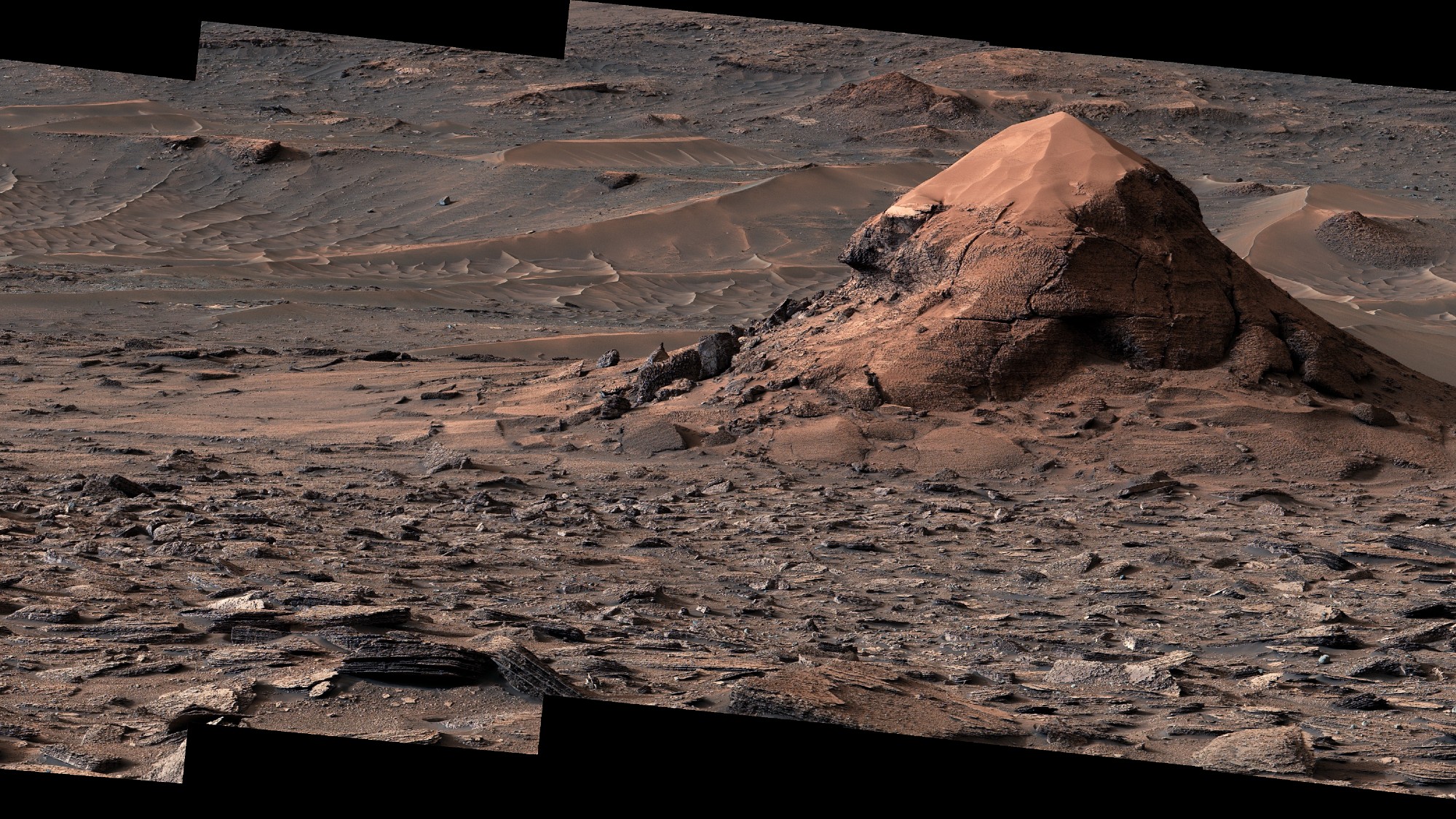
NASA's Curiosity Mars rover captured this sand-capped butte, nicknamed "Miraflores," estimated to be about 20 feet (6 meters) tall, on June 11, 2026. (Image credit: NASA/JPL-Caltech/MSSS)
While mission scientists have theories about how these structures form, it ultimately remains a mystery how they formed.
It's thought that changes in temperatures on Mars could have caused water to squeeze through sediment layers, but scientists will need to collect more data before they can reach a conclusive answer.
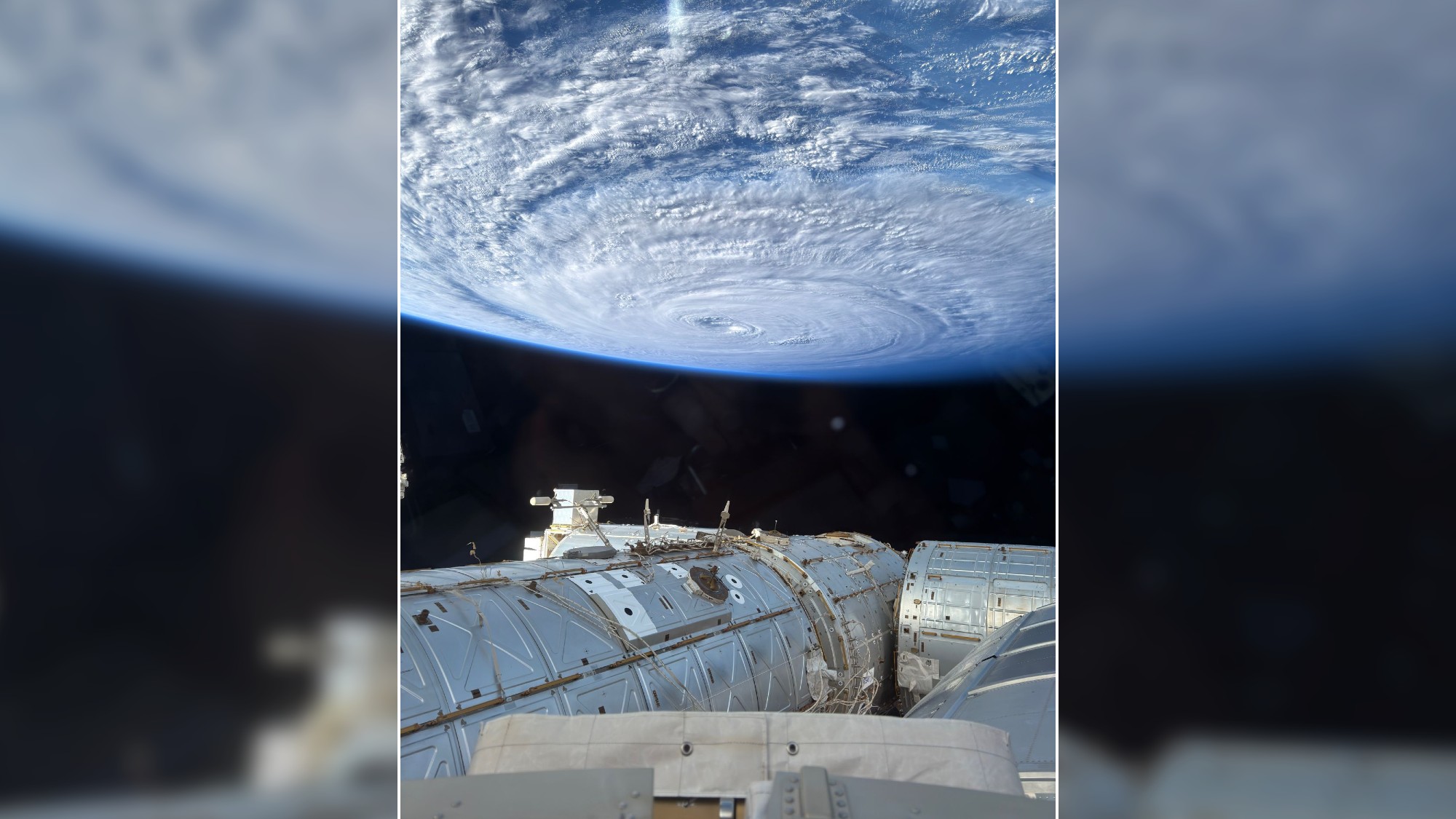
A photograph of a swirling typhoon in the Pacific Ocean taken by NASA astronaut Anil Menon from the cupola of the International Space Station on Aug. 2, 2026. (Image credit: NASA/Anil Menon)
NASA astronaut Anil Menon captured an incredible photograph of a swirling typhoon in the Pacific Ocean from the International Space Station on Aug. 2, 2026.
What is it?
According to his post on X sharing the image, Menon used an iPhone to capture the photo from the space station's cupola, a domed structure built by the European Space Agency that features six circumferential windows and central nadir viewing window.
The photograph shows a massive swirling typhoon in the Pacific Ocean. While Menon doesn't mention the storm or its location by name, it appears to be Super Typhoon Dolphin, the fifth tropical cyclone to reach category 5 in 2026. It has since been downgraded to a category 3 storm, and is expected to weaken to a category 1 or 2 as it continues to move westward towards Japan's Okinawa island.
Why is it incredible?
Aside from being a reminder of how powerful some storms on Earth can be, Menon's photograph shows just how far astronaut photography has come.
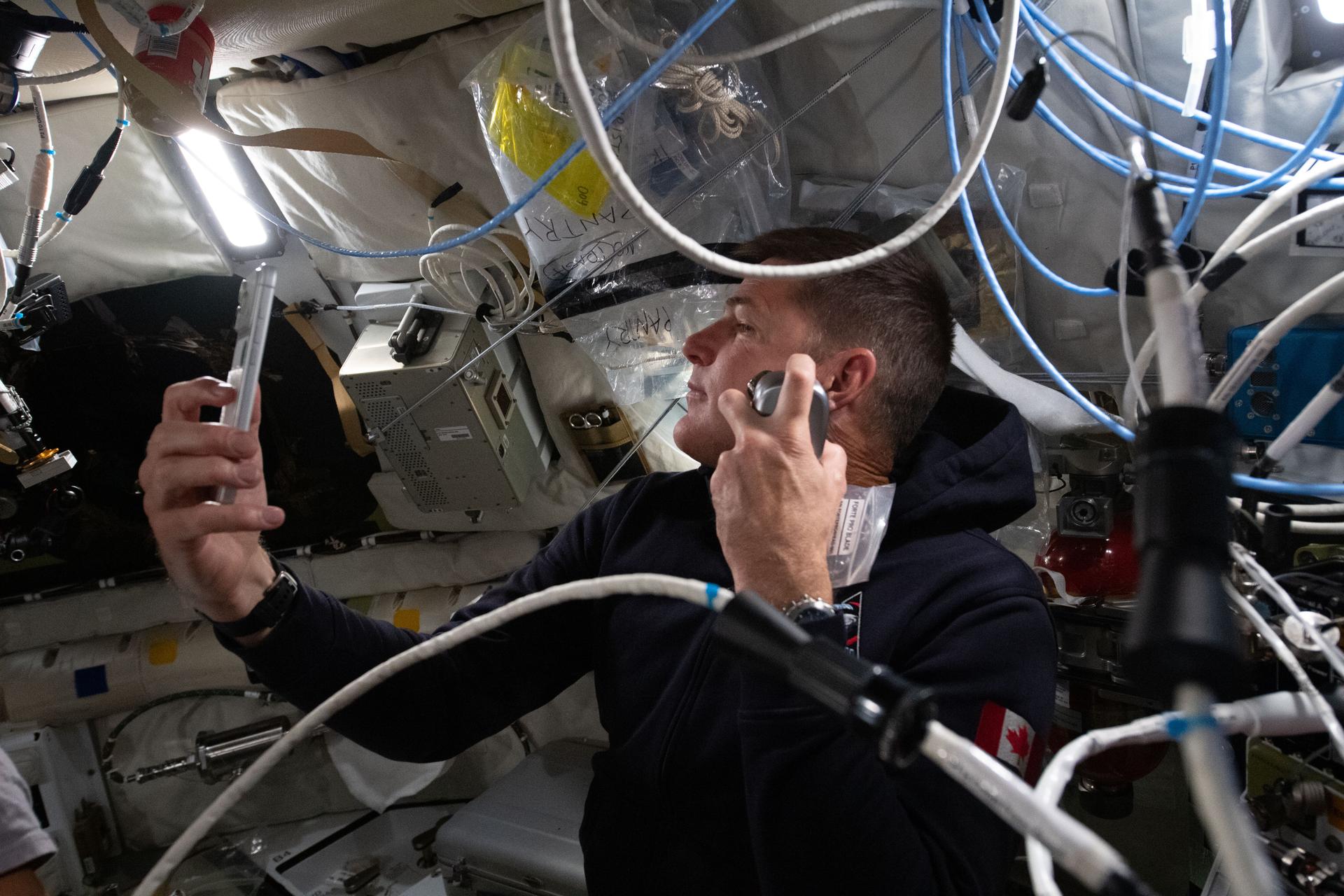
Even equipped with only a phone camera, astronauts can capture breathtaking photos to share with the world. On NASA's recent Artemis II mission around the moon and back, the four crewmembers beamed back incredible images captured with iPhones. They even sometimes used them as "mirrors" while shaving.
Artemis 2 astronaut Jeremy Hansen using a phone as a mirror while shaving before his crew's historic lunar flyby. (Image credit: NASA)
Menon's photo, like other space station photography, also drives home just how mind-boggling of an engineering feat the International Space Station (ISS) truly is.
There are currently seven people aboard the football-field-sized orbital laboratory, circling Earth every 90 minutes at a speed of 17,500 miles per hour (28,000 kilometers/hour) at an average altitude of around 250 miles (400 km).
Since 2000, the ISS has hosted international crews and has been the site of countless groundbreaking scientific experiments made possible by its microgravity environment. But the station is reaching the end of its life; NASA plans to retire it and crash it in into the Pacific Ocean around 2030.
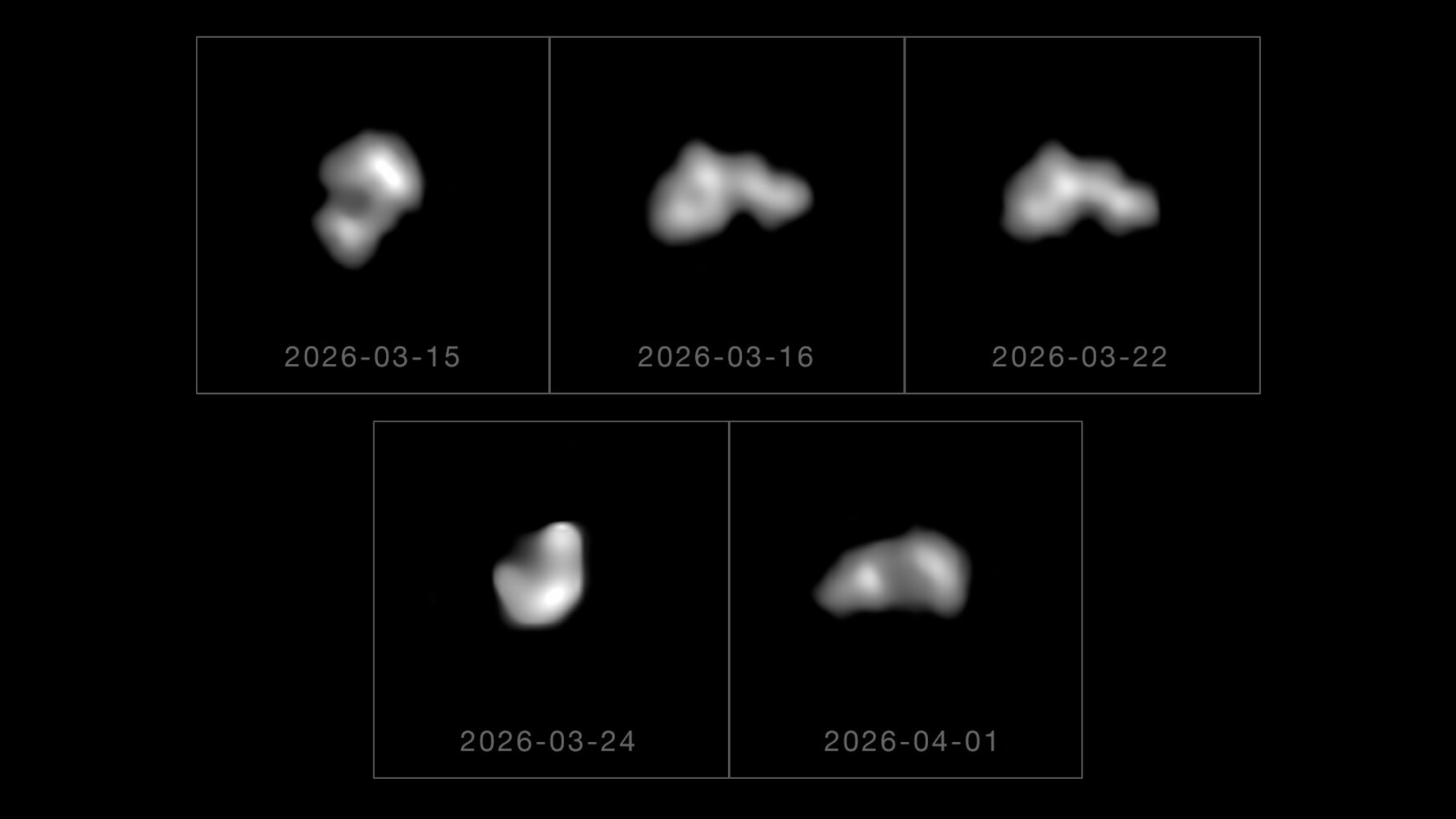
A collage of images of asteroid (44) Nysa, believed to be the first-known asteroid in our solar system to have a "trilobate" or three-headed shape. (Image credit: ESO/K. Minker et al.)
New images reveal what astronomers believe is the first-known "trilobate" or three-headed asteroid in our solar system.
What is it?
These new images capture the asteroid known as (44) Nysa, or just Nysa, as it spins through the main asteroid belt located between Mars and Jupiter. The images were captured with the Very Large Telescope in Chile and the Large Binocular Telescope in Arizona.
Nysa was first observed in 1857, but it wasn't until the new images were captured when scientists were able to resolve its unique three-headed structure. The asteroid appears to be around 47 miles (75 kilometers) in circumference at its widest point, with two narrow "necks" that give it its odd "trilobate" shape.
Even more incredible, astronomers were also able to resolve that a 0.6-mile-wide (1-km-wide) moon seems to orbit Nysa. The tiny moon, currently known as S/2026 (44) 1, appears to orbit the asteroid at a distance of around 106 miles (170 km).
An image of the three-headed asteroid (44) Nysa and its small moon S/2026 (44) 1, identified here by a pink arrow. The image was produced by the Large Binocular Telescope in Arizona. (Image credit: Kate Minker et al.)
Why is it incredible?
Astronomers say these images reveal (44) Nysa to be unlike any other asteroid we've seen in our neck of the cosmic woods.
"The images reveal a remarkably unusual object," said Kate Minker of Arizona's Lowell Observatory in a statement announcing the discovery. "The most likely explanation is that Nysa is either a contact trinary, consisting of three connected components, or an extremely irregular coherent body unlike anything we've previously observed."
Scientists can study asteroids like Nysa to learn about how the planets of our solar system formed. Nysa belongs to a class of asteroids believed to have formed closer to the inner solar system and therefore may have a similar composition to the building blocks that would go on to form the inner planets.
NASA is planning to send two maneuverable probes to lunar orbit in order to learn how spacecraft are affected by the complex gravitational environment near the moon.
The mission, known as CAPSTONE 02, is currently aiming to launch in 2027. It will see the two probes maneuver in close proximity to one another and fly in "formation" so mission operators can better understand the gravitational effects spacecraft experience in cislunar space. This area of space is under the influence of both Earth's gravity and the moon's, meaning spacecraft operating there will have to navigate what are known as "three-body orbits."
While testing spacecraft maneuverability in these complex orbits, CAPSTONE 02 will also study communication and navigation systems that will be used in NASA's planned Artemis missions of lunar exploration and moon base construction. "This mission represents an important step in the maturation of cislunar capabilities," said NASA's Sean Fuller, Moon Base CAPSTONE manager, in an agency statement. "CAPSTONE 02 lays the foundation for lunar infrastructure and commercial services that support Artemis, Moon Base, and future missions to deep space."
The two CAPSTONE 02 probes are being built by Terran Orbital Systems, Inc. Once in space, they will alternate jobs while flying in formation, switching between what NASA calls "chaser" and "target" roles.
The spacecraft pair will use celestial navigation, optical sensors and data collected by telescopes on the ground during these maneuvers. This is similar to how NASA will use a variety of data to help its Orion spacecraft meet up with a lunar lander en route to the moon.
"Transporting crew to the lunar surface from cislunar orbit depends on knowing how well navigation systems will perform during these operations. Since these conditions can't be fully recreated on Earth, they must be tested in space," NASA wrote in its statement outlining the CAPSTONE 02 mission.
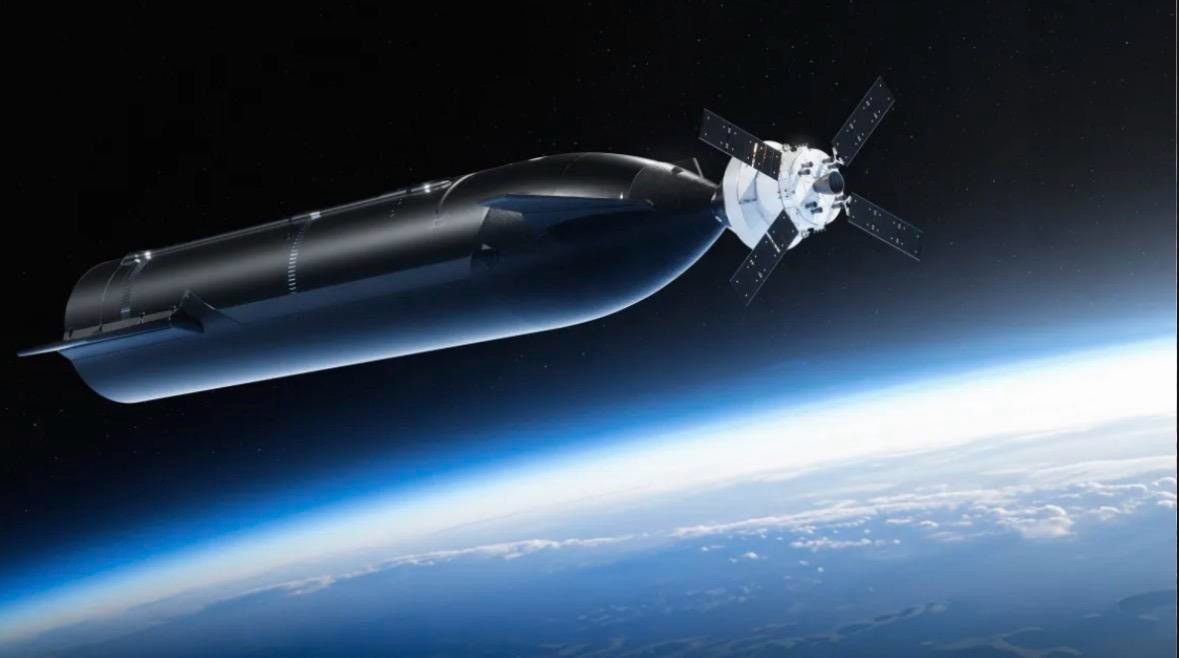
An artist's rendering of NASA's Orion spacecraft meeting up with SpaceX's Starship on the planned Artemis III mission. (Image credit: SpaceX)
As its name implies, this will be the second mission under NASA's CAPSTONE program, or Cislunar Autonomous Positioning System Technology Operations and Navigation Experiment. The first CAPSTONE probe launched in 2022 and operated for four years before NASA officially concluded its mission in June 2026.
That microwave-oven-sized CAPSTONE spacecraft tested communications tech and became the first spacecraft to test three-body orbits around the moon, according to a NASA statement.
CAPSTONE was tested in what is known as a near rectilinear halo orbit. This is a fairly gravitationally stable orbit, thanks to the nearly equal pulls of both Earth's gravity and the moon's.
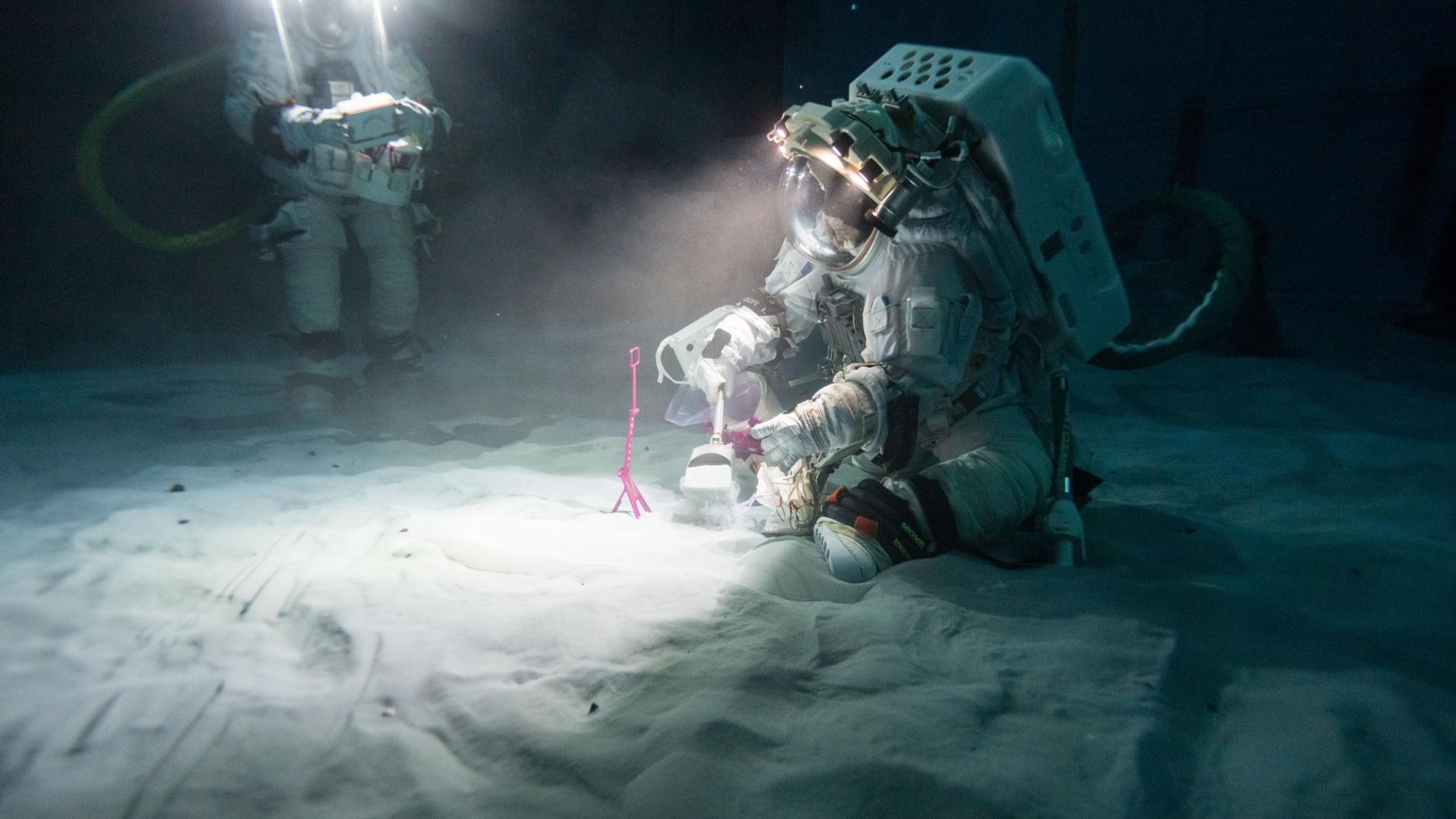
Exploration geologists and Artemis science officers Trevor Graff, left, and Angela Garcia carry out a lunar training development run at NASA's Neutral Buoyancy Laboratory (NBL) in Houston. (Image credit: NASA)
Sometimes to go to the moon, you first have to go underwater.
NASA is currently developing the training program for NASA's Artemis astronauts, some of whom could set foot on the moon during the agency's planned Artemis IV mission. As part of that development, two agency scientists recently donned Artemis moonsuits and took to NASA's underwater training facility.
What is it?
These photos show two NASA exploration geologists and Artemis science officers practicing using the same types of geology tools that astronauts might use when they explore the moon.
The scientists also "deployed a mock lunar payload under low-angle lighting conditions," according to a NASA statement accompanying the photo. NASA is currently aiming to place astronauts at the lunar south pole, where many areas remain in permanent shadow. As such, future lunar explorers may have to operate in near-total darkness and learn how to carry out their missions with very little light.
Exploration geologists and Artemis science officers Trevor Graff, left, and Angela Garcia carry out a lunar training development run at NASA's Neutral Buoyancy Laboratory (NBL) in Houston. (Image credit: NASA)
Why is it incredible?
The fact that NASA is preparing to send humans back to the moon is incredible in itself. Humanity hasn't set foot on our natural satellite since 1972. While NASA still has many technical hurdles to cross when it comes to developing and selecting a moon lander, the agency is pushing ahead with developing the training it will use to prepare its astronauts to explore the lunar surface.
For this particular part of Artemis training development, NASA placed two scientists in its Neutral Buoyancy Laboratory (NBL), a 40-foot-deep (12-meter) pool at NASA's Johnson Space Center in Houston. The particular test in these photos was "the first time that two geologists were suited up simultaneously for lunar geology training in the NBL," according to NASA's statement.
For these tests, a portion of the underwater laboratory was outfitted with soil and rocks that simulate the surface of the moon. The buoyancy of the pool can be manipulated in order to simulate different levels of gravity, helping astronauts train for spacewalks or for exploring other worlds like the moon.
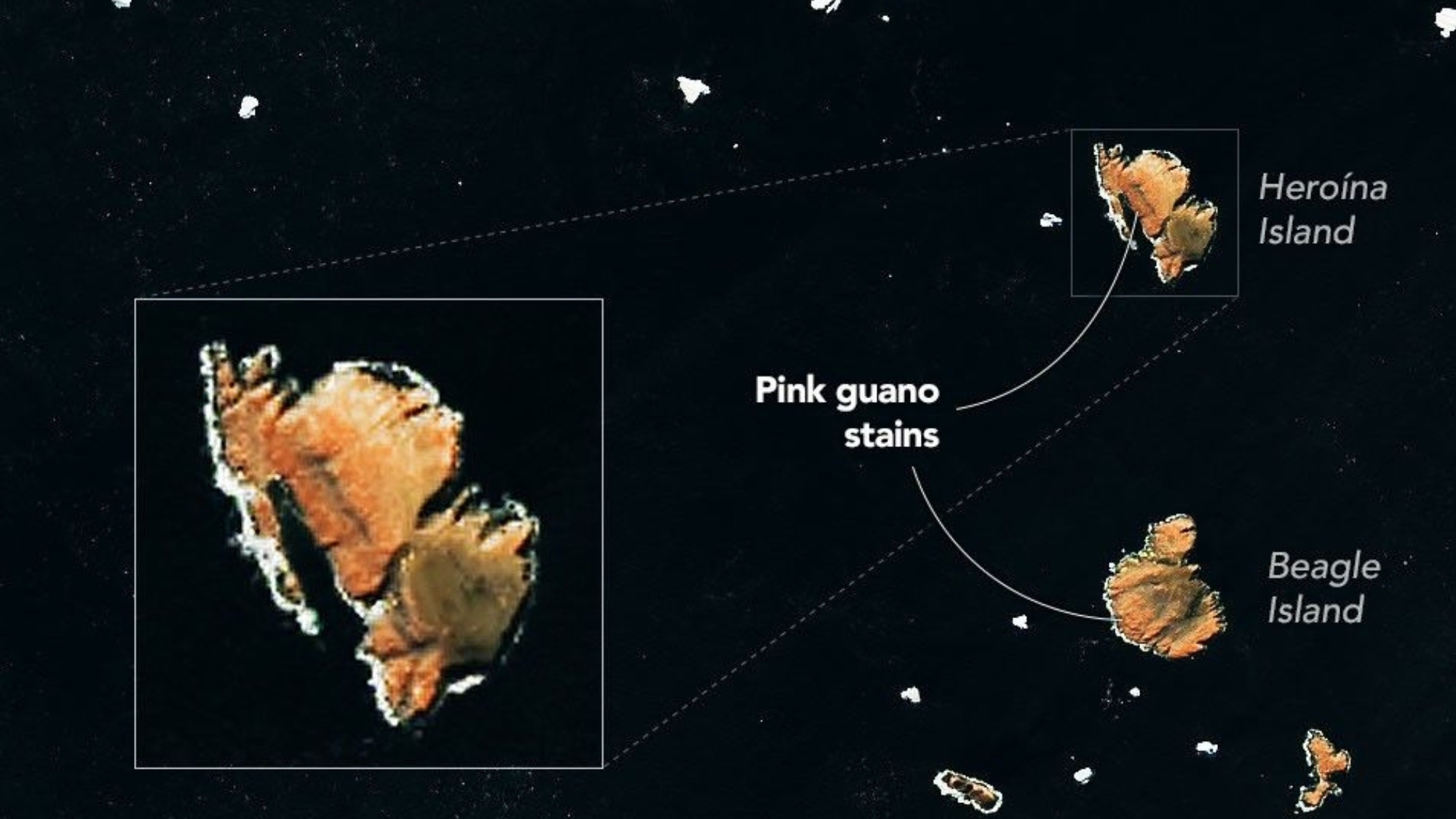
Pieces of sea ice drift near Antarctica's Danger Islands in this image, acquired on Jan. 22, 2023, by the Landsat 8 satellite. Several of the islands are stained pink by guano from Adélie penguins with a krill-rich diet. (Image credit: NASA Earth Observatory/Michala Garrison)
The diets of penguins on Antarctica's Danger Islands can be seen from space. At least indirectly.
Using satellite images captured by the Landsat 8 spacecraft operated by NASA and the United States Geological Survey, scientists can track changes in Adélie penguins' diets based on the color of their guano, or droppings.
What is it?
The image above shows pinkish-orange guano staining large sections of some of the Danger Islands, Heroína Island and Beagle Island. The penguins that live there eat a diet rich in krill, small marine crustaceans that are bright pink in color due to a specific type of algae upon which they feed.
A group of Adelie penguins jumping from ice pebble to ice pebble on a beach of Paulet Island on the tip of the Antarctic Peninsula. (Image credit: Wolfgang Kaehler/LightRocket via Getty Images)
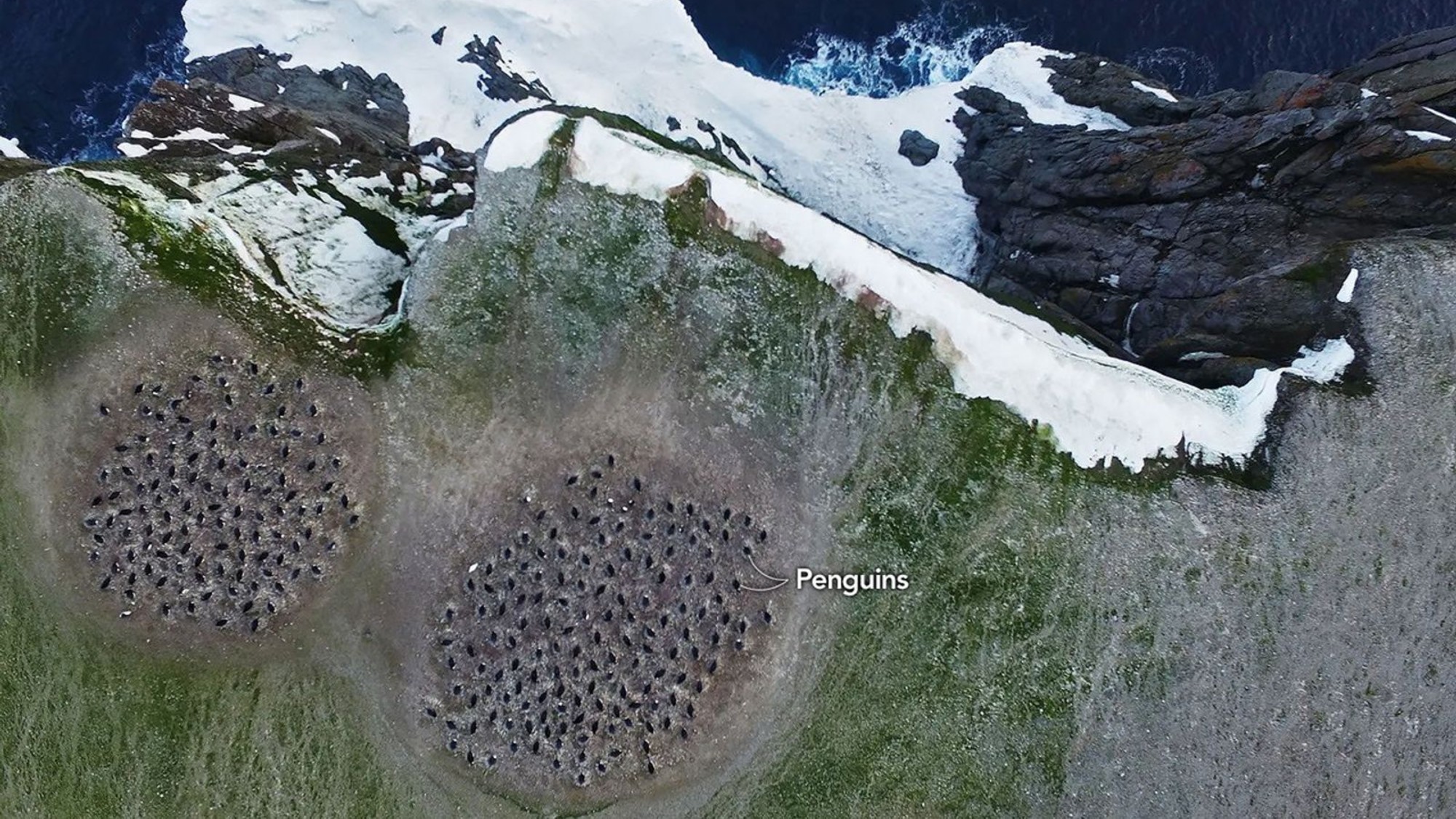
The bright pink color of the penguins' droppings stands out in satellite imagery, allowing researchers to monitor the birds' populations from space. But scientists wanted a closer look, and collected drone imagery as well, as seen in the image below.
A colony of Adélie penguins is visible in this image captured by a drone during a research expedition to the Danger Islands. (Image credit: Thomas Sayre-McCord/WHOI/MIT)
Why is it incredible?
It's pretty amazing that the diet of a specific population of birds can be monitored from 438 miles (705 kilometers) above Earth's surface. The imagery collected by Landsat-8 helped scientists locate where the penguin colonies might be, allowing them to find them in-person and collect guano samples. Those samples contained evidence of what the penguins were eating over time.
Researchers are using those satellite images and samples to track how the penguins' diet might be affected by changes in sea ice conditions, according to a NASA statement.
"Sea ice is such a hugely important factor in the Antarctic marine environment," said Clemson University biologist Casey Youngflesh who led a study comparing the penguins' diet and sea ice conditions. "The structure of the region's food web is changing in response."