NASA launched this spacecraft to save a space telescope. Now, it needs saving too

Things aren't going so well for NASA's latest satellite rescue mission.

NASA launched the Swift Boost mission on July 3, sending a specialized spacecraft to low Earth orbit on a Northrop Grumman air-launched Pegasus XL rocket. The spacecraft is called LINK and was built by Arizona-based Katalyst Space Technologies. LINK was sent to orbit to try and link up with NASA's Swift observatory, a highly successful scientific satellite designed to search for gamma-ray bursts, some of the most energetic events in the universe.

But it looks like just a few weeks after launch, LINK is experiencing some issues. "Katalyst's LINK servicing spacecraft experienced issues with attitude control, causing the spacecraft to spin and resulting in sporadic communications," NASA wrote in an update on Tuesday (July 28). Despite the malfunction, however, the space agency says the rest of the spacecraft is functioning normally and remains in otherwise good health.

According to preliminary analysis of the issue, two of the LINK spacecraft's three reaction wheels are not operating. In addition, there is "some loss of functionality" in LINK's cold gas thruster system.

The failure with the LINK spacecraft's reaction wheel is slightly ironic, given that the Swift observatory itself once had issues with its own reaction wheels. In 2022, NASA placed the observatory in safe mode when one of its reaction wheels caused minor issues with the spacecraft's movements.
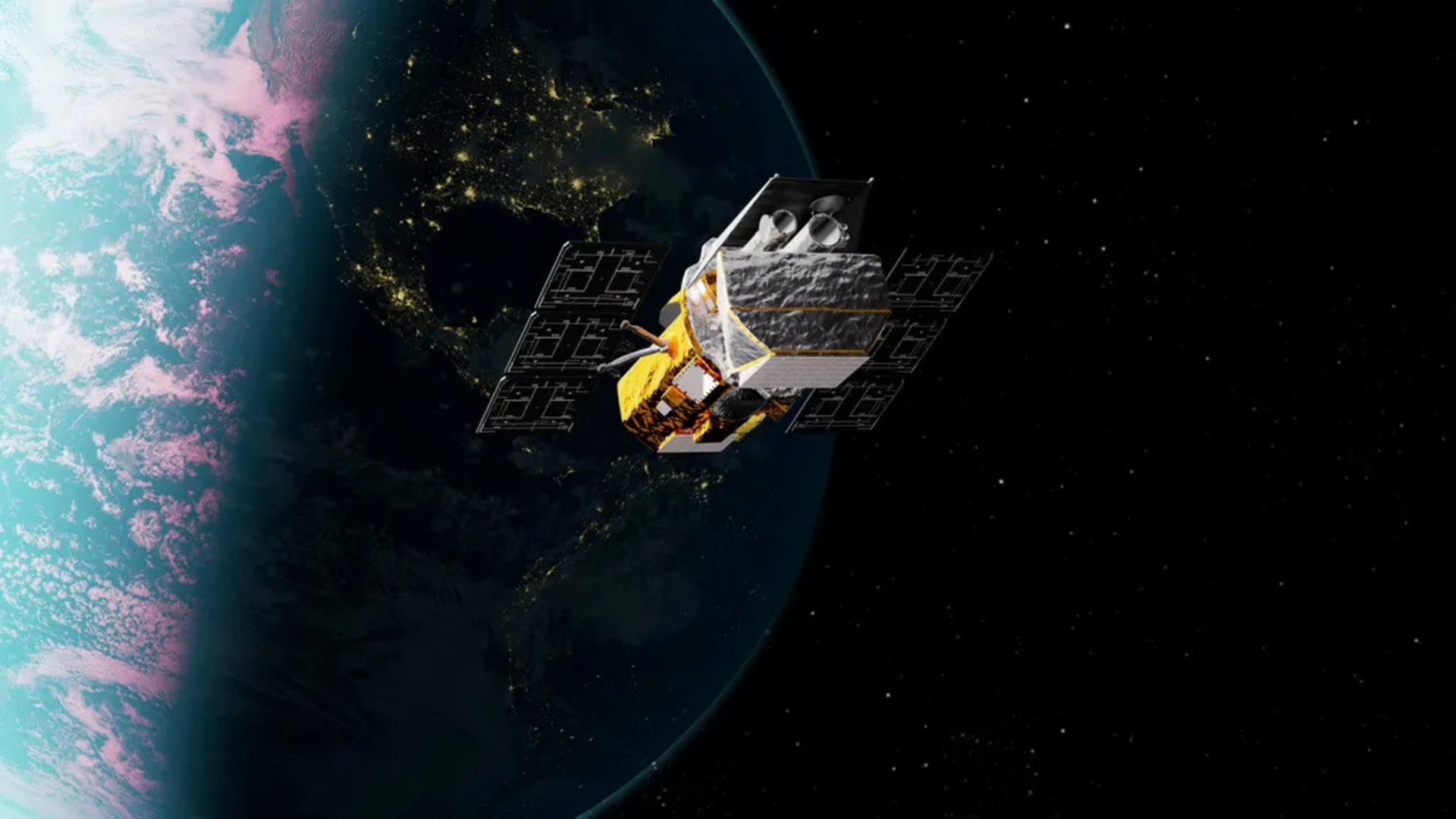
a cylindrical spacecraft floats above earth

NASA's Neil Gehrels Swift Observatory, shown in this artist's concept, orbits Earth as it studies the ever-changing universe. (Image credit: NASA’s Goddard Space Flight Center Conceptual Image Lab)

Mission teams will now try to use the spacecraft's electric propulsion system to stop the spinning and regain control. If that can be done, NASA and Katalyst will then have to evaluate if the mission can proceed as planned.

Swift's orbit has been decaying for years, and the observatory is unable to boost its orbit on its own. Thus, LINK was designed to meet up with Swift in low Earth orbit and spend some time studying the observatory to determine how best to grab onto it with three robotic arms. Once it has linked up with Swift, LINK should be able to use its own thrusters to boost the observatory to a higher orbit and extend Swift's life.
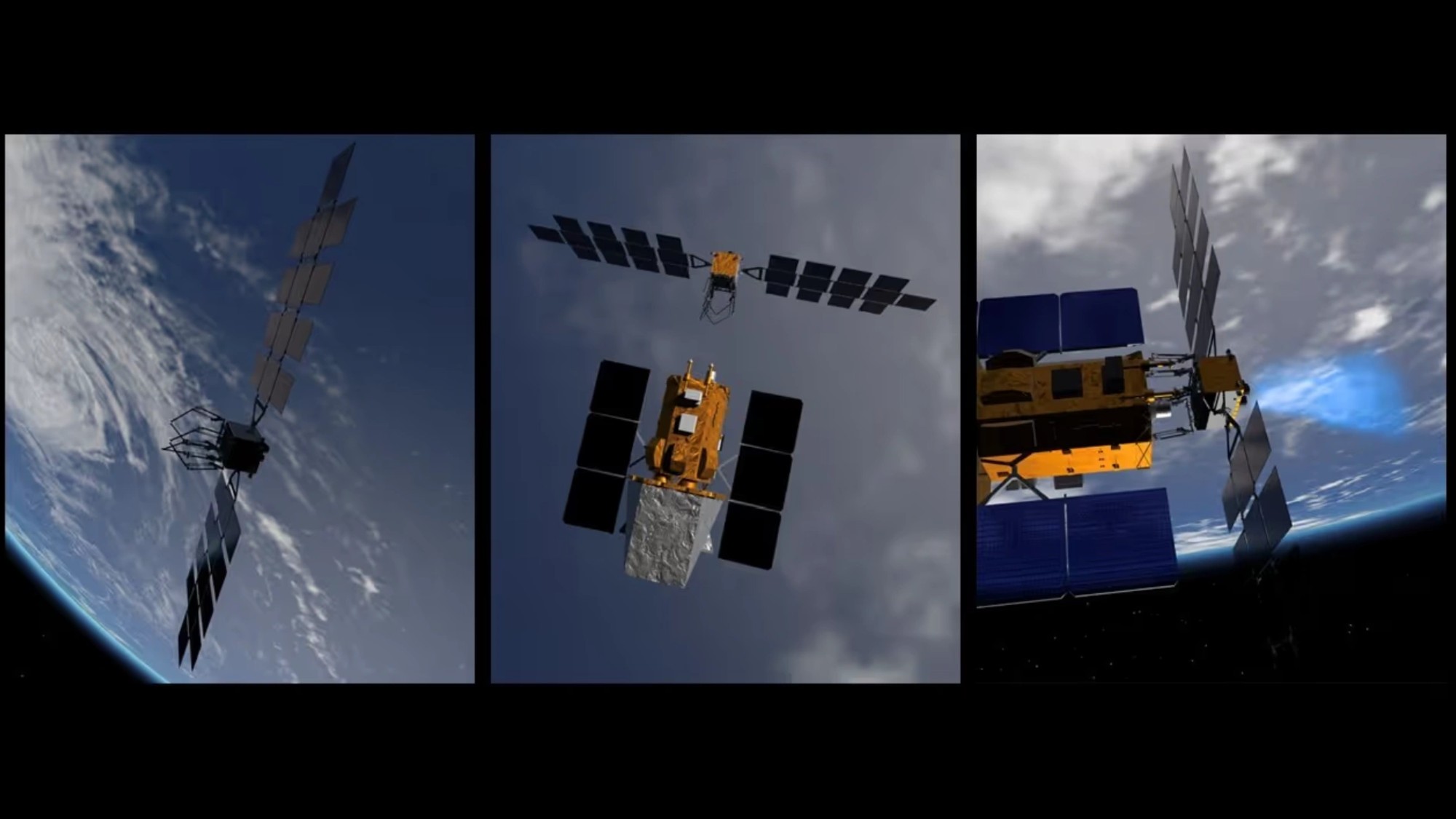
a three-panel illustration showing two spacecraft meeting up above earth

Artist's illustration of Katalyst Space Technologies' Link servicing spacecraft approaching and capturing NASA's Swift space observatory on an orbit-boosting mission. (Image credit: Katalyst Space Technologies)

The Swift observatory, officially known as the Neil Gehrels Swift Observatory, was launched in 2004 at a cost of $250 million. The Swift Boost mission only cost NASA $30 million.

Over the last 22 years, Swift has been searching the sky for gamma-ray bursts and other high-energy astrophysics phenomena in the cosmos. In 2022, the observatory spotted a gamma-ray burst nicknamed the "BOAT," short for Brightest of All Time. At the time of discovery, it was the most powerful space explosion ever seen.
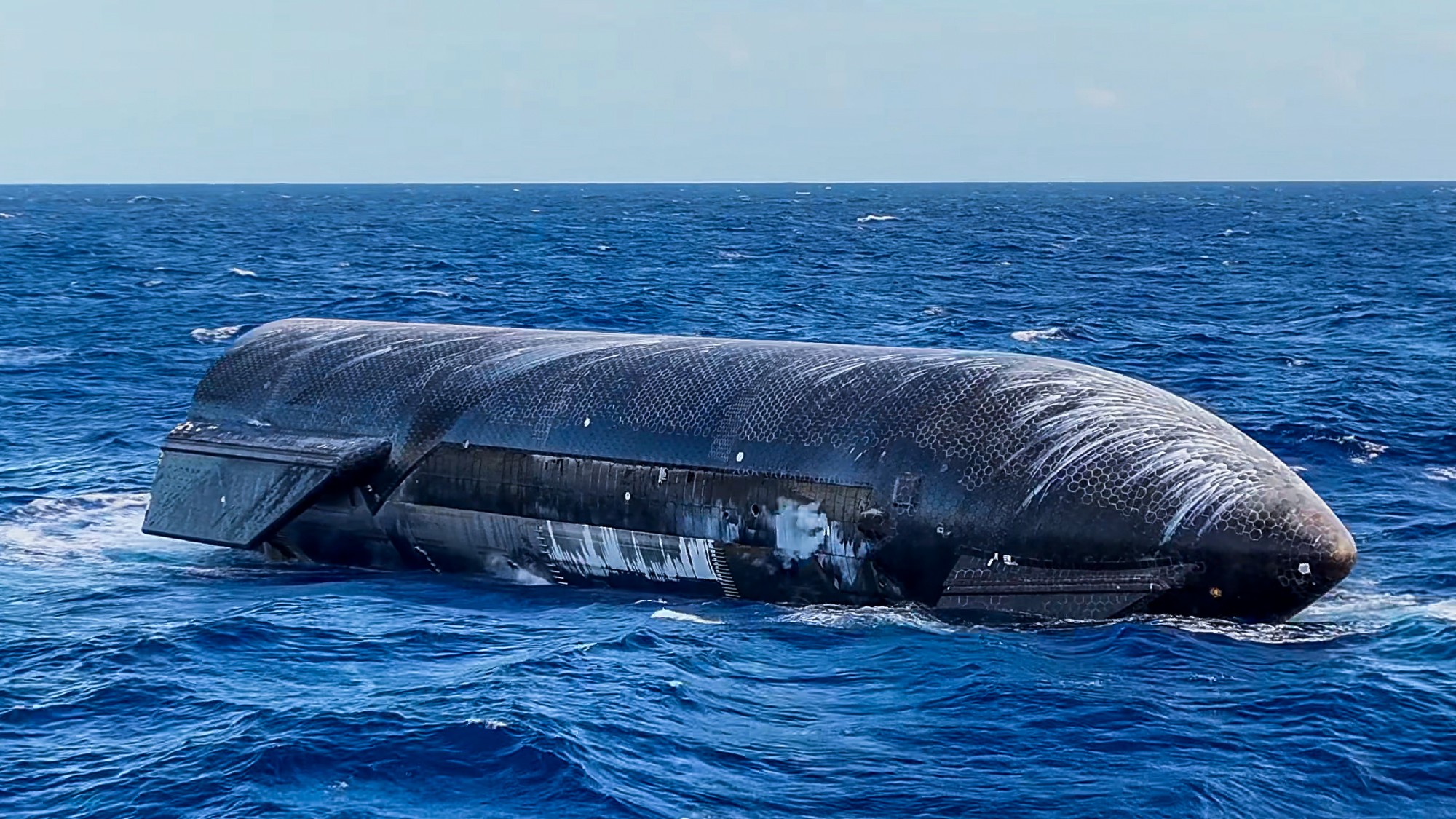
SpaceX Starship still floating 5 days after flight | Space photo of the day for July 29, 2026

SpaceX's Starship Version 3 floats on the Indian Ocean on July 28, 2026, days after splashing down on the vehicle's Flight Test 13 on July 24. (Image credit: SpaceX via X)

SpaceX's Starship V3 looks absolutely seaworthy in this new photo taken days after its most recent flight test.

What is it?

SpaceX launched its Starship vehicle on July 24, sending the 408-foot-tall (124-meter) Starship Version 3 (V3) rocket on a suborbital trajectory that saw the rocket's upper stage make its softest splashdown yet.

In fact, the landing was so smooth that Starship is still floating off the coast of Western Australia. SpaceX shared the photo of Starship on Tuesday (July 28), posting on X that the vehicle is "still afloat in the Indian Ocean."

The scorch-streaked 171-foot (52-meter) Starship upper stage resembles an orca or a submarine in the photo, resting mostly out of the water.

Why is it incredible?

It wasn't just the splashdown that was so stunning. Video taken from aboard Starship and from the Starlink satellites that were deployed alongside the upper stage during Flight Test 13 truly looks like the stuff of sci-fi.

Starship, which consists of SpaceX's Super Heavy booster and the somewhat-confusingly-named upper stage known as Starship (or Ship), is designed to be rapidly reusable. That means, if all goes according to plan, SpaceX will eventually be able to land both stages and have them refueled, inspected and ready for flight again in a matter of days.

But there are still major hurdles to cross before that goal is ever reached. SpaceX will have to figure out how to make Starship's heatshield more durable and reusable, a feat some experts call a "dead-end for all missions that require full and rapid reusability," according to Ars Technica.

Nevertheless, having a fully intact second stage rocket floating on the ocean four days after a flight test is quite a feat.

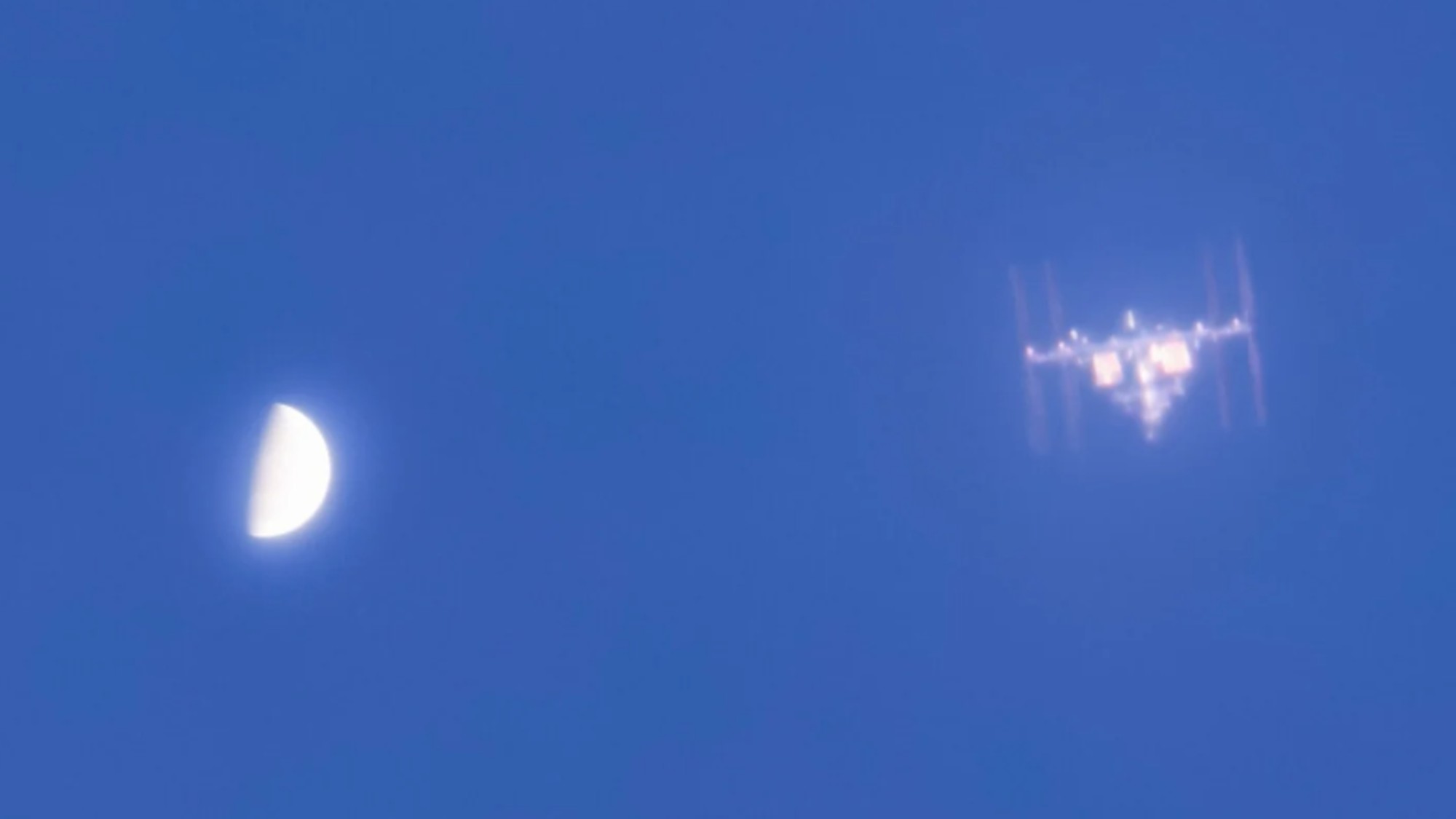
ISS meets Venus in incredible daylight photo | Space photo of the day for July 28, 2026

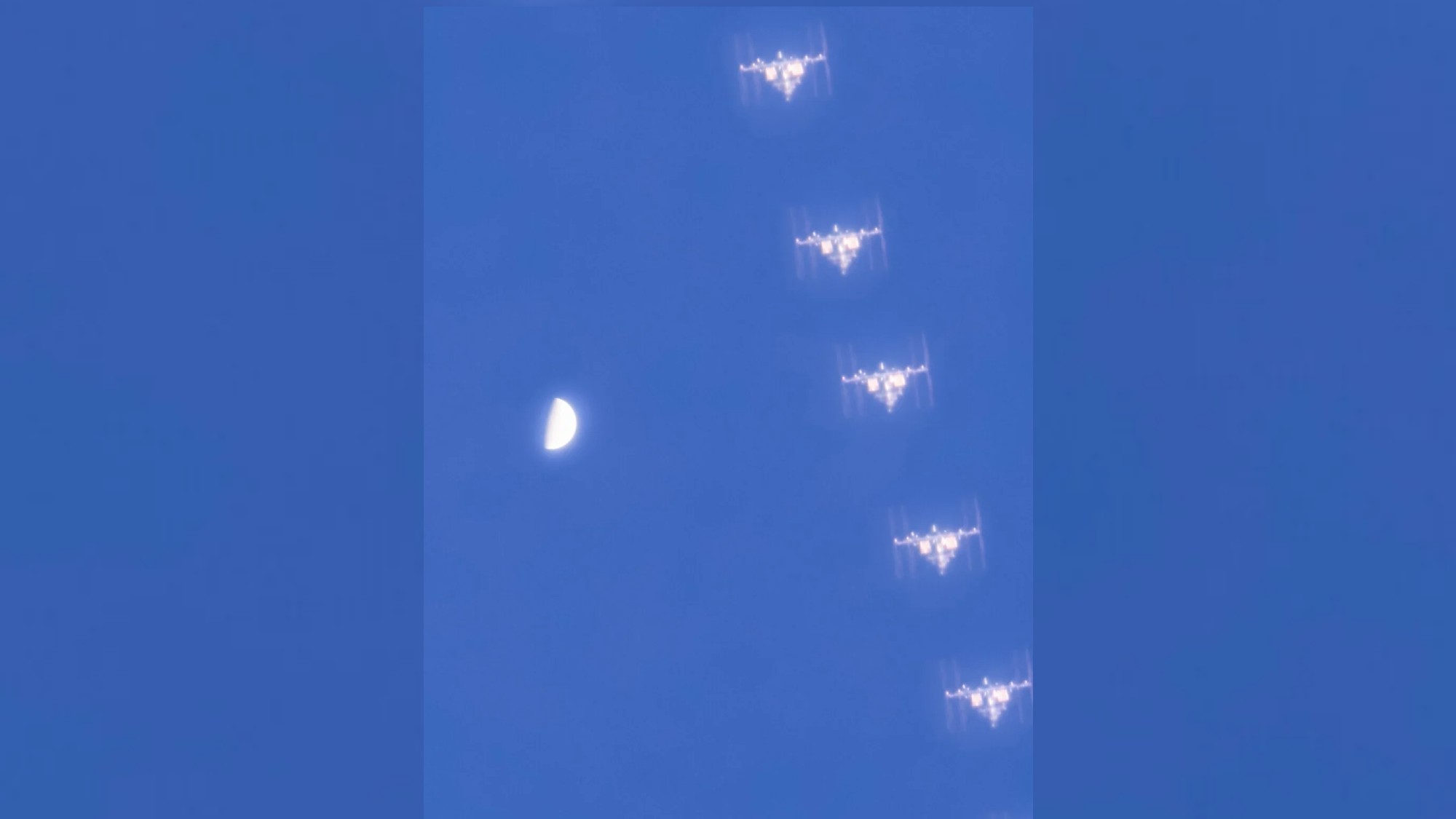
Venus beside the International Space Station as captured by photographer A.J. Smadi from Edmonds, Washington on July 18, 2026. (Image credit: AJ Smadi)

An astrophotographer captured a breathtaking scene as the International Space Station zoomed by Venus in the daytime sky.

What is it?

Photographer AJ Smadi set up the scene on July 18 in a park near Seattle, Washington. Smadi used a 9.25" (23.5 cm) Celestron Schmidt-Cassegrain Telescope and a ZWO ASI662MC camera equipped with an ultraviolet and infrared filter to capture the incredible image.

But this isn't the first time Smadi has pulled off such a feat. Just over a year ago, the photographer captured the ISS beside Venus in a photo that was selected by NASA as one of its Astronomy Photos of the Day.

"The thing that inspired me to capture Venus with the ISS is the fact that nobody has done it before," Smadi told Space.com by email. "After having realized this in April 2025 following my first time capturing the pair together, I was determined to best my own achievement," Smadi said.

Smadi regularly photographs the ISS but says the clarity differs greatly depending on the stability of the air and its distance.

A timelapse photo of Venus passing beside the International Space Station as captured by photographer A.J. Smadi from Edmonds, Washington on July 25, 2026. (Image credit: AJ Smadi)

Why is it incredible?

Capturing Venus, the ISS, or any other object in space (other than the moon) during the daylight hours takes careful planning and a deep understanding of astrophotography techniques and filters.

The ISS travels at a mind-boggling 4.6 miles per second (7.5 km per second) and is 84 million miles (135 million kilometers) away from Venus, so lining up a photograph of the two seemingly side-by-side is no easy feat and takes painstaking planning.

For more of AJ Smadi's work, including photos of the ISS transiting the sun, the moon, and passing by Saturn, visit his Instagram.

Curiosity Mars rover inspects cracked wheel | Space photo of the day for July 27, 2026

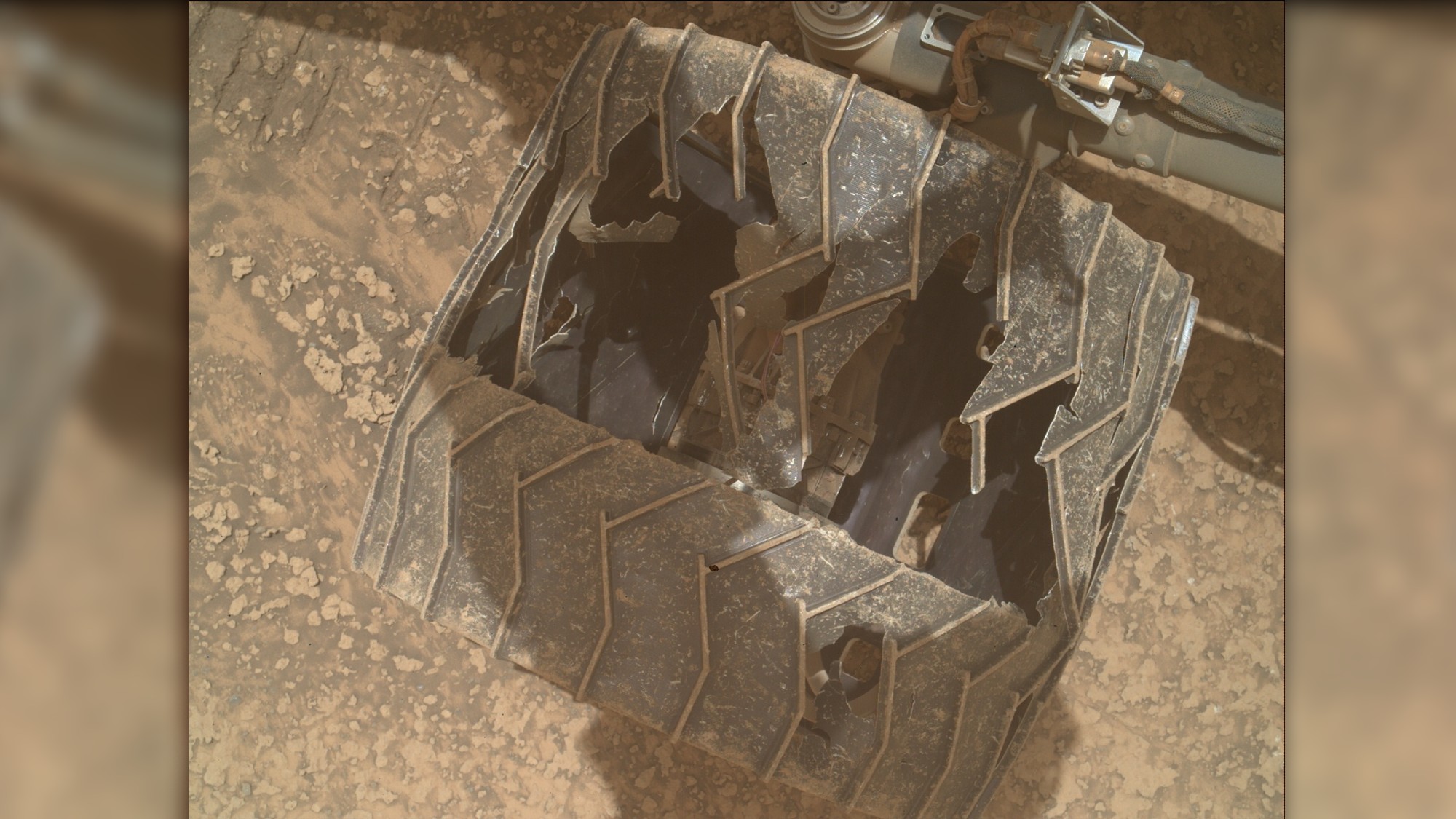
A photo of one of NASA's Curiosity Mars rover's wheels, taken by the rover using its Mars Hand Lens Imager (MAHLI) on July 23, 2026, or Sol 4963 of its mission. (Image credit: NASA/JPL-Caltech/MSSS)

NASA's Curiosity Mars rover has experienced some serious wear and tear during its nearly 14 years on the Red Planet.

A new photo posted to Curiosity's raw image server offers a close-up of the damage one of the rover's wheels has experienced as it explores the Martian surface.

What is it?

Curiosity landed in Mars' Gale Crater on Aug. 5, 2012, touching down while hanging under a 'sky crane' that lowered it to the planet's surface. Since then, the rover has traveled over 20 miles (32 kilometers) across the rocky Martian soil, searching for potential signs of ancient life on the Red Planet.

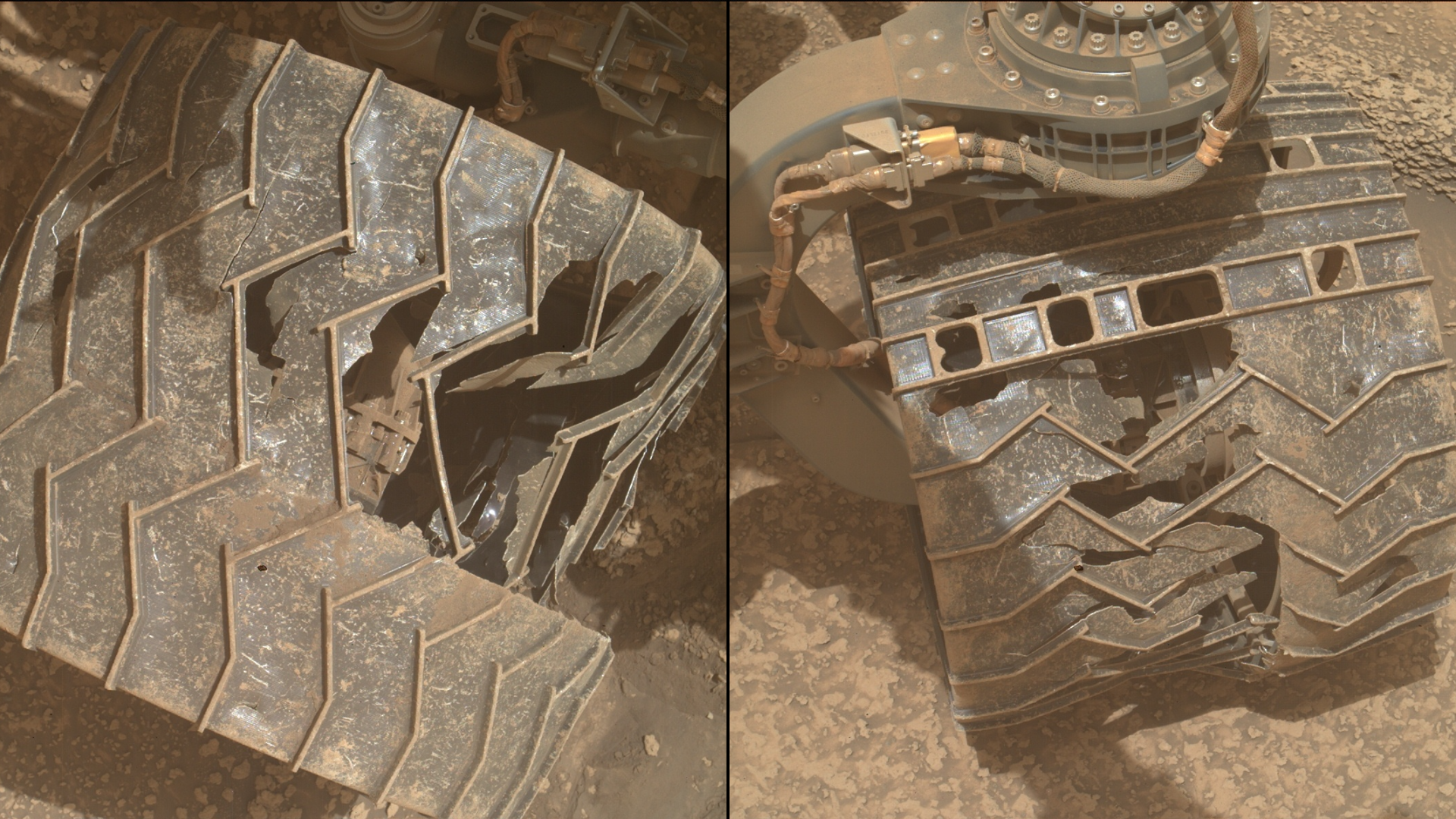
All of that mileage has taken a toll on the rover, as these new images show. Curiosity weighs over one ton, and the terrain on Mars can be quite rocky and rugged.

NASA and the Jet Propulsion Laboratory (JPL) periodically use the rover's cameras to check on the wheels, and despite the holes and cracks, the agency said in a 2024 statement that they're "holding up well despite taking some of the worst abuse from Mars."

Images of NASA's Curiosity Mars rover's wheels, taken by the rover on July 23, 2026, or Sol 4963 of its mission. (Image credit: NASA/JPL-Caltech/MSSS)

Why is it amazing?

We've been exploring Mars for decades now, so it can be easy to take for granted how incredible it is that we get new images beamed from the surface of another planet to Earth daily from NASA's two robotic explorers.

These images of Curiosity's wheels help illustrate the incredible feats of engineering and science it took to place wheeled robots safely on the surface of another planet where they spend years and travel dozens of miles to bring us answers about what other worlds are like.

While they might not be human, Curiosity and Perseverance nonetheless represent humanity's first foray into becoming an interplanetary species. The groundwork laid by the rovers and other Mars orbiters, landers and probes could someday help humanity take its first steps on another planet.

Lightning strike on Chinese rocket captured in epic launch photo

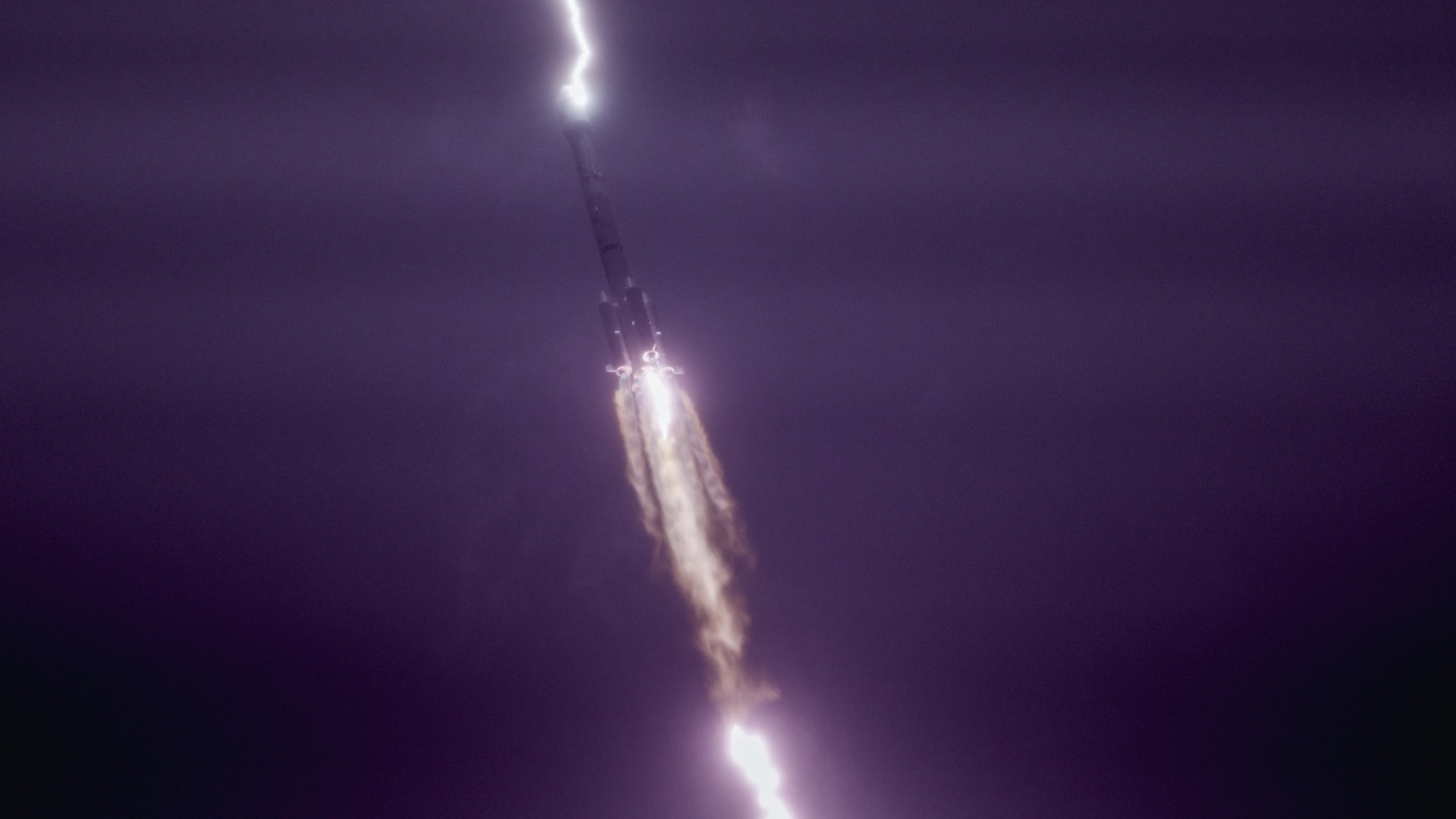
A Long March-3B carrier rocket carrying the Tianlian II-06 satellite blasts off from the Xichang Satellite Launch Center on July 23, 2026 in Xichang, Sichuan Province of China. (Image credit: Zhou Quan/VCG via Getty Images)

Lightning struck a Chinese rocket shortly after liftoff this week, as seen in incredible video and photographs.

A Long March-3B rocket lifted off from China's Xichang Satellite Launch Center on Thursday (July 23) carrying a communications relay satellite destined for geostationary orbit. Some 30 seconds into flight, lightning struck the rocket, leading to awestruck cries from crowds gathered nearby to watch the launch.

Despite the strike, the rocket delivered the satellite to its intended orbit as planned, according to the China Aerospace Science and Technology Corporation (CASC). The satellite will help relay communications to the nation's Tiangong Space Station and other crewed missions.

This isn't the first time lightning has struck a rocket shortly after liftoff. A lightning bolt famously struck the Saturn V rocket carrying NASA's Apollo 12 mission, the second to ever land astronauts on the moon. In fact, the rocket was struck twice.

According to a report NASA issued after the mission, some non-essential instruments and sensors experienced "permanent effects" from the strikes. Nevertheless, the mission put astronauts Charles "Pete" Conrad, Alan Bean and Richard "Dick" Gordon on the moon as planned.

More recently, lightning struck a Russian Soyuz rocket in 2019 shortly after it launched. Like in this most recent example, the vehicle was able to place its Glasnost communications satellite in orbit despite the strike.

But not all rockets struck by lightning fare so well. In 1987, a bolt struck the United Launch Alliance Atlas/Centaur-67 rocket, leading to a malfunction in one of the computers that guided the vehicle and "ultimately causing the breakup of the vehicle," NASA wrote in a report of the incident.

The incident led to NASA developing strict Lightning Launch Commit Criteria (LLCC) to lower the risk of strikes by further defining weather conditions that would delay launches. "Since Atlas/Centaur-67 and the rigorous implementation of the LLCC, no other launch vehicles have intercepted or triggered lightning on launch in the United States," NASA wrote in a technical paper outlining the criteria.

If space war erupts, ‘none of us will be able to avoid the war zone,’ warns outgoing Space Force chief in final public speech

The outgoing head of the U.S. Space Force has some stark words for his international partners.

Speaking at the 2026 Global Air and Space Chiefs Conference on July 15, in what was his last public speech as Chief of Space Operations (CSO), Gen. Chance Saltzman told attendees that if an armed conflict ever reaches space, as military leaders have for years been predicting and planning for, no military or nation in the world will be spared.

"If a conflict extends into space, none of us will be able to avoid the war zone. Unlike a combat zone in the air, land or sea, we will not be able to steer clear," Saltzman said in his remarks at the conference, published by the Space Force. "Whether we want to be in the combat zone or not, orbital mechanics will put all of our space capabilities into the space war zone."

Saltzman's warning touches upon the fact that there isn't an unlimited amount of space in Earth orbit; in fact there are some crowded orbital inclinations that contain thousands of spacecraft. When a satellite or other spacecraft breaks up in one of these orbits, it can create hazards for many other spacecraft  — even crewed ones.

When Russia destroyed a satellite with a missile in a 2022 test, it left a dangerous debris field in orbit that persists today. The ISS has had to dodge it multiple times.

If a conflict broke out or extended to space, and that conflict involved the destruction of even just one satellite, it could potentially create a runaway effect that leaves parts of Earth's orbit unusable.

But despite the grave nature of his warning, Saltzman stressed that ultimately the shared nature of space means that all spacefaring nations should aim toward cooperation.

"We will share the consequences; therefore, we should share the responsibility for a safe, secure and stable space domain," Saltzman said, adding later in the speech that "these widespread consequences of conflict in space should make deterrence a goal for all of us."

Saltzman has stressed the need for international cooperation in prior speeches. The outgoing CSO called defending the peaceful use of space "the ultimate team sport" when introducing Space Force's International Partnership Strategy in 2025. "The domain is too big, too complex, too dynamic, for a single nation to secure alone," Saltzman said.

While head of the U.S. military's newest branch, Saltzman has seen the Space Force evolve into a fully "combat-credible" force, to use the outgoing CSO's own words.

Saltzman touted the Space Force's contributions to recent U.S. military operations earlier this year at the Space Foundation's 41st Space Symposium in Colorado Springs. "We aren't just talking about theories or plans anymore. We're talking about real operational combat, space effects and the Guardians who deliver them," Saltzman told attendees.

Saltzman is set to retire in August 2026 after serving as the Space Force's second Chief of Space Operations since 2022. President Donald Trump has nominated a replacement, Lt. Gen. Douglas A. Schiess, to serve as Saltzman's successor. Schiess has served as Deputy Chief of Space Operations for Operations since November 2025.

During a recent confirmation hearing, Schiess defended the Space Force's $71 billion budget request, stating the funds are needed to deter China's development of military space capabilities. "The 71.1 billion dollars that the president has asked for is exactly what we need," Schiess said, according to Space News.

The US wants to build offshore rocket launch sites. Critics say ‘our coasts deserve better’

The United States government is looking into launching commercial rockets from sea-based launch sites, but some ocean advocacy experts say the move is part of a larger trend of allowing the spaceflight industry to use the ocean as a dumping ground.

The U.S. Bureau of Ocean Energy Management (BOEM) on Tuesday (July 7) announced a Request for Information (RFI) to look into launching rockets and recovering spacecraft from the Outer Continental Shelf (OCS), a region of the United States that extends 200 nautical miles (370 kilometers) out from America's coastlines. "Offshore launch, reentry, and recovery infrastructure could expand operational flexibility, increase capacity, reduce constraints on growing launch demand, and strengthen the nation's commercial and national security space capabilities," acting BOEM Director Matt Giacona said in a bureau statement announcing the RFI.

But while BOEM lauds the development of facilities on the continental shelf as a way to bolster America's space economy and support its ambitious space exploration goals, at least one ocean conservancy group says the plan could have disastrous effects on the ocean.

According to the RFI, BOEM is looking for ideas from private industry on how to use existing offshore infrastructure such as oil and gas drilling platforms, as well as how to establish "new, purpose-built offshore facilities dedicated to commercial space launches, space re-entry, and related activities" on the Outer Continental Shelf. BOEM has jurisdiction over some 3.2 billion acres (1.3 billion hectares) of the shelf.

The announcement builds on a White House Executive Order signed in December 2025 titled "Ensuring American Space Superiority" that aims to boost investment in the American space industry and "unleash commercial development and lay the foundation for a new space age."

The order does not list offshore launches specifically, but it does aim to increase the frequency of launches and reentries through "new and upgraded facilities" and policy reforms.

a map of the united states showing a region extending outward from each coast

A map of the Outer Continental Shelf extending from the U.S. coastline. (Image credit: Minerals Management Service)

But some critics are already speaking out against the idea. "Space junk and rocket explosions have already been trashing our coastal wildlife refuges, and now Trump wants to expand that destruction farther into our oceans," said Miyoko Sakashita, oceans program director at the Center for Biological Diversity, a nonprofit based in Tucson, Arizona.

Sakashita added that the initiative is "likely another Trump excuse for allowing the oil industry to leave its rusty old junk in the ocean" and avoid imposing regulations on the energy sector.

"The whales, sea turtles and other marine wildlife off our coasts deserve better than to suffer for Big Oil and the pet projects of trillionaires and billionaires," she said. "It's the administration's job to protect our public waters, not turn them into playgrounds for pipe dreams and profit."

BOEM's RFI will be open for 30 days, closing on Aug. 7, 2026.

The US Space Force just got a new electromagnetic weapon to jam adversary satellites

The U.S. Space Force has acquired one of its first publicly acknowledged offensive weapons, one that can blast adversary satellites with beams of electromagnetic radiation to disrupt their signals without physically damaging them.

The system, known as Meadowlands, was developed by L3 Harris. It is an electromagnetic warfare system, meaning it is designed to disrupt, deny or degrade an adversary's use of the electromagnetic spectrum  — such as radio waves, for example  — rendering their satellites effectively silent, unable to communicate or share data with forces on the ground. These are "reversible effects," meaning they don't permanently destroy satellites but instead jam or interfere with signals being transmitted to or from them.

Or, as the Space Force puts it, Meadowlands provides the U.S. military with a "robust toolkit for spectrum dominance," according to a statement. Based on the few publicly available photos shared by the U.S. Space Force, Meadowlands appears to consist of an antenna dish mounted to a wheeled trailer, which presumably could allow it to be transported either by ground or a large cargo aircraft. This would allow it to be deployed in areas where adversary satellites might be stationed overhead.

According to available budget documentation, Space Force requested nearly $460 million in Fiscal Year 2027 to develop Meadowlands and the support and training needed to field it.

Space Force leadership has repeatedly stated that these types of systems are key to the U.S. military's current emphasis on space-based warfare. "Continued U.S. Space Force investment in electromagnetic warfare systems, software, and advanced training is essential to modern warfare," said U.S. Space Force Col. Angelo Fernandez, commander of Mission Delta 3 – Space Electromagnetic Warfare, a unit tasked specifically with operating systems such as Meadowlands.

In the same statement, the Space Force said that these types of capabilities were central to the success of Operation Midnight Hammer, a June 2025 offensive in which the U.S. military attacked nuclear sites in Iran.

During that conflict, "electromagnetic warfare professionals successfully created a silence zone to ensure secure bomber ingress and egress, effectively halting adversary communications to provide vital indications and warnings," Space Force said in the statement.

Gen. Chance Saltzman, the service's current Chief of Space Operations, cited how Space Force personnel employed the same types of capabilities during the ongoing conflict with Iran in a keynote speech at the Space Foundation's annual Space Symposium in April 2026.

"On day one of Operation Epic Fury, one of these specialists led the planning and execution of high-tempo space electronic warfare fires for U.S. Central Command," Saltzman said. "That's what it means to be a Guardian in today's Space Force."

The service has been procuring these types of systems and training its personnel in what it calls orbital warfare since the Space Force was created back in 2019. Because satellite surveillance and communication systems are so vital to the battlefields of today, the ability to disrupt an adversary's use of space is a highly sought-after one by militaries worldwide.

NASA’s New Horizons probe just woke up from hibernation 6 billion miles away beyond Pluto. What’s it doing out there?

NASA's New Horizons probe has woken up in good health nearly 6 billion miles away beyond Pluto after spending nearly a year in hibernation.

Traveling such vast distances between our solar system's most remote objects means New Horizons often cruises for months at a time with little to do other than passively collect data. During these periods, the probe goes into a hibernation mode in which its instruments still collect data, but most other systems power down.

New Horizons entered just such a hibernation period last August, and has now woken up in "good health", according to a NASA statement. The spacecraft is 5.9 billion miles (9.5 billion kilometers) from Earth, so far away that it takes around 9 hours for its radio signals to reach us. Now that it's awake, New Horizons will begin transmitting the data it has collected over the last 321 days and letting its controllers on the ground know how its systems are faring in the cold, dark reaches of deep space.

So far, the probe appears to be in perfect health. "Every status report through this hibernation period was 'green,' meaning all was well aboard New Horizons each and every week," said Alice Bowman, the New Horizons mission operations manager at the Johns Hopkins Applied Physics Laboratory (APL) in the NASA statement.

New Horizons is the first and only flyby spacecraft to conduct a flyby of the Pluto system, which it did in 2015. Four years later, the plucky probe studied the most distant object ever explored in our solar system, the snowman-shaped planetesimal Arrokoth, while it was one billion miles (1.6 billion kilometers) past Pluto.

Since then, the long-distance voyager has been probing the edge of our sun's influence and studying objects in the Kuiper Belt, the cold, donut-shaped ring of icy objects that circles the outer solar system beyond Neptune.

A processed image made from data gathered by NASA's New Horizons spacecraft on Jan. 1, 2019 during its flyby of Kuiper Belt object 2014 MU69, known as Arrokoth. (Image credit: NASA/Johns Hopkins University Applied Physics Laboratory/Southwest Research Institute)

New Horizons is currently speeding away from Earth at a rate of 300 million miles (483 million km) per year, according to NASA.

Three weeks from now, New Horizons will begin conducting a study of hydrogen in the outer heliosphere, the region of space influenced by the stream of charged particles blowing outward from the sun, known as the solar wind.

The data the probe is collecting at the farthest reaches of our solar system is the first of its kind. It could help scientists understand what happens at the boundary between the sun's region of influence and interstellar space, known as the "termination shock."

Only two spacecraft have crossed this boundary before, NASA's twin Voyager probes. However, those far-flung explorers weren't equipped with the same scientific instruments as New Horizons, which enable it to conduct more sensitive measurements of this distant region of the solar system.

"The data from the termination shock encounter will be a treasure trove for space physicists worldwide who are eager to understand how this vast boundary works," Pontus Brandt, New Horizons project scientist at APL, previously told Space.com. "All these discoveries from pioneering missions like Voyager and New Horizons teach us how little we know about what lies beyond."

China releases 1st photo of Earth’s elusive ‘quasi-moon’ Kamo’oalewa

China's first-ever asteroid sampling mission has sent home a picture of its first target, the "quasi-moon" Kamo'oalewa.

The Tianwen-2 probe launched in 2025 and traveled 620 million miles (1 billion kilometers) to reach a safe distance about 12 miles (20 km) away from Kamo'oalewa, more formally known as asteroid 2016HO3. The spacecraft will spend nearly a year studying the asteroid with a suite of 11 different scientific instruments before attempting to collect a sample from its surface, which will be sent back to Earth.

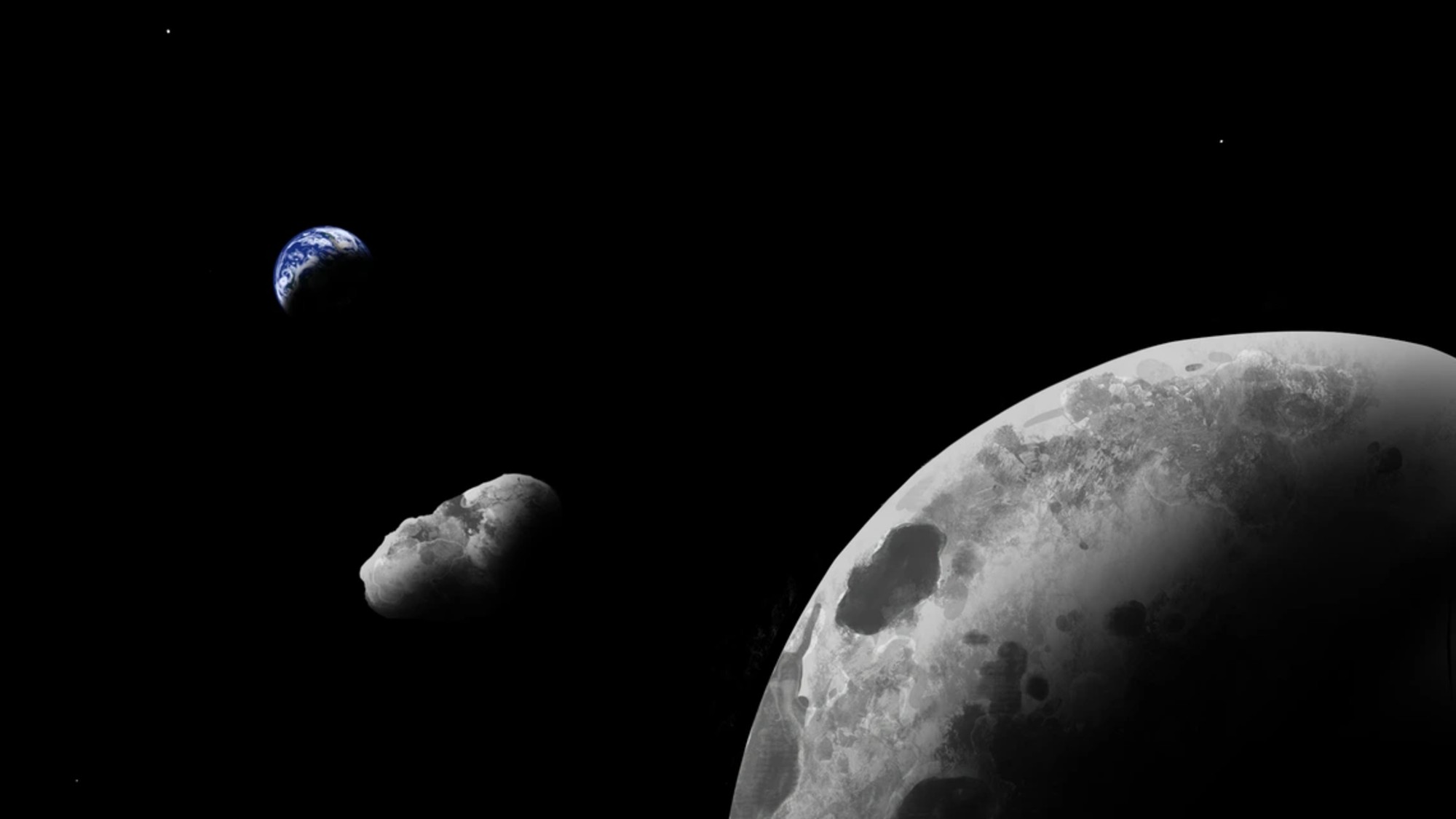
The new photo was taken on July 2, according to China's Xinhua news outlet, and reveals the asteroid to be a small, asymmetrical rock measuring around 50–65 feet (16–20 meters) in diameter. While its origin isn't known, some scientists believe this quasi-moon could have been created when a massive impact knocked a chunk of our own moon into space between 1 million and 10 million years ago.

So-called quasi-moons (or quasi-satellites) are small bodies like Kamo'oalewa that circle the sun on orbits that keep them close to our planet. Earth has at least seven known quasi-satellites, and our planet's gravity will occasionally capture others temporarily before they are flung back out into orbit around the sun. In general, the orbits of these quasi-moons are less stable than the orbits of true moons.

Unlike most near-Earth asteroids that are thought to originate from the main asteroid belt between Mars and Jupiter, Kamo'oalewa could have come from much closer to home. A 2024 study published in Nature Astronomy proposes Kamo'oalewa could be material ejected from the moon by the impact that formed Giordano Bruno crater.

Sample of the asteroid collected by Tianwen-2 could help prove that hypothesis, if the mission is successful.

an illustration of the moon, with earth visible in the far distance, and a small grey rock in between the two

An artist's impression of Kamo'oalewa near the Earth-moon system. (Image credit: Addy Graham/University of Arizona)

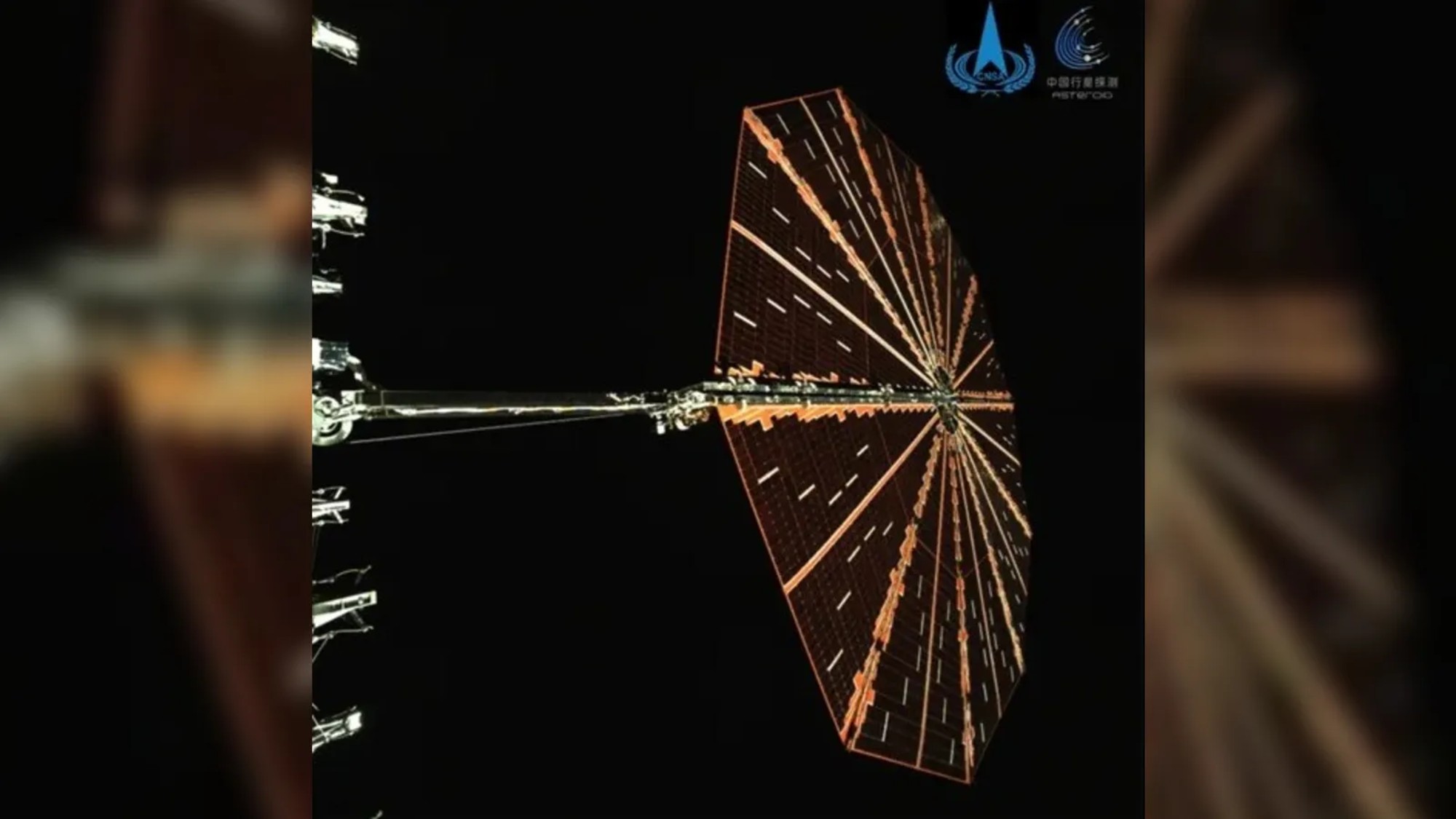
Tianwen-2 launched on May 28, 2025 atop a Long March 3B rocket from Xichang spaceport in southwestern China. The appearance of the spacecraft wasn't revealed until China's space agency released an image beamed home by Tianwen-2 when it was 1.8 million miles (3 million km) away from Earth. This occurred just over a week past launch.

an octagonal solar panel on the end of a metal arm that extends outward from a metallic rectangle, just out of view on the left side of the image

The first public image of China's Tianwen 2 spacecraft, released by China's space agency well after the spacecraft was on its way to its first asteroid target. (Image credit: CNSA)

While Tianwen-2 marks China's first asteroid sample attempt, Japan and the United States have already performed successful space-rock-sample missions of their own. Japan's Hayabusa spacecraft executed the world's first asteroid sample return mission when it sent material from asteroid 25143 Itokawa back to Earth in 2010.

The United States accomplished the feat in 2023 with the OSIRIS-REx mission that snagged material from asteroid Bennu. Those samples have already produced surprising scientific data, including the fact they contain the amino acids we consider vital for life here on Earth.

Tianwen-2 is China's first-ever mission to an asteroid and its second planetary exploration mission overall. Its first interplanetary endeavor, Tianwen-1, saw an orbiter and a rover reach Mars in 2020.

More Tianwen missions are in the works. China plans to launch the Tianwen-3 Mars sample-return mission in 2028 and Tianwen 4 two years later to study Jupiter and Uranus.