Van Gogh’s ‘The Starry Night’ depicts the sky on July 22, 1889, researchers find

Researchers think they might have pinpointed the exact night sky that we see depicted in Vincent van Gogh's iconic painting "The Starry Night."

Perhaps one of the most famous paintings in modern history, Van Gogh's "The Starry Night" carries a legacy that continues to inspire and mystify generation after generation. But while you might see in its swirls of color and bright spots of starlight a night sky derived purely from imagination, some scientists think it represents an actual view — one that includes a waning crescent moon, Venus and the Hyades cluster. And they may know exactly when this sky appeared..

In a new study, researchers suggest that "The Starry Night" depicts the pre-dawn sky seen around July 22, 1889 from Saint-Rémy-de-Provence, where Van Gogh painted it. But while this sky happens to perfectly match the one depicted in the artwork, art historians have long thought that Van Gogh painted this piece in June. Could these findings shift the date of this legendary artwork?

Finding a painted sky

This investigation started decades ago with art historian Albert Boime and astronomer George Abell at UCLA in 1984 and continued in the following years with astronomer Charles Whitney at Harvard University. However, these earlier analyses did not agree with one another, and there was no true consensus about exactly when the sky matched with the painting.

So the question remained, lingering in the minds of those with a shared love for both art and space. And a team led by Elijah Jeong-hyun Kim, the CEO of South Korean robotic telescope company SLLAB and a Ph.D. candidate at Kyung Hee University's School of Space Research, picked up the search once more.

"When they see a fragment of a starry sky, observational astronomers like me and amateur astronomers alike will want to solve the puzzle. I am simply someone who pursued that process a little more actively," Kim told Space.com.
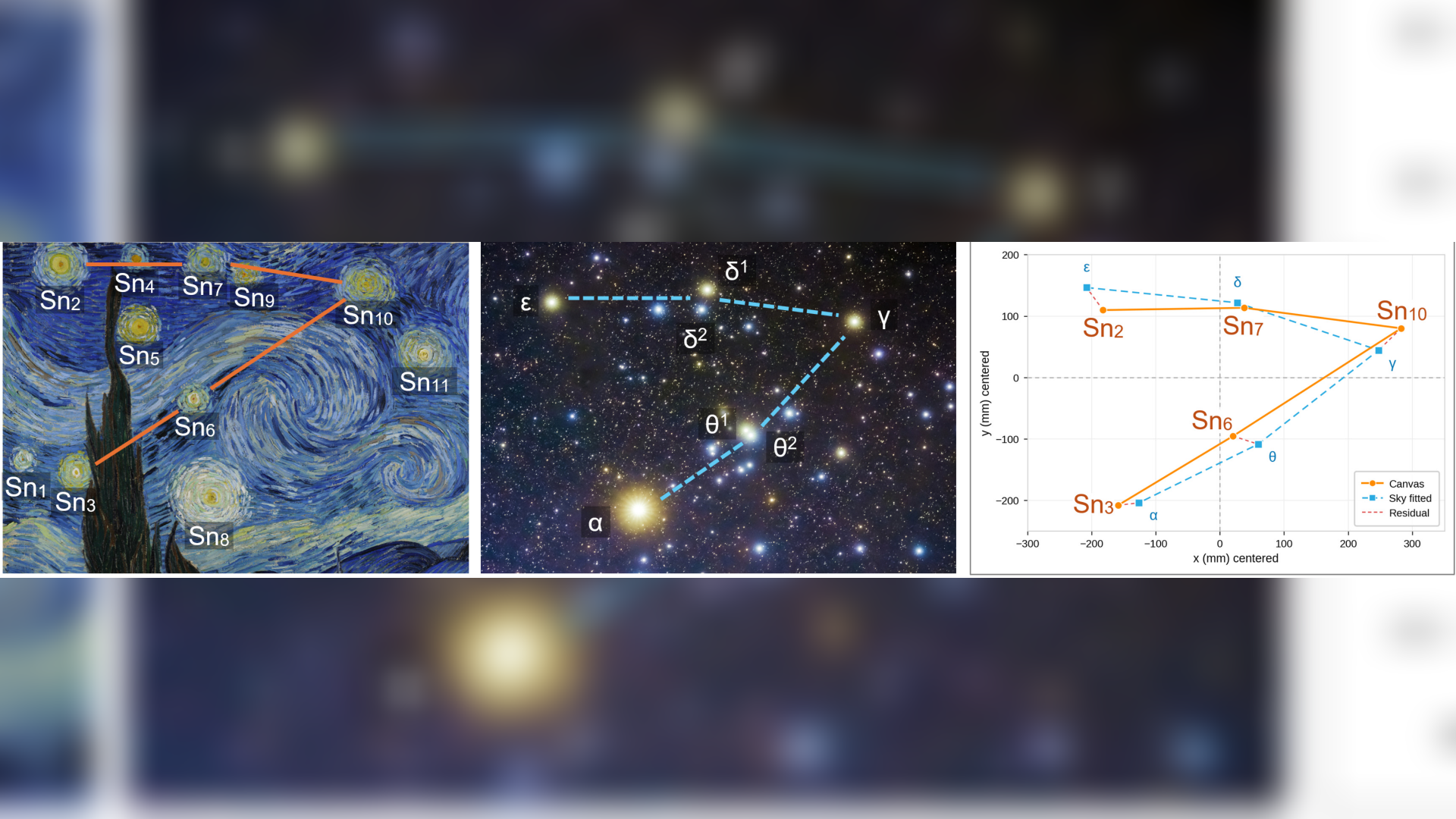
The central cluster of stars in The Starry Night (1889), left, and the Hyades cluster in Taurus, center.

A figure from Kim et al.'s paper in Scientific Reports. According to the figure: "The central cluster of stars in The Starry Night (1889), left, and the Hyades cluster in Taurus, center. At right, the five stars in the painting (orange) are overlaid on the real stars (blue) after matching for size, orientation and position; red dashed lines show the residual differences." (Image credit: Kim et al., Scientific Reports (2026))

But how did Kim's team come to their conclusion, after others had failed to nail down a date over the decades? In short, "we analyzed the painting astronomically, analyzed documents about his situation in July 1889, and then carried out ecological and meteorological investigations," Kim said.

To start with, the team analyzed the sky from the exact location in Saint-Rémy where Van Gogh is said to have painted "The Starry Night." They then used observational geometry to map the historical night sky.

"Modern telescopes are equipped with a function called astrometry, which compares an image of the night sky with celestial coordinates stored in a computer and automatically extracts the coordinates of the image," Kim said. "We used Procrustes analysis, a method that compares only the 'shape' of two sets of points. After matching their position, size and rotation, it measures how similar the two shapes are from the differences that remain (the residuals)."

"Because a star cluster on the canvas may be larger or smaller than in reality and slightly tilted, this method was the right fit. It allowed us to explain, in quantitative terms, what earlier studies had described only qualitatively as 'resembling a certain constellation,'" Kim added.

But this quantitative analysis wasn't enough to say for sure that this was the right-fitting sky, as different constellations could fit to a similar degree, Kim explained. To get closer to their answer, the team combined their analysis with a deep dive through history.

"We also checked whether the stars were actually in that part of the pre-dawn sky on that date, whether they fall within the painter’s field of view, and whether the appearance of the moon and Venus matches the painting. It was the Hyades that satisfied all of these conditions," Kim said.

Exploring astro-art history

As mentioned, the date of this matching sky comes in late July, a month after art historians think Van Gogh painted "The Starry Night." But the researchers suggest that their findings could provide evidence to support the idea that the work was actually painted in July.

Letters written by Van Gogh as early as 1888 describe his desire to paint a star-filled sky. A letter dated April 12, 1888 reads: "A starry sky, for example, well — it’s a thing that I’d like to try to do, just as in the daytime I’ll try to paint a green meadow studded with dandelions."

Kim followed these letters through the months to try and find more information that could potentially alleviate the discrepancy between the matching skies and the actual month the painting was created. Kim pointed to a letter from between late May and early June 1889 that reads: "This morning I saw the countryside from my window a long time before sunrise with nothing but the morning star, which looked very big."

Kim drew on "personal imagination" to find ties between Van Gogh's sky observations in these months and what they might mean for the painting's timeline, Kim shared, so this doesn't definitively change the view of this painting's history. However, Kim suggested that these records could indicate that Van Gogh was repeatedly looking up and watching the pre-dawn sky, which could have led to him seeing this exact sky on July 22.

The painting itself even ignites uncertainty among art historians. As the researchers cite in their new paper, leading art historians see "The Starry Night" as stylistically different from Van Gogh's other works during the month of June, drawing further questions over the date painted.

"What our study shows is that the sky in the painting matches, in both observation and shape, the real pre-dawn sky around July 22. So, what we propose is the possibility that Vincent conceived the idea in June and completed the painting after July 22," Kim said.

However, "I think further research in art history and conservation science could shed more light on this question," Kim added.

This work was described in a study published Oct. 22 in the journal Scientific Reports.
Australia’s bizarre ‘Spider Crater’ seen from orbit | Space photo of the day for Oct. 22, 2026

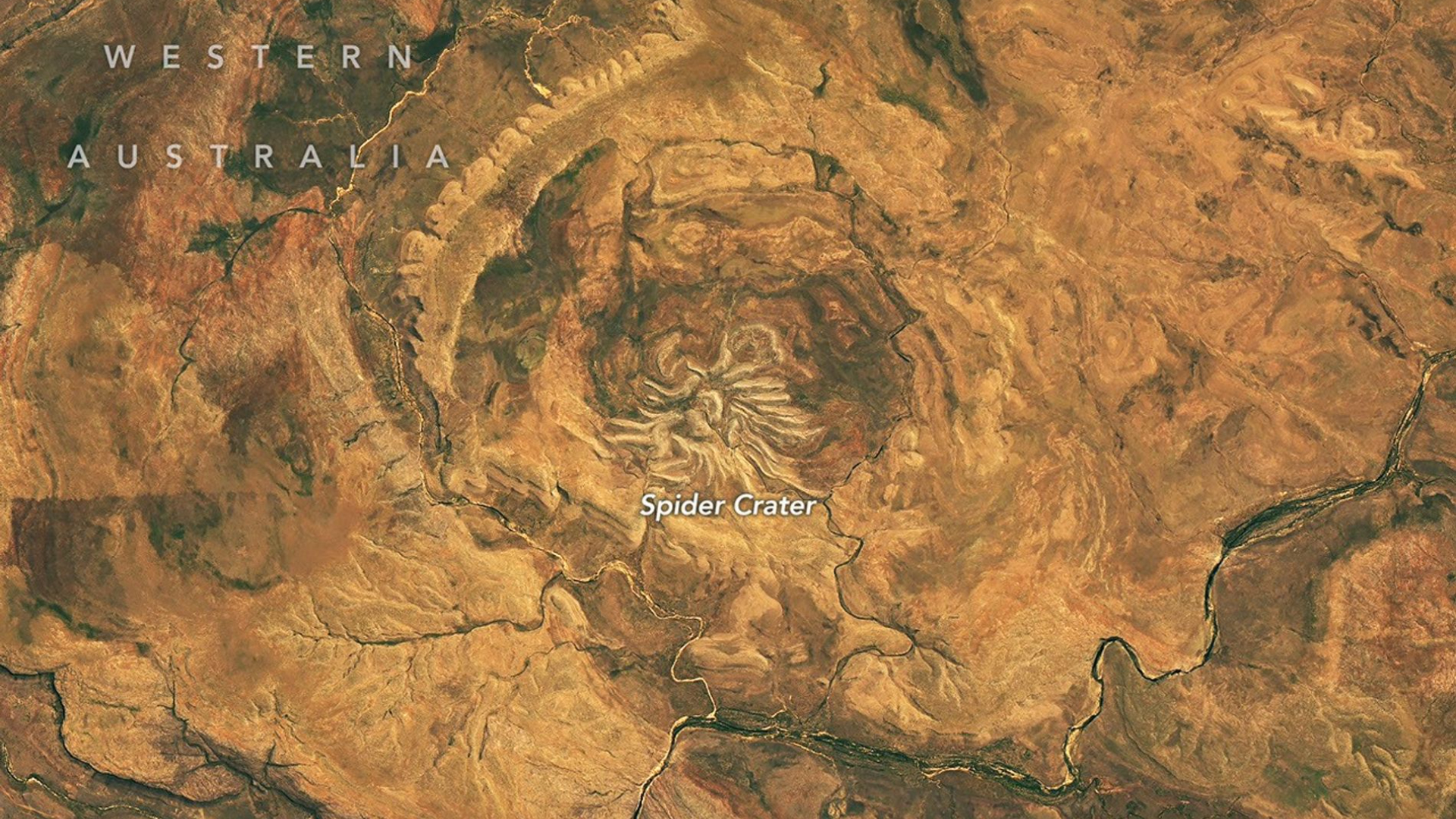
An image from space of spider crater on Earth.

A satellite image of "Spider Crater" in Western Australia. (Image credit: NASA Earth Observatory image by Michala Garrison, using Landsat data from the U.S. Geological Survey)

From the dangerous Sydney funnel-web to the common huntsman, Australia is home to its fair share of spiders. It even has a crater shaped like one.

What is it?

One stretch of the vast Western Australia wilderness is imprinted with a curious crater, which likely formed after a meteor impact hundreds of millions of years ago. Geologists think the spider-like pattern in the crater's center was created when its floor rebounded following the initial impact, NASA has said.

In the hundreds of millions of years since the initial impact, erosion has continued to carve this formation into its current, signature shape. Complete with "legs," the planetary imprint has earned its name Spider Crater.

This image shows the impact structure in its entirety, which stretches 8 by 7 miles (13 by 11 kilometers) in full, with the central "spider" piece measuring 2.5 miles (4 km).

Why is it incredible?

In this image, we can see this "spider" from space. This snapshot shows the geologic feature as captured by the OLI (Operational Land Imager) aboard the Landsat 9 satellite, an Earth-observing craft that launched back in 2021.

The satellite, a collaborative effort between NASA and the U.S. Geological Survey, is the ninth in the Landsat Earth-observing series, which goes all the way back to the launch of Landsat 1 in 1972. On a near-weekly basis, Landsat 9 delivers observations of everything from deforestation to water quality and crop growth.

The series of Landsat satellites have been a critical piece in the modern understanding of how our planet continues to change. Whether it's the repercussions of climate change or fluctuations in agriculture, observations from orbit do more than provide interesting photos of our home world; they also capture critical data.

Space botanist conducts plant experiments in orbit | Space photo of the day for Oct. 21, 2026

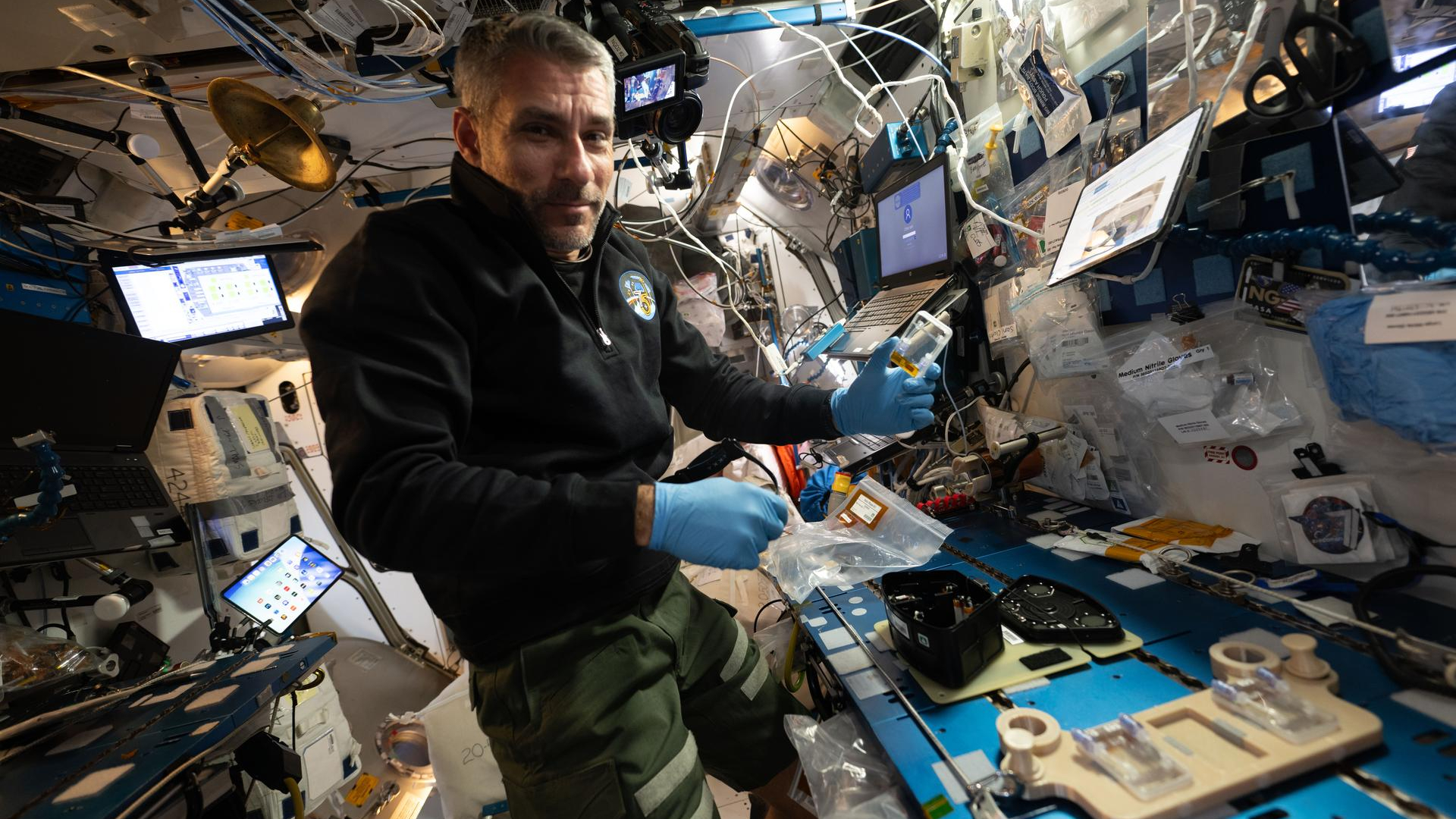
NASA astronaut Luke Delaney conducts botany experiments on the ISS.

NASA astronaut Luke Delaney conducts botany experiments on the ISS. (Image credit: NASA/Jessica Watkins)

Growing plants in space? Yes indeed! NASA astronauts are conducting botany experiments aboard the International Space Station (ISS).

What is it?

In this snapshot — captured by NASA astronaut Jessica Watkins, commander of SpaceX's Crew-13 mission to the ISS — we can see fellow NASA spaceflyer Luke Delaney hard at work aboard the ISS. And while he's orbiting around our planet aboard a laboratory in the vacuum of space, he's also growing plants.

In the photo, Delaney is working petri dishes and experiment modules that support our growing understanding of how plants grow in the microgravity environment aboard the station. Specifically, the experiments Delaney is working on will investigate the genetic responses of plants in this environment.

This is not the first time that researchers have studied plants in space. In fact, ISS astronauts have conducted a wide variety of plant experiments and investigations over the years. They've grown peppers and other edible produce and even proved that moss can survive outside the station, in the harsh environment of space.

Why is it incredible?

When you picture the inside of an orbiting space station, you might imagine the white and gray walls with computers, buttons, switches and other such tech speckling the scene. But the space station is also full of (non-astronaut) life, thanks to the incredible variety of biological experiments onboard.

While space is "the final frontier," and we look outward to study everything from black holes to exploding stars, outer space can also help teach us about own planet. Satellites look back at Earth, studying its changing landforms, migrating wildlife, diminishing glaciers and natural disasters. Onboard the ISS, astronauts conduct experiments with plants, animals, microscopic organisms and an incredible amount of studies supporting human health and medical care. While space might be the final frontier, so much of the work done in space is designed to benefit us back here on Earth.

A supercomputer is about to launch to the moon aboard a rover named FLIP

HAWTHORNE, Calif. — A moon buggy carrying a history-making supercomputer is ready to launch to the lunar surface. And it's taking some inspiration from Mars.

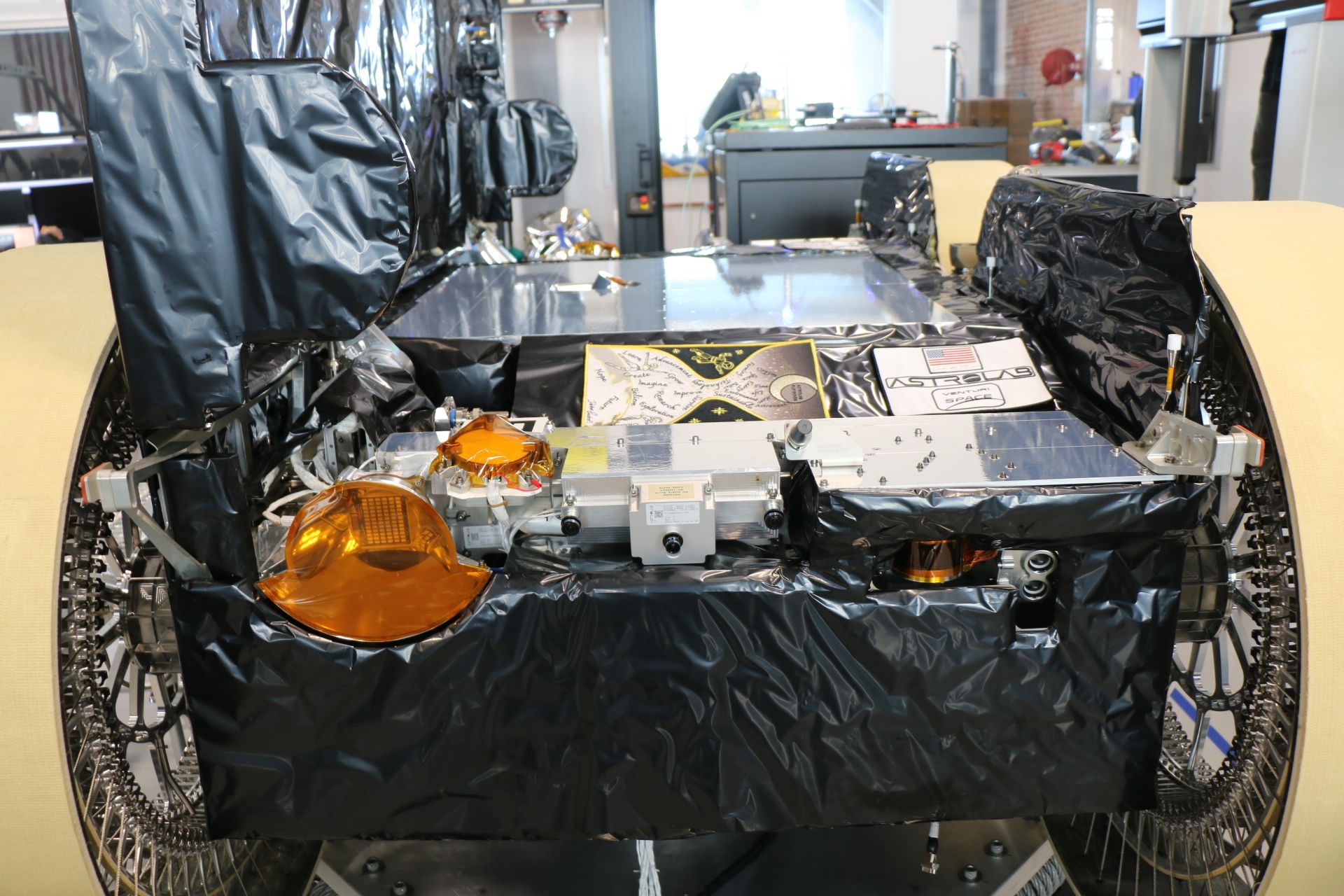
Later this year, Astrolab will launch its uncrewed moon rover FLIP to the lunar south pole as part of the Griffin Mission 1, or Griffin-1. The California company is one of two that NASA has selected to develop a drivable rover for the agency's Artemis program. On board FLIP will be Hewlett Packard Enterprise's (HPE) Spaceborne Computer-4, an advanced computer module built to be used in space.

This will be the first time that high-performance computing and artificial intelligence will be tested on the lunar surface. As NASA gets closer to landing humans back on the moon with Artemis, advancements like this aim to support future human habitation as well as economic activity on and around the moon.

"We're sending the first supercomputer from HPE to the lunar surface later this year, doing the first GPU [graphics processing unit] on the moon [and the] first AI experiments on the moon," Jaret Matthews, founder and CEO of Astrolab, said during an Oct. 14 media event here at Astrolab's headquarters. "They're breaking new ground, and they're ahead of the curve."

The computer is designed to be lightweight, compact, self-contained and fanless. It has a low-power 64-bit CPU (central processing unit) with a GPU. The computer will be attached to FLIP's cooling system and will be powered by a system supported by both batteries and solar cells on the rover. The computer will also be paired with solid state drives from the company KIOXIA that will allow for memory storage.

Images from Astrolab
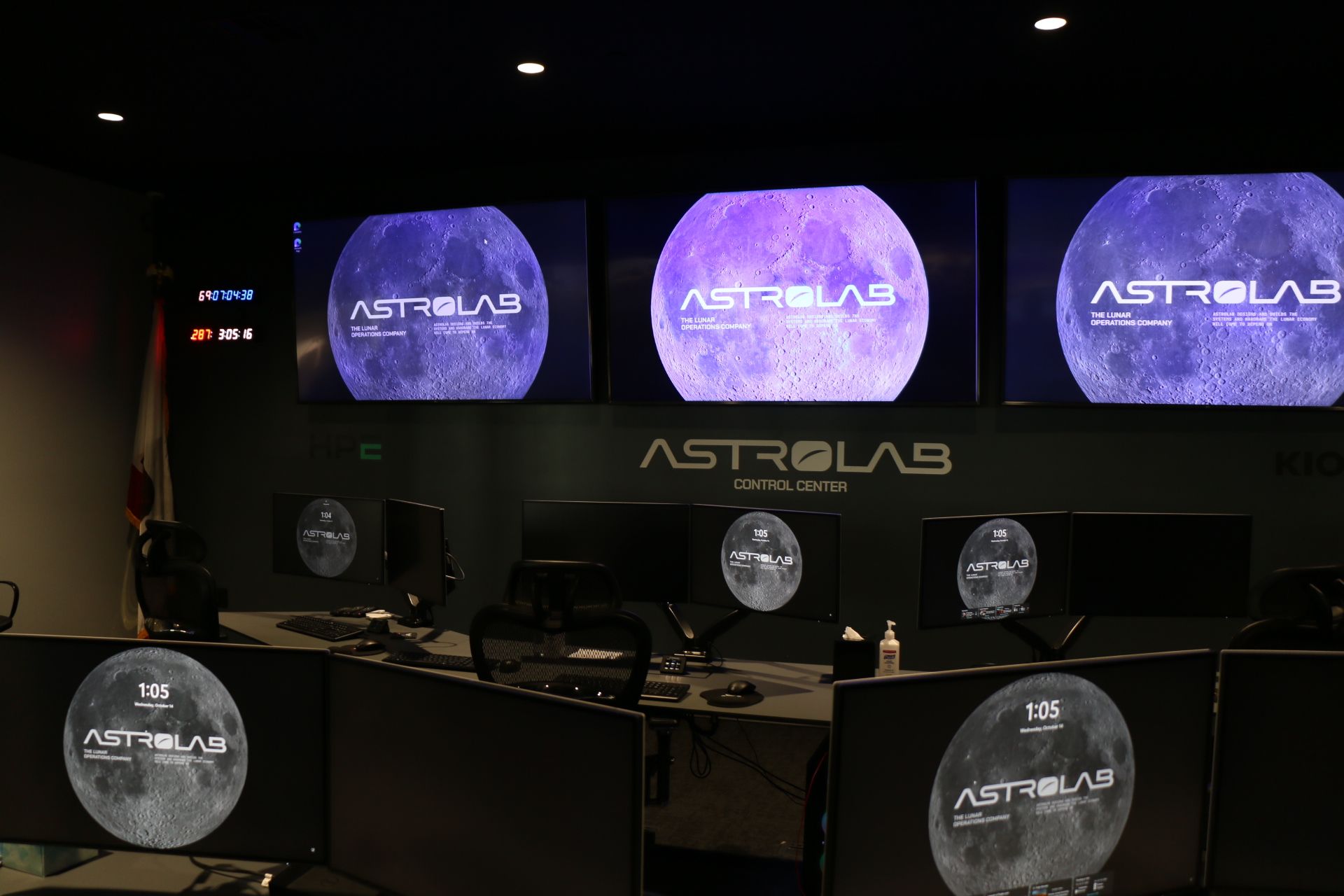
Mission Control at Astrolab.Chelsea Gohd
Images from Astrolab
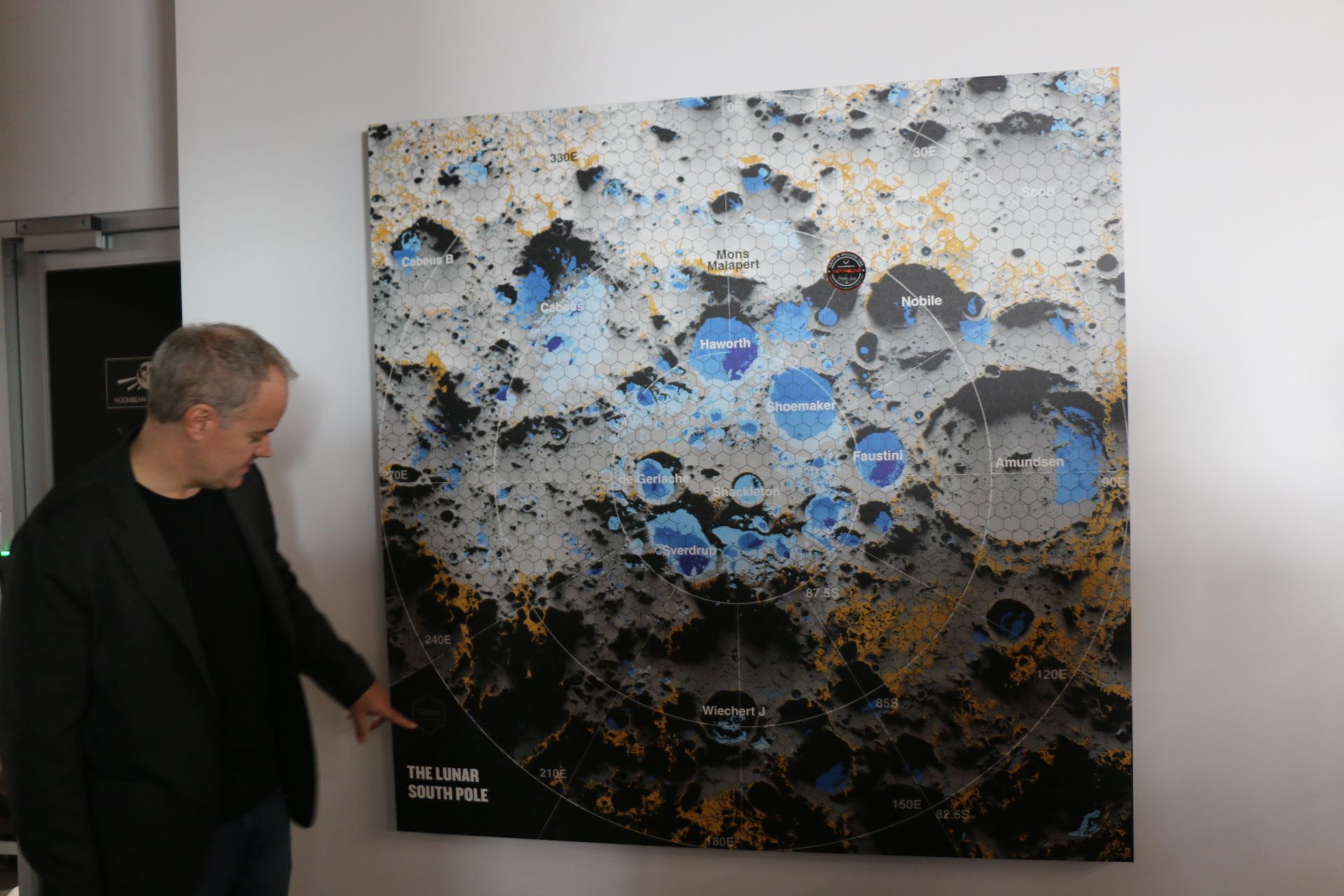
Astrolab CEO and founder Jaret Matthews points out the Astrolab landing site among other locations at the lunar south pole. Chelsea Gohd
Images from Astrolab
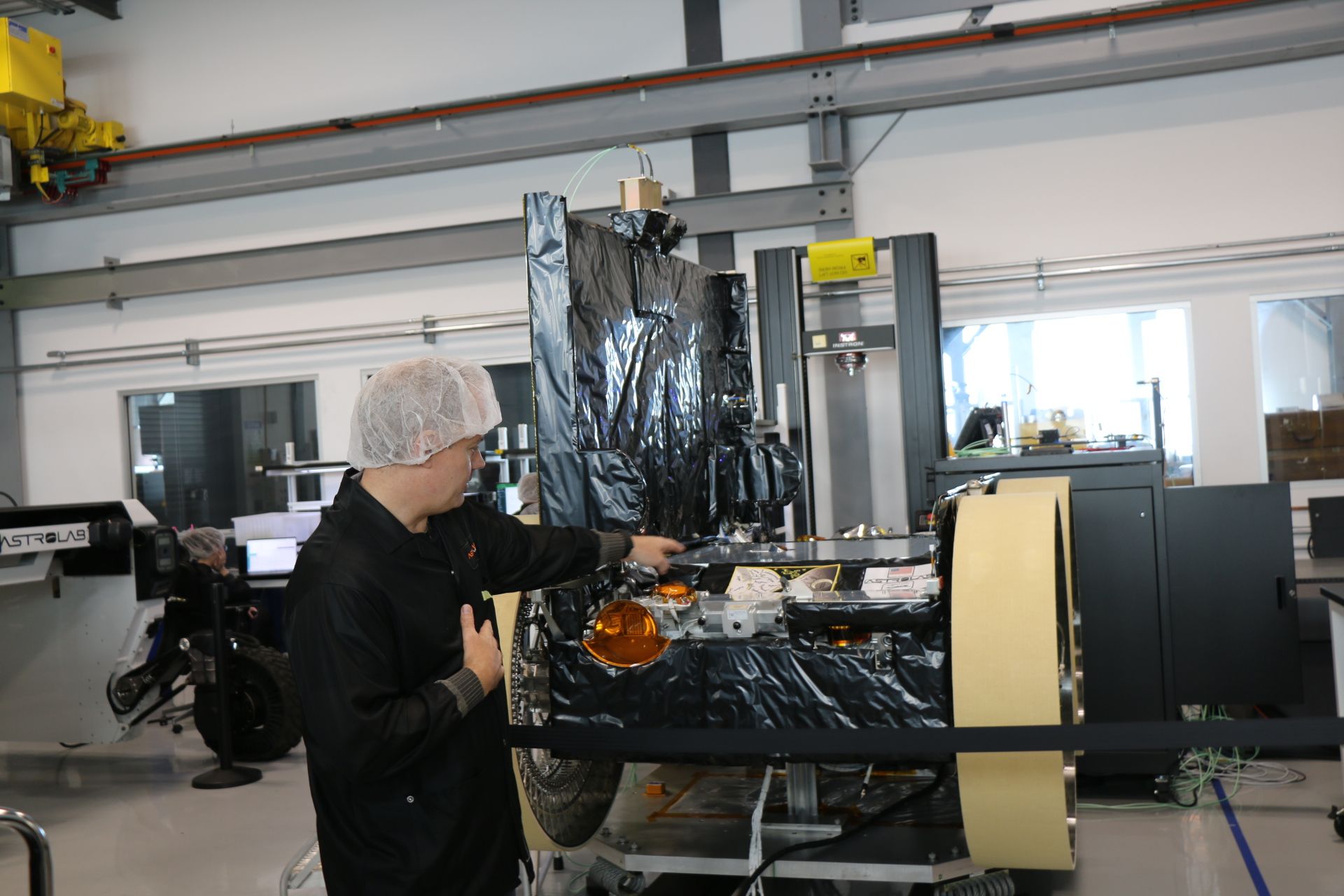
Jaret Matthews presents Astrolab's FLIP rover. Chelsea Gohd
Images from Astrolab
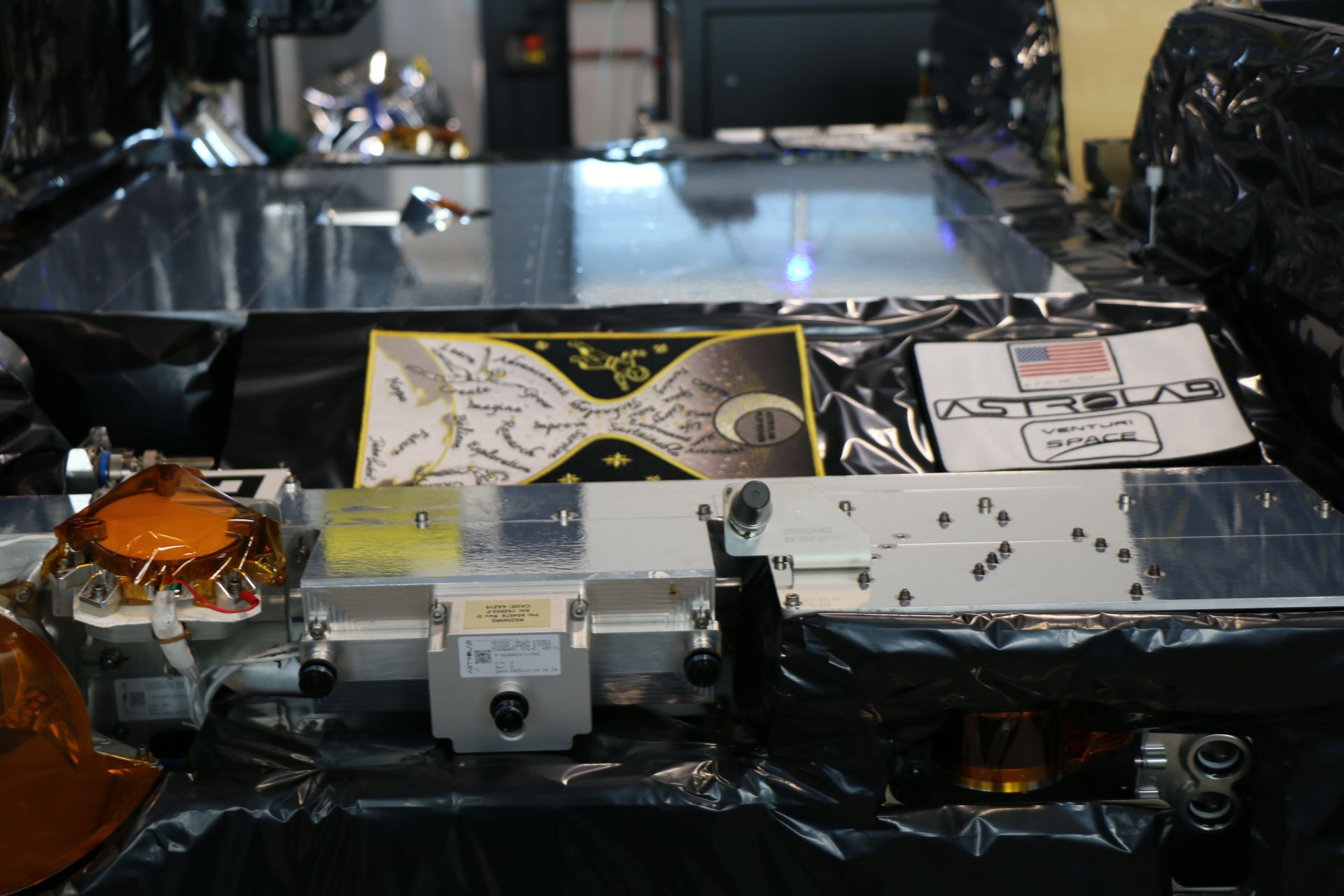
The FLIP rover's headlights and attached artwork. Chelsea Gohd
Images from Astrolab
A close-up of the attached artwork on the FLIP rover. Chelsea Gohd

So, what will a supercomputer and AI accomplish on this uncrewed mission? First and foremost, the flightwill test how the computer works in this extreme environment. The computer is built with heat-conductive aluminum and is designed with the specific conditions of the lunar south pole in mind. But while it was designed and tested to be able to withstand the extreme temperatures and conditions on the moon's surface, the upcoming mission seeks to show that this advanced technology can actually work in this environment.

"NASA's given us a real challenge," Matthews told Space.com at the media event. "We have to design for a full year on the lunar surface. So that means surviving multiple lunar nights, upwards of 150 hours of complete darkness where we're not receiving energy or warmth from the sun. And then, also, there's going to be a long period [in] which we're operating semi-autonomously for [when] the astronauts are not there … and so we're having to develop a semi-autonomous platform that will spend many months [and] travel hundreds of kilometers [on the moon]."

But the computer will more than just prove its durability, if all goes to plan. It will also analyze visual data captured on the mission and enable autonomous observations, process navigation, mapping and terrain analysis. The mission also promises to test AI capabilities, though it's unclear what exact applications we'll see with this lunar AI. HPE shared in a statement that "an AI services container will demonstrate reliable deployment of scalable AI service applications on the moon."

It is also to be determined exactly how, once tested, these capabilities might be used with future crewed missions. Astronauts aboard the International Space Station already use computers for communications, science experiments and other daily tasks while living in space, but we can't say yet exactly how future astronauts might use these capabilities, especially with the addition of AI, on the moon.

From Mars to the moon

One interesting aspect of this new development is where it came from. While HPE has provided computing power to NASA for decades, Matthews is also bringing his previous experience working at NASA's Jet Propulsion Laboratory (JPL) into this new venture.

"One of the experiments [that will be] running on the spaceborne computer on the moon is a localization software experiment from JPL. It has been used on Mars, and this will be the first time it's used on the moon," Matthews said.

"The challenge with the moon and Mars is that there's no GPS, so locating yourself and knowing where you are on the surface [can be difficult]," he added. "So we're going to be running what is essentially a machine learning algorithm that JPL developed to take a map that's stored in memory … and compare it to the local terrain we see around us, and then do a match. So essentially, match features of the local terrain to the map that's stored in memory to help find ourselves on the map and keep ourselves away from dangerous craters."

As its name suggests, Griffin-1 will be the first mission for the robotic Griffin moon lander, which was developed by Astrobotic. The Pittsburgh company is flying Griffin-1 for NASA, under the agency's CLPS (Commercial Lunar Payload Services) program. In addition to FLIP, the mission will carry Astrobiotic's CubeRover, a small, uncrewed rover; LandCam-X, an optical navigation system; and Nanofiche GLPH (Galactic Library to Preserve Humanity), a tiny archive of human history, to the moon's surface.

"The moon presents a challenging environment for advanced computing, and we’re pleased to provide HPE with an opportunity to demonstrate its technology on the lunar surface," Matthews added in a statement. "Our FLIP rover is designed to accommodate a variety of payloads, and this mission will demonstrate how commercial lunar mobility platforms can support technology development and scientific research."

The view from the edge of a sparkling spiral galaxy | Space photo of the day for Oct. 20, 2026

The side-view of a spiral galaxy.

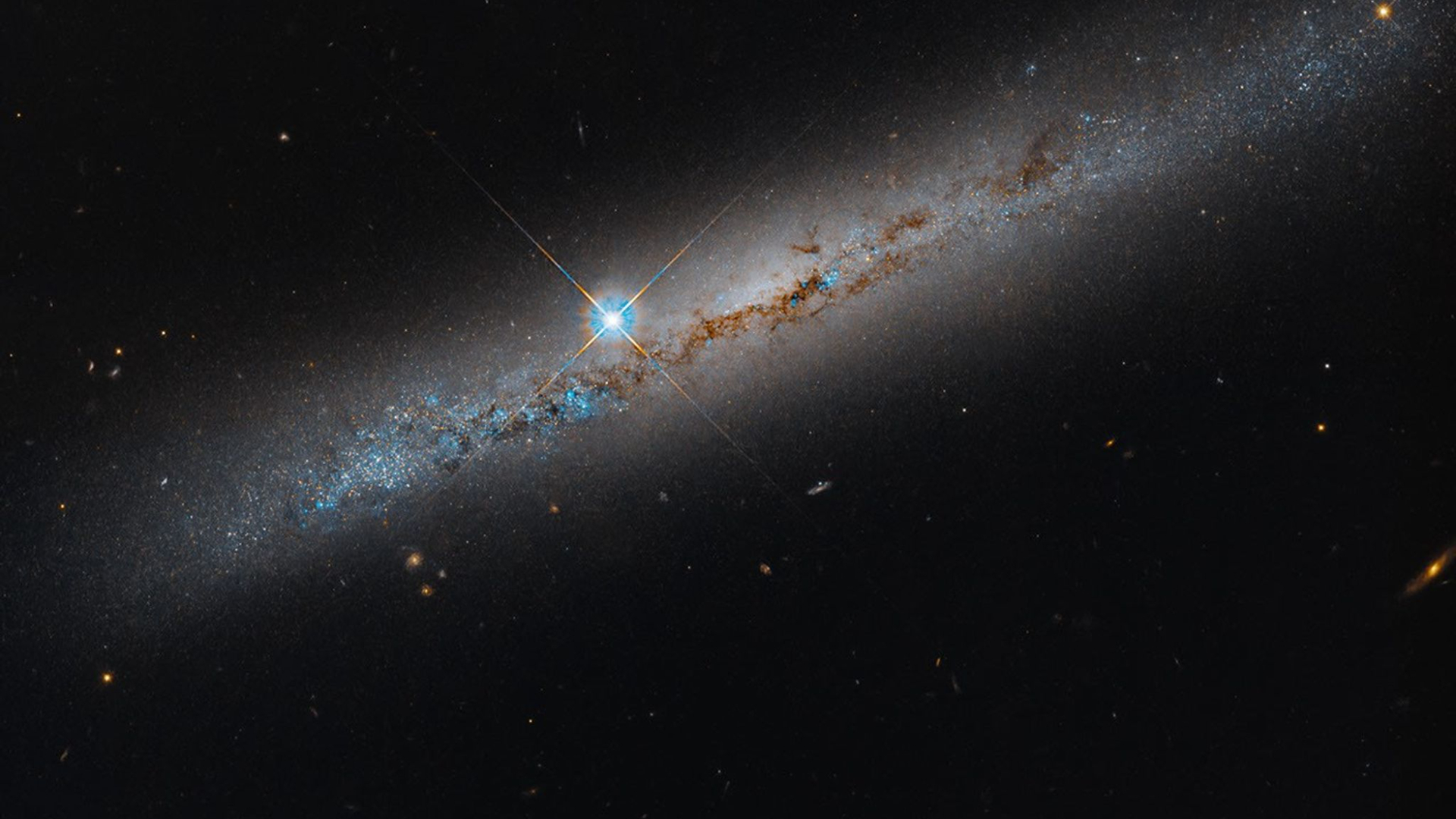
The spiral galaxy NGC 1827, as seen from the side by the Hubble Space Telescope. (Image credit: NASA, ESA, Michael Jones (California Institute of Technology); Image Processing: Gladys Kober (NASA/Catholic University of America))

If you were approaching the edge of a spiral galaxy, arriving from afar through the cosmos, it might look something like this.

What is it?

In this new snapshot by the Hubble Space Telescope's Advanced Camera for Surveys (ACS), we can see the edge of the spiral galaxy NGC 1827. Found about 37 million light-years from Earth, this galaxy sparkles in this side-on view.

Not all spiral galaxies are the same. This galaxy is what is known as an "intermediate" spiral, which means that its structure sits somewhere between that of a barred and unbarred spiral galaxy. Barred galaxies have a distinctive central, bar-shaped structure, while the unbarred variety lacks this bar and can look more like circular spirals.

NGC 1827's spiral shape isn't clear from the side, however. From this perspective, we see its twinkling edge, speckled with stars and woven together with brown ribbons of dust.

Why is it incredible?

Beneath the beauty of this spiral edge lies an expansive, cosmic landscape. Bright blue stars dot the spiral's side, with one particularly luminous star taking the spotlight with four diffraction spikes — created by light bending through the inner workings of Hubble's camera — emanating from its center.

This image was captured as part of a larger Hubble survey that's exploring 260 satellite galaxies, which are galaxies gravitationally bound to larger hosts. Hubble is specifically looking to survey satellite galaxies that lie near host galaxies similar to our own Milky Way.

So far, Hubble has spotted 111 such satellites and will continue to observe, hunting for the rest.

By studying satellite galaxies like this one, which also happens to be an especially low-mass galaxy, researchers could better understand the complicated dynamics both within the galaxies themselves and between them and their host galaxies.

The moon is shrinking. 10,000 cracks on the lunar surface reveal by how much

The moon is shrinking, and scientists are narrowing in on exactly how much our natural satellite has dwindled over the years.

The moon is thought to have formed from a violent collision between a massive object and our young Earth roughly 4.5 billion years ago, and its interior is still gradually cooling off from this ancient collision. As it cools, the moon contracts, leading to a long, slow shrinking process. Now, in a new study, scientists think that they have figured out how much smaller the moon is actually getting.

In this new study, scientists analyzing images snapped by the Lunar Reconnaissance Orbiter Camera (LROC) have spotted over 10,000 young faults, or cracks across the moon's surface. This helped them to figure out how much the moon has contracted over time, and they now estimate that the moon's radius has decreased by about 148 feet (45 meters) over the past 400 to 800 million years.

"The number of these young faults revealed in LROC images is much greater than I ever imagined," study lead Thomas Watters, a geologist and scientist emeritus at the Center for Earth and Planetary Studies at the Smithsonian's National Air and Space Museum, said in a statement. "As the interior of the moon continues to cool and contract, it is expected that the growth of existing faults and formation of new faults continues today."

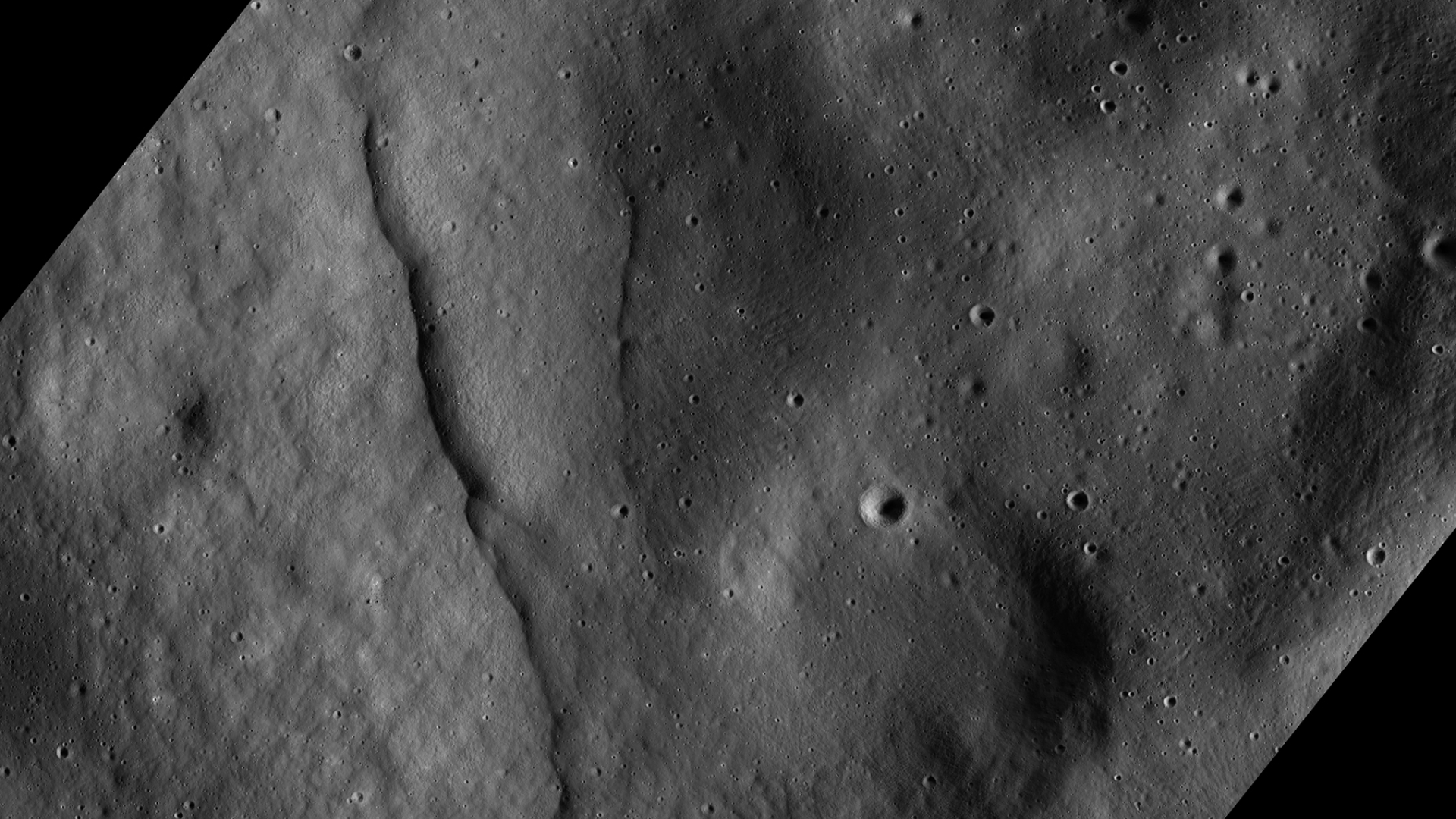
Lobate scarps on the moon.

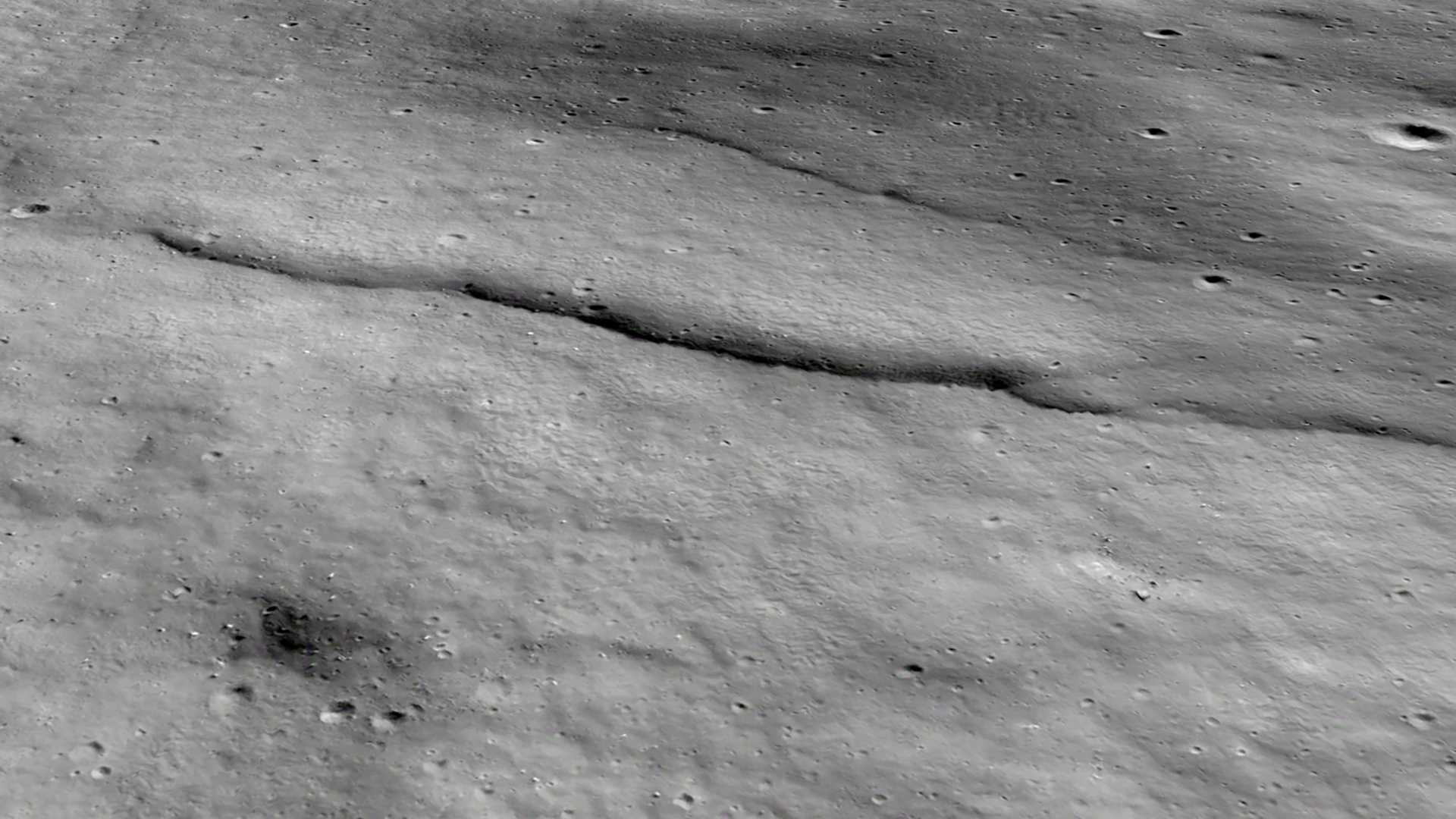
Lobate scarps on the lunar surface, as seen by LROC. (Image credit: NASA/KARI/ASU/Intuitive Machines/Smithsonian  )

With these LROC observations, researchers in this study saw a variety of different types of cracks and landforms across the lunar surface. This included lobate scarps, or long, curved structures that form when the moon's surface contracts, cracks and is pushed upwards; and small mare ridges, or narrow "wrinkles" in the lunar surface, across the dark plains on the moon.

Lobate scarps on the moon.

Lobate scarps on the moon, as seen by LROC. (Image credit: NASA/KARI/ASU/Intuitive Machines/Smithsonian)

Tectonic activity on the moon looks a lot different than it does on Earth. On our own planet, there are about 15 major tectonic plates. On the moon, there are no tectonic plates at all. Instead, the moon has a single-plate body meaning its outer shell is a single piece only broken by faults or other such cracks created by the moon contracting. This means that instead of faults or cracks appearing at tectonic plate boundaries, they are instead scattered all over the moon.

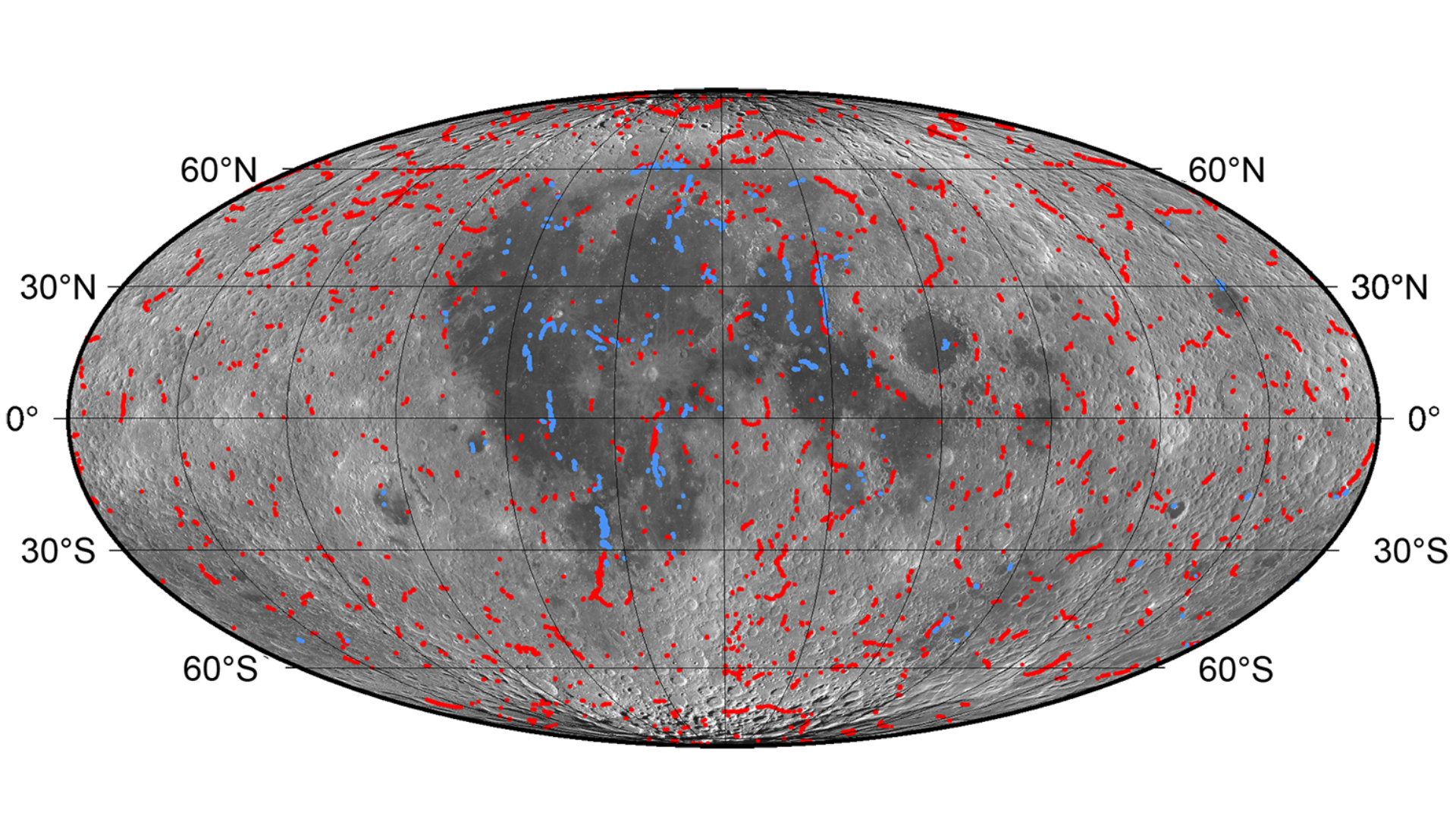
A global map of lunar faults.

A global map of lunar faults. Red lines indicate over 8,900 lobate scarps while blue lines show over 2,000 small mare ridges. (Image credit: NASA/ASU/Intuitive Machines/Smithsonian)

By mapping these thousands of different features, all created from the moon cooling and contracting over time, the researchers are piecing together lunar history. In addition to finding the extent to which the moon has shrunk over time, they also found that some areas of the moon are covered in many more faults than other areas, and the areas with fewer cracks and faults have thicker moon crust.

This led them to conclude that not only are these areas with thicker crust more stable, but they suggest that a great deal of the widespread cracks in the lunar surface were created later in the moon's history as, in its earlier years, its thick crust would have insulated the moon's warm interior and prevented cooling, contracting and cracking.

This work was described in a study published Oct. 14 in The Planetary Science Journal.

Elephant Island is an icy sight from orbit | Space photo of the day for Oct. 19, 2026

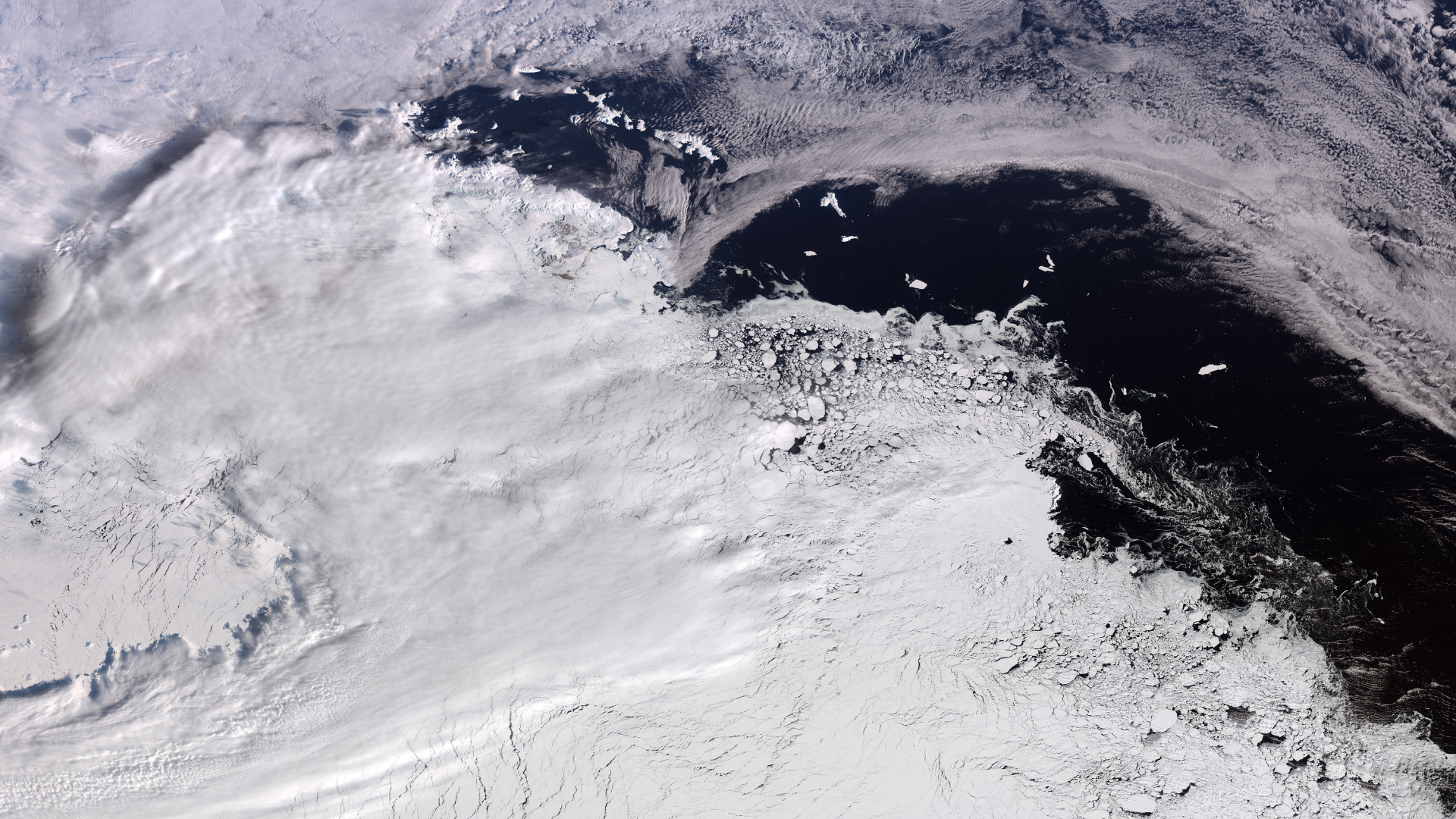
Ice floats by in West Antarctica as winter comes to an end in the Southern Hemisphere. (Image credit: contains modified Copernicus Sentinel data (2026), processed by ESA)

Antarctica is a magnificent sight, and that beauty is visible all the way from space.

What is it?

Orbiting planet Earth, the European Space Agency's (ESA) Copernicus Sentinel-3 mission captured a close-up of West Antarctica.

Winter is ending in the Southern Hemisphere, meaning this is the peak of icy weather and sea ice in the Arctic.

In this image snapped by Sentinel-3, you can see a massive swath of ice which includes Elephant Island on the left-hand side. An ice-covered island off the Antarctic coast, Elephant Island floats in the Southern Ocean. It got its name both from the island's shape, which some liken to that of an elephant's head, and the fact that the island is home to a community of elephant seals.

Why is it incredible?

While a seal-inhabited island on the left floats near the Antarctic coast, across the water is a vast, frozen landscape. In just this snapshot, you can see about between 746 and 1,056 miles (1,200 to 1,700 kilometers) of the icy continent.

This image was captured on Sept. 30, 2026. In the Southern Hemisphere, that was just past the end of winter. The absolute peak for sea ice in Antarctica fell just a couple weeks before, on Sept. 14, according to the National Snow and Ice Data Center, ESA reported.

So in this one snapshot, we can see a near-maximum for sea ice in the Antarctic, spanning hundreds of miles. In observing our own planet from space, we are able to peer across vast landscapes, capturing important observational data. This is especially critical for the Antarctic as, with the progression of climate change, this sea ice continues to dwindle, adding to sea level rise among other serious consequences across the planet.

Supermassive black hole blasts out a neon ‘treble clef’ | Space photo of the day for Oct. 16, 2026

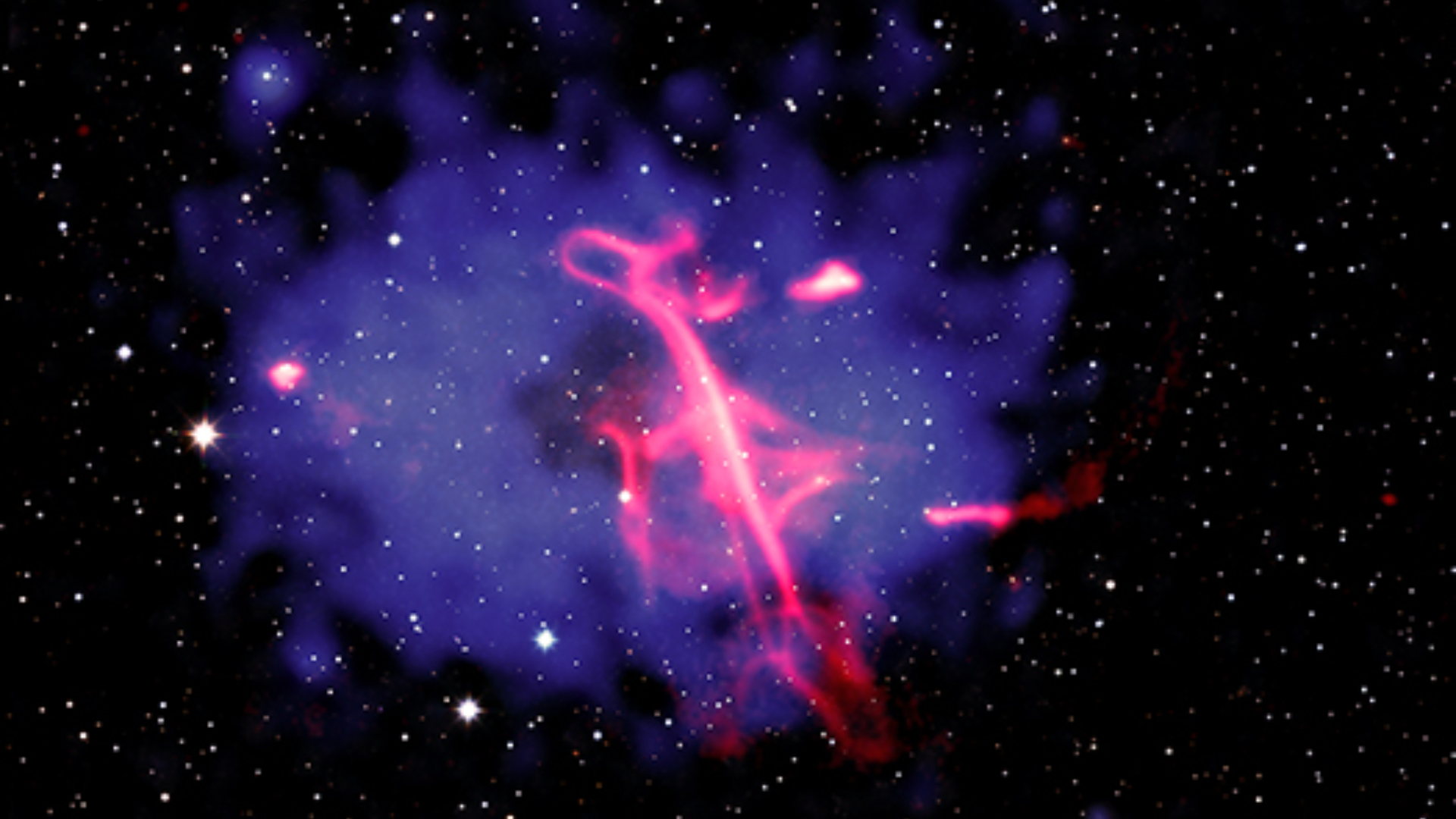
A blue gaseous galaxy background with a bright neon pink treble clef shape through the center.

The "treble clef" galaxy cluster is an unusual source of radio waves, the Chandra X-ray observatory has found. (Image credit: X-ray: NASA/CXC/INAF-IRA/A. Botteon et al.; Infrared: UKIDSS-GPS ; Radio: ASTRON/LOFAR; Image processing: NASA/CXC/SAO/N. Wolk)

What looks like a neon pink treble clef floating out in space is actually a bizarre source of radio waves spotted deep in the cosmos.

What is it?

Scientists using NASA's Chandra X-ray Observatory have peered far out into space to look at strange radio waves coming from what they have nicknamed the "treble clef" because of its distinct shape, which looks a lot like the musical notation.

Using Chandra, as well as the German Extended RÖntgen Survey with an Imaging Telescope Array (eROSITA) X-ray telescope, researchers looking at this strange sight spotted a big cloud of blue gas, which we can see in this image, along with radio signals (seen here in bright pink). They think that this object is actually a huge galaxy cluster made up of two different clusters that are in the process of merging.

Why is it incredible?

The researchers think they may have gotten to the bottom of where these radio waves are coming from, they report in a new study.

The team thinks that the treble clef-shaped radio signals were created by an outburst from a supermassive black hole. They believe that this outburst pushed clouds of charged particles and magnetic fields away from the galaxy cluster's center, producing bright radio waves.

According to the scientists, following this bright outburst, there was likely an extreme collision between two galaxy clusters. This cosmic smash-up either compressed or somehow reenergized these charged particles to amplify the radio signal.

When we see beautiful images of objects in space such as this, they can seem just like peaceful, colorful, cosmic clouds. But when you look a bit deeper, these spectacular scenes can actually be evidence of violent, chaotic events.

This work was described in a study published in the journal Astronomy & Astrophysics.

Cosmic ‘jellyfish’ wows skywatchers after SpaceX launch | Space photo of the day for Oct. 14, 2026

SpaceX launch created this jellyfish in the sky.

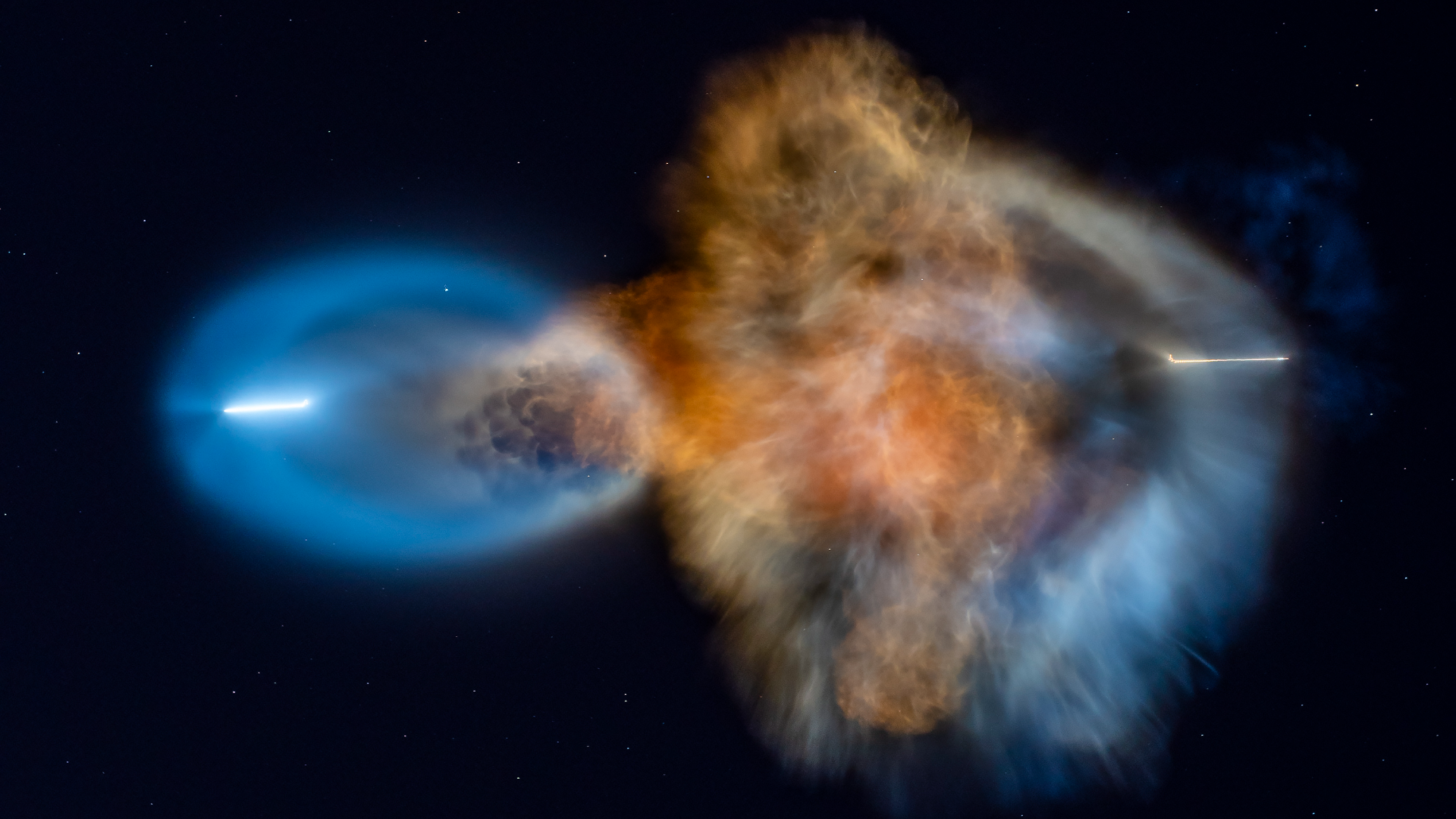
A "jellyfish" in the early-morning sky created by SpaceX's launch of the CRS-35 cargo mission on Oct. 13, 2026. (Image credit: SpaceX)

Did you see a gigantic, glowing jellyfish in the night sky early on Tuesday morning (Oct. 13)? If so, it's not an alien invasion (sorry); it was SpaceX launching its latest mission to the International Space Station (ISS).

What is it?

Just before dawn on Tuesday (Oct. 13), a SpaceX Falcon 9 rocket lifted off from Cape Canaveral Space Force Station in Florida, carrying to space a robotic Dragon capsule filled with thousands of pounds of cargo.

The liftoff kicked off CRS-35, the 35th mission that SpaceX is flying to the ISS as part of the company's Commercial Resupply Services agreement with NASA. Under the CRS contract, SpaceX has been sending cargo including medical supplies, food, clothing, scientific experiments and more to the space station.

It will take Dragon a couple of days to reach the orbiting lab. If all goes to plan, the capsule will autonomously dock with the ISS' Harmony module around 11 a.m. EDT (1500 GMT) on Thursday (Oct. 15).

Why is it incredible?

Imagine you wake up early in the morning. Perhaps you're rushing to get ready for work, or maybe you're just having a quiet moment with your coffee in the pre-dawn twilight. Then imagine you look out the window and see what looks like a gigantic, glowing jellyfish made up of orange and blue light and gas stretching across much of the slowly brightening sky.

If you're not expecting such a sight, or it's your first time seeing the remnants of a rocket launch, this would probably catch you off-guard. But don't worry; there isn't anything dangerous about this sight.

This "jellyfish" is created by the water vapor and carbon dioxide that are expelled by the rocket after takeoff. In the cold upper skies, those gases start to freeze into ice crystals, flowing off of and behind the rocket. If a launch occurs around dusk or dawn, sunlight hits this flowing plume of frozen gases while the ground and skies remain mostly dark, resulting in a uniquely spectacular (albeit, unusual) view.

Namibian salt flats look like an alien planet | Space photo of the day for Oct. 12, 2026

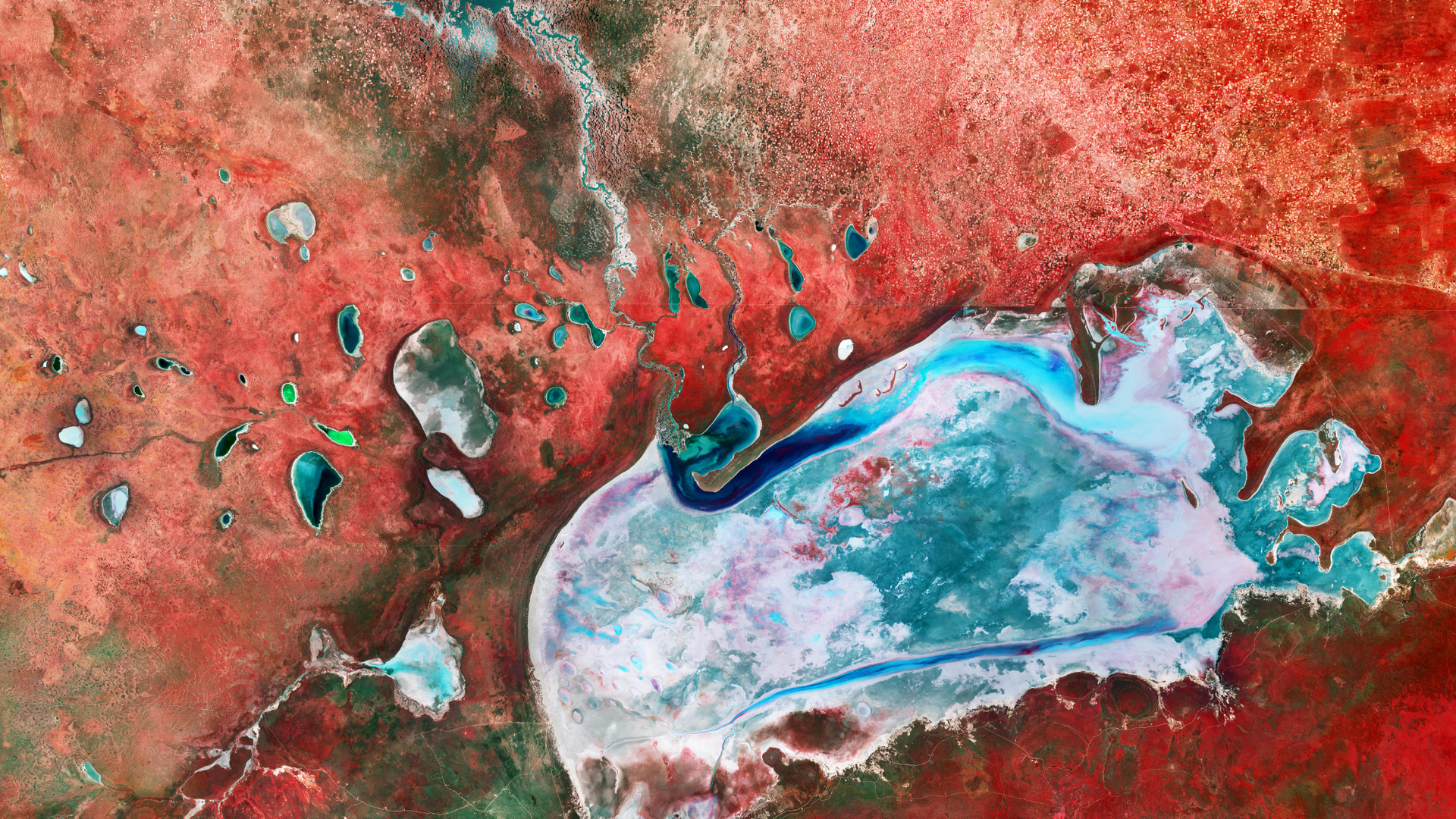
The Etosha Pan, Namibia's largest salt pan, seen from space. (Image credit: Contains modified Copernicus Sentinel data (2026), processed by ESA)

A neon blue pool swirls amongst what look like clouds, all surrounded by a bright red stretch of land. This might look like the surface of an alien planet, but it's actually a salt flat right here on Earth, seen from space.

What is it?

Etosha National Park in northern Namibia hosts the largest salt pan, or piece of land covered with salt and other minerals, in the country.

This image of the Etosha Pan was captured on April 5 of this year by Europe's Copernicus Sentinel-2 mission, which consists of two identical satellites in the same orbit.

The Sentinel-2 pair observe and capture imagery of our planet in different wavelengths using a high-resolution multispectral imager that can see 13 different spectral bands, or ranges of wavelengths.

By looking at our planet from space, and observing it through different wavelengths and colors, we can better understand Earth's topography and how it changes over time. With this image, researchers can better understand this landmark in Namibia, a nation in southwestern Africa.

Why is it incredible?

While this image is strikingly beautiful, the Etosha Pan doesn't exactly look like this in real life. If you were standing close to the pan in the national park, it would look bright white.

While this is a real image, false color has been added, which allows scientists to separate different types of vegetation and topography.

With the false color, the vegetation surrounding the salt pan appears in shades of red, while the salt pan itself looks like a mix of bright, light and dark blues with cloudy sediment floating around.

The varied vegetation captured in this false-color image includes grassland, savannas and mopane trees, which appear bright red. These trees are not only a dominant type of vegetation in areas of this park, they also provide essential shelter and habitats for local wildlife, including elephants, giraffe and leopards.