NASA astronaut Chris Williams flexes his muscles while on a spacewalk in this image snapped by fellow astronaut Jessica Meir on June 30, 2026. (Image credit: NASA/Jessica Meir)
Mid-spacewalk, one NASA astronaut had to take a moment to show off his muscles.
What is it?
NASA astronaut Chris Williams recently left the confines of the International Space Station for a 7-hour-and-20-minutespacewalk with fellow astronaut Jessica Meir. This was Williams' second spacewalk and Meir's fifth.
In a moment of fun, Williams flexed his muscles for a photo snapped by Meir during the strenuous spacewalk. With a big grin on his face, visible even through his spacesuit helmet, Williams raised his arms in a classic Muscle Beach pose as planet Earth glowed hundreds of miles beneath him.
But the pair of astronauts weren't playing around in space; this spacewalk had a serious purpose.On June 30, Williams and Meir ventured into the void to replace a wrist joint on the space station's Canadarm2 robotic arm that had been malfunctioning.
Canadarm2 has been operating for over 25 years, so it makes sense that every once in a while it needs a repair or upgrade. After making this swap, the old wrist joint will be sent back to Earth to be fixed in case it needs to be used as backup in the future.
Why is it incredible?
Williams' demeanor in this photo makes it seem like spacewalks are fun, or even easy. But his smile and playful pose for the camera are a major contrast to the incredible strength, stamina and careful work that it takes to complete a spacewalk.
From preparation to suiting up, and doing incredibly precise work with a spacesuit on while floating in the vacuum of space while tethered to the space station, spacewalks are incredibly hard work. Williams may have been having a fun moment with Meir showing off in this photo, but the pair of astronauts were certainly using their muscles to get a tough job done.
The Artemis 2 astronauts look up at footage from their flight during a visit to Capitol Hill. (Image credit: NASA/Joel Kowsky)
As we reflect on this past July 4 weekend, and America's 250th birthday, we look to NASA's Artemis II astronauts, who recently reflected on their historic mission during a visit to Capitol Hill.
What is it?
Following their return to Earth from a 10-day journey around the moon in April, NASA's Artemis II astronauts headed to Capitol Hill.
This photograph, captured on May 12, shows the crew — from left to right, NASA astronauts Christina Koch (mission specialist), Victor Glover (mission pilot), Reid Wiseman (mission commander) and Canadian Space Agency astronaut Jeremy Hansen (mission specialist) — showing off a photo from their mission to congressional staff at the Cannon House Office Building in Washington, D.C. In the photo, the four astronauts are wearing what look like eclipse glasses in the Orion capsule that they rode to space and back.
The presentation was part of a larger visit by the astronauts, who went to Capitol Hill to speak with U.S. politicians and staff about their mission.
Why is it incredible?
NASA's Artemis II mission had a profound impact on the public. The first crewed mission of NASA's Artemis program, and the first mission to the moon since the Apollo program ended over 50 years ago, Artemis II was a big step forward in human spaceflight.
But its success went well beyond the mission itself. The public really connected with the astronauts, and this mission seemed to ignite a fresh, new excitement about space overall.
In going to Capitol Hill and speaking with policymakers, the astronauts were able to share some of the experiences that the public connected to so deeply. For federal funding and support of science and spaceflight activities to continue, it's important for policymakers to understand what happens in space, and on these missions, and the many benefits that can come from even a single flight.
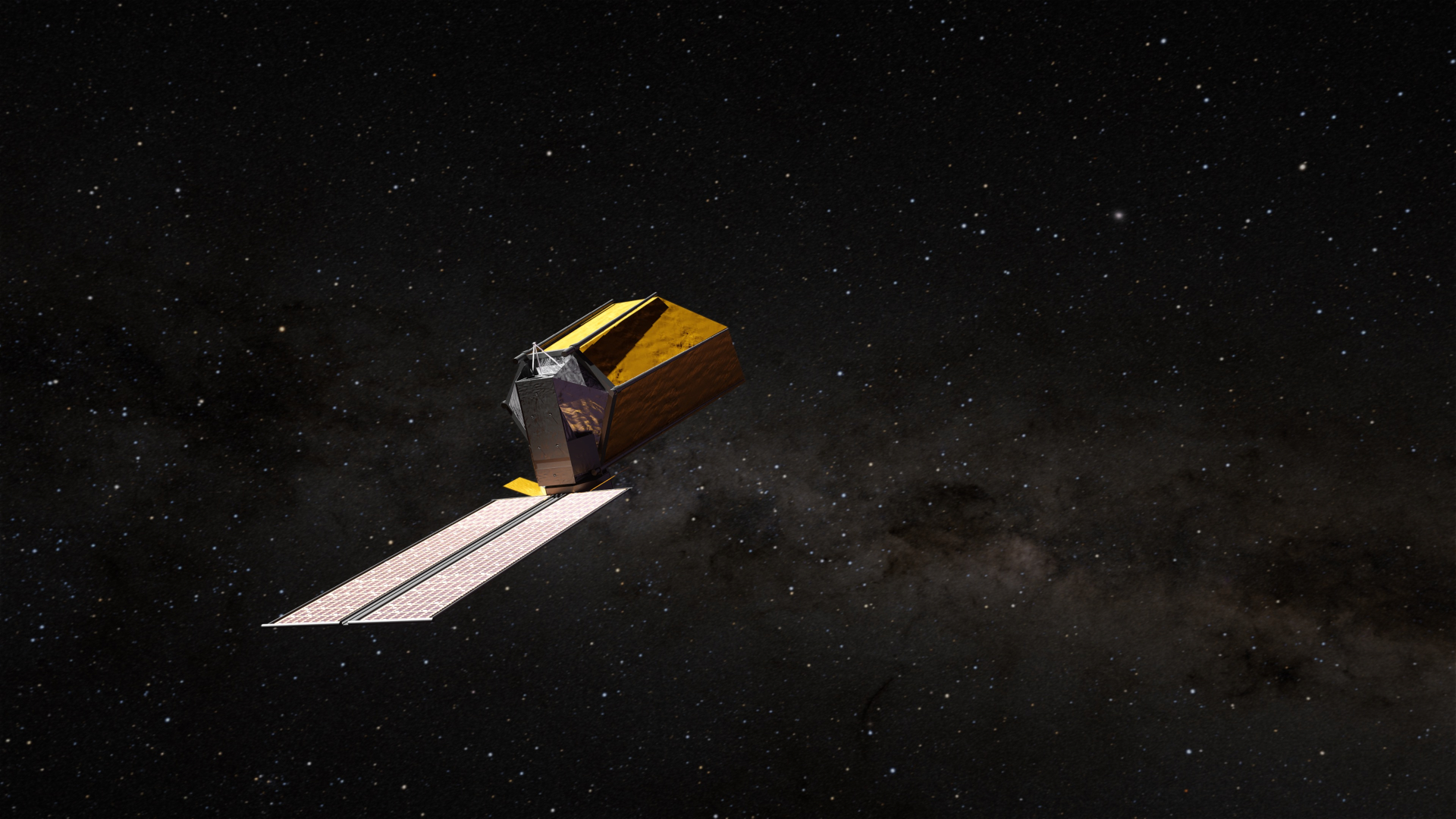
PASADENA, California — NASA's new alien-hunting telescope, the Habitable Worlds Observatory (HWO), will be serviceable out in space (and it will have gamma-ray detectors, to boot).
Do you remember seeing NASA's space shuttle astronauts working on the Hubble Space Telescope out in space? Well, it will likely be robots this time around, but NASA is planning for HWO to be serviceable, which means that they will need to figure out a way to work on, repair, and maintain the observatory while it operates roughly a million miles (1.5 million kilometers) away.
"HWO will have to be serviceable to some extent," NASA's astrophysics division director Shawn Domagal-Goldman told Space.com during a session at the American Astronomical Society's (AAS) 248th meeting in Pasadena, California.
From Hubble to HWO
The Habitable Worlds Observatory (HWO) is NASA's next planned flagship space telescope. But what separates it from previous space telescopes like Hubble or the James Webb Space Telescope (JWST) is its purpose: to look for and study rocky, Earth-like planets orbiting sun-like stars. In other words, to find planets that could hold life. The mission won't just hunt for aliens, but rather explore these habitable planets and their atmospheres, expanding our understanding of other worlds while also being used for a variety of astronomical purposes. And by making it serviceable, NASA will not just extend HWO's life, but it will also open the door for future technologies that can be used to enhance the observatory.
Hubble was a unique case. As the space telescope came about at roughly the same time as NASA's Space Shuttle program, and the telescope was designed to function in low-Earth orbit, it was a natural fit that astronauts go out to assemble, repair and maintain the observatory. "There were decisions made early on that the avionics would be modular in a way that astronauts could take the computer out and put a new computer in, or take a gyroscope out and put a new gyroscope in," former NASA astronaut and former NASA Chief Scientist John Grunsfeld, who today works independently as a consultant in the space industry, told Space.com.
However, HWO won't be so close to us. Instead, it will be located nearby L2, or the Sun-Earth Lagrange point 2, a point out in space roughly one million miles (1.5 million kilometers) away where the gravitational pull of the sun and Earth combine to keep objects in the same orbital period as Earth. This position, which is also home for the JWST, allows space telescopes to stay in sync with Earth, making communication easier. It also makes an astronaut mission quite difficult, if not nearly impossible with the technology we have today.
While the JWST was sent out to this distant vantage point without plans for servicing the telescope, HWO will "have to" be serviceable, according to Domagal-Goldman and further confirmed with NASA's press office. Servicing the observatory could look like anything from instrument swaps to regular maintenance or as-needed repairs, but it could also entail assembling the observatory itself. "If the telescope is too large to launch [fully assembled]," Domagal-Goldman added, it might need to be "assembled in space."
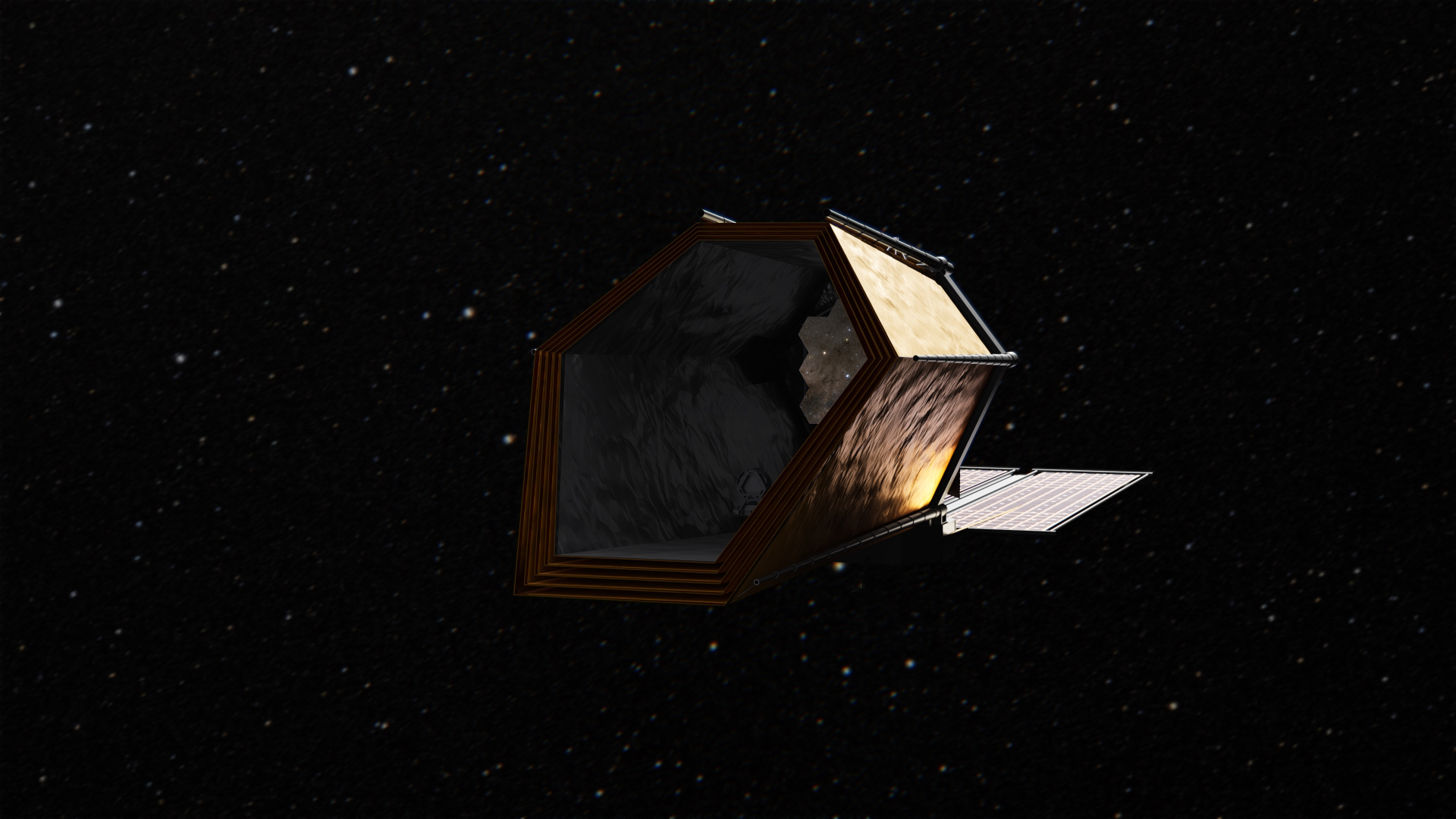
When the JWST went to L2, the mission team realized the problem with micrometeorites was a bit bigger than they anticipated. "We've learned that there's more micrometeorites and they're larger than we expected," said Grunsfeld, "and so you might be able to want to put a patch over a sunshield or a patch on a barrel to patch a hole — and, in principle, robotics could do that."
NASA has yet to confirm details about exactly how they plan to service the new observatory, which makes sense as the design of HWO itself is still in flux. But with L2 being so far away, it's logical to assume that it will need to be supported robotically, instead of with astronauts working out in space like with Hubble. We don't know what these future space telescope robot mechanics might look like, but they will have to be very capable to work on such a powerful observatory all the way out at L2.
"This will be by far the most challenging observatory that we've ever built," Grunsfeld said. "It's just remarkable that we are so bold as to think we can do it, and to be really close to showing that we can … so since we're just getting started, this is the time to have the discussion about should it be serviceable or not."
NASA's Goddard Space Flight Center Conceptual Image LabNASA's Goddard Space Flight Center Conceptual Image LabNASA
Science is the driving force
In addition to extending HWO's longevity by building it in a way that will allow it to be repaired out in space, making the observatory serviceable will also stretch its science capabilities in ways we can't yet imagine. If we look at Hubble's history, its instruments have been swapped out for newer, better versions over time that have not just allowed the telescope to continue functioning, it has allowed the telescope to evolve with changing technologies. From Hubble's gyroscopes to the Wide-Field Camera 3 swapped out in 2009, the telescope has benefitted from many technological upgrades. With servicing capabilities, the same could be true for HWO.
HWO is still fairly early in its development, and many years from launch (estimated for the 2040s). But NASA is laying the groundwork for this mission with the upcoming flagship mission the Nancy Grace Roman Space Telescope. This mission carries with it a technology demonstration called the Roman Coronagraph Instrument. Essentially an "exoplanet camera," this instrument will block the glare of far-off stars, getting a direct look at the planets in their orbit. Roman will provide a proving ground for this next-gen coronagraph technology. But even if HWO launches with an advanced version of this coronagraph five , 10 or even 15 years following launch there could be even better planet-spotting technology available.
"I'm sure we will be highly motivated if we see a little rocky planet around a nearby star that kind of looks like Earth," Grunsfeld said, "we're going to be highly motivated to send a higher resolution spectrograph, or some different type of detector … up there as fast as we can. So that's the primary driver of servicing, is to be able to put in new scientific instruments."
By making HWO serviceable, NASA will enable the use of future technologies without having to launch entirely new space telescopes to support them. This is a cost-effective method, but it might also enable the deployment of future technologies that might otherwise not have a place to operate out in space.
"Imagine 20 years from now, or 25 years from now, that there'll be a robust space industry doing servicing, such that we could have a commercial servicer deliver new scientific instruments to habitable worlds," Grunsfeld said. They would simply "slide the old ones out, [and slide] the new ones in."
Speaking of future technologies, this decision to make HWO serviceable wasn't all that NASA revealed at AAS. Domagal-Goldman also shared that HWO will be equipped with Gamma-ray detectors. The specific details of these detectors and what they will be used for is also to-be-determined, but with HWO being serviceable, these detectors could continue to evolve with the observatory over time, enabling future astronomy that we can't even imagine today.
The weather cover for the Artemis 3 SLS core stage arrived at NASA's Kennedy Space Center. (Image credit: NASA/Amber Jean Notvest)
Did a flying saucer just land at NASA? It sure looks like it.
This is actually the weather cover for the core stage of NASA's Space Launch System (SLS) rocket, which is currently gearing up to launch the Artemis 3 mission in mid-2027.
What is it?
Aboard NASA's Pegasus barge, floating out in the Atlantic ocean, sits what looks like a classic, sci-fi movie UFO flying saucer. With some flashing lights, this thing flying around in the sky would cause quite a commotion. But it's actually a critical piece of hardware for NASA's Artemis program returning humans to the moon.
The Pegasus barge is a large cargo ship — it's a whopping 310 feet (94.4 meters) long — designed to carry the massive core stage of NASA's SLS megarocket. As the agency marches forward with its plans for Artemis 3, a crewed flight to low Earth orbit that will serve as a key test ahead of future missions to the moon, the SLS prepares for launch.
Once stacked on the launch pad at NASA's Kennedy Space Center in Florida, this flying saucer will actually serve as a weather cover, protecting the rocket's core stage and its thermal systems from the often turbulent and unpredictable weather on the Space Coast.
Why is it incredible?
It is always fun when science fiction and science fact meet. The design of this weather cover could not be closer to the flying saucer designs that have flown across screens in sci-fi flicks for the 1950s and '60s to today. It's interesting to wonder whether these familiar images of flying saucers somehow inspired this functional design.
But however inspiration struck, this weather cover will serve an incredible purpose. It will shield the rocket's core stage, the tallest rocket stage NASA has ever built, which holds hundreds of thousands of gallons of propellant and supports the weight of the rocket's upper stage, payload, and the Orion crew capsule. The safety of the Artemis astronauts and the success of these missions depend on the rocket launching perfectly, and every single piece, including this weather cover, are part of ensuring that success.
Swirls of wildfire smoke can be seen over Canada. (Image credit: NASA)
Wildfires across the globe can be seen all the way from space. And one unexpected tool has come in handy to spot plumes of wildfire smoke: a satellite designed to study Earth's oceans.
What is it?
In this photo, we can see swirls of wildfire smoke over the Great Lakes in Canada. Fluffy white clouds float over the land and lakes, in contrast to the wisps of gray smoke, which float out from massive wildfires that ripped through North America.
The photo was snapped in May of last year by NASA's PACE (Plankton, Aerosol, Cloud, and ocean Ecosystem) satellite. This seems logical, as it is an Earth-monitoring satellite, but what's surprising is that the orbiting spacecraft was actually designed to study and monitor Earth's oceans and atmosphere. In fact, the image itself was captured by PACE's Ocean Color Instrument, which does "hyperspectral" imaging, meaning that it observes the planet in hundreds of different wavelengths of light (in visible, near-infrared and ultraviolet).
Why is it incredible?
This image, among others, shows the incredible versatility of space technologies like PACE. While wildfire monitoring isn't its explicit purpose, images and data from this mission could be incredibly helpful in deepening our understanding of wildfires and how they spread.
"The PACE satellite observes land too, and does it really well," Skye Caplan, terrestrial lead for the PACE mission at NASA's Goddard Space Flight Center in Maryland, said in a statement. "There is so much to explore with a new hyperspectral data set."
In fact, in addition to capturing wildfire smoke, as we can see in this image, PACE's Ocean Color Instrument can also spot changes in vegetation, burn scars and the charred aftermath of a wildfire. Images in the instrument's hundreds of wavelengths can reveal a variety of detailed information, such as how stressed, dry or even pigmented plants are on Earth's surface. This type of information could also be beneficial in identifying dry areas that could be at a higher risk of wildfires sparking.
NASA's Mars Reconnaissance Orbiter spotted Perseverance rover as it completed driving the distance of a marathon (26.2 miles or 42 kilometers) on the Red Planet. (Image credit: Credits: NASA/JPL-Caltech/University of Arizona)
A spacecraft orbiting Mars watched as its "friend," the Perseverance rover, finished its first marathon on the Martian surface. There weren't any medals handed out, and there wasn't any competition, but we're proud either way.
What is it?
On June 14, 2026, NASA's Perseverance Mars rover completed the equivalent of a marathon, having driven 26.2 miles (42.2 kilometers). After landing in the ancient lakebed Jezero Crater in 2021, the rover has been hard at work exploring, sampling, and collecting information to help scientists put the pieces of Mars' history together.
NASA's Opportunity rover also managed to reach a marathon distance on Mars, though it took over 11 years to make it that far. Perseverance managed to make it to this marathon milestone in just 5 years and 4 months, and the rover is still going strong.
But Perseverance isn't making history alone; it has the Mars Reconnaissance Orbiter (MRO) watching from orbit. In this image captured on June 13 by MRO, we can see Perseverance in the home stretch of its marathon, rolling toward that finish line in a region of Jezero Crater called "Arbot."
While the rover is barely a speck from this orbital distance, this additional vantage point allows researchers a different perspective on the robotic explorer. With the speed at which the rover completed this marathon, and how well it continues to explore on Mars, who knows, maybe Perseverance will be the first to manage an ultramarathon on the Red Planet.
Why is it incredible?
While crossing the marathon finish line on Mars is an exciting milestone, Perseverance has done so much more than just travel this impressive distance.
In the past 5 years, and over 26.2 miles, Perseverance has accomplished quite a lot. The rover has captured an incredible wealth of imagery, data, and even samples of Martian material.
Last year, observations made with the rover revealed the most-compelling possible biosignature found yet on the planet. And more recently, the rover found even more evidence of possible past life in a similar location.
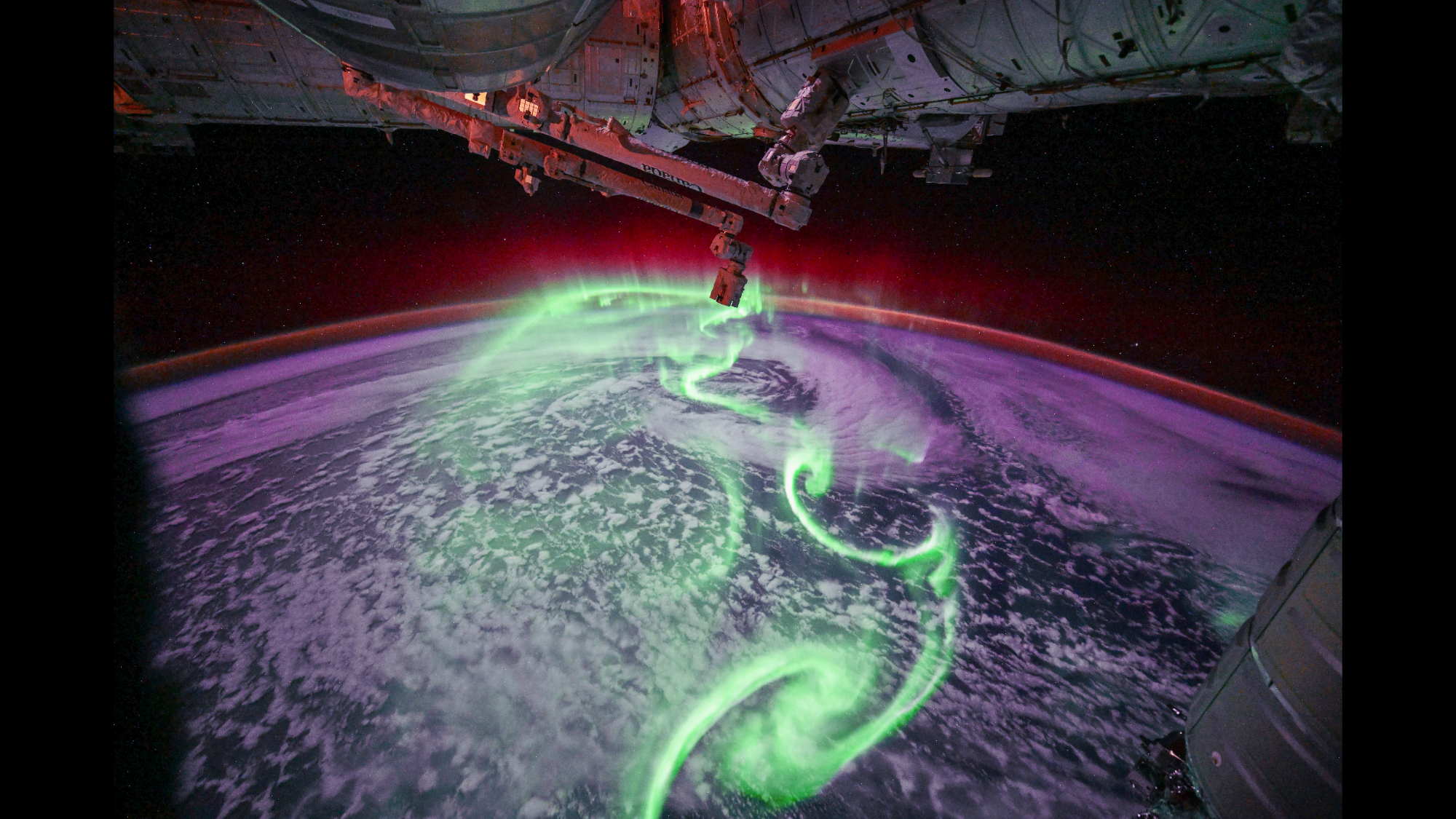
Auroras from space dazzle in this image captured from the International Space Station by ESA astronaut Sophie Adenot. (Image credit: ESA/NASA/S. Adenot)
If you've ever seen auroras in the night sky, then you are one of the lucky few who has enjoyed a view of one of nature's most colorful and spectacular phenomena. But for the very lucky, very few who've seen auroras from space, the view is on a whole other level!
What is it?
When charged particles streaming constantly from the sun, also known as the solar wind, reach Earth and interact with our atmosphere, it creates what we call auroras. Seeing these spectacular, colorful displays in the sky is on many people's bucket list, as auroras can light up the sky in a rainbow of colors. But this beautiful phenomenon happening in our atmosphere can also be seen from space.
European Space Agency astronaut Sophie Adenot, who is currently aboard the International Space Station as part of the εpsilon mission, spotted the aurora australis, or auroras over the Southern Hemisphere. (Lights in the Northern Hemisphere are known as the aurora borealis.)
And the image she captured of the moment really speaks for itself. Neon green swirls look truly otherworldly against a haze of bright purple blanketing Earth, which also seems enveloped in a ruby red glow. The reddish glow of the auroras can even be seen against the outside of the space station in this photograph.
Why is it incredible?
While her photograph speaks for itself, Adenot actually shared her own thoughts on the view via social media. One incredible thing about human spaceflight in the modern world is that, even from an orbiting laboratory, astronauts can share their experiences with the world in real time.
"Day 127, orbit 1968 — That aurora was absolutely spectacular… shimmering and dancing beneath us, stretching as far as the eye could see, and so intense it lit up the Station in shades of green," Adenot said. "We’ve seen several since the beginning of the mission, but this one was on a completely different level — far too bright for my usual aurora camera settings. Moments like these never get old up here; the whole crew suddenly find themselves vying for a good spot at a window!"
LOS ANGELES — The space shuttle Endeavour is absolutely breathtaking in its 20-story new home at the California Science Center's brand-new Air & Space Center, which is set to open on Nov. 13, the museum announced on Wednesday (June 24).
After over three decades of ideation, development and construction, the California Science Center has officially announced an opening date for its brand-new Samuel Oschin Air & Space Center, which will feature the space shuttle Endeavour. On Wednesday, I got to peek behind the curtain to see Endeavour's new home inside the center, where it stands in a "ready to launch" position, towering at nearly 200 feet (61 meters) tall — a truly spectacular focal point. The shuttle is even complete with real solid rocket boosters and the last flight-qualified external fuel tank (ET-94).
"It's been a lot of years to get here, and it's a dream come true," Lynda Oschin, the chairman of the board and secretary of the Mr. and Mrs. Samuel Oschin Family Foundation, told Space.com about this massive exhibition finally coming together.
"They're going to be in tears, they're going to be shaking, and they're going to be proud," Oschin added, referring to how she expects guests to react to Endeavour in its new home. And having just seen it for the first time in all its glory, standing upright with its fuel tank and rocket boosters seemingly ready to launch, I can attest: She is absolutely right.
Before you even step foot into the shuttle room, there is a short video that is played that takes you through the history of the shuttle program while bringing to life the fiery excitement of a shuttle launch. In a dramatic cloud of smoke, the shuttle room is revealed and there isn't a single person who isn't in absolute awe. Endeavour is hypnotizing. With the boosters and fuel tank, its already massive stature becomes almost larger than life.
The space shuttle Endeavor is larger than life in its new museum home. Space.com/Chelsea GohdThe space shuttle Endeavor, in all its glory. Space.com/Chelsea GohdThe interior of the space shuttle Endeavor.Space.com/Chelsea GohdSpace.com reporter Chelsea Gohd demonstrates that you can stand underneath the shuttle engines. Space.com/Chelsea GohdA cloud of red "smoke" concludes the video presentation and masks the reveal of the space shuttle Endeavor. Space.com/Chelsea GohdAn infographic showing the configuration of the shuttle.Space.com/Chelsea GohdFormer NASA astronaut Danny Olivas stands with the space shuttle Endeavor. Space.com/Chelsea Gohd
A walkway takes you all the way around the shuttle, which is open on one side so you can clearly peer into its many layers, seeing wires and other details. You can also walk down to a lower floor, where you can stand underneath the shuttle and inspect it from every angle you might want. And surrounding the shuttle itself are a variety of interactive exhibits like a shuttle landing simulator (good luck), the tires from Endeavour's final landing, and more.
"I'm a child of the Apollo era, and I remember having a plastic Apollo Saturn V rocket that I carried with me everywhere, and that was after going to Johnson Space Center, visiting the space center there," retired NASA astronaut John "Danny" Olivas told Space.com. "inspiration happens through exposure, and there's nothing, I think, more impressive than standing next to the space shuttle stacked the way that they've done here at the California Science Center."
And Endeavour is special in this respect: No other museum has a space shuttle orbiter that's mounted vertically, in the launch position.
One aspect of the California Science Center that stands out is its accessibility, as the museum (including the brand-new air and space center) is entirely free to the public — and it's on the metro line, which kids in L.A. can ride for free. Many museums and similar institutions strive for and value accessibility, and this center really takes that to heart, keeping even new installations like the shuttle free to visit. "California Science Center has opened up accessibility for inspiration to the next generation of space explorers," Olivas said.
And while NASA moves forward with its Artemis moon program, Olivas, who flew on two shuttle missions (STS-128 and STS 117), is confident that the lessons and history of the space shuttle program will carry on in inspiring that next generation.
"One of the things that really touches my heart about the space shuttle program is that it ushered in an age of diversity in space exploration that we had not seen prior," Olivas said. "We got an opportunity to see so many firsts — so many firsts of Americans being able to see themselves in the astronauts that flew in space, and that opened the door to so many people like myself, recognizing that wow, yeah, I can become an astronaut."
The new Air & Space Center was first imagined as part of a museum expansion plan all the way back in 1993. Over 30 years later, the futuristic building stands a whopping 20 stories tall to accommodate the towering Endeavour, which immediately grabs the focus of anyone walking into the building.
After NASA's space shuttle program ended in 2011, the agency worked to turn itsretired shuttles into museum attractions. Endeavour first arrived at the California Science Center in October of 2012. Thousands watched as the spacecraft rolled through the streets of Los Angeles on the back of a slow-crawling transporter, a 12-mile (19 kilometers) trek from Los Angeles International Airport to the California Science Center that took the craft 68 hours.
Four years later, in 2016, ET-94, the shuttle's external fuel tank, arrived. And seven years after that, in 2023, two solid rocket boosters arrived and the shuttle was taken off display, where it had sat for over a decade, as preparations began for its new home in the Air & Space Center.
"Now, with the stunning display of Endeavour in launch configuration, the Samuel Oschin Air & Space Center will give us a clear, greater platform than ever before to accomplish our mission to stimulate curiosity and inspire science learning in everyone," said Jeffrey Rudolph, president and CEO of the California Science Center. This "will be the only place in the world to see a complete space shuttle system, with the flown orbiter Endeavour mated to real solid rocket boosters and the only remaining flight-qualified external tank, ET-94."
While Endeavour is the clear centerpiece of the building, the Samuel Oschin Air & Space Center will be chock-full of a wide variety of other space artifacts. The building is split into three sections that guests will be able to explore: air, space and shuttle. Relics from throughout spaceflight history, interactive exhibits, and immersive, educational experiences fill the space. Currently, 1.6 million people visit the California Science Center each year, so even if this number were to remain the same, this building has to be ready for a big and diverse crowd from around the world.
The solstice can even be seen from space in this new image from the Meteosat Third Generation (MTG) mission. (Image credit: ESA/Eumetsat)
Twice each year, we celebrate what we call a solstice when Earth is at its maximum tilt toward or away from the sun. And during this June's summer solstice, a European weather satellite managed to capture a striking image of the celestial moment from space.
What is it?
This image of the solstice was captured on June 21 by the European Space Agency's (ESA) Meteosat Third Generation (MTG) mission. This is a fleet of Earth-monitoring satellites that capture images of our home planet to support weather monitoring over Europe, Africa and regions of the Atlantic and Indian Oceans. The first Meteosat satellite launched in 1977 as ESA's first Earth-observing mission, and to date, there have been 11 satellites launched as part of this series.
In this image, the first of the third generation of Meteosat satellites, MTG-I1, captured an image of Earth just six minutes after we passed the moment of summer solstice, according to ESA. This image shows clearly Earth's "terminator line," or the fuzzy "line" that divides nighttime and daytime on a planet.
Why is it incredible?
On the day of a solstice when Earth is at its maximum tilt, there is almost exactly the same amount of daytime as there is nighttime. In the northern hemisphere, the June solstice marks the longest day of the year, or the day with the most sunlight. And, in the southern hemisphere, the June solstice marks the shortest day of the year.
In June, those in the northern hemisphere celebrate their extra hours of sunlight before the days start getting shorter again. Historically, solstices have been celebrated around the world, folded into cultural traditions and practices. As humans invented agriculture, and our food systems rely on things like available sunlight, it makes sense that throughout time, the changing duration of sunlight would be tightly intertwined with all aspects of our day-to-day lives.
Could Martian mudstones be holding evidence of ancient microbes? New findings strengthen the case that the Red Planet once held life.
New data from NASA's Perseverance rover has revealed complex carbon in two Martian mudstones found in Mars' Jezero crater, the same location where previous evidence of possible ancient life has been found. Scientists think this macromolecular (meaning large) complex carbon, could hold evidence that ancient microbial life once existed in the same sedimentary material, according to one new paper describing these observations. "Measurements of two mudstones show hundreds of organic detections, making this the most robust organic detection in Jezero crater," the paper reads.
This comes soon after the news last year that Perseverance found what has been dubbed the strongest evidence of potential biosignatures, or hints of life, on Mars.
"Carbon is the primary building block for life on Earth, and all living things are made up of complex organic macromolecules," co-lead author Ashley Murphy, a researcher at the Planetary Science Institute, told Space.com. "On Earth, [macromolecular carbon] is often found in extremely old rocks and in some cases it is the only organic evidence of past microbial life.
"Since early Mars may have been more similar to Earth," Murphy added, "we may anticipate finding [macromolecular carbon] in old Martian rocks too, so we are searching for these organic macromolecules on Mars and other planetary bodies to determine whether the necessary chemical ingredients and environmental conditions to support life have ever existed there."
Perseverance landed on Mars in 2021 in Jezero Crater, an expansive crater thought to once be a lake that could have possibly harbored life. This landing site was in fact chosen because scientists thought it could have some of the best evidence for possible ancient life on the planet. And so far, in Perseverance's extensive explorations — which have now officially taken the rover the distance of a marathon on Mars — that prediction seems like it's turning out to be true.
In this new research, a team of scientists co-led by Murphy used Perseverance's spectrometer SHERLOC (the Scanning Habitable Environments with Raman and Luminescence for Organics and Chemicals), which uses lasers to identify an area or object's chemical and mineral makeup, to map the distribution of organic matter in the individual mudstones. The crew found organic carbon inside two mudstones.
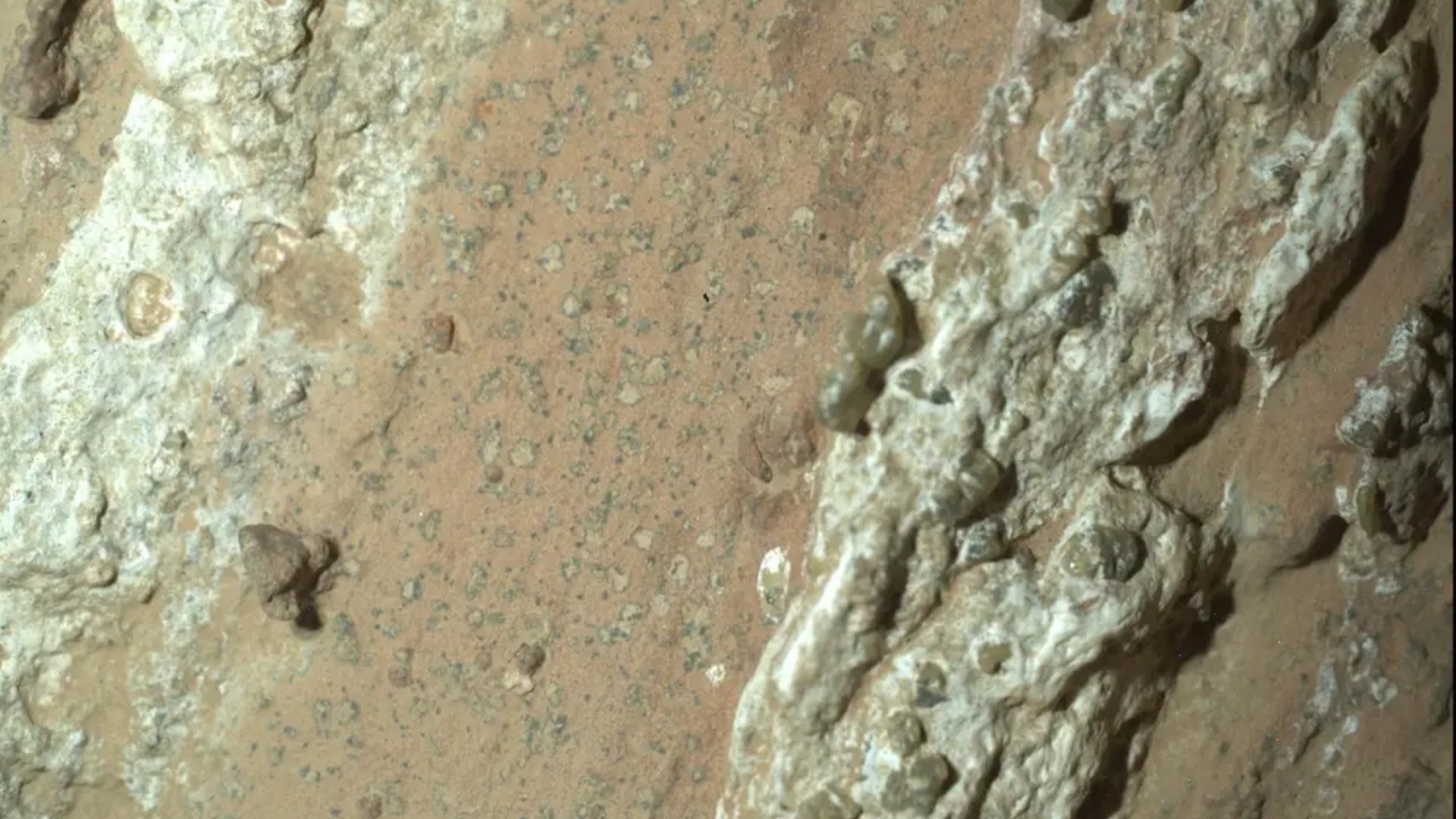
Furthermore, these carbon-filled mudstones were found in the same location as the last year's discovery of a potential biosignature found in a sedimentary rock on the Red Planet, which scientists say is still the strongest evidence that life could have once existed on early Mars. In this discovery, Perseverance found a rock now-named "Cheyava Falls" with distinctive "leopard spots."
These types of rock marking can be created in high heat or extremely acidic temperatures, but neither of these conditions are thought to have existed in the area. However, the markings can also be formed by the presence of life. So, while this rock wasn't conclusive evidence of past life on Mars, it certainly provided significant evidence that is now supported by this new data.
With these observations, the rover has made two main findings.
First, Perseverance has found organic, large, complex carbon in mudstones in Bright Angel, a rocky area on the northern and southern edges of Neretva Vallis, which is an ancient river valley in the Jezero area. And not only did Perseverance make hundreds of detections of organic carbon in these rocks, but the researchers also state that this is "the only detection of macromolecular carbon on a natural rock surface on Mars."
"This is also the first detection of MMC in a mudstone on Mars outside of Gale Crater, suggesting that the availability of organics may have been widespread across the planet billions of years ago," co-lead author Kyle Uckert, the SHERLOC deputy principal investigator at NASA's Jet Propulsion Laboratory, told Space.com.
A closeup of "leopard spots" on Mars seen by the Perseverance rover on the rock Cheyava Falls, which may show signs of a biosignature, but could also be from geologic processes. (Image credit: NASA/JPL-Caltech/MSSS)
While both studied mudstones have organic carbon in their interiors, according to these observations from Perseverance, there were some differences between the two rocks. The carbon in one mudstone was found mixed with primarily silicate minerals, while the other was filled with carbon mixed with secondary carbonate and sulfate minerals. The team also found that the carbon in both rocks was relatively intact, meaning the specimens might be resistant to radiation and oxidation or that it may have been recently exposed to the Martian surface.
Secondly, the team found that, in this identified carbon, Perseverance has detected evidence of potential biochemical interactions. These interactions left behind features in the two mudstones that look just like features created by microscopic life in sediments on Earth. This begs the question: Did ancient microbes on Mars really live in the sediments in this once-flowing river?
Maybe, maybe not. While that would certainly be one explanation, it's also possible that the carbon could have been created without life.
"There are multiple potential pathways to form abiotic organics on Mars," the authors state in this paper, clarifying that this, even compounded with other existing data, cannot conclusively say whether or not life created what Perseverance has observed.
"The science payload of the Perseverance rover was not designed to distinguish between abiotic and biotic processes, but was instead selected to identify compelling rocks to be collected for possible return to Earth for more rigorous testing," Uckert told Space.com. Uckert added that there could be many non-life reasons behind the presence of this complex carbon, "for example, it may have been delivered to the surface via meteoritic infall, or formed through hydrothermal geologic processes," he said.
For now, we can only wait until the next juicy bit of evidence about ancient life on Mars reveals itself.
This work was described in a paper published June 24 in the journal Science Advances.