On this day in space! Nov. 5, 2002: NASA’s Galileo spacecraft flies by Jupiter moon Amalthea only to find it’s a ‘pile of icy rubble less dense than water’

On Nov. 5, 2002, NASA's old Galileo spacecraft was almost out of fuel. But the Jupiter mission still had some science to do. Galileo flew by a small moon called Amalthea. Amalthea is small, but it's interesting for scientists.

The Jupiter moon Amalthea is the reddest object in our solar system. It also generates more heat than it gets from the sun. Scientists think Amalthea creates electrical currents as it orbits in Jupiter's huge magnetic field. Near this little moon, strong radiation from Jupiter is dangerous for spacecraft.

The flyby caused some problems for Galileo. The spacecraft went into safe mode only 30 minutes after going past Amalthea. NASA said it was ready for problems, because Galileo was on its last legs, and the radiation near Amalthea was strong. However, NASA quickly fixed the problem and got Galileo working again.

Less than a year later, Galileo threw itself into Jupiter's atmosphere. The spacecraft was crushed by the high pressure in Jupiter's atmosphere, but its data still survives on Earth.
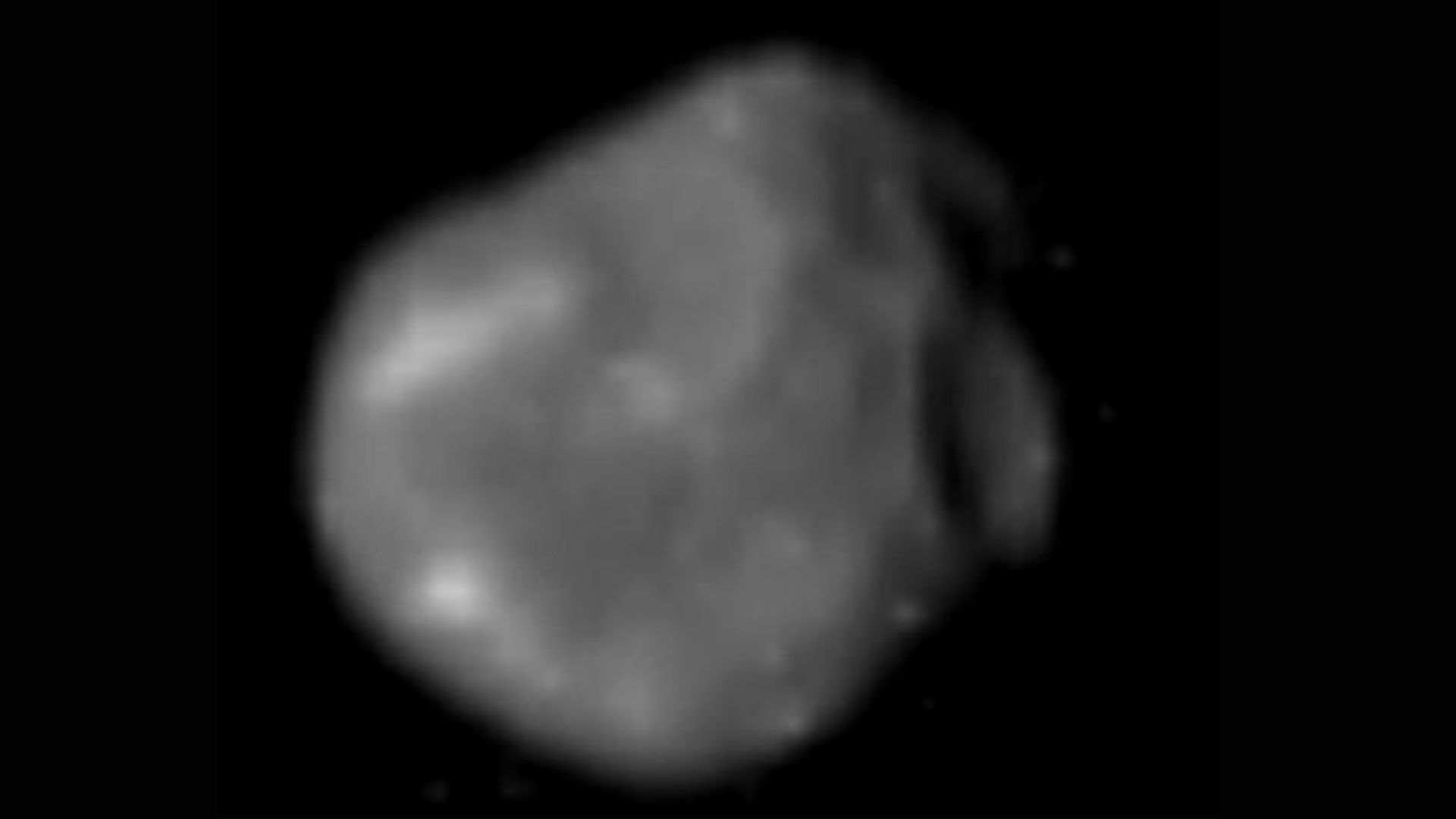
The Jupiter moon Amalthea as seen by NASA's Galileo spacecraft.

The Jupiter moon Amalthea as seen by NASA's Galileo spacecraft on Nov. 5, 2002. (Image credit: NASA/JPL-Caltech)

Why it mattered

The Galileo spacecraft was running on cosmic fumes by the time it reached Amalthea and the flyby would be the last time the probe would ever swing by one of Jupiter's moons.

While it may not look like it in Galileo's black and white images above and below, Amalthea is tinted red due sulfur contamination on its surface. The moon is small, about 168 miles long, and orbits about 112,468 miles (181,000 km) from Jupiter (much closer to the planet than the Earth and its moon).

Galileo flew within 99 miles of Amalthea during its flyby, which also marked the closest Galileo would get to Jupiter before its death dive in September 2005.

"Scientists studying data from NASA's Galileo spacecraft have found that Jupiter's moon Amalthea is a pile of icy rubble less dense than water," NASA announced in May 2005
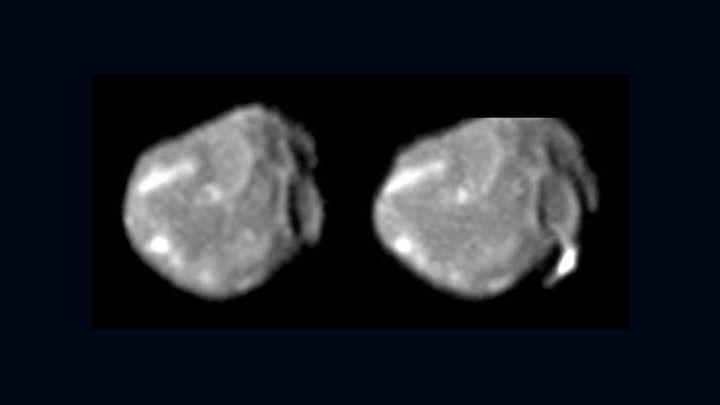
Two views of the Jupiter moon Amalthea as seen by NASA's Galileo spacecraft.
Two views of the Jupiter moon Amalthea as seen by NASA's Galileo spacecraft.NASA/JPL-Caltech
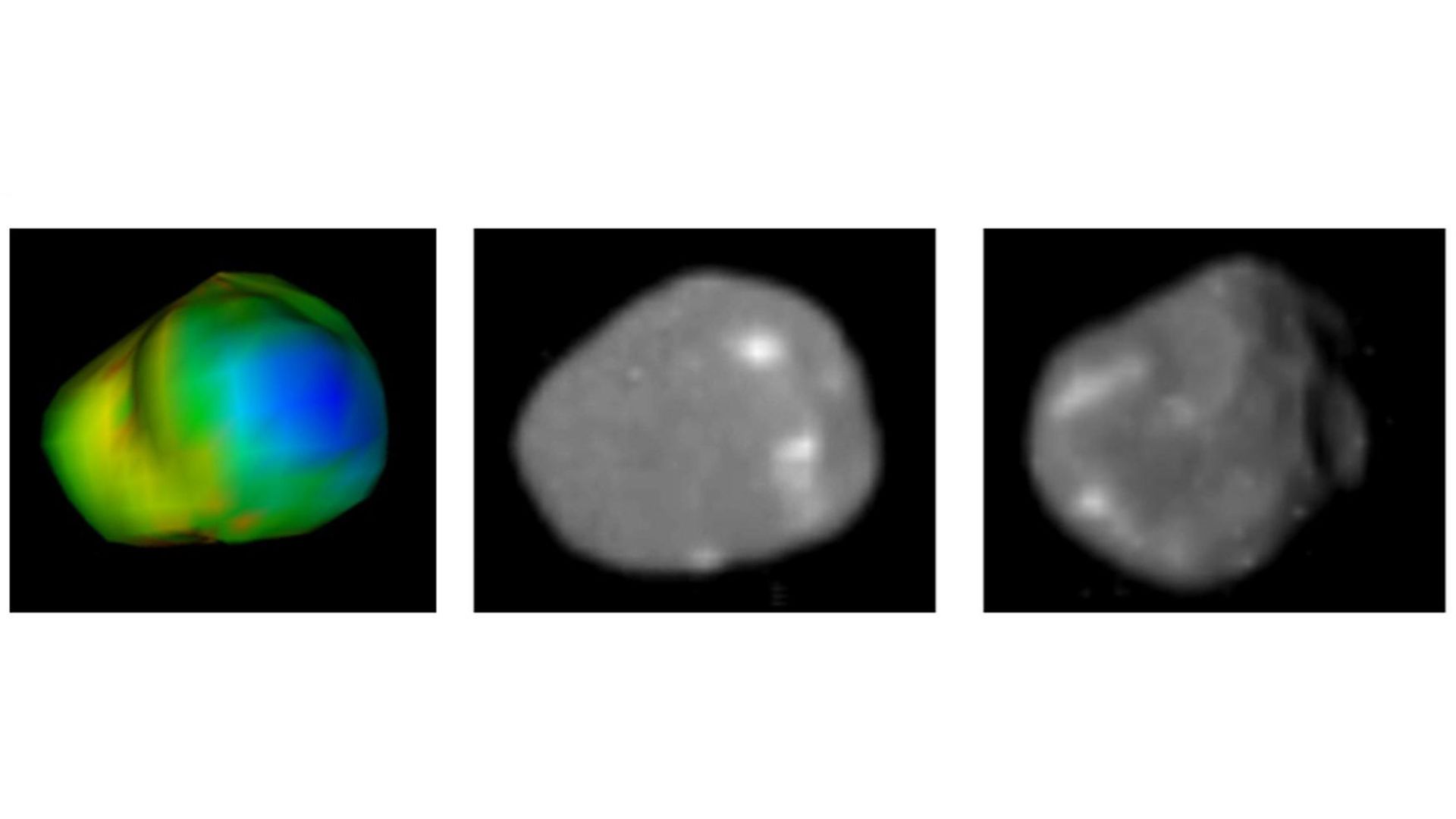
These images of Jupiter's moon Amalthea were taken with NASA's Galileo and Voyager spacecraft.
These images of Jupiter's moon Amalthea were taken with NASA's Galileo and Voyager spacecraft. Galileo's image is on the right, with Voyager's view on the left. The center image is a composite of both probes.NASA/JPL-Caltech

"Amalthea is throwing us a curve ball," Torrence Johnson, a study co-author on the Almathea flyby and project scientist for the Galileo mission at JPL, said in 2005. "Its density is well below that of water ice, and even with substantial porosity, Amalthea probably contains a lot of water ice, as well as rock."

Originally known as Jupiter V (because it was the fifth Jupiter moon discovered after the so-called Galilean moons Io, Europa, Ganymede, Callisto), Amalthea was named after naiad, or water nymph, from Greek mythology.

It is fitting that Amalthea was the last of Jupiter's moons to be visited by the Galileo spacecraft. The moon was also last Jupiter moon to be discovered by visual observations when it was first disovered by astronomer Edward Emerson Barnard in September 1892 using the Lick Observatory telescope in California.

The Galileo spacecraft ultimately crashed into Jupiter on Sept. 21, 2005, less than a year after its Amalthea flyby.

Want more space history? Check out our full On This Day In Space Story archive and watch our On This Day In Space videos on YouTube.
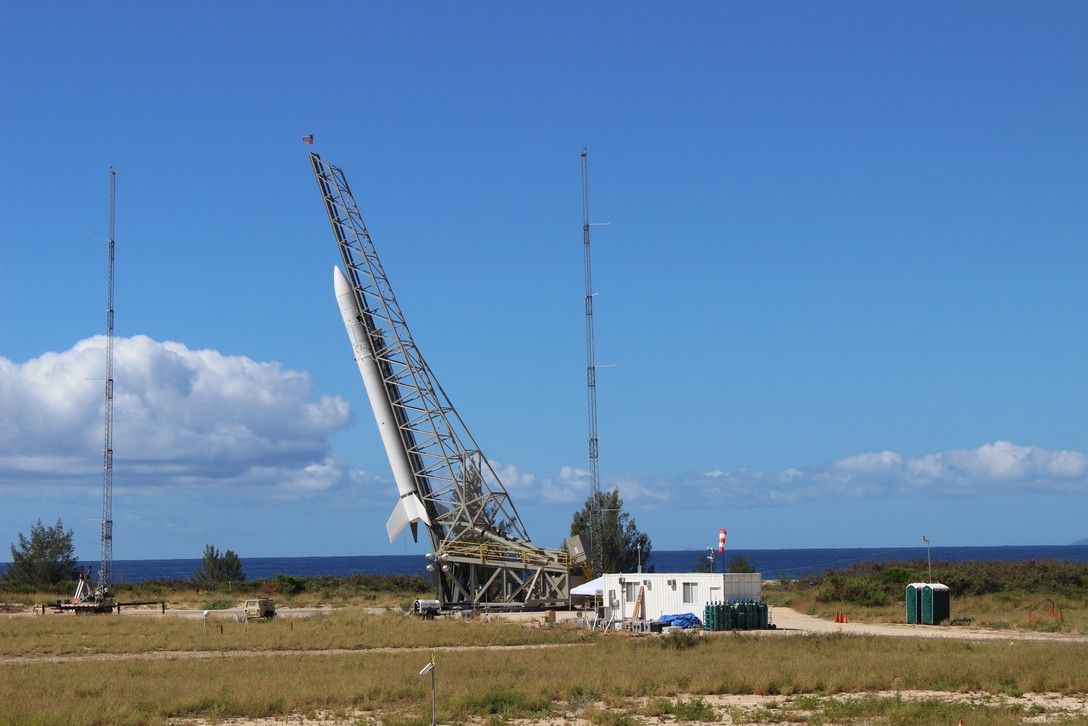
On this day in space! Nov. 4, 2015: A rail-launched Super Strypi rocket carrying 13 baby satellites failed during its debut launch for the US Air Force

On Nov. 4, 2015, the United States Air Force planned to launch an experimental rocket for small satellites from the Pacific Missile Range Facility off Barking Sands, Kauai, Hawaii. The launch didn't according to plan.

For this mission, the Air Force was testing out the Super Strypi rocket. The rocket used a rail to help with the liftoff.

Super Strypi left the ground, but the rocket quickly spun out of control. When it crashed, it destroyed all of the tiny satellites riding aboard the rocket. The cause? Likely a problem with the first stage motor.

The mission lost 13 tiny satellites known as cubesats. Cubesats are a popular option for space missions, because they are small and cheap, and they often operate in swarms. After failing to launch this batch of cubesats, the Super Strypi program never recovered from its failure, and the Air Force never tried launching another one.

The U.S. Air Force’s rail-launched Super Strypi rocket lifted off from Hawaii about 9:45 p.m. local time on Nov. 3, 2015.

The U.S. Air Force’s rail-launched Super Strypi rocket lifted off from Hawaii about 9:45 p.m. local time on Nov. 3, 2015,, roared toward the sky and failed less than a minute into the long-awaited flight. (Image credit: U.S. Air Force)

Why it mattered

The Super Strypi rocket was a 21st century take on a 1960s rocket. It was designed to be a modern version of the three-stage Strypi sounding rocket used for for reentry vehicle and anti-missile target tests. Its three stages, powered by Aerojet Rocketdyne solid rocket motors, was designed to reach orbit, rather than suborbital trajectories common to most sounding rockets.

The U.S. Air Force hoped Super Strypi would be a new tool for quick-response launches based on national security needs. Altogether, it was designed to launch small payloads of up to 300 kilograms into space for a mere $15 million per mission.

The rocket's primary payload was the ORS-4 satellite, short for Operationally Responsive Space 4, which was built for the Air Force by engineers at the University of Hawaii (who nicknamed it HiakaSat). It was designed to capture Earth imagery and monitor the environment over the course of a year.

The 12 other payloads on Super Strypi included eight cubesats for NASA's Edison Demonstration of Smallsat Networks mission, and as well as four others for universities that had been added as secondary payloads.

Since the Super Strypi failure, neither the Air Force or Space Force has opted to use the rocket for a new mission. The Space Force has turned instead to commercial companies for fast-turnaround launch support.

In June of this year, the U.S. Space Force teamed up with Rocket Lab to launch the Victus Haze mission with just 17 hours of notice, a new record to demonstrate short-turnaround launch response.

Want more space history? Check out our full On This Day In Space Story archive and watch our On This Day In Space videos on YouTube.
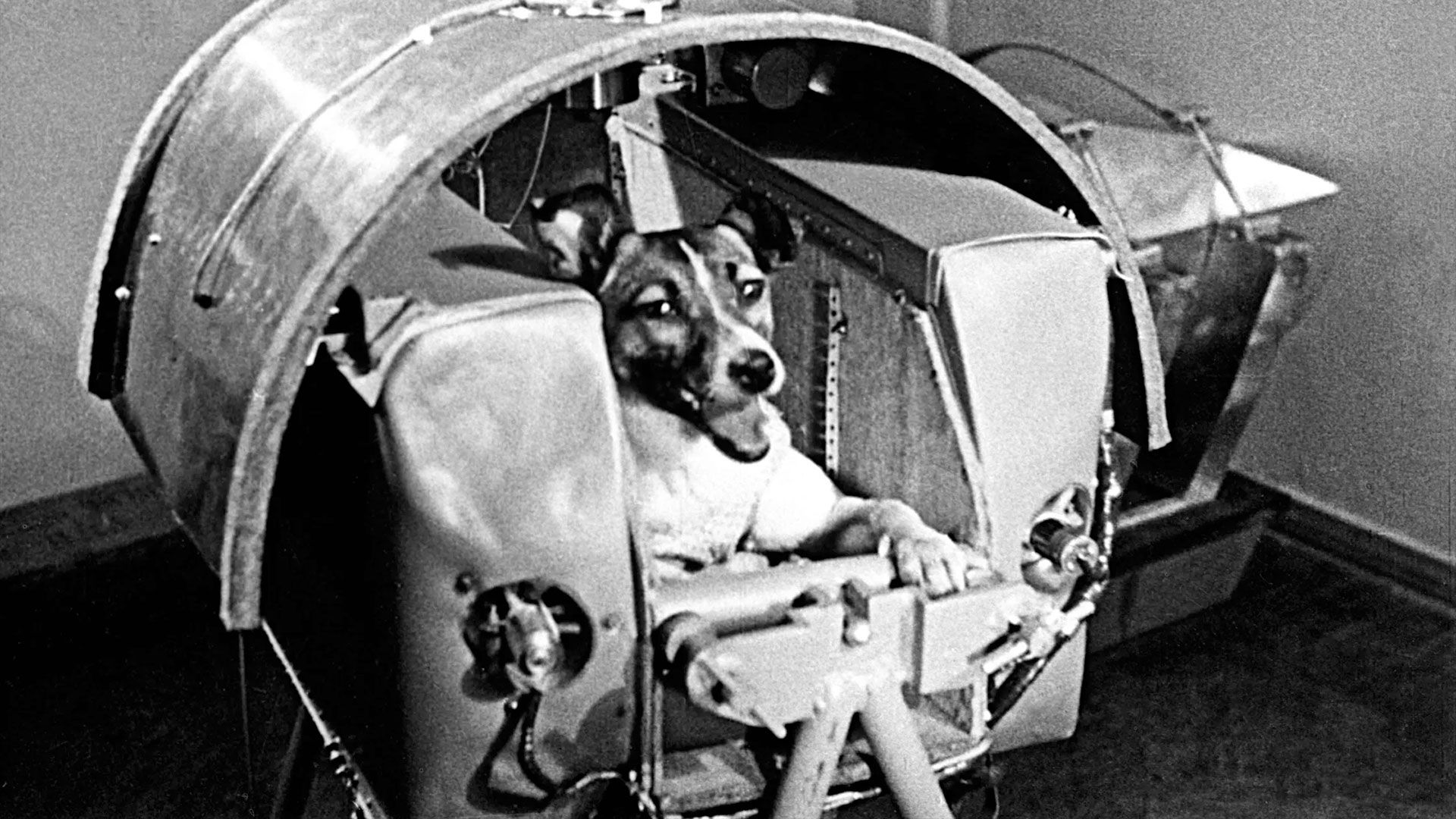
On this day in space! Nov. 3, 1957: Laika the dog launches with Sputnik 2

On Nov. 3, 1957, a Soviet space dog named Laika became the first animal to orbit Earth. Laika was a 3-year-old stray husky-spitz mix from the streets of Moscow, and she was recruited by the Soviet space program for her small size and calm temperament.

Unfortunately for Laika, this mission was a one-way trip. The Soviets didn't design a way to bring her back down to Earth. With only 7 days worth of oxygen and a little bit of food on board, Laika launched from the Baikonur Cosmodrome in Kazakhstan with a Russian Sputnik rocket. This was the same kind of rocket used to launch the first Sputnik satellite.

Laika was alive when she reached orbit, but she died shortly afterward because the spacecraft's heat shield had broken off. Laika overheated before she had the chance to die of starvation of oxygen deprivation.

Laika, the first Soviet space dog to enter Earth orbit, is seen in a training capsule prior to her launch.

Laika, the first Soviet space dog to enter Earth orbit, is seen in a training capsule prior to her launch. (Image credit: Roscosmos)

Why it mattered

Laika has remained one of space history's most beloved and tragic figures. People around the world have dogs as pets who they love as members of their own families. And even nearly 70 years after this flight, it is so heartbreaking to think of Laika on that frightening journey from which she never returned.

Laika was one of many different animals that were used in early spaceflight testing. Both the U.S. and Russia launched a number of primates on flights testing early flight technology. Sadly, like Laika, many of these brave creatures did not make it back.

Unbelievably, though, some did survive the journey. For example, the chimpanzee named Ham and nicknamed the "astrochimp" survived a 1961 test flight to space. Though, the team behind that flight was so unsure of how it would go that Ham didn't get his name until after it was found that he'd survived his return.

Want more space history? Check out our full On This Day In Space Story archive and watch our On This Day In Space videos on YouTube.
On this day in space! Nov. 2, 2000: Expedition 1 Arrives at the International Space Station

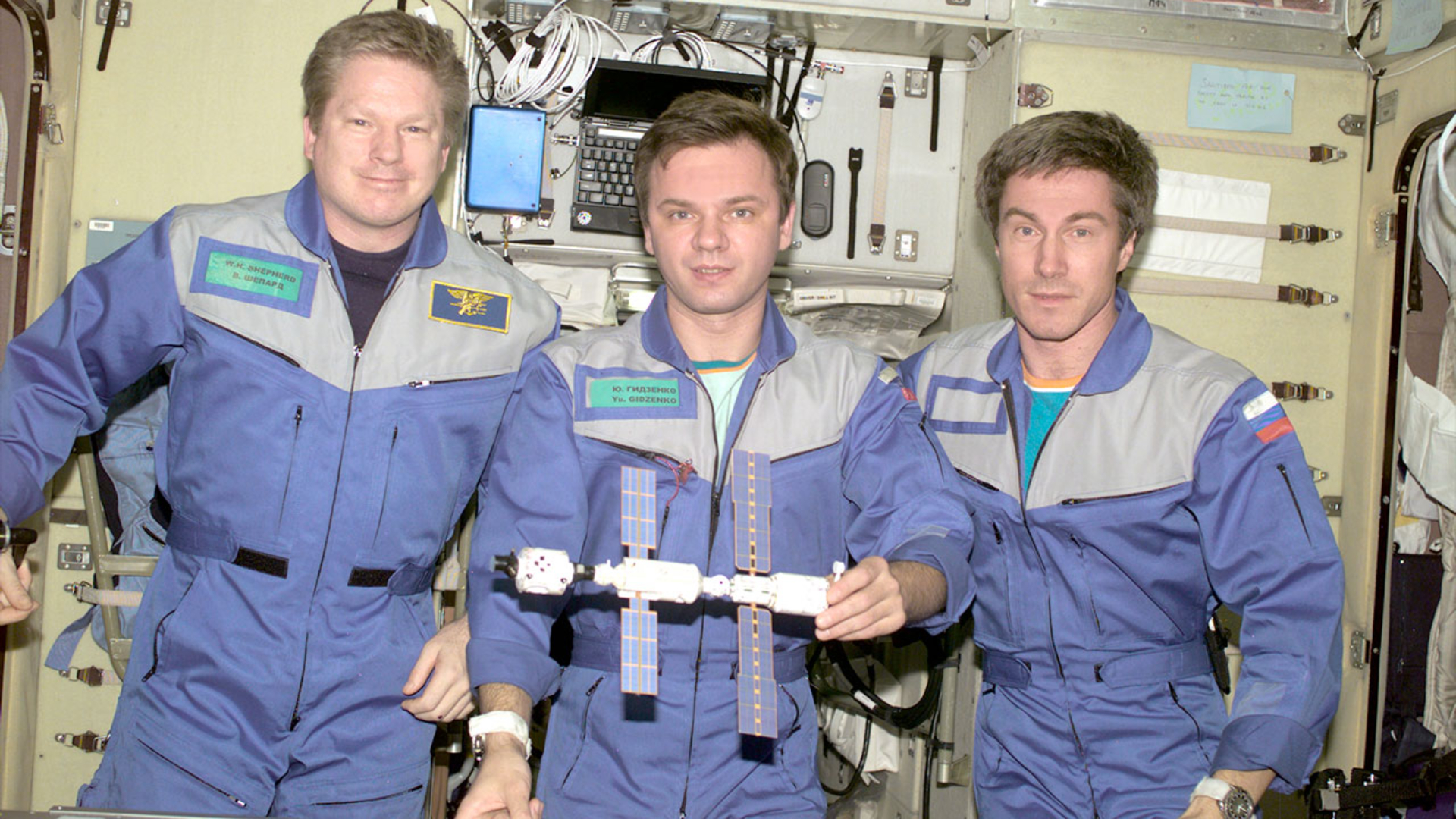
On Nov. 2, 2000, the International Space Station welcomed its first long-term residents: NASA astronaut Bill Shepherd and two Russian cosmonauts, Yuri Gidzenko and Sergei Krikalev. The mission was called Expedition 1.

Before this expedition, NASA had launched five, one-week-long Space Shuttle missions to help build the space station and bring up supplies. But this time, the crew would be staying for four and a half months, and they weren't taking the shuttle. Instead, they took a Russian Soyuz spacecraft, and this was the first Soyuz to ever dock at the space station.

During their stay at the space station, they unpacked supplies and installed new equipment, including the first solar arrays. They left on the space shuttle Discovery, which brought up the Expedition 2 crew that would take their place.

Expedition 1 crewmates Bill Shepherd, Yuri Gidzenko and Sergei Krikalev pose with a model of the space station as it appeared in 2000.

Expedition 1 crewmates Bill Shepherd, Yuri Gidzenko and Sergei Krikalev pose with a model of the space station as it appeared in 2000. (Image credit: NASA)

Why it mattered

As of today, there has been a continuous astronaut presence in space aboard the International Space Station for 26 years. For all of these years, not a day has gone by without someone living in space, orbiting our planet from aboard the space station.

While the ISS was not the first space station, it has been the longest-running space statin by far. This first crew were pioneers, showing how humans could actually live and work aboard this station. This exploratory mission proved that the station could successfully support astronaut crews.

Since this mission 26 years ago, there have been literally hundreds of astronauts from around the world who have flown to and lived aboard the ISS. While NASA has stated that the station might be decommissioned in the coming years, these accomplishments will remain forever in spaceflight history.

Want more space history? Check out our full On This Day In Space Story archive and watch our On This Day In Space videos on YouTube.
On this day in space! Nov. 1, 1962: The Soviet Union Launches Mars 1 spacecraft to Red Planet during the Space Race

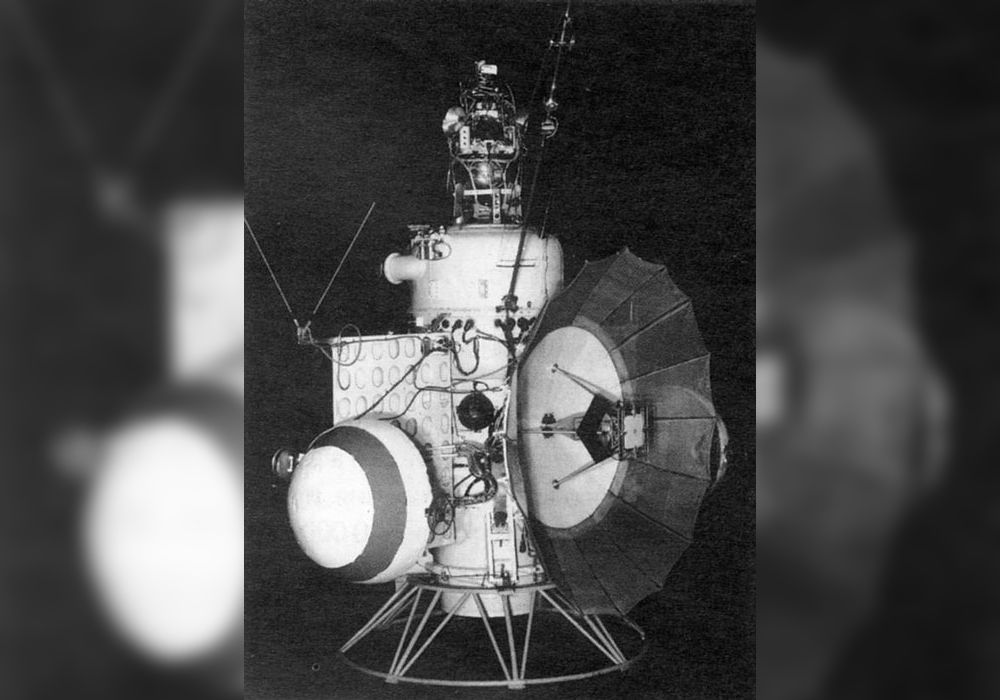
On Nov. 1, 1962, the Soviet Union launched the Mars 1 spacecraft on a mission to fly by the Red Planet.

While it did end up flying by Mars, the mission was not exactly a success. After it separated from the rocket, it deployed its solar panels and started cruising toward Mars.

When mission controllers were checking out the telemetry it transmitted back to Earth, they found out that Mars 1 had sprung a leak in one of the gas valves that controls the spacecraft's orientation. And without a working orientation system, Mars 1 would have a hard time pointing its antennas in the right direction. It lost contact with Earth when it was about halfway to Mars.

A model of Mars 1, a Mars flyby spacecraft launched to the Red Planet by the Soviet Union on Nov. 1, 1962.

A model of Mars 1, a Mars flyby spacecraft launched to the Red Planet by the Soviet Union on Nov. 1, 1962. (Image credit: NASA)

Why it mattered

Ever since Galileo Galilei pointed his telescope to the red-tinted star and identified as a planet, Mars has captivated scientists' interests as to its nature. So it was of no surprise that as soon as we gained the ability to send missions into space, that the focus turned to the "fourth rock from the Sun."

As it turned out, though, reaching Mars, let alone entering its orbit or landing on its surface,, was and continues to be difficult.

Mars 1, despite its name, was actually the Soviet Union's fourth attempt at sending a probe to the planet. The first three ended in launch failures. Similar problems faced the United States, as well, but it was NASA's Mariner IV mission that became the first to successfully fly by Mars two years later.

Still, as humanity continues to push forward to the day people land on, explore and live on Mars, the 1962 Soviet mission stands as the first to get close to revealing the first details about the planet.

Want more space history? Check out our full On This Day In Space Story archive and watch our On This Day In Space videos on YouTube.
On this day in space! Oct. 31, 2015: Creepy skull-shaped Halloween asteroid flies by Earth, NASA names it the ‘Great Pumpkin’

On October 31, 2015, an asteroid shaped like a human skull flew by Earth. It arrived with excellent timing on Halloween, which made the already-creepy asteroid even creepier.

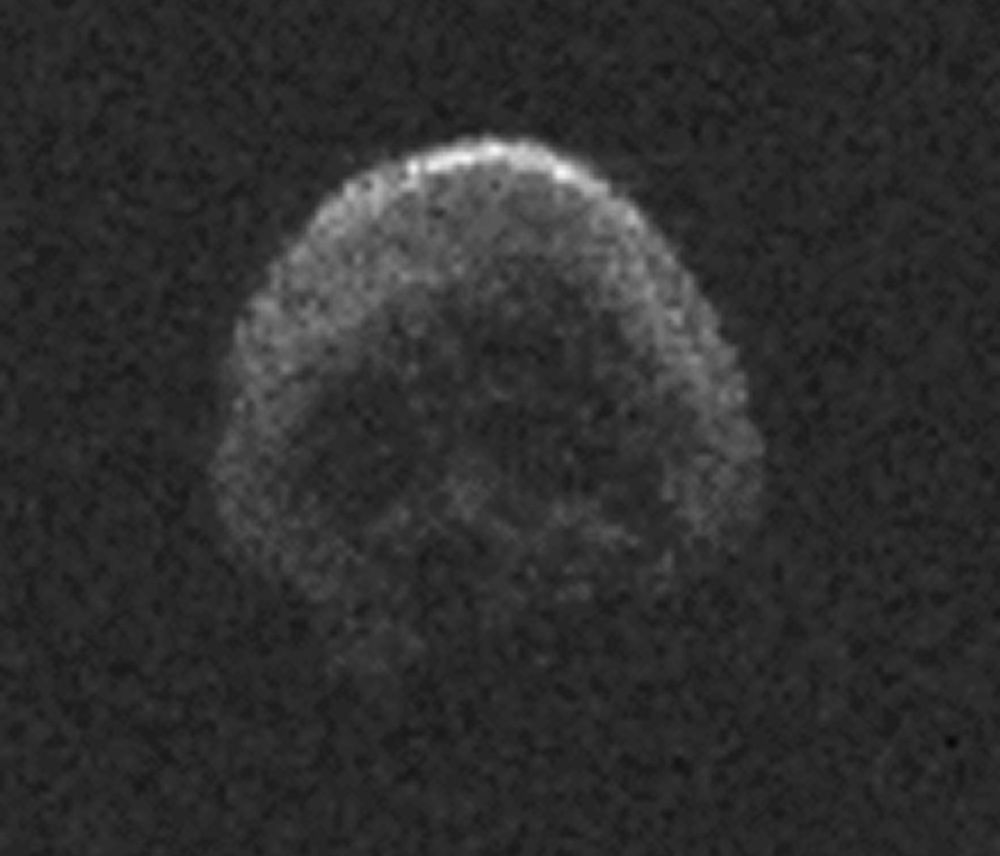
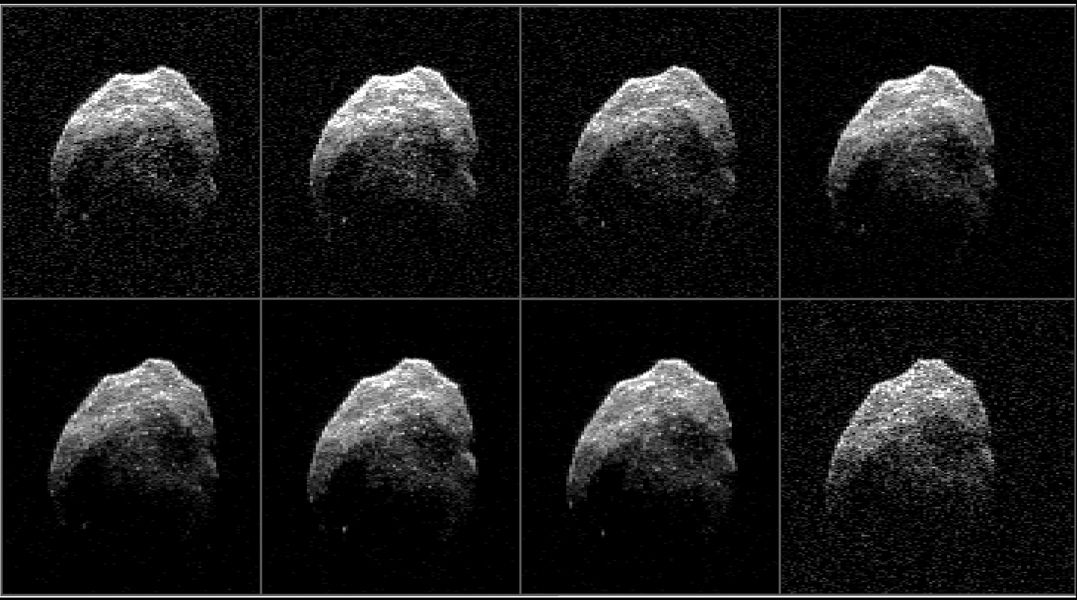
During its closest approach, the creepy asteroid was about 300,000 miles from Earth, or 1.3 times the average distance between Earth and the moon. So, it didn't pose a threat to our planet. It was discovered by astronomers at Hawaii's Pan-STARRS observatory only three weeks before the flyby, and it was given the official designation "2015 TB145." But no one knew what it looked like until the day before Halloween, when the Arecibo Observatory in Puerto Rico captured the first radar images.

NASA called the asteroid the "Great Pumpkin," while others called it the "Halloween Asteroid."

This radar image of 2015 TB145, a dead comet, was generated using radar data from the Arecibo Observatory in Puerto Rico. 

(Image credit: NAIC-Arecibo/NSF)

Why it mattered

Be afraid, be very afraid... Okay, not really, but there is reason to be concerned about near-Earth objects and the time in which they are detected.

"According to the catalog of near-Earth objects (NEOs) kept by the Minor Planet Center, this is the closest currently known approach by an object this large until asteroid 1999 AN10, at about 2,600 feet (800 meters) in size, approaches at about 1 lunar distance (238,000 miles from Earth) in August 2027," NASA's Jet Propulsion Laboratory (JPL) reported in 2015.

NASA’s Near-Earth Object Observations Program, sometimes called “Spaceguard,” works to catalog these type of objects and predicts some of their paths if they could be potentially threats to our planet. While there are no known credible impact threats to date, it doesn't mean the "Great Pumpkin," or rather a great impactor, isn't real.

These eight individual radar images of asteroid 2015 TB145 were captured on Oct. 31, 2015 using NASA’s DSS-14 antenna in Goldstone, California and the Green Bank Telescope in West Virginia.
These eight individual radar images of asteroid 2015 TB145 were captured on Oct. 31, 2015 using NASA’s DSS-14 antenna in Goldstone, California and the Green Bank Telescope in West Virginia.NASA/JPL-Caltech/GSSR/NRAO/AUI/NSF
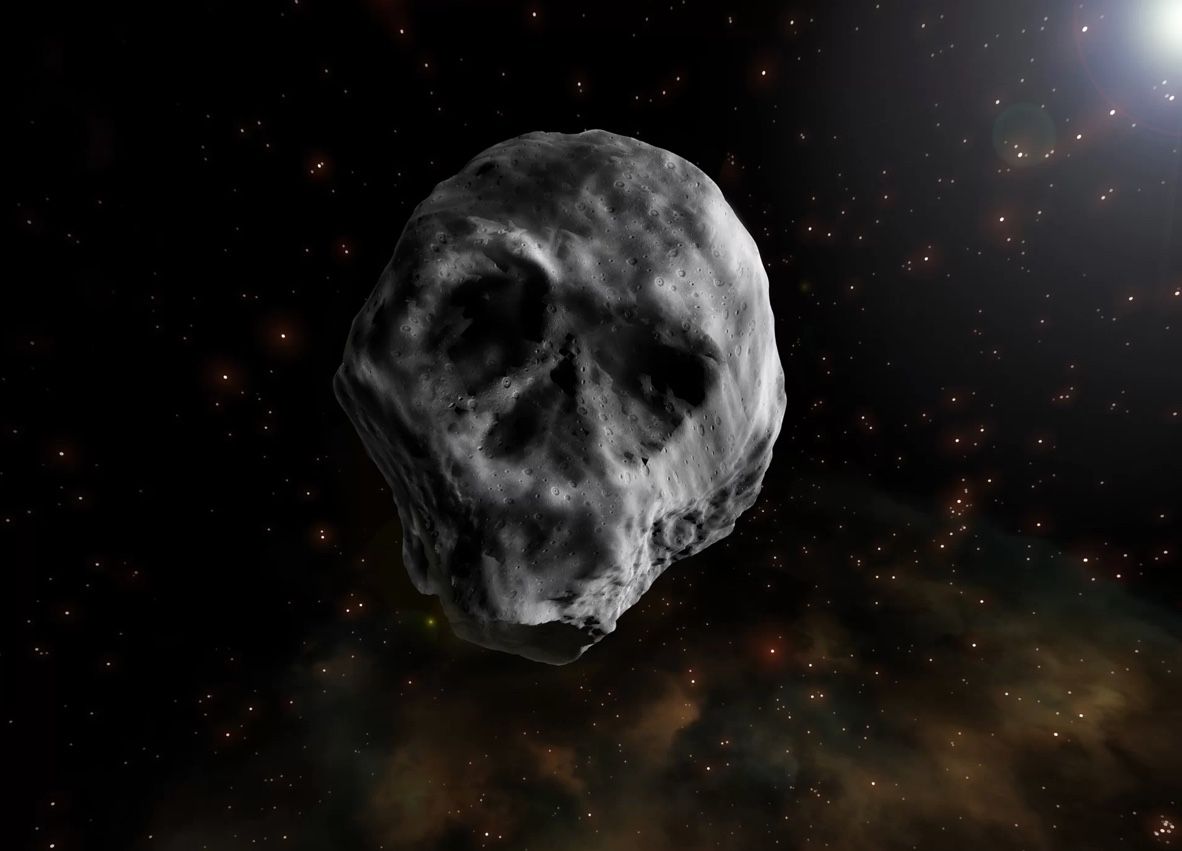
The Halloween Asteroid 2015 TB145, shown here in an artist’s illustration, is expected to whiz by Earth a little later than usual, swinging by on Nov. 11, 2018.
The Halloween Asteroid 2015 TB145, shown here in an artist’s illustration, whizzed by Earth on Nov. 11, 2018.JOSÉ ANTONIO PEÑAS/SINC

As for 2015 TB145, it did return to Earth's vicinity in 2018, but at a much more distant pass of about 24 million miles (38 million kilometers), "or about a quarter the distance between Earth and the sun," according to JPL.

Want more space history? Check out our full On This Day In Space Story archive and watch our On This Day In Space videos on YouTube.
On this day in space! Oct. 30, 1964: NASA’s weird Lunar Landing Research Vehicle takes 1st test flight to help Apollo astronauts land on the moon

On October 30, 1964, NASA's Lunar Landing Research Vehicle, or LLRV, took to the skies for the first time.

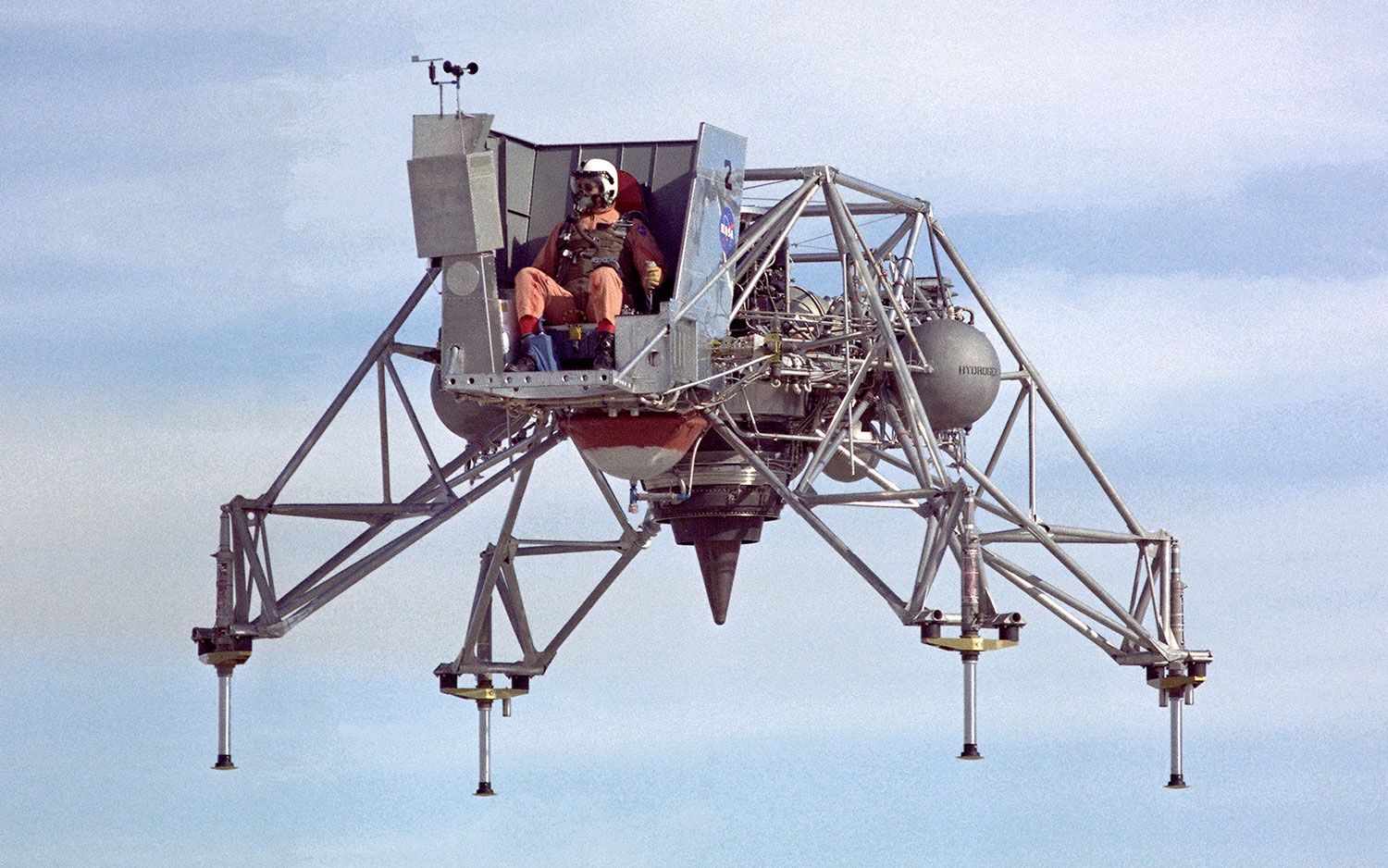
The LLRV was a bizarre, four-legged flying contraption commonly known as the "Flying Bedstead." NASA used it to simulate moon landings and liftoffs on Earth to prepare for Apollo 11, the first crewed lunar landing.

The first person to give it a whirl was the X-15 pilot Joe Walker. During this test flight, he reached an altitude of about 10 feet, and he hovered there for about a minute. He did this two more times that same day. In all, he completed more than 30 test flights with the LLRV.

These test flights took place at NASA's Dryden Flight Research Center in Edwards, California. That facility has since been renamed the Armstrong Flight Research Center after Neil Armstrong, who also piloted — and famously crashed — the "Flying Bedstead" before he went to the moon.

The first Lunar Landing Research Vehicle is pictured during a test flight at NASA's Dryden Flight Research Center in California.

The first Lunar Landing Research Vehicle is pictured during a test flight at NASA's Dryden Flight Research Center in California. (Image credit: NASA)

Why it mattered

Over 60 years ago this LLRV test flight was a critical step toward landing humans on the moon for the first time, a historic moment that both served an important political purpose while also showcasing the result of monumental scientific and technical progress.

While images from this test flight might look like the team are having a bit of fun out in the desert, and perhaps they were, it was also deadly serious. The astronauts who signed onto these crewed missions were doing something that had never been attempted. They were putting their lives on the line for this progress, and this testing was a major piece in reassuring them and NASA that lunar landing could be accomplished, and safely.

Today, as we return humans to the moon with NASA's Artemis program, we see parallels between testing done over 60 years ago and testing today. Right now, SpaceX and Blue Origin are testing their lunar landers for crewed lunar landings in the near-future. While we have now been to the moon and have safely and successfully landed humans before, these tests remain critical for the safety and success of the missions.

Want more space history? Check out our full On This Day In Space Story archive and watch our On This Day In Space videos on YouTube.
On this day in space! Oct. 29, 1991: NASA’s Galileo spacecraft flies by asteroid Gaspra and snaps amazing photos while flying at 18,000 mph

On Oct. 29, 1991, the Galileo spacecraft flew by the asteroid Gaspra on its way to Jupiter. Gaspra was the first asteroid to ever be visited by a spacecraft.

Gaspra orbits near the inner edge of the asteroid belt. The Galileo spacecraft had been travelling through the asteroid belt for about two months before it reached Gaspra. Galileo was 990 miles (1,593 kilometers) away from Gaspra when it whizzed by, and it was travelling at a relative speed of about 5 miles (8 km) per second.

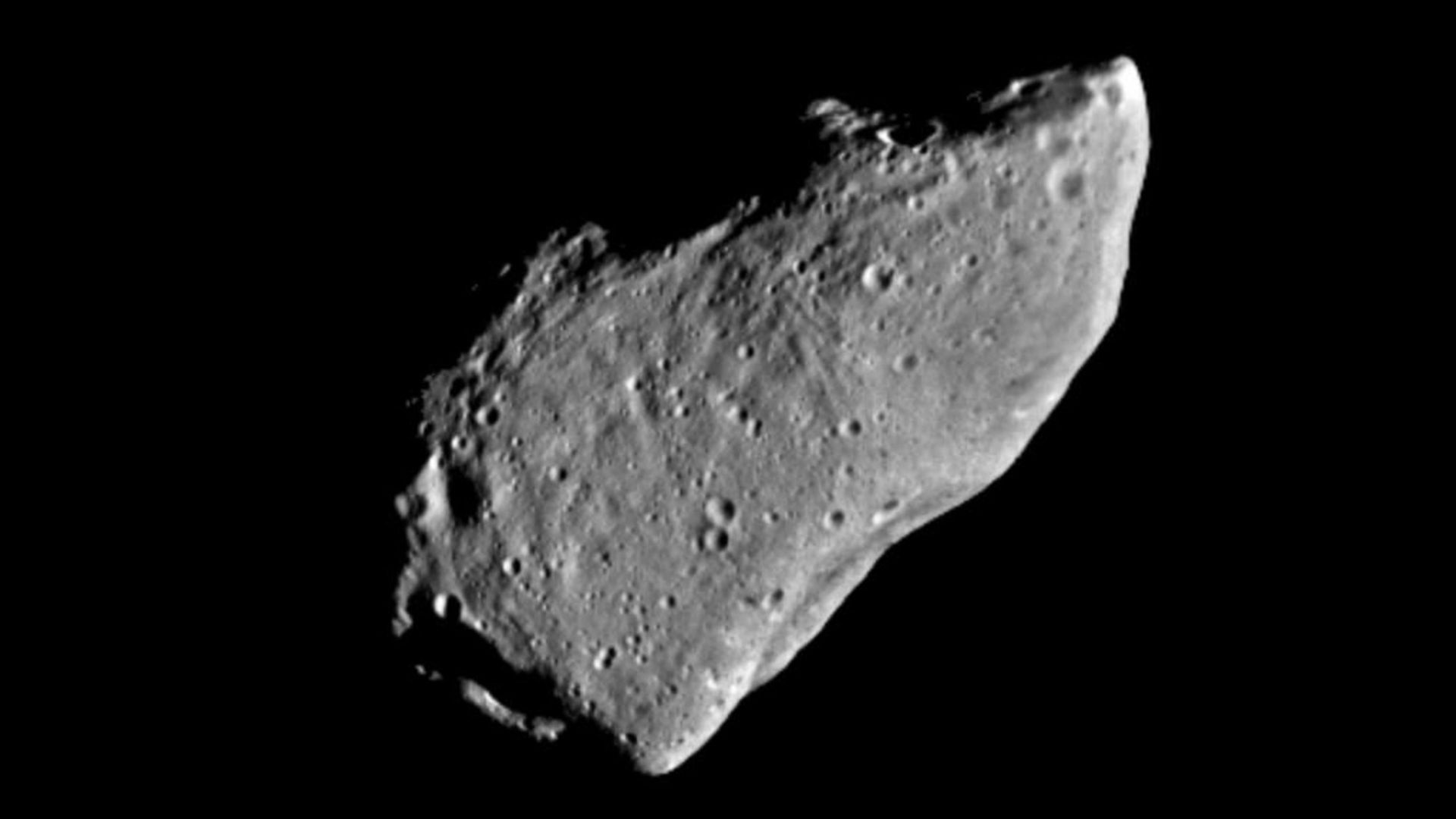
The spacecraft took several photos of the asteroid and used an instrument called the Near-Infrared Mapping Spectrometer to study its chemical composition and other physical properties. Galileo determined that Gaspra has an irregular and elongated shape measuring about 12 miles long and 7 miles wide. The images revealed that Gaspra was also covered in craters. Because Galileo was too far away for Gaspra's gravity to affect it, the spacecraft was not able to determine the asteroid's mass.

the asteroid gaspra as seen by nasa's galileo probe

A closeup view of asteroid Gaspra from NASA's Galileo spacecraft, which flew by the asteroid on the way to Jupiter. (Image credit: NASA/JPL-Caltech)

Why it mattered

The Galileo spacecraft's flyby of Gaspra was a pitstop near the midpoint of its 6-year journey to Jupiter, the largest planet in our solar system. NASA launched Galileo toward Jupiter in October 1989, with the probe swinging by Venus and Earth in 1990 before its encounter with Gaspra.

The Gaspra flyby was the first asteroid flyby in history, with Galileo approaching to just under 1,000 miles (1,601 kilometers) while flying at a whopping 18,000 mph. Galileo's photos of Gaspra "revealed a cratered, complex, irregular body about 20 by 12 by 11 kilometers (12.4 by 7.4 by 6.8 miles), with a thin covering of dust and rubble," NASA wrote in an overview.

"The picture we get of Gaspra is one of something that has suffered a lot during its history," the UPI press service quoted Joseph Veverka, a Galileo imaging team member, as saying at the time. "We suspect that this is the survivor of a series of catastrophic collisions in the past."

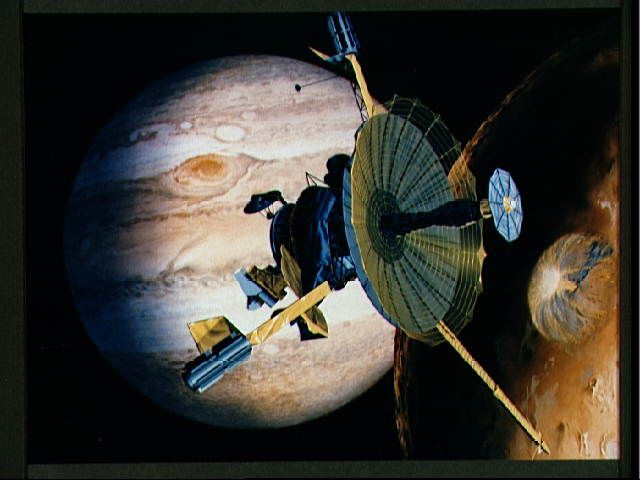
An artist's conception of the Galileo spacecraft, which was launched in 1989 for a mission to Jupiter.

An artist's conception of the Galileo spacecraft, which was launched in 1989 for a mission to Jupiter. (Image credit: NASA)

Galileo would go on to fly by Earth a second time in 1992, then swing close by the asteroid Ida in 1993 before finally arriving at Jupiter in 1995. Along the way, the probe was in the right place at the right time to watch as the Comet Shoemaker-Levy 9 broke into pieces and crashed into Jupiter in July 1994.

Since Galileo's historic first asteroid flyby, NASA and other space agencies have gone on to land on asteroids (like NEAR on asteroid Eros), collect samples of asteroids and return them to Earth (like NASA's OSIRIS-REx and Japan's Hayabusa probes), and have even intentionally crashed probes into asteroids (like NASA's DART asteroid impact mission) to test planetary protection techniques.

Want more space history? Check out our full On This Day In Space Story archive and watch our On This Day In Space videos on YouTube.
On this day in space! Oct. 28, 1971: Britain launches its 1st satellite Prospero into space on a Black Arrow rocket

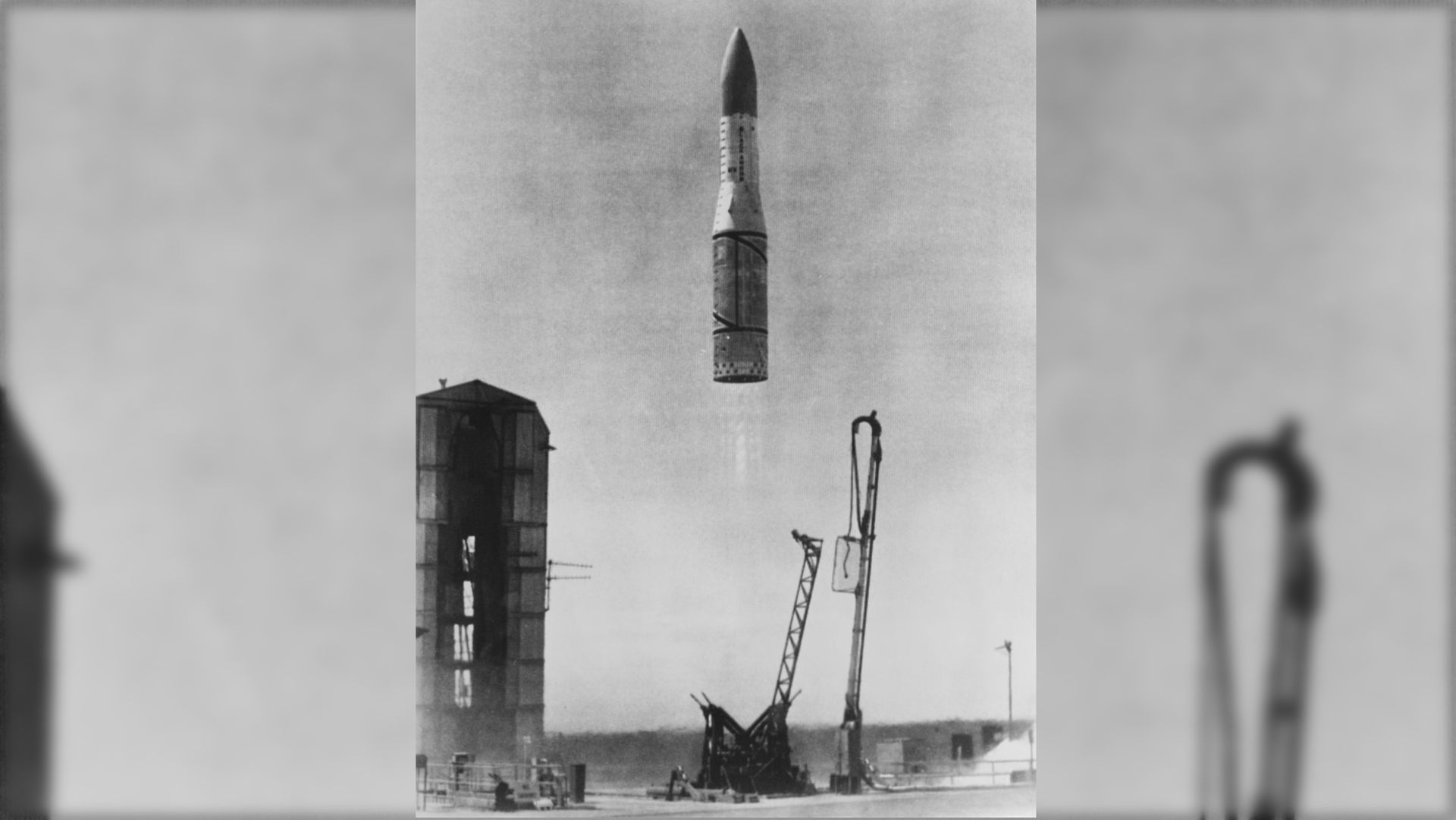
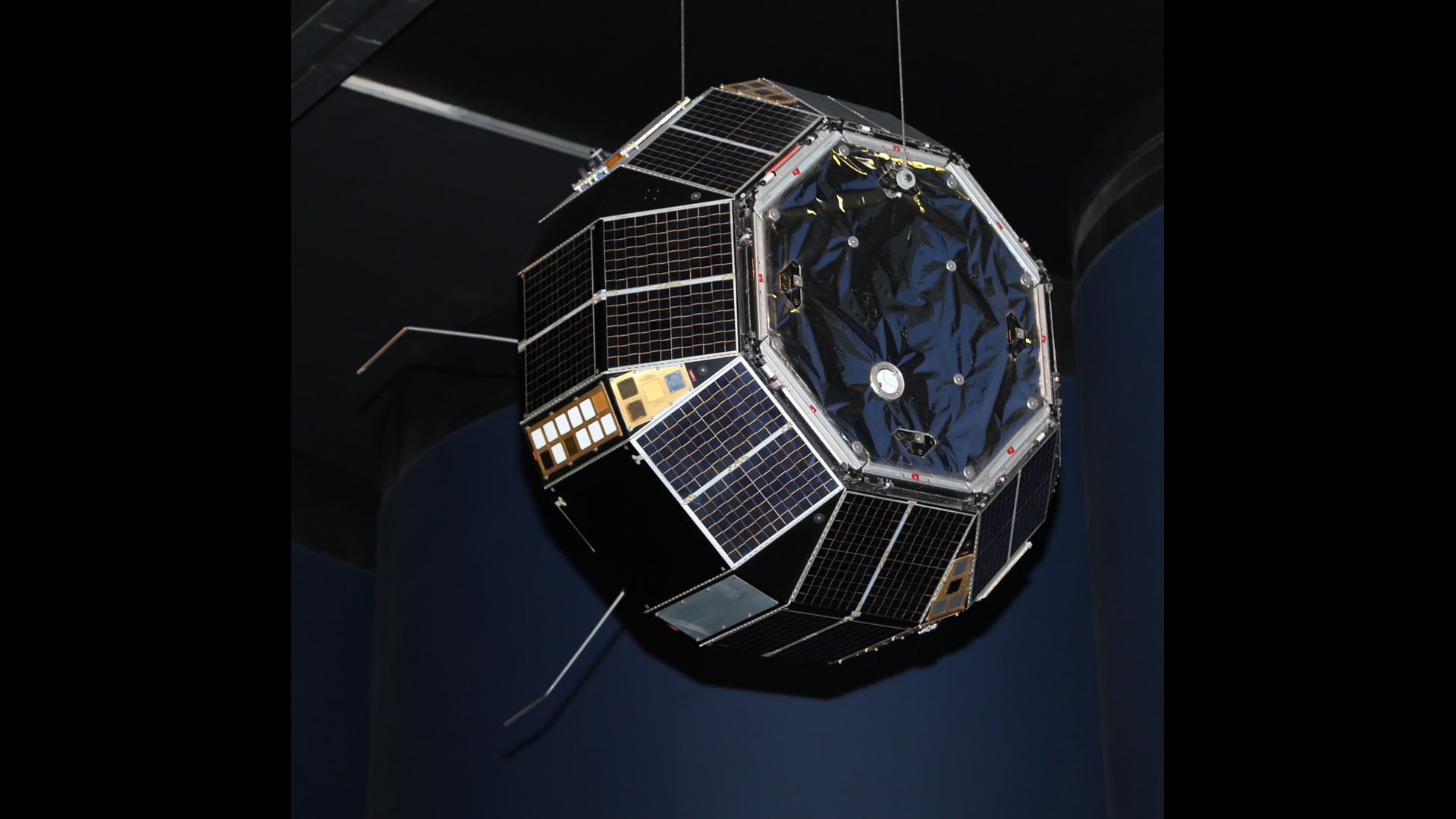
On Oct. 28, 1971, the United Kingdom launched its first satellite. The satellite was named Prospero, but it was also known as the X-3.

This wasn't Britain's first satellite, but it was the first and only one the British space program launched with one of its own rockets. The first six British satellites all launched from the United States on NASA rockets. Prospero launched on a carrier rocket called the Black Arrow.

The Prospero mission was the fourth and final flight of a Black Arrow rocket. Prospero was designed to study how the environment in space affects communications satellites. It tested things solar cells and telemetry systems, and even had a micrometeoroid detector that would determine small particles in space posed a threat to the spacecraft.

The mission lifted off from the Woomera Range Complex in Australia. While the launch was a success, the rocket's final stage bumped into the satellite after it separated, and the collision broke one of Prospero's four radio antennas. But the satellite still worked, and it remained operational until 1973.

The satellite Prospero X-3 is launched from the RAAF test range in Woomera, South Australia, by a British Black Arrow carrier rocket, 28th October 1971.
The satellite Prospero X-3 is launched from the RAAF test range in Woomera, South Australia, by a British Black Arrow carrier rocket, 28th October 1971. Central Press/Hulton Archive/Getty Images
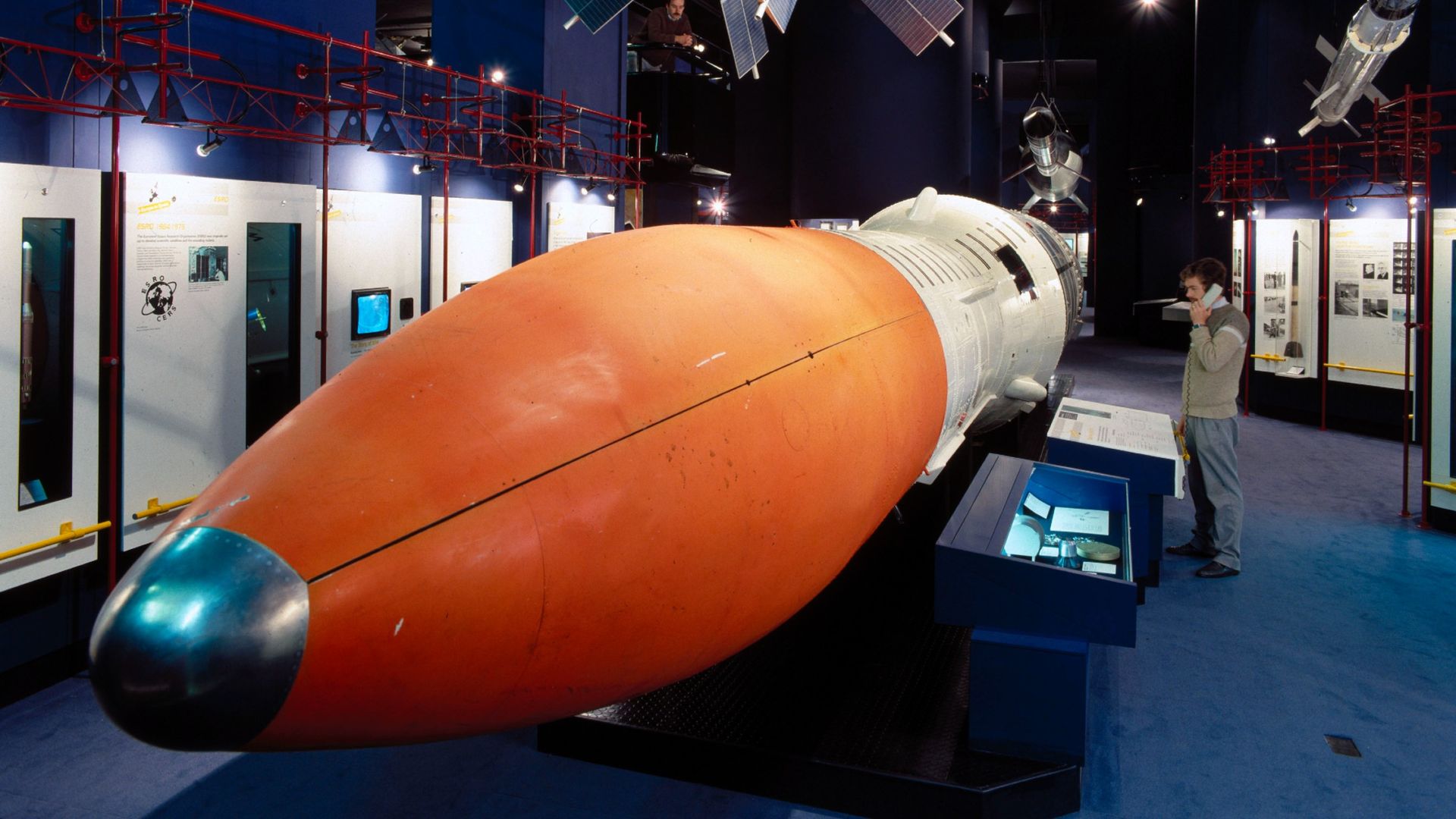
Britain developed the Black Arrow as its national satellite launcher. Based on the smaller Black Knight research rocket this was a three-stage vehicle, 12.87m tall.
Britain developed the Black Arrow as its national satellite launcher. Based on the smaller Black Knight research rocket this was a three-stage vehicle, 12.87m tall. SSPL/Getty Images

Why it mattered

The launch of Prospero is etched in the history books of British spaceflight. To this date, it remains the first and last British satellite ever launched on a native rocket built in the United Kingdom.

The 66-kilogram satellite launched on a three-stage Black Arrow R-3 rocket and flew in an elliptical orbit that ranged between 522 km to 1,300 km above the Earth. The rocket itself was based on the smaller Black Knight research rocket and stood nearly 13 meters tall. While the launch was successful, the Black Arrow program, which had seen two failures and two successes, was ultimately canceled.

The research satellite Prospero is the only British spacecraft to launch on the British-built Black Arrow rocket.

The research satellite Prospero is the only British spacecraft to launch on the British-built Black Arrow rocket. (Image credit: Wikimedia Commons/Geni)

The Prospero satellite, meanwhile, operated in orbit for two years, with regular communications ending in 1973, though it was contacted at least once each year through 1996, according to the BBC.

The satellite remains in orbit today, its legacy such that at least one company - the Scotland-based space startup Skyrora, has announced plans to retrieve Prospero in orbit and deorbit in Earth's atmosphere.

That Skyrora plan, announced in 2021, would use the company's space tug to rendezvous with the defunct Prospero, latch onto it and pull it from space. The company aims to launch its Skyrora XL rocket out of a Saxavord Spaceport in Scotland.

"By recovering Prospero, we are not only coming together as a space nation and taking responsibility for what we have launched into orbit, but also confirming our commitment to the sustainable use of outer space," Volodymyr Levykin, Skyrora founder and CEO, said at the time.

Want more space history? Check out our full On This Day In Space Story archive and watch our On This Day In Space videos on YouTube.
On this day in space! Oct. 27, 1961: NASA launches Saturn I rocket on 1st test flight from Florida to set stage for the mighty Saturn V moon rocket

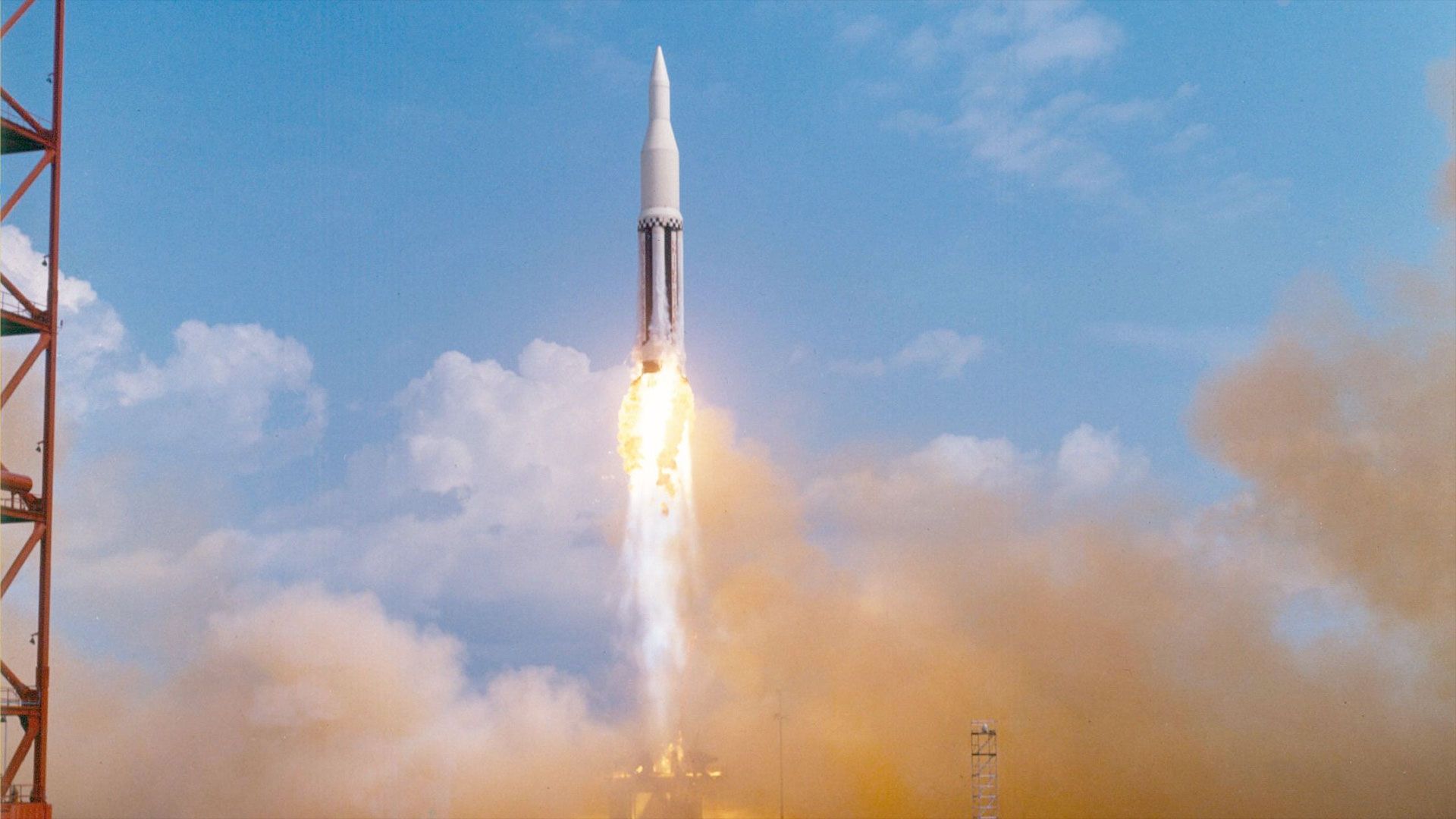
On Oct. 27, 1961, NASA launched the first test flight of its new Saturn I space launch vehicle.

The Saturn I rocket was the United States' first heavy-lift rocket designed to launch big payloads beyond low Earth orbit. This was also the first test flight of any rocket in the Saturn family of rockets, which includes the Saturn V that was used to launch astronauts to the moon during the Apollo program.

The Saturn I was enormous compared to every rocket that came before it. It was almost three times as tall as the Jupiter-C rocket, which launched the first American satellite into orbit in 1958. It also produced more than 10 times the amount of thrust that the Jupiter-C rocket could. The liquid-powered rocket launched on its maiden voyage from Cape Canaveral.

Despite a one-hour weather day, the flight was nearly perfect. It reached an altitude of 85 miles and splashed down in the Atlantic Ocean 15 minutes later. The only thing that went wrong was that its engines cut off 1.6 seconds early, but that wasn't a huge deal. Scientists figured out that this happened because there was too much liquid oxygen in the rocket and not enough propellant.

The first Saturn rocket, Saturn-Apollo 1 or SA-1, lifted off from Launch Complex 34 at Cape Canaveral, Florida on Oct. 27, 1961.

The first Saturn rocket, Saturn-Apollo 1 or SA-1, lifted off from Launch Complex 34 at Cape Canaveral, Florida on Oct. 27, 1961. (Image credit: NASA)

Why it mattered

NASA was only 3 years old when it launched its first Saturn rocket on Oct. 27, 1961. Human spaceflight was a mere 6 months old, after the April 12 launch of Soviet cosmonaut Yuri Gagarin earlier that year. Yet NASA had its eyes on the moon.

That's where the Saturn rocket family came in.

The Saturn I rocket, the predecessor to the Saturn V that sent Apollo astronauts to the moon, began its life in 1957 as the so-called Saturn C-1 booster, a project led by rocket scientist Wernher von Braun at the Advanced Research Project Agency. The plan called for a heavy-lift rocket capable of 1.5 million pounds of thrust (the first launch generated 1.3 million pounds of thrust, but later versions hit that 1.5 million mark). At launch, the Saturn I stood 162 feet tall and weighed 460 tons. NASA called that first test flight the Saturn SA-1 flight.

The Launch Complex 34 pad at what is now Cape Canaveral Space Force Station was specially built for the Saturn I rocket, with NASA taking charge in June 1961.

"The flight was considered essentially flawless," NASA said in a statement. "The Saturn SA-1 flight was the first of 32 successful Saturn rocket launches — 10 Saturn Is, 9 Saturn IBs, and 13 Saturn Vs — between 1961 and 1973."

NASA ultimately built three different types of Saturn rocket, the Saturn I, more powerful Saturn IB and the super-sized Saturn V rocket for Apollo moon launches.

Want more space history? Check out our full On This Day In Space Story archive and watch our On This Day In Space videos on YouTube.