On this day in space! Oct. 26, 2004: Cassini spacecraft takes 1st-ever closeup photos of Saturn moon Titan

On Oct. 26, 2004, NASA's Cassini spacecraft took the first close-up images of Saturn's largest moon Titan.

The Cassini spacecraft would later drop off a probe on Titan named Huygens, which was a European spacecraft that hitched a ride to the Saturn system with the Cassini mission. But before Cassini dropped off its robotic passenger, it flew by Titan a few times and took some amazing photos.

Cassini completed its first flyby on July 3, 2004, but when it swung by a second time on Oct. 26, it got about 300 times closer than it did the first time. At the closest point of this flyby, Cassini was 745 miles (1,200 kilometers) away from the surface of Titan. The spacecraft took hundreds of photos during this flyby, and these were the highest resolution views of Titan anyone had ever seen.
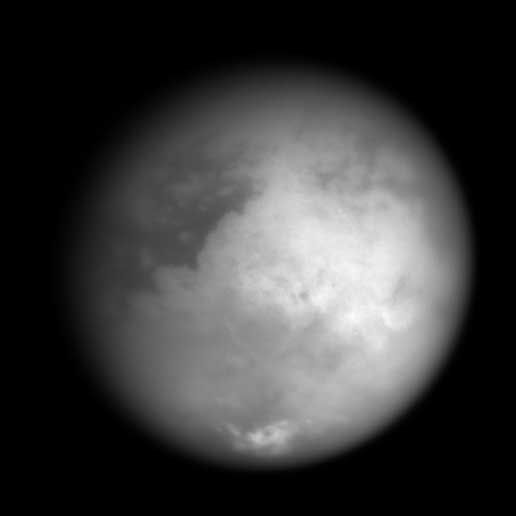
A new picture of Titan by the Cassini spacecraft reveals a bright region in the middle named Xanadu. Scientists don't know what it is.

This image is one of the closest ever taken of Saturn's hazy moon Titan. It was captured by Cassini on Oct. 26, 2004. The small circle is an artifact of the camera. (Image credit: NASA/JPL/Space Science Institute)

Why it mattered

Astronomers knew Saturn's moon Titan had an atmosphere before Cassini arrived at the smog-shrouded moon, but the spacecraft's first photos (and innumerable more that followed) revealed a strange world that looked eerily similar to what scientists suspect a young Earth might have been like.

The first close-up views of Titan by Cassini showed a large continent-sized region that scienitsts called Xanadu. It included bright features that hinted at a mountain range, as well as a large basin and smooth plains regions.

In all, Cassini would make 127 close flybys of Titan during its 13 years at Saturn before the mission ended in 2017. The probe even dropped the European Huygens lander on Titan, which landed in January 2005, to see the moon's surface first hand.

This flyby image of Titan (and other instrument observations taken at the same time) allowed scientists to measure Titan's atmosphere density and composition to better plan the path and descent for the Hygens lander.

Want more space history? Check out our full On This Day In Space Story archive and watch our On This Day In Space videos on YouTube.
On this day in space! Oct. 25, 1671: Astronomer Giovanni Cassini discovers Iapetus, Saturn’s ‘yin-yang’ moon

On Oct. 25, 1671, the Italian astronomer Giovanni Cassini discovered a new moon at Saturn! Iapetus was the second moon anyone had ever found orbiting Saturn, and it was the first of four moons Cassini would discover at the ringed planet.

The Dutch astronomer Christiaan Huygens had discovered Titan, the largest of Saturn's moons, about six years earlier. After Cassini found Iapetus, he also found the moons Rhea, Tethys and Dione.

When Cassini first saw Iapetus, the moon looked like a tiny speck on the west side of Saturn. He calculated its orbit and thought he would be able to see it again on the east side of Saturn 39 days later, but it was nowhere to be seen. When it reappeared on the west side again, Cassini realized that Iapetus must be darker on one side than the other, which made it harder to see when the dark side was facing Earth.

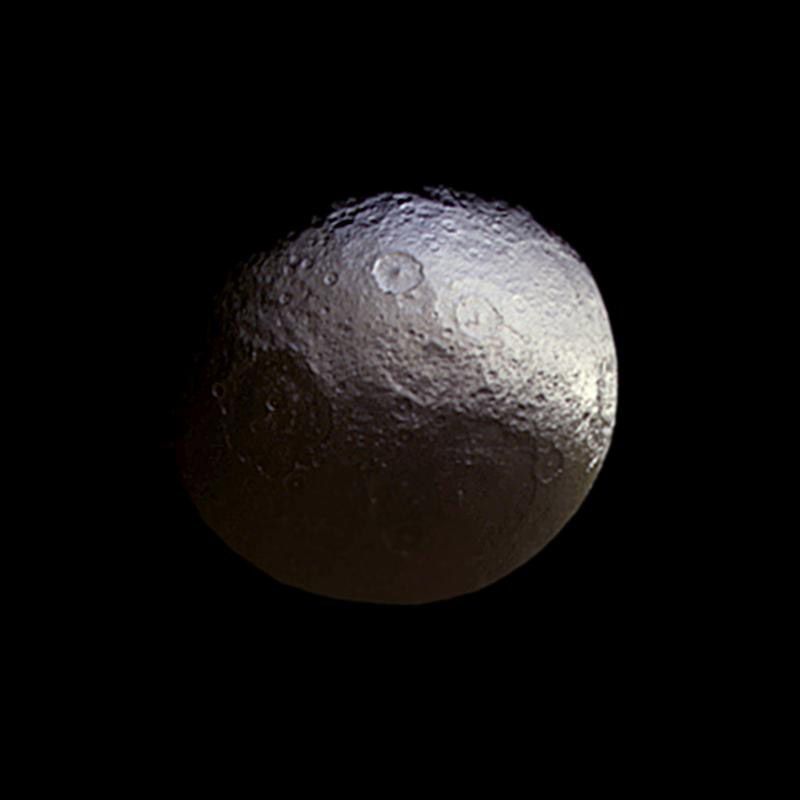
More than 300 years later, NASA sent a spacecraft named Cassini to Saturn, and that Cassini took some pretty awesome photos of Iapetus. Realizing Iapetus kind of resembled a yin-yang, it has since been nicknamed the "yin-yang moon."

This image taken by the Cassini spacecraft shows what the two-tone surface of the moon Iapetus looks like without false color.

This image taken by the Cassini spacecraft shows what the two-tone surface of the moon Iapetus looks like without false color. (Image credit: NASA/JPL-Caltech/Space Science Institute)

How it mattered

The discovery of Iapetus, with its yin-yang bright and dark hemispheres, has added to our understanding of how moons form.

"Using the computer simulations, the researchers concluded ... the inner moons of Saturn and its gorgeous rings are all relatively young. The more distant moons Titan and Iapetus would not have been formed at the same time."

"Our best guess is that Saturn had a similar collection of moons before, but their orbits were disturbed by a special kind of orbital resonance involving Saturn's motion around the sun. Eventually, the orbits of neighboring moons crossed, and these objects collided. From this rubble, the present set of moons and rings formed."

Want more space history? Check out our full On This Day In Space Story archive and watch our On This Day In Space videos on YouTube.
On this day in space! Oct. 24, 1946: V-2 rocket takes 1st photos of Earth from space

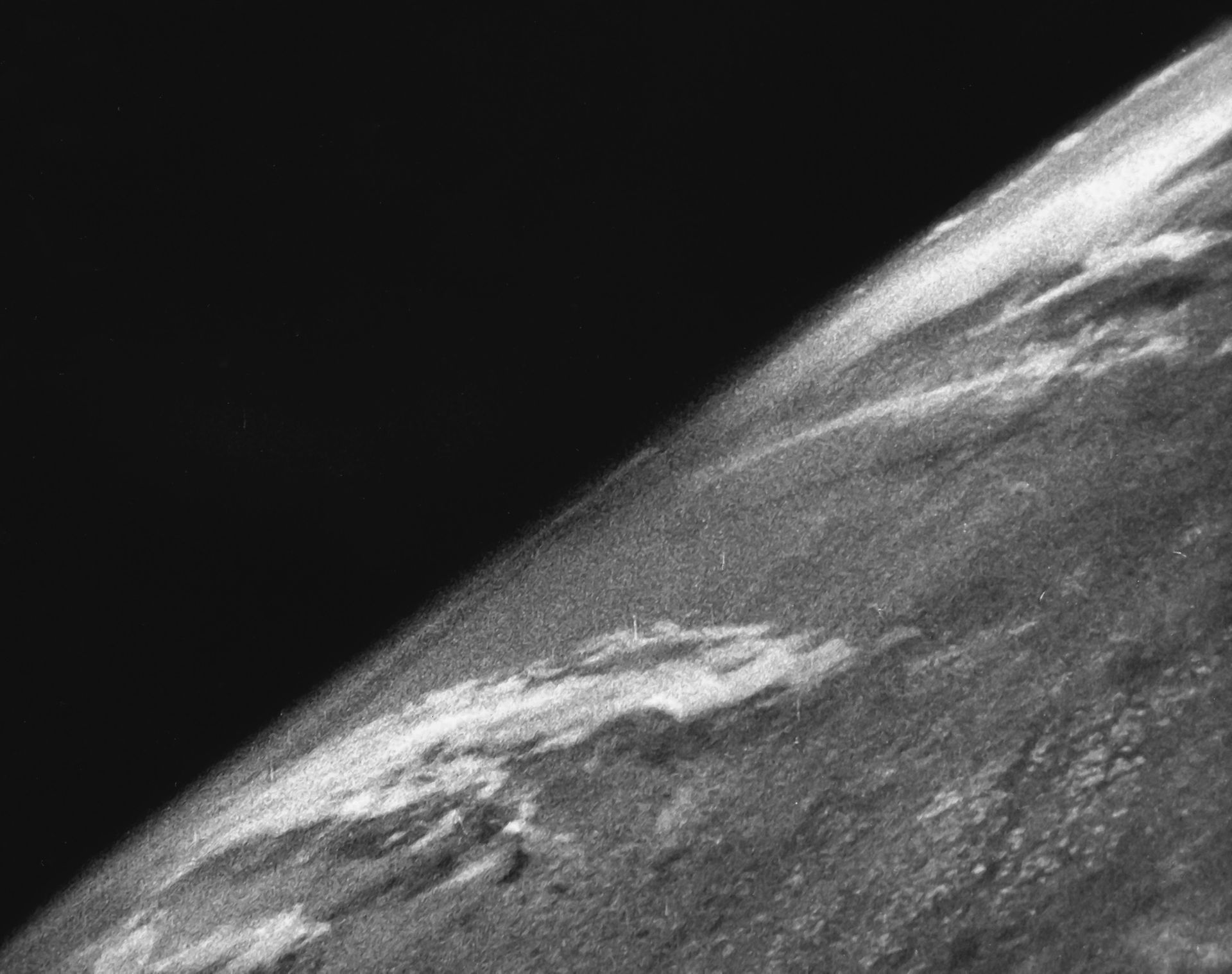
On October 24, 1946, a V-2 rocket captured the first-ever photo of Earth from space.

While these grainy, black-and-white images might not look like much today, they were a huge deal at the time, because no one had ever seen Earth from space before.

The V-2 rocket launched from the White Sands Missile Range in New Mexico. It carried a 35-millimeter motion picture camera that captured a new frame every second and a half. The rocket soared to an altitude of about 65 miles before falling back to Earth.

Both the rocket and the camera were destroyed after crashing into the Earth at a speed of about 340 miles per hour. But the film survived because it was protected inside a steel case. Scientists had to drive out into the New Mexico desert to retrieve the film. When they saw the images for the first time, the scientists were literally jumping up and down with joy.

This photo is the first view of Earth from space taken by a camera on a U.S. Army V-2 rocket launched from White Sands Missile Range in New Mexico on Oct. 24, 1946.

This photo is the first view of Earth from space taken by a camera on a U.S. Army V-2 rocket launched from White Sands Missile Range in New Mexico on Oct. 24, 1946. (Image credit: U.S. Army)

How it mattered

The ability to photograph Earth from space drove both an expanded interest to continue pushing into space and led to unexpected societal changes with regards to how humanity considered its home planet.

For military and intelligence agencies, the potential now existed for reconnaissance at a far larger scale than what was possible with high-altitude aircraft. That capability expanded to agriculture and meteorological purposes, eventually making Earth observation one of the most common reasons satellites and space stations are deployed into orbit today.

Earth photography from space also gave birth to the environmental movement, as people began to see the planet differently. The fragility of this orb became more apparent, as now Earth appeared a "blue marble" set against an endless black void.

Want more space history? Check out our full On This Day In Space Story archive and watch our On This Day In Space videos on YouTube.
On this day in space! Oct. 23, 2007: NASA launches Harmony module to ISS on STS-120 space shuttle mission

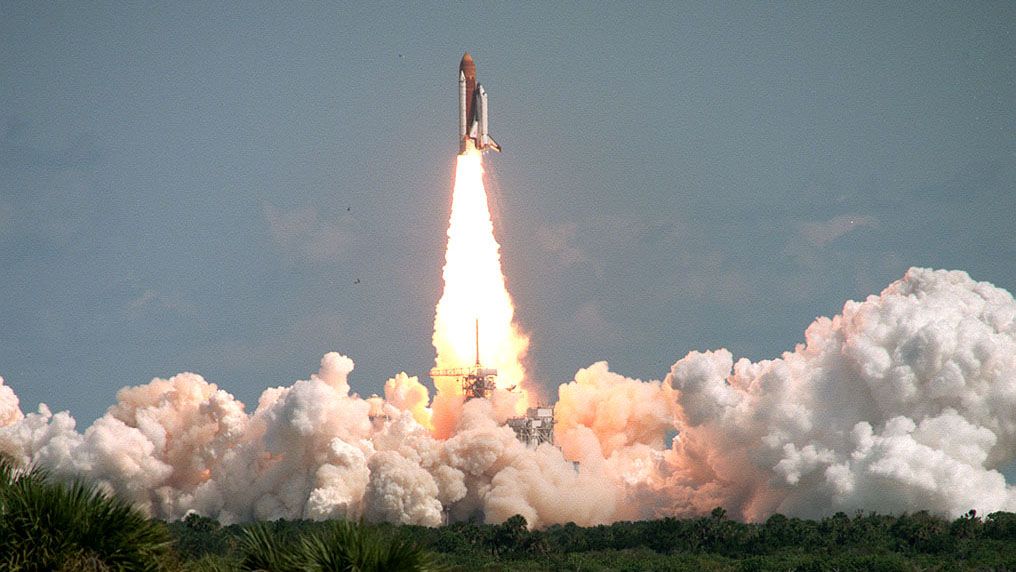
On October 23, 2007, the space shuttle Discovery launched the Harmony module to the International Space Station.

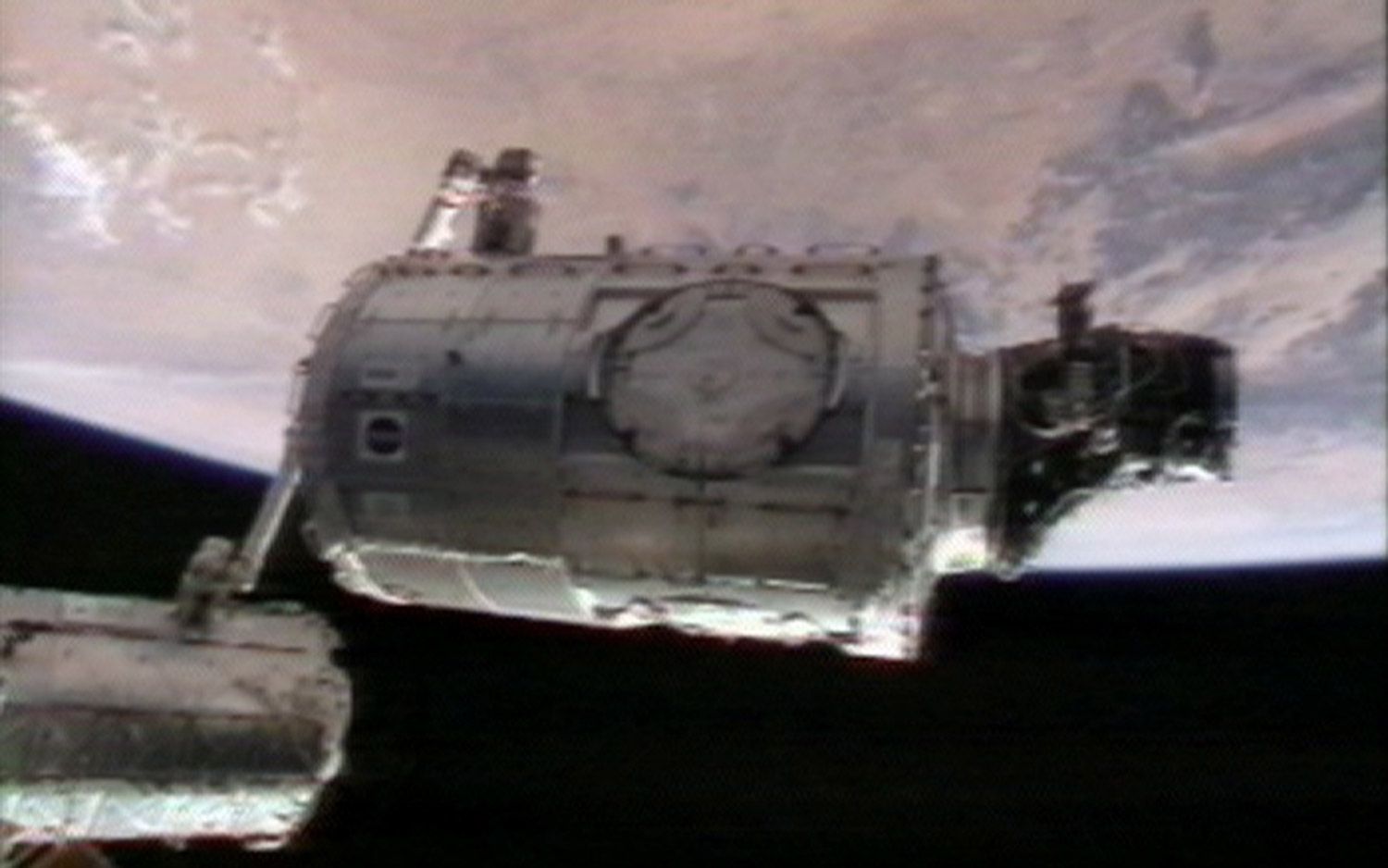
The Harmony module is a utility hub 14 feet wide and 24 feet long, or about the length of a minibus. It joins the European Space Agency's Columbus module and Japan's Kibo laboratory and serves as the crew quarters for the American astronauts.

Once it was installed, the space station grew from about the size of a three-bedroom house to something more like a five-bedroom house. When astronauts delivered Harmony to the space station, they left it temporarily attached to the Unity node.

After the shuttle left, astronauts used the space station's robotic arm to move the shuttle docking port out of the way at the Destiny module. This made room for Harmony to then dock at its permanent home next to the Destiny module.

The U.S. Harmony node flew to space aboard space shuttle Discovery during mission STS-120, in October 2007.

The U.S. Harmony node flew to space aboard space shuttle Discovery during mission STS-120, in October 2007, to be a connecting module and allow a larger space station. (Image credit: NASA)

Why it mattered

In 2007, the International Space Station was much smaller than it is today in terms of living space for its astronaut crew. The Harmony connecting module changed all that.

The STS-120 mission opened a new phase of ISS expansion by adding a vital connecting hub for future modules. Prior to Harmony's launch, the last new room addition to the ISS had occurred in 2001, when Russia's Pirs docking module (since discarded) arrived.

The Harmony module (its original name was Node 2), was the second NASA-led hub module (after the Unity, or Node 1, module) for the ISS. It was built for NASA by the Italy-based Thales Alenia Space and is covered with five "common berthing mechanisms," or connecting points for different ISS modules.

After the two-week STS-120 flight, Harmony was moved from a temporary berth at the Unity module to the forward port on the NASA's main Destiny laboratory. Once there, it served as a connection point for Europe's Columbus lab on the starboard side, and Japan's massive Kibo lab on the port side. Some of its ports have been used by visiting caargo ships and a docking port on its roof allows visiting vehicles to park there.

Inside the module are eight payload racks that include four used for avionics and four others for either stowage or crew quarters. NASA's astronaut crew quarters are based in the Harmony module. The name Harmony was selected durng a public naming contest by NASA.

Want more space history? Check out our full On This Day In Space Story archive and watch our On This Day In Space videos on YouTube.
On this day in space! Oct. 22, 1992: Ashes of ‘Star Trek’ creator Gene Roddenberry launch into space on NASA shuttle

On Oct. 22, 1992, the space shuttle Columbia launched into space with the ashes of Gene Roddenberry, the creator of "Star Trek," aboard.

During mission STS-52, NASA astronaut and shuttle commander James Wetherbee brought a small container with a portion of Roddenberry's ashes into space as part of his personal effects at the request of Roddenberry's widow, Majel Barrett. It was Roddenberry's lifelong dream to go to space, but he never got to go while he was alive.

But thanks to his wife, a little bit of Roddenberry finally made it to space almost exactly one year after his death. NASA and his family didn't tell anyone about it until almost two years later in 1994.

Wetherbee said he was "honored to be asked" by Barrett to carry Roddenberry's ashses on the spaceflight. "I'm just glad I was able to bring a little happiness to the family," he said, according to Newsweek.

The Space Shuttle Columbia (STS-52) launches from NASA's Kennedy Space Center on Oct. 22, 1992.

The Space Shuttle Columbia (STS-52) launches from NASA's Kennedy Space Center on Oct. 22, 1992. (Image credit: NASA)

Here's why it mattered

The launch of Roddenberry's ashes into space on NASA's STS-52 mission aboard the space shuttle Columbia marked the world's first "space burial," but it wouldn't be the last.

About five years after Roddenberry's memorial flight, in 1997, the space memorial company Celestis began launching a series of "burial" flights by flying capsules with human cremains on rockets . In fact, more of Roddenberry's ashes flew on Celestis' "founders flight" in April 1997 aboard an air-launched Pegasus rocket that took off from the Canary Islands in Spain. The ashes of Roddenberry's wife and of Star Trek actor James Doohan have also flown in space, among others.

Celestis has gone on to launch human cremains on many suborbital and orbital flights, including some on SpaceX Falcon 9 rockets. The company even launched the ashes of the late astronomer Eugene Shoemaker to the moon in 1999 on the Luna 1 flight, with another set of cremains launched into deep space on the Enterprise mission in 2023.

Want more space history? Check out our full On This Day In Space Story archive and watch our On This Day In Space videos on YouTube.
On this day in space! Oct. 21, 2008: India launches its 1st mission to the moon with Chandrayaan-1

On Oct. 21, 2008, the Indian Space Research Organization launched its first mission to the moon. The mission was named Chandrayaan-1, and it consisted of both an orbiter and an impactor.

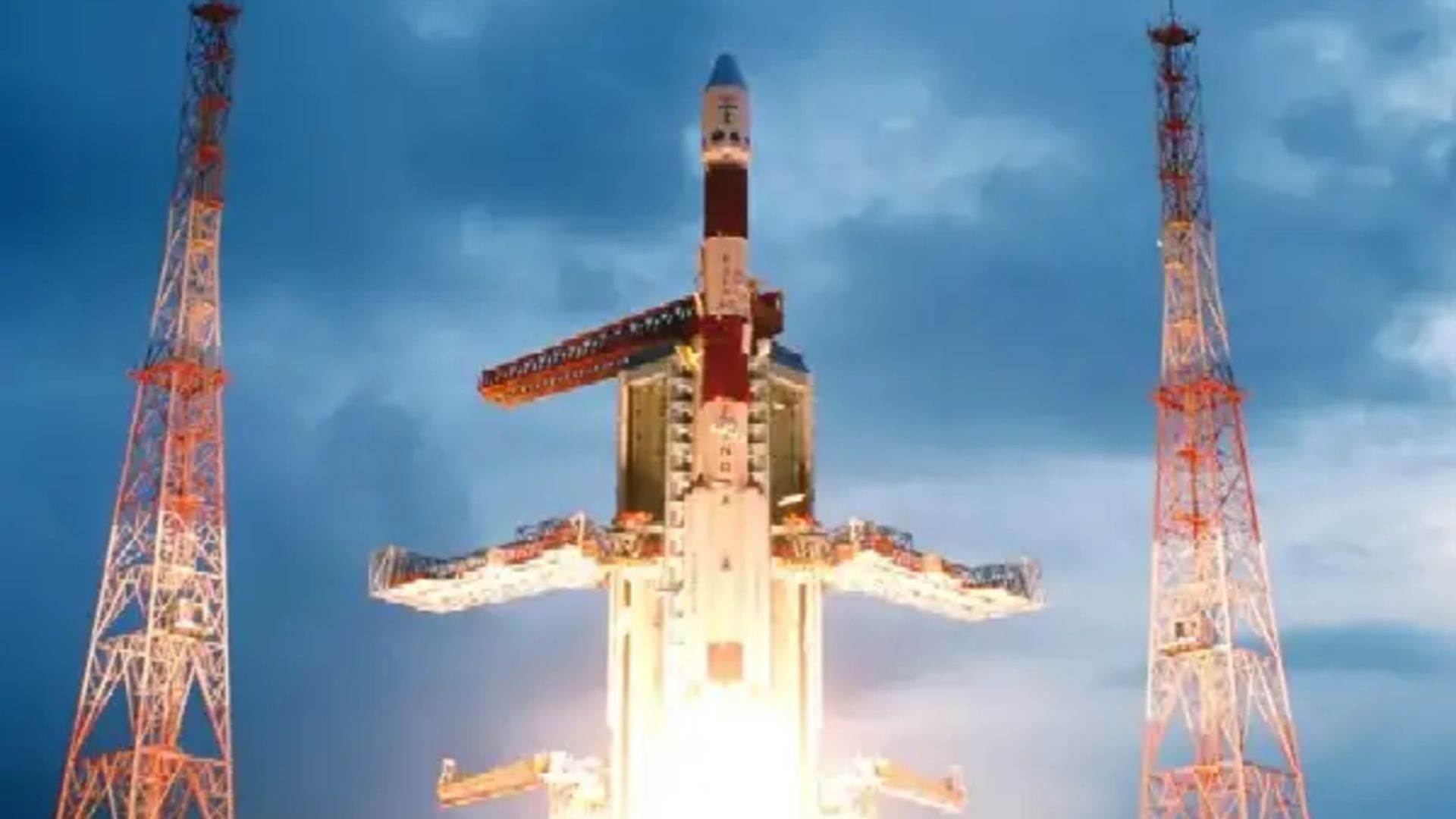
Chandrayaan-1 launched from the Satish Dhawan Space Center on an Indian rocket called the Polar Satellite Launch Vehicle, or PSLV-XL. (Launch occurred at 8:52 p.m. EDT, though it was about 6:22 a.m. local time at the launch site on Oct. 22.)

It arrived in lunar orbit about three weeks later and dropped off the Moon Impact Probe, which crashed into the moon on Nov. 14. The rest of the Chandrayaan-1 spacecraft stayed in orbit, where it collected and transmitted data from the moon to Earth for about a year. The mission ended abruptly 14 months ahead of its planned end date when scientists lost contact with the probe.

An Indian PSLV rocket launches the Chandrayaan-1 moon mission on Oct. 21, 2008 EDT (Oct. 22 local time in India).

An Indian PSLV rocket launches the Chandrayaan-1 moon mission on Oct. 21, 2008 EDT (Oct. 22 local time in India). (Image credit: ISRO)

Why it mattered

The Indian Space Research Organisation, or ISRO, had a lot riding on the success of Chandrayaan-1 moon mission, which marked the first-ever deep space mission by the Indian space agency. It was also the first mission to the moon for India, a country that hopes to launch its own crewed spacecraft and build a space station.

Chandrayaan-1 did more than just demonstrate that India's space program was capable of launching missions to the moon; it also returned some amazing science results, like evidence of water ice on the moon.

"In September 2009, scientists published results of data collected by the American M3 instrument which had detected absorption features on the polar regions of the surface of the Moon usually linked to hydroxyl- and/ or water-bearing molecules," NASA said in a mission overview.

The spacecraft carried 11 instruments to study the moon, five of them built by ISRO. The rest were experiments for the European Space Agnecy and NASA.

"In addition to the five Indian instruments, the spacecraft carried scientific equipment from the United States, the United Kingdom, Germany, Sweden, and Bulgaria," NASA said.

It took until Nov. 8, 2008 for Chandrayaan-1 to enter lunar orbit, where it stayed until contact was lost in August 2009, most likely due to a power supply failure caused by overheating.

"This was short of the spacecraft’s planned two-year lifetime, although ISRO noted that at least 95% of its mission objectives had been accomplished by then," NASA wrote.

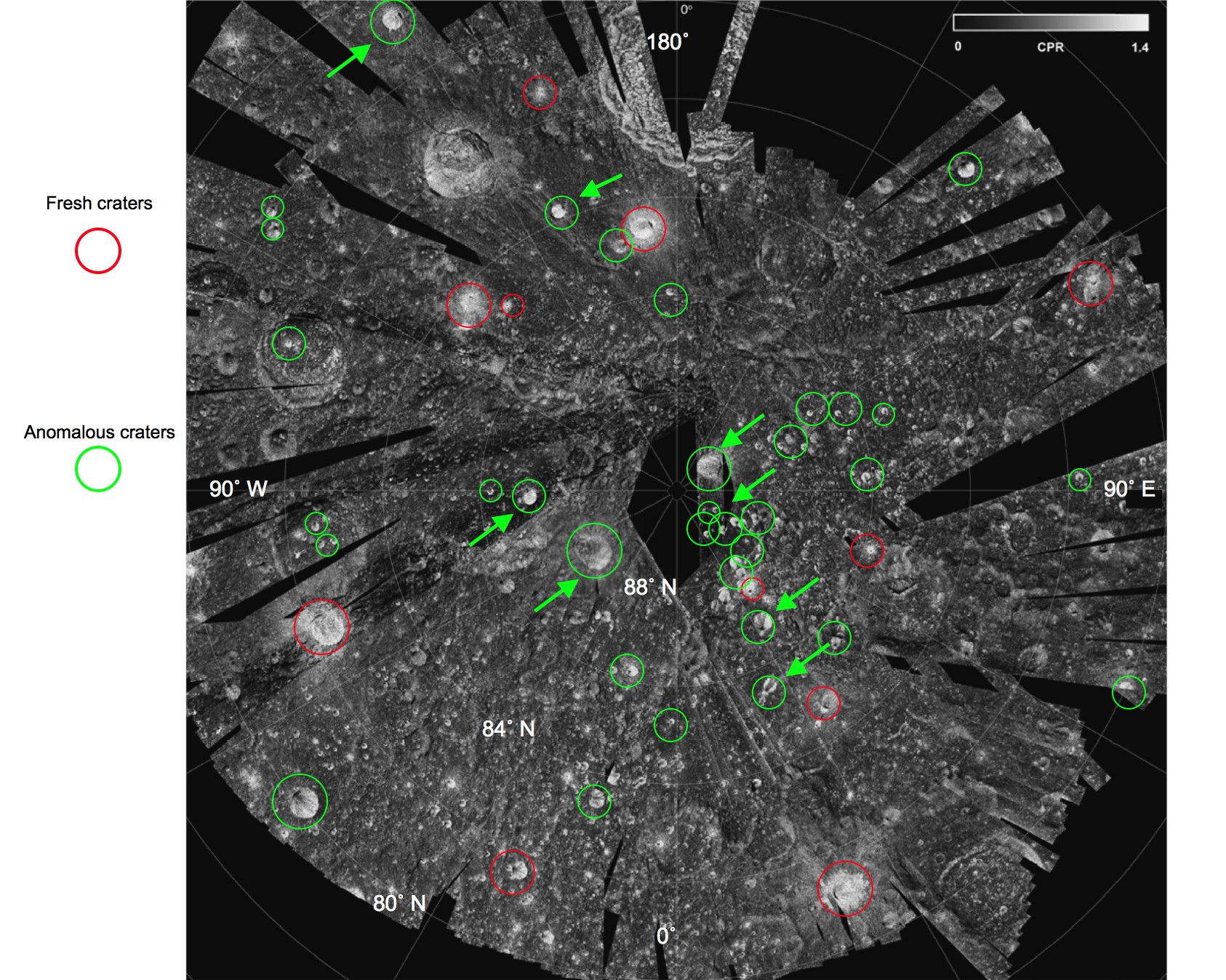
NASA's Mini-SAR instrument, which flew aboard India's Chandrayaan-1 spacecraft, found more than 40 small craters with water ice.

NASA's Mini-SAR instrument, which flew aboard India's Chandrayaan-1 spacecraft, found more than 40 small craters with water ice. The craters range in size from 1 to 9 miles (2 to 15 km) in diameter. (Image credit: NASA)

India did not stop at the moon with Chandrayaan-1. In 2019, the country launched the Chandrayaan-2 orbiter, which carried the Vikram lander and Pragyan rover. Chandrayaan-2 reached lunar orbit successfully, but the Vikram landing failed.

The Chandrayaan-3 misson followed in 2023, which successfully landed a new Vikram lander and Pragyan rover near the moon's south pole. India plans to launch the Chandryaan-4 mission to return moon samples to Earth in 2028.

Want more space history? Check out our full On This Day In Space Story archive and watch our On This Day In Space videos on YouTube.
On this day in space! Oct. 20, 1970: The Soviet Union launches last-ever Zond moon mission

On Oct. 20, 1970, the Soviet Union launched the Zond 8 spacecraft on a mission to the moon. This was the last mission in the Zond program.

After the first three Zond missions explored Venus and Mars, the next ones were circumlunar missions that flew around the moon before returning to Earth. Although there was no crew on board, the Zond spacecraft was designed with cosmonauts in mind.

The Zond missions served as test flights for the Soviet Union's plans to send cosmonauts to the moon. But those plans for crewed flights never came to fruition. This was partly because the U.S. had already put astronauts on the moon, but also because the Zond missions had a lot of technical problems.

Zond 8 was considered a success — even though its guidance system malfunctioned on the way back to Earth. The spacecraft still returned to Earth safely and splashed down in the Indian Ocean one week after it launched.

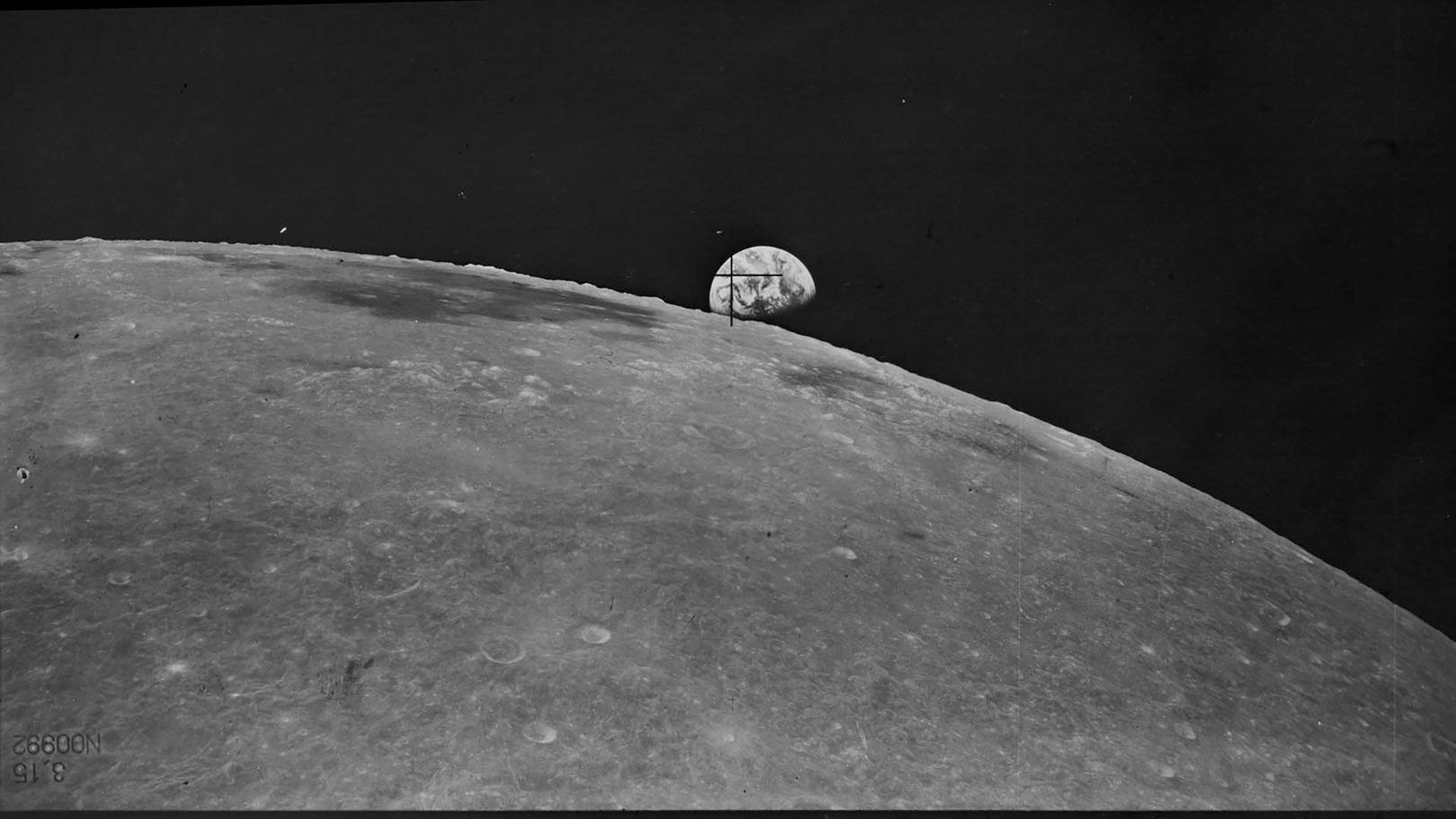
The Soviet Union's Zond 8 spacecraft, the last in a series of lunar spacecraft, captured this image of Earthrise on Oct. 24, 1970.

The Soviet Union's Zond 8 spacecraft, the last in a series of lunar spacecraft, captured this image of Earthrise on Oct. 24, 1970. (Image credit: Moscow State University of Geodesy and Cartography)

Why it mattered

While the Zond 1 and Zond 2 missions were launched toward Venus and Mars, respectively, the primary target of most Zond missions was the moon. At the time, the Soviet Union was embroiled in an ongoing space race with the United States to be the first on the moon with a human crew.

By the time Zond 8 launched on Oct. 20, 1970, that space race was lost to the Soviet Union. NASA and the U.S. had already landed astronauts on the moon twice with Apollo 11 and Apollo 12 (in July and November of 1969, respectively), and even peformed the first space rescue fo the Apollo 13 astronauts in April 1970.

While Zond 8 was uncrewed, it was a test flight of the Soviet Union's L1 spacecraft that was designed to fly a cosmonaut around the moon. It looped around the moon in a lunar flyby, approaching within 1,120 kilometers of the moon's surface at its closest point, according to RussianSpaceWeb.com.

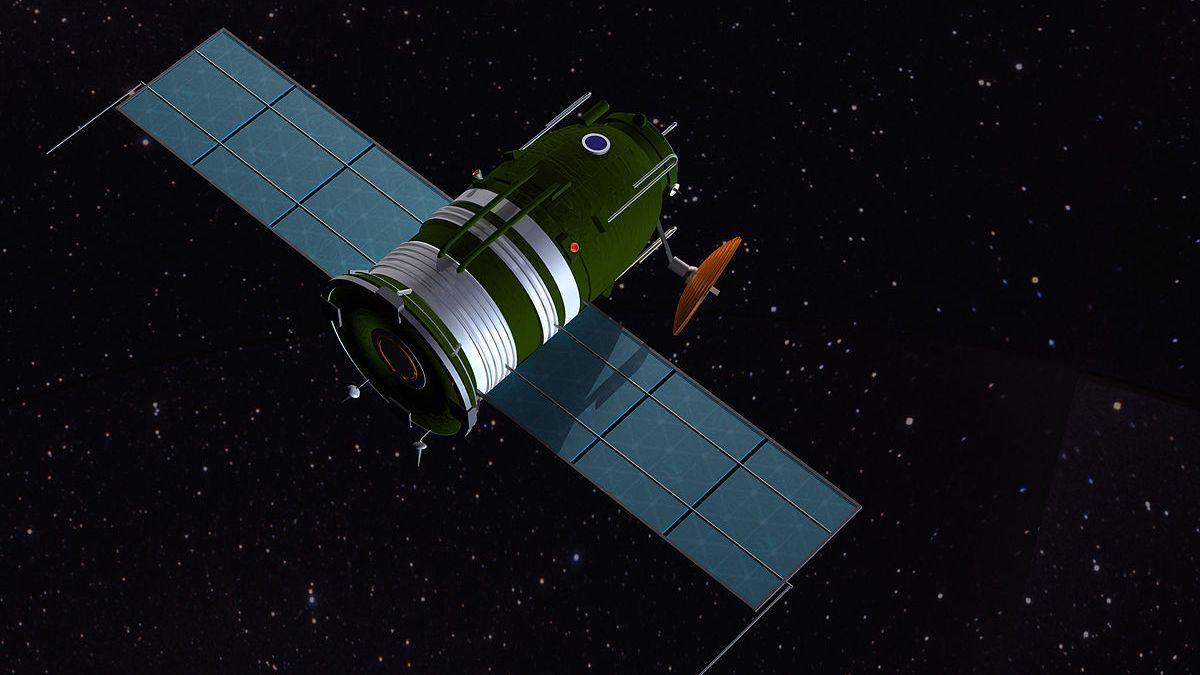
a stubby soyuz-looking green spacecraft with solar panels

An artist's illustration of a Zond spacecraft. (Image credit: Future)

Cameras on Zond 8 captured stunning views of the Earth and moon, recreating the iconic Earthrise views seen by Apollo 8 astronauts two years earlier in 1968.

Zond 8 ultimately splashed down in the Indian Ocean on Oct. 27, 1970 after a solar attitude sensor failed, sending it on a shorter, steeper reentry path during landing, according to RussianSpaceWeb.com. It was retrieved by a recovery ship, marking the end of the Soviet moon landing program. Russian would go on to develop a series of Salyut space stations, culminating in the long-lived Mir space station.

After decades without a moon probe, Russia did launch a new uncrewed moon lander in 2023. That Luna 25 mission failed and crashed into the lunar surface after an onboard engine controller malfunctioned. The country has pledged a return to the moon in 2027.

Want more space history? Check out our full On This Day In Space Story archive and watch our On This Day In Space videos on YouTube.
On this day in space! Oct. 19, 2016: Europe’s ExoMars orbiter and Schiaparelli lander arrive at Mars

On Oct. 19, 2016, the European Space Agency's ExoMars mission arrived at Mars!

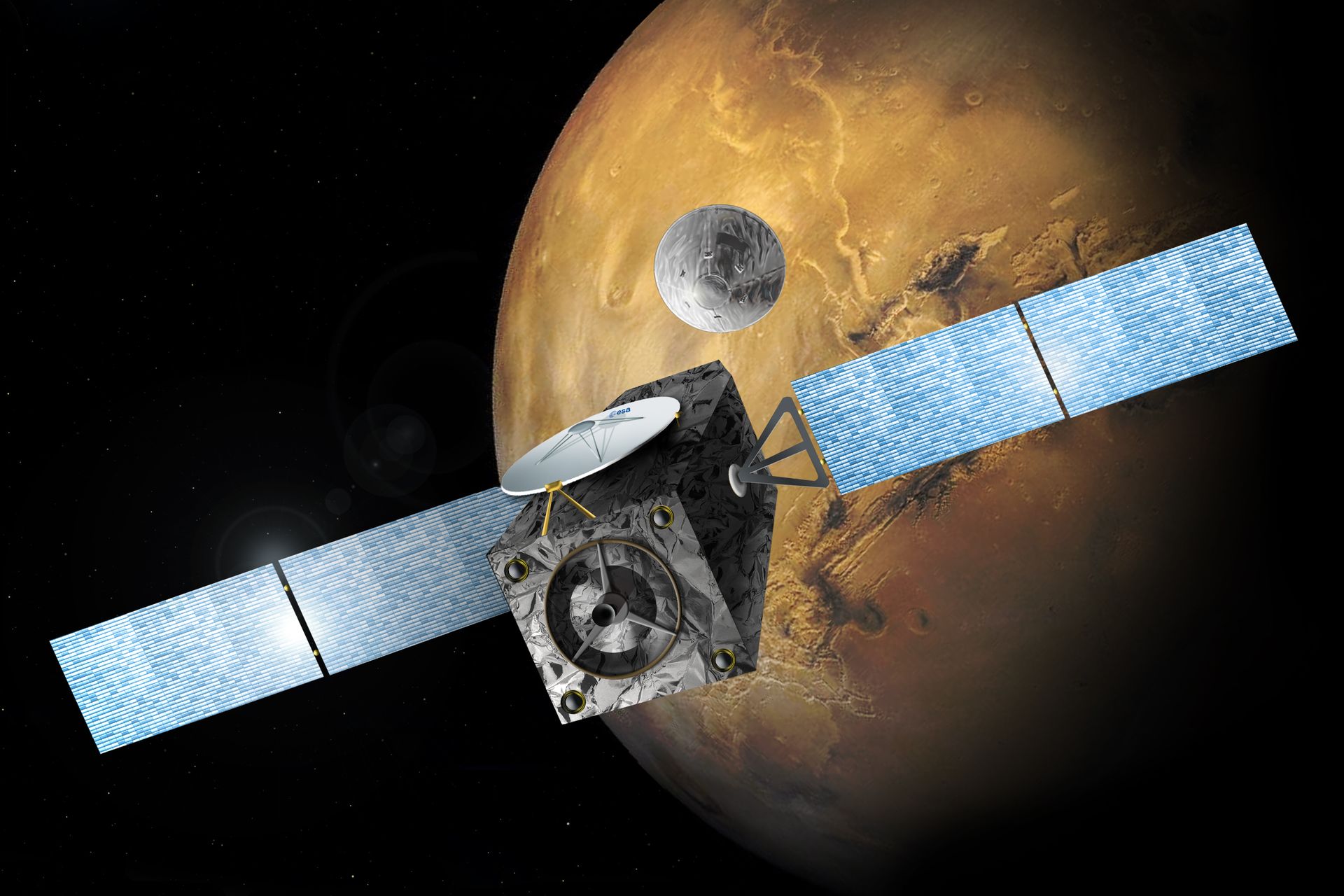
ExoMars 2016 consists of the Trace Gas Orbiter and the Schiaparelli lander. The orbiter and lander traveled there together and separated on Oct. 16, three days before the orbiter entered orbit around Mars, and the lander touched down on the planet's surface. But something went wrong during the lander's descent, and it crashed into the ground.

Schiaparelli did not survive the accident, but the Trace Gas Orbiter is still functional. It is currently circling the planet, looking for methane and other gases in the Martian atmosphere that could be evidence for possible biological activity.

Artist's illustration of Europe's ExoMarsTrace Gas Orbiter releasing the Schiaparelli landing demonstrator near Mars.

Artist’s illustration showing the separation of the ExoMars 2016 entry, descent and landing demonstrator module, named Schiaparelli, from the Trace Gas Orbiter, and heading for Mars. (Image credit: ESA)

Why it mattered

ExoMars 2016 was a landmark mission for the European Space Agency and designed to be the vanguard of a two-flight ExoMars program to send an orbiter, lander and rover to Mars.

Launched in March 2016, ExoMars 2016 aimed to achieve two goals for ESA and Russia. First, the mission aimed to use the Schiaparelli lander to test landing techniques that would be vital on a planned ExoMars 2018 rover. Second, the mission would deliver a critical orbiter around Mars to study the planet's atmosphere and serve as a communications link for that future Mars rover.

In the end, ExoMars 2016 was just a partial success, with ESA officials calling it "96% successful." due to the loss of the lander.

While Schiaparelli separated smoothly from the ExoMars Trace Gas Orbiter spacecraft, it stopped communicating with Earth just 1 minute before its planned landing on Oct. 19. Photos from NASA's Mars Reconnaissance Orbiter at Mars later revealed what appeared to be its crash site and, nearby, its jettisoned parachute. Officials suspect Schiaparelli did not fire its descent thrusters as designed in order to slow itself enough for a safe landing. A data glitch was cited as its cause.

The Trace Gas Orbiter, meanwhile, continues to study Mars to this day and has spent 10 years and counting studying the Martian atmosphere.

The launch of ExoMars 2018, which includes the Mars rover Rosalind Franklin, was delayed by the Schiaparelli failure, as well as the loss of its Russian Proton rocket when ESA severed its partnership with Russia over that country's war on Ukraine.

The ExoMars rover is now expected to launch no earlier than 2028, with a landing on Mars expected in 2030.

In 2026, another country took aim at Mars on this day.

The Japan Aerospace Exploration Agency attempted to launch the ambitious Martian Moons eXploration mission (called MMX) to land a probe on the Mars moon Phobos and return samples to Earth.

Want more space history? Check out our full On This Day In Space Story archive and watch our On This Day In Space videos on YouTube.
On this day in space! Oct. 18, 1963: France’s Félicette Becomes the 1st Cat in Space! >^..^<

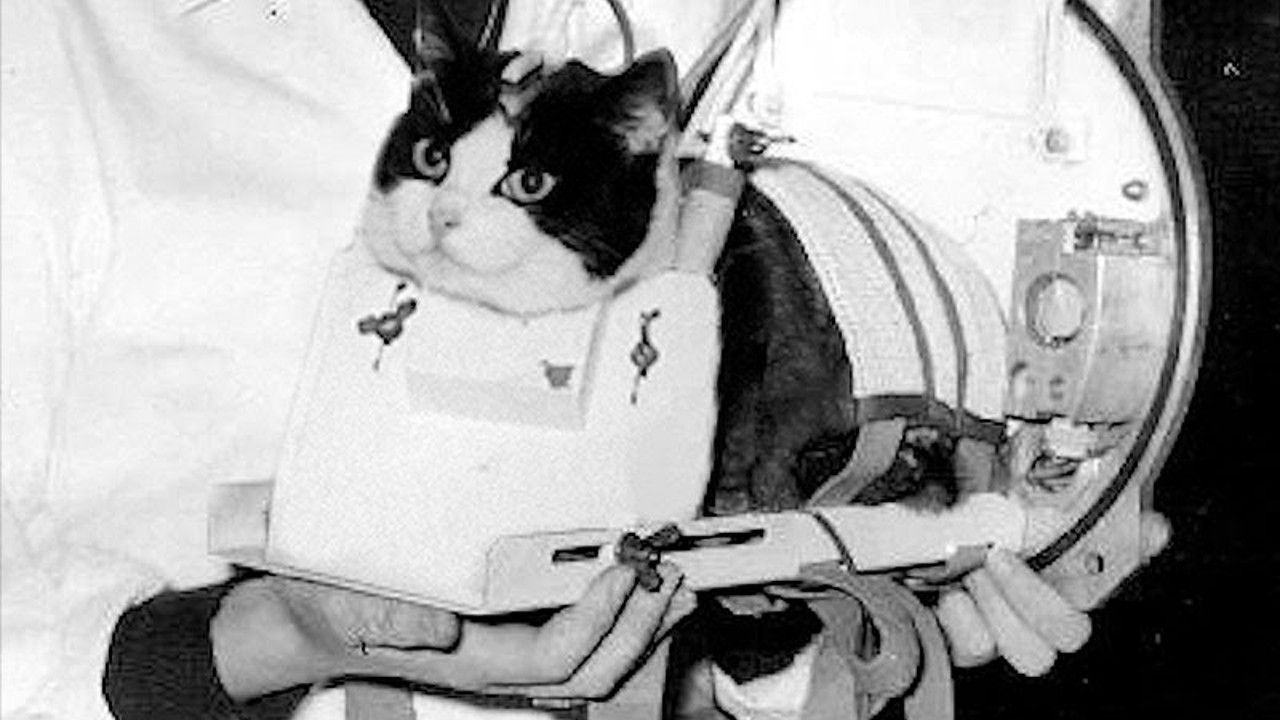
On Oct. 18, 1963, a cat went to space! Félicette was a French "catstronaut" who became the first and only feline to fly to space.

While the U.S. and Soviet Union were busy launching primates, dogs and humans, the French decided to join the space race by launching a cat. Félicette, a stray tuxedo cat from the streets of Paris, was a substitute for another cat named Felix, who somehow escaped on launch day.

So Félicette went where no cat had ever gone before. She boarded a French Véronique AG1 rocket and soared 130 miles above the Earth before safely parachuting back down.

Luckily Félicette made it home alive and well, unlike many of the other animal astronauts that flew during the space race.

a black-and-white cat in a small device held down with straps and tubes

Félicette, the first cat to fly into space in October 1963, is seen her carrier pre-flight. (Image credit: Wikimedia Commons )

Why it mattered

Félicette survived spaceflight, but was short of this world. She was euthanized two months after her recovery so scientists could study her brain.

A second cat was launched by the French on Oct. 24, but its flight did not go so well, veering off course. When the cat was found a day later, it was discovered it have died as a result of the journey. From there on, CERMA (Centre d'Enseignement et de Recherches de Médecine Aéronautique) changed its research to flying monkeys.

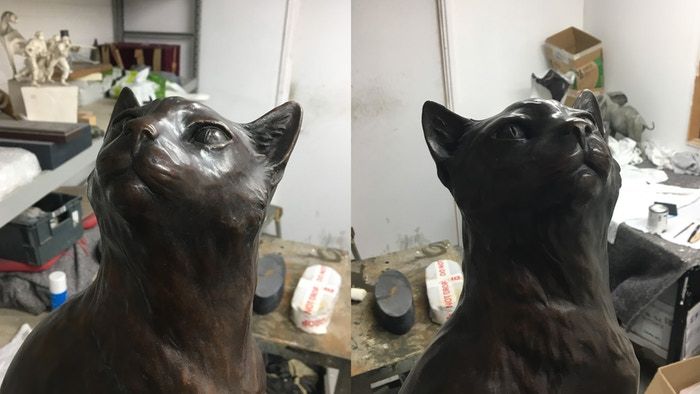
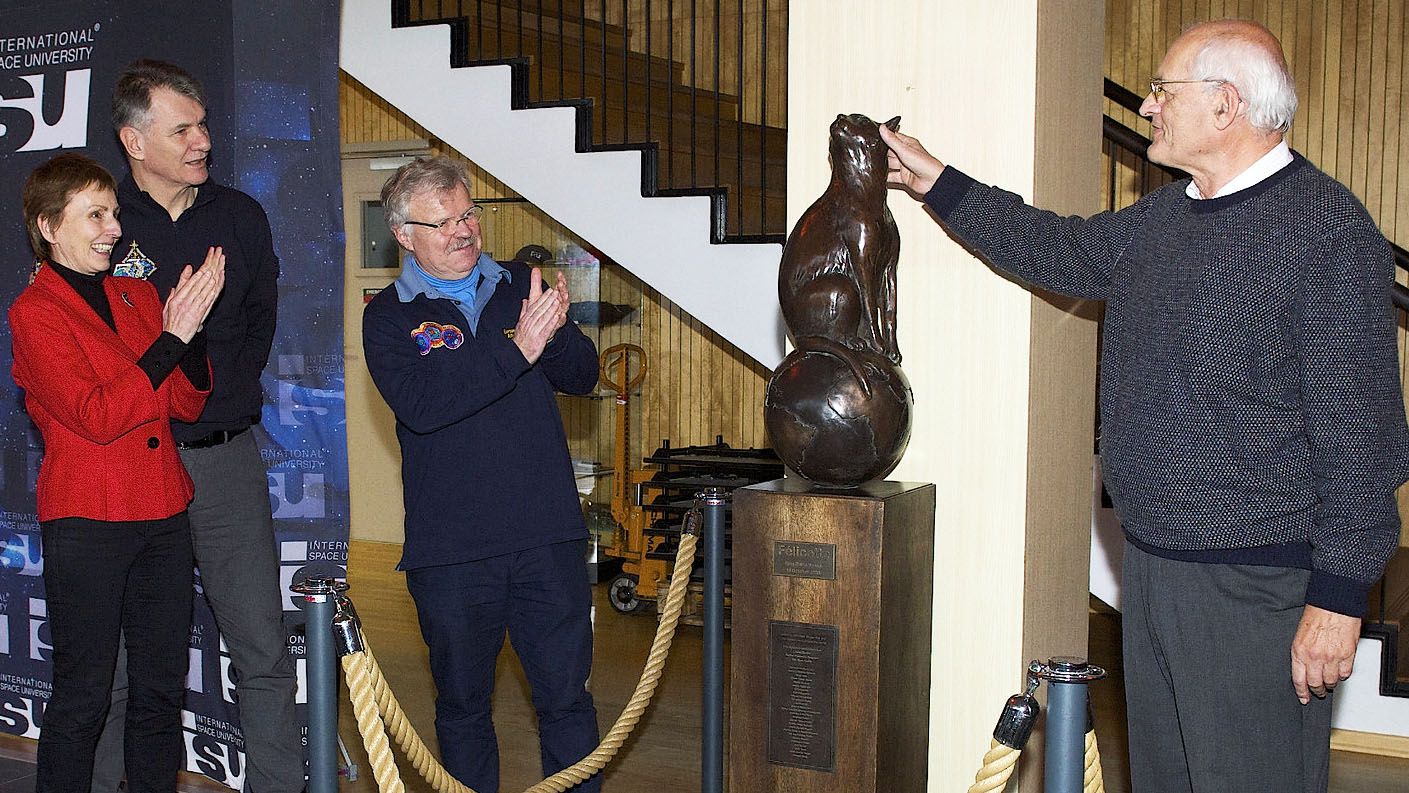
Félicette may have become a footnote to history had it not been for a crowdfunded effort to raise a statue in her memory nearly 60 years later. The sculpture was unveiled in 2019 at the International Space University in Strasbourg, France. European astronauts Helen Sharman, Paolo Nespoli and Reinhold Ewald were on hand for its reveal.

Félicette, the first cat in space (seen here at right)
Félicette, the first cat in space (seen here at right), immortalized as a bronze sculpture at the International Space University in Strasbourg. On the left here is one of the first photos of the artwork while in progress, and at the center is a small scale model.Gill Parker/Kickstarter/CNES
A closer view of Félicette's face.
A closer view of Félicette's face in bronze.Courtesy of Matthew Serge Guy
The unveiling of the Félicette statue honoring the first cat in space.
The unveiling of the Félicette statue honoring the first cat in space.Courtesy of ISU/Photo Expression

In addition to the memorial statue, Félicette has been memorialized on postage stamps issued by Chad and Comoros, both former French colonies.

Want more space history? Check out our full On This Day In Space Story archive and watch our On This Day In Space videos on YouTube.
On this day in space! Oct. 17, 2016: Private Antares rocket returns to flight after catastrophic launch explosion

On Oct. 17, 2016, Orbital ATK (now Northrop Grumman Space Systems) returned to flight, successfully launching a cargo shipment to the International Space Station (ISS) after its previous cargo mission failed to launch.

The private spaceflight company was contracted by NASA to fly cargo to the ISS, and stakes were high for this launch. Orbital ATK's last attempt nearly two years earlier ended in a catastrophic explosion a few seconds after liftoff.

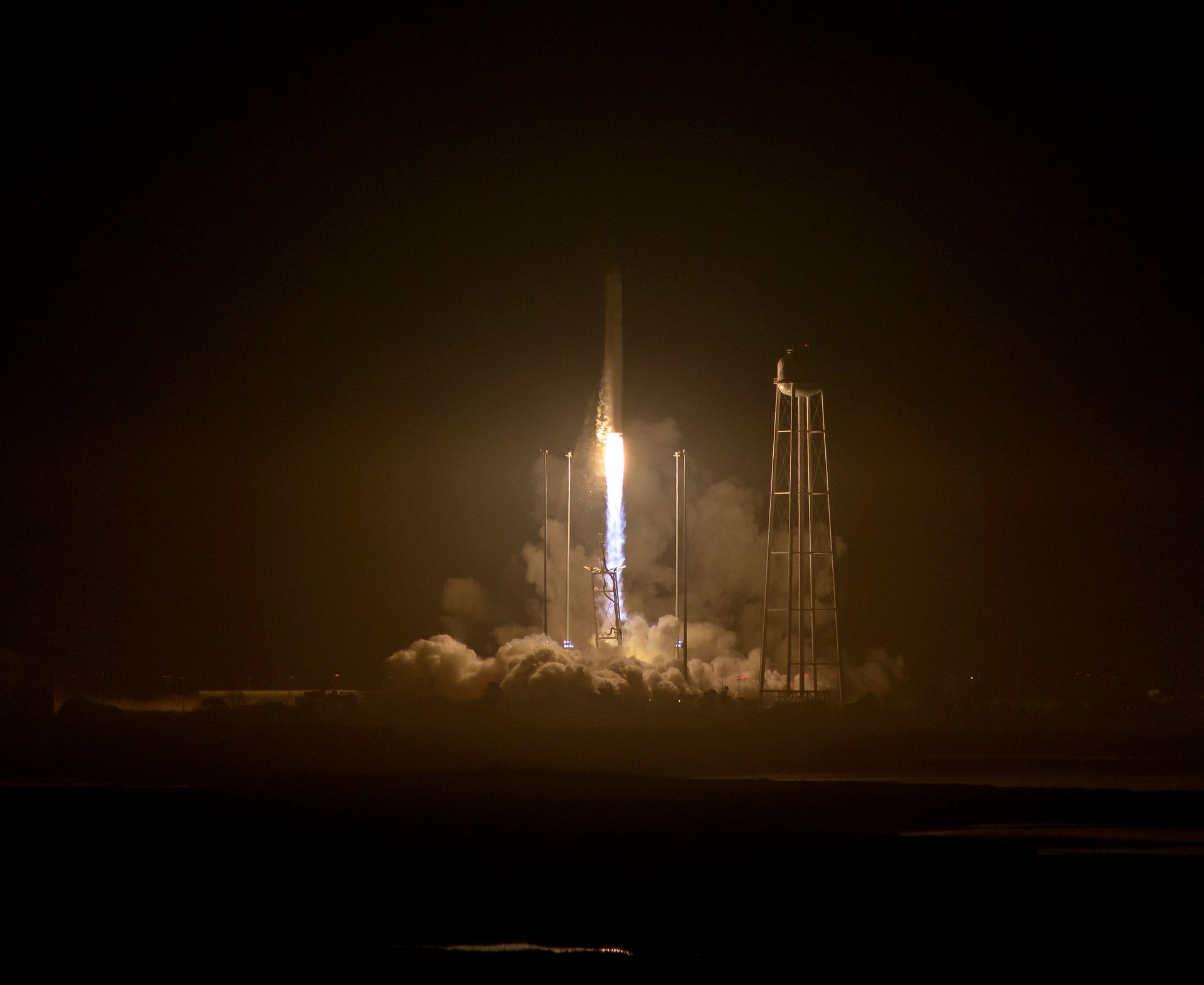
Despite some delays, the newly upgraded Antares rocket flawlessly blasted off into the night sky from NASA's Wallops Flight Facility in Virginia. Six days later, the Cygnus cargo spacecraft arrived at the ISS to deliver food, supplies and science experiments to the crew.

An upgraded Orbital ATK Antares rocket soars into the night sky over NASA's Wallops Flight Facility on Wallops Island, Virginia on Oct. 17, 2016.

An upgraded Orbital ATK Antares rocket soars into the night sky over NASA's Wallops Flight Facility on Wallops Island, Virginia on Oct. 17, 2016. (Image credit: NASA/Bill Ingalls)

Why it mattered

For the International Space Station to be able to sustain a continuous human occupancy, periodic cargo deliveries are needed. Russia fulfills part of this requirement with its Progress spacecraft, and both ESA (European Space Agency) and JAXA (Japan Aerospace Exploration Agency) have contributed with their Automated Transfer Vehicle (ATV) and H-II Transfer Vehicle (HTV), respectively.

For its part, NASA contracted with Orbital (today, Northrop Grumman) and SpaceX to fly commercial resupply service missions. Both were needed to keep the U.S. operating segment of the station well supplied and with the science and research materials needed for the crew's work.

Below is a video of the explosion

Though adjustments can be made to go without one or more of these vehicles for a short period of time, the Progress, Cygnus and Dragon are key components of the ISS's continuous operation. So returning a vehicle to flight after a catastrophic exploration is important to well-being of the International Space Station program.

As it happened, Antares would fly another 12 times before having to stand down again to be redesigned, but that is for a different This Day in Space entry.

Want more space history? Check out our full On This Day In Space Story archive and watch our On This Day In Space videos on YouTube.