SpaceX wants to launch next Starship this month (and catch it, too), Elon Musk says in 1st earnings call since historic IPO

SpaceX will make some history this month, if all goes according to plan.

The company aims to launch the 14th test flight of its Starship megarocket before August is out, Elon Musk said today (Aug. 4) during SpaceX's first-ever quarterly earnings call. Starship will deploy viable payloads into orbit on Flight 14, something it has never done before — and there will be other unprecedented action as well.

"I'd say things look very good, and that's why we, assuming we receive regulatory approval to do so, will attempt to catch the Ship with the tower on the next flight, which is tentatively scheduled for the end of this month," Musk said during today's call.

"Ship" is the 171-foot-tall (52 meters) upper stage of Starship, which also features a giant first-stage booster called Super Heavy. Both of these elements are designed to be fully and rapidly reusable — a breakthrough that, combined with Starship's immense power, will revolutionize spaceflight, according to SpaceX.

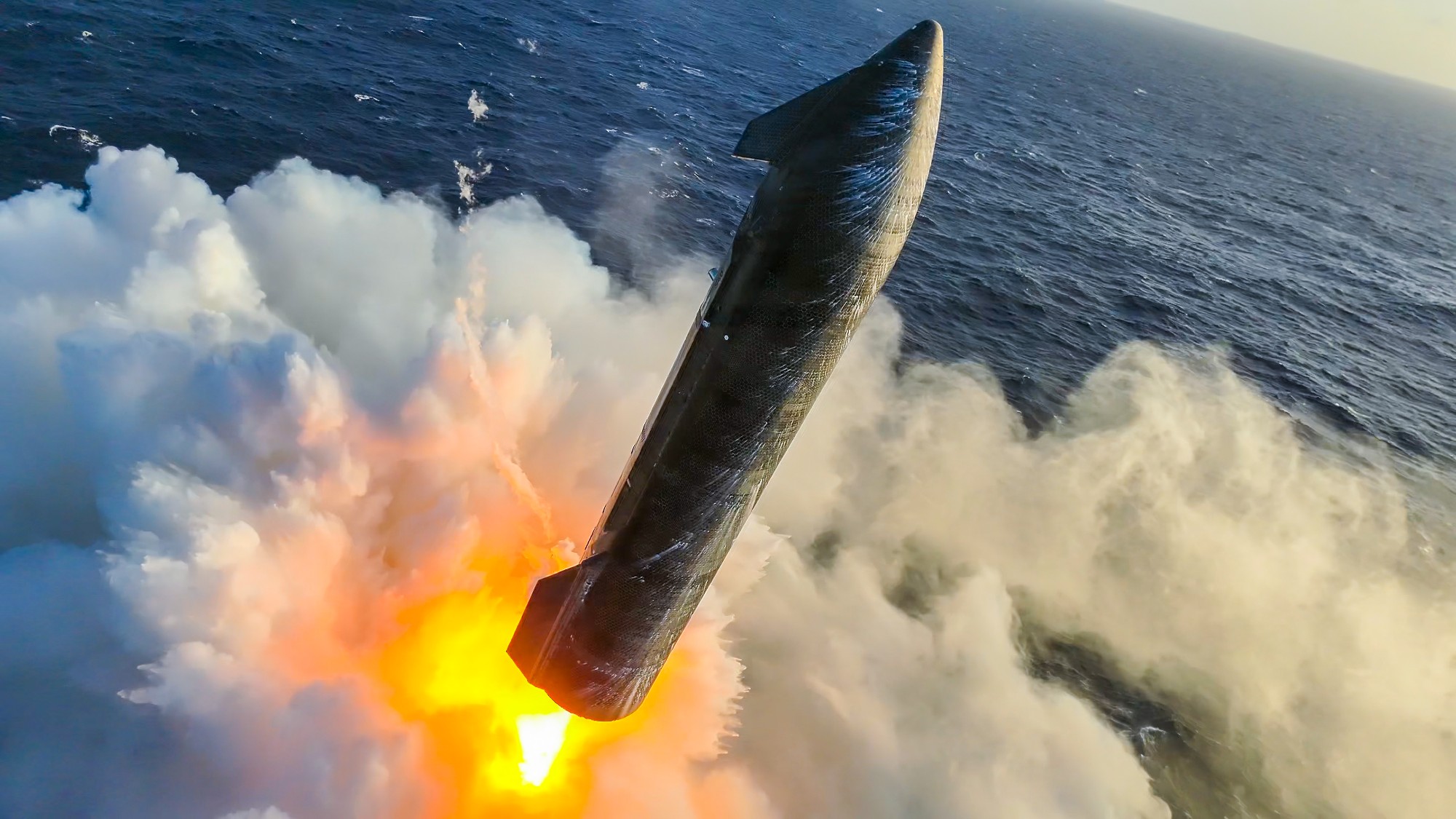
And "things look very good" is a reference to Starship Flight 13, which lifted off on July 24. Musk was talking specifically about Ship's performance on that suborbital jaunt, which ended with the upper stage's soft splashdown in the Indian Ocean, off the coast of Western Australia.

Ship's heat shield survived the harrowing downward trip through Earth's atmosphere in great shape on Flight 13, according to SpaceX (as did the entire vehicle, which is still in one piece to this day). And that gives SpaceX confidence to plan for a tower catch on Flight 14 — a crucial component of Starship's future reusability.

"I don't want to jinx it or anything, but I think I'd consider the heat shield problem solved at this point," Musk said.

Starship's two launch towers at its Starbase site in South Texas feature large "chopstick" arms, which stack Super Heavy and Ship atop the pad — and can also catch the vehicles when they come back to Earth at the end of their missions.

SpaceX has already executed a tower catch with Super Heavy on three Starship test flights, but it has not yet tried to do so with Ship. So Flight 14 could be momentous, provided SpaceX gets permission from regulators to make an attempt.

Flight 14 will also carry up a batch of SpaceX's V3 Starlink satellites, a larger and more capable version of the spacecraft that currently populate the company's broadband megaconstellation. Flight 13 toted 20 Starlink V3s, but Ship deployed them into suborbital space; the satellites will be placed into an operational orbit on the upcoming mission, if all goes to plan, Musk said.

SpaceX goes public

Musk founded SpaceX as a private company back in March 2002. It stayed that way until this past June 12, when SpaceX went public via the richest IPO in history, which raised $86 billion and valued the company at $1.77 trillion.

SpaceX now has to provide earnings reports every quarter, starting with Q2 of this year. And these first publicized numbers show considerable improvement compared to a year ago, according to the company.

The newly released report states that total revenue in the March-June time period was up 92% over the same stretch in 2025 — $7.8 billion versus $4.1 billion. And SpaceX had a net loss during this span of $541 million, down from a net loss of $1.0 billion in Q2 2025.

More than half of this quarter's revenue — about $4.3 billion — came via the company's Starlink satellite-internet megaconstellation. That number crystallizes a truth that has been apparent for a while now — SpaceX is not just a launch company anymore.

Rockets will bring in a smaller and smaller share of SpaceX revenue over the coming years, if all goes according to plan. Launch will continue ceding this financial ground to Starlink, but also, increasingly, to SpaceX's artificial intelligence (AI) operations.

Indeed, SpaceX sees itself becoming more and more of an AI outfit over time. A few months ago, the company revealed that, over the long haul, it's targeting a "total addressable market" of $28.5 trillion per year, nearly $23 trillion of which will be in the field of "enterprise AI applications." That's quite an ambitious goal; in 2025, the gross domestic product of the entire United States was a little less than $31 trillion.

Speaking of ambitious: SpaceX plans to make a lot of this money via an orbiting constellation of one million AI data centers, which together will comprise a constellation known as Starmind. (Yes, SpaceX has a thing for "Star" names.)

SpaceX expects to start launching operational Starmind spacecraft in 2027, Musk said during today's call. It will take a lot of Starship launches to get the network up and running, but he doesn't see that as a bottleneck.

"We expect the cadence of flights to be increasing rapidly, and, probably a year from now, we will be doing at least one flight a day, possibly more," Musk said.
SpaceX launches 3 giant BlueBird direct-to-cell satellites on Falcon 9 rocket (video)

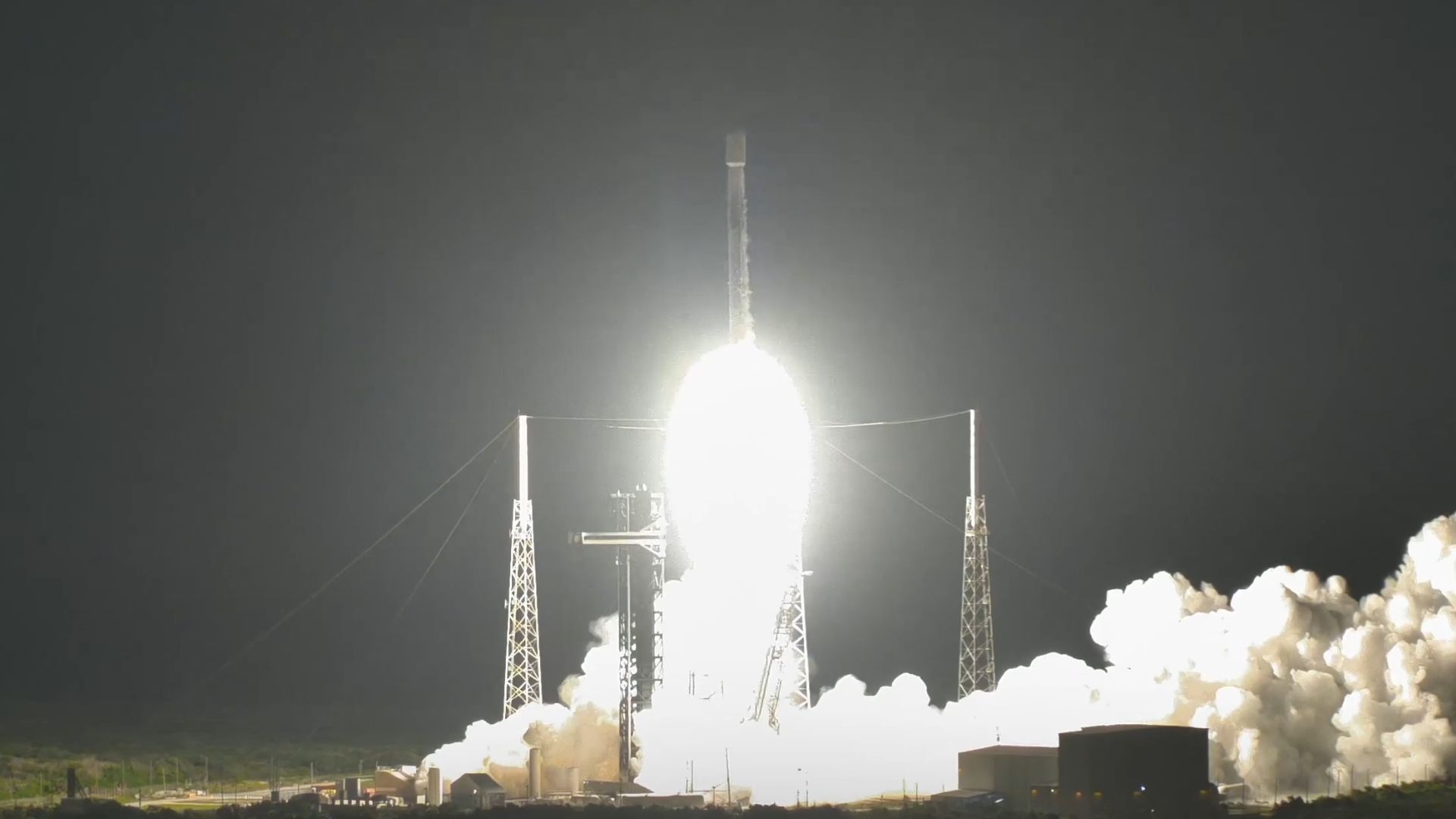
A SpaceX Falcon 9 rocket carrying three of AST SpaceMobile's massive direct-to-cell BlueBird satellites launched from Florida's Cape Canaveral Space Force Station at 3:50 a.m. EDT (0650 GMT) on Wednesday, minutes after the opening of its 96-minute window.

Today's launch further expands AST SpaceMobile's constellation in low Earth orbit (LEO), which will beam internet service directly to unmodified smartphones once operational.

The newcomers bring the total number of BlueBird spacecraft launched to 13 and marks a significant milestone toward getting the constellation fully up and running, according to AST SpaceMobile.

A SpaceX Falcon 9 rocket launches on Aug. 5, 2026 carrying a trio of BlueBird satellites to orbit. (Image credit: SpaceX)

"This orbital launch, combined with expanded manufacturing capacity and the recent successful launch and deployment of BlueBird satellites 8, 9, and 10, position us for beta services later this year with our space-based cellular broadband coverage," Scott Wisniewski, the company's president, said in a July 28 statement.

AST SpaceMobile began assembling its constellation with "Block 1" spacecraft, which have communications arrays that cover 693 square feet (64.4 square meters) when unfurled.

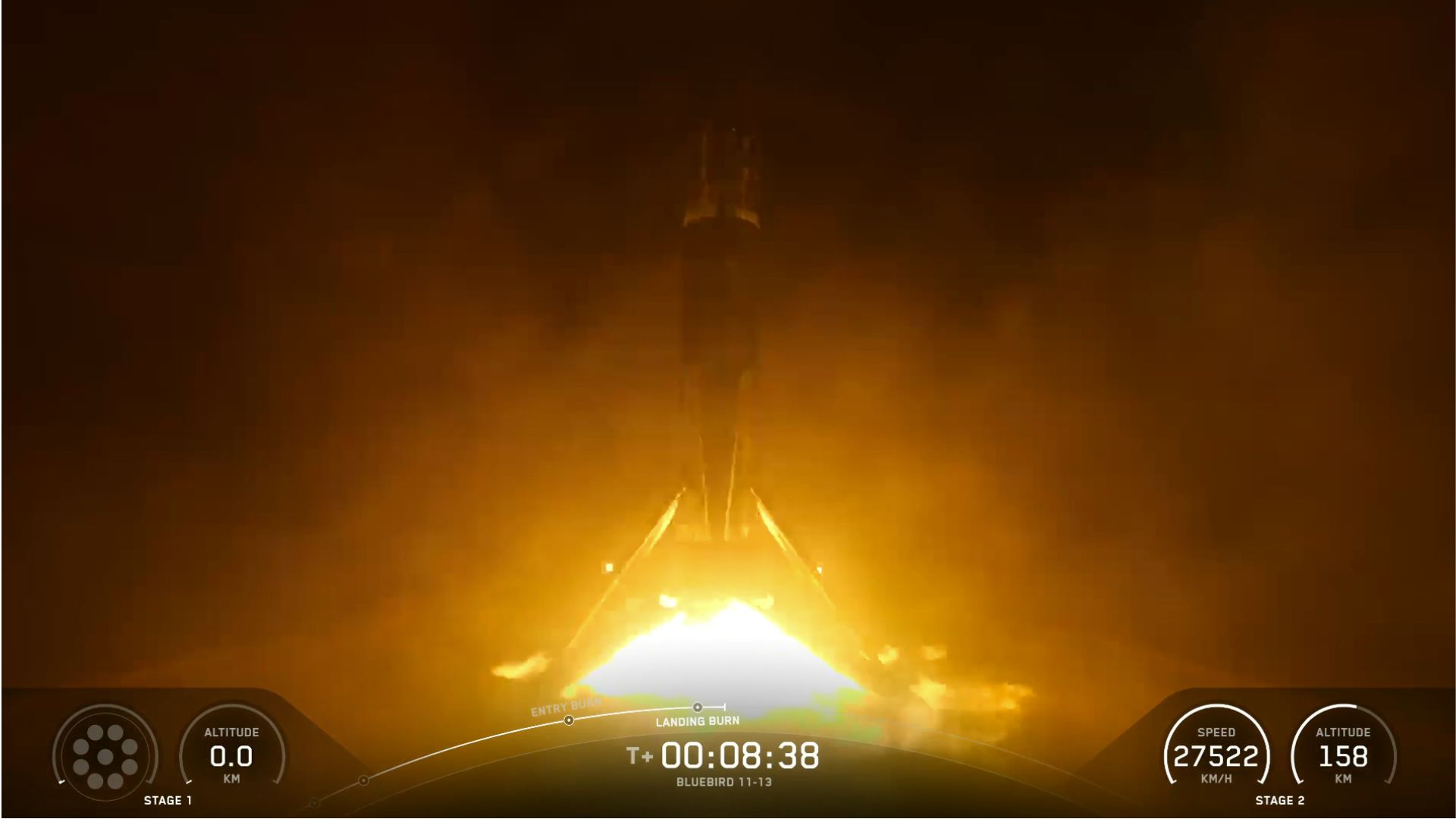
The Falcon 9 first stage went on to perform its 30th landing on the deck of the drone ship "A Shortfall of Gravitas." (Image credit: SpaceX)

That's pretty big, but the company upped the ante with BlueBird 6, which reached LEO atop an Indian LVM3 rocket in December 2025. That was the first "next-generation" BlueBird, a class whose antennas cover a whopping 2,400 square feet (223 square m).

Prior to today's launch, there had been four next-gen BlueBirds in LEO — numbers 6, 8, 9 and 10. (BlueBird 7 was lost shortly after liftoff this past April after its Blue Origin New Glenn rocket suffered an anomaly.) So, BlueBirds 11 through 13 nearly double the off-Earth population.

"These next-generation BlueBird satellites are expected to deliver nearly double the peak download speeds achieved by the company's initial Block 1 BlueBird satellites, which recently demonstrated peak download speeds of 98.9 Mbps directly to standard smartphones," AST SpaceMobile wrote in the same statement.

The Falcon 9's first stage returned to Earth roughly 8.5 minutes after launch today as planned, touching down in the Atlantic Ocean on the SpaceX drone ship "A Shortfall of Gravitas."

It was the 30th launch and landing for this particular booster, according to a SpaceX mission description. The rocket also flew the BlueBird 8-10 mission in June.

The Falcon 9's upper stage, meanwhile, went on to deploy the three BlueBird satellites into LEO over an 11-minute span beginning 53.5 minutes after liftoff.

Editor's note: This story was updated at 5 a.m. ET on Aug. 5 with news of successful launch, rocket landing and satellite deployment.

SpaceX launches Starlink satellites on 90th Falcon 9 flight of the year (video)

SpaceX has launched yet another batch of its Starlink internet satellites to the final frontier.

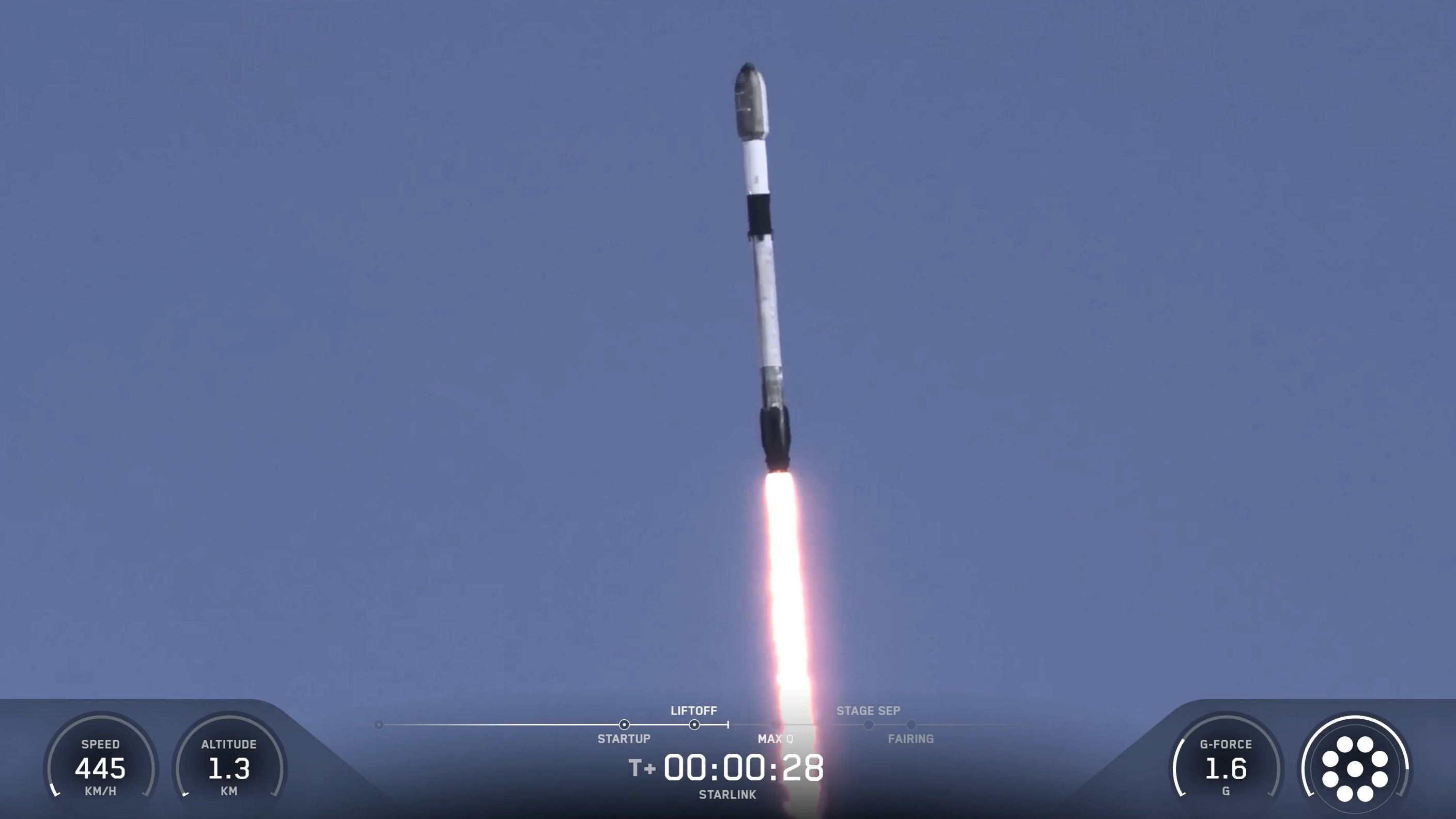
A Falcon 9 rocket lifted off from California's foggy Vandenberg Space Force Base today (Aug. 4) at 1:05 p.m. EDT (1705 GMT; 10:05 a.m. local time), carrying 24 of the broadband spacecraft toward low Earth orbit (LEO).

It was the 90th Falcon 9 liftoff of the year and the 70th of 2026 devoted to building out the Starlink megaconstellation.

A black-and-white rocket launches into a blue sky

A SpaceX Falcon 9 rocket launches 24 Starlink internet satellites from California's Vandenberg Space Force Base on Aug. 4, 2026. (Image credit: SpaceX)

The rocket's first stage came back to Earth as planned about 8.5 minutes after launch, touching down on the SpaceX droneship "Of Course I Still Love You," which was stationed in the Pacific Ocean. It was the 34th mission for this particular booster, which is designated B1063.

That's just two flights shy of the Falcon 9 reuse record, which was set last month on a different Starlink launch.

If all goes according to plan, the 24 Starlink satellites will be deployed into LEO about 61 minutes after liftoff. They'll join quite a few other spacecraft in the Starlink megaconstellation — nearly 10,900 at last count.

Previous Booster B1063 launches

There's some other SpaceX action on tap today as well. At 4:30 p.m. EDT (2030 GMT), the company will host a webcast to discuss its first-ever public earnings report, which covers the second quarter of 2026. You can listen live via SpaceX's X account.

SpaceX was a private company from its founding in 2002 until mid-June of this year, when Elon Musk took it public in the largest IPO in history.

A SpaceX rocket will crash into the moon this week. Why is it on a collision course?

This rocket wasn't supposed to die so dramatically.

On Wednesday (Aug. 5) at about 2:35 a.m. EDT (0635 GMT), the upper stage of a SpaceX Falcon 9 rocket will slam into the moon, blasting out a crater about 89 feet (27 meters) wide.

The rocket body has been loitering lazily high above Earth for more than 18 months. What jolted it out of its unremarkable senescence and put it on a kamikaze course for the moon?

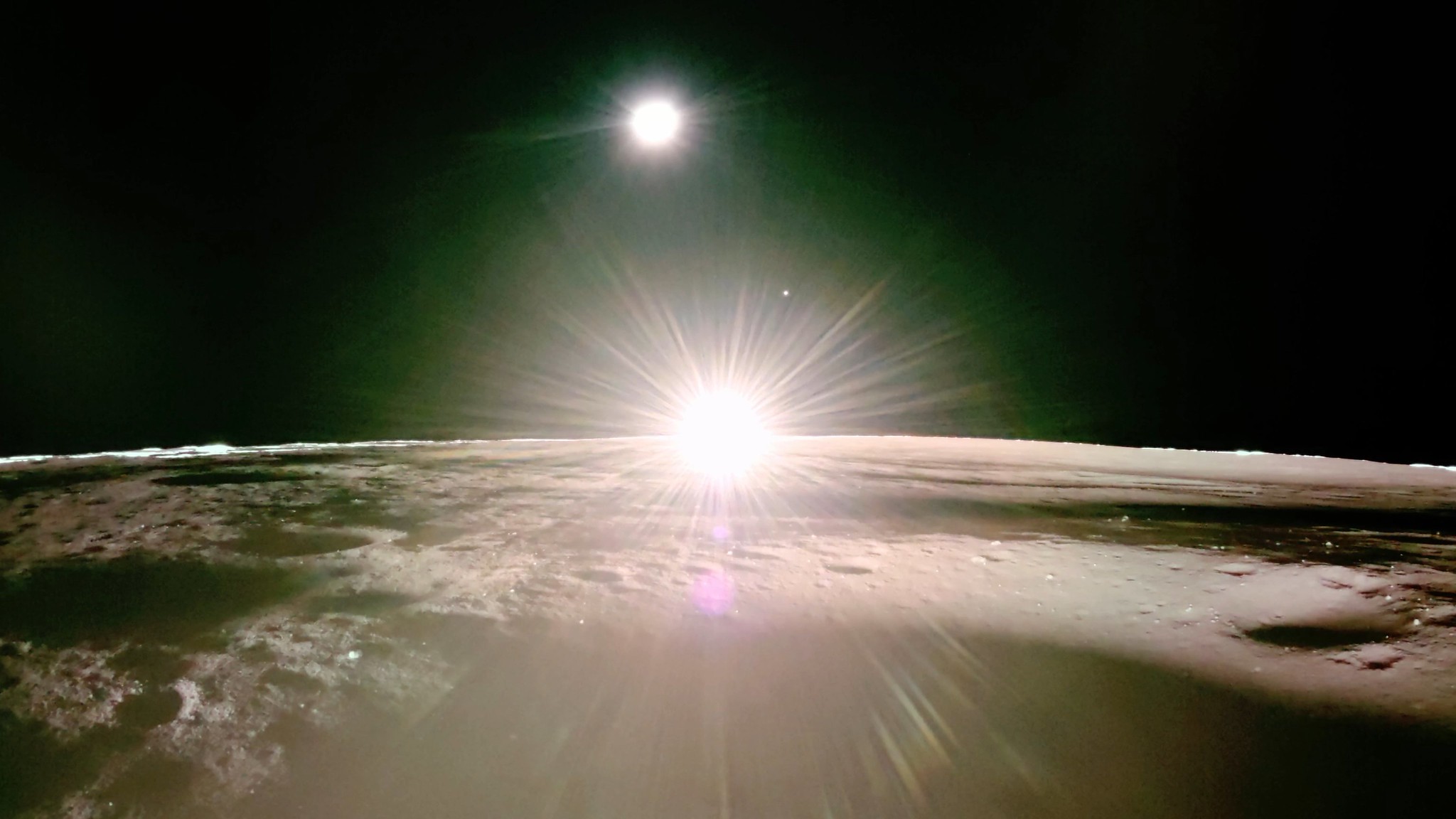
Firefly Aerospace's Blue Ghost moon lander captured this view of a lunar sunset, with Earth and Venus also visible, on March 16, 2025.

Firefly Aerospace's Blue Ghost moon lander captured this view of a lunar sunset, with Earth and Venus also visible, on March 16, 2025. (Image credit: Firefly Aerospace)

It didn't take much, as the rocket regularly crossed into the moon's neck of the woods.

The Falcon 9 launched in January 2025, carrying aloft two private robotic lunar landers — Firefly Aerospace's Blue Ghost and Resilience, which was built by the Tokyo-based company ispace. (Blue Ghost landed successfully and carried out its historic mission, but Resilience crashed during its touchdown attempt.)

Falcon 9 first stages are famously reusable, but the vehicle's upper stages fly just once. SpaceX usually deorbits these rocket bodies shortly after launch, guiding them back for controlled destruction in Earth's atmosphere. That wasn't possible on the Blue Ghost-Resilience launch, however, as getting the lunar probes to their distant deployment point used up almost all of the upper stage's fuel.

As a result, the 8,800-pound (4,000 kilograms) rocket body "was abandoned in a moon-crossing high-Earth orbit," according to a recent study about the coming impact led by Benjamin Fernando of Los Alamos National Laboratory in New Mexico.

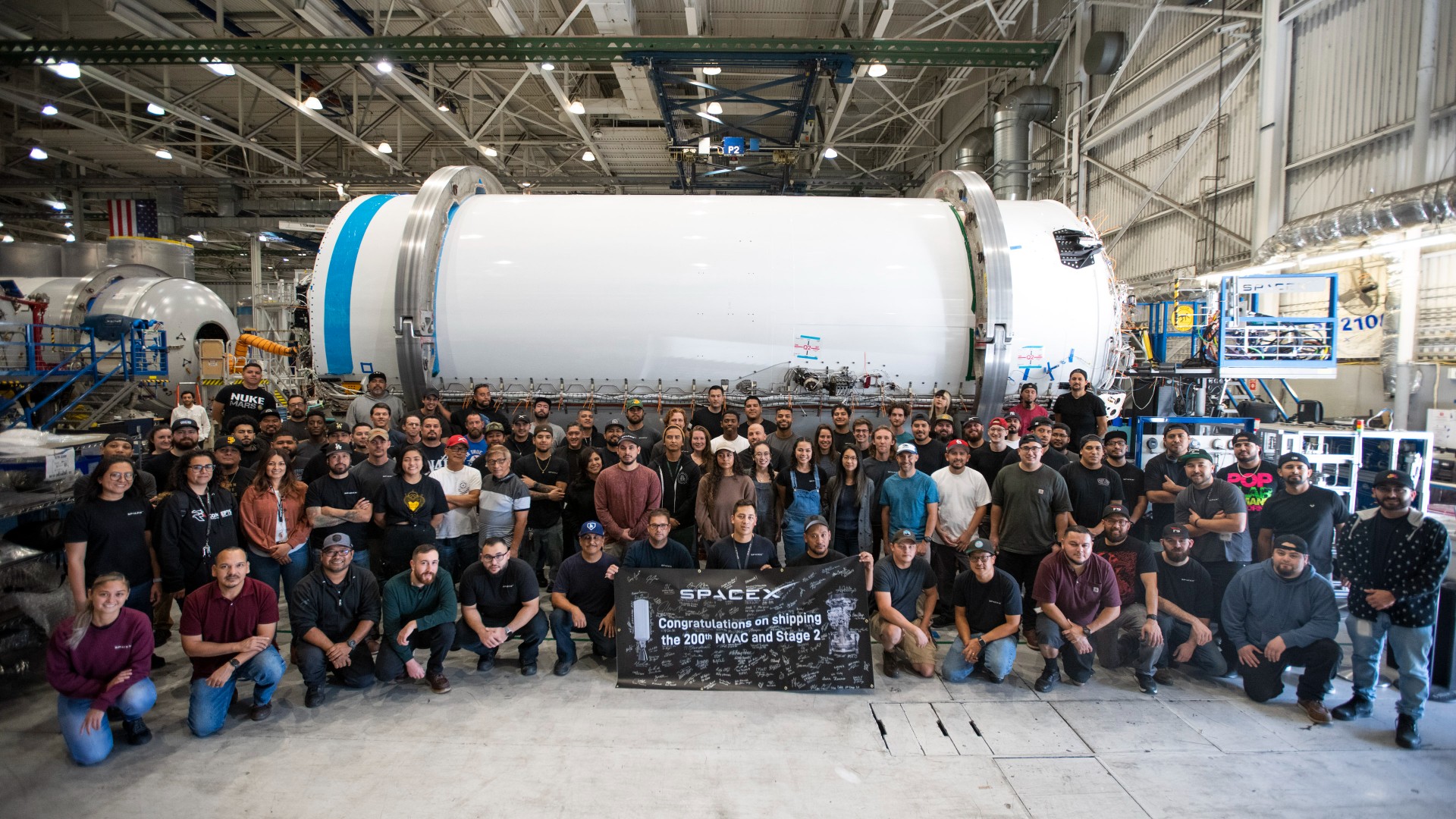
dozens of people smile for a portrait in front of a large white cylinder in a massive warehouse

A SpaceX photo of one of the company's Falcon 9 upper stages, taken in 2022. A similar second stage is expected to impact the moon on Aug. 5, 2026. (Image credit: SpaceX)

SpaceX performed "a different maneuver [than deorbiting] to ensure that the second stage itself is safe per the appropriate rules and regulations," Julianna Scheiman, director of NASA science and Dragon programs at SpaceX, said today (Aug. 3) during a press conference discussing the company's Crew-13 astronaut launch to the International Space Station, which is targeted for Sept. 12.

That maneuver did not lock the hunk of space junk into a stable location, however; natural forces still acted upon it and, it turns out, changed its trajectory.

"What has happened is, essentially, a mixture of solar activity and gravity forces have put it on a path towards the moon," Scheiman said.

Astronomers and lunar scientists are looking forward to the upcoming impact, even though it will occur on the sunlit side of the moon and therefore likely won't be visible to most observers here on Earth (though skywatchers with good telescopes might be able to catch a glimpse of the resulting ejecta plume).

The event "provides an opportunity to test pipelines for measuring flash properties to locate impact events seismically, and to better understand the multi-modal hazards posed to future lunar infrastructure and astronauts from space debris impacting the moon," Fernando and his colleagues wrote in their paper.

Those hazards won't be purely hypothetical for much longer, if all goes to plan: NASA aims to build a base near the moon's south pole over the coming decade via its Artemis program, and to keep that outpost staffed over the long haul. Scheiman said that SpaceX is looking into ways to minimize the chances that spent rocket bodies could rain down on an occupied moon in the future.

"It's one of the things that we're working in partnership with NASA and the other appropriate agencies," she said. "What is the best future disposal path for high-energy missions that are in the sun-Earth-moon system?"

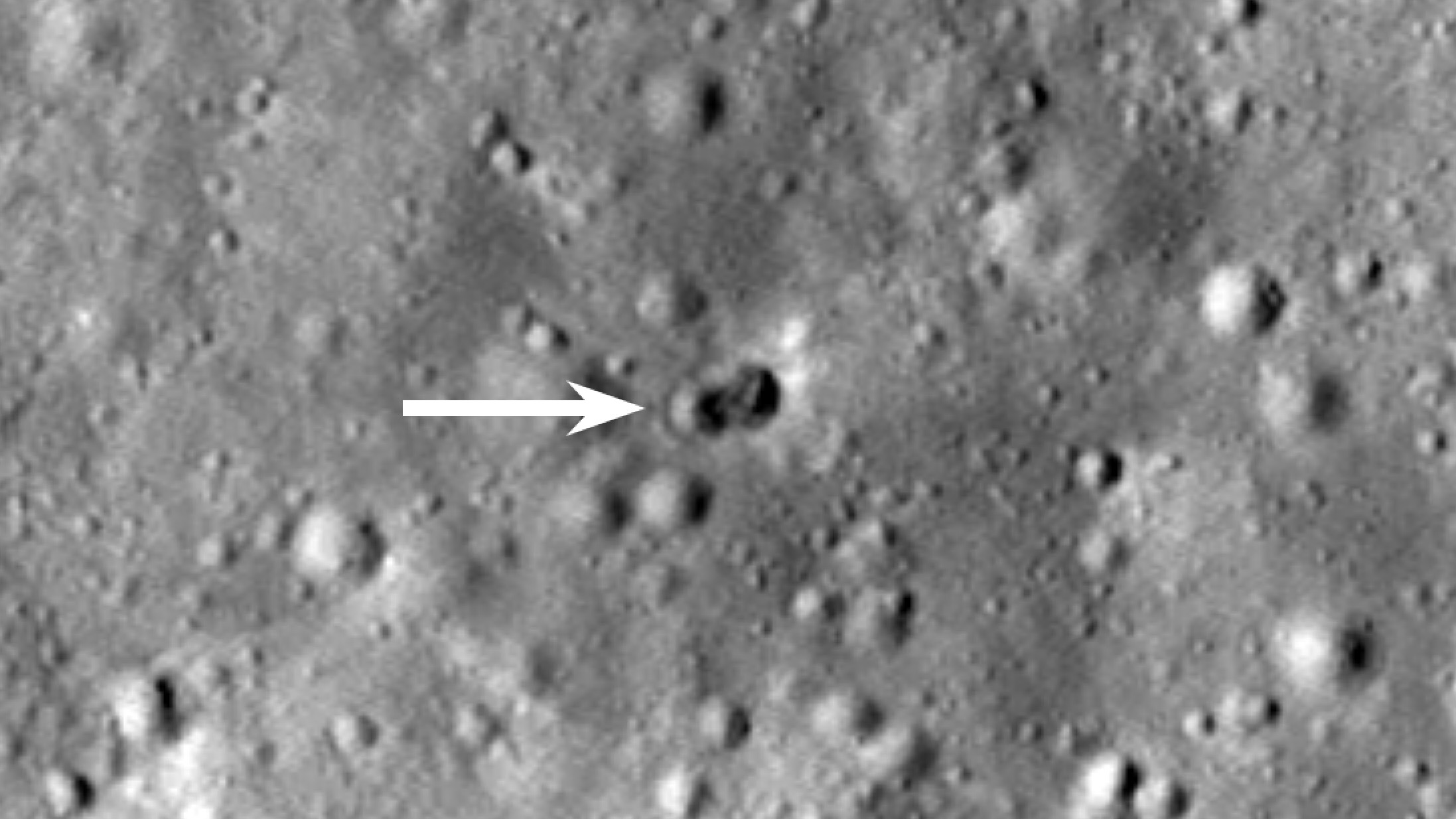
closeup of a double crater on the moon, with a large white arrow pointing at it

The double crater created on the moon by the March 2022 crash of the upper stage of China's Long March 3C rocket. (Image credit: NASA/Goddard/Arizona State University)

This Falcon 9 won't be blazing an entirely new trail to the moon. The third stage of NASA's Saturn V moon rocket struck the lunar surface on multiple Apollo missions, for example. And, on March 4, 2022, a mysterious rocket body slammed into the moon, blasting out a weird double crater.

That shape revealed the impactor's identity — the upper stage of the Long March 3C rocket that sent China's uncrewed Chang'e 5-T1 mission around the moon in October 2014.

Double digits! Air-launched ‘Talon A’ hypersonic vehicle notches big flight milestone

A cutting-edge hypersonic vehicle just hit a big flight milestone.

Stratolaunch's reusable, autonomous Talon-A craft now has more than 10 successful flights under its belt, the California-based company announced late last month.

"Reaching more than 10 successful hypersonic flights with Talon-A is a testament to our team's dedication and the robustness of our technology," Stratolaunch President and CEO Zachary Krevor said in a July 22 statement. "We are transforming hypersonic testing from a rare event into a routine service, empowering our customers to innovate at unprecedented speed."

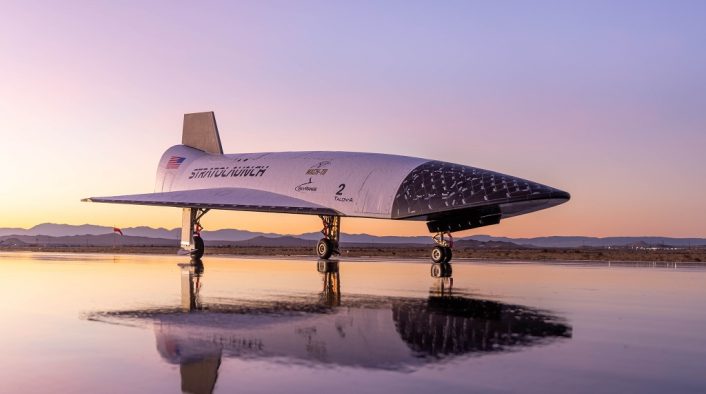
An experimental dart-shaped rocket-powered aircraft

Stratolaunch's Talon-A reusable hypersonic aircraft. (Image credit: Stratolaunch)

Stratolaunch has two Talon-A vehicles, each of which is about 28 feet (8.5 meters) long with a wingspan of 11.3 feet (3.4 m). The craft can travel through Earth's atmosphere at more than five times the speed of sound (Mach 5) — the definition of hypersonic flight.

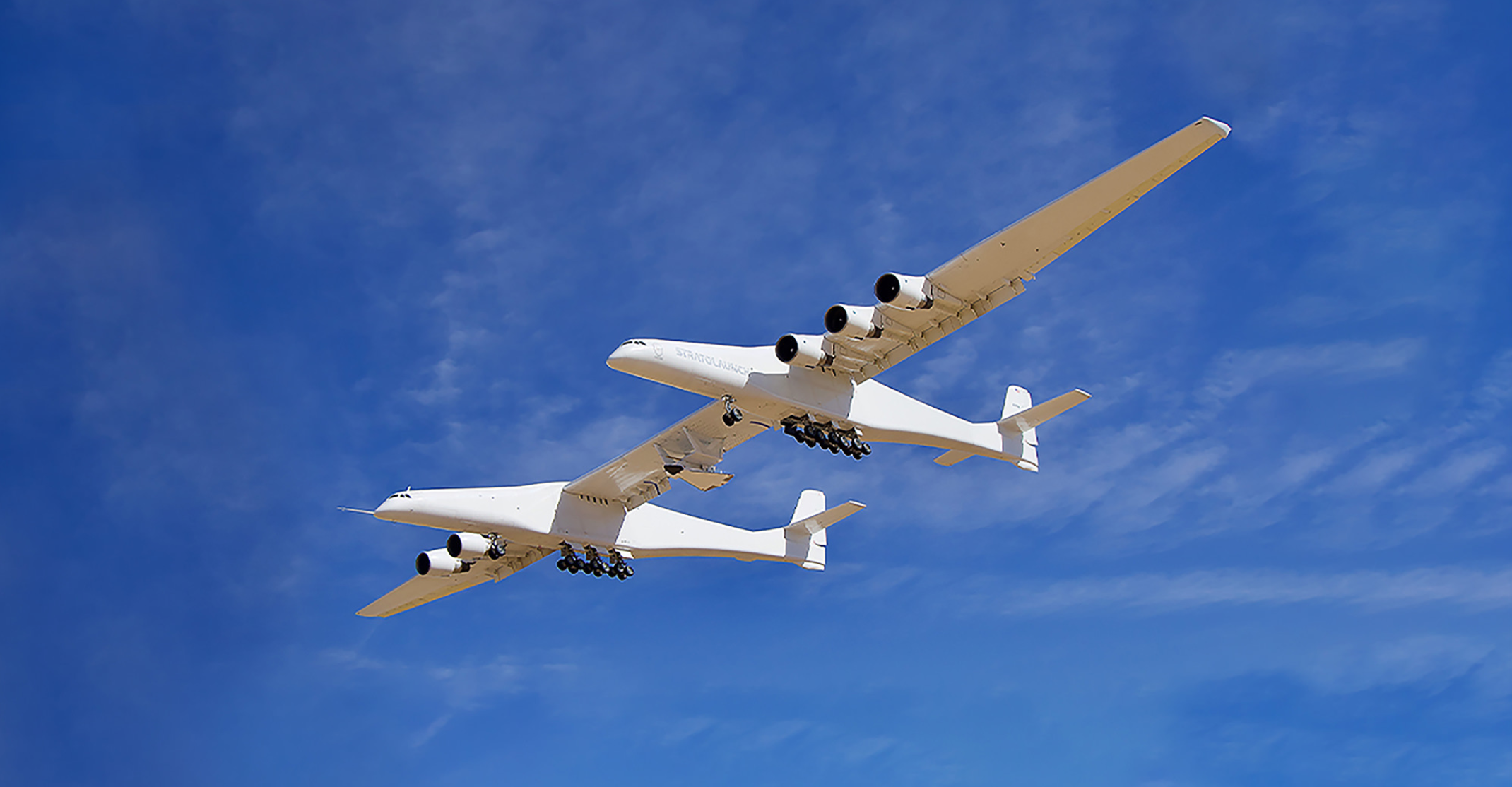
Talon-A missions start beneath the belly of a carrier plane, which hauls the robotic vehicle into the sky and drops it down. Stratolaunch has two such carriers — a modified Boeing 747 called Spirit of Mojave and Roc, a custom-built vehicle that measures a whopping 385 feet (117 m) from wingtip to wingtip, the biggest wingspan in aviation history.

Roc and Spirit of Mojave lift off from Mojave Air and Space Port in southeastern California and tend to drop Talon-A over the Pacific Ocean. After completing its hypersonic flight, the vehicle comes back for a runway landing in California, generally at Vandenberg Space Force Base, on the state's scenic central coast.

These jaunts test sensors and advanced new materials in the hypersonic flight environment, among other tasks. Details about Talon-A's payloads tend to be sparse, likely because many Stratolaunch customers — the U.S. Missile Defense Agency, for example — are tight-lipped by nature.

Indeed, military agencies around the world are increasingly interested in hypersonic tech. Superfast, maneuverable vehicles like Talon-A are tougher to track and intercept than ballistic missiles, which follow predictable trajectories despite moving fast. (To be clear: Talon-A itself is not a weapon or weapon-delivery system; it's a technology testbed.)

a white dual-fuselage aircraft with an experimental rocket plane under its wing

Stratolaunch's giant carrier plane, Roc, with a Talon prototype aircraft tucked under its wing. (Image credit: Stratolaunch)

Stratolaunch isn't the only company that gives customer payloads hypersonic rides. Rocket Lab provides this service with HASTE, a suborbital version of its workhorse Electron rocket.

HASTE debuted in June 2023 and now has nine flights under its belt. But the vehicle's cadence will likely increase soon; in March, Rocket Lab signed a $190 million contract to conduct 20 HASTE missions for the U.S. military.

SpaceX launches 24 Starlink satellites to orbit from California (video, photos)

SpaceX has sent yet another batch of its Starlink internet satellites into orbit.

A Falcon 9 rocket carrying 24 of the broadband spacecraft lifted off from California's Vandenberg Space Force Base on Friday (July 31) at 11:08 p.m. EDT (8:08 p.m. local time; 0308 GMT on Aug. 1).

The rocket's first stage came back to Earth as planned 8.5 minutes later, touching down in the Pacific Ocean atop the SpaceX droneship "Of Course I Still Love You." It was the 26th mission for this particular booster, which is designated B1081.

Previous Booster B1081 launches

The 24 Starlink satellites were deployed into low Earth orbit (LEO) 61.5 minutes after liftoff as planned, SpaceX confirmed via X.

They're joining more than 10,800 other spacecraft in the Starlink megaconstellation, by far the largest satellite network ever assembled.

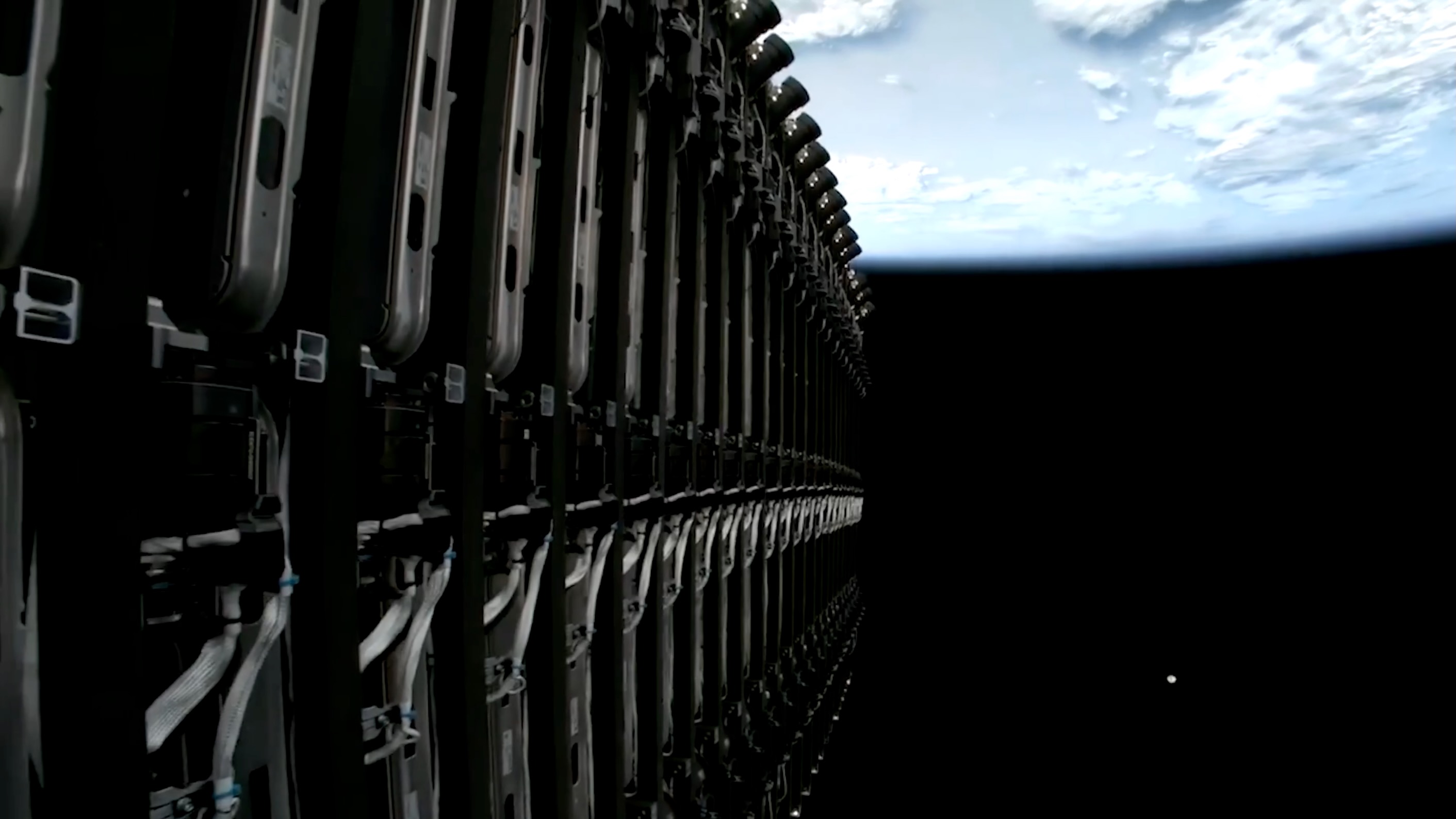
a stack of folded-up satellites is seen high above earth, still attached to their rocket

A batch of SpaceX's Starlink satellites is seen high above Earth before deployment from their Falcon 9 rocket on July 31, 2026. (Image credit: SpaceX)

SpaceX has now launched 89 Falcon 9 missions in 2026, 69 of which have been dedicated Starlink flights.

The company also has three other liftoffs under its belt this year — one launch of its powerful Falcon Heavy vehicle and two test flights of Starship, the fully reusable megarocket SpaceX is developing to help humanity settle the moon and Mars, among other tasks.

SpaceX’s Starship seen in space by next-gen Starlink satellite (video)

We just got an amazing new view of SpaceX's Starship vehicle, thanks to one of the company's next-gen Starlink satellites.

Starship, the biggest and most powerful rocket ever built, launched on its 13th test flight from South Texas last Friday (July 24). The suborbital jaunt was similar in many respects to past Starship test missions, with one big exception: This time, the vehicle deployed a batch of functional, next-gen Starlink internet satellites into space.

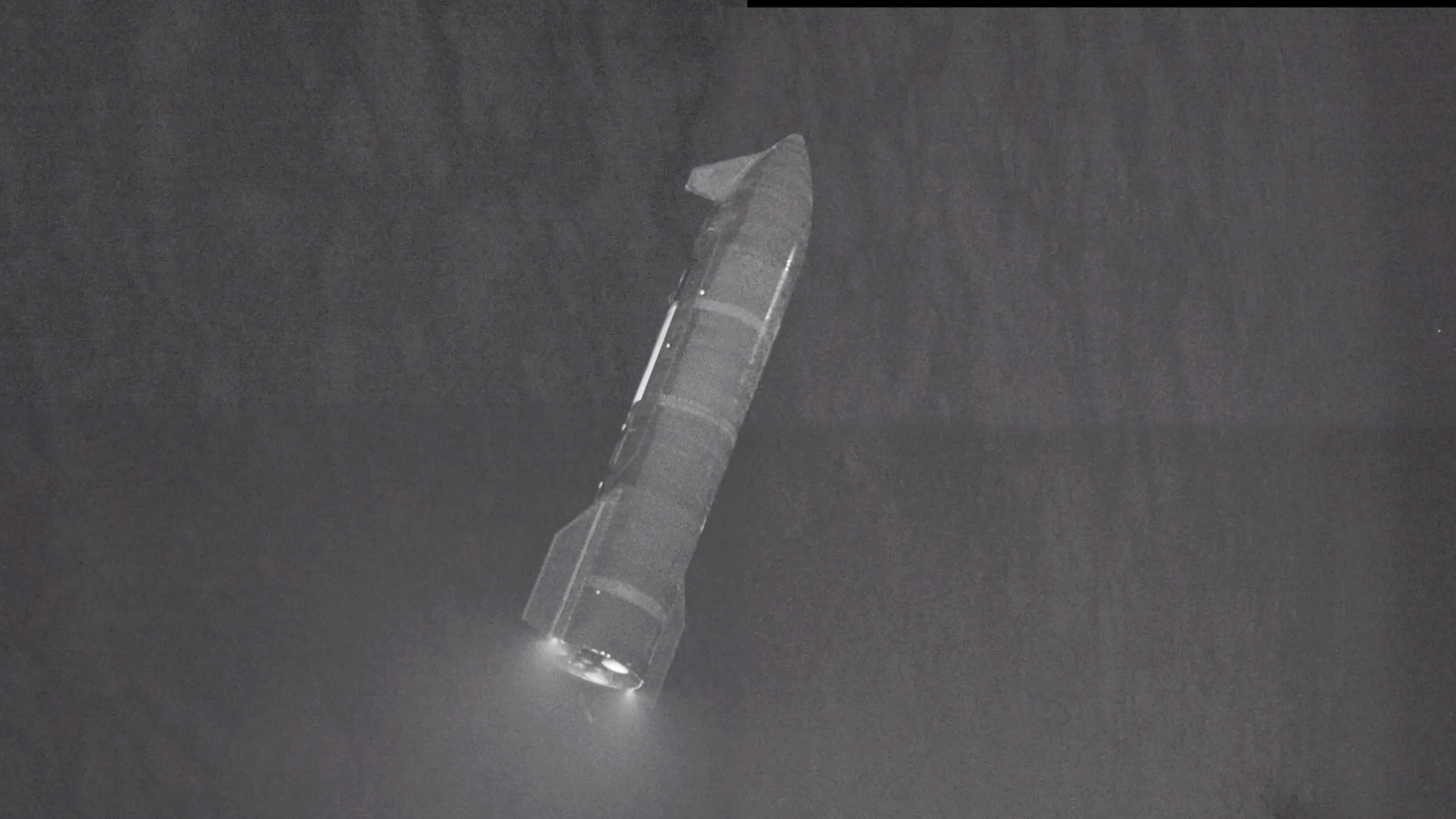
Six of those "Starlink V3" spacecraft carried cameras, so that SpaceX could get good views of the heat shield on Starship's upper stage, which is known as Starship, or simply Ship. The satellites did that job and more, capturing amazing views of Ship as it cruised away from them high above Earth.

The upper stage of SpaceX's Starship megarocket, seen here on July 24 during the vehicle's 13th test flight by one of the company's Starlink V3 satellites.

The upper stage of SpaceX's Starship megarocket, seen here on July 24 during the vehicle's 13th test flight by one of the company's Starlink V3 satellites. (Image credit: SpaceX)

SpaceX shared one such view on X Friday evening (July 31) — a 65-second video that stitches together imagery taken by four different cameras on a single Starlink V3 satellite.

The video starts with an up-close view of the shiny, 171-foot-tall (52 meters) Ship. We see more of the vehicle as the footage rolls and the two spacecraft get farther and farther apart. Toward the end, we see Ship in its entirety, and we get a sense of its activity; three of its six Raptor engines are firing, and small puffs of white vapor indicate that the vehicle is engaging its fine-tuning reaction control thrusters.

Like all Starship test missions to date, Flight 13 targeted a suborbital trajectory. So the 20 Starlink V3 satellites, the first ever to reach space, did not stay up for long; they came back down to Earth about 20 minutes after deploying into the final frontier.

Their successors will get higher — and there will be many of them. According to a filing with the U.S. Federal Communications Commission, SpaceX wants to operate a megaconstellation of 100,000 Starlink V3 satellites.

Starship will be key to building and maintaining this constellation, which will require many launches of the brawny, fully reusable rocket. (SpaceX currently operates a constellation of nearly 11,000 Starlink satellites, but those V2 craft are considerably smaller than the 4,400-pound V3 iteration.)

a black rocket with wing-like canards fires its engines just above the ocean, creating a spray of water vapor

SpaceX's Starship upper stage splashes down in the Indian Ocean to wrap up its 13th test flight on July 24, 2026. (Image credit: SpaceX)

Ship seems to have checked all of its boxes on Flight 13. After deploying the satellites and successfully reigniting one of its Raptors in space, it splashed down on target in the Indian Ocean off the coast of Western Australia about 65 minutes after liftoff.

The vehicle survived its harrowing return trip through Earth's atmosphere in one piece and remains intact today, as far as we know; SpaceX recently shared a photo of the vehicle bobbing in the Indian Ocean five days after splashdown.

But Starship's giant first-stage booster, known as Super Heavy, had a few issues on Flight 13. Its landing burn employed only five of a planned 13 Raptor engines, for example, and the booster hit the waters of the Gulf of Mexico at a higher velocity than intended. (Super Heavy has a total of 33 Raptors, all of which fire at liftoff.)

Starship remains in the development phase, but SpaceX wants to get the megarocket operational soon. It's slated to fly on NASA's Artemis III astronaut mission to low Earth orbit in mid-2027 and to land a crew near the moon's south pole on Artemis IV in late 2028.

SpaceX launches secret US spy satellite from Florida (video)

SpaceX launched a secret reconnaissance mission for the U.S. government early on Thursday morning (July 30).

A Falcon 9 rocket lifted off from Florida's Cape Canaveral Space Force Station on Thursday, kicking off the mission for the U.S. National Reconnaissance Office (NRO) called NROL-95.

The launch occurred at 3:10 a.m. EDT (0710 GMT).

The bright orange-white plume from a rocket lights up its launch pad as it lifts off into the darkness of an early morning sky.

A SpaceX Falcon 9 rocket launches the NROL-95 mission for the National Reconnaissance Office from Cape Canaveral Space Force Station in Florida on July 30, 2026. (Image credit: SpaceX)

We know very little about NROL-95; the NRO, which operates the country's fleet of spy satellites, has provided no details about the payload or its activities.

The agency has revealed the NROL-95 mission patch. It depicts a snarling ferret with a nighttime sky in the background and the words "We are the Champions" on the emblem's lower border.

"The ferret, a clever creature, embodies agility and resilience — key traits for exploration. Its confident grin and bright eyes reflect a spirit of victory in a realm where determination meets adventure," NRO officials said in an NROL-95 mission description.

"The bold phrase 'We are the Champions' encapsulates the camaraderie and pride shared among those on this purposeful mission," they added.

circular space mission patch showing a snarling ferret with the words

The patch for the U.S. National Reconnaissance Office's NROL-95 mission. (Image credit: NRO)

NROL-95 was the fourth NRO launch of 2026. The other three — NROL-105 in January, NROL-172 in May and NROL-179 in June — also flew aboard Falcon 9s, but from Vandenberg Space Force Base in California.

Those three other missions were devoted to building out the NRO's "proliferated architecture" constellation, which will consist of hundreds of relatively small, cost-efficient reconnaissance satellites in Earth orbit.

On Thursday, the Falcon 9's first stage came back to Earth for a landing at Cape Canaveral about 8.5 minutes after liftoff. It was the seventh mission for this particular booster, according to a SpaceX mission description.

SpaceX cut off its livestream shortly thereafter, at the request of the agency.

Starship in space! See highlights of SpaceX megarocket’s epic Flight 13 test launch (video)

The 13th test flight of SpaceX's Starship megarocket went pretty well — and provided some amazing visuals, too.

Flight 13 launched on Friday (July 24), sending the 408-foot-tall (124 meters) Starship Version 3 (V3) vehicle aloft from SpaceX's Starbase site in South Texas.

Starship's Super Heavy booster had some engine issues on its way back to Earth. But the Ship upper stage hit all of its marks, successfully deploying 20 next-gen Starlink satellites, re-igniting one of its Raptor engines in space as planned and splashing down softly off the coast of Western Australia. So softly, in fact, that Ship didn't explode after hitting the water — a first for a Starship flight.

a dark, conical spaceship is seen high above Earth from another spacecraft in space

The two stages of SpaceX's Starship megarocket separate during the vehicle's 13th test flight, on July 24, 2026. (Image credit: SpaceX)

SpaceX shared these milestones with us in real time, via the company's Flight 13 launch webcast. And the company highlighted a few of them after the fact as well, with some stunning imagery published on its X account.

One Friday post, for example, shows footage from Super Heavy of Ship cruising away shortly after stage separation, its six Raptors glowing with exertion against the backdrop of a gorgeously blue Earth.

Another Friday X post provides a Ship's-eye view of the vehicle's descent toward the Indian Ocean, steering its way from sky to sea. The video switches over to drone footage just before Ship hits the water, capturing from above the dramatic splashdown — and Ship's survival, despite the outbreak of a sizeable fire around its nose.

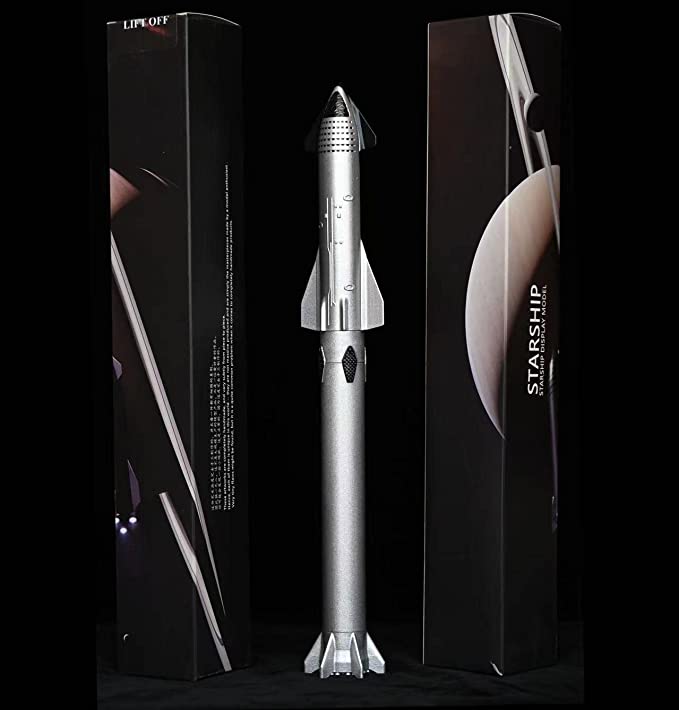
Starship Die Cast Rocket Model Was $47.99 Now $39.99 on Amazon.

Even if you can't see SpaceX's Starship in person, you can score a model of your own. Standing at 13.77 inches (35 cm), this is a 1:375 ratio of SpaceX's Starship as a desktop model. The materials here are alloy steel and it weighs just 225g.View Deal

Both Ship and Super Heavy are designed to be fully and rapidly reusable. Eventually, both vehicles will return to the launch site shortly after liftoff, for capture with their launch tower's "chopstick" arms, refurbishment and reflight.

SpaceX has already caught Super Heavy on three Starship test flights and will try to do the same with Ship for the first time on Flight 14, provided no red flags emerge during Flight 13 data review, according to SpaceX founder and CEO Elon Musk.

Starship conducted its first test flight in April 2023. Flight 13 was the second launch Version 3 of the vehicle, the first iteration of the vehicle that's designed to be operational.

SpaceX is working hard to get the giant rocket up and running soon. Starship is slated to fly on NASA's Artemis III astronaut mission to Earth orbit next summer and to land astronauts near the moon's south pole on Artemis IV in late 2028.

Rocket Lab to start launching missile-defense missions from Alaska under $266 million Space Force deal

Rocket Lab is expanding its launch operations to the snowy north.

The California-based company, which already flies from New Zealand and Virginia, just inked a $266 million deal with the U.S. Space Force to fly up to 18 missile-defense missions, most of them from Alaska.

"The size and scale of this contract reflects the Space Force's confidence in our ability to meet their urgent national security demands with speed, responsiveness and scale, and we're proud to provide the high-frequency launch capacity required to keep the U.S. ahead of global threats," Rocket Lab founder and CEO Peter Beck said in a statement today (July 27).

The contract covers 12 suborbital launches, with the possibility of up to six more. These missions "will primarily take place" from the Pacific Spaceport Complex, a picturesque site on Alaska's Kodiak Island, which is most famous for its thriving population of brown bears.

The spaceport has hosted nearly three dozen missions since opening in 1998, most of them suborbital flights for the U.S. military. Recently, however, it has supported launches of private orbital rockets — specifically, those built by Astra and ABL Space Systems (now known as Long Wall).

The newly announced Rocket Lab missions will almost certainly be performed by HASTE, a suborbital variant of the company's workhorse Electron small-satellite launcher that customers use to test hypersonic technologies in the flight environment.

They may also be part of the United States' sprawling Golden Dome missile-defense initiative, though we don't know that for sure; today's release provides few details about the launches.

a black and white rocket lifts off above a cone of fire and smoke next two a black water tower

A Rocket Lab HASTE suborbital rocket launches on the "Prometheus Run" mission for the U.S. military on Nov. 18, 2025. (Image credit: Rocket Lab)

Rocket Lab's primary launch site is on Māhia Peninsula, on the North Island of Peter Beck's native New Zealand. The company also flies from two pads on Wallops Island, Virginia, one of which has been the jumping-off point for all HASTE suborbital launches to date.

HASTE debuted in June 2023 and now has nine missions under its belt. Electron lifted off for the first time in May 2017 and has flown 82 times to date.