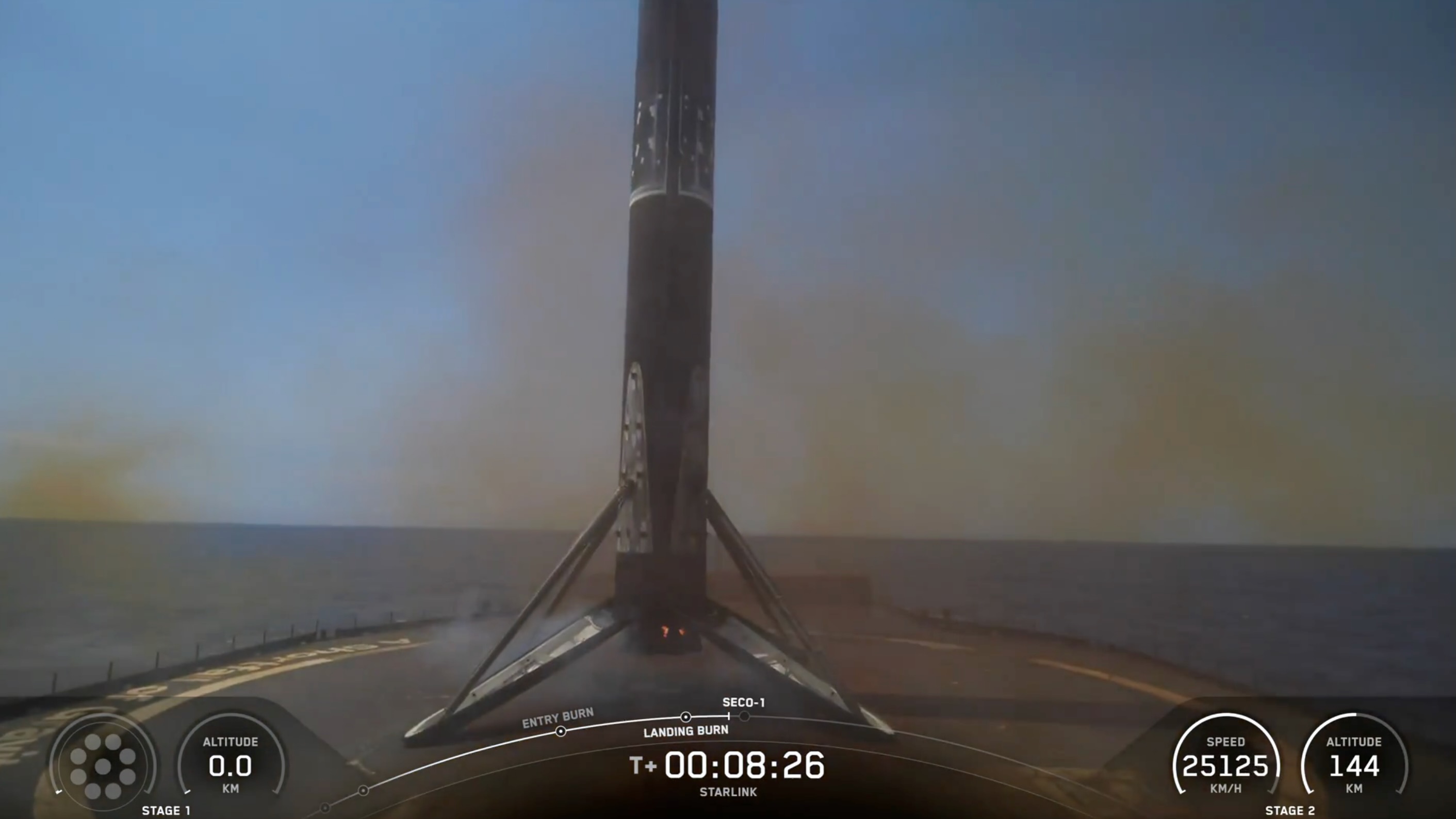
About 8.5 minutes later, the rocket's first stage made a pinpoint landing in the Atlantic Ocean atop the SpaceX droneship "A Shortfall of Gravitas." It was the 18th flight for this particular booster, which is designated B1085.
The Falcon 9's first stage is seen just after its drone-ship landing on Aug. 11, 2026. (Image credit: SpaceX)
Though more than half its liftoffs have been Starlink flights, B1085 also has some astronaut missions under its belt. The booster lofted SpaceX's Crew-9 flight to the International Space Station in September 2024, and it launched the Fram2 mission around Earth's poles six months later.
The Falcon 9's upper stage, meanwhile, continued hauling the 29 Starlink satellites to LEO today. They'll be deployed there 64 minutes after liftoff, if all goes to plan.
Today's liftoff was the 93rd Falcon 9 launch of the year already. Seventy-two of those missions have been devoted to building out Starlink, the largest satellite constellation ever assembled.
Starlink currently consists of more than 10,900 active satellites, according to astrophysicist Jonathan McDowell. But SpaceX has even bigger megaconstellations in mind: Eventually, the company wants to operate 100,000 of its bigger, more capable Starlink V3 satellites, and Elon Musk has stated an ambition to launch a million AI data center satellites to Earth orbit as well.
Rocket Lab plans to start launching even more frequently and flexibly, thanks to a new portable spaceport system called "GHOST."
GHOST — short for "Global Hypersonic & Orbital Spaceport Technology" — turns the company's "Electron and HASTE rockets into a launch-anywhere, launch-anytime capability for multi-launch flight campaigns and critical national security missions," Rocket Lab representatives said in a statement today (Aug. 10).
"Packaged entirely within standard shipping containers, GHOST deploys complete rockets, launch infrastructure, ground support and range control systems anywhere in the world," they added.
Electron is Rocket Lab's workhorse orbital rocket, giving small satellites dedicated rides to the final frontier. The expendable 59-foot-tall (18-meter-tall) launcher debuted with a test flight in 2017 and has 83 missions under its belt to date.
As its full name suggests, HASTE ("Hypersonic Accelerator Suborbital Test Electron") is a suborbital version of Electron that customers use to test various technologies in the hypersonic flight environment. HASTE first flew in June 2023 and has flown nine times to date, most recently in June of this year.
Rocket Lab currently flies from two different launch sites — one on the North Island of company founder and CEO Peter Beck's native New Zealand and one at Wallops Island in Virginia. But the company recently announced plans to fly out of Alaska's Pacific Spaceport Complex as well, and GHOST will expand its launch footprint even further.
"Electron and HASTE revolutionized small orbital launch and hypersonic testing. Now we're making it easier to deploy them wherever they're needed most, whether that's for missile defense testing or sovereign orbital launch capability," Beck said this afternoon during Rocket Lab's second-quarter 2026 earnings call.
"We've mastered the art of building launch sites," he added. "Now we're making them deployable worldwide."
Rocket Lab intends to deploy its two planned pads at the Pacific Spaceport Complex using GHOST, Beck said during the call. The company was inspired to develop the portable spaceport system, he added, to meet the needs of a HASTE customer, who expressed a desire for Rocket Lab to be "a little bit more mobile than we are."
Rocket Lab currently flies out of two pads at its New Zealand site and one at Wallops, though it has built a second pad at the Virginia facility to accommodate launches of its coming Neutron rocket.
Neutron will be bigger and more powerful than Electron, and partially reusable as well; its first stage is designed to come back to Earth for recovery and reflight, like SpaceX's Falcon 9.
Rocket Lab originally wanted to fly Neutron for the first time in 2024, but the new launcher has yet to leave the ground. Such delays aren't uncommon in the case of new rockets, and the company is making considerable progress with Neutron, according to Beck.
"Every part of the vehicle has now seen significant testing," he said during today's call. "As with any complex development program, we've had to tweak a few things along the way, but we're moving now into final checkout and assembly of all of our flight hardware before integrating them at the pad."
The company is on target to deliver the first Neutron to that Wallops pad in the fourth quarter of this year, Beck added.
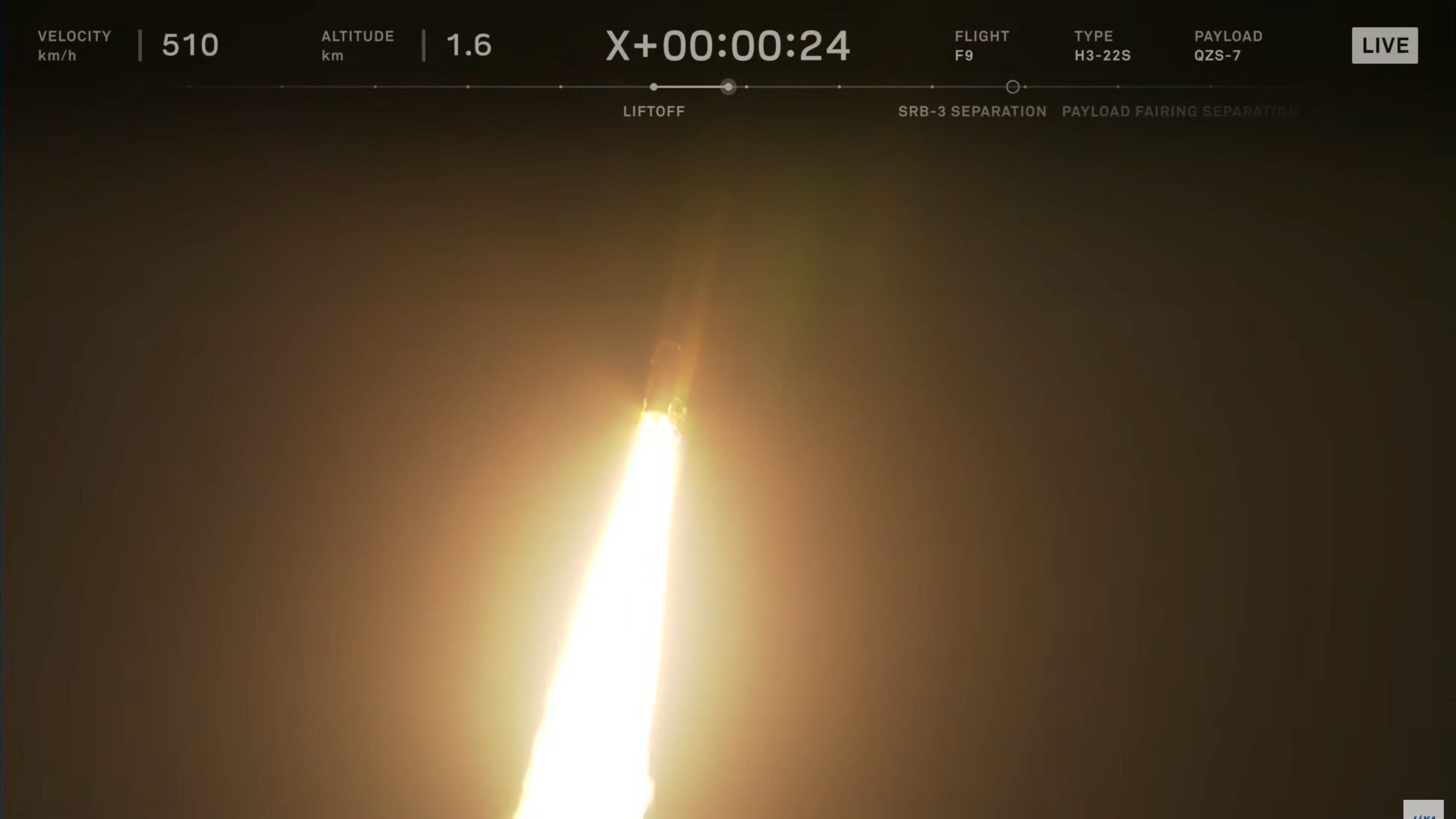
Japan's H3 rocket flew for the ninth time ever this afternoon (Aug. 10).
The H3 lifted off from Tanegashima Space Center today at 3:23 p.m. EDT (1923 GMT; 4:23 a.m. on Aug. 11 local time), carrying the Michibiki 7 navigation satellite aloft.
The H3's upper stage deployed Michibiki 7 into its target orbit 29 minutes later, eliciting cheers from the folks in mission control.
A closeup of the H3's first stage powering the rocket to orbit on Aug. 10, 2026. (Image credit: JAXA)
The two-stage H3 is the successor to Japan's workhorse H-2A rocket, which retired last year after a total of 50 flights.
The H3 — which stands 187 feet or 207 feet (57 or 63 meters) tall, depending on what type of payload fairing it employs — debuted in March 2023 and had eight liftoffs under its belt before today.
Two of those eight were failures — the debut flight and the launch of Michibiki 5 in December of last year. But the H3 bounced back from that latter anomaly two months ago, successfully delivering six satellites to orbit on June 11.
Michibiki 7 will be part of Japan's Quasi-Zenith Satellite System (QZSS), a homegrown navigation system that operates high above Earth in geosynchronous orbit.
"This system is compatible with GPS satellites and can be utilized with them in an integrated fashion," Japanese officials wrote in a description of the QZSS project. "QZSS can be used even in the Asia-Oceania regions with longitudes close to Japan, so its usage will be expanded to other countries in these regions as well."
The QZSS network will eventually consist of 11 satellites, if all goes according to plan. There are five such spacecraft operating in orbit at the moment.
Michibiki 7 is carrying a payload for the United States as well — the Situational Awareness Camera Hosted Instrument (SÃCHI), which was developed for the U.S. Space Force by the MIT Lincoln Laboratory. This is the second of two SACHIs to go up on a QZSS satellite; Michibiki 6, which launched atop an H3 in February 2025, hosts the other one. (Yes, Michibiki 6 launched before Michibiki 5.)
"This program will allow the United States to monitor satellite behavior within the GEO belt over a very interesting part of the world," Mark Huber, a technical staff member in the Lincoln Laboratory's Space Systems and Technology Division, said in a statement in December 2020.
"It is also a pathfinder in several ways," he added. "The U.S. team is blueprinting methods to allow sensitive data sharing between the United States and Japan."
Editor's note: This story was updated at 3:55 p.m. ET on Aug. 10 with news of successful launch and satellite deployment.
The rocket's first stage returned to Earth as planned about 8.5 minutes later, landing in the Pacific Ocean atop the SpaceX droneship "Of Course I Still Love You." It was the 16th flight for this particular booster, which is designated B1093.
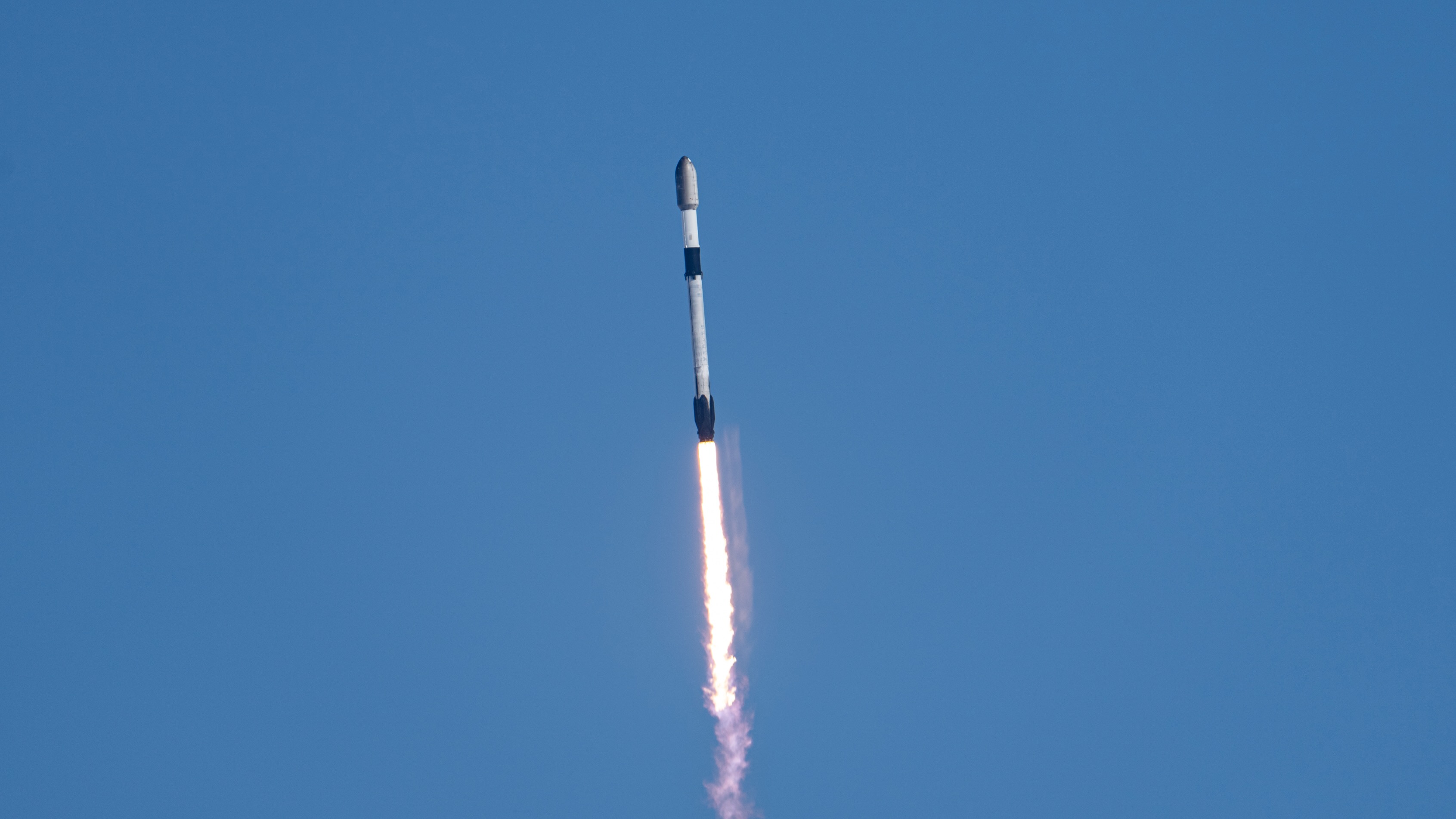
A SpaceX Falcon 9 rocket launches 24 Starlink internet satellites from California's Vandenberg Space Force Base on Aug. 8, 2026. (Image credit: SpaceX)
B1093's most recent flight before today was on July 14, when it launched 27 Starlink satellites to LEO from Vandenberg.
Meanwhile, the Falcon 9's upper stage continued carrying the 24 Starlink satellites toward LEO today, deploying them about 61 minutes after liftoff as planned.
Today's launch was the 92nd Falcon 9 liftoff of 2026, and the 71st of the year devoted to building out the Starlink megaconstellation.
Starlink, by far the largest orbiting network ever assembled, currently consists of more than 10,900 active satellites — and it's growing all the time.
The company plans to build factories on the moon, using robots to do much of the heavy lifting, Elon Musk said on Tuesday (Aug. 4) during SpaceX's first-ever quarterly earnings call.
"We are going to land a lot of tonnage on the moon," he said. "We're going to build the factories on the moon. The robots will be helpful with that."
This is not a newly revealed vision; Musk first laid it out in February, in a blog post that announced SpaceX's purchase of xAI, a company that the billionaire entrepreneur founded in 2023. But Musk doubled down on it this week, showing investors that off-Earth manufacturing is very much front-of-mind for SpaceX.
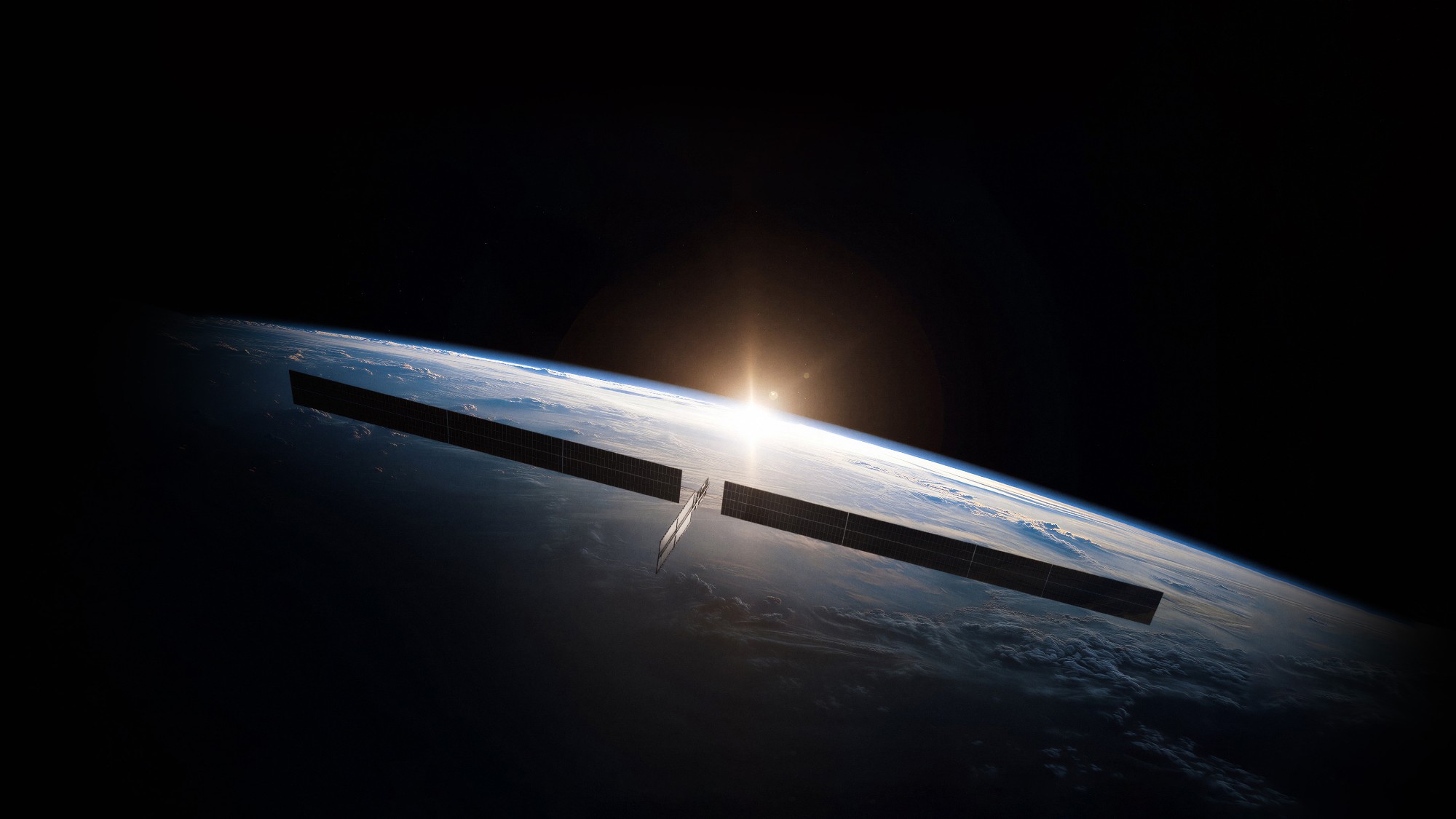
The factories in question will build SpaceX's Starmind AI satellites, if all goes according to plan. The company aims to operate a million-strong Starmind constellation in Earth orbit in the coming years, and then go farther afield with the craft after that.
Eventually, SpaceX wants to launch locally made Starmind satellites off the lunar surface using electromagnetic mass drivers — basically, extremely powerful rail guns.
"Using robots on the moon to scale up manufacturing on the moon — which, I know it sounds, like, super sci-fi right now, but it's going to happen — will enable us to build the mass accelerator on the moon," Musk said.
"And if you have a mass accelerator on the moon, and you have solar and radiator production on the moon, you can — I know this sounds totally nuts — but you can you can probably scale to 1,000 times the economy of Earth in terms of intelligence launched to space, but probably, you know, maybe even a million times," he added.
"Solar and radiator production" refers to the manufacture of key Starmind satellite components: solar panels to power them and radiators to dump the large amounts of heat they'll produce into the vacuum of space.
A rendering of one of SpaceX's planned "Starmind" AI satellites in orbit. (Image credit: SpaceX)
Musk didn't provide details about the robotic lunar labor force. But he's presumably counting on Optimus, a humanoid robot built by another one of his companies, the carmaker Tesla. Musk has previously said that SpaceX will launch some Optimus units to Mars in the near future, to help pave the way for human settlement of the Red Planet.
Those robots will fly on Starship, SpaceX's fully reusable next-gen megarocket, which is currently gearing up for its 14th test flight. Indeed, Starship is key to most of the company's plan's both in Earth orbit and beyond.
"Starship aims to quadruple payload capacity and reduce launch costs by 10 times compared to our Falcon 9 rocket, unlocking significant capabilities across all of our business segments," SpaceX Chief Financial Officer Bret Johnsen said during Tuesday's earnings call.
"We continue to make progress building the infrastructure required to support thousands of Starship launches per year, including accelerating Raptor and launch vehicle production, the buildout of our gigabays, and making significant progress towards activating multiple launch pads at Starbase and in Cape Canaveral at Pad 39A and Pad 37," he added. (Raptor is the engine that powers Starship, and Starbase is SpaceX's South Texas site, which serves as the current hub of Starship manufacturing, testing and launch activities.)
Tuesday's call was a landmark for SpaceX — its first as a publicly traded company. Musk founded SpaceX as a private concern in March 2022 and took it public this past June, via the richest IPO in history.
The IPO raised $86 billion and valued SpaceX at $1.77 trillion. Only six American companies had higher market capitalizations at the time — NVIDIA, Apple, Alphabet (Google), Microsoft, Amazon and the semiconductor manufacturer Broadcom. (Market caps fluctuate all the time, going up and down with companies' stock prices.)
The main point of Tuesday's call was to discuss SpaceX's first-ever earnings report, which covered the second quarter of this year. The company's revenue over that stretch was $7.8 billion, a 92% increase over the same period in 2025, according to the report. SpaceX lost more money than it made during Q2 2026, but the shortfall was considerably smaller than in Q2 2025 — $541 million versus $1.0 billion.
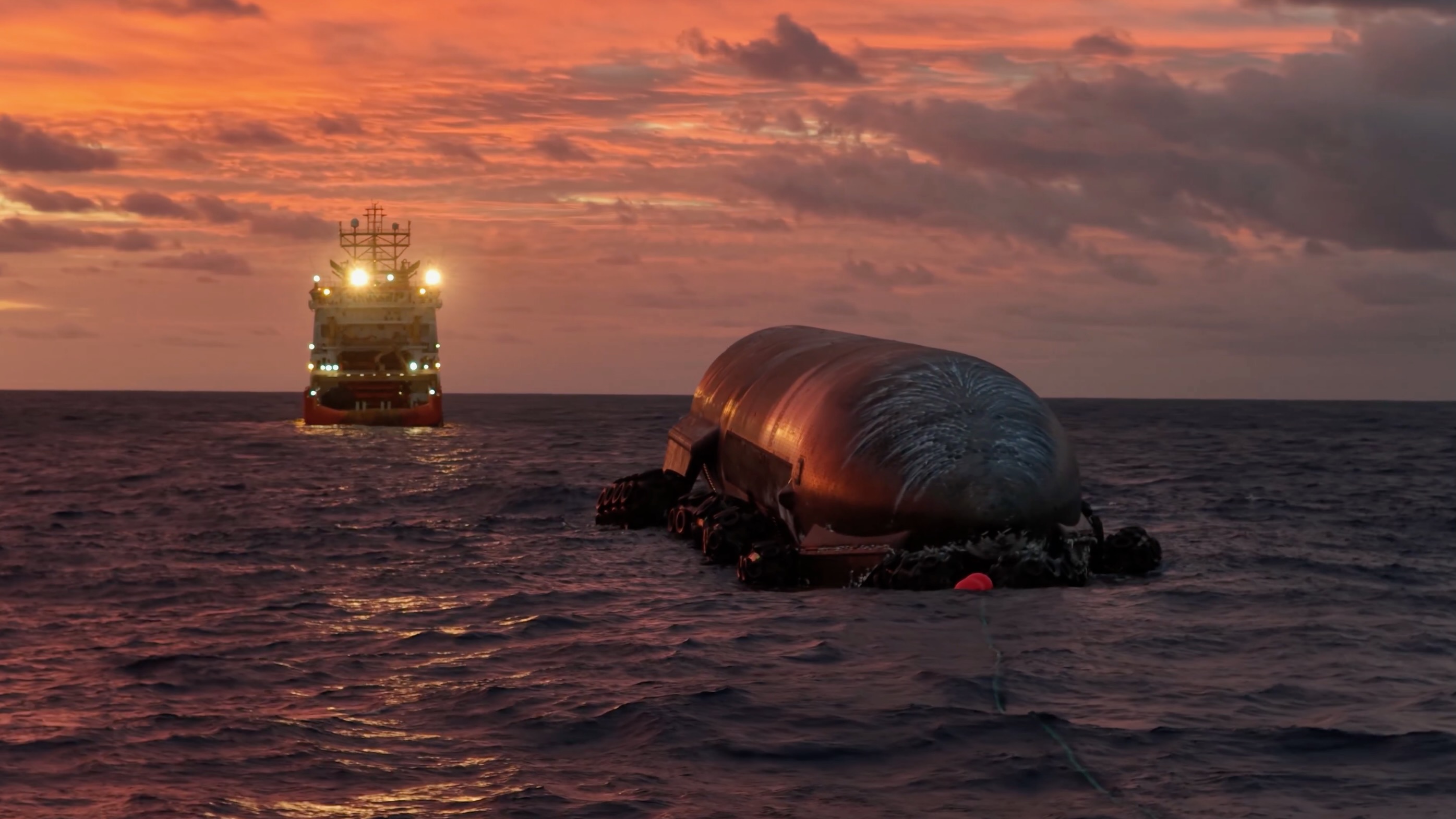
It looks like Starship's two-week-long ocean adventure won't have a happy ending.
The SpaceX megarocket conducted its 13th test flight on July 24, lifting off from the company's Starbase site in South Texas. Things went pretty well on Flight 13, especially for Starship's 171-foot-tall (52 meters) upper stage, known as Ship, which splashed down as planned in the Indian Ocean off the coast of Western Australia.
In an unexpected first, Ship survived that homecoming, staying in one piece even after toppling over and hitting the waves. It remains intact still, and SpaceX is towing it toward shore in Western Australia to get a better look. But the ambitious effort is unlikely to succeed, SpaceX founder and CEO Elon Musk told us today (Aug. 7).
SpaceX works to get the upper stage from Starship's 13th test flight to shore from its Indian Ocean splashdown site. This is a screenshot from a video the company posted on X on Aug. 7. (Image credit: SpaceX)
"Unfortunately, ship recovery is not looking good right now. Nonetheless, we were able to obtain close-up photos of critical regions of the heat shield and engines for future upgrades," Musk wrote this afternoon via X, the social media site he owns.
He was responding to a SpaceX post from an hour or so earlier, which provided an update about the recovery effort and shared two photos and a video of the activities.
The recovery team has "been overcoming challenging conditions and increasingly rough seas as they attempt to guide the 52m long spacecraft to port," SpaceX wrote in the post.
The SpaceX Recovery team is still working to recover Flight 13’s Starship from the Indian Ocean. They’ve been overcoming challenging conditions and increasingly rough seas as they attempt to guide the 52m long spacecraft to port pic.twitter.com/ECT5FyCvr7August 7, 2026
Starship is the biggest and most powerful rocket ever built, standing about 408 feet (124 meters) tall when stacked. Both of its stages — Ship and the Super Heavy booster — are designed to be fully and rapidly reusable, a breakthrough that SpaceX thinks will revolutionize spaceflight.
A key enabler of rapid reuse is Ship's heat shield, which protects the vehicle during its downward trips through Earth's atmosphere. Musk has described heat shield development as perhaps the biggest challenge on Starship's road to operational flight — but that challenge may now be in the rearview mirror.
"I don't want to jinx it or anything, but I think I'd consider the heat shield problem solved at this point," Musk said on Tuesday (Aug. 4), during SpaceX's first-ever quarterly earnings call.
It's no surprise that Starship and Flight 13 came up in that call. The megarocket is key to SpaceX's ambitious future plans, which include assembling and operating a million-satellite AI constellation in Earth orbit.
Flight 13 was similar to previous Starship test missions; it was a suborbital jaunt that ended with Super Heavy coming down in the Gulf of Mexico and Ship landing in the Indian Ocean.
There was a big milestone, however, in addition to Ship's unexpected transition to seagoing vessel: During its time in space, the upper stage deployed 20 functional Starlink V3 satellites, the bigger, next-gen variant of SpaceX's broadband spacecraft.
These satellites quickly came back down to Earth on July 24, but Flight 13 was a vision of the future nonetheless. SpaceX wants to operate a constellation of 100,000 or so Starlink V3s, and this network will be lofted by Starship.
A private rescue spacecraft is having troubles of its own in Earth orbit.
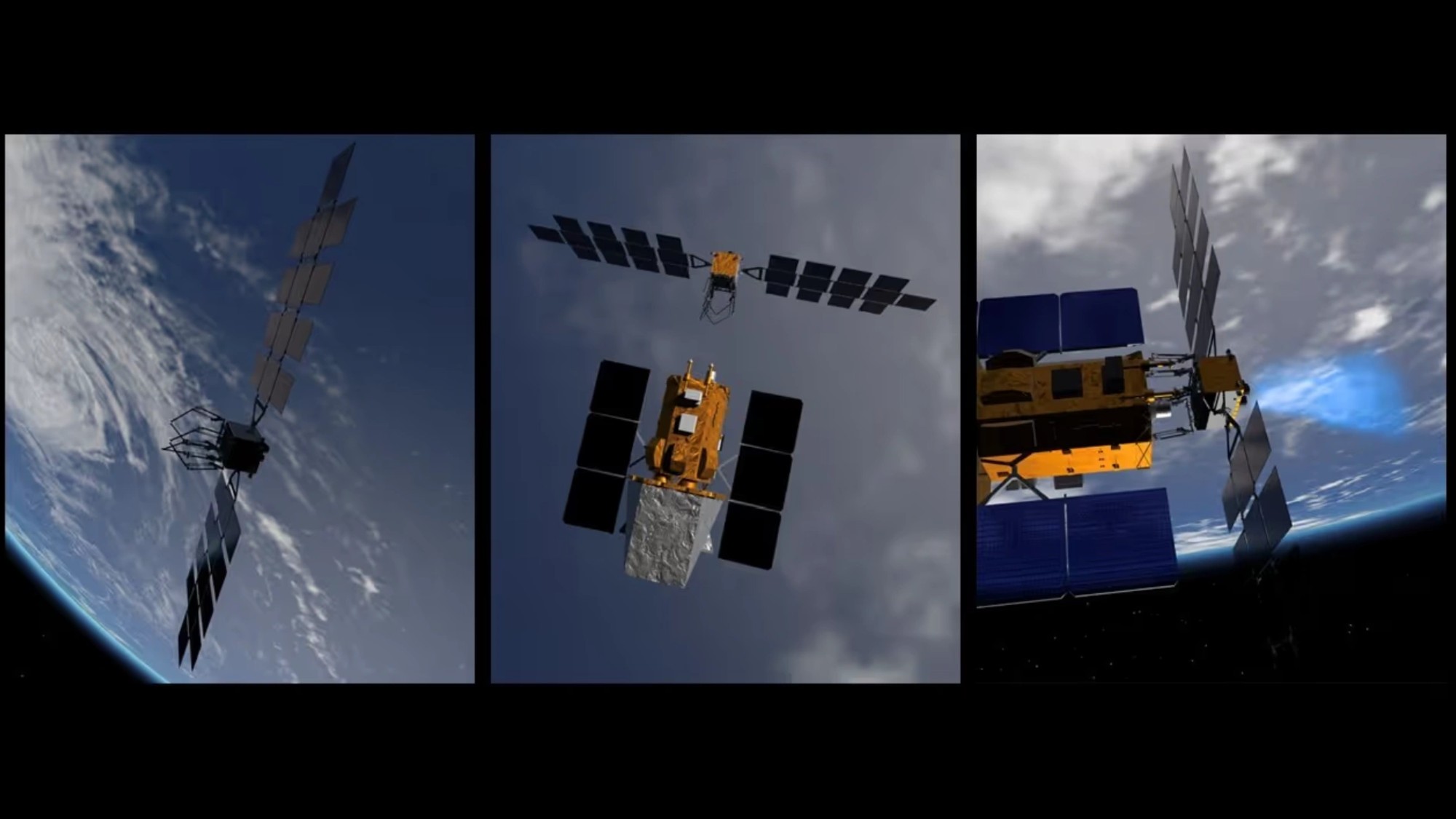
LINK, a satellite built and operated by the Arizona company Katalyst Space Technologies, launched July 3 on a daring and unprecedented mission: Rendezvous with NASA's Swift space telescope and boost the observatory to a higher orbit before it falls out of the sky.
About three weeks after launch, however, LINK started spinning at an unexpected rate, a problem that caused a temporary communications dropout and a reset of its satellite platform. And two of LINK's three orientation-controlling reaction wheels stopped working.
Spacecraft operators always work hard to fix such problems when they crop up, but there's a special urgency where LINK is concerned. It needs to reach Swift soon, or atmospheric drag will pull the observatory — which possesses no thrusters of its own — down past a point of no return. NASA thinks this boundary lies at around 186 miles (300 kilometers) above Earth, an altitude that Swift is expected to reach by October.
So the original plan called for LINK to meet up with Swift in early August, just a month after launch — pretty much as soon as commissioning work on the rescue craft wrapped up. That's not going to happen at this point, but mission teams haven't given up on the rescue attempt. Indeed, they're making progress on getting LINK back up to speed, as a new update relates.
"LINK originally was in a multi-axis spin rotating at about 9 degrees per second, which resulted in sporadic communications and impeded LINK’s progress toward Swift," NASA officials wrote in the update, which the agency posted on Thursday (Aug. 6).
"Using a series of burns from one of LINK’s electric propulsion thrusters, the Katalyst team now has slowed that spin to about 1.47 degrees per second," they added. "Katalyst plans to keep LINK at that spin rate as it proceeds with next steps for the mission."
Those next steps include uploading flight software updates "with new attitude controllers designed to maintain LINK’s stability in its current configuration," NASA officials wrote. "These updates would allow LINK to begin maneuvering to align with Swift’s orbit."
The updates are expected to be beamed up to LINK "in the coming days," according to the update.
Artist's illustration of Katalyst Space Technologies' Link servicing spacecraft approaching and capturing NASA's Swift space observatory on an orbit-boosting mission. (Image credit: Katalyst Space Technologies)
Swift — officially known as the Neil Gehrels Swift Observatory, launched in 2004 to study gamma-ray bursts, the most energetic events in the universe.
The $250 million telescope's initial altitude was about 375 miles (600 km). But it has fallen considerably since then, and the descent is accelerating: The lower Swift goes, the more atmosphere it encounters and the greater the force of frictional drag becomes.
Swift is still working just fine, which explains why NASA wants to save it. Last September, the agency awarded Katalyst $30 million to build LINK — a refrigerator-sized spacecraft with three robotic arms — and fly its rescue mission.
That's a very tight timeline, but Katalyst hit it, getting LINK ready by its launch date and checking off a number of commissioning milestones before running into trouble. The company has experience delivering under pressure, so maybe it can pull off the rescue craft's rescue before it's too late.
A Japanese Earth-observing satellite got to orbit early this morning (Aug. 6), five weeks later than originally planned.
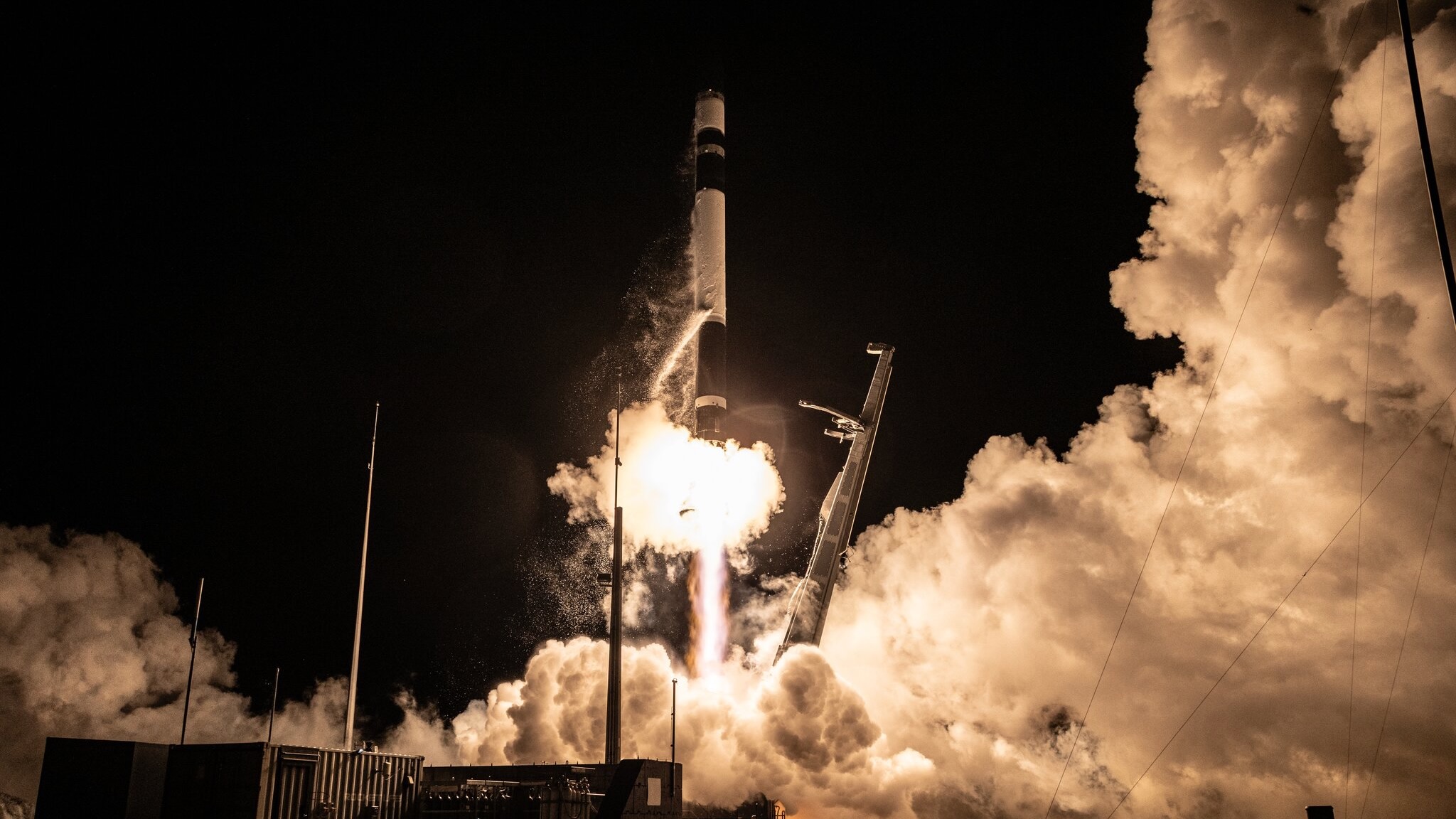
The spacecraft — a radar satellite that will be operated by the Tokyo-based company iQPS — lifted off atop a Rocket Lab Electron vehicle from New Zealand today at 5:18 a.m. EDT (0918 GMT; 9:18 p.m. local time).
It was a deferred round two for the mission: Rocket Lab originally tried to launch it on June 30 but aborted that attempt at the last second. The company has not yet revealed what caused that abort.
A Rocket Lab Electron rocket launches "The Grain Goddess Provides" mission for the Japanese company iQPS from New Zealand on Aug. 6, 2026. (Image credit: Rocket Lab)
Everything went well on this morning's flight, which Rocket Lab called "The Grain Goddess Provides." The Electron deployed the iQPS satellite into its target orbit about 357 miles (575 kilometers) above Earth, Rocket Lab announced via X this morning.
The spacecraft — known as QPS-SAR-13 or MIKURA-I, after a Japanese goddess associated with abundance and prosperity — will study our planet using high-resolution synthetic aperture radar (SAR), which can peer through clouds and collect imagery both day and night.
iQPS is building a constellation of 36 such SAR satellites in low Earth orbit. Electron is the primary launcher for this network; "The Grain Goddess Provides" was the eighth of a total of 15 launches that Rocket Lab will conduct to help assemble the constellation.
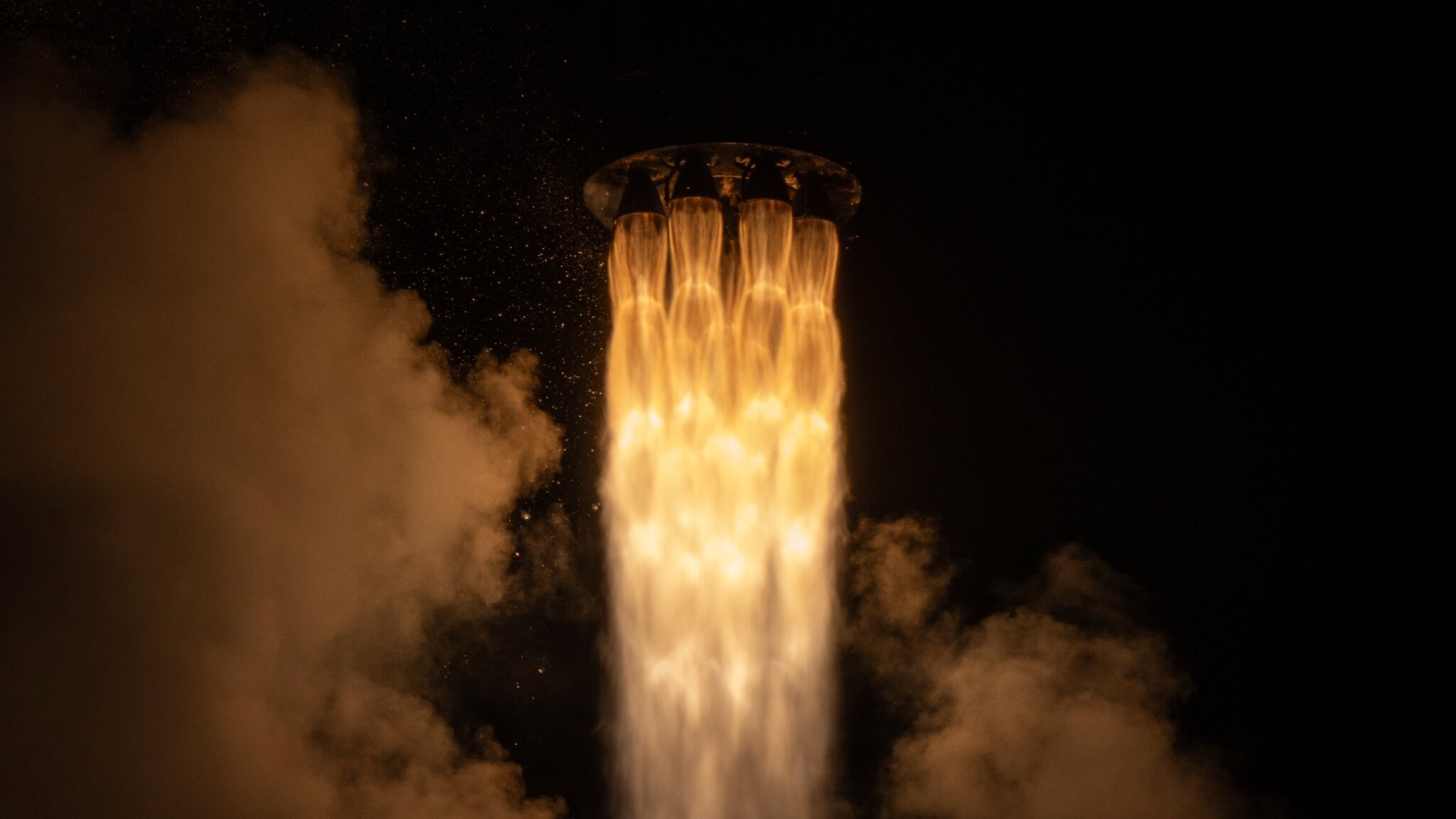
A closeup of the Electron's nine first-stage Rutherford engines in action on Aug. 6, 2026. (Image credit: Rocket Lab)
Today's mission was the 92nd overall for Rocket Lab and the company's 13th of 2026. Most of these flights have involved the 59-foot-tall (18 meters) Electron, the company's workhorse small-satellite launcher. But a growing number these days are performed by HASTE, a suborbital variant of Electron that allows customers to test technologies in a hypersonic flight environment.
The final resting place of SpaceX's moon-smashing rocket has been found.
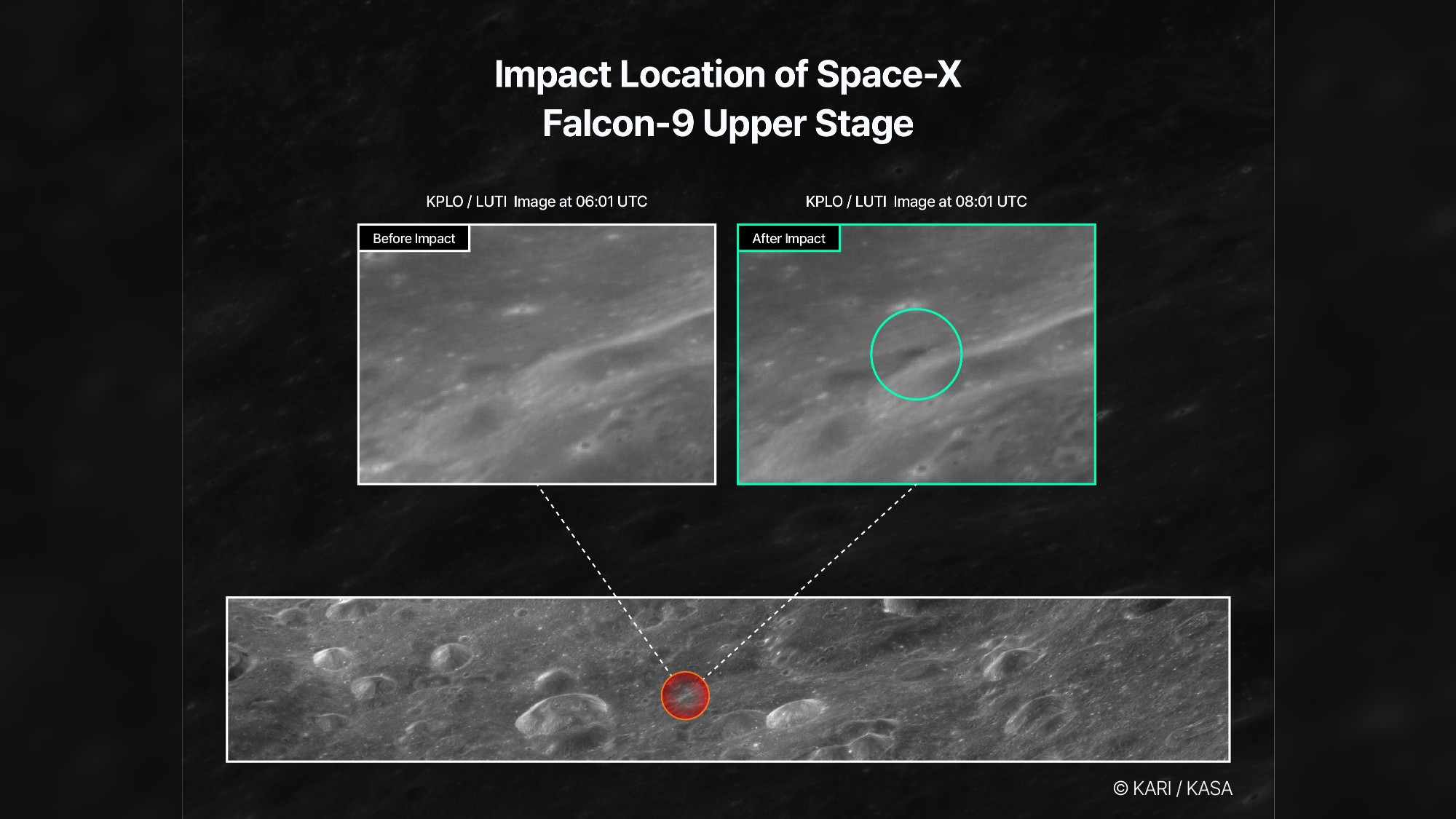
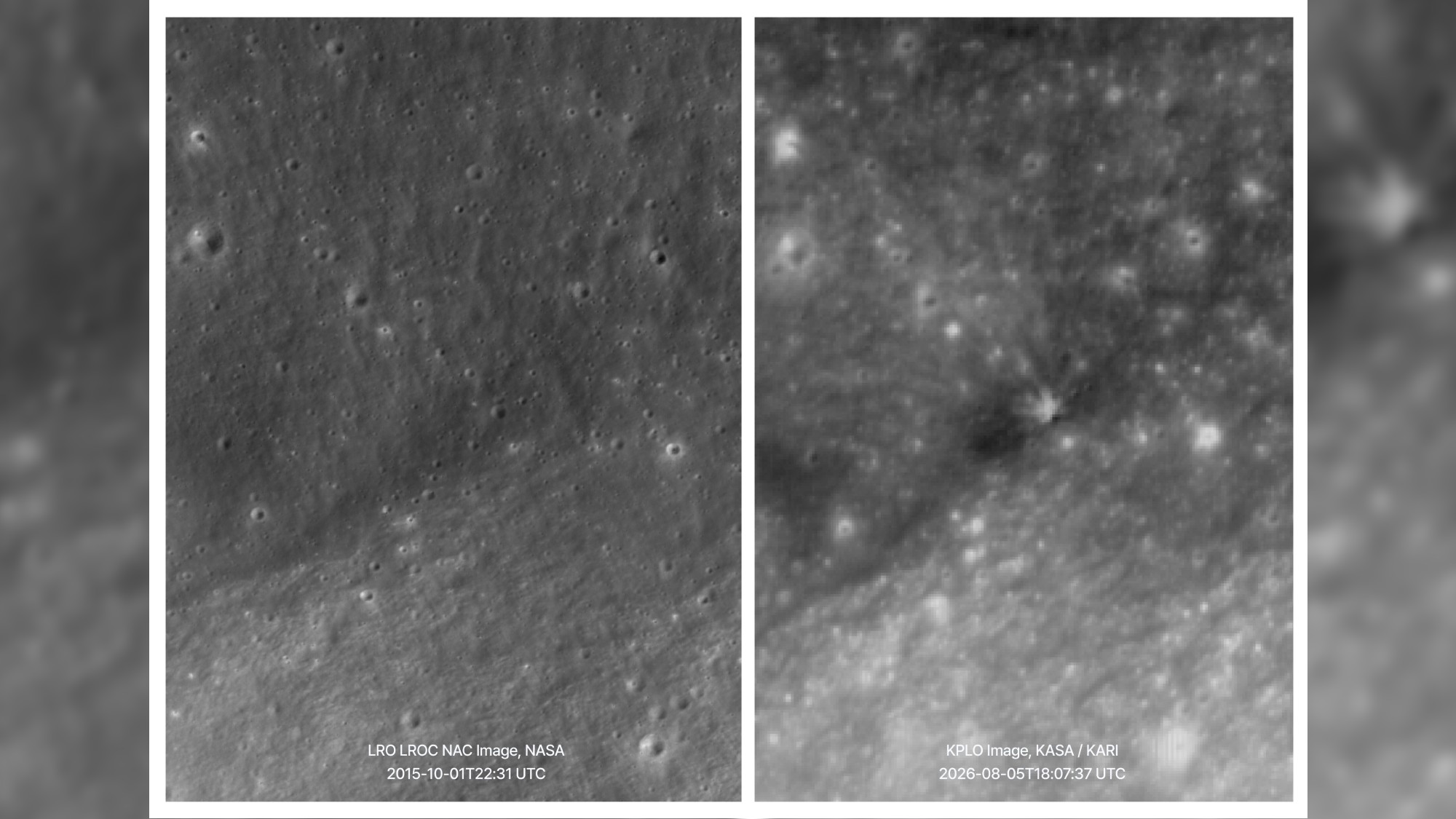
The Korea Pathfinder Lunar Orbiter, known as Danuri, has captured imagery of the crater blasted out by the Falcon 9 upper stage that slammed into the moon early on Wednesday morning (Aug. 5).
"Danuri began observations about 30 minutes before the collision and, through orbit control, passed over the impact site multiple times, conducting a total of 8 imaging sessions," officials with the Korea Aerospace Research Institute (KARI) said via X this morning (Aug. 6). "Through this observation, changes in the terrain around the impact site and traces of ejecta spread were confirmed."
"Danuri secured both pre-collision and immediate post-collision footage, enabling analysis of changes caused solely by the collision and providing important research data," they added in the X post, which shared several before-and-after images of the impact site.
Before-and-after imagery of the impact site. (Image credit: KARI)
The Falcon 9 in question launched on Jan. 15, 2025, sending two private robotic moon landers — Firefly Aerospace's Blue Ghost and ispace's Resilience — to a high, moon-crossing Earth orbit. The duo then made their own way to the moon; Blue Ghost landed successfully on March 2 of that year, but Resilience crashed during its touchdown attempt.
The Falcon 9's first stage came back to Earth shortly after liftoff for recovery and reuse, as such boosters commonly do. Falcon 9 upper stages, by contrast, are expendable. SpaceX usually disposes of them in Earth's atmosphere, but the upper stage on the Blue Ghost-Resilience mission used almost all of its fuel getting its payloads to their distant destination. So the 8,800-pound (4,000 kilograms) rocket body remained up there, orbiting Earth — until solar activity and gravitational forces pushed it on a collision course for the moon.
Another before-and-after image, with the "before" photo taken by NASA's Lunar Reconnaissance Orbiter back in 2015. (Image credit: KARI)
That collision occurred at 2:34 a.m. EDT (0634 GMT) on Wednesday, according to KARI officials — right in line with predictions. Scientists calculated some other parameters ahead of time as well. For example, the rocket body probably hit the moon at about 5,400 mph (8,690 kph), gouging out a crater up to 89 feet (27 meters) wide.
The new observations by Danuri, as well as future work by other lunar probes, will help verify such predictions.
"The observation data secured by Danuri will be linked with follow-up observations from NASA's Lunar Reconnaissance Orbiter (LRO) and utilized in international collaborative research," KARI officials said in the X post.
It may be that some ground-based telescopes caught the impact as well. Astronomers at the Instituto de Astrofísica de Andalucía in Spain believe they captured a video of ejected material blasting off of the lunar surface around the predicted time of impact:
Our team at @iaa_csic has captured the impact on the Moon of the upper stage of a Falcon 9 rocket. We attach a preliminary video showing the evolution of the ejected material. The black area corresponds to the lunar disk @SpaceX @JuanLuisRizos @elonmusk @tiempobrasero @A3Noticias… pic.twitter.com/5Ry7hRdCeSAugust 6, 2026
The Falcon 9 upper stage wasn't the first rocket body to slam into the moon. The third stage of a Chinese Long March 3C crashed into the lunar surface on March 4, 2022, for example. And the third stage of NASA's Saturn V rocket gouged out craters during multiple Apollo moon missions.
Danuri is South Korea's first lunar probe. The spacecraft launched on Aug. 4, 2022 atop a Falcon 9 and began circling the moon four months later. It carries six payloads, five of them provided by Korean universities and research organizations. The sixth is a NASA instrument called ShadowCam, which hunts for signs of water ice in permanently shadowed regions at the lunar poles.
Blue Origin is close to figuring out why its New Glenn rocket went boom a few months ago.
The explosion — which destroyed the rocket and some key pieces of pad infrastructure — occurred on May 28 during a routine engine test at Florida's Cape Canaveral Space Force Station. Blue Origin has been working hard ever since to determine the cause of the anomaly, and it has made considerable progress, according to a new update.
"The anomaly originated at the main oxygen valve on one of the BE-4 engines, which was later confirmed by hardware recovery and inspections," Blue Origin CEO Dave Limp said via X on Wednesday afternoon (Aug. 5). "Extensive component-level and engine hotfire tests have been conducted to understand the failure mode better and inform mitigations."
Like SpaceX's workhorse Falcon 9 rocket, the 320-foot-tall (98-meter) New Glenn features a reusable first stage, which is powered by seven BE-4s and designed to launch at least 25 times. The heavy lifter is a big part of Blue Origin's ambitious plans, which include helping humanity establish a foothold in the final frontier.
"The rocket is engineered with the safety and redundancy required to fly humans, and will enable our vision of building a road to space for the benefit of Earth," Blue Origin's website states.
The company, and NASA, are counting on the rocket to get important hardware to the moon. New Glenn will be the ride for Blue Origin's Blue Moon, one of two crewed landers that NASA picked to get astronauts to and from the lunar surface for its Artemis program. (The other is SpaceX's Starship.)
And there's an important Blue Moon mission coming up: the first test flight of the prototype Mark 1 lander, which is scheduled to make an uncrewed lunar touchdown by the end of this year, if possible. That mission will help prove out the vehicle's capabilities ahead of crewed flights.
Wanted to give an update on the hotfire anomaly investigation. Progress continues. The anomaly originated at the main oxygen valve on one of the BE-4 engines, which was later confirmed by hardware recovery and inspections. Extensive component-level and engine hotfire tests have…August 5, 2026
New Glenn debuted in January 2025 and has flown two more times since, in November 2025 and April 19 of this year. There was an issue on that most recent launch, which carried up AST SpaceMobile's BlueBird 7 communications satellite: New Glenn failed to deploy the payload into the proper orbit, and it was lost.
Despite that issue, and the May 28 explosion, Limp expressed confidence that Blue Origin will soon get New Glenn up and running again.
"The path forward is clear," he added in Wednesday's X post. "We're making small modifications to the valve that can be quickly retrofitted to existing engines. We’re manufacturing the updated hardware, which will be ready by the end of this month. In parallel, we're working through the remaining fault tree analysis."