SpaceX will launch Starship, the world’s largest rocket, on critical Flight 13 test today. Here’s what to expect.

SpaceX's Starship megarocket will take to the skies again today (July 16), and you can watch the thundering action live.

Starship, the biggest and most powerful rocket ever built, is scheduled to lift off from SpaceX's Starbase site in South Texas today — the 57th anniversary of the launch of NASA's Apollo 11 moon mission, by the way — during a 90-minute widow that opens at 6:45 p.m. EDT (2245 GMT; 5:45 p.m. local Texas time). It will be Starship's 13th flight overall and its second mission of 2026.

You can watch Starship Flight 13 live here at Space.com, courtesy of SpaceX; coverage will begin about 30 minutes before liftoff. Follow our Starship live blog for updates and other news about the test flight.

A potentially revolutionary rocket
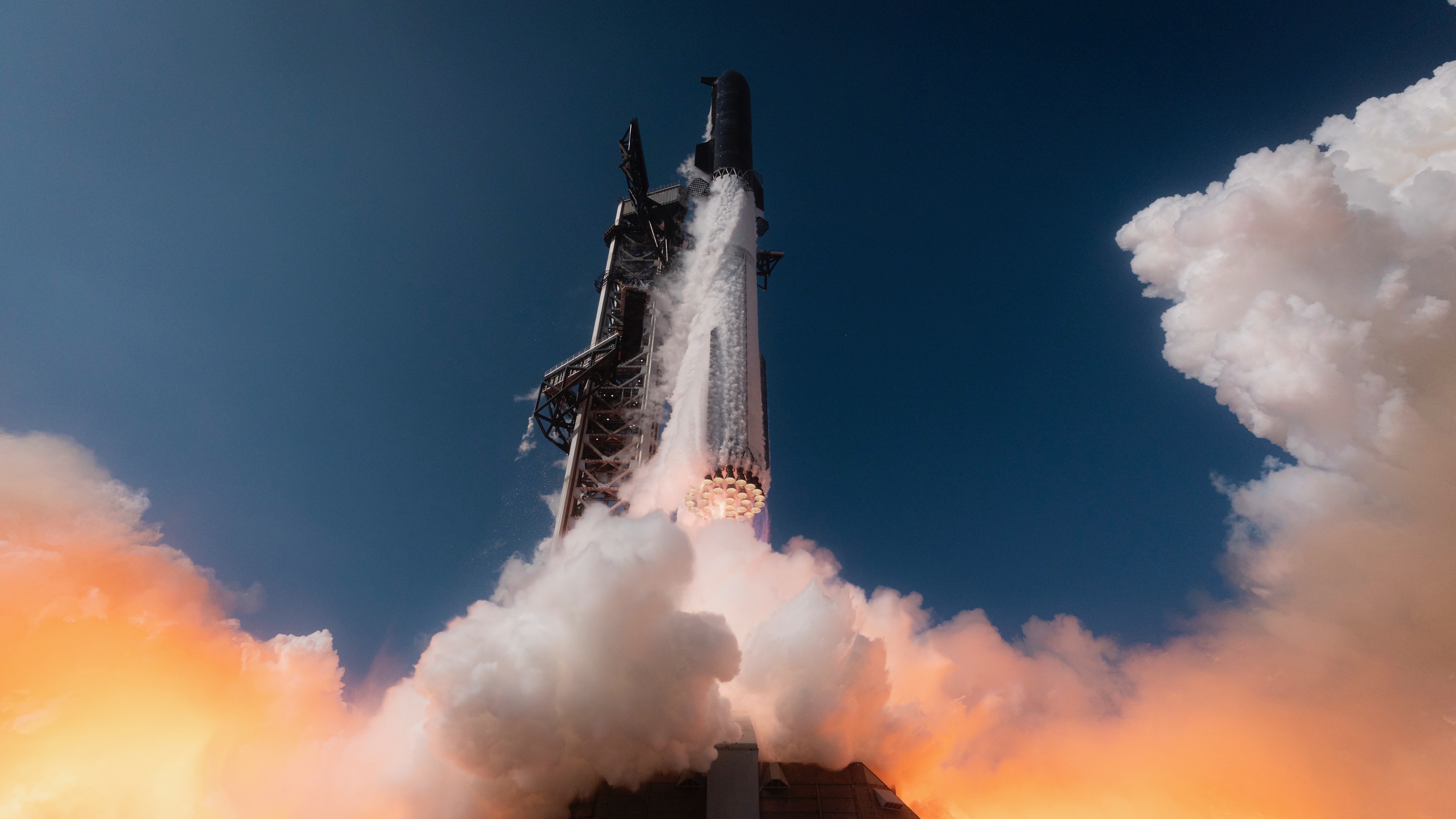
ground-level view of a huge silver and black rocket lifting off

SpaceX's first Starship V3 vehicle launches on a test flight on May 22, 2026. (Image credit: SpaceX)

Starship consists of a first-stage booster called Super Heavy and an upper-stage vehicle known (somewhat confusingly) as Starship, or simply Ship. Both elements are made of stainless steel and are designed to be fully and rapidly reusable.

The stacked vehicle stands more than 400 feet (122 meters) tall and can carry more than 110 tons (100 metric tons) to Earth orbit. SpaceX thinks Starship's combination of power and reusability will revolutionize spaceflight, allowing humanity to settle the moon and Mars, among other bold exploration feats.

Starship debuted in April 2023 and has flown 11 more suborbital flights since, most recently on May 22. That Flight 12 test was the first mission for Starship Version 3 (V3), an advanced iteration of the megarocket that was many months in the making. (Flight 11, the last launch of Starship V2, lifted off in October 2025.)

Starship V3 will be the first operational variant of the vehicle. It will fly on NASA's Artemis III mission to Earth orbit in 2027, for example, and land the agency's Artemis IV astronauts on the moon a year later, if all goes to plan.

Starship V3 performed quite well during its launch debut in May. During Flight 12, Ship successfully deployed 22 payloads via its "PEZ dispenser" slit — 20 dummy versions of SpaceX's Starlink broadband satellites and two actual Starlinks equipped with imaging sensors — and came back to Earth in one piece, splashing down as planned off the coast of Western Australia.

There were a few hiccups, however. Super Heavy suffered engine issues during its return to Earth, for instance, and ended up crashing in the Gulf of Mexico rather than making a controlled splashdown there.

SpaceX will run it back on Flight 13, shooting mostly for the same objectives that Flight 12 targeted — with a few notable exceptions.

The plan for Starship Flight 13

Eventually, SpaceX plans to return both Super Heavy and Ship directly to the launch pad after liftoff, catching each with the "chopstick" arms attached to Starbase's two launch towers. (Starship will also fly from Florida and perhaps other places as well in the coming years; these future pads will have chopstick arms, too.) This strategy will allow each vehicle to fly multiple times per day, according to the company.

SpaceX has caught Super Heavy three times to date, but it's been a while; the last such snag came on Flight 8 in March 2025. And the company has never tried a chopsticks catch with Ship.

Those trends will continue on Flight 13. If all goes to plan, Super Heavy will steer its way to a controlled splashdown in the Gulf of Mexico (which the Trump administration has renamed the Gulf of America) about seven minutes after launch.

"The booster’s primary test objective will be executing a successful launch, ascent, stage separation, boostback burn and landing burn at an offshore landing point in the Gulf of America," SpaceX wrote in a Flight 13 mission description. "There have been several modifications to hardware and software to address issues seen on the previous flight."

Ship will again target a splashdown in the Indian Ocean off the coast of Western Australia, which will occur about 65 minutes after launch. And the vehicle will again deploy some objects into suborbital space — but here's where Flight 13 will break new ground.

Those objects will be 20 V3 Starlink satellites — next-gen versions of the broadband spacecraft, which will "greatly expand the network's capacity and user speeds," SpaceX wrote in the mission description.

Eventually, SpaceX wants to operate up to 100,000 V3 Starlinks in low Earth orbit — a bold plan, considering that the current megaconstellation, the largest such network ever assembled, contains "only" about 10,800 spacecraft.

The Starlink V3 plan will require thousands of launches — a load that's beyond even the capabilities of SpaceX's workhorse Falcon 9 rocket, which flew 165 times in 2025. (Adding to the difficulty: Starship V3 satellites are considerably heavier than their predecessors. Each one will apparently weigh around 4,400 pounds, or 2,000 kilograms.)
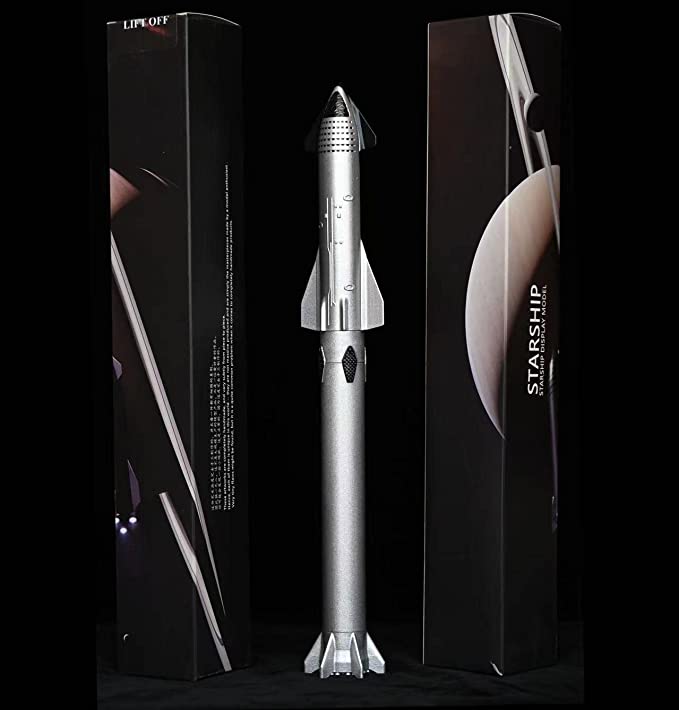
Starship Die Cast Rocket Model Was $47.99 Now $39.99 on Amazon.

Even if you can't see SpaceX's Starship in person, you can score a model of your own. Standing at 13.77 inches (35 cm), this is a 1:375 ratio of SpaceX's Starship as a desktop model. The materials here are alloy steel and it weighs just 225g.View Deal

The 20 Starlink V3 satellites "will extend solar arrays and antennas and will attempt to connect with the larger Starlink constellation via high-capacity lasers," SpaceX wrote in the Flight 13 description. "The Starlink satellites will be on the same suborbital trajectory as Starship and are expected to demise upon reentry approximately 20 minutes after deployment."

Six of the 20 spacecraft are equipped with cameras, which they will use to scan and study Ship's heat-shield tiles. SpaceX wants to gather more data about the heat-shield system before it attempts to bring Ship back to the launch pad for a chopsticks catch.

And SpaceX won't just passively observe the heat shield during Flight 13; it will conduct some experiments as well.

For example, the shield "will have load-sensing tiles to take measurements as the vehicle experiences higher dynamic pressure on ascent than previous flights, putting added stress on the tile attachments in exchange for increased payload-to-orbit capability," the mission description reads.

So there will indeed be some new things to look out for during Flight 13. And watching the world's biggest and brawniest rocket lift off is a treat no matter what sort of mission it's flying, so be sure to tune in today!
SpaceX will launch Starship, the world’s largest rocket, on critical Flight 13 test on July 23. Here’s what to expect.

SpaceX's Starship megarocket will take to the skies again on Thursday (July 23), and you can watch the thundering action live.

Starship, the biggest and most powerful rocket ever built, is scheduled to lift off from SpaceX's Starbase site in South Texas on Thursday during a 90-minute window that opens at 6:45 p.m. EDT (2245 GMT; 5:45 p.m. local Texas time). It will be Starship's 13th flight overall and its second mission of 2026. (SpaceX originally tried to launch Flight 13 on Thursday, July 16, but that attempt was aborted at the last second.)

You can watch Starship Flight 13 live here at Space.com, courtesy of SpaceX; coverage will begin about 30 minutes before liftoff. Follow our Starship live blog for updates and other news about the test flight.

A potentially revolutionary rocket

ground-level view of a huge silver and black rocket lifting off

SpaceX's first Starship V3 vehicle launches on a test flight on May 22, 2026. (Image credit: SpaceX)

Starship consists of a first-stage booster called Super Heavy and an upper-stage vehicle known (somewhat confusingly) as Starship, or simply Ship. Both elements are made of stainless steel and are designed to be fully and rapidly reusable.

The stacked vehicle stands more than 400 feet (122 meters) tall and can carry more than 110 tons (100 metric tons) to Earth orbit. SpaceX thinks Starship's combination of power and reusability will revolutionize spaceflight, allowing humanity to settle the moon and Mars, among other bold exploration feats.

Starship debuted in April 2023 and has flown 11 more suborbital flights since, most recently on May 22. That Flight 12 test was the first mission for Starship Version 3 (V3), an advanced iteration of the megarocket that was many months in the making. (Flight 11, the last launch of Starship V2, lifted off in October 2025.)

Starship V3 will be the first operational variant of the vehicle. It will fly on NASA's Artemis III mission to Earth orbit in 2027, for example, and land the agency's Artemis IV astronauts on the moon a year later, if all goes to plan.

Starship V3 performed quite well during its launch debut in May. During Flight 12, Ship successfully deployed 22 payloads via its "PEZ dispenser" slit — 20 dummy versions of SpaceX's Starlink broadband satellites and two actual Starlinks equipped with imaging sensors — and came back to Earth in one piece, splashing down as planned off the coast of Western Australia.

There were a few hiccups, however. Super Heavy suffered engine issues during its return to Earth, for instance, and ended up crashing in the Gulf of Mexico rather than making a controlled splashdown there.

SpaceX will run it back on Flight 13, shooting mostly for the same objectives that Flight 12 targeted — with a few notable exceptions.

The plan for Starship Flight 13

Eventually, SpaceX plans to return both Super Heavy and Ship directly to the launch pad after liftoff, catching each with the "chopstick" arms attached to Starbase's two launch towers. (Starship will also fly from Florida and perhaps other places as well in the coming years; these future pads will have chopstick arms, too.) This strategy will allow each vehicle to fly multiple times per day, according to the company.

SpaceX has caught Super Heavy three times to date, but it's been a while; the last such snag came on Flight 8 in March 2025. And the company has never tried a chopsticks catch with Ship.

Those trends will continue on Flight 13. If all goes to plan, Super Heavy will steer its way to a controlled splashdown in the Gulf of Mexico (which the Trump administration has renamed the Gulf of America) about seven minutes after launch.

"The booster’s primary test objective will be executing a successful launch, ascent, stage separation, boostback burn and landing burn at an offshore landing point in the Gulf of America," SpaceX wrote in a Flight 13 mission description. "There have been several modifications to hardware and software to address issues seen on the previous flight."

Ship will again target a splashdown in the Indian Ocean off the coast of Western Australia, which will occur about 65 minutes after launch. And the vehicle will again deploy some objects into suborbital space — but here's where Flight 13 will break new ground.

Those objects will be 20 V3 Starlink satellites — next-gen versions of the broadband spacecraft, which will "greatly expand the network's capacity and user speeds," SpaceX wrote in the mission description.

Eventually, SpaceX wants to operate up to 100,000 V3 Starlinks in low Earth orbit — a bold plan, considering that the current megaconstellation, the largest such network ever assembled, contains "only" about 10,800 spacecraft.

The Starlink V3 plan will require thousands of launches — a load that's beyond even the capabilities of SpaceX's workhorse Falcon 9 rocket, which flew 165 times in 2025. (Adding to the difficulty: Starship V3 satellites are considerably heavier than their predecessors. Each one will apparently weigh around 4,400 pounds, or 2,000 kilograms.)

Starship Die Cast Rocket Model Was $47.99 Now $39.99 on Amazon.

Even if you can't see SpaceX's Starship in person, you can score a model of your own. Standing at 13.77 inches (35 cm), this is a 1:375 ratio of SpaceX's Starship as a desktop model. The materials here are alloy steel and it weighs just 225g.View Deal

The 20 Starlink V3 satellites "will extend solar arrays and antennas and will attempt to connect with the larger Starlink constellation via high-capacity lasers," SpaceX wrote in the Flight 13 description. "The Starlink satellites will be on the same suborbital trajectory as Starship and are expected to demise upon reentry approximately 20 minutes after deployment."

Six of the 20 spacecraft are equipped with cameras, which they will use to scan and study Ship's heat-shield tiles. SpaceX wants to gather more data about the heat-shield system before it attempts to bring Ship back to the launch pad for a chopsticks catch.

And SpaceX won't just passively observe the heat shield during Flight 13; it will conduct some experiments as well.

For example, the shield "will have load-sensing tiles to take measurements as the vehicle experiences higher dynamic pressure on ascent than previous flights, putting added stress on the tile attachments in exchange for increased payload-to-orbit capability," the mission description reads.

So there will indeed be some new things to look out for during Flight 13. And watching the world's biggest and brawniest rocket lift off is a treat no matter what sort of mission it's flying, so be sure to tune in!

Editor's note: This story was updated at 4:10 a.m. ET on July 20 with the new target launch date of July 23.

Russia launches NASA astronaut Anil Menon and 2 cosmonauts to the International Space Station (video)

The International Space Station has three new residents.

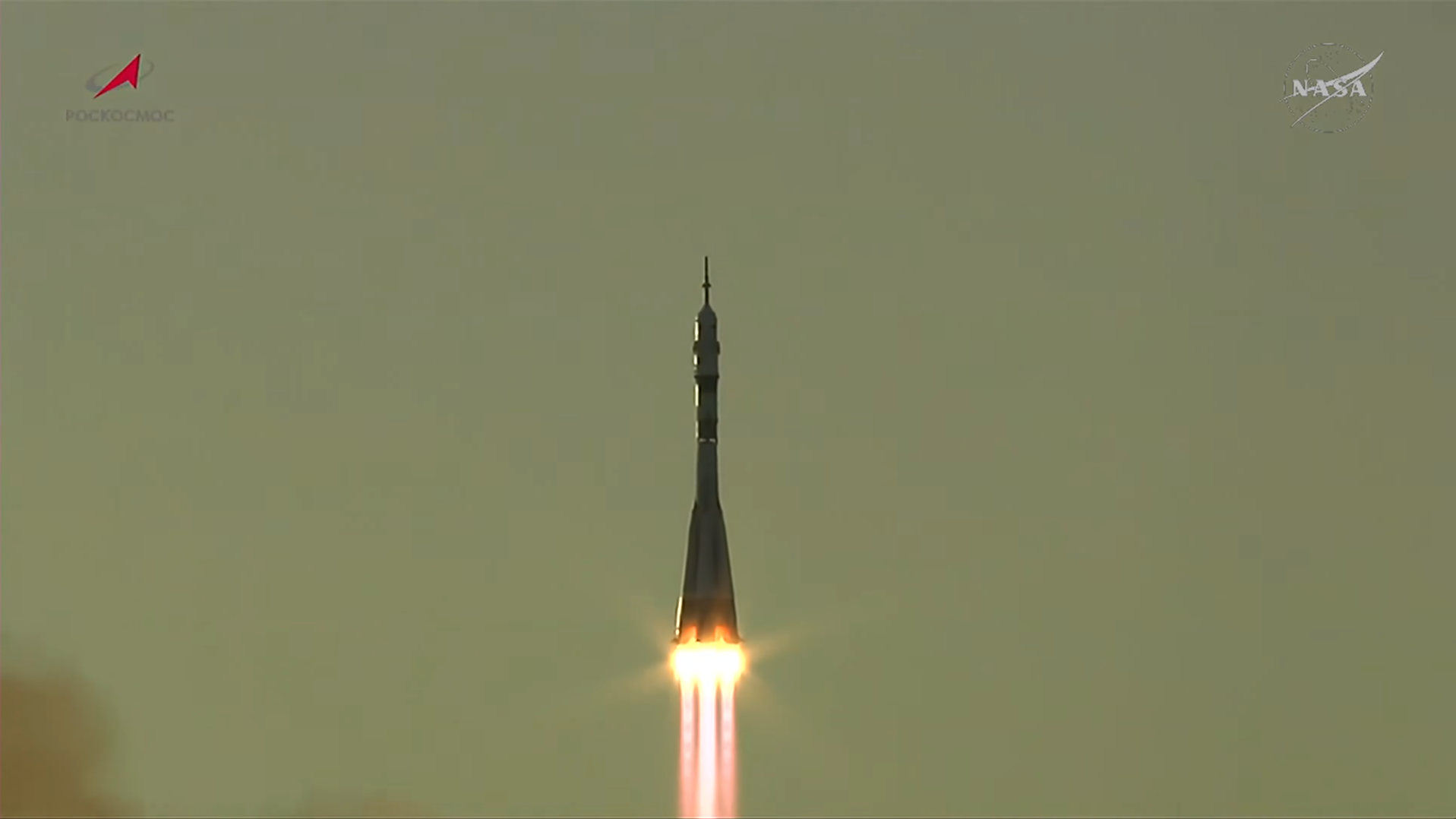
NASA's Anil Menon and cosmonauts Pyotr Dubrov and Anna Kikina lifted off atop a Russian Soyuz rocket from Baikonur Cosmodrome in Kazakhstan at 10:47 a.m. EDT (1447 GMT; 7:47 p.m. local time in Baikonur), heading toward the orbiting lab.

Their Soyuz executed nominal side booster separation about two minutes after launch, followed by second stage separation about 2.5 minutes later, as the rocket flew at 105 miles (169 kilometers) in altitude. Third stage orbital insertion and separation was completed at about 8 minutes and 46 seconds, putting Russia's Soyuz MS-29 spacecraft and crew on course to chase down the International Space Station (ISS).

A rocket launches against a chartreuse-colored sky

A Soyuz rocket launches NASA astronaut Anil Menon and cosmonauts Pyotr Dubrov and Anna Kikina toward the International Space Station from Baikonur Cosmodrome on July 14, 2026. (Image credit: Roscosmos/NASA)

The trio caught up to the ISS after just two orbits, docking with the outpost at 1:52 p.m. EDT (1752 GMT). The two spacecraft were flying 260 miles (418 kilometers) above the Mediterranean Sea at the time, NASA officials said during the agency's docking webcast.

That webcast will resume at 3:30 p.m. EDT (1930 GMT) ahead of the opening of the hatches between the Soyuz and the ISS, which is expected around 3:55 p.m. EDT (1955 GMT).

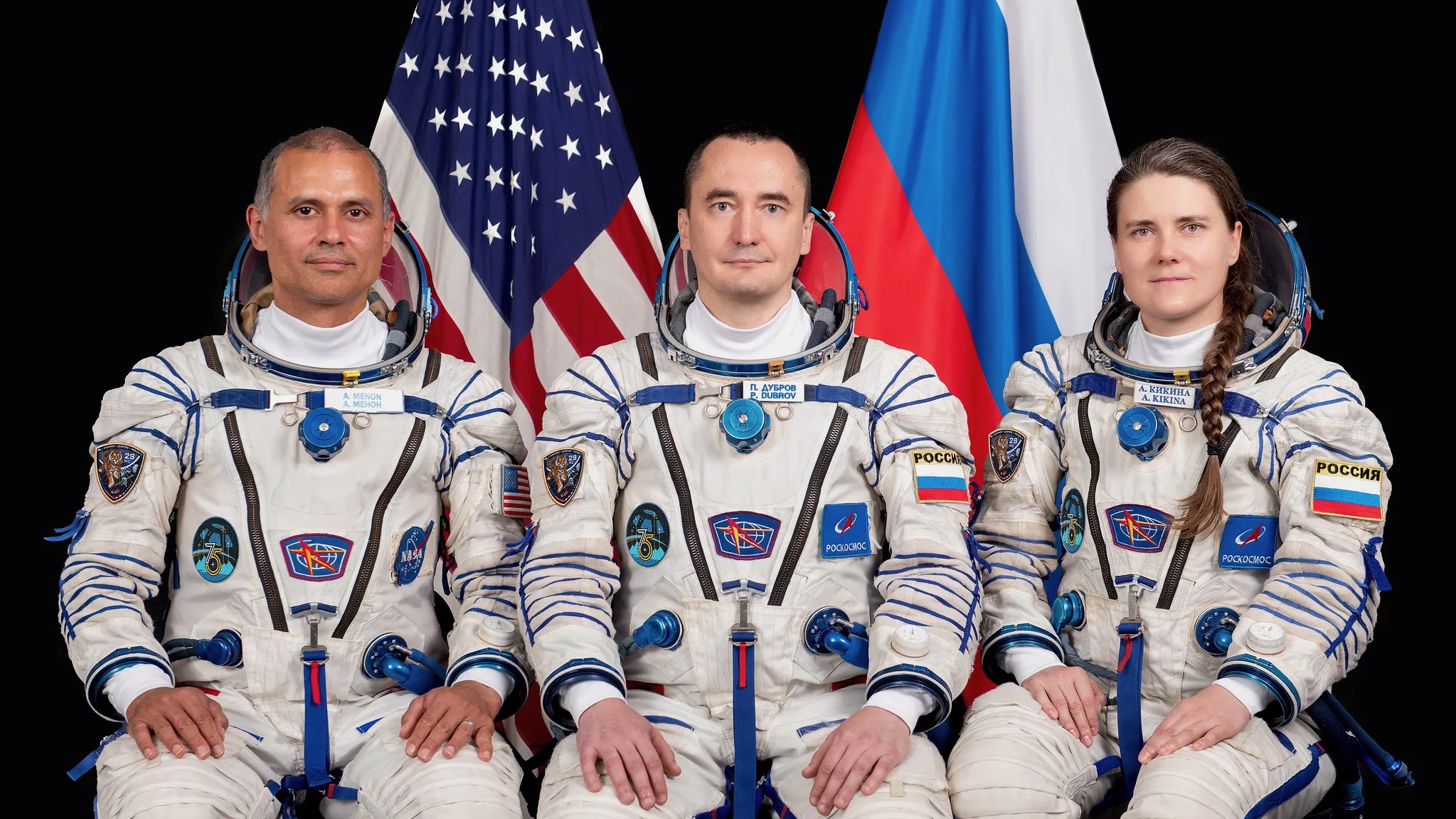
The MS-29 trio will join the seven astronauts already living aboard the ISS — NASA's Jessica Meir, Jack Hathaway, and Chris Williams, the European Space Agency's Sophie Adenot, and Sergey Kud-Sverchkov, Sergei Mikaev, and Andrey Fedyaev of the Russian space agency Roscosmos.

two male astronauts and a female astronauts, all of them wearing white spacesuits, sit for an official portrait

NASA astronaut Anil Menon (left) and Roscosmos cosmonauts Pyotr Dubrov and Anna Kikina, Soyuz MS-29 prime crew members, pose for a portrait at the Gagarin Cosmonaut Training Center in Russia. (Image credit: GCTC)

This is the first spaceflight for Menon, who was selected as a NASA astronaut candidate in December 2021, in the agency's Group 23. He's married to Anna Menon, who was picked in the next astronaut candidate class, Group 24, in September 2025.

Anna Menon has already been to space, though not with NASA. In September 2024, while an employee of SpaceX, she flew on the company's Polaris Dawn mission to Earth orbit. That five-day flight, which was funded and commanded by current NASA Administrator Jared Isaacman, featured the first-ever commercial spacewalk and reached a maximum altitude of 870 miles (1,400.7 kilometers) — higher than any previous crewed Earth-orbiting mission had gotten.

Anil Menon is a former SpaceX-er as well; he was the company's first-ever flight surgeon.

MS-29's flight is the second-ever space mission for both Dubrov and Kikina. Dubrov lived aboard the ISS from April 2021 to March 2022, and Kikina spent five months on the outpost, from October 2022 to March 2023.

Kikina, the only female member of Russia's active astronaut corps, flew to and from the ISS back then on SpaceX's Crew-5 mission. That was a big deal: She was the first Russian ever to fly on a private U.S. spacecraft, and the first cosmonaut to fly on any American space vehicle since December 2002, when cosmonauts Valery Korzun and Sergey Treshchov came back to Earth from the ISS aboard the space shuttle Endeavour.

The MS-29 trio will spend about eight months living and working on the orbiting lab. Menon will help conduct a wide variety of scientific experiments during that stretch.

"He will continue research to refine in-space production of semiconductor crystals to enable the large-scale manufacturing of components needed for high-performance computers, artificial intelligence, and improved medical devices," NASA officials wrote in a July 9 media advisory.

"Menon also will perform ultrasound using augmented reality and artificial intelligence methods that could eliminate the need for medical support from Earth on future space missions," they added.

Editor's note: This story was updated at 1:55 p.m. ET with news of successful docking.

The FCC just gave Reflect Orbital permission to launch its 1st space mirror to orbit. Tens of thousands more could follow

The first of perhaps tens of thousands of sunlight-directing space mirrors just got cleared for liftoff.

California-based startup Reflect Orbital just got a license from the U.S. Federal Communications Commission (FCC) to launch and operate its first demonstration satellite, a spacecraft that will unfurl a reflective surface that measures about 60 feet (18 meters) on a side.

That satellite, called Eärendil-1 is targeted to fly later this year. And it could be the first of many: Reflect Orbital aims to operate 50,000 or more such mirror-craft in low Earth orbit by 2035, beaming reflected sunlight down to a variety of customers on the surface.

"We're grateful to the FCC for recognizing the importance of testing novel technologies in space," Ben Nowack, Reflect Orbital's co-founder and CEO, said in an emailed statement on Friday (July 10).

"This license is the first step toward rigorously testing our technology's efficacy and the safeguards we have developed," he added. "We're excited to demonstrate how our technology works and to introduce transformative, clean technology the world urgently needs."

That technology could aid a variety of industries and endeavors, according to Reflect Orbital.

"Imagine the endless possibilities when sunlight is not limited by geography or time of day," the company's website reads. "A search-and-rescue team locates a missing person in minutes. A city has safer, evenly lit streets without the carbon emissions. Construction projects complete in half the time with teams able to work through the night safely."

The planned mirror constellation will also boost the productivity of solar arrays on Earth, allowing them to take more of the electricity-generating load from polluting options such as fossil fuels, according to the company.

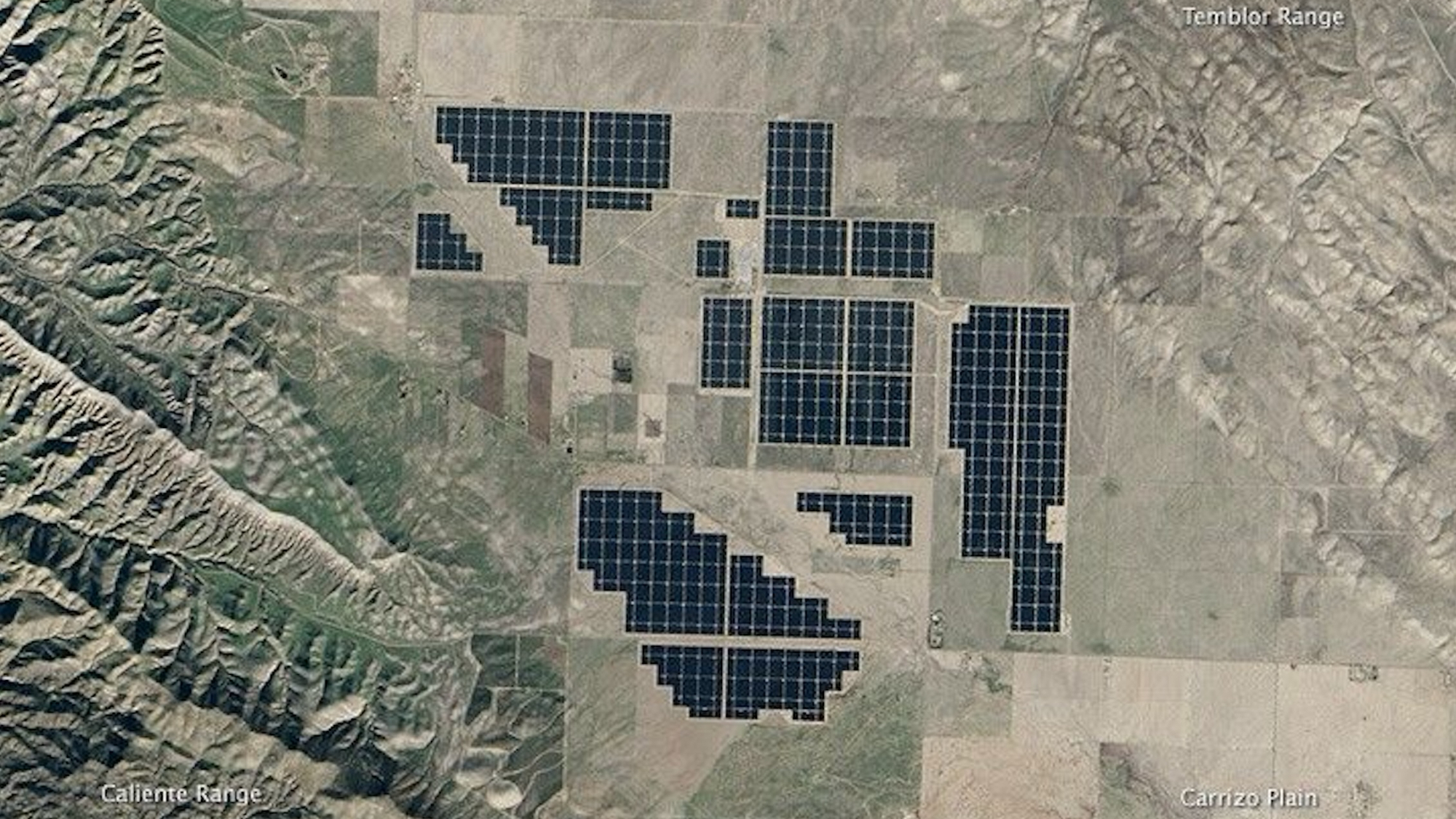
a large set of dark solar arrays in a desert landscape, seen from space

The Topaz Solar Farm in California, which covers 9.5 square miles (25.6 square kilometers), as seen from space. Reflect Orbital's planned space-mirror constellation could make such arrays more productive, according to the company. (Image credit: NASA Earth Observatory image by Jesse Allen, using Landsat data from the U.S. Geological Survey)

Not everybody is thrilled about Reflect Orbital's plans, however. Satellite megaconstellations in general are controversial. Some folks object to how they're changing the night sky, for example, and others worry that deorbiting huge numbers of satellites will pollute Earth's atmosphere with heavy metals.

There are some specific concerns about Reflect Orbital's plans as well — namely, that it will introduce a new type of light pollution for people and ecosystems to deal with.

"The beam reflected by these satellites is very intense, four times brighter than the full moon, and they will be flying multiple satellites in a formation," John Barentine, an astronomer at the Silverado Hills Observatory in Tucson, Arizona and a consultant at Dark Sky Consulting, previously told Space.com.

"That will have an effect on wildlife in the directly illuminated area, but also, through atmospheric scattering, on the surrounding areas as well," he added.

Reflect Orbital stresses that it will do its best to minimize such potential impacts.

"We design for safety in three ways: 1) the light is contained within the spot, 2) the light can be turned off quickly and at any time so that none of it reaches the Earth, and 3) we can intentionally avoid sensitive areas like research observatories or protected habitats," the company's website states.

"The light is not bright enough to start fires or harm eyes, even when viewed through a telescope, and cannot be concentrated past maximum natural sunlight irradiance," it adds.

SpaceX Falcon 9 rocket launches for 35th time, hauls Starlink satellites to orbit (video)

A SpaceX rocket just inched closer to the record books.

A Falcon 9 vehicle lifted off from Vandenberg Space Force Base in California tonight (July 10) at 11:01 p.m. EDT (8:01 p.m. local time; 0301 GMT on July 11), carrying 29 of SpaceX's Starlink broadband satellites toward low Earth orbit (LEO).

It was the 35th flight for this rocket's first stage, a booster designated B1071. The SpaceX record is 36, set just a few days ago by B1067 on another Starlink mission.

A SpaceX Falcon 9 rocket launches 29 Starlink satellites from California's Vandenberg Space Force Base on July 10, 2026.

A SpaceX Falcon 9 rocket launches 29 Starlink satellites from California's Vandenberg Space Force Base on July 10, 2026. (Image credit: SpaceX)
Previous Booster B1071 launches

And, there will likely be more flights for B1071 down the road. The booster came back to Earth for a touchdown tonight as planned, landing in the Pacific Ocean on the SpaceX droneship "Of Course I Still Love You" about 8.5 minutes after launch.

The Falcon 9's upper stage, meanwhile, continued carrying the 29 Starlink satellites aloft. They're scheduled to be deployed in LEO about 62 minutes after launch.

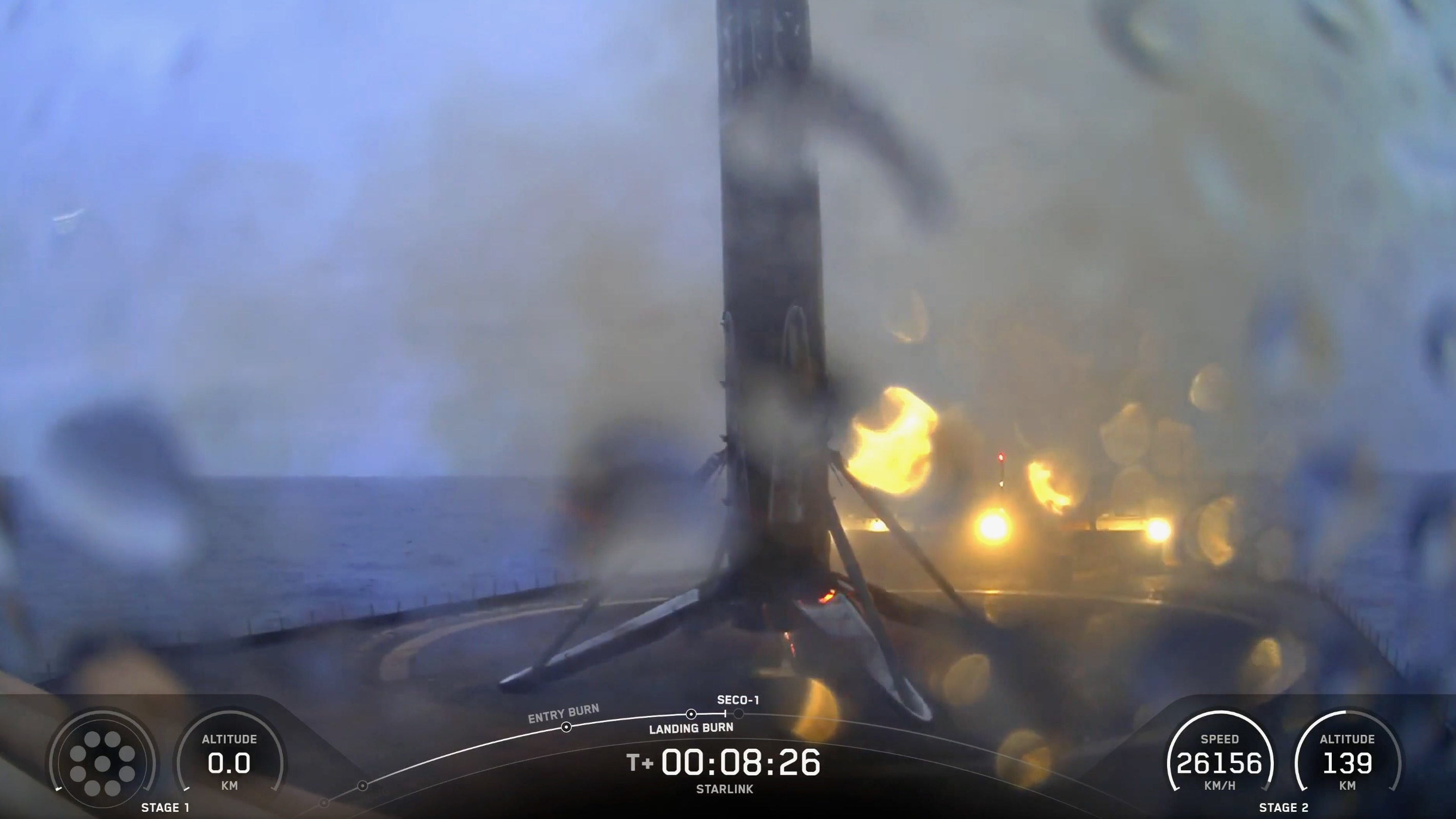
The first stage of a SpaceX Falcon 9 rocket rests on a ship at sea shortly after launching 29 Starlink satellites from California's Vandenberg Space Force Base on July 10, 2026.

A Falcon 9 first stage rests on a ship at sea shortly after launching 29 Starlink satellites from California's Vandenberg Space Force Base on July 10, 2026. (Image credit: SpaceX)

The Starlink megaconstellation currently consists of more than 10,700 active satellites, according to tracker Jonathan McDowell. The network is growing all the time, however, and it could eventually get very large indeed; SpaceX recently applied for approval to operate 100,000 of the spacecraft in LEO.

Tonight's launch was the 81st Falcon 9 mission of 2026. About 80% of them have been Starlink flights.

Making history! China lands rocket during an orbital launch for 1st time ever (video)

China just notched a huge spaceflight milestone.

The nation has recovered a rocket during an orbital launch for the first time ever, pulling off the feat during the Long March 10B's maiden liftoff on Friday (July 10). And that recovery was unique: The rocket's first stage nestled softly into a net-like structure carried by a ship at sea.

"This mission marks my country's first successful controlled recovery of a launch vehicle and the world's first network-based recovery of a launch vehicle," the China Aerospace Science and Technology Corporation (CASC) announced via social media shortly after the launch. (Translation by Google.) "It signifies a historic breakthrough for my country in the field of reusable rocket technology and will lay a solid foundation for accelerating the improvement of my country's space access capabilities."

The first stage of a Chinese Long March 10B rocket comes down for a landing at sea after successfully sending a satellite to orbit on July 10, 2026.

The first stage of a Chinese Long March 10B rocket comes down for a landing at sea after successfully sending a satellite to orbit on July 10, 2026. (Image credit: CCTV)

The Long March 10B is a two-stage rocket that stands about 207 feet (63 meters) tall, according to the state-owned CASC, the main contractor for China's space program.

The vehicle's first stage burns kerosene and liquid oxygen (LOX) propellants, whereas the second stage uses LOX and liquid methane. In reusable mode, the Long March 10B can loft about 16 tons of payload to low Earth orbit.

And the rocket flew with a payload on its debut liftoff — a satellite that successfully reached "its predetermined orbit," according to the CASC update. That post did not provide any details about the spacecraft or its orbit. It did give a brief rundown of the first-stage recovery, however.

"Approximately 6 minutes after the first and second stages separated, the first stage returned vertically and was successfully recovered at a sea-based recovery platform using a net system," CASC officials wrote, noting that launch occurred from the Hainan Commercial Space Launch Site on Friday at 12:15 a.m. EDT (0415 GMT; 12:15 p.m. Beijing time.) "The launch and first-stage recovery missions were a complete success."

China plans to refly the first stage by the end of the year, they added.

Until now, vertical landings of orbital-class rockets had been performed only by SpaceX, which does them on a regular basis. Indeed, Elon Musk's company has landed orbital rockets more than 600 times to date.

Such extensive reuse has allowed SpaceX to fly more cheaply and efficiently than its competitors and dominate the launch market — something that China is working hard to emulate.

The Long March 10B's "reusable configuration significantly reduces launch costs, offering advantages of large payload capacity and high cost-effectiveness," CASC officials wrote in the post-launch update.

Other partially reusable Chinese rockets are in the works as well, including CASC's Long March 12A and the Zhuque-3, a vehicle built and operated by the Beijing-based company Landspace. Both of those rockets debuted this past December, with similar results: They reached orbit as planned, but their first stages didn't stick the landing.

The Chinese companies CAS Space, Galactic Energy and Deep Blue Aerospace are developing reusable vehicles of their own — Kinetica-2, Pallas-1 and Nebula 1, respectively. So, before too long, Chinese rockets could be returning to Earth with a frequency that rivals SpaceX's workhorse Falcon 9.

SpaceX wants to launch 100,000 Starlink satellites to orbit

SpaceX is nothing if not ambitious.

Elon Musk's company just filed an application with the U.S. Federal Communications Commission (FCC) to operate a 100,000-member constellation of "Gen3" satellites in low Earth orbit (LEO).

This will presumably be an updated version of SpaceX's Starlink broadband network, according to astronomer and satellite tracker Jonathan McDowell, who reported the news via X today (July 9).

The new plan would dramatically expand Starlink's already extensive orbital footprint. SpaceX currently operates nearly 10,800 of the internet spacecraft in LEO and has FCC approval for about 4,000 more.

And each individual Gen3 satellite will be considerably larger than its predecessors. According to McDowell, SpaceX's FCC application states that each one will weigh 4,400 to 5,500 pounds (2,000 to 2,500 kilograms) and cover an area of 3,230 to 4,300 square feet (300 to 400 square meters) with its solar arrays extended.

For perspective: The Starlink satellite version that SpaceX is launching these days, known as the V2 Mini, weighs about 1,760 pounds (800 kg) and covers about 1,250 square feet (116 square meters), according to SpaceflightNow.

SpaceX launches V2 Minis aboard its workhorse Falcon 9 rocket, generally in fleets of 29 satellites apiece. The Gen3 is so big, however, that it will probably need to fly on Starship, the giant, super-heavy-lift rocket that SpaceX is developing to help get people to the moon and Mars, among other tasks.

Starlink Gen3 isn't even the biggest satellite assemblage that SpaceX is cooking up: The company also aims to build a million-strong AI megaconstellation called Starmind.

"Launching a constellation of a million satellites that operate as orbital data centers is a first step towards becoming a Kardashev II-level civilization, one that can harness the sun's full power, while supporting AI-driven applications for billions of people today and ensuring humanity's multi-planetary future," Musk wrote in a February 2026 update about the planned AI constellation.

A number of other companies, including Amazon and Blue Origin, are also building out large constellations in LEO, or plan to do so in the near future.

A variety of people and organizations have objected to how crowded Earth orbit is becoming, voicing concerns about the effects on astronomical observations, wildlife, Earth's atmosphere and humanity's enjoyment of the night sky, among other issues.

SpaceX Falcon 9 rocket launches for record-breaking 36th time

A SpaceX Falcon 9 rocket launched for a record-breaking 36th time early Thursday morning (July 9).

The Falcon 9 lifted off from Florida's Cape Canaveral Space Force Station on Thursday at 5:25 a.m. EDT (0925 GMT), carrying 29 of the company's Starlink broadband satellites to low Earth orbit (LEO).

This particular booster, known as 1067, had already completed 35 orbital missions, more than any other SpaceX rocket in history. The overall record is held by NASA's space shuttle Discovery, which flew to orbit and back 39 times.

Thursday's flight extended Booster 1067's company record. The rocket returned to Earth about 8.5 minutes after liftoff, landing on the SpaceX drone ship "A Shortfall of Gravitas" stationed in the Atlantic Ocean.

This SpaceX Falcon 9 rocket launched for a record-breaking 36th time on July 9. (Image credit: SpaceX)

The Falcon 9's upper stage, meanwhile, hauled the 29 Starlink satellites to LEO and deployed them there 63.5 minutes after launch as planned.

Previous Booster 1067 missions

Thursday's launch was the 80th Falcon 9 mission of the year already. About 80% of the rocket's 2026 flights have been devoted to building out Starlink, by far the largest satellite network ever assembled.

The megaconstellation currently consists of more than 10,700 active satellites, according to tracker Jonathan McDowell. And, as Thursday's launch shows, that number is growing all the time.

Editor's note: This story was updated at 5:40 a.m. ET with news of successful rocket launch and landing.

Even astronauts in space saw America 250 fireworks on the Fourth of July. See their ISS view of Los Angeles (video)

The U.S. just celebrated its 250th birthday, and Americans living off the planet had a great view of some of the parties down below.

"The International Space Station orbited over Los Angeles on July 4th as America marked 250 years of independence with a burst of fireworks lighting up the city below — a celebration so bright it reached all the way to space!" NASA officials said on Monday (July 6) via the agency's ISS X account.

That post featured a 15-second video captured from the orbiting lab, which showed hundreds of firework shows flickering across the L.A. area at night like cameras flashing in quick succession at a concert or a football game.

There are seven people living in Earth orbit at the moment, members of the ISS' current Expedition 74. Three are Americans: NASA astronauts Jack Hathaway, Jessica Meir and Chris Williams, all of whom serve as flight engineers.

The others are the European Space Agency's Sophie Adenot and cosmonauts Andrey Fedyaev, Sergey Kud-Sverchkov and Sergei Mikaev. Kud-Sverchkov is Expedition 74's commander, while Adenot, Fedyaev and Mikaev are flight engineers.

NASA didn't just passively observe celebrations of the United States' 250th birthday; the agency marked the occasion in multiple ways as well.

For example, NASA painted big "America 250" logos on the Space Launch System rocket that launched the Artemis 2 astronauts around the moon this past April. The four Artemis 2 crewmates also wore special patches commemorating the anniversary.

In addition, NASA conducted a series of airplane flyovers in the Washington, D.C. area over the July 4 weekend and will perform more in the coming weeks and months. You can learn more about the agency's anniversary activities in this Space.com story.

SpaceX launches 81 satellites to orbit from California, lands rocket on ship at sea

SpaceX launched a passel of satellites to orbit early Tuesday morning (July 7).

A Falcon 9 rocket carrying 81 payloads lifted off from California's Vandenberg Space Force Base on Tuesday at 3:12 a.m. EDT (0712 GMT; 12:12 a.m. local California time), kicking off a mission SpaceX called Transporter-17.

As that name suggests, Transporter-17 was the 17th flight of SpaceX's Transporter rideshare program. The company operates another rideshare series as well, called Bandwagon, which has launched four missions to date.

The 20 Transporter and Bandwagon missions that flew before Transporter-17 sent more than 1,800 payloads to Earth orbit. Transporter-1 lofted 143 of those back in January 2021, which remains the global single-launch record.

The 81 payloads that went up on Transporter-17 included "cubesats, microsats, hosted payloads and orbital transfer vehicles carrying eight of those payloads to be deployed at a later time," SpaceX wrote in a mission description.

Perhaps the biggest satellite riding the Falcon 9 on Tuesday was CAS500-4, a South Korean Earth-observation craft that tips the scales at about 1,100 pounds (500 kilograms).

The satellite, whose name is short for "Compact Advanced Satellite 500-4," is the fourth member of a planned five-satellite CAS500 fleet in low Earth orbit (LEO). CAS500-4 will help the South Korean government monitor crops and forests, among other tasks.

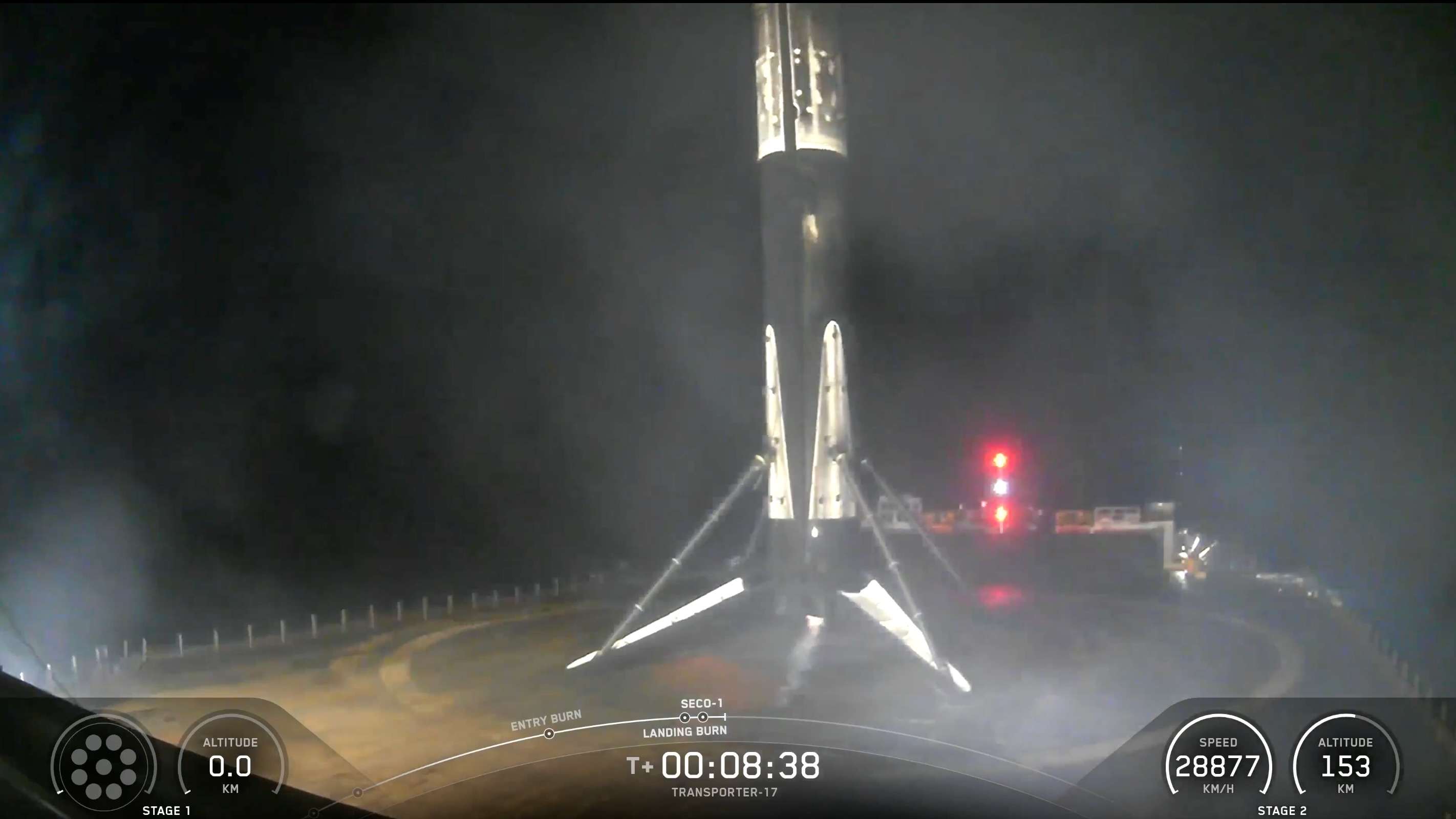
a black and white rocket rests on the deck of a ship at sea at night

The first stage of a SpaceX Falcon 9 rocket rests on the deck of a drone ship shortly after launching the Transporter-17 rideshare mission from Vandenberg Space Force Base in California on July 7, 2026. (Image credit: SpaceX)

The first stage of the Transporter-17 Falcon 9 landed about 8.5 minutes after launch on the SpaceX droneship "Of Course I Still Love You," which was stationed in the Pacific Ocean. It was the 11th flight for this particular booster, according to the company's Transporter-17 mission description.

The Falcon 9's upper stage, meanwhile, continued hauling the 81 payloads to LEO, where they'll be deployed starting about 50.5 minutes after launch. CAS500-4 won't be released until nearly 2.5 hours after liftoff.

Transporter-17 was the 79th Falcon 9 launch of 2026. Nearly 80% of this year's missions have been devoted to building out Starlink, SpaceX's giant broadband constellation in LEO.

Editor's note: This story was updated at 3:25 a.m. ET on July 7 with news of successful launch and rocket landing.