Humanity has likely dreamed of flight since the very beginning, marveling at birds soaring overhead and trying to puzzle out their seemingly magical secret.
We made some halting steps over the centuries — getting kites aloft in ancient China, for example, and drawing up ambitious but unrealized flying machines during the Renaissance — but our boots were still firmly rooted on the ground when the United States of America was born on July 4, 1776.
Things changed just a few years later, however. In November 1783, a hot-air balloon designed by the Montgolfier brothers carried two men on a 25-minute flight over Paris, beginning our species' exploration of the heavens.
Another 120 years passed before we managed to fly with a powered, heavier-than-air craft, a milestone notched by the Wright brothers in North Carolina on Dec. 17, 1903. Remarkably, it took us less than half that long to make the jump from the sky to the final frontier, which cosmonaut Yuri Gagarin did for the first time on April 12, 1961.
Eight years later, Apollo 11 astronauts Neil Armstrong and Buzz Aldrin walked on the moon — a remarkable achievement that was the climactic moment of the Cold War space race between the United States and the Soviet Union.
Over the next three and a half years, five more Apollo missions landed on Earth's nearest neighbor, leaving behind flags, footprints and defunct machinery. Now, more than half a century later, our species is gearing up to go back — but this time, in a much different way.
NASA wants to build a base near the moon's south pole over the next decade or so, an ambitious project the agency is undertaking via its Artemis program. And this is not an end in itself; NASA believes the knowledge gained from establishing such an outpost will help humanity make the next giant leap — to Mars.
The ball is rolling on Artemis, with two successful missions already in the books. Artemis I launched an uncrewed Orion capsule to lunar orbit and back in late 2022, and Artemis II sent four astronauts on a loop around the moon this past April. Next up is Artemis III, which will test docking procedures with one or both of the Artemis program's lunar landers (SpaceX's Starship and Blue Origin's Blue Moon) in Earth orbit in 2027. If all goes well with that flight, Artemis IV will put astronauts down near the lunar south pole, possibly as soon as 2028. (That timeline is far from guaranteed, however, as much development work remains. For example, neither Starship nor Blue Moon has yet reached Earth orbit or been cleared to carry humans.)
This is all happening in the context of a new space race, this time with China. The nation plans to land astronauts on the moon by 2030 and has been ticking boxes that keep this timeline within reach. And China aims to build a base of its own — also near the moon's south pole, which is thought to be rich in water ice — in collaboration with Russia and other partners.
What does all of this mean for the United States? Well, the nation came of age industrially after the Wright brothers' historic flight and has been a leader in aerospace tech and exploration ever since. The U.S. can accomplish amazing things in the final frontier, especially when pushed by a rival, so the years just after its 250th birthday may be quite eventful indeed. Stay tuned!
The United States has taken some significant steps into the final frontier during its first 250 years.
The nation has put people on the moon, helped build and operate a long-running space station in low Earth orbit (LEO) and sent fleets of robotic explorers to many corners of the solar system — and even beyond it, into interstellar space.
All of this work has been done relatively recently, as the space age didn't dawn until 1957; when the U.S. was born on July 4, 1776, humanity was still seven years away from even balloon-borne flight. Where might we be another 250 years from now, on the nation's 500th birthday, should it be fortunate enough to live that long? Trying to see that far into the future is so difficult as to be a fool's errand, but it's fun. So let's have a brief and far from exhaustive crack.
A vibrant in-space economy
The United States and other space powers have already established an off-Earth economy — one based on the activities of communications satellites. Companies like Vantor and Planet sell imagery to a variety of customers, for example, while others like SpaceX (via its subsidiary Starlink) and Viasat provide internet service from above.
That nascent industry will doubtless expand greatly over the next 250 years, and we're already seeing some of the directions it may go. For instance, space tourism has gotten off the ground; wealthy people can book trips to suborbital space, and the super-rich can fly all the way to Earth orbit, as the experience of NASA chief Jared Isaacman shows. (Isaacman, a tech billionaire, has funded and commanded two missions around our planet using SpaceX hardware.)
We've also seen the dawn of in-space manufacturing, with companies such as Made In Space making stuff off Earth and bringing it down for analysis (and eventually, if all goes to plan, sale). This is a field that could really explode over the coming years and decades, according to Dava Newman, director of the Human Systems Lab at the Massachusetts Institute of Technology, who served as deputy administrator of NASA from 2015 to 2017.
"If you give me a nice big time horizon to look at, I've actually always thought it would be a pharmaceutical breakthrough — manufacturing, more medical-related," Newman told Space.com.
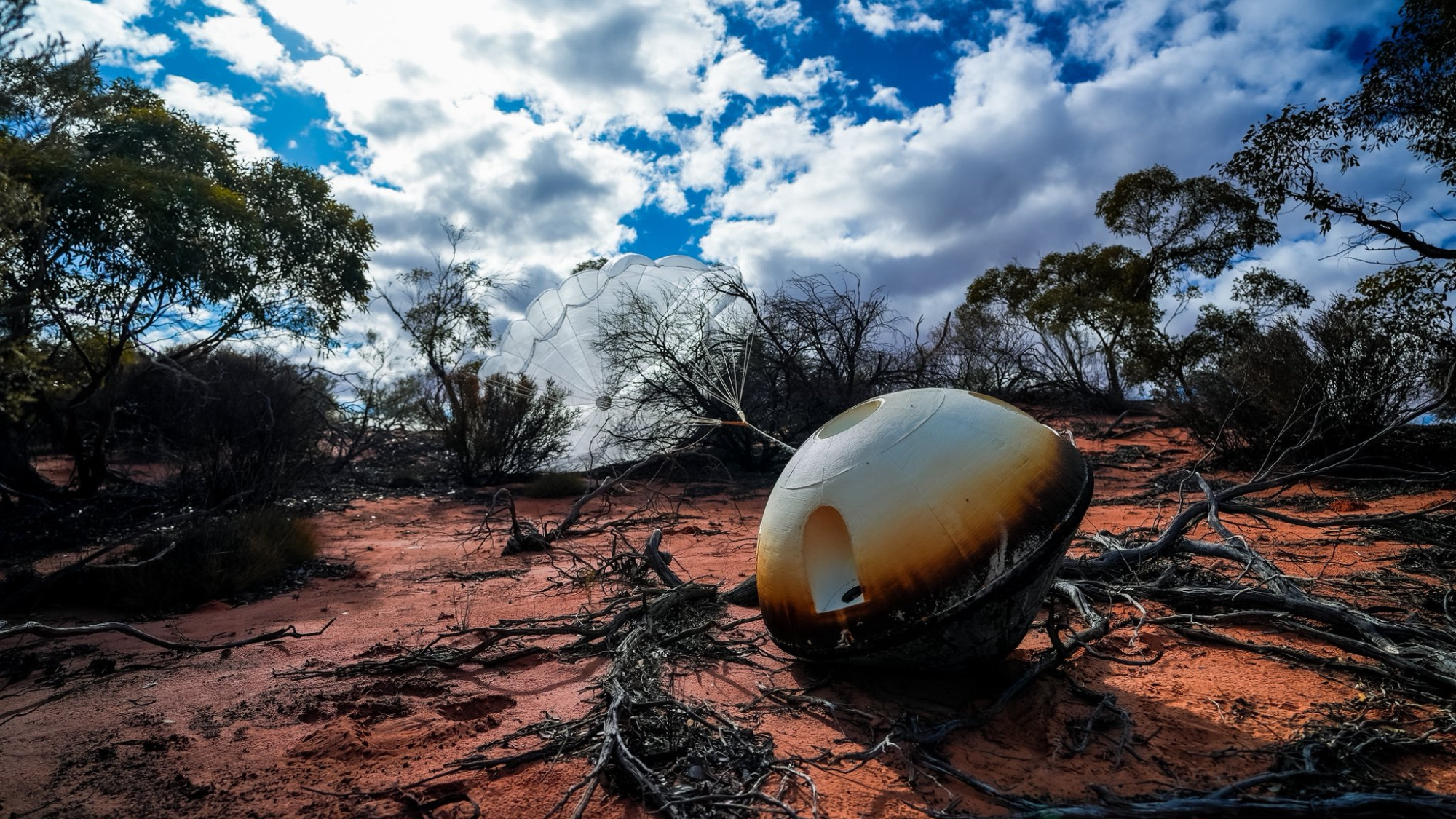
That's because the microgravity environment is great for growing flawless crystals, potentially enabling a newly efficient and effective production line for a wide range of pharmaceuticals and other high-value goods. The California company Varda Space recently demonstrated this potential, successfully crystallizing a stable form of the HIV drug ritonavir in one of its orbital "minifactories" and bringing the drug safely down to Earth.
Varda Space's third reentry capsule landed in South Australia's Koonibba Test Range on May 13, 2025 (May 14 local time). (Image credit: Varda Space/Rocket Lab)
Asteroid mining, too
There are other potential drivers of a booming off-Earth economy as well. Futurist, astrophysicist and sci-fi author David Brin pointed to asteroid mining, which several American companies, including AstroForge and TransAstra, are investigating seriously already.
"That's where the riches are," Brin told Space.com.
Those riches come in several forms. For starters, many asteroids are thought to harbor considerable amounts of water, which humanity could leverage for life support and split into oxygen and hydrogen, key components of rocket fuel. Space-rock mining could therefore enable the operation of off-Earth propellant depots, which would allow voyaging spacecraft to top off their tanks on the go and explore the solar system more deeply and ambitiously.
Then there are the metals — industrial-grade stuff like iron and nickel, which could feed the off-Earth manufacturing industry, and precious species such as platinum. So there are huge economic opportunities for us in the asteroid belt, according to Brin.
“The question is, will we be able to leverage asteroidal resources to get a takeoff industry out there?" he said. "And will we remain friends with the robots out there that are doing all of the work?”
That latter question is a serious one, for robotics and artificial intelligence will advance a great deal over the next 250 years. Indeed, humanity will likely merge with robots in meaningful and ethically confounding ways, according to Brin.
"There will be fuzzy boundaries between us and the robots," he said. Our species, Brin added, may eventually "range from residual totally organic types through cyborgs and multilinked clusters all the way to robots who either think of themselves as human citizens, or at least know that it's in their best interest to fool us into thinking they think that."
Living off Earth
There's no guarantee that the U.S. will be able to exploit the plentiful resources of the asteroid belt by 2276. For instance, Brin stressed that the nation, and the world at large, are in danger of falling into a sort of "lobotomized feudalism," which could derail most of our spaceflight hopes and dreams.
If we can avoid that trap, however, Brin thinks that asteroid mining could fuel our expansion into the solar system over the coming decades.
"I have no doubt that, if we restore a rational, scientific civilization, there will be city lights on the moon," Brin said. "I am hoping there will be city lights on the asteroids."
Newman has a different outlook. For starters, she's opposed to the idea of transplanting human civilization on a large scale to pristine worlds.
"I'm not a fan, of course, of colonization," she said. "We should never do that. History should teach us something."
She also doesn't see a business case that would drive companies to spend large amounts of money on moon and Mars activities, which could be prerequisites for the establishment of large human settlements there. And she's skeptical that many people would want to pack up their lives and move to Mars or the moon permanently.
"There's a reason Antarctica is not populated," Newman said. "I love it, I can't get enough of it, but that's pretty crazy. Most people don't want to be in a very isolated, confined environment."
Mars settlement, she added, "doesn't make any sense. It's not Option B. We have to take care of this planet."
Newman still thinks that we should (and will) explore the moon and Mars in the not-too-distant future. But she envisions a much smaller-scale effort that's driven by ambitious science goals — a committed search for signs of life on Mars, for example. This effort will likely start with small outposts on the moon, which will serve as stepping stones for similar activities on the Red Planet.
This vision is not exactly far-fetched; it's the approach that NASA is currently taking with its Artemis program. The agency plans to build an astronaut outpost near the lunar south pole over the next decade or so, then use the information gained to send astronauts to Mars in the late 2030s or 2040s.
A moon or Mars base would be a huge breakthrough, of course, but it wouldn't be our species' first toehold in the final frontier. We've had one since November 2000, when the International Space Station — a partnership involving the space agencies of the U.S., Russia, Europe, Canada and Japan — began hosting astronauts on a continuous basis. The orbiting lab has been occupied by rotating crews ever since.
Are we alone?
The U.S., and the world at large, will doubtless make great strides in space science over the coming years as well. Indeed, Newman thinks we will answer perhaps the biggest question of all — and doing so won't take anywhere close to 250 years.
"I think definitely we will have found [alien] life," she said. "I think we might find the evidence of life — and it's probably going to be past life — in the coming decade."
Her optimism is based on a number of data points. One is the example of our own planet: Life sprang up here about four billion years ago, not long after Earth had cooled enough to support oceans on its surface. That suggests it doesn't take a miracle for a world to go from habitable to inhabited.
And our solar system hosts multiple worlds that could be habitable. Multiple moons in the outer solar system — Saturn's Enceladus and Jupiter's Europa, for example — host big liquid-water oceans beneath their icy shells. Titan, Saturn's biggest satellite, hosts hydrocarbon lakes and streams on its surface and likely has a buried water ocean as well, raising the possibility that it could support two entirely different types of life.
Then there's Mars. Scientists know that the Red Planet had lots of surface water in the distant past, around four billion years ago. They see evidence of lakes and streams in many Martian locales, some of which have been explored by rovers like Curiosity and Perseverance. And both of those NASA robots have discovered complex organics, the carbon-containing building blocks of life as we know it. Such molecules are not convincing evidence of life, but they're suggestive and intriguing. And humanity aims to follow up on such finds — possibly by astronauts working out of a research base. Mars is therefore the place where we'll likely make the big discovery, Newman said.
Brin was similarly optimistic, predicting that we'll find evidence of alien life in the next 20 years "if we reclaim our potential as an exploratory culture." Mars could be the place it's found, but he thinks the chances are perhaps even greater on Titan and "ice roof" worlds like Europa and Enceladus.
"I would bet 3 to 1 odds we'll find life under ice roofs," Brin said.
If multiple icy moons have life, and we can confirm that each one represents an independent origin, that would tell us something very profound: That life is exceedingly common across the universe.
"It would mean that every star you can see, except perhaps the blue supergiants, has life," Brin said.
The search for intelligent life
The first alien lifeforms we find will probably be microbes, because most life across the universe is likely microbial. That's an inference we can take from Earth, the only inhabited world we know of: Life here remained single-celled for about three billion years, suggesting it's tough to make the leap to more complex organisms.
Becoming a technological civilization is another big leap, one that humanity made just a few centuries ago. But given the vastness of the universe, in both time and space, life has probably made this leap in other places as well, and Brin is bullish on our chances of crossing paths with such aliens — provided we make the right choices in the near future.
“If we restore a dynamic and scientific civilization, we might get some answers to that within 20 to 30 years," he said.
Those answers might come close to home, in the form of long-hidden "lurker" probes sent to our solar system to monitor us on the sly. Or we might pull a world-changing SETI (search for extraterrestrial intelligence) signal from the sky, one that could not have come from a natural, astrophysical source.
Given how young humans are technologically, however — we started launching things to space less than 70 years ago, after all — we probably won't get the drop on advanced aliens, if they're out there.
"Is it likely that intelligent life will actually find us before we find them? I think that's a pretty good probability," said Newman, who sits on the SETI Institute's board of directors.
And we have a chance to mature greatly as a spacefaring civilization over the next 250 years, Brin said. If everything goes well — we don't fall back into feudalism, for example, and we fully exploit the resources of the asteroid belt — the U.S., and humanity overall, we will likely be able to explore other star systems in a meaningful way. He cited laser sailing as a promising propulsion method, one that could send robots — and perhaps cybernetic versions of ourselves — very far afield on reasonable timescales.
"If we make a dynamic, enlightenment civilization, then it's 100% that we'll send somebody out there," Brin said.
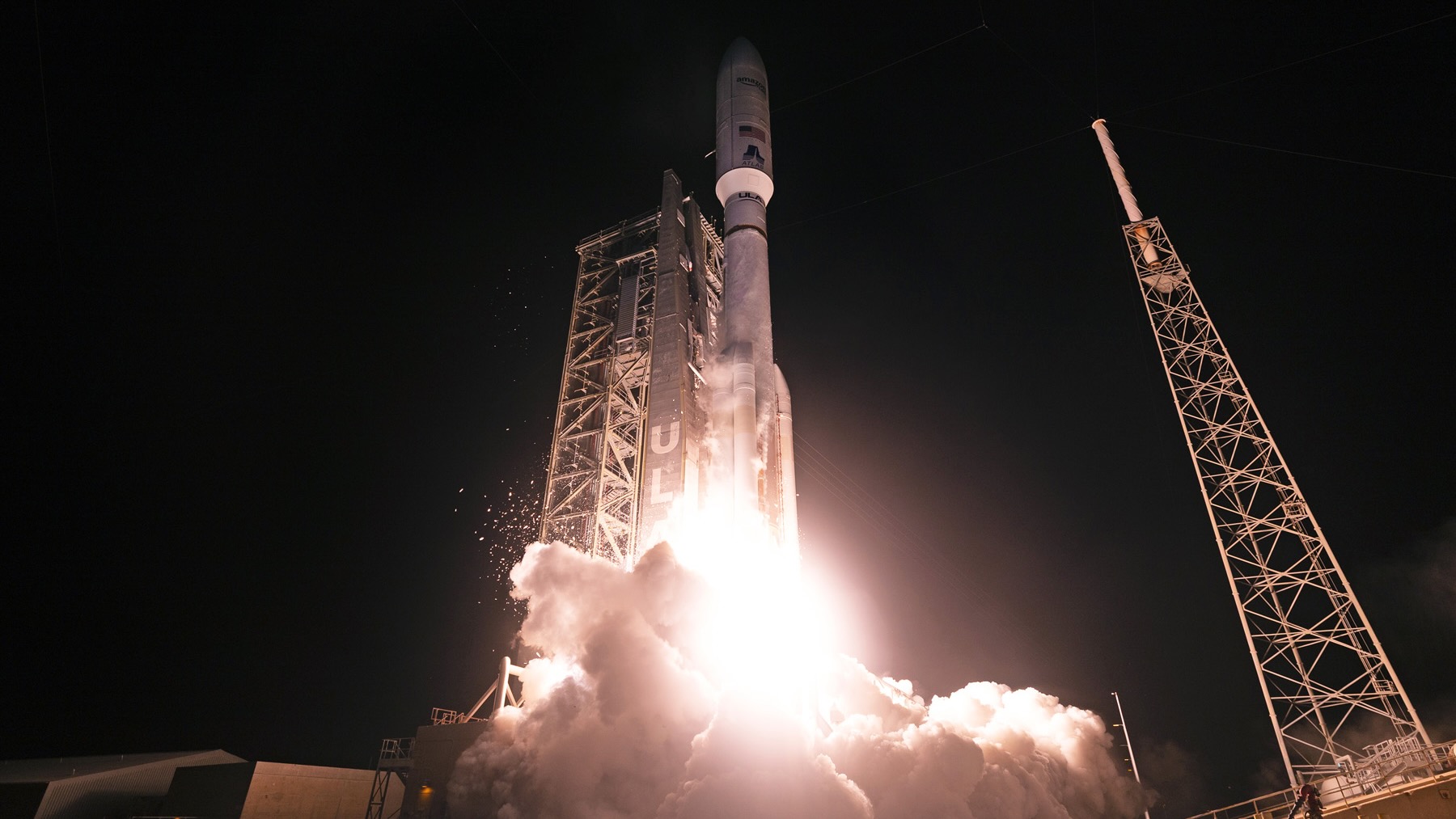
All of the satellites were successfully deployed in low Earth orbit (LEO) as planned, ULA announced 70 minutes after liftoff.
A United Launch Alliance Atlas V rocket launches 29 Amazon Leo satellites from Cape Canaveral Space Force Station on July 2, 2026. (Image credit: ULA)
Amazon Leo is the Amazon's broadband megaconstellation in LEO (hence the name), which will eventually consist of about 3,200 satellites. It will compete with SpaceX's Starlink network, which has nearly 11,000 satellites at present and is growing all the time.
About 400 Amazon Leo craft have reached orbit on a total of 15 missions to date, atop three different rockets — the Atlas V, SpaceX's Falcon 9 and Arianespace's Ariane 6.
The Atlas V has been the most active of this trio, conducting nine of the liftoffs for the megaconstellation, which was originally known as Project Kuiper. (The first of those Atlas V launches lofted two prototype satellites, not operational craft, which explains why Thursday's mission was called Amazon Leo 8 rather than Amazon Leo 9.)
The Atlas V that flew on Amazon Leo 8 was the 551, the most powerful variant of the rocket. The numbers mean that it sports five solid rocket boosters, a 5-meter-wide (16.5 feet) payload fairing and a Centaur upper stage with a single engine.
The 29 Amazon Leo satellites that went up on Thursday weighed a total of about 18 tons, tying the record for the heaviest load ever launched by an Atlas V. That mark was set on the Amazon Leo 5 mission in early April and has been equaled multiple times since.
Editor's note: This story was updated at 2:50 a.m. ET on July 2 with news of successful launch and satellite deployment.
Jared Isaacman is doing his best to spur his country on to sporting glory.
The NASA chief announced on Tuesday (June 30) that the agency will send a FIFA World Cup 2026 soccer ball to the moon if the U.S. men's national team manages to win the tournament, which is going on right now.
"So, a little bit of motivation for the United States here on this one," Isaacman said during a livestreamed press event on Tuesday. "We're going to one-up Alan Shepard in the golf game on the lunar surface, and we're going to get the soccer ball there."
Shepard famously smuggled two golf balls and an improvised club onto the Apollo 14 mission, which he commanded. On Feb. 6, 1971, the NASA astronaut hit those balls on the moon, becoming the first person ever to play a sport on another world.
The soccer-ball plan, by contrast, would be a sanctioned affair; Isaacman and Carlos García-Galán, manager of NASA's Moon Base program, are both behind it.
"I don't know which lander it'll wind up going in," Isaacman said during Tuesday's event, the second of the agency's monthly updates about its plans to build a crewed outpost near the lunar south pole via its Artemis program.
Turning to García-Galán, he added, "I'll leave that to you guys, to handle the payload."
"We will take on that challenge," García-Galán replied. "It will be super exciting to do that if they win. Good luck."
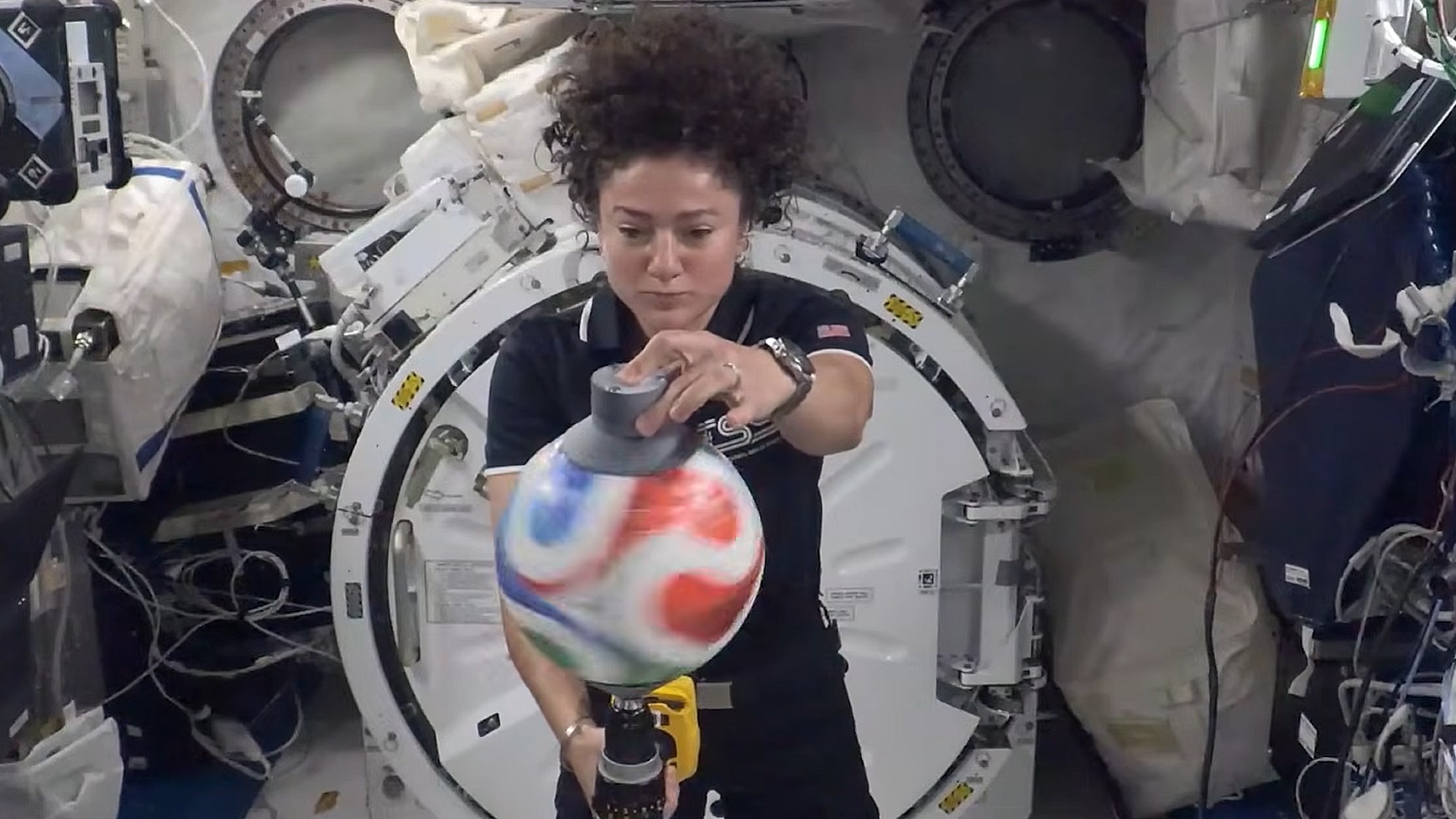
NASA astronaut Jessica Meir spins a FIFA World Cup 2026 soccer ball in microgravity aboard the ISS. (Image credit: NASA)
The U.S. men's team will probably need some luck to win the World Cup, an every-four-year event that's currently being jointly hosted by the U.S., Canada and Mexico. The American men have won just two knockout-round games in the entire history of the tournament, and one of those came in 1930, during the first-ever World Cup.
The 2026 team has performed better than most of its predecessors to this point, however; the Americans won their four-team group to advance to the single-elimination stage, beating both Paraguay and Australia before losing a meaningless game to Turkiye. (The U.S. had already clinched the group win at that point.)
The U.S. plays Bosnia-Herzegovina in a Round of 32 match on Wednesday (July 1). To hoist the World Cup trophy, the Americans would have to win that game, then four more after that, likely against some perennial soccer powers.
If they make it to the quarterfinals, for example, they'll likely face Spain, which won the World Cup in 2010 — a potential matchup flagged by García-Galán, who's from Málaga.
The U.S. women's soccer team has enjoyed a great deal more success at the international level, winning four of the nine FIFA Women's World Cups to date. (The women's tournament, which is also held every four years, was first played in 1991.)
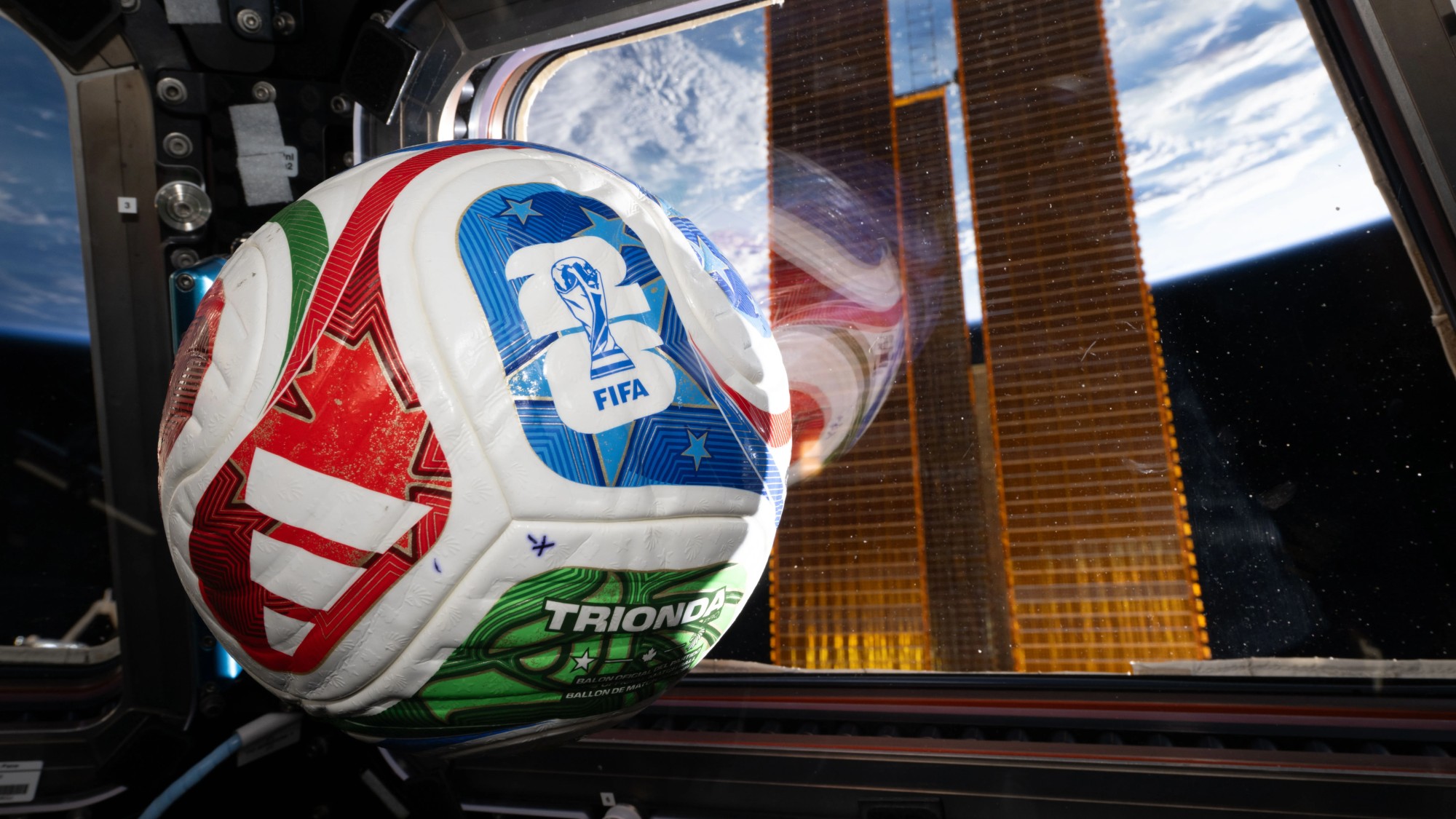
The FIFA World Cup 2026 soccer ball on the International Space Station. (Image credit: NASA)
"We're working to inspire the next generation by showing how space exploration inspires innovation in sports science — and everyday life," the agency said via X on June 20, in a post that included video of the off-Earth action.
Update for 11 p.m. ET on June 30: Rocket Lab tried to launch "The Grain Goddess Provides" mission at 9 p.m. EDT on June 30 but aborted the attempt at the last second. It's unclear at the moment what caused the abort or when the company will try to fly again.
Rocket Lab will launch a Japanese Earth-observing radar satellite to orbit tonight (June 30), and you can watch the action live.
An Electron rocket carrying the QPS-SAR-13 satellite is scheduled to lift off from Rocket Lab's New Zealand site tonight at 9 p.m. EDT (0100 GMT and 1 p.m. local New Zealand time on July 1).
You can watch the launch live here at Space.com courtesy of Rocket Lab, or directly via the company. Coverage will begin about 30 minutes before liftoff.
A Rocket Lab Electron stands on the pad shortly after a launch abort on June 30, 2026. (Image credit: Rocket Lab)
Japan-based iQPS is building a constellation of 36 satellites in low Earth orbit that study Earth using high-resolution synthetic aperture radar (SAR). SAR spacecraft can peer through clouds and gather data at night as well as during the day.
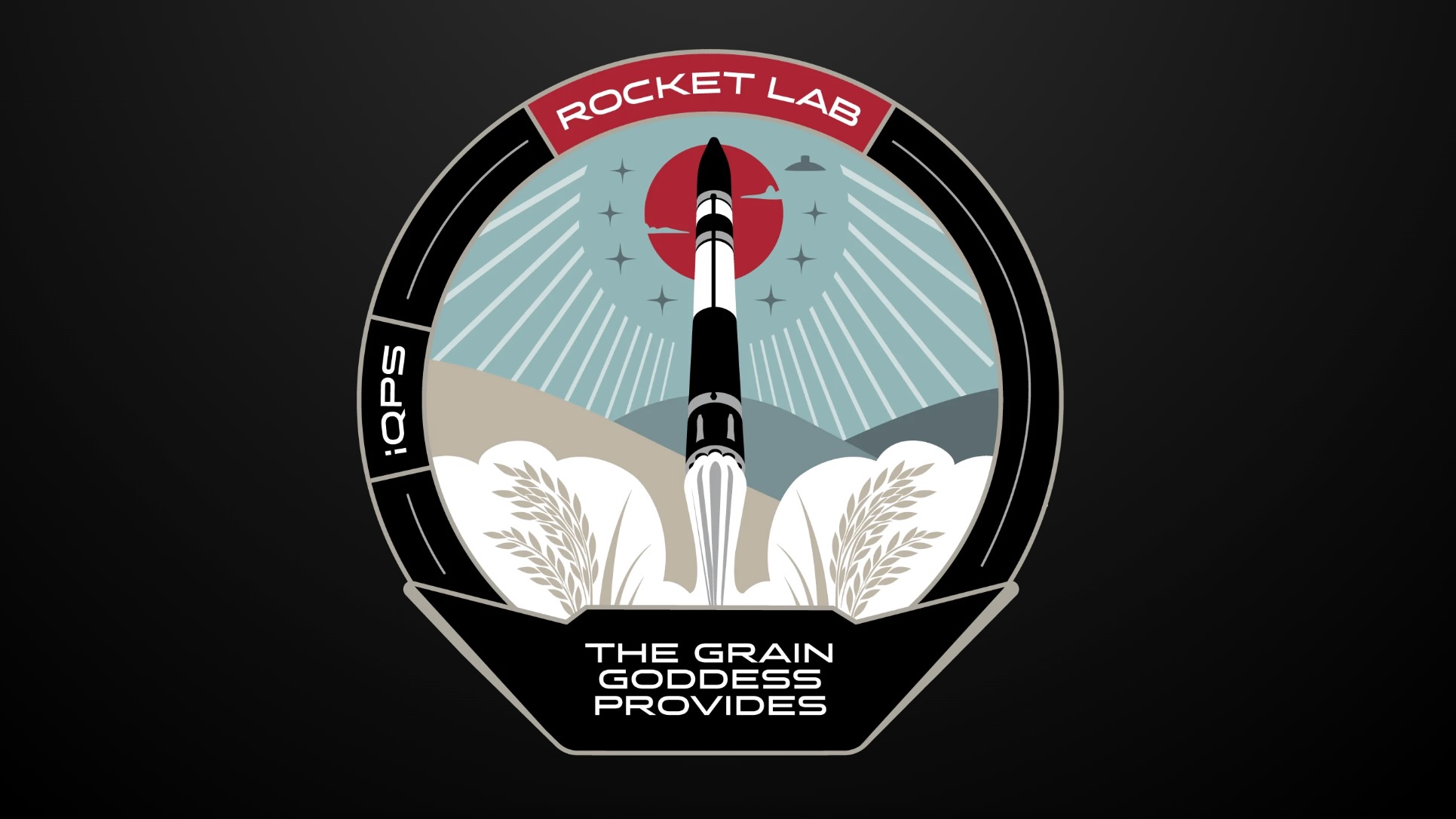
Tonight's launch, which Rocket Lab calls "The Grain Goddess Provides," will be the eighth, out of a total of 15, that it will perform to assemble iQPS' constellation.
If all goes according to plan tonight, Electron will deploy the iQPS satellite — which is nicknamed Mikura-I, after a Japanese goddess associated with abundance and prosperity — about 50 minutes after liftoff, into a circular orbit 357 miles (575 kilometers) above Earth.
The patch for Rocket Lab's "The Grain Goddess Provides" mission, which is scheduled to launch on June 30, 2026. (Image credit: Rocket Lab)
"The Grain Goddess Provides" will be Rocket Lab's 92nd mission to date and its 13th of 2026 already. The vast majority of these launches have involved the 59-foot-tall (18-meter-tall) Electron, which gives small satellites dedicated rides to orbit. A small number have been performed by HASTE , a suborbital version of Electron that helps customers test hypersonic technologies.
Tonight's launch will come just a day after Rocket Lab made a big business move: On Monday (June 29), Rocket Lab announced that it's acquiring the communications company Iridium for $8 billion.
"By combining our launch capability and satellite manufacturing with @IridiumComm’s global satellite communications network and rare spectrum, Rocket Lab becomes a fully integrated, self-launching, tier-1 space power, delivering critical communications capability to millions of users worldwide," Rocket Lab said via X on Monday.
Blue Origin has started rebuilding the launch pad damaged by an explosive accident last month, but the company is working from a very different blueprint this time around.
The company's huge New Glenn rocket exploded on May 28 during a routine engine test at Launch Complex 36A (LC-36A) at Florida's Cape Canaveral Space Force Station. The rocket was destroyed, as were some important pieces of pad infrastructure, including the lightning tower and the transporter-erector, which hauled New Glenn from its integration facility to the pad and raised it vertical upon arrival.
Blue Origin has vowed to bounce back quickly, aiming to fly the 320-foot-tall (98-meter) New Glenn again by the end of the year. Getting LC-36A rebuilt is a high priority, for the pad is currently New Glenn's only jumping-off point. And Blue Origin has made significant progress on this front the company announced today (June 30).
"Hardware recovery and debris removal operations are complete, and reconstruction of the pad has started," the company's CEO, Dave Limp, said in a statement today.
Reconstruction will not create a facsimile of the original LC-36A, however. Blue Origin is building a new version of the pad, one that lines up with a new concept of operations (ConOps) for New Glenn launches.
"We're moving to a horizontal/vertical hybrid configuration to get us flying again this year at 36A," Limp said via X today. "Let me explain what that means. We mate the stages horizontally in the Integration Facility (IF). Then we bring the integrated vehicle out to the pad, use a crane to perform the vertical breakover, and mate the payload once New Glenn is vertical. This new ConOps has the added benefit of increasing our flight cadence as well."
So the refurbished LC-36A will have a crane rather than a transporter-erector, and payload mating will occur at the pad rather than inside the IF.
According to Limp, Blue Origin had already been planning to employ this "hybrid" ConOps for the super-heavy version of New Glenn that it's developing, called the 9X4. That name references the engine configuration of the coming vehicle: nine of Blue Origin's BE-4s on its first stage and four BE-3Us in its upper stage.
The current version of New Glenn is a 7X2. It can haul about 50 tons (45 metric tons) of payload to low Earth orbit. The 9X4 will be able to carry 77 tons (70 metric tons) to LEO and will also feature a bigger payload fairing — one that's 28.5 feet (8.7 meters) wide rather than 23 feet (7 m).
Blue Origin had already been developing another Cape Canaveral pad, LC-36B, to accommodate 9X4 launches. That pad is being readied for the "hybrid" ConOps as well, according to Limp.
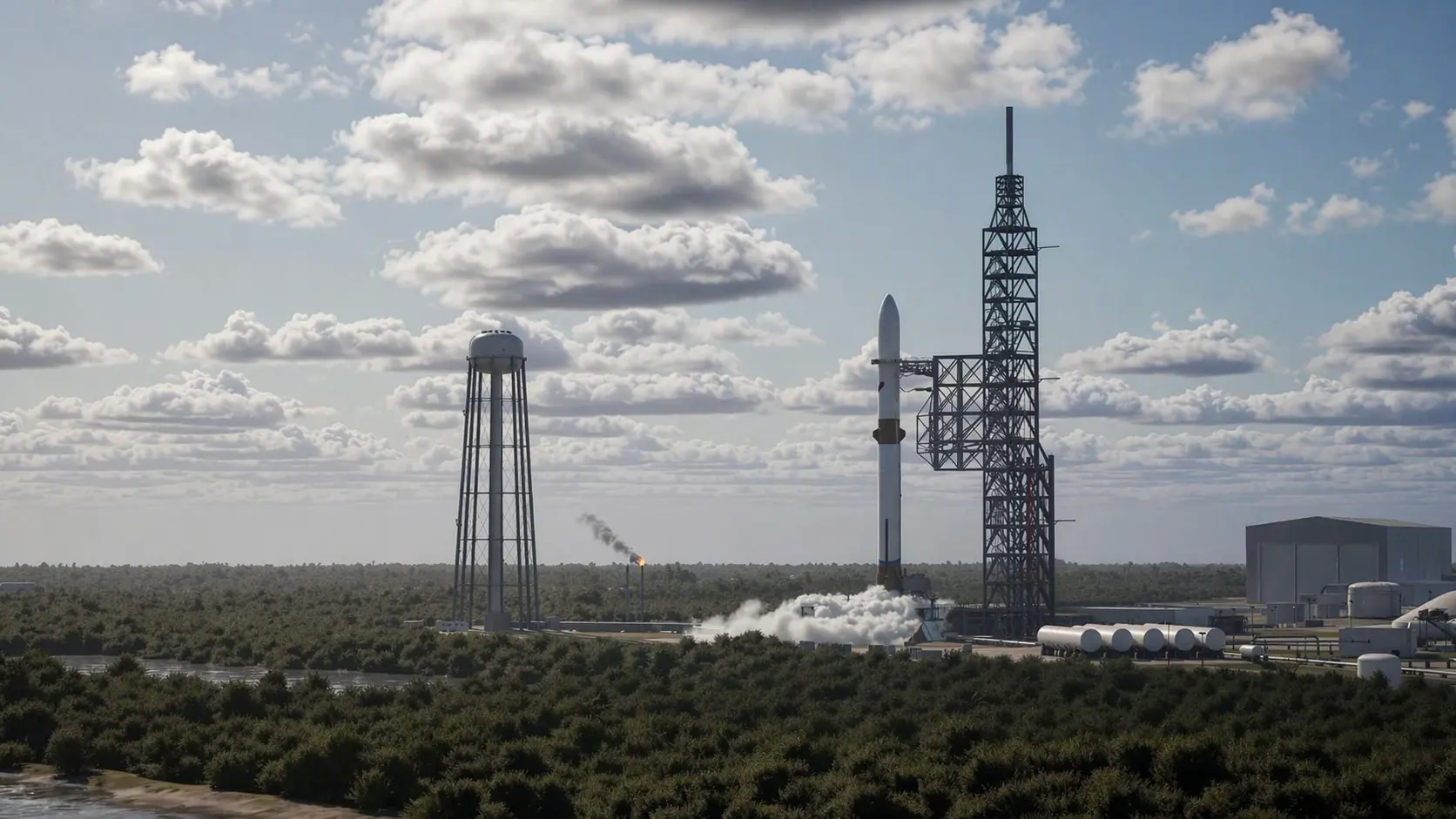
Artist's illustration of Blue Origin's New Glenn launching from the reconstructed Pad 36A at Cape Canaveral Space Force Station in Florida. (Image credit: Blue Origin)
Today's update also let us know that Blue Origin has made some progress in its investigation into the May 28 anomaly, though more work needs to be done.
"The vehicle is highly instrumented with extensive data from multiple camera angles and sensors, giving us confidence in our ability to identify and correct the root cause," Limp wrote. "Early analysis points to the aft section of the first stage."
Update for 5:30 p.m. ET on June 30: During its Moon Base update today (June 30), NASA revealed a handful of new lunar-lander contracts and announced that it's considering launching a spare Mars rover to the moon. Read all about it here.
NASA will provide an update about its moon base plans this afternoon (June 30), and you can watch it live.
Agency chief Jared Isaacman and Carlos García-Galán, the manager for NASA's moon base program, "will discuss the next set of awards for new lunar lander missions and preview upcoming opportunities as the agency works toward building a sustained presence on the moon," NASA officials wrote in a media advisory.
The event will begin today at 2:30 p.m. EDT (1830 GMT). You can watch it live here at Space.com, courtesy of NASA, or directly via the agency.
The moon base is a core piece of NASA's Artemis program, which aims to establish a permanent, sustainable human presence on and around Earth's nearest neighbor over the next decade or so.
The Artemis architecture previously called for the assembly of a small space station in lunar orbit called Gateway. In late March, however, Isaacman announced that NASA was pausing its Gateway plans and instead focusing on building a surface outpost.
That base will be constructed near the lunar south pole, which is thought to harbor large amounts of water ice, a key resource that can be used for life support and also be split into hydrogen and oxygen to provide rocket fuel.
Construction of the base will require a variety of work by robotic lunar rovers and landers. Presumably, today's press conference will shine some more light on that work and reveal which companies will be contracted to do it.
NASA has launched two Artemis missions to date. Artemis 1 sent an uncrewed Orion capsule to lunar orbit and back in late 2022, and Artemis 2 launched four astronauts around the moon this past April.
NASA is currently gearing up for Artemis 3, a crewed mission that will test docking procedures between Orion and one or two privately developed lunar landers in Earth orbit.
The agency aims to launch Artemis 3 in mid-2027. If all goes well with that flight, Artemis 4 will land astronauts near the lunar south pole, potentially as early as late 2028.
NASA astronauts Chris Williams and Jessica Meir will fix the International Space Station's Canadarm2 during a spacewalk today (June 30), and you can watch the action live.
Chris Williams and Jessica Meir will perform a roughly 6.5-hour spacewalk outside the International Space Station (ISS) today, starting at about 8:35 a.m. EDT (1235 GMT).
You can watch here at Space.com courtesy of NASA, or directly via the agency. Coverage will begin at 7:00 a.m. EDT (1100 GMT).
NASA astronaut Jessica Meir waves at the camera during a seven-hour, two-minute spacewalk outside the International Space Station on March 18, 2026. (Image credit: NASA)
Williams and Meir will replace a 200-pound (90-kilogram) wrist joint, which malfunctioned "during normal Canadarm2 operations on May 27 after the arm drew elevated motor current and did not move as expected," NASA officials wrote in a June 22 spacewalk preview.
The spare joint was already on board the ISS, which has been continuously occupied by rotating astronaut crews since November 2000.
"Repairs to robotics, like Canadarm2, are normal and expected after more than 25 years of continuous operations, as the system was designed with replaceable components and planned maintenance in mind," NASA officials added in the preview.
Canadarm2 is nearly as old as the ISS. The 56-foot-long (17-meter-long), 3,300-pound (1,500-kg) robot arrived at the orbiting lab aboard the space shuttle Endeavour in April 2001.
Today's extravehicular activity (EVA) will be the second for Williams, who will be "spacewalk crewmember 1" and will wear a spacesuit with red stripes. It will be the fifth for Meir, who will be "spacewalk crewmember 2" and will wear a suit with no stripes.
The duo performed an EVA together this past March, spending seven hours prepping the orbiting lab for a new solar array.
Astronauts have performed a total of 279 spacewalks outside the ISS to date.
SpaceX launched a big SiriusXM radio satellite to orbit from Florida's Space Coast on Sunday night (June 28).
A Falcon 9 rocket topped with the 15,400-pound (7,000 kilograms) SXM-11 spacecraft lifted off from Cape Canaveral Space Force Station Sunday at 10:25 p.m. EDT (0225 GMT on June 29).
The Falcon 9's first stage came back to Earth for a landing about 8.5 minutes after launch as planned, touching down in the Atlantic Ocean on the SpaceX drone ship "A Shortfall of Gravitas."
SiriusXM's SXM-11 satellite deploys from the upper stage of a SpaceX Falcon 9 rocket on June 28, 2025. (Image credit: SpaceX)
According to a SpaceX mission description, it was the 17th flight for this particular booster, which is designated B1085.
The Falcon 9's upper stage, meanwhile, continued carrying SXM-11 to an elliptical geosynchronous transfer orbit, where it was deployed on schedule, 34.5 minutes after liftoff.
SXM-11 will now circularize its distant path around our planet and join SiriusXM's satellite-radio fleet, which currently consists of seven spacecraft.
SpaceX has now launched four of those spacecraft to date. The others were SXM-8 in June 2021, SXM-9 in December 2024 and SXM-10 in June 2025, all of which also rode to orbit on Falcon 9 rockets.
SpaceX has launched 76 Falcon 9 missions so far in 2026. The vast majority of those flights — nearly 80% of them — have been dedicated to building out the company's Starlink broadband megaconstellation in low Earth orbit.
Editor's note: This story was updated at 2:30 a.m. ET on June 28 with news of successful launch, rocket landing and satellite deployment.
Once again, SpaceX has looked to the stars for naming inspiration.
Elon Musk confirmed on Tuesday (June 23) that SpaceX will call its planned AI satellite megaconstellation "Starmind".
The choice should come as no surprise, as it continues the company's long-running stellar naming theme. Here's a rundown:
Starship: SpaceX's next-generation launch vehicle, the biggest and most powerful rocket ever built. Starship is designed to be fully and rapidly reusable, a breakthrough that Musk thinks will make Mars settlement economically feasible
Starbase: The company's facility in South Texas, which serves as Starship's manufacturing and launch hub. In May 2025, Starbase became an incorporated city.
Starlink: SpaceX's broadband network in low Earth orbit. Starlink is by far the biggest satellite constellation ever assembled; it currently consists of nearly 10,700 active units, and the number is growing all the time.
Stargaze: SpaceX's space situational awareness system, which uses Starlink satellites to monitor traffic in low Earth orbit.
Starshield: A modified version of the Starlink satellite that flies national security missions for the U.S. government, focusing on Earth observation, communications and payload-hosting tasks.
Starfall: SpaceX's newly unveiled uncrewed return capsule, which is designed to carry materials from orbit safely down to Earth.
Starfactory: The huge Starship production facility at Starbase, which covers about 1 million square feet (93,000 square meters).
Starmind is perhaps the most ambitious of all of these stellar projects. If everything goes according to plan, the megaconstellation will be about 100 times bigger than the current version of Starlink.
"By directly harnessing near-constant solar power with little operating or maintenance costs, these satellites will transform our ability to scale compute," Musk wrote in a February 2026 update about the company's planned AI network.
"It's always sunny in space!" he added. "Launching a constellation of a million satellites that operate as orbital data centers is a first step towards becoming a Kardashev II-level civilization, one that can harness the sun's full power, while supporting AI-driven applications for billions of people today and ensuring humanity's multi-planetary future."
The "star" theme has apparently supplanted a previous SpaceX nomenclature convention. The company named its original rocket line "Falcon" after the Millennium Falcon, Han Solo's ship in the "Star Wars" universe, then followed this same birds-of-prey theme for the vehicles' engines ("Merlin" and "Kestrel"). The company's next-gen engine, the one that gets Starship off the ground, still follows this older custom: it's called "Raptor."