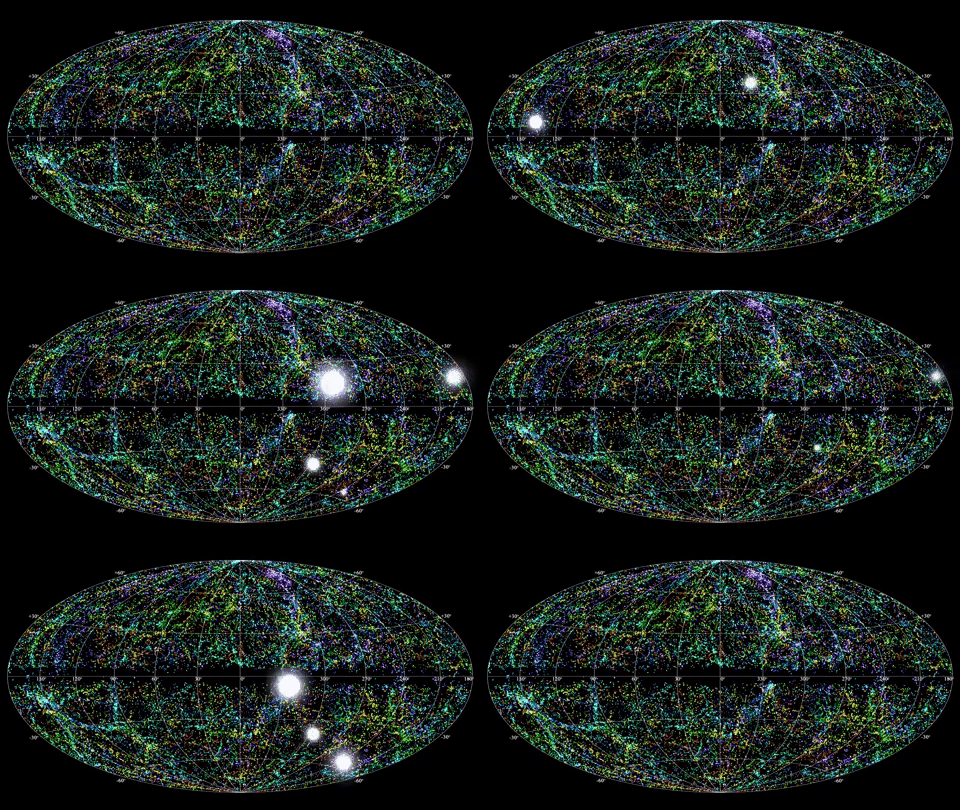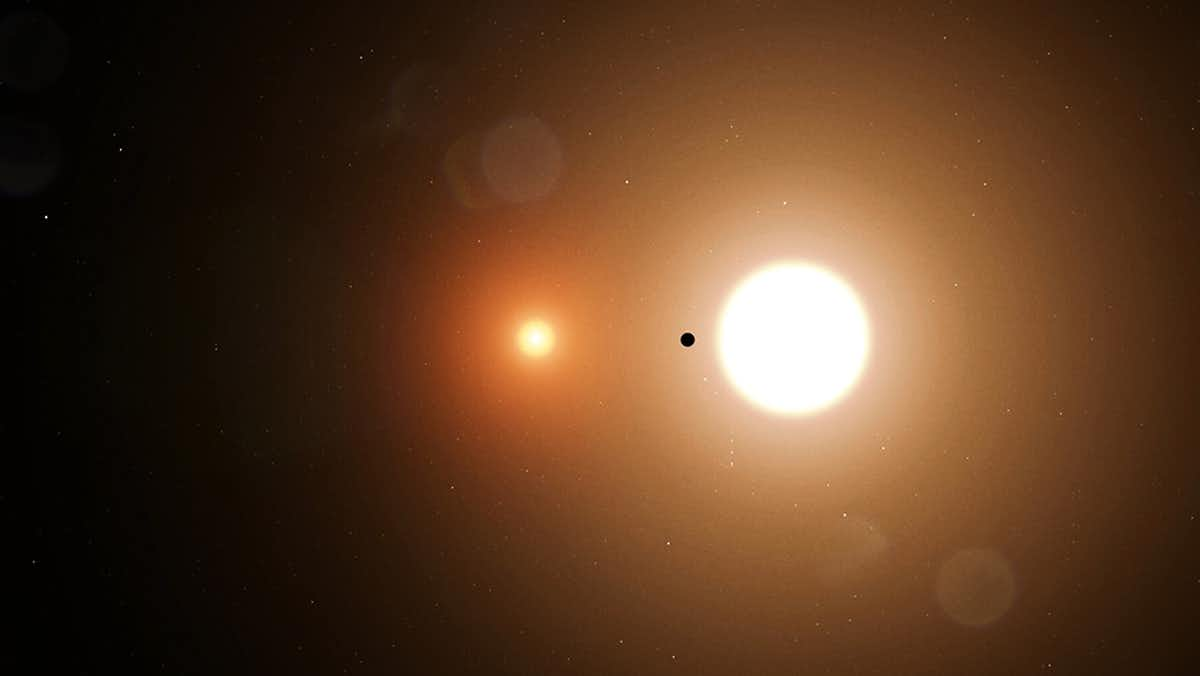
The universe’s most extreme dead stars can form from vampire white dwarfs — and scientists finally know how

When stars the size of our sun die, they leave behind powerful stellar remnants called white dwarfs — and these white dwarfs can transform into even more extreme objects called neutron stars, composed of the densest material in the universe. However, scientists have found that conditions must be "just right" for the major makeover to occur. You can think of it like a cosmic "Goldilocks" situation.

As it turns out, the white dwarf has to be feeding on a companion star like some kind of cosmic vampire.

Neutron stars and white dwarfs are both born when stars run out of the fuel supplies needed for nuclear fusion happening in their cores, but the difference between the two lies with their masses.

Stars with masses similar to that of the sun end their lives when they run out of hydrogen in their cores. This halts the nuclear fusion process — which involves converting that hydrogen to helium — leading to the stars collapsing and shedding their outer layers to become a white dwarf with around the mass of the sun crammed into the width of Earth.

When stars with masses around eight times that of the sun collapse after running out of hydrogen in their cores, they generate enough pressure and heat in these cores to fuse the produced helium into even heavier elements. This process only ends when the star attains a core of iron. The final collapse results in a supernova explosion and creates a neutron star with a mass between one and two times that of the sun. That's the usual way neutron stars form.

However, what if there's a bridge between the white dwarf scenario and neutron star scenario? Scientists have long suspected there is indeed a pathway for a white dwarf to become a neutron star. This new work maps out that pathway, calling it accretion-induced collapse (AIC).

"In AIC, the progenitor is already a stellar remnant, and the trigger is not its own evolution but material handed to it by a companion," team leader Laurenz Thümmler of ETH Zurich told Space.com.

The researcher added that an AIC begins with a stellar remnant in the form of a white dwarf, while the traditional route to birthing a neutron star begins with a massive "living" star. Yet, in the AIC, the collapse of an overfeeding white dwarf continues in a broadly similar way to the collapse of a massive star that creates a neutron star.

As Thümmler explains, in both cases, the neutron star creation process involves the massive star's core imploding and zippy particles called "neutrinos" carrying away energy from the event. However, an important difference is in the "standard" massive star collapse scenario, the subsequent core-collapse supernova and neutron star birth happens inside a thick envelope of material that has been ejected during the massive star's death throes. In AICs, however, this thick envelope of matter is absent.

"AIC is expected to be faint and fast, and why so little matter is ejected compared with an ordinary supernova. Not all white dwarfs could undergo an AIC, and that is the essential point."

Though AICs have been theorized about for years, Thümmler and team wanted to know what characteristics a white dwarf would need in order to undergo this transformation. They set about investigating this using 3-dimesional simulations.

It's what is inside that counts

Most white dwarfs consist of carbon and oxygen. However, some stars collapse to form a white dwarf composed of oxygen, neon and magnesium. That only happens for a narrow range of stellar masses, meaning this composition represents a minority population of white dwarfs.

When carbon and oxygen white dwarfs overfeed on stellar material from a companion or donor star, they eventually reach the so-called Chandrasekhar limit, usually around 1.4 stellar masses. Above this limit, they can go supernova. They don't become neutron stars as a result of these "Type 1a" supernovas, however, but are rather completely destroyed. Oxygen, neon and magnesium white dwarfs can avoid that destruction thanks to their high densities.

"They are typically born more massive and denser than carbon-oxygen white dwarfs and therefore require less additional mass to approach the Chandrasekhar limit," Thümmler said.

However, Thümmler and colleagues discovered this isn't the only condition needed to provoke an AIC. The white dwarf can't be too greedy either.
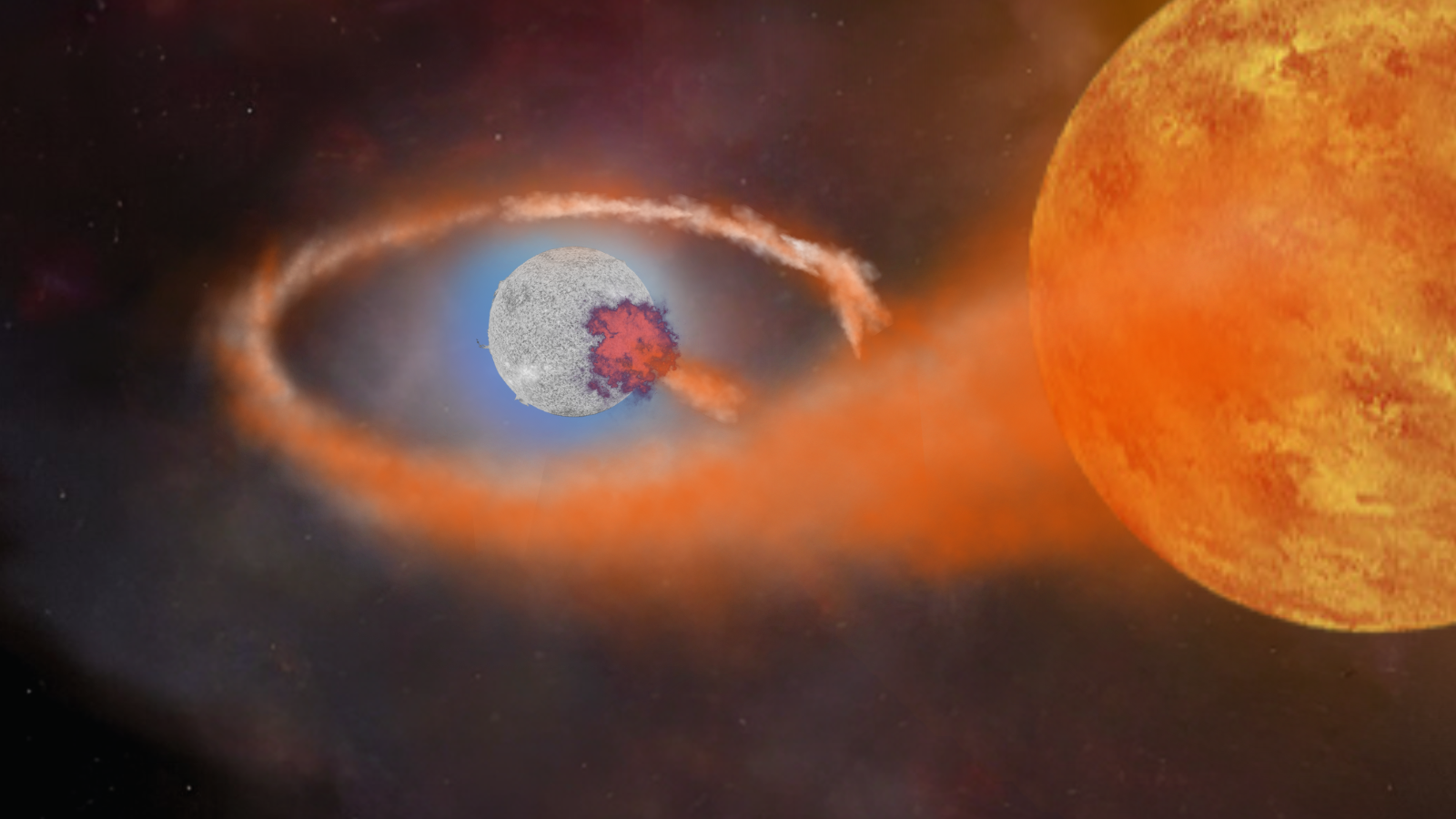
A large orange sphere next to a smaller silver sphere, a trail of orange smoke connects them

An illustration shows a "vampire" neutron star feeding on a close companion star. (Image credit: Robert Lea (created with Canva))

The team found that the accretion rate, or rate at which material from the donor star falls onto the white dwarf, has to fall within a fairly narrow window to allow an AIC to occur.

"If it is too low, nova eruptions can expel much of the accumulated material again; if it is too high, winds, envelope expansion, or binary interaction can prevent the white dwarf from reaching the conditions required for collapse," Thümmler said. "The accretion has to be fast enough, and steady enough, to get it there without triggering explosive burning along the way.

"When those conditions hold, electrons are captured onto neon and magnesium nuclei. This removes the pressure supporting the star, and the collapse follows."

All this means that AICs are expected to be rare events, although the rate at which they occur remains highly uncertain.
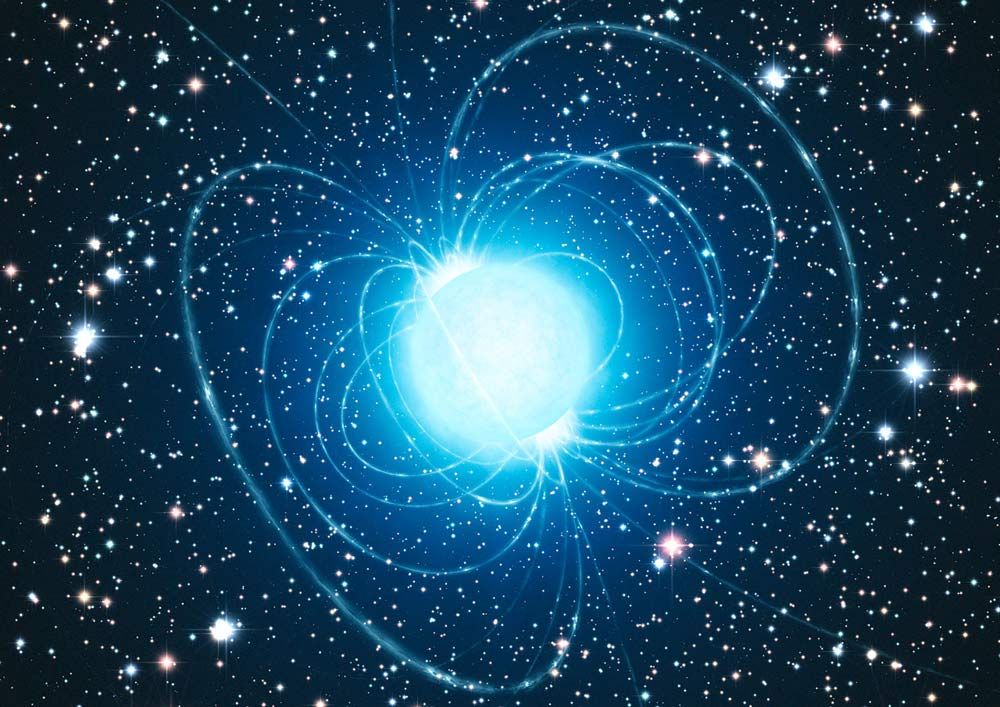
A glowing blue sphere surrounded by magnetic field lines

An illustration of a highly magnetic neutron star. (Image credit: ESO/L. Calçada)

The team also found the environment around AICs is somewhat surprising.

"We expected the most neutron-rich material, which produces the heaviest elements, to emerge along the rotation axis, since that is where the magnetically driven outflow is strongest," Thümmler said. "It does not."

Instead, the team's models revealed neutron-rich material emerging at the mid-latitudes of white dwarfs as they transform into neutron stars. This is region where the outflows of matter driven by intense magnetic fields collide with winds heated by energy-carrying neutrinos.

Thümmler explained that this is significant because it means that these events would appear different based upon the angle at which they are observed.

How to spot white dwarf transformations

Laurenz said these AICs could be identified by Vera C. Rubin Observatory and other telescopes as a bright ultraviolet and optical event lasting two to three days, potentially accompanied by X-ray emissions and longer-lasting radio emissions.

However, the neutron stars created by such events may be difficult to distinguish from stellar remnants birthed in the traditional way.

"They are expected to populate the lower end of the neutron-star mass distribution because the collapsing white dwarf has a mass close to the Chandrasekhar limit and ejects relatively little material," Thümmler said. "However, ordinary stellar-collapse channels, particularly those involving low-mass progenitors, can also produce neutron stars with masses of approximately 1.1 to 1.4 solar masses, so a low mass alone would not uniquely indicate an AIC origin."
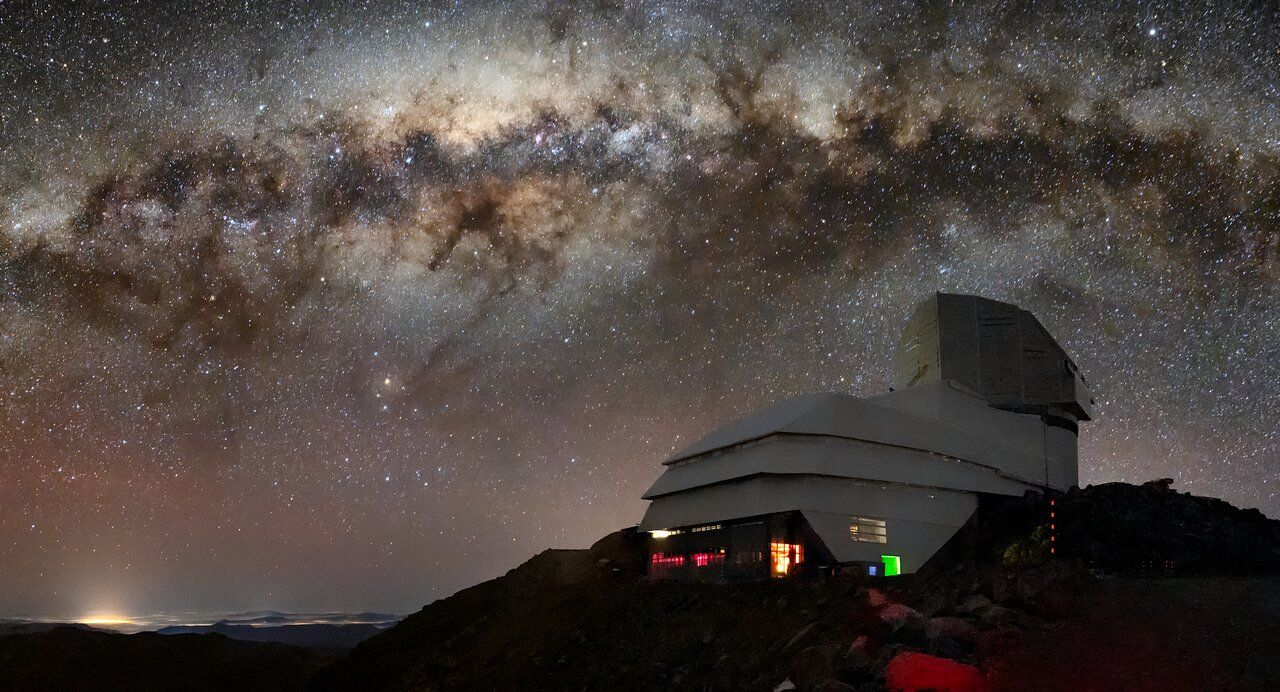
thick band of stars across the top of the image this is the milky way, below in the foreground to the right is a large dome structure this is the vera c rubin observatory.

The Vera C. Rubin observatory gazes out at the Milky Way (Image credit: RubinObs/NOIRLab/SLAC/NSF/DOE/AURA/B. Quint)

The team isn't done investigating AICs, with Thümmler explaining there are two main approaches to take next.

"The first is to make the predicted light curves more reliable by following both the radioactive heating and energy injection in substantially greater detail," Thümmler said. "This requires distinguishing energy carried by gamma rays, which can escape relatively early from the low-mass ejecta, from that deposited more efficiently by charged particles, while also modelling how the neutron star wind heats and accelerates the heavy-element-rich material."

The team's simulations can then be used to follow the expansion of the ejecta from the AIC and calculate how the observed light curve and spectra depend on viewing angle.

"This work is currently underway," Thümmler said. "The second direction is to test the robustness of the explosion geometry, since our present models begin with a relatively simple magnetic-field configuration and more complex or tilted fields may produce different angular ejecta patterns."

The team's research is available to view as a pre-print on the paper repository site arXiv.
James Webb Space Telescope discovers the rings of tiny solar system body Chariklo are changing

Using the James Webb Space Telescope (JWST), astronomers have discovered that the ring system of a tiny solar system body is even more interesting than they knew.

The object in question is Chariklo, which orbits the sun between Saturn and Uranus, at around 17 times the distance between Earth and the sun. Despite only being around 155 miles (250 kilometers) wide, Chariklo, part of the Centaur family of asteroids, possesses two thick rings.

Though Saturn is the solar system body most famous for its rings, other planets also have ring systems, albeit less prominent. That includes Uranus, Neptune, and Jupiter. However, Chariklo and the even smaller body Chiron, show that even the most diminutive bodies can develop rings. Now, thanks to the incredible sensitivity of the JWST, scientists know that the rings of Chariklo are even stranger than their initial discovery in 2013 suggested.

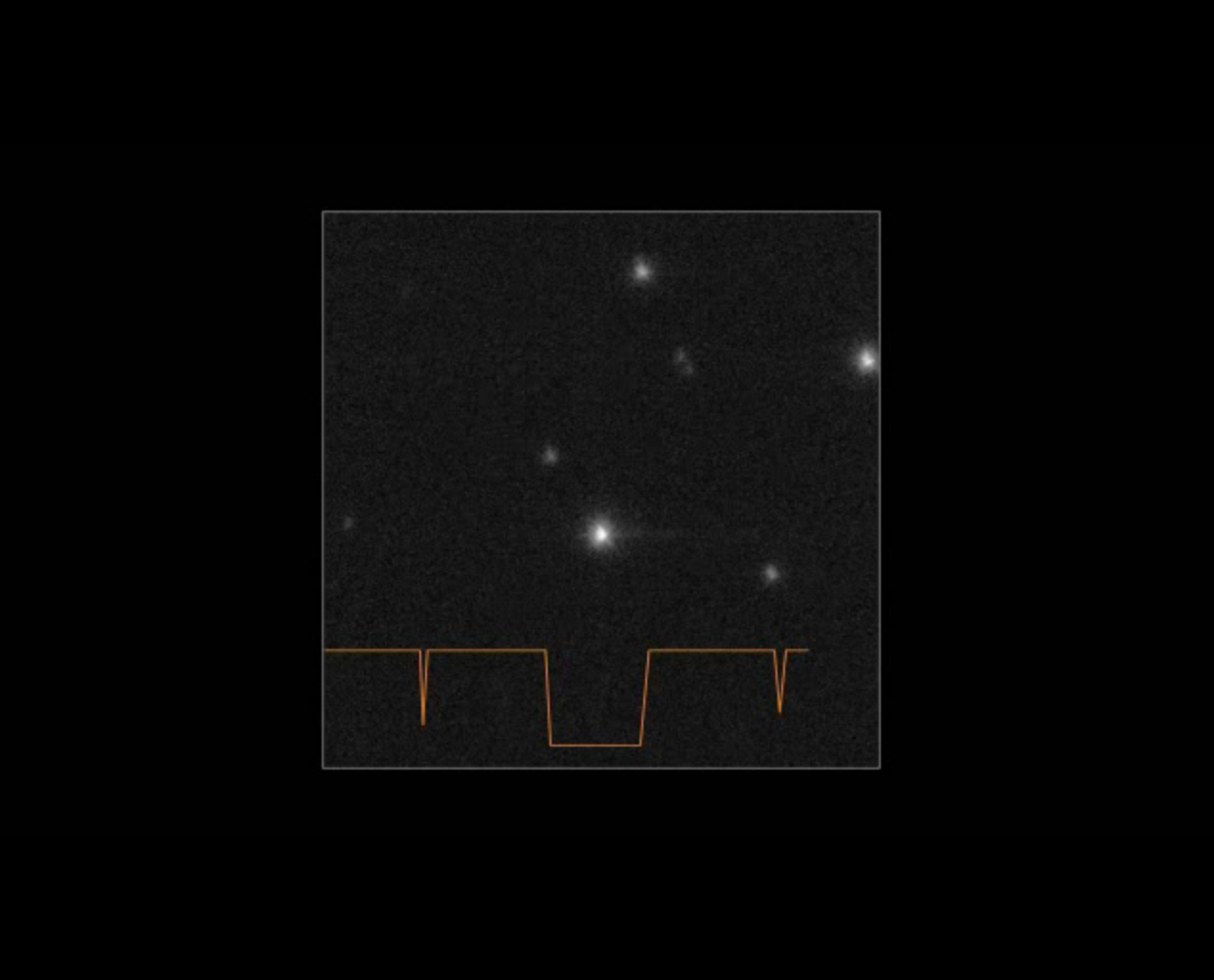
The team, led by researchers from the Institute of Astrophysics of Andalusia (IAA-CSIC), began observing Chariklo with the JWST in Oct. 2022. They used a technique called stellar occultation, which measures the decrease in light from a star when an object passes in front of it.

"By comparing JWST observations with those obtained during other stellar occultations over the last decade, we discovered opposite changes in the two rings: while the inner ring shows significantly higher opacity, the outer ring shows lower opacity," team leader Pablo Santos-Sanz of the IAA-CSIC said in a statement.

The changing rings of the asteroid suggest that it experiences more complex physics than previously thought. This is important because scientists had previously believed that small bodies had relatively stable rings.

"Our results force us to rethink how they form, how they evolve, and what mechanisms maintain their stability," Santos-Sanz said. "The ability to detect these changes opens a new window for understanding the evolution of these systems and, possibly, that of other ring systems in the solar system."

The cause of these changes remains a mystery.

Another milestone for the JWST and Gaia

The research doesn't just represent an important step in our understanding of asteroids and solar system rings, but it is also an important milestone for the JWST.

"Achieving this required knowing with extraordinary precision the orbit of Chariklo, the position of the star, thanks to the European Space Agency’s Gaia mission, and the trajectory of JWST itself around the L2 Lagrange point, a region of space located about 1 million miles (1.5 million kilometers) beyond Earth, away from the sun," team member Yücel Kilic of the IAA-CSIC said. "The JWST follows an orbit around this region that requires periodic corrections through station-keeping maneuvers."

A black square with a lighter grey square inside it with a jagged orange line running across its base

Dips in light from a distant star caused as it is occulted by Chariklo and its rings (Image credit: ESO/Felipe Braga Ribas/M. Kornmesser)

During the occultation the team used in their research, Chariklo was traveling at around 5,600 miles per hour (2.5 kilometers per second) relative to the JWST.

This is incredibly fast by Earth standards, but relatively slow for objects racing through the solar system. This low speed allowed the rings of Chariklo to be resolved in unprecedented detail. Astronomers currently rely on occultation to study Chariklo and its rings, as even the JWST isn't powerful enough to directly image this small and distant asteroid.

The team's research was published on Tuesday (Sept. 9) in the journal Science Advances.

The sun may once have swallowed a super-Earth planet and could still be hiding the evidence

Our star and primary energy source that makes life on this planet possible may also be a cosmic cannibal. That's according to new research that suggests the sun may have swallowed a super-Earth planet billions of years ago in its early history. And our star may still be hiding the evidence.

The scientists behind this research think that the fingerprints of this violent consumption of a planet may still exist within the solar interior. Super-Earths are common occupants of other planetary systems, and these findings can explain why the solar system lacks such a world.

"Our new study suggests that a planet several times more massive than Earth may have fallen into the young sun and left a lasting chemical imprint deep inside it," Mutlu Yildiz, of Ege University, Turkey, said in a statement.

Yildiz and colleagues theorize that the sun's act of planetary infanticide may help to explain differences between observations of the sun and what is predicted by models of stellar evolution. This includes the depth of the sun's convection zone and the so-called sound-speed structure just below the convection zone.

It could also explain why the surface of the sun is depleted of the element lithium.

"By modelling the sun's evolution and comparing the results with precise observations of its interior, we find that the ingestion of a super-Earth could help explain long-standing differences between standard solar models and observations, including subtle changes in the sun's internal structure and its depleted lithium abundance," Yildiz said. "We were interested in whether these problems might have a common origin in the early chemical history of the sun."

The researcher explained that young stars like the sun during its infancy are surrounded by vast flattened clouds of gas and dust called protoplanetary discs, where substantial amounts of material can move between the disc and the star.

"Since planets are made of material that is chemically different from the gas in the disc, we wondered whether the early engulfment of a planet could have left a chemical signature inside the young sun," Yildiz said.

What happened to the sun's planetary meal?

Using advanced stellar evolution software, Yildiz and colleagues tested their idea by investigating different ways the sun could have swallowed a planet.

Their results found the best fit for the sun's current characteristics was the cannibalism of a planet between five and ten times the mass of the Earth, a type of planet called a super-Earth. This could explain the strange, unpredicted characteristics of the sun.

We thought planetary engulfment might affect the solar structure but did not expect the calculations to converge on such a specific super-Earth mass range," said Professor Yildiz. "That was one of the most interesting outcomes of the study."

An irregular orange sphere surrounded by a swirling blue line

An artist’s impression of a star engulfing a planet. The blue line traces the path of the planet as it spirals toward the star and ultimately collides with it. (Image credit: NASA, ESA, CSA, Ralf Crawford (STScI))

The team's research is supported by previous studies that suggests one or more super-Earth planets could have formed with the orbit of Mercury, the closest planet to the sun.

These worlds would have then migrated through the protoplanetary disk surrounding the infant sun before crashing into the star.

But this new study leaves open the possibility that something else, other than this violent collision with the sun, may explain the discrepancies in measurements of the sun's interior and its lithium content. The team's model doesn't need a planet to have been totally engulfed by the sun.

A cracked grey sphere next to a growing orange sphere

An illustration of a former super-Earth survivor escaping after an encounter with the sun (Image credit: Robert Lea (created with Canva))

Currently, this idea is based on computer modelling and unexplained solar features, but the researchers think that the predicted structural and chemical signature of a planetary engulfment could still exist within our star and could be detected.

"The earlier work proposed that a super-Earth could have formed and migrated into the young sun. Our paper asks whether the sun itself could still carry observable evidence that such an engulfment actually happened, and we believe it could," Yildiz concluded. "The next step is to see if these fingerprints can be independently detected."

The research was published on Thurs (Sept. 10) in the journal Monthly Notices of the Royal Astronomical Society.

Scientists study 3,000 supernovas and discover that dark energy may be evolving

A catalog of almost 3,000 white dwarfs that exploded as type Ia supernovas after overfeeding on companion stars indicates that dark energy, the mysterious force accelerating the expansion of the universe, is changing over time.

The discovery, in conjunction with data from the Dark Energy Survey (DES), backs results revealed from the Dark Energy Spectroscopic Instrument (DESI) published in 2024 that suggested dark energy's influence is weakening.

That means that the team's research doesn't just involve the most comprehensive catalog of type Ia supernovas; it presents the clearest picture yet of the evolution of the universe and the influence of dark energy.

"We've rebuilt 3 decades of astronomical observations into a single, consistent framework," team member Ryan Camilleri of the University of Queensland said in a statement."We combined our data with other cosmic measurements, including relic light from the Big Bang and maps of how galaxies are distributed through space.

"Instead of confirming the standard model of cosmology, which assumes dark energy is fixed and unchanging, we have more evidence that dark energy may change over time."

How do exploding white dwarfs tell us about dark energy?

White dwarfs are the smoldering stellar remnants that are left over when stars with around the mass of the sun exhaust the fuel for nuclear fusion in their cores. This ends the outward pressure that supports a star against its own gravity, meaning the star's core collapses as the outer layers are shed. The core becomes a white dwarf, and for single stars, that is the end. But around 50% of sun-sized stars have a binary companion, and this can lead to renewed activity and a change in the star's fate.

If the white dwarf and its companion are close enough together, the dead star begins stripping away the outer layers of its companion. As this material builds on the white dwarf, it pushes the stellar remnant's mass over the so-called Chandrasekhar limit, allowing it to go supernova.

These cosmic explosions are called type Ia supernovas, and their light output is so uniform that these events are referred to as standard candles. They are of vital importance because measuring how their light has been redshifted as it travels means type Ia supernovas can be used to measure cosmic distances.

"Over the years we've learned a lot more about how supernovae behave so we've been able to go back and apply that improved understanding to older data," Camilleri said. "Extensive work has been done to link observations from different telescopes with different capacities and take into account issues such as cosmic dust and galaxy mass which can affect the light coming from a supernova.

"We also incorporated more subtle effects such as gravitational lensing, which is the bending and magnification of light around large objects as it travels from a supernova to Earth."

Two blue

Two "fans" representing DESI observations above and below the plane of the Milky Way (Image credit: DESI Collaboration/DOE/KPNO/NOIRLab/NSF/AURA/R. Proctor/ Robert Lea (created with Canva))

Combined with the 2024 results from DESI, this research could change our idea of what dark energy actually is.

"Our supernova data from DES in 2024 first showed hints that dark energy may be time-varying, and this new compilation also sees a deviation from the standard model, although in a slightly different direction," Davis said. "Similarly, results from DESI found hints of variations in dark energy in its surveys of relic sound waves from the early universe.

"So, two completely independent measurements have found hints of time variation in dark energy, challenging the standard model that dark energy doesn't change."

Davis added that, as well as revealing what dark energy actually is, this research may also hold the clue to explaining how gravity and quantum physics fit together. While quantum physics (the best theory we have of how the universe operates at subatomic scales) and Einstein's theory of general relativity (our best picture of gravity) have been highly successful in their own rights, scientists have so far been unable to unite them. In other words, there is no theory of quantum gravity.

“We know these two theories are each immensely successful in their own realms, so if we can figure out how to put them together, that would be a huge step in theoretical physics," Davis continued.

This effort will receive a boost when data is added to the team's already comprehensive type Ia supernova catalog. This will include observations from the Dark Energy Bedrock All-Sky Supernova program (DEBASS), which is detecting hundreds more local supernovas than even the DES survey.

The team's results are available on the repository site arXiv.

Mercury is shrinking faster than we thought. What’s going on inside of it?

Wrinkles on the surface of Mercury have revealed that the closest planet to the sun is shrinking faster than scientists thought.

New research suggests that Mercury is shrinking between 10% and 30% faster than had been previously estimated. The team behind this research calculated that the planet has lost nearly 12 miles (19 kilometers) of its total diameter since it formed.

The researchers think that the extremity of this shrinking has gone unnoticed previously because bombardment from space rocks over time has created craters that obscured the evidence of this process.

Scientists say determining the extent of the shrinking of Mercury is key to investigating the composition of the planet's interior.

"More shrinking means Mercury could have a larger metal core, less light elements like silicon mixed into the metal core, or a higher starting temperature," team leader Gaku Nishiyama, of the German Aerospace Center (DLR) Institute of Space Research said in a statement.

Mercury's rocky past

Like all rocky planets in the solar system, Mercury was formed 4.5 billion years ago during a violent and turbulent time in the solar system's history, as rocks and asteroids collided with each other and were bound together.

These impacts generated heat, which Mercury has been losing ever since. As the interior of Mercury cooled, it also shrank. This caused geological wrinkles in the form of scarps and ridges to develop in the rocky outer layers of Mercury.

This cooling should result in Mercury shrinking in a roughly uniform way, and that would make these shortening structures common across the planet. However, asteroid impacts throughout its history have not only created craters that obscure signs of its geological history, but have also spread debris across the surface of Mercury. This makes wrinkles tougher to spot among the accumulation of billions of years' worth of geological features.

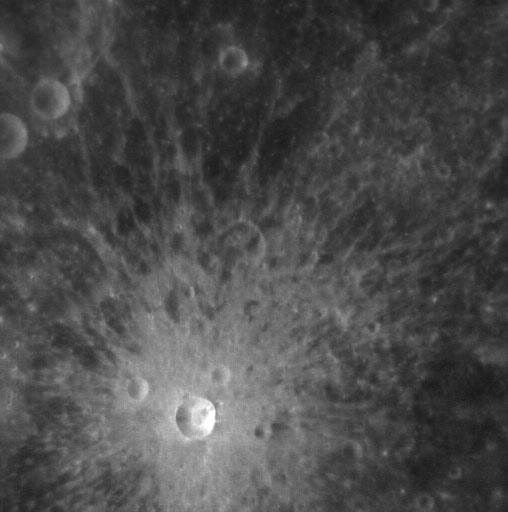
A rough grey surface with circular indentations

NASA's Messenger spacecraft spots an apparently fresh crater on Mercury during its early orbits on March 29, 2011. (Image credit: NASA/JHUAPL/CIW)

The team combined previous maps of Mercury's geology with new observations of the entire planet's surface roughness. They found the roughest terrain of Mercury featured the fewest wrinkles.

"It made us think that there's a process obscuring shortening structures," said Nishiyama, who thinks that impact debris in the roughest regions of Mercury is covering shrinking wrinkles.

The team then used the ridges and scarps in regions less affected by the dispersal of debris to estimate the amount of contraction. This indicated that missing features in rough areas could amount to 10% to 30% extra shrinkage over the 4.5 billion-year lifetime of Mercury. That amounts to a total change in diameter of up to 14.5 miles (23 kilometers) rather than the currently estimated 2.5 to 10 miles (4 to 16 kilometers).

"30% is a little bit surprising, but the corrected amount of contraction actually makes sense to me," Nishiyama said.

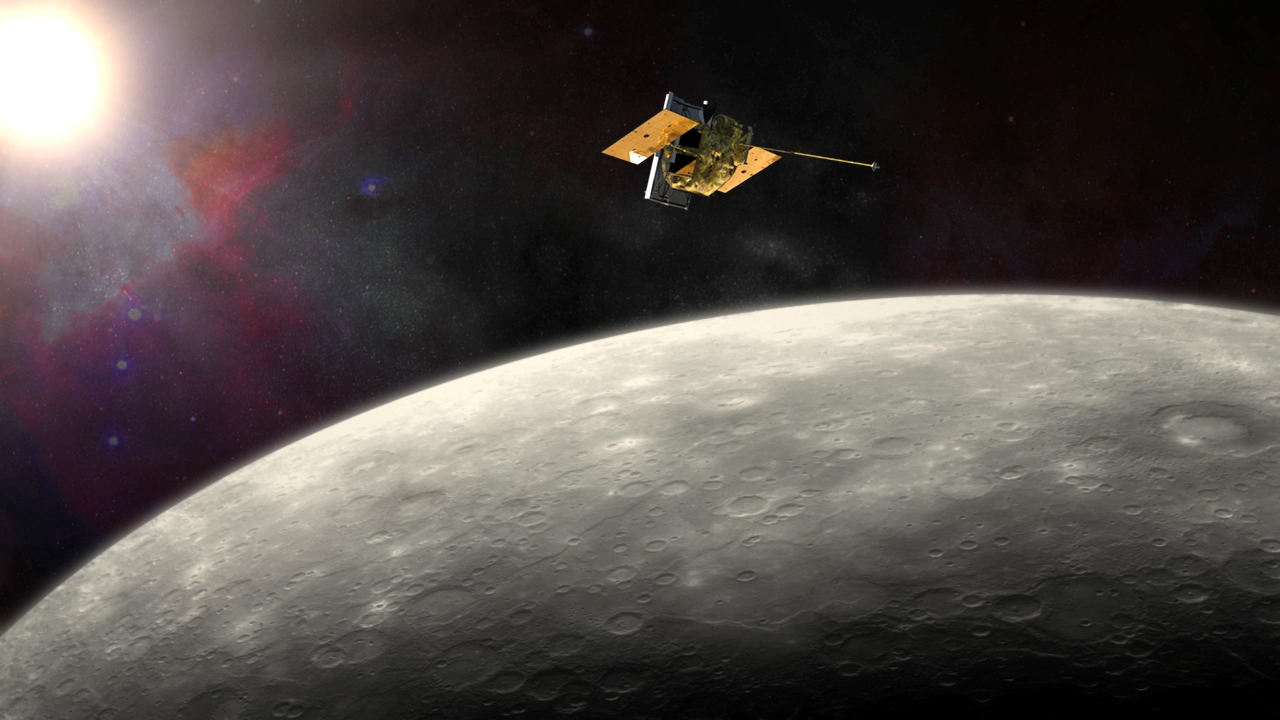
A grey sphere with a silver and gold spacecraft over it

An illustration of NASA's MESSENGER probe over the surface of Mercury (Image credit: NASA/JHU-APL)

There may be more surprises in store. Nishiyama believes that the updated figures could still be an underestimate. This estimate is based on data collected by NASA's MESSENGER probe, which ended in 2015. MESSENGER could only distinguish features larger than around 3 miles (5 kilometers) across.

In November 2026, the BepiColombo mission will start conducting scans of Mercury's surface in much higher resolution than this, and that could reveal even more shrinkage features.

The team's research was published on Thursday (Sept. 10) in the journal Geophysical Research Letters.

Strange ‘fast radio bursts’ across the universe could help solve major cosmic mysteries: ‘It’s only the beginning’

Though their origins may be shrouded in mystery, fast radio bursts (FRBs) could be used to probe some of the universe's biggest puzzles. This includes probing the nature of dark matter, the invisible sort of matter that somehow dominates the universe, and dark energy, the mysterious force causing the expansion of our universe to accelerate. They could even shed light on the mysteries of neutrinos, or "ghost particles." Let's dive into how.

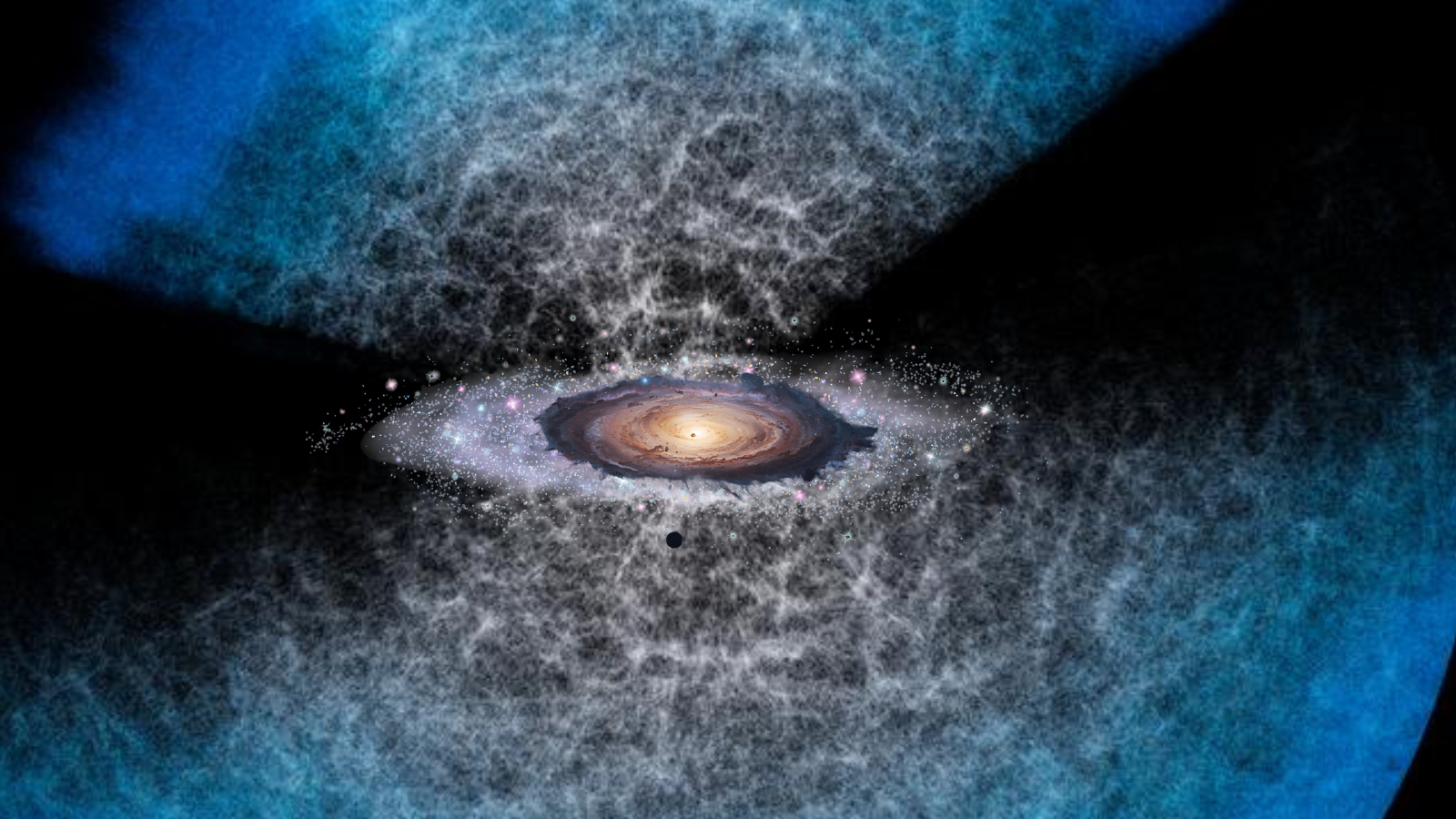
FRBs are brief but intense blasts of radio waves currently thought to erupt from rapidly rotating dead stars with the universe's strongest magnetic fields, called magnetars. As FRBs travel billions of light-years to reach Earth, they pass through dense clouds of gas and dust in galaxies. This "cosmic fog" changes the original FRB signal. What this means is these blasts of radio waves carry the fingerprints of how matter in the universe is distributed.

Mapping the distribution and "clumpiness" of ordinary matter in galaxies can then help trace the distribution of dark matter, the effect of dark energy and the mass of neutrinos.

"We've established that FRBs are a leading probe of the distribution of matter in the universe," team leader Kritti Sharma, a graduate student working with Vikram Ravi, a professor of astronomy at the California Institute of Technology (Caltech) and also part of the team, said in a statement. "These FRB data can be used to enhance cosmology experiments that are trying to answer questions about dark matter, dark energy, and the mass of neutrinos."

For this research, Ravi and Sharma analyzed a sample of about 100 FRBs. This represents the first time scientists have used FRBs to directly measure the impact of so-called "feedback" from galaxies on the clumpiness of matter in the large-scale regions between galaxies.

Cosmic ghosts and the dark universe

Ordinary matter, composed of atoms made up of electrons, protons and neutrons, accounts for just around 5% of the universe's energy/matter budget despite comprising stars, planets, moons, our bodies, next door's cat and everything we see around us on a day-to-day basis.

Of this budget, the other 95% is composed of dark energy (68%) and dark matter (27%). It's little wonder that scientists are very keen to better understand these two aspects of the cosmos, sometimes collectively referred to as the "dark universe."

Things get even more murky when considering how, of that 5%, the second most abundant particles in the universe, aside from particles of light or photons, are neutrinos. These get their nickname of "ghost particles" because they interact with other matter particles so infrequently that approximately 100 trillion neutrinos pass through your body every second without leaving any trace. This is possible because neutrinos are virtually massless, and scientists are keen to accurately measure the mass of these cosmic ghosts.

These three mysterious elements of the cosmos have played a vital role in the evolution of large-scale cosmic structures like galaxies and galaxy clusters. That means, in turn, that measuring the clustering of matter can reveal details about the aspects of the universe that influenced that clustering.

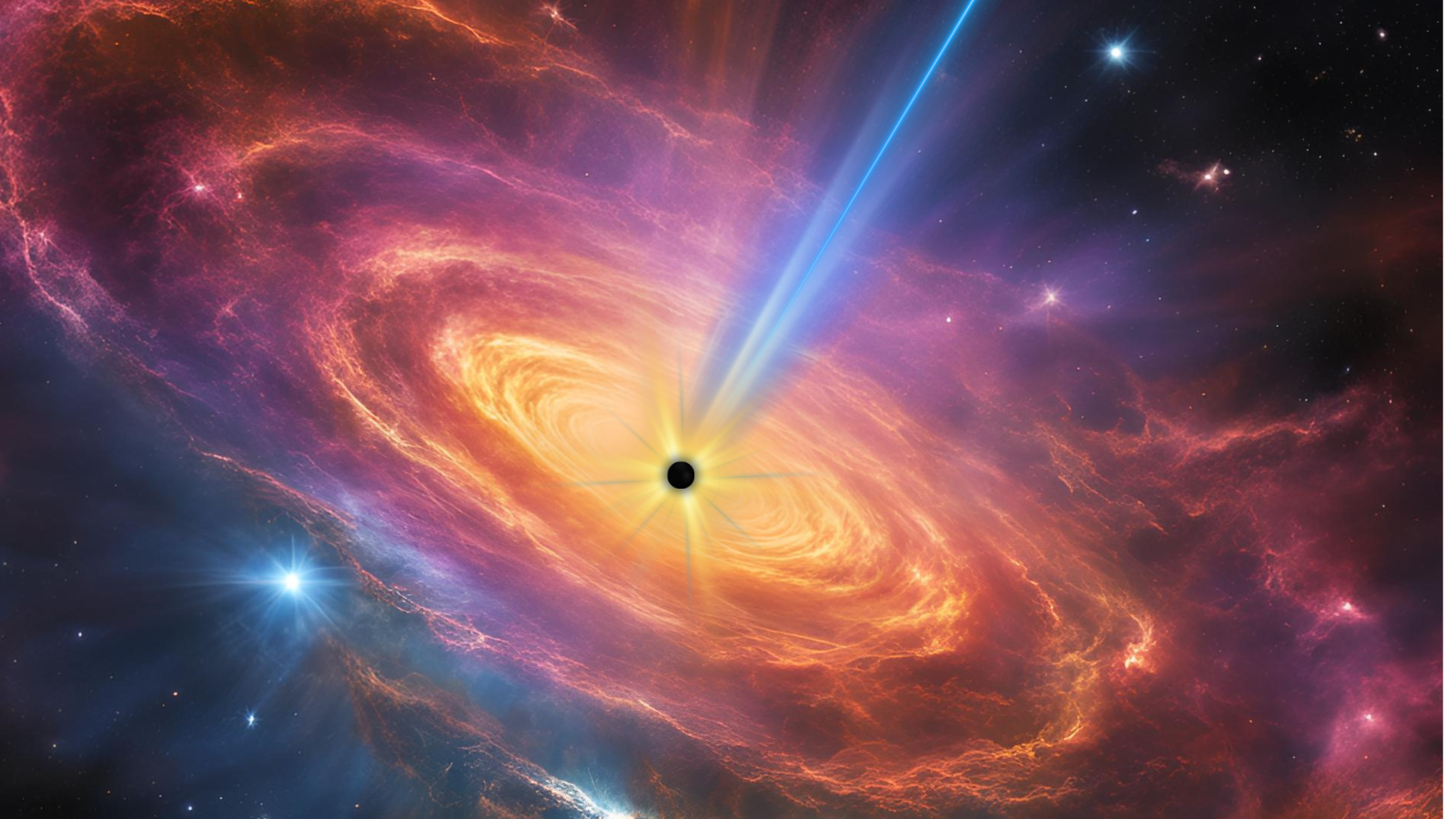
An orange and purple swirl with a black circle at its center. A bright tail emerges from the black circle

An illustration of a supermassive black hole pumping energy into its surroundings, a type of cosmic feedback that can smooth out clumpy cosmic matter. (Image credit: Robert Lea (created with Canva))

However, to do that, scientists also have to understand how other factors smooth out cosmic clumpiness. That includes the energy pumped out from the hearts of galaxies by feeding supermassive black holes, a type of cosmic feedback that smooths out clumpy cosmic matter lying outside galaxies.

"The feedback process thins the gas around the galaxies, redistributing matter across vast distances. It smooths out clumps of matter in a way that looks astonishingly similar to what massive neutrinos do, or what dark energy or dark matter theories predict," Ravi said. "Unless scientists can independently measure this contribution from feedback, they can't tell these effects apart."

That's where FRBs come in.

Flashes of light appear and disappear across a green oval with a grid pattern

An animation shows the random appearance of fast radio bursts (FRBs) across the sky. Astronomers have discovered about 85 since 2007. (Image credit: NRAO Outreach/T. Jarrett (IPAC/Caltech); B. Saxton, NRAO/AUI/NSF))

The researchers found that, while galactic feedback does indeed smooth surrounding material, making it less clumpy, the effect is weaker than has previously been measured.

"Our analysis of FRBs reveals how gas ejected by astrophysical feedback suppresses cosmic structure," team member Elisabeth Krause of the University of Arizona said in the statement. "This is amazing considering we only had about 100 FRBs in our sample. It's only the beginning."

The investigation of the universe with FRBs could get a major boost in 2029 when Caltech's Deep Synoptic Array (DSA) begins operating in Nevada. This powerful radio telescope is expected to find tens of thousands of FRBs, a major boon for cosmology.

The team's research was published on Tuesday (Sept. 8) in the journal Nature Astronomy.

This ‘impossible’ black hole merger may be explained by a warp in spacetime

A "forbidden" merger between two massive black holes may not have been quite as impossible as previously thought. That's according to new research that suggests the black holes involved were smaller than expected.

On Nov. 23, 2023, the gravitational wave detector LIGO (Laser Interferometer Gravitational-Wave Observatory) detected tiny ripples in spacetime caused by the merger of two black holes. What was incredible about this signal, designated GW231123, was that it seemed to be the result of a black hole with 140 times the mass of the sun colliding with another that holds 100 solar masses.

This raised eyebrows among researchers because usual models of stellar evolution struggle to account for such massive black holes, especially ones that seemed to be spinning as fast as these two. While scientists have been attempting to explain how such an odd black hole binary could form. The team behind this new research suggests it doesn't need to be explained at all. They think that the masses of these black holes were an illusion.

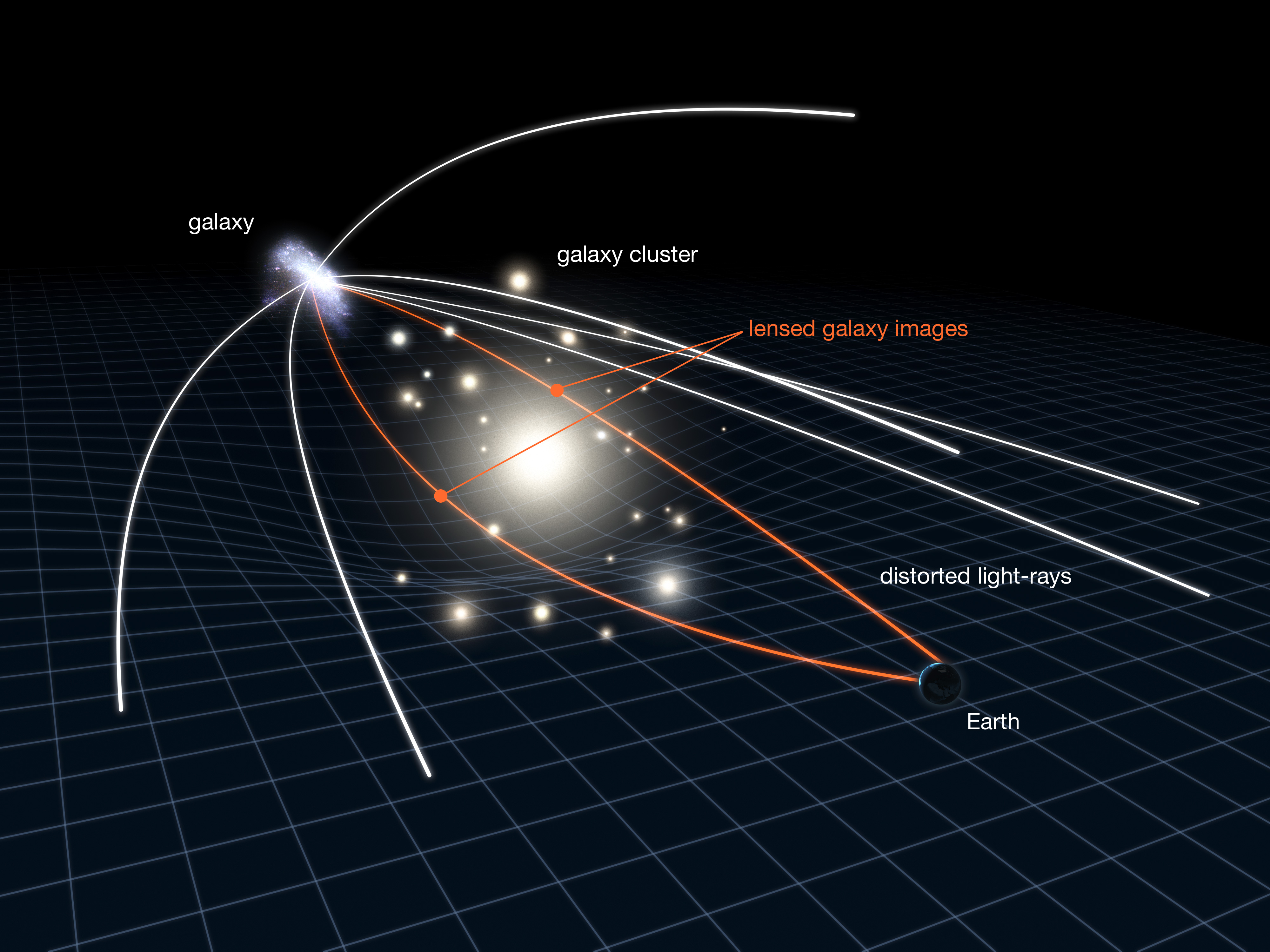
The key to this illusion is a phenomenon called gravitational lensing, first predicted by Albert Einstein's 1915 theory of gravity, general relativity, which also first predicted the existence of gravitational waves. This theory says objects with mass cause the curvature of space and time, united as a four-dimensional entity called "spacetime." The more mass an object possesses, the greater the curvature, and because gravity arises from this curvature, the greater the gravitational influence.

Gravitational lensing occurs when light from a background object passes a massive foreground object. The foreground object can warp the fabric of spacetime in such a way that the light's path is curved. This means light from the same background source can reach Earth at different times, depending on how much that light was diverted.

This difference in travel time can magnify a background source, and it has been used to great effect to observe distant and ancient galaxies ordinarily too faint to be seen.

This research team thinks the effect also applies to gravitational waves, suggesting the signal GW231123 is an example of gravitationally lensed ripples in spacetime that made the black holes appear larger than they actually are.

"Like light, gravitational waves can also be deflected, magnified and split into multiple signals by massive objects," team member Miguel Zumalacárregui, group leader in the Astrophysical and Cosmological Relativity Department at the Albert Einstein Institute (AEI), said in a statement. "For gravitational waves, diffraction and interference effects give us an additional way to identify and study lensed signals."

Curved lines of different colors against a grid background

A diagram (not to scale) of how gravitational lensing works. (Image credit: NASA, ESA & L. Calçada)

To investigate this possibility, the team developed a mathematical model of gravitational lensing and created software powerful and fast enough to analyze it.

"If we assume that GW231123 was deflected and distorted by a compact object of about 190 to 850 solar masses — or by an extended structure such as a globular cluster — we can understand the observed high masses," said team member Srashti Goyal, who was based at the AEI when conducting the research. "Moreover, the lensing interpretation does not require unusually high spins."

When the team modeled the event with that consideration factored in, they found the merger involved a system with a mass of 140 solar masses, rather than the 240-solar-mass system initially theorized.

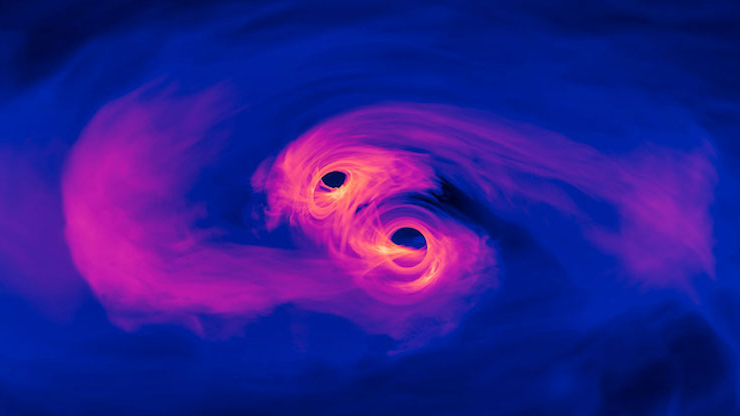
A purple hued image showing two black circles circling around one another in the center. There is a wave of pinkish gas trailing behind each of them.

A simulation of a black hole merger. (Image credit: NASA's Goddard Space Flight Center)

The team doesn't quite know what massive object is responsible for lensing the gravitational wave signal GW231123. But no matter what it is, if the team is correct, the lens could be something quite special.

"The nature of the lens remains a major mystery in our analysis, as individual compact lenses with 100 to 1,000 solar masses should be exceedingly rare," Zumalacárregui said. "Future work will need to establish whether such lenses can form, or whether an ensemble of lighter objects, including stars, can explain this event."

The team can't yet conclusively say if GW231123 is the first gravitationally lensed gravitational wave signal. Finding future signals of the sort will require upgrades to the sensitivity of detectors like LIGO.

Though even before that happens, the research does point to the utility of gravitational wave astronomy to study some of the universe's most violent events.

The team's research was published on August 25 in the Astrophysical Journal Letters.

Astronomers discover two stars that joined together to form a binary system just 60 years ago

Using the ALMA (Atacama Large Millimeter/submillimeter Array) radio telescope, astronomers have watched as two stars come together to form a massive stellar binary. The observations revealed that these stars didn't form from the same collapsing cloud of gas and dust, as most binary stars are assumed to form, but instead came together later in their infancy.

Here on Earth, we are slightly prejudiced by our single sun to view stars as somewhat solitary bodies. However, around half of sun-sized stars in the Milky Way have a companion star. This percentage of stellar partnership rises to around 90% of massive stars. Eventually, these massive stars go supernova and shape their cosmic surroundings. Thus, understanding these binary systems is vital to our understanding of stars and of galaxies in general.

The team behind this research initially observed the still-growing massive stars, or protostars, in the binary system IRAS 07299−1651, located around 5,300 light-years away in 2019. At first, the researchers didn't see anything that suggested these stars didn't form from the same disk-shaped cloud of gas and dust that later fragmented. However, one thing really stood out: the disks of material surrounding and feeding these protostars are oddly misaligned.

Over the course of eight years, the team mapped subtle shifts in the position of the stars using ALMA in addition to the Very Large Array (VLA), as well as infrared images from the James Webb Space Telescope (JWST) and the Very Large Telescope (VLT).

"For the first time, we were able to watch two massive stars move around one another while they were still being born," team leader Yichen Zhang of Shanghai Jiao Tong University, China, said in a statement.

The team was able to reconstruct the full 3-dimensional structure of IRAS 07299−1651 for the first time, obtaining details about how the stars orbit each other, the way their disks are aligned, and the angle at which they blast jets into space.

"Each telescope revealed a different piece of the puzzle," team member Rubén Fedriani, of the Instituto de Astrofísica de Andalucía (IAA) in Granada, Spain, said. "The combination of radio and infrared observations provides the most exquisite detail on the formation of this massive protobinary system."

Unexpected chaos

The team's observations took them by surprise. They were expecting these stars to orbit each other in neat, near-circular orbits. Instead, the orbits were found to be highly flattened or "eccentric," almost parabolic.

If the stars had formed from the same disk of material, then even after it fragmented, the individual disks surrounding the stars would be aligned. However, that wasn't the case; the disks are tilted at a sharp angle to each other and to the orbits of the stars.

"It felt like solving a three-dimensional puzzle," team member Yao Wang of Shanghai Jiao Tong University said. "Each new observation added another piece, and eventually the orbit, disks, and jets all came together into a single, coherent picture."

two orange disks with blue jets streaming from their centers

An artist’s impression of the formation of a close massive binary system, showing misaligned disks around two young stars. (Image credit: Y. Zhang)

The chaotic structure of IRAS 07299−1651, as observed by the team, is difficult to explain if the two stars emerged from the same disk of material.

Instead, the researchers theorize that the two stars were born in individual clouds of gas and dust, before a chance encounter brought the two infant stars and their respective natal cocoons together.

Tracing back the orbits of the stars, the researchers found that this encounter likely occurred around 60 years ago. Considering stars live for billions of years, that is an instant on a cosmic timescale. The disk-shaped pockets of material around the stars have thus far survived the encounter, retaining their well-defined structures.

"This study demonstrates that the early lives of stars can be quite chaotic, with a chance encounter leading to this gravitational dance and stellar coupling," team member Jonathan C. Tan of the University of Technology and the University of Virginia said.

A large yellow sphere next to a smaller red sphere

A binary star system, is IRAS 07299−1651 destined to settle to form such a system? (Image credit: NASA)

What the team can't yet establish is whether these stars are destined to stick together or if they will eventually move apart. Indeed, this fate may not have been sealed yet; interactions with the surrounding gas could determine what shape this system takes in the future.

The team hopes that further observations of IRAS 07299−1651 will help to better understand what the future holds for these stars.

In the meantime, the long-term monitoring approach adopted by the researchers could provide scientists with a powerful new way of investigating other young massive binary systems. This could reveal how common encounters like this are and if more binary systems are composed of stars brought together by chance encounters.

The team's research was published on Tuesday (Sept. 8) in the journal Nature Astronomy.

A photon from the biggest cosmic explosion since the Big Bang appears to have defied Einstein. Scientists may finally know how

A photon, or particle of light, from the biggest cosmic explosion since the Big Bang, nicknamed "the BOAT" (for the brightest of all time), should not have reached Earth. That is, unless it defied rules defined by Einstein. Now scientists may know how it did this, with new research suggesting how the high-energy photon may have survived a journey of more than two billion light-years without being absorbed.

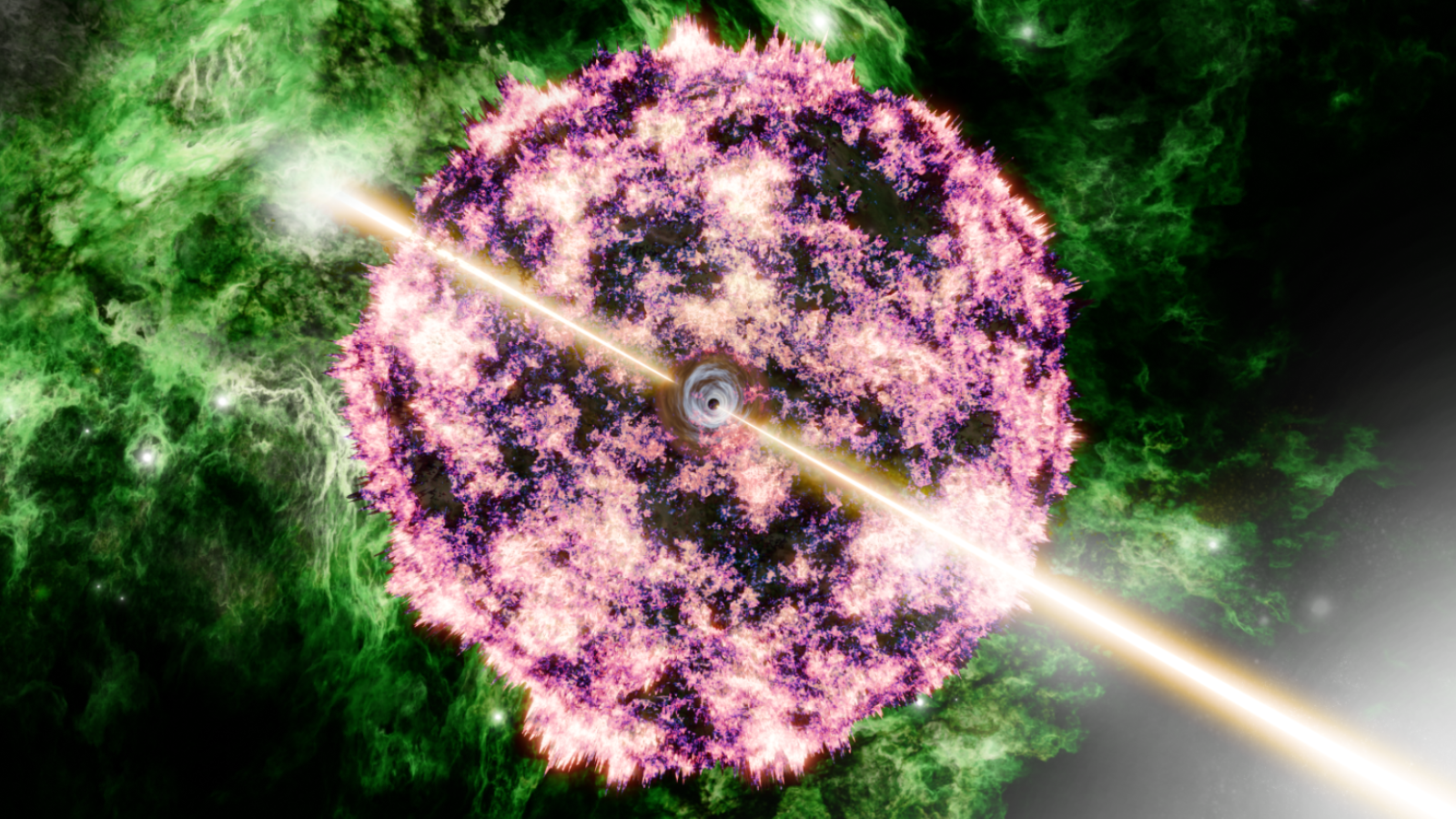
The BOAT, a gamma-ray burst officially designated GRB 221009A, was first detected on Oct. 9, 2022. Among the ocean of photons from the event that rained down on our planet was the highest-energy photon ever detected originating from a gamma-ray burst. It was detected by Carpet, an ultra-high-energy cosmic-ray detector located at the Baksan Observatory in the Russian Caucasus.

The problem is, according to all current rules of physics, a particle with such high energy shouldn't reach Earth from an explosion occurring such a vast distance away. That's because space isn't empty; it is filled with a "fossil" radiation field of photons left over from just after the Big Bang called the cosmic microwave background (CMB). It should be virtually impossible for a high-energy photon to travel 2 billion light-years without interacting with a CMB photon and being transformed. And still it came.

"We started from a very simple question: how did this photon survive a journey that, according to known physics, should have destroyed it?" team leader Giorgio Galanti from the Italian National Institute for Astrophysics (INAF) said in a statement. "The new data from the Carpet experiment showed us that the explanations proposed so far were no longer sufficient.

"We therefore looked for a theoretical scenario capable of consistently describing what we observe, without resorting to arbitrary corrections to the equations."

A hypothetical transformation

To investigate the mystery of how this high-energy photon reached our planet, Galanti and colleagues turned to incredibly light hypothetical particles called axion-like particles (ALPs).

ALPS could serve as a solution to this puzzle via a mechanism that would allow photons to transform into ALPs as they travel and then convert back into photons as they reach the Milky Way. The problem is that this still can't account for such a high-energy photon.

This team combined the idea of ALPs with a proposed violation of one of the fundamentals of Einstein's 1905 theory of special relativity called "Lorentz invariance."

In short, Lorentz invariance says that observers moving at different speeds should experience the same physical laws. The team tested the idea that Lorentz invariance could be violated at high energies, thus changing how photons propagate through space.

A purple sphere against a green background with two yellow beams emerging from it

An illustration of the supernova that launched teh BOAT, the gamma-ray burst that is the most powerful cosmic explosion since the Big Bang (Image credit: Aaron M. Geller / Northwestern / CIERA / IT Research Computing and Data Services.)

In the scenario devised by the team the photon would have avoided being wiped out by interactions with the CMB as it would avoid interactionc with these fossil photons.

The new research therefore implies that at high enough energies, photons can take a "fast lane" through a transparent universe, dodging the physics that would normally force their destructive transformation.

Interestingly, there is some evidence relating to the BOAT that seemingly backs this theory. According to the picture developed by the team, this high-energy photon should have arrived at Earth around one hour after lower-energy particles of light originating from the BOAT. Indeed, that is exactly what happened.

"The most interesting aspect of our work is that, for the first time, it brings together two ideas that until now had been developed separately," team member Marco Roncadelli of the National Institute for Nuclear Physics (INFN) said. "If future observations confirmed this scenario, the universe would become a natural laboratory for studying quantum gravity at energies enormously higher than those achievable by any accelerator built on Earth."

The team's research is available on the repository site arXiv and has been accepted for publication in the journal Physical Review Letters.

Did Venus eat its own moon?

Scientists may finally know why Venus, Earth's twin, lacks a moon, finding that the hottest planet in the solar system may have consumed its own natural satellite.

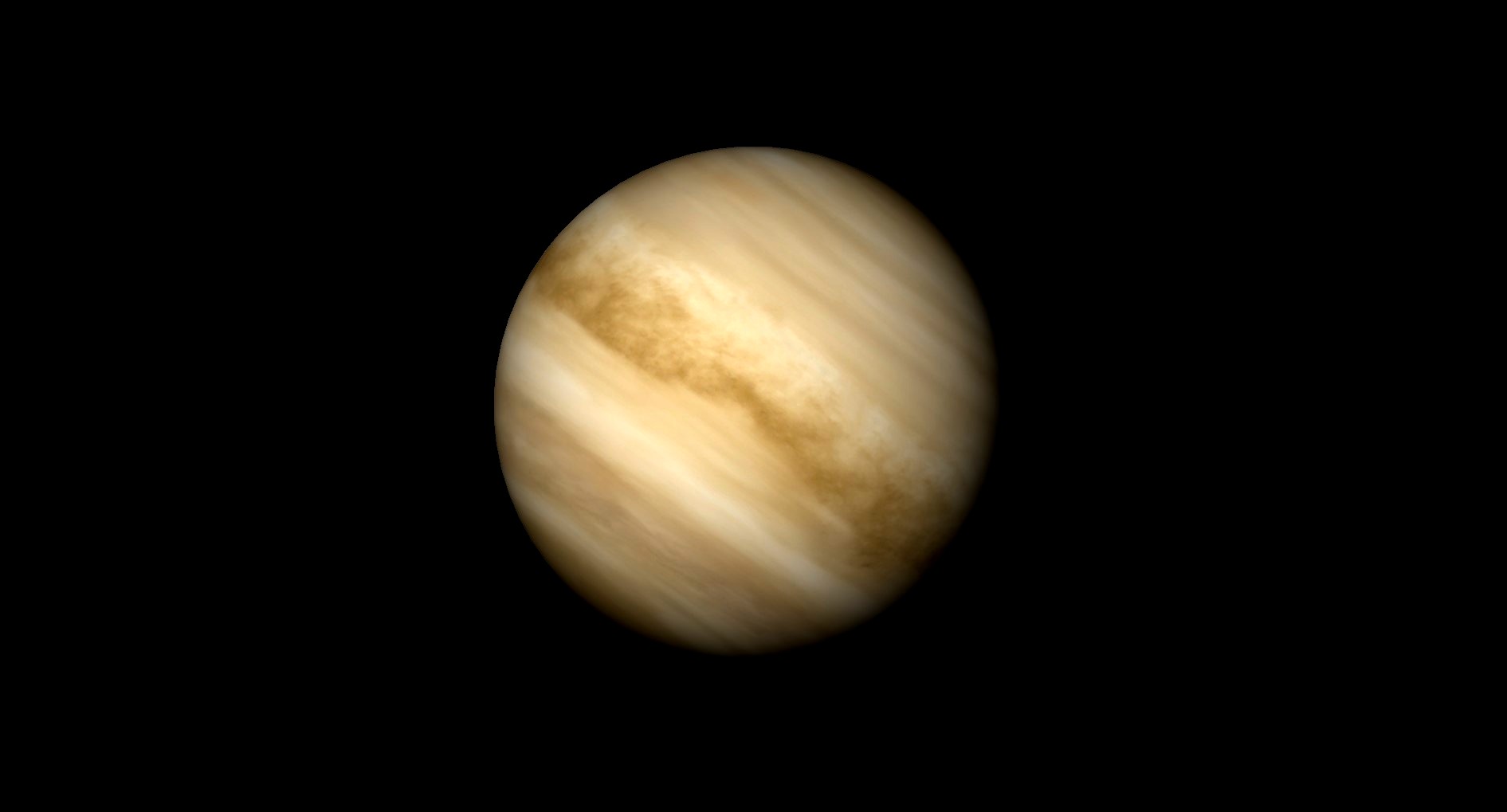
Venus is often referred to as Earth's twin due to its size, mass, rocky composition, and distance from the sun, but there are some glaring differences between the two planets. Aside from Venus' blisteringly hot temperature, which could melt lead, incredible surface pressure, violent high-speed winds, and clouds of sulfuric acid, one of the key differences between Earth and Venus can be seen from afar. While our planet has a constant companion in the form of the moon, Venus lacks a moon of its own. In fact, the only solar system planets lacking moons are Venus, the second planet from the sun, and Mercury, the closest planet to the sun.

One question that scientists have puzzled over for years is whether Venus always lacked a moon, or if the hottest planet in the solar system once had a natural satellite and somehow lost it. Now, a team of researchers may have arrived at an answer, determining the fate that would have befallen a hypothetical moon orbiting Venus.

"I have always had a fascination with moon formation and evolution in the solar system, and particularly with Venus since my research is centered around its evolution and potential for past habitability," team leader Stephen R. Kane of the University of California, Riverside told Space.com. "Venus is Earth's twin, and both are nearly identical in size, mass, and composition. However, Earth has a large moon, and Venus has no moon at all, not even a small captured satellite.

"Venus undoubtedly experienced large impacts, just as Earth has, and so has had as much, if not more, opportunity to form a moon similar to what we see in our own skies."

Kane and colleagues constructed a simulation to test their ideas of what could have become of the Venusian moon.

"The work involved going back to fundamental physics and creating the simulation from the ground up, which I validated by ensuring I could reproduce the evolution of the Earth-moon system," Kane said. "The moment I realized that our model provided a complete explanation for Venus not having a moon was an exciting one!"

Did Venus consume its own moon?

The team modelled a gravitational tug-of-war between Venus, a hypothetical moon, and the sun, following this forward over billions of years.

"This is the same physics that governs our own moon, which is slowly drifting away from Earth. We ran the calculations across a wide range of possibilities for how fast Venus was spinning and how massive its moon might have been, using two independent mathematical descriptions of how tides work," Kane explained.

The researcher said that this was done so the conclusions reached wouldn't hinge on one set of assumptions. They found in most cases a Venusian moon would not drift safely outward the way ours does. Instead, the modelling showed that a moon orbiting Venus would eventually reverse its course and spiral inward, causing it to be torn apart by the planet's gravity.

Kane and colleagues found that possessing an intimidating size wouldn't guarantee a Venusian moon's survival, either.

"An interesting aspect is that a heavier moon is destroyed faster, since a massive moon would drain Venus's spin so efficiently that it hastens its destruction," Kane added.

A striped brown sphere against a black background

Venus as seen from Earth may look peaceful, but up close, it is a hellish world that may have destroyed its own moon. (Image credit: Starry Night)

But are there any circumstances under which a Venusian moon could have survived?

"Survival came down to two main things: Venus had to be spinning fast when the moon formed, with a day shorter than about 12 hours, and the moon couldn't be too massive, up to roughly the mass of our own moon," team leader Stephen R. Kane of the University of California, Riverside told Space.com. "In that narrow window, the moon migrates outward and stabilizes, much as Earth's did. Outside that range, the moon is unfortunately doomed to be consumed by Venus.

"So a surviving moon would have had to be modest in size, orbiting a rapidly spinning early Venus, which are conditions that don't match what we think early Venus was actually like."

We may never conclusively know if Venus has indeed destroyed its own moon, as Kane thinks that collecting direct evidence from astronomical observations will be very difficult.

"Finding direct observational evidence is pretty tough. A moon lost billions of years ago would leave little to no direct trace we can point a telescope at today, so we can't observe the event itself," Kane said. "However, there are indirect avenues. For example, if a moon was destroyed and its debris rained down on Venus, it could have left a chemical fingerprint in the planet's surface or atmosphere, and upcoming missions to Venus, including NASA's DAVINCI (Deep Atmosphere Venus Investigation of Noble gases, Chemistry, and Imaging) probe, will measure atmospheric composition in detail."

If missions such as DAVINCI could help us develop a better understanding of the Venusian interior, then this would also improve the models such as the one used in this research. That is because the outcomes of such models depend on properties of Venus's interior, which aren't currently well understood.

"There's a broader test beyond our solar system because our results predict that slowly rotating, Venus-like planets around other stars should generically lack large moons, so as astronomers begin searching for moons around exoplanets, that's a prediction that can eventually be checked against real data," Kane said.

A spherical silver spacecraft against a fiery orange background

An artist's depiction of the DAVINCI probe nearing the surface of Venus. (Image credit: NASA's Goddard Space Flight Center)

Kane and colleagues don't intend to rest on their laurels while further data from Venus or even Venus-like exoplanets are delivered. They have plenty to work on in the meantime.

"There are numerous implications of our work that I would like to explore further. These include the compositional and atmospheric effects of a Venusian moon consumption event that may be testable now," Kane concluded. I would also like to explore similar effects for Mercury and Mars, and conduct further studies on exoplanet cases where such moon collision scenarios may have occurred."

The team's research is available as a pre-peer-reviewed paper on the repository site arXiv.