Orion is getting an upgrade on Artemis III, and the astronauts aboard are getting WiFi (sort of).
NASA is partnering with SpaceX to equip the Orion spacecraft for Artemis III with a pair of Starlink mini laser terminals, designed to operate on SpaceX's existing Starlink network. The two panels will be installed on Orion's exterior, and will augment the spacecraft's existing communications systems.
The added capability is expected to provide a greater data capacity from Orion to NASA's mission control in Houston, which may include high-definition live video from orbit. The mission is currently scheduled for the second half of 2027, and will also include another sizable contribution from SpaceX: a Starship rocket.
SpaceX currently operates more than 10,000 Starlink spacecraft in LEO, which provide satellite internet coverage across nearly the entire globe to commercially-available wireless terminals about the size of a laptop. Combined, those more than 10,000 and counting satellites are equipped with over 25,000 lasers currently in operation in LEO to maintain the network's interconnectedness, according to a NASA update.
The company previously demonstrated the Starlink constellation's use as a communication relay network during the privately funded Fram2 mission that launched the first human into a polar orbit around Earth in 2025. SpaceX frequently utilizes its high-data capabilities to stream high-definition live views of its Falcon 9 and Starship rocket launches from orbit.
Artemis III is the third in a program of NASA missions with the goal of returning astronauts to the moon and establishing a permanent base on its surface. Artemis III is designed as a practice run for NASA's Orion capsule to rendezvous and dock with the program's commercial lunar lander vehicles, Starship, and Blue Origin's Blue Moon spacecraft, in low Earth orbit (LEO). That's a lot closer to home compared to the Artemis II mission that NASA launched in April of this year.
Artemis II was Orion's first flight with astronauts onboard, and flew a 10-day mission around the far side of the moon. NASA used laser communications during Artemis II as well, using terminals on Orion and ground stations at NASA's Jet Propulsion Lab in California and White Sands Complex in New Mexico to transmit data loads too big for the agency's Near Space and Deep Space radio networks. With flight sticking to LEO during Artemis III, communication limitations become a lot easier to surmount.
If all goes according to plan during Artemis III, NASA has scheduled the first Artemis moon landing on the following mission, Artemis IV. NASA is targeting 2028 to launch Artemis IV, and has selected Starship as the lunar lander that will return astronauts to the lunar surface.
NASA has never flown a mission like Artemis III, and it's shaping up to become one of the most elaborate spaceflights in history.
NASA has provided more details about the Artemis III flight scheduled for next year, and, if all goes according to plan, the objectives the astronauts will be checking off their list will contain more than a few "firsts" for the Artemis program and human spaceflight overall. That includes the first crewed NASA mission to rendezvous and dock with two separate designed to carry crews of their own.
Artemis is NASA's next-generation program to return astronauts to the surface of the moon. Artemis III is designed as a test run for NASA's Orion spacecraft in which it will dock and perform operations with the program's two commercial lunar landers — SpaceX's Starship and Blue Origin's Blue Moon. The mission will launch a crew of four aboard Orion on NASA's Space Launch System (SLS) rocket into Earth orbit, where the capsule will rendezvous with each lander separately over the course of about two weeks. Their success will set the stage for a crewed moon landing on Artemis IV, but NASA must first master the complicated demands of Artemis III in order to confidently set its sights on the lunar surface.
"Artemis III will be a highly choreographed dance with a demanding launch sequence across multiple launch pads and equally demanding mission operations for our ground and flight crews, making it one of the most complex and ambitious missions NASA has ever undertaken," said Artemis Program Manager Jeremy Parsons in a NASA update on July 15.
Only one mission in the course of human spaceflight has flown astronauts to rendezvous with multiple spacecraft capable of supporting crews of their own: Soyuz T-15 in 1986, which launched cosmonaut Leonid Kizim to the Salyut 7 space station, and then flew him to, what was at the time, the Soviet Union's MIR space station.
America's space program has come close to such a milestone. NASA's Gemini 10 mission in 1966 launched NASA astronauts John Young and Michael Collins to rendezvous and dock with the uncrewed Agena 10 probe. After undocking, they flew their Gemini capsule to rendezvous with Agena 8, but did not dock with the probe. Two shuttle missions, STS-72 and STS-51A, also managed to rendezvous with separate satellites during their missions, but none of these required the complex coordination and multiple launch vehicles lined up to pull off Artemis III.
Orion, Blue Moon and Starship are all designed to launch on different rockets from different launch pads at NASA's Kennedy Space Center (KSC) and the Cape Canaveral Space Force Station (CCSFS), which will all require cross-agency and commercial collaboration for range availability, resource use constraints like nitrogen gas availability across the various ranges and the alignment of several other overlapping hierarchies of infrastructure in order to ensure Artemis is successful.
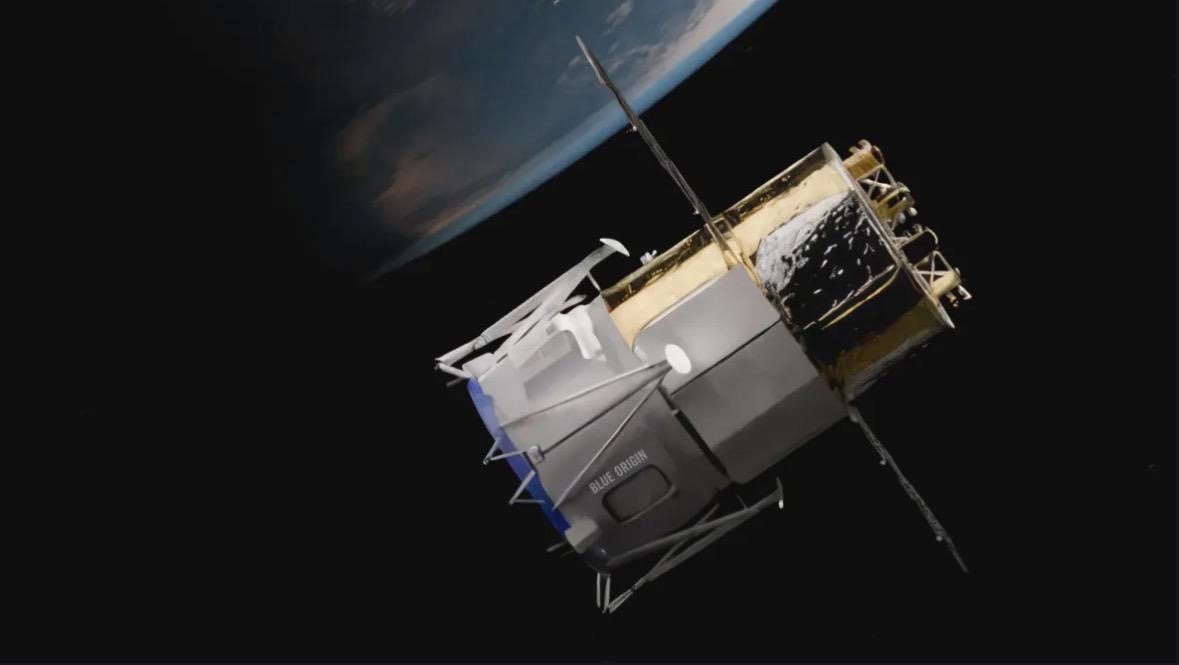
Render of Blue Origin's Blue Moon lander in low Earth orbit. (Image credit: Blue Origin)
Blue Moon will launch on Blue Origin's New Glenn rocket from Space Launch Complex-36 (SLC-36), which it leases from the Space Force at CCSFS. Blue Moon is the first of the three spacecraft set to make it to orbit, and is capable of remaining in space for up to 30 days, according to the NASA update. That will give Blue Origin and NASA an opportunity to confirm the lander's condition and functionality before committing the Artemis III crew and Orion to launch and join it on orbit.
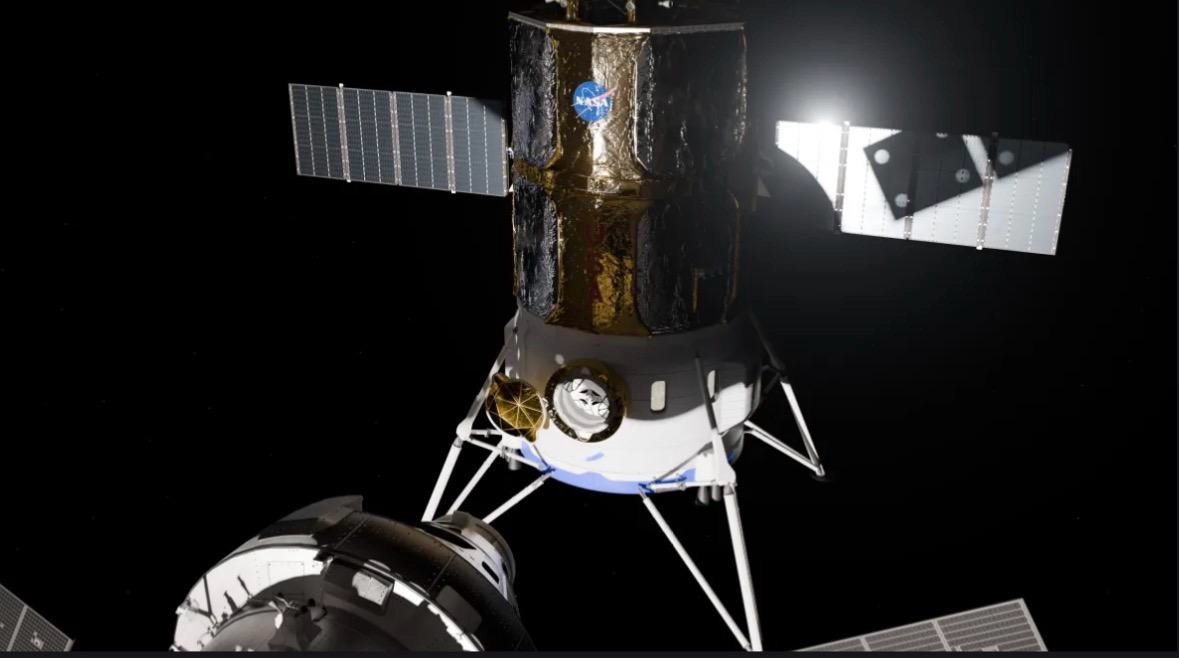
SLS will be next to get off the ground, lifting off from KSC's Launch Complex-39B carrying the Orion spacecraft. Orion will rendezvous with Blue Moon in low Earth orbit (LEO), and will spend about two days docked with the lander. Part of the purpose of Artemis III is to give both lunar lander providers the chance to mature their designs based on actual in-flight data, so neither the Blue Moon nor Starship that fly on the mission will be the spacecrafts' final, landing-capable versions.
Blue Origin will launch the Blue Moon Mark 2 (Mk2), a graduated design of the company's smaller Mk1 cargo lander, which was scheduled to launch a demonstration mission this year. That may be delayed, however, due to an explosion of one of the company's New Glenn rockets during an engine test at SLC-36 in May. With repairs now well underway, Blue Origin CEO Dave Limp has voiced confidence that New Glenn will return to flight by the end of 2026.
Render of Blue Origin's Blue Moon lander and Orion prior to docking in low Earth orbit. (Image credit: Blue Moon)
Completing that Mk1 mission this year will be just as critical to NASA's moon plans as the launch of Blue Moon Mk2 will be during Artemis III. Among the list of requirements each lander must meet in order for NASA to certify the vehicles to land astronauts on the moon, successfully demonstrating an uncrewed lunar landing is of chief importance.
"SpaceX and Blue Origin have put forward a list of aggressive objectives and goals intended to complement upcoming uncrewed demonstration missions at the moon so that we can gain both understanding and confidence in the spacecraft and launch vehicles prior to a crewed landing," said NASA's Steve Creech, Artemis' Human Landing System program manager, in the mission update.
Once Orion docks with Blue Moon on Artemis III, two of the mission's astronauts will be able to board the lander to test out its environmental control systems, avionics and the interoperability between the two spacecraft in flight. A test article EVA (extravehicular activity) spacesuit designed to mirror what astronauts will wear during future excursions across the lunar surface will launch aboard the Artemis III Blue Moon, and provide engineers data about how the suit will interact within the lander's crew cabin.
Starship won't launch until after Orion and Blue Moon have undocked. SpaceX is currently constructing two Starship towers on Florida's Space Coast, one at KSC's LC-39A, and another at SLC-37, but it's not yet clear which pad will support Artemis III. NASA contracted SpaceX to design a lunar lander version of the spacecraft to deliver astronauts to the surface of the moon on Artemis IV, but SpaceX has that and more in mind for the massive vehicle.
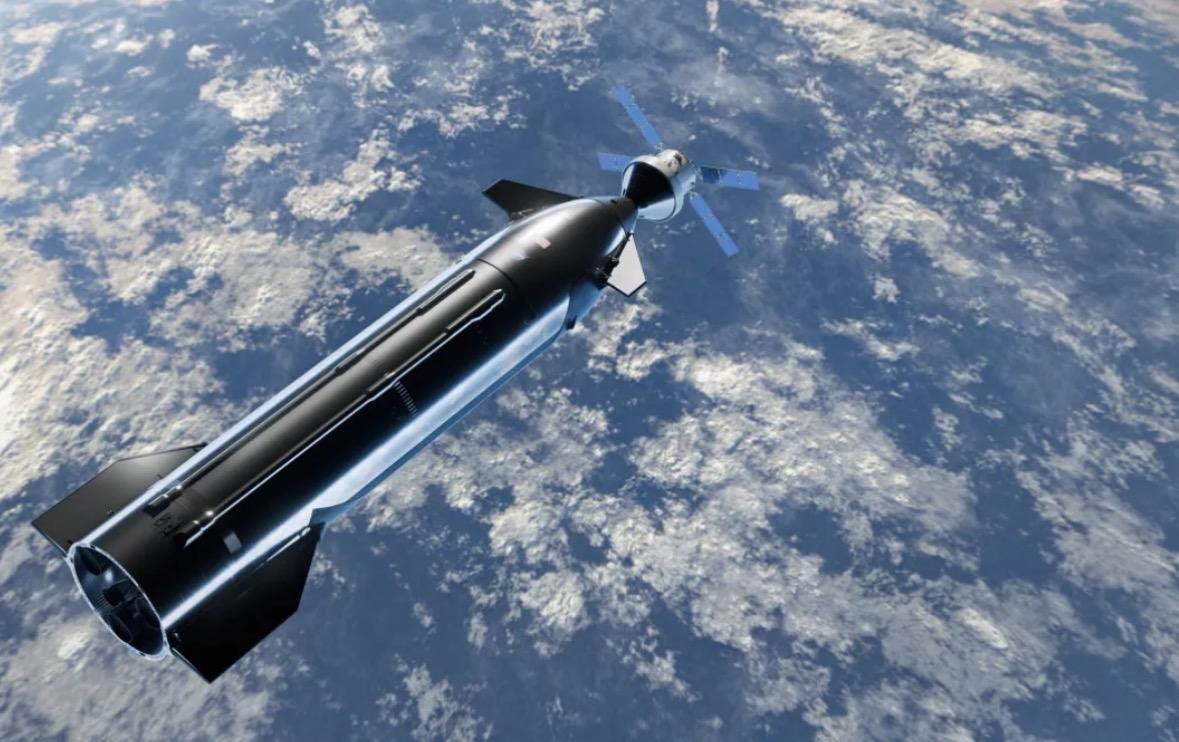
Render of SpaceX Starship and Orion docked in low Earth orbit. (Image credit: SpaceX)
SpaceX has performed test flights of its Super Heavy booster and Ship upper stage, collectively known as Starship, since 2023. The rocket is designed to be fully reusable, and will provide SpaceX a big upgrade from the company's workhorse Falcon 9 rocket. Once operational, SpaceX says Starship will be capable of delivering more than 100 tons to LEO. But SpaceX is still chasing that operational status.
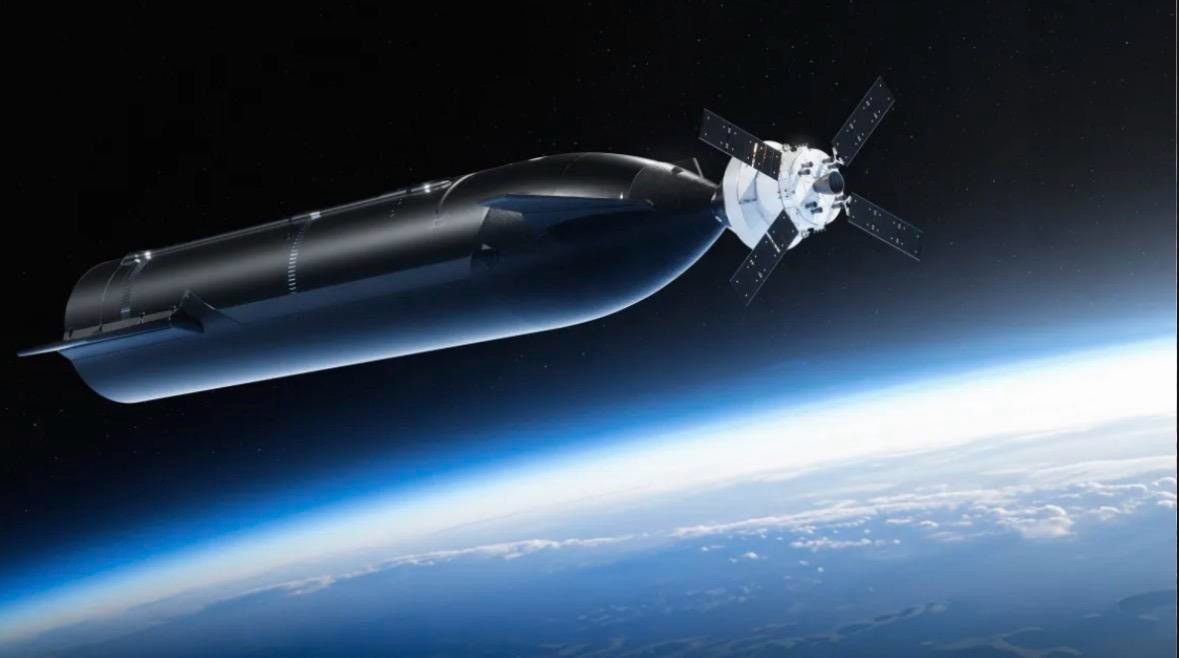
Despite its dozen launches to space, and counting, Starship is still very much in a developmental stage, and has yet to meet many of NASA's requirements to fly a crewed lunar landing. SpaceX introduced the "Version 3" (V3) Starship on its Flight-12 launch in May, and intends to fly the same design when it launches Starship on Artemis III, with a docking adapter for connecting with Orion. For the astronauts, that means no crew cabin to enter. Instead, Orion and Starship will test communications and maneuvering systems between both vehicles.
Starship's V3 upgrade includes hardware that will be needed for an actual moon landing mission, like docking ports to perform propellant transfers in space — Starship requires refueling from tanker Ships on orbit in order to fly beyond LEO, and NASA estimates at least 15 Starship refueling launches will be needed for Artemis IV. Transferring and storing those cryogenic fuels in space is another capability Starship (and Blue Moon) needs to demonstrate before it can perform crewed lunar landings.
Render of SpaceX Starship and Orion docked in low Earth orbit. (Image credit: SpaceX)
For Artemis III, though, Starship and Blue Moon will each only require one launch to get the job done, and NASA wants to give them ample room to do so. "All three rockets will have more launch opportunities than are available for a lunar mission and will be able to reach the designated mission altitude in a single launch," the NASA update said.
Orion and the Artemis III crew will stay docked with Starship for about a day before detaching to begin preparations for their return to Earth. Similar to the return of Artemis II in April, the Artemis III astronauts will target a parachute-assisted splashdown aboard Orion in the Pacific Ocean, off the United States' West Coast.
Successful operations with both landers on Artemis III would pave the way for NASA's lunar landing plans on Artemis IV, currently scheduled for 2028. Barring any development delays or complications during Artemis III, Starship is the vehicle NASA has selected to carry out the Artemis IV moon landing, the first return of astronauts to the lunar surface in more than half a century.
For ten glorious days starting on April 1, 2026, one human endeavor captivated our home planet across continents and time zones: the NASA Artemis II mission to orbit the moon, the first crewed mission to cislunar space since 1972. In an Easter-Passover week that had especially demoralizing headlines on global conflicts, this mission presented a powerful vision of what journeying together and taking enormous risks for a shared purpose towards a shared future could look like.
Much has been spoken and written about the scientific and personal achievements of the Artemis II mission and its trailblazing astronauts. Their humanity, and what it did for humankind at large, is perhaps a quieter yet just-as-celebratory achievement.
In a time of trillion-dollar AI IPOs, when the seemingly planned obsolescence of humanity itself looms on our collective horizon, the Artemis II astronauts reminded us that they considered it the honor of a lifetime to do this for us - and as us - while transmitting daily that they couldn’t wait to come home to us. As Christina Koch shared at the end of the translunar injection burn (TLI) on day 2, while Artemis II set its course to leave Earth's orbital space for the moon as well as its return trajectory: "With this translunar injection burn, we do not leave Earth. We choose it."
From their morning wake-up music playlists (which inspired many to enquire about submitting their compositions for future crewed missions), to the reading out of their menus and details of their daily workouts or sleep schedules, we were reminded that these astronauts were navigating with us in real time the humdrum work of staying alive while conducting amazing science. This signal reached Earth as a continuous invitation to fellowship, and the record-breaking viewership of Artemis II built like a slow cooker feast, with global engagement increasing from launch to splashdown.
The Artemis II livestream introduced many viewers to the unavoidable aspects of spaceflight missions, such as the timing lag and blackouts in communications that will endure regardless of future technological advancements.
Sometimes this was wonderfully funny, like when the Canadian Prime Minister Mark Carney sought reassurance from the Artemis II astronauts that they preferred maple syrup to Nutella over their pancakes, with the astronauts bursting into laughter a few seconds after the media in-room chuckles.
At other times, it was the quiet anticipation of unprecedented history like the 40-minute communications blackout when the Orion spacecraft traveled behind the moon, or the heart pounding nailbiters of the 6-minute blackouts during the TLI or re-entry to Earth. In an era that rewards instantaneity over pauses, the globe watched and waited together. Such communication lags will compound dramatically for more distant worlds we explore, yet will still tether us profoundly in real time to one another despite our attention- and time-deprived schedules.
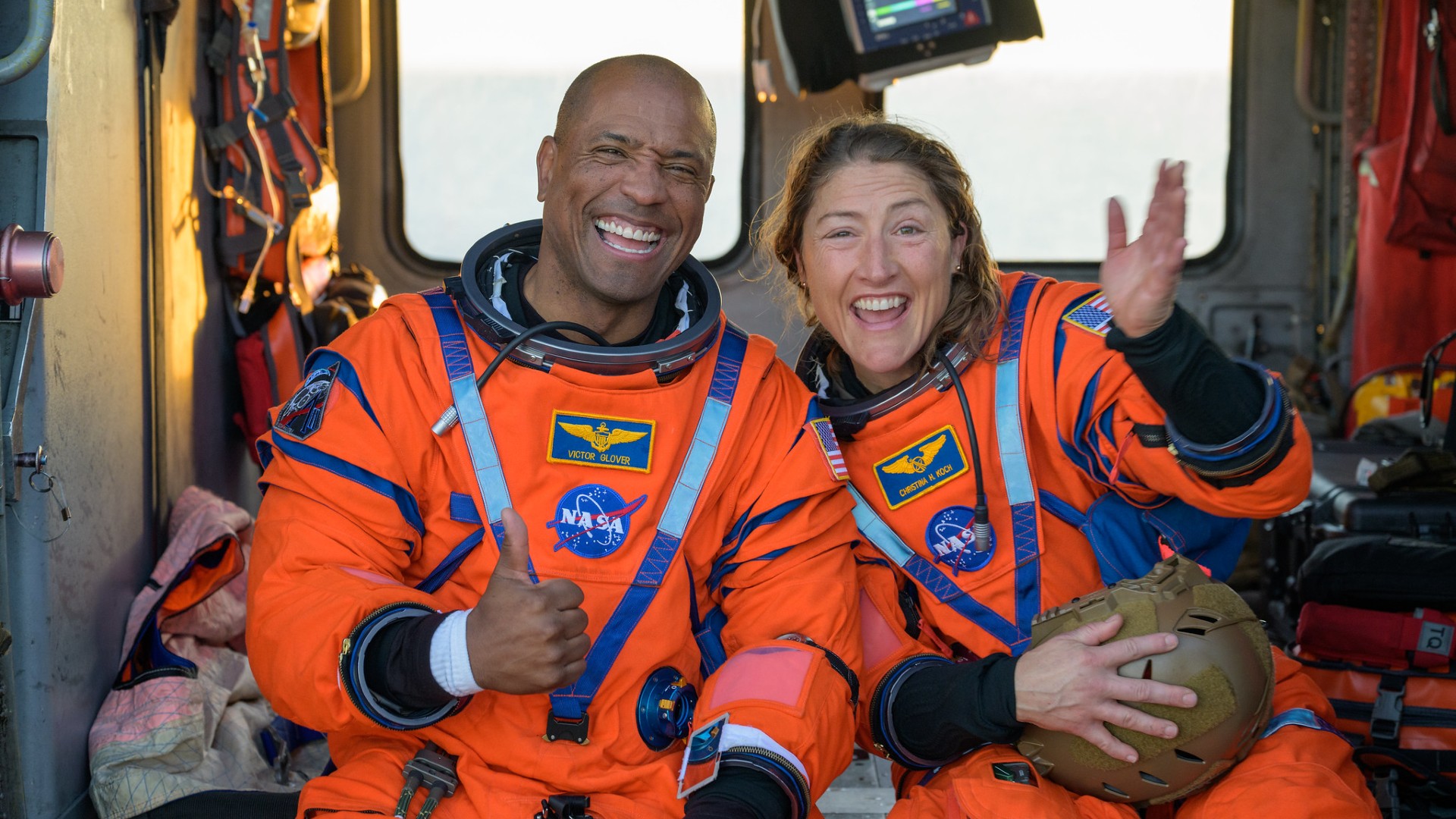
Artemis II astronauts Victor Glover and Christina Koch smile after being recovered onto a U.S. Navy vessel following splashdown. (Image credit: NASA/Bill Ingalls)
The Artemis II livestream also brought home the challenges of human bodily functions far from home. An inordinate amount of media attention and communications airtime was devoted to the brand new model of NASA toilet which developed issues just hours after launch and later became unfunctional on day 3 of the mission. Panels of NASA and space studies experts were asked by journalists about whether the astronauts were able to do either one or both of "#1" or "#2", or why the toilet gave off burning smells, highlighting the very human realities of boldly going where no one has gone before.
We also saw the rocking of the Orion capsule framed by the darkness of space and the background of the moon or Earth. We watched as each astronaut took their turn with the mandatory daily exercise routine to prevent bone density loss, cardiovascular issues and other health declines in a microgravity environment (only one astronaut can work out at a time, owing to space restrictions and to prevent buildup of exhaled carbon dioxide in an enclosed environment).
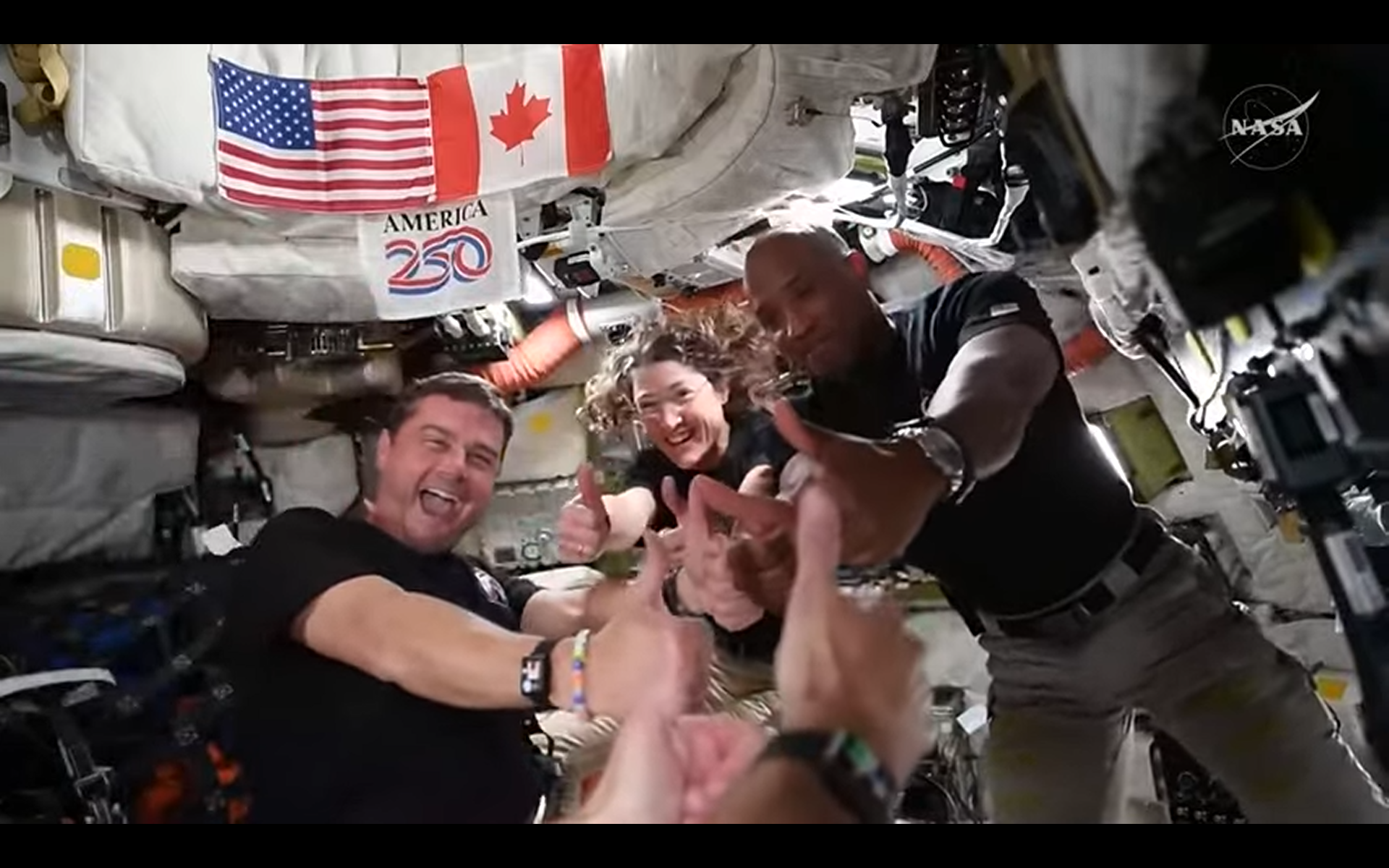
The Artemis II crew give a group thumbs-up inside their Orion capsule. (Image credit: NASA)
The Artemis II mission was full of deeply personal experiences and observations shared by the astronauts, made even more powerful by their unscripted nature. Commander Reed Wiseman's impromptu words of gratitude to the thousands of engineers and staff involved with the successful TLI, and the spontaneous naming of craters on the far side of the moon including - as the astronauts wept and hugged - one for his deceased wife Carroll, connected us in real time to their, and therefore our, evolving scientific and human perspectives.
This gratitude was echoed in a recent interview at the Kennedy Space Center, in which Wiseman shared that he had just received a handwritten note at the airport written on a boarding pass, stating "Thank you for reminding us about joy and hope in the universe again", which he expanded on to thank all the hands that helped the Artemis II mission succeed.
There were also moments during the mission when they simply ran out of words, like when they saw shades of colors on far-side lunar craters on what appears from Earth as a gray barren world. They called for new language to describe what they were seeing.
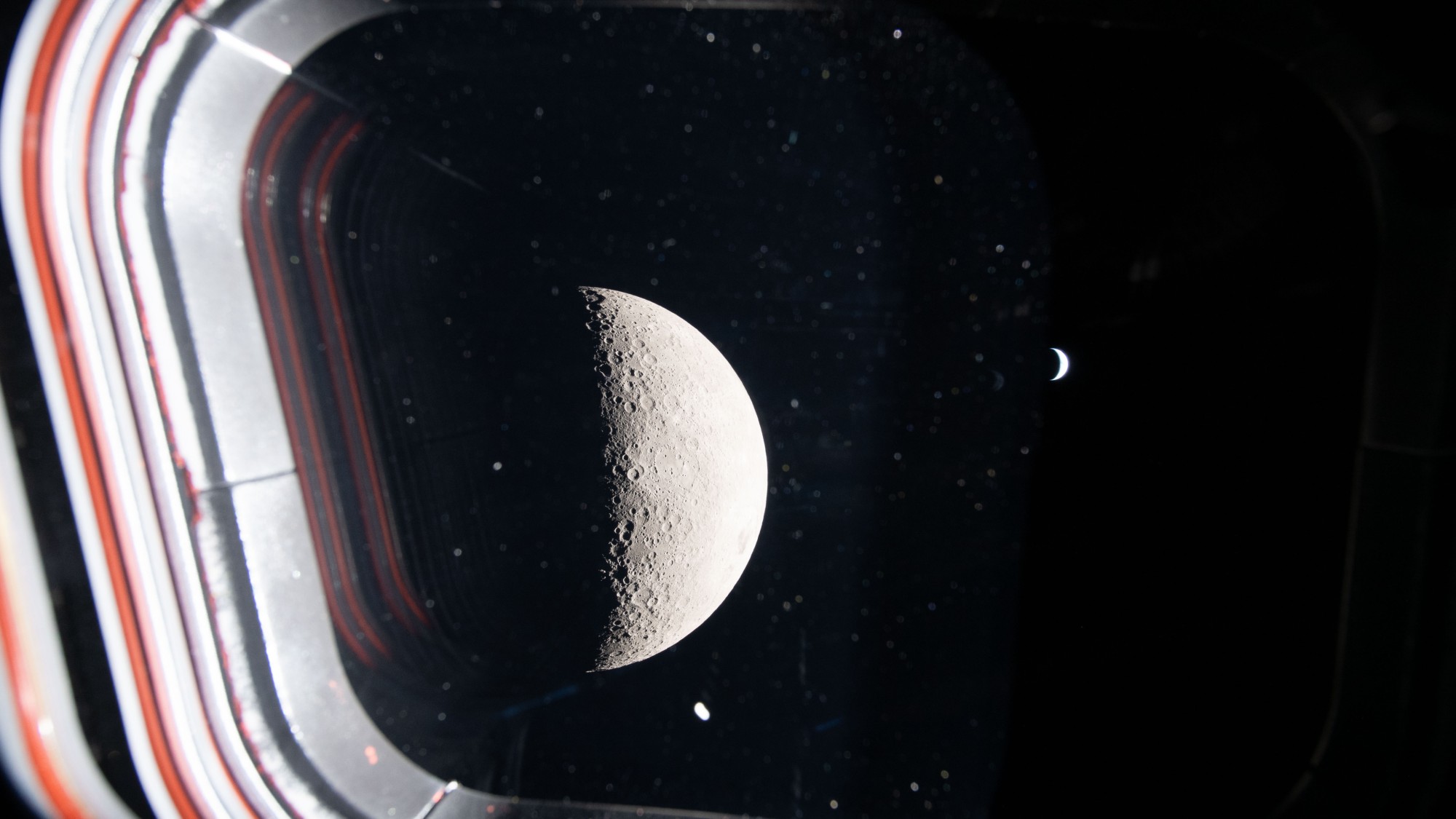
The moon and earth as seen through the window of the Artemis II crew's Orion spacecraft (Image credit: NASA)
Towards the end of the 1997 movie "Contact," based on the 1985 book by Carl Sagan, astronaut and SETI scientist Dr. Ellie Arroway (played by Jodie Foster) is overcome by the experience of interstellar travel and the dazzling views it brings. She says in a choked voice "they should have sent a poet."
NASA is picking up the pace on its Artemis III mission preparations, pressing forward on multiple fronts to assemble launch vehicle hardware and beginning routine simulations inside Artemis mission control.
The agency is "full steam ahead," according to a July 13 NASA update. Across Kennedy Space Center (KSC) in Florida, components of Artemis III's Space Launch System (SLS) rocket are coming together, undergoing tests and awaiting transportation for final integration ahead of next year's launch. NASA is targeting mid-to-late 2027 for Artemis III, which will launch four astronauts into low Earth orbit (LEO) aboard the Orion spacecraft. It will be the second crewed mission of NASA's Artemis program, which aims to establish a permanent human presence on the moon.
Artemis III will be a critical stepping stone in NASA's lunar landing architecture, despite the mission not actually flying to the moon. Instead, SLS will launch Orion and its four-person crew into LEO for rendezvous and docking operations with the program's two commercial lunar lander vehicles: SpaceX's Starship and Blue Origin's Blue Moon spacecraft.
With the completion of the massively successful Artemis II mission that flew astronauts around the moon in April and the second half of 2026 beginning to count down, NASA has shifted into full gear to complete assembly and testing of the hardware that will launch Artemis III.
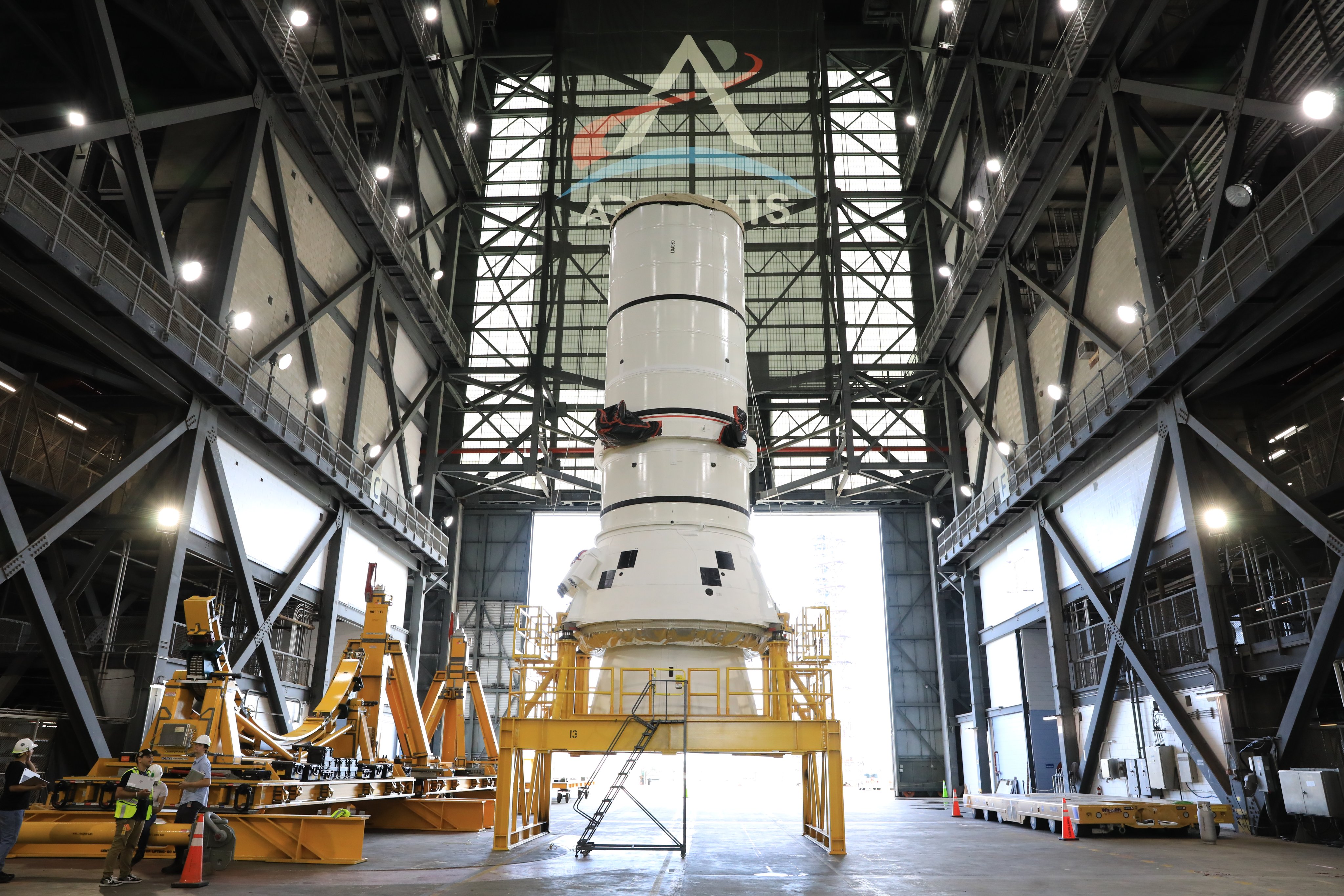
Several components for the mission's SLS rocket have arrived in the Vehicle Assembly Building (VAB) at KSC. The SLS core stage was delivered at the end of April, and it was connected with the rocket's engine block section in May. The first two of the core stage's four RS-25 engines arrived in June and will be installed on the SLS engine block once the remaining two are delivered, after which NASA plans to begin integration with the mobile launch platform (MLP) and launch operations tests. A temporary weather cap was also delivered in June, which will protect the stage when NASA transports it to the launch pad for tests before the full vehicle is stacked.
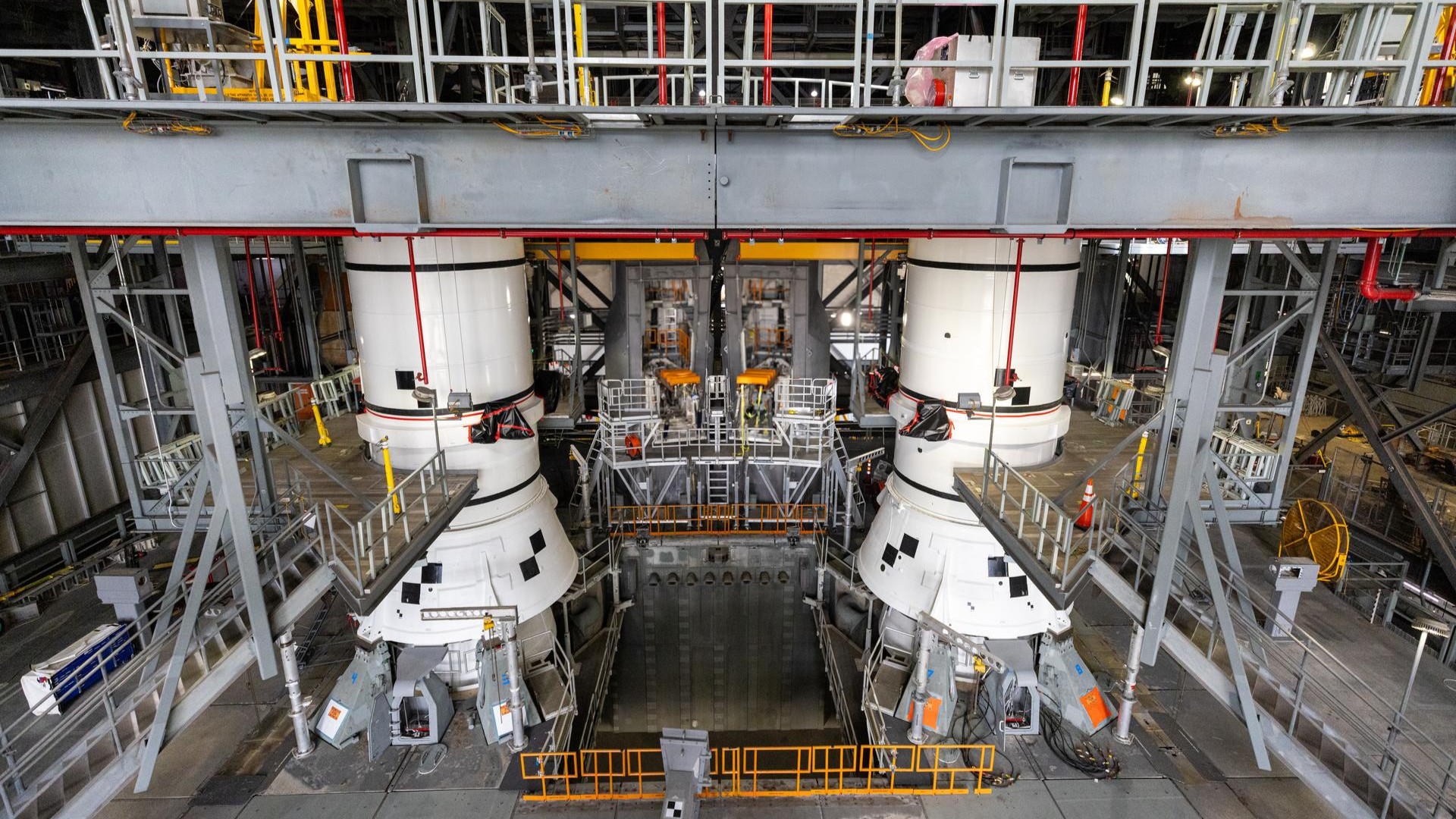
The bottom segments of both SLS solid rocket boosters (SRBs) were delivered over the last week, and they have been mounted on the MLP, according to NASA's update. The upper SRB segments arrived at KSC via train in June and will undergo inspection and testing before the twin boosters are fully stacked.
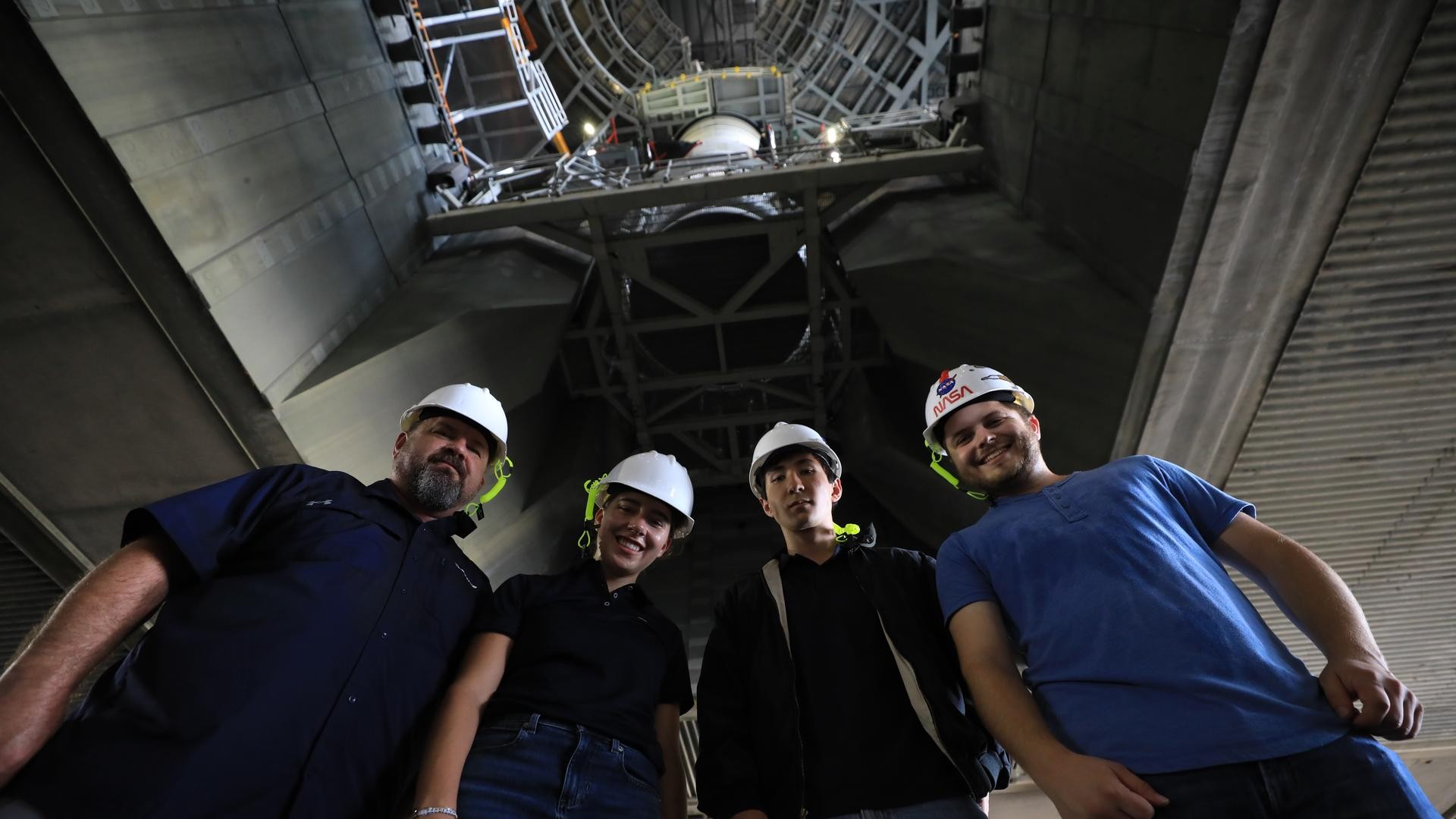
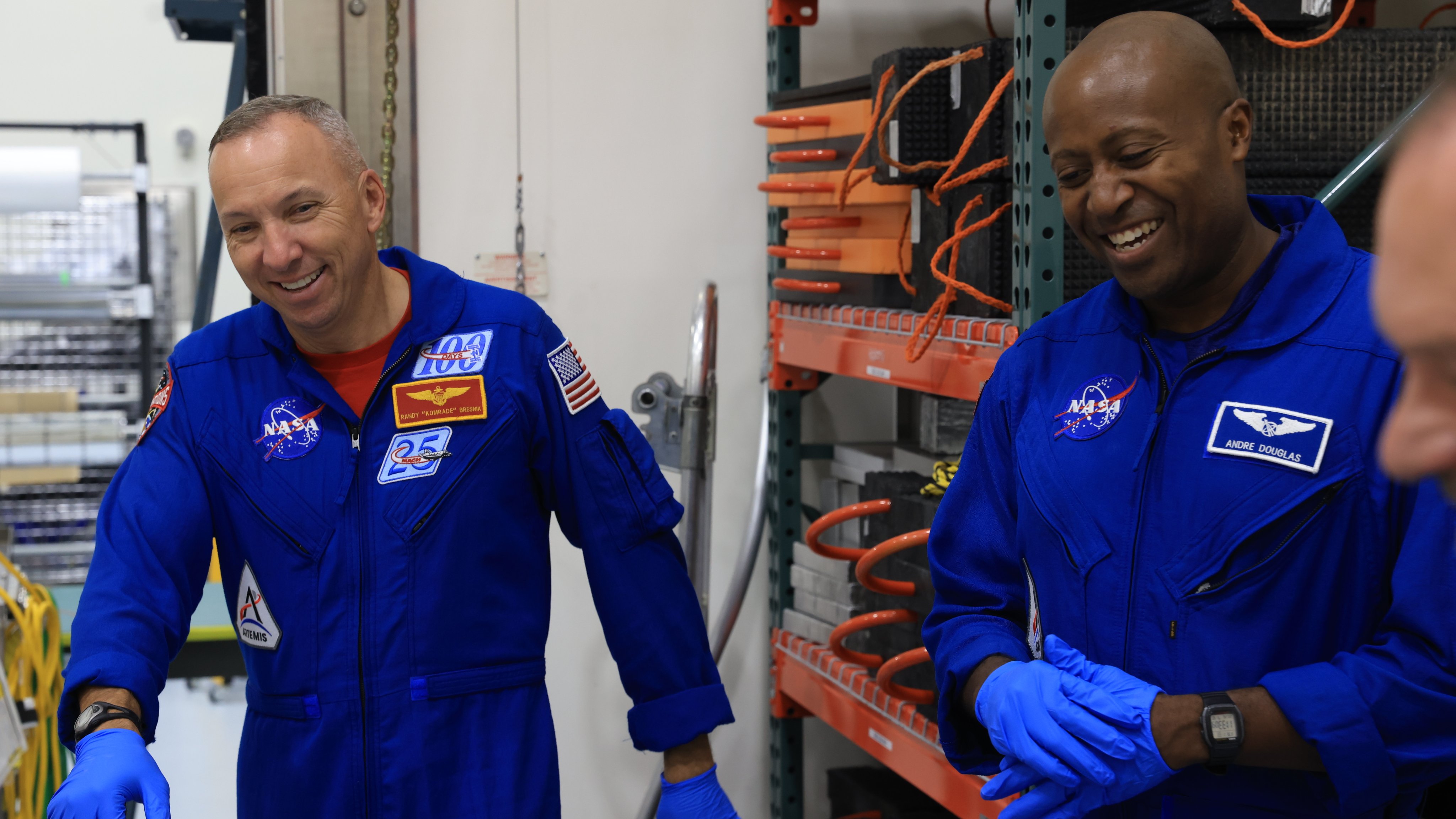
Per NASA: Artemis launch director Charlie Blackwell-Thompson participates in the launch countdown simulation on July 2, 2026, in Firing Room 1 of the Launch Control Center.NASA/Chad SiwikPer NASA: Employees pose for a photograph following work inside the VAB to secure the left-hand aft assembly solid rocket booster segment to the mobile launcher at the VAB on July 9, 2026.NASA/Ben SmegelskyPer NASA: The left-hand and right-hand aft assembly solid rocket booster segments for NASA’s Artemis III SLS (Space Launch System) rocket are secured to the mobile launcher at the agency’s Vehicle Assembly Building at NASA’s Kennedy Space Center in Florida on July 11, 2026. NASA/Frank MichauxPer NASA: Artemis III astronauts Randy Bresnik and Andre Douglas visit the Multi-Payload Processing Facility at NASA's Kennedy Space Center on July 10, 2026.NASA/Cory Huston
Inside KSC's Neil Armstrong Operations and Checkout Building, the Artemis III Orion is making significant progress — engineers have now finished installation of the spacecraft's heat shield.
Artemis III will be the first Orion mission to use an upgraded heat shield, featuring design improvements gleaned from analysis of unexpected wear on the heat shield flown on Artemis I. Orion's service module is also currently inside the Operations and Checkout Building and recently completed acoustic testing. Both the service module and Orion capsule are now being prepared for joining and eventual transportation to the VAB for stacking.
The pieces for Artemis III are coming together at @NASAKennedy.The twin solid rocket boosters? They’re getting stacked.The launch team? They’re simulating the countdown.The heat shield? It’s now attached to the Orion spacecraft.Full steam ahead for Artemis III. pic.twitter.com/2f92kv6HEiJuly 13, 2026
On the personnel side of things, Artemis III team members at KSC have begun monthly launch simulation tests to hone procedures for SLS propellant loading, terminal count operations (the final 10 minutes prior to liftoff) and launch day operations. Those tests will continue regularly leading up to Artemis III's launch next year, according to NASA.
As teams across NASA are busy readying all the pieces for Artemis III, others are looking ahead to the program's first lunar landing, planned for Artemis IV. That mission, scheduled for late 2028, will deliver a crew of astronauts to the surface of the moon for the first time since 1972. The SLS that will get them there is also coming together piece by piece.
The liquid oxygen (LOX) tank for the Artemis IV SLS core stage was recently relocated within NASA's Michoud Assembly Facility in New Orleans, positioning the tank for testing as it enters its next phase of production.
The assembly of NASA's next Artemis rocket is well underway, with the recent arrival of one of the launch vehicle's solid fuel booster sections to the agency's integration facility at Kennedy Space Center in Florida.
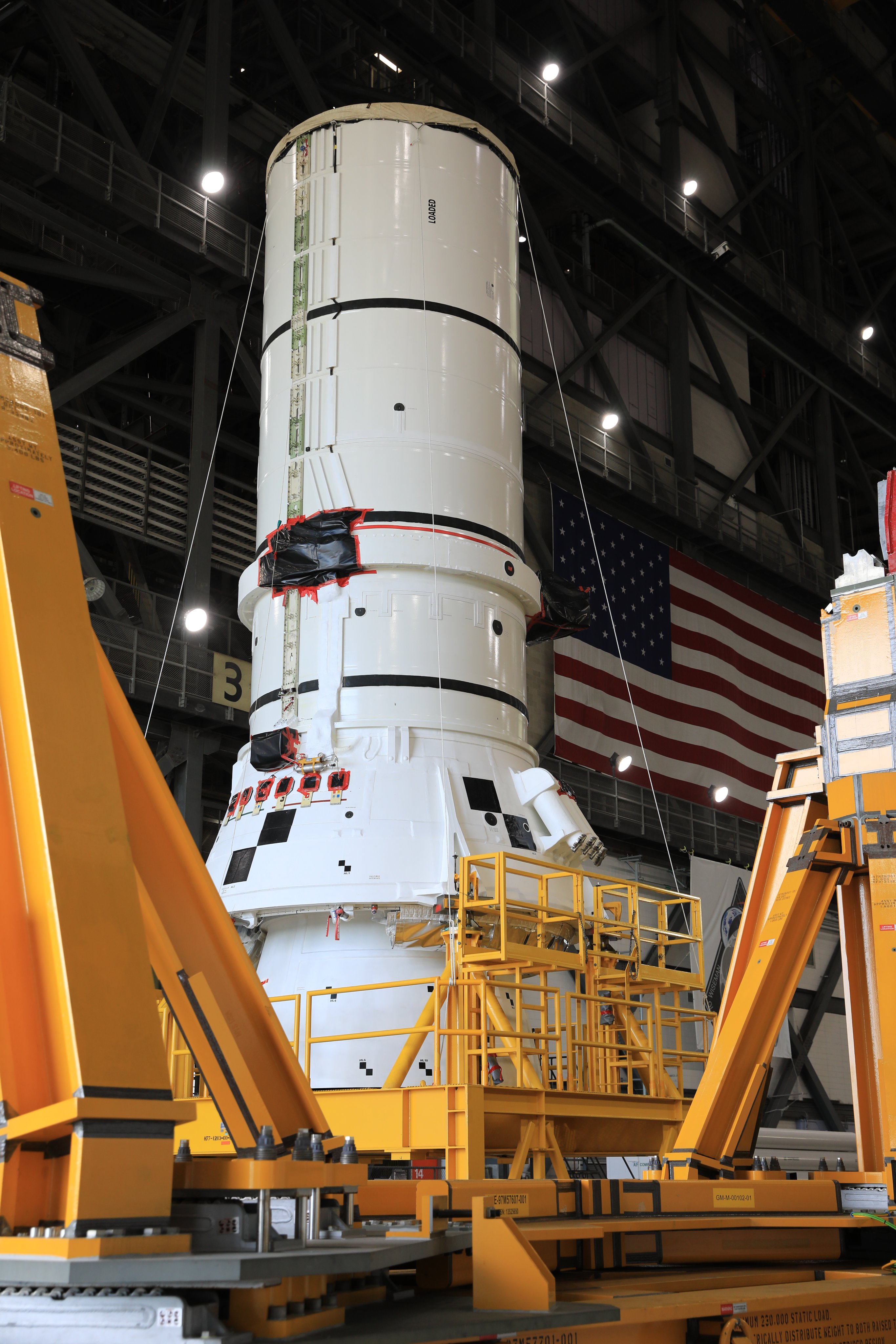
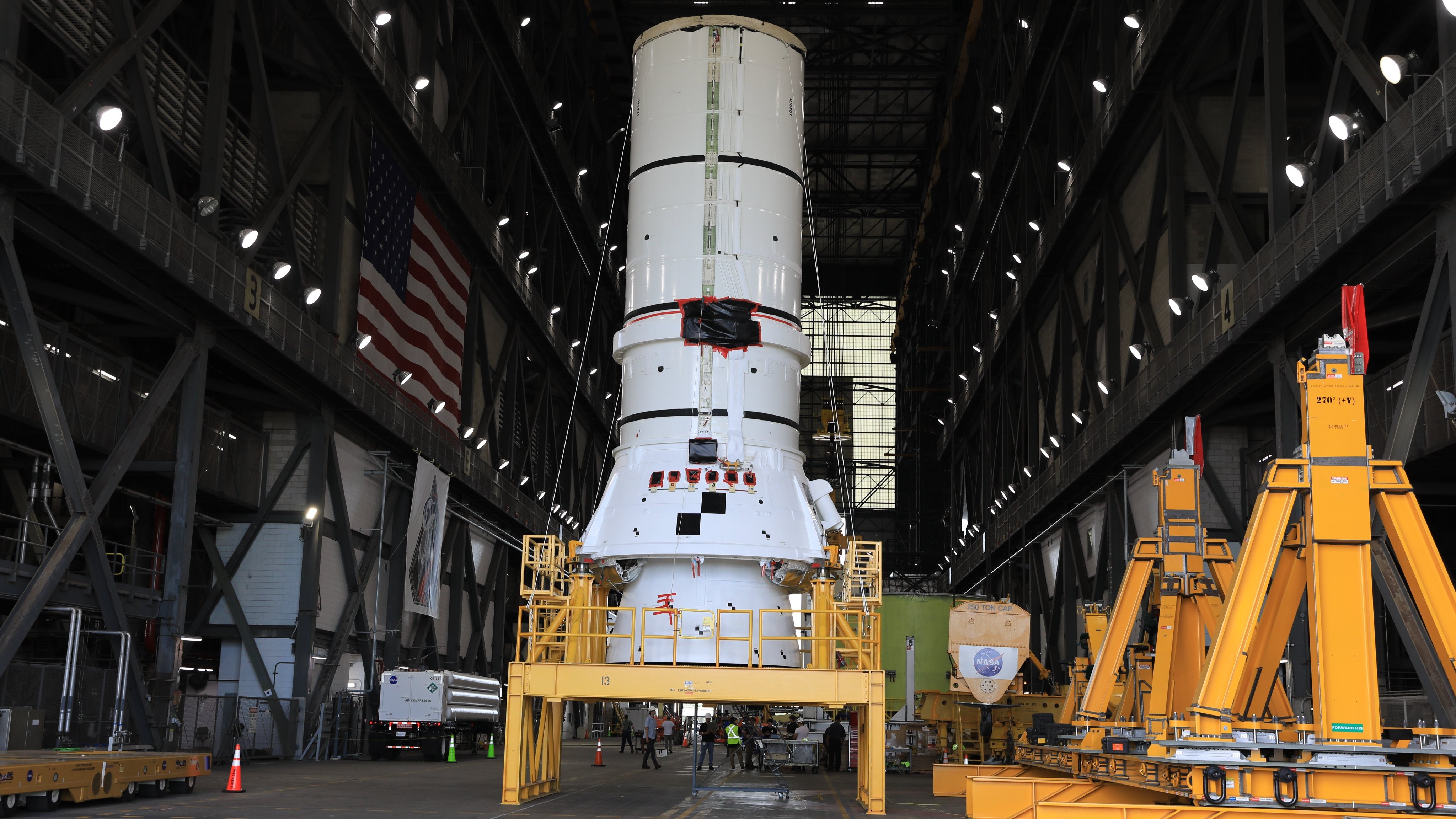
The bottom segment of the left-hand solid rocket booster (SRB) that will help launch Artemis III was transported to KSC's Vehicle Assembly Building (VAB) this week, according to a NASA social media post. It's one of two SRBs that will be affixed to either side of NASA's Space Launch System (SLS) rocket, which together provide a combined 7.2 million pounds of force — more than 75% of the rocket's power at liftoff.
"Soon, assembly of the rocket will begin as we prepare to send crew aboard Orion to test the rendezvous and docking capabilities needed for future lunar landings," the NASA post said.
It took about one year for NASA to stack the Artemis II SLS once each of the rocket's components were delivered to the VAB. The same timeline gives Artemis III a small amount of wiggle room, as it progresses toward a targeted launch in mid-to-late 2027 — and stacking of the entire rocket may not begin immediately.
The Artemis III SLS core stage arrived in the VAB in May. Unlike the core stage's arrival for Artemis II, Artemis III's was delivered without the engine section. Once that's attached, it may be some time before other components are stacked onto the main vehicle. NASA Administrator Jared Isaacman has said that the agency aims to complete a wet dress rehearsal on the rocket before the end of the year. In the meantime, other SLS components and SRB segments will continue arriving at the VAB.
Each SRB stands about 177 feet (54 meters) tall. They're packed with polybutadiene acrylonitrile (PBAN), ammonium perchlorate, and aluminum powder, which bring their combined weight to 3.2 million pounds (1.45 million kg). Unlike liquid-fueled rocket engines, once the SRBs' solid propellants ignite, they cannot be turned off. Without them, the four RS-25 engines on SLS's core stage would not be powerful enough to lift the rocket off the launch pad.
NASANASANASA
Artemis III will be the second crewed mission of the Artemis program — NASA's next-generation push to return astronauts to the moon. And, while Artemis III itself won't actually fly to the moon, it will help progress the hardware and spacecraft technologies the space agency needs to ensure success on future missions to the lunar surface.
Like Artemis II, which flew four astronauts on a 10-day mission around the moon in April, the Artemis III astronauts will launch on SLS aboard the Orion spacecraft — but they won't fly beyond low Earth orbit this time. Instead, the four-person crew will spend about two weeks testing out rendezvous and docking procedures with prototypes for the two Artemis moon landers, both of which have been privately contracted by NASA.
Big move for @NASAArtemis III!The left-hand aft assembly solid rocket booster segment for NASA’s Space Launch System arrived at the Vehicle Assembly Building at Kennedy Space Center. This segment is part of one of two boosters that will provide more than 75% of the rocket’s… pic.twitter.com/L7k4Qh3Jn9July 8, 2026
The space agency has partnered with SpaceX and Blue Origin for those vehicles, each of which is expected to launch once the Artemis III crew are on orbit. They'll first meet up with Blue Origin's lander, Blue Moon. After docking, the astronauts will have the opportunity to enter Blue Moon's crew cabin, where they will also have the chance to test parts of the Artemis extravehicular activity (EVA) suit designed for astronauts to wear on the lunar surface.
A rendezvous with SpaceX's Starship will follow Orion's stint with Blue Moon. SpaceX has indicated it will fly a boilerplate Starship V3 (Version 3) vehicle equipped with a docking adapter, but it will not have a crew cabin. V3 is SpaceX's newest version of Starship, which has been upgraded for high launch efficiency and capacity, but it will lack a fully developed life support system in time for the Artemis III launch next year.
If all goes according to plan and NASA is able to maintain its current mission timeline, the first moon landing of the Artemis program will take place on Artemis IV, scheduled to launch in late 2028.
Nearly 150 million people shared in the "moon joy" of Artemis II on NASA channels, setting a new agency record in the process.
NASA numbers indicate that 149.4 million people used agency platforms in March and April to follow the four astronauts of Artemis II as they prepped for their mission, lifted off aboard the Space Launch System rocket, flew by the moon and finally splashed down in the Pacific Ocean. The viewership figure includes the mission's 24/7 livestreams of mission activities and views from the Orion spacecraft.
"Artemis II's human‑spaceflight narrative, real‑time crew updates, and highly visual moments drew millions of new followers across platforms," the agency stated of the historic lunar flyby mission, which ran from April 1 to April 10.
Glover, Koch and Hansen became the first Black person, woman and non-American, respectively, to fly beyond low Earth orbit, and the crew engaged repeatedly in live events with politicians, journalists, students and other audiences from afar.
The live broadcast drew praise on social media for showing the work of the astronauts, including struggles with toilet venting, the crew's descriptions of the lunar surface and a moving group hug when the crew suggested naming a lunar crater after Wiseman's late wife, Carroll.
Launch (April 1)
NASA's official Artemis II launch webcast reached a peak of nearly 3.67 million simultaneous viewers. That's a record, surpassing other big launches in recent agency history, NASA stated, including that of the uncrewed Artemis I mission to lunar orbit in November 2022 or the James Webb Space Telescope in December 2021. (The agency did not disclose in the release how many views each event received.)
Roughly 16.6 million people watched the Artemis II launch live across agency platforms, with that number rising to 23.9 million views when taking into account those who tuned in after the fact. NASA's Spanish-language broadcast alone received a "landmark peak" of 458,366 simultaneous views, which has since risen to 2.8 million total views, according to the agency.
Lunar flyby (April 6)
NASA's lunar flyby broadcast alone "delivered one of the largest peak audiences ever recorded," according to the agency. As many as 1,471,069 people tuned in at the same time. Nearly 900,000 of those folks watched on YouTube, and about 190,000 viewers tuned in via X or Twitch.
The Artemis II crew saw a solar eclipse from beyond the moon's far side. (Image credit: NASA)
Splashdown (April 10)
The dramatic reentry, splashdown and recovery of the four Artemis 2 astronauts generated a peak of 3,838,418 live viewers on agency platforms — nearly 5% higher than the liftoff's peak viewership.
NASA attributed the increase to interest in the "riskiest moments" that some global news outlets highlighted about the mission, "particularly Orion's re-entry and heat‑shield performance." (Unexpected issues with Artemis I's heat shield drew concerns from some when the agency flew the same design on Artemis II — although all turned out well, partly because NASA modified Artemis II's reentry trajectory.) Some news outlets, however, have said global interest came because the astronauts showed "worldly harmony" and shared their experiences with "heartfelt words."
Total, non-simultaneous live views of the splashdown on agency platforms clocked in at 24.1 million, which rises to 29.5 million when taking into account people who tuned in after the fact. But when bringing in a selection of the major broadcasters who covered the landing, NASA said that viewership rose to "hundreds of millions of potential viewers worldwide."
The agency focused on select streaming platforms in its analysis, including HBO Max, Netflix, Peacock and Amazon Prime Video. News networks were not included. The streaming platforms released subscriber numbers, but not mission viewership numbers. HBO Max had between 120 million and 150 million global subscribers during the mission, Netflix 325 million paid global subscribers (as Netflix allows some account sharing), Peacock between 36 million and 41 million U.S. subscribers, and Amazon Prime Video up to 275 million global subscribers, according to NASA.
Websites
NASA said a "major surge" came in agency website traffic because of Artemis II.
Entire mission: NASA.gov received 125.1 million page views during the mission, which was a 150% increase over the 50 million who logged in during the entire month of March. A website showing Orion's orbit, called "Artemis II Mission in Real Time," or AROW, "surpassed" 11 million cumulative views since launch, although NASA did not say whether the AROW views continued to be counted after the mission concluded.
Launch day (April 1): The mission's debut brought 17.6 million page views across all NASA sites, from 8.3 million individual visitors.
Lunar flyby (April 6): More than 16.5 million page views came to NASA websites from 6.2 million individual visitors. As a part of the total page views, the NASA homepage got 2.3 million, while AROW showed 1.9 million.
Splashdown (April 10): More than 6.1 million people logged on to NASA websites on splashdown day, generating 16 million page views. Of that figure, AROW alone generated 1 million page views.
Social media
NASA tracked 261 million individuals engaging with its social media accounts (which were not specified) between March 27 and April 13. Splashdown was the only milestone selected for individual analysis, with 35 million engagements shown on April 10.
"Public reaction to NASA's Artemis II mission remained largely steady across launch week, with neutral and positive posts dominating the online conversation. Neutral sentiment consistently led daily discussion, ranging from 47 to 60%, while positive reactions accounted for 30 to 42%, fueled by excitement over the crew's historic lunar journey, striking mission imagery, and renewed interest in deep space exploration," the agency stated of the engagement.
NASA also noted "strong amplification" on social media from "major news outlets, brands, and international partners." The Canadian Space Agency, working with other Canadian government departments and agencies, was the major international partner on Artemis II because of Hansen and backup CSA astronaut Jenni Gibbons (who also served as CAPCOM during lunar flyby), among other mission contributions. CSA hosted several live mission events in Canada, and had extensive social media engagement. The European Space Agency, which contributed the service module for Orion, also posted frequently during the mission.
NASA experienced "major social media growth" through Artemis II, with these figures below said to encompass the milestones between liftoff and splashdown. "Collectively, these gains highlight how Artemis II's human‑spaceflight narrative, real‑time crew updates, and highly visual moments drew millions of new followers across platforms," the agency stated.
NASA's Instagram added 4.6 million followers. (The agency did not include the baseline number of followers during the mission in April, but as of July 7 it stands at 104 million).
NASA's Artemis account on Instagram grew by 2 million, which was said to be "a 66 percent increase" while the mission was ongoing.
The agency also noted "significant gains" on X, Facebook and YouTube. Numbers were not released for X. YouTube subscribers increased by 2 million during the mission in April; the baseline number was not disclosed, but as of July 7 numbers stand at 15 million. Facebook reached 1.7 million more people; as of July 7, the agency has 28 million followers on that platform.
The Artemis 2 crew during their historic moon mission. (Image credit: NASA)
Miscellaneous
NASA also highlighted a selection of its campaigns before and during the mission to engage the public's interest but released few metrics about how these contributed to overall viewership and engagement.
The moon-mascot campaign: Thousands of people from 50 countries contributed ideas for a zero-gravity indicator for Artemis II, which ultimately ended up being "Rise" from eight-year-old Lucas Ye.
Sending public names to the moon: Rise carried an SD card containing 5.6 million names submitted, from individuals around the world, to fly around the moon.
Other partnerships: Artemis II was also highlighted on a Google Doodle on April 1, a Spotify playlist that featured the crew's wakeup songs, and on Merriam-Webster's Facebook page.
The next American flag to be planted on the moon has been placed in the hands of one of the last astronauts to walk on the lunar surface.
Late into the night during the America 250 celebrations in Washington, D.C. on July 4, President Donald Trump delivered the keynote address from the National Mall, praising the country's history and accomplishments. The speech also acknowledged several American heroes in attendance, from military veterans, descendants of notable American historical figures like Davy Crocket, and the crew of NASA's Artemis II mission that flew around the moon in April.
Each honoree was invited briefly on stage, and recognized in front of an array of historical American flags, like the oldest known one in existence from 1777, the flag draped over the casket of Abraham Lincoln and one carried by Lewis and Clark in 1803. The Artemis crew were joined by Apollo 17 astronaut Jack Schmitt, and presented before the flag flown aboard the Wright brothers' plane on its first flight in 1903. They were also given a flag to take with them before walking off stage.
"Within 66 years of inventing the airplane, Americans planted our flag on the moon. Just three months ago, we sent American astronauts back to the far side of the moon, and this time they flew further from Earth than anyone has ever flown before," Trump said of the astronauts, and told the crowd, "I have a special gift for these patriots."
As he spoke, U.S. Air Force Maj. Kaitlyn Tinkham joined the astronauts, carrying a folded flag in her hands. "This morning, on America's 250th birthday, a new flag was flown above the United States Capitol," Trump said. "Tonight I present it to you, to soon be planted by American astronauts on their upcoming return to the moon."
Tinkham handed the flag to Schmitt. Standing next to him, Artemis II commander NASA astronaut Reid Wiseman put an arm on Schmitt's shoulder as the two stood in recognition of the symbolism of the flag being held by a member of the Apollo generation alongside the astronauts currently taking on NASA's return to the moon.
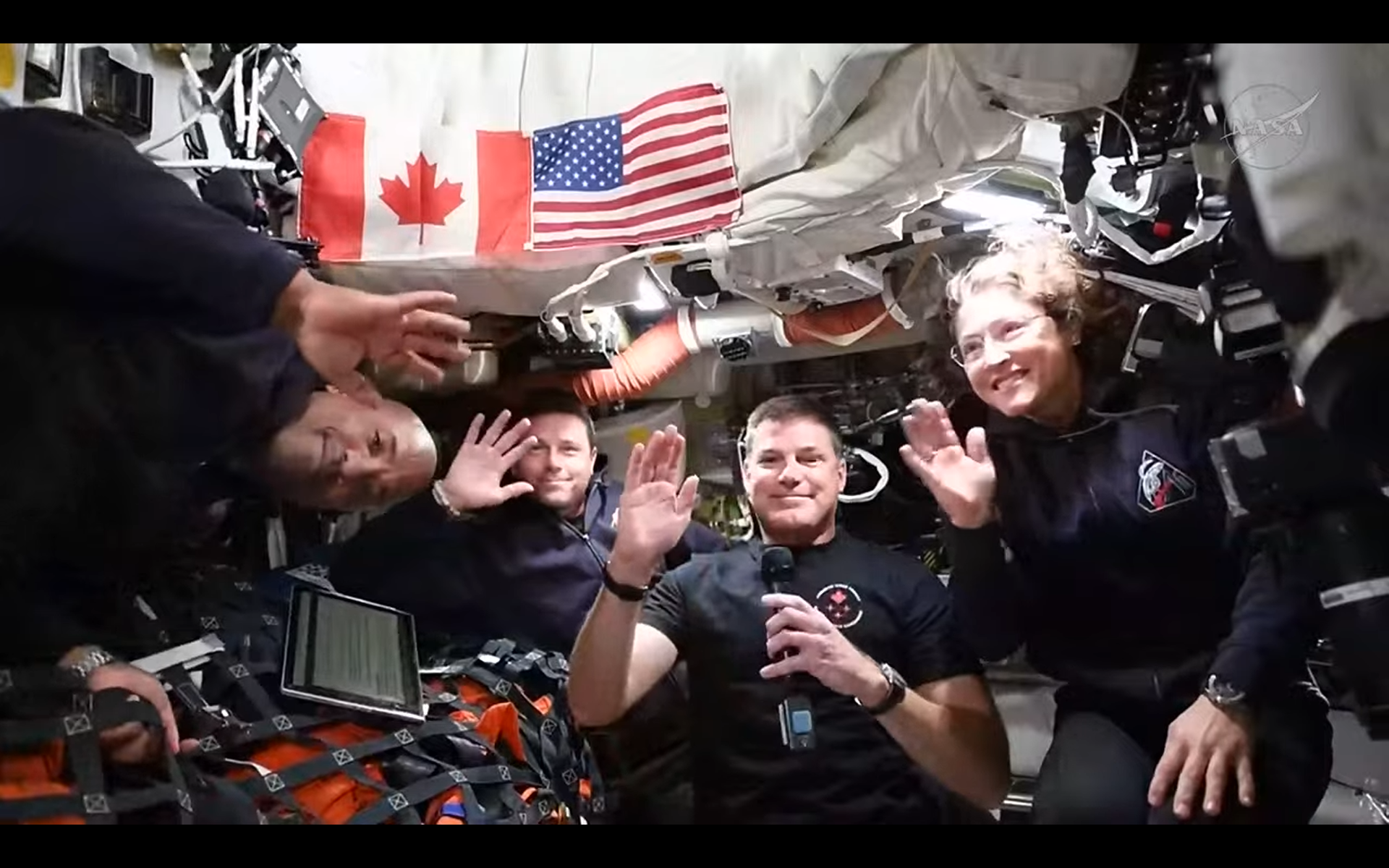
Wiseman was joined by his Artemis II crewmates, NASA astronauts Victory Glover and Christina Koch, as well as Canadian Space Agency astronaut Jeremy Hansen (who recently announced his retirement). The four-person crew launched aboard NASA's Orion spacecraft on April 1, and flew a 10-day mission around the far side of the moon. Their journey took them farther from Earth than any crewed spaceflight in history, and captivated millions of people following their mission from launch to splashdown.
It was the only flight of Orion with astronauts aboard, and the first crewed mission of NASA's Artemis program, which endeavors to return astronauts to the surface of the moon and eventually establish a permanent base. With the success of Artemis II behind it, the agency has shifted into full gear for preparations for Artemis III and Artemis IV.
NASA is currently targeting Artemis III for mid-to-late 2027, which will launch Orion into low Earth orbit for a rendezvous and docking operations validation flight with the program's two commercial lunar lander vehicles, SpaceX's Starship and Blue Origin's Blue Moon. Artemis IV is scheduled for 2028, and is slated to be the first Artemis mission to deliver astronauts to the lunar surface.
And, while we don't yet know the crew that will fly that mission, the flag they will plant on the moon once they land is now officially in the hands of NASA's astronauts.
The first non-American to reach the moon is ready for a new mission.
Canadian Space Agency (CSA) astronaut Jeremy Hansen, best known for his flight around the moon in April on NASA's Artemis 2 mission, will step back from active astronaut duty in September.
Hansen, who's also a colonel in the Royal Canadian Air Force (RCAF), will next serve as a reservist to "enable the vital work happening in Canada with respect to space," the astronaut wrote Monday (July 6) in a statement on X.
"Our future depends on a fierce continuation of Canadian innovation and exploration in space," Hansen added. "The technological breakthroughs and economic benefits born from this sector are vital for our country and the world, and I am as determined as ever to push that work forward."
Space sovereignty has come under renewed focus in recent months in Canada. Long-standing efforts at a homegrown launch capability, for example, received a wave of Canadian defense funding in March, with $200 million CDN ($140 million) offered to an in-development spaceport in Nova Scotia over 10 years, plus additional money to eventually get Canadian-made rockets into orbit. Hansen, an astronaut for 17 years, went to the Maritime Launch Services spaceport to attend a suborbital launch last month.
But Hansen's role in recent years also includes significant strides in space diplomacy: In 2026 alone, he and his three Artemis 2 crewmates have been seen at the White House, with congressional committee representatives and at the president's State of the Union address, also making similar-tier stops in Canadian politics. Just last week, he attended both Independence Day and Canada Day national celebrations.
Part of Hansen's messaging at these events is evident in this June 11 X post: "Canada and the United States have been close collaborators in space exploration for over six decades," he stated.
A long road to space
Hansen, 50, has been flying since the age of 12, first with the Royal Canadian Air Cadets, according to his official CSA biography. He graduated quickly to gliding and private piloting before serving as a fighter pilot for the RCAF. After growing up in the London, Ontario area somewhat near Toronto, Hansen served in multiple locations across Canada, most prominently as a CF-18 fighter pilot with the 441 Tactical Fighter Squadron and 409 Tactical Fighter Squadron. Hansen also worked on NORAD (North American Air Defense) projects as combat operations officer at 4 Wing Operations.
In May 2009, at age 33, Hansen was one of two recruits for the Canadian astronaut corps selected that year, and he became fully qualified as an astronaut in 2011. To the surprise of many, he did not receive his first flight assignment for an incredible 14 years after initial selection, when the Artemis 2 crew was announced on April 3, 2023.
The wait was in part because Canada's approximately 2% contribution to the International Space Station (ISS), through robotics programs like Canadarm2, means a CSA astronaut gets to fly a long-duration mission there just every five or six years at current flight rates. (Some Canadians have also reached the station as private astronauts, or on behalf of NASA.)
For perspective: During Hansen's tenure, he was not fully qualified for a CSA mission when Robert Thirsk flew to the ISS in 2009 (before the space shuttle's retirement, when long-duration missions were allocated differently), or for most of the training that Chris Hadfield did ahead of his own 2012-13 mission to the orbiting lab.
David Saint-Jacques, Hansen's slightly older classmate from 2009, flew in 2018-19. The next ISS mission, by CSA astronaut Josh Kutryk this September, will have a longer gap because — ultimately, and very simply put — he was switched from a delayed Boeing Starliner mission to SpaceX's Crew-13.
But astronauts never sit idle. Aside from the usual mission support and background work at NASA, Hansen helped develop the tools and procedures for a complex spacewalk to repair a an instrument outside the ISS designed to hunt for elusive dark matter, which NASA once described as "four years in the making."
Hansen also served as what he called a "den mother" for NASA's 2017 astronaut class, an approximately two-year posting to be the first-ever Canadian manager of their training schedules.
"The buck stops with me," he told Space.com back then. "If we get to the end and they don't have the training they need, I'll be the one answering the questions about why was that not completed."
Moon work
Then program changes intervened. NASA's human spaceflight plans beyond the ISS sharpened in 2017 into returning humans to the moon, and luckily for Artemis (as this has not always been the case) the change has stuck through several presidential administration changes.
CSA was an early signatory to the Artemis Accords, with a commitment of hardware as well. (The initial promise was a Canadarm3 robotic arm to operate on a planned moon-orbiting space station called Gateway. However, with NASA recently deciding to build a moon base in Gateway's stead, what happens next with international partners is under negotiation, although Canadarm3's CSA contract continues with the company MDA Space.)
CSA's commitment secured two Canadian astronaut seats aboard Artemis missions, and the consortium decided to award Canada a seat on the very first crewed mission: Artemis 2. Canadian space industry representatives widely expected that would be Hansen's mission, not only due to his qualifications, but because Canada recruited Kutryk and Jenni Gibbons in 2017, who alongside Saint-Jacques were the only active astronauts at this time. Gibbons would go on to serve as CSA's backup astronaut for Artemis 2, as well as the CAPCOM (Capsule Communicator) during the mission's lunar flyby, in which she served as the direct voice link between mission control in Houston and the crew in the Orion spacecraft.
But Hansen, visited by Space.com in Houston on the day he was announced as an Artemis 2 crewmate, expressed modesty. "It really isn't about me. I feel a great sense of pride for Canada," he said, adding words he would often repeat in the following few years: "It was so awesome to see NASA, the United States, showcasing Canada as part of this mission. It's not as a gift, but because we bring real value."
The Artemis 2 crew in space during their epic moon mission in April 2026. Jeremy Hansen is in the center of the back "row." (Image credit: NASA)
In between training for the first moon mission in 50 years alongside NASA astronauts Reid Wiseman, Victor Glover and Christina Koch, Hansen's message through the three years before liftoff was one of international and national collaboration. His mission patch, as the CSA noted in a description, included contributions with "elements of Anishinaabe culture" as well as from Turtle Lodge in Sagkeeng First Nation, where Hansen did a vision quest during his mission training. Numerous Canadians played front-line roles on Artemis 2, including Gibbons serving as capcom during the lunar flyby.
Artemis 2's 10-day mission included numerous scientific, historic and cultural milestones. The astronauts traveled farther from Earth than any people ever had, for example, and witnessed a unique solar eclipse not long after passing beyond the far side of the moon. They observed flashes of meteors on the lunar surface, took high-definition photos of the regolith, and spoke with politicians, reporters and school children about their experience from space.
Moreover, what we now know as "moon joy" was evident among the four astronauts. As one example, they shared an emotional group hug on camera on April 6, when the world learned a nomination would be put forward to name a lunar crater for Wiseman's late wife, Carroll.
At a NASA event shortly after the April 10 mission splashdown, Hansen said staying on the "joy train" as a crew took effort, but he added that what everyone witnessed among the crew was also possible on Earth. "We are a mirror, reflecting you," he said.
The former head of NASA is questioning the agency's plans to return astronauts to the moon, asking whether the crewed landers selected for the Artemis program are the right vehicles to get the job done.
Jim Bridenstine, who served as NASA administrator during President Donald Trump's first term, joined Space.com's Tariq Malik and co-host Rod Pyle on the This Week in Space podcast on June 12 to discuss his recently appointed position as CEO of Quantum Space and current events in the space industry. During the show, Bridenstine voiced skepticism about the architecture of NASA's Artemis moon landers, both of which are trailing in development compared to the Orion spacecraft with which they're being designed to fly.
"The architecture is extraordinarily complicated," Bridenstine said. He compared the Artemis plan unfavorably to NASA's approach during the Apollo program, which he argued was much less complex.
"They designed that thing to be as simple as you could possibly make it, and because of that they were able to land on the moon eight years after John F. Kennedy declared that we were doing it," Bridenstine said of the Apollo architecture.
NASA has contracted both SpaceX's Starship and Blue Origin's Blue Moon to be the crewed lunar landers for the Artemis program, and plans to use one of them to perform the first Artemis moon landing in 2028, on the Artemis 4 mission. That's a tight timeline for SpaceX and Blue Origin, whose spacecraft have faced ongoing delays in their development.
Neither lander has managed to make it to orbit yet, and both have a number of qualification tests to accomplish before NASA will certify the vehicles to fly with astronauts aboard, including uncrewed lunar landing demonstrations. For some development perspective, Bridenstine brought up NASA's Space Launch System (SLS) rocket, which, though also severely delayed for years leading up to its debut, managed a completely successful mission right out of the gate. "The first time SLS launched, it was rated for crew, and it was ready to go to the moon on the first launch. That's hard to do, and yet it did it," he said.
"This is the challenge," Bridenstine said. "We still don't have a lander, and without a lander, you can't land on the moon. It's really that simple, and I worry that over time that's going to come back and bite us."
During NASA's Apollo missions to the lunar surface in the 1960s and '70s, the Saturn V rocket launched the astronauts aboard their return capsule, with their moon landing vehicle stowed beneath. In contrast, NASA's Artemis missions, which launch Orion on SLS, require separate launches on different launch vehicles to get the moon landers off Earth.
"The genius of Apollo was its simplicity," Bridenstine said.
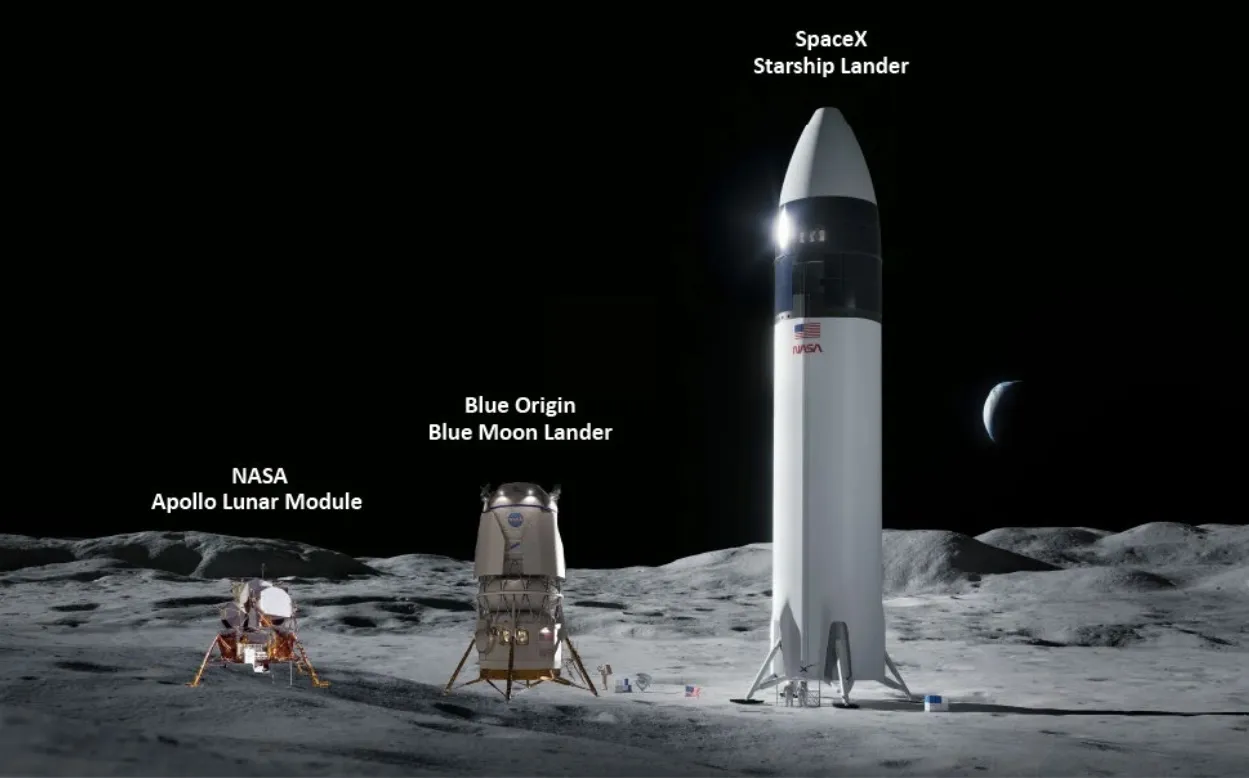
Scale renders of the Apollo Lunar Module, Blue Moon and Starship. (Image credit: NASA OIG)
The architecture for the Artemis missions is much more complex. Starship and Blue Moon will both require refueling flights in order to land astronauts on the lunar surface and then launch them back to orbit around the moon to rendezvous with Orion. The exact number of refueling flights for each lander is unknown, but a recent report from NASA's Office of Inspector General estimated Starship will need at least 15 additional launches to replenish its tanks enough for a full lunar landing mission.
Ahead of the planned Artemis 4 landing, NASA will launch a practice run with Orion and both of the two landers in low Earth orbit (LEO) in mid-to-late 2027. That mission, Artemis 3, will see the astronauts rendezvous and dock with both landers over the course of about two weeks. According to NASA's current plan, Artemis 3 astronauts will have the opportunity to board Blue Moon during their mission, but Starship will fly with a docking adapter only, and not a functional crew cabin — a likely sign of Starship's development progress, and what NASA expects of the spacecraft's capabilities within the next year.
NASA had previously tapped Starship as the lunar lander for Artemis 4, but its performance, as well as Blue Moon's, during Artemis 3 could possibly spur a change in that decision. The agency already voiced dissatisfaction with Starship's development last year, when it announced the possible reopening of the Artemis 3 lander contract due to SpaceX delays. "They're behind," Sean Duffy, who was then NASA's acting administrator, said at the time. "They've pushed their timelines out, and we're in a race against China."
Bridenstine voiced a similar sentiment. "Whatever it takes to build a lander soonest is what we ought to be doing as a country," he said.
It doesn't get more America than giant rockets and missions to the moon.
That's why NASApainted two giant "America 250" logos on the rocket that launched the Artemis 2 astronauts around the moon earlier this year. The Space Launch System (SLS) rocket lifted off on April 1, carrying the Orion spacecraft to orbit with NASA astronauts Reid Wiseman, Victor Glover and Christina Koch, as well as the Canadian Space Agency's Jeremy Hansen.
Their 10-day mission around the moon and back to Earth began with the roaring ignition of SLS's four RS-25 engines and two massive solid rocket boosters (SRBs). Together, they produce 8.8 million pounds (4 million kilograms) of force at liftoff, and lofted the 5.75-million-pounds (2.61 million kg) SLS spaceward on what could be the brightest candle lit for America all year.
Each SRB is integrated into a sectioned stack that stands 177 feet (54 meters) tall on either side of the core SLS booster, which, itself, is supported by the SRBs. With the SRBs securely clamped to the launch pad, SLS hangs in the center between them, held up only by the strength of the interstage bolts at their connection points.
At liftoff, the strength of those bolts gets thrust in the opposite direction. SLS's four RS-25 engines aren't powerful enough to carry the rocket through its initial phase of flight, so the SRBs supply the extra force needed to lift SLS off the launch pad.
The Artemis 2 SLS spent much of 2025 under assembly inside NASA's Vehicle Assembly Building at the Kennedy Space Center in Florida. The rocket was completed and fully stacked by October last year, but the "America 250" was added later and unveiled on Dec. 2.
A special patch worn by the Artemis 2 astronauts honors America’s 250th anniversary. (Image credit: Space.com / Josh Dinner)
The Artemis 2 crew (including Hansen) sported some America 250 swag as well. On their flight suits, each wore a red-outlined patch featuring SLS blasting off toward the moon and Mars above a United States flag and the phrase, in all caps, "THE ROCKET'S RED GLARE," quoting lyrics from the U.S. national anthem.
The patches first made an appearance in January, during the first Artemis 2 SLS rollout from the VAB, and were worn by the crew before, during and after their mission.
"America’s spirit of discovery is alive, and Artemis is carrying it to the moon and beyond," NASA said in a statement after the "America 250" SRB reveal last year.