Scientists spot 4 superdense stellar corpses hiding behind their red dwarf companions

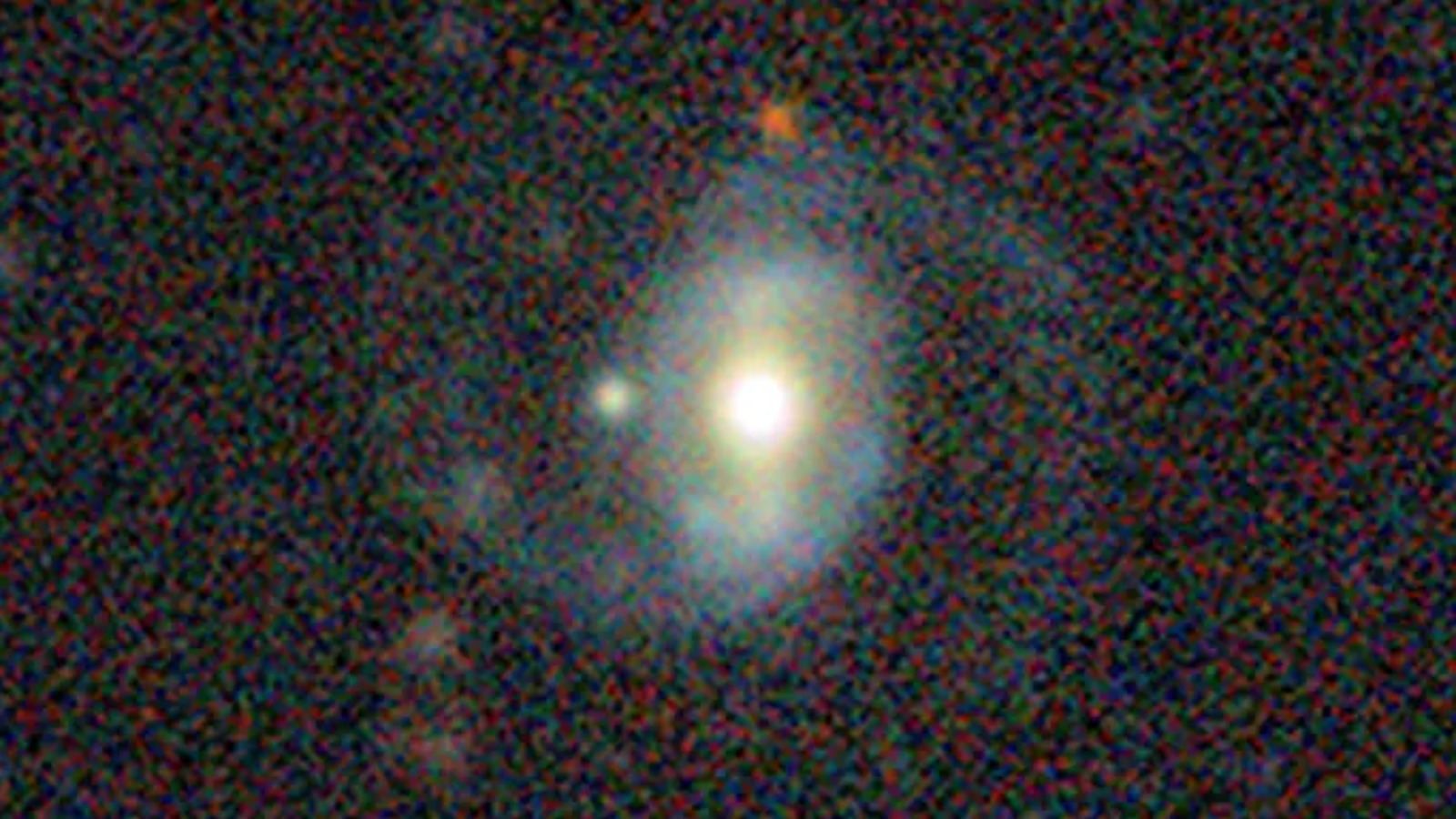
Astronomers have spotted four dead star white dwarf stars playing a game of cosmic hide-and-seek, all four of which were hiding in the glares of red dwarf companion stars.

This marks the first detection of white dwarfs existing in double star systems in our cosmic backyard. The white dwarfs are all located within around 65 light-years of Earth, and one of them is number nine in the top 10 closest white dwarfs to the solar system.

White dwarfs are the type of stellar remnants left behind when stars around the size of the sun run out of fuel needed for nuclear fusion. This leads to their cores collapsing. The lack of fusion also means these stellar remnants cool and become dim. Thus, the light of much larger and brighter red dwarf stars is incredibly effective at hiding white dwarfs.

"Nearby isolated white dwarfs are usually easy to find, but we couldn't see these four stars directly in visible wavelengths because their red dwarf companions were drowning out their light," team leader Mairi O'Brien of the University of Warwick in the UK said in a statement. "It's a reminder that even in our own cosmic neighborhood, we can still find surprises if we look in the right way, at the right wavelengths."

Wobbles gave them away

Though astronomers have been diligently surveying our cosmic backyard for decades, white dwarfs are extremely good at remaining unseen. In fact, the only thing that gave these four hidden dead stars away? Curious "wobbles" caused in the motion of the stars they were hiding behind, like a hiding child causing a curtain to ripple.

The team followed up on these telltale clues by taking a closer look at these systems with NASA's long-serving Hubble Space Telescope. This investigation was conducted in ultraviolet light and using custom calibration to prevent flaring from the red dwarf companions from mimicking white dwarf signals.

This investigation not only revealed the four lurking white dwarfs, but also demonstrated that one of these systems, G 203-47, located just 25 light-years away, has some curious characteristics. Twenty-seven years elapsed between the initial radial wobble and the detection of this hidden dead star.

That isn't the weird thing, though. What is strange is that the red dwarf companion of this white dwarf only rotates once every 100 Earth days or so, yet it only takes about 15 days to orbit its dead star companion. This means that gravitational forces have failed to lock the red dwarf and white dwarf together, which is what happens in similar systems.

"What's fascinating is that G 203-47 shouldn't be rotating this slowly if it formed the same way as similar systems. This suggests that these binaries have had very different evolutionary histories," team member David Wilson, of the University of Colorado Boulder, said. "Some underwent violent, prolonged interactions early on that locked them tidally. Others, like G 203-47, experienced gentler, briefer encounters that left them in this unusual state."
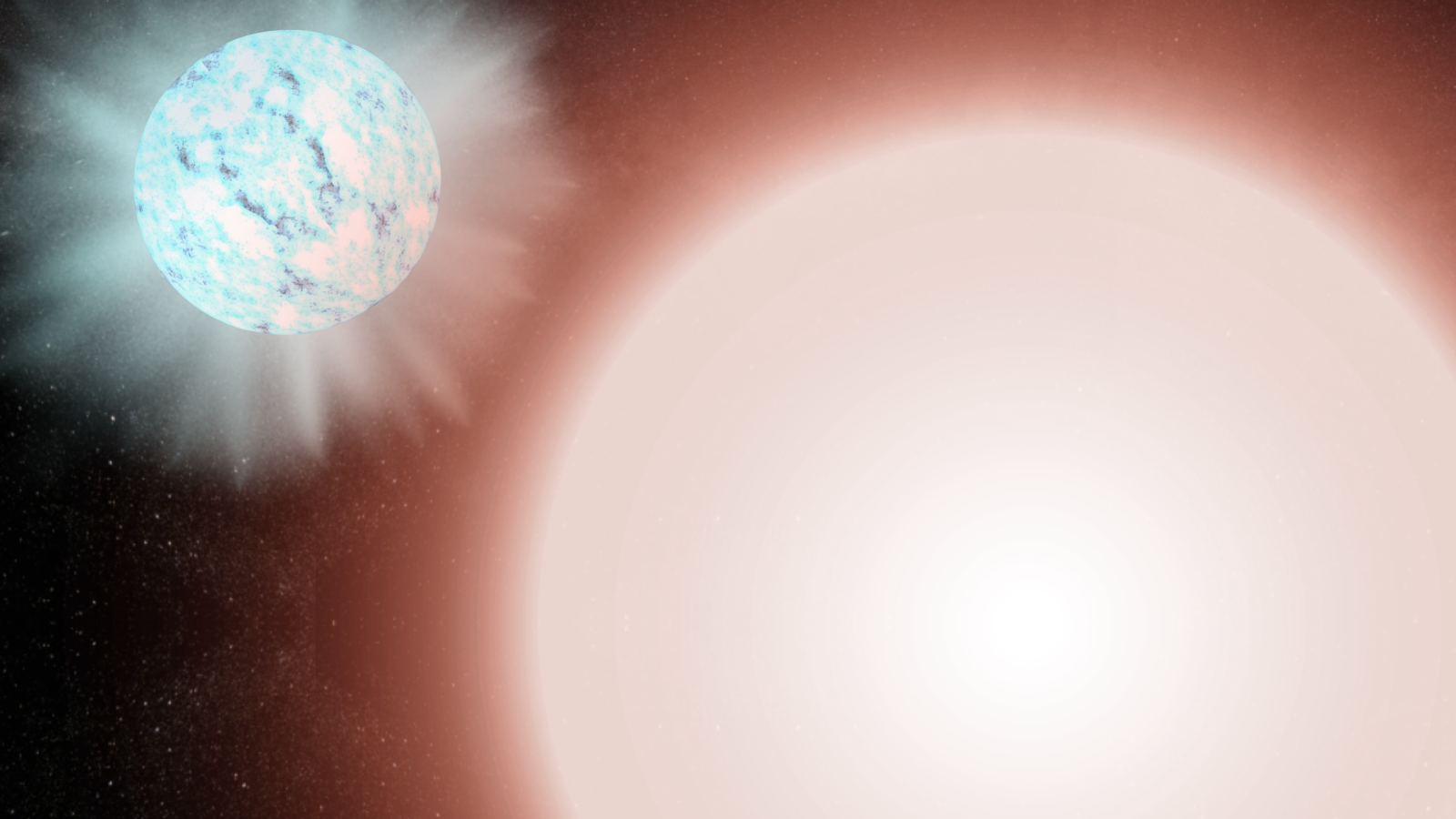
An illustration of a reddish white star in the foreground and a blue star in the background.

An illustration of a red dwarf star orbiting a white dwarf dead star companion. (Image credit: Robert Lea (created with Canva))

The discovery of these white dwarfs helps researchers better understand the population numbers of the dead stars throughout the Milky Way. In fact, predictions would have suggested finding roughly four to five closely orbiting white dwarf-red dwarf pairs within around 65 light-years of our solar system, so finding four should instill a lot of confidence in our current theoretical models.

"Only about 30% of red dwarfs within 20 parsecs [65 light-years] have been systematically surveyed for hidden white dwarf companions," team member and University of Warwick researcher Pier-Emmanuel Tremblay said in the statement. "We think there could be as many as nine or 10 additional binary systems in our local stellar environment that we haven’t found yet.

"If we put more targeted effort into observing red dwarfs, perhaps we will find more surprises like this."

The team's research was published on Tues (July 14) in the journal Monthly Notices of the Royal Astronomical Society (MNRAS).
The 1st of 10,000 ‘missing’ black holes in the Omega Centauri star cluster has been found by the Hubble and James Webb space telescopes

The first of 10,000 missing black holes in the Omega Centauri globular cluster has been found thanks to teamwork by the Hubble and James Webb space telescopes.

The two observatories discovered the black hole after watching a star orbiting around something massive but dark, and which therefore could not be seen. The Hubble data ran from 2003 to 2023, and the James Webb Space Telescope picked up after that to help refine the measurements.

Astronomers used the space telescopes to focus on a particular star in a binary system that appeared to be home to another, dark object called oMEGACat BH-2. Previous studies had suggested that the dark object was a neutron star. However, the new results are conclusive: the object has a mass 4.46 times that of the sun. This is too massive to be a neutron star, so it must therefore be a black hole.

Omega Centauri is the most massive of our Milky Way galaxy's globular clusters. It is so massive that astronomers suspect that it is actually the core of a dwarf galaxy that has lost most of its stars to the Milky Way's gravitational cannibalism, which over the aeons has torn strips from Omega Centauri. Even so, Omega Centauri still contains about 10 million stars, collectively located 18,000 light-years from Earth.

In 2024, astronomers using the Hubble Space Telescope found clinching evidence that an intermediate-mass black hole – one that has a mass about 8,200 times that of our sun – lurks at the center of Omega Centauri, strengthening its claim of being the remnant of a dwarf galaxy, since galaxies harbor black holes at their center but star clusters typically do not.

However, alongside this intermediate-mass black hole should be about 10,000 other stellar-mass black holes born from the supernova explosions of massive stars. Searches have focused on binary systems where a star orbits a compact object, but until now astronomers had drawn a blank.

Now, a team led by Matthew Whitaker of the University of Utah in Salt Lake City have come along to save the day by diligently sifting through 20 years of Hubble observations, plus additional supporting views from the JWST, to uncover a stellar-mass black hole in Omega Centauri for the first time.

Whitaker's team used a technique called astrometry, which is the measurement of the changing positions of stars as they move through space. Although the black hole itself is dark, it is orbited by a normal star with a mass 78% that of our sun. Thanks to the unprecedented vision of Hubble and the JWST, Whitaker and his colleagues were able to track the motion of this star around the black hole.

It turns out that the star is on a 94-year-long orbit around the black hole, which is the widest separation of a binary composed of a stellar-mass black hole and star ever found. Over that 20-year-period, Hubble saw less than a quarter of the star's total orbit, but it coincided with the star's closest approach to the black hole, during which the star moved faster.

Based on this motion, Whitaker's team were able to measure the strength of the black hole's gravitational field acting on the star, and from that calculate the mass of the black hole.

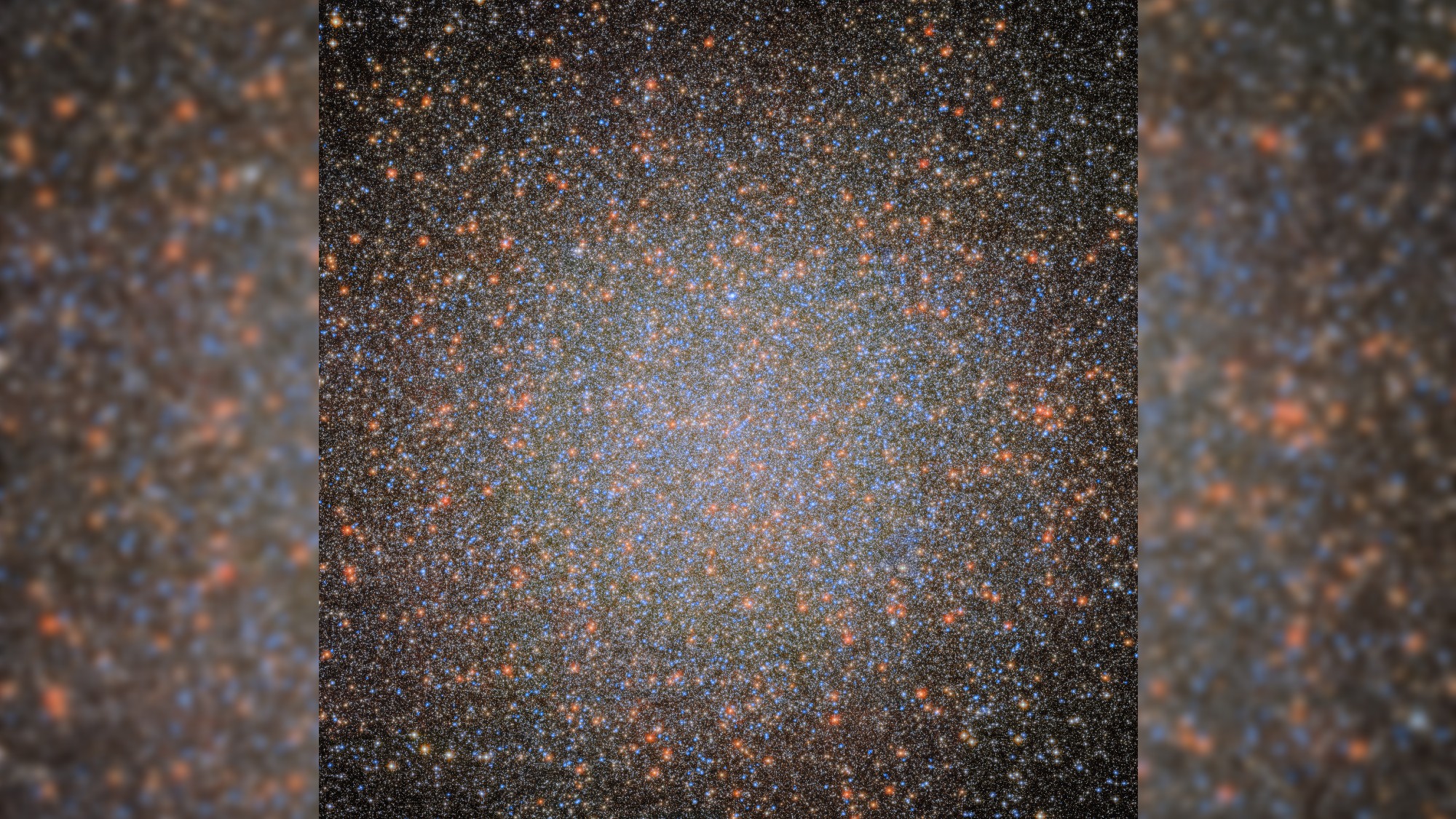
a dense field of stars on a black background

An image of the globular cluster Omega Centauri. (Image credit: ESA, NASA, Maximilian Häberle (MPIA), Joseph DePasquale (STScI))

"The precision of these measurements is incredible, down to a fraction of a pixel on Hubble and Webb's detectors," said Whitaker in a statement. "It would not have been possible to find this black hole without these two space telescopes."

Given how wide the orbit of the star is around the black hole, the likelihood is that the black hole's gravity captured the star when it passed close. This is a state of affairs that will not last forever; within another billion years, encounters with other stars in the crowded environs of the cluster will probably pluck the black hole's companion away.

The mass of oMEGACat BH-2 does seem unusual, however, in the sense that it is lower than expected. The mass of oMEGACat BH-2 exists in a void that has only become apparent during the past eleven years of gravitational wave detections. These gravitational waves are produced by the mergers of stellar-mass black holes, but black holes with masses between 2.5 times the mass of our sun (the theoretical limit for neutron stars) and five solar masses are conspicuous by their absence in the gravitational-wave events. Yet here is oMEGACat BH-2, sitting within that mass gap.

"It's important to understand black hole populations in globular clusters because there's uncertainty about their physics and formation," said Anil Seth of the University of Utah.

"More specifically, understanding the process of forming black holes and then dynamically forming binaries is vital, because it affects our ability to interpret and understand gravitational-wave events. Environments like Omega Centauri are the primary places where we think binaries are merging and creating these waves."

a dense field of multi-colored dots on a black background

A colorful collection of 100,000 stars are displayed in this small region inside the Omega Centauri globular cluster, a dense group of nearly 10 million stars. (Image credit: NASA, ESA, and the Hubble SM4 ERO Team)

In particular, the stars of Omega Centauri are more primitive than our sun, chemically speaking, with fewer elements heavier than hydrogen and helium. Which types of massive stars produce black holes when they explode as supernovas is still an area of active research, but oMEGACat BH-2 adds another complication to the mix in that its progenitor star contained few heavy elements.

"We need to figure out how that happens," said Seth.

So that's one down, and 9,999 or thereabouts to go. Whitaker's team continue to use Hubble and JWST data to find more stellar-mass black holes in Omega Centauri, but he also highlights the potential of NASA's Nancy Grace Roman Space Telescope to find black-hole binary systems in our Milky Way galaxy at least when the telescope launches later this year.

"Roman … will image the crowded galactic bulge, including the galactic center, very regularly with Hubble-like resolution and with a much wider field of view," said Whitaker. "We're hoping we'll be able to find black hole binary systems like this one because of the regular cadence of Roman's observations."

The details regarding oMEGACat BH-2 are described in a paper published on July 13 in The Astrophysical Journal Letters.

This cosmic ‘lighthouse’ is blazing a magnetic trail through the Milky Way

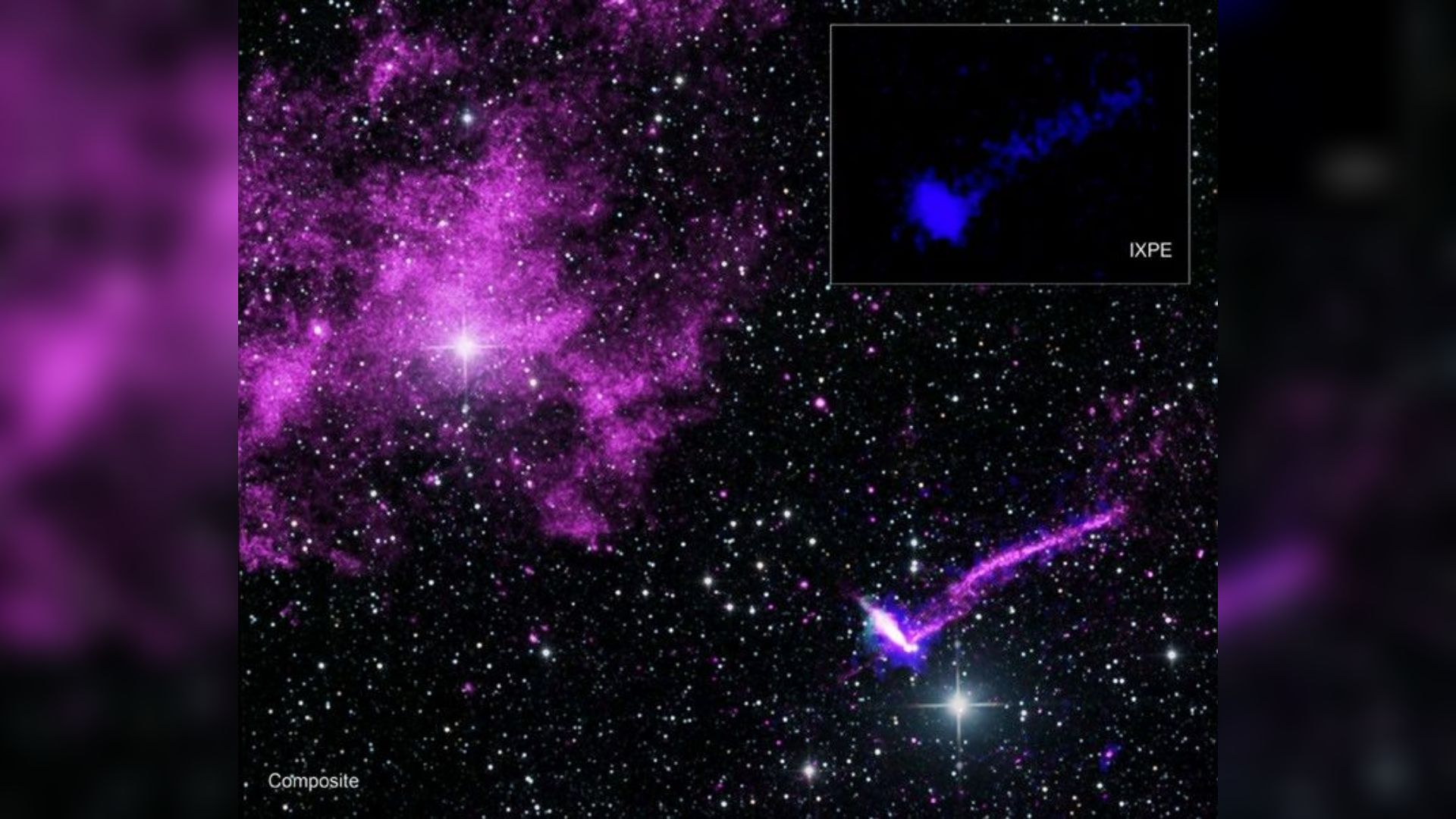
Astronomers have, for the first time, directly mapped the magnetic field surrounding an unusual "lighthouse" pulsar, revealing an invisible cosmic highway that channels particles blasted from the rapidly spinning stellar remnant.

Using NASA's Imaging X-ray Polarimetry Explorer (IXPE) mission, researchers measured the magnetic field around the pulsar PSR J1101−6101 — nicknamed the "Lighthouse" — and confirmed a long-standing prediction that its high-energy particles stream along magnetic field lines extending through the Milky Way. This discovery offers a rare look at how some of the universe's most extreme objects accelerate particles to nearly the speed of light, according to a statement from the space agency.

Pulsars are rapidly rotating neutron stars — the ultra-dense remnants left behind when massive stars explode as supernovas. Their powerful magnetic fields channel beams of radiation from their magnetic poles that sweep across space as the stars spin, much like the beam of a lighthouse.

PSR J1101−6101, which is located at the center of the Lighthouse Nebula, spins about 16 times every second and is traveling at supersonic speeds after receiving a powerful kick from the supernova that created it. As it tears through interstellar gas, it leaves behind a bright X-ray tail while producing a narrow filament that juts out almost perpendicular to its direction of travel. Astronomers had long suspected this unusual structure traced energetic electrons escaping along the Milky Way's magnetic field.

"We wanted to test that theory,"Jack Dinsmore, lead author of the study and undergraduate student at Stanford University, said in the statement. "The 'smoking gun' would come by measuring the polarization of the light, which indicates the magnetic field direction. If the magnetic field points along the filament, that confirms that the filament's particles are flowing along the field."

Unlike conventional X-ray telescopes, IXPE measures the polarization of X-rays — the preferred orientation of their electric fields — allowing scientists to reconstruct the geometry of otherwise invisible magnetic fields. Because the Lighthouse Nebula is relatively faint in X-rays, the researchers developed new analysis techniques to extract as much information as possible from the observations.

A full view of the composite IXPE helped construct. There's a purple version of the blue streak in IXPE's boxout that very much resembles the blue streak.

Using IXPE, astronomers measured the nebula's magnetic field for the first time, confirming that high-energy particles escape the pulsar by traveling along the Milky Way's magnetic field lines. (Image credit: X-ray: Chandra: NASA/CXC/Stanford Univ./J.T. Dinsmore et al.; IXPE: NASA/MSFC/J.T. Dinsmore et al., Radio: CSIRO/ATNF/ATCA; Optical: 2MASS/UMass/IPAC-Caltech/NASA/NSF; Image processing: NASA/CXC/SAO/L. Frattare)

The team found that the magnetic field runs parallel to a remarkably long filament extending away from the pulsar, confirming that high-energy particles are streaming along magnetic field lines. But the observations also uncovered an unexpected twist: the field is far more orderly than scientists anticipated. The unusually strong polarization signal suggests the filament contains much less magnetic turbulence than current models predict, offering new insight into how fast-moving pulsars inject energetic particles into the surrounding galaxy.

"The striking divergence in magnetic field orientations observed between radio and X-ray wavelengths provides compelling evidence for the highly structured nature of these objects," Niccolò Bucciantini, co-author of the study from the Italian National Institute for Astrophysics, said in the statement. "This marks the first clear indication that particles of different energies occupy distinct regions within the system, hinting at the presence of multiple, and potentially very different, acceleration mechanisms at work."

Their findings were published July 9 in The Astrophysical Journal.

Honeycomb structures spotted on Mars | Space photo of the day for July 14, 2026

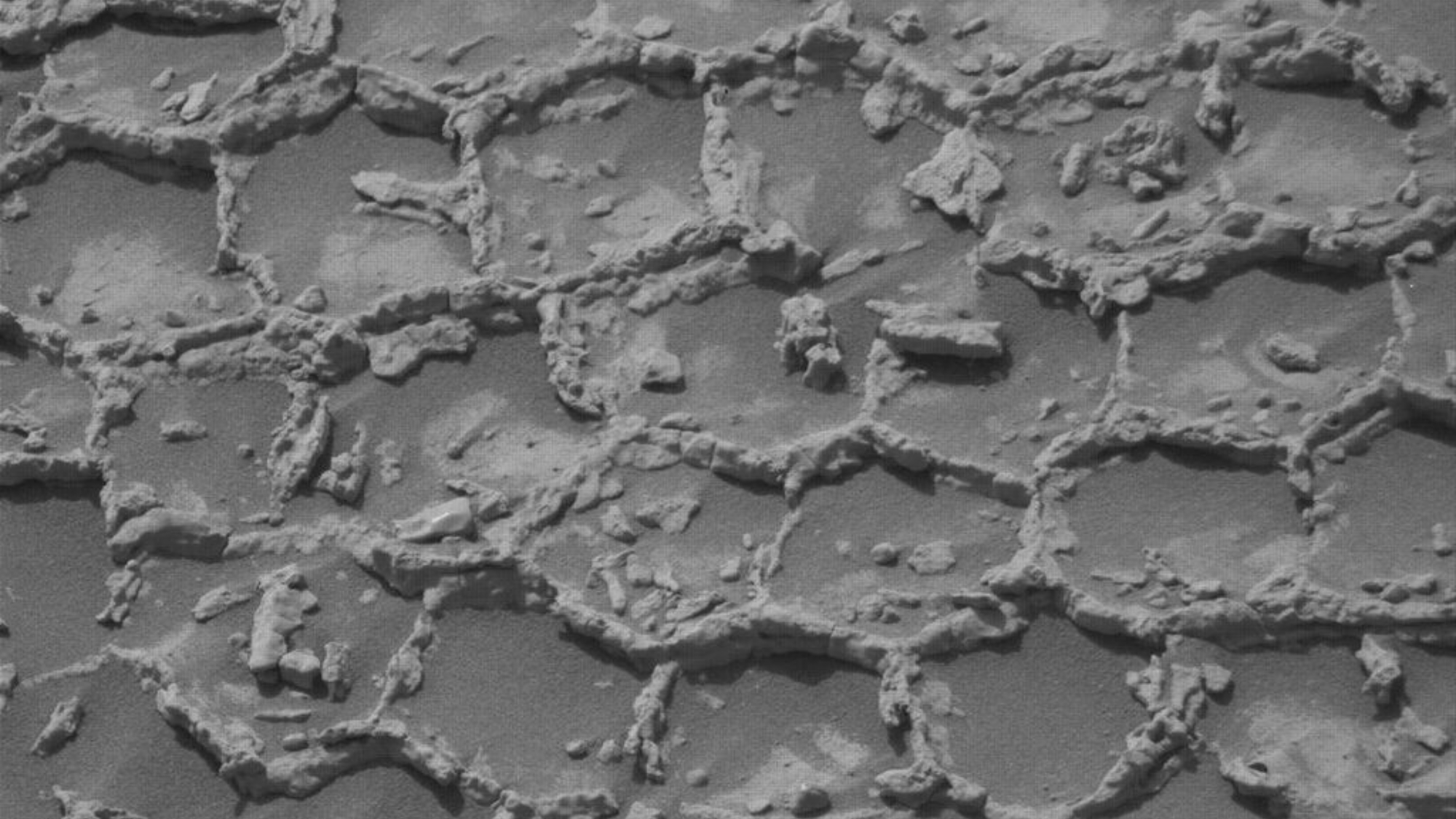
Gray honeycomb material on the Martian surface.

NASA's Mars rover Curiosity spotted these "honeycomb" structures on Mars. (Image credit: NASA/JPL-Caltech/MSSS)

NASA's Curiosity rover has spotted a strange honeycomb texture on the surface of Mars. But what is it?

What is it?

Almost 14 years since landing on the Red Planet, Curiosity is still hard at work exploring. And in new observations, Curiosity has revealed an image that is certainly ... peculiar.

Curiosity went to get a closer look at an area first observed from Mars orbit, and found what appears to be a honeycomb structure in on the planet's surface. Polygonal shapes, nearly identical to one another, make up a pattern almost like a Martian wallpaper or carpet.

But what is it? Why does it look like that? What is a honeycomb doing on Mars?

Why is it incredible?

This is one of many mysteries we have yet to solve on Mars. While the team saw this area first from orbit around the planet, when the rover arrived and saw this structure they were surprised, they shared in a blog post.

In addition to the honeycomb texture, the area was littered with dark rocks and strewn around. But even these pebbles lack explanation. Did they "float" down from higher rock levels, did they launch out of Gale crater during some ancient collision or could they possibly even be meteorites from outside of Mars that ended up strewn across the surface? Researchers think any one of these explanations could be possible.

Previous, similar dark stones have been found on Mars with minerals like nickel that are common in meteorites and uncommon in Mars rocks. But are these similar? Perhaps part of a similar collision event? We don't yet know.

As researchers find new mysteries on Mars, they also continue to find new ways to investigate the unknown. With further study, they will explore both these strange honeycombs and the dark rocks scattered amongst them.

Moon landings could destroy evidence of life’s origins

Landing spacecraft on the moon could contaminate ancient clues about how life may have originated on Earth, a new study finds.

As NASA continues on with its plan of sending astronauts back to the moon with the Artemis program, researchers are exploring what possible unintended consequences may arise from humans visiting the lunar surface. For instance, Artemis IV will land astronauts near the moon's south pole and the agency has future plans for building a longer-term moon base on the lunar surface, which would require many more trips. And indeed, a new study has found the exhaust from spacecraft involved with these landings could expel enough methane to contaminate the moon's surface — possibly destroying molecules that could help to explain how life may have originated on Earth.

"We are trying to protect science and our investment in space," senior study author Silvio Sinibaldi, the planetary protection officer at the European Space Agency, said in a statement. "Our activity can actually hinder scientific exploration."

While experts have had concerns for some time about how rocket launches on Earth pollute our planet and atmosphere, scientists have only really considered this issue with our own planet. This is especially because we haven't been to the moon's surface in over 50 years; concerns of accidental effects of a lunar landing simply haven't been top-of-mind. That's what makes this new study so important. It points to a potential issue that could mean that future moon landings might actually be detrimental to science.

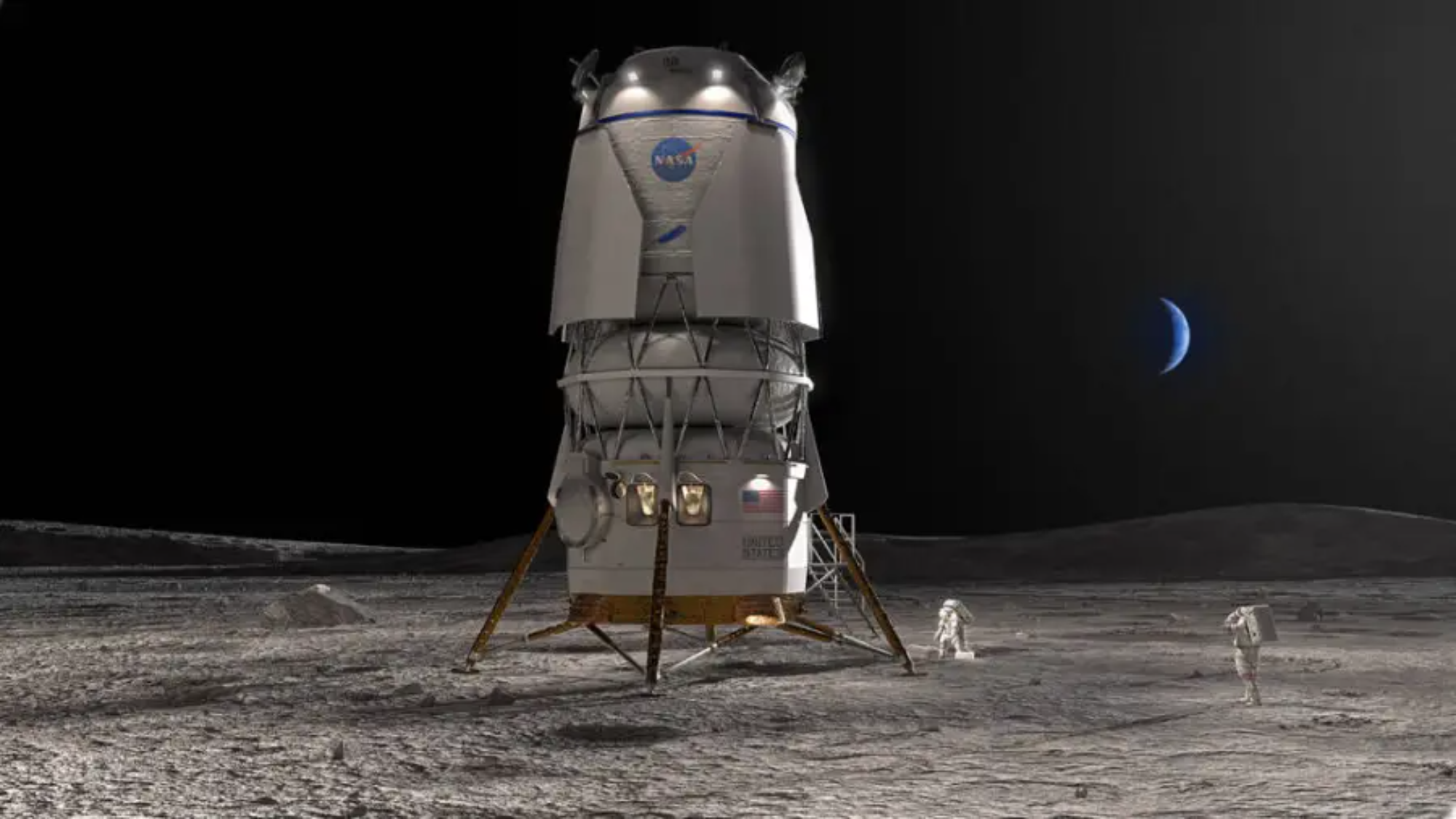
An artist's concept showing Blue Origin's lunar lander on the moon.

An artist's concept of Blue Origin's lunar lander. Lunar landings could pose a serious issue for science on the moon if methane contaminates ancient polar ices, a new study has found. (Image credit: Blue Origin)

Life's clues on the moon?

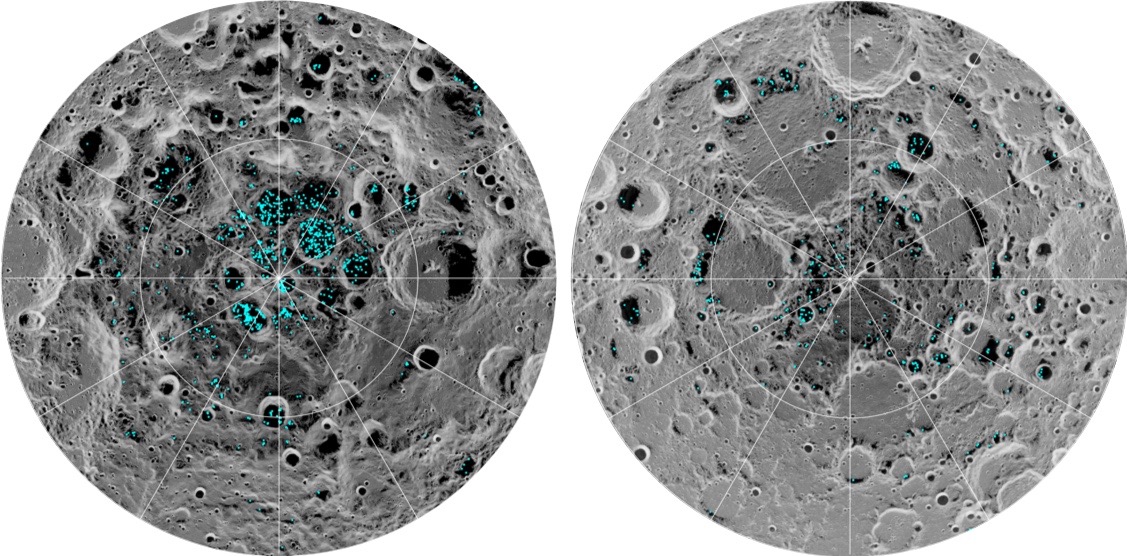
So why do we think the signs of life could be hiding on the moon? It's actually hiding in ice. Dark craters near the moon's poles, which exist in perpetual shadow, hold ancient ice. This ice is thought to contain material from asteroids and comets that smashed into the moon billions of years ago. Trapped in lunar ice to this day, these bits of ancient collisions could include what the researchers describe as "prebiotic organic molecules," or molecules that could have preceded life on Earth.

It's thought that these molecules from asteroid and comet visitors could have sparked life on Earth, and by studying those possibly trapped on the moon, researchers could be looking at the molecules that ended up combining and creating life as we know it.

The molecular history of life on Earth is pretty much nonexistent on our own planet, as it was largely destroyed by the billions of years of changes we've experienced. But the moon has remained mostly unchanged, so these wells of ice are a uniquely-preserved sampling of pre-life molecules.

"We know we have organic molecules in the solar system — in asteroids, for example," Sinibaldi said. "But how they came to perform specific functions like they do in biological matter is a gap we need to fill."

This ice exists in a somewhat fragile ecosystem, so left alone in darkness, this ice isn't going anywhere anytime soon. But with Artemis, NASA is planning on sending crewed landers to the moon's south pole. That might pose a problem. With computer models in this new study, researchers have shown that the methane exhaust from these landers could very quickly and permanently contaminate this ancient ice, destroying the molecular evidence sealed within.

Inside the simulations

This image shows the distribution of surface ice at the moon’s south pole (left) and north pole (right). Blue represents ice locations, and the gray scale corresponds to surface temperature.

This image shows the distribution of surface ice at the moon’s south pole (left) and north pole (right). Blue represents ice locations, and the gray scale corresponds to surface temperature, with darker gray representing colder areas and lighter shades indicating warmer ones. (Image credit: NASA)

In those computer models, the researchers simulated how methane, the main organic component expelled by planned lunar landers, would spread across the moon's surface after a landing at the south pole. While the simulations included the effects of solar wind and radiation, the moon's lack of an atmosphere caused the methane to spread incredibly quickly, reaching the moon's north pole in under two lunar days.

Within one lunar week (which is roughly seven months on Earth), over half the methane was trapped at the moon's cold polar areas, with a whopping 42% of the substance trapped at the south pole compared to 12% at the north pole. This methane could collect in the same cold pockets where ice and ancient molecules have been collected for billions of years, possibly contaminating this finite, scientific evidence.

"Their trajectories are basically ballistic," lead author Francisca Paiva, a physicist at Instituto Superior Técnico in Portugal, said in the statement. "They just hop around from one point to another."

In better news, there may be a way to circumvent some of this methane disturbance. For instance, the study suggests it's possible that by choosing colder landing sites, scientists can avoid having the methane travel as quickly or as far. Additional simulations are needed to better understand how exhaust compounds travel on the moon, however, as well as the risks that this poses for scientific investigations and if there are other materials lunar trips will involve that could contaminate the environment. Above all, the new study's team emphasizes that as we push toward future lunar exploration, it is key to balance our dreams of settling the moon with preserving its priceless history.

"We have laws regulating contamination of Earth environments like Antarctica and national parks," Paiva said. "I think the moon is an environment as valuable as those."

This work was described in a study published last year in the journal the American Geophysical Union.

Maya mathematician’s name decoded alongside astronomical formula

The Maya solar calendar is made up of 19 months
zimmytws/Getty Images

An ancient Maya astronomer-mathematician has been identified for the first time along with his complex calculations made around 1200 years ago, predicting the orbital cycles of Mars and Venus.

“This is the first direct mention of an ancestral Maya astronomer-mathematician by personal name,” says Franco Rossi at the Massachusetts Institute of Technology.

It is also the oldest recorded name of an astronomer-mathematician ever known from anywhere in the Americas, he says.

The Maya civilisation flourished in Central America between roughly 2000 BC and AD 1697. They had advanced knowledge of mathematics and astronomy, but much of it was lost after the mass burning of their books by Spanish missionaries.

Since 2010, excavations at the site of Xultun, Guatemala, have revealed astronomical and mathematical inscriptions inside a small masonry building.

On the east and north-east wall of the building are around 50 texts that scientists believe are “rough drafts” made by Maya mathematicians as they charted and predicted the cycles of celestial objects relative to Earth and to one another.

Rossi and his colleagues have painstakingly deciphered one of these murals, named Text 19. At the bottom of the mural is the name of Sak Tahn Waax, which translates to White-chested Fox, who is believed the be the author of the formula.

The mathematical formula inscribed on a wall at the Maya site of Xultun, Guatemala
F.D. Rossi; H. Hurst

Text 19 consists of 11 hieroglyphs, which had to be scanned, photographed and magnified under different illumination angles, and compared to other, later, astronomical-mathematical writings, before their meaning could be deduced.

While similar mathematical and astronomical expertise is found across Maya cities, the mention of Sak Tahn Waax, who the researchers believe was probably male, is unique.

“Whether this is an instance of the scribe himself signing his own calculation or attributing the intellectual work to another, we have a formula and the name of its creator, which serves to demonstrate the importance of this kind of intellectual contribution for Classic Maya people,” says Rossi.

The calendar system on display in Text 19 uses maths in relation to time periods, he says. These time periods were drawn from a 260-day calendar, a 365-day solar calendar, a 584-day approximation of Venus’s synodic cycle (when the planet returns to the same position relative to both Earth and the sun) and a 780-day approximation of Mars’s synodic cycle. The total length of the formula is five Venus synodic cycles or 2920 days, and the date that Text 19 most likely refers to is 7 November of AD 781 in the Julian calendar.

Exactly how this formula would have been applied is unknown, says Rossi, as it “isn’t incorporated into any larger body of work”.

“We think it is meant to concisely and meaningfully show the relationship between these two planets and human counts of time in ways that could then be applied to political ceremony, predictive astronomy and understandings of seasonality,” he says.

Such meticulous mathematical legwork would have been critical to structuring life in a world before computers, smartphones and weather apps, says Rossi.

Journal Reference:

Antiquity DOI: 10.15184/aqy.2026.10378

These mysterious exoplanets may have clouds of vaporized rock and grounds of scorching magma oceans

Clouds formed from vaporized rock could create the ultimate thermal insulation on one of the most common types of exoplanets discovered so far — the sub-Neptunes — raising temperatures so high that these worlds' solid surfaces melt and turn into oceans of magma.

"This work takes us one step closer to answering the question of what these mysterious worlds are made from," said astronomer Luis Welbanks, of Arizona State University, in a statement.

Sub-Neptunes are planets larger than Earth but smaller than Neptune. They are especially mysterious since we do not have a world of this type in our solar system. They are thought to contain a rocky core surrounded by a deep atmosphere, but not much else is known about their composition and structure. Their atmosphere could be hydrogen-rich like Jupiter's, or it could be abundant with water vapor and carbon-based organic molecules. In some cases, they might even be habitable under the hycean world paradigm, wherein a thick hydrogen atmosphere encases a global ocean of liquid water.

The James Webb Space Telescope (JWST) is busy probing the atmosphere of several sub-Neptunes to try and learn more about their bulk composition because their atmosphere should be representative of what such planets are made from, but results so far have been inconclusive.

Atmospheres of sub-Neptunes are deep and dense, meaning crushing pressures close to the boundary between the atmosphere and the solid body of the world can turn minerals into vapor that forms clouds. These minerals include aluminium oxide, iron, magnesium silicate, manganese sulfide, potassium chloride, sodium sulfide and zinc sulfide.

Using detailed computer simulations, a team led by Sagnick Mukherjee of Arizona State University explored what effect these clouds could have on both the surface and atmosphere of a sub-Neptune.

They showed that when these mineral clouds form deep down, they act as efficient insulating blankets that trap heat (and lots of it) leaking out from the core of the planet.

"Among the sub-Neptunes currently being studied with JWST, we were amazed to find that cloud-driven heating can raise the temperature at the planet's atmosphere–interior boundary by roughly over 1,400 to 2,600 degrees Celsius [2,550–4,712 degrees Fahrenheit]," said Mukherjee.

At the same time, because heat is being prevented from escaping, the upper atmosphere cools noticeably.

With all that heat retained close to the surface, the rock begins to melt.

"For some of the planets we modeled, that extra heat is enough to melt the planet's surface, creating a magma ocean," said team-member Matthew Nixon of Arizona State University.

These potential magma planets include GJ 1214b, which orbits a red dwarf star 48 light-years away. At one time it was thought to be a cool water-world, but JWST's discovery in 2025 of metallic vapors and carbon-dioxide haze in GJ 1214b's atmosphere rule this out, and now it seems that its surface, undetectable beneath the thick atmosphere, could be completely molten.

However, the presence of magma oceans opens up possibilities for more complex atmospheric chemistry. Gas seeps out of the magma and diffuses into the atmosphere, in theory enriching it in oxygen, silicon hydride and silicon monoxide, while going the other way the magma absorbs ammonia, methane and water vapor from the atmosphere. In other words, the atmosphere becomes enriched by material from underground, while also becoming depleted in some gases that astronomers would expect to see in greater abundance.

This means that JWST's attempts to learn about the bulk composition of a sub-Neptune exoplanet from the spectrum of its atmosphere could be skewed by this exchange of gases between a magma ocean and the atmosphere. The extra heating deep down will also impact the future of these sub-Neptune planets, since the extra heat will keep their lower atmosphere bloated and prevent the planet from contracting over billions of years.

If the findings are correct, they could place a huge obstacle on sub-Neptunes being habitable. Even if the boundary between the atmosphere and solid body of the planet isn't hot enough to form magma, it would still render the surface too hot to support liquid water or life.

The findings were published on July 8 in Astrophysical Journal Letters.

Extremely Large Telescope reaches a major milestone | Space photo of the day for July 13, 2026

Workers stand near the base of the Extremely Large Telescope.

ESO's Extremely Large Telescope shows off its impressive size after reaching a new milestone. (Image credit: ESO/Cimolai)

The Extremely Large Telescope just passed a serious milestone while coming together. But it's not done yet; the immense telescope is about to get even larger.

What is it?

The European Organization for Astronomical Research in the Southern Hemisphere (ESO)'s Extremely Large Telescope is under construction on a mountaintop in Chile.

In this new photo, we can really get an idea of the telescope's size. The snapshot was captured during a milestone moment for the crew working on the observatory. They rotated the telescope's structure around its vertical axis for the first time.

This wasn't just an exercise for the dedicated crew working on the ELT, but rather an important test. The team needed to ensure this rotational motion works smoothly to confirm it's possible to point the telescope at any area of the night sky.

Why is it incredible?

This rotation was no small feat with a telescope weighing about 7.7 million pounds (3,500 metric tons), and we can see some of the crew who made it happen posing with their handiwork. They had to first rotate the telescope by hand just centimeters at a time. This push led to auxiliary motors taking over to complete the full rotation.

At its current size, the ELT is enormous. But it will actually get bigger and heavier. Later on in the process, mirrors and science instruments will be installed, skyrocketing the telescope to over 10 million pounds (4,600 metric tons).

"For me, this is a beautiful reminder of what can be achieved when people push in the same direction, literally and figuratively,” Roberto Tamai, the ELT’s Program Manager at ESO, shown on the right in this image, said in a statement.

Tamai is shown standing next to Marco Sciarra, Executive President of Cimolai (a company working on the telescope's construction), in the middle and Pascal Martinez, ESO's Project Manager for the Dome and Main Structure of the ELT, on the left.

A ravenous black hole in our backyard could be our window into the ancient universe

A supermassive black hole at the heart of a nearby galaxy is behaving similarly to black holes that existed just after the Big Bang, voraciously feeding on copious amounts of matter. The relatively close cosmic titan could therefore provide insight into the much more distant universe.

Indeed, the intense accretion behavior demonstrated by the supermassive black hole, which sits at the center of the galaxy SDSS J110546.07+145202.4 located 1.8 billion light-years away, is something scientists have only ever seen in the earliest supermassive black holes.

SDSS J110546.07+145202.4 has been shining brightly in radio waves for many years, and these waves were the smoking gun that pointed to the feeding habits of the galaxy's central black hole.

"Such high-energy events can provide astronomers with a wealth of insights," Kovi Rose from the University of Sydney’s Sydney Institute for Astronomy said in the statement. "By observing these jets and outbursts, we can study the physical processes in some of the most extreme environments in the universe."

Even the hungriest black holes are messy eaters

All large galaxies have a supermassive black hole at their heart with masses of millions or even billions of times that of the sun. However, not all supermassive black holes accrete vast amounts of matter.

For example, the supermassive black hole at the heart of our galaxy, the Milky Way, Sagittarius A*, consumes so little gas and dust from its surroundings that, were it a human being, it would be existing on a diet of one grain of rice every million years. (That is one heck of a diet.)

When black holes are surrounded by copious amounts of gas and dust, their immense gravitational influence causes this material, in a flattened swirling cloud called an accretion disk, to glow brightly across the electromagnetic spectrum, from low-energy radio waves to high-energy X-rays.

Additionally, supermassive black holes are notoriously messy eaters, meaning some of the matter in accretion disks is channeled to the poles of the black hole, from where it is blasted out as jets of plasma traveling at speeds approaching the speed of light. These jets too are responsible for bright emissions of electromagnetic radiation.

Radio signals from the spiral galaxy SDSS J110546.07+145202.4 underwent a 20-fold increase in radio brightness over a short period, increasing to around 10 quadrillion times the intensity of the radio brightness of the sun. This happened around 8 years ago, and the galaxy has yet to show any sign of dimming.

"We are dealing with the prototype of a new class of galaxies that undergo rapid changes in radio emission," team member Phil Edwards from CSIRO, Australia’s national science agency, said.

Team leader Stefanie Komossa of the Max-Planck-Institute for Extraterrestrial Physics in Garching, Germany, added: "Luminous radio radiation from rapidly growing, lightweight black holes is rare to begin with. Their transition into a long-lasting, radio-bright state has never been observed before."

A blurry image of a blue blob on a black background.

The galaxy SDSS J110546.07+145202.4 is so close to Earth that its shape, with its two spiral arms, can be clearly seen in images. (Image credit: DESI Legacy Survey)

The source of this electromagnetic radiation is situated at the heart of SDSS J110546.07+145202.4, right by its central supermassive black hole. The team thinks the brightening of this galaxy began because the rate of matter falling into its supermassive black hole had increased, triggering the generation of plasma jets.

The increase in mass consumption of the supermassive black hole is leading to a level of growth that hasn't been seen in black holes outside of the early universe before. That means that SDSS J110546.07+145202.4 and its feasting supermassive black hole are set to be prime targets for astronomical investigations for some time to come, especially as proxies for ravenous black holes and rapidly growing early galaxies.

"With sensitive facilities like the incoming SKA telescopes, we'll be able to identify similar radio transients in future sky surveys," Komossa said. "This is crucial for filling the gaps in our understanding of the early universe."

The team's research was published in May in The Astrophysical Journal.

Astronomers may have heard the 1st ‘whispers’ of ghost particles created by supernova explosions

The universe is haunted by "cosmic ghosts" called neutrinos, and new research suggests they may be the "whispers" of stars that died in supernova explosions over the course of billions of years.

The discovery is an important step forward in our understanding of the life and death of stars and how they enrich their environments with metals, elements heavier than hydrogen and helium. It could also help better understand how black holes and neutron stars are born when massive stars die.

The second most common particles in the universe, neutrinos get their spooky nickname because they are chargeless and near-massless, so phantom-like that around 100 trillion neutrinos pass through you at nearly the speed of light every second, but over your entire life only one will interact with the atoms of your body, if you're lucky.

The newly suggested connection between neutrinos and a history of supernova blasts has emerged from the first detection of a flux of neutrinos called the Diffuse Supernova Neutrino Background (DSNB). It was detected by one of the world's largest neutrino detectors, the Super-Kamiokande, located 3,280 feet (1,000 meters) underground in Gifu Prefecture, Japan.

"Observing the world's first indication of the Diffuse Supernova Neutrino Background is a deeply meaningful achievement and has been a long-cherished goal since the beginning of the Super-Kamiokande project," Hiroyuki Sekiya of the University of Tokyo said in a statement.

Stars go out with a bang but continue with a whisper

Supernovas come in a range of types, but the ones this research concerns are so-called "core-collapse supernovas." These occur when stars much more massive than the sun reach the end of nucleosynthesis in their cores. When they are no longer able to fuse elements to create metals heavier than iron, the stars become unable to produce the outward energy that for millions of years has balanced them against the inward push of gravity.

Thus, with gravity the ultimate winner of this cosmic tug of war, the star's core collapses, sending violent shockwaves rippling outward into the outer stellar layers, which are ripped away. This leaves the core as a stellar remnant, either a neutron star or a black hole, initially surrounded by an expanding shell of supernova debris.

The energy from these events is carried away by particles of light (photons) spread across the electromagnetic spectrum, but also by neutrinos. Yet, despite the fact that supernovas have been erupting every second over the course of 13 billion years or so to produce the neutrinos that accumulate as the DSNB, this ghostly signal is still faint, a whisper rather than a shout.

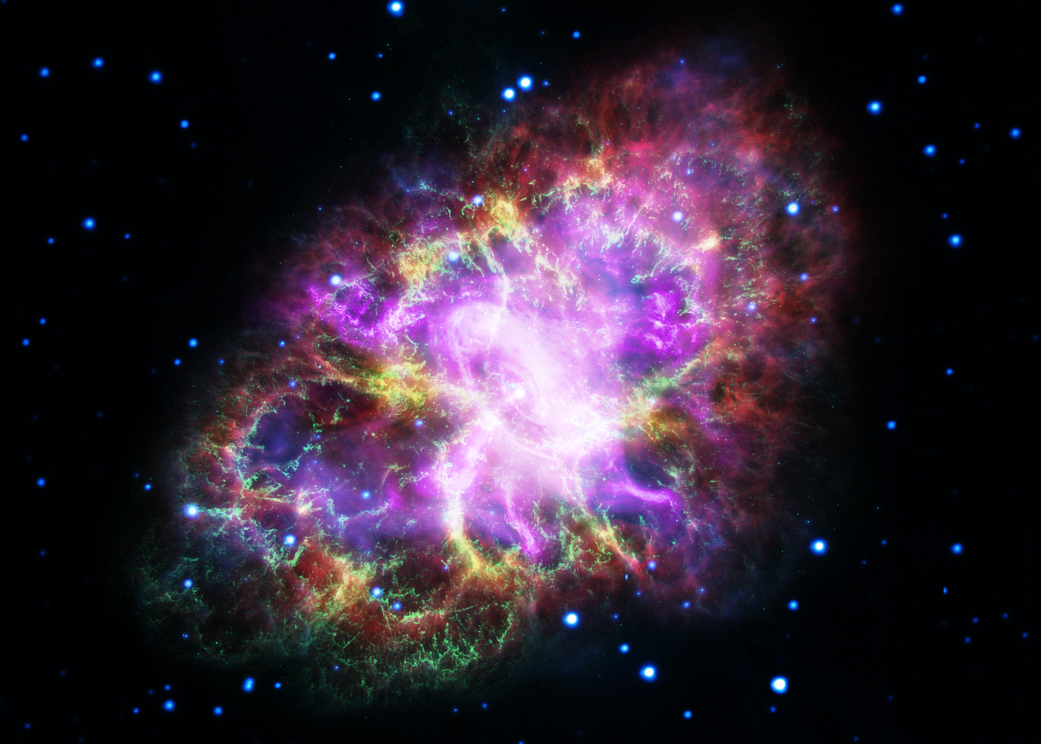
The Crab Nebula as seen by the Hubble Space Telescope and ground-based telescopes in a composite view The nebula is the aftermath of a brilliant supernova spotted in 1054.

The Crab Nebula as seen by the Hubble Space Telescope and ground-based telescopes in a composite view The nebula is the aftermath of a core-collapse supernova. (Image credit: NASA, ESA, NRAO/AUI/NSF and G. Dubner (University of Buenos Aires))

To "hear" these cosmic whispers, the team behind this research analysed almost 14 years of data from Super-Kamiokande in the form of Cherenkov light generated when neutrinos interact with 50,000 tons of ultrapure water.

This revealed a signal of neutrinos in line with what would be expected from the DSNB. This signal still needs to be confirmed, but it is a strong indicator of the DSNB, the first humanity has ever had.

Since the birth of the universe, neutrinos emitted by supernovas have diffused through space and accumulated over cosmic time.

Across the universe, supernova explosions occur several times per second. Since the birth of the universe, neutrinos emitted by these supernovae have diffused through space and accumulated over cosmic time. (Image credit: Kamioka Observatory, Institute for Cosmic Ray Research, The University of Tokyo)

"We are already planning on incorporating ongoing observations at Super-Kamiokande together with its successor detector, Hyper-Kamiokande, to further improve sensitivity in future collaborative studies," said team member Yosuke Ashida,of Tohoku University.

The team's results were presented on June 25, 2026, at Neutrino 2026: XXXII International Conference on Neutrino Physics and Astrophysics, held at the University of California, Irvine, USA.