
There are several ways you can help scientists study this year’s eclipse
Sirbouman/Alamy


Science and reality
Using the European Space Agency's Euclid space telescope, astronomers have discovered a treasure trove of 31 black-hole-powered quasars in the early universe. The most impressive of these new discoveries is the most ancient and distant quasar ever seen, shining with the light of a trillion suns just 670 million years after the Big Bang.
Quasars occur when supermassive black holes with masses millions or even billions of times that of the sun are surrounded by swirling disks of matter called accretion disks. As accretion disks gradually feed these central cosmic titans, the immense gravity of the black holes generates intense friction, causing this matter to glow so brightly that their luminosity can exceed the combined light of every star in their host galaxies.
Despite this, quasars can still be difficult to spot at vast cosmic distances, with their light difficult to distinguish from the light of much more proximate stars. Thus, the hunt for the earliest quasars has been on for decades, with scientists hoping that the discovery of these bodies could help explain how supermassive black holes grew so rapidly so shortly after the Big Bang. Launched in 2023, Euclid has fulfilled its promise in its mission to discover early quasars, with this hitherto unprecedented haul of 31 of these black hole engines.
"These early quasars date back to the Universe's infancy," team leader Daming Yang of Leiden University in the Netherlands said in a statement. "By finding and studying them, we can better understand how these enormous systems formed and grew so quickly — one of the greatest mysteries in astrophysics."
Previously, astronomers took around a decade to discover the first ten or so quasars at distances like this, which makes it incredibly impressive that Euclid has managed to detect more than three times that many ancient black hole engines in just a single year of observations.
Thanks to this new treasure trove of quasars discovered when the 13.8 billion-year-old universe was merely 5% of its current age includes not just the brightest examples of these objects, but also some fainter quasars. That now means scientists can finally study these objects as a population.
"Euclid is a true game-changer," Yang continued. "Before, we could only find a handful of the very brightest ancient quasars, but Euclid lets us search far more efficiently across huge areas of sky to capture much fainter light. It’s a unique tool for quasar hunting."
Of the 31 new quasars, 12 existed when the universe was around 770 million years old, but the two that really stand out are the quasars designated EUCL J172902.75+641018.1 and EUCL J125308.55+705432.3, which are around 13 billion light-years away and existed just 670 million years after the Big Bang. That makes them the most ancient quasars ever documented.
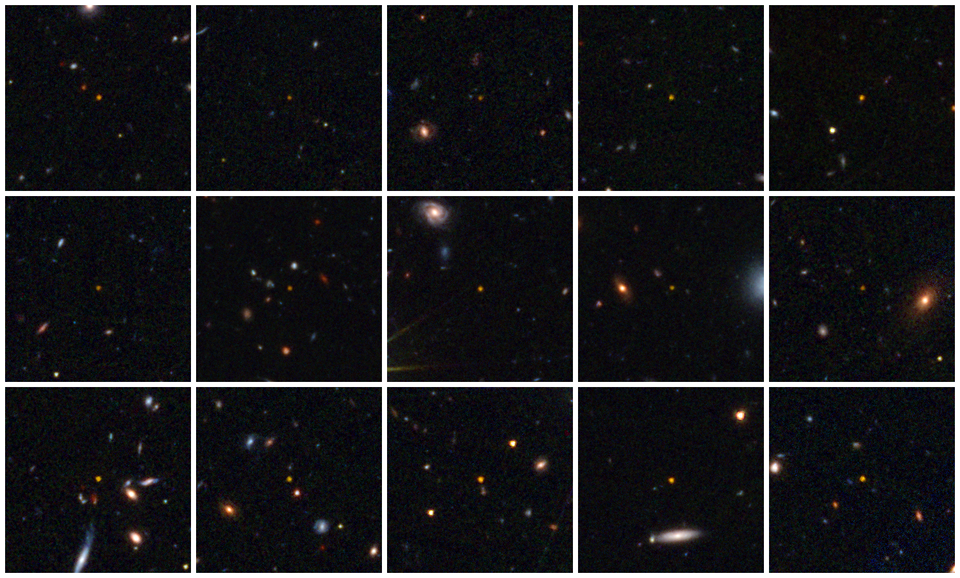
"This finding more than doubles the number of quasars we know of that are so ancient," Antonio La Marca , a European Space Agency (ESA) Research Fellow on the Euclid team, said in the statement. "The Euclid team has taken a true 'census' of quasars at the dawn of the Universe for the first time. It's a big step towards understanding these fascinating objects on a more fundamental level."
The quasars date back to a period of the cosmos known as the epoch of reionization, which lasted from around 680 million years after the Big Bang to 1.1 billion years after the Big Bang. During this period, the universe's "dark ages" drew to a close with photons, particles of light, suddenly free to traverse the cosmos. Thus, these 31 quasars offer a unique opportunity to study this vital period in cosmic history.
"Ancient quasars are rare discoveries," ESA Euclid Project Scientist Valeria Pettorino said in the statement. "They're interesting in themselves, but also time machines that enable us to explore the early universe and understand how the first generation of galaxies came to be."
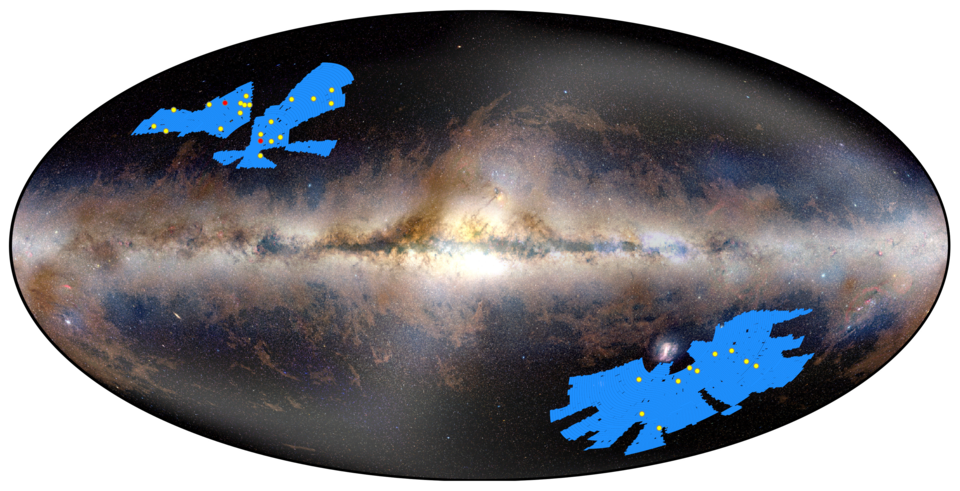
The 31 quasars were discovered as part of the Euclid Wide Survey, which will eventually cover around one-third of the total sky over Earth.
Scientists hope that this survey will shed light on the so-called "dark universe" comprised of two of the most pressing cosmic mysteries: dark energy, the puzzling force driving the acceleration of the expansion of the universe, and the nature of dark matter, the most abundant "stuff" in the cosmos which remains effectively invisible.
"Euclid's capabilities are unrivalled," Pettorino concluded. "The telescope combines a large area, depth, sharp imaging, and unique space-based infrared vision in a way that lets us pick out rare, extremely distant objects far more efficiently than before."
The team's research was published on Monday (July 6) in the journal Astronomy & Astrophysics.
Environmental and scientific organizations are banding together to demand federal environmental reviews of space-based data center projects, which plan to put more than a million new satellites in Earth orbit over the coming years.
Over the last few months, a number of different companies have requested licenses from the U.S. Federal Communications Commission (FCC) to launch data centers into space. SpaceX's proposal alone requests licenses for up to one million satellites in low Earth orbit (LEO). But the requested licenses don't come with any environmental review of the impacts that the satellites — especially collectively — could have on dark skies, wildlife or our atmosphere. In response, a coalition of environmental and scientific organizations represented by the environmental nonprofit Earthjustice have petitioned the FCC for this review.
"Allowing a million orbiting data centers with no environmental review isn’t just irresponsible — it’s reckless," Tim Whitehouse, executive director of Public Employees for Environmental Responsibility, said in a statement on Wednesday (July 8). "The potential for these projects to degrade the atmosphere with pollution and debris and harm wildlife needs to be carefully considered before licensing these projects."
Space is big, but a million new satellites added to LEO to support space-based data centers would be a massive increase. Currently, just Earth orbit harbors just 15,000 active satellites and 46,000 tracked objects overall. This number was already on track to grow to 58,000 active satellites, thanks in large part to SpaceX's ever-growing Starlink broadband megoconstellation, but the data-center plans could make it absolutely explode.
Experts suggest that this significant addition to the technological ecosystem in orbit could have disastrous consequences for life on Earth.
"Drastically expanding satellites in space has a direct impact on people’s everyday lives as well as the future of our planet," Jan Hasselman, senior attorney at Earthjustice, said in the statement. "Agencies that authorize companies looking to space as the next frontier still must operate within the law, and the law requires the FCC to consider all the risks and impacts of these proposals. If we have to sue so that they comply, we will."
The FCC has not yet required any environmental review for satellite companies seeking authorization to deploy in LEO. With its new petition, this coalition aims to change that, asking the FCC to stop granting licenses for orbiting data centers without an environmental review.
What possible environmental harms are they worried about? First of all, as more and more satellites are added to the orbital population, the greater chance there is of collisions, which could produce debris that not only clutters Earth orbit but also increases the risk of additional collisions.
Further the rocket launches that propel the satellites to orbit contribute greenhouse gas emissions to our atmosphere. And the spacecraft cause further pollution when they deorbit, releasing heavy metals and other materials when they burn up in Earth's air.
In addition, a massive increase in satellites will fundamentally change the night sky. Light pollution is known to impact wildlife and ecosystems, disrupting natural rhythms and influencing everything from migration patterns to daily feeding schedules. These disruptions can push animals like bats to miss windows in which insect prey are available, causing them to starve. They can also prevent mountain lions — apex predators that uphold their local ecosystems — from roaming normally at night, fragmenting populations over time, according to the National Wildlife Federation.
The effects of light pollution on wildlife would doubtless grow if suddenly a million new, blinking satellites were added to our night skies. And issues with light pollution extend to our species as well, as life would look quite different if our night skies were much more crowded by bright lights.
"These projects could permanently alter the night sky as we know it," Ruskin Hartley, executive director of DarkSky International, said in the statement. "The FCC needs to take seriously its obligation to ensure these projects do not cause unnecessary harm to naturally dark skies, or to our overall environment."
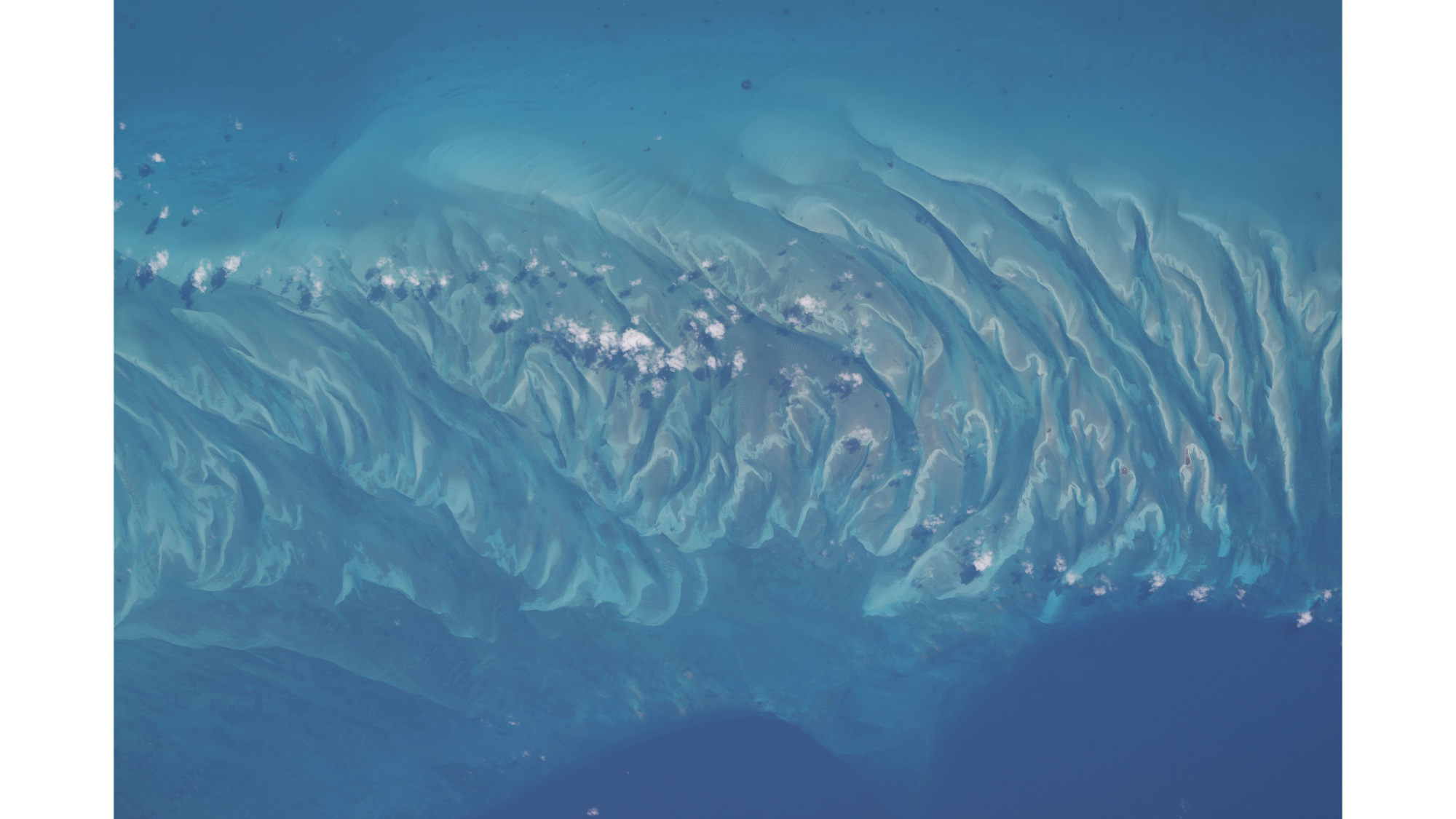
If you look at this picture for too long, you might start to hear the waves lapping up against the shore or feel a salty breeze in the air.
You might not have a trip to the Bahamas planned, but you can always enjoy its beauty in this spectacular summertime snapshot captured by NASA astronaut Chris Williams from aboard the International Space Station.
In a snapshot that looks straight out of a travel commercial, we can see the crests of rippling waves of sand peeking out from beneath turquoise waters off the coast of the island Eleuthera in the Bahamas.
The moment was captured 263 miles (423 kilometers) above Earth's Atlantic Ocean from aboard the space station orbiting our planet.
This isn't the first fun snapshot captured by Williams who also recently flexed his muscles for a photo mid-spacewalk.
This photo is incredibly beautiful. That much is immediately obvious. And if you've ever swam in picturesque waters like this, then you know how calming and magical such places on Earth can be.
But this photo is more than just pretty, as it shows that we can see Earth's beauty from 263 miles away. It is a reminder that our planet is truly special. Imagine if a future mission saw beauty like this from space on a far off exoplanet, or even a planet outside of our solar system. Currently, our planet is the only one we know of with views like this, but it's possible that in the future we might find tropical shorelines and vacation vistas aren't exclusive to our home planet.
The success of NASA's future moon base depends in large part on mission design, which should allow astronauts to work together well in a way independent from psychological training, a new study asserts.
The goal of the study was to identify "specific conditions" for mission success and to look for any "red flags" that may stand in the way, lead investigator Anamaria Berea, a computational social scientist at George Mason University (GMU), told Space.com via email. (The first author of the PLOS ONE study, which was published in May, was GMU's Raymond Vera.)
The team conducted the research using agent-based models, which are tools for computational simulations in fields ranging from the study of bird flocks to the spread of disease, Berea said. While a lot of modern-day AI "trains" or "learns" to extrapolate from information provided in a data set, agent-based modeling instead uses a data set to "understand emergent phenomena that don't have one single cause or direct cause," she said.
The study team considered scenarios for how many astronauts would be on the moon base and how often resupply missions would occur. In an "initial case," for example, the assumed mission duration was three months, with a single resupply run at Month 2 with food, water, air and a fresh group of astronauts.
Using a complex probability analysis known as a Monte Carlo simulation, the model astronauts in this scenario showed a productivity rate of about 20% against their expected tasks, "which is acceptable for a typical manufacturing process," the authors noted.
This productivity rate doesn't take into account anything unexpected that may crop up during the mission, the authors added. "The low task completion rate suggests that, on average, teams are having challenges to overcoming psychological stressors and environmental disruptions," they wrote.
NASA tracks productivity a little differently on the International Space Station (ISS). The agency uses a metric called "utilization," which largely refers to the amount of crew time and number of scientific investigations that are performed on the space station during an increment or expedition. As of 2014, the ISS program suggested that ideal utilization should be 35 hours per crew per week when there are three people working on the U.S. part of the space station, and 68.5 hours if there are four or more. (The Russian side of the ISS works largely independently in this respect.)
"NASA has generally met or exceeded this goal and set a high of 120 average hours per week devoted to research from October 2019 to April 2020," NASA's Office of the Inspector General (OIG), which has been tracking all of these productivity figures, stated in a report published in September 2024.
"Starting March 2022 through March 2023, the latest published data, we have seen utilization near 90 hours per week," the OIG noted. "In addition to the hours spent per week on research, the number of scientific investigations performed on-orbit has increased."
Figure 1 of the OIG report also shows both crew time and scientific investigations increasing, as a trend, between 2000 and 2023, suggesting that utilization of the space station is continuing to grow. And this is despite periodic and documented disruptions that required astronauts to take a step back from being productive, such as emergency ammonia leaks requiring spacewalks, the 9/11 disaster, or sheltering in place during brief contingencies such as space debris passing within a few miles of the station.
Not all crew time can be used for utilization even if all goes well, however, as the station requires normal maintenance like cleaning, and astronauts also need daily time for sleep, meals and a little relaxation. Additionally, utilization tends to increase with larger crews on the space station compared with smaller ones, as maintenance becomes less of a burden with more hands to take on these tasks.
But "lack of redundancy" in key supply items to the space station does pose a risk to utilization, the OIG has noted. As just one example, SpaceX Crew Dragon capsules and Roscosmos Soyuz spacecraft are the only two vehicles that bring astronauts to the station right now. "The lack of redundancy and limited capabilities of both cargo and crew transportation increase the risk to NASA's current and future ability to bring critical supplies, science, and crew to and from the station to maintain safe operations and full utilization of the ISS," the OIG wrote in the report.
Those of us who have been on long car rides in a group, or who remember being in tight quarters with roommates or family during the pandemic, have some idea of what an isolated, confined environment (ICE) feels like: crowded, with limited resources, and possessing few connections with the outside world. Space serves as just one example of a true ICE; isolated research bases (like in Antarctica) or submarines have also been studied in the literature, according to a separate 2021 study in the journal Neuroscience & Biobehavioral Reviews.
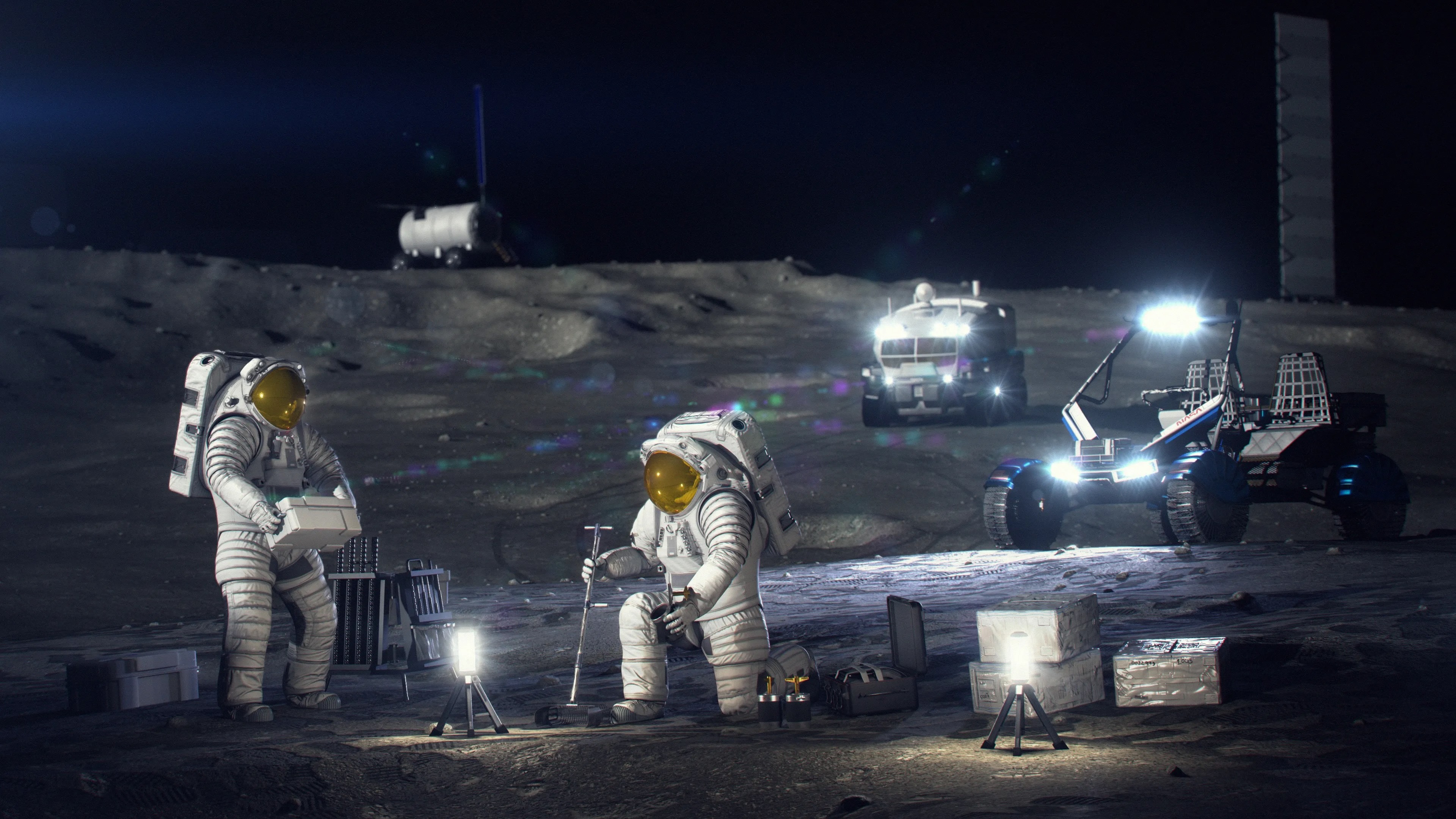
Put simply, ICE refers to a location where humans must work to a high standard in isolated and often dangerous circumstances, with only long-distance support (if possible) from a mission control or its equivalent. And, as the new study points out, a moon base would be a complex example of an isolated environment — one featuring not only resident astronauts but also rovers, other robots and occasional visiting crews.
"The premise for our modeling approach came from trying to understand better the human factors involved in crewed space missions, particularly the deep-space ones, for which we don't have a lot of historical data," Berea said.
That's because only a handful of people have traveled beyond low Earth orbit — the two dozen who flew to lunar realms on Apollo missions in the late 1960s and early 1970s, and the four astronauts of NASA's Artemis 2 flight around the moon this past April.
"We ran various scenarios of space mission durations, number of astronauts, potentially unforeseen circumstances that can happen on the lunar surface or the habitat," she said. The model suggested the missions with the highest probability of success would include six astronauts working on the moon at a time, with fresh supplies coming from Earth every two weeks, and no extreme fluctuations in the environment from things like radiation or a micrometeorite impact.
"In contrast, the worst-case scenario consists of four astronauts on the moon at one time, only one month resupply window between Earth and moon, and moderate to high adverse environmental probabilities," Berea said. And, when asked if training is a factor in mitigating adverse effects, she did not necessarily agree that the years of work NASA and other agency astronauts put in would be more effective than shorter-duration training used for moon base analogs.
"People can be very, very well trained, but for long-duration or deep-space missions, there will always be a human factor involved," she said. "We looked at combinations of skills and personalities in a team of astronauts, and there is a fine line between having a team that is too small and a team that is too large, and there are synergies and emergent behaviors that come from people interacting with each other and with their environment.
"The team is more than the sum of its people," she continued. "The best ways to overcome these is not by more training, but by fine-tuning other aspects of the missions: the duration of the mission, the frequency of resupply missions, and the contingency plans for accidents and unforeseen conditions in extreme environments."
NASA, however, puts its ISS crews through many years of remote environment training long before they float through the space station hatch — and Artemis 2 commander Reid Wiseman told The New Yorker that extensive psychosocial training led to the obvious closeness seen live among his own four lunar crewmates despite tight quarters (and vent line issues that led to occasional toilet trouble).
That psychological intervention during training was by design. "Preparation starts by recruiting mentally healthy people and then providing training to help them deal with potential situations and issues," wrote the Canadian Space Agency of this training, citing NASA protocols. "Astronauts repeat this training often enough that they can anticipate their own reactions and those of their teammates. They also receive constant support from teams on the ground and have access to a variety of tools to help them deal with potentially difficult situations."
Berea noted, however, that psychology forms a part (but is not the focus) of her teams' simulation, including considering NASA TLX (task load index) scores and data, which measures coping and stress for astronauts. The researchers also considered case studies from analogs including Antarctic research missions and time aboard submarines or oil rigs, as some examples.
"We need to pay attention not only to the astronauts, but the team as a whole, and each team and space mission are unique. We will not be able to model these with statistics or AI," she said. "But what we can do is to make sure that before we send any human to live and work on the moon, that we understand well the complexity of interactions and scenarios they will face during the mission, and we can help with that."
If the universe has one lesson for humanity, it is that everything ends. That includes stars, which too must die, albeit on timescales of billions of years. But new research suggests that when some stars die, they do not do so alone, potentially solving a long-standing mystery around a particular class of cosmic explosion called an interacting supernova.
When stars much more massive than the sun reach the ends of their lives, their cores collapse, sending shockwaves blasting out into their outer layers, triggering explosions called supernovas and leaving behind stellar remnants in the form of neutron stars or black holes. Interacting supernovas differ because the shockwave generated by these explosions crash into a pre-existing cocoon of material. The big mystery has always been: where does this cocoon of gas and dust come from?
Humanity is somewhat biased when it comes to stars; after all, the sun dominates our existence, and it is a solitary stellar body. But contrary to this, the majority of stars aren't so antisocial, existing in binary partnerships bound together by gravity. This new research suggests that these stars don't just live together; they can die together too. Understanding this dual existence could be key to solving the origins of dust shrouds in interacting supernovas.
"Our study suggests that many stars do not die alone," team member Ke-Jung Chen, of the Academia Sinica Institute of Astronomy and Astrophysics (ASIAA), said in a statement. "Their final appearance may be shaped by a long and intimate partnership with a companion star."
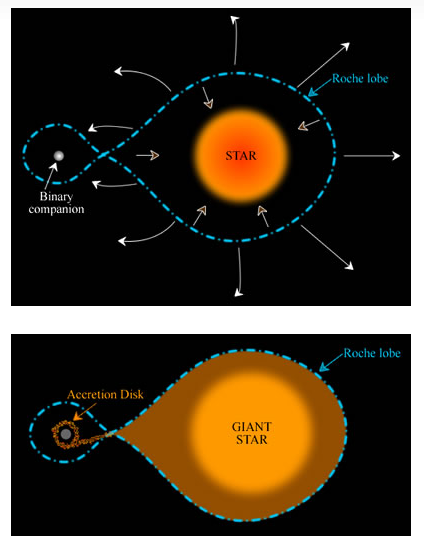
Before stars reach the ends of their lives, they enter a relatively short-duration red giant phase. This can see them swell out to hundreds or even thousands of times their original radius.
For a binary stellar pairing, this leads to a situation called "roche lobe overflow," which basically sees the swollen-out star spilling material onto its companion. However, not all of that material is captured by the companion star, escaping to form a vast cocoon around the binary stars.
When the evolved and swollen star reaches the end of its life and "goes nova," the shockwaves ripple forward and slam into this cocoon of matter at speeds of thousands of miles per second. The kinetic energy becomes light, creating a strange and intensely bright interacting supernova.
That leaves an obvious question, however. If stellar binaries are so common, and become even more common for stars massive enough to go supernova, why aren't interacting supernovas more common?
Turns out, just like with comedy, the secret is ... timing.
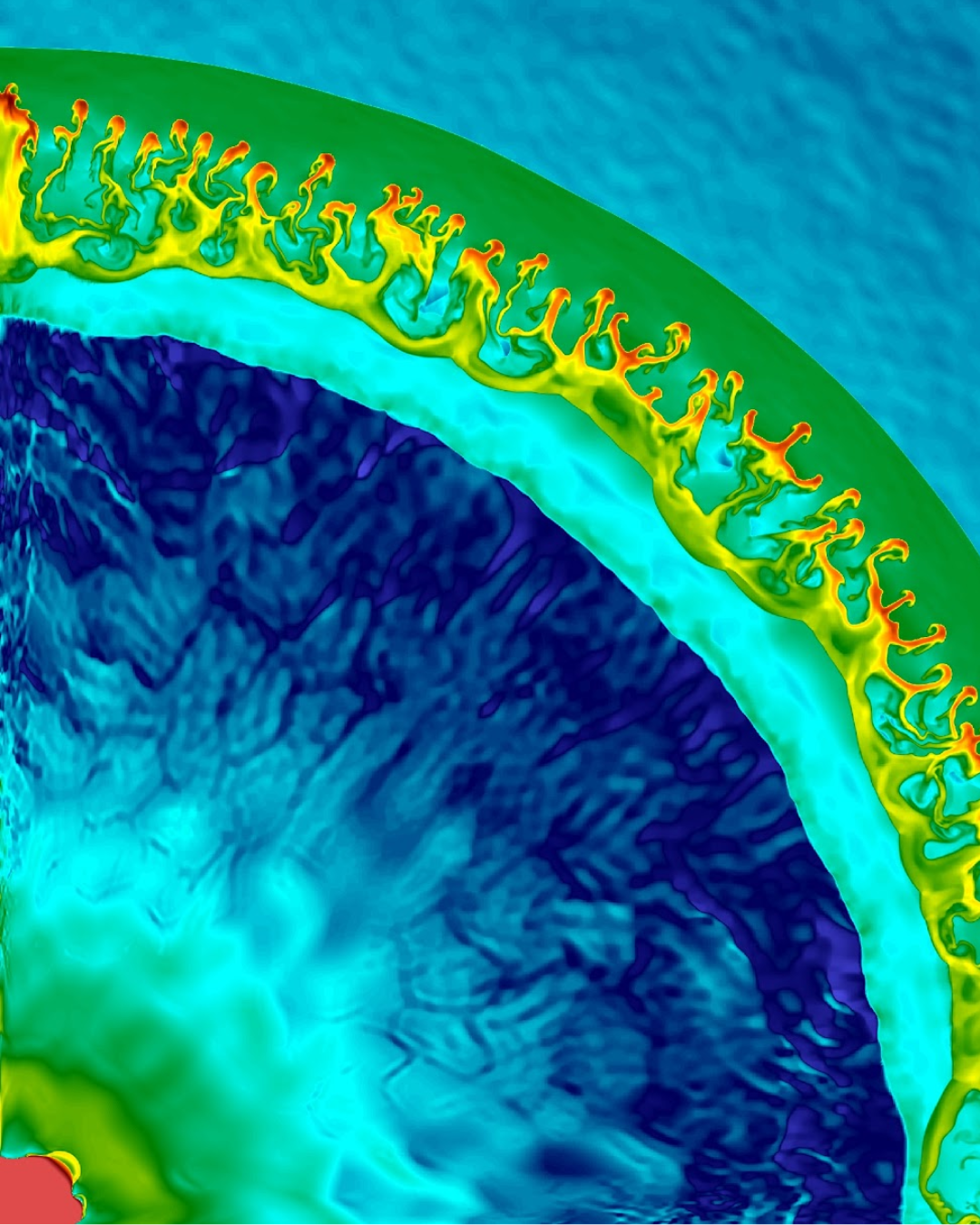
Chen and colleagues ran hundreds of computer simulations of mass transfer between binary stars and discovered that the key to generating an interacting supernova is when this mass transfer occurs late in the stars' lives.
If mass transfer occurs too early, say millions of years before the final supernova blast, the team found that the material spreads far away from the binary stars, dissipating the surrounding cocoon. For the cocoon to hang around for shockwaves to strike, mass transfer has to occur just a few thousand years before the final explosive death throes of one of the binary stars.
"We found that binary stars can prepare the stage for interacting supernovas with remarkable timing," team member Sung-Han Tsai of ASIAA said. "The companion star helps create a dense cocoon around the dying star just before the explosion, providing the fuel that powers these cosmic fireworks."
The team's research shows that there are many ways for stars to die, and these explosive fates are determined by the way they lived.
The team's research was published on June 30 in The Astrophysical Journal Letters.
For decades, astronomers have debated whether Earth's fate was tied to the sun's. When the star exhausts the hydrogen fuel that powers it about 5 billion years, it will swell into a red giant large enough to engulf Mercury and Venus — and, several studies have suggested, Earth as well.
New research, however, suggests our planet has a better chance of escaping that fiery end than previously thought. Using updated models of how aging stars interact with their planets, researchers found that the gravitational forces drawing Earth toward the expanding sun are weaker than older models predicted. That would give the planet more time to drift outward as the dying sun sheds its outer layers into space, potentially avoiding engulfment altogether.
The finding does not guarantee Earth's survival. Instead, researchers say it shifts the biggest uncertainty from how strongly the expanding sun tugs on planets to the poorly understood variable of how much mass the star will lose during its final stages of evolution.
"The largest uncertainty no longer comes from the tidal calculations, but from how much mass the future sun will lose," study lead author Mats Esseldeurs of the KU Leuven's Institute of Astronomy in Belgium said in a statement. "Observations of sun-like giant stars currently point towards Earth's survival, but we need better observations before we can be certain."
When stars like the sun exhaust their core hydrogen and balloon into massive red giants, they trigger a cosmic tug-of-war between expanding tidal forces pulling planets inward and shedding stellar weight pushing them outward, which ultimately decides whether nearby worlds are engulfed or saved.
This planetary push-and-pull unfolds in two stages. As the sun expands, gravitational tides act like a subtle brake, slowly draining Earth's orbital energy and pulling the planet inward. At the same time, the dying star sheds vast amounts of gas through powerful stellar winds, eventually losing about half its mass. As the sun grows lighter, its gravitational grip weakens, pushing the surviving planets outward into a wider orbit that could double their distance from the star, according to NASA.
"The fate of Earth depends on a delicate balance between these two effects," Esseldeurs said in the statement. "If tidal interactions dominate, Earth is engulfed. If mass loss dominates, Earth escapes to a wider orbit."
Previous studies reached different conclusions mostly because they treated those competing processes differently, Esseldeurs and his team argue. A few of those studies neglected tidal interactions altogether, while others relied on simplified prescriptions developed decades ago that predicted a much stronger inward pull, according to the study.
Instead of relying on those older formulas, the new study uses updated calculations of tidal forces based on the shifting internal structure and dynamics of aging stars — which the team says allowed it to precisely account for both tidal friction and shifting stellar winds — before testing the results against a range of possible mass-loss rates for the sun's final giant phase.
The results suggest that even with the weaker inward gravitational pull, Mercury and Venus are unable to outpace the expanding sun and are inevitably engulfed, while Earth and Mars migrate safely through both giant phases, leaving our planet to eventually settle into a broader orbit around the white dwarf remnant the sun will leave behind, the study found.
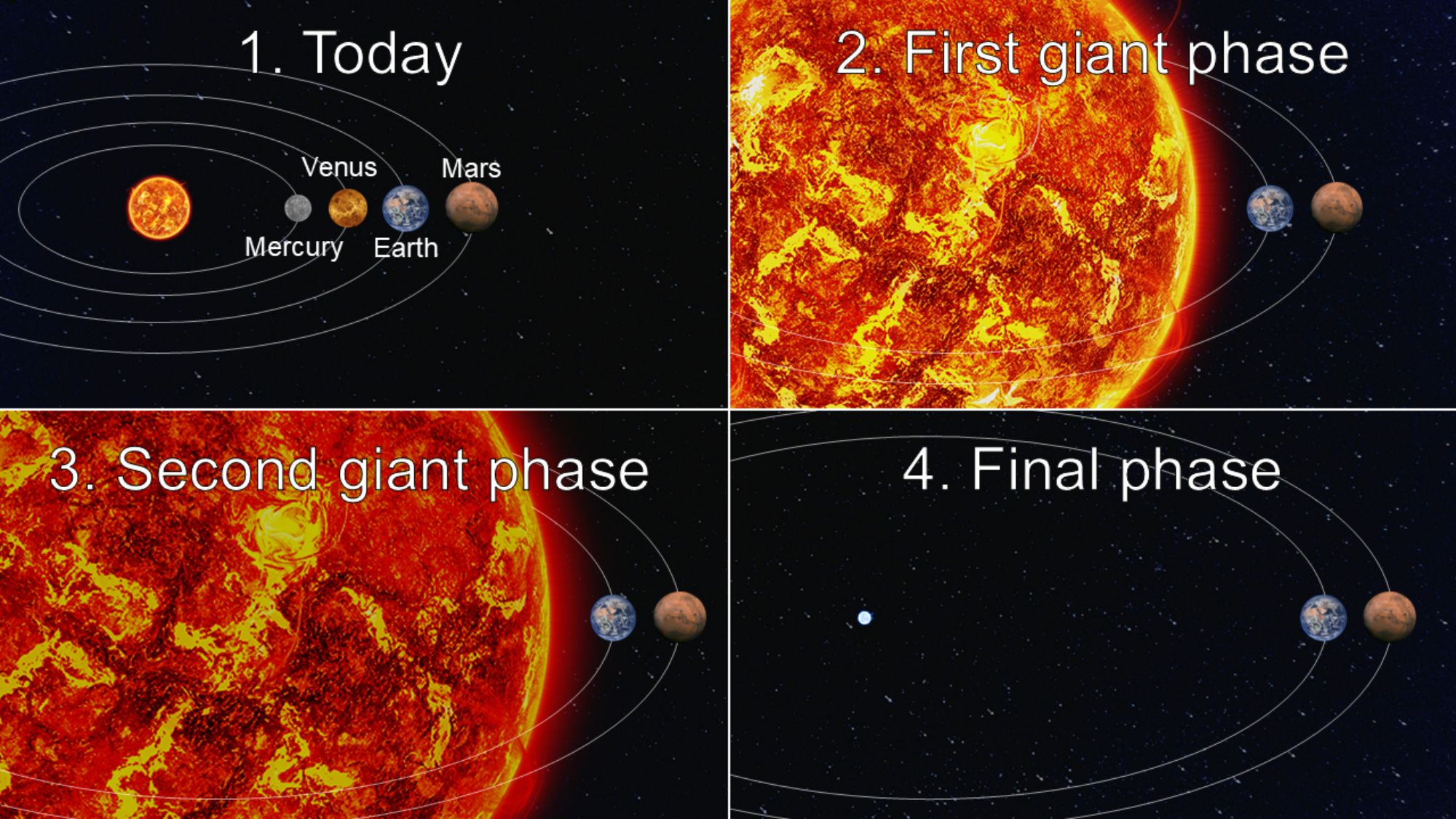
The picture is far from settled, however. Because astronomers still cannot precisely observe how rapidly sun-like stars lose mass late in life, "the ultimate fate of the Earth remains uncertain," the researchers write in the new paper.
By factoring in real-world mass-loss rates from L2 Pup — a red giant star roughly 183 light-years away that was used as a proxy for our future sun due to its similar mass — the researchers confirmed that Earth will drift outward just quickly enough to avoid being swallowed, tipping the scales toward survival over destruction, the study notes.
For us humans, the finding offers academic comfort rather than practical salvation. Most scientists agree that as the sun ages, it will steadily grow hotter, boiling Earth's oceans and rendering the planet completely uninhabitable in about 1 billion years, long before the sun begins to expand.
Yet even if humans aren't around to witness it, tracking Earth's ultimate survival provides important context for how planetary systems evolve as their stars age, a framework that researchers say will be further refined by future observations of dying, sun-like stars.
"This will enable us to conduct population studies of the planetary orbital evolution around evolved stars," the researchers wrote in the paper, "and help us to constrain the future evolution of the Earth-sun system."
The study was published in June in the journal Astronomy & Astrophysics.
July 2026 marks four years since NASA's James Webb Space Telescope (JWST) images were first revealed to the general public, marking a new era for astronomy. To celebrate this anniversary of the most powerful space telescope ever launched, NASA has released a stunning image of the strangely shaped galaxy called Centaurus A.
Located around 11 million light-years away, Centaurus A owes its unusual structure to a collision between two galaxies around 2 billion years ago. This merger provided the galaxy with an abundance of gas and dust, the raw material for intense star formation. It also supplied the supermassive black hole at the heart of this galaxy with an abundant supply of the same matter to feed upon and power a bright and violent central region, or active galactic nucleus (AGN), as that central area blasts out powerful, high-speed jets of plasma.
Though this galaxy is much closer to us than many of the early galaxies that the JWST has studied in its four years of operations, that doesn't mean it's any less useful. In fact, with its ultra-sensitive infrared vision, the JWST has been able to peer into the heart and inner workings of Centaurus A like no telescope that has gone before.
"No single telescope tells the whole story," Shawn Domagal-Goldman, division director of Astrophysics at NASA Headquarters in Washington, said in a statement. "Discoveries build over time, and new observatories expand on the foundations laid by earlier missions. The JWST represents the most powerful step forward yet, opening a window into wavelengths and details never before accessible.
"This allows astronomers to examine structures and processes that other telescopes could not see."
The key to the new view of Centaurus A that the JWST has been able to provide is the space telescope's powerful infrared vision. The thick dust that crowds the heart of this galaxy blocks visible light the Hubble Space Telescope previously relied on to study it. Infrared light is able to slip through these dense sheets of gas and dust.
The now-retired Spitzer Space Telescope had previously studied Centaurus A in infrared, but while it could resolve larger structures in the galaxy, it lacked the observational power to resolve individual stars and finer details.
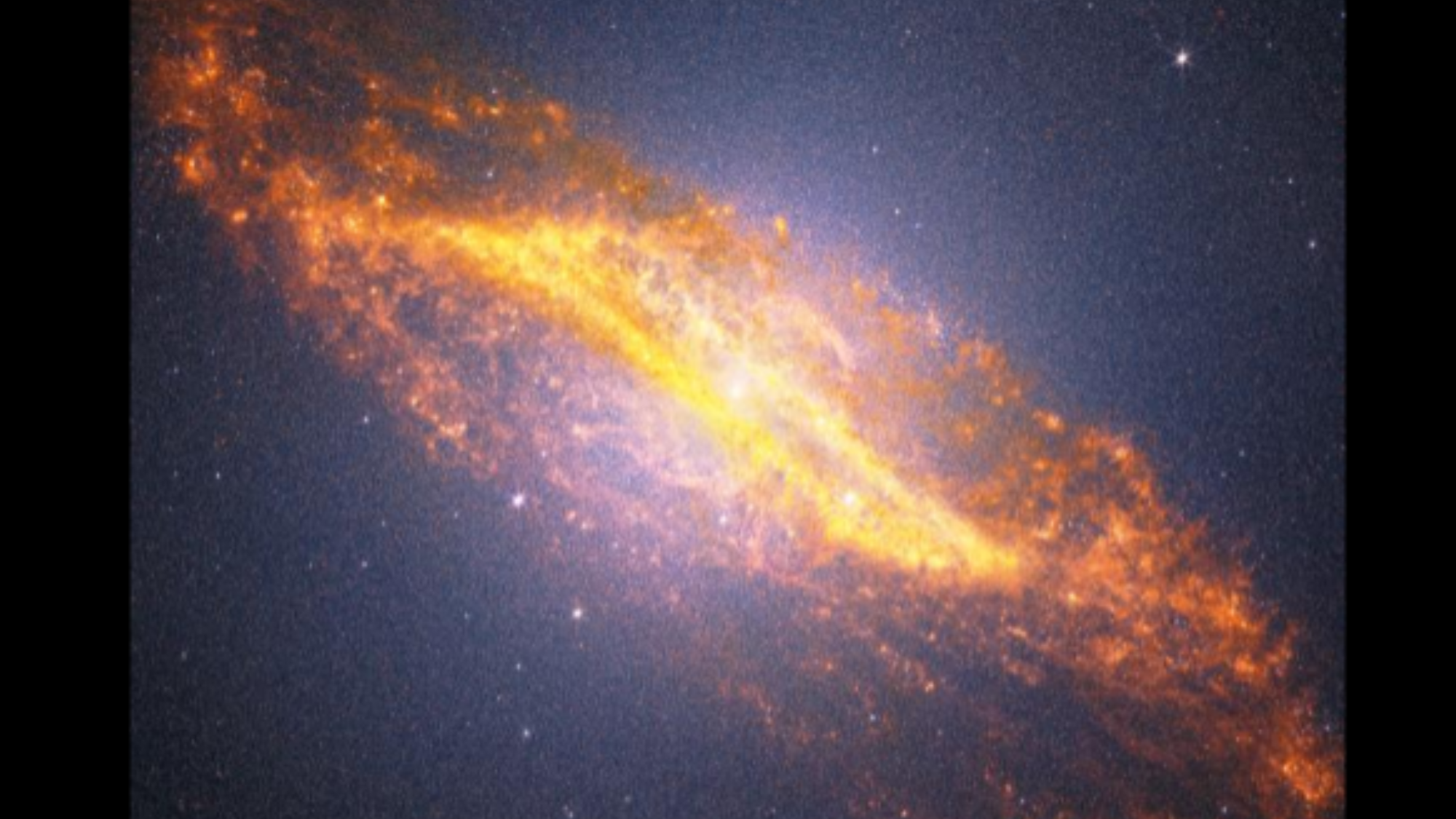
However, even though the JWST has been able to use its MIRI (Mid-Infrared Instrument) and NIRCam (Near-Infrared Camera) to study Centaurus A like never before, there are still mysteries to be solved about this structure.
For example, in the MIRI image of Centaurus A, alongside the glowing stellar nurseries where new stars are born and spit gas and dust into their surroundings, there is a curious S-shaped feature. Scientists still don't know how this structure was formed and if the active black hole at the heart of Centaurus A played a role in its creation.
The JWST images of Centaurus A do reveal plenty about the role this galaxy's central black hole plays in carving out its morphology. For example, the JWST was able to see fast-moving ionized gas being shunted outwards by the black hole’s activity. The JWST data also revealed warmer molecular hydrogen in a warped and rotating disk near the heart of Centaurus A.
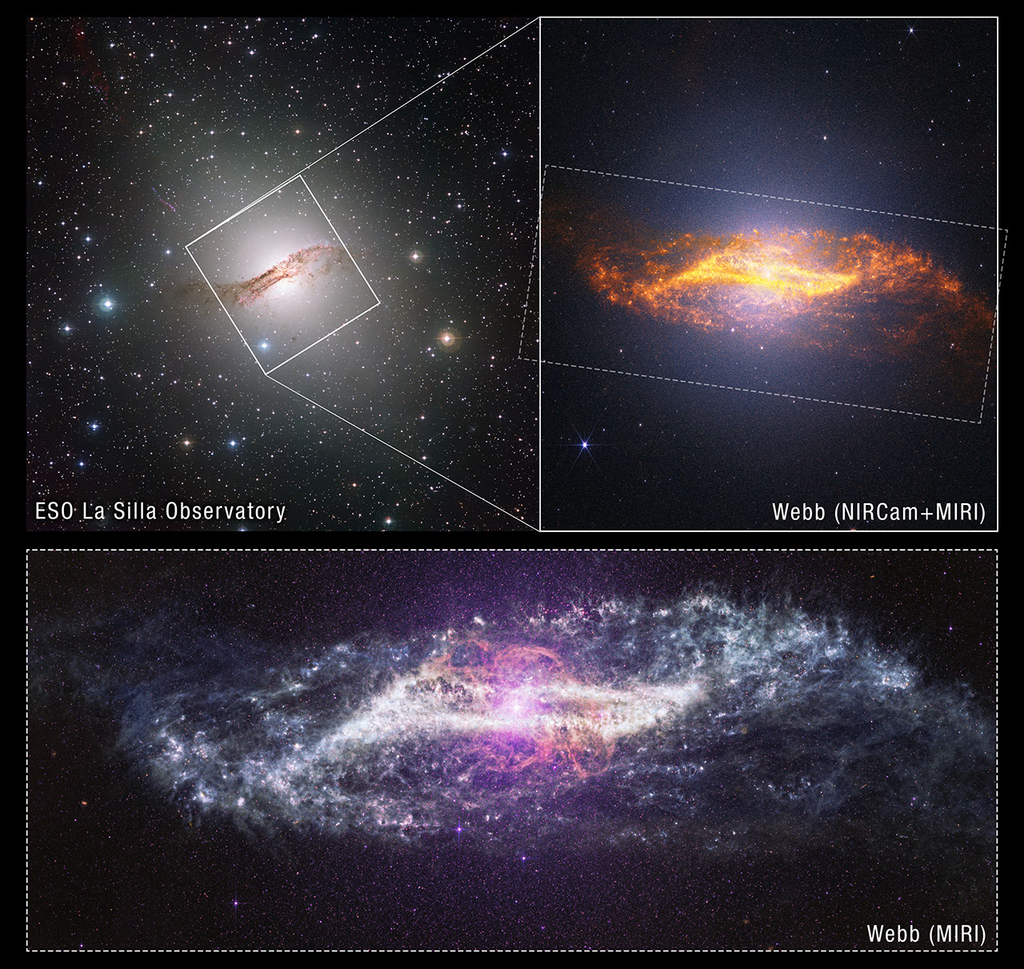
This data seems to show how a galaxy's central black hole can trigger bouts of intense star formation by condensing gas and dust, but also how these cosmic titans can stunt star birth and "kill" their host galaxies by purging the raw material needed for the star-formation process.
That means that thanks to the JWST, scientists are now building a more comprehensive cosmic history of Centaurus A, promising discoveries that can be applied to other galaxies to build a better picture of how the universe has evolved.
Here's to another four years of cosmic discoveries.
The mystery of how the sun's corona, which is its outer atmosphere, reaches millions of degrees could have a surprising explanation: cosmic dust riding the magnetic waves carrying plasma on the solar wind.
"For decades, researchers have focused mainly on how electrons, ions, magnetic fields and plasma waves transport and dissipate energy in the solar atmosphere," said lead researcher Syed Ayaz of the University of Alabama in Huntsville in a statement. "Our work adds a new ingredient to this picture: dust grains."
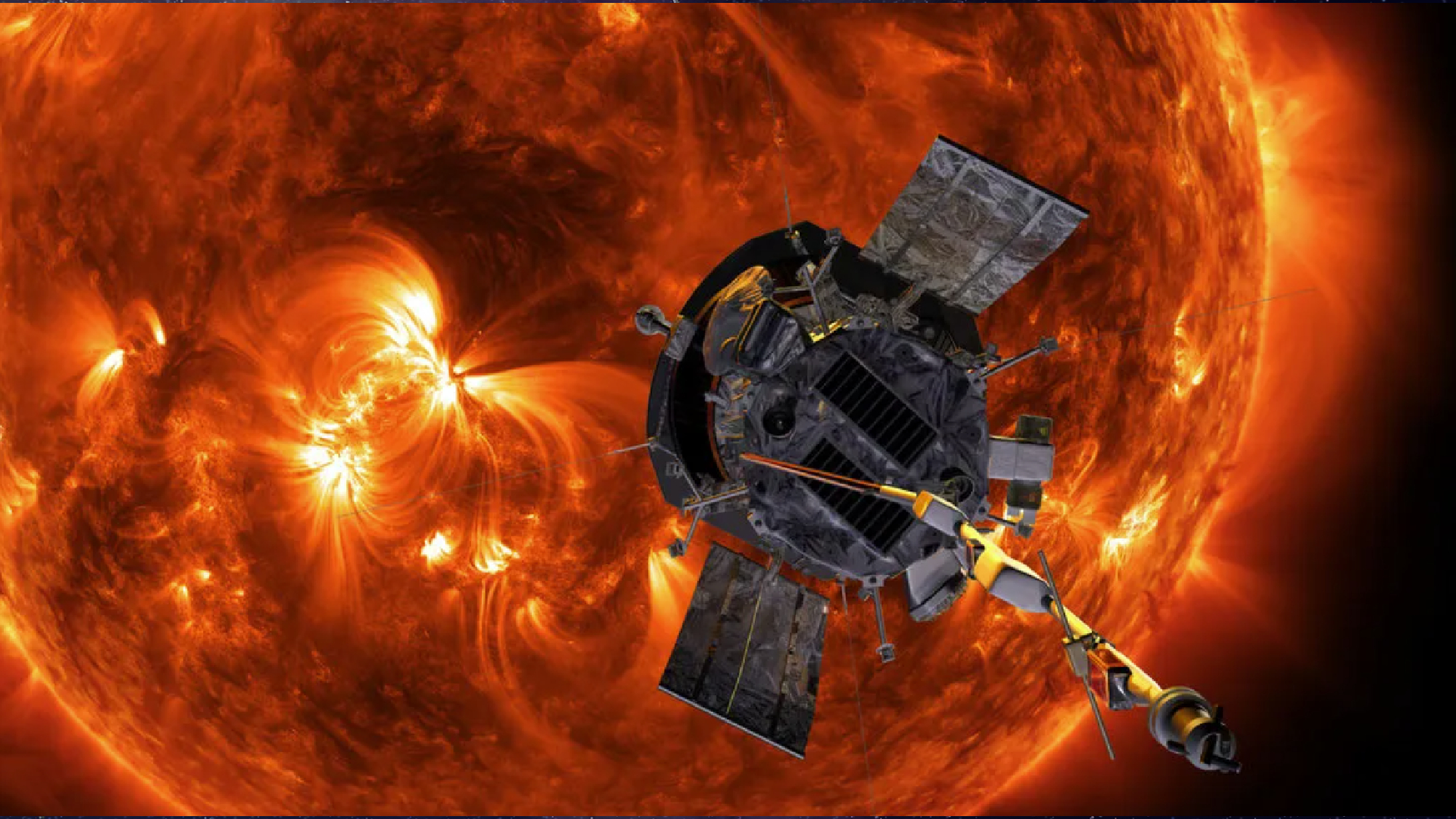
The finding came courtesy of NASA's Parker Solar Probe, which has flown closer to the sun than any other spacecraft, skirting the corona at a distance of 6.1 million kilometers (3.8 million miles). If you've ever witnessed a total solar eclipse, or even seen a photograph of one, then you will be familiar with the corona — the ghostly tendrils of light that surround the eclipsed sun. Those tendrils are formed from plasma, or ionized gas, at temperatures in excess of a million degrees Fahrenheit, compared to the sun's visible surface, the photosphere, which radiates at about 9,932 degrees Fahrenheit (5,500 degrees Celsius). At those temperatures, the photosphere outshines the corona only because the plasma in the corona is so sparsely distributed. This is why the only time we can see the corona is during a total solar eclipse, when the photospheric glare is blocked.
Parker does not carry a cosmic dust detector, and that's because until now dust has not been considered a serious component of the solar atmosphere. Indeed, in the high temperatures of the solar corona it had been thought that dust could not survive for very long and would therefore have no impact.
However, Parker does host a bunch of antennas and magnetometers collectively referred to as the FIELDS experiment, designed to measure the electromagnetic field and radio emissions in the solar corona. The antennas kept picking up unexpected spikes in voltage, which according to Ayaz and his team are produced by clouds of charged particles created when tiny dust grains slam into Parker at high velocity.
These dust grains have accrued an electrostatic charge, which can interact with the electromagnetic field carried by the solar wind as it leaves the sun, which in turn can influence waves of plasma reverberating through that electromagnetic field called Alfvén waves.
There are two possible, competing ways in which dust can affect the Alfvén waves, which in turn could determine how energy is dumped into the corona, heating it. On one hand, the mass of the dust can act to provide extra inertia to the plasma as it rides the solar wind, allowing the plasma energy to be transported across wider distances. On the other hand, the electric charge on the dust grains can bolster the interactions between charged particles in the plasma, the Alfvén waves and the solar electromagnetic field.
"If dust mass dominates, [Alfvén] wave energy may travel farther into the corona," said Ayaz. "If dust-charge effects dominate, the energy may be released more locally as particle heating."
The balance between these two effects can therefore control where and when energy is deposited into the corona, focusing it in areas and causing temperatures there to rise dramatically.
Future solar missions are now going to have to start taking dust into account, said Ayaz, with dedicated detectors designed to measure dust's properties close to the Sun.
"The bigger question is fascinating," said Ayaz. "Is dust simply passing through the near-Sun environment, or is it helping shape how electromagnetic energy becomes heat and solar-wind motion?"
The new discovery was reported on July 1 in The Astrophysical Journal.
More evidence that the interstellar comet 3I/ATLAS is much older than our solar system has come to light, along with clues that it formed on the outskirts of the protoplanetary disk belonging to its parent star long ago.
Earlier this year, researchers led by Martin Cordiner of NASA's Goddard Space Flight Center revealed that data from the James Webb Space Telescope (JWST) suggested that 3I/ATLAS is between 10 and 12 billion years old, based on the ratios of its carbon and deuterium isotopes. This would make it more than twice the age of our 4.6-billion-year-old solar system. Now, new results from the Ultraviolet and Visual Echelle Spectrograph (UVES) on the European Southern Observatory's Very Large Telescope support the JWST observations of carbon isotopes, and also introduce measurements of nitrogen isotopes that arrive at very interesting conclusions.
Isotopes are versions of atomic elements with different numbers of neutrons. For example, carbon-12 contains six protons and six neutrons, while carbon-13 contains six protons and seven neutrons. Meanwhile nitrogen-14 has seven protons and neutrons each, while nitrogen-15 has seven protons and eight neutrons.
These isotopes can form through subtly different processes, at different times and in different locations in the galaxy. The ratio of these isotopes in the gases released by comet 3I/ATLAS into its coma and tail as it neared the sun and grew warmer can therefore tell us much about its origin and history.
Consequently, interstellar objects such as 3I/ATLAS "are sort of fossils from a planetary formation process that happened very far away, but we get the chance to study from much closer," said astronomer Cyrielle Opitom of the University of Edinburgh in a statement.
Opitom led the team who got the chance to observe 3I/ATLAS with the VLT. They found that the ratio of carbon-12 to carbon-13 is higher than is found in comets in our solar system or indeed in the local interstellar medium. Carbon-13 is produced in greater abundances than carbon-12 over time, typically in red giant stars, so for there to be far more carbon-12 than carbon-13 tells us that 3I/ATLAS was born long ago before carbon-13 had a chance to build in abundance across the galaxy. This finding supports the JWST carbon isotope measurements.
Additionally Opitom's team, which was co-led by Jean Manfroid and Damien Hutsemékers of the University of Liège in Belgium, measured a ratio of nitrogen-14 to nitrogen-15 in 3I/ATLAS that is more than twice as large as the value measured in comets native to our solar system. In fact, the ratio is typical of that found on the outer edge of planet-forming discs around young stars, implying 3I/ATLAS formed a long way out from its parent star, perhaps in the equivalent of its Kuiper belt.
"Unlike comets from our solar system, this interstellar visitor carries unusually high carbon and nitrogen isotopic ratios," said team-member Aravind Krishnakumar, who is also of the University of Liège.
The results give us clues to how 3I/ATLAS found itself wandering the space lanes alone for billions of years. Models indicate that migrating giant planets can kick small bodies into interstellar space, but the location of 3I/ATLAS's birth far from that planetary action means that it is quite possible instead that it was snatched from its parent star by the gravity of a passing star and was subsequently hurled into deep space.
The JWST had also previously shown that 3I/ATLAS is rich in carbon monoxide and carbon dioxide relative to water, and also contains unexpectedly high abundances of nickel and iron and a very high abundance of methanol relative to hydrogen cyanide – all of which tells us that 3I/ATLAS formed in an environment with conditions and chemistry notably alien to our own solar system.
Unfortunately similar measurements were not possible with the other two known interstellar objects – 1I/'Oumuamua was not seen to outgas, while 2I/Borisov was too faint. However, 3I/ATLAS is a tantalizing indication that studies of more interstellar objects caught entering our solar system will be able to teach us about planet-forming conditions across both space and time in our Milky Way galaxy.
"3I/ATLAS is a really exciting opportunity to probe the composition of another planetary system, one that formed long before our Sun and solar system even existed," concluded Rosemary Dorsey, an astronomer from the University of Helsinki in Finland.
The findings were published on July 6 in the journal Nature Astronomy.