The 10 best places in the UK to see the partial solar eclipse on Aug. 12

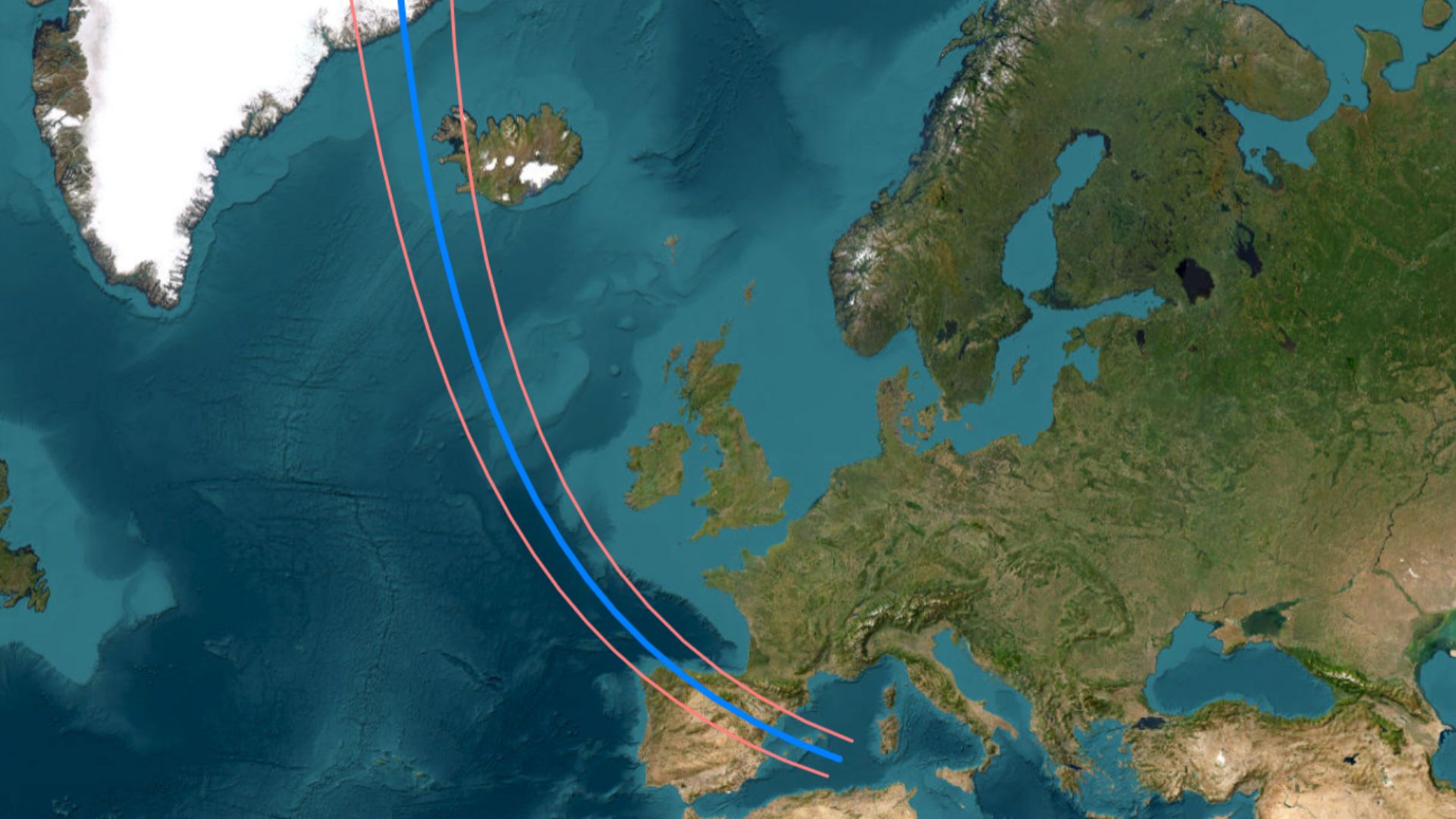
On Aug. 12, 2026, skywatchers across the U.K. will experience a rare astronomical double-header: a deep partial solar eclipse before sunset followed, hours later, by the peak of the annual Perseid meteor shower. Although the path of totality will sweep from Greenland and Iceland to Spain, it will miss Britain entirely. However, the solar eclipse will still be dramatic, with up to 96% of the sun obscured for viewers in the far southwest.

This will be the U.K.'s deepest partial solar eclipse since 2015, and timing will be everything. The eclipse reaches its peak around 7:00-7:16 p.m. BST, with the sun hanging low above the west-northwest horizon as a narrowing crescent shortly before sunset. Because the sun will be relatively low, choosing the right location will matter far more than traveling huge distances. Coastal viewpoints, hilltops and open landscapes with unobstructed western horizons will offer guaranteed views — if the sky is clear.

The locations below prioritize another crucial factor: dark skies. While the eclipse will be visible almost everywhere in the U.K. and most will be happy to see it from close to where they live, the real reward comes after darkness falls, when the Perseids begin flashing across the sky. Find somewhere remote, stay overnight — ideally camp — and this could become one of the most memorable observing sessions of the year.

Eclipse timings and sightlines are from Xavier Jubier's Interactive Google Maps; cloud cover is from Time and Date, the figures reflect long-term climatological averages for mid-August, not weather forecasts. Bortle and sky quality meter (SQM) data come from the Light Pollution map.

During a partial solar eclipse, it is NEVER safe to look directly at the sun without solar eclipse glasses designed for solar viewing. Read our guide on how to observe the sun safely.

1. Hugh Town
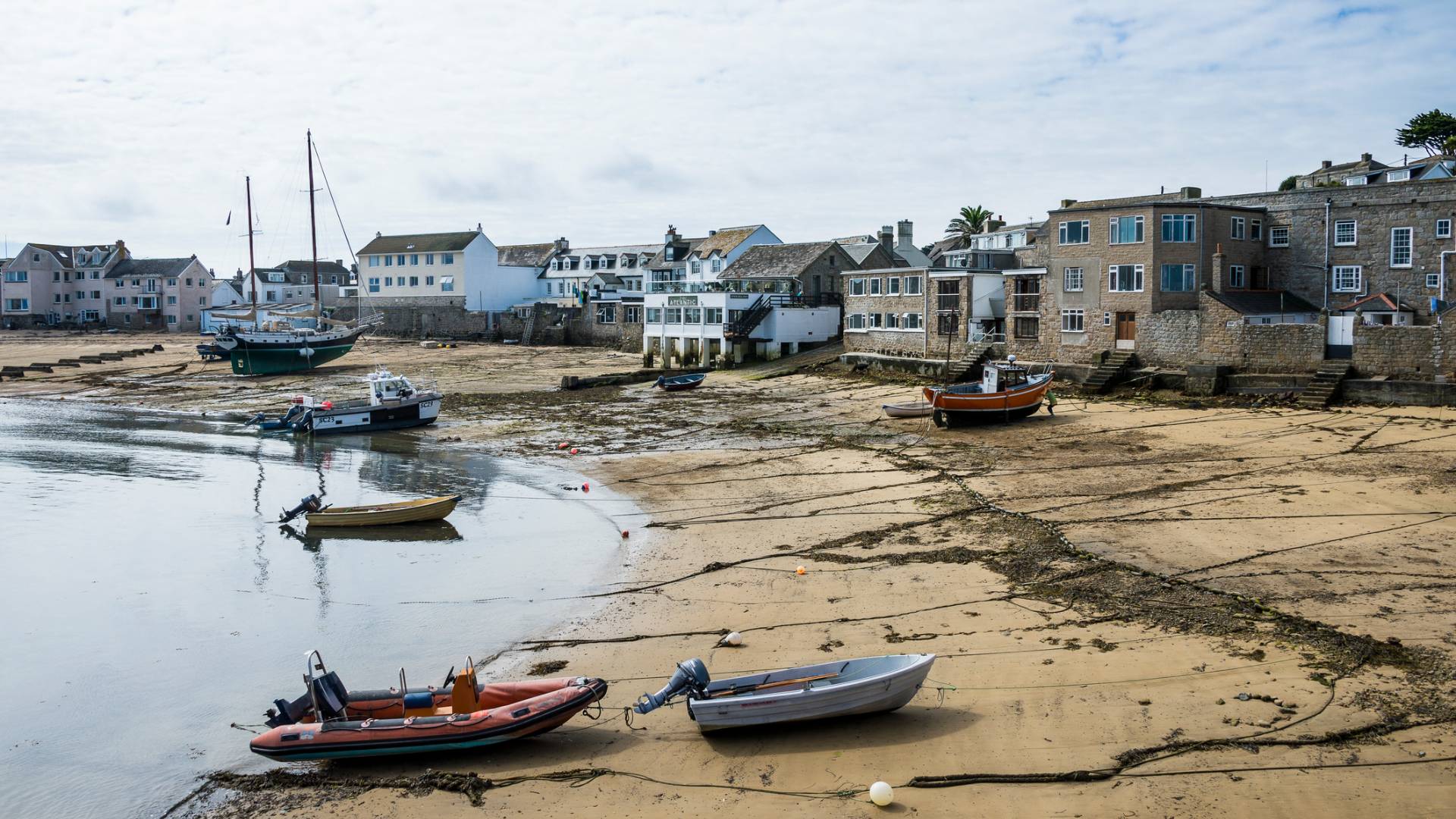
The Isles of Scilly will see the largest eclipse in the U.K. (Image credit: Westend61 via Getty Images)

Location: St. Mary's Island, Isles of Scilly, U.K.

Max eclipse: 96.4% at 7:16 p.m. BST

Sun position: 13° above west-northwest horizon

Eclipse window: 6:19-8:10 p.m. BST

Sunset: 8:49 p.m. BST

Light pollution: 3.2 Bortle/SQM 21.86

Cloud risk: 74%

The Isles of Scilly combine Britain's deepest partial eclipse with some of southern England's darkest skies. From Hugh Town and nearby west-facing beaches on St Mary's, the eclipsed sun will hang low above the Atlantic Ocean late in the day. Later that night, with minimal light pollution and broad sea horizons, the islands are an exceptional place to watch the Perseid meteor shower beneath pristine late-summer skies.

2. Land's End
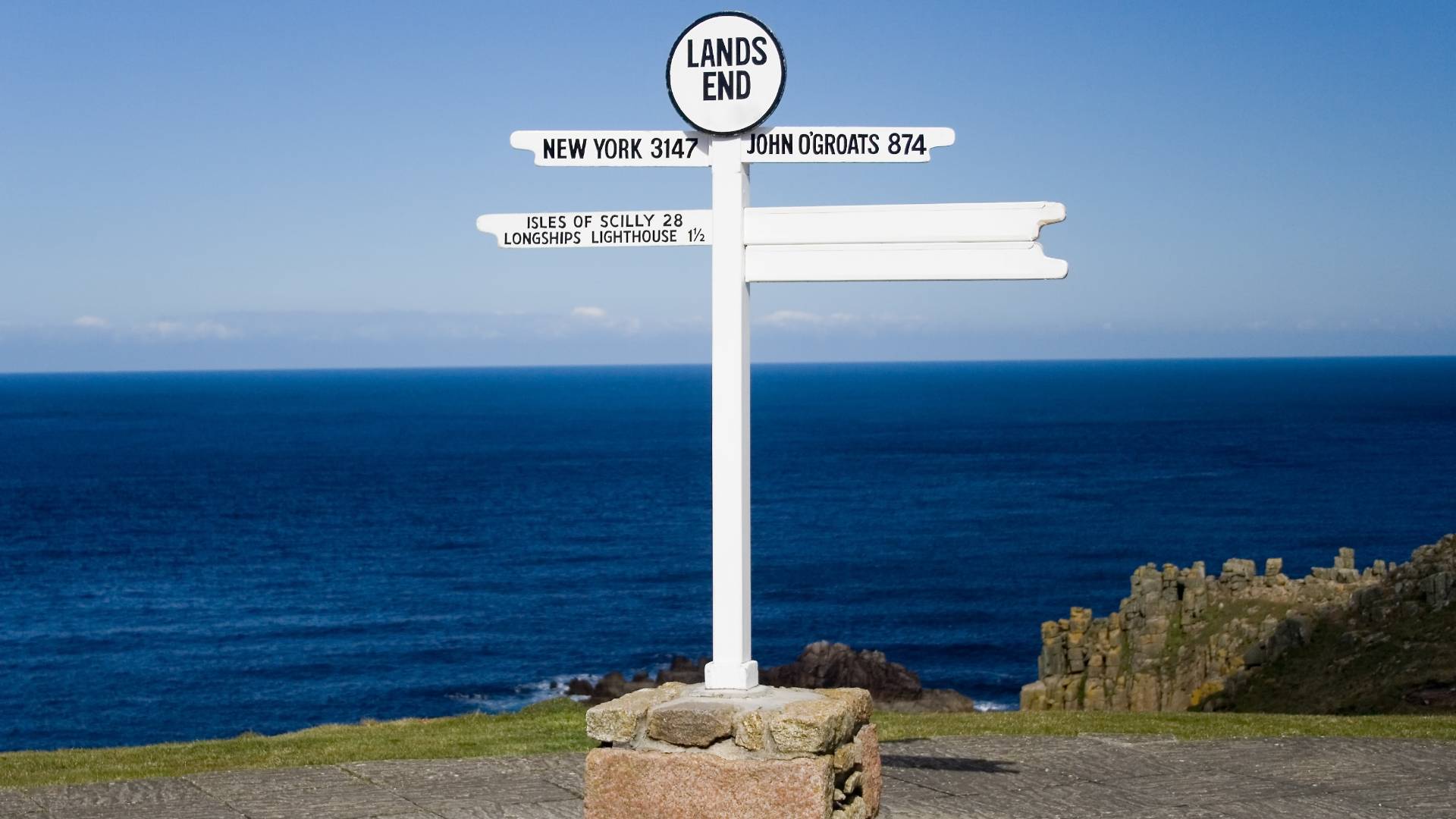
Land's End will see one of the biggest eclipses on the U.K. mainland. (Image credit: PKM1 via Getty Images)

Location: Sennen, Penzance, England

Max eclipse: 95.9% at 7:16 p.m. BST

Sun position: 13° above west-northwest horizon

Eclipse window: 6:19-8:10 p.m. BST

Sunset: 8:47 p.m. BST

Light pollution: 3.1 Bortle/SQM 21.85

Cloud risk: 71%

Land's End is one of the best places on mainland Britain to watch the eclipse because of its vast Atlantic horizon and minimal obstruction toward the west-northwest. The sun will appear heavily eclipsed as it descends toward the ocean before sunset. After dark, the remote far-western location and low levels of artificial light make this region an outstanding destination for viewing the Perseid meteor shower.

3. Boscastle
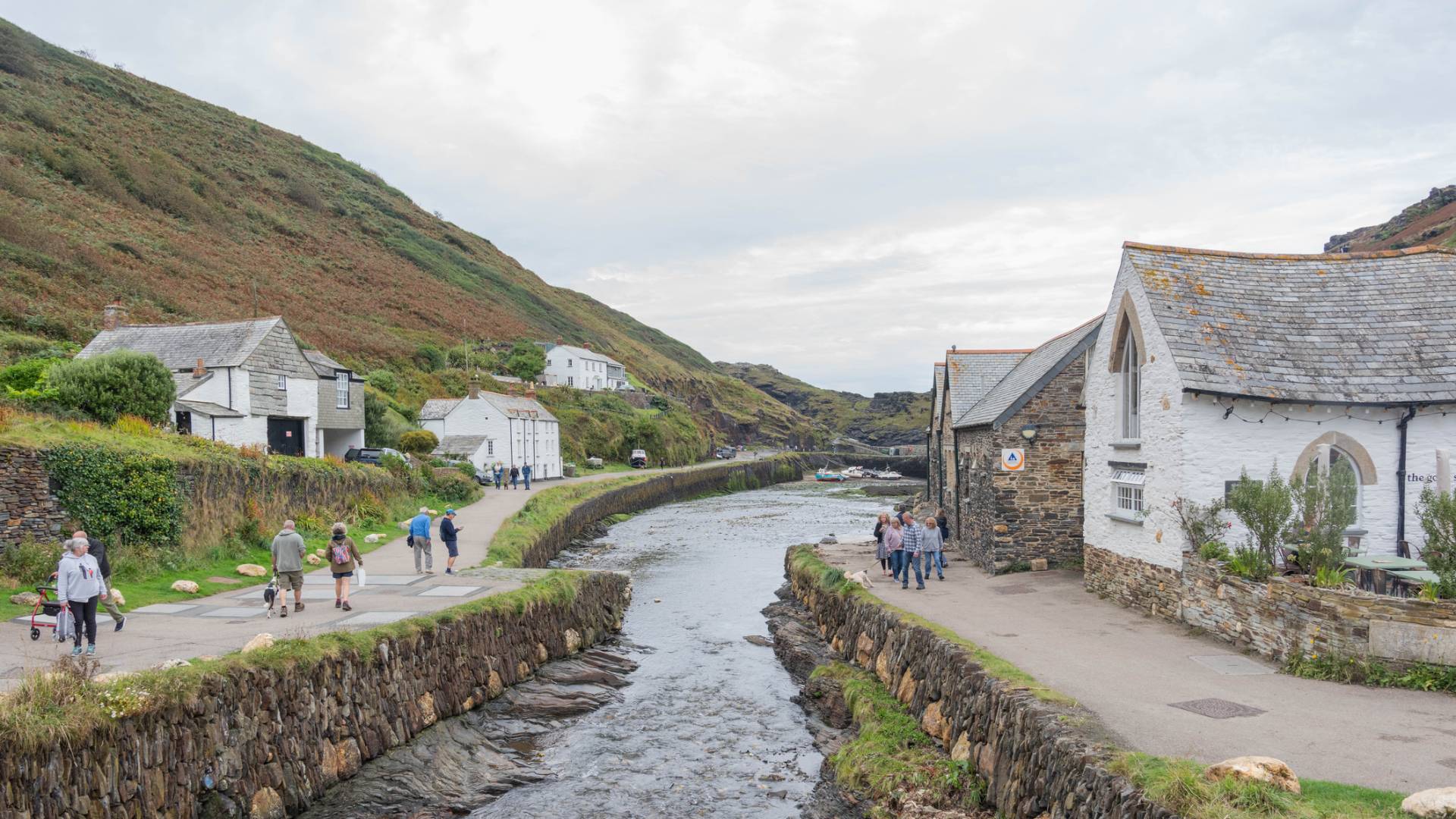
Boscastle's River Valency valley will frame the eclipsed sun. (Image credit: Graham Custance Photography via Getty Images)

Location: Cornwall, England

Max eclipse: 94.7% at 7:15 p.m. BST

Sun position: 13° above west-northwest horizon

Eclipse window: 6:18-8:09 p.m. BST

Sunset: 8:45 p.m. BST

Light pollution: 4.0 Bortle/SQM 21.71

Cloud risk: 76%

Boscastle's narrow harbor and dramatic valley may create a natural frame for the eclipsed sun as it sinks toward the Atlantic. The village's northwest-facing coastline offers clear views toward the low evening eclipse, while the surrounding Cornish countryside remains relatively dark after sunset. Once twilight fades, the cliffs and headlands nearby become excellent places to watch for bright Perseid meteors.

4. Exmoor Dark Sky Reserve
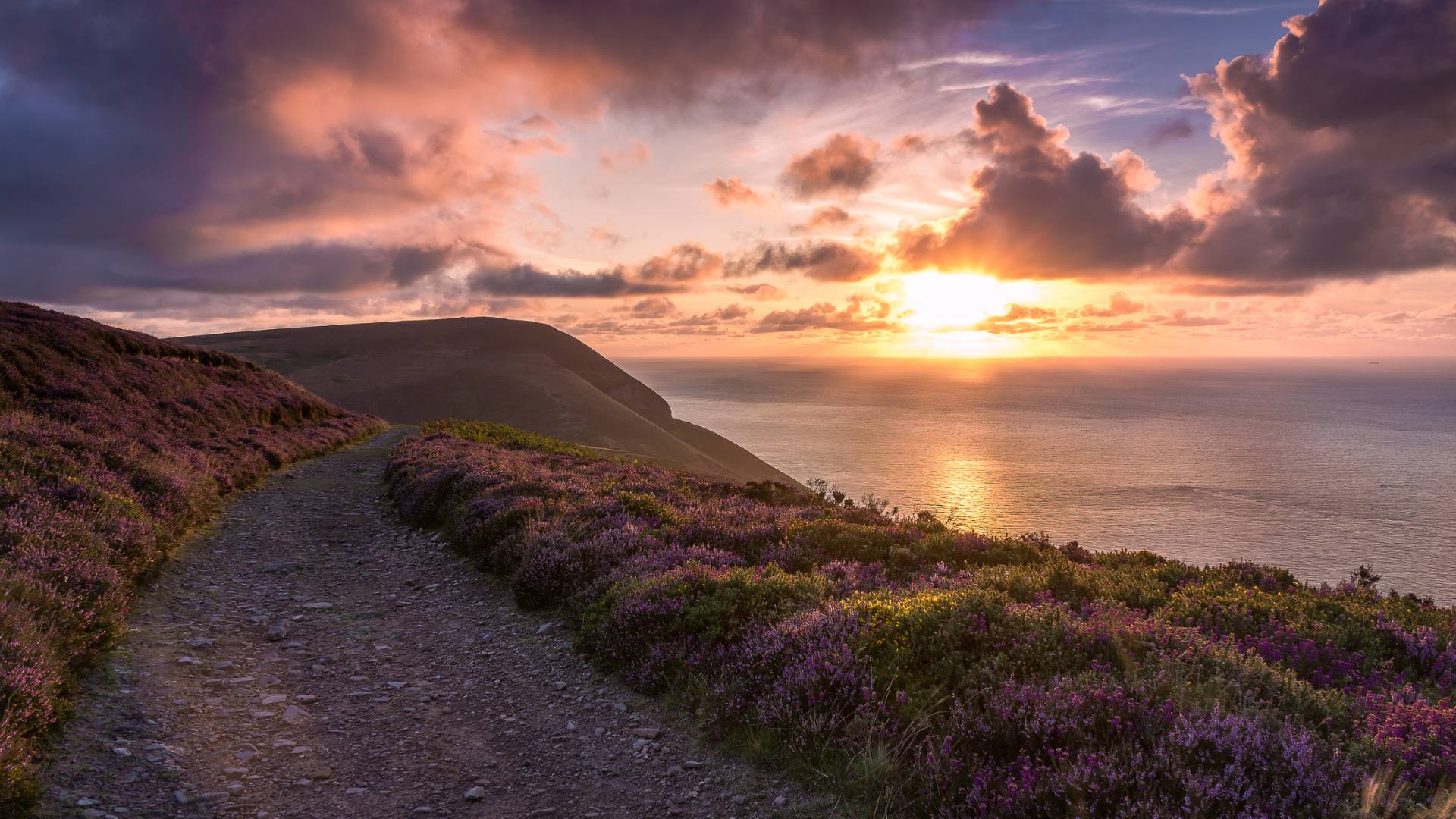
Exmoor Dark Sky Reserve is a great choice for an eclipse and the Perseids. (Image credit: Devon and Cornwall Photography via Getty Images)

Location: Exmoor National Park, Somerset and north Devon, England

Max eclipse: 93.7% at 7:14 p.m. BST

Sun position: 12° above west-northwest horizon

Eclipse window: 6:17-8:08 p.m. BST

Sunset: 8:42 p.m. BST

Light pollution: 3.9 Bortle/SQM 21.67

Cloud risk: 69%

Exmoor combines elevated moorland, dramatic coastline and protected dark skies, making it ideal for both the eclipse and the Perseids. Coastal viewpoints such as Valley of Rocks and Heddon's Mouth offer clear west-facing horizons for the low-eclipsed sun before sunset. Later that night, Exmoor's status as a Dark Sky Reserve makes it perfect for seeing bright Perseid meteors — and the Milky Way.

5. Rhossili Bay
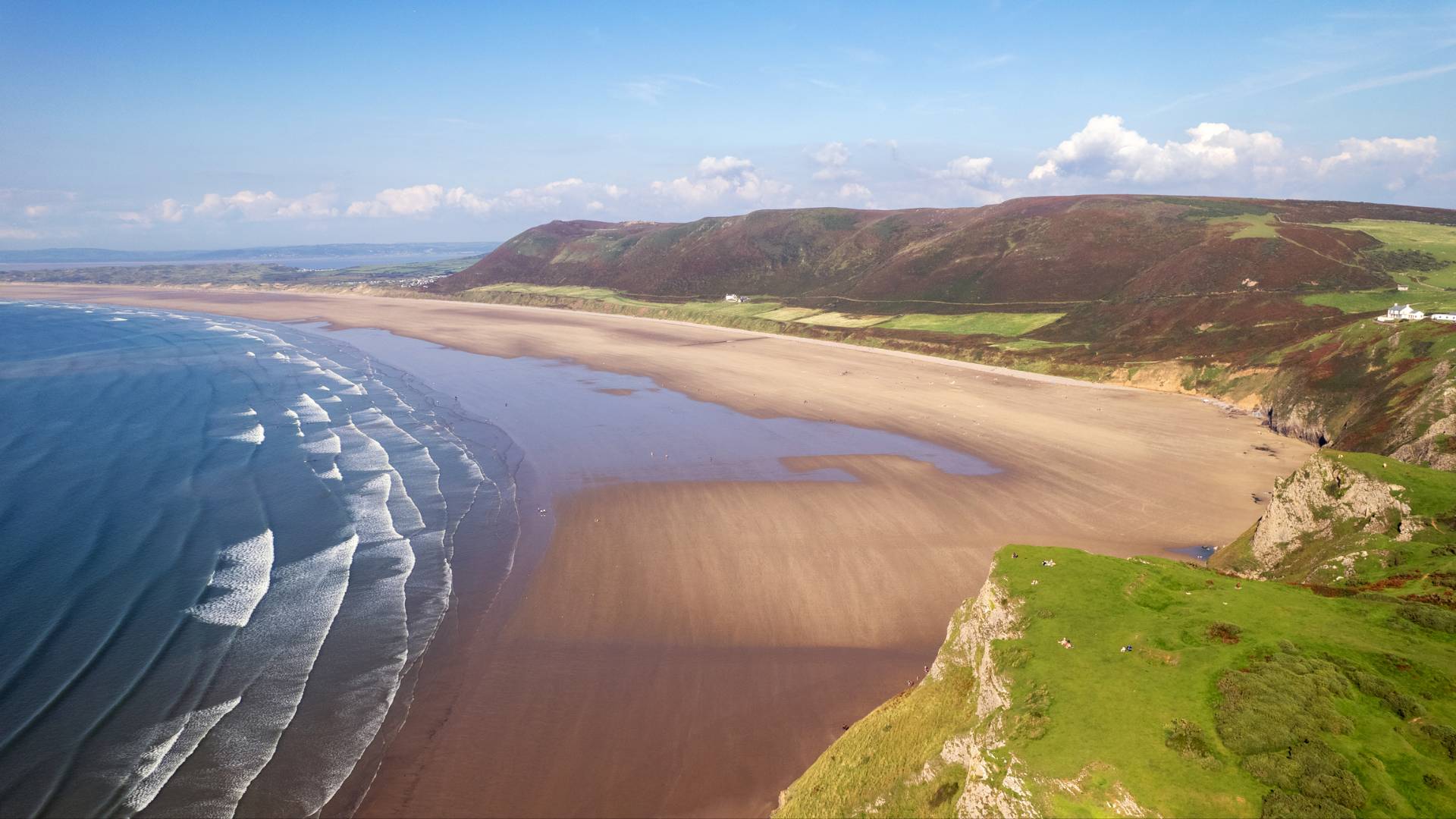
Rhossili Bay in the Gower has a west-facing beach and dark skies at night. (Image credit: Chris Griffiths via Getty Images)

Location: Gower Peninsula, Swansea, Wales

Max eclipse: 93.8% at 7:13 p.m. BST

Sun position: 13° above west-northwest horizon

Eclipse window: 6:16-8:07 p.m. BST

Sunset: 8:46 p.m. BST

Light pollution: 4.0 Bortle/SQM 21.63

Cloud risk: 73%

Rhossili Bay's enormous west-facing beach and elevated clifftops make it ideal for watching a low eclipse unfold above the sea. Located on the Gower Peninsula, the area is a Dark Sky Community that retains relatively dark skies despite its popularity during the day. As darkness falls later that evening, the open coastal landscape provides excellent visibility for Perseid meteors.

6. Strumble Head
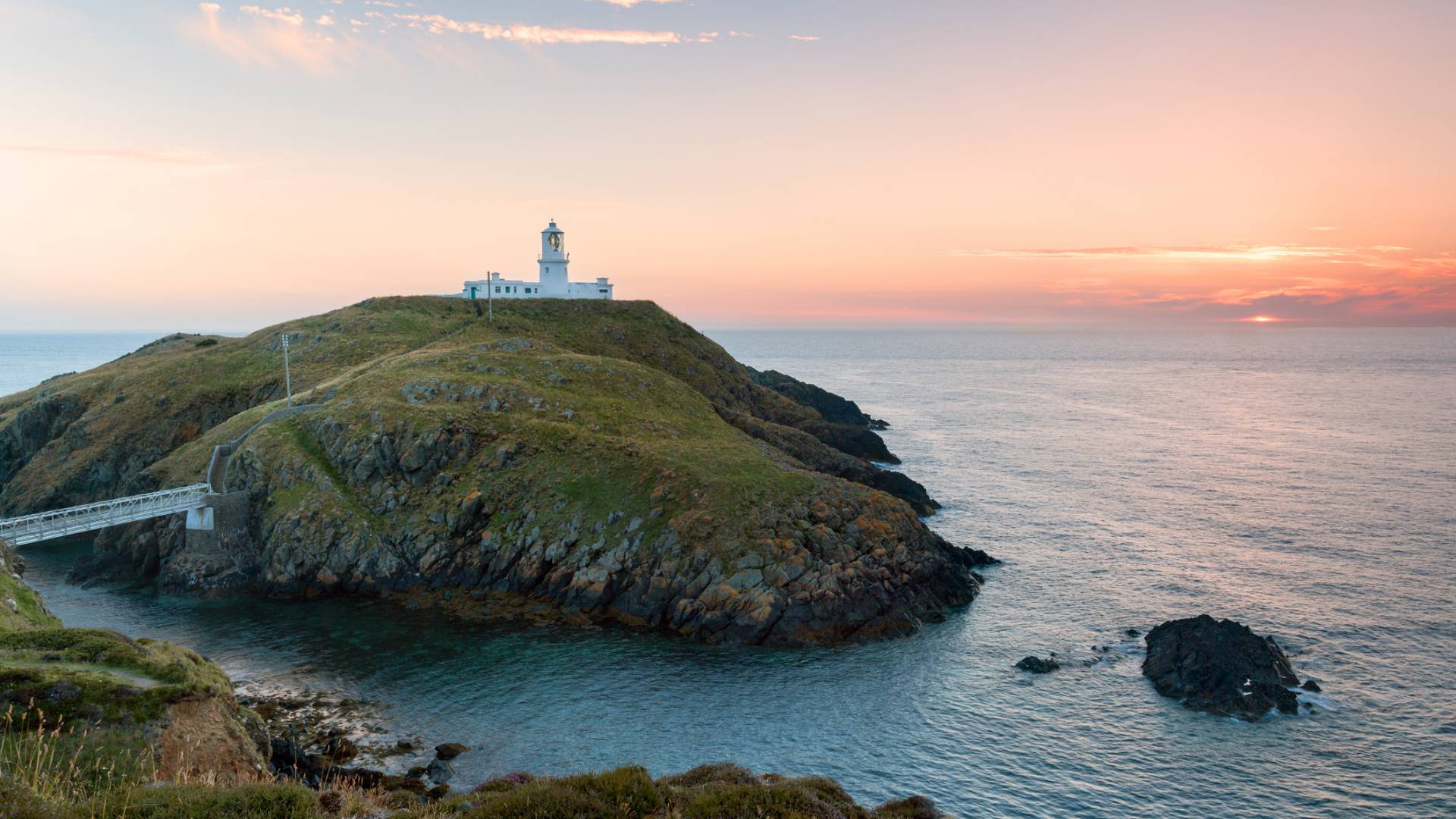
Strumble Head in west Wales has a clear western horizon and dark skies. (Image credit: Andrea Ricordi, Italy via Getty Images)

Location: Pencaer, Pembrokeshire, west Wales

Max eclipse: 94.0% at 7:13 p.m. BST

Sun position: 14° above west-northwest horizon

Eclipse window: 6:15-8:07 p.m. BST

Sunset: 8:51 p.m. BST

Light pollution: 3.3 Bortle/SQM 21.84

Cloud risk: 70%

Strumble Head offers one of the clearest west-facing horizons in Wales, with the eclipsed sun appearing above the Irish Sea beside its iconic lighthouse. The remote Pembrokeshire coastline experiences very little artificial light, helping preserve dark skies after sunset. Once the eclipse ends, this rugged headland becomes an excellent place to watch the Perseids, with broad ocean views and little interference from nearby towns.

7. Llŷn Peninsula
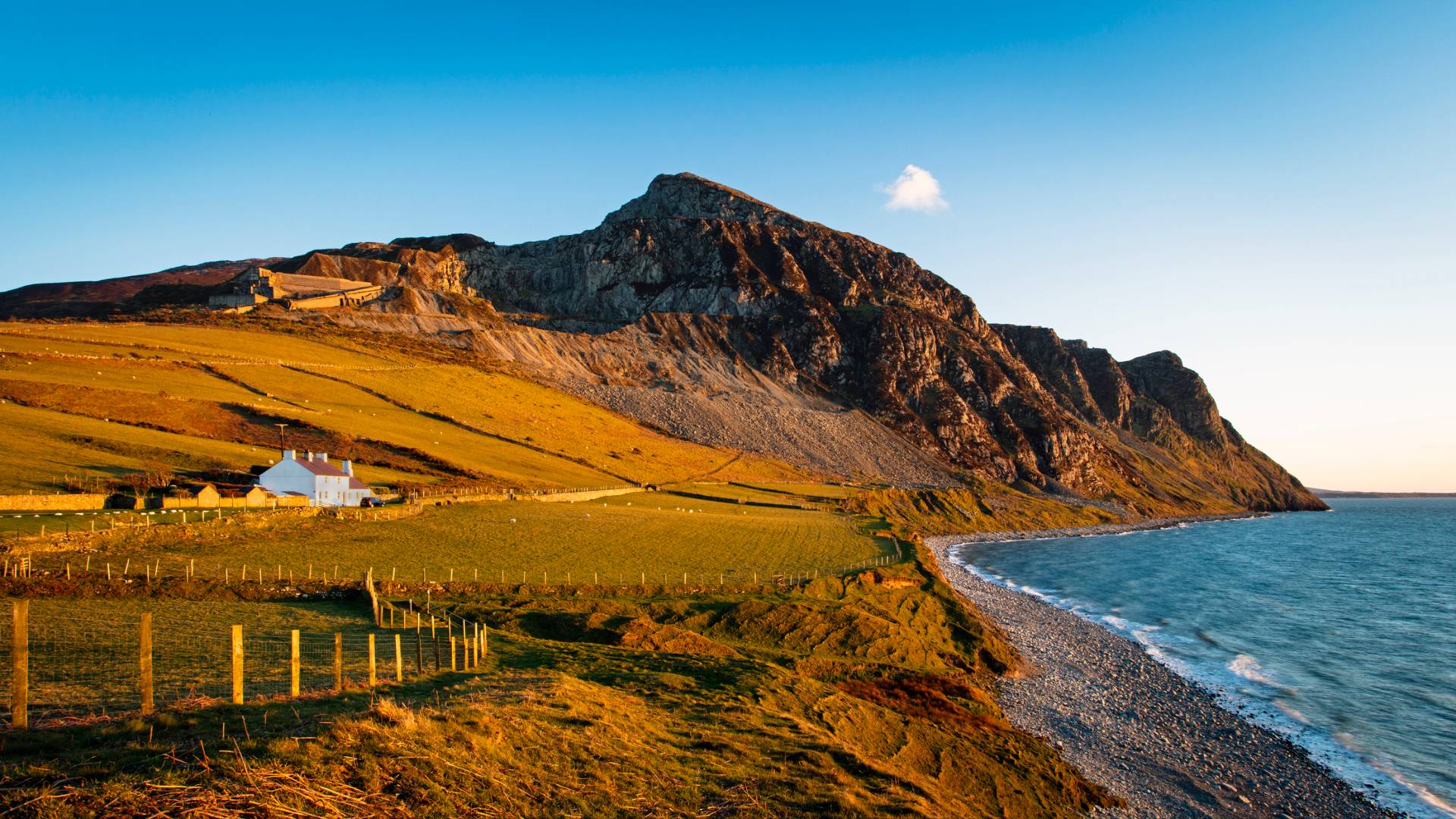
The remote Lleyn Peninsula is close to a Dark Sky Sanctuary. (Image credit: WLDavies via Getty Images)

Location: Llŷn Peninsula, Gwynedd, north Wales

Max eclipse: 93.3% at 7:11 p.m. BST

Sun position: 14° above west-northwest horizon

Eclipse window: 6:14-8:05 p.m. BST

Sunset: 8:52 p.m. BST

Light pollution: 2.9 Bortle/SQM 21.91

Cloud risk: 70%

The remote Llŷn Peninsula projects deep into the Irish Sea, offering expansive views toward the west-northwest horizon, where the eclipsed sun will appear before sunset. It is also one of the darkest regions in Wales, lying close to the protected skies of Ynys Enlli (Bardsey Island) Dark Sky Sanctuary. With minimal light pollution and wide rural vistas, the peninsula becomes a superb location for watching Perseid meteors later that same night.

8. Galloway Forest Dark Sky Park
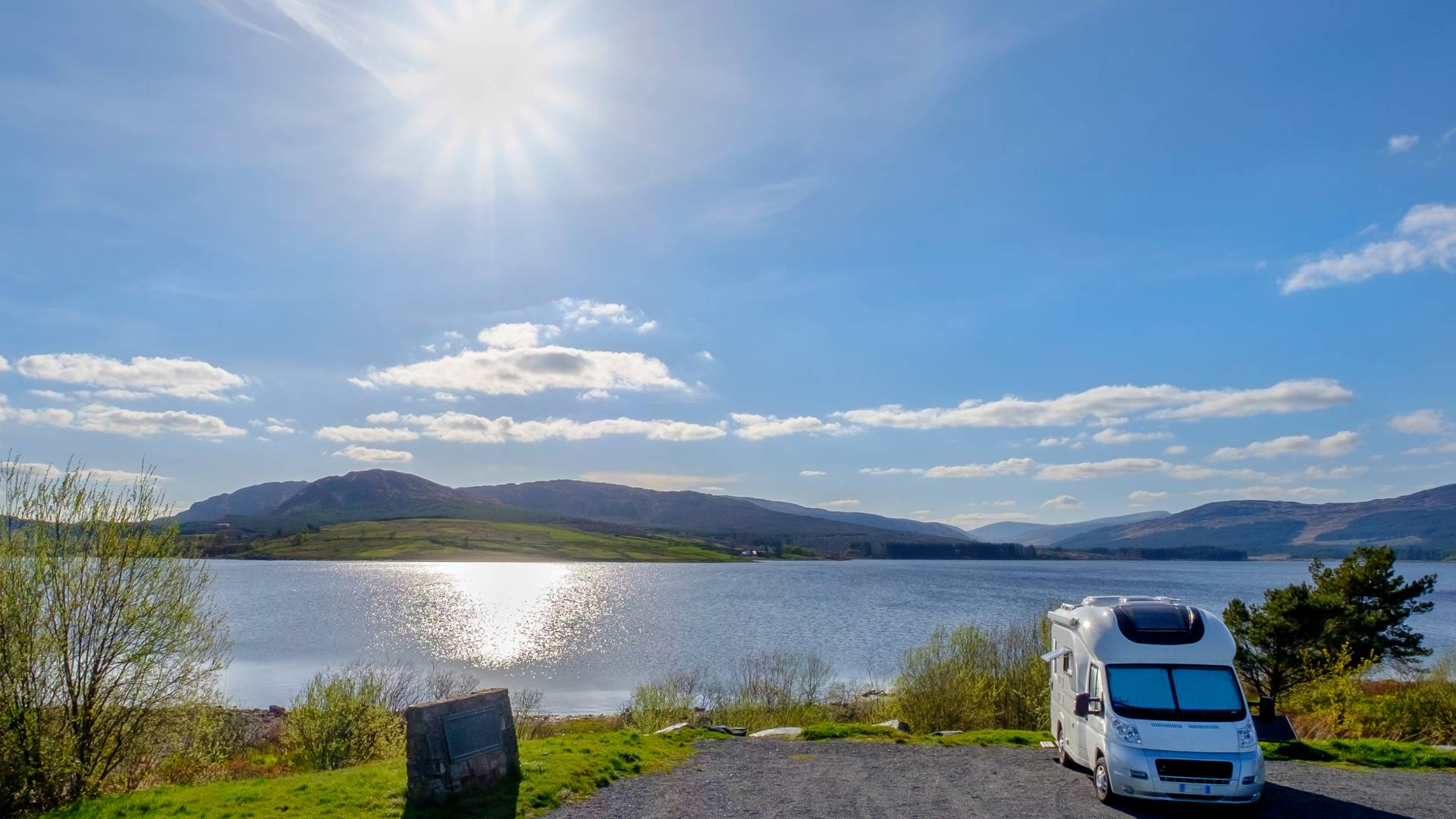
The shore of Clatteringshaws Loch in Galloway Forest Park. (Image credit: Flavio Vallenari via Getty Images)

Location: Galloway Forest Park, Dumfries and Galloway, Scotland

Max eclipse: 91.8% at 7:07 p.m. BST

Sun position: 14° above west-northwest horizon

Eclipse window: 6:10—8:01 p.m. BST

Sunset: 8:47 p.m. BST

Cloud risk: 85%

Galloway Forest Park was Britain's first Dark Sky Park and remains one of the country's premier stargazing destinations. Open western views around Clatteringshaws Loch, along with other viewpoints away from the forests, make it well-suited to the low evening eclipse. After twilight fades, exceptionally dark skies reveal the Milky Way in striking detail, creating near-perfect conditions for viewing the Perseid meteor shower in the early hours — if the sky is clear.

9. Northumberland Dark Sky Park
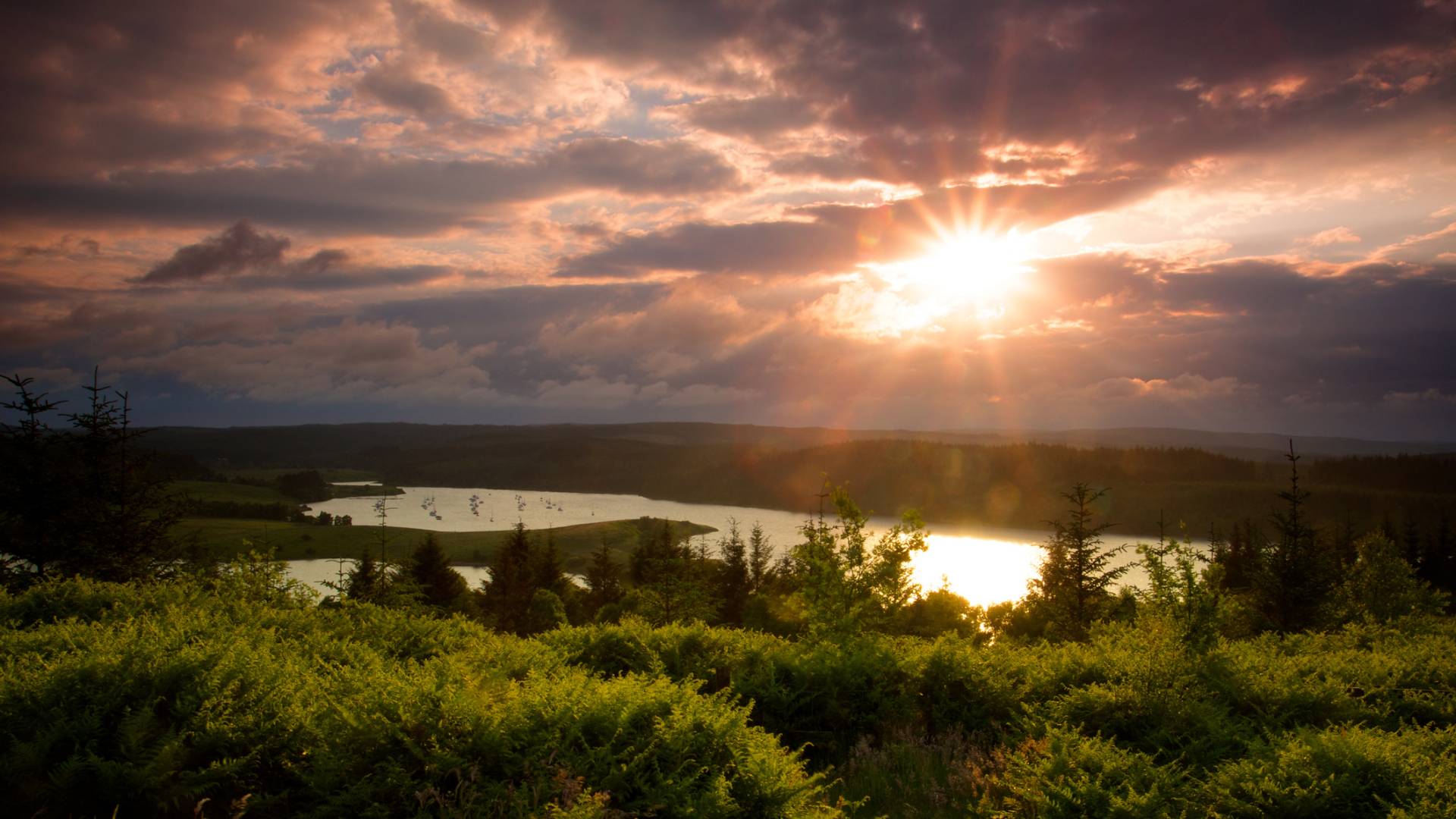
Sunset at Kielder Water in Northumberland. (Image credit: Paul Hayes via Getty Images)

Location: Northumberland National Park and Kielder Water & Forest Park, Northumberland, England

Max eclipse: 90.4% at 7:07 p.m. BST

Sun position: 13° above west-northwest horizon

Eclipse window: 6:10-8:00 p.m. BST

Sunset: 8:49 p.m. BST

Light pollution: 3.3 Bortle/SQM 21.82

Cloud risk: 90%

Northumberland's Dark Sky Park combines remote landscapes with some of England's darkest skies. Locations around Kielder Water and Northumberland National Park provide broad views toward the low west-northwest eclipse shortly before sunset. Later that night, the region becomes one of the finest places in Europe to watch the Perseids, with frequent views of the Milky Way and bright meteors overhead. Check for any events at Kielder Observatory.

10. Giant's Causeway
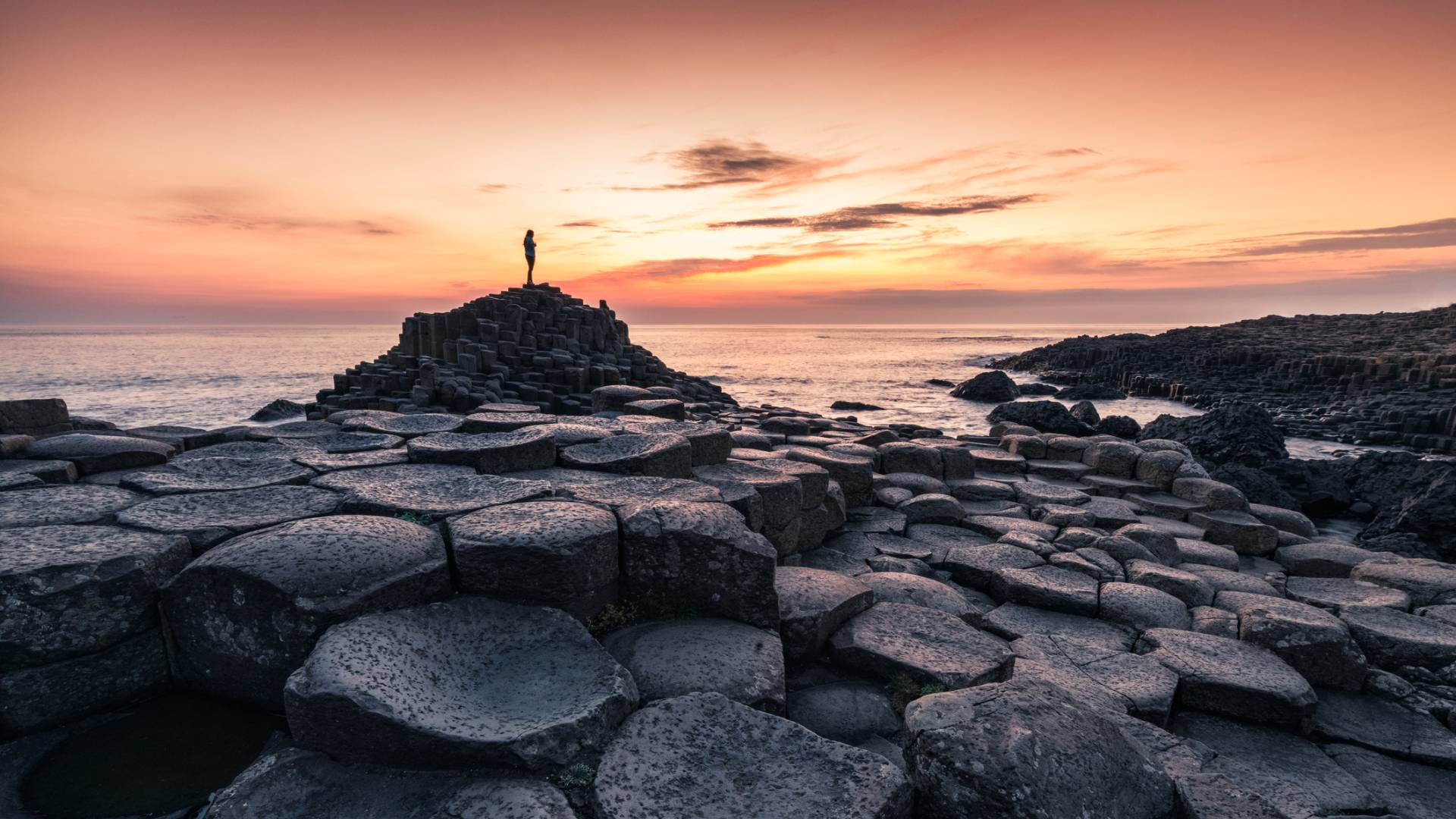
Giant's Causeway will have a great view of the eclipse. (Image credit: Francesco Vaninetti Photo via Getty Images)

Location: Bushmills, Northern Ireland

Max eclipse: 93.1% at 7:07 p.m. BST

Sun position: 16° above the west horizon

Eclipse window: 6:09-8:02 p.m. BST

Sunset: 9:31 p.m. BST

Light pollution: 4.2 Bortle/SQM 21.52

Cloud risk: 81%

The Giant's Causeway in Northern Ireland offers a spectacular foreground for the eclipse, with the sun appearing low above the Atlantic beyond the famous basalt columns. Although the skies here are not as dark as in some rural parks, the north Antrim coastline still experiences relatively modest light pollution. Nearby coastal viewpoints and beaches provide good conditions for watching Perseid meteors later that night beneath expansive northern skies.
1 month until the total solar eclipse 2026 — Here’s what you need to know

One month from today, millions will turn their eyes to the skies for one of the most anticipated skywatching events of the year: the total solar eclipse on Aug. 12, 2026.

The eclipse will sweep across parts of Greenland, Iceland and Spain, briefly turning day into night for those lucky enough to be within the narrow path of totality.

It's been a long time coming for European skywatchers, as the event marks Europe's first total solar eclipse since 1999.

Where can I see the total solar eclipse?

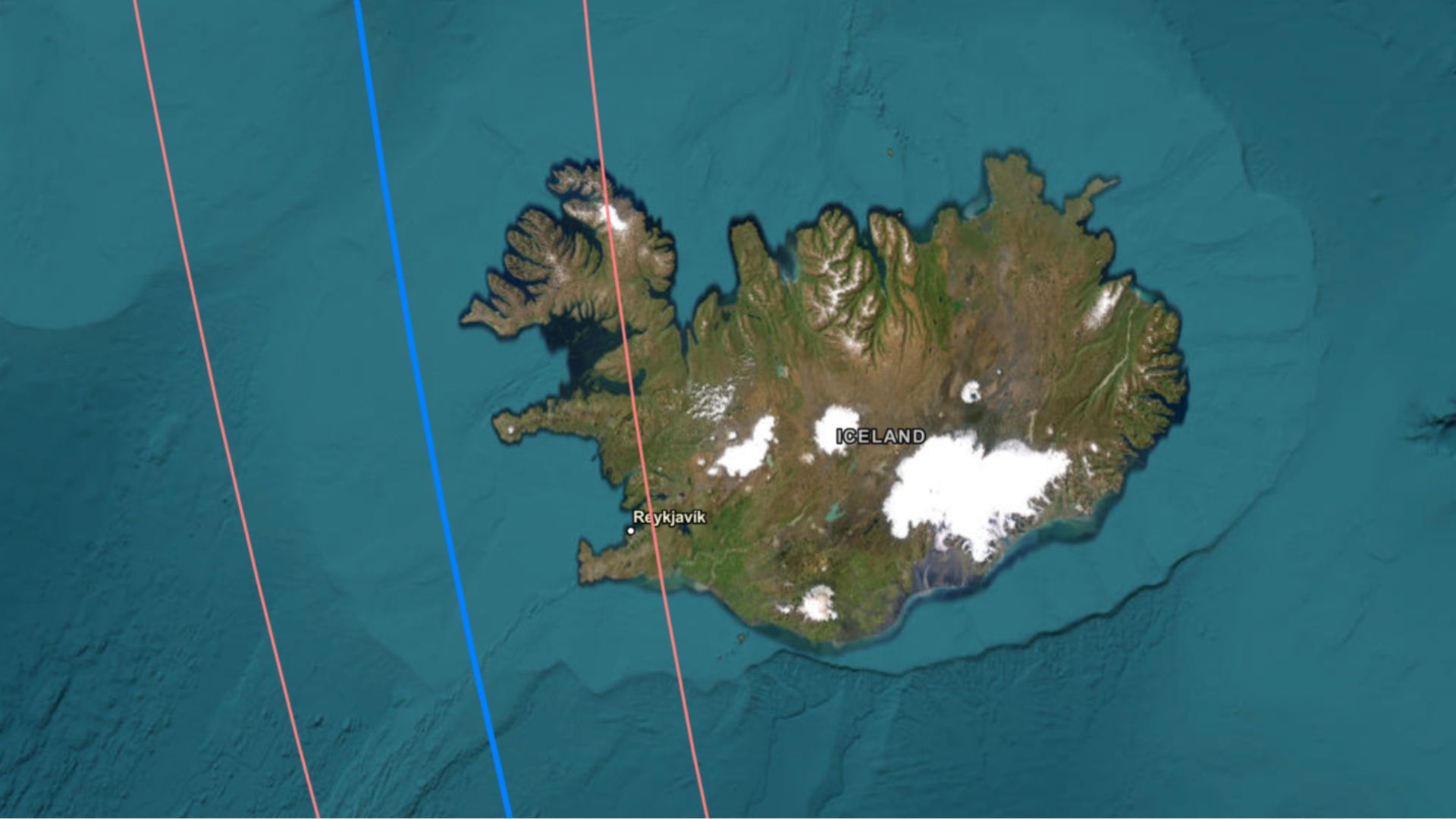
If you're hoping to experience totality, now is the time to finalize your plans. The path of totality crosses Greenland, Iceland and northern Spain, with maximum eclipse lasting up to 2 minutes and 18 seconds.

map showing the path of totality across the coast of iceland
Path of totality over Iceland.Created using MapHub.net. Source: Esri, Maxar, GeoEye, Earthstar Geographics, CNES/Airbus DS, USDA, USGS, AeroGRID, IGN, and the GIS User Community
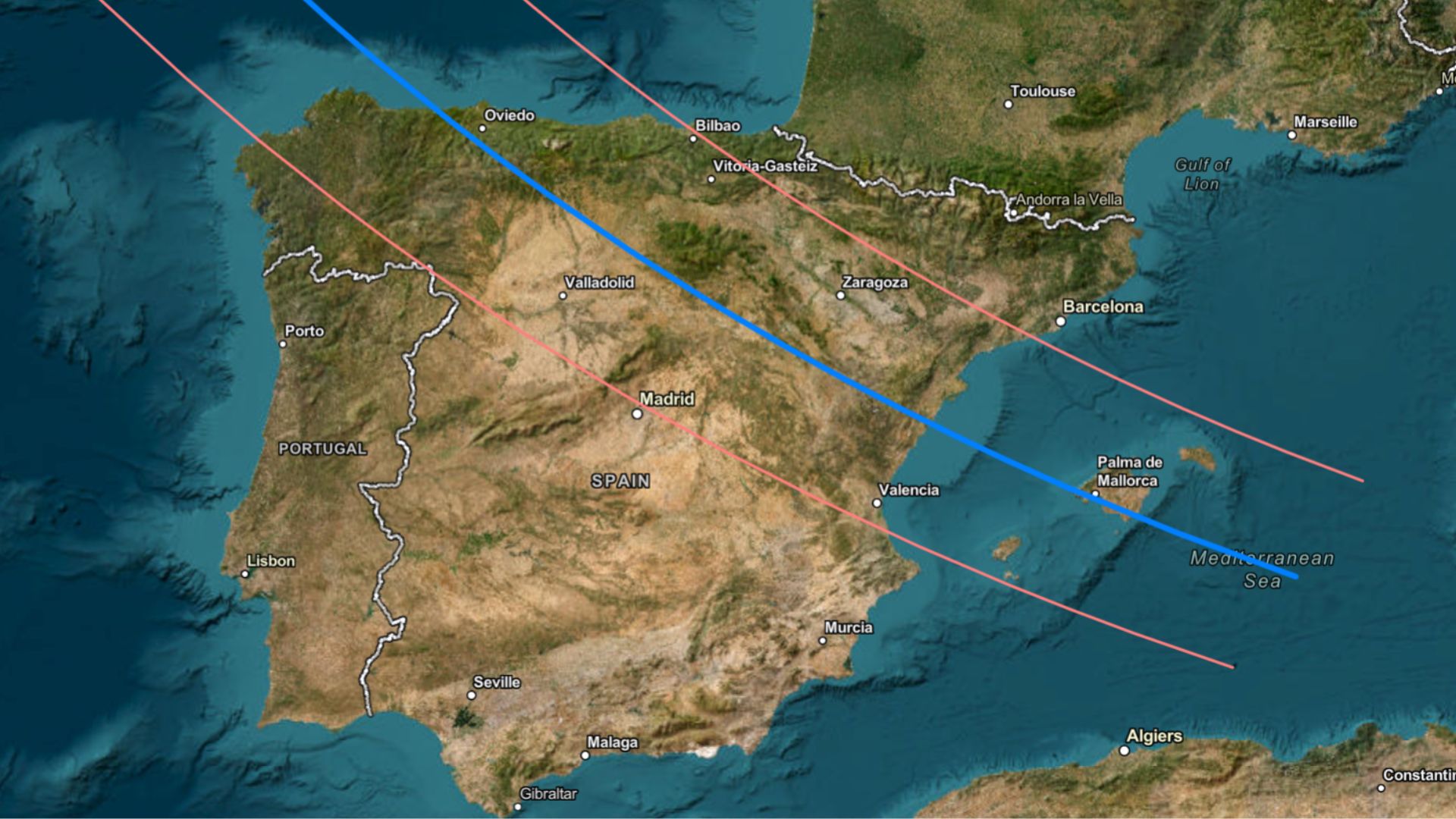
map showing the maps of totality across northern spain.
Path of totality over Spain.Created using MapHub.net. Source: Esri, Maxar, GeoEye, Earthstar Geographics, CNES/Airbus DS, USDA, USGS, AeroGRID, IGN, and the GIS User Community
map showing the entire path of totality - it shows where the total solar eclipse is visible from Greenland, iceland and spain.
Entire path of totality. From Greenland through Iceland and Spain. Created using MapHub.net. Source: Esri, Maxar, GeoEye, Earthstar Geographics, CNES/Airbus DS, USDA, USGS, AeroGRID, IGN, and the GIS User Community

Spain is expected to be one of the most popular destinations thanks to its favorable weather prospects, though it's not without a catch! Viewers will need to secure a clear view of the western horizon because the eclipsed sun will sit very low in the sky during totality.

Notable locations and timings of totality

Location

Totality duration

What time?

Sun height

Scoresby Sund, Greenland

1 minute, 46 seconds

4:35 p.m. CGST

24 degrees above west

Reykjavik, Iceland

1 minute, 1 second

5:48 p.m. GMT

25 degrees above west

Snæfellsjökull National Park, Iceland

2 minutes, 10 seconds

5:45 p.m. GMT

25 degrees above west

Gijón, Spain

1 minute, 46 seconds

8:26 p.m. CEST

10 degrees above west-northwest

A Coruña, Spain

1 minute, 15 seconds

8:27 p.m. CEST

12 degrees above west-northwest

Palencia, Spain

1 minute, 42 seconds

8:29 p.m. CEST

9 degrees above west-northwest

Burgos, Spain

1 minute, 44 seconds

8:28 p.m. CEST

8 degrees above west-northwest

Segovia, Spain

54 seconds

8:31 p.m. CEST

8 degrees above west-northwest

Sigüenza, Spain

1 minute, 38 seconds

8:30 p.m. CEST

7 degrees above west-northwest

Mallorca, Balearic Islands, Spain

1 minute, 36 seconds

8:31 p.m. CEST

2.7 degrees above west-northwest

Will I see the eclipse from where I live?

Not inside the path of totality? Don't worry. A spectacular partial solar eclipse will be visible across much of Europe, with more than 90% of the sun covered from locations including London, Paris and Dublin.

Location

% of sun's disk covered

New York City

9%

St. John's, Newfoundland, Canada

53%

Nuuk, Greenland

79%

Oslo, Norway

83%

Berlin, Germany

84%

London, U.K.

91%

Paris, France

92%

Tangier, Morocco

92%

Dublin, Ireland

94%

Lisbon, Portugal

94%

Nice, France

95%

Madrid, Spain

99.96%

Barcelona, Spain

99.82%

If you're still deciding where to watch, we have several guides on the best viewing locations close to popular Spanish holiday destinations, the best Spanish beaches, and the best places to view the eclipse overall.

How we will be covering the eclipse

Over the coming weeks, Space.com will bring you everything you need to prepare for eclipse day. We'll publish viewing guides, safety advice and information on how to watch the eclipse online.

Closer to the event, we'll launch a dedicated live blog covering the latest eclipse news and insights from our reporters in the field.

Skywatching Editor Daisy Dobrijevic will join an eclipse expedition to Greenland with HX, while Skywatching Writer Anthony Wood will travel to northern Spain with the DEB initiative and citizen scientists to report firsthand from the path of totality.

2026 eclipse: 5 citizen science projects you can contribute to

There are several ways you can help scientists study this year’s eclipse
Sirbouman/Alamy
During the total solar eclipse on 12 August, scientists from around the world will have their eyes – and scientific instruments – on the sun. But even if you aren’t a scientist, you can help in their investigations, both during the eclipse and year-round. A total solar eclipse occurs when the sun and moon line up just right so that the moon blocks out the entire disc of the sun from the perspective of Earth. It is a huge cosmic coincidence that both the sun and the moon happen to be just the right size and at the right distance to give us such a spectacle, and a scientifically useful one at that. On 12 August, a total eclipse will be visible over parts of Europe and the Arctic and Atlantic oceans, with a partial eclipse covering much of Europe, Canada, north-west Africa and parts of the US. An eclipse like this one is visible from somewhere on Earth just once every 18 months approximately, so during each eclipse, scientists rush out to gather as much data as they can. Here are some ways that you can help out: 1. Record shadow bands from the path of totality: In the moments before and after a total solar eclipse, strange phenomena called shadow bands billow across the ground. These bands are caused by the combination of Earth’s atmosphere and the hidden disc of the sun – it is similar to the effect that causes more distant stars to twinkle. If you are in the path of totality, all you have to do to see them is set out a white sheet or piece of cardboard perpendicular to the direction of the sun. To help out with this citizen science project, which aims to quantify how shadow bands differ based on altitude and distance from the centre of totality, just set up a camera to film the sheet. 2. Photograph the sun with your smartphone: The sun is very nearly spherical, but it isn’t perfect. One of the best ways to measure its shape with precision is to have lots of pictures taken from lots of different locations – that’s what SunSketcher does. It’s a smartphone app that you can set up and leave running as you enjoy watching the eclipse, and it will take carefully timed pictures to capture a phenomenon called Baily’s Beads, or the diamond ring effect. When the very last of the sun is about to be covered by the moon, the lunar landscape lets through tiny points of light, which shine along its edge. The same happens when the other side of the moon is just about to let the sun shine past it again, and these points of light are Baily’s Beads. When lots of photos of the beads, all precisely geolocated, are combined with a map of the lunar topography, that can give us an extraordinarily precise measurement of how far the disc of the sun is from a perfect circle. 3. Measure the darkening of the sky during the eclipse: Even if you are only going to see a partial eclipse, you can still help with scientific research. The Gaia4Sustainability project requires a little bit more equipment and set-up time, but once you have it sorted, you can leave it running all year round and keep collecting useful data. It consists of a small device with a bunch of sensors on it to measure the brightness of the sky and other meteorological factors, and the overarching goal of the programme is to measure light pollution so we can better understand its effects. But during the eclipse, the same sensors can be used to measure atmospheric changes caused by the blocking of sunlight, and the more different spots the team has data from, the more they will be able to learn about atmospheric dynamics during eclipses.
4. Hunt for sun-grazing comets: As is the case for pretty much all astronomical events, a huge portion of the world won’t be able to see August’s total eclipse at all. Not to worry! There are still ways to get involved in solar science. In the Sungrazer project, you can download satellite pictures of the sun and look for moving objects on its outskirts. Some of the objects will be comets skimming past the sun, and once researchers know those comets are there, they can do more detailed research. A huge proportion of the known comets were discovered through Sungrazer. All it takes is a computer, an internet connection and some spare time. 5. Join a DEB observation team for next year: If you want to do something a bit more involved, the Dynamic Eclipse Broadcast (DEB) Initiative might be more up your street. It’s an scheme where teams receive training and some relatively basic equipment to observe eclipses across the path of totality, building up a huge repository of data that can then be used to study the evolution of the corona, the outermost layer of the sun’s atmosphere. Because of the training required, it is too late to join or create a DEB team for this year, but if you are going to be able to spot the 2027 eclipse that will sweep over northern Africa, you can sign up ahead of time. Even during the eclipse, you shouldn’t look directly at the sun without a solar filter or eclipse glasses to protect your eyes.

10 best Spanish cities to see the total solar eclipse 2026

For the Aug. 12, 2026, total solar eclipse, Spain's great cities will be pulling in eclipse-chasers from across Europe, but not every famous destination is equally well placed. In Barcelona and Madrid, the eclipse is a near miss — dramatic on paper, yet ultimately disappointing. Madrid gets a 99.96% partial eclipse, which means no totality, so no corona, no twilight sky and no plunge in temperature. Cue a mass exodus from Spain's two biggest cities in search of totality.

To experience a total solar eclipse, you need to be inside the narrow path of totality stretching across northern Spain, from the northwest coast to the east coast. Timing and geography matter because this is a very low-sun eclipse, with totality arriving close to sunset. Coastal beaches, riverbanks, hilltop miradors and elevated parks with unobstructed west-northwest horizons will become prime real estate for one of Europe's most anticipated astronomical events. Here are 10 cities for the eclipse, with recommended viewpoints.

Essential resources for checking and re-checking intended destinations for totality include Xavier Jubier's Interactive Google Map, which has timings and built-in sight lines from Peak Finder, as well as The Eclipse App, Eclipse Horizon Checker and the Instituto Geográfico Nacional. However, nothing beats being in place the night before to check for trees and other obstructions at the time of the eclipse. All times and cloud statistics come from Time and Date and are for totality only.

1. Valladolid

Large historic buildings are reflected in a big, still body of water in an urban plaza, all under a clear blue sky.

Clear skies are likely in Valladolid. (Image credit: Rodolfo Rodríguez Castro via Getty Images)

Location: Castilla y León, northwestern Spain

Time and duration of totality: 8:29 p.m. CEST; 1 minute, 29 seconds

Height of eclipsed sun above west-northwest: 8.7 degrees

Chance of clouds: 19% (since 2000)

Surrounded by flat land and with an excellent chance of clear skies, Valladolid is one of the top spots for the eclipse. There will be some clear sight lines from the east bank of the Pisuerga River, specifically its Playa de las Moreras river beach, though buildings will complicate things, so play it safe and head to the Parque Urbano de las Contiendas on the west side.

2. Palencia

Gothic-style stone church with ornate facade, large rose window, and arched entrance, set against a bright blue sky. Pink-flowered trees line the plaza in front of the historic building.

The cathedral in Palencia, Spain. (Image credit: Sergio Formoso via Getty Images)

Location: Castilla y León, northwestern Spain

Time and duration of totality: 8:29 p.m. CEST; 1 minute, 42 seconds

Height of eclipsed sun above west-northwest: 8.7 degrees

Chance of clouds: 23% (since 2000)

One of the destinations most likely to have clear skies, Palencia is surrounded by flat, open landscapes perfect for viewing a low-altitude eclipse. Key locations include the scenic Mirador de Palencia, overlooking the city from the southwest, and the elevated Cristo del Otero, overlooking the city from the north.

3. León

A panoramic view of a city with red-roofed buildings and the León Cathedral, a Gothic church with tall spires and ornate details, set against distant hills under a clear blue sky.

The cathedral of Santa Maria and the old town of León. (Image credit: Carlos Ciudad Photos via Getty Images)

Location: Castilla y León, northwestern Spain

Time and duration of totality: 8:28 p.m. CEST; 1 minute, 44 seconds

Height of eclipsed sun above west-northwest: 10 degrees

Chance of clouds: 26% (since 2000)

This historic city south of the Cantabrian Mountains is bound to be one of the hotspots for the eclipse. Considered one of the best spots to watch the sunset because of its panoramic views of the city, Mirador de las Lomas (specifically Mirador de Las Lomas Tres), overlooks León from the east and offers panoramic sunset views across the city.

4. Zaragoza

A cityscape at dusk featuring a brightly lit cathedral, stone bridge, and river reflecting golden lights, with buildings and distant mountains under a dramatic, darkening sky.

Zaragoza's Puente de Piedra bridge and Basilica of Nuestra Señora del Pilar. (Image credit: Schroptschop via Getty Images)

Location: Aragon, northern Spain

Time and duration of totality: 8:29 p.m. CEST; 1 minute, 23 seconds

Height of eclipsed sun above west-northwest: 6 degrees

Chance of clouds: 19% (since 2000)

On the Ebro River between Madrid and Barcelona, Zaragoza is best known for its spectacular Basilica of Nuestra Señora del Pilar (Basilica of Our Lady of the Pillar). It just so happens that, from the historic Puente de Piedra bridge, photographers may be able to capture the totally eclipsed sun just above the silhouette of its spires. Expect crowds here, and also on the San Lázaro riverfront behind. For a quieter spot, follow the Ebro River northwest away from the city center.

5. Burgos

A panoramic view of a historic city at sunrise. There is a large Gothic cathedral with tall spires in the foreground and a mix of red-roofed buildings and greenery, with mountains in the distance.

A view of Burgos Cathedral at sunrise. (Image credit: Sergio Formoso via Getty Images)

Location: Castilla y León, northwestern Spain

Time and duration of totality: 8:28 p.m. CEST; 1 minute, 44 seconds

Height of eclipsed sun above west-northwest: 8.3 degrees

Chance of clouds: 31% (since 2000)

Famed for its medieval architecture, this provincial capital will be busy for the eclipse, but pay close attention to sight lines. Many will be close to the historic Arco de Santa María, but it's poorly placed, so instead get yourself on the northwest bank of the elevated Parque del Castillo for a low panoramic view of the city — and the eclipse.

6. Logroño

A stone bridge with arches spans a calm river at dusk, reflecting city buildings, trees, and church spires illuminated by warm streetlights against a clear evening sky.

Logroño in La Rioja will see a short totality. (Image credit: F.J. Jimenez via Getty Images)

Location: La Rioja, northern Spain

Time and duration of totality: 8:28 p.m. CEST; 1 minute, 19 seconds

Height of eclipsed sun above west-northwest: 7.5 degrees

Chance of clouds: 38% (since 2000)

A stop on the pilgrimage route to Santiago de Compostela, Logroño — 92 miles (148 km) south of Bilbao — is famed for the twin towers of its Cathedral of Santa María de la Redonda. Its Parque de Ebro, on the banks of the River Ebro, is ideal for eclipse-viewing, with the Puente de Piedra bridge also offering a clear view.

7. A Coruña

A sandy beach with gentle waves, rocks near the shoreline, and tall city buildings in the background. A seagull is flying overhead under a clear blue sky as people stroll and relax along the beach.

Riazor and Orzan beaches in A Coruña. (Image credit: Elizabeth Fernandez via Getty Images)

Location: Galicia, northwestern Spain

Time and duration of totality: 8:27 p.m. CEST; 1 minute, 16 seconds

Height of eclipsed sun above west-northwest: 12.1 degrees

Chance of clouds: 53% (since 2000)

The first major city on mainland Europe to experience totality will be A Coruña in northwestern Spain, where its crescent-shaped Riazor and Orzan beaches will doubtless be crowded for the occasion. They're close to the city center, home to exquisite Galician seafood restaurants.

8. Gijón

On the right is a wide sandy beach under a clear blue sky dotted with scattered clouds. On the left is a wide concrete walkway lined with lampposts and some buildings in the distance.

Gijón's Playa de Poniente is perfect for the eclipse. (Image credit: saulgranda via Getty Images)

Location: Asturias, northern Spain

Time and duration of totality: 8:26 p.m. CEST; 1 minute, 44 seconds

Height of eclipsed sun above west-northwest: 10.3 degrees

Chance of clouds: 54% (since 2000)

There are lots of places to watch the eclipse from this large coastal city in northern Spain. The clifftop park on Santa Catalina hill is bound to be busy, but there's plenty of space on the beaches on either side — the crescent-shaped Playa de San Lorenzo on the east and artificial Playa de Poniente on the west.

9. Bilbao

Red funicular train with multiple carriages parked at a station platform, with metal railings and a partially visible cityscape in the background.

The Artxanda funicular railroad in Bilbao. (Image credit: We-Ge via Getty Images)

Location: Basque Country, northern Spain

Time and duration of totality: 8:27 p.m. CEST; 26 seconds

Height of eclipsed sun above west-northwest: 8.2 degrees

Chance of clouds: 57% (since 2000)

Bilbao, on the Bay of Biscay at the northern edge of the path, gets a short totality, but has a spectacular elevated spot to watch the eclipse close to the center. Artxanda Viewpoint is a three-minute journey via funicular railway and gives panoramic views of the city. It's a popular sunset spot in August, so it's bound to be busy.

10. Madrid (San Sebastián de los Reyes)

People gather around a fountain with a statue of a man riding a horse in a sunny plaza. There is a large red-and-white building with a clock tower in the background and a bright blue sky above.

Madrid will see only a 99.96% partial solar eclipse. (Image credit: fitopardo via Getty Images)

Location: San Sebastián de los Reyes, Madrid, central Spain

Time and duration of totality: 8:31 p.m. CEST; 24 seconds

Height of eclipsed sun above west-northwest: 7.3 degrees

Chance of clouds: 15% (since 2000)

Frustratingly for madrileñas, madrileños, and eclipse planners, Puerta del Sol (Gate of the Sun), at the heart of Madrid, gets a 99.96% partial solar eclipse. Only its northern suburbs see totality, including San Sebastián de los Reyes, 12 miles (20km) north. El Mirador de Pichón has a clear sight line to a short, dramatic totality. San Sebastián de los Reyes is one of 11 observation points curated by the Community of Madrid.