SpaceCamp at 40: A wish-fulfillment fantasy brought down to earth by NASA’s real-life disaster

When "SpaceCamp" landed in theaters in June 1986, it should have been the ultimate wish-fulfillment movie, as if "The Goonies" had cashed in their hard-earned pirate treasure in return for a spin in an actual Space Shuttle.

It boasted a bigger budget than "Top Gun", a cast of up-and-coming young stars — including a future Oscar-winner — and a score by Hollywood's most famous composer. Twentieth Century Fox had bet big on a blockbuster hit, but a real-life tragedy four months earlier ensured the film was doomed to be an also-ran at the box office.

The real-life Space Camp at the US Space & Rocket Center in Huntsville, Alabama, was a dream destination for any kid with an interest in science, math, and space exploration — the ultimate trip for tweens and teens with a passion for science and technology.

Screenshot from the 1986 space movie SpaceCamp.

(Image credit: 20th Century Fox)

The brainchild of original Space & Rocket Center director Edward O Buckbee and Apollo rocket engineer Wernher von Braun, the facility opened in 1982. It has since welcomed over a million wannabes through its doors, including Elon Musk, Chelsea Clinton, and several attendees who went on to become actual astronauts.

Patrick Bailey, who wrote the original "SpaceCamp" story, got the idea from his wife, who'd spotted a news story about the camp while working as a researcher on American variety show "That's Incredible!"

He developed the idea alongside Buckbee, and the duo successfully pitched the project to producer Leonard Goldberg, who'd had a major hit with "WarGames" a few years earlier. (It's easy to see why Goldberg saw the potential in SpaceCamp, seeing as WarGames was based on a similar scenario of ordinary kids being thrown into a dangerous and improbable situation.)

Screenshot from the 1986 space movie SpaceCamp.

(Image credit: 20th Century Fox)

NASA also approved the script, and — rather surprisingly — wasn’t put off by the fact that the whole plot revolved around a colossal screw-up on the launchpad.

The film focuses on a quintet of bickering camp attendees as they try out various training simulators, and learn — repeatedly and exhaustingly — the value of teamwork. It's all set to be a standard, barely postcard-worthy week away from home, until a totally implausible sequence of events sees them blasting off into orbit (with a single instructor to look after them) on the Space Shuttle Atlantis.

First, 12-year-old Max persuades management that he should be allowed into Big Kid camp, even though he's too young. Then he befriends a sentient, but worryingly glitchy, robot janitor named Jinx, who wants to make "Star Wars"-obsessed Max's dream of going into space a reality.

Screenshot from the 1986 space movie SpaceCamp.

(Image credit: 20th Century Fox)

Jinx's scheme gets a convenient helping hand when NASA — for the benefit of the plot — allows the kids to sit in an actual shuttle during an actual engine test. That questionable decision gives Jinx all the window he needs to initiate a "thermal curtain failure" in one of the solid rocket boosters, leaving mission control no choice but to blast the kids into space.

Once the initial excitement of weightlessness has worn off, the kids realize the true extent of their predicament. While instructor Andie is a qualified astronaut who'd been patiently waiting for her first mission, it turns out that the unprepared Shuttle wasn't rigged for long-range radio communications. And — shock horror! — there isn't enough oxygen to get them to their re-entry window for landing at Edwards Air Force Base.

Suddenly, these rookie kids are forced into roles real-life astronauts spend years training for, going on spacewalks and landing state-of-the-art spacecraft as if it's as straightforward as playing a video game.

Screenshot from the 1986 space movie SpaceCamp.

(Image credit: 20th Century Fox)

But as ridiculous as the premise is, it's kept grounded by an extremely likable ensemble, one of Hollywood's most impressive examples of pre-fame casting. While Lea Thompson (Kathryn) and Larry B Scott (Rudy) were familiar from "Back to the Future" and "Revenge of the Nerds", respectively, Tate Donovan (Kevin), Kelly Preston (Tish), and — perhaps, most notably — future Oscar-winner Joaquin Phoenix (then known as Leaf) were all playing their first major movie roles.

And even though they broadly correspond to the jock/brain/princess archetypes you'd find in a John Hughes movie, the movie makes an effort to defy expectations of the era. Tish, for example, is — despite her valley girl persona — super-smart and has an eidetic memory.

More experienced heads were provided by Kate Capshaw (fresh off "Indiana Jones and the Temple of Doom") as astronaut Andie Bergstrom, and Tom Skerritt ("Alien", "Top Gun") as her moonwalking husband, Zach. "Lost" fans should also look out for a young Terry O'Quinn (John Locke) in mission control.

Screenshot from the 1986 space movie SpaceCamp.

(Image credit: 20th Century Fox)

Both the cast and director Harry Winer have spoken of the camaraderie on set, which was probably a good thing given the unexpected length of the production.

"After the first day of filming, we were already 10 days behind schedule," Thompson recalled in a 2012 interview with AV Club. "And it kind of kept on that way. It was supposed to be a three-month shoot, and it ended up taking six. We had t-shirts printed up that said, '"SpaceCamp": It’s Not Just a Movie, It’s a Career'. Oh, actually, instead of 'SpaceCamp', it actually said 'SpaceCramp!'"

The biggest name in the production, however, went unseen, as the legendary John Williams (who's always had a soft spot for kids' films; see also "Home Alone" and "Harry Potter") composed the soundtrack. While he resisted the temptation to add in a few bars from a galaxy far, far away during "SpaceCamp"'s many nods to "Star Wars", the score is unmistakably one of his.

Screenshot from the 1986 space movie SpaceCamp.

(Image credit: 20th Century Fox)

"There's a reason why anyone who's a legend is a legend," Winer said in an interview with AL.com back in 2022.

"John Williams is the most gratifying and rewarding creative collaboration I've had in my entire career. He would analyze a story and consider when there was a need for silence. He understood your creative intentions and found a way in a very poetic medium of music to interpret and enhance your vision. It was literally remarkable."

"SpaceCamp" was all set for a prime summer release slot when disaster struck in January 1986. After the Space Shuttle Challenger exploded during take off, killing all seven crewmembers on board, a lighthearted movie about five kids accidentally heading into orbit suddenly seemed rather less appealing.

a white aircraft attached to a large orange rocket lifts off above a plume of fire and smoke

The space shuttle Challenger launched from Kennedy Space Center on Jan. 28, 1986 with a crew of seven astronauts aboard. An accident 73 seconds after liftoff claimed the lives of all seven and destroyed the vehicle. (Image credit: BOB PEARSON/AFP via Getty Images)

Many questioned whether it should have been released at all, but Fox decided to press ahead. Winer even wondered if the public might even find the film cathartic, "because after such a tragedy, people would need to cling to the hope the film represented. And needless to say, I was totally wrong," he said later. "They saw it as a source of jeopardy, of disappointment, of tragedy, rather than hope. No one went to see 'SpaceCamp', so then I felt like I had failed miserably."

Not helped by scathing reviews — "Would anyone like this movie?" asked legendary critic Roger Ebert. "Juvenile space nuts, maybe. But they'd be too sophisticated."

Forty years on, it remains a decent, if unspectacular, family movie, but "SpaceCamp" barely made back half of its production budget in theaters. It was the very definition of a Hollywood flop, but it still left its mark.

Screenshot from the 1986 space movie SpaceCamp.

(Image credit: 20th Century Fox)

Interest in the film reportedly doubled attendance at the real-life Space Camp, and there’s anecdotal evidence that the movie encouraged kids to pursue careers in science. In more recent years, there's even been talk of a remake, though its current status is unknown.

"I've had a lot of people come up to me and say that they became physicists or inventors, because of how much they loved [Space Camp] and how much it inspired them," said Thompson. "That was really sweet and something I never really expected."

"SpaceCamp" is currently unavailable to stream and download from any major service (though there is a disappointingly low-res version on YouTube). There is also a Blu-ray release, but it's hard to find and expensive.

‘Exodus: The Helium Sea’ author Peter F. Hamilton talks universe crafting and finishing the story in this second prequel novel for sci-fi RPG ‘Exodus’ (exclusive)

At some point next year, when planets and stars momentarily align, we’ll hopefully be getting what’s sure to be the most anticipated sci-fi RPG in recent memory — Wizards of the Coast and Archetype Entertainment's "Exodus", which is coming to PS5, Xbox Series X/S, and PC.

This far future "Mass Effect"-like saga follows the daring time-traveler Jun Aslan as he and his companions hop about the cosmos searching for ancient artifacts to ward off the destruction of their worlds. This threat comes from an evolved group of transhumans called Celestials, with the whole affair taking place within the Centauri Cluster, 16,000 light-years from an abandoned planet Earth.

As part of Archetype’s ambitious cross-media marketing plan, the dev team enlisted the help of celebrated British sci-fi author Peter Hamilton ("The Salvation Sequence") to fortify the game’s worldbuilding and also pen two companion prequel novels.

The first of these books, "Exodus: The Archimedes Engine," was released on Sept. 17, 2024. Now, the second half of this duology, "Exodus: The Helium Sea," was just published on June 16, 2026, and continues the tale of Finn and his human allies to see if they can outwit the Celestials and finally earn their fellow humans a place of independence and power in the Crown Dominion.

The epic conclusion of the Archimedes Engine duology by legendary author Peter F. Hamilton. Set in the universe of EXODUS, a new sci-fi action-adventure RPG coming soon from Archetype Entertainment.View Deal

"Because I helped build the 'Exodus' world, they sent me what I always call the skeleton, and I helped put a lot of flesh on it, like the assorted cultures, some of the technologies, and the starships," Hamilton tells Space.

"It was partially my universe to write in, so I knew the limits and constraints, which made it easier because I was part of the structure."

(Image credit: Archetype Entertainment)

"The Helium Sea" concludes the background saga started in "The Archimedes Engine" and is one story told over the course of two books.

"All the characters that were alive and survived at the end of 'The Archimedes Engine' just carry on into 'The Helium Sea,'” he adds. "You get to find out what’s been hinted at before and what the real motivations are for the rebels and who they are. It was all misdirection; some people we think are on the bad side are not, and you get to see a whole lot of new places and settings as well, and it really expands the universe."

"The last one was set over 40 years because we have a lot of time dilation elements when you travel at relativistic speed," explains Hamilton. "This book is set over ten years, and you have various characters going on different missions, and I had to bring them all together at the same time and same place. That was a lot of plotting."

Hamilton admits that his collaboration with the whole Archetype team on the colossal "Exodus" project has been an enriching affair.

A gameplay screenshot from the upcoming "Exodus" video game (Image credit: Archetype)

"The joy of it was, which I’ve never had before writing a book, is that I'd send them a description of a world or something, and I’d get my little spaceship back, and it would be this magnificent picture, and of course, being top-flight artists, they've added to my original concept. It was a real growth process, developing this world. We all got on really well, and we just gelled. They were very professional. You could see they had a job to do and they were doing it."

When pushed to choose a favorite destination amid both "Exodus" prequel books, Hamilton immediately picks a world called Kingsnest.

"It's a glass shell, a glass bauble, the size of Jupiter basically, which has been pumped full of atmosphere," he notes.

"The ships they have in it are made out of wood, sort of 18th-century sailing technology, because there are clouds in there and little globular lakes. So much life in there. It would take you more than a lifetime to sail across it and encounter who knows what in the deeps of it. I just love the idea of it. That you can literally have sailing ships in space."

"Exodus: The Helium Sea" is available now from Random House Worlds (Image credit: Random House Worlds)

Now enjoy this exclusive chapter excerpt from Peter F. Hamilton's "Exodus: The Helium Sea" (Random House Worlds)

The Jiyoratan family had furnished their tower with stylish opulence. No sign remained visible that the structure was aerolite; every wall was tiled. The aesthetic was clean, with geometric primary colors starting to warp together within soaring arches that highlighted the central atrium, where a lush hanging garden claimed the walls. Internal balconies were illuminated by faint blue lights in constellation displays, half-hidden among the foliage to create an illusion of the external edifice of some tropical villa. Spiral water features ran the full height, bringing a humidity to the scene that Neusch had practically forgotten.

His clothes activated, changing to a light layer of armor around his body and limbs, while the hood slipped over his head and curtained his face in a transparent shield. He’d never envisaged the bio-andy being involved in anything as crude as an actual fight, so he had no idea how much use the protective clothing was going to be against the Guillrameo team. Probably not much. Until now he’d only had a vague plan: get to the sisters and get them out. Quietly. The kind of mission his father would’ve executed superbly, where no one would even know he’d been there until hours after the event.

Well, that’s just taken a deep dive into a sea of shit.

The other Guillrameo operatives were efficiently eliminating the aireels he’d sent after them. Within thirty seconds they’d all been taken out. He didn’t know where the woman was—presumably making her way through the Dibyth tower to the first target. The others would be breaking through the walls any minute now.

The bio-andy picked up voices somewhere inside the atrium. He started running for one of the curving granite stairs that wound up between the atrium balconies. The sisters had their quarters two floors above, along with the rest of the family’s youngsters.

Three people came around the central trio of big fountains, stopped in surprise.

One of them who’d worked with Juliatra-Monoth gave him a startled look. “Halvin-Aneil?”

“Sound the alarm,” he shouted at her. “People have entered your home. They’re going to kill most of you and interrogate the surviving seniors.”

“Huh—”

One of her companions, a man, made a grab for the bio-andy. It pushed back hard, sending him spinning.

“Sorry! They’ll be armed. Get out of here.” Then he was around the fountains and heading for the base of the spiral staircase; people were walking down it. His lnc warned him an intruder alert had been issued within the tower. That’ll annoy the Guillrameo team.

“The Dibyth has been isolated from Husnak’s network,” the CI informed him. “No security forces know what’s going on.”

So, no help’s coming, then. Neusch barged past the couple on the stairs and released a flock of insect drones from his leg pouch. They zoomed up the inside of the atrium, heading for the balcony above, hunting the girls. Andys started to emerge from every doorway. Even without weapons, the slim silver figures would pose a problem.

But that suddenly didn’t matter. The tower network vanished. The andys lost all rigidity, fluttering to the ground like becalmed flags.

“Asteria’s arse.” Neusch drew the bio-andy’s guns—an enhanced-projectile mag carbine and a gamma laser. The bio-andy reached the top of the stairs, and Neusch cursed the way the verdant plants had been allowed to flourish, narrowing the balcony. Tactical display reported a scan locking onto the bio-andy. Neusch relinquished fire control to the bio-andy’s tactical routines. It raised both guns and assumed a crouched pose as it started to sprint along the narrow route.

A projectile hit the side of the balcony half a meter behind it. The bio-andy was flung off its feet, the light armor turning rigid. It landed, crashing into a big night-flowering jasmine bush, rolling with gymnastic precision, firing a burst of gamma rays at the origin of the attack on the floor of the atrium, then sprinted onward.

Neusch split his consciousness. One was with the bio-andy, observing and providing oversight guidance. The parallel Neusch was searching the home’s blueprints, combining with the CI to find an escape route for the sisters.

First realization, as another barrage of projectiles slammed into the balcony behind the bio-andy: this was going to require maximum firepower, because the Guillrameos would unleash nothing less. An X-ray laser slashed across the bio-andy. Its light armor managed to diffuse and deflect most of the energy so that it broiled the balcony’s surrounding vegetation. Leaves and twigs fried, bursting into swirls of ash and embers around him. Neusch was acutely aware of nerve-equivalent impulses reporting the beam penetrating the light armor, searing the bio-andy’s hip and thigh. Muscle damage parameters were incorporated into the body’s physiology routines; it changed its posture slightly to accommodate the now asymmetric strength of its leg muscles.

Three mouse-sized drop-drones flipped out of a leg pouch; they had a similar leg structure to the cutter-drone, but they were combat versions. The trio lunged over the balcony rail in full lemming mode. One released a chaff cascade—hell’s own monsoon manifesting as specks of light, sound, and EM pulses falling through the hanging garden. The other two went dark as they fell, unnoticed among the sensory overload. They hit the floor and did nothing.

A few seconds later, as the chaff attack faded, two of the Guillrameo operatives crept into the atrium, their protective cloaks lensing the light around them: event horizons made from fabric. Their movements created subtle motions in the air that the drop-drones identified.

The bio-andy had just reached the archway leading to the children’s bedrooms when the drop-drones detonated their proton-boosted explosive cores, eradicating the two intruders. A massive blastwave punched the bio-andy through the air, sending it crashing hard into a wall. This time, it took longer to get to its feet and totter forward. One hand slid along the wall for additional balance as it reached the door to the sisters’ bedroom. Which had been locked by the emergency intruder alert.

For fuck’s sake, I’m trying to save you!

Another cutter-drone let go of the bio-andy’s belt where it’d been clinging and hurried over to the door. Its proton incisor deployed, and it climbed up the edge of the door, slicing through the rim as it went.

Neusch sent six more drop-drones flipping away. They sped back down the corridor, taking up positions at three-meter intervals. Neusch saw a couple of the house’s fire-andys roll along the balcony, their extinguisher nozzles deployed over the railings, pumping clouds of viscous yellow retardant foam into the atrium. The part of his consciousness focusing on tactics directed two of the drop-drones into the blobs of foam that fizzed away on the balcony floor. He then dispatched a dozen more insect drones—not confident they’d be any use, but he needed some visuals on the remaining Guillrameo team even if they only lasted a second.

The cutter-drone finished its work. With a swift prayer to the Goddess that a kick would be enough, he raised the bio-andy’s good leg and booted the door. It flew open to a scene of fear and chaos. Five children in their nightclothes were clinging together in defiance, struggling not to scream and cry. He identified Kimiya and Marize, hugging their spawn brothers as they glared fearfully at him.

“It’s okay,” Neusch assured them, raising the bio-andy’s arms. Probably not the best gesture given it was still holding a gun in each hand. “I’m here to stop the attack.” Again, not helpful. His last three cutter-drones raced past the frightened spawn siblings to the wall.

The tactical display told him two weapon-drones were rising up the center of the atrium—hand-sized silver discs, moving fast. They took out his watching insect drones. The tactical display fell back on the drop-drones for information. The first of the weapon-drones came up level with the second floor. It darted forward.

Neusch detonated the two drop-drones on the balcony.

They must have triggered whatever explosives were in the weapon-drone, and the resulting explosion sent him reeling. The children screamed as they were slammed to the ground. The air in the bedroom instantly became a blizzard of trash.

Two drop-drones in the corridor outside survived. They righted themselves and scanned around. The tiles and artwork on the walls were smashed and smoldering, chunks still peeling away from the thankfully stubborn aerolite.

The bio-andy scrambled to its feet, its medical display showing several damaged areas, but it remained capable of locomotion. Neusch knew he only had seconds before the Guillrameo team hit him with something else. Kimiya was closest, sprawled across the floor weeping, debris swirling around her. He snatched her up and held her tight against his chest. She screamed in dread.

“I’m sorry, but it will be okay. You’ll see. I promise.”

She struggled. It was pointless, of course. Even if it’d been a real adult Imperial Celestial gripping her, she wouldn’t have been able to break free—and the bio-andy was considerably stronger.

The three cutter-drones finished slicing the bedroom’s window out of the wall. It fell soundlessly into the night beyond.

“No!” Kimiya wailed as the bio-andy moved toward the gaping hole. “No, no!” Her voice became a wordless shriek. Her spawn siblings cried out as she was carried past them.

“Follow me,” the bio-andy shouted at them. “It’s the only way you’ll live.”

He reached the window and jumped.

From Random House Worlds, "Exodus: The Helium Sea" is available in hardcover and paperback, as well as on Kindle and audiobook form.

The epic conclusion of the Archimedes Engine duology by legendary author Peter F. Hamilton. Set in the universe of EXODUS, a new sci-fi action-adventure RPG coming soon from Archetype Entertainment.View Deal

Turn your room into a galaxy: The best Prime Day deals on star projectors for aspiring astronomers

How many star projectors do you need? I still don't have an answer. It started with a blue, Northern-Lights style projector, then one capable of projecting actual stars, albeit not in the right color. Now I'm eyeing up these Prime Day star projector deals, finger over the 'Buy Now' button, and I'm inviting you to join me.

Not all star projectors are the same, mind you; some are there purely to create a relaxing display, aiding meditation or lulling a child to sleep. Meanwhile, others are more scientifically accurate, designed to educate rather than relax. It's a sad fact that, thanks to light pollution, the displays these projectors put out can be prettier and clearer than the ones you'll see in your own back garden.

Save $40 on this room-filling star projector we rank as the best star projector for star-themed parties. This is a disk-based projector so, in theory, its displays are limited, but the Govee Galaxy Light Star Projector 2 Pro mixes things up to be anything but predictable. View Deal

Save 13% on this super-portable but surprisingly powerful astronaut mini-projector. It's not quite at 'spaced-themed parties' level but I love that it's easy to pack away and can transform a small room with its gorgeous, if scientifically-inaccurate displays. We think it's the best budget star projector. View Deal

Save $20 on ths Pococo Galaxy star projector which actually puts out scientifically accurate images, projected from discs. Granted, that means it's less dynamic, but it's still an impressive and potentially educational display, and rechargeable to boot. What tempts me is that, compared to some companies, the additional disc packs you can buy are reasonably priced. View Deal

We awarded this 4½ stars in our Govee Star Light Projector review. It's not scientifically accurate but excels on virtually every other front. That includes its smart connectivity, which allows you to control it with your voice. It's not quite Star Trek, but it's getting there. View Deal

This UK-only deal will save you 23% off this stylish-looking projector. It's a small enough to perch on a bedside table, and impressively quiet with it. Despite its size, its light display can easily fill a small to mid-sized room. View Deal

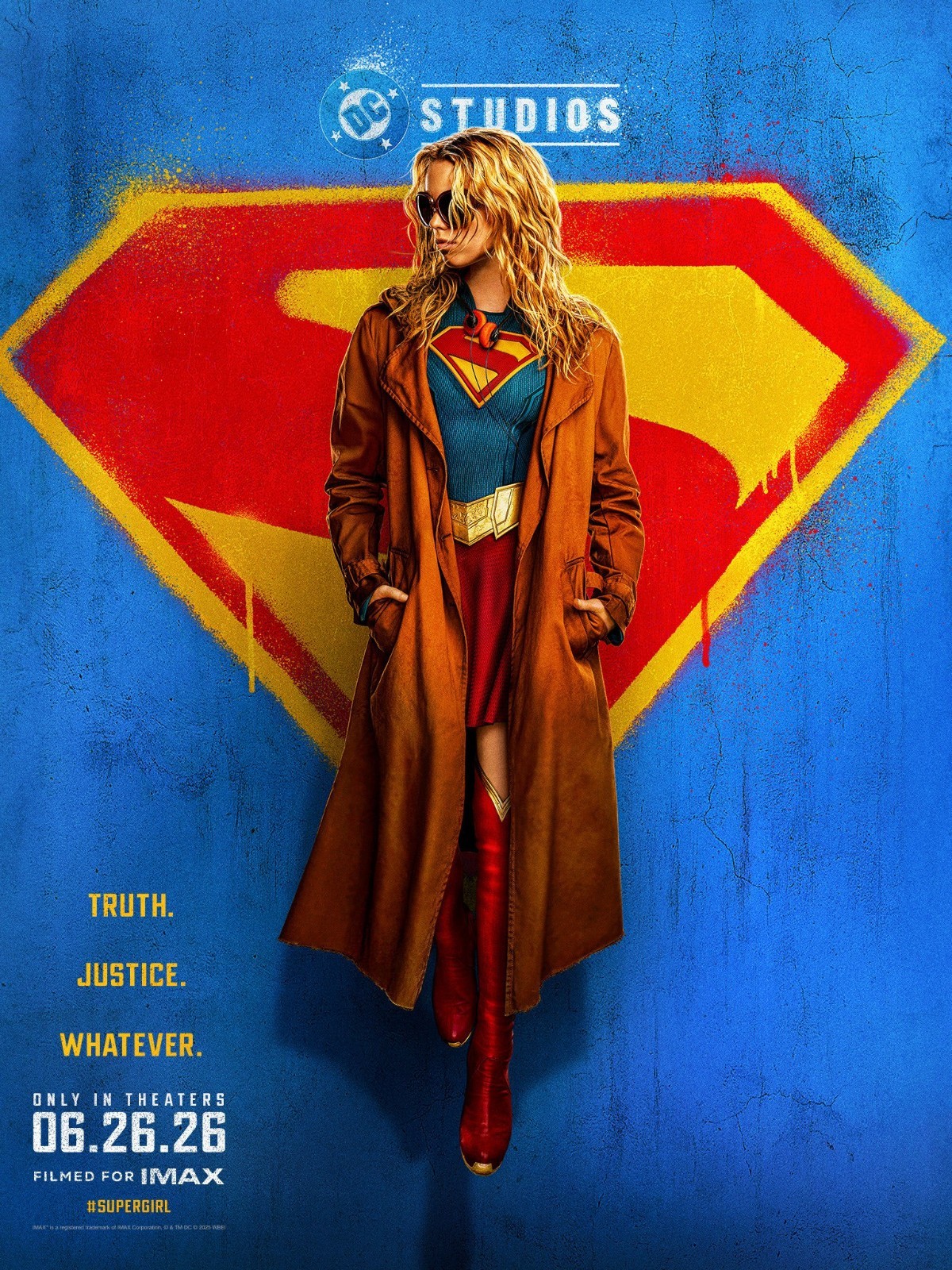
Supergirl’s brilliant poster is a reminder that they don’t make sci-fi movie posters like they used to

DC's new "Supergirl" may or may not turn out to be a classic of the comic-book genre. It may or may not be a smash hit in theaters. But whatever else happens when Kara Zor-El flies into the unpredictable headwinds of the worldwide box office, one thing the new movie has got 100% right is its promo poster.

Let's take a look at its components. The bright, primary-colored House of El logo in the background is so bold and unmistakable that there's no need to spell out that this is a Super movie. At the same time, having that famous shield spray-painted on a wall is elegant shorthand for "Looking for overgrown boy scout Clark Kent? Then move along".

Meanwhile, lead actor Milly Alcock's "don't care" pose — not to mention the overcoat, sunglasses, and retro headphones — screams attitude. And by the time you get to that "Truth. Justice. Whatever" tagline… well, you know pretty much everything you need to know about our latest trip to James Gunn's new-look DC Universe. The only thing it's missing is super-pooch Krypto.

(Image credit: Warner Bros)

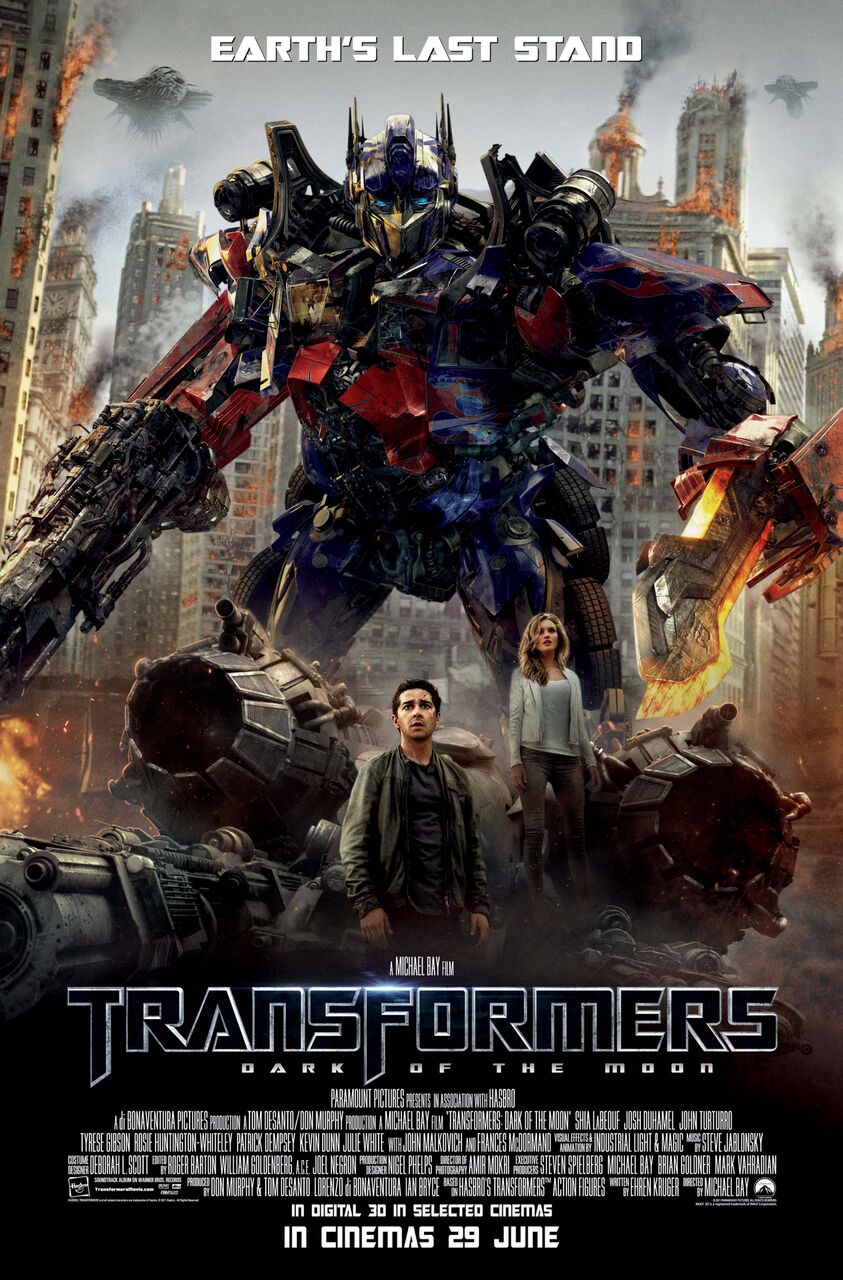
This "Supergirl" promo stands out in multiplex foyers as every good poster should, yet feels like a rarity in modern Hollywood. Time and time again, one-sheet designs revert to a tried, tested, and tedious formula of Photoshopped (other design software is available) montage of famous faces from a movie. Many of them are presented in the same muddy monochrome — it's almost as if they've stepped out of a Zack Snyder movie — and you need a microscope to make out many of the details. Catching a theater-goer's eye seems a long way down anyone's list of priorities.

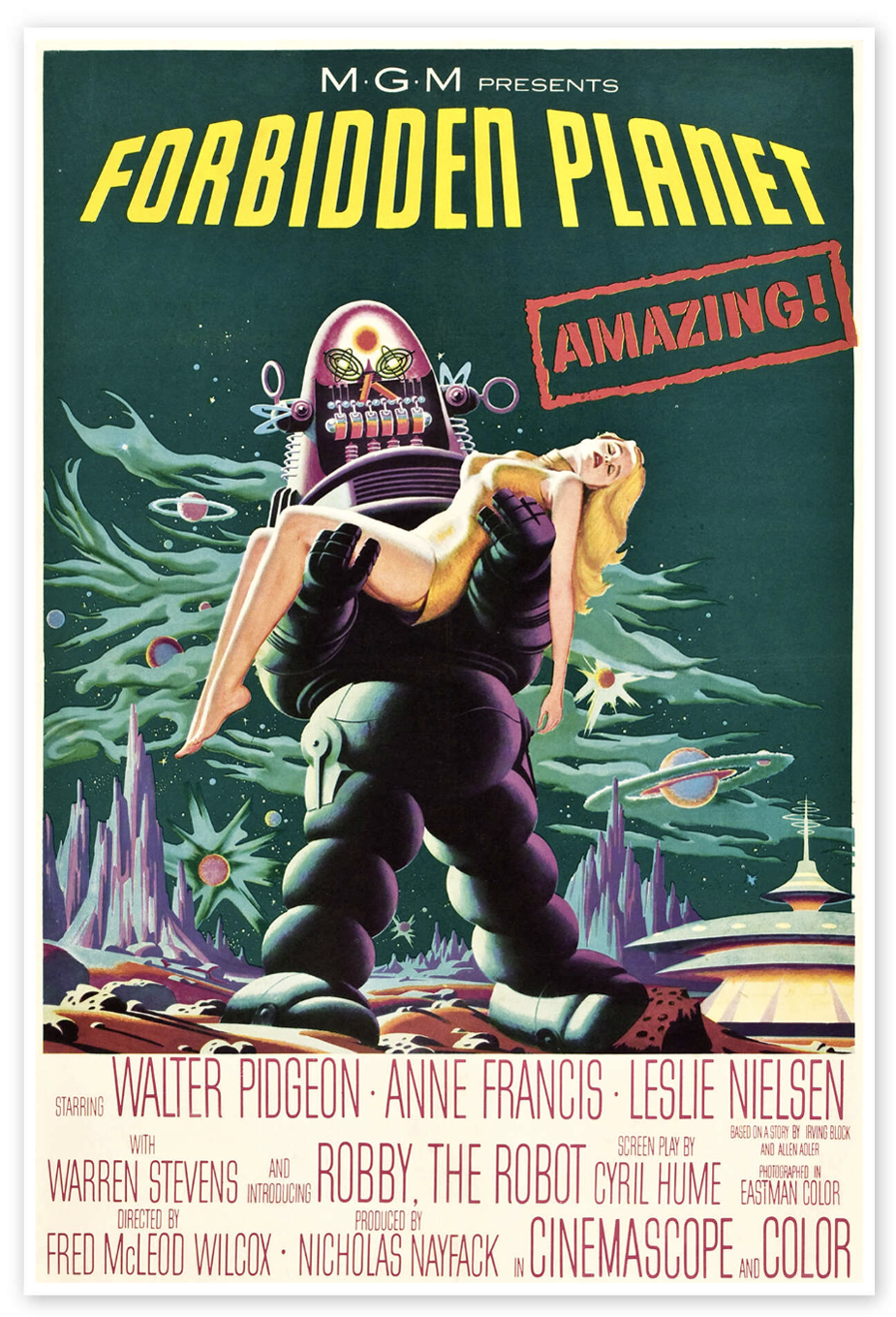
It hasn't always been this way, because the science fiction genre has been responsible for many of the best film posters ever made. In the 1950s, B-movies and even the occasional studio tentpole used their promos as unashamed generators of hype, commissioning artists to paint giant arachnids, giant monsters, and — in one notable 50-foot example — giant women. Embiggening the baddies was clearly one of the first things these artists were taught at poster school.

Movie poster for Forbidden Planet
Metro-Goldwyn-Mayer
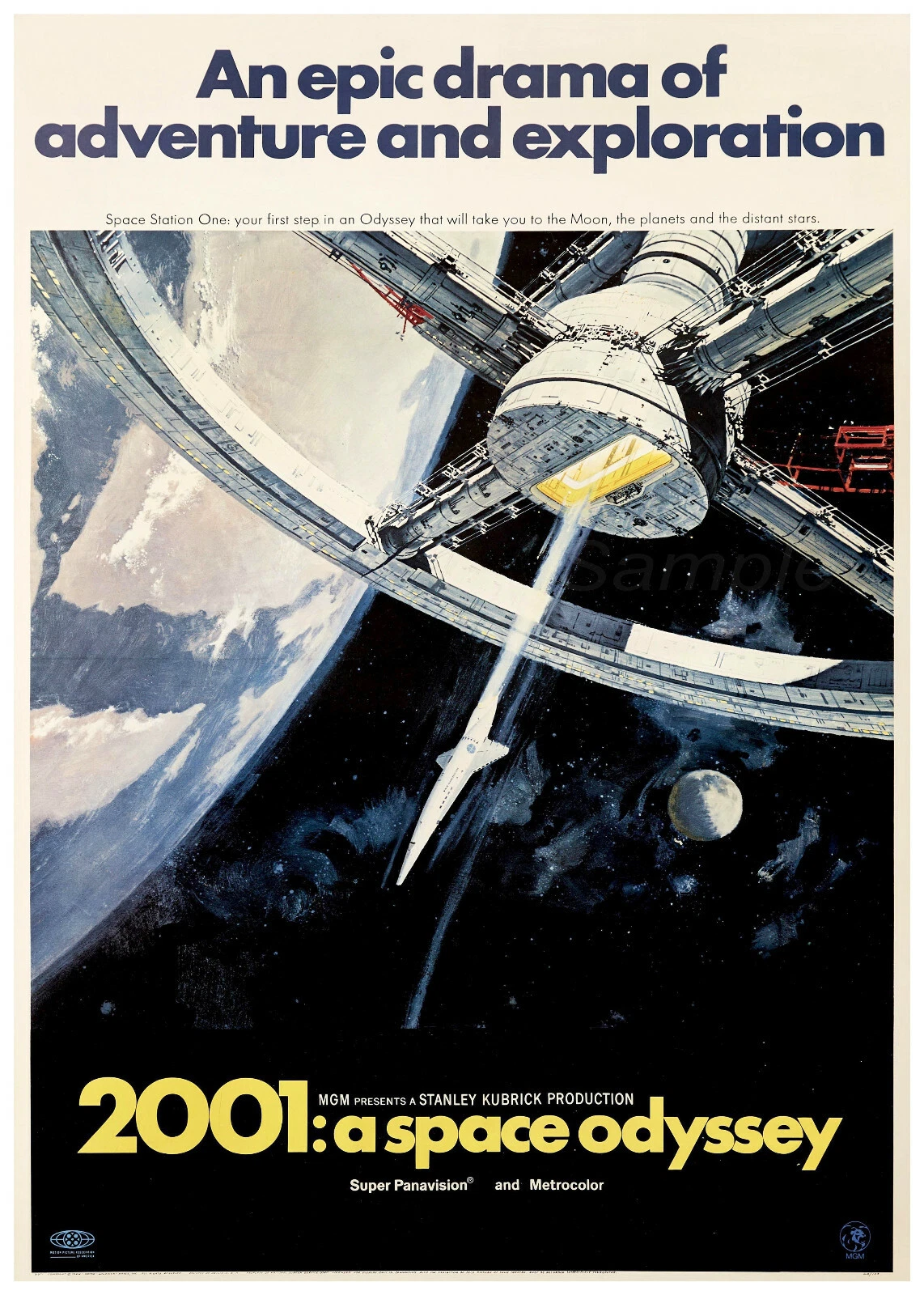
Movie poster for 2001 A Space Odyssey
Metro-Goldwyn-Mayer

They also refused to be constrained by minor inconveniences like plot details. Posters for both "The Day the Earth Stood Still" (1951) and "Forbidden Planet" (1956) are built around angry robots carrying scantily clad women, even though neither film features any such scenes.

A decade or so later, space-set sci-fi movies like "2001: A Space Odyssey" (1968) and "Silent Running" (1972) were opting for a rather more subdued approach. Indeed, their hardware-heavy one-sheets looked more like the covers of hard SF novels than movie posters. "2001"'s more famous conceptual "The Ultimate Trip" star child promos weren't created until Stanley Kubrick's epic was given a 1970 re-release, as movie execs tried to capitalize on its growing, though unintended, reputation as a psychedelic counter-culture classic.

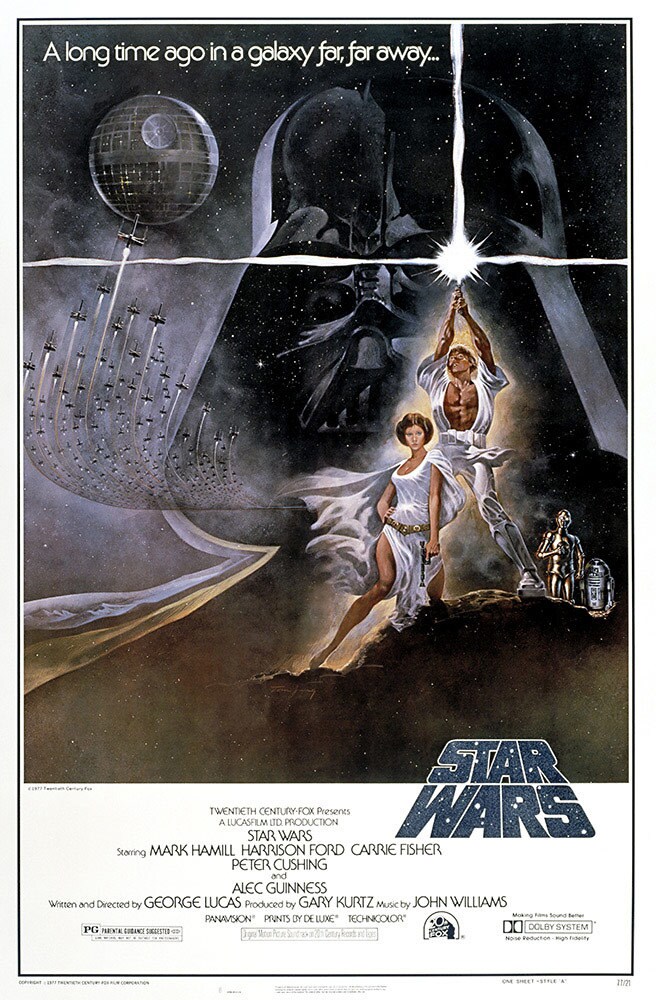
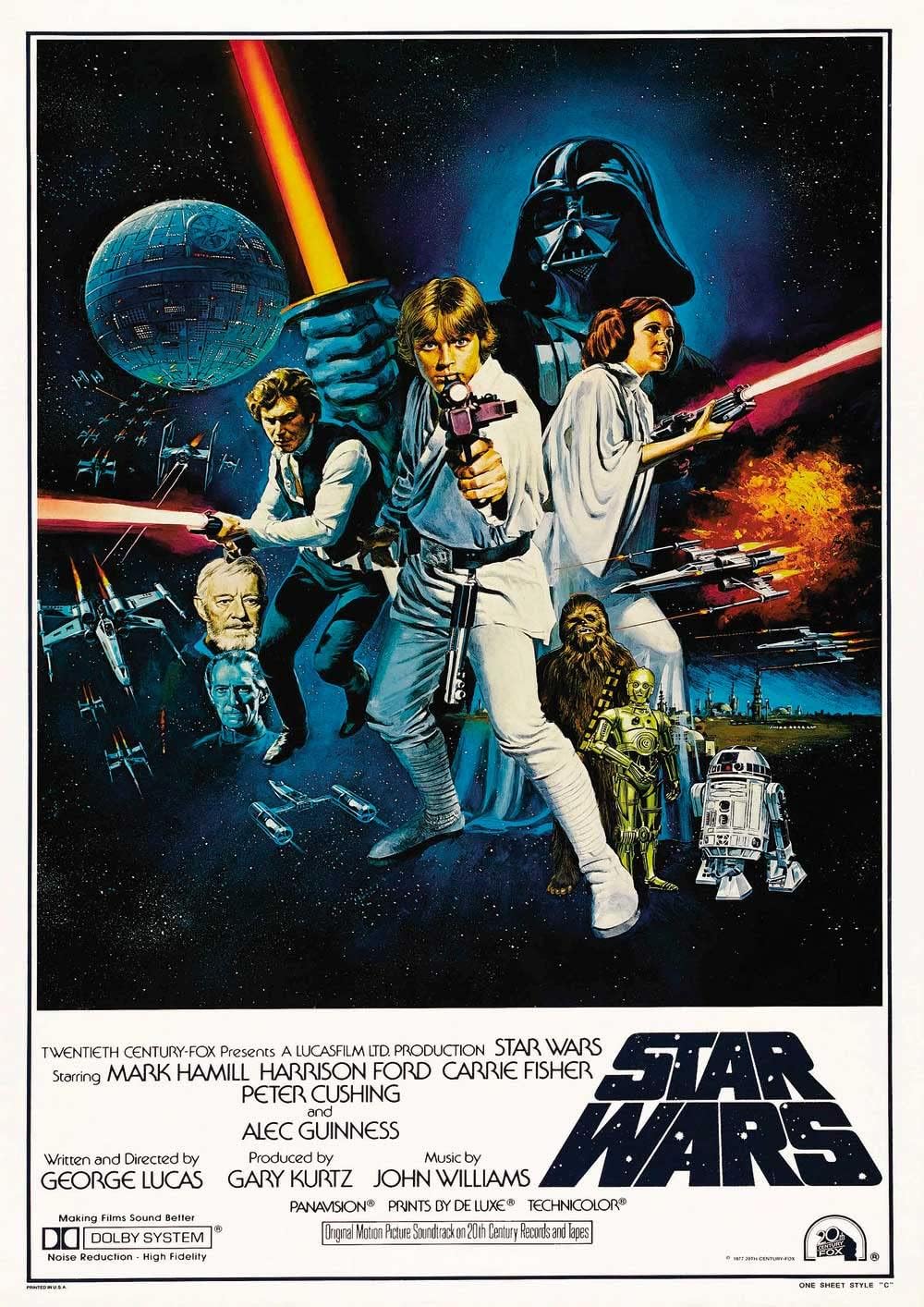
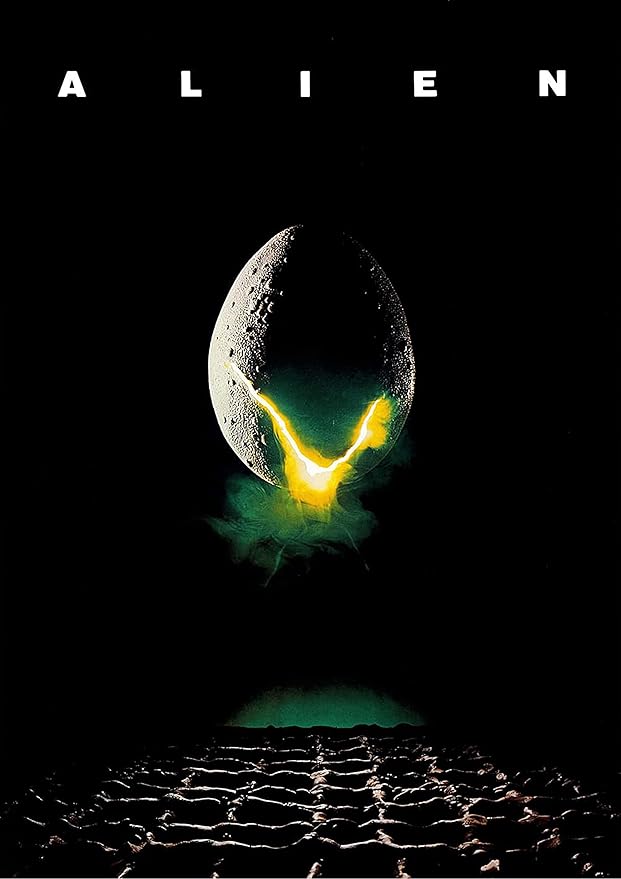
But it's arguably two insanely influential movies released within two years in the late-'70s that laid down the blueprint for what a sci-fi movie poster could and should do — "Star Wars" and "Alien".

Movie poster for Star Wars: A New Hope
Disney
Movie poster for Star Wars: A New Hope
Disney

At first glance, the early posters for "A New Hope" look like the character montages that have gone on to become the Hollywood norm. Look closer, however, and there's genuine artistry to their composition.

Although Tom Jung's famous "Style A" poster is a galaxy far, far away from screen accurate — what's going on with Luke's lightsaber and six-pack? — it effortlessly captures the all-action essence of the movie. Tom Chantrell's (arguably) even-more-iconic "Style C" design unites all the key players in a wonderfully kinetic collage of laser fire, lightsabers, and X-wings.

It's a sub-genre of poster art that the late Drew Struzan (who passed away in 2025) would subsequently go on to master. His legendary, hand-painted designs for the likes of "Indiana Jones and the Last Crusade", the "Star Wars" Special Editions, the "Star Wars" prequels, "Blade Runner" and (yes, really) "The Muppet Movie" have laid down a marker for every draughtsperson who's followed. "I want the poster to look like an adventure," Struzan told SlashFilm in 2021.

Movie poster for Alien
20th Century Fox
Movie poster for The Thing
Universal Pictures

In 1979, "Alien"'s famous "In space no one can hear you scream" design helped to popularize the conceptual one-sheet, as a single extraterrestrial egg hinted at the horrors Ridley Scott had in store.

Many of the most memorable posters of the '80s, '90s, and '00s opted for a single abstract image, whether it was ET and Elliott silhouetted against the Moon, an alien spacecraft hovering over New York for "Independence Day", or the minimalist, Happy Meal-friendly logos of "Ghostbusters" and "Jurassic Park".

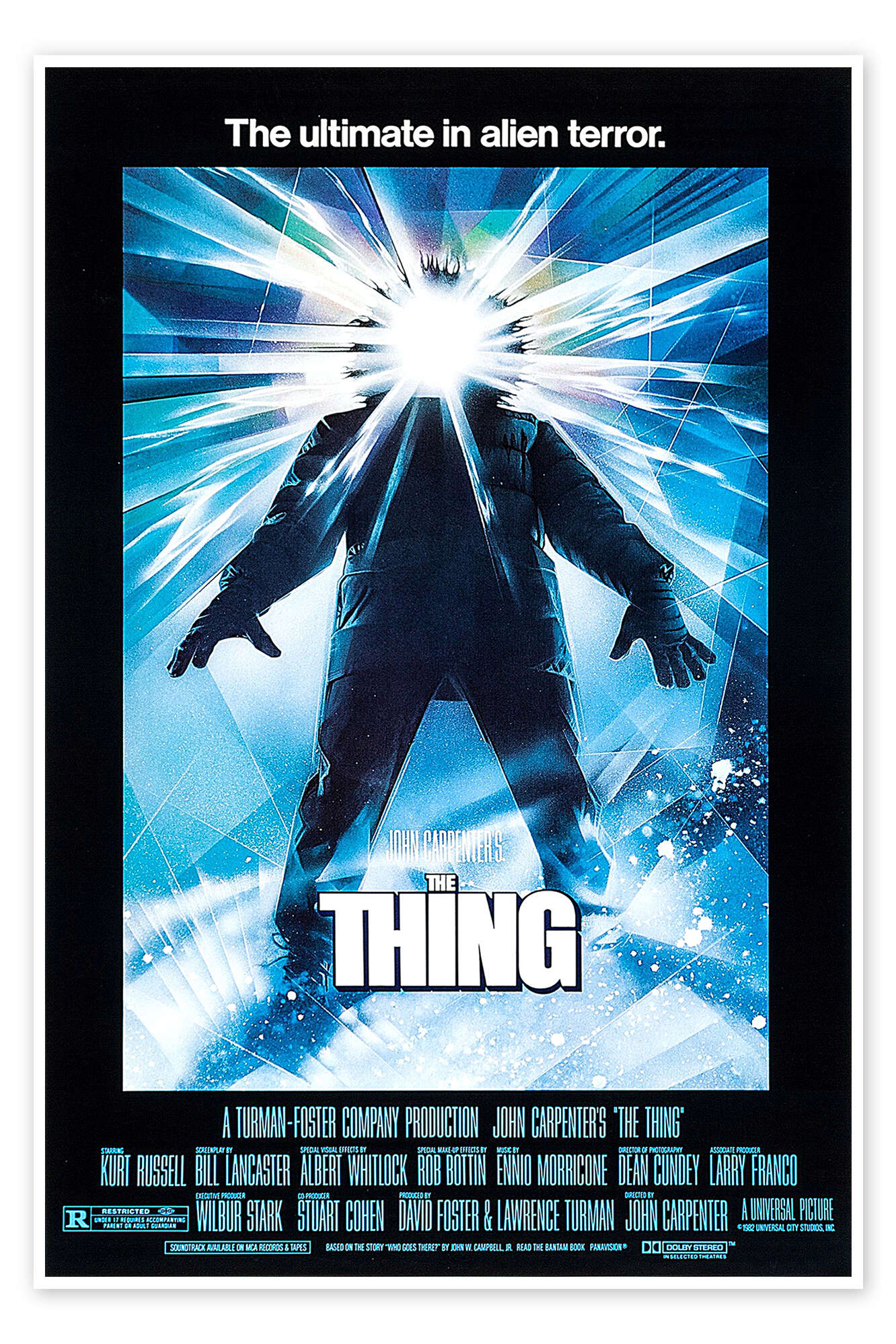
Struzan's famous poster for John Carpenter's "The Thing" (the one with a faceless guy in a parka) was born out of necessity, the artist having been given little information beyond the fact that it was a loose remake of 1951's "The Thing from Another World". "[I had to] find a way of making nothing into something," Struzan later said of a design he reportedly created over a single night. It's fair to say he succeeded.

Movie poster for Alien Romulus
20th Century Fox
Movie poster for Arrival
Paramount Pictures

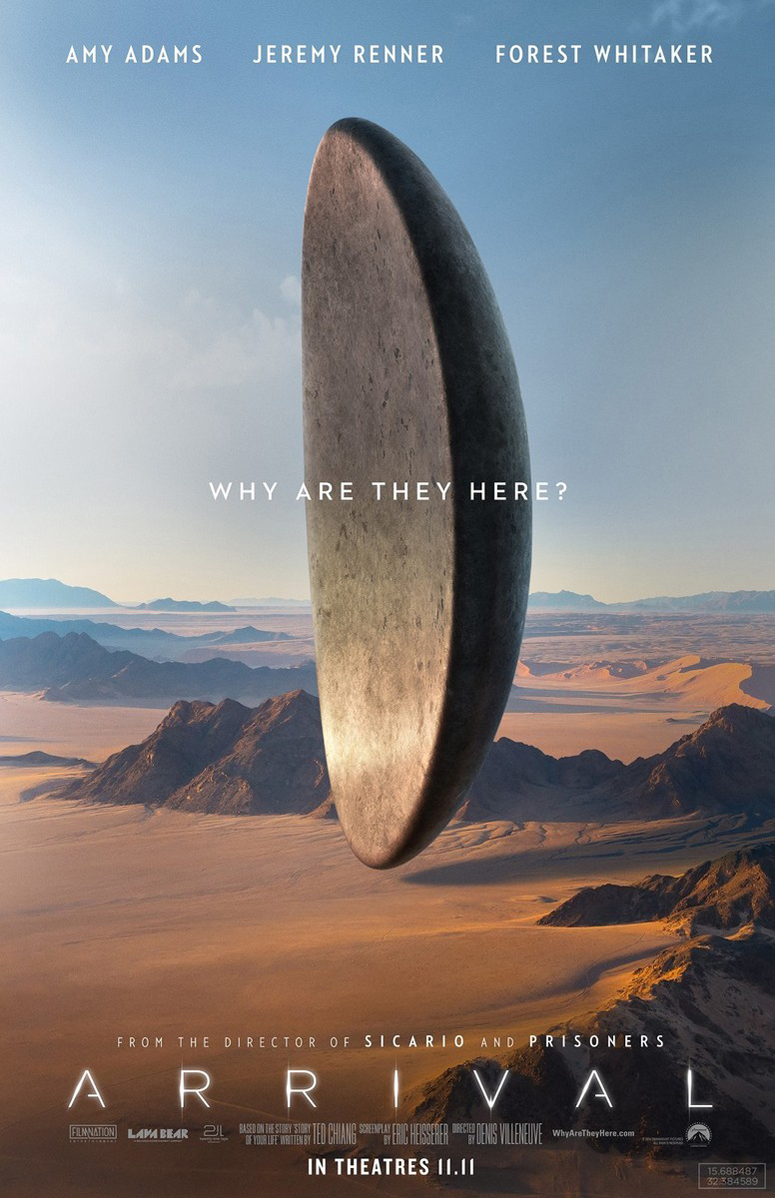
One thing all these designs have in common is that — as well as being great adverts for their respective movies — they're bona fide works of art. It's a tradition modern creators like the brilliant Matt Ferguson (and notable exceptions like "Alien Romulus" and "Arrival") are doing their best to keep alive — even though the lobby of a contemporary multiplex is less likely to be confused for an art gallery than it might once have been.

Even with the caveat that we tend to remember the great stuff and forget the duds, modern movie posters are rarely as good as they used to be. With montages often based around the contractual importance of respective stars, too many look like they've been created by committee rather than a single visionary artist — the design most executives, agents, and lawyers disliked least, rather than the one a few loved.

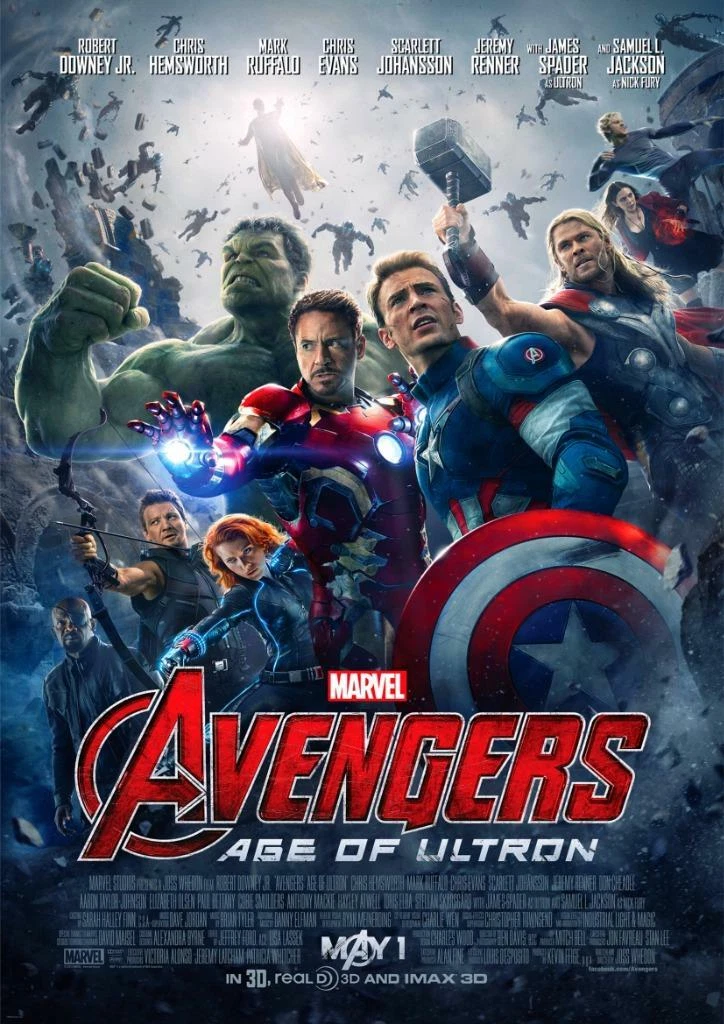
Can there be any other explanation for "Transformers" one-sheets that look like they've been passed through a filter of sludge, or an "Avengers: Age of Ultron" design so crowded that it looks like Marvel's answer to "Where's Waldo?".

Movie poster for Transformers Dark of the Moon
Paramount Pictures
Movie poster for Avengers: Age of Ultron
Marvel Studios / Disney

Maybe Hollywood doesn't care anymore. Maybe their market research tells them that identikit montages get the best results at the box office, or that traditional one-sheets are small fry next to social media and trailers when it comes to getting bums on theater seats.

But if the measure of a good movie poster is something that you'd want to put in a frame and hang on your wall, the current generation is (mostly) lacking.

So, whether or not "Supergirl" flies, let's celebrate the film's stylish, memorable poster art as a wonderful break from the status quo.

‘F9’ took a car into space, but 5 years on, just how ridiculous was the scene? We asked the experts

Five years ago, an internet meme turned into a reality in "F9" when the Fast & Furious crew launched a car into space. Depending on your sense of humor and ability to suspend disbelief, it's either peak cinema or extreme tomfoolery, but it's clear that the only way this franchise will ever top this moment is by drag racing a velociraptor in a "Jurassic World" crossover.

The "F9" scene sees Tej Parker (played by Ludacris) and Roman Pearce (Tyrese Gibson) sit inside a rocket-strapped Pontiac Fiero that's launched from a plane and sent into orbit to destroy a satellite. They succeed in their mission, then find themselves hanging about in space and waving at the International Space Station crew, who wonder if they're Minions. No, they aren't, but they're (say this part in Dom Toretto's deep voice) family.

Now, the Fast & Furious franchise has never played by the rules of physics, or reality for that matter. It values entertainment above all, but it's still fun to explore where it gets certain parts right and wrong at times. So we asked three experts about this car-launched-into-space scene and how ridiculous it is. Surprisingly, it isn't as dumb as everybody might think it is.

The filmmakers flub the carrier plane, though. Remember the aircraft that takes the Fiero up into the sky? It's something of a Frankenstein's monster. "The cockpit that they show is crossed between a Boeing 767 and 777," David Cohen, the current dean of aeronautics at Lynn University and former colonel of the U.S. Air Force, tells Space. "However, the aircraft from the external shot looks a little like a military C-17 – except that it has four engines. The C-17 was actually used as the basis for the transport aircraft in the 'Avengers' movies."

According to Cohen, another major issue in this sequence is how the Fiero sits on top of the carrier aircraft before it's dispatched. "Even in a military aircraft that's carrying weapons and missiles, there's a tremendous amount of time that is spent on both the carriage and the release of that weapon from the aircraft, including multiple cameras and a lot of testing," he says.

"So there's never something as simple as, 'Oh, we're just going to strap this on and see how it goes.'" When the Fiero is released, it's far too close to hitting the tail of the plane. In other words, it would have needed to be launched in another manner.

Now, there is a precedent of air-launch-to-orbit (ALTO) in the real world, such as the Northrop Grumman Pegasus. However, Bryan Schmidt, assistant professor of mechanical and aerospace engineering at Case Western Reserve University, thinks the "F9" filmmakers took direct influence from the first spaceflight of Virgin Galactic's SpaceShipTwo, which would coincide with the film's production timeline.

"Burt Rutan and Richard Branson formed a company called Virgin Galactic, and if you remember, they built a space plane for essentially space tourism," Schmidt says.

"The SpaceShipTwo could fly six people in this little rocketship that would get airdropped from a plane. Their first flight into space was in 2018, and this movie came out in 2021, so my guess is that the filmmakers were actually drawing a lot of inspiration from that system where the space plane would get carried up by an airplane, then the airplane would drop it around 40,000 feet, and the rockets would ignite and take it up to space."

(Image credit: Universal Pictures)

As Schmidt explains, the SpaceShipTwo dropped at around 40,000 feet while the vehicle in "F9" is at 50,000 feet, but it's still a similar-enough concept. "The densest part of the atmosphere is the bottom," Schmidt says.

"By using an airplane to get you up, you're dramatically reducing the amount of work that the rockets on the spacecraft have to do. So you can make your engine and your spacecraft a lot smaller and still be able to attain a pretty high altitude. If you look at SpaceShipTwo, its rocket engine is pretty small – the engine itself is about the size of a person. The other interesting thing is that if you look in the movie, there's a tank of nitrous oxide in the car. In the SpaceShipTwo, the oxidizer that they used for their rocket fuel was nitrous oxide."

(Image credit: Universal Pictures)

Ashmeet Singh, assistant professor of physics at the Indian Institute of Technology Delhi, sees the same logic in the ALTO but thinks the Fiero would struggle to reach its ultimate destination. "To stay in orbit you have to be moving sideways at about 7.8 kilometres per second, and thanks to Newton's Third Law of action equals minus reaction, rockets burn and eject fuel to get an opposite directed thrust," he says. "To get to those fantastic speeds, real rockets are almost entirely propellant by weight. A couple of boosters bolted to a car can't carry anything close to that."

There's also the question of the Fiero itself, and if it would last the entire journey. According to Earl (Jason Tobin) in "F9", the modified car has a ceramic polymer coating. While spacecraft use ceramic coating for heat protection, one wonders how thorough the testing for Tej and Roman's expedition really was. A regular Fiero simply wouldn't cut it, as Singh explains. "On the way up, the car wouldn't survive the heat from air resistance and the compression of the air, as the car rams into air molecules faster than it can move out of the way, which makes it heat past 1000°C. And a fibreglass body with ordinary glass has no heat shield and no structure for the violent shaking."

Cohen, Schmidt, and Singh all agree on how ridiculous it is that Roman uses the Fiero's steering wheel at all. "The steering wheel is pure theatrics: in a vacuum, there's no air over a wing and no road under a tyre, nothing to push against, so turning it does exactly nothing," Singh says. "Real spacecraft pivot by firing little thrusters, not by steering." Schmidt jokes that maybe it's something for Roman to hold onto while on the way up."*

*The car is shown to have tiny thrusters, so maybe they're hooked up to the wheel? We'll give them the benefit of the doubt.

(Image credit: Universal Pictures)

All three experts also highlight that the scuba-like gear that Tej and Roman wear is grounded in some real-world logic. "The very first time human beings went above Earth into an area where there wasn't enough breathable air, Wiley Post was one of the first pioneers doing this in the 1930s," Cohen says.

"Post had effectively what was a scuba suit at the time to handle the pressure and keep the air in the suit, and allowed him to breathe. So, the concept is not foreign to aviation." What is funny to Cohen is how Tej uses duct tape to keep his suit together.

As Schmidt and Singh add, though, these suits might not suffice depending on the length of the journey and the pressure in space, differing from underwater situations. Apart from the actual suits protecting the characters, you also need to consider the effect of G-force on Tej and Roman. Both look relatively fit and in good shape, but are they astronaut-fit for this undertaking?

(Image credit: Universal Pictures)

"As a pilot and astronaut, there's physiology you have to know about and ways you can clench muscles and attempt to fight some of the forces you experience," Cohen says.

"G-loss of consciousness is possible, and it happens with pilots in high-performance aircraft occasionally. They'll pull so many Gs that the force will take the blood out of their head down to their feet, and they lose consciousness. Ultimately, you do come back, but the goal is not to have that happen. It does not appear that there's any accountability for G-forces in 'F9', at least in the scene where the car is departing the aircraft."

(Image credit: Universal Pictures)

Unquestionably, "F9" is pure entertainment, so liberties are taken to sell an outrageous story where everybody behaves and acts like an invincible superhero. Having said that, it's good to see that the filmmakers and screenwriters actually attempted to bring an iota of realism to the film.

"Another powerful moment the scene gets right isn't the hardware or the science, it's possibly the awe on Tej and Roman's faces when they see Earth reflected in their visors," Singh explains. "Chris Hadfield, the Canadian astronaut who actually commanded the Space Station, even admitted that feeling to be true to the real thing."

To infinity and beyond... for family.

"F9" is available to stream on Prime Video.

Watch F9 on Amazon Prime Video:

Amazon Prime: $14.99/month or $139/year
Amazon Prime Video: $8.99/month

Ad-free add-on: $2.99/month

15 of our favorite sci-fi audiobooks to transport you to another planet

The world of science fiction books is vast and inspiring, with tales of distant planets and alien life transporting you into a new world to get lost in. It's the perfect genre for audiobooks, whether you like listening on the sofa, on a walk or on your daily commute, these books can fill you with wonder about the possibilities of our modern scientific age.

We have tales of sentient rocks, long-term alien invasions and deep pining for our home, Earth. My favorite book on this list is Jeff Vandermeer's Annihilation because it made me realise how alien life on our own planet is and I think about it every time I go out into the wilderness. I have read it multiple times and am excited to listen to it on audiobook to gain an even deeper understanding of it.

The prices listed here are for buying the audiobook individually but Audible is currently offering Audible Standard membership for $0.99 per month for the first three months and a bonus $20 credit for Audible.com. Standard Membership allows you to select one audiobook to listen to per month but you don't get to keep it if you cancel. If you want to ensure future access to your audiobooks if you decided to cancel, you should select the Audible Premium Plus membership. Amazon Prime Day 2026 is bringing Prime members a huge three month free trial for either a standard or premium plus membership. If you are a new user, you can sign up for a 30-day free trial to Prime so you can realistically get three audiobooks for free before you have to pay a membership charge.

Audible Standard: $0.99/month for 3 months
Save 89%: New Audible customers can save 89% on their first three months of standard membership, which gives you one credit per month for listening to an audiobook. They are also giving out a free $20 bonus you can use for Audible.com to put towards an audiobook to keep even if you cancel.
View Deal

For Prime Day 2026, Audible is offering Prime Members a huge three month free trial for either their standard or premium plus memberships.

Standard 3 month free trial (auto renews at $8.99/month after trial end)

Select one audiobook a month to listen to from Audible's entire collection. Audiobook access requires an active Audible subscription.

Premium Plus 3-month free trial (auto-renews at $14.95/month after trial end)

Get one credit a month to buy any audiobook from Audible that you can keep, even if you cancel. You also unlock unlimited streaming of titles in the Audible Plus catalog.View Deal

Watch “Avatar: Fire and Ash” with Disney+ and Hulu — get up to 50% off this streaming bundle

Avatar: Fire and Ash, the third instalment of James Cameron’s epic saga, has just landed not on the alien moon Pandora, but Disney+.

Get a Disney+ and Hulu bundle subscription for just $11.99 a month, that's 50% cheaper per month!

Starring Sam Worthington, Zoe Saldana and Kate Winslet, Avatar: Fire and Ash is available now to stream on Disney Plus. Right now, Disney Plus is offering one of the best streaming deals around with a huge 50% discount on the standard price of a Disney Plus and Hulu bundle.

Save 50% by subscribing to the Disney Plus and Hulu Basic Duo Bundle. You'll get some ads, but Disney Plus is the home to the best sci-fi movies and series. There are other bundles to choose from that include other streaming services, including HBO, the DC Universe, Warner Bros, and ESPN+. These have smaller discounts, but still worth a look f you're interested in these channels.

Explore the best Disney Plus bundles for you.View Deal

Sam Worthington reprised his iconic role as the Na'vi leader Jake Sully for Avatar: Fire and Ash, and he is confirmed to continue portraying the character in the upcoming fourth and fifth instalments of the franchise. Although with release dates of December 2029 and the fifth instalment pencilled in for December 2031, we'll have to wait a while.

In the meantime, there are plenty of sci-fi movies and series to enjoy on Disney Plus, including the original Avatar (the highest-grossing movie of all time), plus Avatar 2: The Way of Water, and behind-the-scenes documentary Fire and Water: Making the Avatar Films.

For less than the price of your morning coffee and a bagel or two, you'll get access (with ads) to both Disney Plus and Hulu, two popular streaming services that feature thousands of movies, box sets and all your favorite sci-fi series and films.

It's not just the Avatar franchise to stream with Disney Plus or Hulu there's something for almost every taste and if you've never been a subscriber before or returning after a break, then this streaming deal bundle is worth grabbing fast.

Both services are fantastic choices for fans of sci-fi, with new content being added regularly, including Star Wars, Marvel, and Alien: Earth, the Alien TV series, which will be available to stream on Hulu. You also get access to Disney's huge library of original content and animated classics from them and Pixar.

For the stargazers out there who are also sports fans, you can also access the ESPN+ offerings by signing up for the Disney Plus, Hulu and ESPN+ bundle for $35.99 — which is a 33% saving over the usual cost of signing up to all three services. ESPN+ has a wide variety of live sports, original shows, and on-demand content, including NFL, NHL, MLB, and PGA Tour golf, as well as various international soccer leagues.

You can browse all of our streaming deals on our hub page, but we think this is one of the best deals out there.

Key features: All Avatar movies, plus Star Wars and Marvel films and series, plus hundreds of movies and box sets, including lots of sci-fi content.

Price history: It's been as low as $2.99 a month for the Duo Basic bundle, but if you missed out on that, this bundle price is still a great value for money option when compared to signing up individually to each service ($23.98)

Consensus: We love both Disney Plus and Hulu, and if you're a sci-fi fan, Disney, in particular, is hard to beat. The Disney-owned content alone makes it worth the asking price but there's still a whole catalog of great content to scroll through. On Hulu, you have another huge library to choose from, and they have big sci-fi titles in their collection.

Tom's Guide: ★★★★ | TechRadar: ★★★★

✅ Buy it if: You want unlimited access to sci-fi content from Star Wars to Marvel, along with hundreds of other sci-fi box sets and movies.

❌ Don't buy it if: You don't watch much TV. But then, you probably wouldn't consider any streaming deal if that were the case.

Check out our other guides to the best telescopes, binoculars, cameras, star projectors, drones, Lego and much more.

I regret missing Project Hail Mary on the big screen but I’m not skipping this cheapest-ever UK Prime Day Lego deal

Were you lucky enough to watch Project Hail Mary on the big screen? Then you'll want to snap up this Lego Icons Project Hail Mary set and it's cheaper than ever with this UK Prime Day.

Save £16 on this Lego Icons Project Hail Mary set in the UK for its cheapest-ever price.

Or, get it in the US at full price for $99.99 on Amazon, or Lego (but Lego has a 60 day wait).

Yes, I'm a little bitter that I waited until Project Hail Mary was streaming on MGM+, so I didn't get the full movie theater experience, but I've only got myself to blame.

This Lego Icons Project Hail Mary set, however, is a seriously cool consolation prize. It comes with minifigures of Ryland Grace (possibly the only Ryan Gosling minifigure that will ever exist) and alien pal Rocky. It also boasts an interactive feature whereby you can turn the ship and extend the crew module, which is neat to watch in action.

Read on to find out why this is such a cool set and for more savings, check out our Amazon Prime Day deals

Save £16 this cool Lego model of the ship from Project Hail Mary, complete with minifigures of Ryland Grace and Rocky. UK-only deal, US customers can buy it at full price on Amazon now or Lego (with a 60 day back-order).View Deal

Lego Project Hail Mary set
Our Entertainment editor Ian got hands-on with the Project Hail Mary Lego Icons set earlier this year.Future (Ian Stokes)
Lego Project Hail Mary set
Future (Ian Stokes)
Lego Project Hail Mary set
Future (Ian Stokes)
Lego Project Hail Mary set
Future (Ian Stokes)
Lego Project Hail Mary set
Future (Ian Stokes)

This is a seriously cool shelf/desk-sized model and if you're a fan of the Project Hail Mary movie, it's a must-have. If not, I won't hold it against you, but.. Ryan Gosling saving the Earth (and beyond) in a film based on an Andy Weir book? What's not to like?

Aside from just looking fantastic, without hogging a whole table, it comes with Ryland Grace and Rocky figures, which sit at the base of the model's plaque.

And, while it's not going to amuse children for hour upon hour, it boasts the cool feature that you can spin the handle one way to rotate the vessel and another to release the crew module.

The next step is to persuade Lego to green-light a The Martian set. And if you've not seen the movie, Project Hail Mary is streaming on MGM+ and you can watch it for just 99p/99c.

Key features: 830 pieces, 12 × 9.5 × 8.5 in. / 30 × 25 × 22 cm size, builders aged 18 or over.

Product launched: March 2026

Price history: We've seen the price drop a bit but it's never been this cheap.

Price comparison: Amazon: £84 | Lego: £100

Reviews consensus: The reviews from purchasers are positive about it, with some singling out the spinning action and general look.

✅ Buy it if: You love the book or the movie and want a cool set to display.

❌ Don't buy it if: You're not a fan of the movie. Consider one of the best Lego space sets instead.

Check out our other guides to the best telescopes, binoculars, cameras, star projectors, drones, lego and much more.

‘50% superhero and 50% noir, but 100% totally new’: ‘Spider-Noir’ composers on injecting retro style into the superhero multiverse (interview)

Sony Pictures Television and Amazon MGM Studios' brash experimental superhero series, "Spider-Noir," is a refreshing treat that revitalizes the fading genre with a cool film noir twist.

Showcasing the "Spider-Man Noir" comics character seen in "Spider-Man: Into the Spider-Verse", it stars Nicholas Cage as a 1930s New York City private detective named Ben Reilly who moonlights as the nocturnal avenger The Spider.

Juilliard-educated composers Kris Bowers ("The Wild Robot," "Secret Invasion") and Michael Dean Parsons ("Light & Magic," "Bridgerton") have created a magnificent sweeping score with roots in old-school crime thrillers, Hollywood Golden Age jazz, and a variety of intriguing electronic instruments not traditionally used in a classical score of this nature. We caught up with the musical pair to hear more about their influences for this mesmerizing Spider-Noir soundtrack.

"The first thing we talked about when we were watching the picture-locked season was how it was important that this score was rooted both in the noir and superhero space but also be wholly unique in its own thing," Bowers tells Space.

"We created a playlist of all our favorite noir scores from 'Chinatown' to 'Double Indemnity' to 'Vertigo' and remind ourselves about all the things we love about that music, then pretty quickly try to forget it so we didn't lean too much in that," explains Bowers.

"Superhero music, I feel like, has been in our DNA for the last 20 years or so. For us, it was looking at how in the noir space, you had these iconic, memorable melodies and themes and these things that are tracking characters across the arcs of their stories. Then with the superhero side of things, it was about making it feel modern and edgy and have a lot of sounds you wouldn’t expect in your typical noir score."

From the beginning, Bowers and Parsons instinctively knew "Spider-Noir's" atmospheric music would be thematically driven, but they also didn’t want it to be an homage washing over the whole series.

"We wanted it to feel customized and coming out of these individual characters and the unique story that was being told," Parsons adds. "One of the first things we asked Oren was, since the show takes place in New York, what does New York mean to you?"

"We were expecting a noir-inspired answer, like about using trumpets and saxophones," says Parsons. "Instead, he said New York is 'Nineties electric punk guitar.' As we talked to him more, there was something that really fit naturally about bringing in a modern guitar sound into this palette that made us realize this is 50% superhero and 50% noir, but 100% totally new."

One enchanting component of this score’s distinctiveness, beyond the sweeping symphonic interludes, is the inclusion of some unconventional instruments to layer into the moody tracks.

"The theremin was one of our early discoveries that was kind of a marriage between the electronic contemporary and also this noir world," notes Parsons. "We were researching the early electronic instruments that could have plausibly been around or starting to be popularized in that era, so we gravitated towards the theremin not only for that reason, but because Ben's theme begins with this big soaring octave leap.

"So we thought, what if we take the theremin and have it play the octave leap as a signature for Ben. Anytime he's doing a day in the life detective work, or anytime we need to point out him doing something heroic, we're able to use that theremin, which has been run through distortion pedals and other things, to call it out."

Giving the composers enough confidence to be daring provided the ideal creative environment to conjure up what we believe is an instant classic that gets even better each time it's heard.

"It's really just a credit to how generous our collaborators were in Oren, the showrunner, and the rest of the team," says Bowers. "It was the thing where every time we shared something, oftentimes the only notes we got back would be to make it even weirder or more different or add some other sound. That's important, especially when you're on a project, and you don't have much time, and you're dealing with one of the most important pieces of IP in the world with Spider-Man.

"Often, you can get a lot of stress and anxiety and tightness in terms of not wanting to try things out. I feel like we were encouraged to fail in the best way possible, where we never felt any idea was too crazy for this team. It was an amazing collaborative process with them."

The show hails from executive producer Oren Uziel ('Mortal Kombat,' 'The Lost City'), and fans are applauding its stylish take on the multiverse, which can be enjoyed in either True-Hue Full Color or Authentic Black & White.

"Spider-Noir" is now streaming all 8 episodes on Prime Video.

Watch Spider-Noir on Amazon Prime Video:

Amazon Prime: $14.99/month or $139/year
Amazon Prime Video: $8.99/month

Ad-free add-on: $2.99/month

Launch your sci-fi binge with these top streaming deals I found during Prime Day

Not found what you want this Prime Day? That's where our round-up of the best summer streaming deals comes in, from HBO Max to Paramount Plus and beyond.

Admittedly, a couple of these deals may put a few pennies in Jeff's pocket, but take advantage of these deals and you can shut out Prime Day and lose yourself in a world of sci-fi and superheroes.

Save 50% on a combined six-month Disney Plus and Hulu bundle, netting you access to the whole Star Wars library, Marvel Cinematic Universes, every Alien and Predator movie and show and beyond. View Deal

Paramount Plus is the undisputed home of Star Trek, from old trek to Star Trek New worlds and you can watch two months for just $1 a month. View Deal

Missed out on the brilliant Project Hail Mary? It and plenty of other sci-fi content is available on MGM+ and, via Prime Video, you can watch two months for just $1 a month, after which it's $8. View Deal

HBO Max offers three tiers, including ad-free and ad-supported options, and you can save as much as $65 by paying annually. Aside from virtually the whole DC universe (including James Gunn's Superman), HBO Max offers movies like Ready Player One, the Terminator and more. View Deal

Save a huge $46 on STARZ which, while not as famous as Disney Plus, boasts a host of sci-fi content such as Outlander and The Listeners. Several of Sony's Spider-Man movies are also available to stream. View Deal

Traditionally the home of The Walking Dead, and its spin-offs, AMC Plus offers a wealth of zombie-free sci-fi content too and, right now, you can get a 7 day free trial. That's enough time to binge Snowpiercer, Orphan Black and more. View Deal