‘Independence Day’ at 30: Roland Emmerich & Dean Devlin talk blowing up the White House and crafting a true sci-fi classic (interview)

Happy 30th birthday to "Independence Day," the sci-fi mega blockbuster that made Will Smith an instant Hollywood star, crushed the box office by becoming the fastest film to reach $100 million, and obliterated Washington, D.C, all in one fell swoop of pure popcorn movie entertainment.

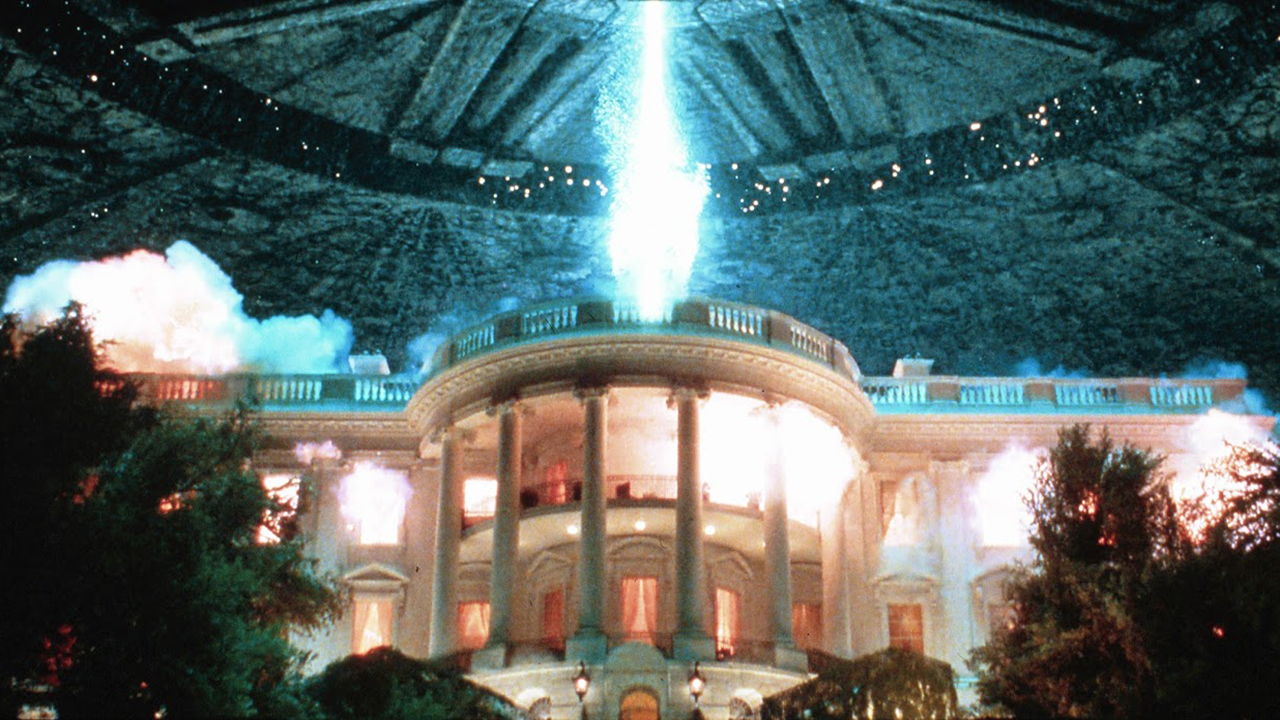
We often talk about certain works of art ushering in or being ushered in by, but "Independence Day" ("ID4") truly broke the mold for how huge tentpole pictures were marketed three decades ago, something that still reverberates today. Is there any bigger money shot than a city-sized flying saucer poised over the White House delivering a lethal laser blast of searing coherent light?

So, to celebrate "Independence Day" on its 30th anniversary, we connected with the dynamic creative duo of director Roland Emmerich and screenwriter Dean Devlin ("Universal Soldier," "Stargate," "Godzilla") for a jog down memory lane to remember one of the greatest sci-fi movies in history.

"We’d just done 'Stargate', and it was this bizarre situation where MGM had no movies to release in the month of October, so they decided to release our film," Devlin tells Space. "Roland and I had a lot of frustrations in the process of the film marketing. So we were in a fortunate position when 'Independence Day's' script came out, we had nine studios bidding on it. We had a lot of leverage, and one of the things we said was that we want to have real control over the marketing. Roland had this idea of a trailer where in it you see the White House blow up."

Its first teaser on Super Bowl Sunday in January of 1996 was a potent 30-second shot across Hollywood’s bow to announce itself to the world. Rarely had marketing campaigns started six months early, something that’s become commonplace in the digital age. But back in 1996, when Bill Clinton was president, Michael Jordan's Chicago Bulls were flying high, and the Summer Olympic Games were about to ignite in Atlanta, it was a bold move that paid off.

"I'll never forget, after we made the deal, we had this big meeting with the studio, and we got in a room, and they said to Roland and I, 'Well, you know we can't really show the White House blowing up in a trailer with what happened recently with this terrorist attack on the Federal Building. It could cause a problem.' I said, 'Yeah, but this is aliens, it's not terrorists.' Then Roland goes, 'So wait, you're telling me that if we do this, it will cause an enormous amount of controversy and everybody will talk about our movie. And that’s wrong why?'"

The "ID4" marketing campaign was one for the ages! (Image credit: 20th Century Studios)

Released by 20th Century Fox on July 3, 1996, "ID4" and its old-fashioned, flag-waving patriotic flair exploded into theaters with an epic alien invasion tale that was irresistible.

Yes, kids, audiences really did wait in long lines snaking around the block to see their favorite films when they opened. This sci-fi extravaganza was the perfect summertime escape that was appropriately launched over the festive Fourth of July week. The advertising sizzle paid off, and the film became the top-grossing of the year, raking in a whopping $817.4 million worldwide.

Emmerich recalls that the studio secretly tested "ID4" with and without the White House explosion, and there was no more discussion, leaving it as one of the highest-testing teaser trailers ever.

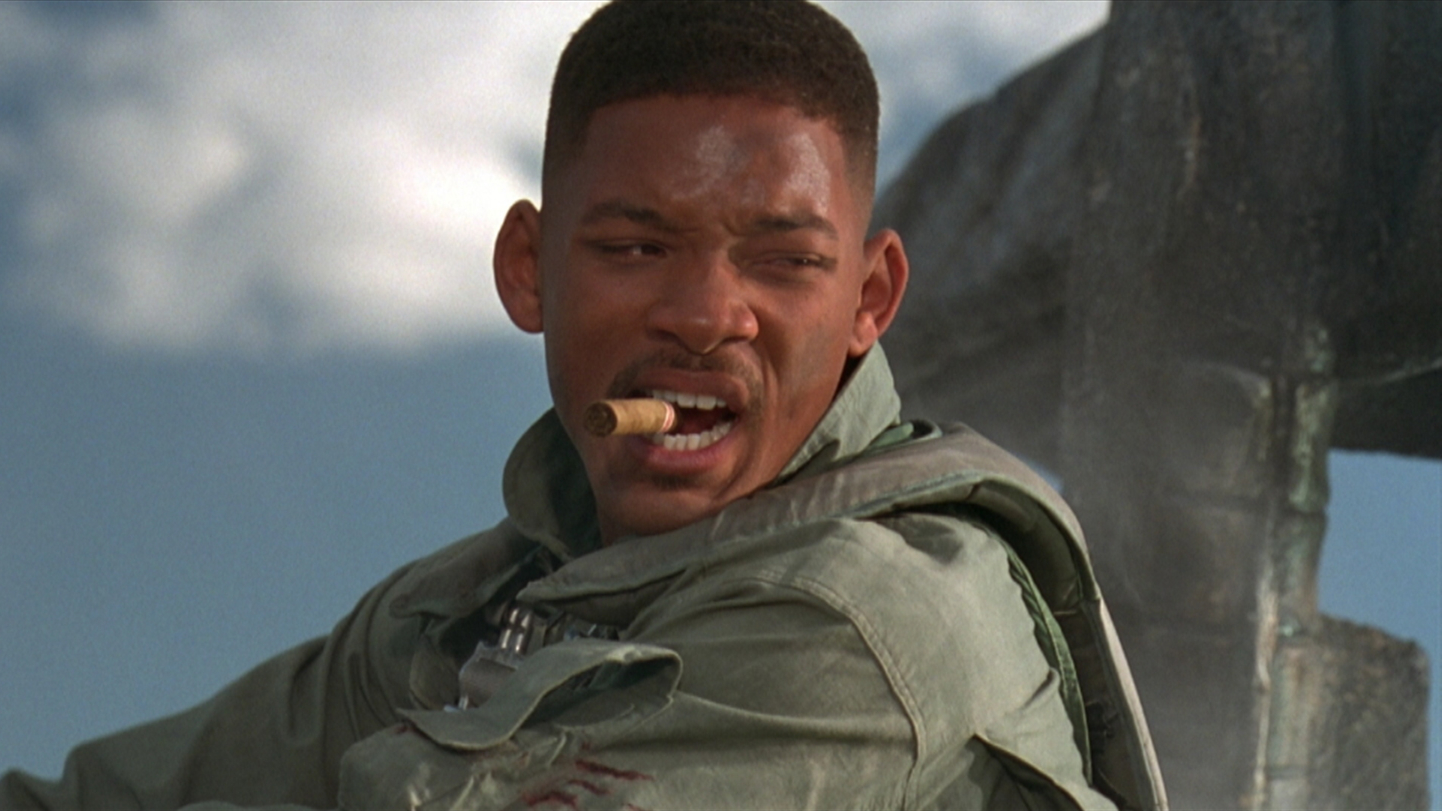
Will Smith and Jeff Goldblum star in "Independence Day" (Image credit: 20th Century Studios)

Starring Bill Pullman, Will Smith, Jeff Goldblum, Viveca Fox, Judd Hirsch, Margaret Colin, Brent Spiner, and Randy Quaid, it showcased terrifying extraterrestrial designs by Patrick Tatopoulos, a stirring score from David Arnold, enveloping soundscapes, and some of the best miniatures and model work ever captured on screen.

It's a spirited throwback to ‘50s-era science fiction thrillers like "The War of the Worlds" or "Earth vs. the Flying Saucers" and even won a well-deserved Academy Award for Volker Engel and his ace VFX team.

"The art of film has been lost," Emmerich notes. "When you look at 'Project Hail Mary' for example. It's meandering, and you don’t really know why this was $250 million. Because it's one actor and a stone puppet."So this is what got lost. That films got made for a price with great visual effects, and we had great visual effects and won an Oscar."

ID4's cast seems star-studded in hindsight, but Emmerich and his team took some big risks that earned them the ire of the studio.

"At that point, Will Smith was nobody, and we had to really fight for him," explains Emmerich. "The same thing with Jeff Goldblum. Nobody wanted to see him. At the very beginning, there was this idea of using up-and-coming stars and revisiting older stars, and they [the studio] didn’t like that. We had to fight for them. And it inspired a different marketing campaign. Like with helicopters flying around with 'The world ends July 4th.'"

When "Independence Day" opened wide in 2,977 venues, fans furiously flocked to theaters and multiplexes around the country, creating a once-in-a-decade demand for available seats. That week, Roland Emmerich was vacationing in sunny Puerto Vallarta, as far away from the rollout as possible.

"So I'm in a car with a bunch of people while he's in Puerto Vallarta," Devlin recalls. "And we’re videotaping for Roland to see the crowds at the theaters. We’re in Westwood, and the line goes for three blocks. We get to the front of the line, and the number three person in line was director Jon Turteltaub, whose movie ["Phenomenon"] was opening on the same day. I jumped out of the car and said, 'Jon, your movie is opening across the street. Why are you in the line for this one?' And he said, 'This is the one I want to see.' I thought at that moment that yeah, this is a cultural event."

Behind the scenes on "Independence Day" ©1996 20th Century Studios, Inc.  Now streaming on Hulu and Disney+ (Image credit: 20th Century Studios)

Emmerich and Devlin admit to feeling a hint of this intense response a bit earlier during the final ID4 test screening in Las Vegas.

"Remember, this was before digital prints and digital projectors," says Devlin. "So the audience recruited for the test was not told what movie they get to watch. All they know is it's science fiction. The place was packed, and Roland and I were in the back. The little opening thing comes on and [...] it says 'Independence Day' and the place went insane. They were cheering and freaking out. Roland and I were looking at each other like, 'Oh my god, this is great.'

"In those days, you could still have a head of a studio roll the dice on a project he believes in," reminisces Devlin. "Tom Jacobson was the head of the studio at the time, and he had two lieutenants underneath him. One loved the script, and the other hated the script and didn't want to do it. He read it himself and said, 'No, we're going to make this film.'

"That can’t happen today," laments Devlin. "Now you've got these greenlight committees and algorithms that decide what gets made. And I think that's part of what pollutes the ability to do something that’s original and out of the box."

Dean Devlin and Roland Emmerich conjuring up cinematic alchemy on "Independence Day" (Image credit: 20th Century Studios)

Few Hollywood partnerships in the ‘90s were as formidable as this prolific pair, and "ID4" might have been the zenith of their long collaboration and friendship.

"This was a really true partnership," Emmerich notes. "Everything that the success brought is 50-50. We wrote a script together, which was f***ing fantastic. Not much got changed. Only a little bit on the Randy Quaid character."

"We were under pressure because I learned that Warner Bros. was already in production of a Tim Burton movie called 'Mars Attacks.' I realized we have to do this very fast and we have to go write somewhere where we’re not disturbed," recalls Emmerich.

The White House wasn't the only casualty caught in ID4's wake, though, as another renowned filmmaker's sci-fi flick took a beating at the box office.

"After three or four weeks, we gave the script to our agent, and he said, 'Oh my god, this is the most commercial thing I've seen in years.' And that's how the auction came along. He sent it out on Wednesday, and they all had to cancel their lunches. We called this thing 'Independence Day' because that's where we wanted to have it, six weeks before 'Mars Attacks' was to come out."

A scene from "Independence Day" ©1996 20th Century Studios, Inc.  Now streaming on Hulu and Disney+” (Image credit: 20th Century Studios)

"Larry Franco was producing 'Mars Attacks', and he said, 'You should have seen Tim's face.' He was just destroyed because he had such high hopes with this film because it was so quirky and cool. And it's actually a really good film, but it was destroyed by 'Independence Day.'"

As America salutes its 250th anniversary, relive the counterattack once more and see for yourselves just how well "Independence Day" holds up after 30 years!

Watch Independence Day on Hulu:
Hulu with Ads: $11.99/month or $119.99/year
Premium (No Ads): $18.99/month

‘Silo’ season 3: Release date & how to watch Apple TV’s sensational post-apocalyptic saga

"Silo" season 3 is almost upon us, offering another round of riveting episodes of Apple TV's undeniably intriguing sci-fi series. We're about to learn how the end of the world began with the new season's split-timeline between Silo 18 and the Before Times, when the madness all started.

Adapted from Hugh Howey's trilogy of dystopian sci-fi novels, "Wool," "Shift," and "Dust," "Silo" was created by and executive produced by Emmy-winning producer Graham Yost ("Speed," "Band of Brothers," "Justified") and initially debuted on Apple TV back in 2023. This third season promises to be the best yet, and we guarantee that it's going to be an eye-opening descent into the core of the overarching tale of humanity’s last band of hearty heroes and nefarious villains trying to stay sane.

Dump out your memory-suppressing H2O and let's dig into "Silo" season 3!

WHEN DOES "SILO" SEASON 3 ARRIVE?

Rebecca Ferguson as Juliette Nichols in "Silo" Season 3 (Image credit: Apple TV)

The third and penultimate season of "Silo" premieres on July 3, 2026, at 12:00 a.m. Eastern Time (ET) for the first episode of what’s going to be a wildly eventful 10-episode outing.

Fresh weekly episodes will arrive each Friday until the season finale is broadcast on Sept. 4, 2026.

HOW TO WATCH "SILO" SEASON 3

(Image credit: Apple TV)

"Silo" season 3 will stream exclusively on Apple TV.

"Silo" is an Apple original that explores the last vestiges of humankind, surviving in 144-level doomsday bunkers, and the various factions of post-apocalyptic society struggling to exist and understand why the outside environment is a death sentence.

The first two seasons of "Silo" are also now available to watch in their entirety on Apple TV, so you can catch up on all the dark drama.

Watch Silo on Apple TV+:
Apple TV+: $12.99/month (7-day free trial)
Apple TV & Peacock Premium: $14.99/month

If you're going to be out of the country when the show debuts, you can still watch it on your streaming service of choice using a VPN.

You'll be able to connect to your streaming services, no matter where you are on Earth (though you might not have wifi if you're hiding in one of the Silos).

Editors Choice

Get 75% off Nord VPN risk-free for 30 days

Travelling abroad and still want access to Apple TV? Good news, NordVPN can help you get around those pesky geoblocking restrictions so you can watch the streaming service you've paid for anywhere in the world.VIEW DEAL ON

WHAT IS THE PLOT OF "SILO" SEASON 3?

Common in "Silo," premiering July 3, 2026 on Apple TV. (Image credit: Apple TV)

Warning: Spoilery "Silo" Season 2 Territory Ahead!

The prime timeline of "Silo" takes place in the far future, some 352 years from now, but nobody in Silo 18 is really counting, or even owns accurate calendars, now that we think about it.

Fans who've followed the show religiously know that Juliette trudged back from Silo 17 just before a mass Silo 18 exodus in last year’s finale episode after learning about a lethal safeguard installed in each bunker by the Founders to prevent rebellion.

She's met in the airlock by an unhinged and disillusioned Bernard (Tim Robbins) armed with a gun, and before you can say "Burnt Toast," the automatic fire system activates, and they’re both engulfed in raging flames.

That same episode ends with a flashback three centuries earlier to a restaurant in Washington, D.C., after a dirty bomb has been detonated in the city, where we're introduced to Helen and Daniel, two pivotal new characters that we’ll be following heavily in this upcoming outing.

"Season three of 'Silo' continues the saga of a dystopian society of 10,000 people living underground under mysterious circumstances, while revealing an origin story set centuries earlier," explains the official synopsis.

"In the present, Juliette Nichols (Rebecca Ferguson) survives her forced 'cleaning' but returns with memory loss as the silo recovers from rebellion and faces a dangerous new threat. Meanwhile, in the 'Before Times,' journalist Helen Drew (Jessica Henwick) and Congressman Daniel Keene (Ashley Zukerman) uncover a conspiracy that pulls them into a chain of events with catastrophic, irreversible consequences."

"SILO" SEASON 3 TEASERS AND TRAILERS

Sneak peeks at "Silo's" third season have been sparse, and with an abundance of startling reveals about to be discovered, fans should be grateful that the PR folks at Apple TV haven’t exposed too much as our survivors try to make sense of their depressing upside-down world.

The first reverse-edited teaser landed back on Apr. 21, 2026, which got us pumped for the pandemonium!

The main trailer debuted on June 2, 2026, and we were immediately brought up to speed about Juliette being inside the fire box for three minutes, but she's now experiencing amnesia and can’t remember her friends or what secret she uncovered while inside Silo 17.

We also gain more info on the silo Founders and the monumental 21st-century engineering project that created them to rescue humanity from extinction.

"The end of the world cannot be stopped, it can only be survived," states Colin Hanks' chilling billionaire industrialist character.

WHO ARE THE "SILO" SEASON 3 CAST AND CREATORS?

(Image credit: Apple TV)

"Silo" season 3's outstanding ensemble cast includes:

  • Rebecca Ferguson – Juliette Nichols
  • Jessica Henwick – Helen
  • Ashley Zukerman – Daniel
  • Common – Robert Sims
  • Harriet Walter – Martha Walker
  • Chinaza Uche – Paul Billings
  • Avi Nash – Lukas Kyle
  • Alexandria Riley – Camille Sims
  • Shane McRae – Knox
  • Remmie Milner – Shirley Campbell
  • Rick Gomez – Patrick Kennedy
  • Billy Postlethwaite – Hank
  • Clare Perkins – Carla McLain
  • Steve Zahn – Jimmy Conroy

The following newcomers will also be joining the series in unknown roles:

  • Colin Hanks
  • Laura Innes
  • Jessica Brown Findlay
  • Morven Christie
  • Reed Birney
  • Matt Craven

Produced by Apple Studios and AMC Studios, "Silo"'s upcoming 10-chapter nightmare is executive produced by showrunner Graham Yost, Michael Dinner, Rebecca Ferguson, Nina Jack, Joanna Thapa, Morten Tyldum, Howey, Amber Templemore, Fred Golan, and Rémi Aubuchon.

WILL THERE BE A "SILO" SEASON 4?

Alexandria Riley in "Silo," premiering July 3, 2026 on Apple TV. (Image credit: Apple TV)

Yes, we’re not out of the hole quite yet!

Apple TV gave a green light for both "Silo's" third and fourth seasons back in December of 2024 after overwhelming acclaim and impressive viewership numbers, guaranteeing a proper end to the "Silo" saga. Season 4 will be the final season, though.

"It has been a richly rewarding experience to adapt Hugh's epic novels with our partners at Apple, and we are thrilled to have the opportunity to bring this complete story to the screen over the course of four seasons," Yost shared after Apple TV’s renewal.

"With the final two chapters of 'Silo,' we can't wait to give fans of the show an incredibly satisfying conclusion to the many mysteries and unanswered questions contained within the walls of these silos."

Watch Silo on Apple TV+:
Apple TV+: $12.99/month (7-day free trial)
Apple TV & Peacock Premium: $14.99/month

How to invade planet Earth: A sci-fi movie alien’s guide to bringing the human race to its knees

It looks there for the taking, doesn't it? The third rock from the sun just sitting there, all defenceless, run by squabbling politicians ruling over a human race who'd rather be sharing "get ready with me" videos than vigilantly watching the skies as they should be.

But next time you set your sights on invading planet Earth, remember that it's easier said than done. Some of the mightiest alien attack forces in existence have met their match in this particular corner of the Milky Way, as the residents of this nondescript ball of rock have repeatedly found ways to repel extraterrestrial attackers — even when they're massively outgunned.

So don't embarrass yourself in front of your attack fleet. Having painstakingly researched numerous previous assaults on Earth, we've assembled a guide to all the things you should — and indeed shouldn't — do the next time you try to bring those snivelling humans to their knees. Follow these tips, and the Earth can be yours to do with as you please.

DO… target major landmarks

Independence Day (1996)

(Image credit: 20th Century Studios)

Case study: "Independence Day"

If you really want to show your prospective underlings who's boss, you'll need to make a big entrance. Hovering over major landmarks (eg: The White House, The Empire State Building, the Capitol) is a great place to start, as the eyes of the world's media will be upon you.

Some bystanders will think you came in peace, of course, but by the time the masses have realized what you're up to, it'll be way too late for those puny humans.

DON'T… invade if you have a severe allergic reaction to water

Crop circles from the movie Signs (2002)

(Image credit: Buena Vista Pictures)

Case study: "Signs"

Don't be like these crop-circle-obsessed idiots. If water's not for you, you really shouldn't set your sights on a planet whose surface is over 70% water. There are other, less soggy worlds to conquer.

DO… dress up as the personification of evil

The Overlords choose a humble farmer to be their ambassador to Earth, in the Syfy miniseries Childhood's End.

(Image credit: Syfy)

Case study: "Childhood's End"

A bit of a cheat code, this, but if you really want humans to fear (or, at the very least, respect) you, you could do worse than model yourself on Satan/Beelzebub/Mephistopheles/Old Nick/the Devil/whatever you want to call him. They're sure to hang on your every word, though do be prepared for them to assume the worst of you, even if your intentions are good.

DON'T… get cocky

Scene from the movie Superman II (1980). Clark Kent (aka Superman) is battered and bleeding. Lois Lane is holding on to him.

(Image credit: Dovemead Films)

Case study: "Superman II"

Earth's famously yellow sun works such wonders on Kryptonian physiology that it can be tempting to get everyone you know kneeling at your feet. Alas, hubris is a one-way ticket to the Phantom Zone.

DO… plan ahead

Still from the sci-fi movie

(Image credit: Paramount Pictures)

Case study: "War of the Worlds"

Transporting invading forces down to a planet's surface can be such a time-consuming process that unnecessary delays could give locals an opportunity to mount a resistance — inconvenient, to say the least.

By playing the long game, however, you can bury your vehicles of mass destruction underground centuries before they're needed. A few carefully deployed bolts of lightning later, and you'll be frying humans for fun.

DON'T… get drawn into crazy conspiracy theories

The X Files_20th Century Fox Television_HERO IMAGE

(Image credit: 20th Century Fox Television)

Case study: "The X-Files"

Infiltrating the upper echelons of existing Earth governments may seem like an oven-ready route to taking control. But unless you have a clear, easy-to-define plan, your followers will get bored long before your Machiavellian schemes come to fruition.

DO… turn Earth into a pre-industrial society

The Masters, an alien race shown in the BBC sci-fi series

(Image credit: BBC)

Case study: "The Tripods"

Applying mind-controlling "Caps" to 14-year-old Earthers is a smart move that can ensure they'll spend their lives worshipping you as gods.

But arguably the Master's smartest move was rendering all Earth technology obsolete, making all the advances of the Industrial Revolution null and void – nobody's going to fight off your giant three-legged war machines with pitchforks and rotten cabbages.

DON'T… telegraph your arrival

a woman floats in the air in front of a star and two moons

(Image credit: Netflix)

Case study: "3 Body Problem"

There's a lot to be said for surprise attacks.

So if you're confined to sub-light speed travel (damn you, Einstein!), it's probably best not to give humanity a few centuries' head start — even if you're not confident their tech won't surpass yours in the meantime.

DO… go back to an earlier point in history

The Borg Queen and Locutus/Captain Picard in Star Trek: First Contact

(Image credit: Paramount Pictures)

Case study: "Star Trek: First Contact"

It's said that the definition of madness is doing the same thing again and again and expecting a different result. Cybernetic terrors, the Borg were quick to realize this, and — after one too many defeats at the hands of the technologically inferior Federation – changed the rules of engagement by travelling back in time to assimilate humanity before they had the wherewithal to fight back.

Employ this method, and resistance really will be futile.

DON'T… limit your aspirations to a small town

The World’s End (2013)

(Image credit: Universal Pictures)

Case study: "The World's End"

We get it. You find a small suburban town you like – with more than its fair share of charming bars – and putting down roots seems the only logical thing to do. Being top dog on the local council, however, is not the same as world domination.

DO… develop the ability to loop time

Screenshot showing Tom Cruise in the sci-fi movie Edge of Tomorrow (2014)

(Image credit: Warner Bros. Pictures)

Case study: "Edge of Tomorrow"

We all make mistakes, but that really doesn't matter if you can channel your inner Punxsutawney Phil and turn back time. By trapping everyone else in your own personal Groundhog Day, you can learn from your battlefield errors, fix the things that once went wrong, and ensure you come out on top. Every. Single. Time.

DON'T… skimp on your disguises

A handshake, with one person's pinky finger extended

(Image credit: QM Productions)

Case study: "The Invaders"

It's the small details that count. If your tech is sufficiently advanced to craft convincing human facsimiles, why not push the boat out a little further and give them a pulse and a pinky finger that doesn't stick out at a telltale weird angle?

DO… have humans raise your offspring

(Image credit: MGM)

Case study: "Village of the Damned"

Even if their offspring are evil little ****s, humans tend to love their kids. Take advantage of this evolutionary flaw (sorry, trait) by impregnating Earth women and having them raise your progeny for you.

It's unlikely your children will be able to hide their inherited desire for world domination for long, but they'll do what they can to pave the way for your arrival.

DON'T… forget your jabs

(Image credit: Paramount Pictures)

Case study: "War of the Worlds"

Even humans know that it's often a good idea to get vaccinated when they visit a new country. So heading to Earth without boosting your immunity to local diseases means risking colossal embarrassment. And lots of excess phlegm.

DO… spread your spores

(Image credit: United Artists)

Case study: "Invasion of the Body Snatchers"

Spaceships are hard to do. Not only do you need to build them and develop a form of propulsion capable of traversing the immense distances between stars, but you also have to keep the creatures inside them alive in the vacuum of space. In other words, too much effort.

If, however, you spread your spores via stellar winds, all the painful work is done for you. Once your seeds have made Earthfall, it's just a small matter of infecting unwitting Earth folk and replacing them with pliant pod people. Job done.

DON'T… forget to update your anti-virus software

(Image credit: 20th Century Fox)

Case study: "Independence Day"

Maybe you forgot to renew your anti-virus subscription. Maybe you think your operating system won't be susceptible to malware designed for 'inferior' Earth computers. But come on, losing your fleet to a virus sent by a mid-90s Mac is a system error you'll never live down.

DO… hide in plain sight

(Image credit: Focus Features)

Case study: "Bugonia"

Most humans choose not to believe that there are aliens among them. So if you sent a spy to Earth, made sure they looked entirely human and they got themselves, say, a respectable job as the CEO of a major company, nobody would ever suspect they came from another planet.

In fact, anyone who suggested they were born on a different world would be so thoroughly discredited that keeping their identity secret would be a doddle.

DON'T… rely on a hive mind

(Image credit: Disney / Marvel)

Case study: "The Avengers"

Sure, there are certain efficiencies that come from networking your computers, but you'll have egg on your face the next time Earth's Mightiest Heroes (their words, not ours) join forces and take out your command ship.

DO… absorb everything in your path

(Image credit: Universal Pictures)

Case study: "The Thing"

If you're the sort of alien species who can absorb and replicate any species you come into contact with, then Earth really is yours for the taking. The only thing you need to avoid is crash-landing in an uninhabited area.

Find your way into more populated parts of the world, however, and projections suggest the entire planet could be yours in just three years.

DON'T… be dandruff

(Image credit: Columbia Pictures)

Case study: "Evolution"

Arsenic is poisonous to carbon-based lifeforms, so — the logic goes — selenium must be toxic to anyone whose DNA runs on nitrogen.

The science may be questionable, but would you want to take the risk? Especially when you know Earth has vast supplies of selenium-filled Head & Shoulders waiting to take you out.

DO… have fun

(Image credit: Warner Bros.)

Case study: "Mars Attacks!"

Taking over your nearest neighbor in the Solar System is a serious business, but that doesn't mean you can't have a good laugh while you're doing it.

Want to know what would happen if you attached the head of a "Sex and the City" star to a dog's body? You'll never know unless you try. Playing skittles with ancient landmarks? Why not give it a go? And surely it would be rude not to reimagine Mount Rushmore with your own visage.

DON'T… bother

(Image credit: BBC)

Case study: "Doctor Who"

For a small blue dot described as "Mostly Harmless" by "The Hitchhiker's Guide to the Galaxy" (other reference works are available), Earth has a lot of supporters across the cosmos. Indeed, so many previous invasions have been thwarted by Time Lords, superheroes, and other unlikely protectors that it may be best to stay at home.

Steven Spielberg sci-fi movies ranked, worst to best

Steven Spielberg's latest sci-fi movie, Disclosure Day, has finally hit cinemas worldwide. It's been eight years since the iconic director released a movie in this genre, re-entering his UFO era with a twisted alien thriller. To mark his momentous return to sci-fi cinema, we've taken time to gaze across his entire sci-fi slate, ranking them from worst to best.

We use the term 'worst' lightly, though. Spielberg is a movie legend after all. To date, he's directed over 30 films during his illustrious career, crafting spectacular titles with a deep understanding of what it takes to truly tell a story. Frankly, if you don't recognize the nine movies listed here, well, where the devil have you been?

So, hold onto your butts and please enjoy our ranking of Steven Spielberg's sci-fi movies, worst to best.

Honorable mention: Firelight

A short film called Firelight is arguably his inaugural entry into sci-fi cinema, with only a few minutes ever having been publicly released. While we can't place it in the rankings, it must be mentioned as Spielberg was only a teenager at the time, demonstrating his early genius and determination to bring his ideas to life.

9. The Lost World: Jurassic Park

(Image credit: Universal Pictures)

Release date: May 23, 1997 | Cast: Jeff Goldblum, Julianne Moore, Vince Vaughn | Rotten Tomatoes score: 57% critics, 52% audience

Spielberg was riding a real high from the first critically-acclaimed Jurassic Park, so of course there had to be a sequel. Unfortunately, those were some mighty big dinosaur-shaped boots to fill, and The Lost World didn't quite live up to the overwhelming success of its predecessor. Somewhat understandable given how iconic the first movie was. That being said, it's still one of the best Jurassic Park movies ever made. Just not the best.

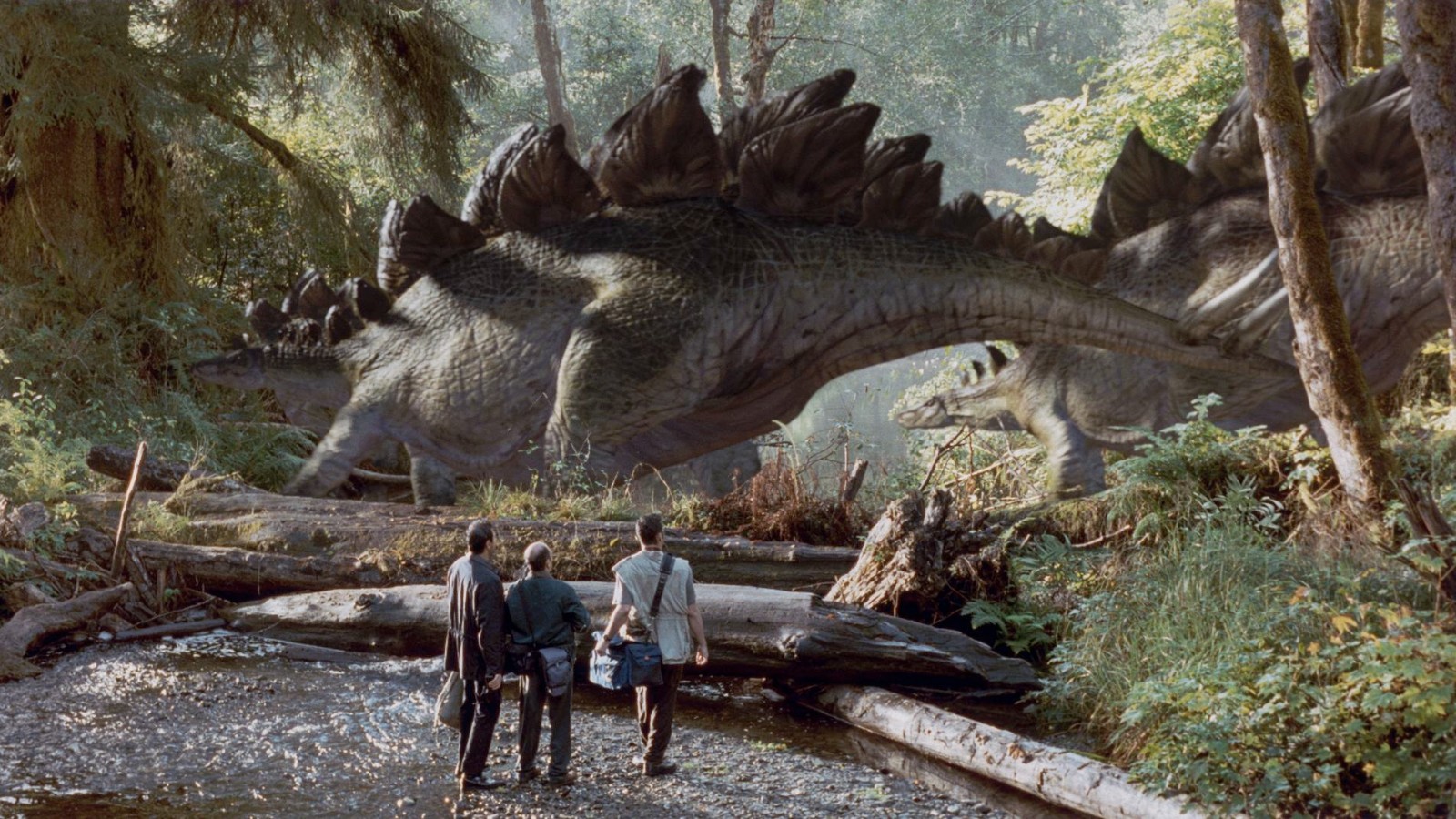
With Dr. Ian Malcolm (Jeff Goldblum) leading the sequel, he leads a team to a second island where dinosaurs roam freely, though a threat jeopardizes their peace. Trying to carve out its own path in the wake of Jurassic Park was a tall order.

It leans more into the horror genre this time around, which gives it a fresh feeling, but The Lost World doesn't quite have the same glimmer and spectacle of the first movie's cast (although Goldblum was certainly a standout character).

8. Disclosure Day

(Image credit: Universal Pictures)

Release date: June 12, 2026 | Cast: Emily Blunt, Josh O'Connor, Colin Firth | Rotten Tomatoes score: 79% critics, 70% audience

After an 8-year hiatus away from the genre, Spielberg finally returned to sci-fi with 2026's Disclosure Day. Was it worth the wait? Eh.

Disclosure Day centers on a conspiracy to cover up the existence of aliens, and it gets a lot of things right. The cast plays their roles to perfection, the dialogue is snappy and witty, and it hits all the right marks aesthetically, but something about it just feels… off.

The central story — following an unlikely duo (Blunt & Connor) on a journey to uncover and reveal the truth to the world — asks you to think, but often falls apart when you do, as you start to notice the string of McGuffins, contrivances, and vapid action scenes stringing it together.

It's an entertaining watch, but nothing more, which is a real shame from a filmmaker of Spielberg's caliber.

7. War of the Worlds

(Image credit: Paramount Pictures)

Release date: June 29, 2005 | Cast: Tom Cruise, Dakota Fanning, Tim Robbins | Rotten Tomatoes score: 76% critics, 42% audience

H.G. Wells' novel The War of the Worlds practically begged for a movie director with abundant talent to tackle it. Fortunately, Spielberg stepped up to the plate, transforming the short novel into a big-screen masterpiece.

War of the Worlds follows Ray Ferrier (Tom Cruise), a divorced crane operator, who must protect his children from an alien invasion – not your usual setup for a weekend of parental custody! It's epic in proportion and relentless in action, with the narrative underscore of Morgan Freeman's liquid caramel voice setting the tone.

This movie was another return to aliens for Spielberg, although here he opts for their arrival to be even more devastating and unpredictable than in his previous visitations. He finds a great balance between big action and moments of reflection, weaving an ever-building tension throughout the movie that has captivated audiences for over 20 years.

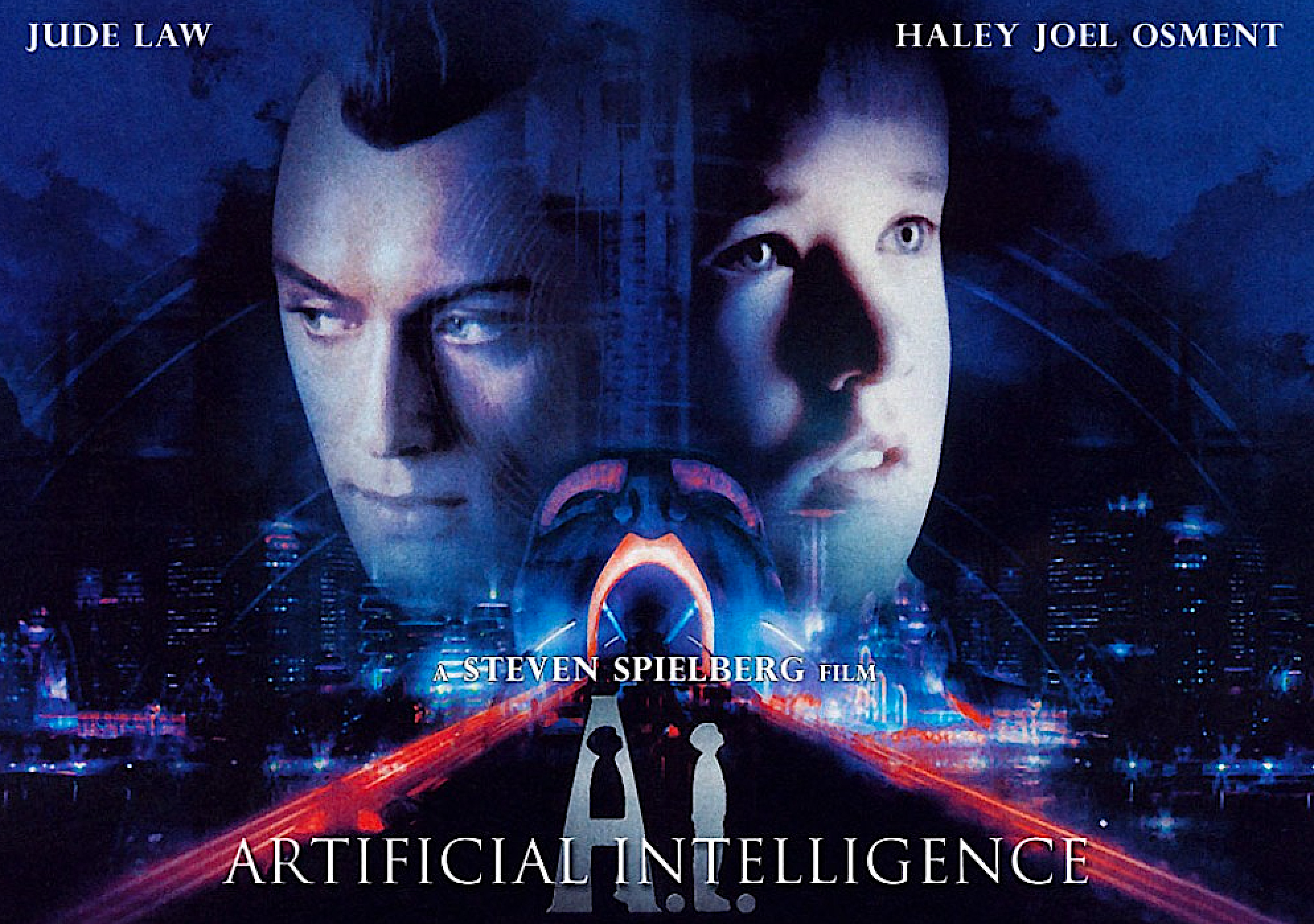
6. A.I. Artificial Intelligence

(Image credit: Warner Bros.)

Release date: June 29, 2001 | Cast: Haley Joel Osment, Jude Law, Brendan Gleeson | Rotten Tomatoes score: 76% critics, 64% audience

Before ChatGPT and Grok, there was David (Haley Joel Osment), an A.I. android child programmed to love.

Initially, Stanley Kubrick was spearheading the movie, but let it go as he felt CGI wouldn't do David's role justice, nor could any child actor. Instead, he handed it over to Spielberg, who believed that a child could.

Taking place in a futuristic world, "A.I. Artificial Intelligence" is a loosely based adaptation of Brian Aldiss' sci-fi short story "Supertoys Last All Summer Long." Young David is adopted into a family who are going through their own parental torture, but he never quite feels at home.

To understand who he truly is, David embarks on a journey that's unbelievably lonely and incredibly daring. It's equal parts moving as it is disturbing, and you'll be left questioning what's morally right and wrong.

5. Ready Player One

(Image credit: Warner Bros.)

Release date: March 29, 2018 | Cast: Tye Sheridan, Olivia Cooke, Simon Pegg | Rotten Tomatoes score: 71% critics, 77% audience

Ready Player One is another book adaptation for Spielberg, this time of Ernest Cline's novel of the same name. Welcome to the 2040s, where the virtual reality world OASIS is the place to be… especially if you're someone like orphan Wade Watts, desperately searching for a better life outside of the dystopian hellscape that Earth has become.

When OASIS creator and billionaire James Halliday passes away, his OASIS avatar announces a competition for the ultimate prize – ownership of the digital society itself (and a staggering amount of money, of course). This sends the world into a frenzy, with players, including Wade, determined to win. Including some rather nasty, big corpo bullies who enlist specialist teams to hunt down clues, and other players, too.

With nostalgic odes to musical history and memories of video games woven within, Spielberg works hard to bring Cline's love letter to the 80s to life in a visually captivating and action-packed way. Cline's sequel, Ready Player Two, is reportedly in development, though this time Spielberg is only attached as a producer.

4. Minority Report

(Image credit: 20th Century Fox)

Release date: June 21, 2002 | Cast: Tom Cruise, Colin Farrell, Samantha Morton | Rotten Tomatoes score: 89% critics, 80% audience

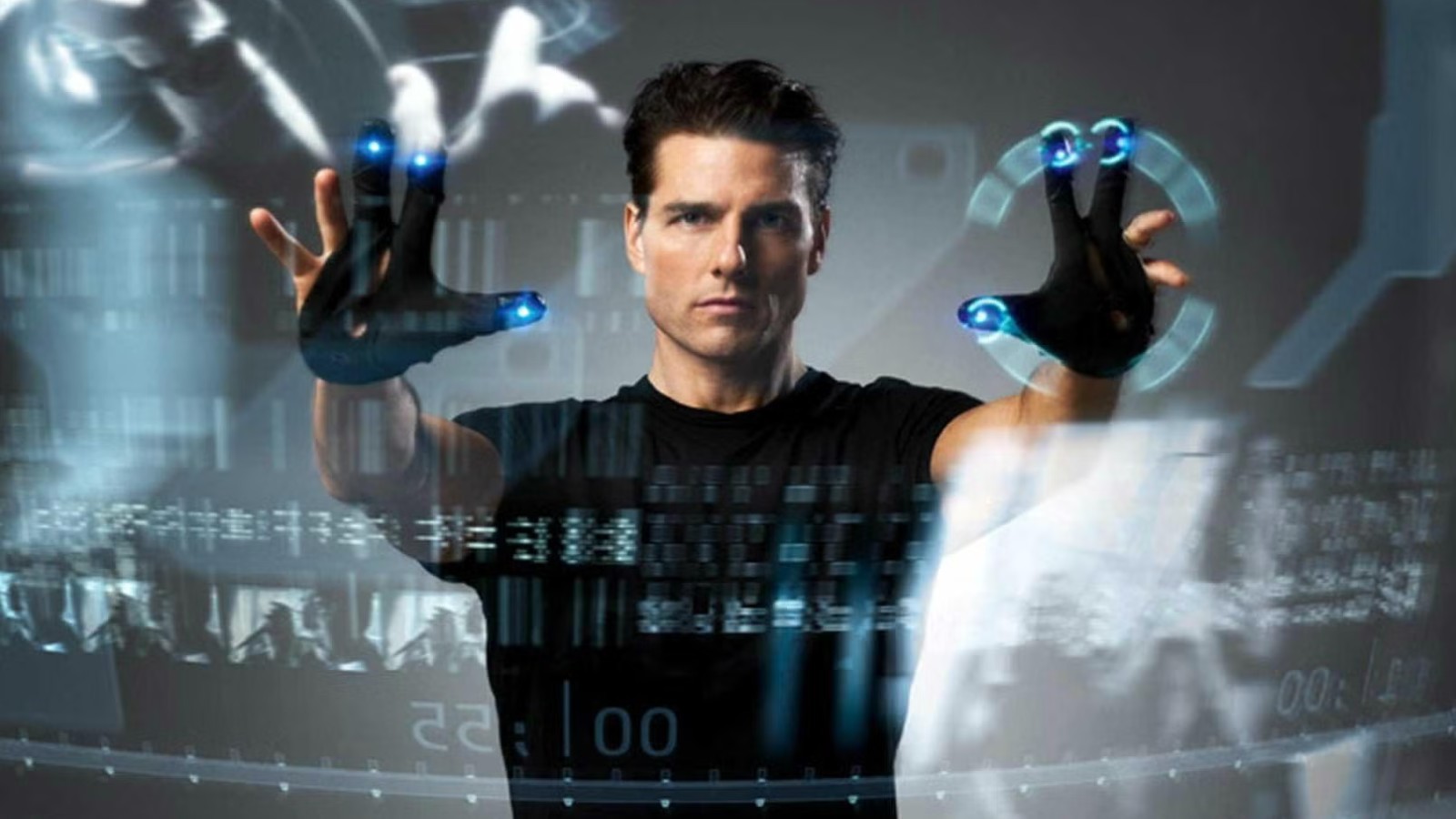
Though Cruise and Spielberg later worked on War of the Worlds, Minority Report came first and is arguably the better of their collaborations. A crime department in not-so-far-away 2054 predicts crimes before they happen. John Anderton (Tom Cruise) heads up the PreCrime unit and is helped largely by three psychics called Precognitives (Precogs) that they have hooked up in strange spa-like tubs.

It quickly twists into a nightmare for John as his name comes up as a soon-to-be criminal, which prompts him to go on the run to prove his innocence before it's too late. Minority Report is a crime thriller with all kinds of twisted, sci-fi futurism tech from sick sticks to eye-digging robots.

Spielberg adds heart-pounding, sensational chases to craft this true epic, and ironically, it made several predictions about future life that ring eerily true today.

3. Jurassic Park

(Image credit: Jun Maegawa, CC BY-SA 3.0)

Release date: June 11, 1993 | Cast: Sam Neill, Laura Dern, Jeff Goldblum | Rotten Tomatoes score: 91% critics, 91% audience

When Spielberg took on the movie adaptation of Michael Crichton's novel "Jurassic Park," he transformed the way we see dinosaurs forever.

With a mix of CGI and animatronics, it found an impressive balance that leapt the genre forward, and it's certainly far more captivating than the Jurassic movie sequels that have come since.

Experts are invited to experience an amusement park built around cloned dinosaurs. What could go wrong? Well, plenty. The stage is set for unbelievable tension and suspense-building, and it's executed perfectly through Spielberg's directorial prowess with memorable scenes from raptors in the kitchen to a T-Rex in the toilet.

It's not only these iconic dinosaur moments that make the movie captivating, but in true Spielberg fashion, it's the conversations and intricate web of personalities, too. And John Williams' legendary film score, too, of course. With dinosaurs, you can fall prey to doing a bit too much. Jurassic Park does just enough.

2. Close Encounters of the Third Kind

(Image credit: Colombia Pictures)

Release date: November 16, 1977 | Cast: Richard Dreyfuss, Teri Garr, Melinda Dillon | Rotten Tomatoes score: 91% critics, 85% audience

As we mentioned in the intro, Firelight was a movie that Spielberg made in his teens, shown only within the walls of the Phoenix Little Theatre. Then, in 1977, he took his initial Firelight ideas so much further by crafting Close Encounters of the Third Kind. It's Spielberg's first proper foray into UFOs and what many have dreamed would eventually lead to a spiritual successor in Disclosure Day.

Here we have Roy Neary (Richard Dreyfuss), who has a close encounter of the Third Kind, finding a UFO when working as an electrical lineman. Weirdly, the government won't admit that 'they' exist. Unlike his later work with Disclosure Day, this prompts a journey of discovery rather than one of fear. With budget and belief, Spielberg turned his small-town dreams into a huge production that had a significant impact on the sci-fi cinema landscape.

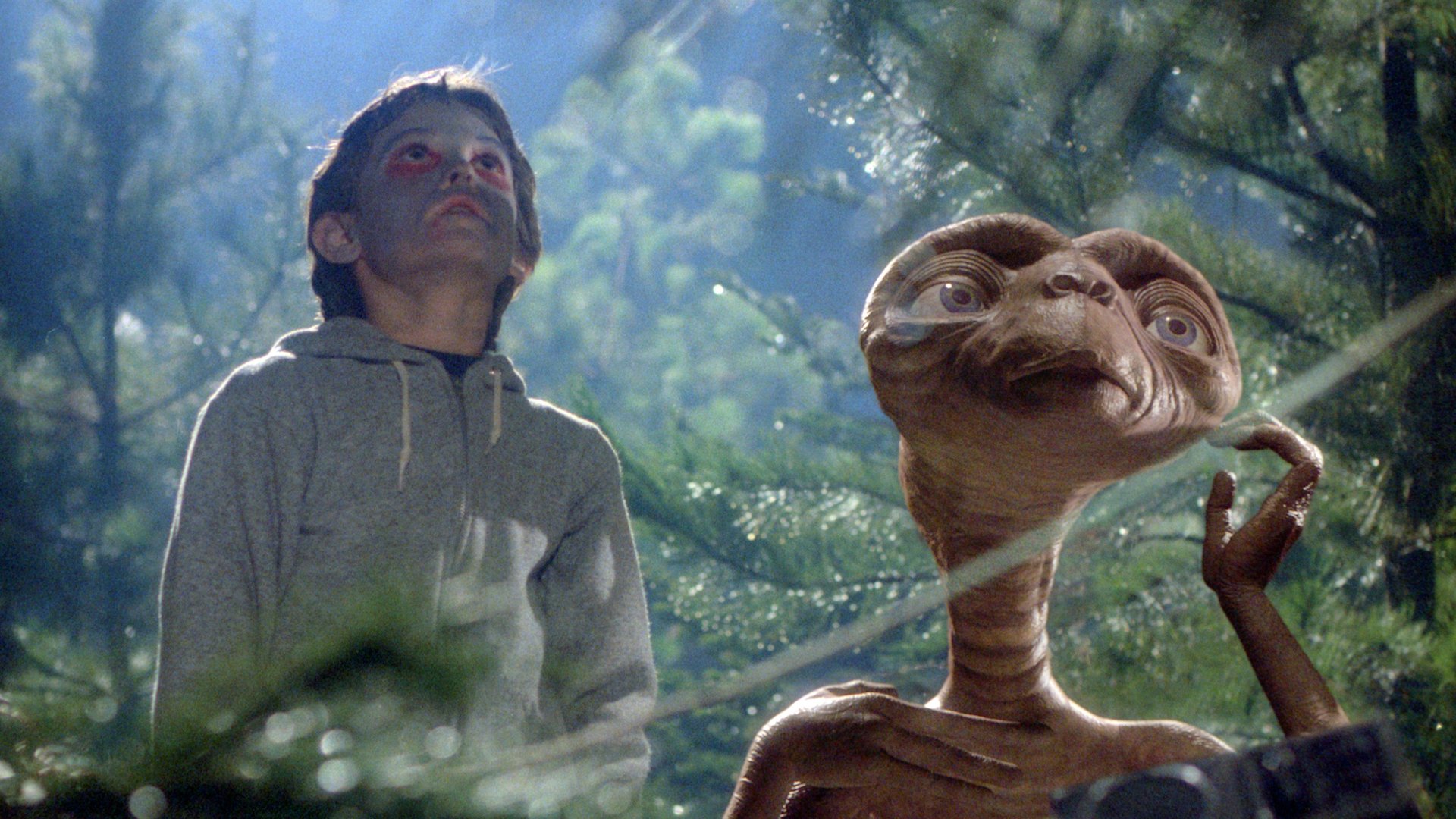
1. E.T. the Extra-Terrestrial

(Image credit: Universal Pictures)

Release date: June 11, 1982 | Cast: Henry Thomas, Drew Barrymore, Peter Coyote | Rotten Tomatoes score: 99% critics, 72% audience

There's just something so utterly delightful about a child's naivety to dress up an alien they've encountered in a closet in a bid to hide its true identity. And that's not the only whimsy of Spielberg's E.T. the Extra-Terrestrial, as it's a beautiful adventure, unravelling the innocence of childhood alongside the curiosity about what's really 'out there.'

Aliens, for the most part, have been portrayed as devastating lifeforms that are a threat to Earth. Even Spielberg is guilty of using this narrative. However, E.T. is the antithesis of this with his Grogu-level of cuteness and gentle nature. Elliott (Henry Thomas) forms an unbreakable bond with E.T that'll make you wonder whether your ingrained fear of aliens is really worth all the worry.

E.T. is one of the best examples of Spielberg's ability to combine emotion with adventure, readjusting our thoughts about life as we know it. Plus, it's got a fantastic musical score to boot. It is, after all, one of the best sci-fi movies of all time.

‘Star Fox’ is an eye-catching reimagining of a timeless sci-fi classic, but we’ve been here before

Star Fox 64 is the Nintendo game that refuses to fade away, and we're not complaining, especially when the new Switch 2 remake — simply titled Star Fox — amplifies its replay value and expands the original vision with a bunch of new content.

Roughly a decade ago, Star Fox Zero almost killed the franchise for good. The ill-fated Wii U entry's structure and plot stuck staggeringly close to Star Fox 64 (Lylat Wars for us PAL gamers), but no one could definitely answer if it was a remake, reboot, reimagining, or something else entirely.

It being a remake wouldn't have mattered, except that Star Fox 64 3D (for the little brave 3DS) had already done that with strong results. Now in 2026, we're still flying around the same planets with 'Star Fox'.

Considering Fox McCloud's secondary role in the recent Super Mario Galaxy Movie, you'd expect Nintendo to push onward with an all-new game in the enduring science fiction rail shooter series, yet Star Fox seems fated to play the greatest hits again and again. Fortunately, it nails what made Star Fox 64 so enduring and is the most complete take on Team Star Fox's greatest adventure.

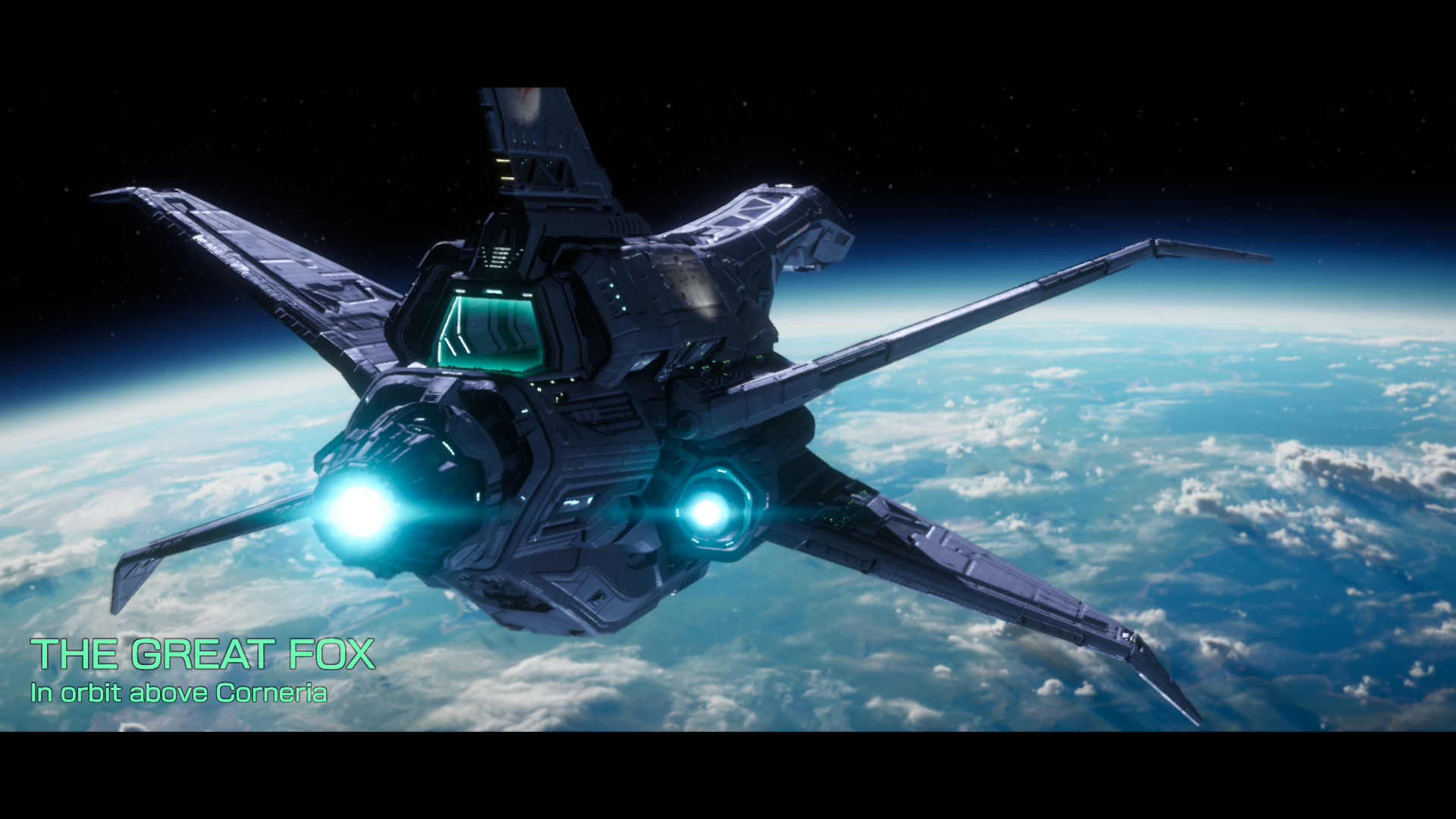
The story is the same: The mad scientist Andross is exiled to the unwelcoming planet of Venom by General Pepper for almost destroying Corneria, the fourth planet of the Lylat system.

Screenshot from sci-fi video game

(Image credit: Nintendo)

When suspicious activity is detected on the doomed world a few years later, Team Star Fox goes to investigate and – spoiler alert – James McCloud is killed by Andross following a betrayal from inside the team. Some time passes, and Andross launches an all-out attack against Lylat's forces, so it's time for Team Star Fox (now captained by Fox McCloud, James' son) to set things right.

And yes, his last name is Fox, and he is a Fox. If you're new to the series, there are no humans in this universe, only anthropomorphic animals.

While Star Fox doesn't sacrifice the original's arcade-y nature (you can 'beat it' in under two hours), it makes space for meatier cutscenes which better define the characters and the high stakes of the story.

It's all simple stuff with no real room for twists and turns that never gets in the way of the game's fast pace, but Velan Studios' effort is a commendable reminder that even extremely faithful remakes can add to a classic formula. Shoutout to the new arrangements of memorable musical themes from the original, too; the orchestral refresh simply sounds amazing.

Screenshot from sci-fi video game

(Image credit: Nintendo)

The character redesigns will no doubt be a point of contention. Fox McCloud doesn't look nearly as stylish as in past Star Fox games — or as he does in this year's Mario Galaxy flick — while team members like Slippy Toad (who seems slippery) and Falco Lombardi land right in uncanny valley territory. There's a distinct charm to Star Fox's art direction — and the conversation surrounding the toons proves it — but the presentation no doubt raises the question of how much realism is too much realism for a property as cartoony as this.

The Arwings, enemy ships, and other vehicles look absolutely dashing and move with a smoothness that would've made Nintendo kids in the 1990s levitate, though. Both during missions and in cutscenes, there's speed and weight to the stars of the show, and smaller touches like laser beams briefly illuminating the environments remind us how far graphics have come.

The same could be said about the colorful levels; from Corneria to Solar, there's a vividness to Star Fox's many space locales that sometimes can be even distracting when the screen is filled with foes and incoming attacks.

Screenshot from sci-fi video game

(Image credit: Nintendo)

Star Fox 64's 'pick up and play' nature remains untouched and only lightly upgraded. The control scheme could be more intuitive, but it's not too complex; moving around the screen, executing evasive maneuvers, and shooting down enemies feels snappy. Some of the latter levels weren't as 'tight' as I'd hoped for, but maybe that's just me still adjusting to the unavoidable nuances that come with a full tech rework under the hood.

The highlight, though, may be Switch 2's unique mouse mode, which is put to great use here; playing through the campaign with it plus the cockpit view feels transformative (It was impressive in Metroid Prime 4). Of course, the action runs at 60 frames per second with sharp image resolution in both docked and handheld modes, helping you achieve high scores, no matter which control option you use.

Blasting through the short (but highly replayable) campaign is just the beginning. There are hidden routes to discover, medals to obtain, new challenges to tackle, and the brutal Expert difficulty to clear. Ultimately, Star Fox is all about perfecting high scores and mastering a new iteration of a classic that's been dominated over the decades by the most dedicated pilots. It's Nintendo offering "one last ride" (hopefully) and inviting vets to reexperience the Lylat Wars in new, more demanding ways beyond the first run. On that front, Star Fox is a resounding success.

Screenshot from sci-fi video game

(Image credit: Nintendo)

But it's hard to usher in a future for a dormant series without betting some chips on the casual crowd and newcomers, and I'd say most folks without an already established connection to the series (rail shooters are incredibly niche nowadays) are likely to go through Star Fox's campaign once or twice and then complain about the price tag.

There's actually a lot to Star Fox, but it mostly boils down to replaying the same missions in different ways. It's a retro sensibility that older gamers find captivating, but times have changed, and you have to wonder whether Nintendo should've gunned for an all-new game instead.

The multiplayer offerings shouldn't be ignored, though. Co-op (local or via the wireless GameShare function) lets two players go through the campaign by splitting the Arwing controls into movement and shooting, which is a nice offbeat bit of fun. Online, things get more interesting with a 4v4 competitive mode across three maps with different objectives and plenty of chaos, with NPC starfighters also fighting for control of objectives alongside players.

Matches are fast and intense, with free flight and plenty of power-ups adding to the spectacle and scale of the action. There's not much variety here, but the bones are strong. If they add more maps and modes, it could be something, but as it stands, it feels like one of those obligatory multiplayer modes every game had in the Xbox 360 era

Screenshot from sci-fi video game

(Image credit: Nintendo)

Players willing to pick up the Switch 2 camera can also 'wear' the look of their favorite Star Fox characters VTuber-style while playing online, which is a silly little extra with incredible comedic potential in the right hands. Hardly a game-selling addition, but it's the kind of playful, family-friendly addition we expect from Nintendo.

Star Fox bets big on already established fans and hopes for the best when it comes to onboarding newbies. Will it pay off? Maybe, but 'nostalgia gains' are declining everywhere, and I'm worried that if this doesn't perform, we may be stuck waiting for a new entry that never comes... again.

Star Fox is available now for purchase on Nintendo Switch 2.

A review code for Star Fox was provided by Nintendo.

Blast off on a high-octane adventure to save a star system from invasion. Step into the cockpit and fly across the stars and skies with Fox McCloud and team!

This cinematic take on the Star Fox 64 story features fully voiced dialogue and cutscenes, an epic orchestral soundtrack, mouse control support, and a complete visual overhaul that takes advantage of the enhanced performance of the Nintendo Switch 2.View Deal

It’s been 25 years since ‘A.I. Artificial Intelligence’, and we think this was peak Spielberg sci-fi

On the occasion of its 25th anniversary today, it’s worth noting a certain sense of irony that Steven Spielberg's "A.I. Artificial Intelligence" seems oddly prescient into today’s AI-obsessed environment, especially when compared to the master director’s recently released "Disclosure Day," which sadly feels three decades late to the whole governmental cover-up UFO/UAP party.

"A.I. Artificial Intelligence's" path to the silver screen is a strange odyssey, one that includes two of the world's greatest filmmakers, a '60s short story about global warming and advanced robots, a child star hot off a horror hit, multiple production starts and stops, and even a crazy sudden death conspiracy theory.

This $75 million futuristic fairy tale was filmed in a dreamy, desaturated preternatural haze that draws audiences into its emotional depths, making "A.I." one of Spielberg’s finest films made during what can be considered his darker, more serious period of moviemaking.

Released by Warner Brothers on June 29, 2001, the mature sci-fi film attracted a diverse audience that was mesmerized by the depiction of a climate-changed world and the advancement of artificial humans called mechas. It tells the story of a couple whose child is stricken with a fatal disease, causing them to purchase David, a new model of android child programmed to love.

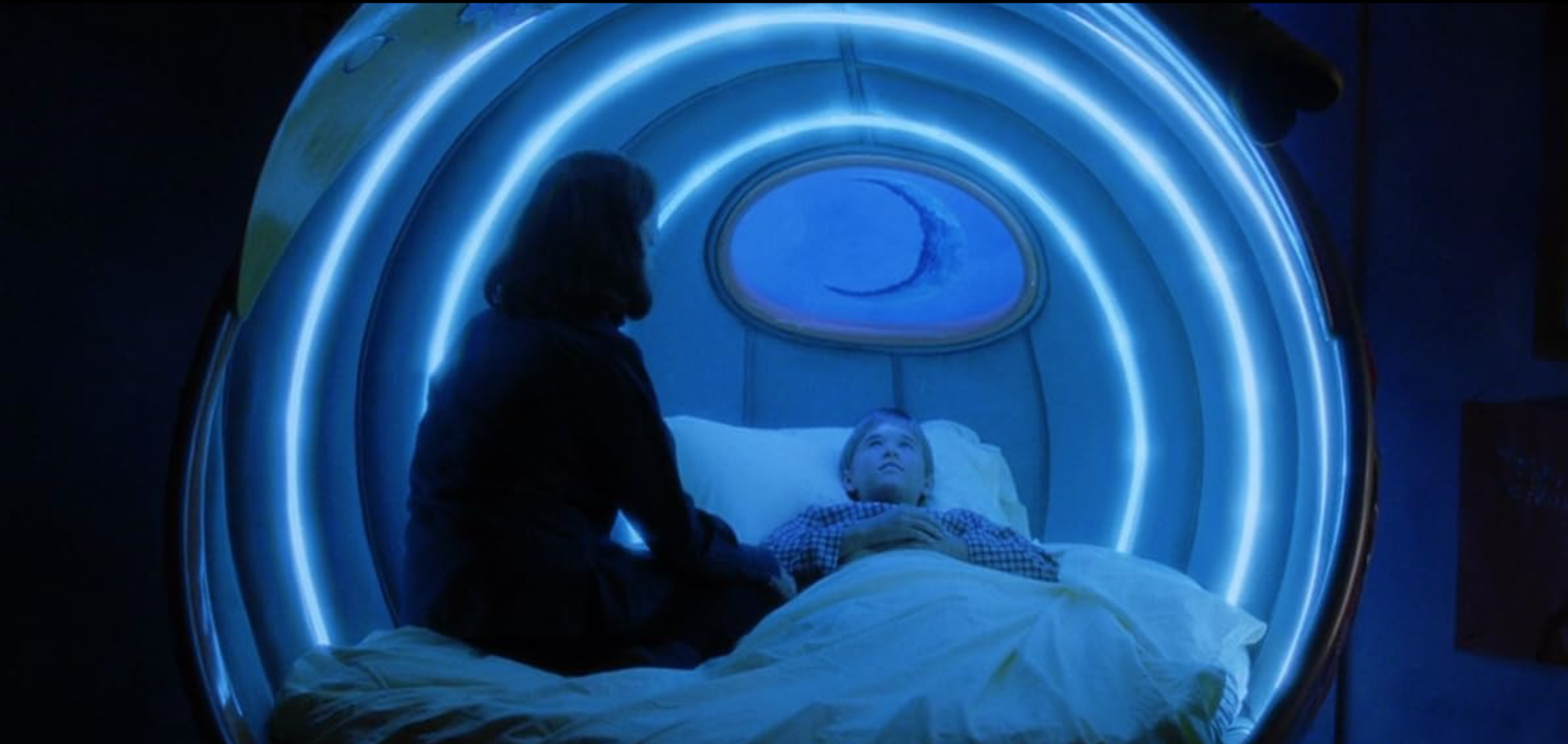
When their son recovers, conflict between the human and mecha becomes hazardous, and David is disposed of, where he meets up with a band of stray robots. Attuned to the fairy tale of "Pinocchio" and yearning to become a real boy, David and his A.I. toy bear Teddy embark on a strange road trip to a flooded Manhattan to find the Blue Fairy, who might grant him his wish.

25 years later, "A.I. Artificial Intelligence" feels even more timely (Image credit: Warner Bros.)

Spielberg naturally brought along his faithful A-list team of Oscar-winning collaborators that included cinematographer Janusz Kaminski, editor Michael Kahn, and composer John Williams for this PG-13 sci-fi adventure whose eventual global box office take was a respectable $236 million.

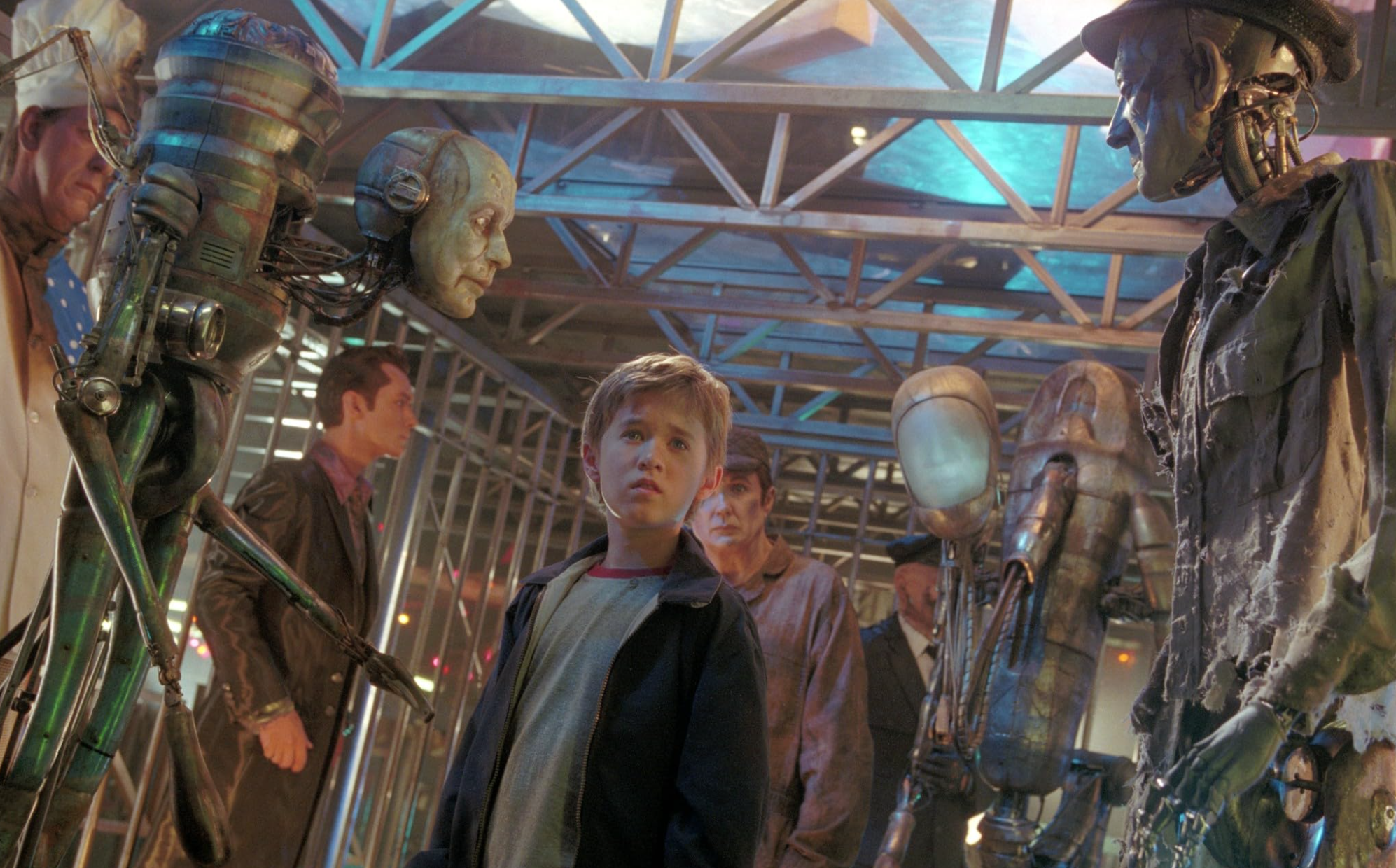
Starring Haley Joel Osment, Frances O’Connor, Jude Law, Sam Robards, Brendan Gleeson, and William Hurt, "A.I." was a brilliant storm of spectacular visual effects, especially observed in the Flesh Fair set pieces where robots were forced into gladiatorial battles to entertain post-apocalyptic crowds.

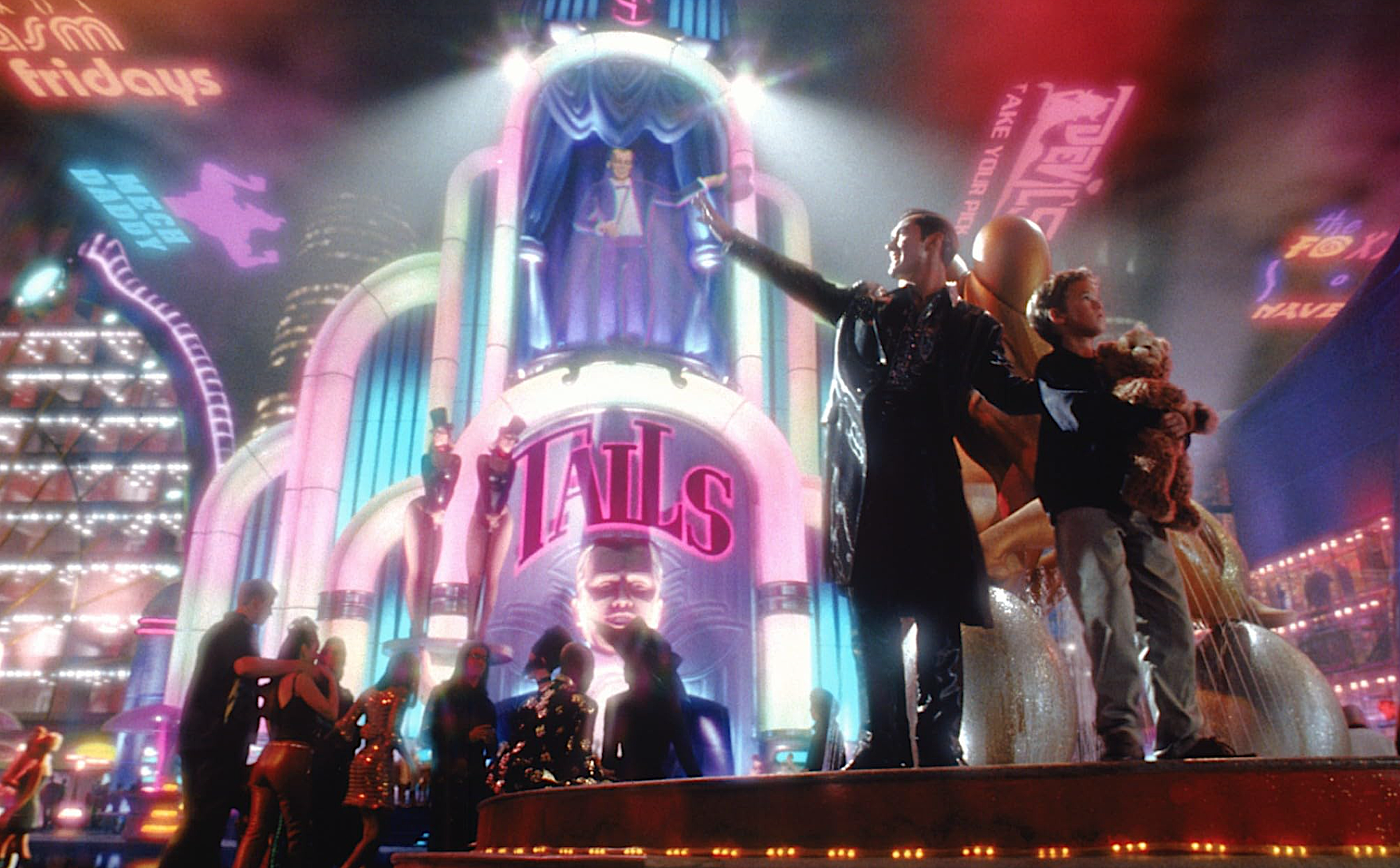
Jude Law and Haley Joel Osment in the decadent Rogue City from "A.I. Artificial Intelligence" (Image credit: Warner Bros.)

Law has a lot of ribald fun with his pleasure model android called Gigolo Joe, who rescues David and brings him into his fold as they travel to meet their 'maker' in a sort of twisted "Wizard of Oz"-like journey. Robin Williams also voices an amusing interactive search engine conceived in the likeness of Albert Einstein and aptly called Dr. Know.

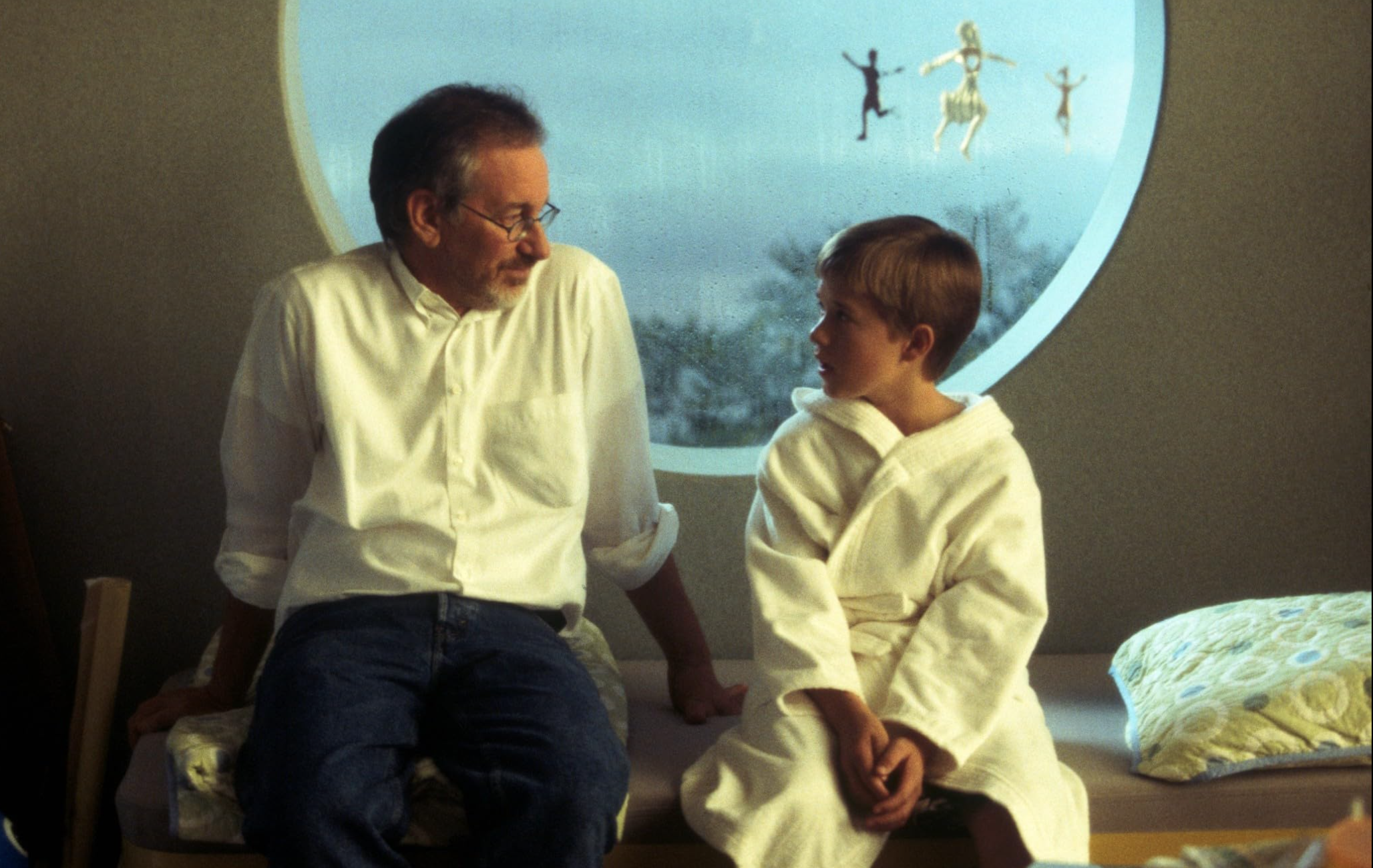
Fresh from his role as Cole Sear, aka the "I see dead people" kid in M. Night Shyamalan’s "The Sixth Sense," Osment gives a shattering performance here as an innocent machine hoping to fulfill its programming and be loved as a real boy. It's been noted that Osment doesn't blink once in the film, and he displays an incredible depth of feeling on screen for such a young actor.

Steven Spielberg working with Haley Joel Osment on the set of "A.I. Artificial Intelligence" (Image credit: Warner Bros.)

"A.I.'s" narrative also returns to one of the major themes seen in Spielberg’s catalog, that of the dissolving family unit. It’s been well documented and discussed over the years that his parents’ divorce when he was 19 had a devastating effect on Spielberg.

That trauma of fractured families has been well played out in numerous Spielberg movies, including "Close Encounters of the Third Kind," "E.T. the Extra-Terrestrial," "Empire of the Sun," "War of the Worlds," and is even revealed in detail in "The Fabelmans."

Here in "A.I.", the broken home that Haley Joel Osment’s android character, David, experiences feels even more raw. His adoring mother, Monica, sensing David's emotional instability and fearing for her family’s life, drives her robo-child out to the woods and abandons him as he desperately begs her to stop. It’s a tearful, heart-wrenching moment few viewers forget.

"A.I. Artificial Intelligence" began life as a 1969 short story by author Brian Aldiss titled "Super-Toys Last All Summer Long." It’s a brief read with a twist ending that we won’t spoil here.

Adapting the futuristic tale of a flooded New York City, a Cybertronics engineer, his family, a next-generation synthetic child, and a robotic teddy bear was a passion project of the great Stanley Kubrick. The meticulous filmmaker made several attempts to crack the plot with numerous writers, including Sara Maitland, Ian Watson, and Brian Aldiss himself, but it never quite coalesced into a finished script.

Spielberg was then brought in as a potential director in 1995, and the two cinematic geniuses collaborated for years to map out the story. Upon Kubrick's surprising death in 1999 (some believing foul play for revealing industry secrets), four days following the release of "Eyes Wide Shut," Spielberg agreed to complete the project for his friend and mentor and eventually drafted the finished screenplay.

It's naturally a bit of a cobbled-together effort with so many ideas cooked in, but it all works as a type of existential exploration of the role of artificial beings in future society, our responsibility to our intelligent creations, and their emotional potential.

A dreamy scene from Steven Spielberg's "A.I. Artificial Intelligence" (Image credit: Warner Bros.)

Trying to stay true to Kubrick’s ideals, Spielberg was intimately involved in the writing, producing, and directing of "A.I.," which represents one of only two films in his entire career where that creative trifecta occurred, the other film project being 2022’s "The Fabelmans."

Coming off of 1998's triumphant "Saving Private Ryan," 2001's "A.I." continued the pattern of Spielberg’s serious segment of his career in a run that included four science fiction movies dropped over a seven-year period. Besides "A.I.," those additional releases were 2002’s "Minority Report," 2005’s "War of the Worlds," and 2008’s "Indiana Jones and the Kingdom of the Crystal Skull." The master wouldn’t revisit the genre again for ten years until 2018’s "Ready Player One."

Advancements in digital visual effects in the decade of the 2000s benefited from the millions of dollars poured into franchises like "Star Wars," "Harry Potter," "Pirates of the Caribbean," and "Transformers." "A.I." was one of the first to benefit from that infusion of innovation that kicked off with the first "Star Wars" prequel, 1999's "The Phantom Menace."

Technology not being up to depicting a life-like robot was one of the sticking points for Kubrick, but a combo of practical effects from Stan Winston Studio and CGI did the trick.

Haley Joel Osment and Jude Law in "A.I. Artificial Intelligence" (Image credit: Warner Bros.)

Another creative synthesis between Kubrick and Spielberg regarding "A.I.'s" story involves their shared love of Carlo Collodi’s classic children’s story, "The Adventures of Pinocchio," with Kubrick's vision of the film as a sort of Pinocchio with robots. Spielberg's "Close Encounters of the Third Kind" contains several references to the Disney animated "Pinocchio" as well.

The fusion of Kubrick's bleak, unflattering view of human nature paired with Spielberg's wondrous warmth and sentimentality makes for a unique cinematic cocktail that keeps "A.I." fresh and relevant.

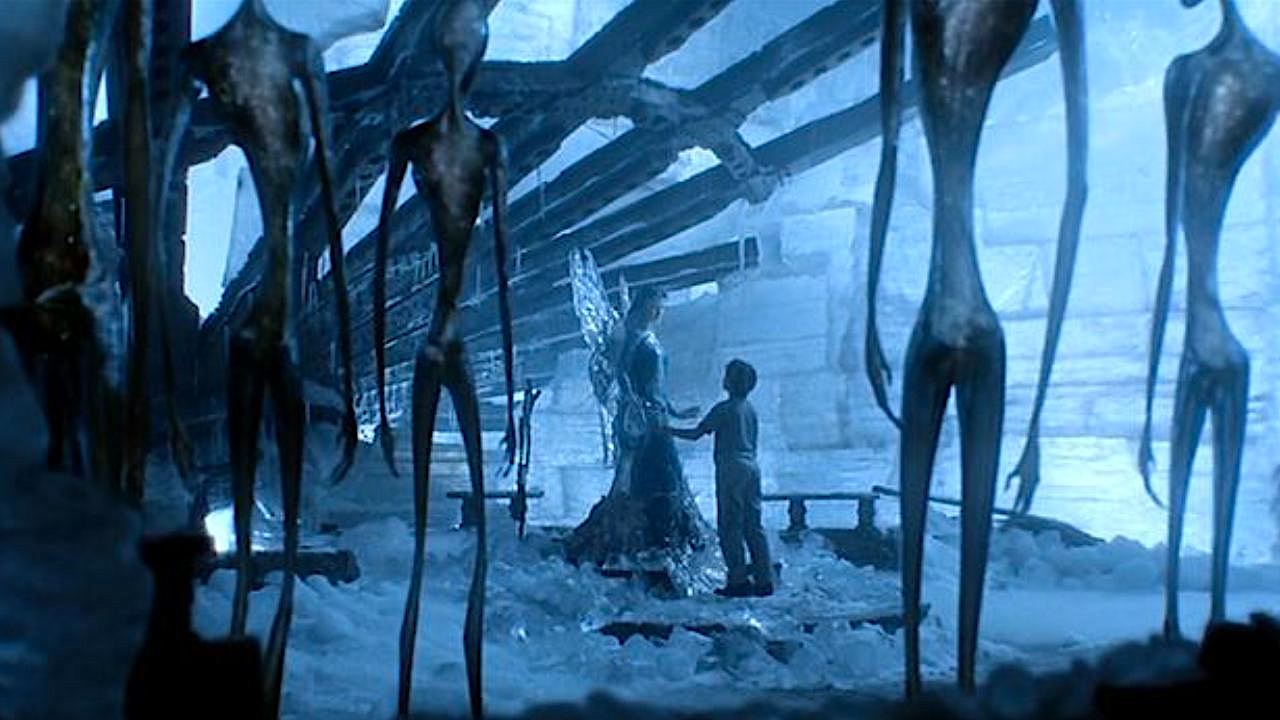
One controversial element of "A.I." is the ending with the humanoid aliens using the guise of the Blue Fairy to grant David’s wish of one last day with his mother and the recurring motif of his wanting to become a real boy and simply be loved.

Advanced mechas thousand of years in the future watch David and the Blue Fairy interact in "A.I. Artificial Intelligence." (Image credit: Warner Bros.)

It’s a bittersweet finale that’s not without its detractors, but the simple fact that it's still fertile territory for spirited debate points to the movie's lasting importance in Spielberg’s oeuvre, and one that remains even more topical and timely today on "A.I.'s" milestone 25th birthday.

Watch A.I. Artificial Intelligence on Hulu:
Hulu with Ads: $11.99/month or $119.99/year
Premium (No Ads): $18.99/month
‘I’m still a Trekkie at heart’: ‘Starseeker: Astroneer Expeditions’ takes space exploration games in a friendlier direction (interview)

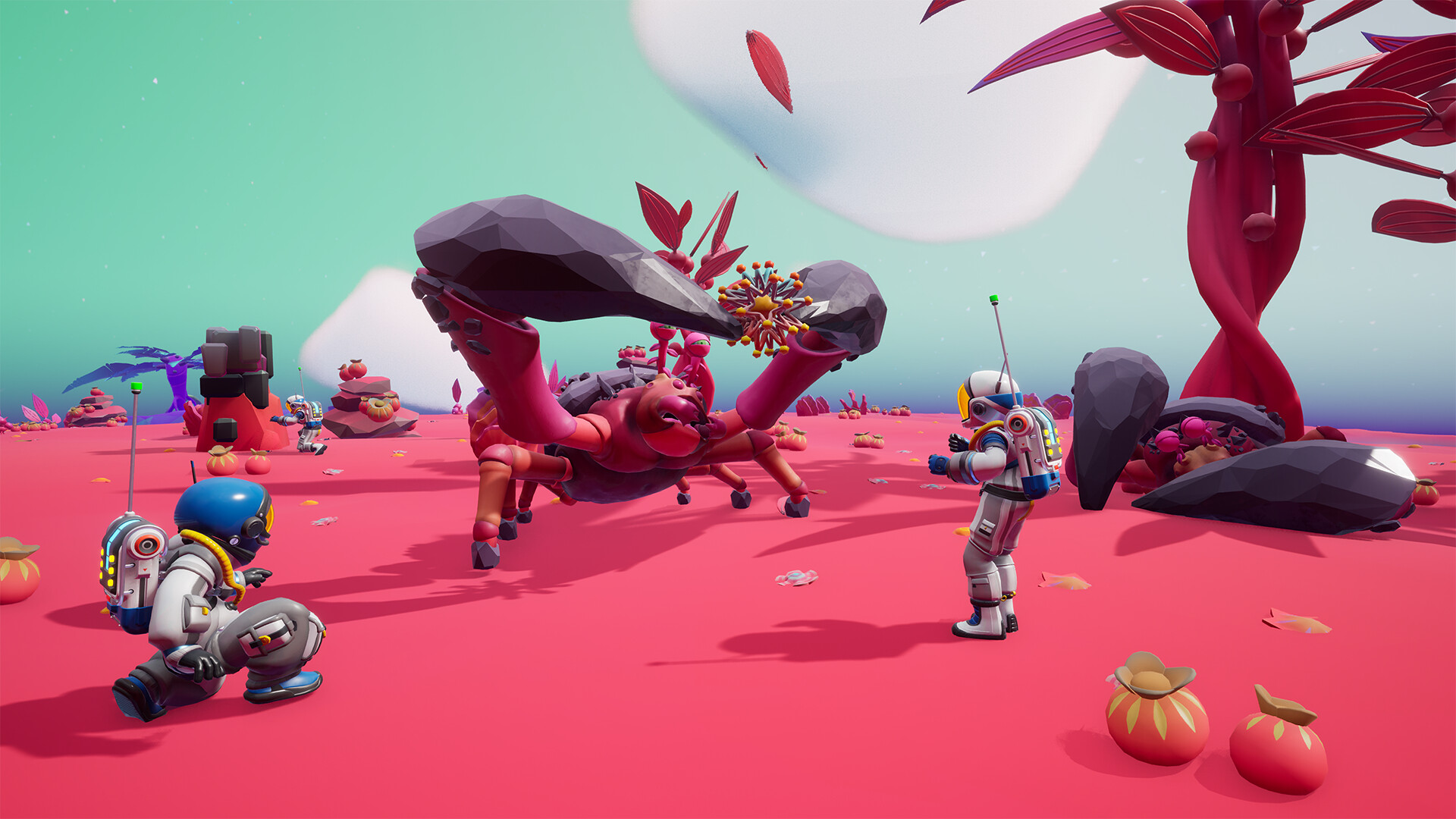
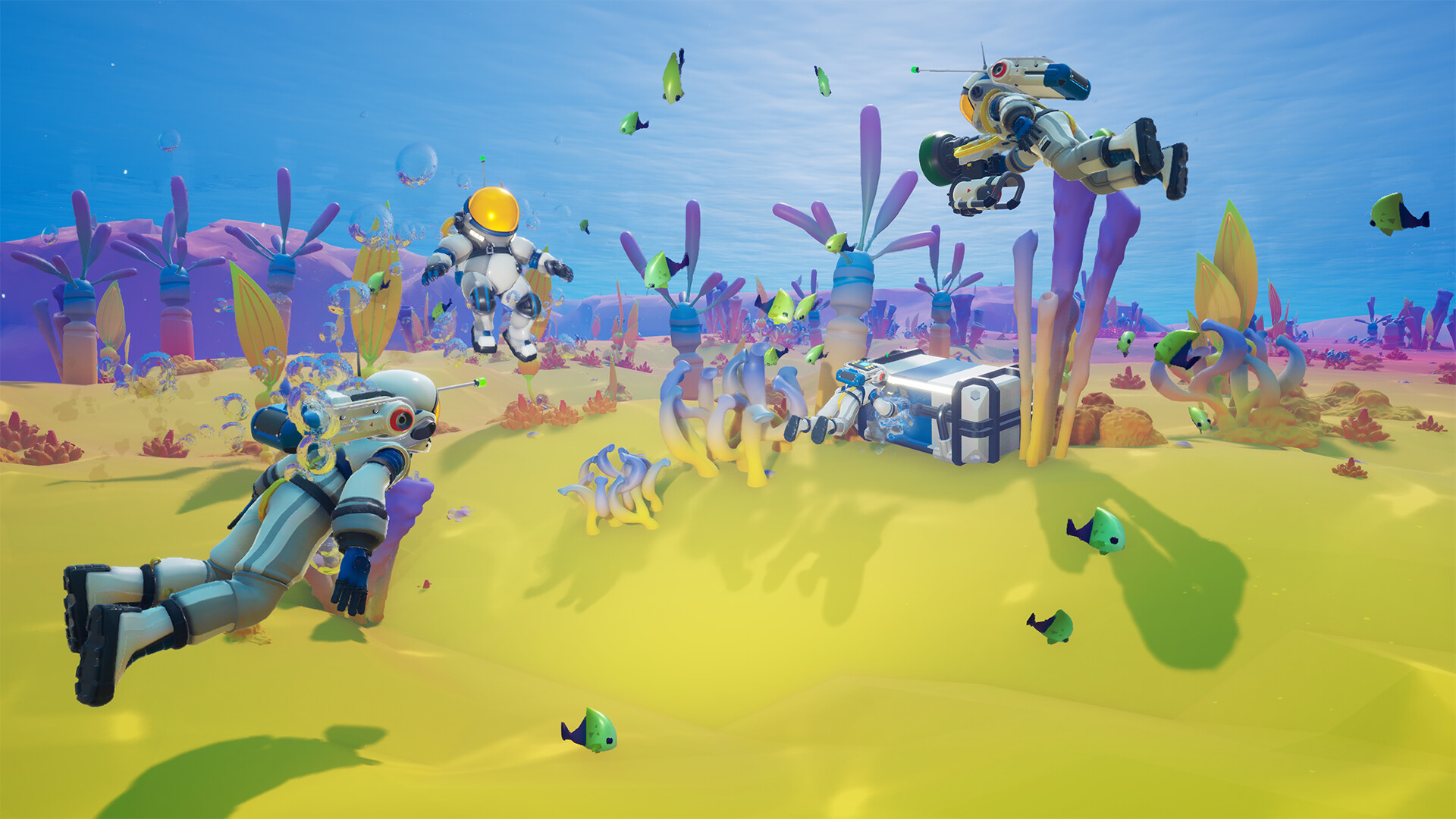
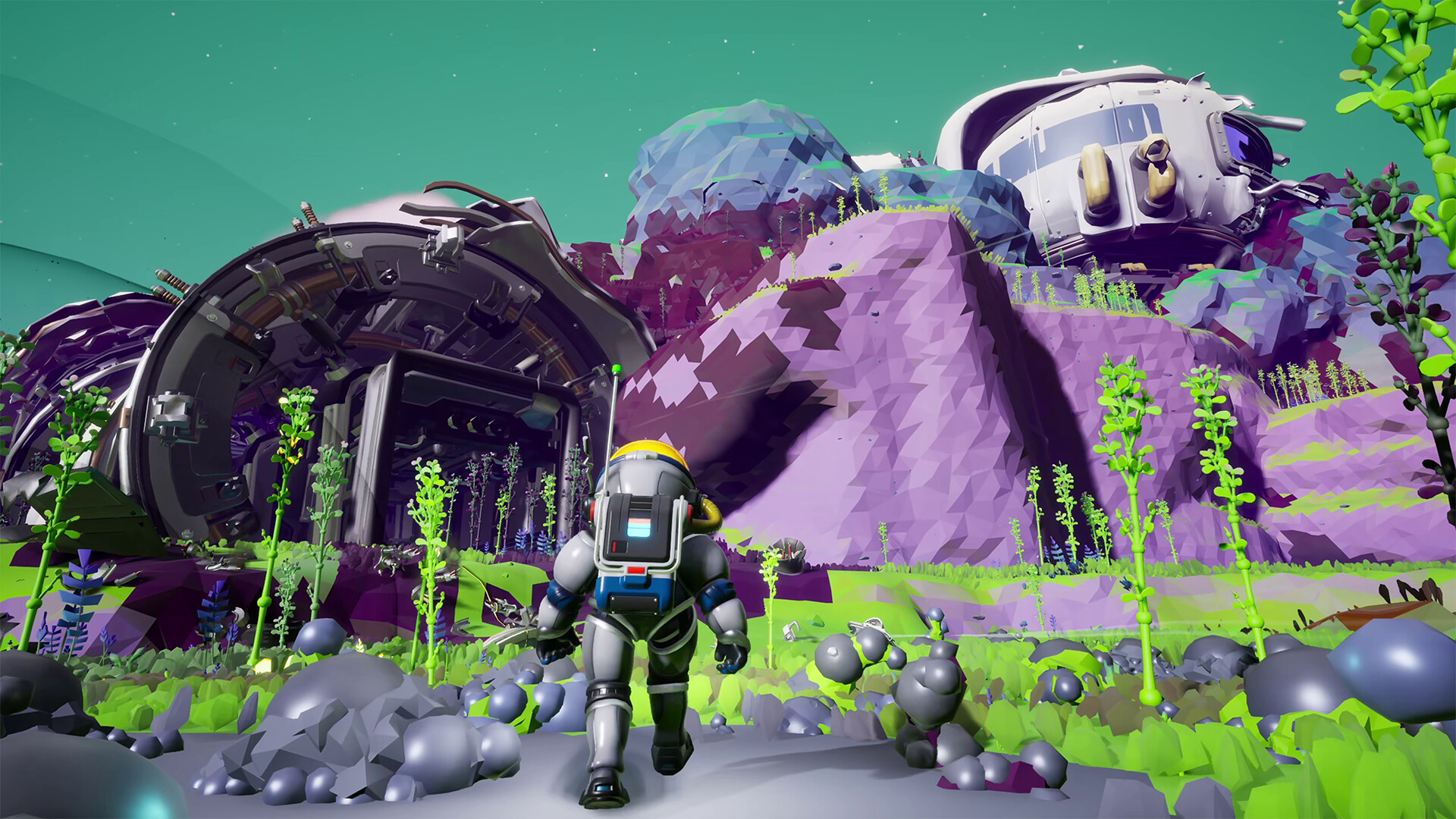
Starseeker: Astroneer Expeditions might look like a direct sequel to Astroneer on the surface, but it's a space exploration game with very different objectives. While its predecessor focuses (it continues to get updates and content packs) on base-building and creative tools, this second title instead takes players on shorter, breezier trips all about discovery and mission-based tasks.

Even in its early access state, Starseeker has the bones to eventually become one of the best cozy sci-fi games around, yet some Astroneer veterans might walk into a successor that isn't what they expected. This isn't Astroneer 2, System Era's Adam Bromell — the studio's creative director, CCO, and co-founder — explained to Space around Starseeker's launch.

Some quotes have been editorialized and lightly trimmed for better flow.

"I've been jonesing for video games that try to foster a sense of community amongst players. I think that when I play with other people, and you share in an accomplishment together, it's really special," explains Bromell. "This goes all the way back to building something with friends inside of Minecraft. When you finally have that moment where you step back, and you go 'Holy shit, look at what we did.' That's a good feeling."

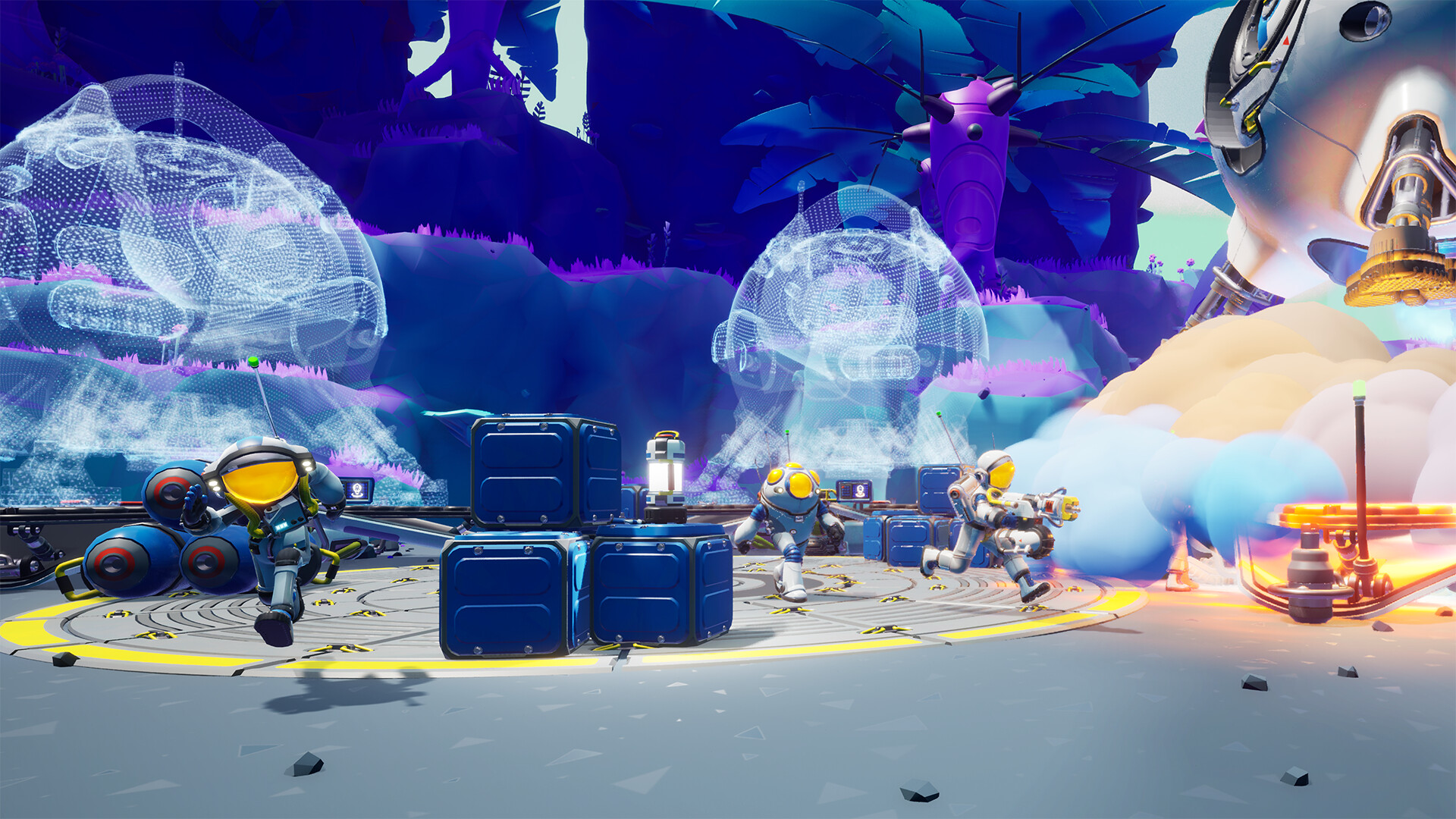
Screenshot from Starseeker: Astroneer Expeditions

(Image credit: Devolver Digital)

In a way, the original Astroneer already achieved that as a "chill base-building survival experience", yet Bromell and System Era wanted to build an experience with a stronger community element that connected everyone.

"My original inspiration with Astroneer was to pay homage to that feeling Gene Roddenberry gave me with Star Trek when I was a kid. Some hope for the future and also showing what it means to be selfless and lead with generosity, seek justice... I'm still a Trekkie at heart," he explained, showing me part of the Star Trek collection he keeps in his office as he talked.

Bromell's celebratory June 11 post on Medium explored many of the same ideas we discussed during our conversation, such as the game being defined from the get-go as "hopeful science fiction", a suggestion that's attributed to System Era's COO Veronica Peshterianu. A few hours with Starseeker make it very clear that it's a game about helping other players out versus venturing into the unknown solo or with a group of close space pals.

You can still play at your own pace or create a party of people you know, but what you do out there directly affects the global experience through community goals. In fact, a common occurrence is running into entirely different teams during an expedition.

After a short planetside tutorial, Starseeker takes players to the ESS Starseeker. This space station serves as the game's central hub, where players can meet other explorers before taking on missions that task them with recovering lost tech, scanning materials and life forms, or simply exploring more of a newfound planet.

It's a much tighter loop than Astroneer's by design, one that favors short play sessions over huge base-building marathons, and the roadmap shared around the game's early access launch is promising meaty (and free) updates over the coming months.

Screenshot of the Starseeker: Astroneer Expeditions roadmap

(Image credit: Devolver Digital)

"Starseeker at early access is the foundation and the bedrock... We're building ourselves a platform for engagement to our community, to show them their accomplishments and to push them out onto these journeys together," Bromell explained. The early access tag will also enable the team to do playful experiments like "morning announcements on the station" or giving squads special rewards based on their performance out there. It sounds like a fluid process as the team "tries to engage with players in that space" based on the feedback it gets.

"Unlike other games in the extraction genre, which we're a piece of, we let you trade directly on the station. You don't have to go in and risk it. We're interested in themes like 'What does a take a penny, leave a penny system in a video game feel like?' Like, how do we even build for that kind of sense of camaraderie?"

Bromell doesn't shy away from comparisons to the booming extraction genre – commonly tied to shooters – but, as expected, losing the loot you find while adventuring isn't as punishing in Starseeker, as no one is actively trying to hurt you. Still, the natural hazards and alien fauna mean there's some real danger to setting foot on uncharted worlds.

A larger narrative — already teased by the game's opening cutscene — is in the works too, though Bromell was coy about revealing details there. When asked about the 'target window' for the culmination of that narrative arc, he confirmed the intention is to wrap it up by the time the game hits 1.0, even if the journey continues after that point. "Between now and 1.0, you'll be introduced to the different antagonists in this game and some of the more extrinsic motivations which the Astroneers have to keep exploring."

Screenshot from Starseeker: Astroneer Expeditions

(Image credit: Devolver Digital)

Astroneer's cartoony visuals don't make you think "simulation" at first glance, but despite that playful side, there's room for real-world influences and nods to real science. Bromell explained they made sure to put resources in the game that "are real things you can find in the world," even if they don't look the same when it comes to shape and how "they would physically grow and manifest".

He also brought up an example from the early Astroneer days: "When we first launched it, we just picked any color we thought was cool. And then all of a sudden, players were like, 'You're calling it malachite, but it's not the right color.' We're not trying to teach anybody anything with too much depth, but certainly, when we borrow from those things, we need to not alienate completely from the idea of what they are."

Such an approach also applies to the Astroneers themselves; Bromell and the team borrowed from the basic NASA aesthetic with "the whites and the grays" and some more elevated colors. "The core theming and palette of the Astroneers aren't unlike both the NASA and Russian space programs, because those were on my Pinterest board when I was drawing these things back in 2015." He added that System Era's goal always was to make games that are familiar and approachable, but more like "kids playing with toys" rather than "full-on simulations".

Screenshot from Starseeker: Astroneer Expeditions

(Image credit: Devolver Digital)

In fact, Bromell was quite vocal during our interview about the need for more "silly games" that aren't afraid of players breaking things: "We aren't afraid of our players exploiting the rules that we're putting in front of you... When we did PAX West, the mission we gave everybody was to bring an altimeter as high as you could go. There was one squad that cheesed the shit out of it with some of the tools, and that was my favorite run. That's how we want players to be thinking about this, not on the golden path that we laid them on."

Starseeker has been brewing for roughly seven years, Bromell told me. "The original year and a half was myself and one or two engineers just playing with the physics sandbox." The concept later grew into this focused experience set in the Astroneer universe that had players going on short treks and completing missions together.

"I feel like Astroneer 2 is always there for us to do. We can always do that. What I don't want to do — and thank God I'm not a business person — is not take a creative swing with the momentum that we have as a team that's learning how to make a game," he added. "We're trying to take the idea of the genre, turn it slightly in our direction, borrowing from games like Helldivers [a co-op shooter full of chaos and destruction], and then building our own thing that wraps it in this connective experience."

Screenshot from Starseeker: Astroneer Expeditions

(Image credit: Devolver Digital)

The conversation could've gone on for hours, I think, as the creative director's heart and mind are in the right place. It's always encouraging to come across developers happy to veer off the main path during an interview, and that sort of defines what Starseeker is as a cooperative online game; the best adventures usually are the ones you stumble upon, not the ones perfectly laid out in front of you.

The game's full vision might take a while to fully blast off, but it's a refreshing one that dares to dream of a better future for space exploration and humanity as a whole. We can always use more of that.

Starseeker: Astroneer Expeditions is now available on PC (Steam & Xbox App), PS5, Xbox Series X|S, and Nintendo Switch 2 in early access. A PC code for this article was provided by the publisher, Devolver Digital.

‘Superman Returns’ at 20: Is it a sequel? Is it a reboot? Two decades on, we’re still not sure

It's a contested field, but John Williams' majestic "Superman" theme is up there with the best the composer's ever written. Almost five decades on, that stirring orchestral march remains synonymous with Krypton's most famous son, still more than capable of making grown men want to run out of telephone boxes (remember those?) while ripping their shirts open.

It's perhaps not surprising, then, that Bryan Singer couldn't imagine using any other music when signed up to direct "Superman Returns", which celebrates its 20th anniversary this weekend.

"From day one, Bryan said he wouldn't even greenlight the movie if he couldn't use the John Williams music," composer John Ottman told IGN at the time of release. "That's how important it was to Bryan. I had moments of wanting to evolve the theme a little bit and alter it slightly, but Bryan was against any modifications at all, even down to the last flute flourish."

But the filmmaker's devotion to Richard Donner's classic 1978 "Superman: The Movie" (still undoubtedly the best "Superman" movie) stretched way beyond replicating that famous score — a homage James Gunn repeated in his own Man of Steel reboot last year. Because, for better and worse, "Superman Returns" is an unashamed love letter to the film that made us believe a man could fly all those years ago.

"Smallville" may have been flying high on TV, but the early '00s had hardly soared for DC on the big screen. The success of "Blade", "X-Men" (also directed by Singer), and "Spider-Man" had turned Marvel into Hollywood's pre-eminent source of comic-book blockbusters, and the Distinguished Competition was playing catch-up.

They were also licking their wounds following infamous stinkers "Batman & Robin" (1997) and "Catwoman" (2004), and the DC renaissance wouldn't truly begin until Christopher Nolan's critically acclaimed "Batman Begins" in 2005.

(Image credit: Warner Bros)

There had been attempts to bring Supes back to theaters for the first time since 1987's disastrous "Superman IV: The Quest for Peace". Tim Burton, who'd directed the ridiculously successful 1989 "Batman" reboot, was attached to "Superman Lives" in the '90s, while "Das Boot"/"Air Force One" helmer Wolfgang Petersen spent several years developing a standalone "Batman v Superman" movie, working from a screenplay by "Seven" writer Andrew Kevin Walker.

Then Brett Ratner was all set to direct "Superman: Flyby", scripted by a certain JJ Abrams, until he left the project in March 2003, citing difficulties casting the lead role — not to mention his desire to make "Rush Hour 3" — as reasons for his departure. "Charlie's Angels" director McG briefly picked up the cape, but by July 2024, Warner Bros had handed the Fortress of Solitude keys to Singer. Singer subsequently departed the X-Men threequel, which was ultimately directed — after a bizarre game of Hollywood musical chairs — by Ratner, before he made "Rush Hour 3".

Working with "X2" writers Michael Dougherty and Dan Harris, Singer jettisoned those previous treatments to craft an all-new — albeit nostalgic — take on Superman. Conveniently, the trio pretended that the disappointing "Superman III" and "Superman IV" never happened, instead picking up the story five years after the events of "Superman II" — aka the one where Clark and Lois Lane fall in love, Superman renounces his powers, inexplicably gets them back, and makes Lois forget the whole affair.

(Image credit: Warner Bros)

It turns out that Superman (and, naturally, Clark Kent) has been away ever since, exploring the remains of Krypton in the hope of finding survivors of his race. In the meantime, Lois has moved in with the nephew of "Daily Planet" editor Perry White, had a kid called Jason, and written a Pulitzer Prize-winning article entitled "Why the world doesn't need Superman". She, and planet Earth, have apparently moved on.

The world's greatest criminal mastermind has not, however, so Lex Luthor comes out of retirement to defeat the Man of Steel once and for all. His dastardly scheme involves using Kryptonian tech to build an all-new continent off the coast of Metropolis — even after all these years, he's still obsessed with real estate.

"Superman Returns" is a movie of contradictions. While it's technically a continuation of the Christopher Reeve series, it's also a reboot. So even though, in Superman and Lois's timeline, only five years have passed, the film is set in 2006 rather than 1985. There's also an entirely new cast.

(Image credit: Warner Bros)

Although established names like Nicolas Cage, Brendan Fraser, Josh Hartnett, and Jude Law had been linked with previous incarnations of Superman, Singer opted to cast an unknown, just as Donner had done with the peerless Reeve. Brandon Routh actually makes a decent Superman — heroic, yet understated and touchingly melancholic — but never gets a chance to do much as Clark Kent.

As Lois, meanwhile, Kate Bosworth certainly didn't deserve the excessive criticism she received at the time, yet is miscast in an underwritten role that lacks the screwball energy of Margot Kidder's performance. But it's Kevin Spacey (who'd won an Oscar for his performance in Singer's "The Usual Suspects) who feels most out of place as an overly vicious Lex Luthor, no match for the timeless, ridiculously charming Gene Hackman version.

Even in the pre-social media world of 2006, "Superman Returns" was attracting negative hype long before it flew into theaters. The darker red of Superman's cape and reduced size of the House of El logo proved particularly controversial, as Singer eschewed the primary colored hues of the Reeve outfit for something more muted and more in keeping with the "realistic" superhero uniforms of the era.

(Image credit: Warner Bros)

And when it landed, it turned out to be very different from what many fans had wanted. Indeed, anyone expecting all-out action — or the giant robot spiders that would, infamously, have featured in Burton's "Superman Lives" project — was left massively disappointed by this reflective character piece. "Superman Returns" was less a film for kids and teens than adults who'd grown up on the Donner movie. As such, saving the day often takes a backseat to themes of lost love and paths not taken.

"I think that 'Superman Returns' was a bit nostalgic and romantic, and I don't think that was what people were expecting, especially in the summer," Singer told Empire in 2016. "What I had noticed is that there weren't a lot of women lining up to see a comic book movie, but they were lining up to see 'The Devil Wears Prada', which may have been something I wanted to address."

In the film's big reveal, Jason (Tristan Lake Leabu) is revealed to be Clark's son, and he throws a piano at a bad guy to prove it. But the more interesting storyline is actually the love triangle between Superman, Lois, and Richard White ("X-Men"'s James Marsden). It would have been so easy to make Richard a bad guy, but here he's thoroughly decent and — while he needs a seaplane to fly — just as heroic as his Spandex-clad love rival. By the end of the film, it's clear that he — not Clark/Superman — is the right man for Lois.

(Image credit: Warner Bros)

Continuing a long tradition of "Superman" movies with ropey endings, it isn't plain sailing getting to that point. Because Lex had the evil foresight to lace his island with kryptonite, Superman finds himself on the verge of death (requiring a human rescue), yet still finds the strength to fly the entire landmass into orbit — another exertion he recovers from remarkably quickly. It's also worth mentioning that, at one point, Lois and Jason are saved by a fax — how very 2006.

"Superman Returns"' $391 million box office take made it the ninth highest grossing film of the year, coming in behind "The Da Vinci Code", "Casino Royale", "Cars" and — in an intriguing twist of fate — "X-Men: The Last Stand". It was a respectable return, yet not enough for Warner Bros, who opted not to make a sequel.

It remains, however, a memorable experiment in nostalgia, making some brave creative decisions without ever standing on its own two feet. Besides, whatever else anyone says about it, it's still bookended by the greatest superhero theme tune ever written.

"Superman Returns" is available to stream on HBO Max in the US, and Netflix and Prime Video in the UK.

Watch Superman Returns on HBO Max:

Basic (Ads): $10.99/month or $109.99/year
Standard (No Ads): $18.49/month or $184.99/year
Premium (4K): $22.99/month or $229.99/year

‘Logan’s Run’ at 50: Remembering this disco-age sci-fi classic on its golden anniversary

The 1970s were truly when science fiction cinema made astronomical leaps into the public's consciousness and catapulted out of the B-movie bin to become a respected entertainment genre.

Aside from a few serious science fiction standouts like "The Andromeda Strain," "Silent Running," "Soylent Green," "Westworld," and "Rollerball," the pre-"Star Wars" era of Hollywood sci-fi was mostly forgettable fare.

But before we all travelled to a galaxy far, far away, experienced close encounters of the third kind, or set down on LV-426, MGM Studios gifted us with "Logan's Run," a lavish futuristic spectacle that offered a colorful peek into a dystopian future. It delivered with provocative themes about the suppression of truth, the inevitability of aging and death, violence as sport, and the complicated nature of freedom.
First released on June 23, 1976 — right before the United States was about to celebrate its big 200th birthday — "Logan's Run" featured an exceptional cast led by Michael York, Richard Jordan, Peter Ustinov, Roscoe Lee Brown, and British sensation Jenny Agutter, who would later go on to co-star in director John Landis' "An American Werewolf in London." It even placed a spotlight on popular supermodel Farrah Fawcett-Majors as the sexy New You Shop worker, Holly 13.

On the occasion of "Logan's Run's" 50th anniversary this week, let's look back at this forgotten gem that inspired filmmakers and artists to leap into the genre, absorbed in its sanitized vision of the future and the unsettling truth behind the sunny facade of paradise's perfection.

Those of a certain age might recall the first spectacular trailers opening with images of a 23rd-century domed city sparkling with water features and bright white buildings connected by transparent transportation tubes filled with bullet-like people pods.

This beautiful exterior disguises a fragile utopian society with a dark secret that humanity is only too happy to ignore, operating in fake hedonistic tranquility as state-sponsored death events are delivered in amphitheaters to cheering crowds.

York stars as Logan 5, a young buck employed as a Sandman, a sort of futuristic cop whose job is to uphold the law and terminate anyone who attempts to escape from the mandated Carousel ceremony, where citizens reaching the age of 30 are supposedly reincarnated. He and his elite Sandman partner, Francis 7 (Jordan), enjoy blasting away at daring fugitives who reject the forced expiration bit and attempt to flee when their palm-implanted life-clocks turn red.

"Logan's Run" was first released by MGM on June 23, 1976 (Image credit: MGM)

When the city’s AI overlord forces Logan to infiltrate a secret runner’s sect to find a mythical place called Sanctuary outside of civilization’s domed clusters, he joins forces with Jessica 6 (Agutter) to find the truth behind a symbolic ankh, pursued by a relentless Francis 7.

Adapted from distinguished sci-fi author William F. Nolan’s 1967 novel and directed by British filmmaker Michael Anderson, this big budget treat is a beautiful film to watch, with its vibrant Metrocolor palette shot by legendary cinematographer Ernest Laszlo, Jerry Goldsmith’s penetrating orchestral score accented with synthesizer tones, and thrilling set pieces filmed in actual locations like Houston’s Hyatt Regency Hotel and the Fort Worth Water Gardens in Texas.

Carrousel is not a gateway to everlasting life! (Image credit: MGM)

"Logan's Run" was a solid summer hit for MGM, pulling in a domestic total of $25 million off a $9 million budget. When the 1977 Academy Awards arrived, the sci-fi blockbuster was nominated for Best Cinematography and Best Art Direction and won an Oscar for Special Achievement in Visual Effects.

It also holds the distinction of being the first movie presented in Dolby Stereo when matched with 70mm prints. And who can forget the frightening ice cave robot named Box, perfectly portrayed by Roscoe Lee Brown inside a shiny android suit?

Get ready for the deep freeze treatment if you meet Box! (Image credit: MGM)

For three decades, it’s been rumored that "Logan's Run" would be getting a remake, bouncing around in a series of stalled projects, one that supposedly attracted Ryan Gosling, but at this point, no progress has been made.

A short-lived "Logan's Run" TV series aired in '77, but a "Star Wars" tsunami swept in that year and washed it away.

So, if you're looking for a nostalgic trip back to '70s sci-fi, then why not check out the original "Logan's Run" this weekend to help celebrate its landmark 50th anniversary and revel in all its disco-era dystopian pleasures?

Rent or buy Logan's Run on Amazon Prime Video:

Rent: $3.99
Buy: $9.99 $9.99
Blu-ray: $7.99

This Week In Space podcast: Episode 216 — Dark Matter Intelligence

On Episode 216 of This Week In Space, Rod Pyle and Tariq Malik talk with physicist Dr. Daniel Whiteson about other intelligences is beyond our scope.

Whiteson, particle physicist at CERN's Large Hadron Collider and professor at UC Irvine, joins us to explore less conventional thoughts on first contact. We look at the challenges of communicating with extraterrestrial intelligences, potential difficulties of communicating via non-terrestrial mathematics and physics, and the possibility that extraterrestrials might actually be terrestrial... but existing as denizens of the dark energy universe. One might be sitting in your lap right now! Join us for the far-ranging discussion.

Download or subscribe to this show at: https://twit.tv/shows/this-week-in-space.

Get episodes ad-free with Club TWiT at https://twit.tv/clubtwit

Space news of the week

Model Falcon 9!

TOP TELESCOPE PICK:

A Celestron telescope on a white background

(Image credit: Celestron)

Looking for a telescope to see planets and comets? We recommend the Celestron Astro Fi 102 as the top pick in our best beginner's telescope guide.

Finally, did you know you can launch your own SpaceX rocket? Model rocket maker Estes' stunning scale model of a Falcon 9 rocket that you can pick up now. The launchable model is a detailed recreation of the Falcon 9 and retails for $149.99. You can save 10% by using the code IN-COLLECTSPACE at checkout, courtesy of our partners collectSPACE.com.

About This Week In Space

This Week in Space covers the new space age. Every Friday we take a deep dive into a fascinating topic. What's happening with the new race to the moon and other planets? When will SpaceX really send people to Mars?

Join Rod Pyle and Tariq Malik from Space.com as they tackle those questions and more each week on Friday afternoons. You can subscribe today on your favorite podcatcher.