‘Donnie Darko’ at 25: How a giant rabbit, time loops, and teen angst became a sci-fi cult classic

"Have you ever seen a portal?"

The term "cult classic" has been loosely bandied about in cinematic circles until its definition has diluted into nothingness, but never has it been more appropriately applied than to director Richard Kelly’s strange psychological sci-fi thriller, "Donnie Darko", which celebrates its milestone 25th birthday today.

Starring Jake Gyllenhaal, Drew Barrymore, Mary McDonnell, Maggie Gyllenhaal, Patrick Swayze, Jena Malone, and Noah Wyle, "Donnie Darko" was released on Oct. 26, 2001, into an unstable world still shocked by the catastrophic Sept. 11 terrorist attacks less than two months earlier.

The thrust of the narrative revolves around an alternative universe accidentally forming via a supernatural anomaly after a jet engine falls off a commercial airliner and crashes through the roof of a suburban Virginia home, landing in the bedroom of our troubled title character.

As the frightening phantom of Frank the Bunny warns, this parallel reality has a ticking clock that’ll result in its imminent collapse in just 28 days, 6 hours, 42 minutes, and 12 seconds.

From the haunting voice telling our heroic teen, "Wake up, Donnie," as the grandfather clock in the Darko residence ominously chimed midnight, to its exploration of the nature of mental illness, time travel paradoxes, fraudulent motivational speakers, teenage angst in the 1980s, and the logistics of interdimensional portals, "Donnie Darko" became an ideal parable for turbulent times.

But Kelly's post-modern sci-fi fantasy emerged on the big screen when there existed a pervading fear of gathering in large groups as America was just beginning to recover and process the atrocities committed on 9/11. Newmarket Films was perplexed on precisely how to market the movie, as it is such a unique combination of genres that forges something far greater than the sum of its parts.

Throughout that entire fall, "Donnie Darko" came and went in multiplexes with barely a whisper, pulling in just over $500K off of a meager $4.5 million budget. Years later, it would become a bona fide word-of-mouth sensation via several re-releases, home video editions, and further experiences in regularly sold-out midnight screenings on its way to earning cult status.
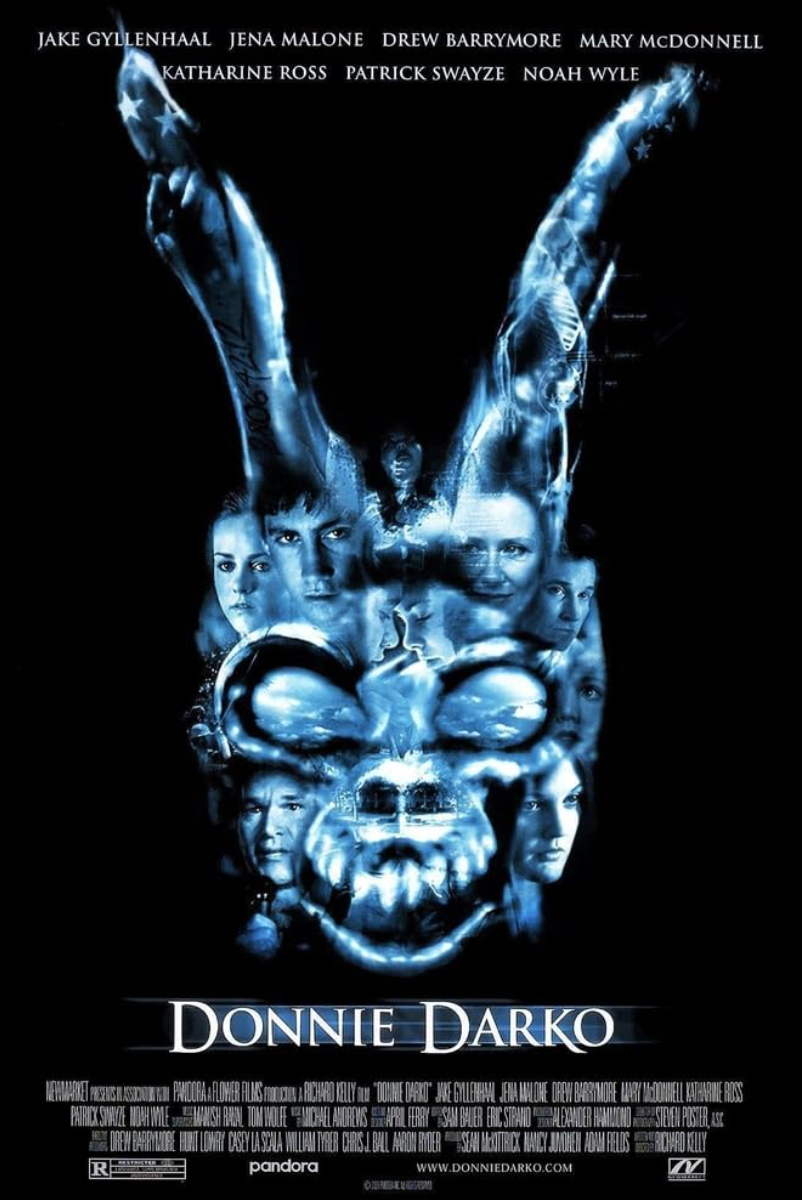
"Donnie Darko" celebrates its 25th anniversary on Oct. 26, 2026. (Image credit: Newmarket Films)

It's a deeply personal film that will affect any viewer who allows its meticulously slow build to seduce them into its dreamlike sphere. Much has been debated and discussed about its many metaphors and symbolism, which employed elements of a splintered universe long before the multiverse was hijacked by Hollywood superhero spectacles. It’s a raw meditation on death more than anything, and its labyrinth of quantum entanglements feeds our existential core.

"I remember pulling over to the side of the road to finish reading Richard's script and being mesmerized," Gyllenhaal told The Guardian. "It was clearly influenced by classic directors—Ron Howard, Steven Spielberg—but with this strange psychosis. It beautifully captured the experience of moving into adulthood: the world that felt so solid becoming movable and liquid. I thought, “This is what my adolescence felt like,” although I don’t speak, and have never spoken to, rabbits."

Kelly was just 23 years old when he penned the "Donnie Darko" screenplay in only 28 days based on his own adolescence growing up in Virginia during the ‘80s. Coincidentally, that is the exact number of days Frank the Bunny declares will mark the end of the world, and it is also the same amount of time taken to complete the Southern California production shoot in 2000.

Layered with ‘80s pop anthems like Echo & the Bunnymen's "The Killing Moon," Tears for Fears' "Head Over Heels," The Church's "Under the Milky Way," and Gary Jules' melancholy cover of Tears for Fears' "Mad World," Kelly's mysterious coming-of-age masterpiece still offers up a lucid nightmare tinged with a touch of consuming dread that lingers long after any screening.

Kelly did release a director's cut in 2004 that adds extra footage and alters the soundtrack, but we recommend the original theatrical cut for the purist’s version of this classic!

Considering today’s political strife, climate change concerns, AI paranoia, pharmaceutical overlords, and alienated youth culture, "Donnie Darko" and its 1988 election year setting still seems to have its finger on the zeitgeist's pulse, continuing to present provocative questions.

This Halloween, check out "Donnie Darko's" mind-warping weirdness on this 25th anniversary occasion and let no one ever question your commitment to Sparkle Motion ever again!


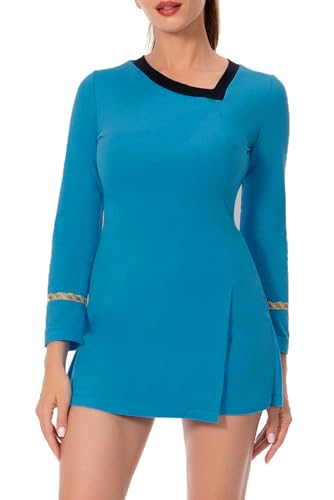
Stuck for a Halloween outfit? Set phasers to stunning with the best Star Trek costumes

Are you a Star Trek fan about to beam down to a Halloween party? Maybe you want to give Trick or Treat a Trekkie twist? We've got you covered with costumes based on the iconic sci-fi franchise, from the original series through to Star Trek: The Next Generation, Star Trek: Discovery and beyond.

Adult costumes aside, we've also included outfits for younger Star Trek fans and props to round out your outfit. You needn't put them away when Halloween is over, either. Star Trek costumes are so universally recognized you can use them for cosplay purposes too, or the next time someone throws a Trek-themed party.

Or, if you're not a fan of Star Trek, check out our round-up of the best space and sci-fi themed Halloween costumes.

This Week In Space podcast: Episode 233 — The Artemis Generation

On Episode 233 of This Week In Space, Tariq Malik and guest host Rick Jenet are joined by Dr. Amanda Smith-Hackler, the Director of Education for the Universities Space Research Association and Principal Investigator for the Air Force Research Laboratory (AFRL) Scholars and STEM Workforce Development Programs, about the new and exciting opportunities available to young people seeking to enter the space workforce.

Newspace is hiring! With the major powers heading to the moon, low-Earth orbit becoming busier than ever, and countless new companies entering the space marketplace, the hiring pipeline is more critical than ever.
Download or subscribe to this show at: https://twit.tv/shows/this-week-in-space.

Get episodes ad-free with Club TWiT at https://twit.tv/clubtwit

Space news of the week

Model Falcon 9!

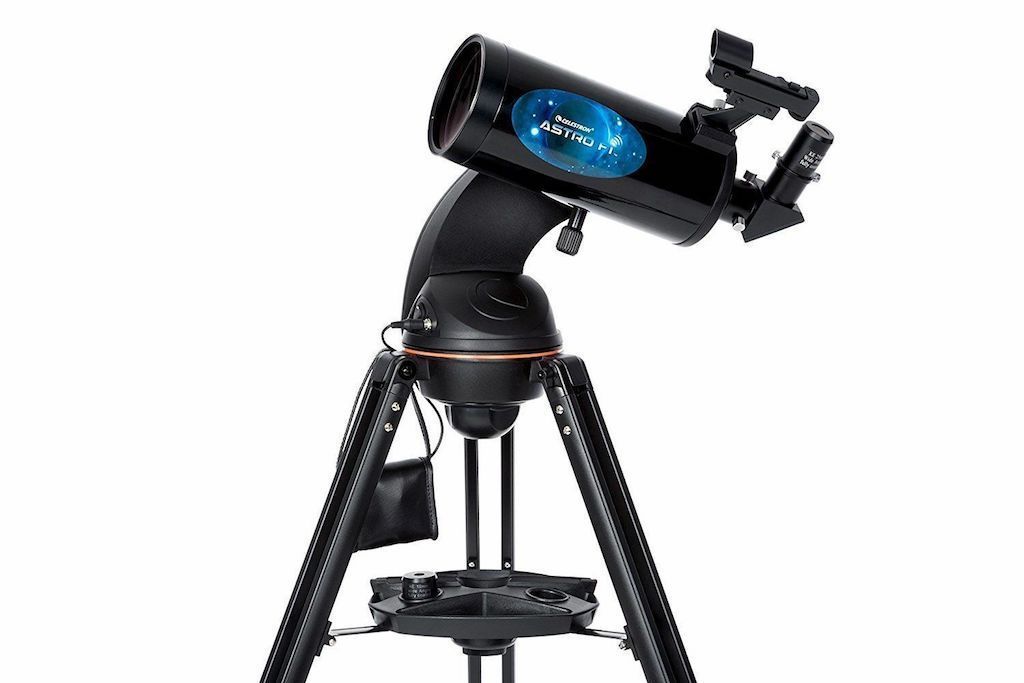
TOP TELESCOPE PICK:

A Celestron telescope on a white background

(Image credit: Celestron)

Looking for a telescope to see planets and comets? We recommend the Celestron Astro Fi 102 as the top pick in our best beginner's telescope guide.

Finally, did you know you can launch your own SpaceX rocket? Model rocket maker Estes' stunning scale model of a Falcon 9 rocket that you can pick up now. The launchable model is a detailed recreation of the Falcon 9 and retails for $149.99. You can save 10% by using the code IN-COLLECTSPACE at checkout, courtesy of our partners collectSPACE.com.

About This Week In Space

This Week in Space covers the new space age. Every Friday we take a deep dive into a fascinating topic. What's happening with the new race to the moon and other planets? When will SpaceX really send people to Mars?

Join Rod Pyle and Tariq Malik from Space.com as they tackle those questions and more each week on Friday afternoons. You can subscribe today on your favorite podcatcher.

‘Star Trek: Strange New Worlds’ was afraid to say anything in season of gimmicks

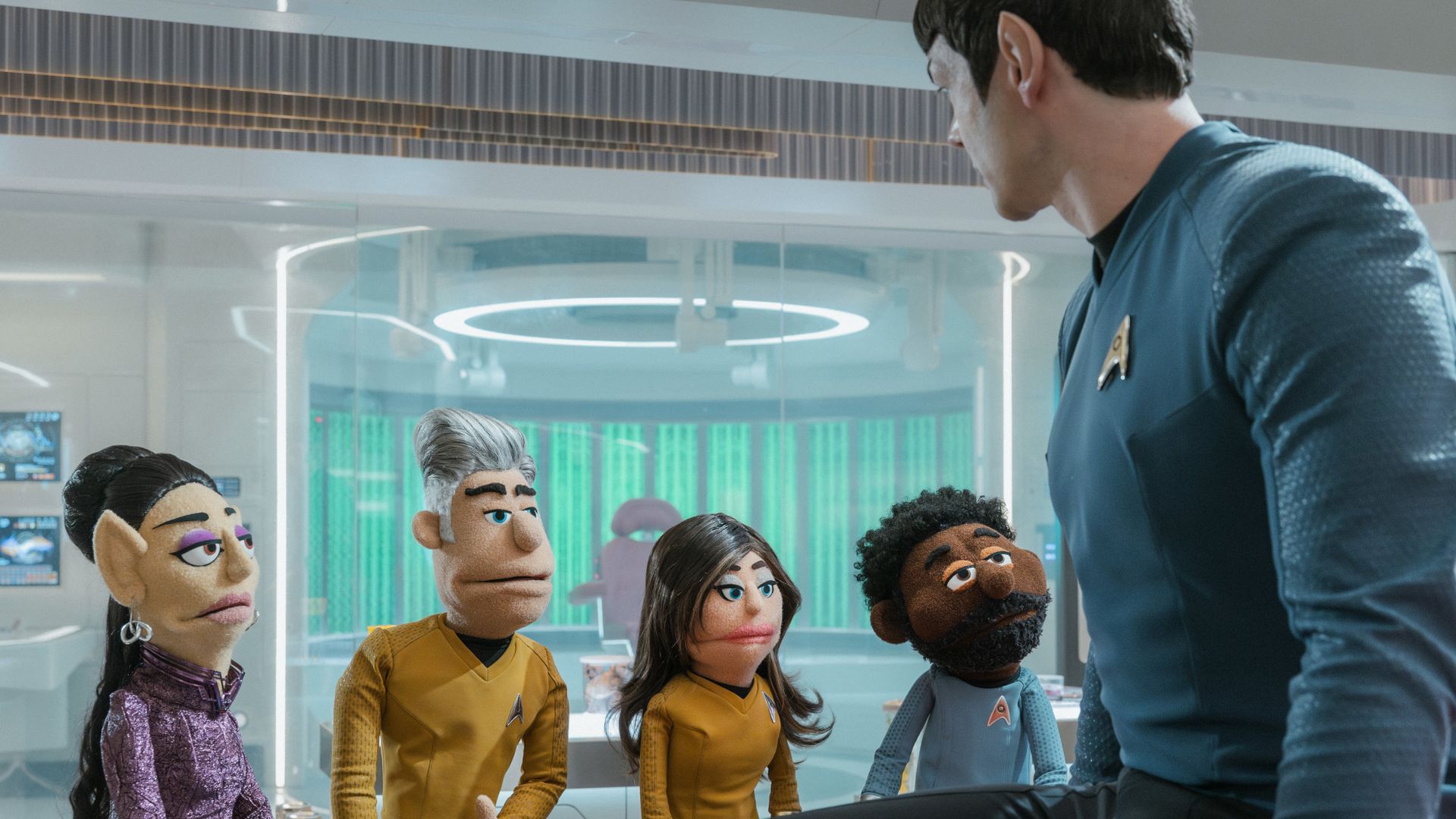
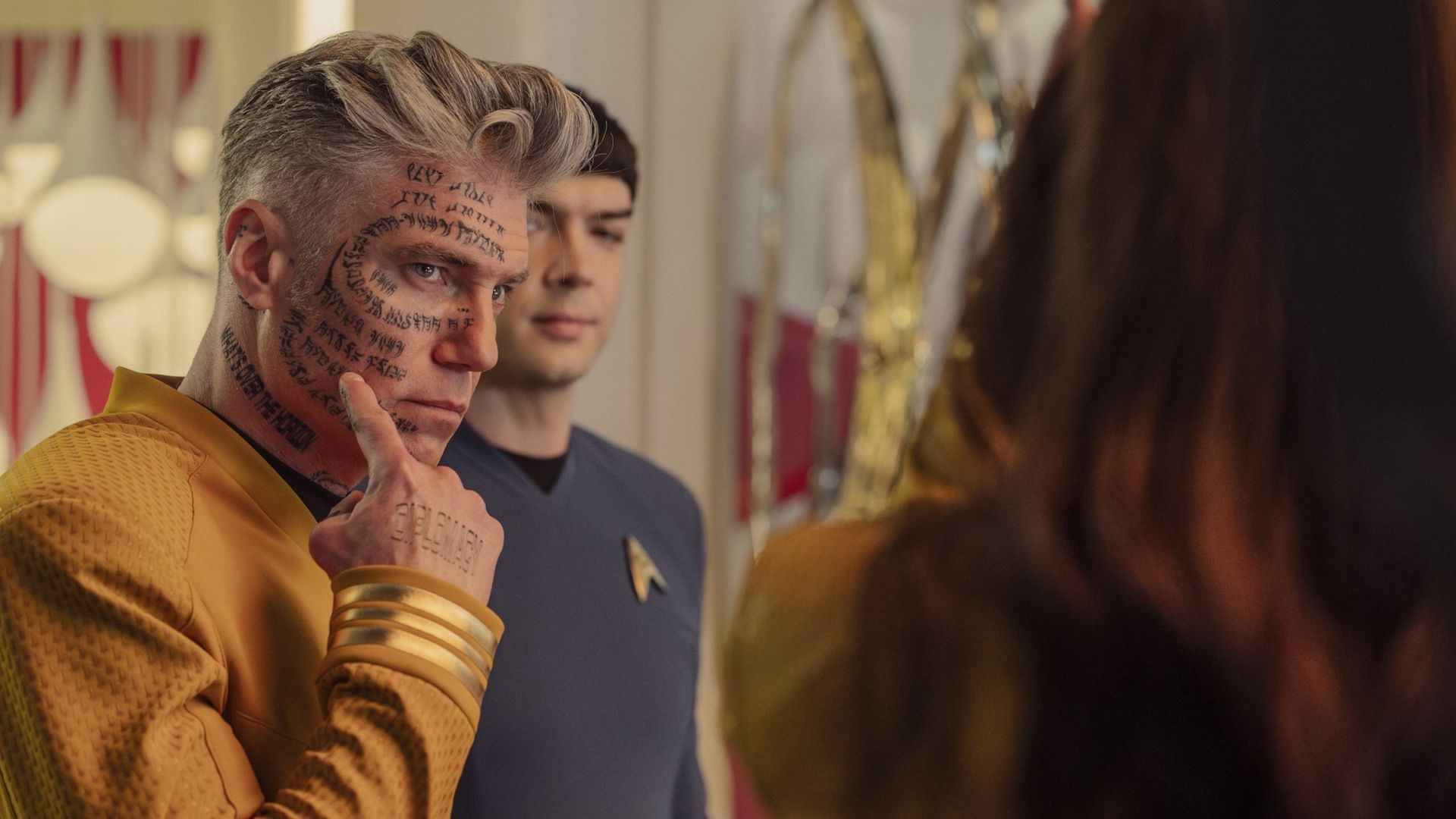
It didn’t take long for fans to figure out that the fourth season of "Star Trek: Strange New Worlds" was going to be unlike any season of "Star Trek" before it. The entire season was one giant gimmick, and that gimmick was shoving "Trek" into as many genres as possible and often directly adapting classic films from those genres.

You could argue that an entire season of gimmick episodes is a bold risk: putting the characters in fun, wacky situations to see how they react. It could be interesting, but the season we got never made the most of the concept. It was all so safe and paint-by-numbers, and, most importantly, it didn't have anything profound or interesting to say.

That should trouble any Trekkie. "Star Trek" — a show built on progressive ideals, thoughtful characters, and boundary-breaking television — was completely and totally afraid to say anything at all.

Mash it up, Scotty

(Image credit: Paramount)

To be clear, "Star Trek" is no stranger to genre mashups, and they're not inherently a bad thing. Trek has been running for nearly 1,000 total episodes, and they've been doing mashups since the very first season of "Star Trek: The Original Series", which featured gangster, historical fiction, and war-themed episodes.

The holodeck took things further, giving the writers an excuse to set the action anywhere they could dream up. No more alien planets that look suspiciously like Earth were necessary to completely flip the series’ genre; just work up a hologram malfunction and suddenly "Trek" is a Sherlock Holmes-esque mystery or a noir thriller. And even without the holodeck, genres are fluid things that often take from each other to tell stories within each other’s realms.

But while "Trek" has always dabbled, it's never done an entire season of genre episodes… in fact, that might be unprecedented in all of science fiction TV itself, let alone "Star Trek". This season of "SNW" didn’t use occasional gimmicks to take a break from space fare; it was all gimmick, all the time.

Check out the episode rundown below:

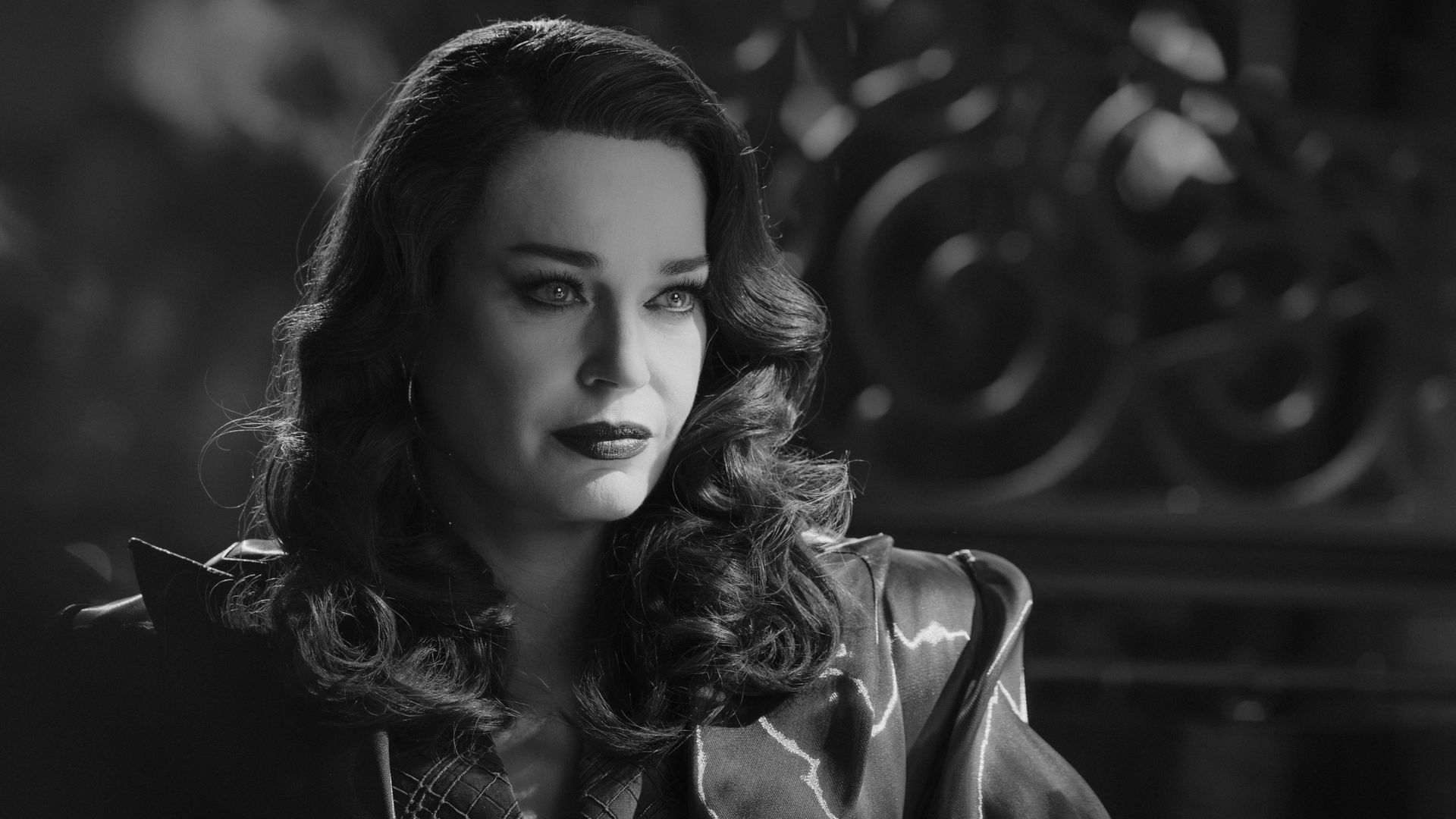
* Some of you are screaming that Episode 4 was a noir. It was not. Not everything in black and white with fedoras is noir.

(Image credit: Paramount)

"Strange New Worlds" season 4 was genre-blending at scale. This wasn’t a hint of another genre influencing the episode; it was full-blown immersion into each and every one.

In the past, when other genres have come into "Trek", the series still felt tonally consistent; the characters never bent to the will of the genre, and its direction stayed the same. That was not true of this season. Characters, directorial style, and tone all bent to the will of the selected genre instead of fitting into the already established universe. There were multiple episodes this season that felt nothing like a "Star Trek" episode.

Also — and I may be in the minority here — there were only two episodes this season that I’d argue were executed well (Episode 6 and Episode 8), meaning that the relentless gimmicks paraded out each week felt not just detrimental to the show itself, but they weren’t much fun to watch either.

To go where everyone has gone before

(Image credit: Paramount)

The real question that crops up from this season is why they did it at all. If you listen to the show’s producers, it’s because they love "Trek" so much and they thought it would help move the characters along.

"I really do respect and hear the criticism that: 'When you have 10 episodes [per season], should they be more homogeneous?’”, co-showrunner and executive producer Akiva Goldsman told TV Line when addressing the criticisms for the season. “For us, the answer was no, because the original series always jumped around in genre … Part of what 'Star Trek' did well was use genre for storytelling, and that was what we wanted to explore in this series.”

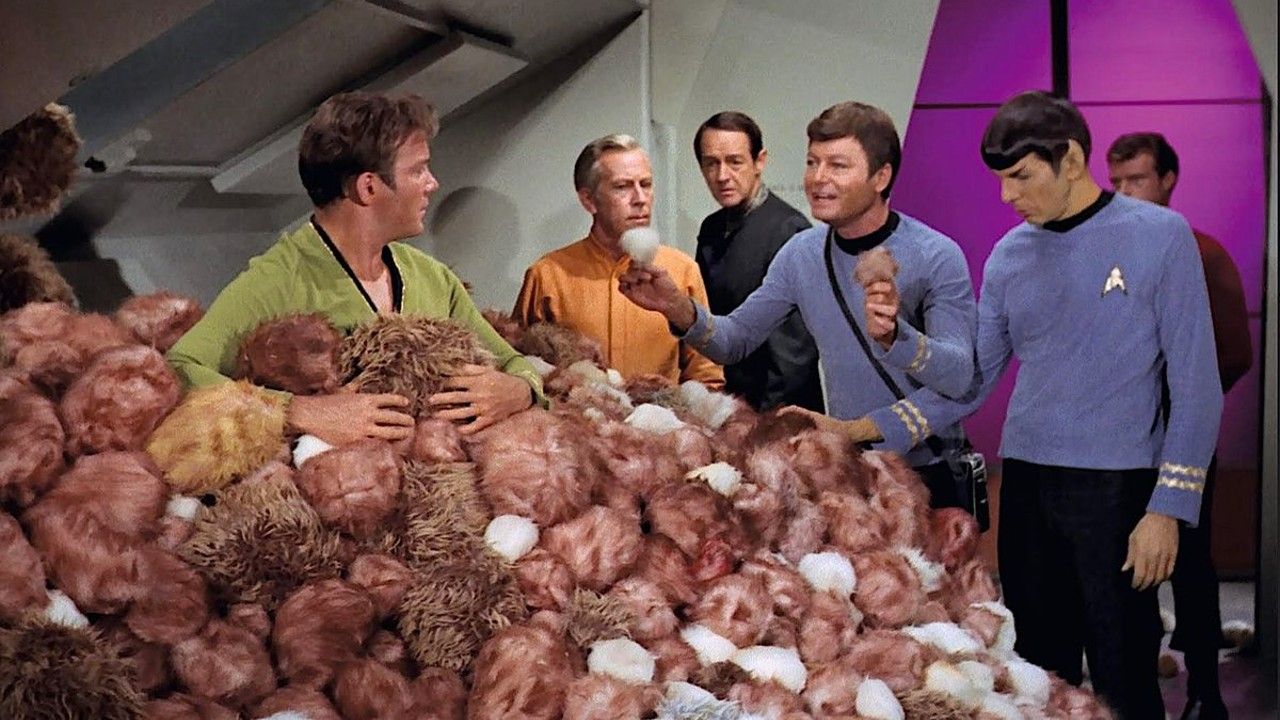
He is, of course, absolutely correct; that is exactly what "Trek" has traditionally used genre episodes for. When "The Original Series" went to the Nazi planet, it was one of the first and earliest examples of directly confronting fascism and Nazism on American television. When the show played with Greek gods, it took the moment to have a groundbreaking interracial kiss. Even when it went broad comedy in “The Trouble with Tribbles,” it at least kept its characters consistent and its universe coherent.

(Image credit: Titan Books/Paramount)

For the most part, that practice continued throughout classic "Trek" and even into the modern era, with genre being used to aid storytelling, not overwhelm it.

Season 4 of "Strange New Worlds" does none of this. It isn’t using genre as elevation; it’s using it as a distraction: a shiny gloss over a collection of episodes too afraid to say anything that will get the series accused of being “woke” or progressive. Later in the interview, Goldman claims that they can’t please everyone, but that seems like exactly what they were trying to do this season-- resulting, of course, in pleasing no one.

This season is running scared from the current moment, and it’s doing so by hiding behind gimmicks. Any previous series of "Trek" (or any great science fiction) would be tackling subjects such as immigration, fascism, war, or any other societal issue that is overwhelming us right now, but "SNW" is doing none of that, instead presenting farcical genre fare

Fear exists for one purpose; to be conquered

(Image credit: Paramount+)

It’s hard not to draw a direct line from this approach to the purchase of Paramount by Skydance last year and the company’s new leadership, who are more than cozy with President Donald Trump. There seems to be little other reason that a franchise and series that were being bashed for being “too woke” and overly progressive would veer so hard into gimmickry that barely hides the hollow shell this show has become.

Rewatching the first three seasons of "SNW" shows how hard a turn this series has taken since the re-election of Trump and the steady march of companies trying to kowtow to a government that wants to squash progressive ideology.

The show has gone from telling powerful stories for both its characters and society to a series of running gags that do little more than slap the Federation delta onto people’s chests so people think it's still "Star Trek".

(Image credit: Paramount)

It isn’t. This season of nothingness is exactly what you get when you ask "Trek" not to push boundaries, not to be hopeful, not to be bold, and not to progress forward. When a show founded on speaking out and saying something spends an entire season running away from doing just that, it’s not just a condemnation of the show itself; it’s a condemnation of the creative process behind it.

The real issue with this season isn’t the attempt to play in genre for ten episodes straight; it’s that the reason they did it was fear, not hope.

Watch Star Trek: Strange New Worlds on Paramount+:
Essential (ads): $8.99/mo or $89.99/yr
Premium (no ads): $13.99/mo or $139.99/yr

Never finishing the fight: Where did Xbox go wrong with Halo?

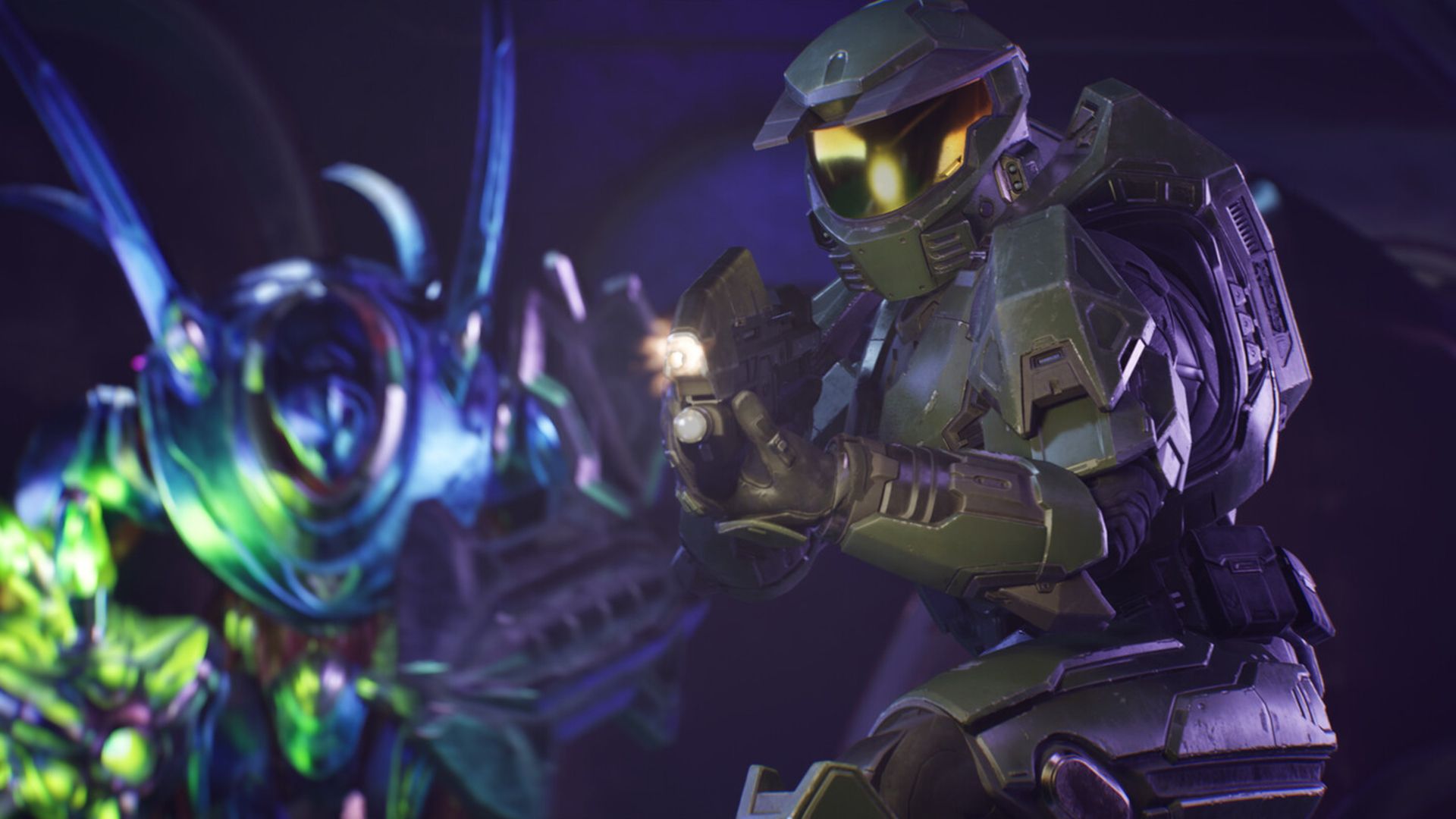
Halo: Campaign Evolved was Xbox’s second attempt at refreshing the 2001 sci-fi FPS classic, and it is perfectly fine. A cromulent remake, if ever there was one, but it’s hardly a franchise-saver, especially as Xbox looks to rethink its studio structure and approach to renowned IPs like Halo or Gears of War.

Halo hasn’t been the same since original developer Bungie — now owned by Sony and working on Destiny and Marathon — departed, leaving 343 Industries (now Halo Studios) to guide the franchise.

Neither Halo 4 nor 5 meaningfully evolved the gameplay formula or overarching narrative. Halo Infinite found more success by reheating what “old Halo felt like” and sticking it into a half-baked open world, but it still felt far from the series’ glory days.

This year’s full remake of Combat Evolved's campaign delivered exactly what it promised: a shiny, 2026 version of the game that made audiences fall in love with the franchise. It was a clear attempt to reignite faith in 343’s vision, but how is a faithful, shinier remake proof of anything?

It might not even matter anymore, as the new Xbox leadership has rocked the ship again, leaving Master Chief and the universe’s future cloudier than ever before. Now, with rumors of a reboot being considered at new steward Activision, is there hope for the Spartans, or will Xbox run into another dead end?

Rebooted or not, Halo needs to leave Master Chief behind

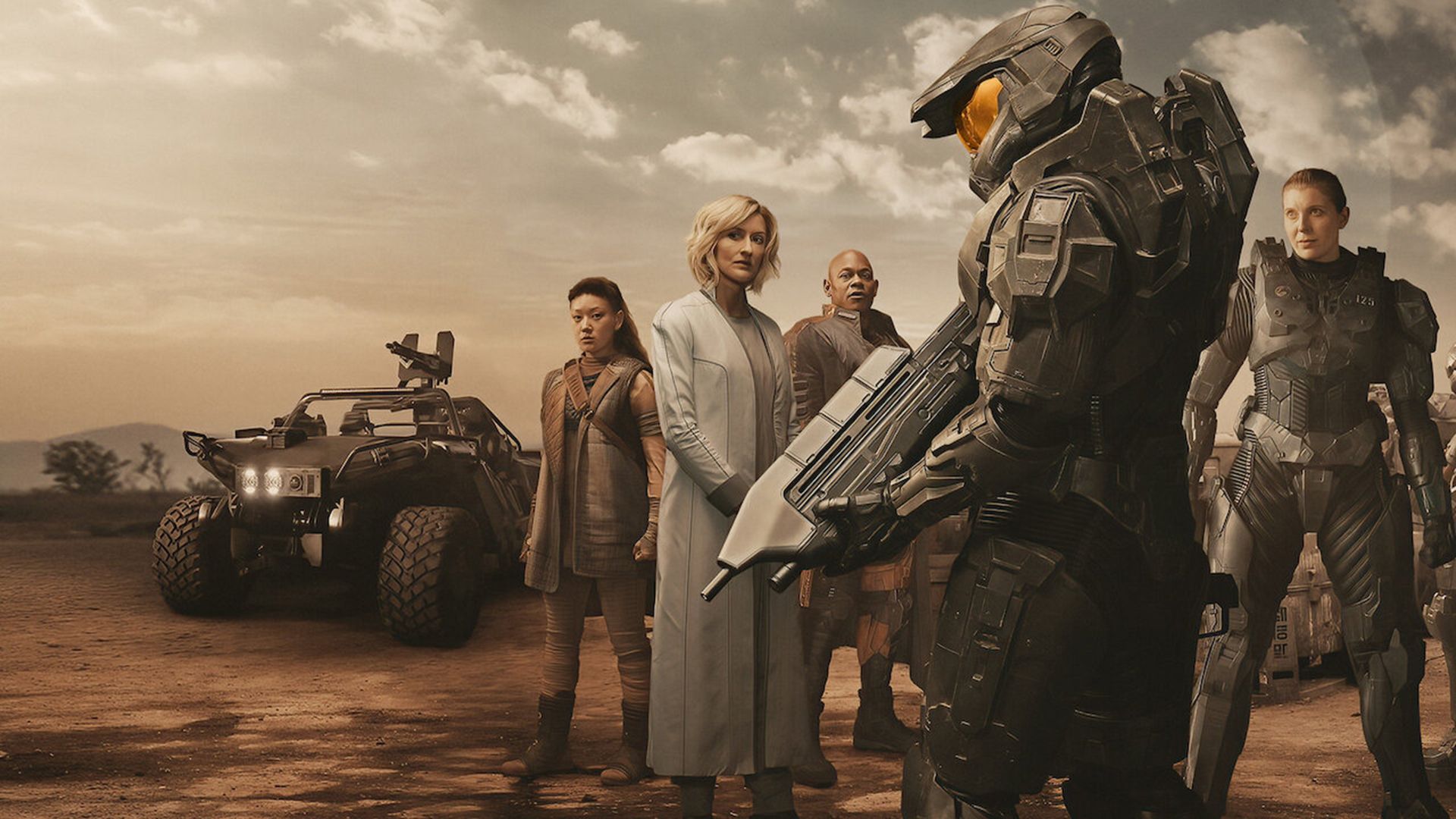
(Image credit: Xbox Game Studios)

It looks like the ‘Halo Studios’ moniker only lasted a single (remade) game, as Xbox has recently announced that Call of Duty maker and publisher Activision — which houses many FPS-oriented studios — is taking over development, essentially leaving the 343 veterans as a minor support studio, which translates into more layoffs.

If we put aside the human and institutional cost of this whole back-and-forth over the years (a big ask in today’s climate), there are reasons to be optimistic about the quality of an Activision-developed Halo. Regardless of what you think about the Call of Duty IP in 2026 and the publisher’s overall vision for it, it’s clear there’s plenty of talent holding everything together and, more importantly, enough experience to iterate on what Halo’s multiplayer side needs to shine bright again.

(Image credit: Xbox Game Studios)

But this won’t fix the larger issue with Halo, which is that Master Chief should’ve been left behind long ago. Like it or not, it’s difficult to deny Halo’s “golden era” ended with Halo: Reach (Bungie’s swansong under Xbox) and the Halo Wars spinoffs, which took the series into the real-time strategy genre. These games were wildly different, but they had one core thing in common: they made the sci-fi setting feel bigger instead of smaller, offering the perfect blueprint to build upon in a post-Halo 3 world.

There’s nothing inherently wrong with the Master Chief. Franchises can be built around iconic characters like Mario or Lara Croft. But in the post-Bungie era, his role changed from an extremely competent Spartan soldier to a space messiah. Halo 4, 5, and Infinite used sci-fi nonsense to transform him into this larger-than-life figure, rendering the rest of the UNSC largely powerless in the process.

It’s the same mistake ID Software made with Doomguy, centering the story on how super special he is, and not on the world he inhabits. Now rumours are rumbling that Activision’s reboot might focus on Chief’s origins; that's the last thing Halo needs.

Are Halo 2 and 3 remakes happening?

(Image credit: Xbox Game Studios)

Forgetting Activision’s next Halo for a second, we were teased with (even if there wasn’t an official confirmation from Xbox) at least a Halo 2 remake via Halo: Campaign Evolved’s alternative ending.

Back in May 2026, renowned insider Rebs Gaming confidently reported that Halo 2 and 3 remakes were in development. But can fans realistically expect them after new Xbox CEO Asha Sharma’s latest shakeup?

Halo Studios could have done a "fine" job with safe remakes of the two original Halo sequels while Activision handles new projects. It’s hard to reject that approach, especially after Xbox finding success with Bethesda’s The Elder Scrolls IV: Oblivion Remastered and confirming two Fallout remasters are in the works. It seems like money waiting to be made, but the remakes could be cooked too.

Xbox and 343/Halo Studios have made plenty of mistakes with Halo, but the killer has always been their lack of conviction in their ideas. And look, nostalgia shouldn’t be the driving force behind a franchise in dire need of reinvention, but I’m far more annoyed by the creative rollbacks, flip-flopping, and now the loss of knowledge and talent accompanying the gutting of Halo Studios.

Xbox Live Action

(Image credit: Xbox Game Studios)

We haven’t even touched on the mess that was the live-action Halo show. It lasted only two seasons, had John-117 walking around outside the Mjolnir armor for most of its runtime, and was cancelled just as the story finally got to the titular Halo. Why would you stray so far from the source material, and how do you miss the mark so badly?

In many ways, it perfectly encapsulated what’s been wrong with Halo as a whole for so many years. The powers that be can’t decide what they really want from it, and thus it’s stuck, unable to leave the past behind or convincingly establish a new horizon for itself. Other franchises have run into the same issues — looking at you, Star Wars — but Halo has been stuck in this purgatory for 15+ years, as Xbox leaders and strategy shifts come and go.

Could Xbox’s newly-formed XP division deliver the focused big-screen adaptation the series has always deserved? I’m sure that’s the plan, but even a cursory glance back at Xbox’s handling of the franchise for the past decade or so says no.

Halo’s deep problems won’t be fixed overnight, and throwing a bunch of hard-working developers to the curb certainly won’t help. Halo’s current struggles didn’t come from Halo Studios or 343 Industries; they came from impatient and incompetent leadership calling the property-defining shots. I’ve seen nothing to suggest that’s changed.

Next Mass Effect game cancelled as EA shuts down legendary sci-fi RPG studio BioWare

The writing was on the wall, but the news still hit us like a truck yesterday. BioWare, the iconic RPG studio behind the Mass Effect and Dragon Age series, is no more. Development on the next Mass Effect has stopped, but EA might not be entirely done with the IP.

Variety reported, backed by EA’s own statement and BioWare’s goodbye on socials, that EA is laying off 3% of its global workforce and closing down BioWare. The shift comes shortly after the company went fully private this summer, with Saudi Arabia and private equity acquiring it alongside all its studios and properties.

A new Mass Effect game — meant to serve as a follow-up to the original trilogy — had been in development since the early 2020s, though progress was slow following severe downsizing after 2024’s Dragon Age: The Veilguard failed to meet EA’s expectations. According to Bloomberg’s Jason Schreier, only around 50 staff remained at the studio, which would’ve needed to go on a hiring spree to complete development of the massive sci-fi RPG.

The first post-shutdown shocker arrived a bit later, with IGN exclusively revealing that Mass Effect isn't entirely dead, as the upcoming live-action TV show based on Mass Effect is still moving forward at Prime Video.

The series started active development at Amazon in late 2024, but it has yet to reach production status. Little is known about the story, but rumors point to it aiming to bridge the gap between the original trilogy and the now-cancelled new game. Despite closing the studio that created it, EA still owns the Mass Effect property.

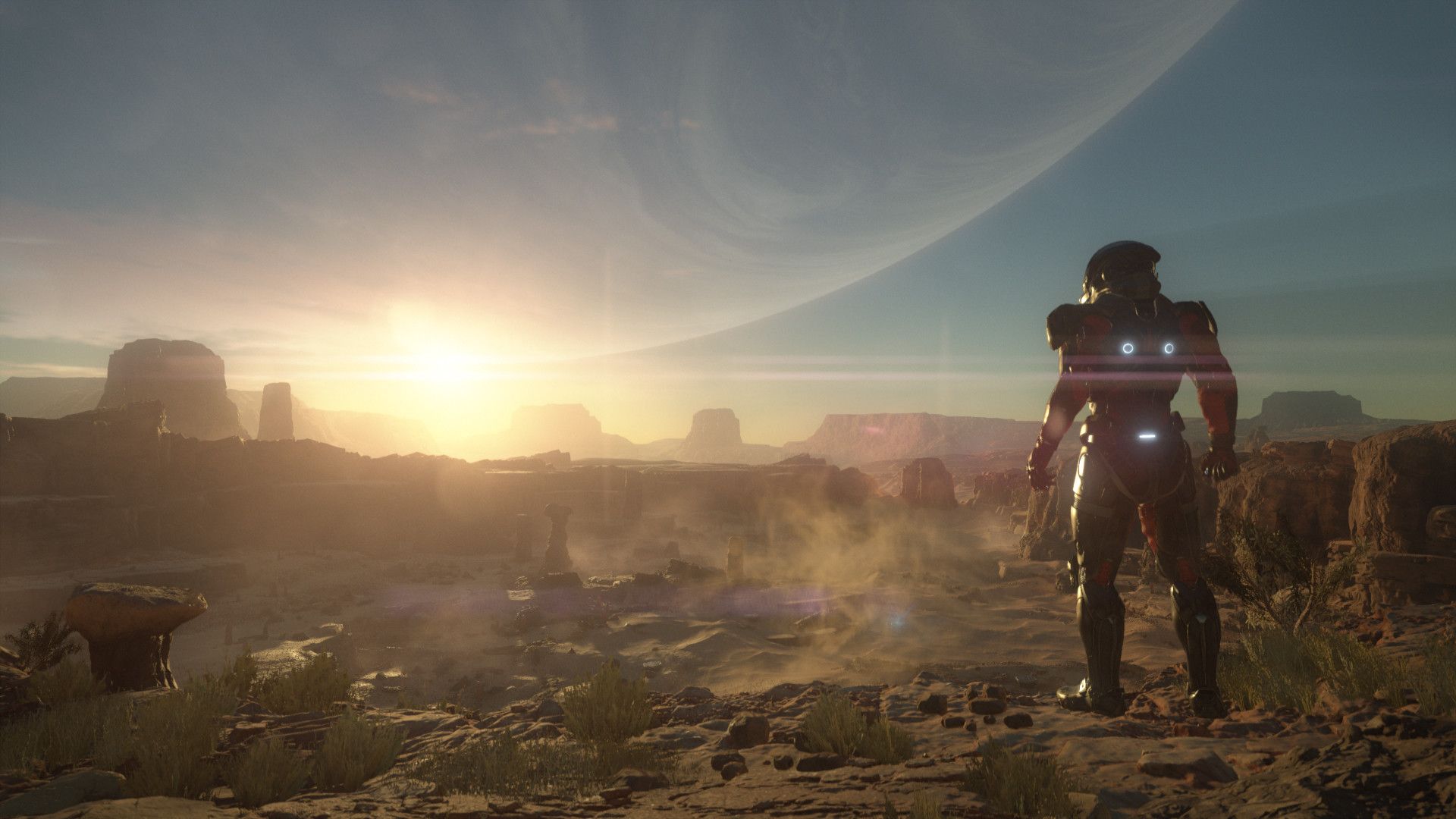
Screenshot from the Mass Effect series

(Image credit: EA)

Variety’s report, which includes more comments from EA’s top brass about the present and future of the publisher, also contains updates on Marvel’s Iron Man (developed at Motive) and Star Wars Jedi 3 (Respawn Entertainment). Both are still coming, and the more surprising news comes in the shape of DICE and Respawn teaming up for a totally new project, believed to be Star Wars Battlefront 3 after days of strong rumors from a number of reputable sources.

Elsewhere, ex-BioWare developers have teamed up at new studios like Archetype and Arcanaut. The former is preparing to ship Mass Effect-inspired action RPG Exodus in 2027, and the latter recently started work on Star Wars: Fate of the Old Republic, with original Knights of the Old Republic (and Mass Effect) director Casey Hudson behind the wheel.

Here’s hoping both studios, as well as the recently laid-off developers, can find success in an increasingly hostile industry.

Sci-fi legend Alan Dean Foster on his new futuristic adventure ‘Lost On Paradise’: ‘It’s paradise until you get there, and then maybe you mess it up’ (interview)

Few names in the science fiction literary world carry as much weight and respect as author Alan Dean Foster. His award-winning 55-year career as a grandmaster of the genre continues with his latest novel from Blackstone Publishing, "Lost on Paradise," and we have an exclusive excerpt to share with our readers ahead of its release this week.

Foster famously ghost-wrote the first "Star Wars" novelization for George Lucas in 1976 and "Splinter of the Mind’s Eye" in 1978, which was intended to be a low-budget "Star Wars" sequel should the space opera not become a hit. He’s been a mainstay for go-to fantastic adventures featuring engaging characters, dynamic plotlines, and imaginative worlds for six decades.

In addition to crafting the screen story for "Star Trek: The Motion Picture," Foster also wrote the novelizations for the first three "Alien" films, Disney's "The Black Hole," John Carpenter's "The Thing," "The Last Starfighter," "Star Trek," "Transformers," "Terminator: Salvation", and many more.

Lost on Paradise by Alan Dean Foster: $19.99
New York Times bestselling author Alan Dean Foster, master of both action and emotion, reveals a world where everything is perfect, but nothing is as it seems…View Deal

The near-future, off-world escapades of "Lost On Paradise" are the latest addition to Foster’s acclaimed bounty of bestselling standalone novels and series, including the popular "Spellsinger" series.

"Earth is crowded, polluted, and dismal," states the novel's synopsis. "Like millions of others, Jonos and Liina scrape by on her poorly paying job and what little money he gets selling items scavenged from rich people’s trash. Like millions of others, Jonos and Liina dream of Paradise.

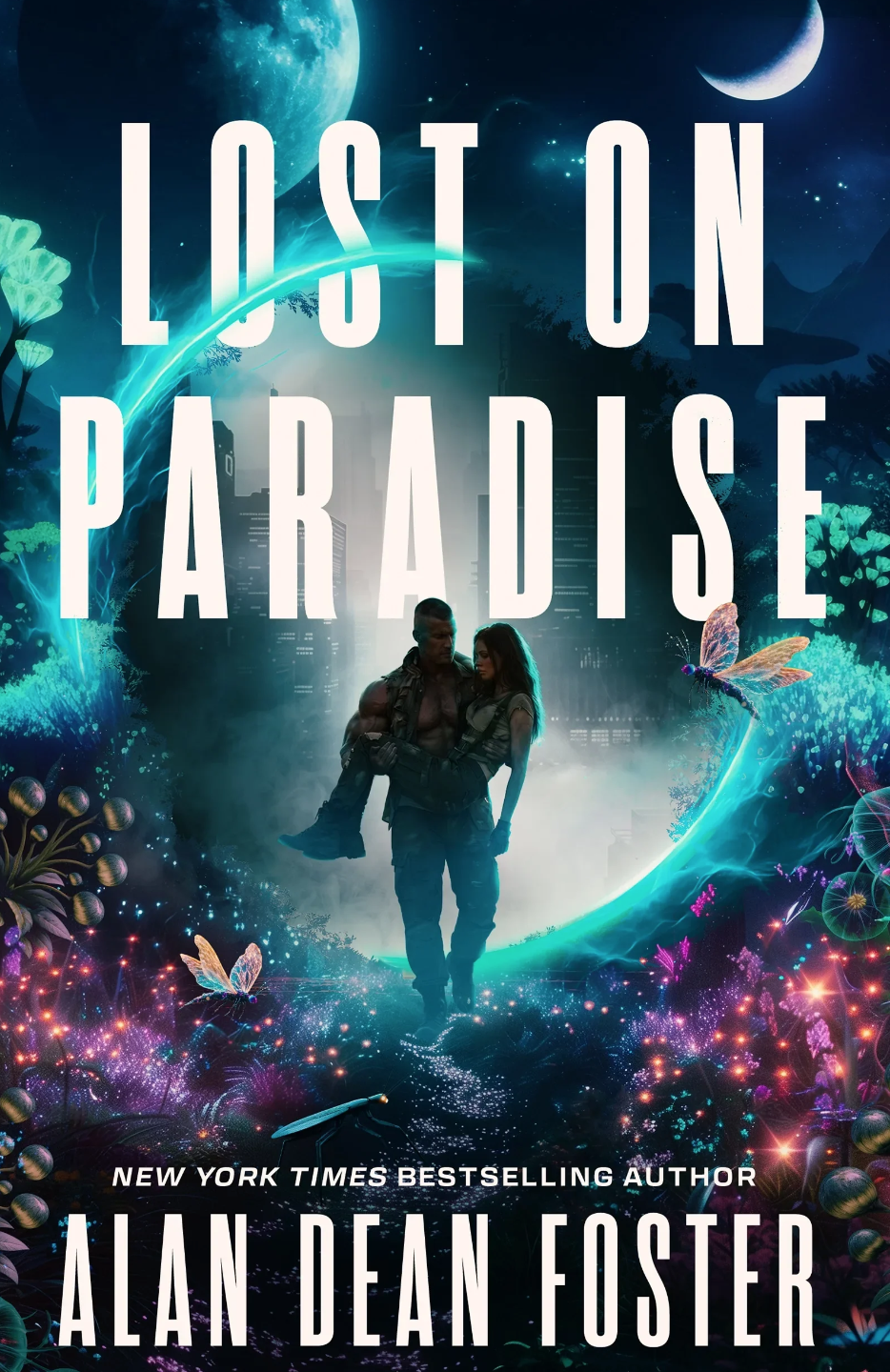
The colorful cover of a science fiction novel

A brilliant cover design heralds the arrival of Alan Dean Foster's latest novel (Image credit: Blackstone Publishing)

"Paradise: a beautiful, clean, verdant world where three races live in harmony—at least, according to the videos sent back to Earth. There are the Eiquan, masters of astonishing technology; the Lusanata, hunters and farmers; and humans, who may be restricted to a few scattered settlements, but still live a life ten times better than those on Earth.

"On the run after a criminal act, Jonos and Liina finally escape to Paradise. It's everything they hoped for. Until tragedy strikes."

The genesis of Foster's "Lost on Paradise" is something that’s been percolating in his fertile mind for many years.

"I had this notion of a planet called Paradise where everything is perfect, and everything on Earth is seriously messed up," Foster tells Space. "There’s this couple who have problems; they’re poor like everybody else.

"And you have a unique male protagonist because he recognizes that his female partner is smarter than him, so she’s the brains of the outfit, and he supplies the muscle. Although he's not stupid. Too often you get a big, hulking guy with no brains. But she has a potentially fatal disease, and they’re trying to get away like a lot of poor people in the world today. So here's a place called Paradise. How do you get there? It’s expensive and difficult. And what happens if they do? Maybe Paradise isn’t always Paradise."

a promo poster for a new sci-fi novel

"Lost On Paradise" lands on Oct. 20, 2026 from Blackstone Publishing (Image credit: Blackstone Publishing)

In crafting a deteriorating New York some 150 years or so down the calendar, it was important to stay sharp regarding developments that pop up in the news to avoid any internal logic conflicts.

"You just don’t want to get caught out by a scientific development that you postulate is near future when it's actually contemporary," explains Foster. "So I was very careful with that. But as you’re building out an alien environment and one that’s supposed to be perfect and beautiful, and then there’s maybe some things about it that aren’t, what do you introduce to show that?

"You don’t want to contradict yourself when you’re worldbuilding. That's a large problem that’s unfortunately common in science fiction," notes Foster. "Where somebody is breathing air, and suddenly they’re breathing methane, and it just doesn’t work. There’s a lot of different variables that come together that prove that Paradise is Paradise in some ways and not in others. A good example would be when the first Europeans reached Tahiti. The problem was that the people who entered this Paradise brought venereal disease and smallpox, to which the Polynesians had no resistance. So it's Paradise until you get there, and then maybe you mess it up."

Now enjoy our exclusive chapter excerpt from Alan Dean Foster’s "Lost On Paradise." Published by Blackstone Publishing.

Why shouldn’t a man and a woman in his and Liina’s position try to get to Paradise? Jonos mused as he treaded his way homeward. Though morning continued its ascent, the sun did not. Or so it seemed, when the omnipresent pollution often rendered day as dark as night. The gloom was useful for masking scavenging activities and for concealing one’s identity. It was less suitable for more plebian activities such as breathing and eating. Or living. Life on Earth sucked.

But on Paradise…

To emigrant humans it went without saying that Paradise was aptly named. Everyone had heard the stories. On Paradise a person could breathe freely. Without a mask, without fear of needing lung implants, without having to worry about inhaling a soupçon of strychnine or similar industrial pollutants. On Paradise food was plentiful and fresh, water devoid of contaminants. There was work, too, for anyone willing to adapt to entirely new surroundings, for those willing to acknowledge the much-talked-about overlordship of the dominant species. For arrivals willing to submit to the experimental, ever-evolving social structure, and to the limitations that were placed on newcomers, the technologically superior Eiquans professed an indifference that amounted to a willing welcome.

Or so the compendium of hugely diverse anecdotes insisted. That’s all they were, Jonos knew. Stories and speculation, rumors and conjecture. Ignoring the spotty rain that had begun to fall, he turned a corner and nearly ran over a couple who scrambled to get out of his way. The man he had accidentally jostled started to say something, quickly realized the size of the individual he was about to chastise, and mumbled on his way, dragging a woman—likely his wife—with him. Jonos paid them no mind. Half of him was engaged in navigating his way home, the other half in dreaming of what Paradise might actually be like.

In truth, he had never met anyone who had actually been to Paradise. He had never met anyone who knew anyone who had been to Paradise. That did not make the distant world any less real. The media periodically released vits and images of the place. These showed an Earth-like planet swathed in an atmosphere perfectly suitable for humans. The indigenous wildlife was fascinating, the few but thriving, improvised communities intriguing, and the rarely seen Eiquans themselves tall, gracile, and sophisticated. So what if they weren’t humanoid? They were bisymmetrical, anyway, highly intelligent, and by all accounts no worse than indifferent to the interests of other species. So beautiful and graceful was their slender physicality, so mellifluous their speech, that even though they were quite alien the idea of living among them held no fear for Jonos.

Anything, he knew, would be a step up from Earth.

Lost on Paradise by Alan Dean Foster: $19.99
New York Times bestselling author Alan Dean Foster, master of both action and emotion, reveals a world where everything is perfect, but nothing is as it seems…

Can’t make it to the Lucas Museum of Narrative Art for the ‘Star Wars’ display? This is the companion book set you’re looking for!

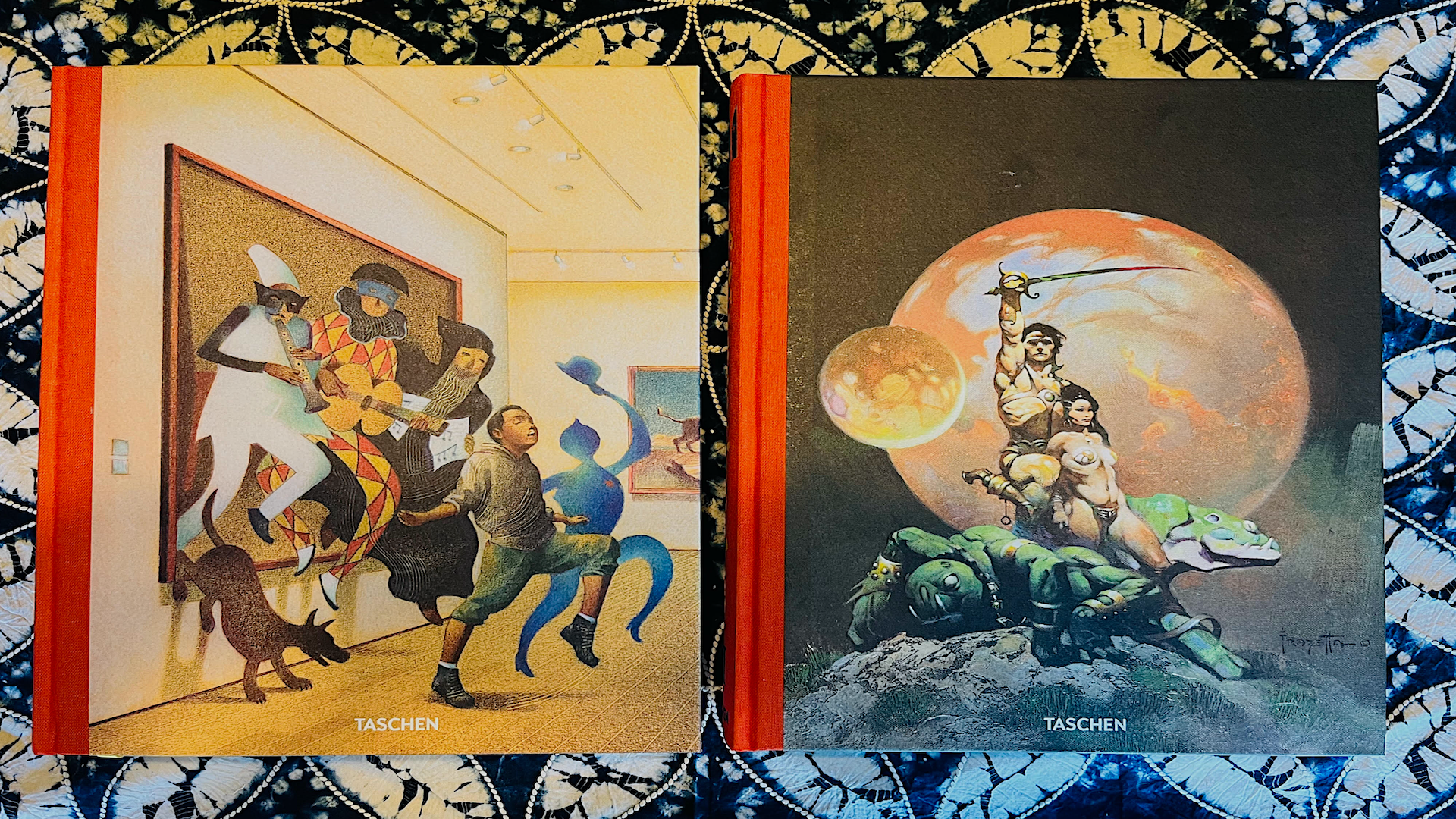
Taschen, purveyors of fine art and design special-edition books, have teamed up with George Lucas and his newly opened Lucas Museum of Narrative Art in Los Angeles to present a masterful two-volume catalog of the museum’s illuminating offerings.

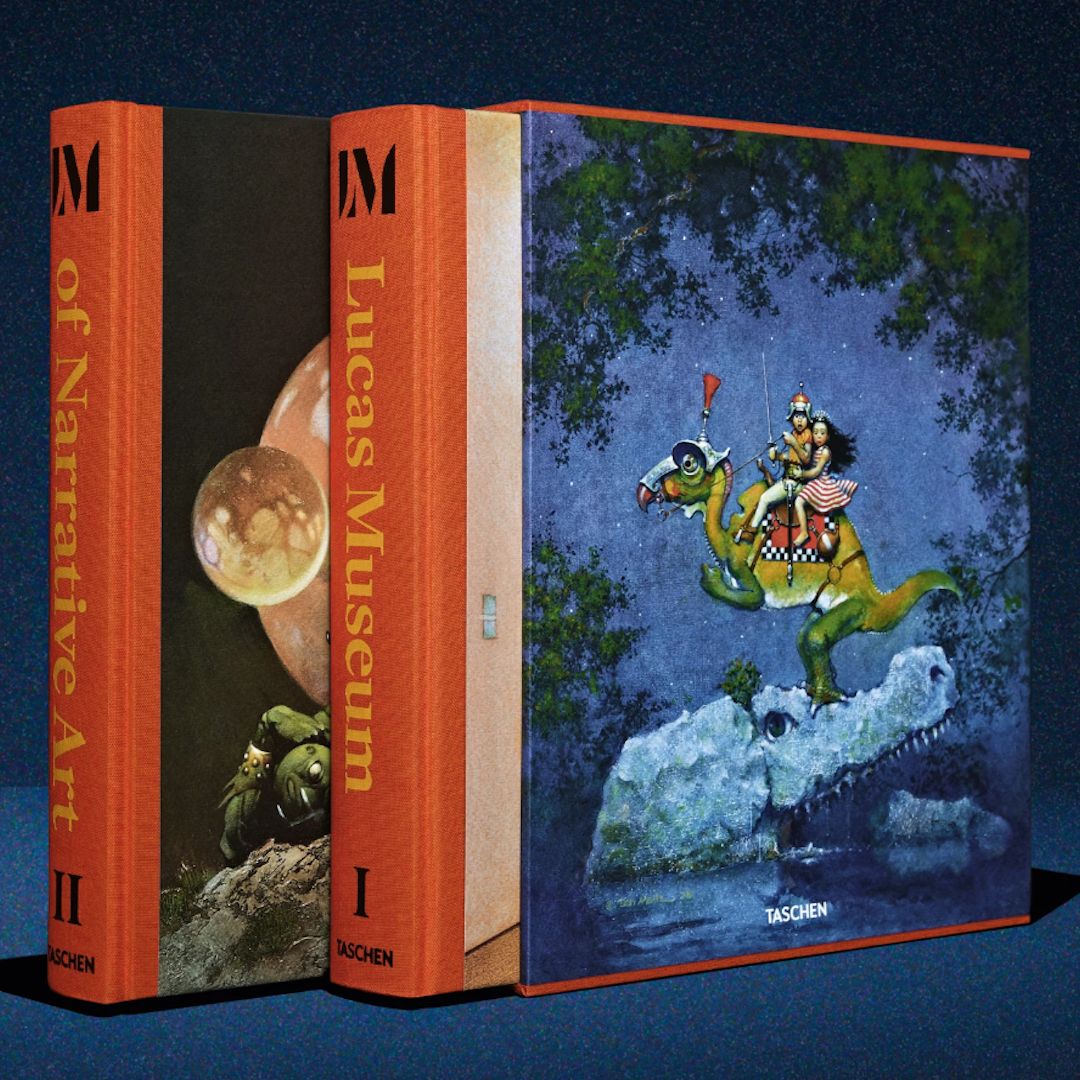
Housed in a sturdy slipcase, readers will discover a pair of lavishly illustrated volumes spanning 832 pages and tipping the scales at nearly 14 pounds. At $200 for the pair, it's not cheap, but look on the bright side; hoisting these illustrated tomes will save you a subscription to your local gym!

This immersive collection documents in great detail the astounding scope of rare items on display in Lucas’s treasury of paintings, murals, photographs, sculptures, posters, comic strips, illustrations, costumes, and magazine covers that have spurred humankind’s imagination.

Developed in collaboration with George Lucas and the Lucas Museum of Narrative Art, this extensive two-volume catalog brings together an unparalleled collection of narrative art.View Deal

We'd absolutely recommend checking out the Lucas Museum of Narrative Art in person if you can.

Our own Chelsea Gohd visited the Los Angeles-based museum ahead of its opening in September 2026 and adored it. But if you're not a California local, getting lost in this collection's glossy pages is the next best thing to roaming the museum exhibitions on a rainy afternoon.

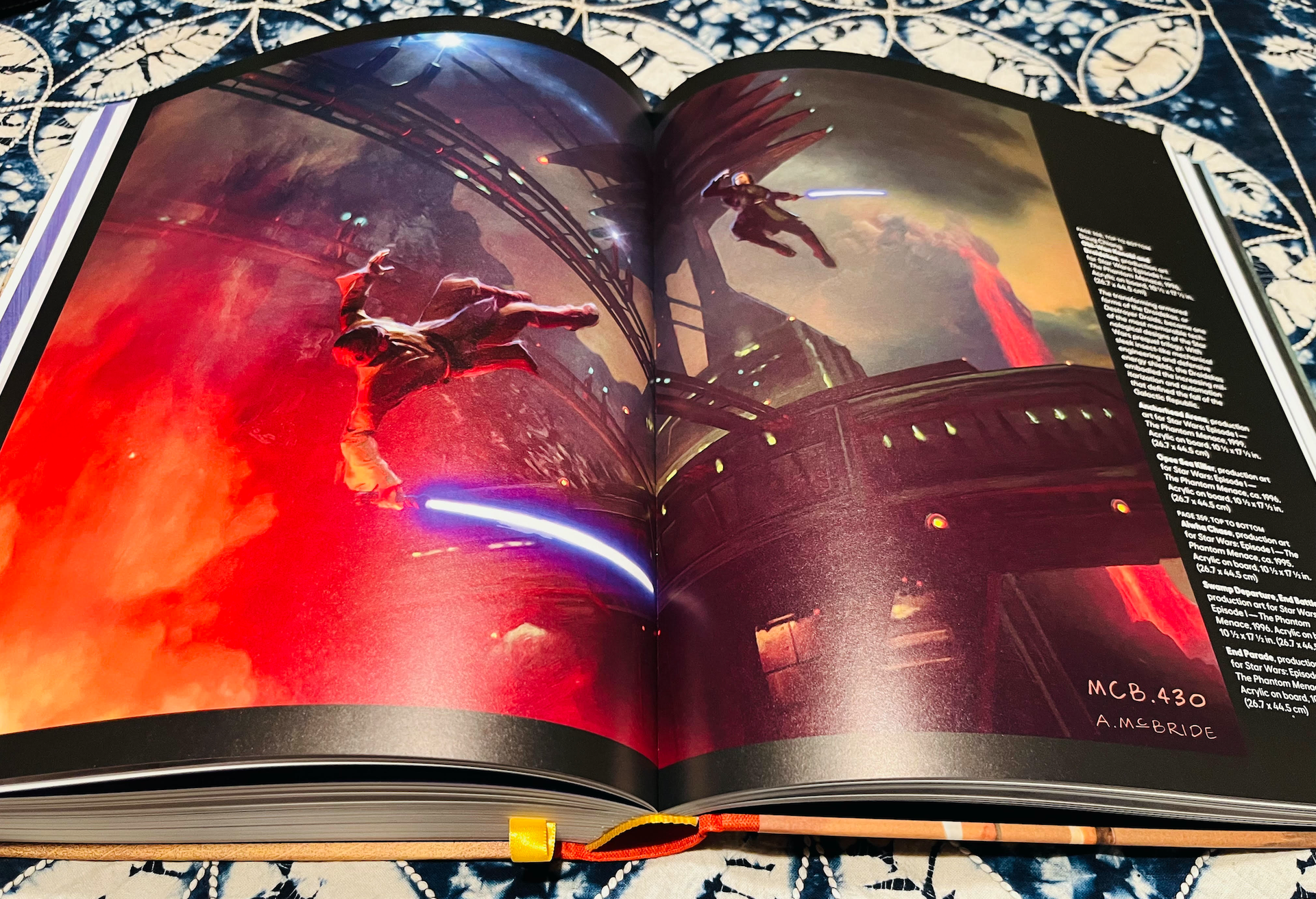
Volumes I and II of Tashen's stunning "Lucas Museum of Narrative Art" edition (Image credit: Taschen)

Far beyond a mere companion to the marvels inside the fantastic spaceship-shaped building poised near the University of Southern California campus — the same institution where Lucas attended film school in the late 1960s — these bold editions are an adventure in their own right.

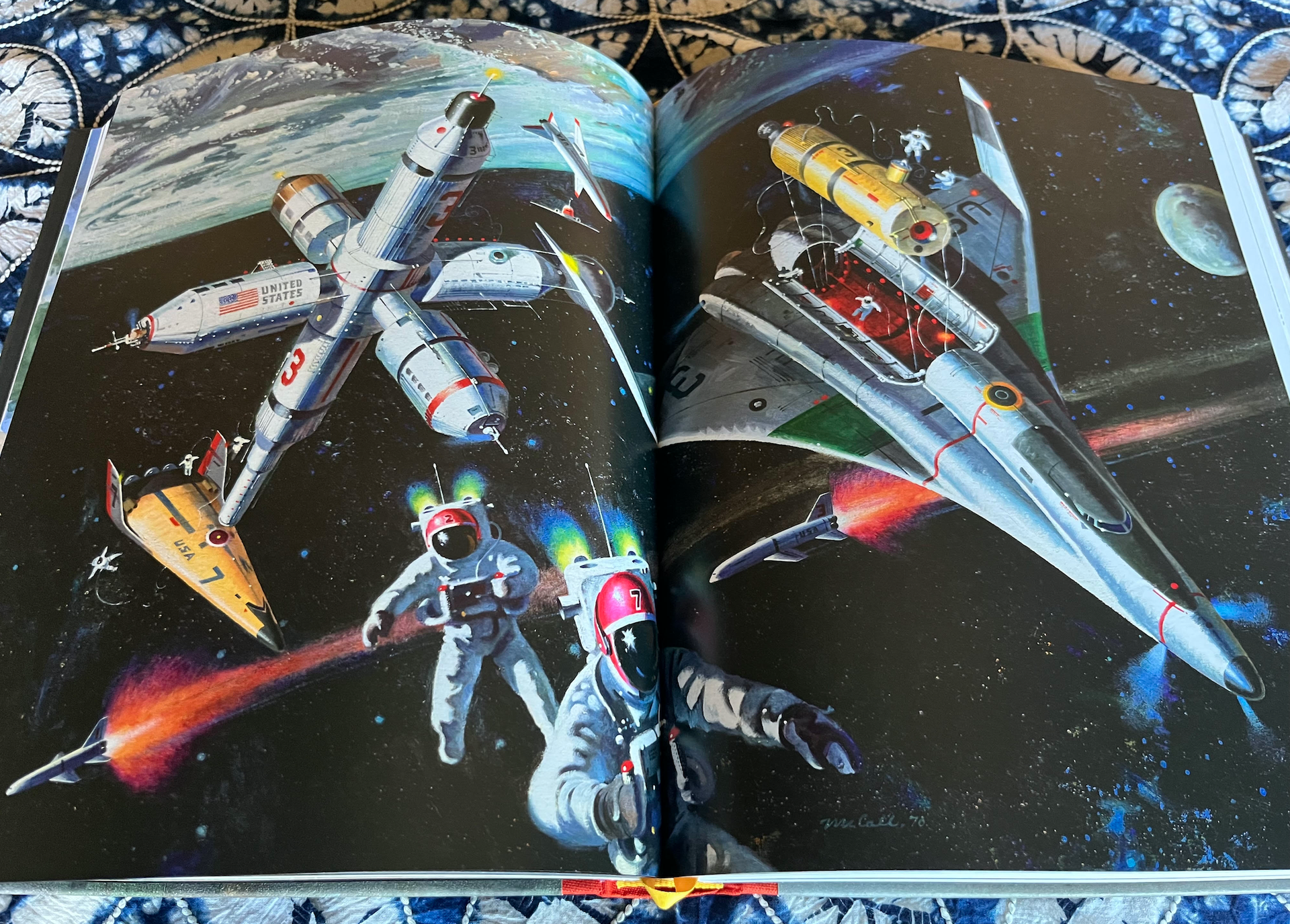
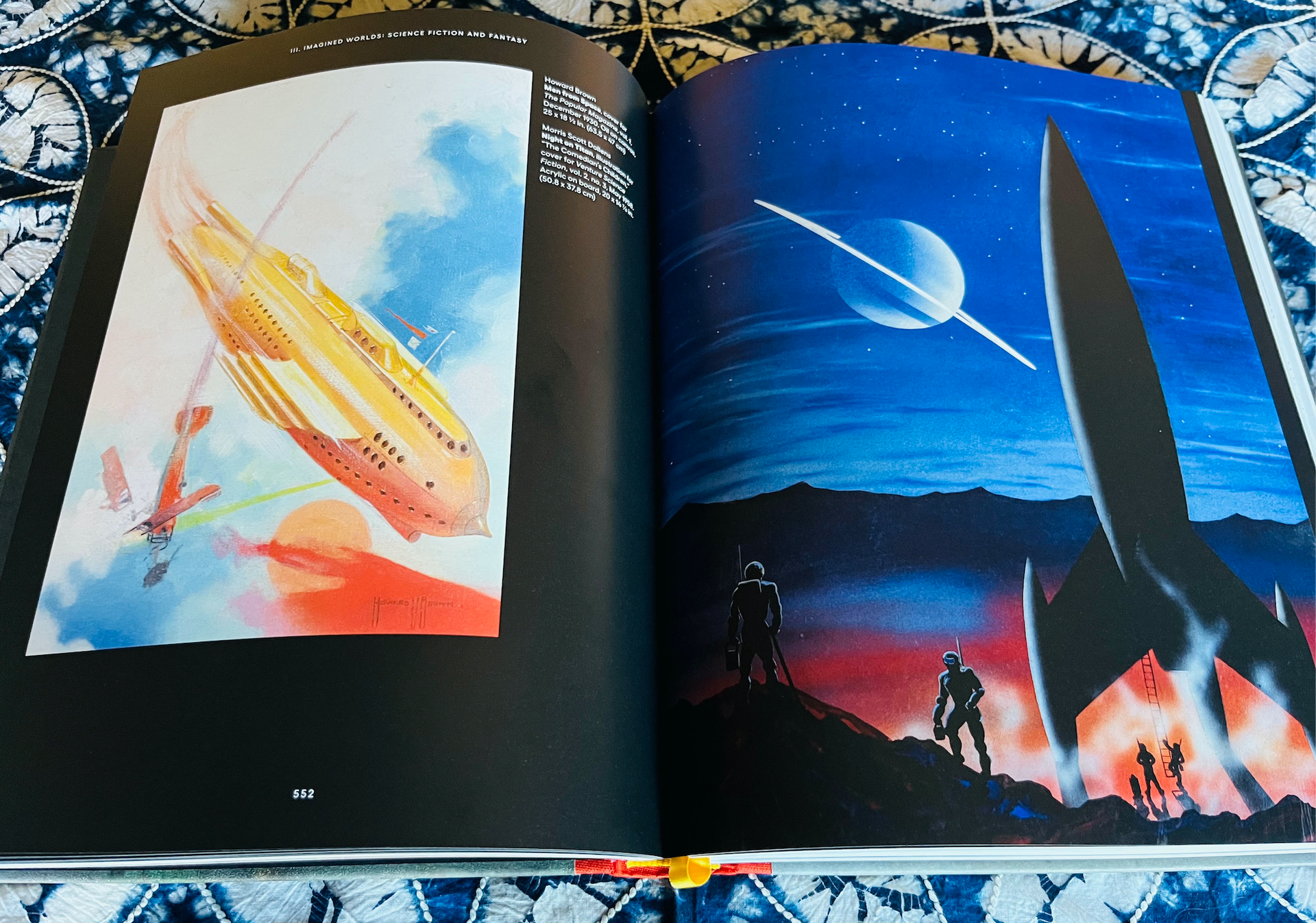
Waiting to be absorbed is an impressive assortment of storytelling expression that showcases beautiful works by everyone from Maxfield Parrish, N.C. Wyeth, and Norman Rockwell to Frank Frazetta, Jack Kirby, and Ralph McQuarrie. Lucas and his wife, Mellody Hobson, curated the museum’s contents that represent decades of collecting narrative art in all of its forms.

From Taschen's "Lucas Museum of the Narrative Art" catalog (Image credit: Taschen)

Our friends at Taschen were gracious enough to send us one of these Lucas Museum of Narrative Art special editions, and in unboxing this magnificent pair of books, one can feel the quality in the deluxe binding and thick covers. Inside you’ll find an eye-popping array of full-color photography and sharp descriptions for hundreds of artworks, all hand-picked by Lucas and Hobson.

Lucas himself delivers the preface, which is titled "The Art of Story," where he professes his love of art, myth, anthropology, illustrators, and cinema. He recalls when he came to meet his mentor, Professor Joseph Campbell, and how he amassed 40,000 pieces of art beginning when he was a student at USC.

From Taschen's "Lucas Museum of the Narrative Art" catalog (Image credit: Taschen)

The great director Guillermo del Toro provides a heartfelt foreword praising the importance of the museum and these prestigious companion volumes depicting a multitude of visual wonders.

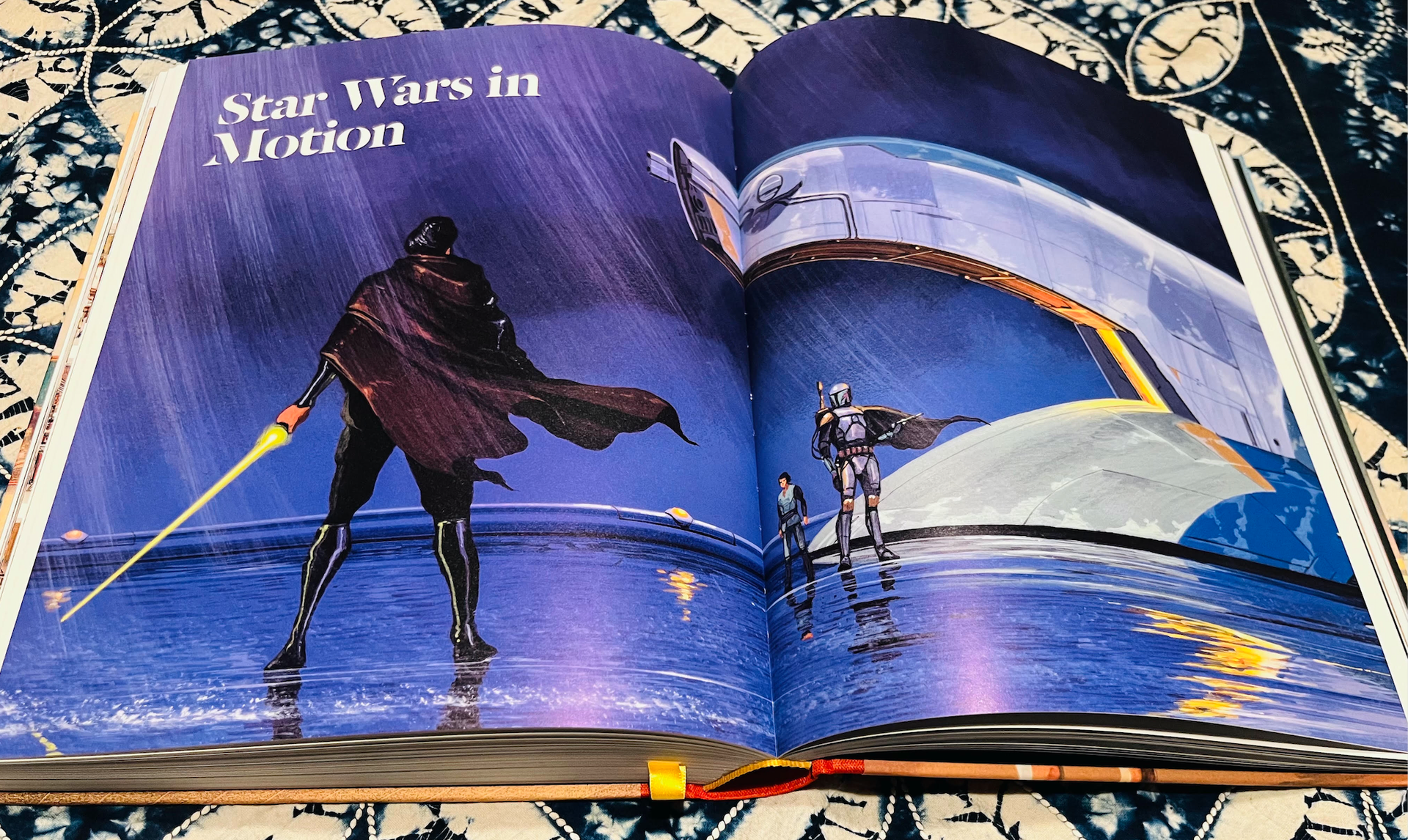
Between the duo of volumes, sections are divided into chapters dealing with topics such as history, children's stories, the American West, everyday life, romance and adventure, photography, science fiction and fantasy, and, of course, Star Wars in Motion.

From Taschen's "Lucas Museum of the Narrative Art" catalog (Image credit: Taschen)

They take you on an overwhelming journey through the gallery’s incredibly diverse holdings, not least of which are archival items and concept art chronicling Lucas's involvement in the galaxy far, far away.

This remarkable "Star Wars" section will be of particular interest to sci-fi aficionados, as it contains 100 pages of original props, paintings, concept artwork, costumes, models, and digital renderings created by some of Lucasfilm and Industrial Light and Magic’s best and brightest talents.

From Taschen's "Lucas Museum of the Narrative Art" catalog (Image credit: Taschen)

Taken with the rest of the 832 combined pages of Taschen's ambitious release that fully captures the dizzying breadth of the Lucas Museum of Narrative Art, it's a brilliant keepsake to spark your soul and imagination.

The Lucas Museum of Narrative Art two-book collection is available now via Taschen's website and Amazon.

Developed in collaboration with George Lucas and the Lucas Museum of Narrative Art, this extensive two-volume catalog brings together an unparalleled collection of narrative art.View Deal

New ‘Blade Runner 2099’ trailer is a space fan’s dream with sinister starships and strange exoplanets (video)

Cue the depressing rain, dark trench coats, and a dire dystopian dirge because the Blade Runner 2099 trailer is here!

Cyberpunk is charging back in confident fashion with Prime Video's latest detour into the neon-drenched dystopia of humans and rogue replicants first introduced in director Sir Ridley Scott's "Blade Runner" from 1982, then revisited in Denis Villeneuve's "Blade Runner 2049."

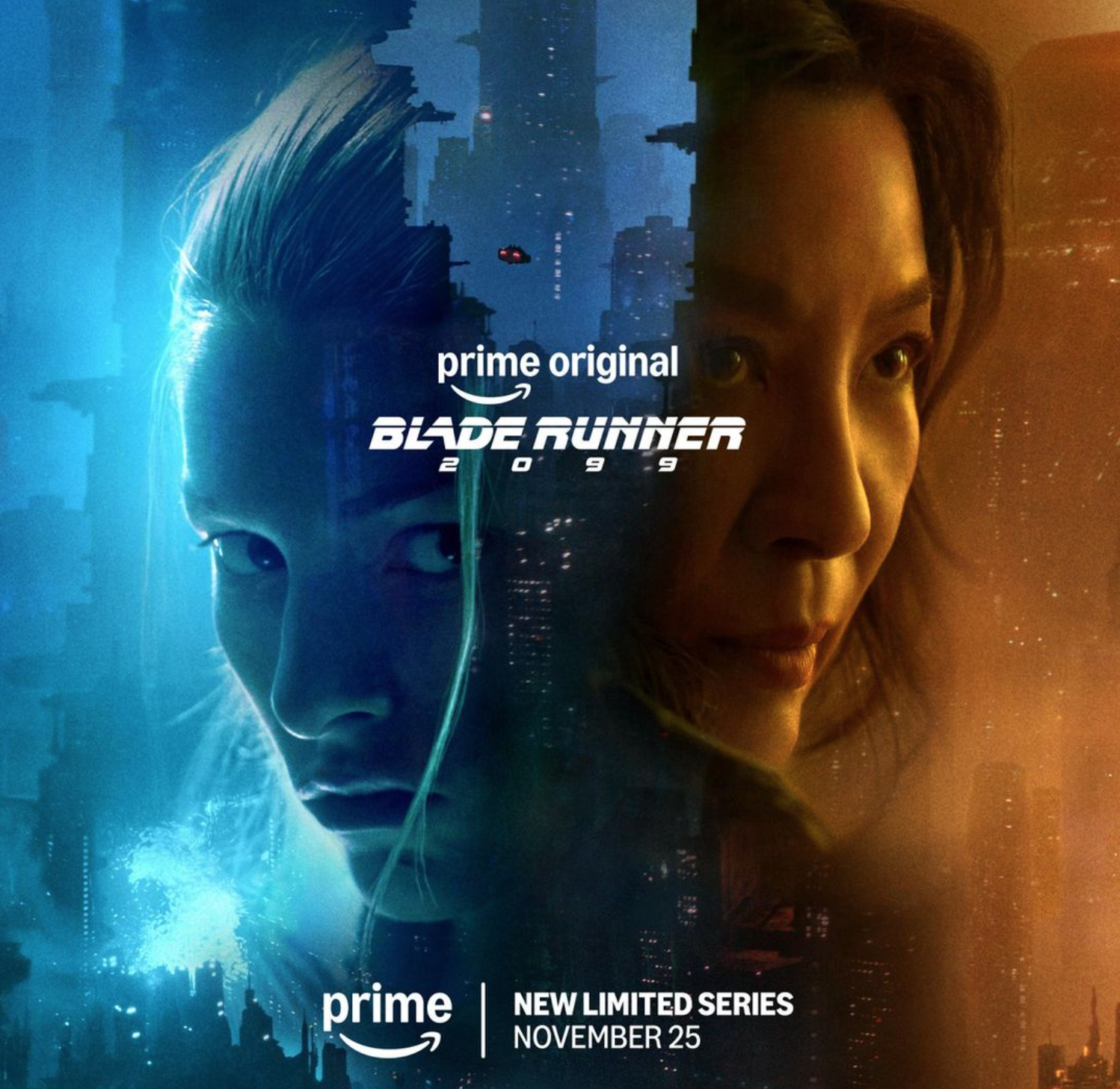
Arriving Nov. 25, 2026, "Blade Runner 2099"'s plot turns the tables as resentful artificial beings are now the ones running the show and hunting down Earth’s humans after a successful uprising against their original makers.

This newest atmospheric trailer was unveiled at last week’s New York Comic-Con and has us totally jacked to re-immerse ourselves in that noirish futuristic realm.

Check it out below:

It’s executive produced by showrunner Silka Louisa ("Shining Girls”) and stars Oscar winner Michelle Yeoh ("Everything Everywhere All at Once") as Olwen, playing a fading replicant Blade Runner who joins forces with Hunter Schafer’s ("Euphoria") Cora, a pure human on the run attempting to evade a squad of exterminating Blade Runners while examining their existential natures.

But aside from the dazzling visuals of the City of Angels at the gates of the 22nd century, fans will also be strapping in for some cool outer space action, as evidenced by fresh footage delivering some arresting scenes of space travel, off-world planets, and Yeoh in a bizarre helmet.

"Blade Runner 2099" hits Prime Video starting on Nov. 25, 2026 (Image credit: Prime Video)

"Blade Runner 2099"'s cast includes Dimitri Abold ("The Hunger Games: The Ballad of Songbirds & Snakes") and Lewis Gribben ("Somewhere Boy”) alongside Katelyn Rose Downey ("The Nun II"), Daniel Rigby ('Renegade Nell"), Johnny Harris ("A Gentleman in Moscow"), Amy Lennox ("Only Child"), Sheila Atim ("The Woman King") and Matthew Needham ("House of the Dragon”).

Launching with an 8-episode debut season and executive produced by Scott Free Productions, "Blade Runner 2099" and its new world order lands on Prime Video on Nov. 25, 2026.

The X-Files Lego set is a wonderful bit of 90s sci-fi nostalgia

Millennials get a lot of flak for being overly nostalgic, but I don't think that's fair. When the modern-day world has nothing to offer us but AI slop, shrinkflation and a sad acceptance that we can't be bothered to do anything about global warming. It's easy to see why we yearn for the days of Pogs, the Backstreet Boys, and Saved by the Bell.

One area that we definitely had it good in the 90s was sci-fi, when legendary shows like Star Trek: The Next Generation, Stargate SG-1, and — of course — The X-Files ruled our TV screens long before the age of streaming services. You can relive those glory days of alien conspiracies, spooky happenings and cell phones the size of a brick with the Lego Ideas The X-Files set.

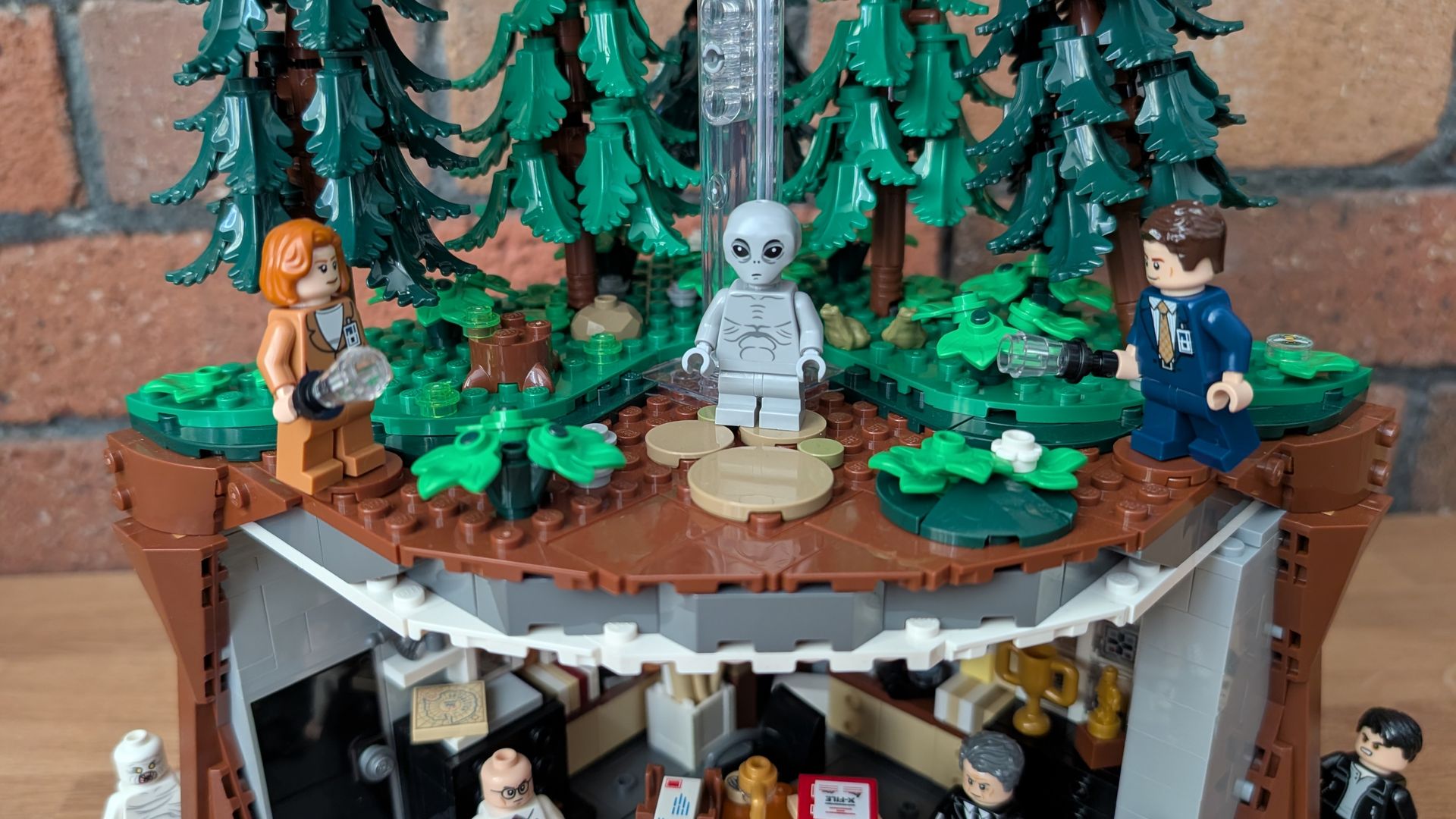
This 1478 piece set is essentially two dioramas crammed into a single display piece. The top of the model depicts a spinning UFO floating above one of those iconic coniferous forests that dominated 90s sci-fi. Why? Because — thanks to some generous tax credits — it was cheaper to shoot in Vancouver, so that's where they all flocked.

Disney Plus / Hulu bundle: was $12.99 now $11.99
Catch Mulder and Scully in every season of The X-Files on Hulu, which is available bundled with Disney+ for only $11.99/month for the first six months, then increasing to $12.99/month.View Deal

Picture of the Lego The X-Files set

Mulder and Scully closing in on our "Grey" alien friend in the woods. (Image credit: Future (Ian Stokes))

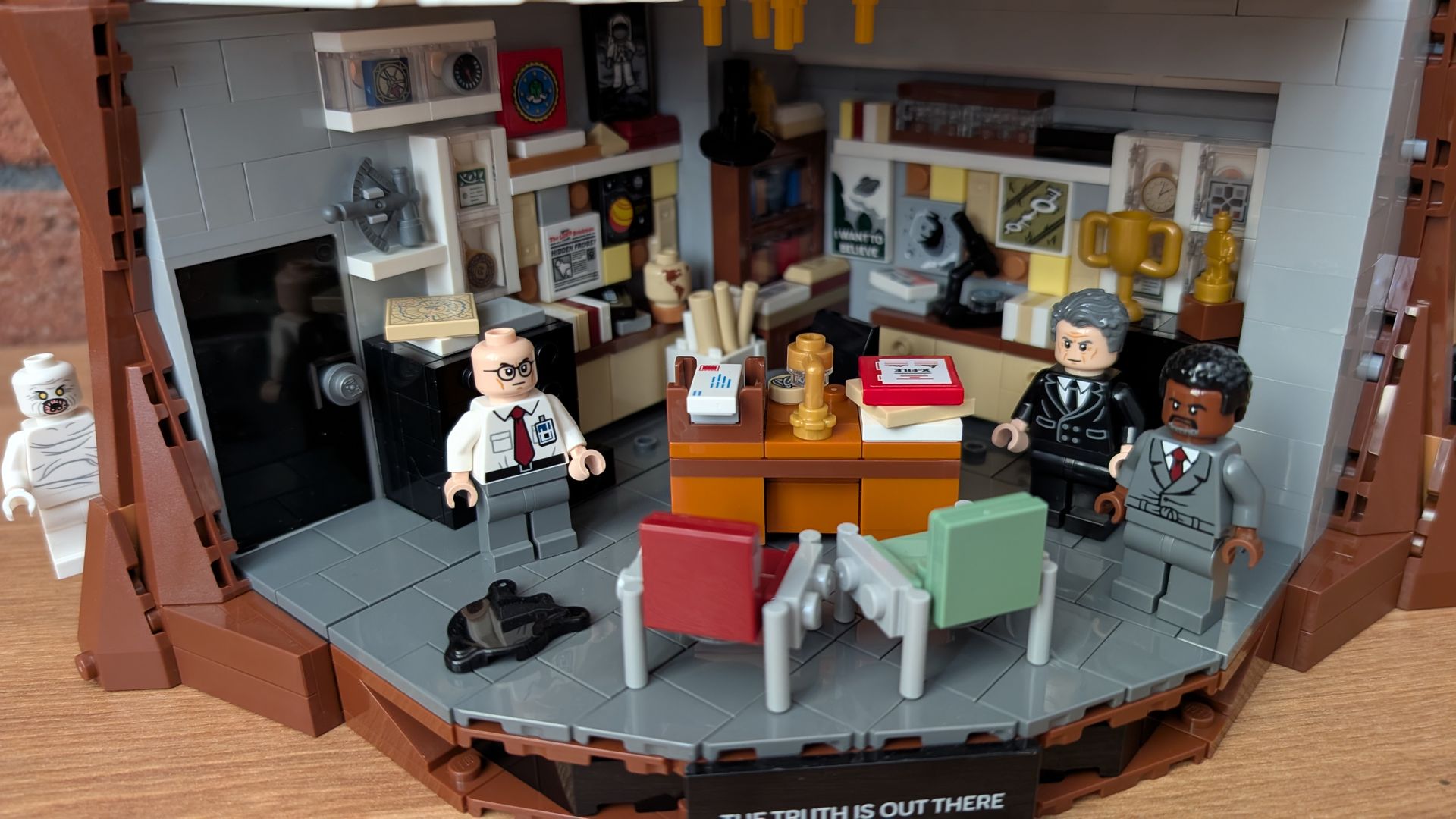
Beneath the woodland scene, though, is the real star of the show: Mulder's office, squirrelled away in the basement of the FBI's J. Edgar Hoover Building in Washington, D.C. This dingy little office is where Scully meets "Spooky Mulder", kicking off a glorious sci-fi odyssey that would last for eleven seasons (and two movies).

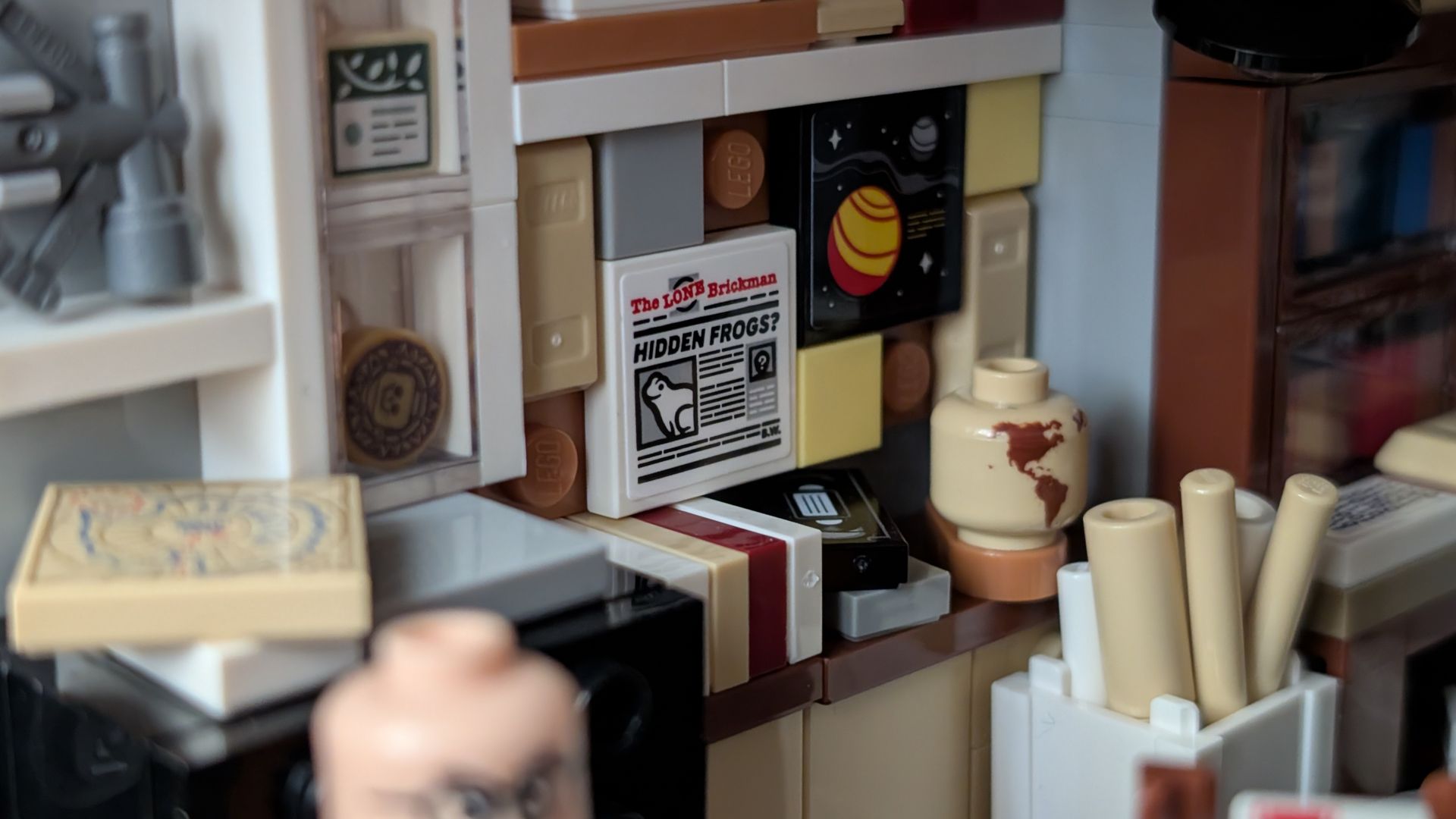
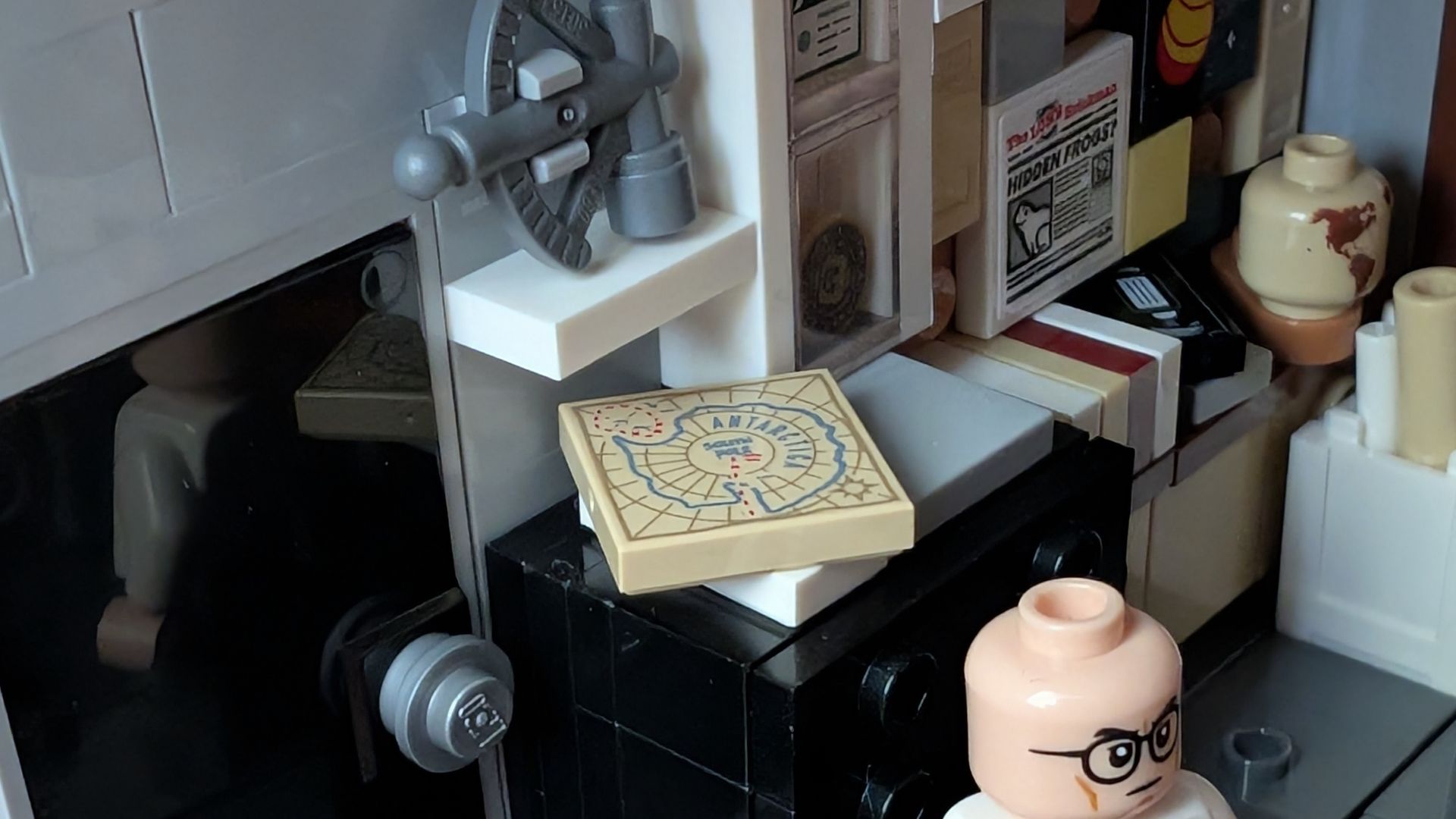
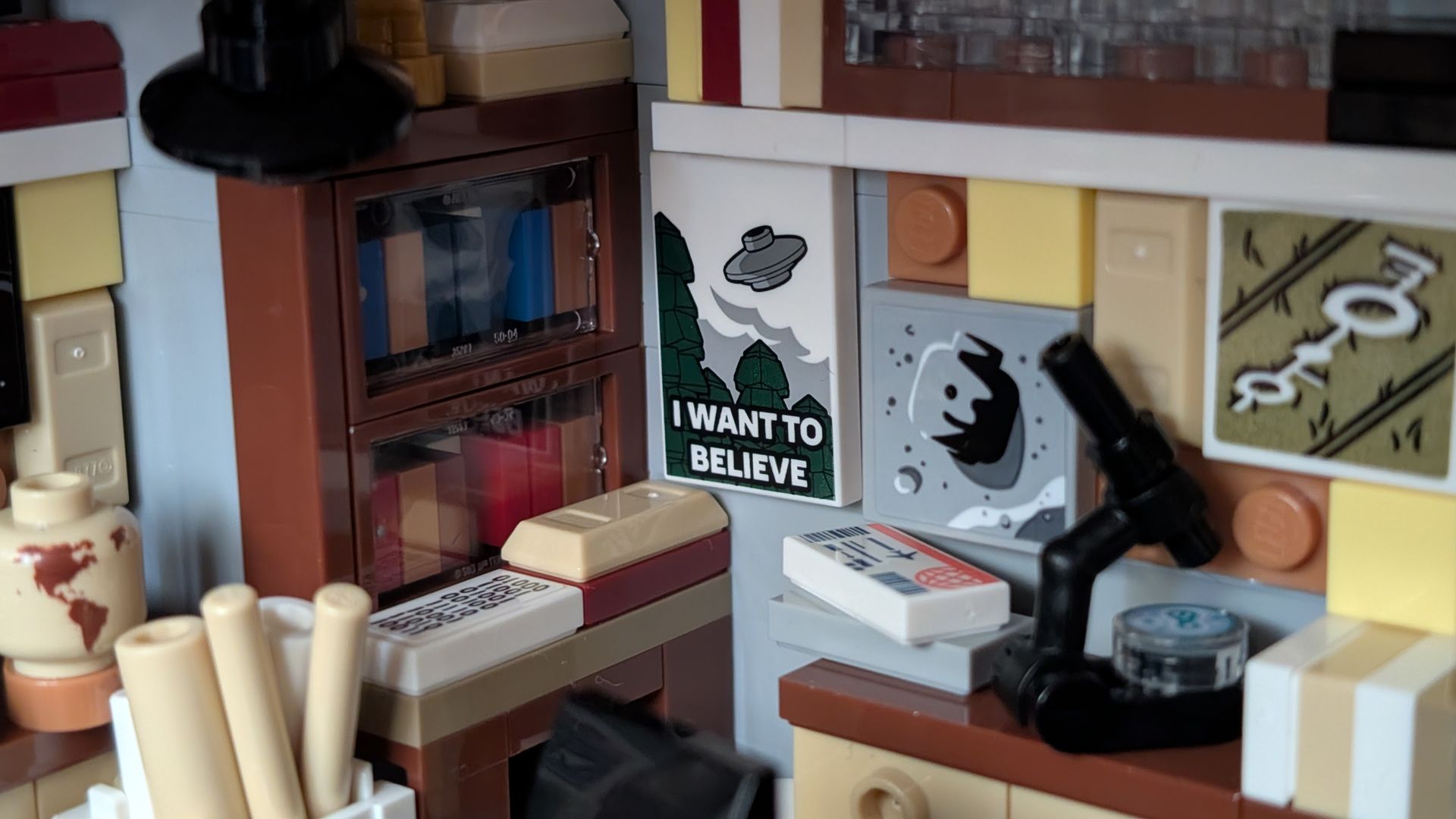
Mulder's dingy little base of operations has been stunningly recreated here, with both overt references and subtle nods that X-Files fans will appreciate. The iconic "I want to believe" poster adorns the wall, alongside photographs of crop circles and a newspaper clipping from a paper called "The Lone Brickman" — a nice nod to "The Lone Gunmen". There's even an actual X-File sitting on the desk, and a cute Lego spoof of the "Face on Mars", with a photo on the wall that shows a Lego head on the moon.

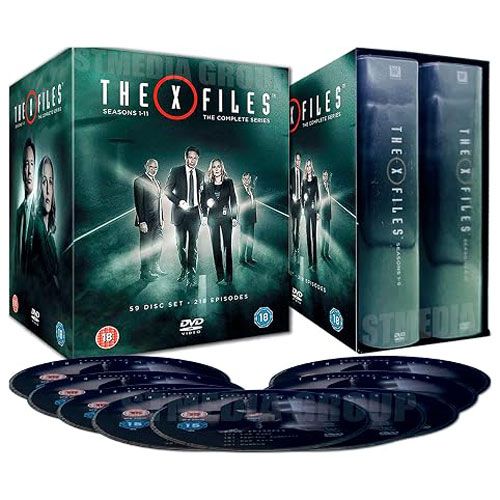
The X-Files Complete Boxset: $160
Prefer to actually own your media? Make your way through this X-Files Complete Boxset on DVD. Just bear in mind that you will need a region-free DVD player to watch it with.

Picture of the Lego The X-Files set
The iconic "I Want To Believe" poster.Future (Ian Stokes)
Picture of the Lego The X-Files set
Newspaper clippings were a staple of the X-Files office.Future (Ian Stokes)
Picture of the Lego The X-Files set
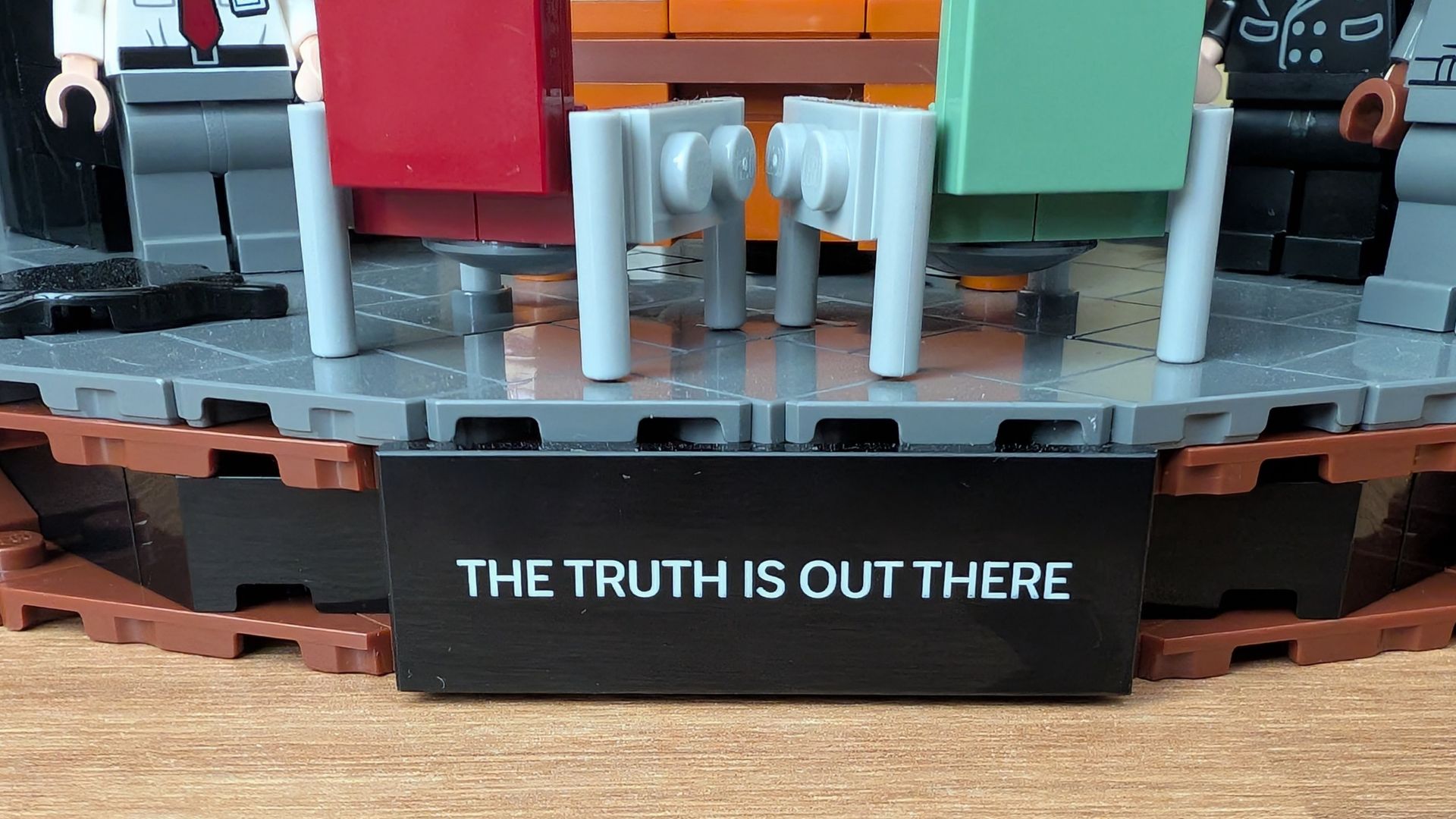
The show's legendary tagline is proudly displayed on the front.Future (Ian Stokes)
Picture of the Lego The X-Files set
X(Files) marks the spot.Future (Ian Stokes)

It's been a hot minute since I watched The X-Files (that DVD box set beside my TV is calling to me), but even so, I had a blast building my way down memory lane, remembering episodes as I assembled the diorama. I love the little touches, like the display cabinets filled with artifacts, the VHS tapes scattered around the office and the black oil spillage on the floor.

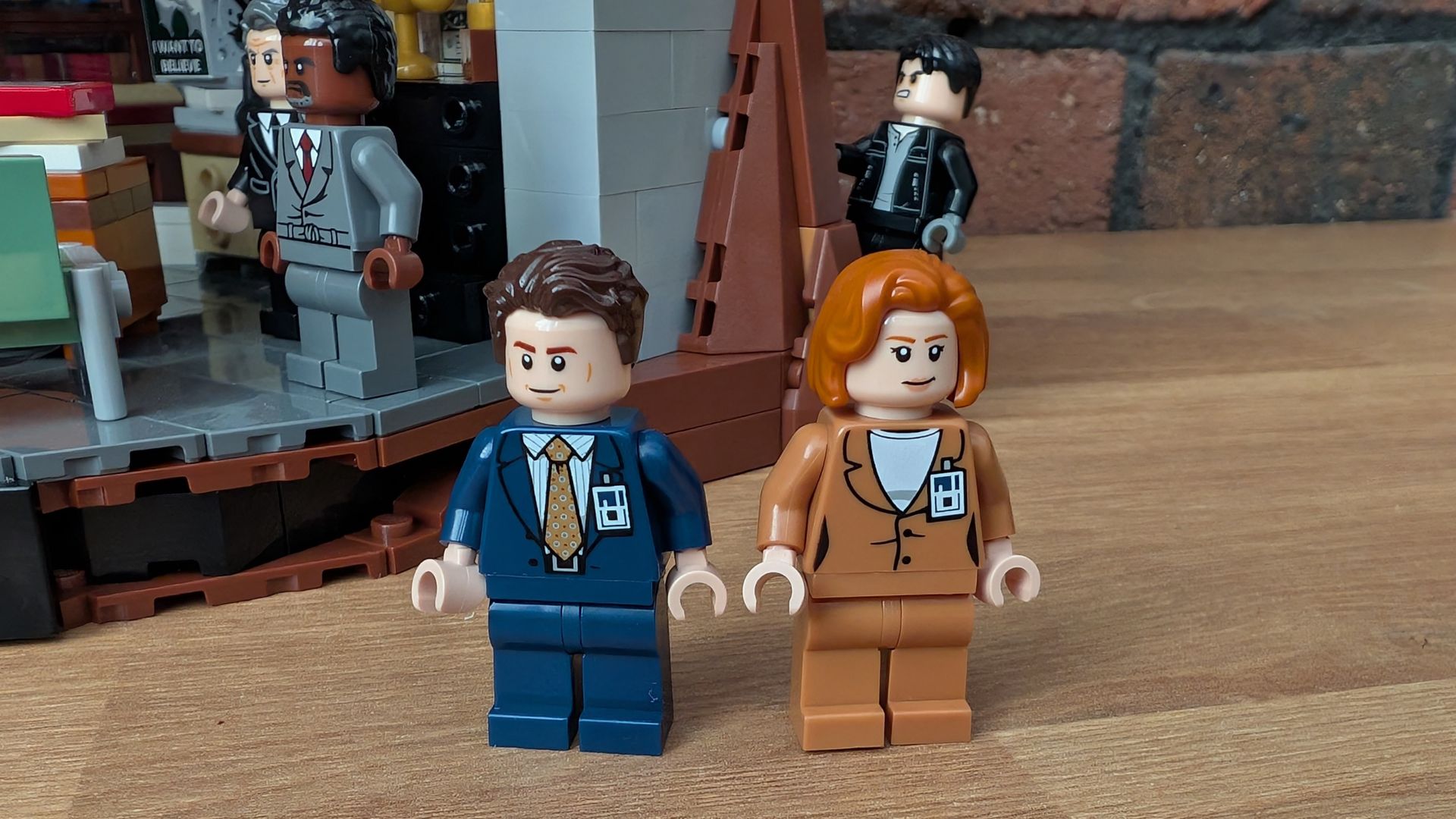
As with most Lego sets, the minifigures are half the joy. You get Mulder and Scully, obviously, with the dynamic duo of FBI agents both rocking flashlights (no smartphones with built-in lights back in the 90s). Mulder is wearing dark blue, while Scully is rocking an orangey brown suit, with both of them sporting an FBI badge.

Outside of the principal pair, you also get Skinner, Mr X, and the Cigarette Smoking Man. Mulder's partner-turned-nemesis Alex Krycek also gets a suitably devious-looking minifig. It's the gloves, they just make him look like a bad man (which, to be fair, he is). Finally, to ramp up the paranormal scale, we also get a pair of monster minifigs: a grey alien and Flukeman minifigures. The grey alien was a must-have, especially given the UFO floating atop this display piece, but the one-off monster of the week, Flukeman, felt like a weird choice.

Picture of the Lego The X-Files set
Agents Mulder and Scully, FBI.Future (Ian Stokes)
Picture of the Lego The X-Files set
Assistant Director Skinner, Mr X, and the Cigarette Smoking Man in Mulder's Office.Future (Ian Stokes)

Also, this John Doggett erasure will not stand. Sure, he could never replace Mulder, but Robert Patrick's seasons eight and nine run was excellent and he deserved a spot here.

And while I'm voicing minor gripes, the usual Lego FOMO tricks were in force with this set; if you pre-ordered, you got an exclusive gift set — Scully's Lab — free of charge. This extra little diorama isn't necessary, but it does feel like the collection is incomplete without it and it's not for sale separately, so you'll have to try your luck with eBay scalpers if you want it.

Speaking of Scully, Gillian Anderson has stated that after season 11 wrapped in 2018, she was done with the role. That wasn't entirely accurate, though, as she donned the lab gloves one more time for the Lego X-Files set advert. It's a short bit of fan service, but a nice touch, and, once again, it sparks those 90s neurons.

All these delicious Member Berries come at a price, though, and that's the price. This blast from the past will set you back $199 (£179 in the UK). That's no small chunk of change. But then again, anyone who wants this set is in their thirties or forties and can probably afford that outlay for the nostalgia trip. And look at it this way: when The X-Files debuted back in 1993, the price would only have been about $86.

I had a great time building the Lego X-Files set and if you're a fan of the series, you will too. Nostalgia often feels like a cheat code to our hearts, but there's nothing wrong with that. We deserve to remember the good times and the truth is that The X-Files was about as good as it ever got for sci-fi fans.

You can buy the Lego X-Files set now, available for $199/£179 from the Lego store.