Blue Origin traces origin of huge New Glenn rocket explosion to oxygen valve, CEO says

Blue Origin is close to figuring out why its New Glenn rocket went boom a few months ago.

The explosion — which destroyed the rocket and some key pieces of pad infrastructure — occurred on May 28 during a routine engine test at Florida's Cape Canaveral Space Force Station. Blue Origin has been working hard ever since to determine the cause of the anomaly, and it has made considerable progress, according to a new update.

"The anomaly originated at the main oxygen valve on one of the BE-4 engines, which was later confirmed by hardware recovery and inspections," Blue Origin CEO Dave Limp said via X on Wednesday afternoon (Aug. 5). "Extensive component-level and engine hotfire tests have been conducted to understand the failure mode better and inform mitigations."

Like SpaceX's workhorse Falcon 9 rocket, the 320-foot-tall (98-meter) New Glenn features a reusable first stage, which is powered by seven BE-4s and designed to launch at least 25 times. The heavy lifter is a big part of Blue Origin's ambitious plans, which include helping humanity establish a foothold in the final frontier.

"The rocket is engineered with the safety and redundancy required to fly humans, and will enable our vision of building a road to space for the benefit of Earth," Blue Origin's website states.

The company, and NASA, are counting on the rocket to get important hardware to the moon. New Glenn will be the ride for Blue Origin's Blue Moon, one of two crewed landers that NASA picked to get astronauts to and from the lunar surface for its Artemis program. (The other is SpaceX's Starship.)

And there's an important Blue Moon mission coming up: the first test flight of the prototype Mark 1 lander, which is scheduled to make an uncrewed lunar touchdown by the end of this year, if possible. That mission will help prove out the vehicle's capabilities ahead of crewed flights.

New Glenn debuted in January 2025 and has flown two more times since, in November 2025 and April 19 of this year. There was an issue on that most recent launch, which carried up AST SpaceMobile's BlueBird 7 communications satellite: New Glenn failed to deploy the payload into the proper orbit, and it was lost.

Despite that issue, and the May 28 explosion, Limp expressed confidence that Blue Origin will soon get New Glenn up and running again.

"The path forward is clear," he added in Wednesday's X post. "We're making small modifications to the valve that can be quickly retrofitted to existing engines. We’re manufacturing the updated hardware, which will be ready by the end of this month. In parallel, we're working through the remaining fault tree analysis."
SpaceX wants to launch next Starship this month (and catch it, too), Elon Musk says in 1st earnings call since historic IPO

SpaceX will make some history this month, if all goes according to plan.

The company aims to launch the 14th test flight of its Starship megarocket before August is out, Elon Musk said today (Aug. 4) during SpaceX's first-ever quarterly earnings call. Starship will deploy viable payloads into orbit on Flight 14, something it has never done before — and there will be other unprecedented action as well.

"I'd say things look very good, and that's why we, assuming we receive regulatory approval to do so, will attempt to catch the Ship with the tower on the next flight, which is tentatively scheduled for the end of this month," Musk said during today's call.

"Ship" is the 171-foot-tall (52 meters) upper stage of Starship, which also features a giant first-stage booster called Super Heavy. Both of these elements are designed to be fully and rapidly reusable — a breakthrough that, combined with Starship's immense power, will revolutionize spaceflight, according to SpaceX.

And "things look very good" is a reference to Starship Flight 13, which lifted off on July 24. Musk was talking specifically about Ship's performance on that suborbital jaunt, which ended with the upper stage's soft splashdown in the Indian Ocean, off the coast of Western Australia.

Ship's heat shield survived the harrowing downward trip through Earth's atmosphere in great shape on Flight 13, according to SpaceX (as did the entire vehicle, which is still in one piece to this day). And that gives SpaceX confidence to plan for a tower catch on Flight 14 — a crucial component of Starship's future reusability.

"I don't want to jinx it or anything, but I think I'd consider the heat shield problem solved at this point," Musk said.

Starship's two launch towers at its Starbase site in South Texas feature large "chopstick" arms, which stack Super Heavy and Ship atop the pad — and can also catch the vehicles when they come back to Earth at the end of their missions.

SpaceX has already executed a tower catch with Super Heavy on three Starship test flights, but it has not yet tried to do so with Ship. So Flight 14 could be momentous, provided SpaceX gets permission from regulators to make an attempt.

Flight 14 will also carry up a batch of SpaceX's V3 Starlink satellites, a larger and more capable version of the spacecraft that currently populate the company's broadband megaconstellation. Flight 13 toted 20 Starlink V3s, but Ship deployed them into suborbital space; the satellites will be placed into an operational orbit on the upcoming mission, if all goes to plan, Musk said.

SpaceX goes public

Musk founded SpaceX as a private company back in March 2002. It stayed that way until this past June 12, when SpaceX went public via the richest IPO in history, which raised $86 billion and valued the company at $1.77 trillion.

SpaceX now has to provide earnings reports every quarter, starting with Q2 of this year. And these first publicized numbers show considerable improvement compared to a year ago, according to the company.

The newly released report states that total revenue in the March-June time period was up 92% over the same stretch in 2025 — $7.8 billion versus $4.1 billion. And SpaceX had a net loss during this span of $541 million, down from a net loss of $1.0 billion in Q2 2025.

More than half of this quarter's revenue — about $4.3 billion — came via the company's Starlink satellite-internet megaconstellation. That number crystallizes a truth that has been apparent for a while now — SpaceX is not just a launch company anymore.

Rockets will bring in a smaller and smaller share of SpaceX revenue over the coming years, if all goes according to plan. Launch will continue ceding this financial ground to Starlink, but also, increasingly, to SpaceX's artificial intelligence (AI) operations.

Indeed, SpaceX sees itself becoming more and more of an AI outfit over time. A few months ago, the company revealed that, over the long haul, it's targeting a "total addressable market" of $28.5 trillion per year, nearly $23 trillion of which will be in the field of "enterprise AI applications." That's quite an ambitious goal; in 2025, the gross domestic product of the entire United States was a little less than $31 trillion.

Speaking of ambitious: SpaceX plans to make a lot of this money via an orbiting constellation of one million AI data centers, which together will comprise a constellation known as Starmind. (Yes, SpaceX has a thing for "Star" names.)

SpaceX expects to start launching operational Starmind spacecraft in 2027, Musk said during today's call. It will take a lot of Starship launches to get the network up and running, but he doesn't see that as a bottleneck.

"We expect the cadence of flights to be increasing rapidly, and, probably a year from now, we will be doing at least one flight a day, possibly more," Musk said.

SpaceX launches 3 giant BlueBird direct-to-cell satellites on Falcon 9 rocket (video)

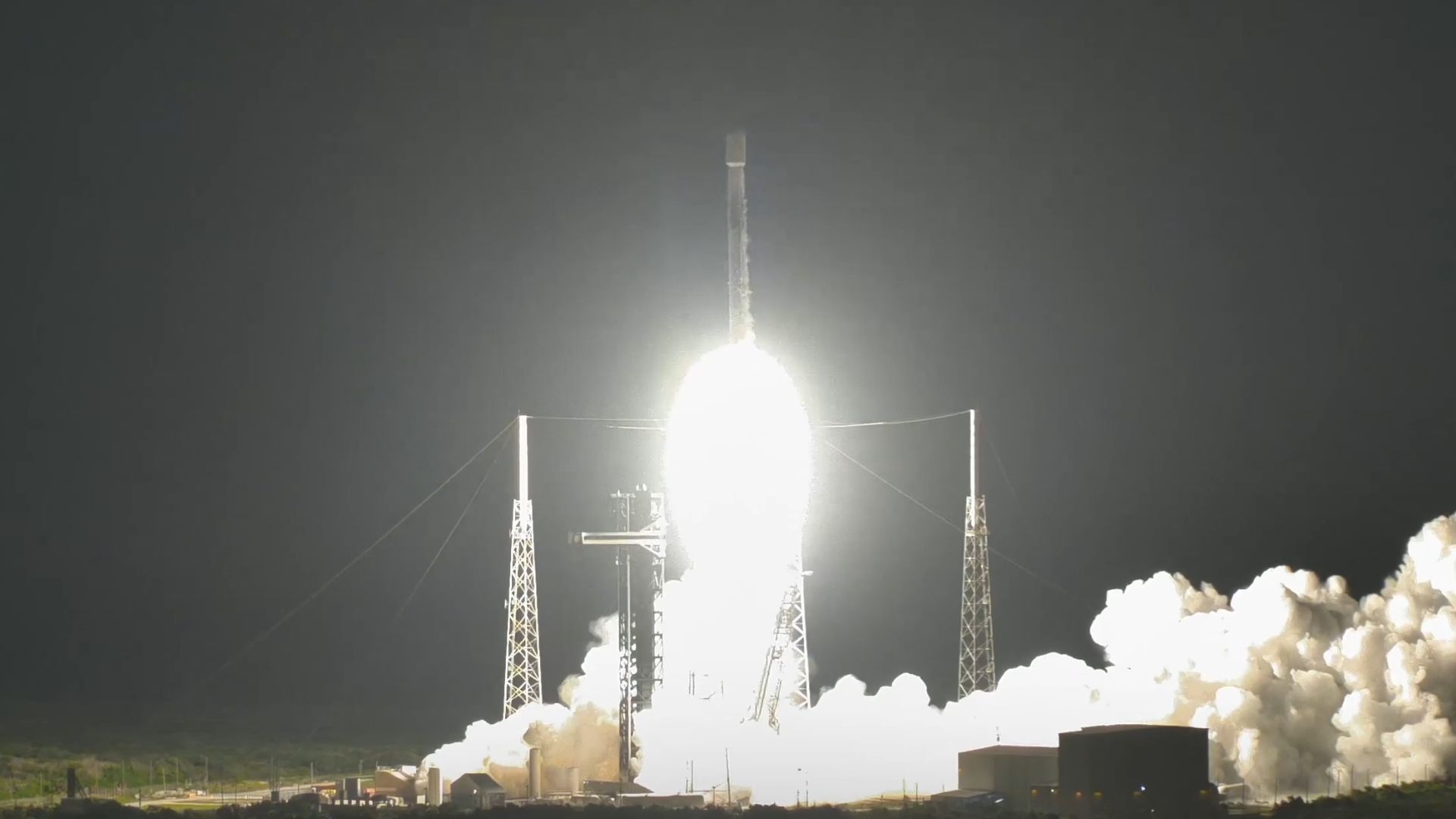
A SpaceX Falcon 9 rocket carrying three of AST SpaceMobile's massive direct-to-cell BlueBird satellites launched from Florida's Cape Canaveral Space Force Station at 3:50 a.m. EDT (0650 GMT) on Wednesday, minutes after the opening of its 96-minute window.

Today's launch further expands AST SpaceMobile's constellation in low Earth orbit (LEO), which will beam internet service directly to unmodified smartphones once operational.

The newcomers bring the total number of BlueBird spacecraft launched to 13 and marks a significant milestone toward getting the constellation fully up and running, according to AST SpaceMobile.

A SpaceX Falcon 9 rocket launches on Aug. 5, 2026 carrying a trio of BlueBird satellites to orbit. (Image credit: SpaceX)

"This orbital launch, combined with expanded manufacturing capacity and the recent successful launch and deployment of BlueBird satellites 8, 9, and 10, position us for beta services later this year with our space-based cellular broadband coverage," Scott Wisniewski, the company's president, said in a July 28 statement.

AST SpaceMobile began assembling its constellation with "Block 1" spacecraft, which have communications arrays that cover 693 square feet (64.4 square meters) when unfurled.

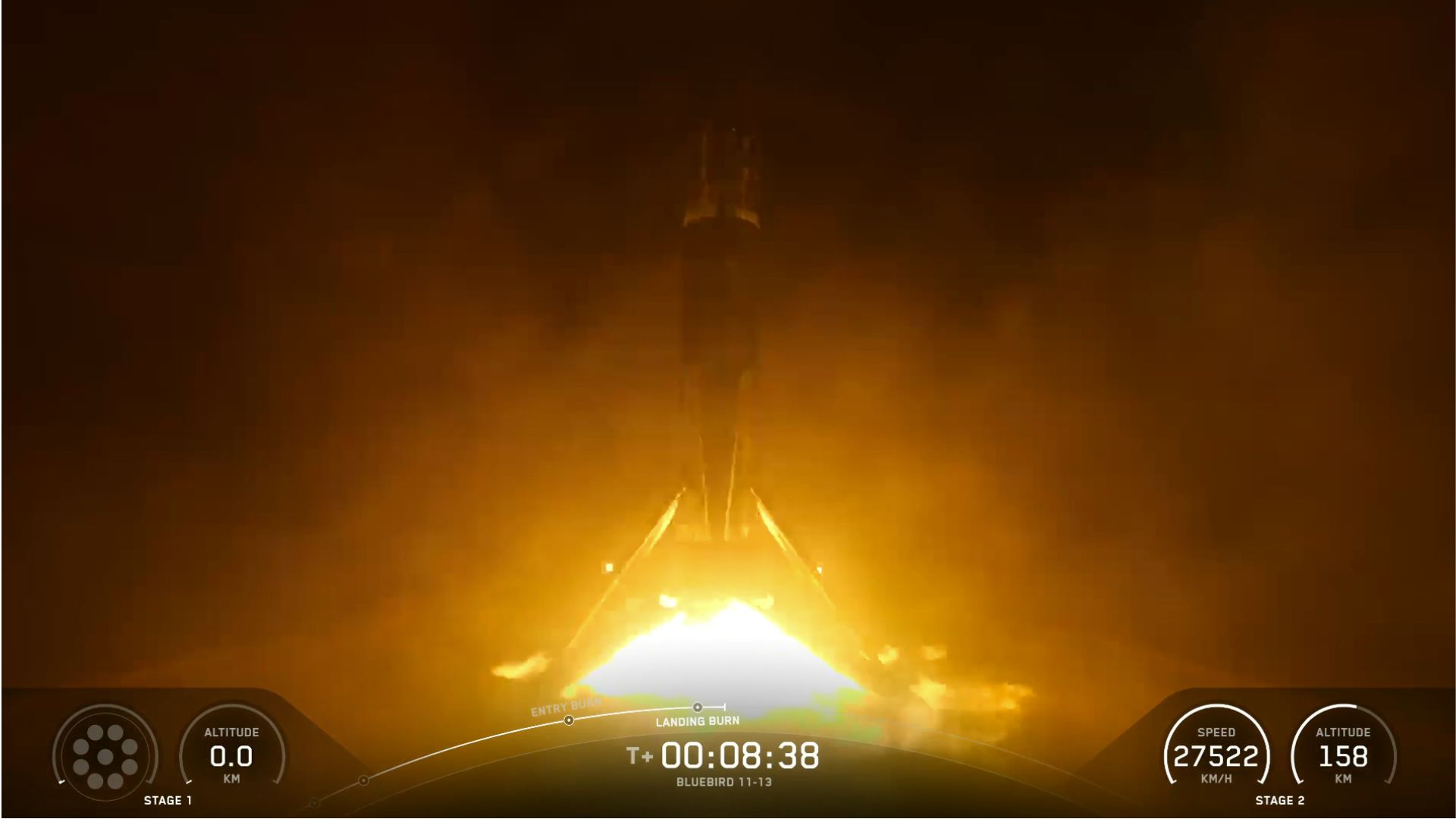
The Falcon 9 first stage went on to perform its 30th landing on the deck of the drone ship "A Shortfall of Gravitas." (Image credit: SpaceX)

That's pretty big, but the company upped the ante with BlueBird 6, which reached LEO atop an Indian LVM3 rocket in December 2025. That was the first "next-generation" BlueBird, a class whose antennas cover a whopping 2,400 square feet (223 square m).

Prior to today's launch, there had been four next-gen BlueBirds in LEO — numbers 6, 8, 9 and 10. (BlueBird 7 was lost shortly after liftoff this past April after its Blue Origin New Glenn rocket suffered an anomaly.) So, BlueBirds 11 through 13 nearly double the off-Earth population.

"These next-generation BlueBird satellites are expected to deliver nearly double the peak download speeds achieved by the company's initial Block 1 BlueBird satellites, which recently demonstrated peak download speeds of 98.9 Mbps directly to standard smartphones," AST SpaceMobile wrote in the same statement.

The Falcon 9's first stage returned to Earth roughly 8.5 minutes after launch today as planned, touching down in the Atlantic Ocean on the SpaceX drone ship "A Shortfall of Gravitas."

It was the 30th launch and landing for this particular booster, according to a SpaceX mission description. The rocket also flew the BlueBird 8-10 mission in June.

The Falcon 9's upper stage, meanwhile, went on to deploy the three BlueBird satellites into LEO over an 11-minute span beginning 53.5 minutes after liftoff.

Editor's note: This story was updated at 5 a.m. ET on Aug. 5 with news of successful launch, rocket landing and satellite deployment.

SpaceX launches Starlink satellites on 90th Falcon 9 flight of the year (video)

SpaceX has launched yet another batch of its Starlink internet satellites to the final frontier.

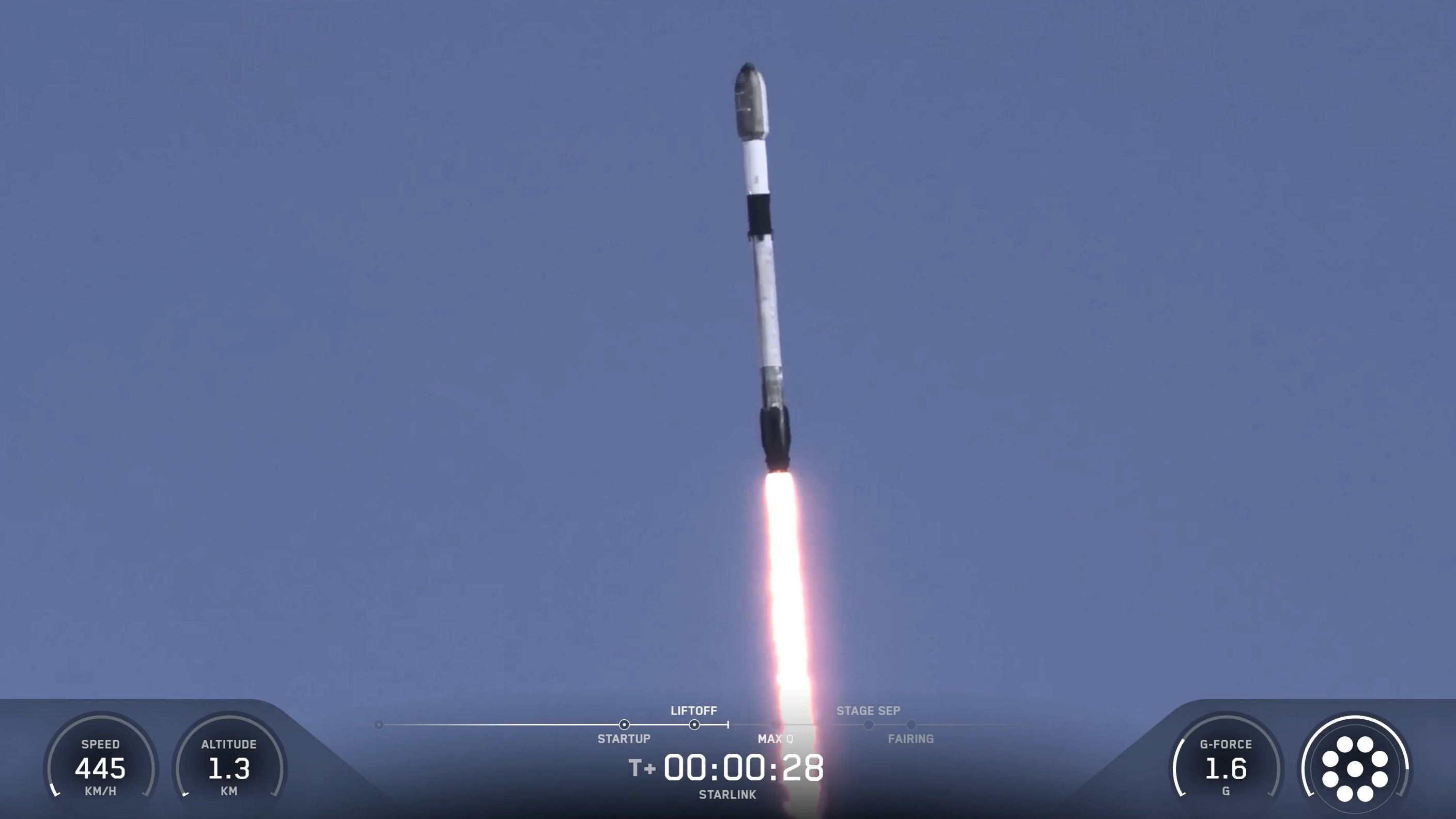
A Falcon 9 rocket lifted off from California's foggy Vandenberg Space Force Base today (Aug. 4) at 1:05 p.m. EDT (1705 GMT; 10:05 a.m. local time), carrying 24 of the broadband spacecraft toward low Earth orbit (LEO).

It was the 90th Falcon 9 liftoff of the year and the 70th of 2026 devoted to building out the Starlink megaconstellation.

A black-and-white rocket launches into a blue sky

A SpaceX Falcon 9 rocket launches 24 Starlink internet satellites from California's Vandenberg Space Force Base on Aug. 4, 2026. (Image credit: SpaceX)

The rocket's first stage came back to Earth as planned about 8.5 minutes after launch, touching down on the SpaceX droneship "Of Course I Still Love You," which was stationed in the Pacific Ocean. It was the 34th mission for this particular booster, which is designated B1063.

That's just two flights shy of the Falcon 9 reuse record, which was set last month on a different Starlink launch.

If all goes according to plan, the 24 Starlink satellites will be deployed into LEO about 61 minutes after liftoff. They'll join quite a few other spacecraft in the Starlink megaconstellation — nearly 10,900 at last count.

Previous Booster B1063 launches

There's some other SpaceX action on tap today as well. At 4:30 p.m. EDT (2030 GMT), the company will host a webcast to discuss its first-ever public earnings report, which covers the second quarter of 2026. You can listen live via SpaceX's X account.

SpaceX was a private company from its founding in 2002 until mid-June of this year, when Elon Musk took it public in the largest IPO in history.

Rocket issue delays 1st orbital rocket launch from the UK

German startup Rocket Factory Augsburg (RFA) just put the brakes on its first launch.

While testing its RFA One rocket on the launch pad at the U.K.'s SaxaVord Spaceport on the Shetland Islands in Scotland, the company found "an issue with the vehicle that requires further investigation," RFA wrote on X on Wednesday (July 28). Previously, the launch had been expected to happen in August or September, but RFA did not disclose a new launch date.

RFA did not disclose the nature of the issue, but said it would de-stack the staged rocket and that it would provide more details as the investigation continues. The situation means that the U.K. will need to wait at least a few more weeks to attempt its first-ever vertical launch from the region, amid global constraints in launch capacity and calls for increased European spaceflight autonomy.

RFA One, a smaller rocket designed to launch smaller satellites, is a three-stage rocket that will eventually include a reusable first stage in an effort to push down cost and to increase launch cadence. It will target a range of orbits, with examples including geosynchronous (where a satellite can constantly look at one area of the Earth), polar (allowing satellites to scan the whole Earth, as the planet orbits underneath) or sun-synchronous (which gives consistent lighting conditions.)

It's common for new rockets to encounter issues during development, including in later stages such as integrated pad testing or even during the first launch, because spaceflight is inherently hard. That said, there is more pressure on startup launching companies than ever to achieve their goals quickly, for commercial and defense reasons.

fire and smoke spew from a sliver cylinder upright on a large metal platform

Rocket Factory Augsburg conducts a hot fire test of their RFA One launcher stage at Saxavord Spaceport in November 2024. (Image credit: RFA)

Rockets are in high global demand in large part due to constantly launching satellite batches for large satellite constellations, most especially SpaceX Starlink, and planned orbital data centers. Simultaneously, the U.S. Department of Defense is asking companies to launch more often for security missions, such as the quick-turnaround VICTUS HAZE mission that Rocket Lab launched in June only 16 hours and 42 minutes after receiving the military's request.

Conflicts in Ukraine and Iran and other defense activities, meanwhile, have pushed other countries into more sovereign launch work that is accelerating already ongoing spaceport construction, in jurisdictions such as the U.K., Europe and Canada.

RFA has been trying to position itself as one of the leading new companies in Europe, on the back of receiving a spaceflight operator license in January, from the UK Civil Aviation Authority, for the SaxaVord spaceport launch. Meanwhile, SaxaVord is working to become an alternative to older, busier launch ports (especially Kourou's Guiana Space Centre, a popular location for high-profile launches such as the James Webb Space Telescope.)

"This is a groundbreaking moment for RFA and for Europe's space industry," Jörn Spurmann, RFA chief commercial officer, said in a statement released shortly after his company obtained the license. "Securing the first-ever launch license outside the European Space Agency's established site in Kourou is not just a regulatory milestone—it's a powerful endorsement of our technical excellence and a turning point for European space innovation."

Rumors are also abounding in the industry that the popular SpaceX Falcon 9 rocket, which companies worldwide use for rideshare missions, might not be accepting slots for its popular Transporter series beyond 2028 or 2029. If this happens, the demand in launch capacity transferring from SpaceX might lead to more opportunities for companies such as Rocket Lab and RFA One, assuming more rockets are ready in time.

SpaceX launches 24 Starlink satellites to orbit from California (video, photos)

SpaceX has sent yet another batch of its Starlink internet satellites into orbit.

A Falcon 9 rocket carrying 24 of the broadband spacecraft lifted off from California's Vandenberg Space Force Base on Friday (July 31) at 11:08 p.m. EDT (8:08 p.m. local time; 0308 GMT on Aug. 1).

The rocket's first stage came back to Earth as planned 8.5 minutes later, touching down in the Pacific Ocean atop the SpaceX droneship "Of Course I Still Love You." It was the 26th mission for this particular booster, which is designated B1081.

Previous Booster B1081 launches

The 24 Starlink satellites were deployed into low Earth orbit (LEO) 61.5 minutes after liftoff as planned, SpaceX confirmed via X.

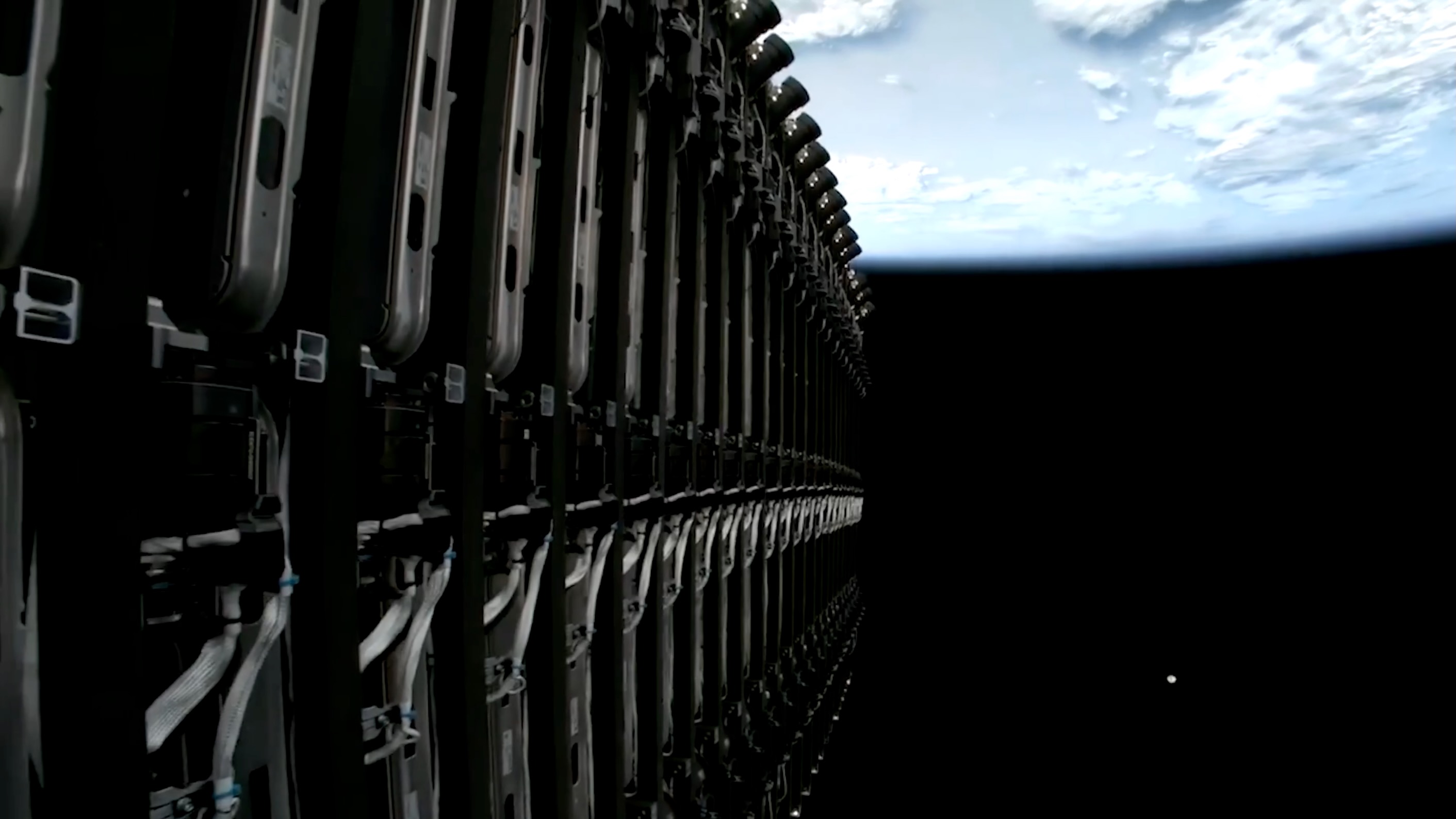
They're joining more than 10,800 other spacecraft in the Starlink megaconstellation, by far the largest satellite network ever assembled.

a stack of folded-up satellites is seen high above earth, still attached to their rocket

A batch of SpaceX's Starlink satellites is seen high above Earth before deployment from their Falcon 9 rocket on July 31, 2026. (Image credit: SpaceX)

SpaceX has now launched 89 Falcon 9 missions in 2026, 69 of which have been dedicated Starlink flights.

The company also has three other liftoffs under its belt this year — one launch of its powerful Falcon Heavy vehicle and two test flights of Starship, the fully reusable megarocket SpaceX is developing to help humanity settle the moon and Mars, among other tasks.

SpaceX’s Starship seen in space by next-gen Starlink satellite (video)

We just got an amazing new view of SpaceX's Starship vehicle, thanks to one of the company's next-gen Starlink satellites.

Starship, the biggest and most powerful rocket ever built, launched on its 13th test flight from South Texas last Friday (July 24). The suborbital jaunt was similar in many respects to past Starship test missions, with one big exception: This time, the vehicle deployed a batch of functional, next-gen Starlink internet satellites into space.

Six of those "Starlink V3" spacecraft carried cameras, so that SpaceX could get good views of the heat shield on Starship's upper stage, which is known as Starship, or simply Ship. The satellites did that job and more, capturing amazing views of Ship as it cruised away from them high above Earth.

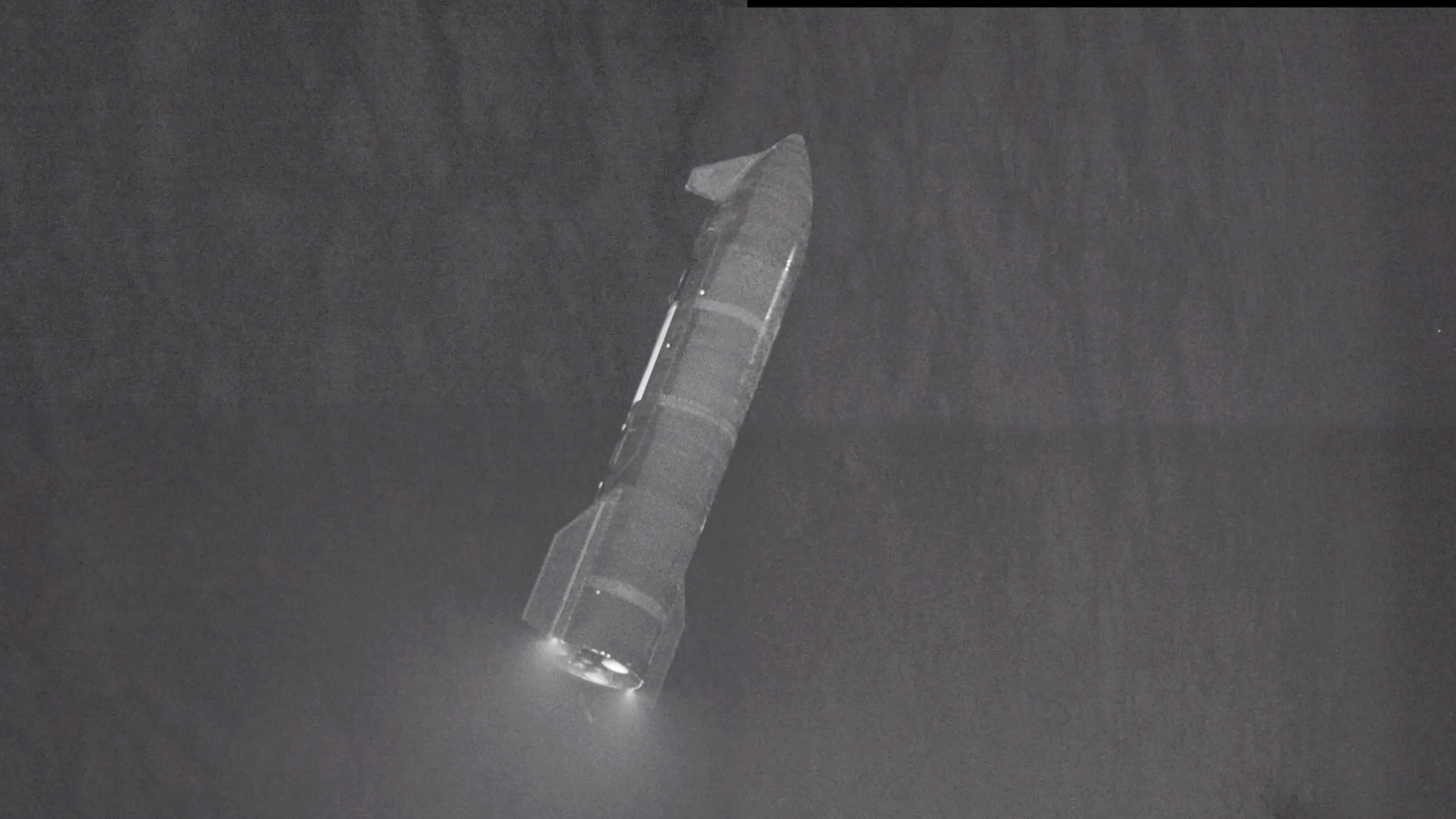
The upper stage of SpaceX's Starship megarocket, seen here on July 24 during the vehicle's 13th test flight by one of the company's Starlink V3 satellites.

The upper stage of SpaceX's Starship megarocket, seen here on July 24 during the vehicle's 13th test flight by one of the company's Starlink V3 satellites. (Image credit: SpaceX)

SpaceX shared one such view on X Friday evening (July 31) — a 65-second video that stitches together imagery taken by four different cameras on a single Starlink V3 satellite.

The video starts with an up-close view of the shiny, 171-foot-tall (52 meters) Ship. We see more of the vehicle as the footage rolls and the two spacecraft get farther and farther apart. Toward the end, we see Ship in its entirety, and we get a sense of its activity; three of its six Raptor engines are firing, and small puffs of white vapor indicate that the vehicle is engaging its fine-tuning reaction control thrusters.

Like all Starship test missions to date, Flight 13 targeted a suborbital trajectory. So the 20 Starlink V3 satellites, the first ever to reach space, did not stay up for long; they came back down to Earth about 20 minutes after deploying into the final frontier.

Their successors will get higher — and there will be many of them. According to a filing with the U.S. Federal Communications Commission, SpaceX wants to operate a megaconstellation of 100,000 Starlink V3 satellites.

Starship will be key to building and maintaining this constellation, which will require many launches of the brawny, fully reusable rocket. (SpaceX currently operates a constellation of nearly 11,000 Starlink satellites, but those V2 craft are considerably smaller than the 4,400-pound V3 iteration.)

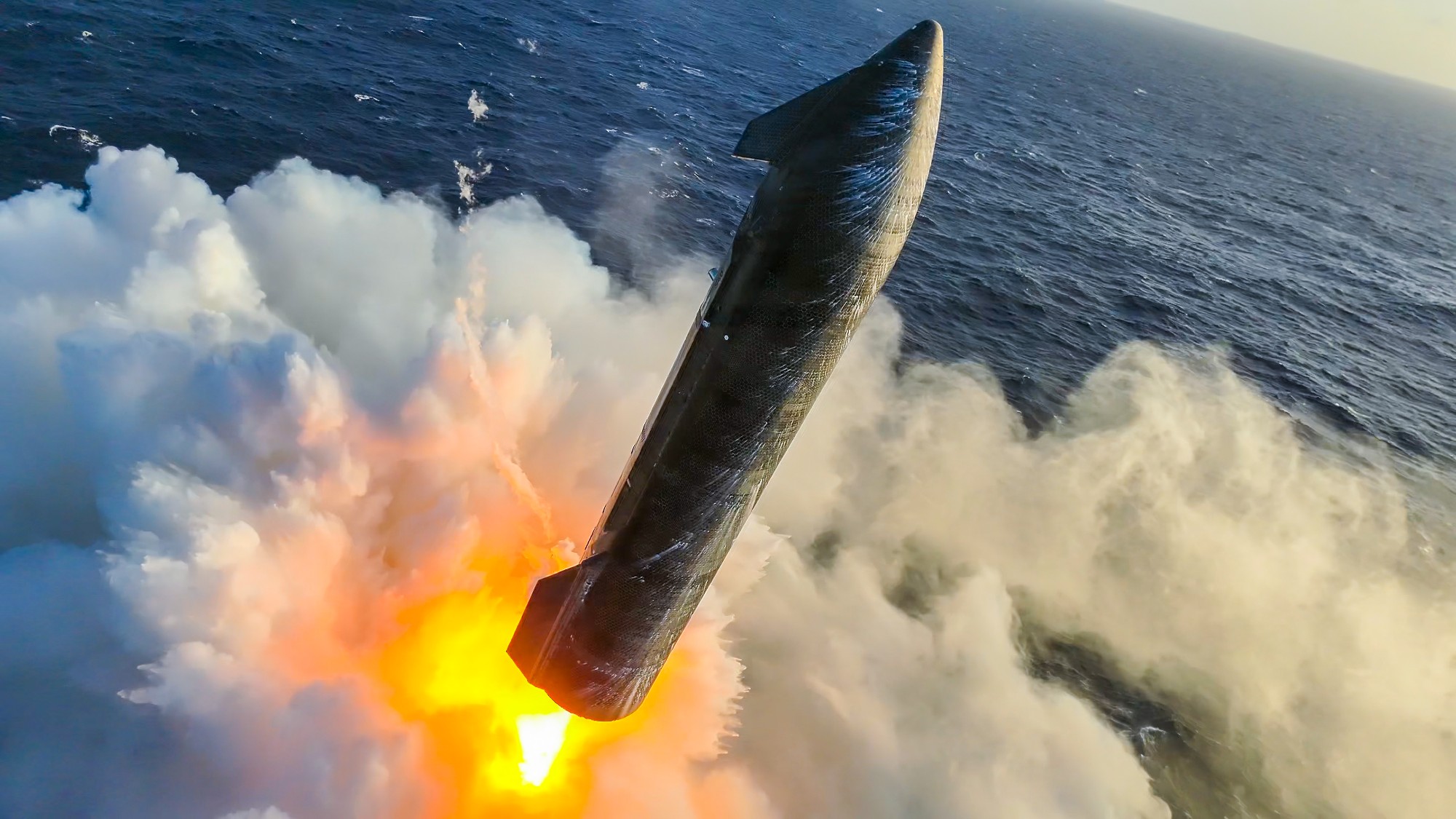
a black rocket with wing-like canards fires its engines just above the ocean, creating a spray of water vapor

SpaceX's Starship upper stage splashes down in the Indian Ocean to wrap up its 13th test flight on July 24, 2026. (Image credit: SpaceX)

Ship seems to have checked all of its boxes on Flight 13. After deploying the satellites and successfully reigniting one of its Raptors in space, it splashed down on target in the Indian Ocean off the coast of Western Australia about 65 minutes after liftoff.

The vehicle survived its harrowing return trip through Earth's atmosphere in one piece and remains intact today, as far as we know; SpaceX recently shared a photo of the vehicle bobbing in the Indian Ocean five days after splashdown.

But Starship's giant first-stage booster, known as Super Heavy, had a few issues on Flight 13. Its landing burn employed only five of a planned 13 Raptor engines, for example, and the booster hit the waters of the Gulf of Mexico at a higher velocity than intended. (Super Heavy has a total of 33 Raptors, all of which fire at liftoff.)

Starship remains in the development phase, but SpaceX wants to get the megarocket operational soon. It's slated to fly on NASA's Artemis III astronaut mission to low Earth orbit in mid-2027 and to land a crew near the moon's south pole on Artemis IV in late 2028.

NASA is sending 2 probes to the moon to test complex ‘three-body orbits’

NASA is planning to send two maneuverable probes to lunar orbit in order to learn how spacecraft are affected by the complex gravitational environment near the moon.

The mission, known as CAPSTONE 02, is currently aiming to launch in 2027. It will see the two probes maneuver in close proximity to one another and fly in "formation" so mission operators can better understand the gravitational effects spacecraft experience in cislunar space. This area of space is under the influence of both Earth's gravity and the moon's, meaning spacecraft operating there will have to navigate what are known as "three-body orbits."

While testing spacecraft maneuverability in these complex orbits, CAPSTONE 02 will also study communication and navigation systems that will be used in NASA's planned Artemis missions of lunar exploration and moon base construction. "This mission represents an important step in the maturation of cislunar capabilities," said NASA's Sean Fuller, Moon Base CAPSTONE manager, in an agency statement. "CAPSTONE 02 lays the foundation for lunar infrastructure and commercial services that support Artemis, Moon Base, and future missions to deep space."

The two CAPSTONE 02 probes are being built by Terran Orbital Systems, Inc. Once in space, they will alternate jobs while flying in formation, switching between what NASA calls "chaser" and "target" roles.

The spacecraft pair will use celestial navigation, optical sensors and data collected by telescopes on the ground during these maneuvers. This is similar to how NASA will use a variety of data to help its Orion spacecraft meet up with a lunar lander en route to the moon.

On the upcoming Artemis III mission, currently scheduled for 2027, NASA will test some of these techniques as Orion will rendezvous with both Blue Origin's Blue Moon lander and SpaceX's Starship, if all goes according to plan.

"Transporting crew to the lunar surface from cislunar orbit depends on knowing how well navigation systems will perform during these operations. Since these conditions can't be fully recreated on Earth, they must be tested in space," NASA wrote in its statement outlining the CAPSTONE 02 mission.

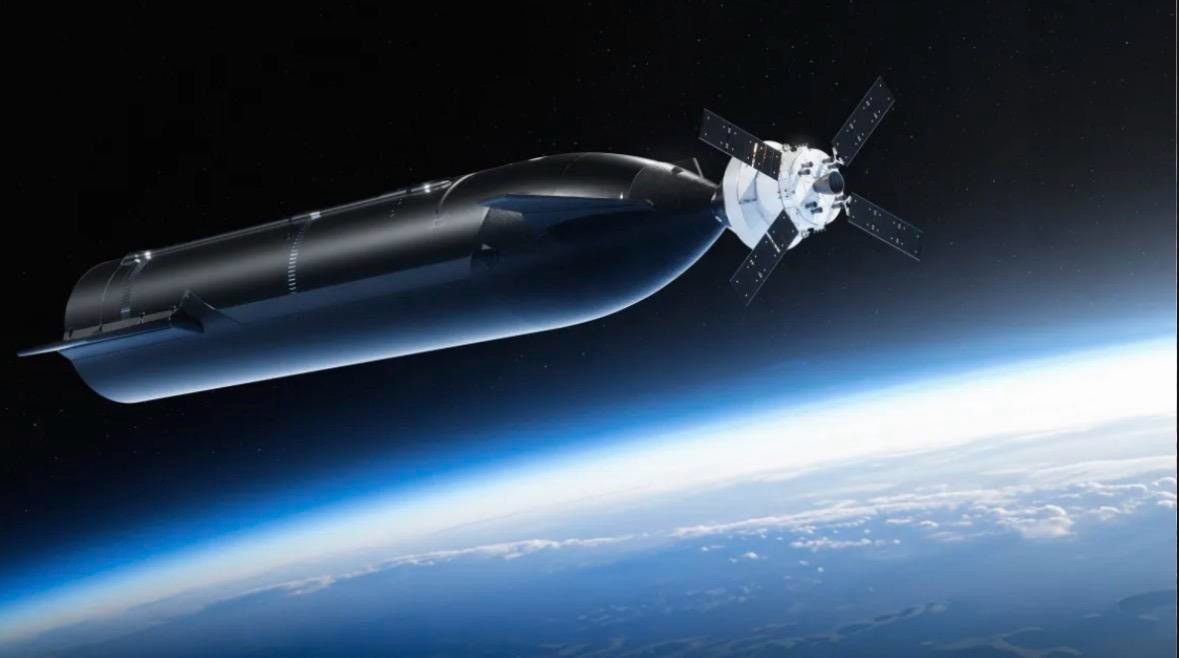
A giant chrome rocket and a small space capsule dock in low Earth orbit.

An artist's rendering of NASA's Orion spacecraft meeting up with SpaceX's Starship on the planned Artemis III mission. (Image credit: SpaceX)

As its name implies, this will be the second mission under NASA's CAPSTONE program, or Cislunar Autonomous Positioning System Technology Operations and Navigation Experiment. The first CAPSTONE probe launched in 2022 and operated for four years before NASA officially concluded its mission in June 2026.

That microwave-oven-sized CAPSTONE spacecraft tested communications tech and became the first spacecraft to test three-body orbits around the moon, according to a NASA statement.

CAPSTONE was tested in what is known as a near rectilinear halo orbit. This is a fairly gravitationally stable orbit, thanks to the nearly equal pulls of both Earth's gravity and the moon's.

Watch SpaceX’s Starship land at sea in these stunning new videos

It was Lucky 13 for SpaceX, as new videos show just how much work came into getting the latest flight of Starship’s upper stage softly down into the ocean.

After Starship made its 13th launch on Friday (July 24) from SpaceX's Starbase site in South Texas, the upper stage achieved all major milestones: putting 20 next-gen Starlink satellites aloft to watch it go, reigniting a Raptor engine in space, and then the soft splashdown off the coast of Western Australia.

While the lower stage of Starship faced engine issues, fresh video shows some incredible views of the successful upper stage. Starlink satellites, ferrying signal from a buoy in the Indian Ocean, helped create a video on X showing the 171-foot (52-meter) upper stage roaring above the water, then generating steam as the engines swiveled to make a gentle splashdown.

a black rocket with wing-like canards fires its engines just above the ocean, creating a spray of water vapor

SpaceX's Starship upper stage fires its engines to slow down before splashing down on the Indian Ocean after its 13th test flight on July 24, 2026. (Image credit: SpaceX)

Getting down that way was no easy feat, as SpaceX posted another video on Tuesday (July 28) showing Starship swaying dramatically in midair to achieve a near-vertical orientation above the water. If you don’t mind a bit of vertigo, SpaceX also provided an on-ship view of the splashdown, complete with dramatic swings and ocean steam.

The upper stage's ocean arrival was so soft, in fact, that days after launch on July 28 the 171-foot (52-meter) stage was reported as still afloat in the Indian Ocean, SpaceX said on X, adding that its Starship recovery team is continuing to gather imagery of the vehicle at sea.

eight people stand on the deck of a ship at sea. behind them in the distance, a large black cylinder floats on top of the waves

SpaceX's Starship Recovery Team poses for a portrait in front of the company's Starship V3 rocket afloat in the Indian Ocean on July 28, 2026. (Image credit: SpaceX)

Starship's Version 3 (which flew on Friday) is a 408-foot-tall stacked system including the Super Heavy booster and the upper stage, also known as Starship (or Ship). SpaceX aims to make this system rapidly reusable for applications ranging from astronaut moon missions to launching even more powerful and larger Starlinks.

That said, SpaceX still needs to notch some goals ahead of its expected participation for docking during the Artemis III astronaut mission scheduled for next year, and to possibly bring astronauts to the moon's surface during Artemis IV.

And Ars Technica (quoting experts) recently raised concerns about the Starship heatshield, noting more changes will be required for reusability.

The US government wants to bypass environmental laws for commercial launches and spacecraft reentries

A new Federal Aviation Administration (FAA) proposal says the agency wants to speed up commercial space licensing for rocket launches and spacecraft re-entries by removing "unnecessary" environmental regulations.

The proposed FAA rule, released yesterday (July 29), has a 30-day period for comment and if approved, would apply to rocket launches, re-entering spacecraft, and the sites at which launches and re-entries take place. The FAA proposes to "waive requirements of laws of the U.S. for a license or permit, after consultation with the head of the appropriate executive agency, when the requirement is not necessary to protect the public health and safety, safety of property, and national security and foreign policy interests of the United States," the text of the proposal reads, in part.

The Department of Transportation stated that the proposal, if implemented, would allow the agency to waive what it calls "unnecessary environmental laws and regulations" that it claims are "slowing American innovation." However, the proposal will still require the FAA to ensure that launches do not impede on public health and safety, or U.S. national security or foreign policy.

To do so, the FAA plans to remove 13 federal laws from applying to "certain commercial space licenses and permits", with examples including the National Environmental Policy Act, the Endangered Species Act, parts of the Clean Water Act, the Clean Air Act, and the National Historic Preservation Act.

The proposal takes place as the United States is seeing unprecedented demand on its limited spaceports for commercial launches, fueled by broadband satellite constellations like SpaceX Starlink, as well as emergent orbital data centers. Earlier this month, the U.S. government proposed moving some launch operations offshore to ease the demand backlog. More rocket launches, according to peer-reviewed research, could cause environmental issues.

The proposal also appears to build on two recent Trump administration executive orders. The first, from December 2025, saw the administration aim to redirect a wide swath of space policy — including boosting the number of rocket launches and landings. (These already were at unprecedented levels last year, mostly on the back of SpaceX.) The second one, in August, focused on streamlining launch licensing and accelerating spaceport construction.

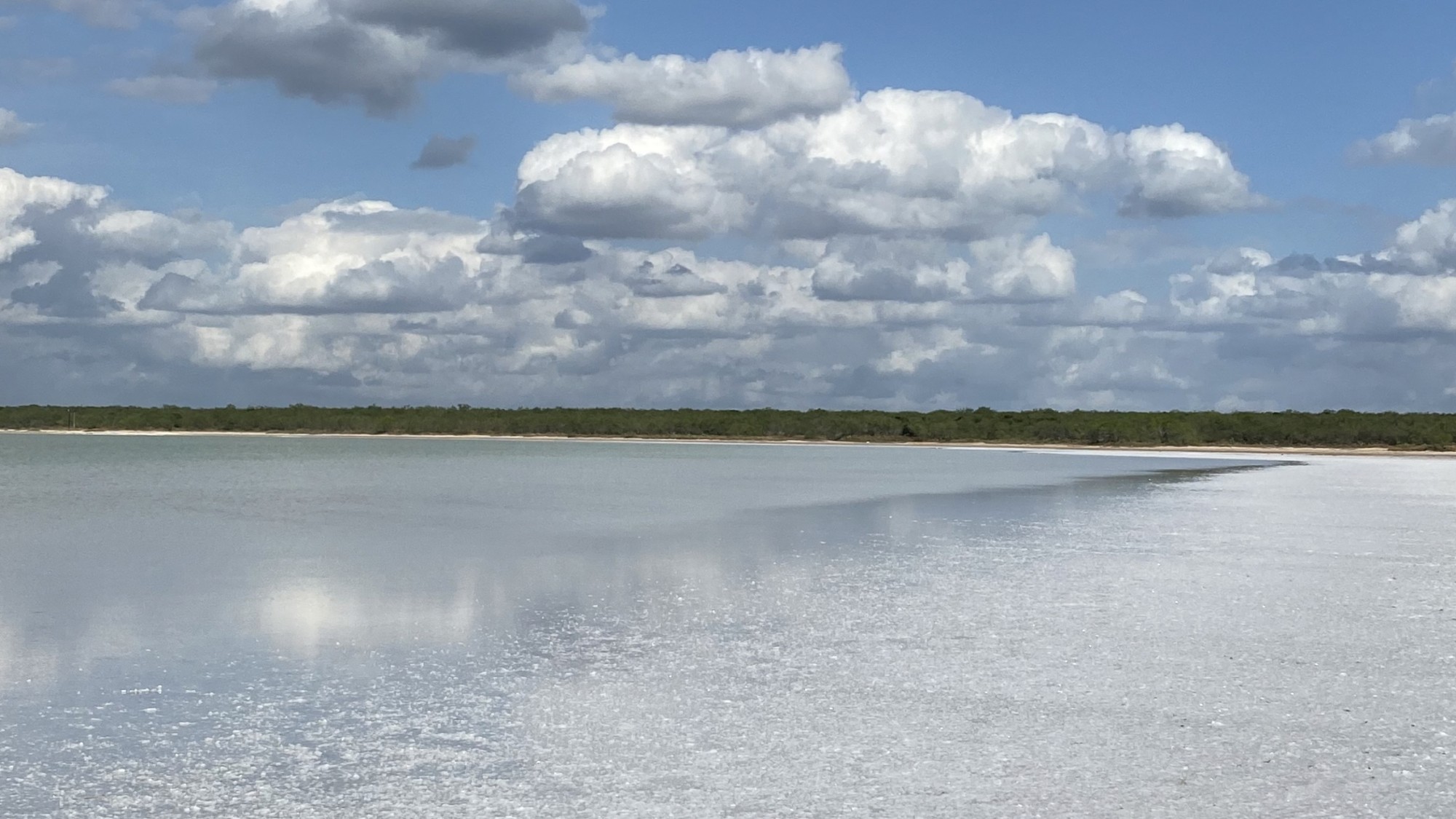
a coastline with clear waters, lined by green scrub plants

A portion of the Lower Rio Grande Valley National Wildlife Refuge. SpaceX and the U.S. government are currently negotiating a land swap for a portion of the refuge. (Image credit: US Fish and Wildlife Service)

Meanwhile, SpaceX is trying to procure a federal land swap in south Texas, mostly for Starship operations, but its proposal prompted an emergency injunction last week filed by a coalition of conservation and tribal groups.

The groups allege this proposal would degrade the Lower Rio Grande Valley National Wildlife Refuge — from which the land is coming from — with legal implications as well, but the court has not yet ruled on a lawsuit the coalition raised in June.