We'll have to wait a bit longer to see Rocket Lab's next-gen launcher fly.
The California-based company just announced that it's pushing the debut of its powerful, partially reusable Neutron rocket from late 2026 into 2027 due to a manufacturing issue.
"We believe Neutron is going to be a game-changer, and taking the time now to solve these challenges means we're in a better position to deliver a rocket that's ready to meet the needs for the industry for years to come," Rocket Lab founder and CEO Peter Beck said in a video the company posted on YouTube late on Tuesday (Oct. 13).
Beck explained the issue in depth in that seven-minute video. It concerns the cabon-fiber propellant domes in Neutron's first stage — the large caps for the vehicle's fuel tanks, which hold liquid oxygen and liquid methane.
Rocket Lab makes the domes using an automated fiber placement machine, "which lays down the carbon with speed and accuracy," Beck said.
The company noticed a problem, however, after curing a recently manufactured forward (front-facing) dome: Inspectors found some voids within the carbon-fiber layers.
The voids "don't necessarily mean that the dome would fail in flight, but our practice is to proceed only when we believe the system has the appropriate margins," Beck said. "Possible success isn't our standard."
After analysis and testing, Rocket Lab added some "mitigations" to the dome-manufacturing process — a tweak that has done the trick, according to Beck.
"We've since run another carbon composite section called the aft dome through this new process, and I'm pleased to report that it has resulted in the highest quality carbon composite dome to date, and we've solved the problem," he said.
Rocket Lab still needs to build a new forward dome, then cure and inspect it — steps that are expected to be complete by the end of the year, according to Beck. The company then needs to incorporate that hardware into a complete Neutron first stage, and then subject that stage to a battery of tests. If all goes to plan, that will all be done during the first quarter of 2027.
"From there, we expect to be in good shape to share a new target launch date," Beck said.
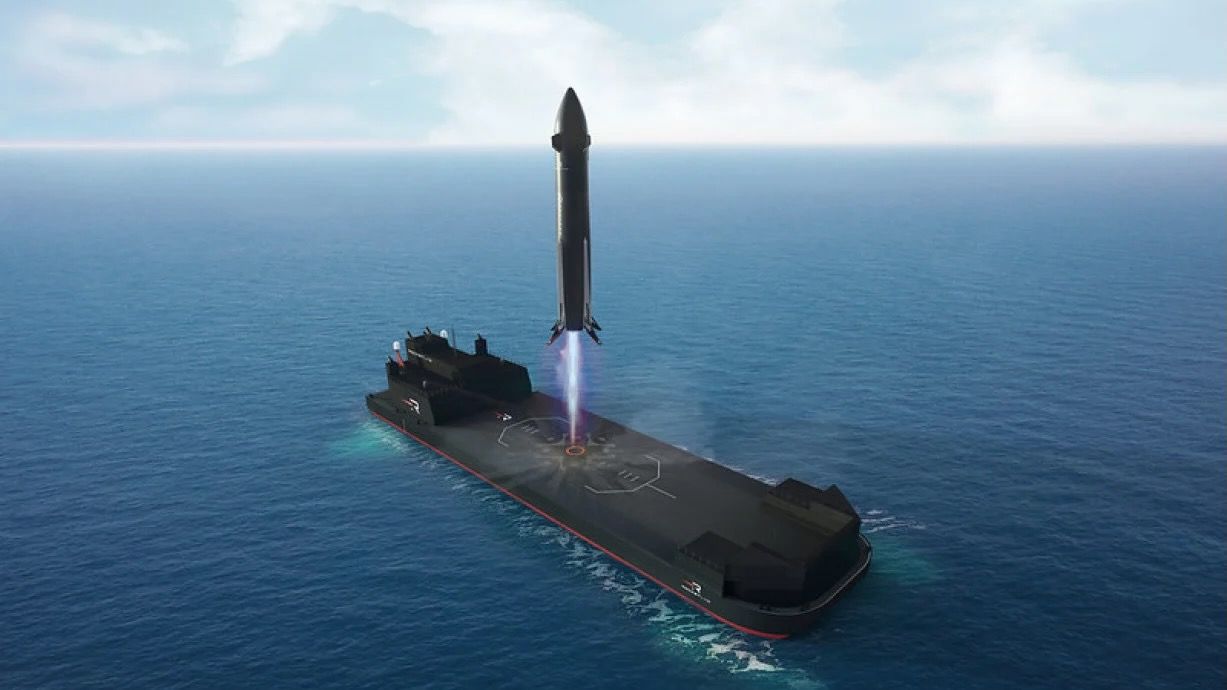
Artist's illustration of Neutron's first stage coming down for a landing on a ship at sea. (Image credit: Rocket Lab)
The newly announced delay is the latest setback for Neutron, which Rocket Lab announced in 2021. Back then, the company — which also flies the workhorse Electron small-satellite launcher — targeted a 2024 debut for the 141-foot-tall (42 meters) Neutron, which features a reusable first stage.
Rocket Lab has been been steadfast throughout, stressing that it will not rush the development of a vehicle that it sees as vital to its future success.
"There's significant demand for what Neutron has to offer, including some new contracts we'll be able to talk about soon," Beck said in the video. "Those customers understand that a reliable rocket is far more valuable than an early one, and we're grateful for their trust."
SpaceX launched a classified mission for the U.S. Space Force from California this evening (Oct. 15).
A Falcon 9 rocket lifted off from Vandenberg Space Force Base today at 8:01 p.m. EDT (5:01 p.m. local time; 0001 GMT on Oct. 16), rising into clear blue skies above the Golden State's central coast.
Such visibly striking launches are far from guaranteed; Vandenberg and its scenic surroundings are often blanketed by fog, making rocket watching in the area a dicey proposition.
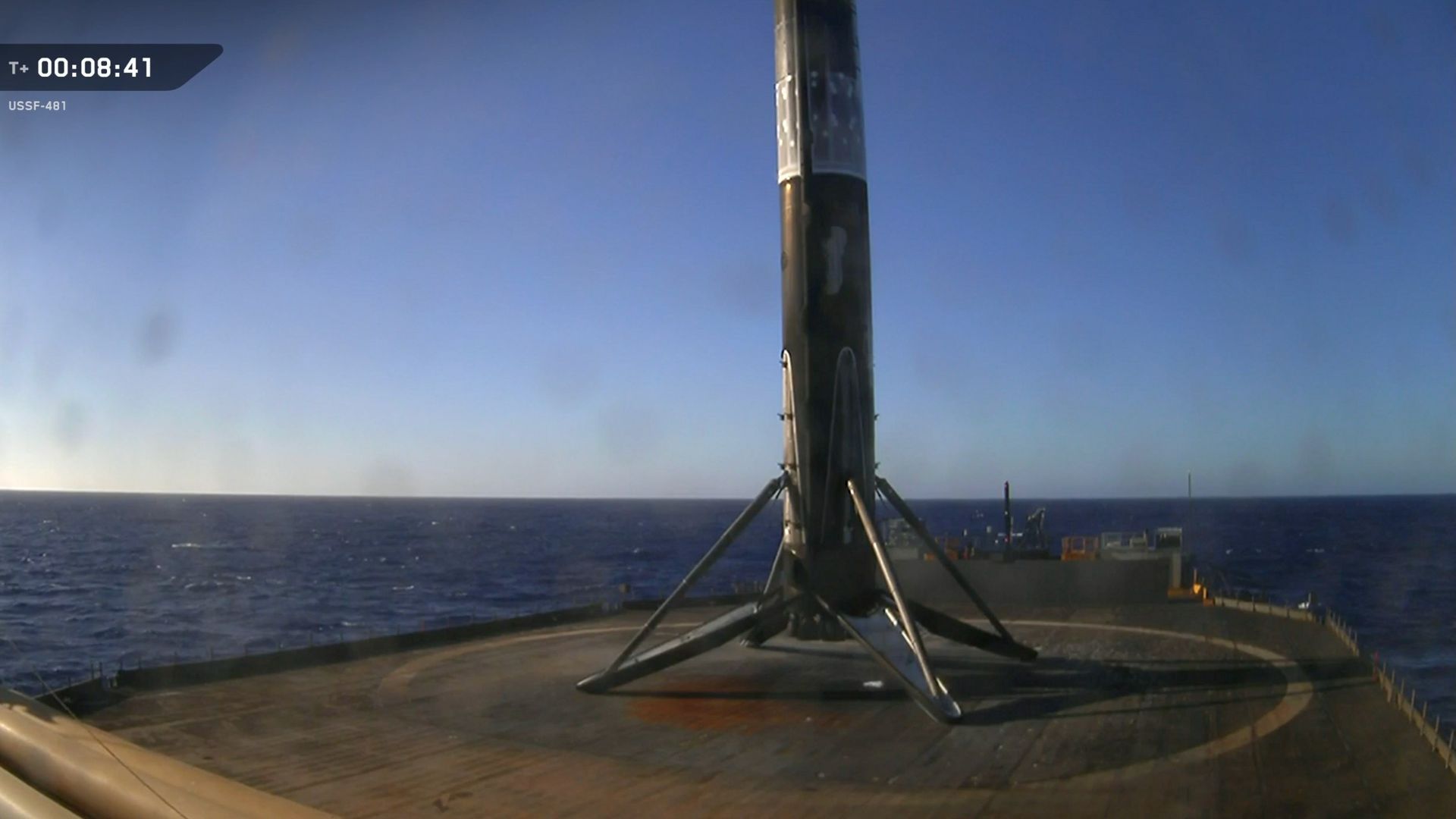
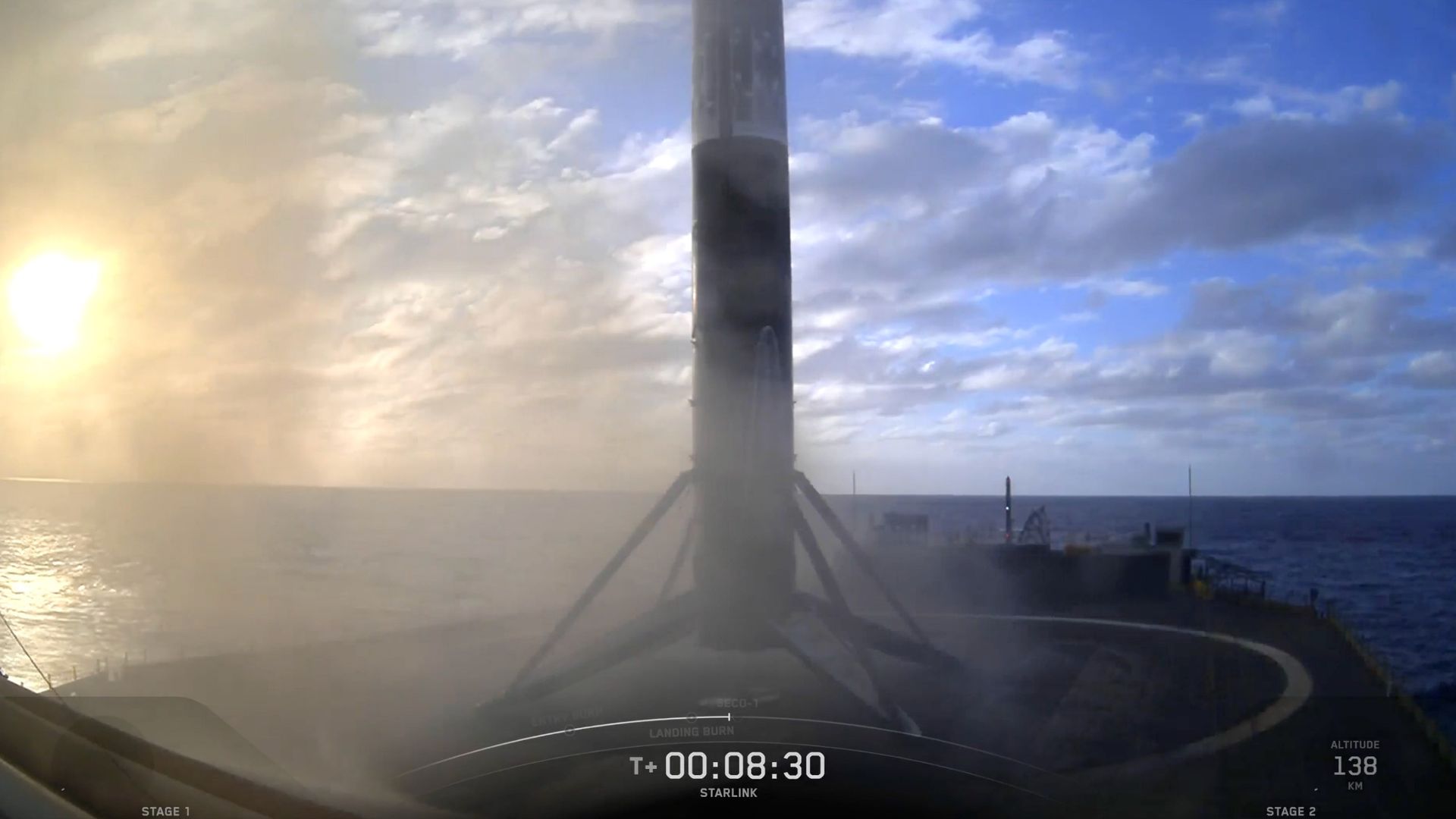
The Falcon 9's first stage rests on the deck of a drone ship shortly after launching the USSF-481 mission on Oct. 15, 2026. (Image credit: SpaceX)
This evening's launch kicked off the USSF-481 mission, which is delivering mysterious payloads to an undisclosed location in the final frontier.
SpaceX didn't provide much more info during its launch webcast; it ended just after the Falcon 9 first stage's landing, which occurred as planned about 8.5 minutes after launch on the drone ship "Of Course I Still Love You," which was stationed in the Pacific Ocean.
USSF-481 was the 28th flight for this particular booster, which is designated 1081. Sixteen of its previous 27 launches were devoted to building out SpaceX's Starlink broadband megaconstellation in low Earth orbit, according to a SpaceX mission description.
USSF-481 was the 114th Falcon 9 mission of the year. The vast majority of the rocket's flights in 2026 — more than 70% of them — have been Starlink missions.
SpaceX has also launched its Falcon Heavy and Starship rockets three times so far this year. Falcon Heavy is an operational vehicle, but the fully reusable Starship remains in the test-flight phase. It reached orbit for the first time on its most recent launch, which occurred on Sept. 28.
Editor's note: This story was updated at 8:30 p.m. ET on Oct. 15 with news of successful launch and rocket landing.
SpaceX wants to start flying its Starship megarocket a lot more often.
The company has requested permission to launch Starship from its Starbase site in South Texas up to 456 times per year. That's a big jump from the currently allowed cadence of 25.
The U.S. Federal Aviation Administration (FAA) is in the early stages of reviewing the request. Today (Oct. 14), the agency announced "its intent to prepare a Programmatic Environmental Impact Statement, open a public scoping period and hold public scoping meetings for SpaceX’s proposal."
Starship, which stands more than 400 feet (122 meters) tall, is the biggest and most powerful rocket ever built. It's also designed to be fully and rapidly reusable, a breakthrough that SpaceX believes will revolutionize spaceflight.
The megarocket has flown 14 times to date, all of them test flights from Starbase, which is near the Texas border city of Brownsville. On the most recent jaunt, which lifted off on Sept. 28, Starship reached orbit for the first time and deployed 26 Starlink V3 satellites — the first members of a new broadband constellation that could eventually consist of 100,000 spacecraft.
Assembling that network will require a lot of Starship launches. And even more will be needed to build SpaceX's planned Starmind AI megaconstellation, which Elon Musk has said will harbor a million satellites. Indeed, the world's richest man has said that SpaceX is targeting more than 10,000 Starship liftoffs per year by 2030.
Not all of those flights will originate from Starbase, which hosts two orbital pads. SpaceX is working to get three Starship pads up and running on Florida's Space Coast, and the company aims to break ground on a $100 billion, 12-pad complex in Louisiana next year.
Each operational Starship launch will also feature two landings. Both of the vehicle's elements — the Super Heavy booster and Ship upper stage — are designed to return to the pad after liftoff, where they will be caught by the tower's "chopstick" arms. So SpaceX's proposal for 456 launches from Starbase per year includes a request for approval for 912 landings.
SpaceX plans to work up to this cadence in two phases, according to the FAA. Phase 1 "would include up to 100 annual launches and up to 200 annual landings (100 of Starship and 100 of Super Heavy)," the agency wrote. "Launches and landings could occur any day or time of the week."
Phase 2 covers 456 launches and 912 landings, which would occur only Monday through Friday, though at any time on those days.
The FAA will hold five "public scoping meetings" about the proposal next month, four of them in person in the Starbase area and one of them virtual.
There will be two in-person meetings on Nov. 17 at Texas Southmost College, one from 1-3 p.m. local (Central) time and the other from 5:30-7:30 p.m. Two in-person meetings will follow on Nov. 19, at the same two times but at a different location: the Port Isabel Event & Cultural Center.
The virtual meeting will be held Nov. 18, from 5:30-7:30 p.m. Central time. Registration is required for all of these meetings, even the virtual one. You can register here.
A Dragon has settled into its nest after a more than two-day-long orbital pursuit.
SpaceX's cargo Dragon, flying the CRS-35 (35th Commercial Resupply Services) mission for NASA, rendezvoused with the International Space Station (ISS) this morning (Oct. 15), delivering fresh food, long-term provisions, research and hardware to the orbital lab and its crew.
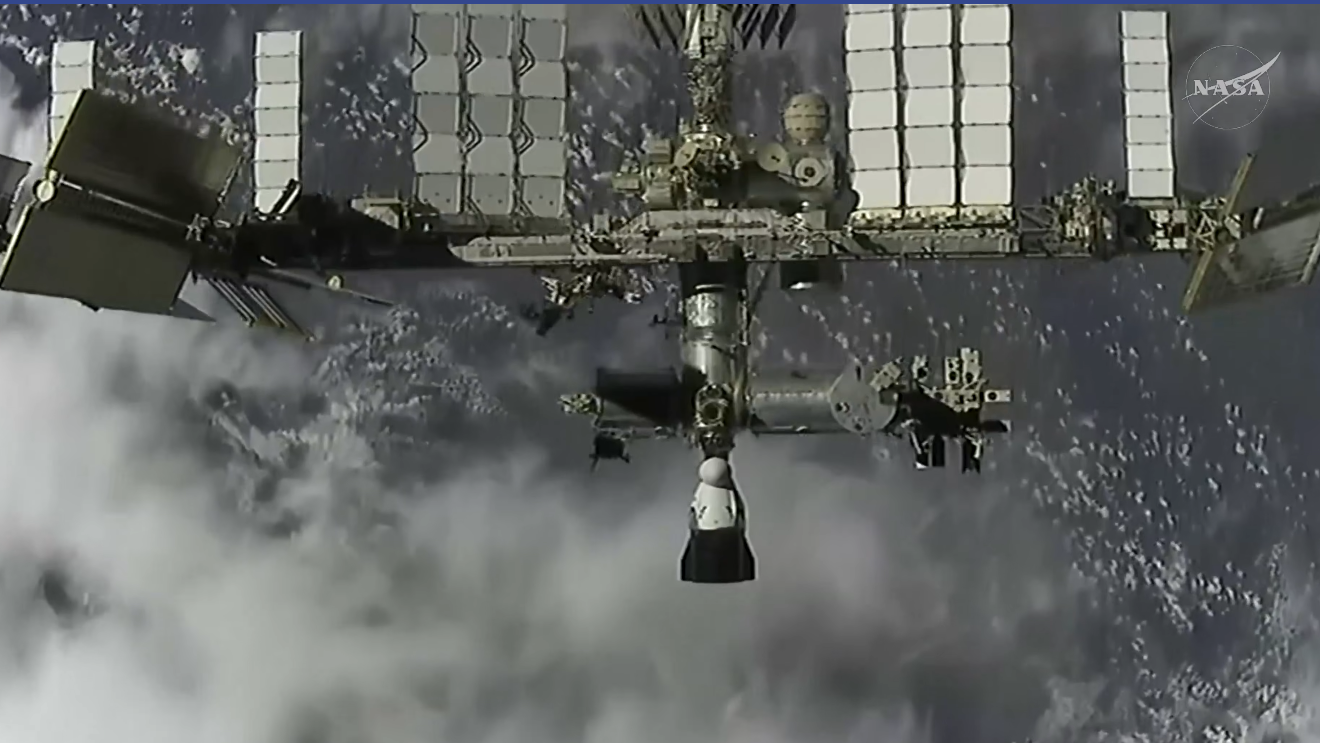
Coverage of Dragon's arrival at the ISS began at 9:00 a.m. EDT (1315 GMT), as the spacecraft approached from approximately 2.3 miles (3.6 km) away. NASA astronaut Anil Menon served as the station's prime crew member this morning, responsible for monitoring Dragon's approach and autonomous procedures. Docking occurred with the space-face port of the station's Harmony module at 10:27 a.m. EDT (1427 GMT), as the ISS flew about 250 miles (400 km) above South Africa, traveling around 17,500 mph (28,000 kph).
SpaceX CRS-35 Cargo Dragon's view as it approached the ISS on Oct. 15. (Image credit: NASA)
Dragon's arrival brings more than 6,300 pounds (2,860 kilograms) of food, research equipment and other supplies, including flight support equipment to replace components on the Canadarm2, a toilet dose pump, a toilet pretreat quality sensor, a robot micro-conical tool used for station maintenance and the very last of eight upgraded solar panels designed to augment the station's power capabilities.
In addition to the usual provisions carried on this mission, Dragon also brought a special suprise for Menon, who is celebrating his 50th birthday today, according to NASA's broadcast spokesperson.
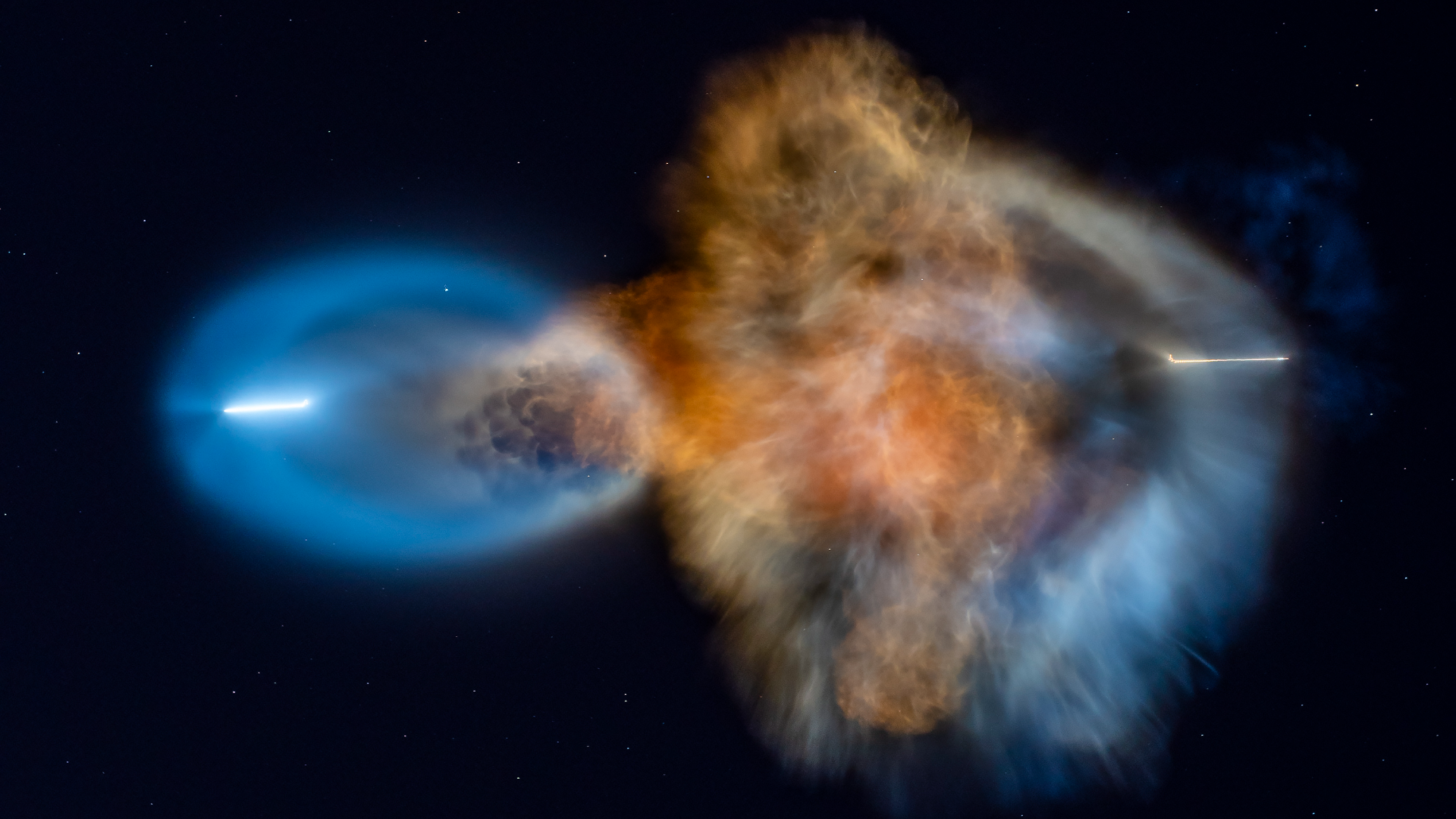
CRS-35 launched on a SpaceXFalcon 9 rocket from the company's pad at Cape Canaveral Space Force Station in Florida on Tuesday (Oct. 13). Liftoff occurred at 6:35 a.m. EDT (1035 GMT), and the Falcon 9's upper stage deployed the Dragon in low Earth orbit (LEO) a short 10 minutes later. Thanks to the trajectory of the space station's orbit and the near-dawn hour of the launch, the Falcon 9's ascent to orbit was viewed by millions up and down the U.S. East Coast, who witnessed a rare "space jellyfish" phenomenon from the rocket's exhaust plume.
The supplies delivered on CRS-35 will largely support the station's newest astronaut inhabitants, the members of SpaceX's Crew-13 mission for NASA. The four-person crew arrived aboard the ISS on Oct. 1, relieving the members of Crew-12, who returned to Earth a week later.
Crew-12 astronauts will address the media this afternoon (Oct. 15) to discuss their mission and their return after nearly eight months on orbit. A live broadcast of that event will also be available to stream on Space.com's homepage beginning at 3:30 p.m. EDT (1930 GMT).
Cargo Dragon's nominal orbital insertion on Tuesday placed it on course to catch up with the ISS after a 51-hour LEO chase. After rendezvous this morning, Dragon will autonomously dock to the zenith port on the station's Harmony module. It will remain docked with the ISS for about a month before being packed with supplies, waste and research for its return, safe splashdown and recovery on Earth.
Starship just reached orbit for the first time, carrying satellites for SpaceX's Starlink program. Analysts disagree on whether that's a detour or the destination — and what of the company's plans for the Red Planet?
Ten years ago, Elon Musk stood on stage at the International Astronautical Congress (IAC) in Guadalajara, Mexico, and unveiled plans for a giant spaceship to carry people to Mars. This past Sept. 28 — a decade and a day later — the descendant of that vehicle reached orbit for the first time, on Starship's 14th-ever test flight.
The designs and hardware evolved greatly over those 10 years. For example, the 2016 design, called the Interplanetary Transport System (ITS), employed carbon fiber, but this gave way to the stainless-steel Starship, which SpaceX began testing in 2019 with short hops from its Texas site. Prototypes flew to high altitude and landed, and some exploded, until SN15 stuck a landing in May 2021. That same year, NASA selected Starship as the first astronaut lander for its Artemis lunar missions.
The full Starship stack — a Super Heavy booster with a Ship upper stage on top — first flew in April 2023 and failed within minutes. Three flights followed in less than a year, each reaching space, and each ending with Ship lost on reentry. During a 2024 test flight, SpaceX moved liquid oxygen between two tanks inside one Ship, the closest it has come to the propellant transfer that any mission to the moon or Mars will require. In June of that year, the company brought both stages down in controlled splashdowns, and that October the launch tower's mechanical arms caught a returning Super Heavy booster for the first time.
Progress wasn't linear, however. After a booster catch in January 2025, a string of Ship failures followed, and one upper stage exploded during ground testing that June. A clean flight in August 2025 helped break the streak, and by that October, SpaceX flew the last of the older design. The first Starship V3 launched in May 2026. Another went up in July, and Flight 14 followed on Sept. 28.
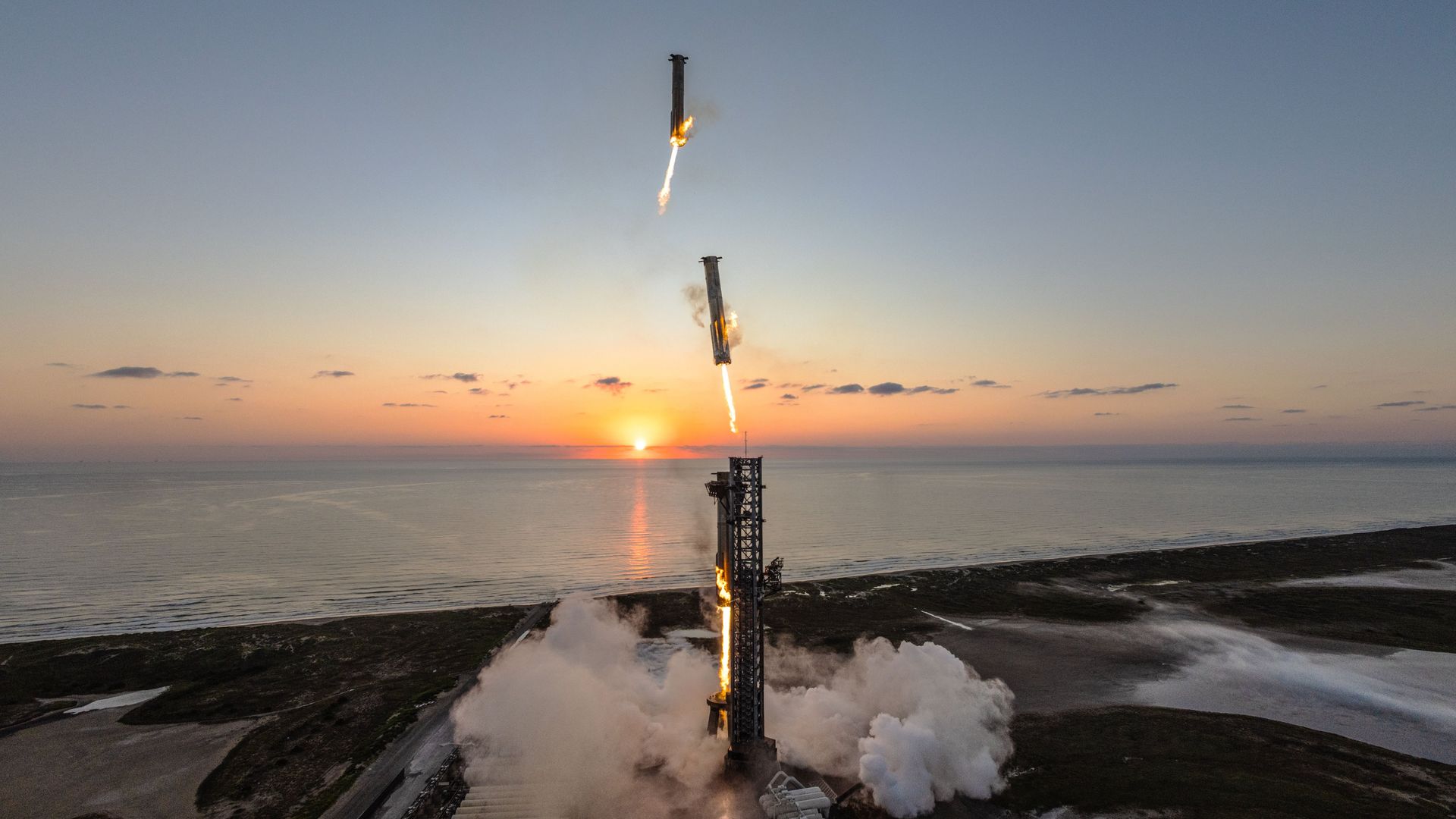
Composite photo showing the Super Heavy booster of SpaceX's Starship megarocket coming in for a landing on the launch mount on Oct. 13, 2024. (Image credit: SpaceX via X)
'A different beast'
"ITS was definitely a different beast," said Matija Renčelj of the European Space Policy Institute (ESPI). "Yet, we have to acknowledge two trends that both attest to SpaceX's agility and increasingly market-first rather than vision-first outlook."
"The gap between ITS and Starship is real, but I would not consider that a failure," he said.
In his view, the rocket is mainly a business tool. "The rocket is the means, not the end," Renčelj said, adding that its main role now is cutting Starlink deployment costs. SpaceX currently operates a constellation of more than 11,000 Starlink broadband satellites, almost all of which were launched by its workhorse Falcon 9 rocket. But Starship Flight 14 lofted the first members of the next-gen Starlink V3 constellation, which will eventually consist of 100,000 spacecraft, if all goes to plan. Starlink V3 satellites are bigger and heavier than their predecessors and can only be launched efficiently by Starship.
Renčelj said the moon focus reflects Washington's priorities and SpaceX's interest in staying central to NASA's Artemis program, and in reassuring investors after the company's acquisition of xAI this past February and its IPO, which occurred in June.
Joseph Gonzalez, a University of Illinois Grainger College of Engineering aerospace professor who spent about a decade working on Artemis, sees it differently.
"I think SpaceX is still very much targeting Mars," he said. "SpaceX continues to stress making humanity multiplanetary and establishing a self-sufficient city on Mars as long-term objectives." Gonzalez sees the moon as a proving ground rather than a replacement. Just days away from Earth, the moon lets engineers find problems "before committing humans to a Mars mission."
"Space exploration takes time, especially when you are developing a human spaceflight system with this level of complexity," Gonzalez said. "They build, fly, learn, make changes and fly again. That creates very visible successes and failures, but it also allows engineers to accumulate flight experience and data quickly."
Challenges remain
Reaching Earth orbit isn't the hard part for Starship. Gonzalez said that the most underrated gap is the large-scale cryogenic propellant transfer between vehicles once in orbit. SpaceX has moved propellant between tanks in one Ship before, but its architecture requires numerous transfers involving tanker ships to refill a fuel depot, which a Ship must visit in order to make journeys to the moon or Mars. Gonzalez described this depot as a gas station in space, but there are challenges typical gas stations don't face. The fuel is extremely cold, for example, and it needs to be moved in microgravity conditions.
That milestone is yet to happen, and the timeline for an attempt is not clear. It could potentially come with Flight 15 and 16. These were aspirationally scheduled for no earlier than mid and late October, respectively, but have now apparently slipped to mid-to-late November (though there has been no public confirmation of any firm target date).
In 2025, Musk said there was a "50/50" chance of Starship making a run for Mars in 2026. However, with the once-every-26-months Mars launch window — which lasts a few weeks, opening in late October — and no propellant transfer demonstration yet in the books, that is off the table. The next such low-energy orbital transfer opportunity for the Red Planet opens in late 2028, running into early 2029. At the same time, NASA is currently targeting late 2028 for its Artemis IV mission — which involves Starship — to return humans to the lunar surface after an absence of more than 50 years, giving SpaceX a challenging deadline toward which to work. The company will need to dedicate key resources to meet that timeline, including developing life support systems for crew.
For now, Starship's most immediate role is hauling Starlink satellites in orbit. Renčelj noted that startups raising billions are betting on Starship delivering low super-launch prices along with Falcon 9-like reliability. "Their business models are underpinned by what might be a single point of failure," he said.
"Starship still has major capabilities to demonstrate before it can perform the complete missions envisioned for the moon and Mars," said Gonzalez.
"So I would say the timelines are comparable considering the ambition of the vehicles," he added. "The bigger difference isn't necessarily how many years they have taken, but it's where and how each program chooses to learn during those years."
Musk has repeatedly talked of getting thousands, or even hundreds of thousands, of people on Mars "to make life multiplanetary." Most immediately, SpaceX has a number of business goals and lunar commitments to adhere to ahead of a first uncrewed visit to Mars. Late 2028 appears to be the next real opportunity.
A "jellyfish" in the early-morning sky created by SpaceX's launch of the CRS-35 cargo mission on Oct. 13, 2026. (Image credit: SpaceX)
Did you see a gigantic, glowing jellyfish in the night sky early on Tuesday morning (Oct. 13)? If so, it's not an alien invasion (sorry); it was SpaceX launching its latest mission to the International Space Station (ISS).
What is it?
Just before dawn on Tuesday (Oct. 13), a SpaceX Falcon 9 rocket lifted off from Cape Canaveral Space Force Station in Florida, carrying to space a robotic Dragon capsule filled with thousands of pounds of cargo.
The liftoff kicked off CRS-35, the 35th mission that SpaceX is flying to the ISS as part of the company's Commercial Resupply Services agreement with NASA. Under the CRS contract, SpaceX has been sending cargo including medical supplies, food, clothing, scientific experiments and more to the space station.
It will take Dragon a couple of days to reach the orbiting lab. If all goes to plan, the capsule will autonomously dock with the ISS' Harmony module around 11 a.m. EDT (1500 GMT) on Thursday (Oct. 15).
Why is it incredible?
Falcon 9 launches the CRS-35 mission to the @Space_Station https://t.co/QiHIqlDLTHOctober 13, 2026
Imagine you wake up early in the morning. Perhaps you're rushing to get ready for work, or maybe you're just having a quiet moment with your coffee in the pre-dawn twilight. Then imagine you look out the window and see what looks like a gigantic, glowing jellyfish made up of orange and blue light and gas stretching across much of the slowly brightening sky.
If you're not expecting such a sight, or it's your first time seeing the remnants of a rocket launch, this would probably catch you off-guard. But don't worry; there isn't anything dangerous about this sight.
This "jellyfish" is created by the water vapor and carbon dioxide that are expelled by the rocket after takeoff. In the cold upper skies, those gases start to freeze into ice crystals, flowing off of and behind the rocket. If a launch occurs around dusk or dawn, sunlight hits this flowing plume of frozen gases while the ground and skies remain mostly dark, resulting in a uniquely spectacular (albeit, unusual) view.
Nearly three months after surviving its launch to space and a tumultuous trial at sea, the first Starship spacecraft to survive its ocean splashdown has returned to Starbase.
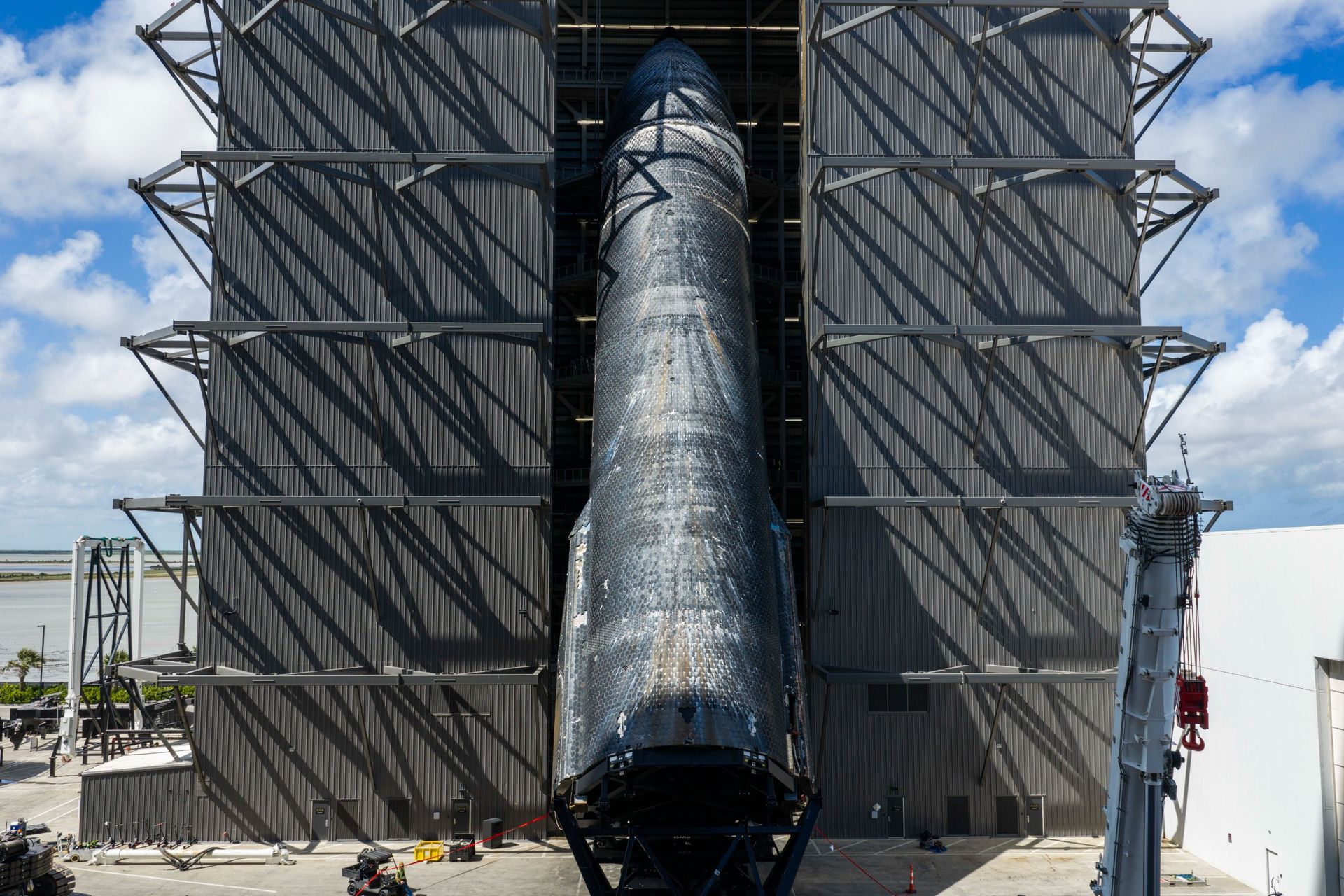
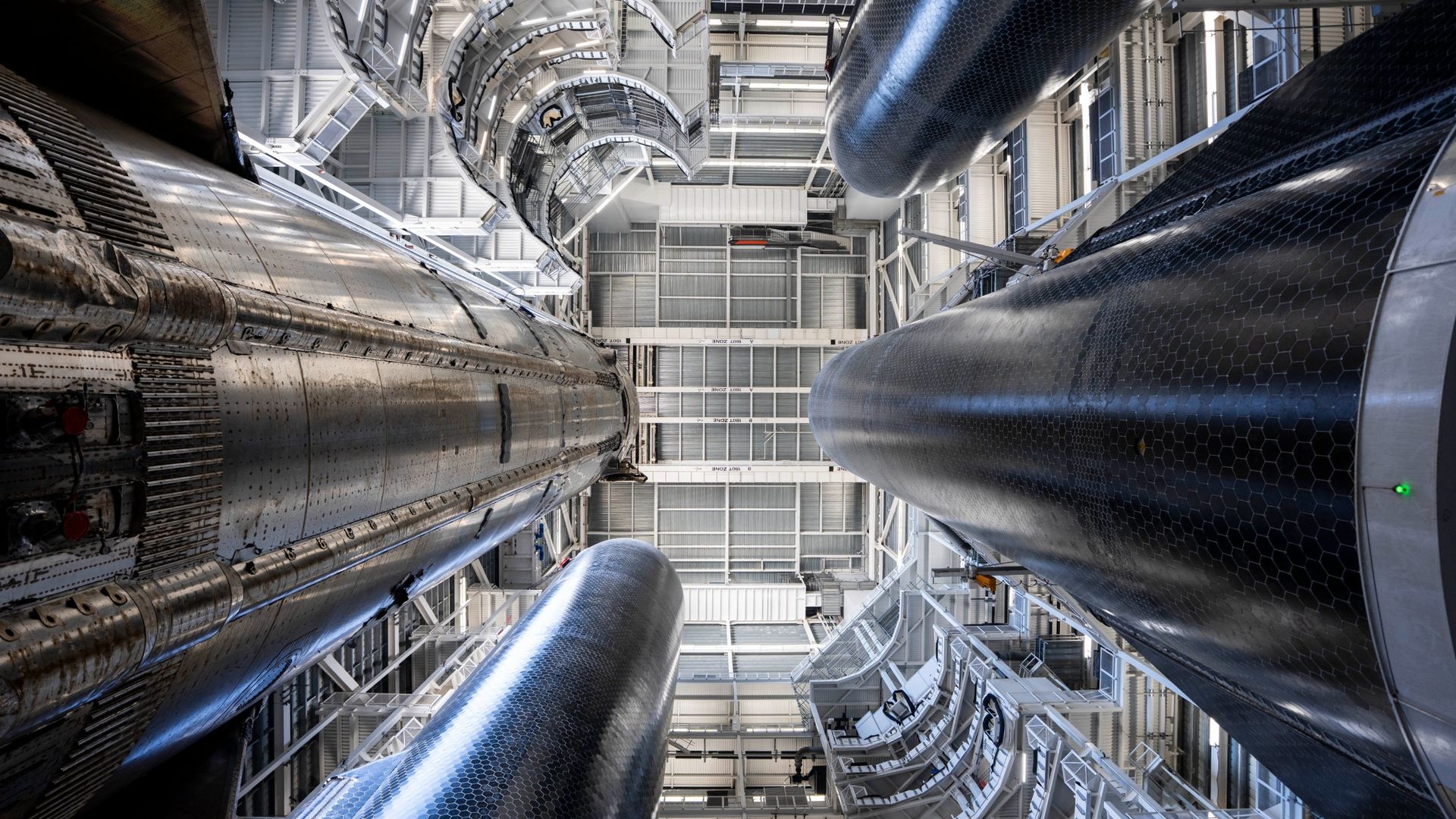
SpaceX shared new photos and video of Ship 40, the Starship upper stage that launched on the developing vehicle's 13th flight test, as it completed the final stretch of its journey back to the company's South Texas facility. Now, the towering spacecraft is upright inside Starbase's Megabay hangar alongside a trio of its successor spacecraft, themselves bound for space, but not before an evaluation of Ship 40 can lend SpaceX engineers some valuable insights.
Ship 40 is the first Starship upper stage to return to its launch site after flying in space, offering SpaceX engineers an unprecedented opportunity to study hardware that survived the intense conditions of atmospheric reentry. "It will provide first-of-its-kind data on a flown Starship heatshield, Raptor engines, avionics, and more," SpaceX wrote in a post on X Oct. 13.
SpaceX's Ship 40 is hoisted vertical at Starbase's Megabay. (Image credit: SpaceX)
The spacecraft launched atop SpaceX's Super Heavy Booster 20 on July 24, and completed a suborbital flight that ended with a controlled splashdown in the Indian Ocean. Unlike previous Ship splashdowns, though, which have exploded after tipping over into the water, Ship 40 remained largely intact and afloat.
That unexpected survival prompted SpaceX to engage in an ambitious recovery effort that included towing the 171-foot (52 meter) stage though rough seas over the course of 24 days. At the time, SpaceX CEO Elon Musk expressed doubts that the company's recovery efforts would be successful. Despite the challenging conditions, Ship arrived off the shores of Australia's Christmas Island in August.
Once in the calmer Christmas waters, SpaceX engineers took time to perform a vehicle inspection and collect a number of heat shield samples from the spacecraft's belly. From there, Ship 40 was loaded onto "Forte," a massive, semi-submersible transport ship for the long seaward journey back to Texas.
The first Starship to return to its launch site, Ship 40's journey took it across air, space, and sea. Now that it is vertical alongside three other Starships in a Megabay at Starbase, it will provide first-of-its-kind data on a flown Starship heatshield, Raptor engines, avionics, and more.October 13, 2026
Forte arrived at the Port of Brownsville on Oct. 7, wrapping up the longest stretch of Ship 40's return nearly two months after its liftoff. The spacecraft was subsequently transported over land back to Starbase and positioned for reorientation outside the Megabay. It has since been lifted to a vertical position and moved inside the bay alongside three other Ship upper stages still under assembly.
While SpaceX has successfully recovered a trio of Super Heavy boosters using the mechanical arms of its Starbase launch tower, the company has yet to return a Starship upper stage to its launch site under its own power. The return of Ship 40 will give SpaceX engineers the opportunity to study the vehicle from top to bottom as they fine-tune the systems needed to do just that. Its return marks a milestone in SpaceX's efforts to develop Starship as a rapidly reusable launch vehicle, with lessons from the recovered spacecraft potentially informing future vehicle designs and recovery operations.
Ship 40's immediate successor, Ship 41, launched on Flight 14 before 40's return to Starbase. Although 41 didn't survive its splashdown in the Pacific Ocean, the mission marked Starship's first orbital flight, and included the successful deployment of 26 next-generation Starlink V3 satellites.
Musk has said Starship's next launch, Flight 15, could feature the first attempt to catch the Ship upper stage using the same chopstick-like arms on the vehicle's launch tower, provided the spacecraft meets the necessary conditions for a safe return. SpaceX has not announced an official launch date for Starship's next flight, but, based on the testing progress of the Ship and Super Heavy in line for the mission, it is likely to fly within the next month or so.
Rockets are launching to space on a near-daily basis these days, but short of livestreaming a liftoff from the comfort of your Wi-Fi router, relatively few spectators are in the right place and time to see one with their own eyes.
That wasn't the case Tuesday morning (Oct. 13), when SpaceX launched the CRS-35 mission for NASA. A Falcon 9 rocket lifted off from Pad 40 at Cape Canaveral Space Force Station in Florida at 6:35 a.m. EDT (1035 GMT), carrying a cargo variant of SpaceX's Dragon spacecraft on the company's 35th commercial resupply mission to the International Space Station (ISS). Following the northward path of the space station's orbit at the time, the rocket flew a trajectory along the United States' East Coast.
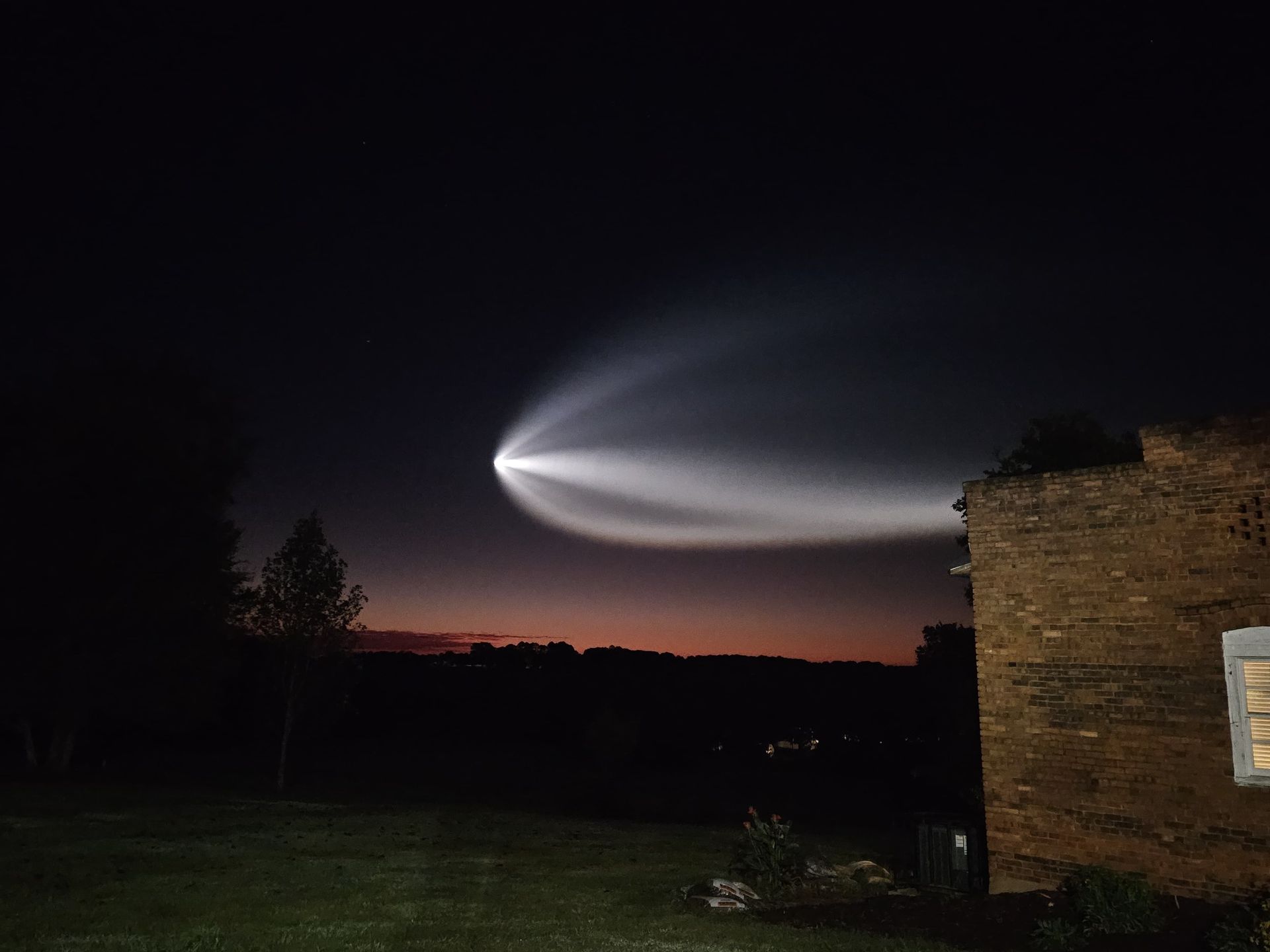
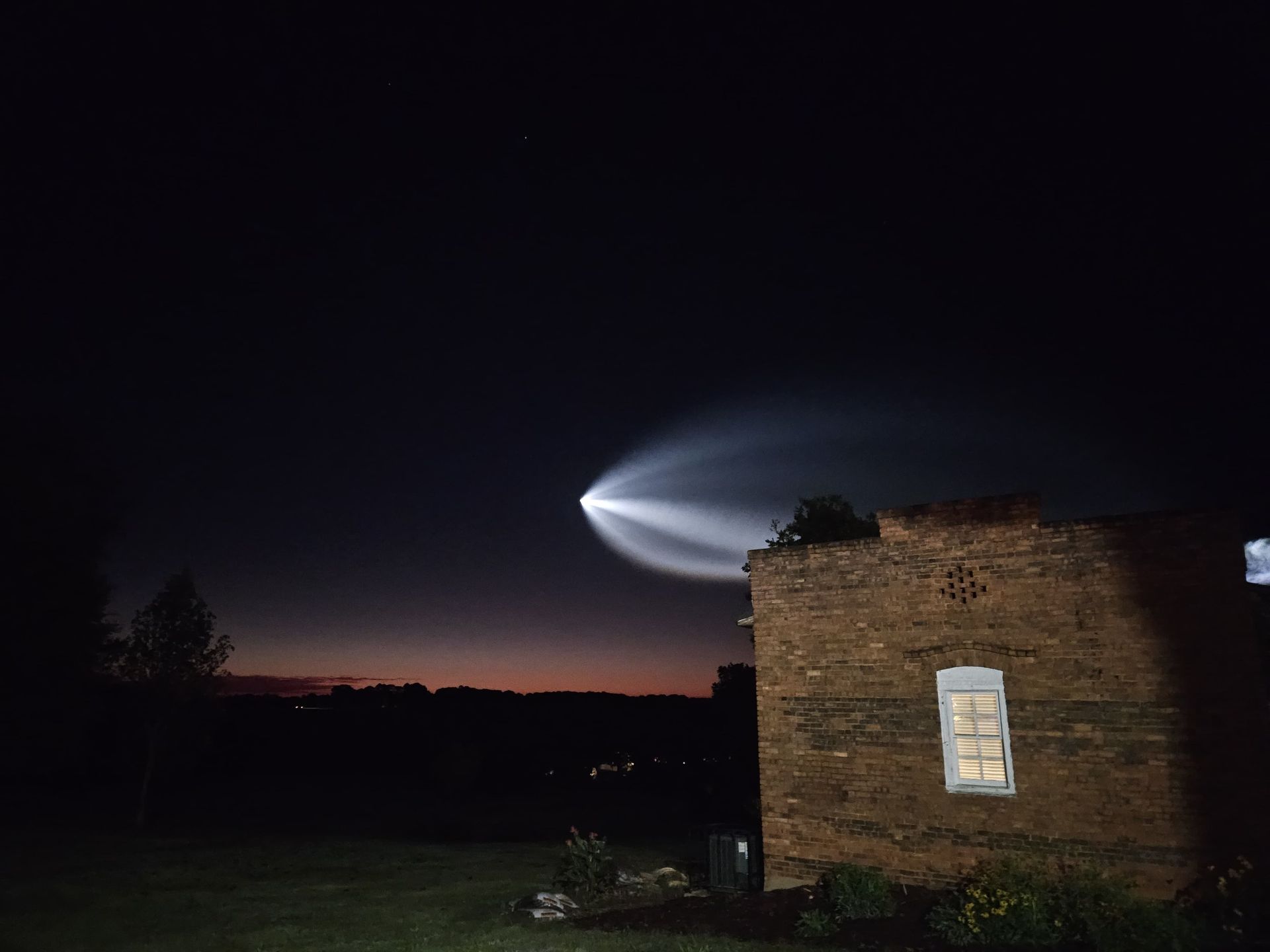
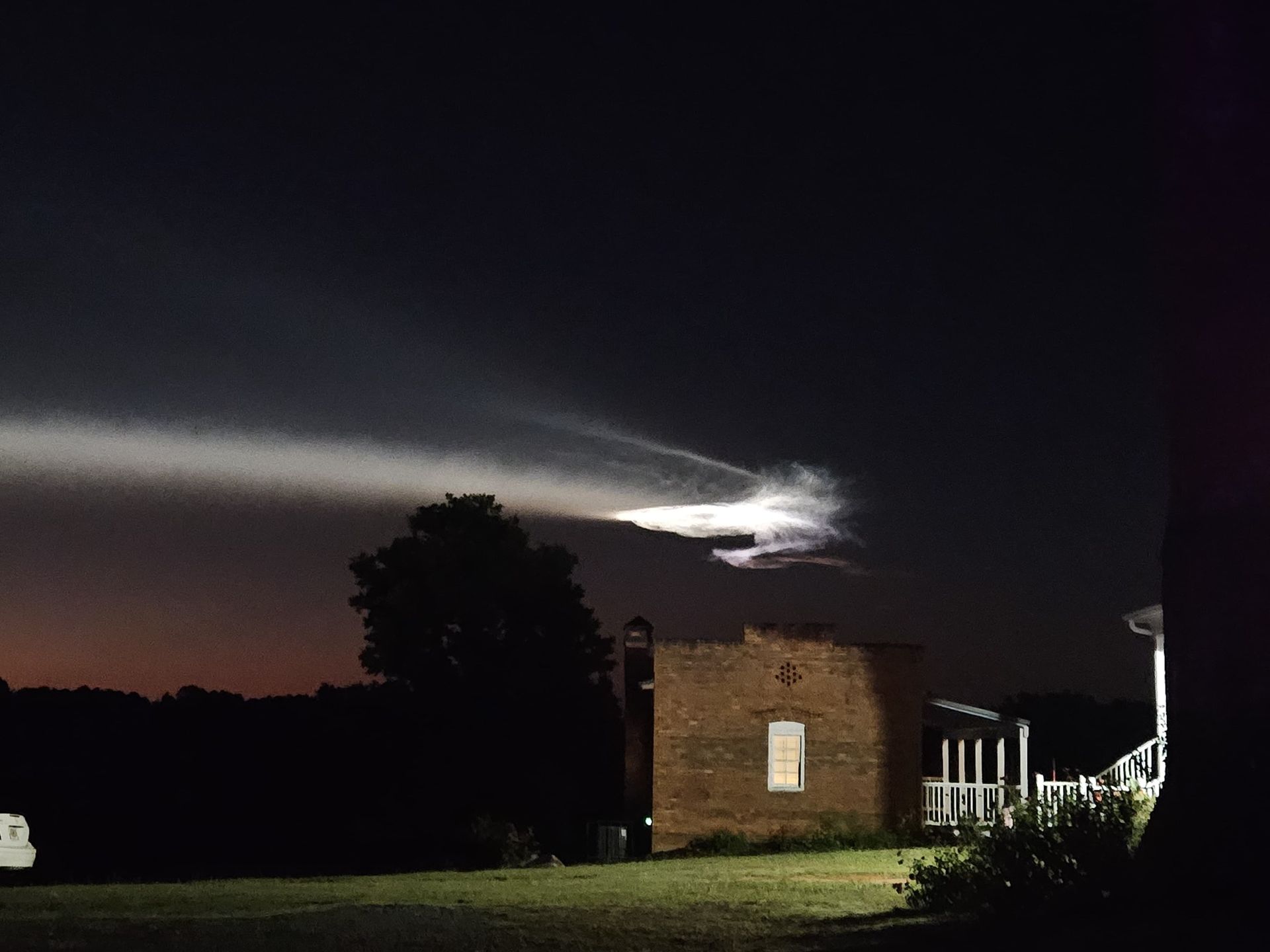
Falcon 9's expanding engine plume grew substantially wider than the rocket itself as it climbed in altitude into thinner, less dense air, and was illuminated by the early dawn light, making the sight visible to millions. "You can imagine my surprise when I opened my back door to let the dogs out this morning," Ellen Alence told Space.com. She snapped a pic of the rocket from her farm Colbert, Georgia.
"Many of you are talking about the 'space jellyfish' following this morning's launch from Space Launch Complex 40 at Cape Canaveral Space Force Station in Florida," NASA's Kennedy Space Center wrote in a post on X. The post explains the "jellyfish" phenomenon that is sometimes visible during dawn and dusk launches, and included additional photos of the launch.
This morning’s SpaceX rocket launch, as seen from a farm in Colbert, Georgia.Ellen AlenceThis morning’s SpaceX rocket launch, as seen from a farm in Colbert, Georgia.Ellen AlenceThis morning’s SpaceX rocket launch, as seen from a farm in Colbert, Georgia.Ellen Alence
"A jellyfish happens near sunrise or sunset when the exhaust plume from the rocket becomes brightly illuminated, creating a glowing shape resembling a jellyfish," the post said.
Many of you are talking about the “space jellyfish” following this morning’s launch from Space Launch Complex 40 at Cape Canaveral Space Force Station in Florida.More than 6,300 scientific investigations and cargo are on their way to the @Space_Station, as part of SpaceX's 35th commercial resupply services mission for NASA.A jellyfish happens near sunrise or sunset when the exhaust plume from the rocket becomes brightly illuminated, creating a glowing shape resembling a jellyfish.Show us where you captured the jellyfish?October 13, 2026
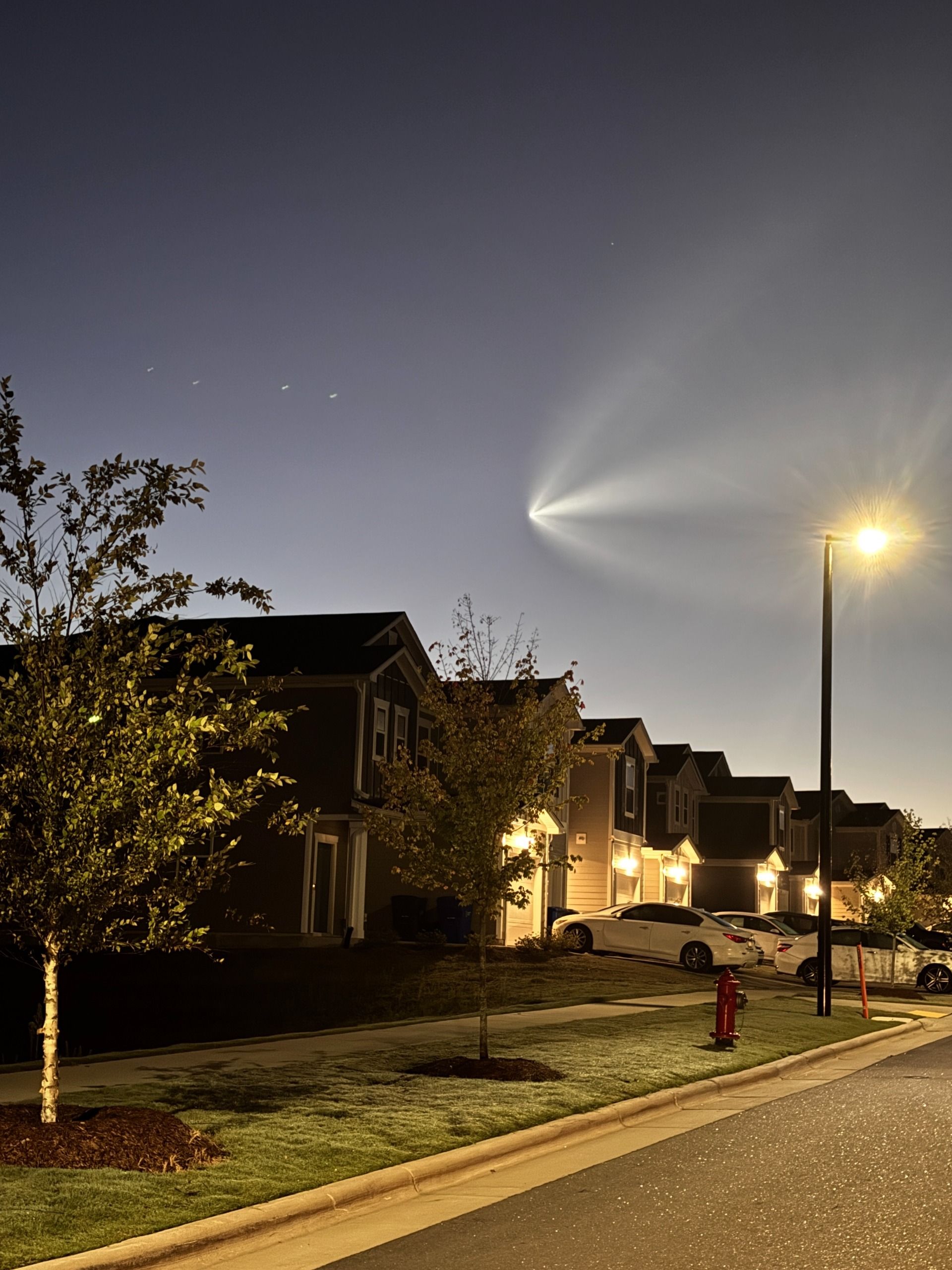
Further up the coast, Richard Mack Wilson-Leigh spotted the flight from Durham, North Carolina. His view of the rocket came just seconds before the vehicle's stage separation, which was followed immediately by the rocket's main booster performing an engine burn to right its trajectory for landing back at the Cape. Wilson-Leigh said that part caught him off guard more than the initial site of the rocket. "I thought it blew up at first," he jokingly told Space.com.
"At first, I thought it was a comet," Wilson-Leigh said. "My mind jumped between two thoughts: that is just beautiful beyond belief, and it is the end of the world.”
SpaceX's Falcon 9 rocket soars above the skies of Durham, North Carolina. (Image credit: Space.com / Richard Mack Wilson-Leigh)
That stage separation came about 2.5 minutes after liftoff, and put on a dazzling display for those awake to see it this morning. As Falcon 9's booster began the journey to its landing zone, the rocket's second stage continued onward to orbit with Dragon and the capsule's 6,300 pounds (2,860 kilograms) of cargo for the ISS.
The spacecraft will spend roughly two days catching up to the ISS, where a recent personnel rotation swapped the astronauts of SpaceX's Crew-12 mission with those of Crew-13. The latter arrived aboard the orbital laboratory Oct. 1, which was followed several days later by the return of Crew-12 to Earth on Oct. 8.
Falcon 9 launches the CRS-35 mission to the @Space_Station https://t.co/QiHIqlDLTHOctober 13, 2026
(Image credit: SpaceX)
The Dragon carrying the contents of CRS-35's manifest will arrive at the station Thursday morning (Oct. 15), and will autonomously dock to the space-facing port of the Harmony module at around 11 a.m. EDT (1500 GMT). Coverage of the arrival here at Space.com beginning at 9:15 a.m. EDT (1315 GMT).
Reentry and orbital-manufacturing provider Varda Space Industries is operating two spacecraft in orbit right now, with another expected to launch "in the coming days" and seven more next year.
The Los Angeles-area startup, which bills itself as one of just two companies that can currently do commercial reentry from space, successfully launched its latest two refrigerator-sized spacecraft aboard SpaceX's Transporter-18 rideshare mission on Oct. 1.
"It's humanity's first time launching multiple commercial reentry vehicles simultaneously," Varda CEO Will Bruey told Space.com on Tuesday (Oct. 7) of the Transporter-18 launch.
The payloads on the Transporter-18 Varda craft ranged from pharmaceuticals to demo navigation systems to exterior thermal-protection materials. The company bills its spacecraft as mini-factories, which can host the orbital production of valuable goods such as pharmaceuticals and then bring them safely down to Earth.
Another Varda vehicle is scheduled to follow them into space later this month. Assuming the third spacecraft launches nominally, all three will come down before Christmas in the Koonibba Test Range in the South Australian Outback, through coordination with Varda's long-time space-mission service provider, Southern Launch. And things are scheduled to ramp up quickly: Varda aims to fly seven more missions in 2027: two in Quarter 1 (Q1), two in Q2 and three in Q3 (the latter three being all on the same rocket).
"As we scale up, we care about our ability to fly and fly regularly," Bruey said, emphasizing that the company is now treating its missions less as one-offs and more as a series. "It is, first and foremost, taking that unique [spacecraft] technology and moving into a fleet mentality, rather than a space mission mentality."
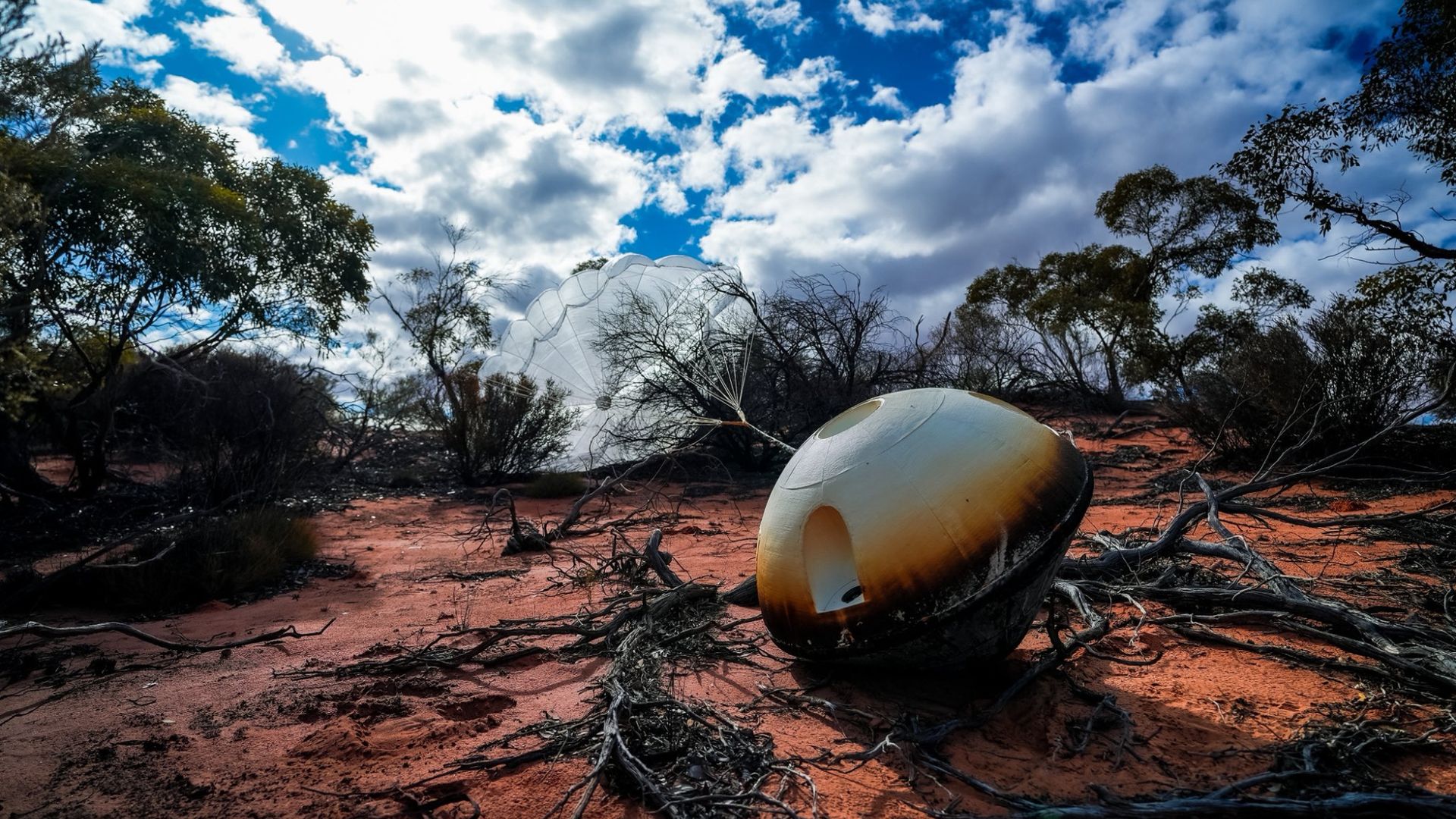
One of Varda's reentry capsules is seen shortly after its touchdown in the Australian Outback. (Image credit: Varda Space/Rocket Lab)
Like any startup finding its footing, Varda's challenges in the coming months will be scaling safely and efficiently. But the company says it is well-capitalized to do so, and has a big hiring campaign underway. It also has been spending money on slight upgrades and improvements to its vehicles, as well as mission operations and other infrastructure to run several missions at the same time, with more funds having just arrived.
In September, Varda announced it had raised $251 million in "Series D" investment funding and will be hiring 100 people by the end of 2027, boosting its current 286-employee base by more than a third. Most of the employees work out of El Segundo, California, with a few in sales offices in Washington, D.C. and Huntsville, Alabama (where U.S. Space Command is gradually moving, along with some defense contractors, from Colorado Springs).
In the further future, Bruey said, the goal is to fly Varda vehicles into space daily, using a "standardized product" that would be put together on an assembly line. But to get to that point, like other companies in the industry, Varda will need to get through an anticipated rocket shortage beginning in about 2029.
SpaceX is by far the most active launcher these days, and it has been the dominant provider for companies like Varda via its Transporter and Bandwagon rideshare programs. But SpaceX is readying to retire its Falcon 9 rocket as it transitions more resources into Starship, the fully reusable megarocket the company sees as its workhorse of the future. Media reports suggest that SpaceX is pretty much out of capacity for Falcon 9 rockets flying through the end of service in 2028 or 2029, although slots are still available through third-party bookers.
There are a slew of newer rockets under production (such as Blue Origin's New Glenn and Relativity Space's Terran R), though they are far less mature and in some cases, even unflown. This is creating uncertainty about how much capacity there will be in the industry in the short term, but Varda said it is planning well ahead for that moment — and so too are its customers.
"We're stacked with launches from now through that 2029 time frame," Bruey said. The company's current generation of vehicles is "launch-agnostic," although the next generation is aiming to be even more so to nab opportunities from small rockets up to Starship.
The company said that, as long as Varda and its customers have access to microgravity, the shipping methodology — much like shipping on Earth — should not matter, and Varda aims to make the experience that seamless for its customers. But in the meantime, the company says it will fly as much as possible and (like everyone else) do what it can to secure slots on launching rockets after Falcon 9 retires.
SpaceX just broke an uncharacteristically long Starlink launch drought.
The company sent 27 of its Starlink internet satellites to low Earth orbit (LEO) today (Oct. 12), launching them atop a Falcon 9 rocket from California's Vandenberg Space Force Base at 8:28 p.m. EDT (5:28 p.m. local time; 0028 GMT on Oct. 13)
It was the first Starlink mission for a Falcon 9 since Sept. 19, which was another 27-satellite liftoff from Vandenberg. For some perspective on this recent gap: Between Aug. 19 and Sept. 6, a span of 19 days, SpaceX launched seven Starlink missions with Falcon 9s.
The Falcon 9's first stage rests on the deck of a ship at sea shortly after the Oct. 12 launch. (Image credit: SpaceX)
SpaceX did loft a batch of Starlinks after that, but it wasn't aboard a Falcon 9. The company's Starship megarocket carried 26 next-gen Starlink V3 craft on its 14th test flight, which took place on Sept. 28.
Starship reached orbit for the first time ever on Flight 14, and it deployed the Starlinks successfully as well. This will happen many more times going forward, if all goes to plan: The Starlink V3 constellation will eventually consist of about 100,000 satellites, all of which will fly on Starship, Elon Musk has said.
Indeed, SpaceX plans to sunset the Falcon 9 and its cousin, the Falcon Heavy, in the next few years, shifting their duties over to the fully reusable, far more powerful Starship, which remains in the test-flight phase.
That shift will be a big one for the spaceflight community, for the Falcon 9 is the workhorse rocket of its generation. In 2025, for example, it flew 165 times — roughly the same number as the rest of the world's orbital launchers combined. Nearly three-quarters of those Falcon 9 launches were Starlink missions.
Things have slowed down a bit in 2026. Today's flight was the 112th Falcon 9 liftoff of the year, and the 82nd in service of the Starlink megaconstellation, which currently consists of more than 11,100 active satellites.
All went according to plan on today's launch. The Falcon 9's first stage came back to Earth as planned, touching down about 8.5 minutes after launch on the drone ship "Of Course I Still Love You," which was stationed in the Pacific Ocean. It was the 20th launch and landing for this particular booster, which is designated B1088.
The rocket's expendable upper stage, meanwhile, delivered the 27 spacecraft to LEO, deploying them there 62 minutes after liftoff, SpaceX announced via X.