With an abundance of genre-crossing indulgences that are scary, surreal, and sometimes silly, the Paramount+ hit is operating at full warp speed in this penultimate outing, the debut episode of which just premiered on July 23, 2026.
We hitched a ride with the acclaimed executive producers to learn all about their vision for "Strange New Worlds'" fourth season and why they believe it will prove to be the finest one yet, taking cues from ‘90s-style time-travel odysseys, haunted starships, noir crime thrillers, puppet mishaps, and utopian fantasies.
(Image credit: Paramount)
"It’s hard to come up through the ‘90s and not feel affected by a lot of the films that came out in that era, some of which my partner is directly responsible for," Myers tells Space regarding the solid one-two punch of the first two episodes.
"I think part of the goal is to come out swinging when you do a premiere. It needs its own premise that stands on its own, and then you need to figure out how to set up everything else for the season through that.
"How do you tell an emotional story that expresses where the season is going to go? And also, we want something that we think is cool. The minute we started talking about doing dinosaurs [In "Valles Marineris"], we were like, 'Yeah, let’s figure out a way to do that.' Then it became a question of how do we fit all of this into the same box."
For the unsettling (and pretty gruesome) horror episode titled "The Griffin Incident," Myers admits that Goldsman is his true north for all the horror elements because the Oscar-winning screenwriter loves it so deeply.
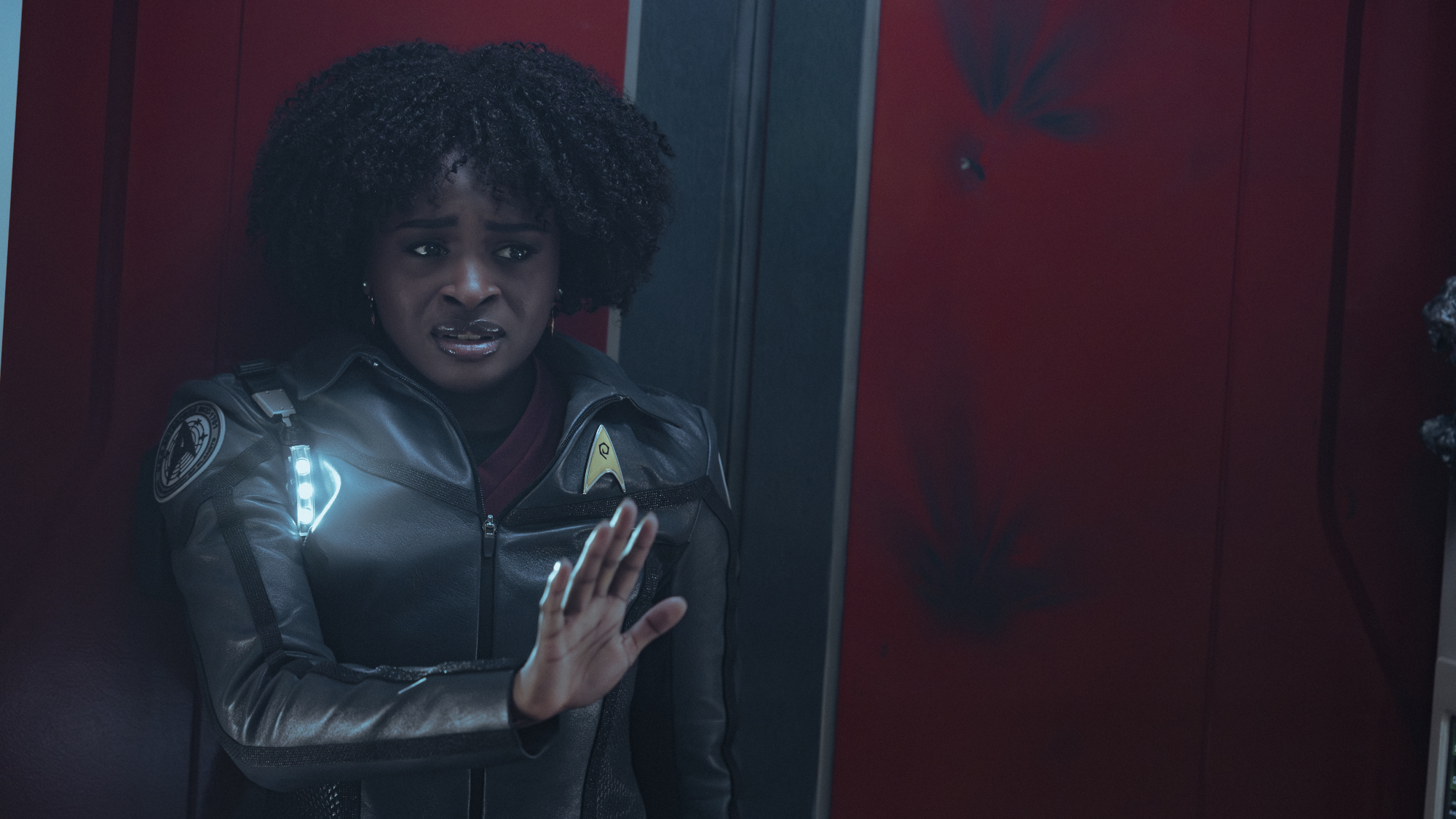
Celia Rose Gooding as Lt. Nyota Uhura in "Strange New Worlds" Season 4 (Image credit: Paramount)
"I always look to see his reaction if whether or not we feel like we've hit it. And every season we’ve tried to do one, and we’ve done some decent ones. But we haven’t quite done something like a ghost story. His reaction to that made it all worth doing."
Goldsman finds it interesting that he understands the rules of the horror genre, yet he actually doesn't watch that much horror anymore, short of the horror projects that he's somehow been involved with creatively.
"The older I get, the harder it is for me to watch," he reveals. "This particular convergence of the open-hearted optimism of 'Star Trek' and the kind of haunted nature of the world behind the world. There's a cadence to this, an almost Lovecraftian sense of there’s something out there that’s more than we know and maybe not so pleasant. I just think that is really interesting in 'Star Trek.' So we built it and shot it like a horror movie, and for me it worked. It’s nice and scary.”
A disturbing scene in "Strange New Worlds" Season 4's "The Griffin Incident" (Image credit: Paramount+)
In choosing some of their favorite moments of Season 4, Myers and Goldsman share observations on a few key crew members as they embark on their own inner voyages.
"There is stuff that Uhura goes through this season that really gets me," notes Myers. "She was the new recruit at the beginning of the show, and this is the part where she's suddenly a bit more in charge. She also manages to risk her life and save people in ways we haven't seen on screen. And it builds to something I love, which is she looks at who she's going to be, and looks back at who she was, and has some really great emotional stories around that. I love seeing her on that journey."
Picking his pair of intrepid Starfleet officers, Goldsman looks toward Sickbay.
"I think there's a set of relationship beats between M’Benga and Chapel in the back half of the season that really deepens both those characters and helps us understand where everybody's going that I think Jess and Babs did beautifully," he adds. "So I’m really looking forward to that."
"Star Trek: Strange New Worlds" Season 4 is now streaming on Paramount+.
2026 is the 60th anniversary of "Star Trek". To help celebrate the show that creator Gene Roddenberry described as "Wagon Train to the Stars,""Star Trek: Strange New Worlds" returns to Paramount+ for its penultimate season.
From teasers and trailers that first dropped last summer and fall, we’re anticipating a rollicking batch of dynamic episodes that draw on diverse subgenres, with everything from classic film noir crime stories and time travel to spooky ghost stories and sword-clashing swashbucklers.
But the end is nigh for this colorful modern interpretation of "Trek". Next year's truncated fifth season will be the crew's final mission, so let's revel in the time we have left and beam onto the Enterprise bridge for a promising round of missions. Here's our guide to everything you need to know about "Strange New Worlds" Season 4. Hit it!
When is the "Star Trek: Strange New Worlds" Season 4 release date?
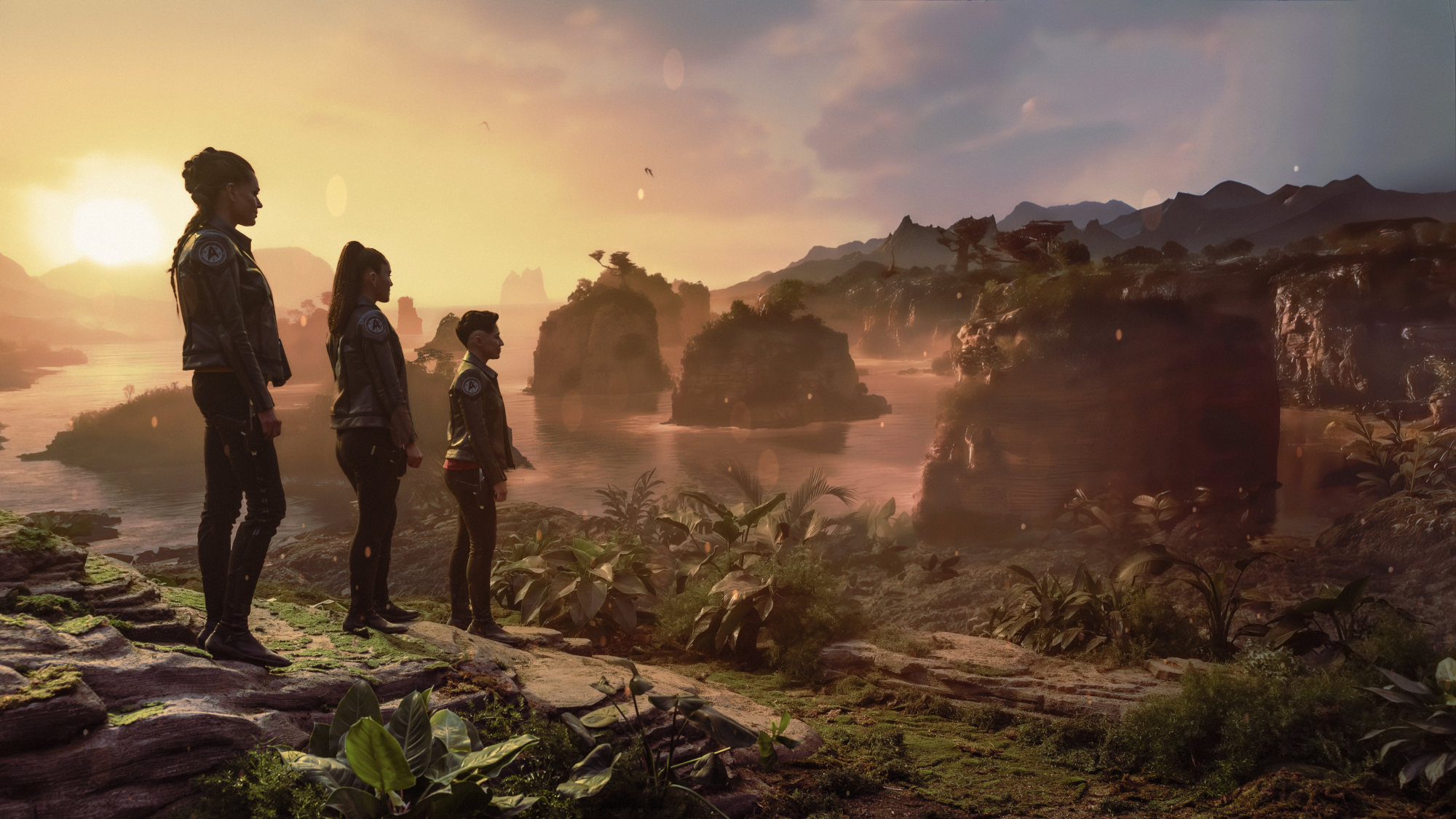
An exotic scene from Episode 401 titled "Valles Marineris" (Image credit: Paramount)
"Strange New Worlds" season 4 premieres Thursday, July 23, 2026, exclusively on Paramount+ in the US, Canada, and the UK with the first of 10 weekly episodes.
Fans can catch up and binge on all three previous seasons on the streaming platform. There are 30 previous sci-fi excursions into the known and unknown corners of the vast universe.
Forthcoming episodes of "Strange New Worlds" will land each Thursday after that, with the season finale warping into your living rooms on Sept. 24, 2026. Not signed up yet? We’ve got you covered with links to help get you up and running!
How to watch "Strange New Worlds" Season 4
(Image credit: Paramount)
"Strange New Worlds" season 4 streams on Paramount+ in the US, UK, Canada, Latin America, Australia, Italy, France, Germany, Switzerland, Austria, and Japan.
The engaging sci-fi series will also be available on SkyShowtime in the Nordics, the Netherlands, Spain, Portugal, and Central and Eastern Europe, starting July 24, 2026.
If you want to check out "Star Trek: Strange New Worlds" or any of the other great shows on Paramount+ while you're abroad, you can also use a VPN to access your subscription from anywhere in the world. It doesn’t work so well in neighboring solar systems or in the proximity of supermassive black holes!
Travelling outside your home country and still want to watch Star Trek: Strange New Worlds? Good news: NordVPN can help you get around those pesky geoblocking restrictions so you can watch the streaming service you've paid for anywhere in the world.VIEW DEAL ON
What is the plot of "Strange New Worlds" Season 4?
(Image credit: Paramount+)
After the bittersweet season 3 goodbye to Captain Marie Batel, Captain Pike’s longstanding love interest, it's back to bold business seeking out new life and new civilizations in the galaxy.
"The crew of the U.S.S. Enterprise, led by Captain Christopher Pike, embarks on a series of thrilling and emotional adventures across the stars," states the official synopsis. "On their journey, they will battle inner demons and external threats, encounter colorful new characters, reunite with familiar faces, and confront terrifying aliens. Through it all, they strive to embrace a bright, hopeful future."
Check out the individual episode titles and their scheduled air dates:
Episode 401: "Valles Marineris" — Jul. 23
Episode 402: "The Griffin Incident" — Jul. 30
Episode 403: "Human Best Friend" — Aug. 6
Episode 404: "A Case of Chiaroscuro" — Aug. 13
Episode 405: "Level Five Transporter Accident" — Aug. 20
Episode 406: "Off-Hour" — Aug. 27
Episode 407: "Like Chronitons Through the Hourglass" — Sept. 3
Episode 408: "Orders of Magnitude" — Sept. 10
Episode 409: "Once La'An a Time" — Sept. 17
Episode 410: "Tomorrow's Enterprise" — Sept. 24
Are There Teasers and Trailers for "Star Trek: Strange New Worlds" season 4?
You bet your coveted dilithium crystals there are!
Paramount+ delivered the main full trailer for season 4 on June 15, 2026, and it’s packed with dinosaurs, cowboys, horses, space storms, dreams, nightmares, fire-breathing dragons, haunted spaceships, and hallucinatory pleasure planets. Strap in for another genre-hopping season that could be the series’ best yet as we honor the franchise's big 60th birthday!
On July 18, Paramount+ also offered up a fun 20-minute video presenting some of the most memorable moments of Season 3 and it’s definitely worth a watch… or two!
But the funniest surprise came last summer on July 25, 2025 during San Diego Comic-Con, with the hilarious teaser that featured Captain Pike in the center seat as a Muppet! Yep, a Muppet! And we guarantee that episode is destined for immortality.
Who Are The "Strange New Worlds" Season 4 Cast And Creators?
(Image credit: Paramount)
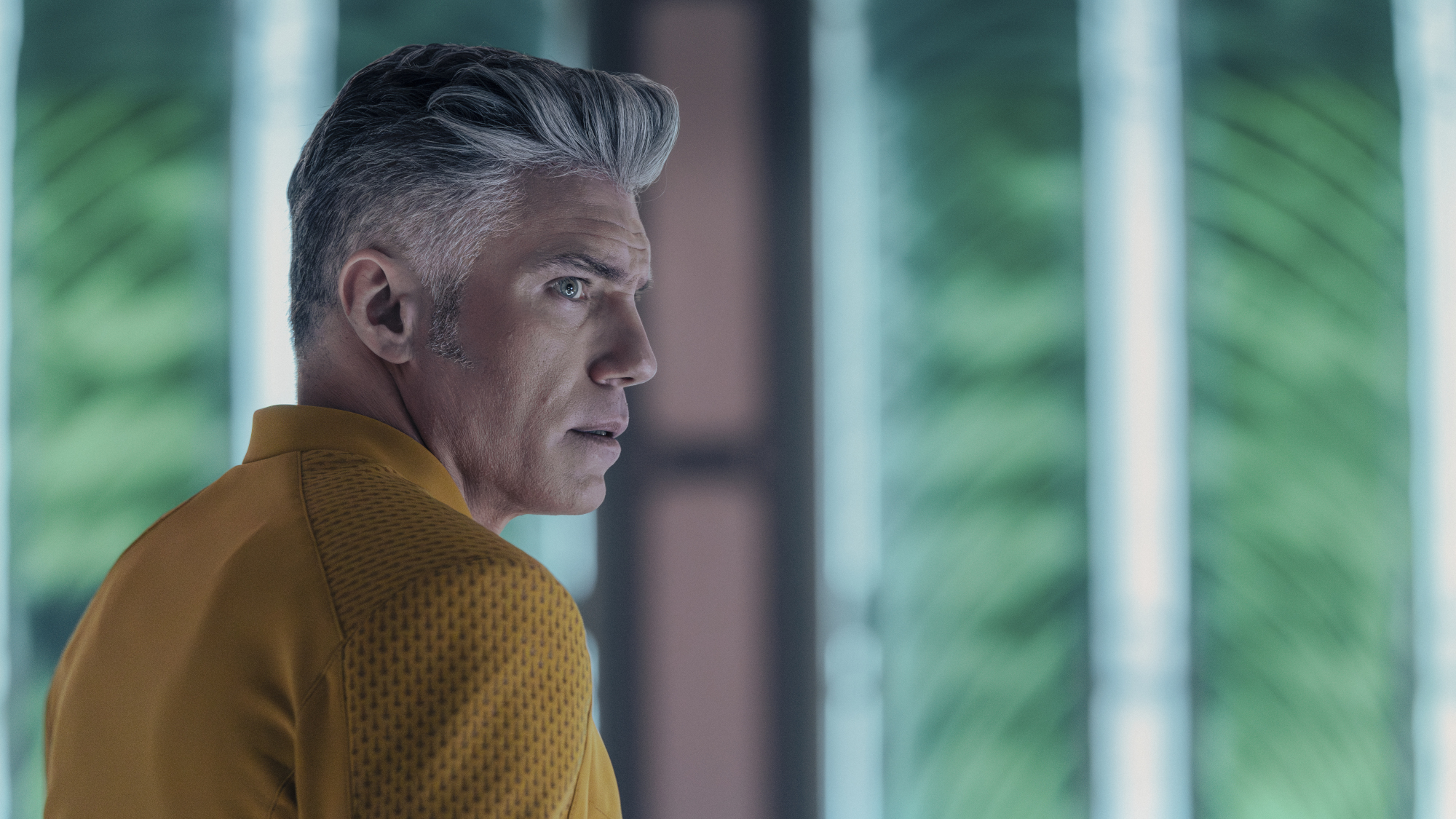
It’s going to be all hands on deck for this fourth and penultimate season of "Strange New Worlds," with the U.S.S. Enterprise exploring the final frontier with a full cast complement and its tireless executive producers and co-showrunnersAkiva Goldsman and Henry Alonso Myers at the creative helm.
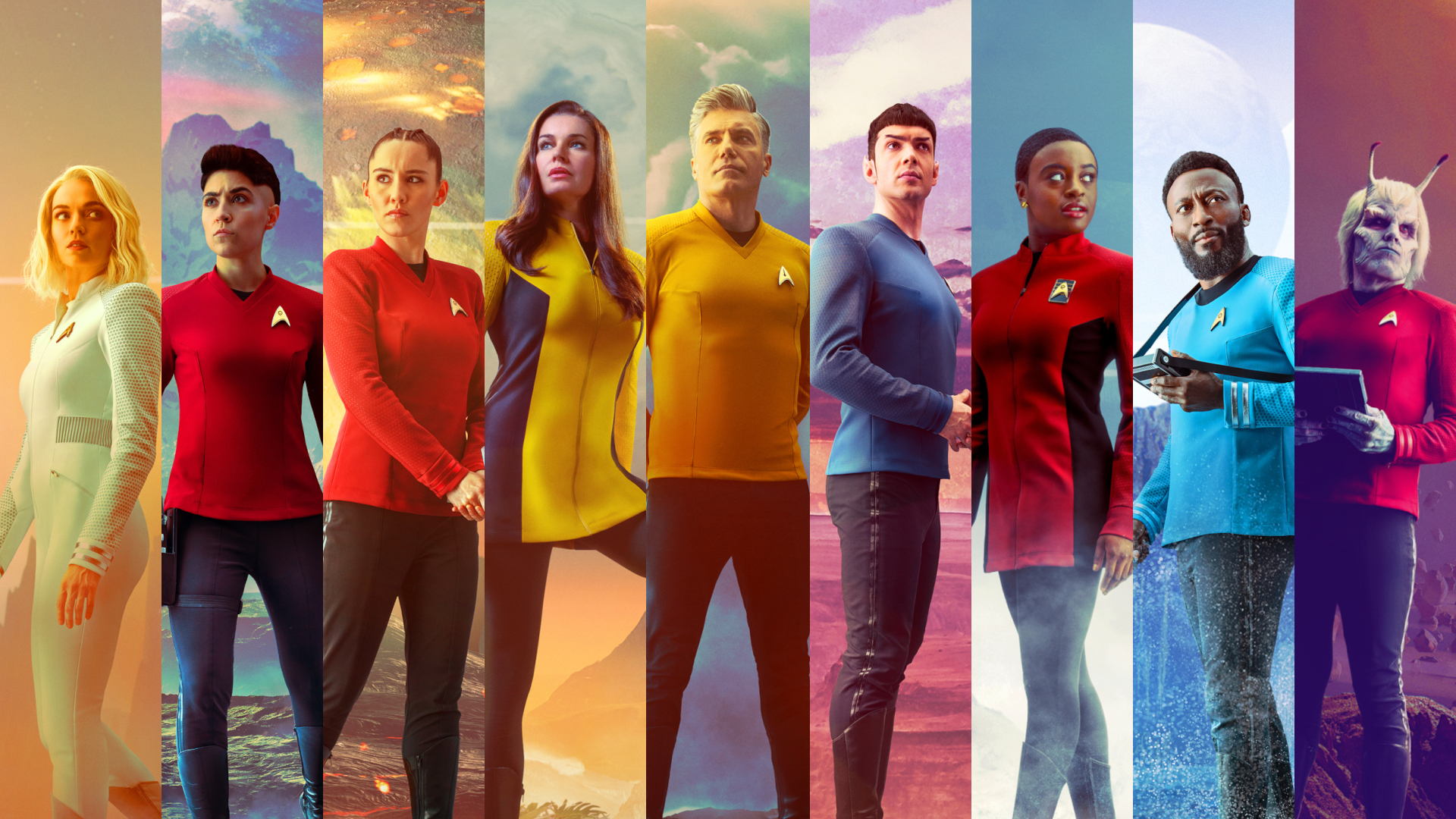
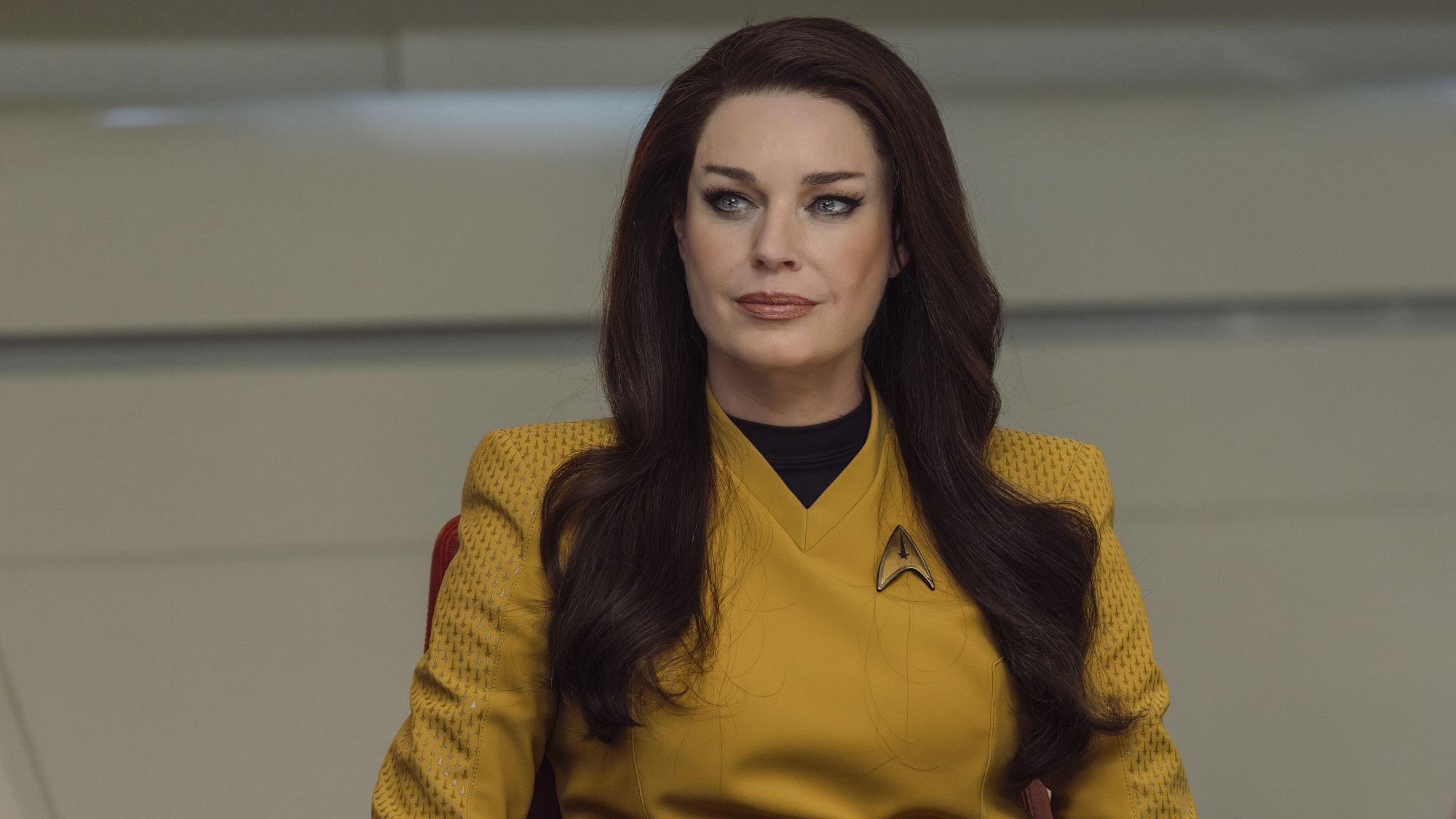
Returning to Paramount+'s adventurous space fantasy show are Anson Mount (Capt. Christopher Pike), Rebecca Romijn (Number One), Ethan Peck (Spock), Jess Bush (Christine Chapel), Christina Chong (La’An Noonien-Singh), Celia Rose Gooding (Nyota Uhura), Melissa Navia (Erica Ortegas), Babs Olusanmokun (Dr. Joseph M’Benga), and Martin Quinn (Montgomery Scott), and Adrian Holmes (Admiral April).
Recurring guest stars for "Strange New Worlds" season 4 include Carol Kane as the quirky long-lived Lanthanite engineer Commander Pelia and a charismatic Paul Wesley as a younger James T. Kirk.
Will there be a "Strange New Worlds" season 5?
Anson Mount stars as Captain Christopher Pike in "Strange New Worlds" Season 4 (Image credit: Paramount)
Yes indeed, we will be getting one final season next year, shortened to just six episodes.
The series' swan song will introduce Thomas Jane portraying Leonard "Bones" McCoy and Kai Murakami playing Hikaru Sulu. The original gang's almost all here. Will we get an Original Series reboot/reimagining after this? Our money's on yes.
While life on Mars has long been an obsession of sci-fi creators — from HG Wells' "War of the Worlds" to "Doom" via John Carter and John Carpenter — "Star Trek"'s Martians have tended to be human expats. Indeed, by the 24th century of "The Next Generation", "Deep Space Nine" and "Voyager", it's home to the Utopia Planitia Fleet Yards that would later be destroyed by rogue synths ahead of "Star Trek: Picard"'s debut season.
SPOILERS AHEAD! ANYONE YET TO WATCH "VALLES MARINERIS" SHOULD PROCEED WITH CAUTION TO AVOID VIOLATING TEMPORAL PRIME DIRECTIVES.
Homegrown Martians had traditionally been in shorter supply, however, until "Valles Marineris" paid them a visit. The only catch? Captain Pike and his USS Enterprise crew have to travel a mere 65 million years back in time to say hi.
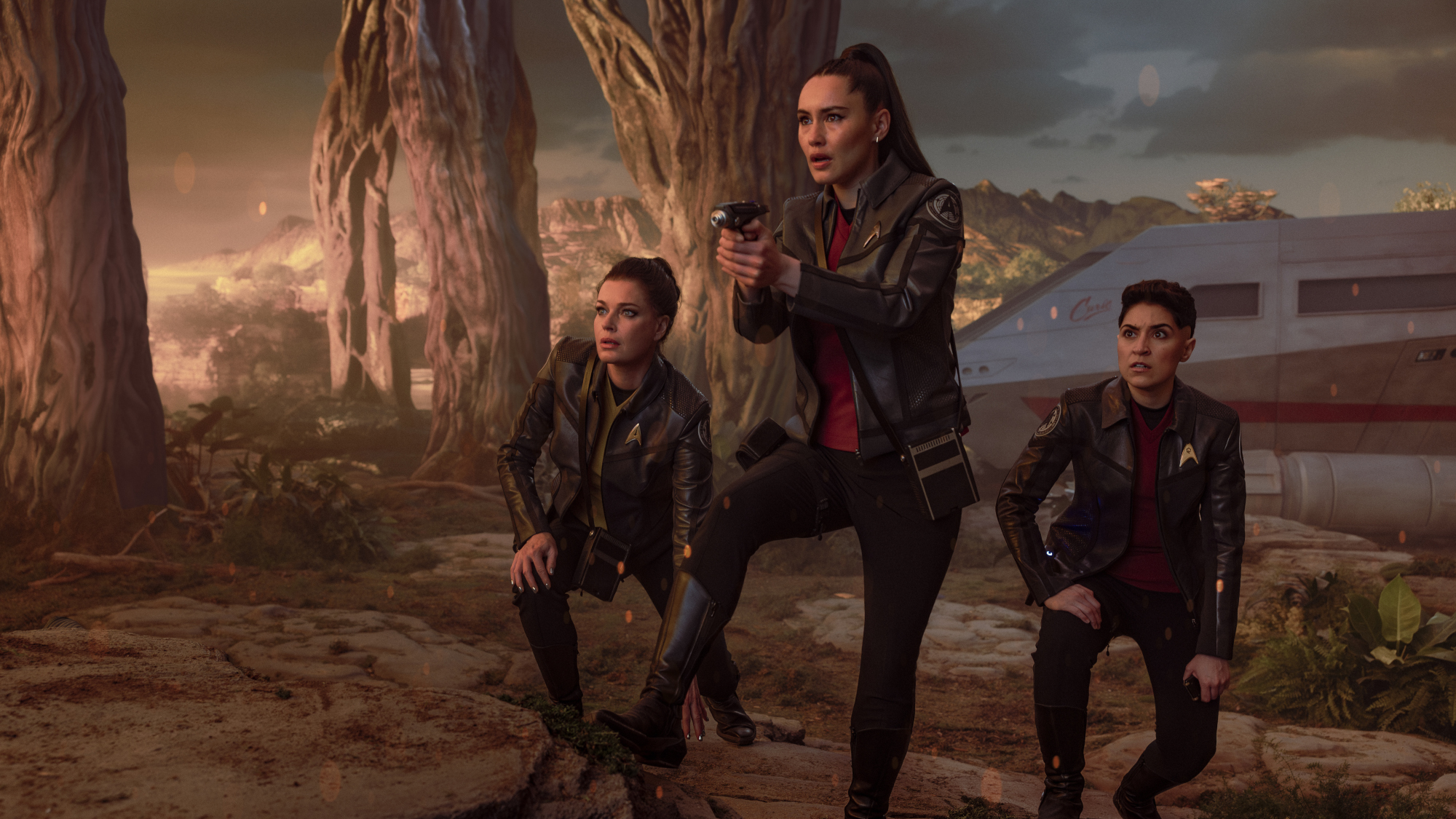
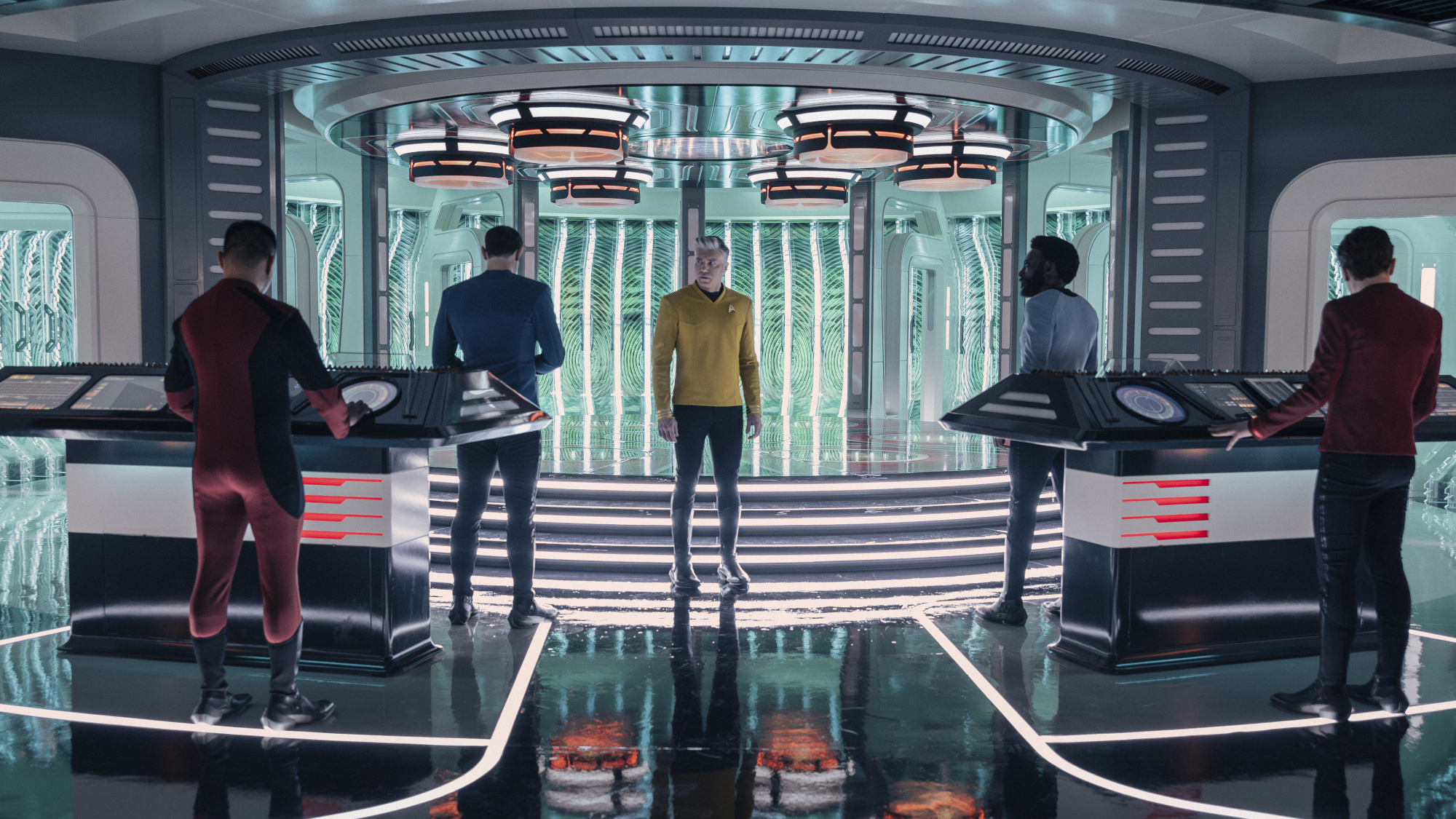
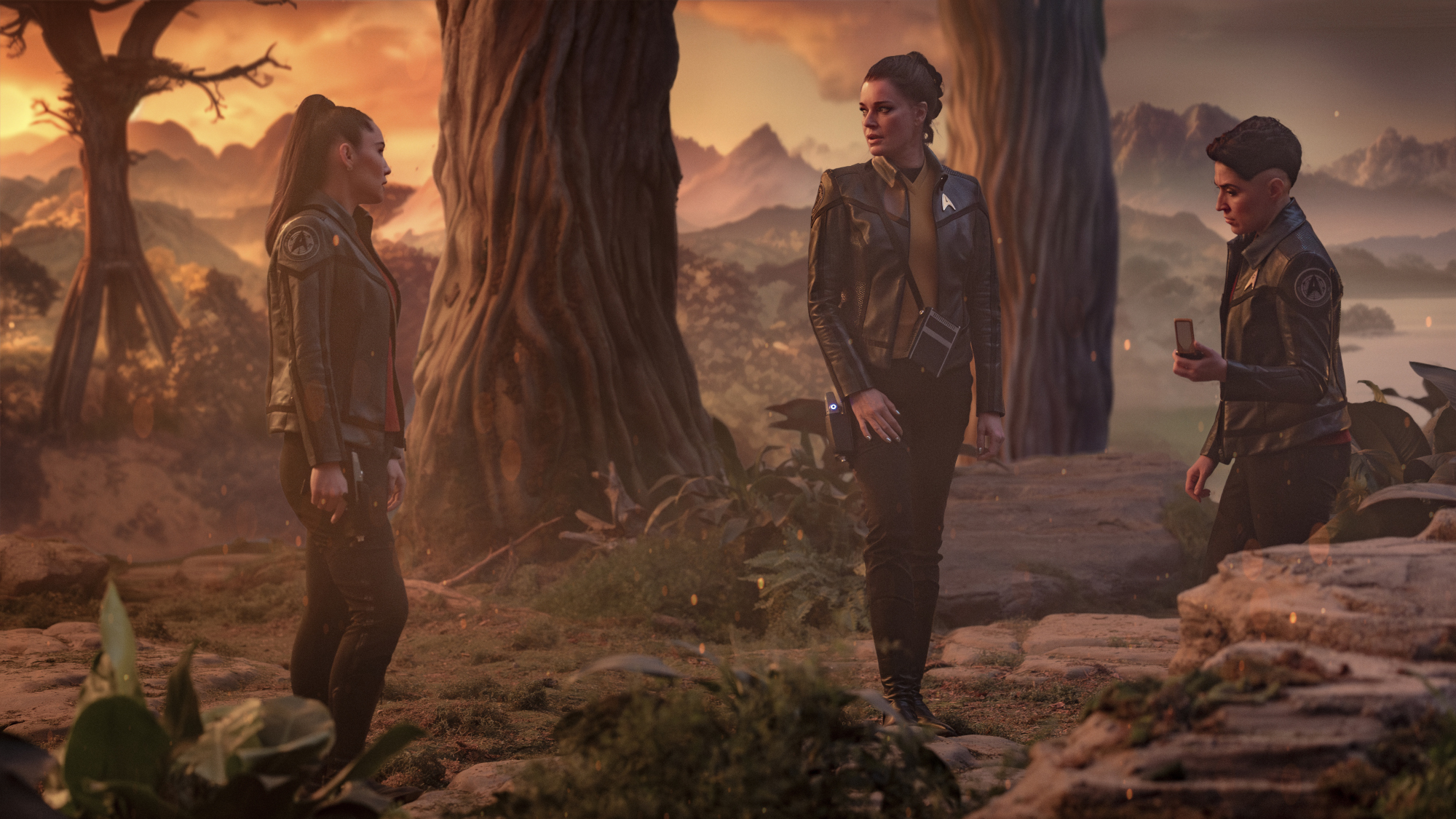
There's something undeniably delicious (though not, luckily, the crew) about Una Chin-Riley (Rebecca Romijn), La'an Noonien-Singh (Christina Chong) and Erica Ortegas (Melissa Navia) getting to visit the real Jurassic Park (technically Cretaceous Park) on an away mission to recover the iridium they need to repair an Enterprise stricken by its accidental trip through a quantum entangled spatial anomaly.
(Image credit: Paramount)
In the tradition of "Planet of the Apes", it turns out that this particular third rock from the sun was Earth all along. It also, according to star Rebecca Romijn, features an actual puppet from the original "Jurassic Park", and gives La'an that rare opportunity to punch a dinosaur in the face. That's definitely one to tell the grandkids — assuming, of course, you can avoid stepping on a bug, unleashing a butterfly effect, and preventing them (and the entire human race, for that matter) from ever being born.
But it's no coincidence that Pike has a copy of Edgar Rice Burroughs' "A Princess of Mars" on his bookshelf, because it's what happens in orbit that makes this episode such a pulpy sci-fi joy.
Although Battle Commander Cassell (Saffron Burrows) and her crew have the familiar, human-esque appearance of most "Star Trek" aliens, Martian evolution has got them there millions of years before Vulcans, Klingons, and the rest become top dogs in the galaxy. (Spock notes that Martian DNA is present in many modern-day species, though it's unclear how their family tree aligns with the "Progenitor" origin story of "TNG"'s "The Chase".)
(Image credit: Paramount)
These technologically advanced Martians are embroiled in a bloody ongoing war with a "Starship Troopers"-adjacent arachnid species known as the Dol'Drm, who call the fifth planet of the Sol System home. Science purists will note that this strange new world is not the famously gaseous Jupiter, but an extra, science textbook-rewriting ball of rock located roughly where the Asteroid Belt is now.
Unfortunately, once Cassell has sneaked a peek at a future where her "homeworld is a barren red wasteland", she's in no mood to listen to Federation lectures about finding diplomatic solutions. She subsequently steals some of the Enterprise's antimatter and fashions a makeshift weapon of mass destruction to eliminate the Dol'Drm once and for all. But the shockwaves of this cataclysmic blast will stretch far beyond the fifth planet.
Spock confirms that many of the fragments left behind by the obliteration of the Dol'Drm homeworld will form the Asteroid Belt, essentially a riff on the so-called "Disruption Hypothesis" of the belt's origins.
(Image credit: Paramount)
Originally postulated by German astronomer Heinrich Wilhelm Matthias Olbers in the early 19th century, the theory suggested that a rocky planet, roughly the size of our Moon, existed between the orbits of Mars and Jupiter.
And the Enterprise's involvement in the Solar System's origin story stretches even further. The gravimetric shift caused by the absence of the Dol'Drm planet shifts Mars' orbit, making it too cold to support life. It also launches arguably the most famous asteroid in history, the Chicxulub meteorite, on a collision course with Earth, wiping out the dinosaurs, kickstarting the Cenozoic Era, and sending the planet on an evolutionary journey that will eventually lead to, well, us.
(Image credit: Paramount)
When it comes to interfering with past events, the implications are rather larger than Scotty passing on the formula for yet-to-be-invented transparent aluminum in "Star Trek IV: The Voyage Home". Even the Borg meddling with a few centuries of history in "First Contact" is small fry next to killing off the dinosaurs.
The intriguing twist here, of course, is that humanity's existence is briefly on a knife-edge, as Pike makes the biggest decision of his (or, indeed, anyone's) life. Standard Starfleet protocol would usually dictate that the Enterprise intervene to prevent the Dol'Drm being destroyed by stolen Federation technology, but its commanding officer sees the bigger picture.
(Image credit: Paramount)
What if the Enterprise was always meant to be there? What if the human race only exists because the ship has gone back in time to answer its own 65-million-year-old Mayday? "In our future there is no fifth planet," he reasons, before allowing the Martians to deliver their deadly payload.
It's a wonderful "what if" that puts 65 million years of history in one man's hands. Indeed, you could tie yourself in knots with all that timey-wimey stuff, but the episode is so much pulpy fun that you barely notice the unbearable weight of those existential dilemmas. Dinosaurs, Martians and an origin story for the human race? What more could you want from a season opener?
New episodes of "Star Trek: Strange New Worlds" debut on Paramount+ on Thursdays.
The latest "Dune: Part 3" trailer arrived back on July 8, and it was a sumptuous banquet of startling set pieces, intergalactic political unrest, close-quarter combat, and a whole lot of sand and ash. A fine follow-up tothe initial March teaser, to be sure.
After letting it marinate in our minds for a while, let’s break down five items of particular interest in this newest preview of the Denis Villeneuve-directed conclusion to his trilogy of far-future sci-fi epics adapted from author Frank Herbert’s novels, "Dune" and "Dune: Messiah."
Set 17 years after Paul Atreides (Timothée Chalamet) has ascended to the Emperor’s throne, "Dune: Part 3" explores the corrupting side of political power as his holy war against the Imperium’s Great Houses advances towards a destructive destiny.
Right out of the gate, Chani (Zendaya) is certainly not shy about displaying her displeasure with his ultimate betrayal, which was first fleshed out at the end of 2024’s Dune: Part 2. It’s also pretty cool to see Duncan Idaho (Jason Momoa) back as a cloned “ghola” and Paul’s powerful sister, Alia, portrayed by Anya Taylor-Joy.
So behold, our five takeaways from this brand new look at Villeneuve’s "Dune: Part 3".
1. The chilling gaze of Scytale
Robert Pattinson as the shapeshifting Face Dancer, Scytale (Image credit: Warner Bros.)
We already knew that a platinum-haired Robert Pattinson plays Scytale, one of the film’s main villains.
Some might have scoffed at the concept of Pattinson as an intimidating foe, but from these extra snippets in the new trailer, his shapeshifting Tleilaxu Face Dancer seems up to the task of carrying out a careful plan to remove the ruthless Paul Atreides from the throne.
Pattinson has the acting chops to pull off an intimidated foe, so he might just steal the show. And come on, folks, Pattinson was The Dark Knight!! Have a little faith.
2. Alia’s bloody scream
Anya Taylor-Joy portrays Alia Atreides in "Dune: Part 3" (Image credit: Warner Bros.)
Alia Atreides, played by Anya Taylor-Joy, is Paul’s sister. The Bene Gesserit Revered Mother Mohiam called her an "abomination" due to the Water of Life that Lady Jessica drank while she was in the womb.
A blood-covered Alia is perhaps unleashing her god-like power on a captive Mohiam in response to a conversation we’re not privy to here, which could be not exactly a scream of peril, but a stern command.
She’s definitely not someone to cross thanks to her otherworldly paranormal skills.
3. Where did Paul’s eyes go?
Timothée Chalamet plays the brutal tyrant Paul Atreides in "Dune: Part 3" (Image credit: Warner Bros.)
Towards the end of the 3-minute trailer, we catch a shot of Paul in the aftermath of a nasty Stone Burner radiation bomb detonated by conspirators in the Arrakis capital, Arrakeen, as Paul and his personal Fedaykin guard accompany him outside the palace.
We can see his eyes are severely damaged after the intense detonation flash strikes him square in the face, causing blindness and eventual exile into the deep desert per the Fremen way.
This will open up his prescient sight abilities in new and extraordinary ways as we’ll soon see for ourselves in this third "Dune" installment.
4. Attack of the Clone
Jason Momoa as the Duncan Idaho clone named Hayt in "Dune: Part 3" (Image credit: Warner Bros.)
Jason Momoa’s master swordsman Duncan Idaho returns here with more sneak peek screen time.
He's shown resplendent in his crisp white uniform, heavily criticizing Paul for the thousands of worlds he’s destroyed during the terror campaign inflicted by his brutal Jihad.
But, as fans of the books will know, this is not technically the same person as his former mentor. He has been resurrected as a Ghola clone named Hayt as a ‘gift’ from the Bene Tleilaxu, and unbeknownst to Paul, he plans to assassinate the crazed ruler who is deemed beyond redemption.
5. Flight of the Navigator
Edric the Guild Navigator makes his ominous entrance in "Dune: Part 3" (Image credit: Warner Bros.)
One of the major grumbles coming from fans, myself included, is the lack of the Spacing Guild and its bizarre Guild Navigators in Villeneuve’s "Dune" films, but all that’s seemingly about to change.
In this trailer, we see a hovering coffin tank that no doubt contains one of the mutated human creatures warped by the spice Melange, enabling them to fold space. This former Spacing Guild member is named Edric and is a pivotal player in the plot to overthrow Paul and House Atreides.
Also seen is Edric’s sinister pod sliding silently into one of the gigantic Guild Heighliner starships.
Warner Bros.' "Dune: Part 3" lands on Dec. 18, 2026.
We’re not going to bombard you with a bunch of "Hasta La Vista, Baby" jokes, but you might want to mark your calendars for Aug. 28, 2026, because James Cameron's Oscar-winning "Terminator 2: Judgment Day" is heading back into U.S. and global theaters later this summer in honor of its 35th anniversary.
While the actual anniversary of the movie's release was back on July 3rd, StudioCanal has a great reason for delaying the re-release until August.
Judgment Day in the sci-fi franchise’s mythology occurs on August 29, 1997. It's when Skynet becomes self-aware and launches a doomsday nuclear attack on the world, so that weekend chosen for the re-release is particularly appropriate and pretty cool. In honor of these big birthday party plans, a special new anniversary trailer and nostalgia poster have been composed to heighten the excitement and anticipation.
"Terminator 2" roars back into theaters on Aug. 28 for its 35th anniversary (Image credit: StudioCanal)
Starring Arnold Schwarzenegger, Linda Hamilton, Edward Furlong, and Robert Patrick, "Terminator 2" was unleashed into theaters on July 3, 1991, and was ultimately awarded four Oscars, instantly cementing its legacy as one of the most influential sci-fi flicks ever.
This anniversary re-release presentation utilizes StudioCanal’s 2017 restoration and 3D conversion. For residents in Australia, the seminal classic arrives back on Sept. 3, with a United Kingdom release due to strike beginning Sept. 4. Tickets in the United States for "Terminator 2: Judgment Day" 35th Anniversary have been available online since July 17.
"T2 was made for theatres, and our lovingly-prepared 3D version, coming back to the big screen, is the absolute best way to see the film," director James Cameron added in an official announcement.
"I believe it’s safe to do spoilers after 35 years, so SPOILER ALERT: the good guys win against the AI superintelligence! And maybe that’s a message of hope we all could use this summer."
If you don't want to wait until next month, you can watch "Terminator 2: Judgment Day" on Paramount+
The first trailer for "Avengers: Doomsday" dropped yesterday, and while it’sjammed full of superheroes, surprises, and our first extended look at Dr. Doom, it is missing one big thing that has been a constant in the MCU ever since "Avengers" was released and the Infinity Stone saga kicked off: outer space.
Believe it or not, the MCU has been very sci-fi heavy for the past decade as the universe expanded into space with "Guardians of the Galaxy", "Captain Marvel", and the entire throughline of Thanos’ quest to bring balance to the universe.
Entire films took place in space, and extended exposition was delivered inside the hulls of spaceships. Alien heroes and villains swung around made-up planets and lived in the skulls of dead space giants. That whole "Eternals"thing. It's safe to say that the Marvel movies were into outer space in a big way. The MCU leaned heavily into science fiction and space for much of its life, but judging from this trailer, that may be coming to an end.
This is a very Earth-based trailer, and while the remnants of years of science fiction still permeate throughout the MCU (superhero comics are almost always dabbling in the genre), the focus on it is clearly gone. This trailer is all about the Earth and superheroes, pulling back hard on the bigger universe. Sure, it opens with the Fantastic Fourexiting their spaceship — probably an unintentional visual metaphor for the MCU’s abandonment of the cosmos — but we’re kept mainly on Earth otherwise.
We have absolutely no alien heroes appearing on screen in this trailer outside of Thor and, of course, our main villain is decidedly earthbound even if he may be from a different multiverse (for those not in the know, that’s Robert Downey Jr. behind Dr. Doom’s mask).
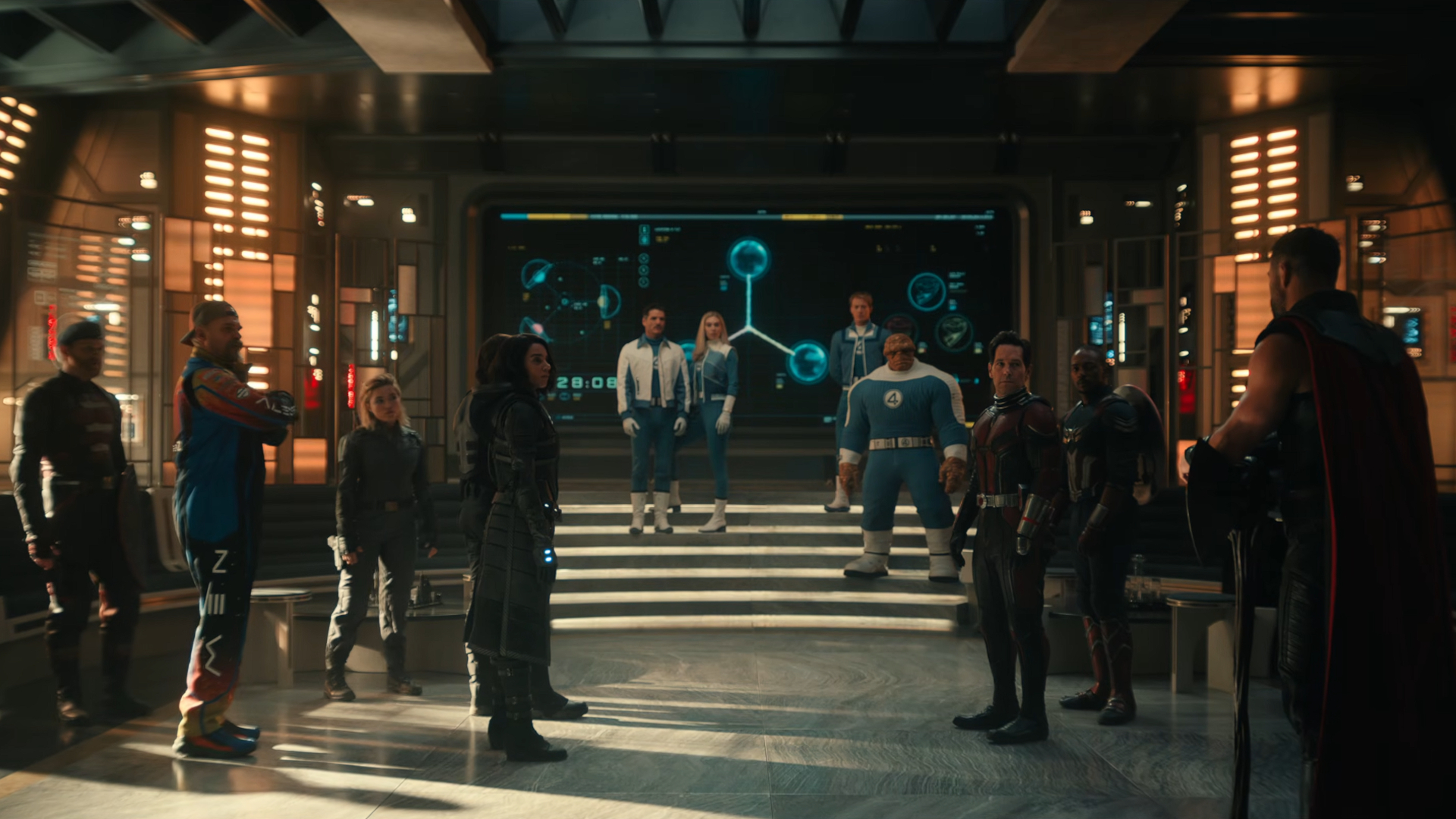
(Image credit: Marvel Studios)
There are plenty of reasons that the MCU may be pulling out of space. Introducing all of the X-Men means you’ve got plenty of Earth stuff to mess around with anyway, and there’s very little reason to need space travel when you’ve got time travel, quantum realms, and multiverses expanding your universe in other ways.
To be fair, all of those are sci-fi as well, but it’s not the same as outer space. We do know from casting that some of our favorite space-based heroes will be returning, but what is clear is that space is no longer the focus here. The MCU has been pulling back on space ever since Thanos fell, and this new trailer for "Avengers: Doomsday" just hammers another nail into the coffin of that universe.
Of course, Marvel is a master of misdirection and fake-outs, so anything could change as we get more details and the film finally releases, but for now it seems that the Marvel Cinematic Universe isn’t so interested in the universe part.
"Avengers: Doomsday" will hit theaters on December 18.
One thing is for certain: there will absolutely be no shortage of superheroes in Marvel Studios' "Avengers: Doomsday", as evidenced by this first full trailer that showcases everyone from the Wakandans and the X-Men to the Fantastic Four and Earth's Mightiest Heroes, the Avengers.
Plus, we get slivers of a metal-masked Victor Von Doom looming over the mayhem to further whet the appetites of MCU acolytes before the Russo Brothers’ epic lands Dec. 18.
"Something's coming," Downey's Doom declares as the trailer rolls out before later stopping Thor's Stormbreaker axe with two fingers. "Something we may not be able to deter. Before this day is done, we shall be faced with an unthinkable decision."
Opening with a blinding explosion witnessed by Professor X, fans are treated to a cavalcade of nearly everyone in the Marvel Cinematic Universe teaming up to stop a series of multiverse incursions and intentional destructions seemingly orchestrated by the mad monarch of Latveria.
"Beloved heroes from three distinct universes will be set on a deadly collision course and face an existential threat unlike anything they've ever encountered," states the official synopsis for the highly-anticipated $400 million tentpole project.
Robert Downey's Doctor Doom is on full display in new "Avengers: Doomsday" trailer (Image credit: Marvel Studios)
"Put aside your petty squabbles," Chris Hemsworth's Thor demands as we glimpse Patrick Stewart’s Professor X and Ian McKellen's Magneto together.
Paul Rudd’s Ant-Man arrives to join the party as a welcome addition, as does Channing Tatum reprising his "Deadpool and Wolverine" role as Gambit, who's having a showdown with Simu Liu's Shang-Chi, and a beaded, long-haired Chris Evans as Steve Rogers is surprisingly seen after an encounter with Tom Hiddleston's Loki and his Time Variance Authority character. It's also fun seeing Rogers display his worthiness by snagging Thor's silver hammer! We're just relieved the tone on display is respectful and serious and not choked with jokes and gags as in the most recent MCU outings.
"You are far stronger than all of us put together," the Asgardian warns his brethren in the extended sneak peek. "And they died facing enemies and threats; that's going to be far less than this one. Everything that they sacrificed will be for nothing if we do not stand together."
With its countless superhero cameos and callbacks building to a chaotic crescendo, "Avengers: Doomsday" storms into theaters on Dec. 18, 2026.
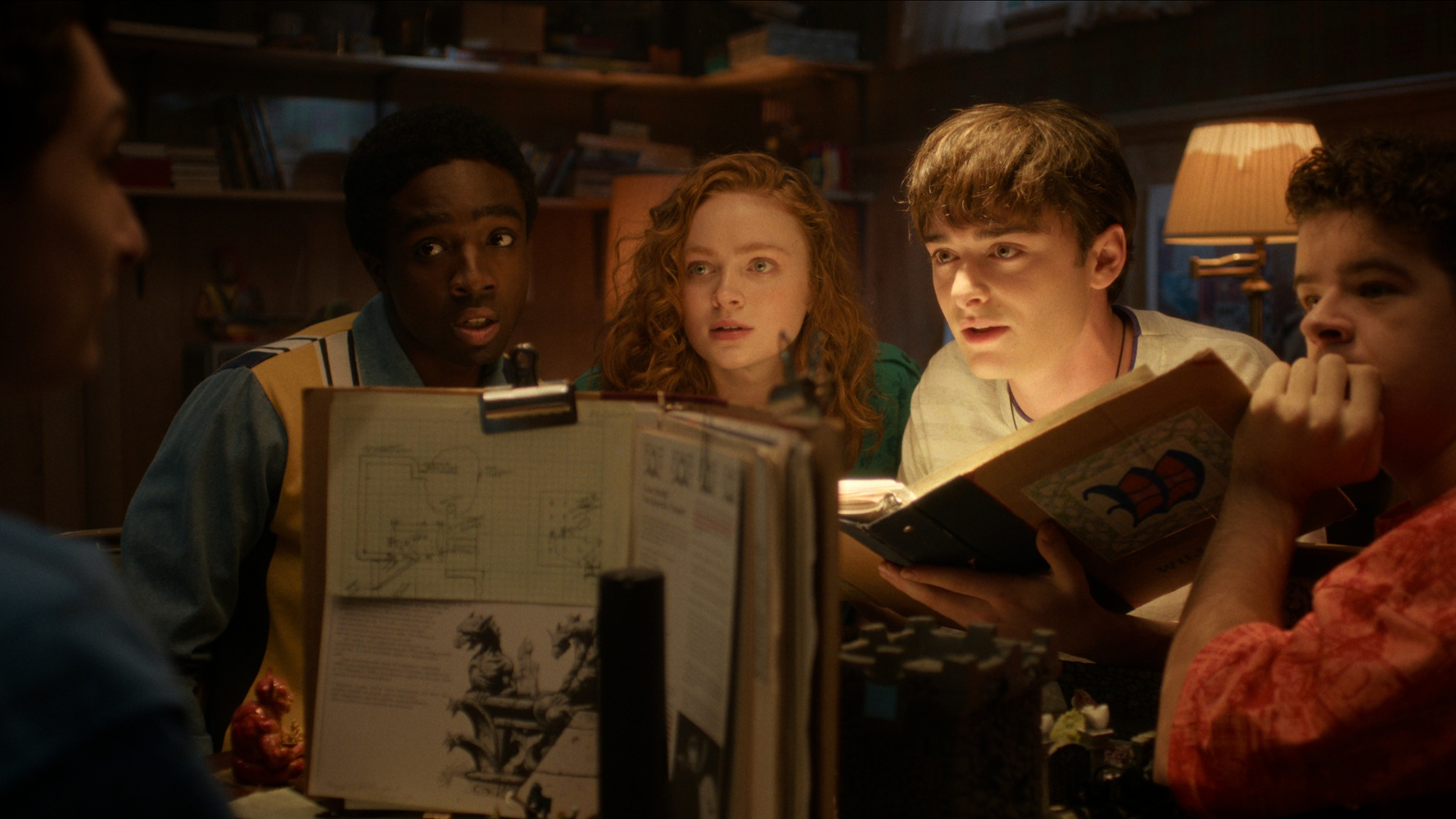
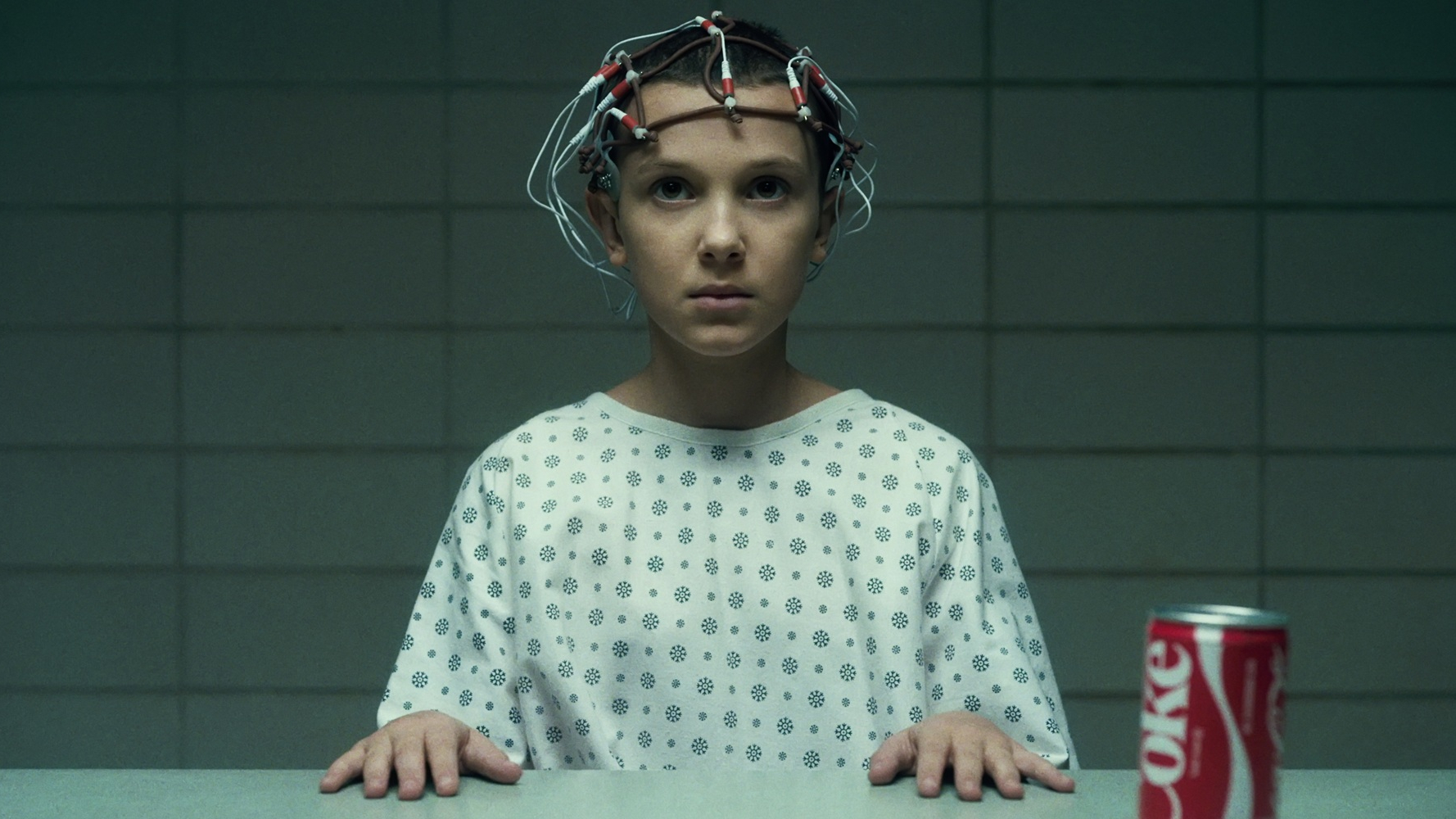
In July 2016, "Stranger Things" stormed its way into the pantheon of pop culture greats. Finding the sweet spot of '80s nostalgia, horror, and sci-fi, the Duffer Brothers' series established itself as one of Netflix's flagship shows and a favourite water cooler topic for close to a decade.
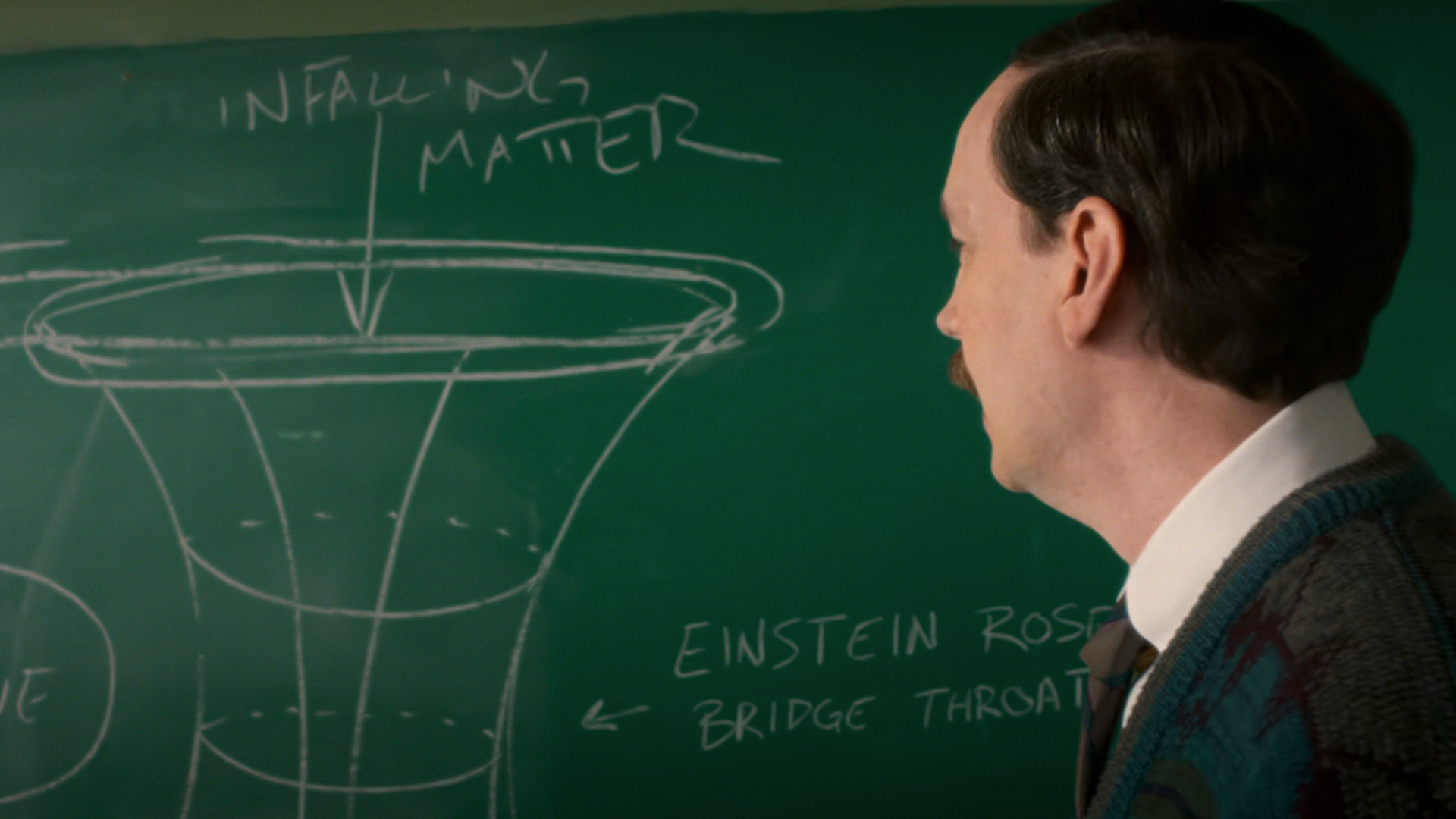
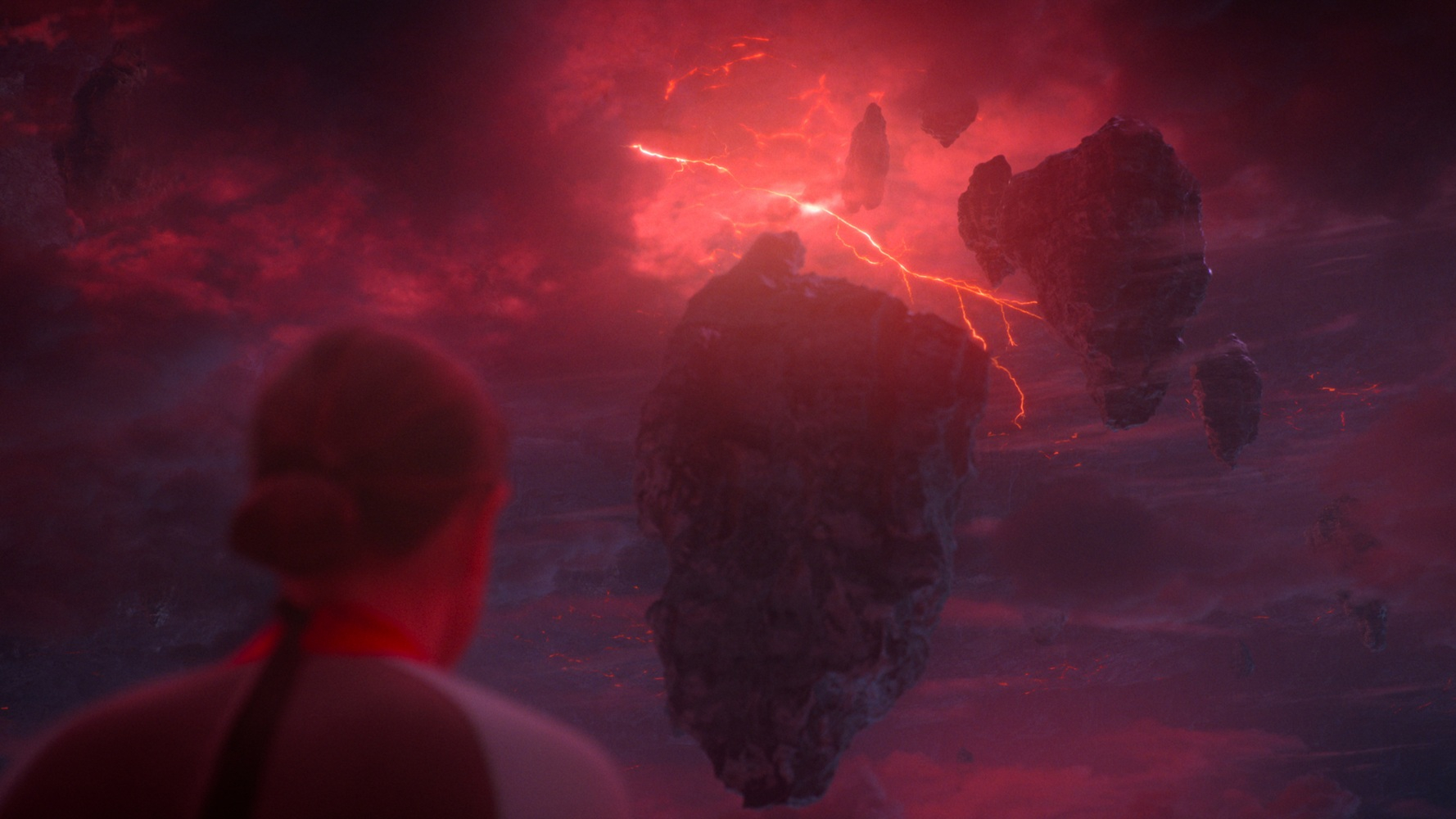
Much like "Jurassic Park" encouraged an entire generation to suddenly view paleontology through a new set of eyes, the same can be said about "Stranger Things" and science. Seriously, how many of us discovered the many-worlds theory because of the concept of the Upside Down on the show? Even wormholes are easier to understand now because of Mr Clarke's lessons than whatever the heck happens in "Interstellar" that has Matthew McConaughey bawling like he's been forced to sit through a Jared Leto movie marathon.
Parents and government groups have long highlighted the negative effects of entertainment, but not enough is said about its positive influences, especially the ability to inspire. In fact, it's often underestimated how invaluable a show like "Stranger Things" has been to educators who want to turn around the declining numbers in STEM graduates.
For University of Liverpool physics professor Carsten Welsch, "Star Wars" references were no longer cutting it with his students. However, the "Stranger Things" science allowed him to relate to a younger generation of learners. " It's a really good way to talk about science, which can be quite a challenge, especially with teenagers," Welsch told NPR. "Normally, the moment you mention physics or engineering, they run away."
This is something echoed by Louis Bearson, the director of science, business, and education at the Institute of Physics. Bearson mentioned how some of the devices used on the show and its delicate unpacking of complex topics like quantum physics could widen the appeal of science and physics beyond the explanations in the textbooks.
"One of the issues we have is that physics really needs to be more representative of the community at large," Bearson told The Times. "If we can get a broader base of people interested through things like 'Stranger Things', that's only going to be for the good."
(Image credit: Netflix)
It wasn't only the educators who appreciated the power of "Stranger Things" to connect with others, but also government departments like the U.S. Department of Energy.
The official website used the premise of the Upside Down to explain its own work, especially in terms of its search for other dimensions and how this is done in a real-world setting. While the information was always out there for anybody interested in finding out more, how many people would have read and taken an interest in any of it without the influence of "Stranger Things"?Apart from the natural benefit to educators and government departments wanting to increase the interest in STEM education, "Stranger Things" opened up the doors to something else equally important: intelligent discourse among its fanbase — the kind that's often missing in an online world where trolls walk among us and bring their bad manners from under-the-bridge living.
Reddit and social media forums were flooded with young fans discussing what they watched, the possibilities of where it could go, and even providing explanations to others who might not have understood the scientific concepts. It was encouraging, insightful, and fun, as people learned through interaction and exploration, which to this day is still the best way to learn anything.
(Image credit: Netflix)
In 2017, Olivia Richter, a then-student at the School of Communication and College of Arts and Sciences and writer for The Eagle, wrote a column about how "Stranger Things" served as a modern role model for curiosity.
The author explained how the Hawkins gang expressed "a great thirst for knowledge" and dispelled the notion that being smart or nerdy was something to be ashamed of. "It is encouraging a culture of curiosity and learning in its viewers," Richter wrote. "Much of the science in the show is based in fiction, though it is still highly successful in making science look exciting and fun and creating a model for young people that it is cool to be inquisitive."
Fans demonstrated an example of this ultra-curious attitude after the series finale. Science has always been about hypotheses and proving theories, and this approach was applied to the Conformity Gate theory that spread like wildfire online. Sure, some people might call it a conspiracy theory and looking for something that isn't there, but the fans from around the world rallied to find clues and provide evidence for their unique hypothesis about the show's ending.
(Image credit: Netflix)
They might not have been right in the end — maybe even being deliberately misled by Netflix's marketing — but the fact that they questioned, critiqued, and researched to such an extent is a positive sign that the show's message had an impact. It's also proof that critical thinking isn't dead and intelligent life is still out there.
Say what you want about the final season of "Stranger Things" and whether the ending stuck the landing or not, but there's no disputing the Demogorgon-shaped mark it left on viewers around the globe. More than that, it was a show that provoked curiosity and discovery, as well as encouraging a new generation to find out more about science.
In a world riddled with fake news, false information, endless rage-bait, and sustained pushes for conformity rather than curiosity, we desperately need more neuron-firing programming like this.
All five seasons of "Stranger Things" are on Netflix.
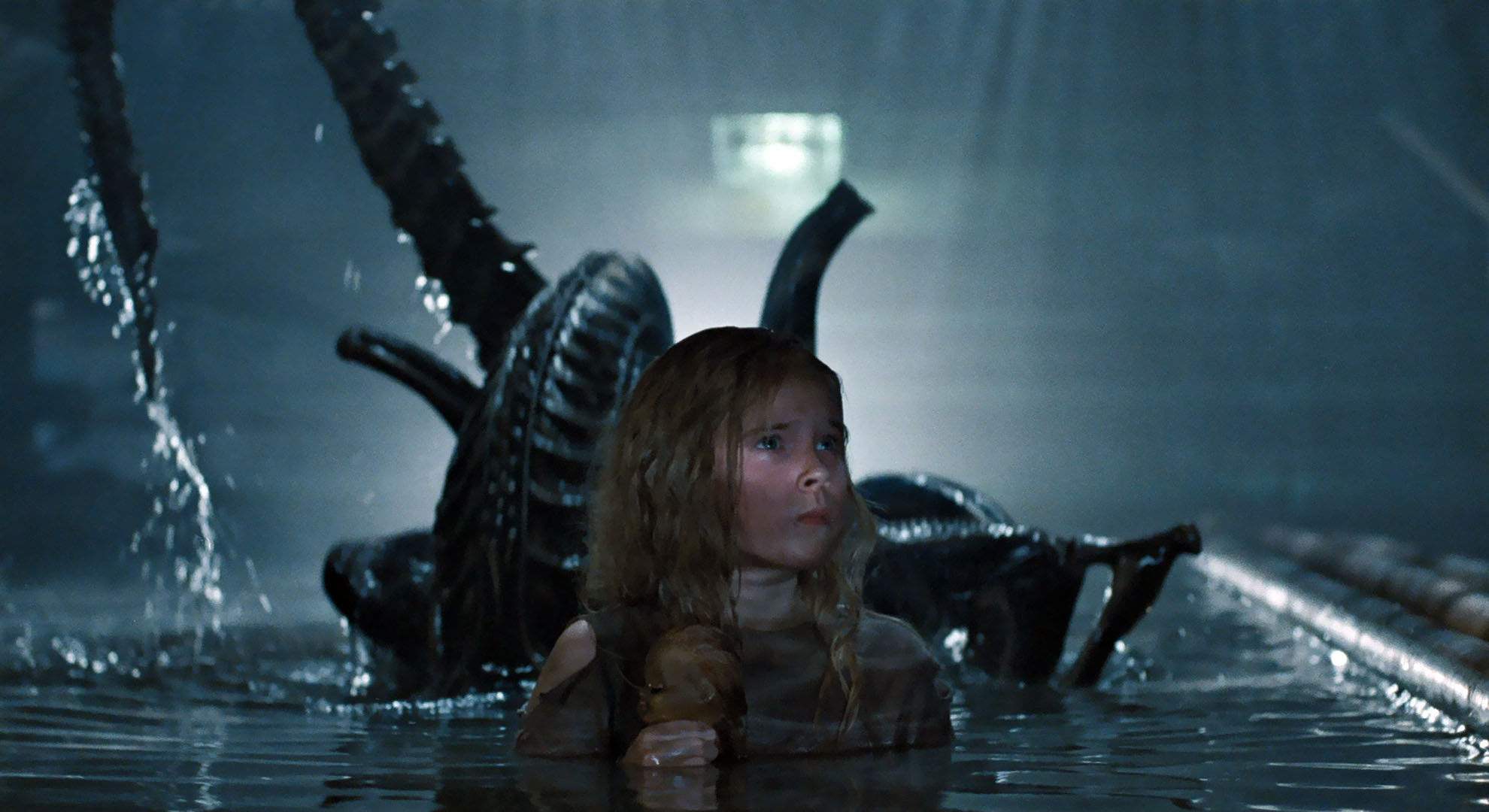
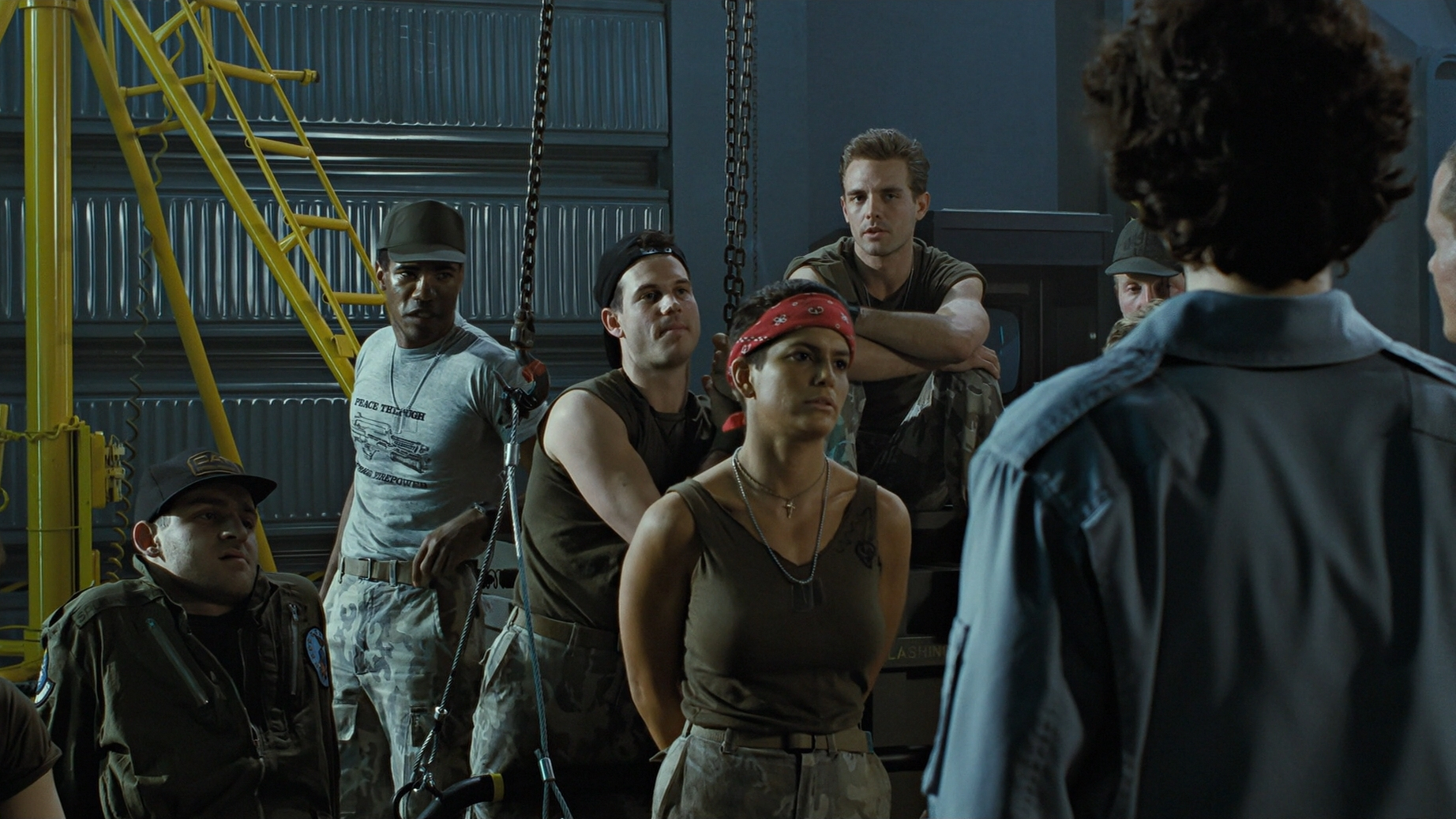
Where does James Cameron's "Aliens" rank among the other Alien movies? That depends on who you ask. Some might say it's the best, while others put it just behind the original (spoiler alert: it's the best). Regardless, there's no denying that this 1986 film shifted gears, moving the franchise from horror to horror-tingedsci-fi action and paving an alternate path for the future.
As Cameron stated in aninterview with Lofficier, the plan always was "to do a film that was not as scary... it's scary, but it's not as scary, but more intense, and I like to use the word, exhilarating. Because I think you get exhilarated by the intensity of the kind of action that's in this film."
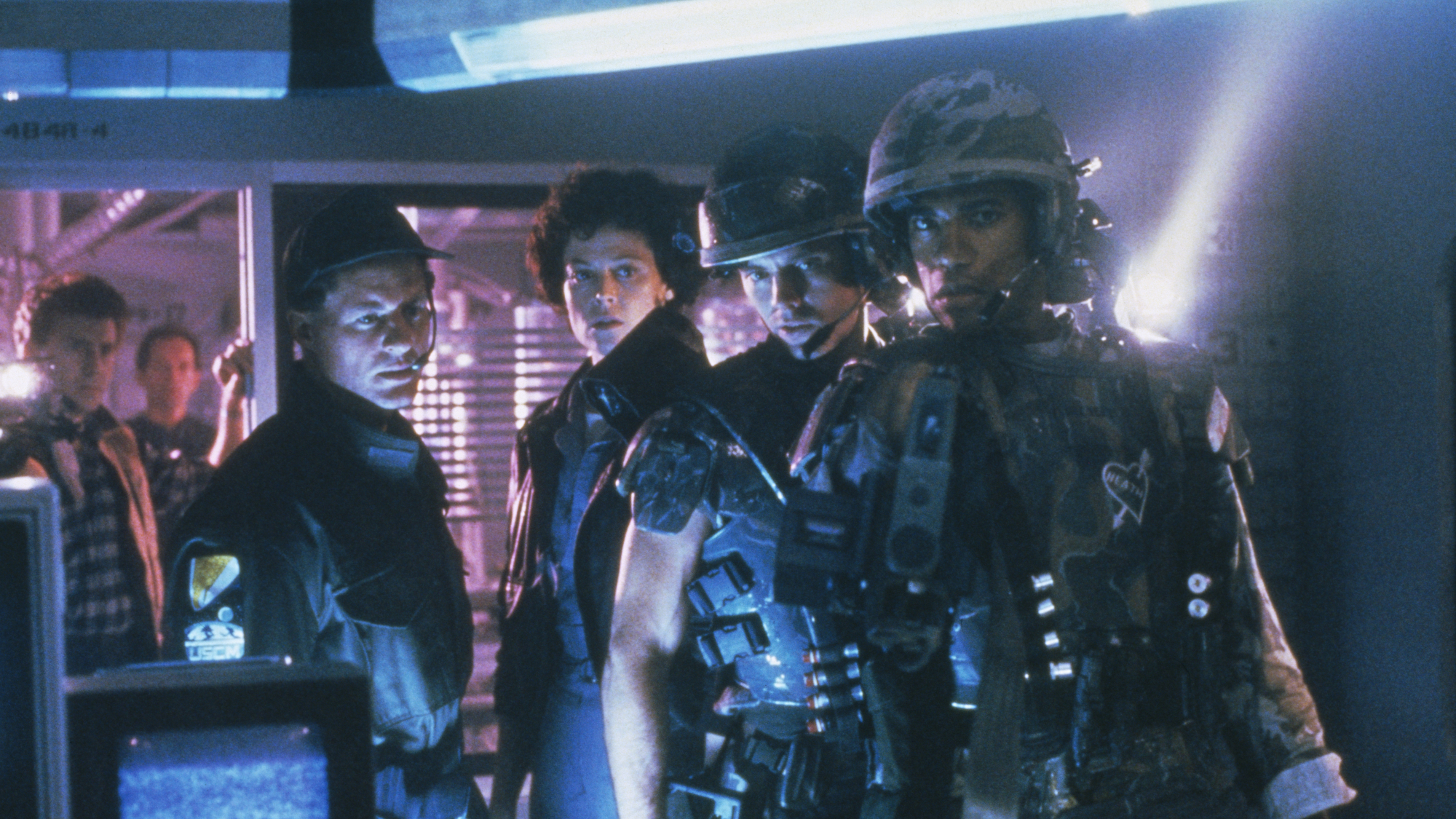
In terms of story progression, the sequel's shake-up makes complete sense. Sigourney Weaver's Ellen Ripley survived the Xenomorph in "Alien", but now she must conquer her fears and face the grim creature once again. This time, she has allies and firepower on her side, though most of those Colonial Marines turn out to be about as useful as French kissing a beehive.
(Image credit: 20th Century Fox)
"Aliens" exploded into a monster hit, both financially and critically, suggesting that Cameron has a Midas touch when it comes to sequels. Famous movie critic Roger Ebert called it "a superb example of filmmaking craft", and it's tough to argue that point. Yet what's amazing to ponder is how "Aliens" nearly fell apart several times before it actually happened.
Despite 1979's "Alien" turning a big profit on paper, Hollywood's accounting practices are more baffling than Palpatine's return in "Star Wars: The Rise of Skywalker".
Somehow, "Alien" was deemed a flop, and 20th Century Fox remained conflicted about a sequel – so much so that it almost sold the rights to the "Rambo" producers of all people (imagine the crossover potential, though, as John Rambo guns down a horde of Xenomorphs while Jerry Goldsmith's iconic score blares in the background).
(Image credit: 20th Century Fox)
After much oohing, aahing, and handwringing, the studio relented and selected Cameron to put together a treatment based on the impressive nature of his script for "The Terminator".
In 1983, Cameron only needed three days to put together a 45-page treatment, which can be read here. The nuts and bolts of what would become "Aliens" are mostly present in this document, but Fox turned its nose up at the filmmaker's proposal. The studio certainly wasn't escaping allegations that it looked for more reasons not to do the movie than to proceed.
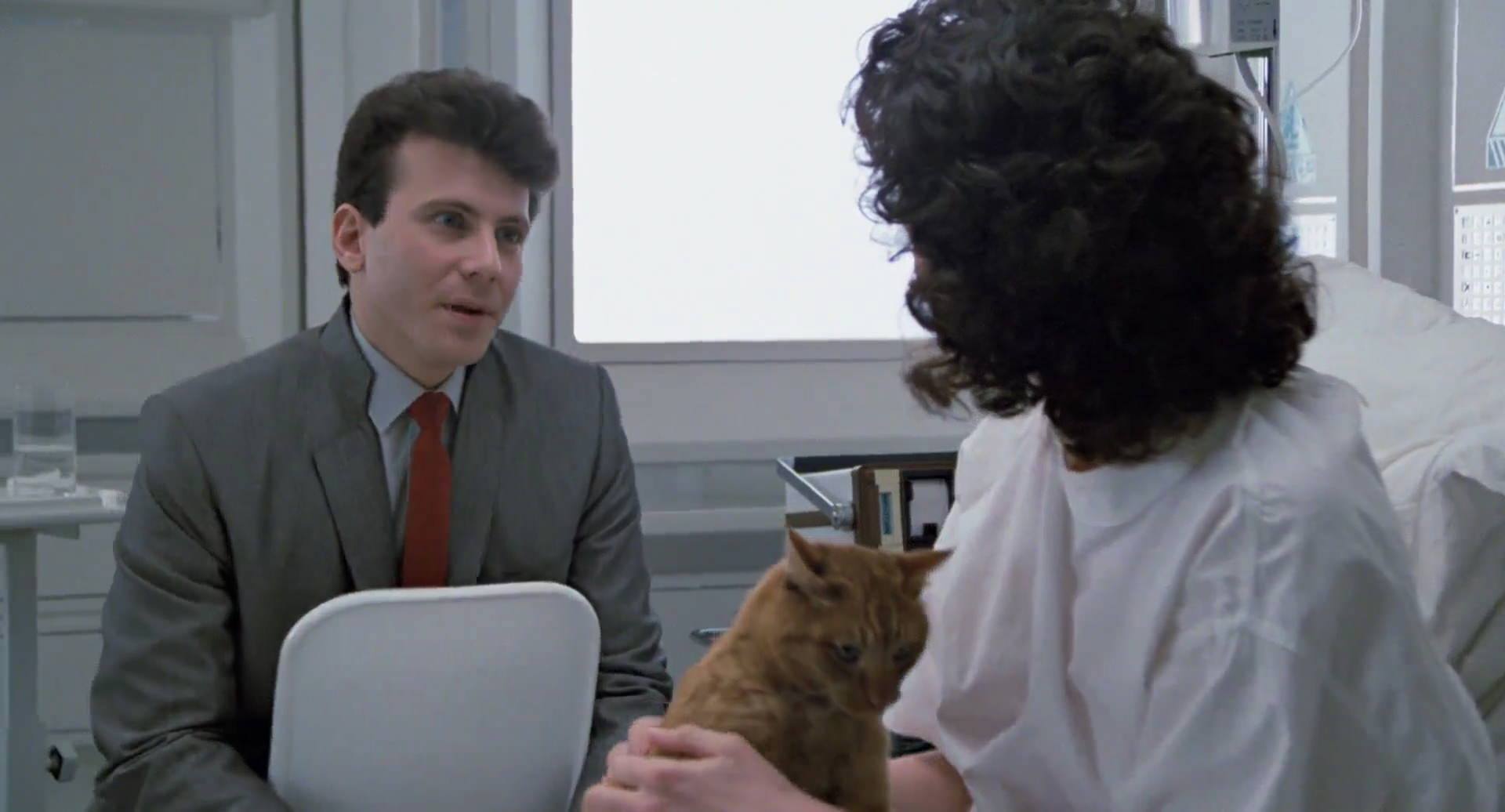
What "Aliens" required was a champion from within – somebody to convince the studio execs that they were leaving money on the table by ignoring this franchise. This came with the hiring of producer Larry Gordon, who pushed for the sequel in the four walls of the boardroom.
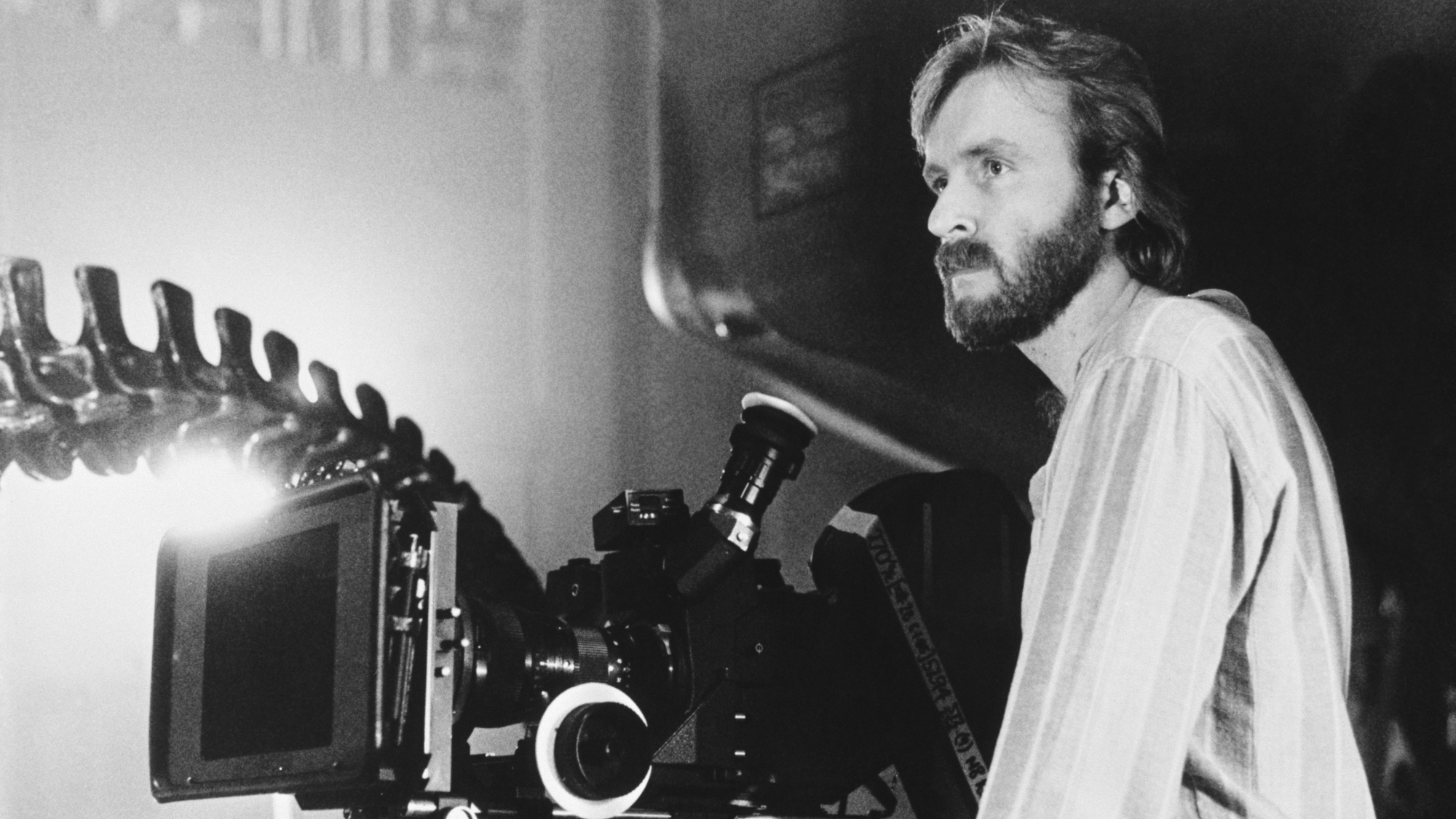
After the success of "The Terminator", Cameron returned to the fray as writer-director, while his then-girlfriend-soon-to-be-wife Gail Anne Hurd boarded the film as a producer.
(Image credit: Getty Images (Bob Penn))
With the script submitted and Cameron cocked, locked, and ready to shoot in 1985, a new problem arose: budget. Cameron's camp argued that "Aliens" could be done for $15.5 million, but Fox's bean counters feared it would be closer to $35 million, and nobody considered the poor billionaires at stake.
Fox offered $12 million. "We walked out and said, 'Thanks, we'll do something else,'" Cameron told the Los Angeles Times.
Behind the scenes, Gordon managed to convince his bosses to fork out the extra money for the production. With that hurdle successfully navigated, Cameron was back in the driver's seat and ready to head off to LV-426.
(Image credit: 20th Century Fox)
Next though, Fox decided to suggest the unthinkable at the time: "Aliens" without Sigourney Weaver. It's a decision that reeks of a straight-to-video sequel, the kind of thing you'd expect to be fronted by a Kevin Sorbo type.
Cameron, on the other hand, was under the impression that Weaver had been contractually locked in for a sequel, but that wasn't the case at all. Now it was up to Cameron to convince Weaver to do the film. He met with Weaver, and the meeting seemed positive enough, but her agents wanted a big payday for her – and rightfully so. Fox refused, and so Cameron and Hurd quit… again; they weren't going to make the movie without Weaver.
Frustrated but trying to roll the dice on this flailing project one last time, Cameron pulled a sneaky trick, as he revealed to GQ years later. Weaver shared the same agency as Arnold Schwarzenegger, so Cameron phoned Schwarzenegger's agent and told him how he was about to start rewriting the "Aliens" script to remove Ripley entirely. The news travelled faster than a Xenomorph through a ventilation shaft.
(Image credit: Getty Images)
"The deal was done in 12 hours after that," Cameron said. "So I never wrote a word of that hypothetical story that I said I was gonna do, that I had no intention of writing anyway. So anyway, it worked, and Sigourney got her million bucks, and everybody was happy."
As far as most movie productions go, "Aliens" was mostly smooth sailing when it began to shoot. Deadlines were met, it didn't go over budget, and the studio let them get on with it. The biggest challenge involved the final cut – with Fox wanting the picture to have a two-hour runtime to secure more theatrical screenings.
Cameron relented, taking out his scissors and cutting a few superfluous scenes, but the film still wasn't quite at the magic mark. Having cut everything that he could, Cameron explained that any further amendments would destroy the story and damage the integrity of the movie. This time, Fox didn't argue and stuck with the filmmaker.
(Image credit: 20th Century Fox)
History confirms the right call was made here. The franchise now follows the blueprint laid by Cameron's "Alien" more than Ridley Scott's "Jaws in space" foundation. While there's always a survival element in these movies, the action-centric approach is a critical part of the series' DNA. Sure, the protagonists remain scared, but they receive the opportunity to light up the Xenomorphs and show those ugly monsters who's the boss.
Looking back now, it's unbelievable to think that Fox almost tanked "Aliens" with its studio shenanigans. A classic emerged from the chaos of inflated egos, penny-pinching, and blood pressure-raising frustration.
It's proof that in Hollywood, no one can hear you scream (nor do they care), so it's up to you to find a way to survive.
The biggest blockbusters of 2014 threw up a varied rogues' gallery of bad guys. In "Transformers: Age of Extinction", it was a reincarnated version of Optimus Prime's perma-nemesis, Megatron, while Captain America faced off against a reborn Hydra infiltrating the upper echelons of the US government in "The Winter Soldier". For Spider-Man, it was Electro, while Maleficent showed up in live-action to give Sleeping Beauty nightmares.
Christopher Nolan has never been one to go with the Hollywood crowd, however, and in his outer space opus "Interstellar", the antagonist was time itself — or, to be more specific, Einstein's theory of general relativity.
Nolan, whose Homeric epic "The Odyssey" makes landfall in theaters this week, has always been obsessed with time, and our perception of it. From "Memento"'s backwards narrative to "Tenet"'s time-flipping terrorists, the director has tended to steer clear of linear narratives. Even the three interweaving plotlines of his World War II drama, "Dunkirk", unfold at completely different speeds. In short, Nolan is not a filmmaker you should ever set your clock by.
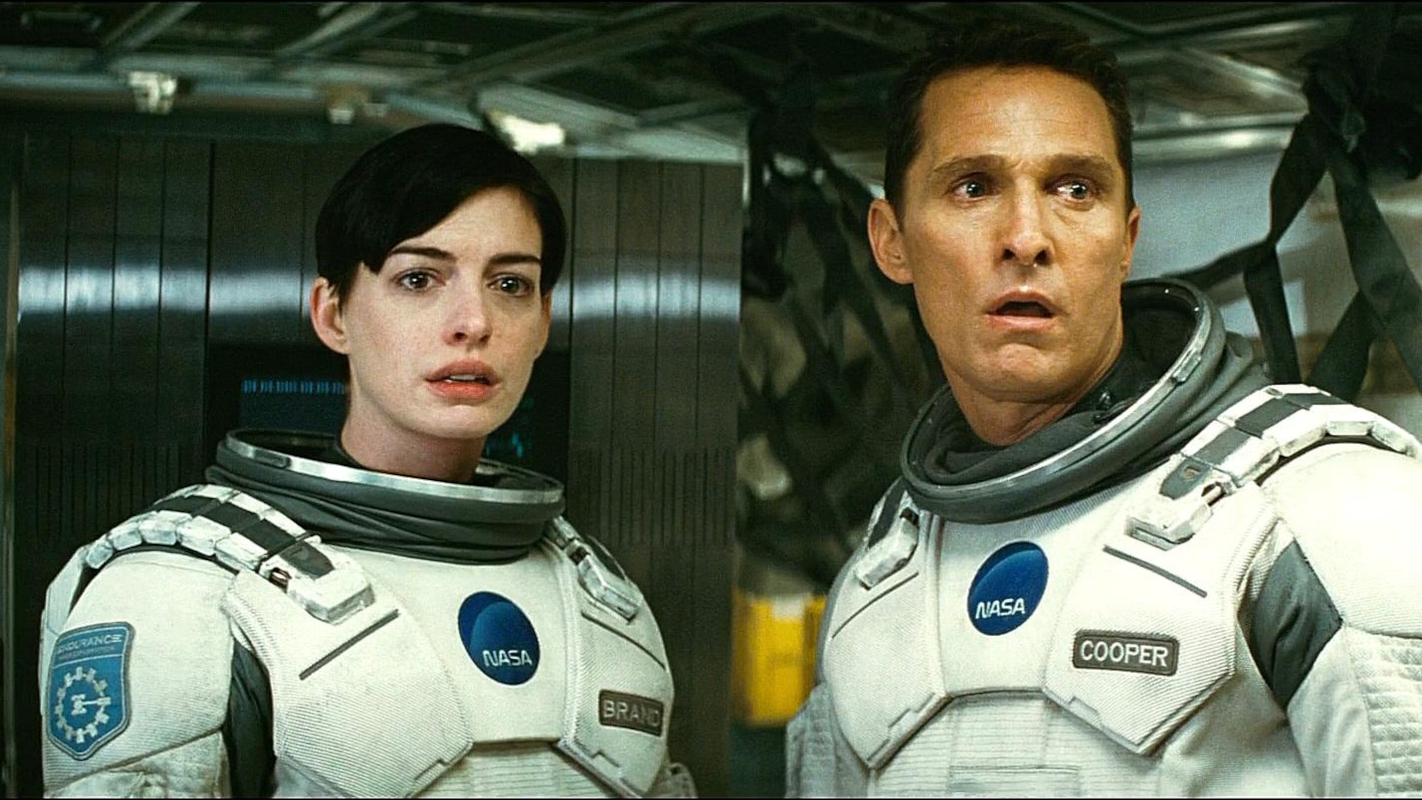
But time has never been as cruel as it is in "Interstellar", where the fundamental constants of the universe combine to wreak havoc with human emotions. "Time is relative," explains Anne Hathaway's biologist/astronaut Amelia Brand. "It can stretch, and it can squeeze, but it can't run backwards. It just can't."
She's summed up "Interstellar" in a nutshell, so it's not hard to see why this was the story Nolan wanted to tell when he added his own entry to the canon of cerebral cinematic sci-fi.
(Image credit: Paramount Pictures)
At one point in "Interstellar"'s evolution, it seemed set to be a Steven Spielberg movie. Physicist Kip Thorne had originated the project with producer Lynda Obst, and the "Close Encounters of the Third Kind" director spent a year developing the movie with them. He even hired Nolan's younger brother, Jonah (whose credits include "The Dark Knight" and "Westworld"), to write a script.
Spielberg ultimately dropped out — "It just didn't stick with me, and I don't know why," he told Empire magazine — but Jonah knew the ideal replacement. "Jonah actually said, 'If there comes a point where you decide not to make this movie, I can tell you who's gonna grab it. He's already bugging me about it. And that's my brother Chris.' The second I decided not to make it, Chris jumped on board, probably the next day. 'Interstellar' was a much better movie in Chris Nolan's hands than it would have been in mine."
In the film's near future, humanity is literally running out of time. The Earth's ecosystem is breaking down, with dust storms killing crops across the United States and causing major health issues among the survivors. Nolan even uses talking head footage of real-life survivors of the Dust Bowl that ravaged the US Midwest in the 1930s (taken from Ken Burns' 2012 documentary "The Dust Bowl") to add to the urgency of the situation.
(Image credit: Paramount Pictures)
But the remains of NASA — now forced into hiding — have a plan. They've discovered a stable wormhole near Saturn, and it leads to another galaxy. Probes have found planets on the other side, and some of them might — just might — be capable of supporting life.
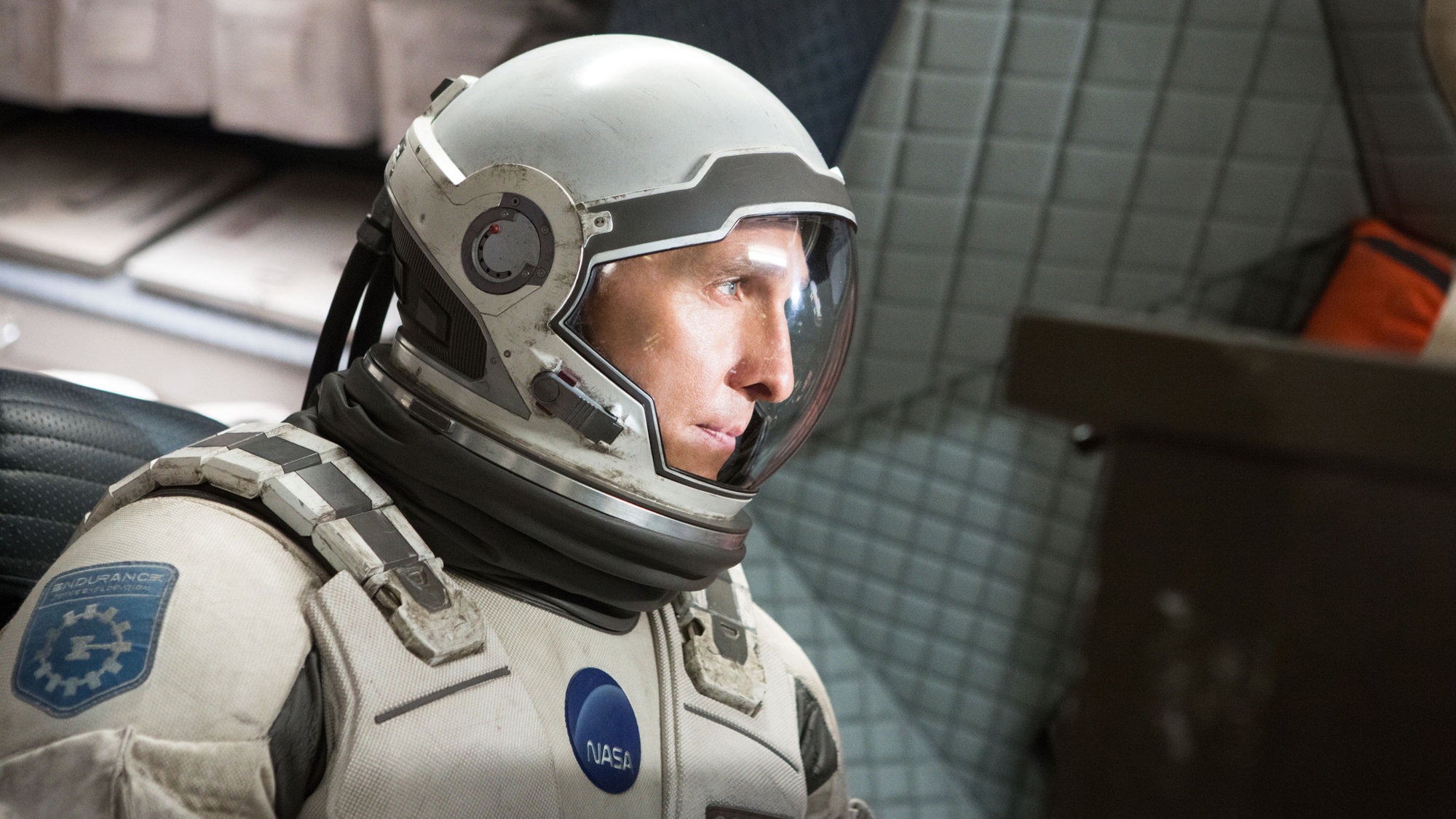
So when former pilot-turned-farmer Joseph Cooper (Matthew McConaughey) stumbles on NASA's clandestine base (for reasons that will later become clear), he's recruited for a mission checking in on the brave pioneers sent to investigate these strange new worlds. Unfortunately, this means leaving his kids behind.
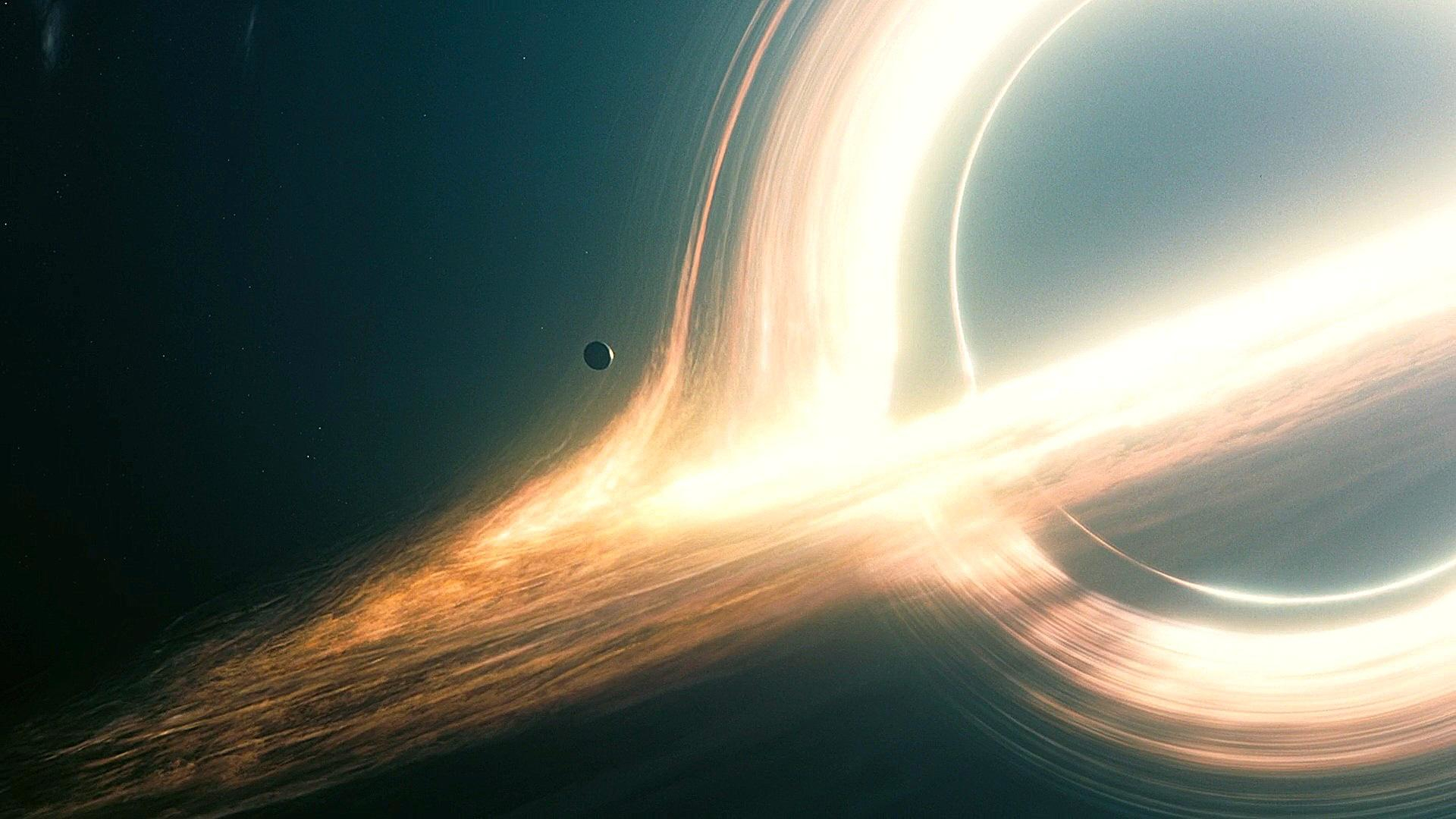
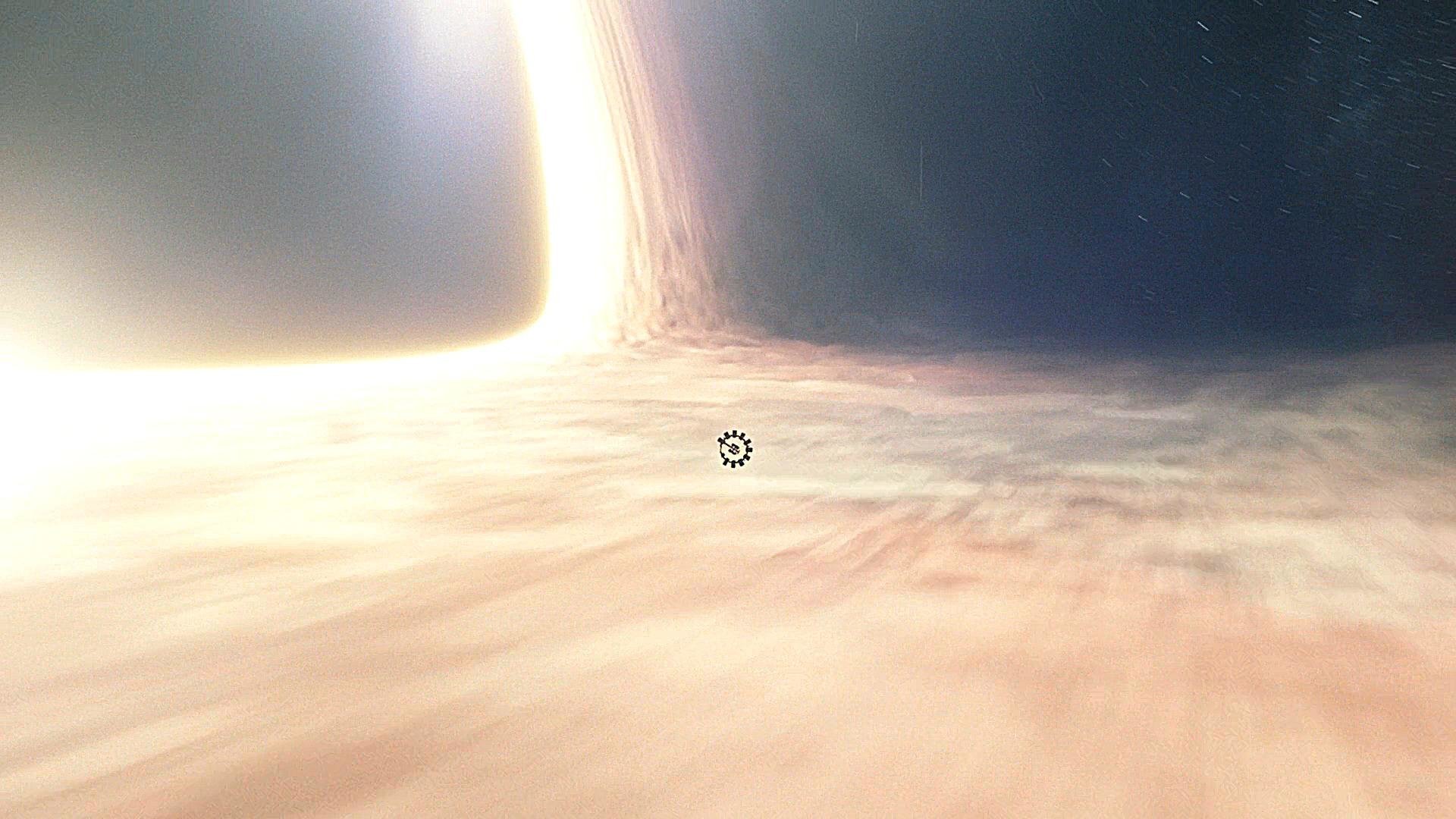
And this is where relativity becomes one of the harshest antagonists in movie history. The Endurance crew's first destination, "Miller's Planet", orbits a black hole known as Gargantua. Its gravity is so intense that anything in its vicinity experiences extreme time dilation — to the extent that an hour on the planet's surface is equivalent to seven years for everyone else. "We need to think of time as a resource, just like oxygen and food," Brand says before they make landfall.
(Image credit: Paramount Pictures)
But in that old Hollywood tradition, not everything goes to plan on the surface, and by the time Cooper and Brand escape Gargantua's influence — minus their late crewmate Doyle (Wes Bentley) — decades have passed on Earth. In an extremely powerful sequence, we see Cooper catching up on the last 20-plus years of life back home via video messages from his son, Tom (the young version played by Timothée Chalamet, the older version by Casey Affleck).
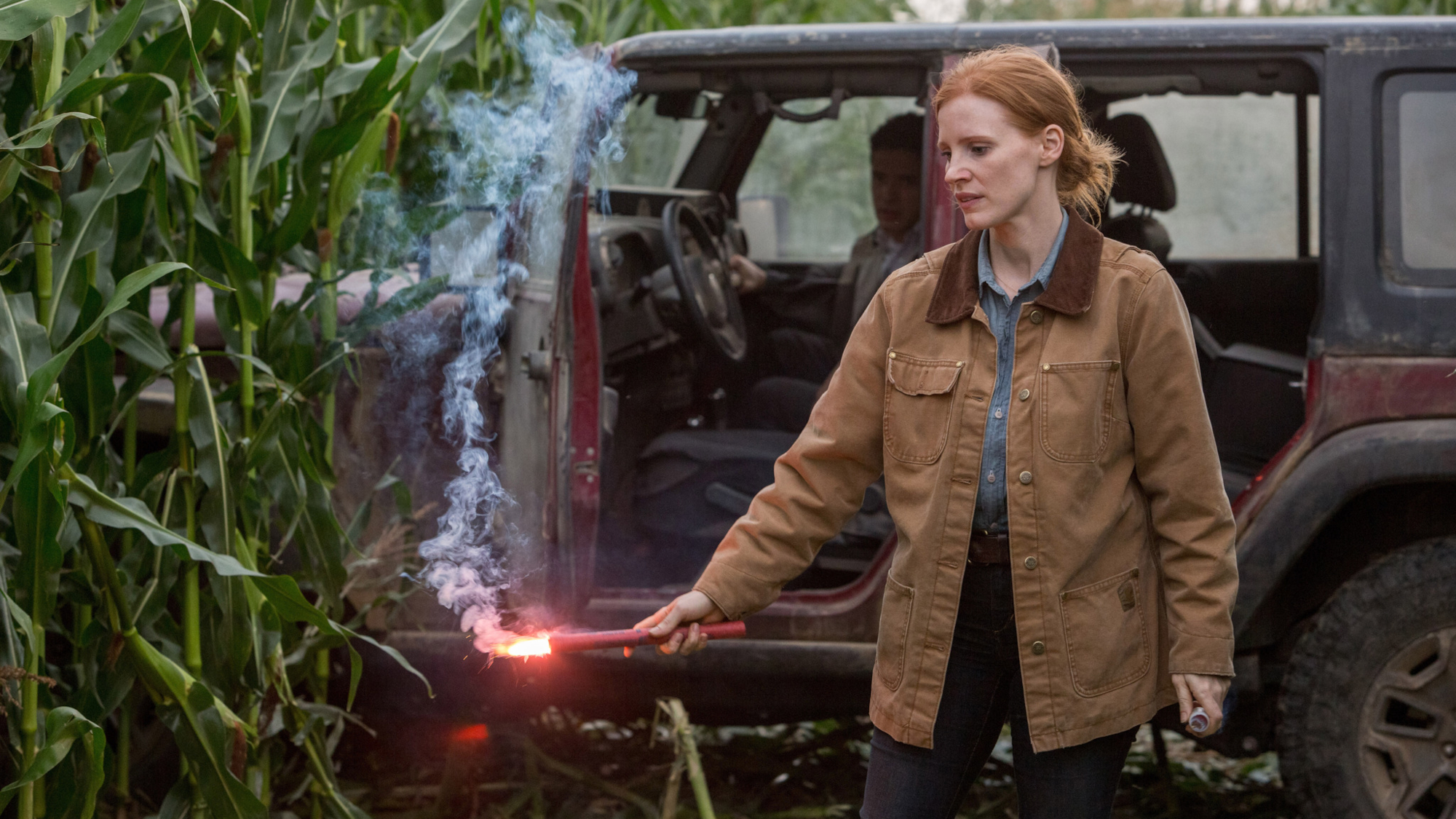
In a matter of minutes, Cooper learns about the birth and death of a grandchild, as well as the passing of his father-in-law. At the end of the reel, his heartbroken daughter Murphy (young version: Mackenzie Foy; adult version: Jessica Chastain; elderly version: Ellen Burstyn) sends her first message since he abandoned her for outer space. The reason for breaking radio silence? She's now the same age he was when he left; her childhood vanished in the blink of an eye.
"Interstellar" makes a mockery of the myth that Nolan's films are cold and emotionless. Relativity shows no mercy for family bonds, and McConaughey, Chastain, and Hathaway all deliver towering performances as they deal with its consequences. This is a human story told across a multi-dimensional canvas.
(Image credit: Paramount Pictures)
Even beyond their lives being thrown out of sync by time dilation — at the end of the movie, a still-40-something Cooper comes face-to-face with a nonagenarian Murph on her deathbed — they're coming to terms with the fact that the whole mission was built on a lie.
NASA boss Dr Brand (Michael Caine) may have thought he was doing the right thing by pretending that his gravity equation could be solved and giving false hope that humanity might one day find a new home among the stars. But it doesn't make it any less of a kicker when he confesses his grand betrayal, admitting on his deathbed that "Plan B" — sending embryos into the cosmos to extend the human race — was "Plan A" all along. Of course, whether he's right or wrong, he's a second-tier 'bad guy' compared to relativity.
Nolan went to extraordinary lengths to give his film a sound scientific footing. He consulted extensively with Thorne in order to generate a scenario where relativistic effects would be so extreme that minutes on a planet's surface would equate to years back on Earth. "Kip, apart from being an incredible mind, is actually a very good explainer of difficult concepts, and he was very patient with all of us lesser beings," producer Emma Thomas told SFX magazine. The Oscar-winning VFX team at D-Neg, meanwhile, turned their work modelling the accretion disc around Gargantua into an actual scientific paper.
(Image credit: Paramount Pictures)
By the time the film enters its endgame, it's embracing tesseracts and five-dimensional superbeings, as Cooper uses gravity to communicate with Murph across time. In the process, he reveals that the "ghost" that helped him find NASA all those years ago was actually a future version of himself. Such diamond-hard sci-fi concepts are probably not, however, the reason that "Interstellar" has since — despite mixed reviews on release — become one of Nolan's most popular films a decade later.
"What I've found is that people who let the film wash over them get the most out of it," Nolan admitted in "The Nolan Variations" by Tom Shone, and the director may just have a point. While a cynic might have issues with the notion that love is a quantifiable force transcending the universe (anyone know the SI unit for that?), it's impossible to deny the genius of "Interstellar"'s use of high-level physics to explore the human condition.
It's unlikely any of us will find ourselves in the vicinity of a black hole, but all of us know what it means to want more time with the people we love.
"The Odyssey" is in theaters from Friday, July 17. "Interstellar" is available to stream on Hulu and Paramount+ in the US, and Sky Cinema and HBO Max in the UK.