Move over He-Man, Mattel’s Major Matt Mason space toys could still be blasting off for Hollywood

As evidenced by Paramount's live-action "Transformers" movies and the recent "Masters of the Universe" film released by Amazon MGM Studios, nostalgic toy lines can serve as fertile grounds for a variety of engaging Hollywood projects leaning into vintage intellectual properties.

With Mattel ramping up their own film production efforts and toy-to-screen endeavors after enormous success with "The Barbie Movie" and hi-octane plans for Hot Wheels movies rolling into theaters, the toys-to-silver screen craze shows no sign of slowing down. What could be next? We think there's a perfect choice hiding in the Mattel goldmine that might just become the next big thing.

We're of course talking about Major Matt Mason, that Plastisol astronaut action figure and kids' playset product line from the 1960s, which is celebrating its 60th anniversary this year.

Born during the heat of America's space race with NASA's Apollo program aiming for the lunar landing by the end of the decade, Mattel's design masterminds found inspiration in visionary space concept artists' wild dreams of futuristic moon bases, lunar buggies, and space vehicles.

Major Matt Mason was one of the first serious space toys to exist in the marketplace, first hitting the shelves of toy shops and department stores across the country in 1966.

Capitalizing on the daily news stories of Gemini missions and Apollo moon-walking dreams, this spacefaring fellow and his astronaut pals let kids everywhere imagine their own colorful cosmic adventures.
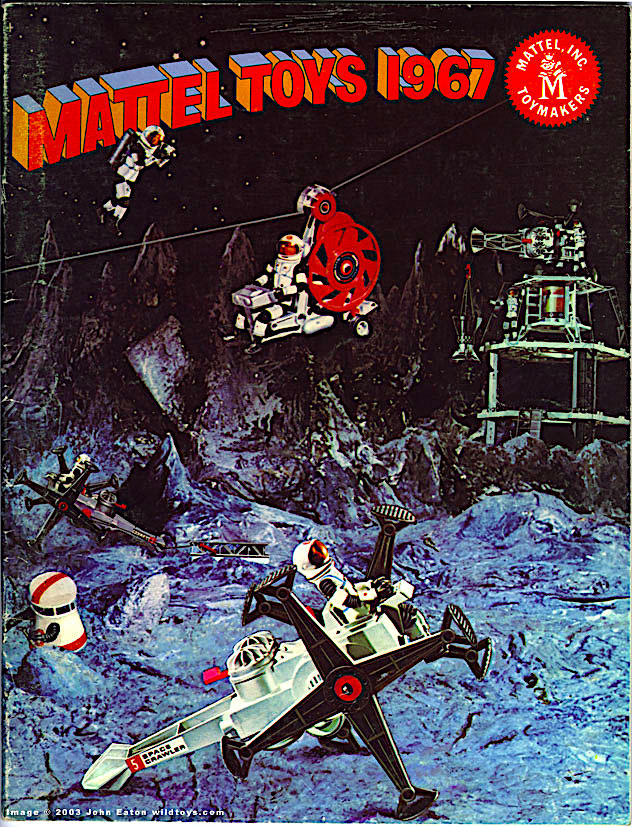
The expanded line of Major Matt Mason's vehicles and playsets shown in a 1967 catalog. (Image credit: Mattel)

Back in 2019, Variety reported that Tom Hanks was attached to star in a Major Matt Mason live-action film being set up at Paramount Pictures with Akiva Goldsman ("A Beautiful Mind," "The Da Vinci Code") hired to write the screenplay.

Hanks is an enthusiastic advocate of NASA history after starring in "Apollo 13" and co-executive producing the Emmy Award-winning HBO docuseries "From The Earth To The Moon" alongside "Band of Brothers" super producer Graham Yost. Despite the heavy hitters attached, momentum has since stalled on the sci-fi project and it's sadly been shelved for the immediate future.
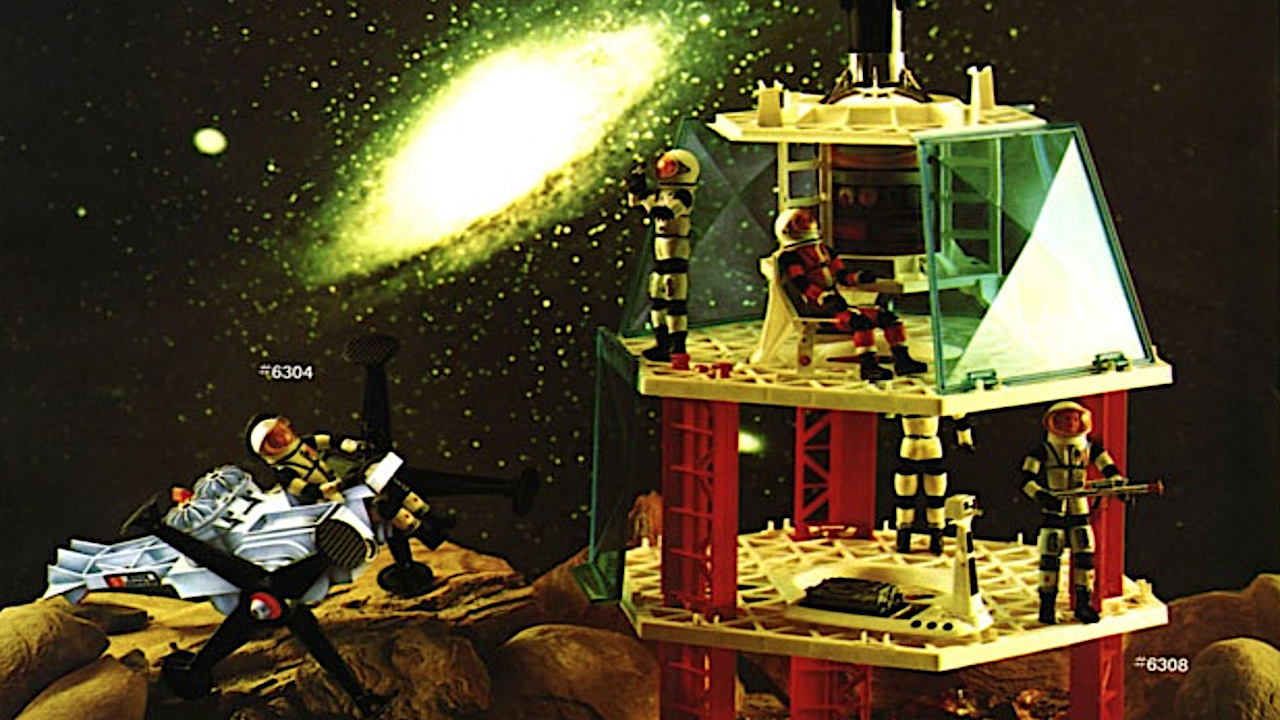
A catalog page for a line of space toys.

Matt Mason and his astronaut buddies score their own space station. (Image credit: Mattel)

Matt Mason's line-up of bendy 6-inch astronaut action figures was developed as a competitor to Hasbro's 12-inch G.I. Joe toys that ruled the marketplace in the mid-60s.

Along with Matt's fellow rubberized space buddies — available in a variety of color-accented spacesuits — Mattel also offered a complete universe to create your own space outpost and ramped lunar headquarters, alongside accessory vehicles, moon gear, expansive playsets, and Matt's "allies from the stars": A purple-and-pink creature called Scorpio, and a green-skinned friendly Jovian alien called Callisto.
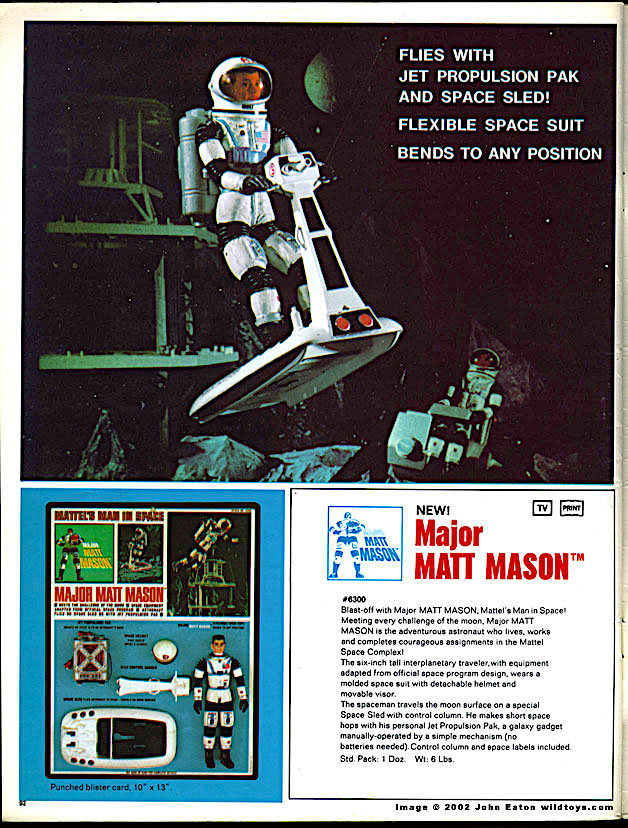
Some of Major Matt Mason's retro-cool lunar accessories included a jet propulsion pak and space sled. (Image credit: Mattel)

With the Vietnam War raging in Southeast Asia and televised on the nightly news, Major Matt Mason blasted into Sears and JCPenney catalogs when soldier action figures were losing their appeal.

He wasn't a gun-toting commando but a heroic explorer "ready and able to cope with any space task or fierce danger." In addition to the action figures and peripheral playsets, Matt Mason became a pop culture phenomenon with his own board game, coloring books, lunch boxes, and puzzles.

Named after Mattel's co-founder Harold "Matt" Matson, the Matt Mason line carried a certain air of authenticity as many of its designers happened to be former aerospace engineers. Some of the toys' far-out designs were taken straight out of NASA conceptual art and prototypes seen by millions in the pages of Popular Mechanics, Life, and National Geographic magazines.
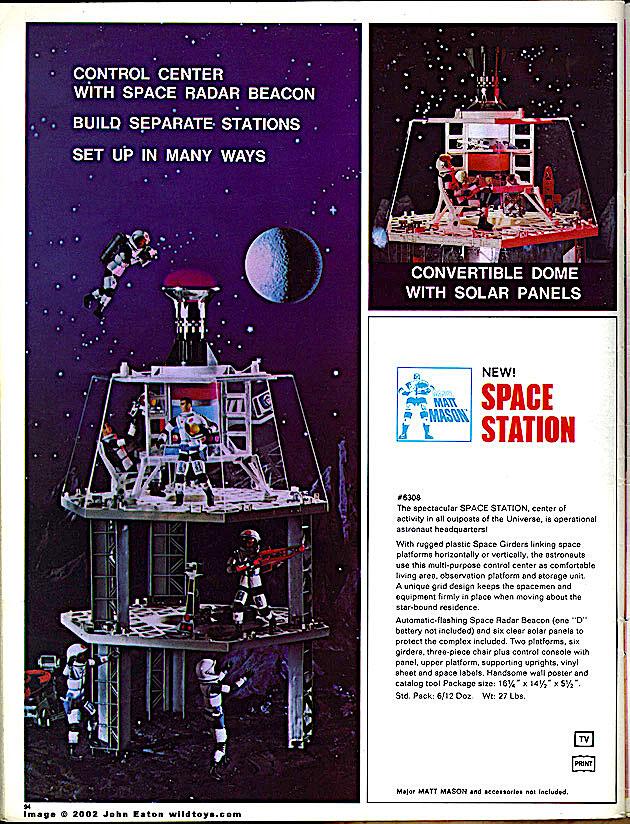
Matt Mason's space station could be built in many different ways. (Image credit: Mattel)

But, the general public is difficult to please for any extended period of time and following the triumphant Apollo 11 moon landing in July of 1969, space toys faded in interest. Just one year later, Major Matt Mason was no more, destined only to be coveted decades down the line as valuable collectors items .

As NASA ramps up their Artemis program with 2027's Artemis 3 mission, before an Artemis 4 moon landing set for 2028, and the space agency doubling down on plans for a recently announced permanent lunar base, can there be any better time for Hollywood moguls to resurrect this cool project for a fantastic, retro-styled Major Matt Mason movie or TV series?

It's certainly a better idea than a Matchbox movie.
This Week In Space podcast: Episode 221 — Starship Can Float?

On Episode 221 of This Week In Space, Tariq Malik and guest host Rick Jenet of the National Space Society talk about SpaceX's Starship Flight 13, which deployed new Starlink V3 satellites and stunned viewers when the ship survived reentry intact enough to float in the ocean for days afterward.

They also discuss NASA's Roman Space Telescope, now just a month from launch, and an in-progress emergency effort to save the ailing Swift Space Observatory using a servicing spacecraft that is itself now experiencing technical trouble. Finally, they look into Boeing's continued Starliner delays and India's first successful private orbital launch via Skyroot Aerospace's Vikram-1 rocket. Tune in!

Download or subscribe to this show at: https://twit.tv/shows/this-week-in-space.

Get episodes ad-free with Club TWiT at https://twit.tv/clubtwit

Space news of the week

Model Falcon 9!

TOP TELESCOPE PICK:

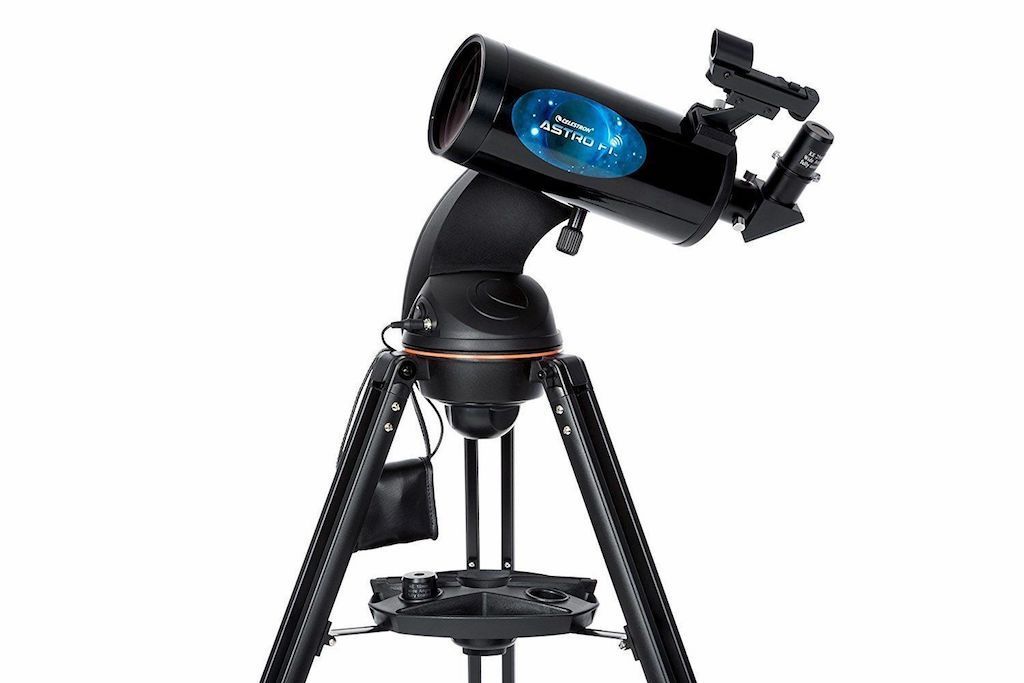
A Celestron telescope on a white background

(Image credit: Celestron)

Looking for a telescope to see planets and comets? We recommend the Celestron Astro Fi 102 as the top pick in our best beginner's telescope guide.

Finally, did you know you can launch your own SpaceX rocket? Model rocket maker Estes' stunning scale model of a Falcon 9 rocket that you can pick up now. The launchable model is a detailed recreation of the Falcon 9 and retails for $149.99. You can save 10% by using the code IN-COLLECTSPACE at checkout, courtesy of our partners collectSPACE.com.

About This Week In Space

This Week in Space covers the new space age. Every Friday we take a deep dive into a fascinating topic. What's happening with the new race to the moon and other planets? When will SpaceX really send people to Mars?

Join Rod Pyle and Tariq Malik from Space.com as they tackle those questions and more each week on Friday afternoons. You can subscribe today on your favorite podcatcher.

‘Flight of the Navigator’ at 40: the Disney space movie that messed with time dilation long before ‘Interstellar’

Despite Han Solo's protestations to the contrary, travelling faster than light on screen is usually just as straightforward as dusting crops. So whether you're in "Star Wars", "Star Trek" or "Battlestar Galactica", jumping to hyperspace, going to warp or spooling up the FTL really is as simple as popping out to the store.

In fact, Albert Einstein's time-dilating general theory of relativity tends to be little more than an afterthought, with films highlighting the inconveniences of interstellar travel definitely in the minority. For this reason, the very existence of "Flight of the Navigator" is even more improbable than its premise.

The Disney family movie — which celebrates its 40th anniversary this weekend — sends an ordinary kid on an unlikely journey that's part "Interstellar", part "Back to the Future".

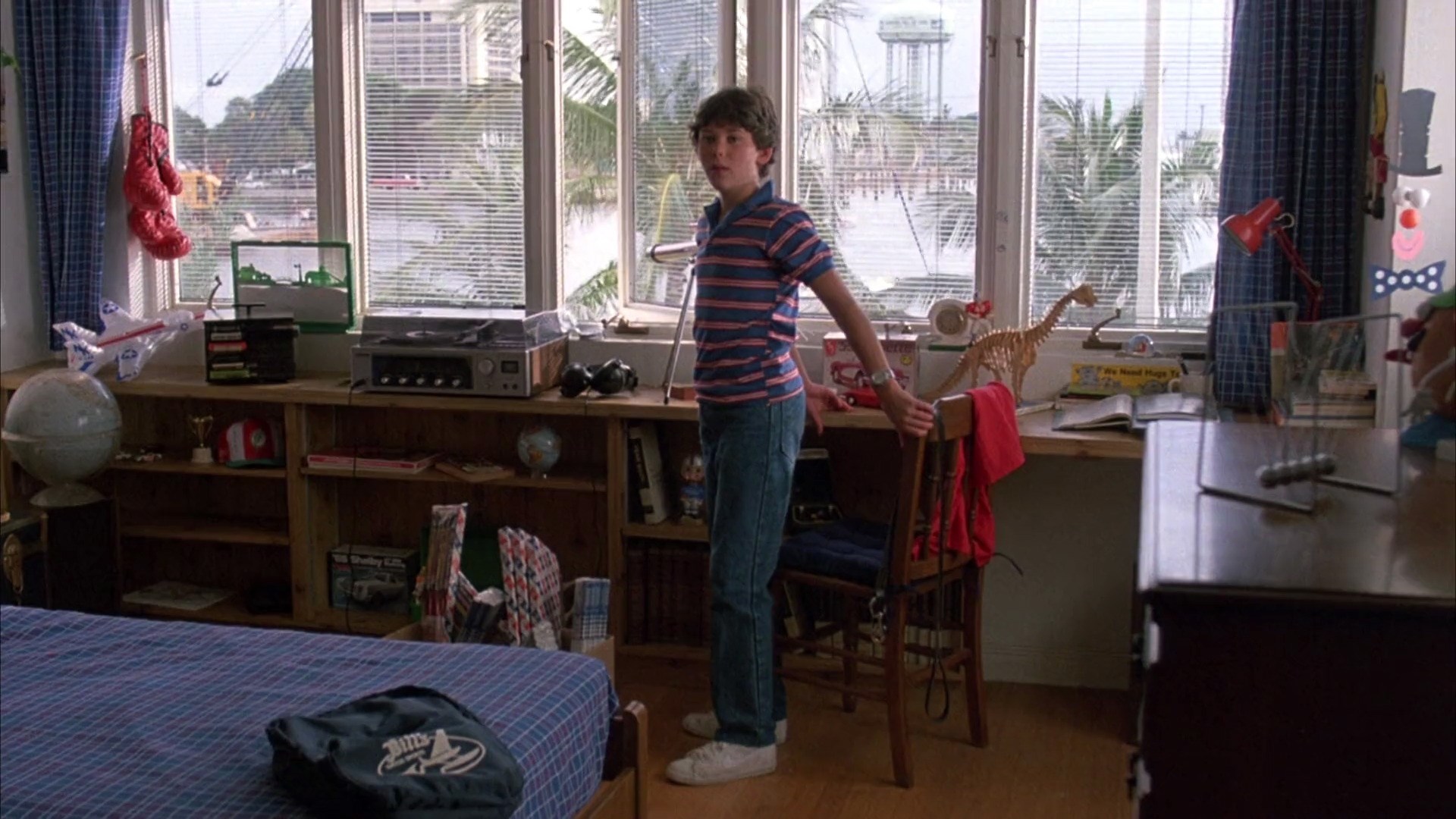
On July 4, 1978, 12-year-old David Scott Freeman is briefly knocked unconscious after he falls into a ditch near his Florida home. When he wakes up — seemingly moments later — he finds strangers living in his house, and gradually comes to realize that eight years have passed for everybody else. In the meantime, David has been declared dead, his little brother is now his big brother, and — perhaps weirdest of all — music videos are now a very big thing on MTV.

He doesn't know it yet, but much like Matthew McConaughey's Cooper in "Interstellar", David has been caught in the crosshairs of relativity. It turns out that he's unwittingly taken a ride in a Trimaxion drone ship, making the round trip to the planet Phaelon (some 560 light years away) in a mere 4.4 solar hours.

(Image credit: Disney)

NASA scientists explain away the eight-year time slip as a consequence of "light speed theory", the idea that "time slows down as you approach the speed of light". And if that sounds like a big concept for "Flight of the Navigator"'s target audience to grasp, the filmmakers weren't particularly worried.

"I think kids can understand it," director Randal Kleiser said back in 2020. "'Back to the Future' was sort of like that, and kids are smarter than most people think. You just tell them that you’re going at the speed of light and time slows down, and they get it."

Kleiser was best known for the musical smash hit "Grease", the highest-grossing movie of 1978, when he got the "Flight of the Navigator" gig. When he came on board, the film's paymasters were already disagreeing about the direction they wanted to take Mark H Baker's story.

(Image credit: Disney)

Disney, unsurprisingly, were shooting for a family movie "with dancing little animals", while their production partners at Producers Sales Organization (PSO) were looking for something a little edgier. "They wanted to have the army come in and shoot down the spaceship," Kleiser recalled.

Eventually, a gun-free compromise was found, though the opening act of the movie would remain surprisingly bleak and emotionally complex. Now living in 1986, David has to come to terms with his new reality as a human guinea pig in a world where his family looks familiar, but he no longer really knows them. Also, how did his brain come to be filled with weird alien languages and complex star maps?

The role was always going to ask a lot of its actor, and Kleiser ultimately selected a young Vancouver native named Joey Cramer. Cramer beat hundreds of other kids to the role, including future Hollywood stars Chris O'Donnell and Joaquin Phoenix, who appeared in "Space Camp" the same year.

(Image credit: Disney)

"Joey was so easy to get to cry," Kleiser said of his casting decision. "For him to be able to do it in the audition — and be also so personable and likeable — was the thing that put him over the top."

Cramer's main co-star would prove even more difficult to find, however, seeing as faster-than-light spacecraft from distant worlds called Phaelon don't — as far as we know — exist.

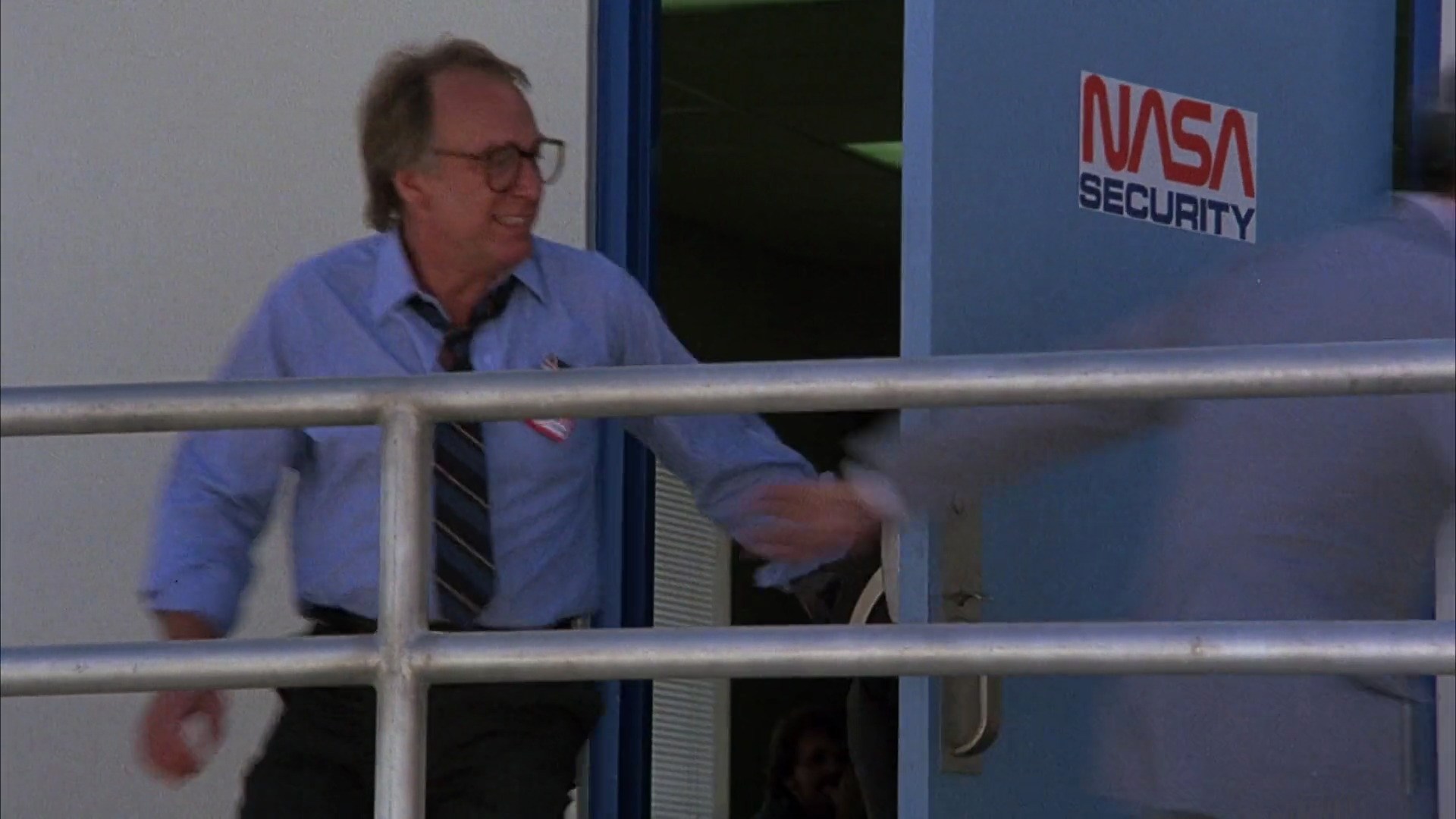
In the second half of "Flight of the Navigator", David makes a credibility-stretching escape from a top-secret NASA facility — seriously, where did they find such a negligent bunch of security guards? — to hitch a ride on board the aforementioned Trimaxion ship.

(Image credit: Disney)

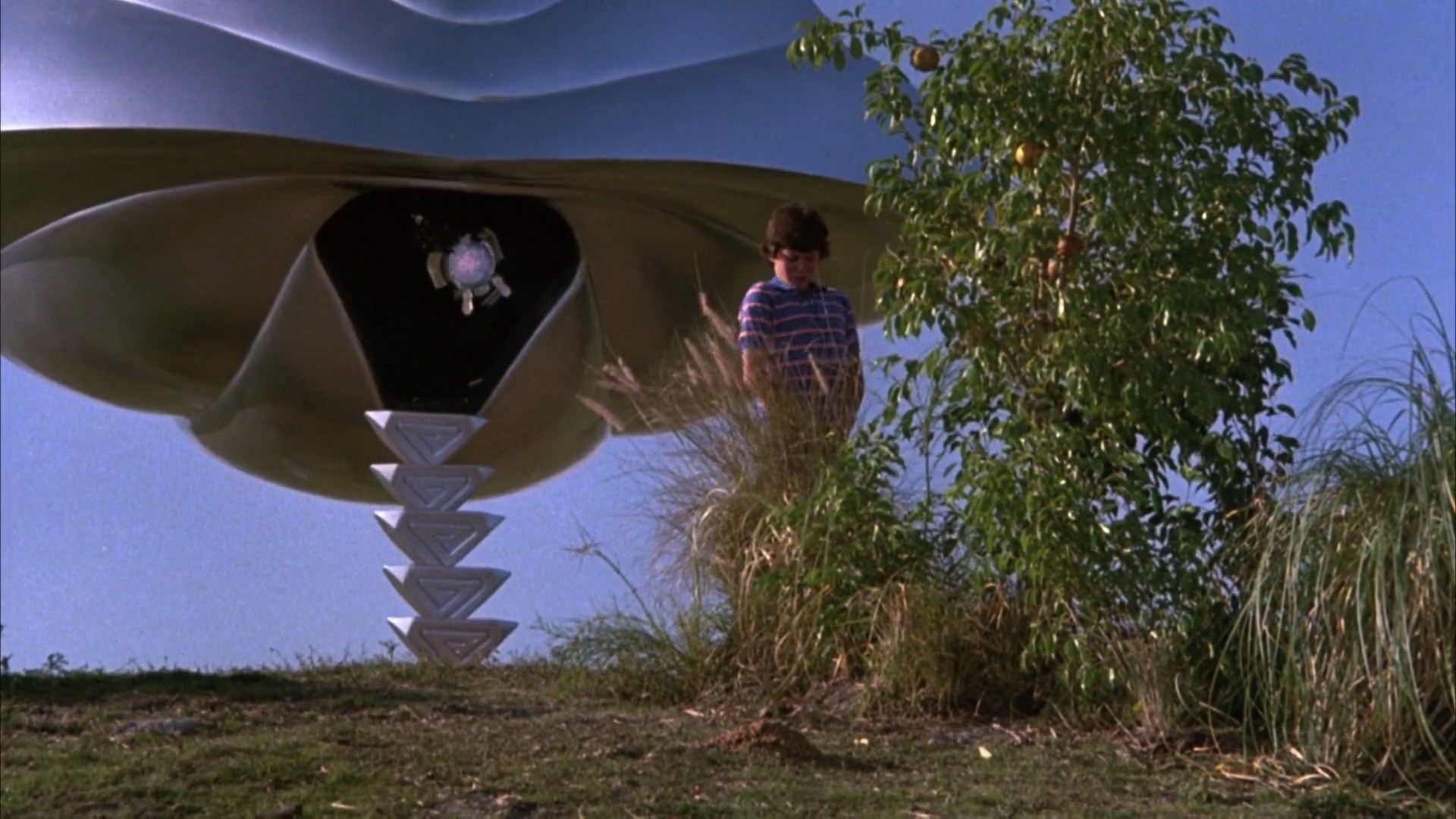
Nicknamed Max and voiced by Pee-wee Herman star Paul Reubens (credited here as Paul Mall), the spacecraft reveals that David is one of several alien species taken to Phaelon for study; we also meet a menagerie of puppets on board, including a hungry little guy who eats David's hat, and the pocket-sized, implausibly cute Puckmaren.

Max would usually return the test subjects back to the time and place he found them, but says that David's human physiology is too fragile to make the journey back to 1978. In the meantime, he also needs to access the maps he uploaded to the human kid's brain, seeing as a collision with some electricity pylons has damaged his navigational databanks. It's here that the movie evolves into childhood wish-fulfilment fantasy, as David and the fast-learning AI become BFFs on the run from the authorities.

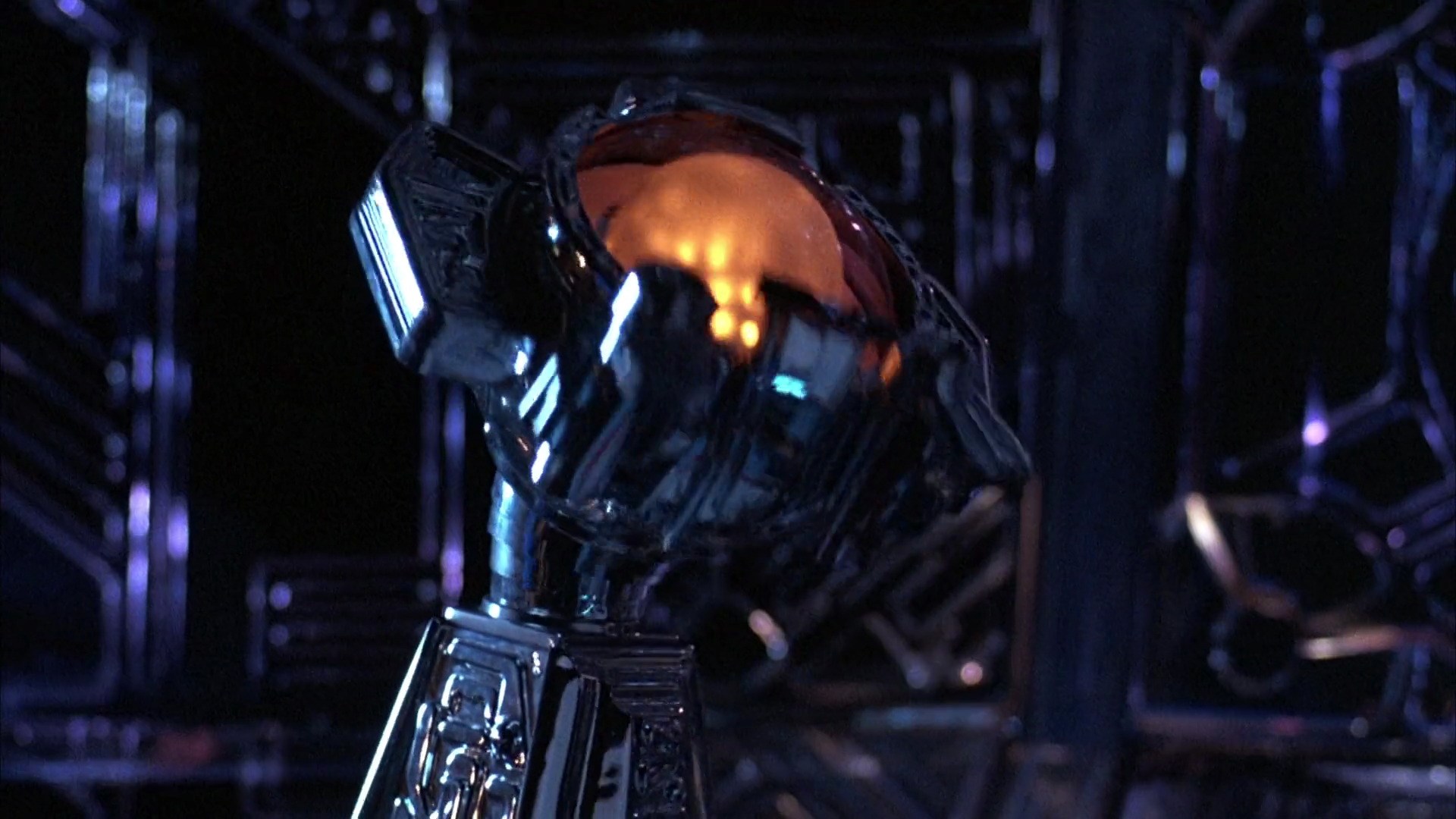
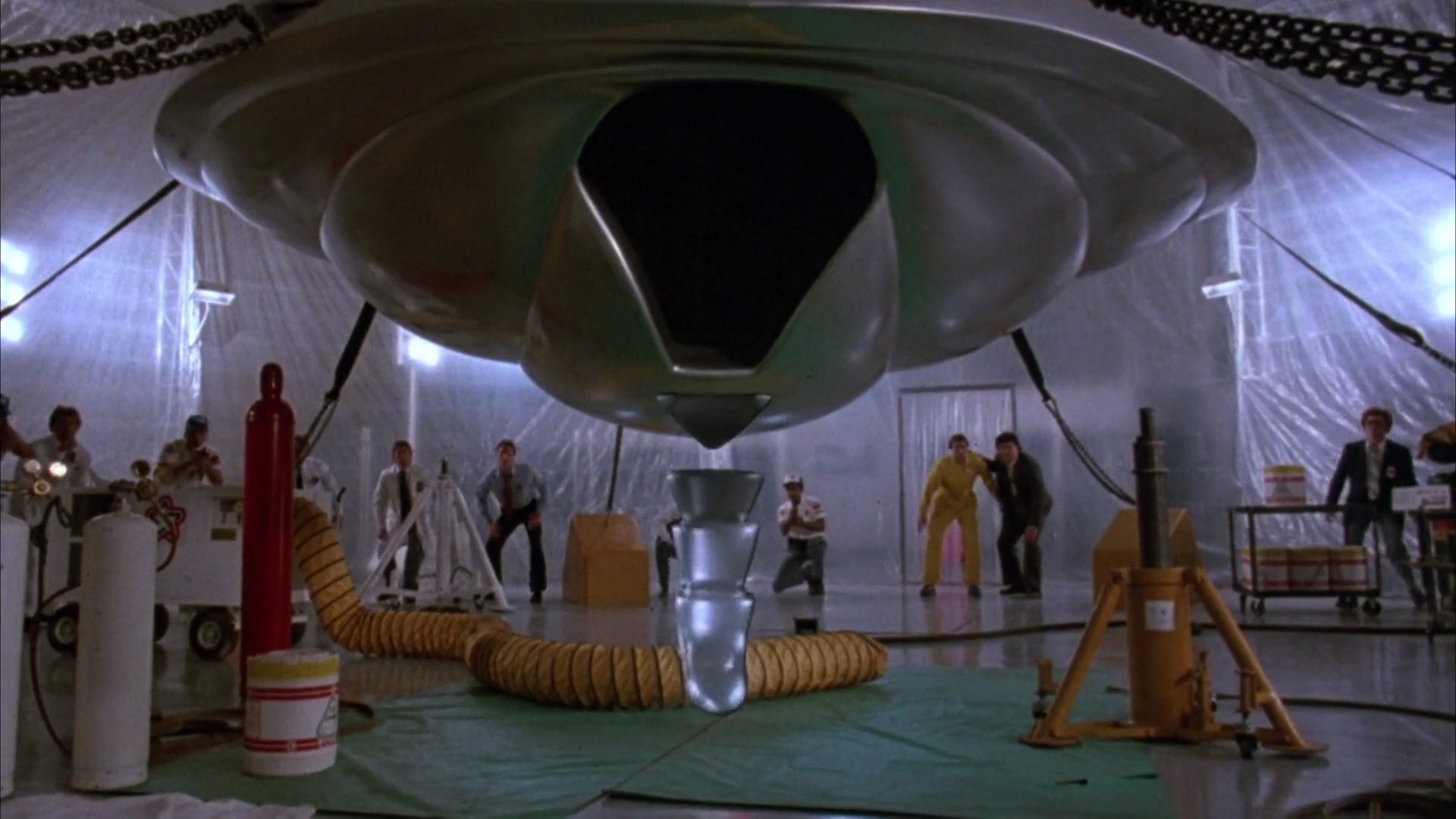
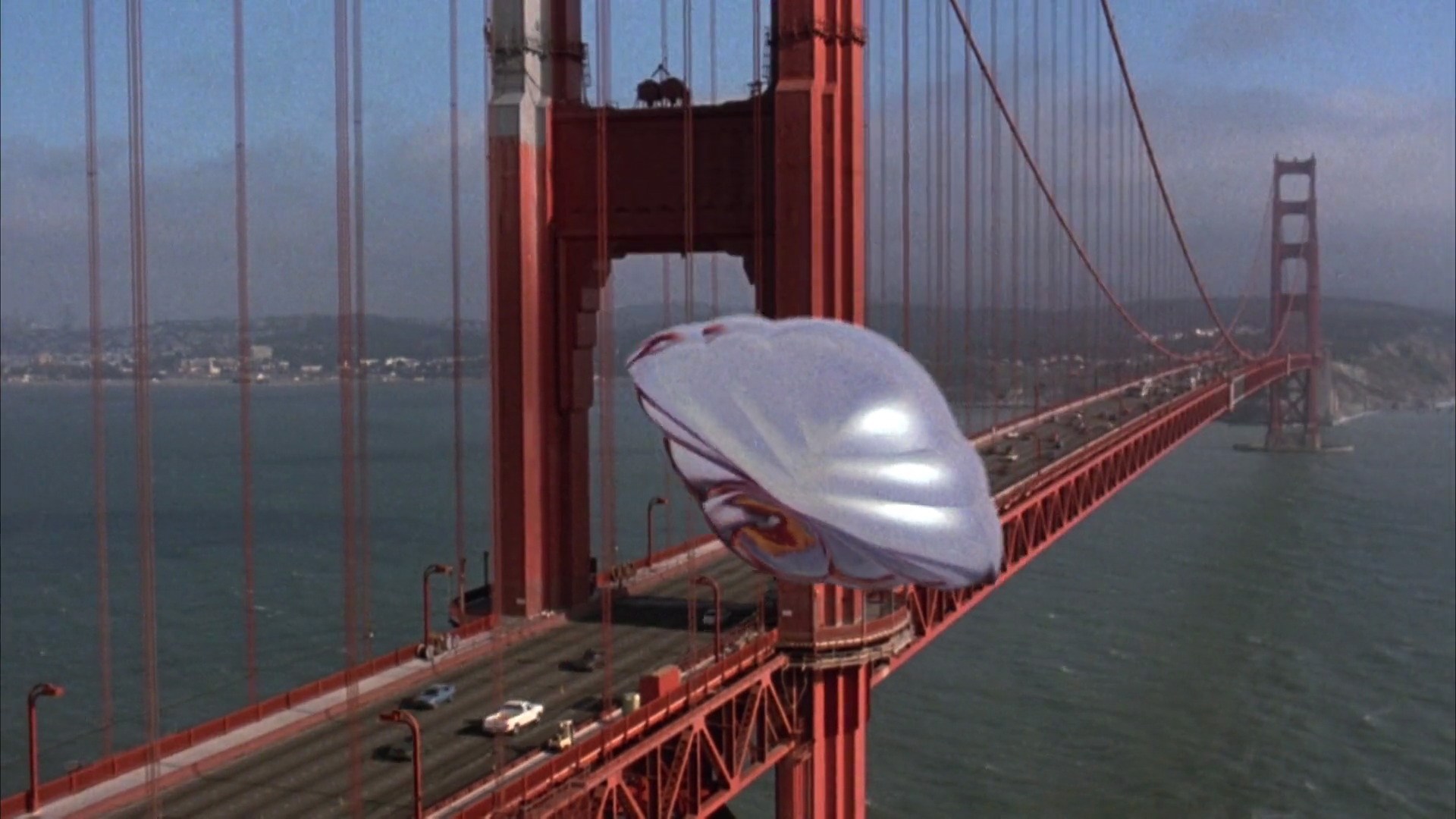
The spaceship exterior, meanwhile, is arguably the most groundbreaking thing about the film, a mirrored, shapeshifting update of the classic flying saucer design popularized by "The Day the Earth Stood Still".

(Image credit: Disney)

Kleiser persisted with that shiny surface, despite the advice of a former University of Southern California classmate (a certain George Lucas) who told him that all those reflective surfaces would make the ship "more trouble than it's worth". (By the time "The Phantom Menace" was released 13 years later, Lucas had clearly changed his mind, so maybe "Flight of the Navigator" had a tiny bit of influence on a galaxy far, far away.)

"I wanted to find something different that hadn’t been done before," Kleiser explained. "I was driving down the freeway behind a big silver truck, and I could see my car reflected behind it. And I thought, 'Wow, I've never seen a spaceship like that.' It took a while till we figured out how to do it!"

After several unsuccessful experiments involving silver paint and mylar glued to paper plates, salvation came courtesy of Kleiser's brother Jeff, who'd worked on the VFX for "Tron" and was a pioneer in the nascent field of computer graphics. And while the liquid metal effects aren't quite as, ahem, polished as James Cameron's genre-defining efforts in 1991's "Terminator 2: Judgment Day", "Flight of the Navigator" deserves to be mentioned in the same breath.

(Image credit: Disney)

Despite having an innovative spaceship and a considerably happier ending than "Interstellar" (spoiler: David does eventually make it home), "Flight of the Navigator" struggled at the box office. It eventually found its audience on home video, however, and deservedly so, seeing as it's an inventive, witty, and surprisingly sophisticated family movie that refuses to talk down to its audience.

"When it first came out, I think maybe it just wasn’t marketed properly," said Kleiser, "but the fact that it’s become kind of a cult classic is nice. I run into people all the time who say that it's their favourite movie. [Lots of them] really like the fact that it explored how time travel could change a sibling relationship."

As we said, "Flight of the Navigator" really is "Back to the Future" and "Interstellar" rolled into one.

'Flight of the Navigator' is available to stream on Disney+ in the US and Prime Video in the UK. 'Life After the Navigator', a documentary about the film, is also available on Prime Video in the UK.

Watch Flight of the Navigator on Disney+ (US):
Disney+ (With Ads): $11.99/month
Disney+ Premium (No Ads): $18.99/month or $189.99/year

Watch Flight of the Navigator on Amazon Prime Video (UK):

Amazon Prime: $14.99/month or $139/year
Amazon Prime Video: $8.99/month

Ad-free add-on: $2.99/month

‘Strange New Worlds” latest episode is more ‘Event Horizon’ than classic Trek

"Doctor Who" may have a reputation for making kids hide behind the sofa, and the "Alien" franchise famously sold itself on the futility of screaming in outer space, but "Star Trek"'s traditional "story of the week" format has also provided numerous opportunities to bring sci-fi scares to starship corridors.

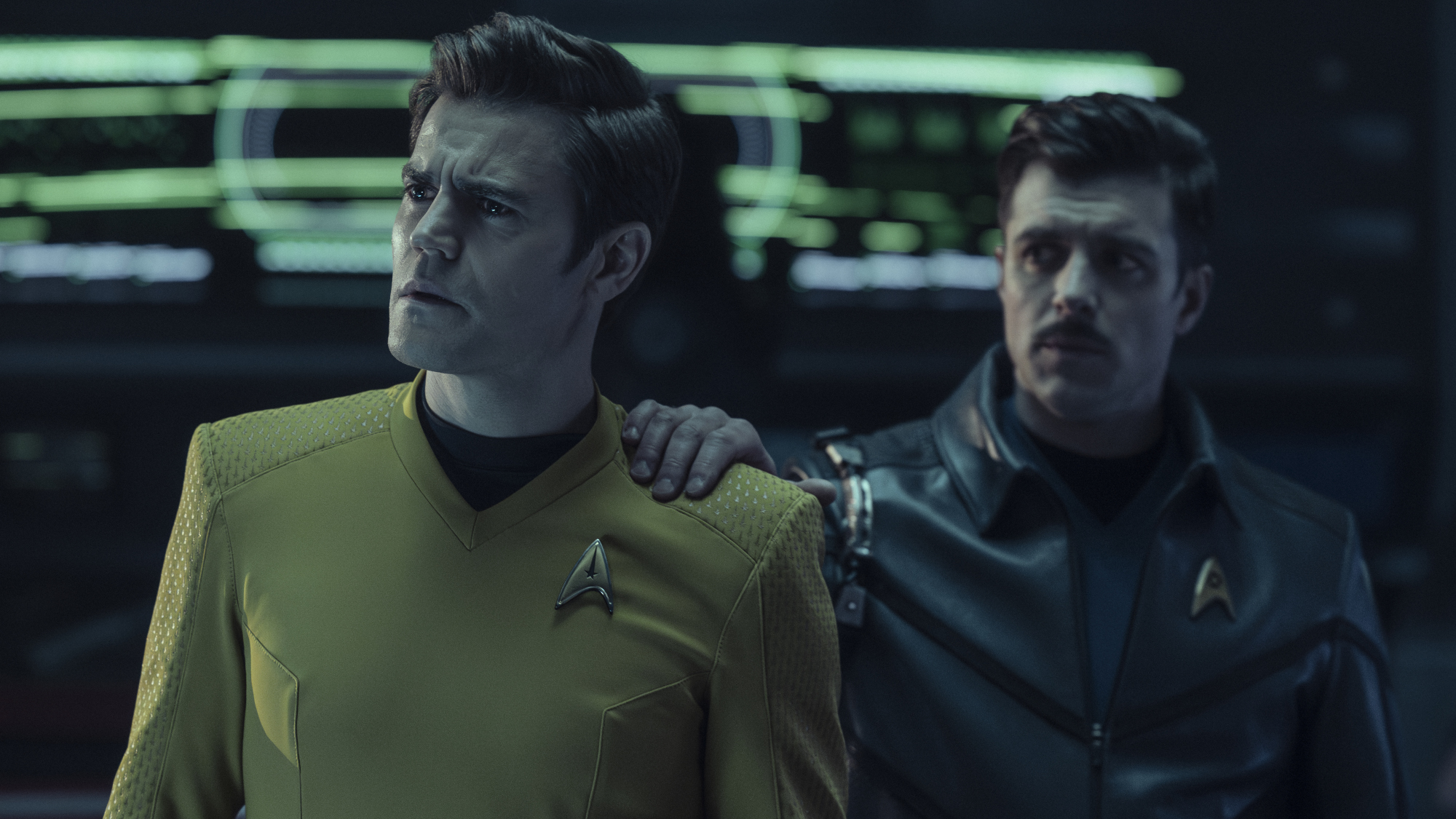
But few of the franchise's horror outings have been quite as overt as "The Griffin Incident", the latest episode of "Strange New Worlds". In it, Spock (Ethan Peck), La'an Noonien-Singh (Christina Chong) and James T Kirk (Paul Wesley) are making their way back from the Future Federation Leaders Retreat (sounds like a blast) when they receive a mysterious signal in uncharted space.

SPOILERS AHEAD! ANYONE YET TO WATCH "THE GRIFFIN INCIDENT" SHOULD PROCEED WITH CAUTION TO AVOID VIOLATING TEMPORAL PRIME DIRECTIVES.

It turns out the communication originated from the USS Griffin, a starship that went missing with 300 souls on board nine years earlier, so — being the conscientious Starfleet officers they are — the trio beam aboard to investigate. It's a decision they quickly come to regret, as they realize they've stumbled on a haunted house floating through the darkness…

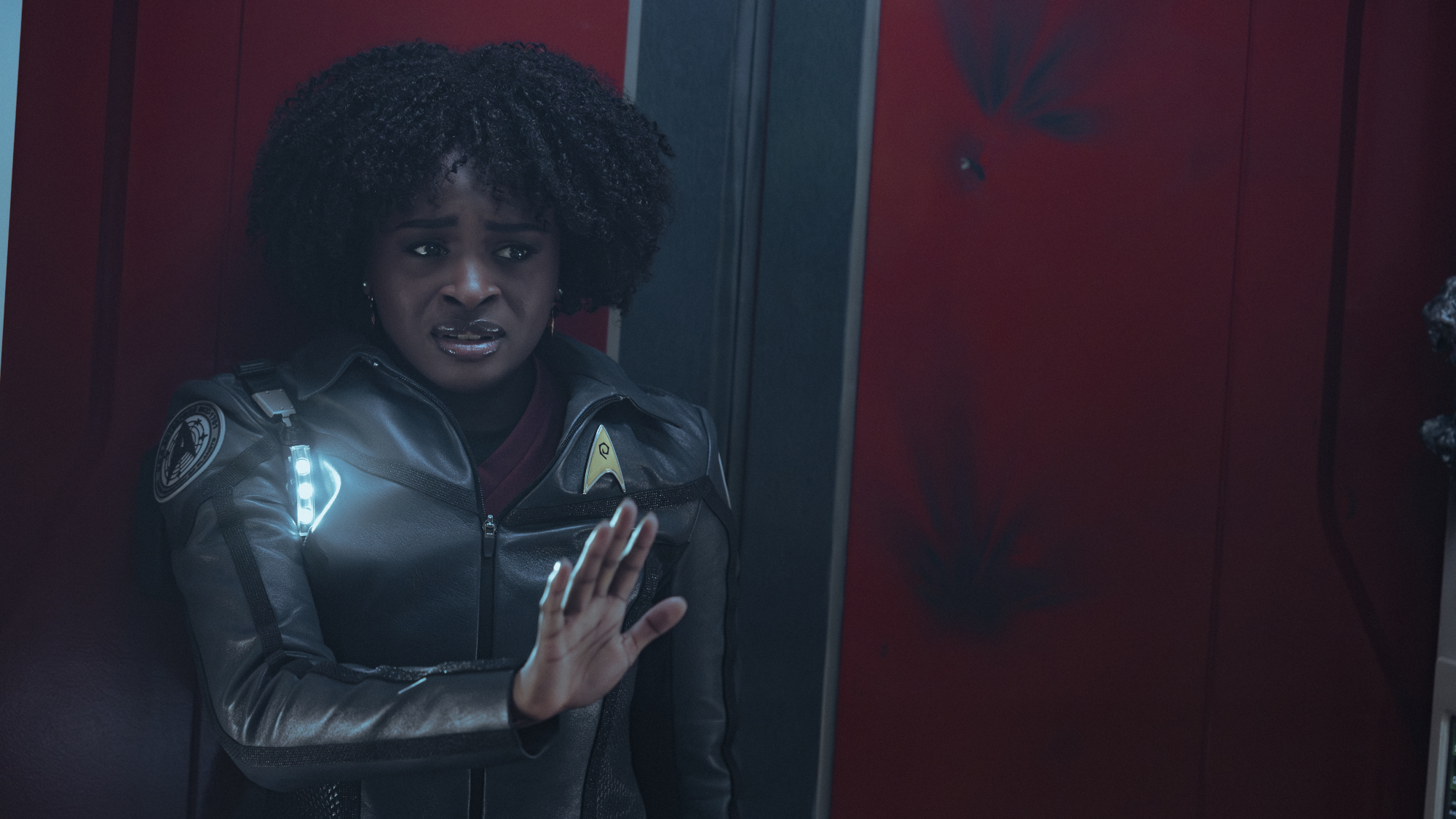
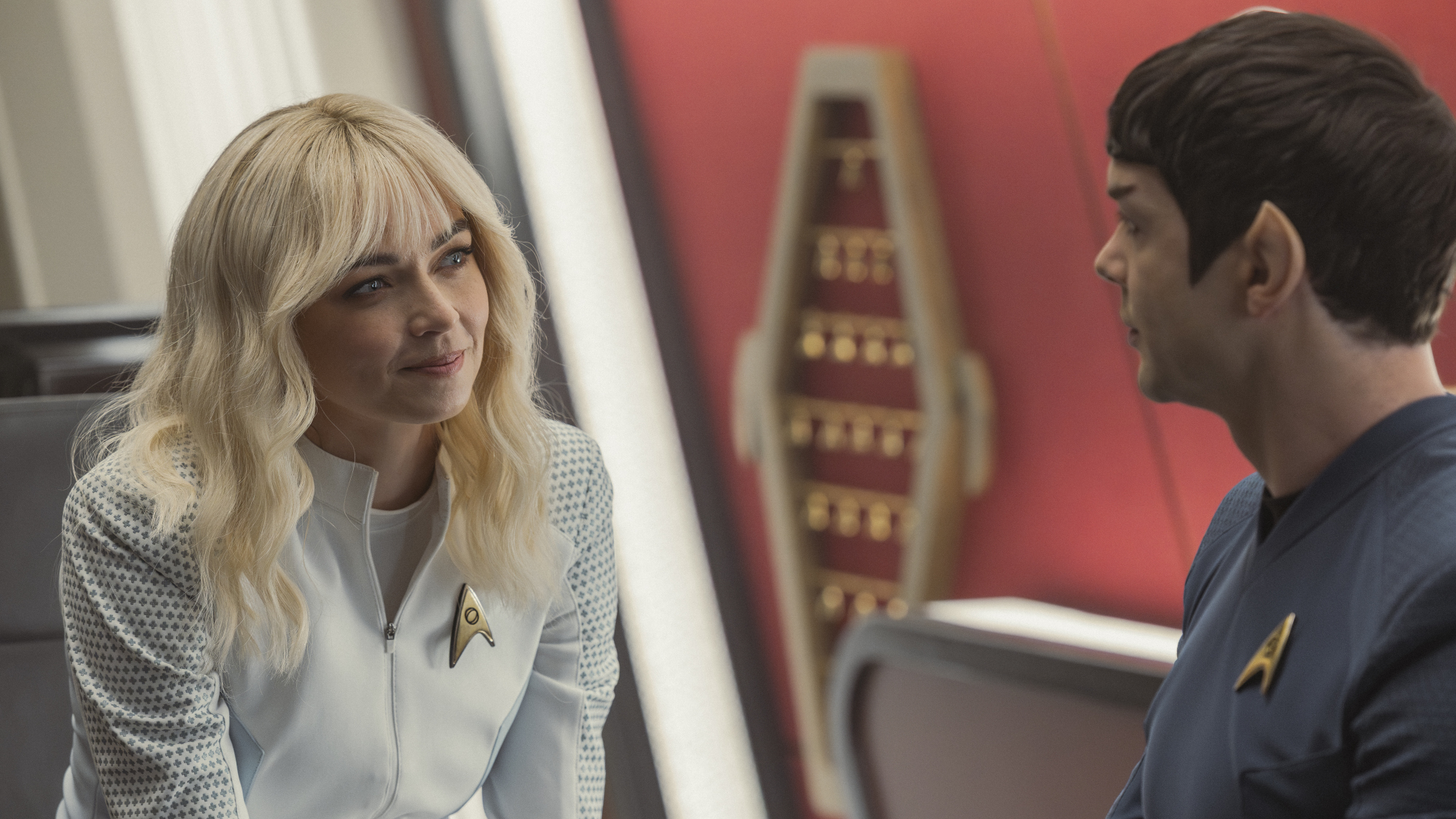
This unashamed ghost story soon becomes a chilling mix of psychological terror and body horror, as Kirk hears the cries of his young son David, Spock unexpectedly comes face-to-face with his spurned fiancée, T'Pring, and La'an becomes closely acquainted with the Griffin's ghostly chief security officer, Rose Harper (Sorika Wolf).

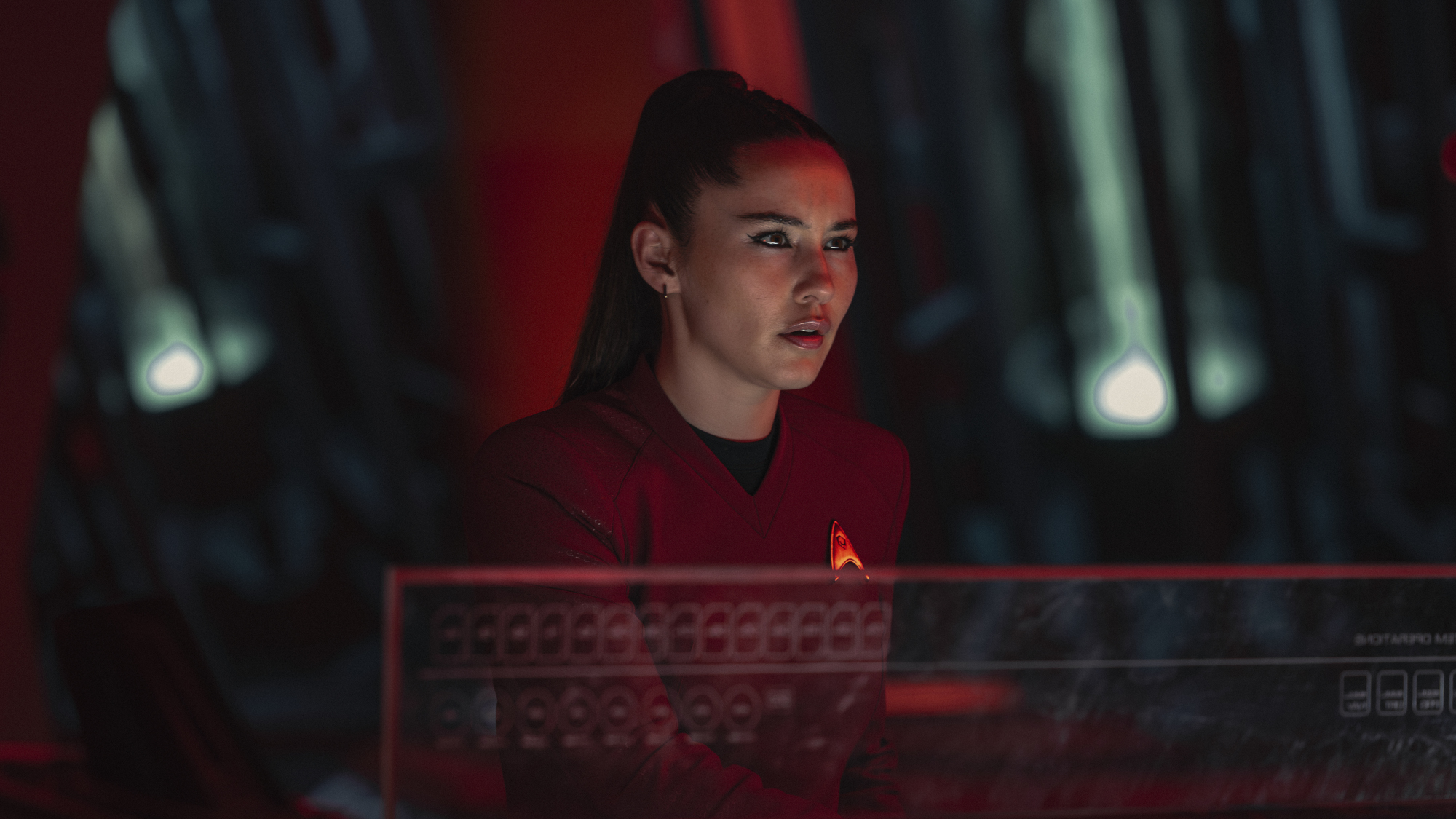
Celia Rose Gooding as Uhura in season 4, episode 2, of Star Trek: Strange New Worlds

(Image credit: Paramount)

As in "Event Horizon" (originally pitched as "'The Shining' in space"), the ship is a malevolent force preying on its victims' insecurities: for Kirk, it's the fear of being an absent father; for Spock, it's the conflict between his human and Vulcan heritage; and for La'an it's the growing fear that her previously latent Noonien-Singh DNA might be stirring something dark within her.

In the tradition of many of "Star Trek"'s scariest missions, "The Griffin Incident" puts a sci-fi spin on classic tropes. Indeed, as far back as "The Man Trap" (the very first Original Series episode aired), the franchise has been transporting recognizable genre conventions light years beyond the confines of planet Earth.

"The Man Trap" is essentially a vampire story, albeit with a "monster" that feasts on salt rather than blood. Meanwhile, "The Enemy Within" (which materialized a few weeks later) is a 23rd-century take on "The Strange Case of Dr Jekyll and Mr Hyde", in which a transporter malfunction splits Captain Kirk into a good and bad version of himself — two William Shatners for the price of one.

(Image credit: Paramount)

There have also been several captain's log entries concerning close encounters of the zombie kind, from the re-animated corpses of "Strange New Worlds"' "Shuttle to Kenfori", to the Borg in "Star Trek: First Contact" — despite their quest for technologically enhanced perfection, the movie's cyborg hordes wouldn't look out of place in "The Walking Dead".

And the horror callbacks don't end there. The parasites who infiltrate the upper echelons of Starfleet in "The Next Generation"'s "Conspiracy" are "The Wrath of Khan"'s Ceti Eels given "Invasion of the Body Snatchers" delusions of grandeur. And "Deep Space Nine"'s own enemy-within episode, "The Adversary", features a shapeshifting Founder hiding in plain sight — think "The Thing", but with less of the ick.

But the franchise's move to streaming has undoubtedly allowed "Trek" to become more extreme than it was in the syndication/network days of the '80s, '90s and '00s. That's not to say "Trek" didn't push the censors' limits back then — the aforementioned "Conspiracy" was heavily edited by the BBC in the UK, who decided a "Scanners"-like exploding head wasn't suitable for teatime viewing.

(Image credit: Paramount)

In the main, however, the horror was more likely to be built on psychological scares than full-on gore — REM sleep deprivation driving everybody mad in "TNG"'s "Night Terrors", for example, or crews becoming alien test subjects in "TNG"'s "Schisms" and "Voyager"'s "The Scientific Method" — the latter storylines could almost have been lifted from "The Twilight Zone". Even the Vidiians, a race of aliens who borrow heavily from the David Cronenberg playbook with their frequent body modifications, are portrayed in a resolutely PG way.

Fast forward to the present, and "Strange New Worlds" has given the Gorn — who famously looked like a guy in a crocodile suit in the Original Series — a new lifecycle, including an "Alien"-style penchant for impregnating humans with their parasitic offspring. An unwanted Gorn infestation subsequently paves the way for Captain Marie Batel to become the Beholder, protecting the galaxy from the horror movie-worthy Vezda.

"The Griffin Incident" is a continuation of this push towards R-rated horror territory, in which T'Pring cuts off the tips of Spock's ears with scissors, and La'an stabs Kirk so enthusiastically you'd think she was auditioning for the next "Scream" movie.

(Image credit: Paramount)

Crucially, however, "Trek"'s latest mission makes a significant departure from most of its horror predecessors in not attempting to provide a quasi-scientific explanation for the Griffin's transformation into the scariest destination in the entire Alpha Quadrant. Instead, Captain Pike delegates the investigation to Division 12, a mysterious branch of Starfleet that specializes in unexplained phenomena.

Expect the descendants of Agents Mulder and Scully to have a field day with this one — assuming, of course, that the truth really is out there.

New episodes of "Star Trek: Strange New Worlds" debut on Paramount+ on Thursdays.

Watch Star Trek: Strange New Worlds on Paramount+:
Essential (ads): $8.99/mo or $89.99/yr
Premium (no ads): $13.99/mo or $139.99/yr

‘The Ark’ creator Dean Devlin talks season 3’s enormous mystery box and sci-fi surprises (interview)

SYFY’s optimistic space opera series, "The Ark," embarks upon its third thrilling season today, occupying a unique entertainment spot as the only weekly scripted sci-fi series currently on regular broadcast television.

With an impressive creative resume featuring executive producers Dean Devlin ("Stargate," "Independence Day") and Jonathan Glassner ("Stargate SG-1") and a hopeful premise about humanity’s search for a new home amid the stars, it’s a refreshing show perfect for a laidback, summertime watch.

Season 3 delivers more dangerous exoplanets inhabited by ravenous toothy monsters, the mystery of an alien stone tablet, and Captain Sharon Garnet’s Ark One searching for long-lost colonists. We caught up with Devlin to find out more about this third outing.

"We got so lucky with this cast," Devlin tells Space. "Some were cast from Canada, some from Spain, from England, and a lot of them were from Serbia. You never know if they’re going to gel, if they’re going to get along, if there's going to be any egos. It's truly an amazing group of individuals."

Talking more on the unique shooting location, Devlin notes, "I do also believe that because we shoot this show in Serbia, it kind of forces them to live together in a way. They work together, they go out to dinners together. They really spend all their time together, and I think it's created a bond off-screen that you can really see on screen."

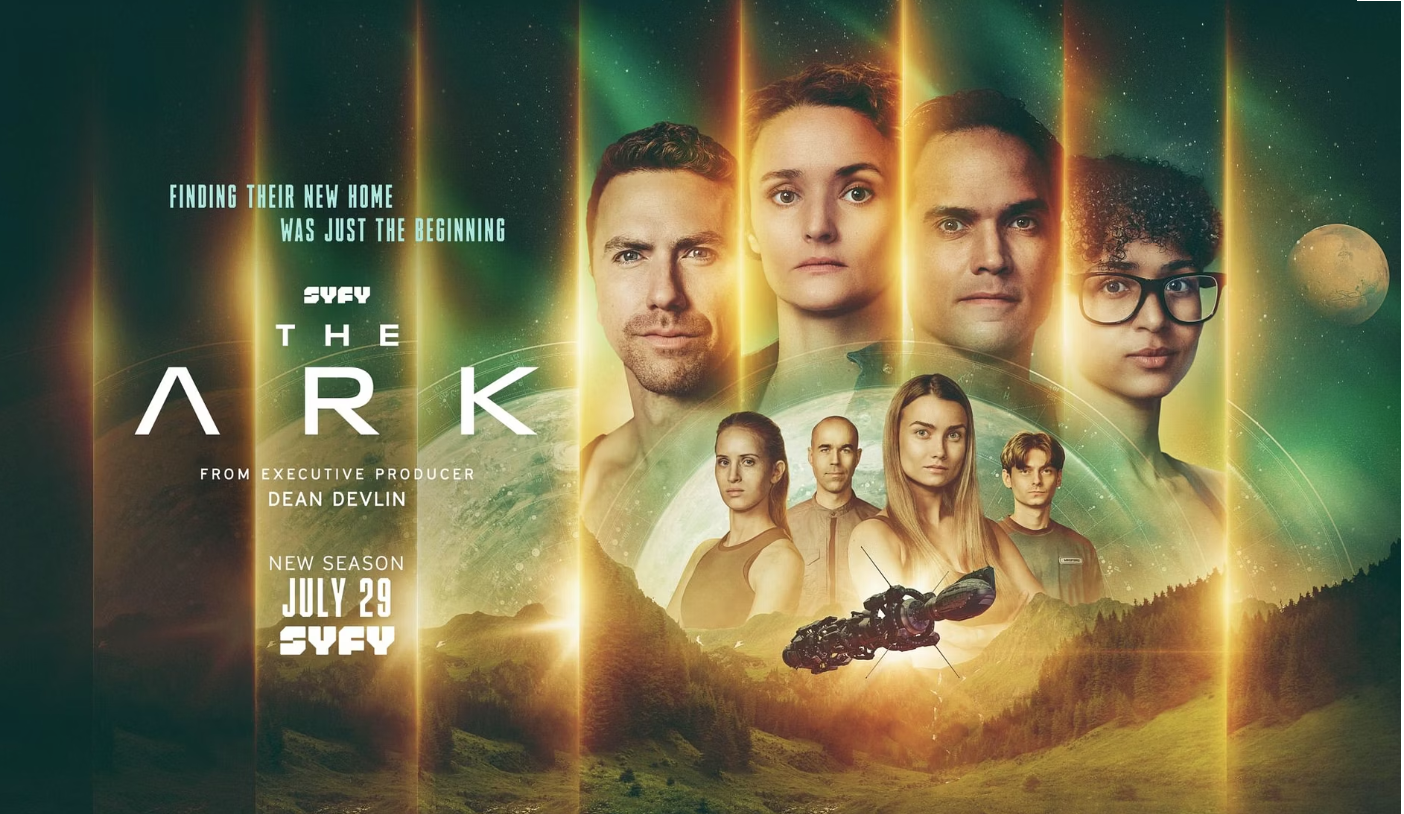
a banner poster for a sci-fi survival TV show

"The Ark" Season 3 launches exclusively on SYFY on July 29, 2026 (Image credit: SYFY)

Season 3 accelerates all the careful plot mechanisms set up in the previous outings, and the result is a colorful blend of space fantasy action and interpersonal melodrama that makes for good old-fashioned fun.

"Season one had been this crazy hit, and it did so much better than anyone thought," he explains. "While we were making season two, we had discussions about maybe splitting the show into two shows. And that one show takes place on the new colony, and the other show takes place rescuing people. When the season was over, we thought maybe we’d just stick with one show. Then suddenly I had two shows I had to cram into one show. It became twice as big with more locations, more cast, and more adventures.

"We went nuts. We went wildly over budget and just made the biggest, craziest season we could possibly imagine. Our industry has moved so far into streaming, which is great in so many ways. But the weekly viewing on cable is still something that I really treasure and really am grateful that I have a chance to do that. We have two shows doing that this summer [with TNT's "The Librarians: The Next Chapter"] and in both situations we're the only scripted show on each network."

Devlin hints that viewers are going to be shocked at some of the unexpected surprises this season and where it goes on a character level.

"That's always been the strength of this show," he adds. "These characters and bringing out new information about them and seeing how that causes conflicts amongst our group and how they overcome those conflicts. 'The Ark' always has had a mystery element, but this year the mystery box is enormous.”

One thing that’s immediately noticeable is the impressive range of visual effects on 'The Ark' this year, and Devlin admits that this is where a good chunk of the budget-busting occurred.

a female spaceship captain on a colony starship

Christie Burke stars as Captain Sharon Garnet on "The Ark' Season 3 (Image credit: SYFY)

"The main VFX team is in Serbia, a company called Fried, and they’ve been with us this whole time. I put another team together in Los Angeles that used to be part of our Electric Entertainment effects company. So we basically had two houses because we wanted to step it up; we had a lot more shots to do, and we split the work between us. I’m really proud of the collaboration. In season one, I promised everybody that there were no aliens on 'The Ark,' but maybe down the line. Well, I guess we’re down the line.

"This is a season where if you've never seen the show before, you can jump right in. But if you have been with us for the whole journey, you're going to get some extra love by the time we get to the end of the season. This may be the most emotional ending of a season we've ever done, and I'm anxious to watch people go on that ride with us.”

Starring Christie Burke, Reece Ritchie, Richard Fleeshman, Pavle Jerinic, Stacey Read, Samantha Glassner and Ryan Adams, SYFY's "The Ark" Season 3 launches weekly starting Wednesday, July 29, 2026.

‘Silo’ season 3’s Ashley Zuckerman and Jessica Henwick share the secret to their on-screen chemistry (interview)

In Apple TV’s "Silo" season 3, we lunge back 352 years to the Before Times to see how the greatest engineering project in the history of the world began… and would end.

Center stage in this dark sci-fi drama are ambitious Congressman Daniel Keene (Ashley Zukerman) and journalist Helen Drew (Jessica Henwick), the pre-apocalypse duo we were first introduced to in Season 2's final episode.

In that scene, the handsome couple met on a first date in a Washington, D.C. restaurant in the aftermath of a dirty bomb that had irradiated the city.

Daniel and Helen play pivotal roles in "Silo's" elaborate conspiracy to save humanity, helping to orchestrate a colossal project in Georgia to build a controlled network of survival bunkers that will last centuries until the Earth somehow becomes habitable again after a mysterious calamity. Wait, that sounds familiar...

Zukerman and Henwick create a completely believable relationship as they’re reluctantly drawn into this mind-boggling plot to save the human race. We connected with them to learn details about cultivating their chemistry and intimacy on the show.

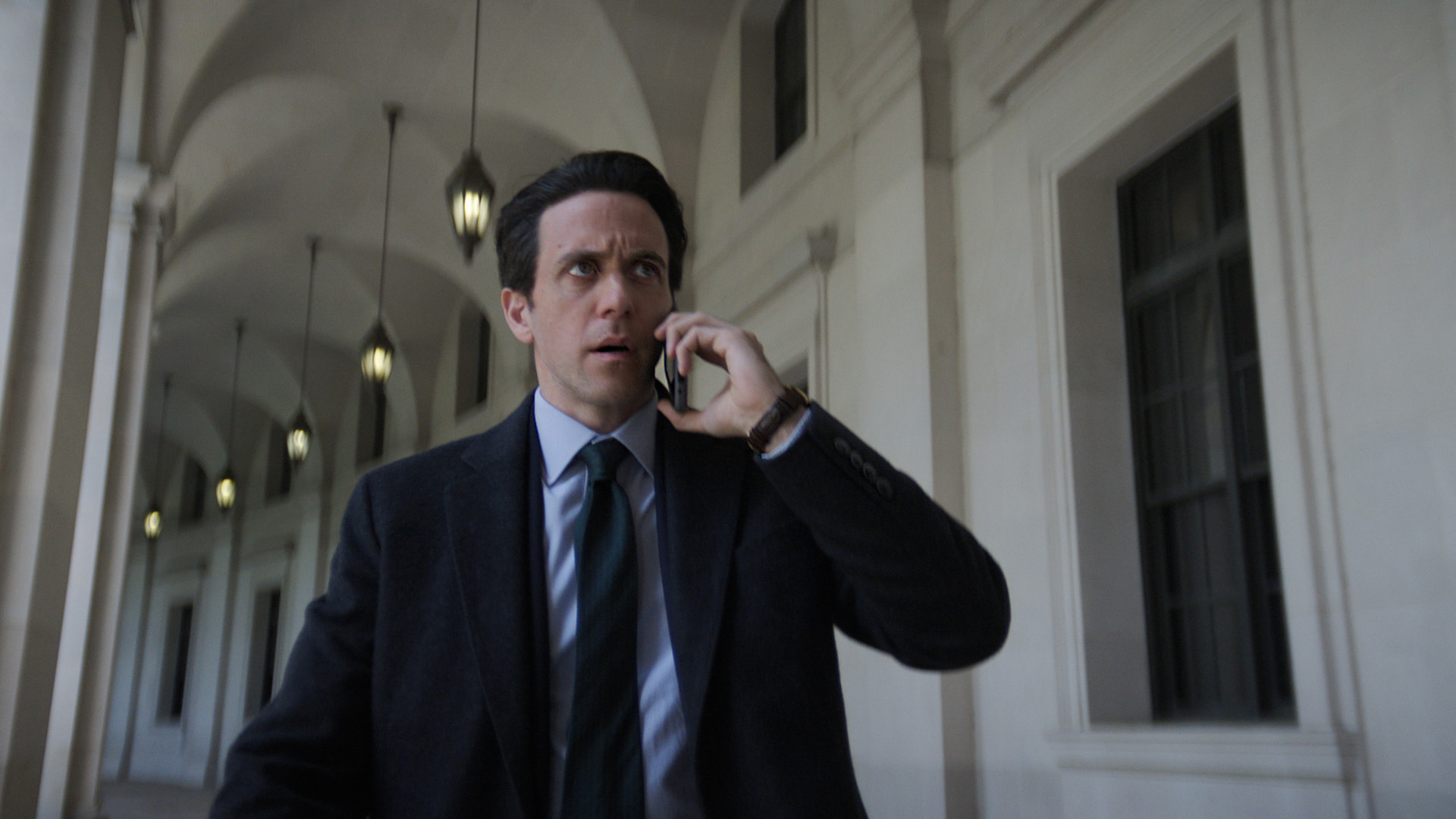
Ashley Zukerman as Daniel Keane in "Silo" Season 3 (Image credit: Apple TV)

"It's nothing we worked to generate; it was really just there from the beginning," Zukerman tells Space. "We hung out, and we certainly didn’t hang out for the purpose of building that chemistry. I think we got very lucky to find a teammate to be able to do that with."

"We share the same taste and work ethic," elaborates Zuckerman. "When you go on a journey that’s this big with someone, and we shot every day for four months together, we just always had each other’s backs, and there was an immense amount of unconditional respect and excitement. I’m not the kind of actor that could fake it."

Henwick discussed the complexities of her resourceful character and her expanded role in season 3 by exploring what she drew from to compose a layered Helen.

"It was my memory of working on the school newspaper when I was 14," she explains. "And also my natural inclination to ‘Spanish Inquisition’ everyone. I do feel quite an affinity to journalists. I always love to ask questions, and I want to know why and want to understand things. I’m really curious about the world. I didn’t feel like I had to generate much for Helen. I actually felt like she was very close to me."

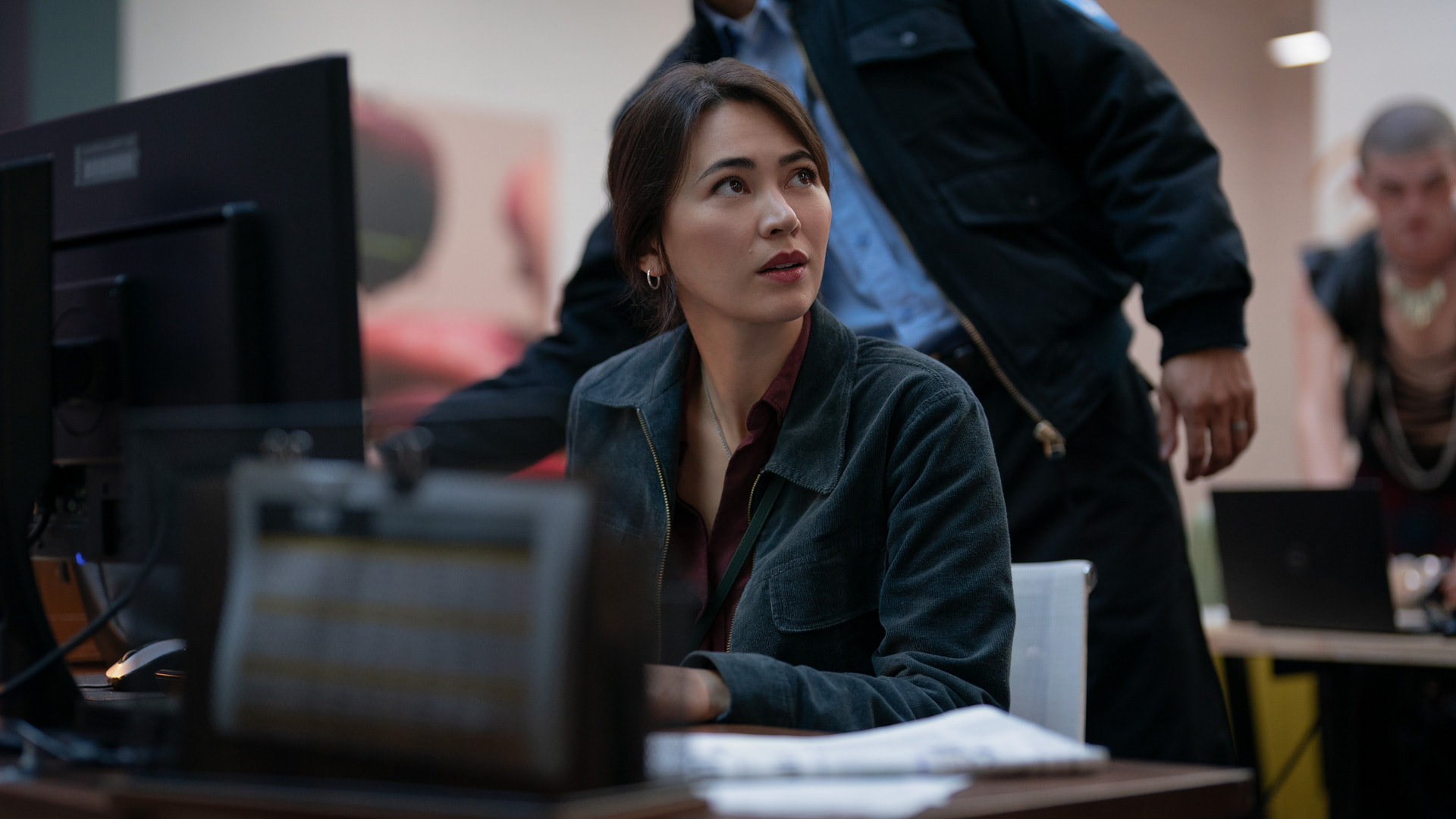
Jessica Henwick as Helen Drew in in "Silo" Season 3 (Image credit: Apple TV)

"Silo"'s impressive set design certainly helped the cast immerse themselves in the doomsday world of author Hugh Howey's dystopian novels and in this lavish Apple TV adaptation.

"I'm sort of a terrible guest to sets, especially if I'm a part of the production," Zukerman adds. "I have to remember to sit in wonder for a second at the scale of the operation. Usually I just try to live as the characters live. Then I'm so thankful that you actually get to live in a real space, especially in a sci-fi, which is not our real world.

"Where the drawers open and when you're looking at something, you're not looking at a blue screen or a green screen, you're actually able to experience life as close as you can within this alternate reality."

Likewise, Henwick absorbed "Silo's" immense scope and scale right from the start.

"I've done a lot of fantasy and sci-fi where I’m stuck in front of a green screen, or there's a tennis ball on a stick, and you have to follow it, and that's the spaceship," she shares. "It was nice to be on a show where so much of it was done practically. I remember the first day going to visit the stairs, and that blew my mind. It is a massive set, one of the biggest sets I've been on."

Executive produced by Graham Yost, “Silo” Season 3 is now streaming on Apple TV.

Watch Silo on Apple TV+:
Apple TV+: $12.99/month (7-day free trial)
Apple TV & Peacock Premium: $14.99/month

25 years on, 2001’s ‘Planet of the Apes’ has become a bit of a guilty pleasure

We didn't exactly go bananas for Tim Burton's odd take on "Planet of the Apes" back in 2001, but now, on the occasion of the sci-fi film’s 25th anniversary, we've had time to reflect on not only the summertime spectacle's notable missteps, but also its unsung merits.

Invading the hallowed grounds of director Franklin Schaffner’s 1968 original "Planet of the Apes" was risky business at best, but 20th Century Fox rolled the dice with their long-gestating $100 million remake and a competent cast that included Mark “Markie Mark” Wahlberg, Tim Roth, Helena Bonham Carter, Michael Clarke Duncan, Paul Giamatti, David Warner, and the lovely Lisa Marie.

The studio no doubt hoped a modern makeover of one of the most respected science fiction films ever would reignite interest in the franchise and spawn a bunch of sequels similar to what Schaffner’s Charlton Heston-starring classic did.

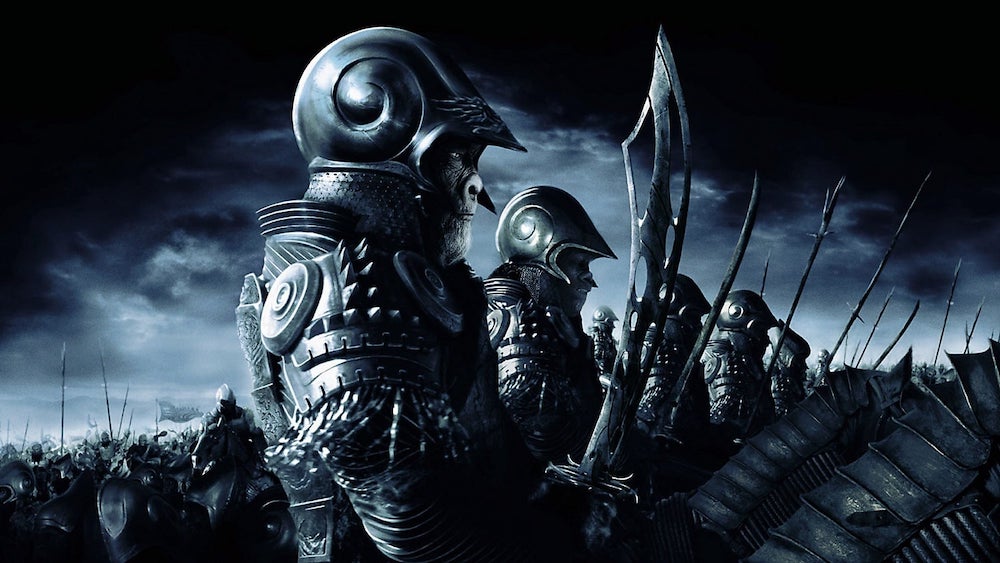
a line of gorilla warriors in a sci-fi movie

Tim Burton's "Planet of the Apes" swung into theaters on July 27, 2001. (Image credit: 20th Century Fox)

Instead, "Planet of the Apes" swiftly killed that notion with its poor critical response despite a respectable box office haul of $362 million after it was released to awful reviews on July 27, 2001. That ended any lofty dreams of triumphantly resurrecting Ape mania for another decade, until director Matt Reeves rebooted everything once more in 2011 with "Rise of the Planet of the Apes."

Treading upon sacred cinematic territory was a brash move, one even considered by filmmakers like Peter Jackson, Oliver Stone, Chris Columbus, and James Cameron at one point.

But Tim Burton was anything but timid, and he prematurely plunged into his "Planet of the Apes" project with unbridled enthusiasm. The aftermath was a strange mix of superficial camp and chaotic action that doesn’t really add up to anything of interest, and it remains a curious addition to Burton’s incredible 40-year filmography.

So, let’s peel back the polarizing "Planet of the Apes" to find some of the sweet and sour!

Rick Baker's Fantastic Makeup

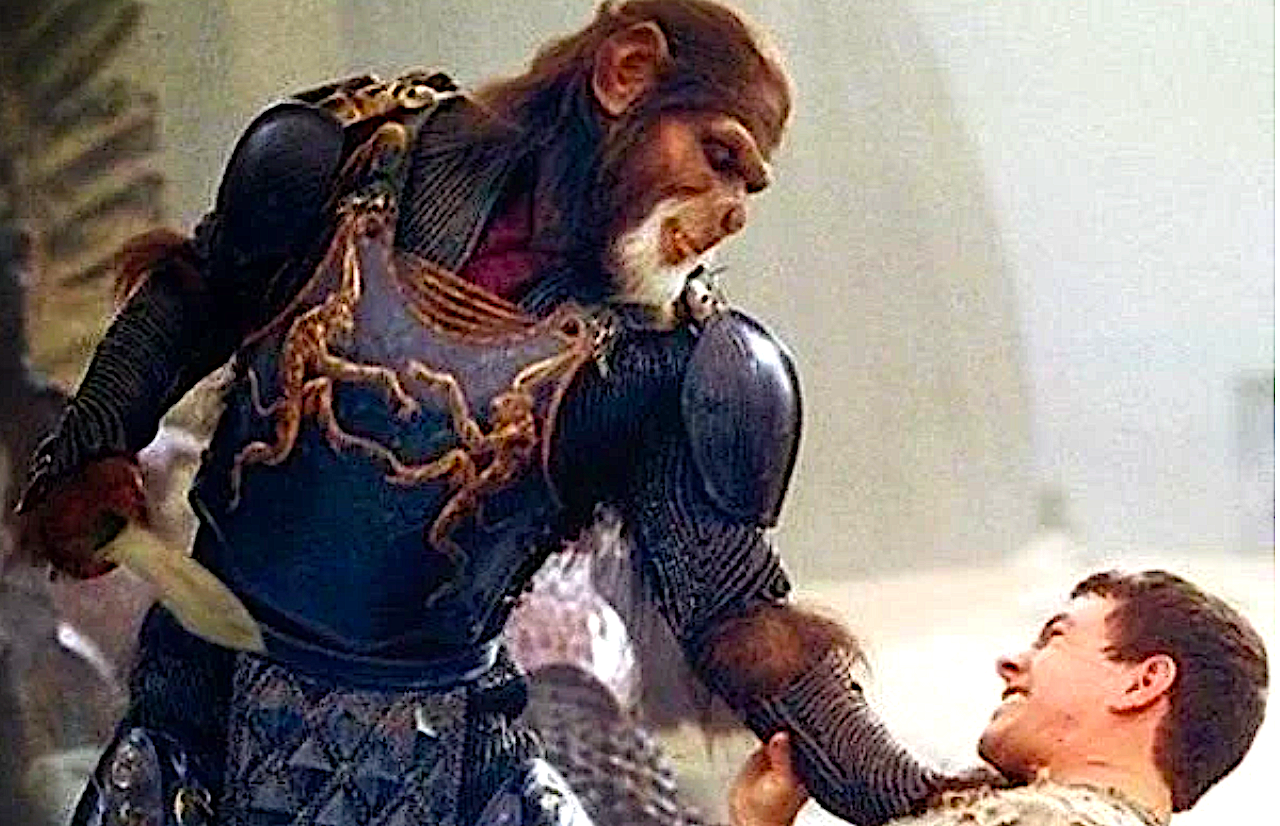
An ape general grabs a human astronaut survivor

Tim Roth as General Thade battles Mark Wahlberg's lost astronaut Leo Davidson. (Image credit: 20th Century Fox)

Oscar-winning makeup master Rick Baker provided the astonishingly realistic prosthetics for "Planet of the Apes", and the effects are quite convincing. Well, except for Helena Bonham Carter’s Ari chimp character, which often looks like something out of Dr. Seuss's Whoville with her pronounced muzzle and rodent-like appearance (An apt comparison since Baker also did the special makeup effects for "How the Grinch Stole Christmas" the previous year).

That aside, Baker’s practical magic on the movie is fantastic and one of the production’s finest achievements. The man who created the makeup for "King Kong," "An American Werewolf in London," "Michael Jackson’s Thriller," "Harry and the Hendersons," "Men in Black," and "The Wolfman" designed some of the best simian masks ever seen on screen.

Baker’s earlier work on films like "Gorillas in the Mist" and "Mighty Joe Young" made him a natural for the job, and he truly shined here. Charlton Heston even made a cameo appearance as Zaius, a character from the 1968 original.

The Baffling Time-Tripping Plot

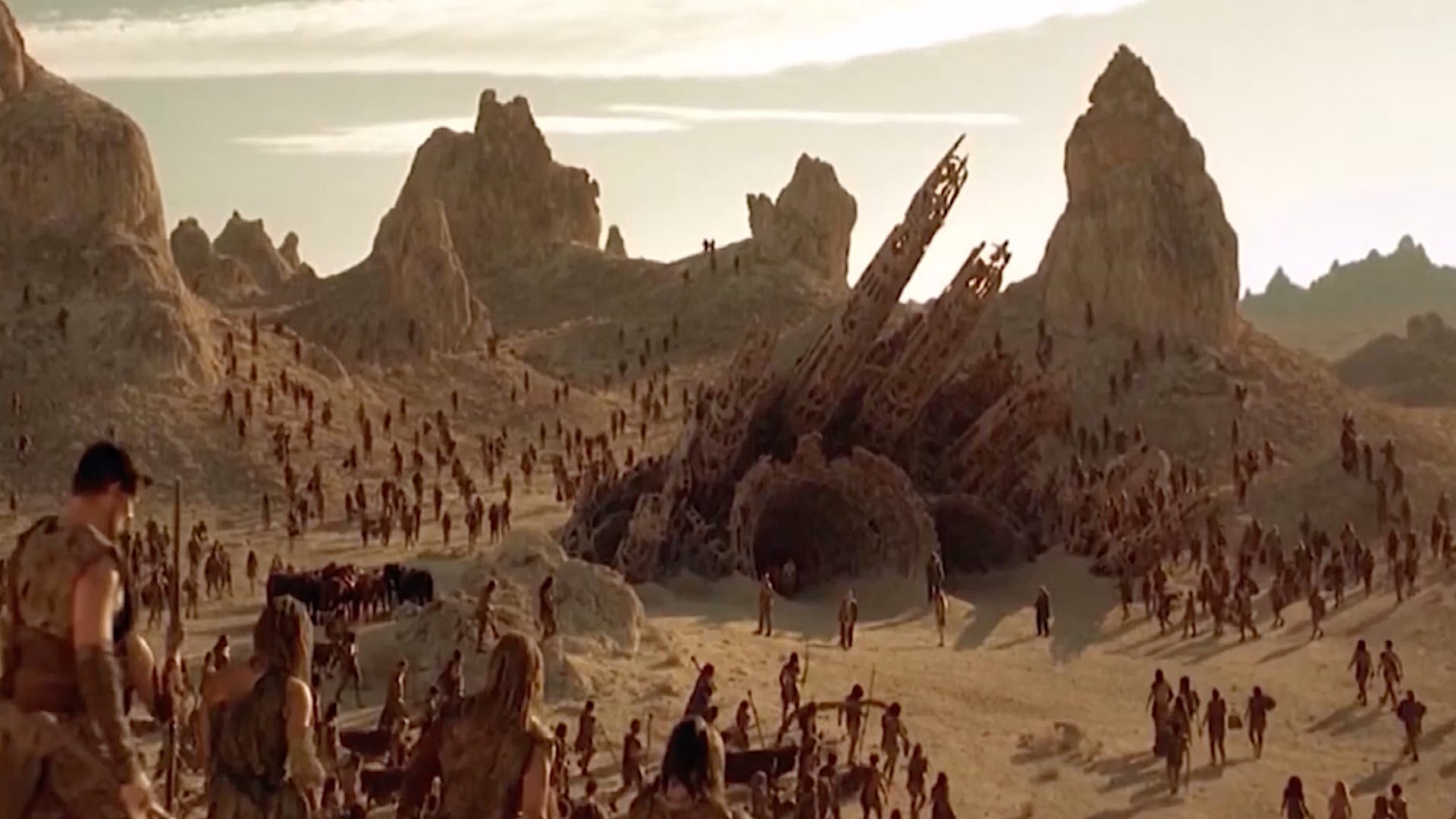
a desolate scene of an ancient crashed spaceship

The crumbling remains of an ancient derelict spacecraft in "Planet of the Apes" (Image credit: 20th Century Fox)

The confusing screenplay by Mark Rosenthal, William Broyles Jr and Lawrence Konner was cobbled together at the last minute and was still being rewritten as cameras began rolling.

It’s a soulless retelling of the 1968 version that relies on a few bad one-liners and uninspired performances by a cadre of fine performers, relegated to delivering flat dialogue and clunky exposition amid some cheap-looking soundstage sets.

A miscast Wahlberg plays Captain Leo Davidson, an astronaut scientist marooned on the planet Ashlar where apes are the masters and humans their inferior slaves.

He follows a genetically modified chimpanzee pilot named Pericles into a cosmic storm that engulfed their research station, Oberon, only to be transported to the year 5021, where humans and apes exist in a reversed society caused by the Oberon’s crash thousands of years before his arrival. Those super-smart chimps, gorillas, and orangutans eventually evolved and rebelled against their human masters.

Leo Davidson's time-traveling odyssey goes from 2029 all the way to the 51st century and then back again to his own era, where things have gone totally haywire. The twist ending is infamous. Davidson returns home to Washington, D.C. to find a marble monument of the human-hating warlord General Thade has replaced the iconic Abraham Lincoln statue.

This alternate timeline is a head-scratching "Ape Lincoln" finale that attempts to imitate that famous Statue of Liberty shocker seen in the original Planet of the Apes. It’s a controversial end to Burton’s rushed reimagining and feels forced.

It seems possible that Burton was attempting to be respectful of Pierre Boulle’s 1963 novel by revealing a modern ape-dominated world in the end, yet at the same time recalling the sensation of that nostalgic beach scene with Lady Liberty in the sand. Whatever he was aiming for, he missed.

Danny Elfman's Magnificent Music

Ah, the sonic magic of Danny Elfman ends our tribute to "Planet of the Apes" as a salute to Burton’s ambitious folly. Elfman and Burton are a melodic combo whose collaboration goes back to 1985’s "Pee-Wee’s Big Adventure" and here Elfman goes for a bombastic sound that utilizes a full range of instrumentals.

His robust, under-appreciated score is composed with droning synthesizer undercurrents, old-fashioned action adventure fanfares, and intense rapid-fire tracks punctuated by brass exclamations and roaring percussion.

It's a more serious piece of musical work that safely avoids the sentimentality and whimsy of earlier scores for Tim Burton projects. This reflects an important evolutionary step for Elfman's maturity as an artist, mirroring some of the movie’s main themes.

"I had been more concerned that the score was going to be more of a traditional, very aggressive Jerry Goldsmith score, which he does so brilliantly, and the fact that it was such an ethereal, otherworldly score, immediately eased all problems I may have had, because I saw that there was not going to be any overlap," Elfman told Soundtrack Magazine.

"I would have been more concerned, if his score was more traditional and aggressive, of what to avoid, so as to not cross over or step on his toes. So it really became very easy once I watched the movie again after 30-something years. The score was such a beautiful, odd, dissonant piece of work. I felt clearly, this is a completely different animal – no pun intended. Having just seen a rough cut of the film, I knew it was going to be a very big, aggressive, muscular, kind of a tribal, driving score."

a image of a sentient ape statue from a sci-fi film

The polarizing "Ape Lincoln" monument from the finale of "Planet of the Apes" (Image credit: 20th Century Fox)

In summation, anyone attempting to remake the original "Planet of the Apes" was bound to butt up against intense scrutiny and comparison.

Even if Burton’s vision came up far short of what was intended, we still respect the maverick filmmaker for taking on a tough undertaking on the film’s milestone 25th anniversary.

'Planet of the Apes' is available to watch on Hulu in the US, and on Disney+ in the UK.

Watch 'Planet of the Apes' on Hulu:
Hulu with Ads: $11.99/month or $119.99/year
Premium (No Ads): $18.99/month

What happened to space horror movies?

We all know the cliché: any horror franchise that goes on long enough inevitably goes to space. Critters, Hellraiser, Friday the 13th, Dracula… they've all taken a trip to the stars.

The trope, fair or not, has often overshadowed the fact that science fiction and horror are absolutely perfect bedfellows, with outer space's total isolation, tiny quarters, and oppressive vastness perfectly suited for the horror genre. Horror movies set in space have delivered classics of both genres that have lasted generations and built entire franchises in and of themselves.

Why then, in the middle of a horror film renaissance, has the genre seemingly abandoned outer space? What has become of the space horror movie, and why has Hollywood either stopped producing them entirely or, maybe more accurately, failed to make a good one out of the few they do put out?

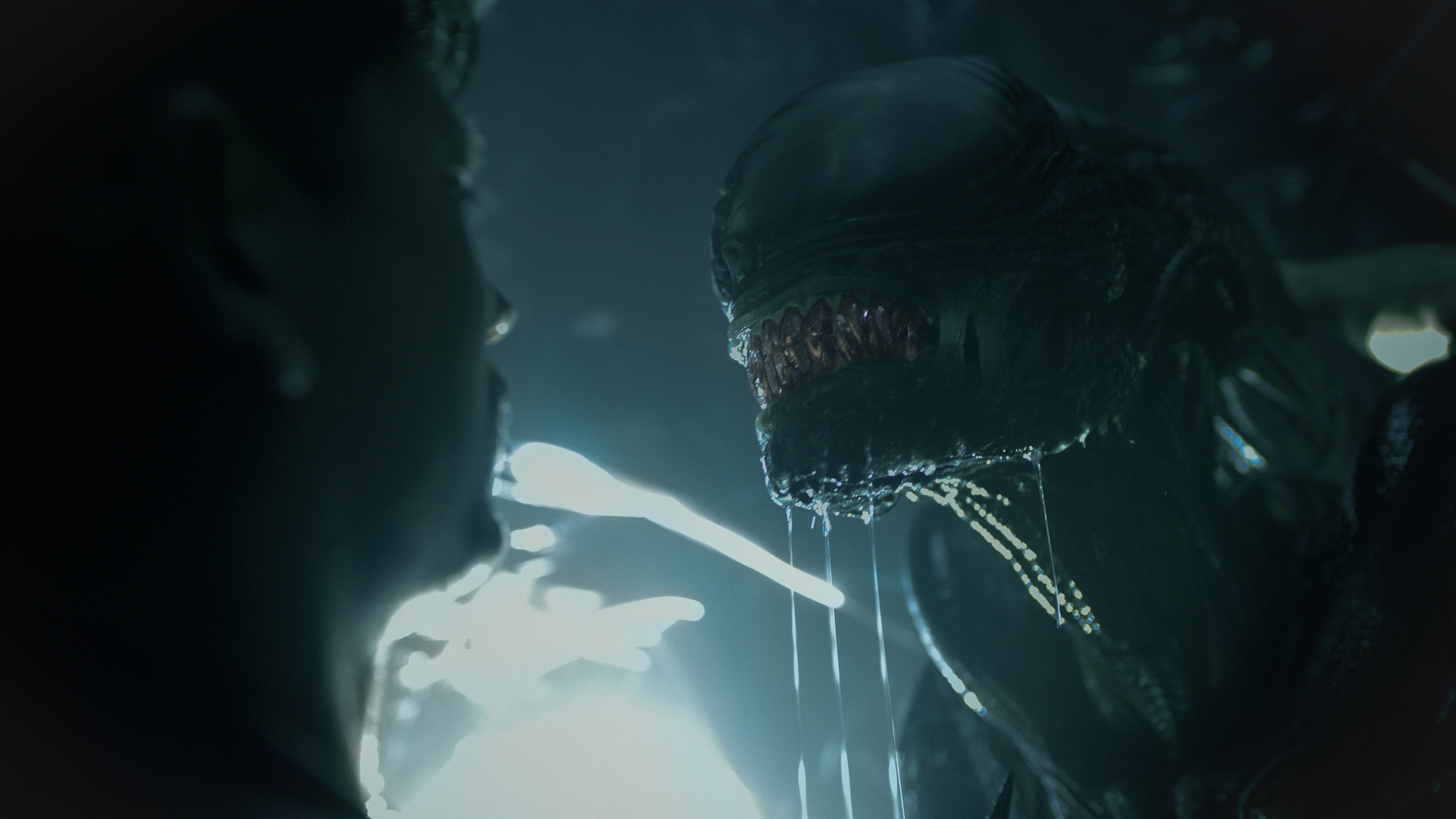
Space: The horror frontier

(Image credit: 20th Century Studios)

To be clear, science fiction and horror haven’t been on that much of a break overall; it’s just that when the two genres meet, they no longer seem to have any interest in leaving planet Earth.

Instead, the combination either brings the alien threat planetside, à la "The Quiet Place", "Nope", or "No One Will Save You", or makes the horror come from man’s own hand like "Ex Machina" or "M3GAN". Either way, the result is that horror no longer lives in space, with the only truly major space-horror film release this decade being the admittedly excellent "Alien: Romulus", along with some smaller projects like "Europa Report" and "Life".

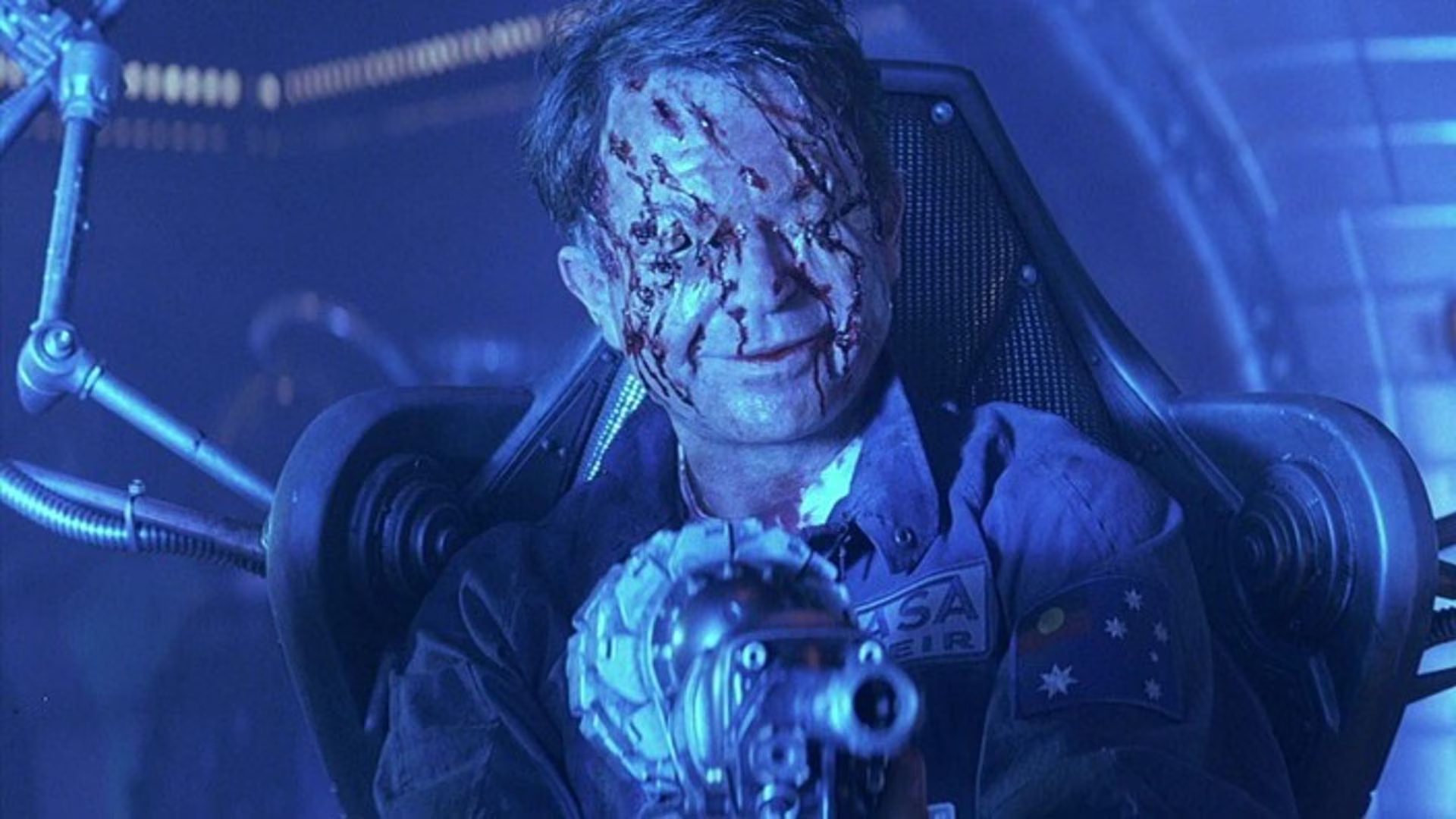
I was sure there must be more — some hidden classics that I missed — but researching for this article, I was shocked at just how few space horror movies we've had in the past couple of decades. It’s like everyone agreed "Event Horizon" was peak and gave up making horror films in space.

(Image credit: Paramount)

Horror in space has never been a dominant subgenre, but it was once big enough to be considered an entire trope. So it feels especially strange that in the middle of a horror renaissance, as the genre continues to dominate box offices, it is totally left behind. Horror has crawled out of the B-grade shadows and into Oscar contention with films like "Get Out", "Midsommar", and "It Follows", and the box office returns are staggering.

Respected directors are diving into the genre and creating masterpieces, but none of them seem interested in outer space. We are nearly a decade into a horror renaissance that has seen almost every type of horror unpacked, remade, and turned into arthouse, and yet space horror has sat almost entirely dormant. So what gives?

In space, no one can hear you arthouse

(Image credit: Fox Searchlight Pictures)

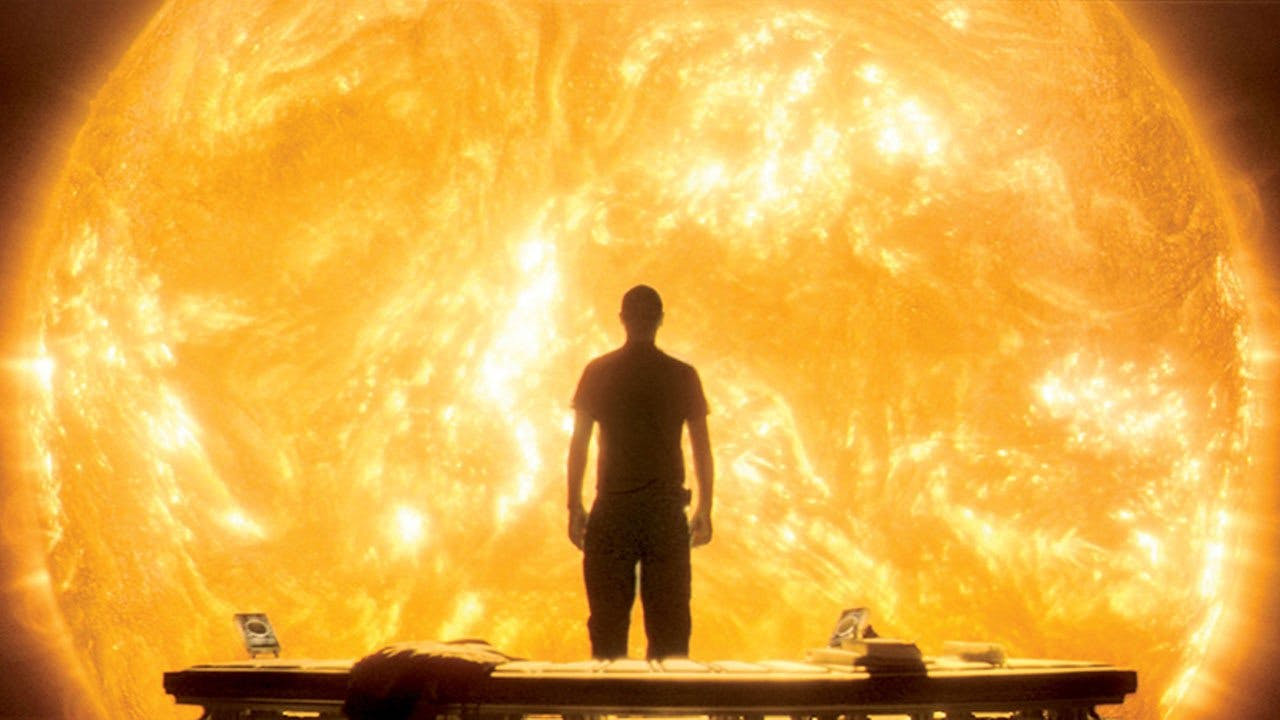
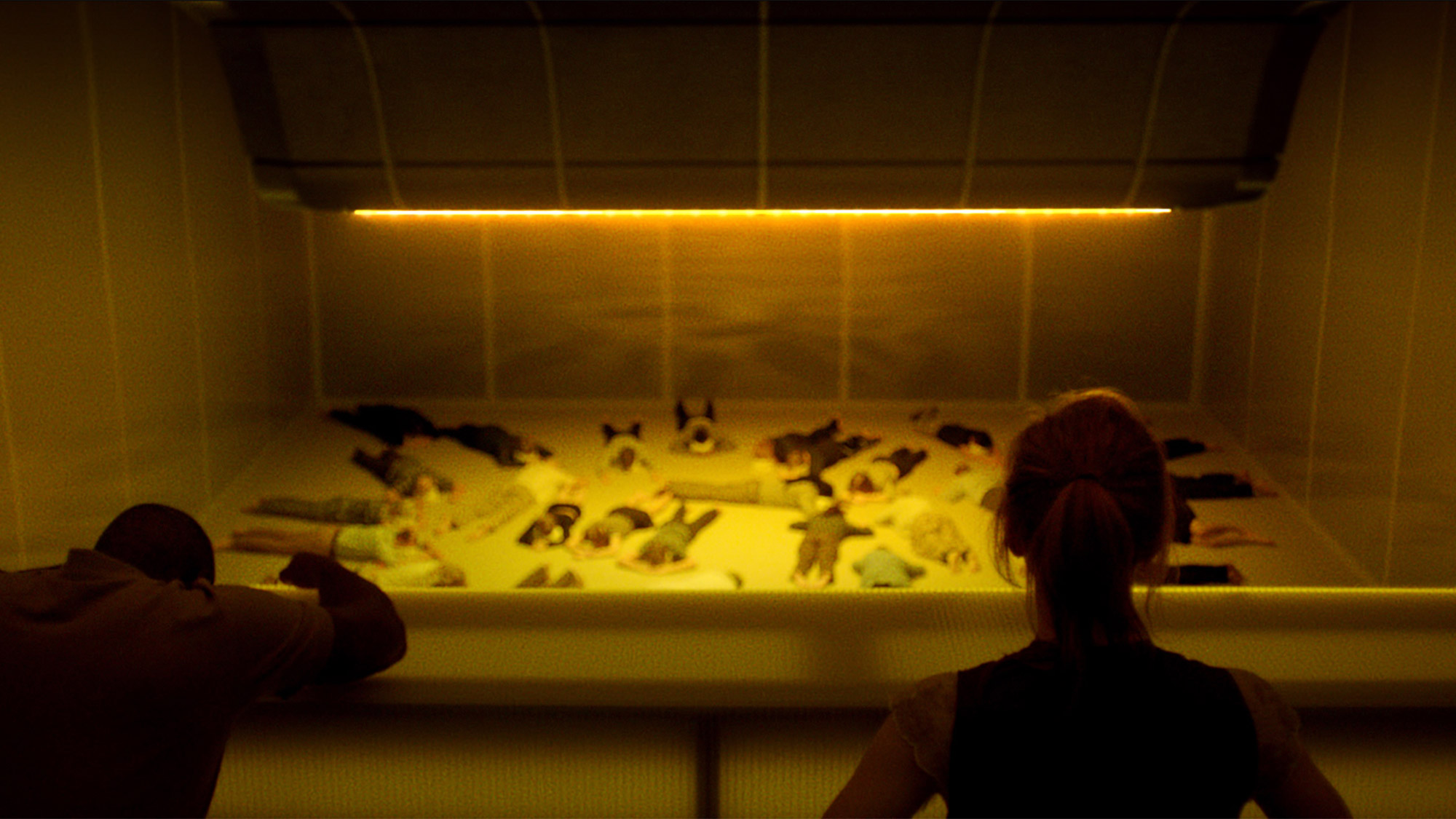
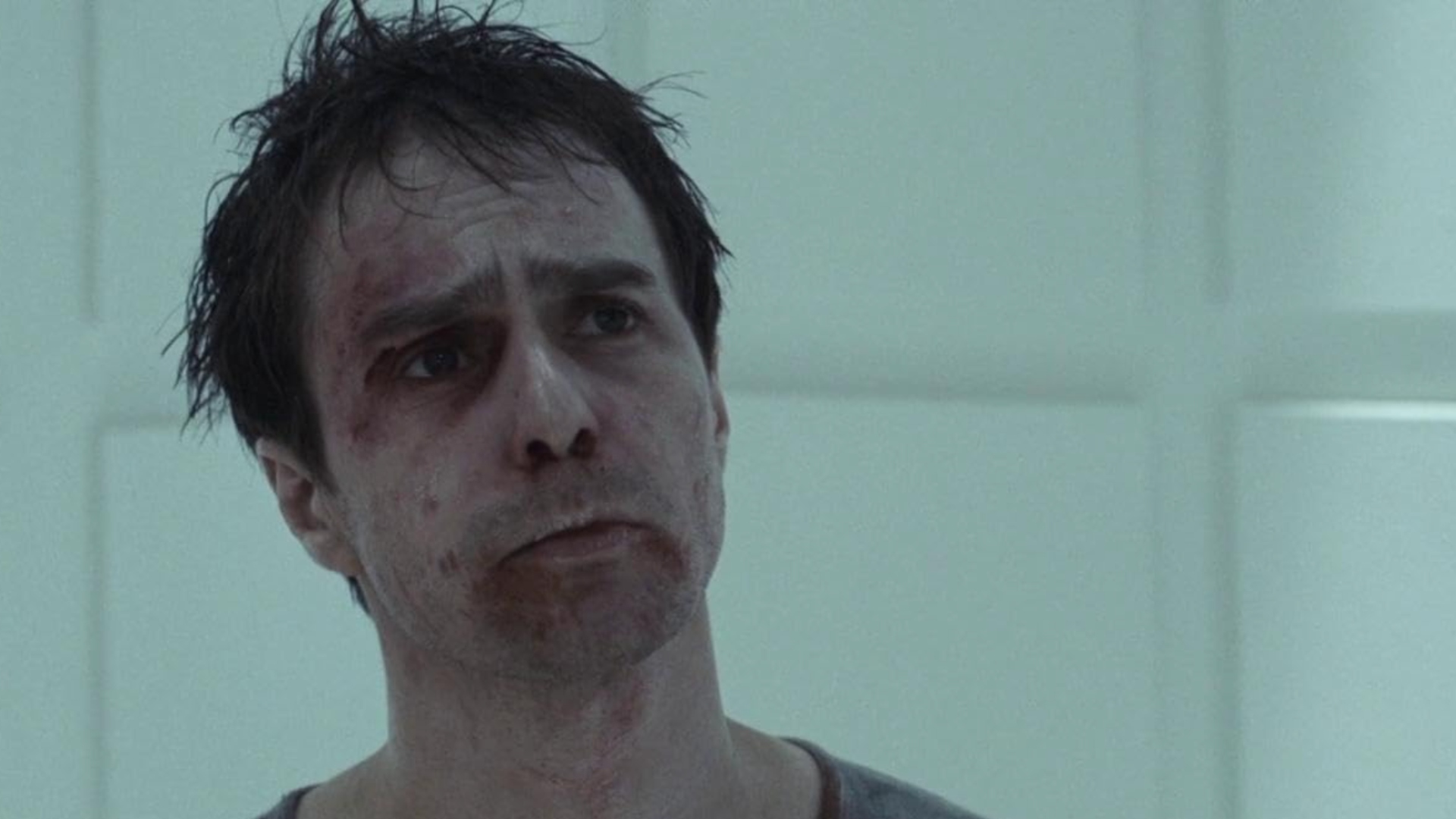
Why is this happening then? Where is the arthouse unpacking of "Jason X"? Why didn’t Danny Boyle’s "Sunshine" kick off the horror renaissance a decade earlier? Why did the "Alien" franchise become whatever the hell "Prometheus" was before finally returning to its roots (and then promptly coming down to Earth!)? Where’s our English remake of Aniara from an up-and-coming indie director?

There’s most likely a slew of reasons none of this has happened, but the most likely culprit is that horror has become far more grounded than it used to be. While we still get slashers and jump scares, the renaissance that A24 ushered in has not only brought horror out of the shadows, but also delivered a redefined genre that doesn’t jive as well with spaceships and alien creatures.

That’s not to say it can’t, but this new generation of horror isn’t interested in going off-planet to tell its slow-burning stories of grief and trauma, full of thinly veiled metaphors for real-life issues. “Earth and the present day are scary enough as is” seems to be the argument.

(Image credit: Magnet Releasing)

Of course, there’s the other reason. The reason for everything: money.

The other new branch of horror that has come out of this renaissance comes from studios like Blumhouse, which churn out low-budget horror films and rake in huge profits. And that's no knock on budget horror flicks, some of which are truly amazing.

But while space horror can be made on the cheap, it’s definitely not as easy to do. It requires more investment, design, and often sets and special effects than a traditional horror film does. It’s just cheaper and easier to make sci-fi horror that’s set on Earth, and with so many of them becoming massive hits, why bother going to space?

Drag me to space

(Image credit: Sony Picture Classics)

Given both sci-fi and horror's history of social commentary and cultural unpacking, arthouse horror not going to space — budget restraints aside — seems like a major miss, especially when the very aspects it explores are perfectly built for the isolation, detachment, and fear that space evokes.

Outside of horror, excellent space movies like "Moon" and "The Martian" have explored these themes, but we're missing that spooky, scary edge.

And look, I’m not even saying that space horror has to be arthouse. The trope that horror franchises go to space eventually is actually one I’d like to see more of. Why not jump the shark a bit more with horror franchises? A science fiction version of Saw sounds a hell of a lot more fun than Chris Rock's dreadful spin-off. Sci-fi space "Purge" on a colony ship? Yes, and please. "Evil Dead"’s new anthology style of horror is practically begging to take a trip to space. There’s so much space in space, and these franchises could totally take a trip there.

(Image credit: Sega)

There is one bright spot, however, for the space-loving horror enthusiast. Video games seem to have taken up the mantle.

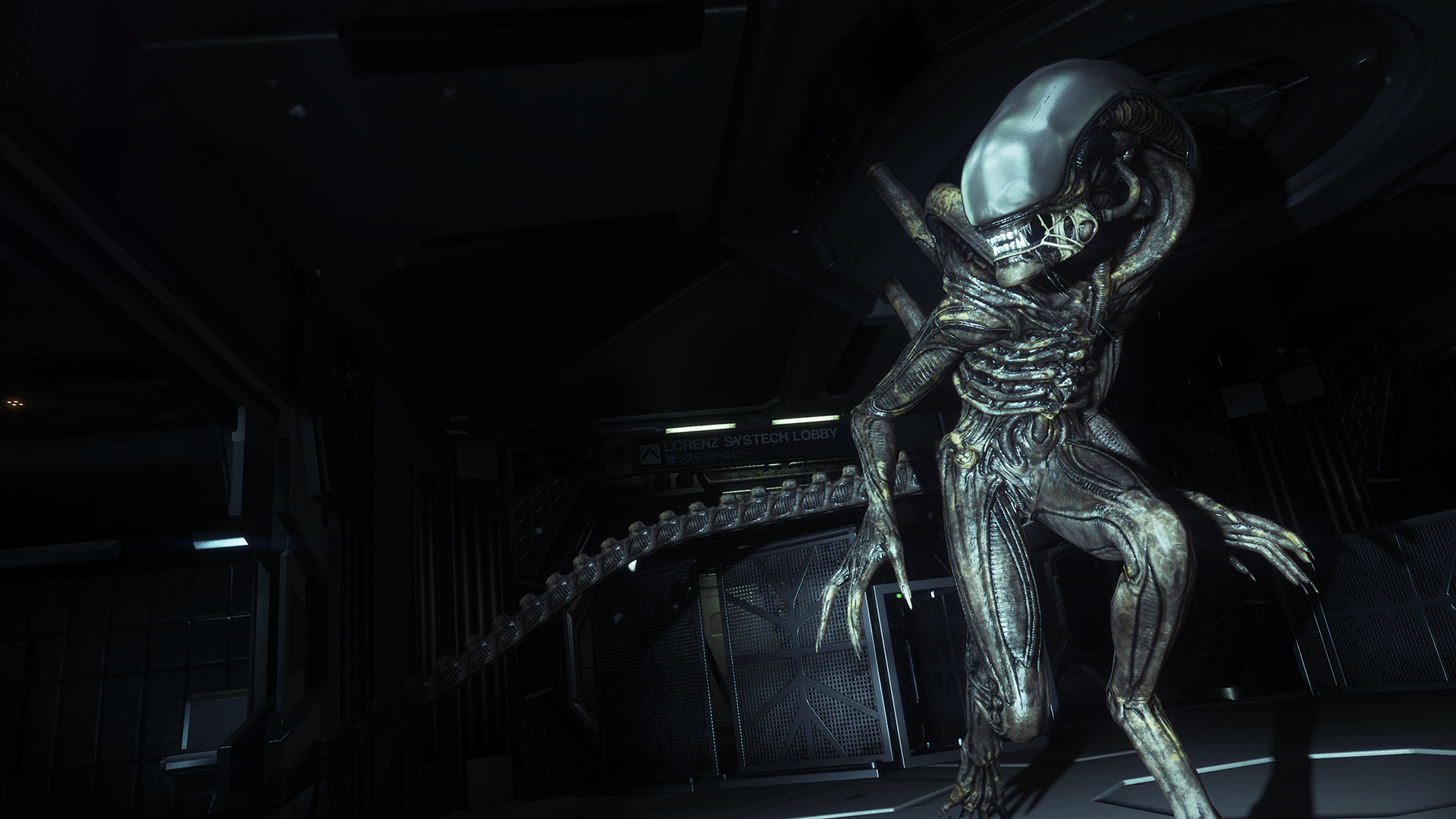
Space horror has always flourished in the medium, from AAA classics like "Dead Space" to indie darlings like "Iron Lung" (which itself was transformed into a space horror film!). The subgenre has been going strong for decades, even if film gave up on it. Hell, for nearly a decade, the best output from the "Alien" franchise was "Alien: Isolation", one of the scariest games ever made.

While movies may no longer be playing in the wider universe, at least our video games are taking us there and then scaring us out of our space boots.

‘He took all the blame of the collision on his shoulders.’ Astronaut Michael Foale explains how a 1997 spaceship crash at Space Station Mir unfolded

All systems are go! PBS just launched the second episode of its "Once Upon a Time in Space" miniseries on Tuesday, titled "The Russian Thing," and we’ve got an exclusive clip from the harrowing chapter that focuses on near disasters aboard the Space Station Mir in 1997.

In addition to the video, we’re also proud to share an exclusive interview with NASA's celebrated British-American astronaut Michael Foale, who is featured prominently in the new segment regarding the infamous cargo pod collision on Mir, which caused a decompression incident that became a life-threatening crisis.

Hailing from British filmmaker James Bluemel and his crew that delivered the award-winning "Once Upon a Time in Northern Ireland," "Once Upon a Time in Space" is a 4-part exploration of human spaceflight. Its weekly episodes trace pivotal events in spacefaring history via the personal experiences of astronauts, cosmonauts, and loved ones left on Earth from the birth of the Space Shuttle program to the blossoming of today’s commercial spaceflight industry.

"James Bluemel is a very perceptive director, and he was different from others that have interviewed me," Foale tells Space.

"What I loved about his method was he would dig up clips from our training or at different points when I was a brand new astronaut, looking really young and had a surfer boy haircut. I love windsurfing. He would dig up clips I don't know where from. And then he'd show it to you, and then he'd say, 'What do you think?'"

Foale — a distinguished veteran of six space missions who retired in 2013 — takes us back to that day of May 25, 1997, when a manual docking maneuver caused an unmanned Progress cargo ship to collide with Mir, ripping a large hole in the Russian space station’s Spektr module.

The crew’s valiant attempt to halt the pressure leak and save the station is like something straight out of a Hollywood thriller. With only 23 minutes of oxygen left, Foale and cosmonauts Vasily Tsibliev and Alexander ‘Sasha’ Lazutkin were able to repair the damage and stop the tumbling spacecraft from spinning wildly out of control.

"The root cause of the accident was trying to save money," he explains. "And the root cause was an attempt to do a manual docking from a large distance longer than any cosmonaut or astronaut does a manual docking from and doing it without the radar. The radar was built in Ukraine and cost $2 million in that timeframe. And the Russian managers did not want to pay Ukraine $2 million.

"So someone in the Energia corporation — they're the guilty company — decided they would try and get this crew at the last minute to try and do a manual rendezvous and docking without the radar from about a six-kilometer starting point. And that test was with a Progress we'd already filled up with trash and was meant to be de-orbited into the Pacific Ocean. Before it was going to be de-orbited finally, it was going to do this test."

a promo poster for a space documentary

(Image credit: PBS)

Unfortunately, that test went horribly wrong due to Vasily Tsibliev not being able, based on measurements he could make in real time, to determine the exact closing velocity of the Progress.

"He couldn't ascertain distance very well, but you need the distance first, and then you need to divide by time to get the velocity,” notes Foale. “That was not possible in that situation and never attempted again. It caused a much higher velocity than Vasily could extinguish using the one thruster set that were turned on the Progress.

"So it bounced off, literally bounced off after crumpling part of the Spektr module and bending one of the solar arrays. The joint cracked at the base of the solar array into the module, and that's where the unseen hole is or was. And that's where the air was leaving from. It was a multiple hit that caused it to float away. And we were told as a crew about three days later, because we asked what had happened to it. They said, 'Well, engine was capable of being fired. It was capable of reorienting itself, and it de-orbited into the Pacific.'"

a Russian space station in orbit

The Soviet space station Mir before being de-orbited in 2001 (Image credit: NASA)

In the aftermath of the collision, an adapter was sent up to try and connect power back from the Spektr module into the Mir system.

"Vasily and Sasha were planned to do an internal spacewalk into the Spektr module to get to those cables that Sasha and I had had to disconnect to save the station," Foale adds. "They were going to go back in during an internal EVA. Vasily, because of the stress of the event, didn't pass the medical test done before the spacewalk, and they wire you up for a heart monitor.

"So then a day later, a call came up from the head of the program, Valery Ryumin, saying, 'Oh, Michael, you're on the radio. I'm going to ask you, would you be willing to go in and do the spacewalk inside the Spektr module instead of Vasily?'", remembers Foale. "I just knew that that was going to create a huge issue with me and Vasily because it was so humiliating for him. And he took all the blame of the collision on his shoulders, which was unfair."

Foale retired from NASA and space travel after a brilliant 30-year career with the agency and six space shuttle missions, but the lifestyle adjustment was a bit troubling at first.

Two astronauts aboard a space station

Alexander 'Sasha' Lazutkin (L) and Michael Foale (R) aboard Mir (Image credit: NASA/BBC/PBS)

“That was a depressing moment when I was being told, 'Oh, you're done,'" he shares. "I knew I couldn't survive the envy of my astronaut colleagues who are younger than me and haven't flown but once or twice. So I knew I was kind of done in space, at least with NASA. I was dreaming of being an astronaut guide like Peggy Whitson or Michael Lopez-Alegria on an Axiom mission. Those were my daydreams initially. I miss space, but I’ve found other things to replace that fun.

“I've always been turned on emotionally and romantically by soaring and flying. So living in Texas amongst the mountains with fantastic stars every night and soaring here, it's not space. It's not in a spacesuit outside the Mir looking at it, but it's pretty cool. I do go back to a much more comfortable situation in the evening, and I do ride my bike.

"As a 69-year-old now, I have a pretty good late-life pastime. But you have to make do. And hey, you have to keep telling yourself you're one of the luckiest guys around. I would say I was naively optimistic about the international collaboration in space. The show that James Bluemel has put together, "Once Upon a Time in Space," in some ways it looks like a fairytale to me when I look back on it."

"Once Upon a Time in Space's" "The Russian Thing" episode aired on July 21, 2026, at 9:00 p.m. ET on PBS, PBS.org, and the PBS app, with the final two chapters coming on July 28 and Aug. 4.

This Week In Space podcast: Episode 220 — First on Mars

On Episode 220 of This Week In Space, Rod Pyle and Tariq Malik are joined by Dr. Pascal Lee and astrobiologist Dr. Penny Boston to mark the 50th anniversary of Viking 1's landing on Mars.

This week, we cover how Starship Flight 13 finally prepares to launch amid a legal battle over SpaceX's proposed land swap at Starbase, plus a Chinese Long March 3B rocket gets struck by lightning during liftoff, yet still delivers its satellite safely.

Then, we revisit the Viking 1 mission's groundbreaking life-detection experiments and the decades-long controversy over what they actually found. The conversation traces Mars exploration from the earliest Mariner flybys through Viking's ambiguous, still-debated results — later explained by perchlorates in the Martian soil — and the fierce scientific rivalry the findings sparked. Join us!

Download or subscribe to this show at: https://twit.tv/shows/this-week-in-space.

Get episodes ad-free with Club TWiT at https://twit.tv/clubtwit

Space news of the week

Model Falcon 9!

TOP TELESCOPE PICK:

A Celestron telescope on a white background

(Image credit: Celestron)

Looking for a telescope to see planets and comets? We recommend the Celestron Astro Fi 102 as the top pick in our best beginner's telescope guide.

Finally, did you know you can launch your own SpaceX rocket? Model rocket maker Estes' stunning scale model of a Falcon 9 rocket that you can pick up now. The launchable model is a detailed recreation of the Falcon 9 and retails for $149.99. You can save 10% by using the code IN-COLLECTSPACE at checkout, courtesy of our partners collectSPACE.com.

About This Week In Space

This Week in Space covers the new space age. Every Friday we take a deep dive into a fascinating topic. What's happening with the new race to the moon and other planets? When will SpaceX really send people to Mars?

Join Rod Pyle and Tariq Malik from Space.com as they tackle those questions and more each week on Friday afternoons. You can subscribe today on your favorite podcatcher.