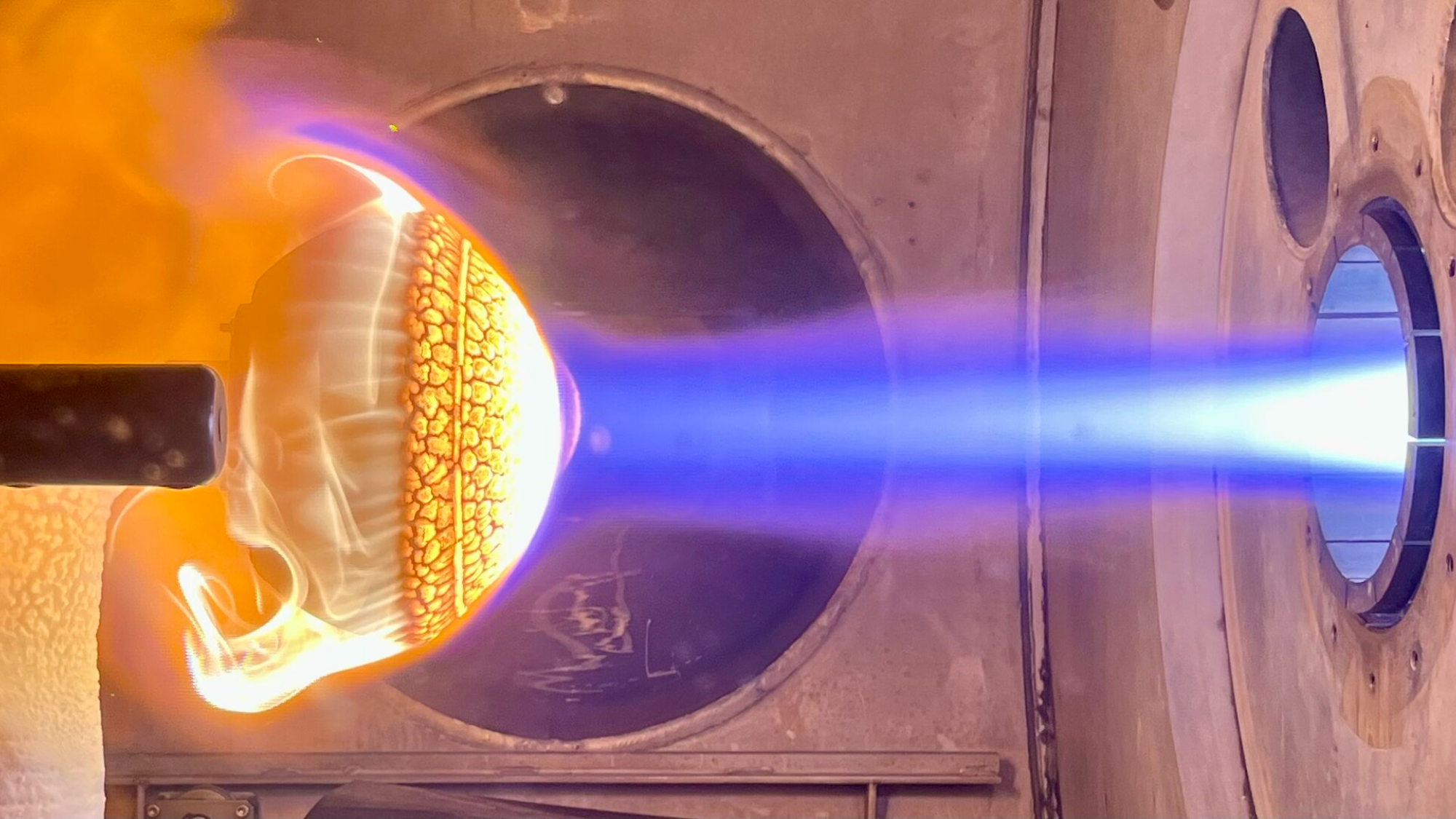
At the von Karman Institute for Fluid Dynamics, researchers are testing the capsule heat shield for the Draco mission. (Image credit: ESA)
Sometimes, to accomplish your mission, you have to start a few fires.
What is it?
At the von Karman Institute for Fluid Dynamics (VKI) in Belgium, researchers put a heat shield to the test, blasting it with scorching-hot flames to see how it would handle the intense temperatures it would experience when reentering Earth's atmosphere.
The heat shield is for Draco, a European Space Agency mission that is literally designed to go up in flames. Draco stands for the Destructive Reentry Assessment Container Object. The mission will send a satellite to space and back to collect data on the scorching experience of reentering Earth's atmosphere.
"Our biggest design challenge lies in meeting two contrasting requirements: having Draco disintegrate normally during reentry just like any average satellite, yet also recording the event and storing its data in a capsule that stays intact throughout, until the data can be transmitted safely," Draco project manager Stijn Lemmens said in a statement.
Why is it incredible?
For decades, we have sent satellites, telescopes, landers, rovers and even humans to space. And we know that the missions that return to Earth are in for a rough ride home.
When reentering through Earth's atmosphere, a spacecraft will experience extreme temperatures. And while some are designed to withstand the heat, others are meant to burn up.
But there has yet to be a spacecraft whose purpose is to be destroyed by Earth's atmosphere so we can study it. That's where Draco comes in. The mission will collect valuable data to help us better understand exactly how satellites burn up in our atmosphere.
While sending a satellite into orbit around Earth was once a novelty, today there are so many objects in orbit that companies are working to ensure that their probes can successfully burn up in our atmosphere so that they do not become dangerous space junk, orbiting until they collide with another object.
With Draco, researchers hope to better understand the process so that, when we want to send a satellite to its doom, we know what to expect.
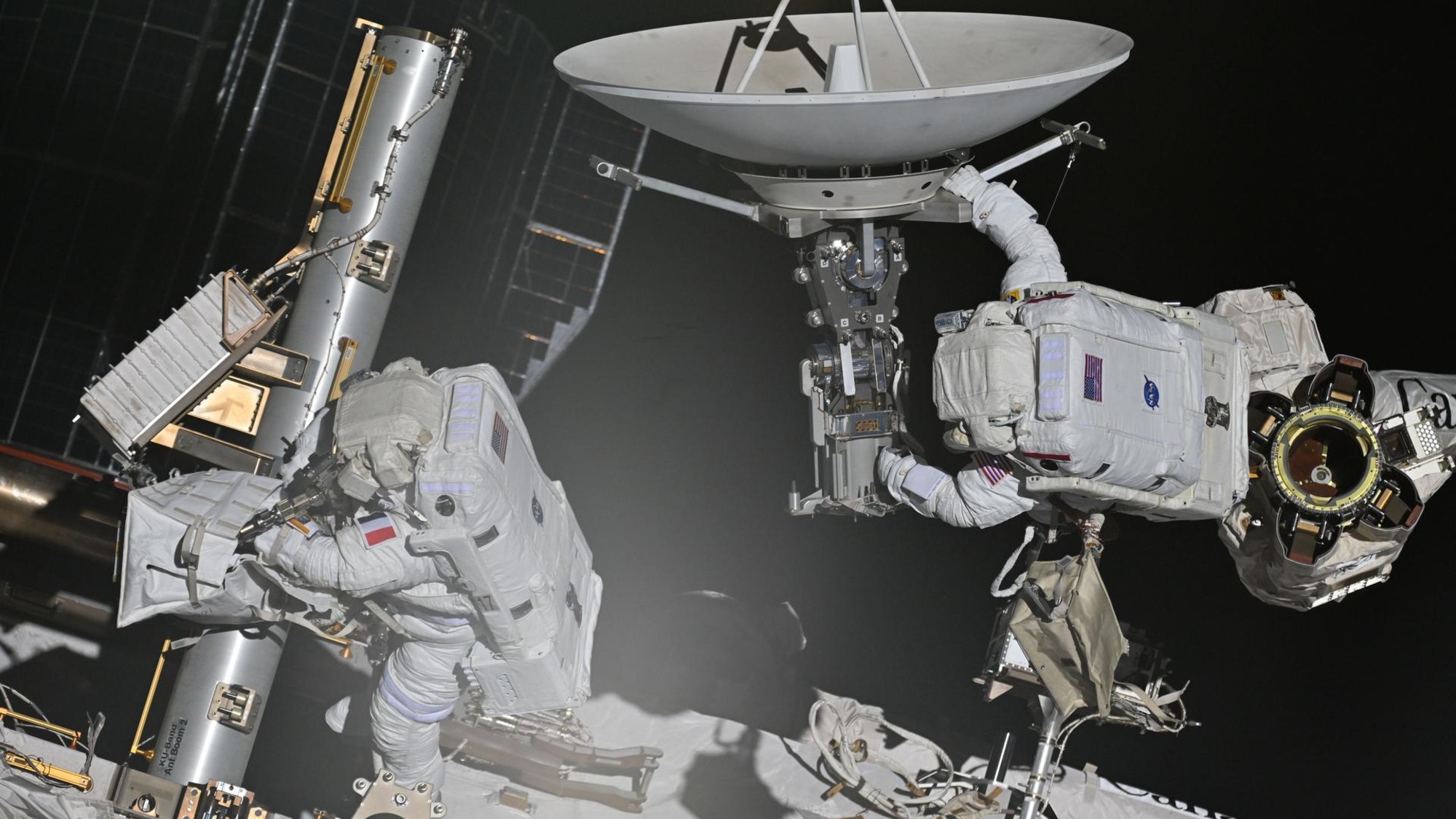
ESA astronaut Sophie Adenot and NASA astronaut Anil Menon complete a spacewalk on Aug. 18, 2026. (Image credit: Roscosmos/Anna Kikina)
Intensely focused and tethered to a floating laboratory in the vacuum of space, two astronauts spent over 6 hours working on the International Space Station during a historic spacewalk.
What is it?
Two astronauts aboard the ISS set out on a spacewalk recently (Aug. 18). European Space Agency astronaut Sophie Adenot and NASA astronaut Anil Menon set out recently a historic spacewalk.
This was Adenot's first spacewalk and, in journeying out into the darkness of space she became the first French woman to conduct a spacewalk (or, formally, an extravehicular activity, or EVA).
In this snapshot from the space station, you can see Adenot on the left and Menon on the right, both hard at work on their mission.
On this spacewalk, which took the pair 6 hours and 23 minutes, the astronauts were tasked with removing a failed antenna from the space station. However, while it was a successful outing, the pair didn't have enough time to replace the old antenna with a new, working one.
Why is it incredible?
Getting to space is hard enough. And then once you're there, venturing out of an orbiting laboratory into the darkness of space to do a physically demanding but technically complex repair job on that laboratory is certainly no picnic.
But these two astronauts pushed through almost six-and-a-half hours of grueling space work to remove the broken antenna before running out of time. And this big step forward in this fix is critical, as these antennae help to connect the space station to Earth, which is of the utmost importance.
The antenna, a "Space-to-Ground" antenna, started malfunctioning months ago and a second antenna has temporarily taken over. But this solution was temporary and a more permanent replacement was needed as this antenna ensures that astronauts on the space station can quickly transmit critical information back down to Mission Control back on Earth.
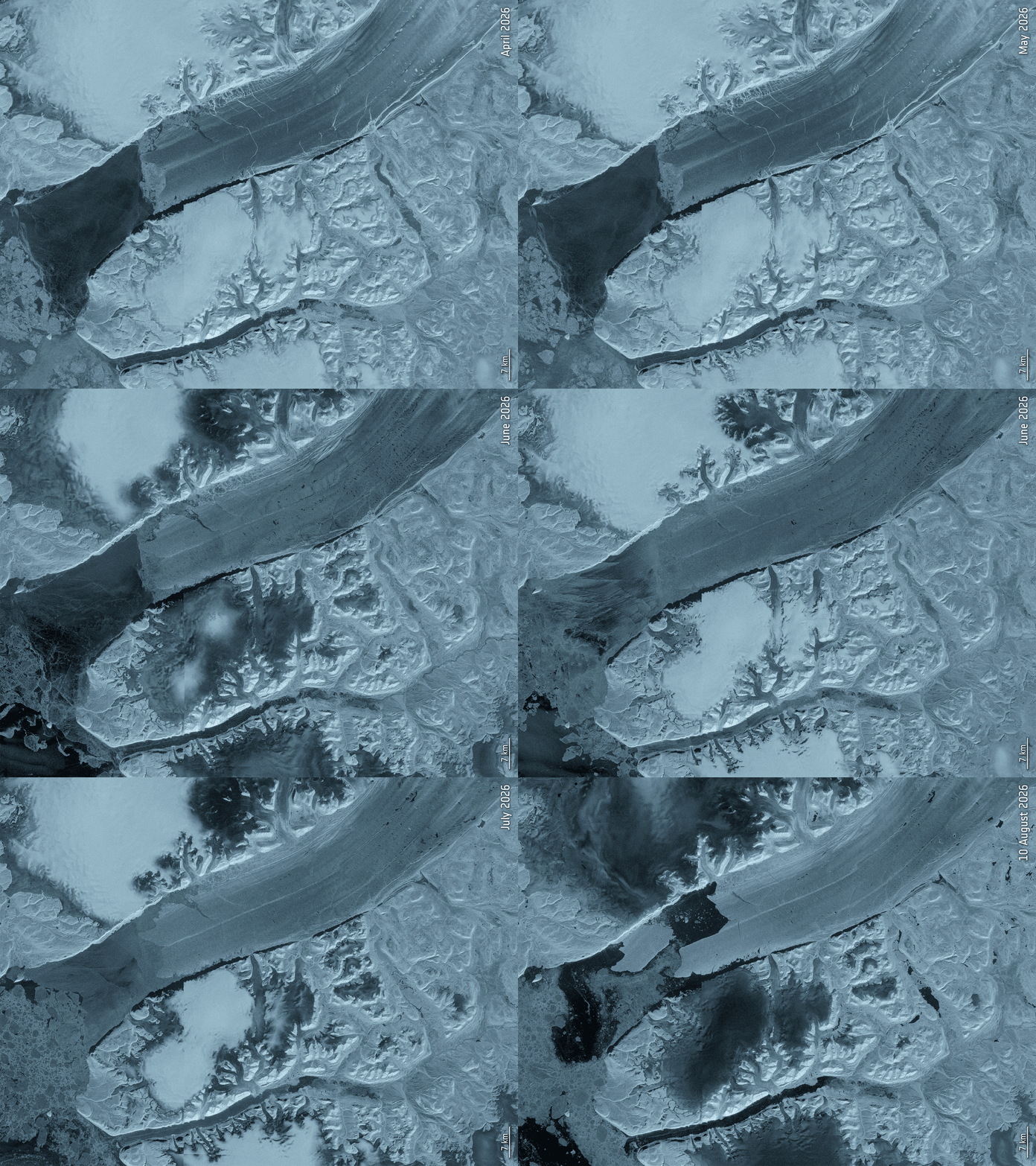
ESA's Sentinel-1 mission captured remarkable imagery showing significant ice loss and calving at the Petermann Glacier. (Image credit: ESA)
The massive glaciers of Greenland are disappearing right before our very eyes in new satellite imagery.
What is it?
Petermann Glacier in northwest Greenland connects the Greenland ice sheet to the Arctic ocean. Petermann's "ice tongue" has previously measured 43 miles (70 kilometers) long and 9 miles (15 km) wide. But new satellite imagery has revealed the glacier's floating "ice tongue" has broken apart in the glacier's most dramatic loss of floating ice since 2012.
On August 4, 2026, the European Space Agency's Copernicus Sentinel-1 missioncaptured imagery of the glacier that revealed that a 29 square mile (76 square km) section of the ice tongue has broken away. This is the most significant ice calving event (where ice breaks off of a glacier) seen in the Arctic since 2020.
"Satellite missions such as Sentinel-1 provide the systematic, long-term observations needed to track these changes, helping scientists better understand the processes driving calving and the wider impacts on the polar environment, and ultimately the Earth system as a whole," ESA Earth scientist Martin Wearing said in a statement.
A moving image showing the ice calving in the Petermann glacier in August 2026. (Image credit: ESA)
Why is it incredible?
It is no secret that worsening climate change is contributing to significant ice loss. Antarctica has lost 5,000 square miles (12,950 square km) of grounded ice over the last three decades. Warming oceans are consistently eroding the arctic ice we have left which, when melted, contributes to rising sea levels.
But knowledge is power, and by studying Earth from the vantage point of space, Earth scientists can gather critical information about our changing planet.
"By studying Arctic ice islands, we will gain knowledge that can be transferred across polar regions. This is critical for understanding how the calving and deterioration of ice islands impact glacier dynamics, sea-level rise and the ocean environment," Anna Crawford, a glaciologist at the University of Stirling, said in the same statement.
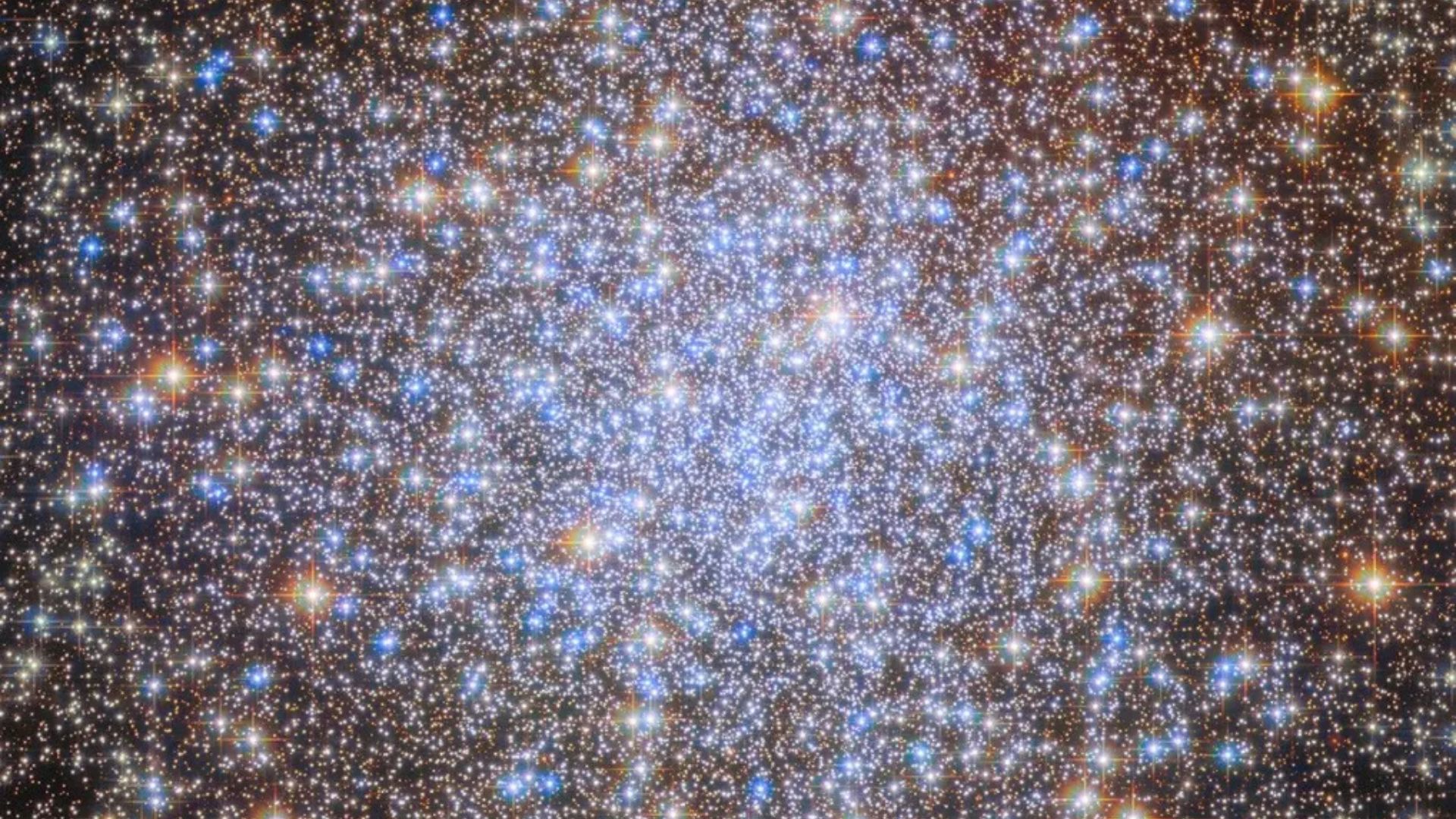
The Chandelier Cluster, or globular cluster NGC 6723, as imaged by the Hubble Space Telescope. (Image credit: ESA/Hubble & NASA, A. Sarajedini, G. Piotto)
Stars scattered across the cosmos sparkle in the appropriately named Chandelier Cluster.
Every bright spot in this mesmerizing cosmic chandelier is an individual star in the cluster. Globular clusters typically contain older stars. In fact, they're known to hold some of the oldest stars in the galaxy, with some being 10 billion years old or older. Globular clusters are thought to contain some of the first stars, or the oldest stars in the universe.
As their name implies, globular star clusters are groups of stars. But this particular type of star cluster isn't just full of ancient stars; it's also giant. Globular star clusters can contain tens of thousands to millions of stars. And just in our Milky Way galaxy, there are about 150 known globular clusters.
Why is it incredible?
While this incredible image was captured by an ultra-powerful space telescope, backyard astronomers could spot the far-off globular cluster with binoculars or a telescope.
This type of star cluster is so visible because they are so massive and contain so many stars. With all those stars clumped together, even fainter globular clusters will typically be easier to spot than the smaller variety.
In fact, the Chandelier Cluster was discovered long before space telescopes were even a remote possibility. The cluster was discovered in 1826 by British astronomer James Dunlop.
For night sky enthusiasts, astrophotographers or casual skywatchers looking for this cluster, you can find it nestled in the constellation Sagittarius near the constellation Corona Australis. Have you ever spotted the Chandelier Cluster? Will you try to spot it now?
LOS ANGELES – On a Saturday evening in Los Angeles, I found myself watching acclaimed actor Elizabeth Banks sing Tom Petty songs along with her fellow actors while writer/director David Wain played the drums. This incredible, bizarre performance celebrated the 25th anniversary of the raunchy, summer camp cult classic "Wet Hot American Summer." But do you remember that it's actually a space movie?
This movie — the debut feature film from co-creators David Wain and Michael Showalter — follows the events of "Camp Firewood," a sleepaway summer camp set in the summer of 1981. It has a cast chock-full of now-A-list actors, including Banks, Bradley Cooper, Paul Rudd, Amy Poehler and so many more. Looking back, it's almost baffling how star-studded the cast really is.
Campy in every sense of the word, the movie manages to balance vulgar jokes with some serious heart. And while the off-color comedy was infamously a box office bomb, this heart has cemented its status as a beloved cult classic, and watching it has become as time-honored a tradition as summer camp itself.
I am personally biased toward this film, as my teenage summers were spent as a camp counselor and the movie hits that perfect, nostalgic sweet spot. But when I sat down to watch the film again on Aug. 8 at an outdoor anniversary screening, I realized it had been many years since I'd actually seen it.
And while I remembered the warm, summer camp vibes, somehow I had completely forgotten something: The movie hinges on the plot that a piece of Skylab (yes, that Skylab) is falling to Earth, and a nearby, vacationing astrophysicist teams up with the nerdy kids at camp to build a homegrown device to try and stop it.
The strangest part? In 1979, Skylab did fall back to Earth, and a couple of pieces actually survived the trip (just not at Camp Firewood).
An outdoor screening of "Wet Hot American Summer" for its 25th anniversary. (Image credit: Chelsea Gohd/Space.com)
At its core, this beloved camp movie that I used to watch after camp with my fellow counselors (at our own camp, Summer Parks) is … science fiction. It might seem like a b-plot, but if you find yourself rewatching the film, you might be surprised at how much of a space movie it really is.
The first inklings of this emerge when camp director Beth (Janeane Garofalo) meets astrophysicist Professor Henry Newman (David Hyde Pierce), who is vacationing in a cabin near the camp. She asks if he might come to camp and teach some of the kids about space. And while he at first declines, he soon decides to show up at camp to spend time with some of the kids and chat about outer space.
As other camp hijinks are happening, we occasionally cut back to this group of "indoor kids" in the woods, pretending rocks are planets, having a great time. But at some point, it's revealed that the camp is in grave danger. Not only is a piece of Skylab, the first U.S. space station, falling, but it's headed right for camp! In fact, it's headed right for the talent show that's taking place on the last night of camp (of course).
A behind-the-scenes photo of some of the actors of "Wet Hot American Summer" posing with the Skylab model on set, captured by actor Zak Orth. (Image credit: Zak Orth)
Henry and his merry band of science-obsessed campers are quick to act, and they work together to cobble together a makeshift Skylab tracking device. But to transform the device so it can divert Skylab, they need to generate random numbers between one and 20. Thank goodness one of the campers just so happens to be carrying a D20 die.
In the end, Skylab does crash-land into camp, but it narrowly misses the talent show, and no one gets hurt. Did the device work? Did another camper demonstrating their wind-generating superpowers at the talent show secretly help out? Or was their Skylab tracking wrong all along?
After camp is finally over for the summer, we get to see the aftermath as campers walk out to their rides home past a giant hunk of the Skylab space station jutting out of the grass.
It's a fun easter egg to see Skylab crashing to Earth in a campy summer camp flick, and during a panel ahead of the screening, the cast and crew revealed that it was a lot of fun for them, too.
According to the panelists, which included Wain, Banks, Joe Lo Truglio (who plays Neil in the film), and Marguerite Moreau (who plays Katie), everyone on the set was taking turns getting their picture taken with Skylab. This is evident in the image above, snapped and shared with us by actor Zak Orth, who plays J.J.
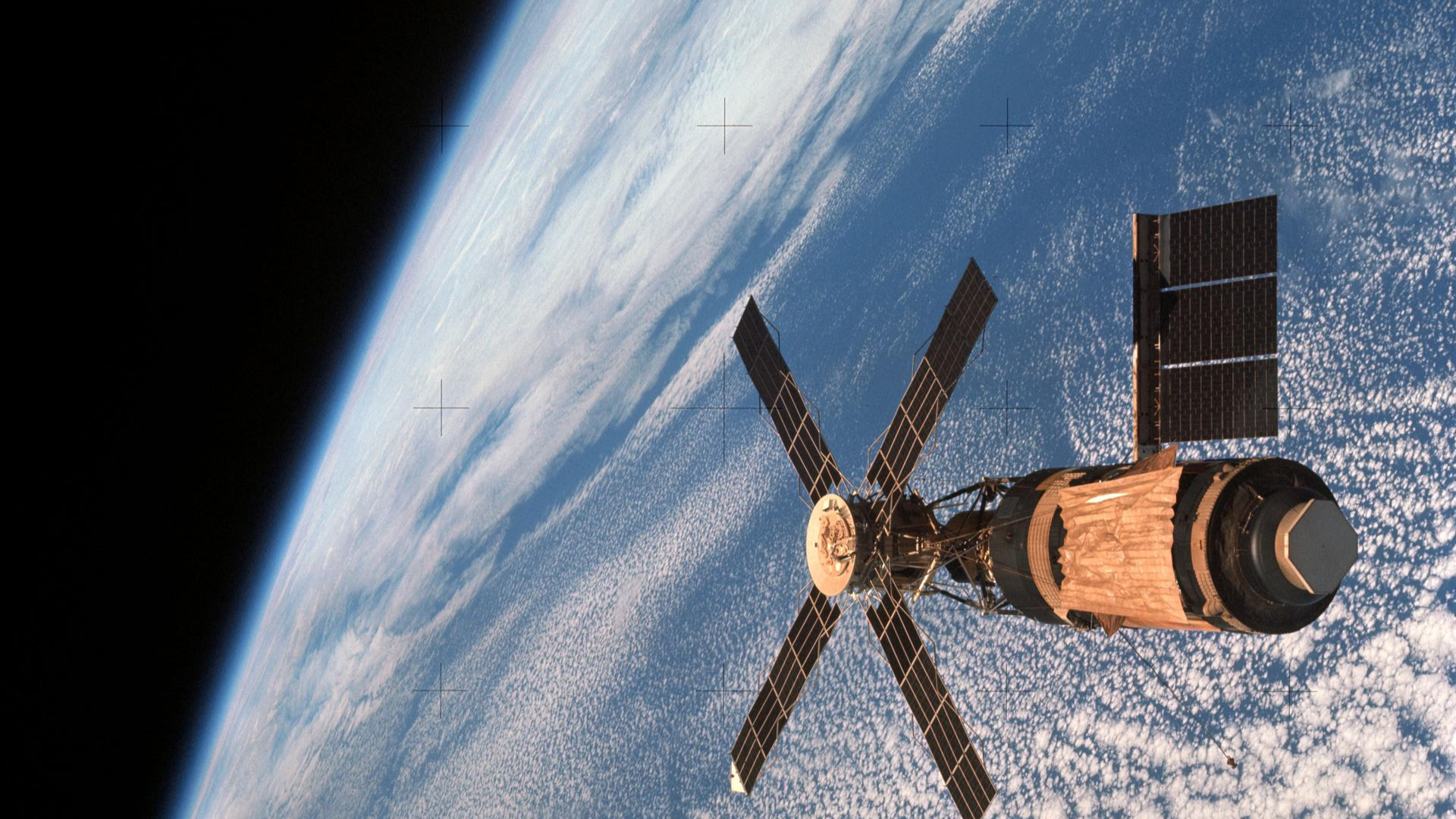
Skylab orbiting above Earth. (Image credit: NASA)
While there were no reported injuries or property damage from the debris, roughly 26 tons of material fell to Earth, some of it surviving the trip and landing in Western Australia.
So in an alternate version of history where Camp Firewood is located in a remote area of Australia, this plot could have been more than science fiction.
Want to relive the sci-fi summer camp glory? To celebrate its 25th anniversary, Wet Hot American Summer is returning to select theaters from Aug. 14-21. If you miss that, you can also buy or rent it on Amazon Prime Video or Apple TV.
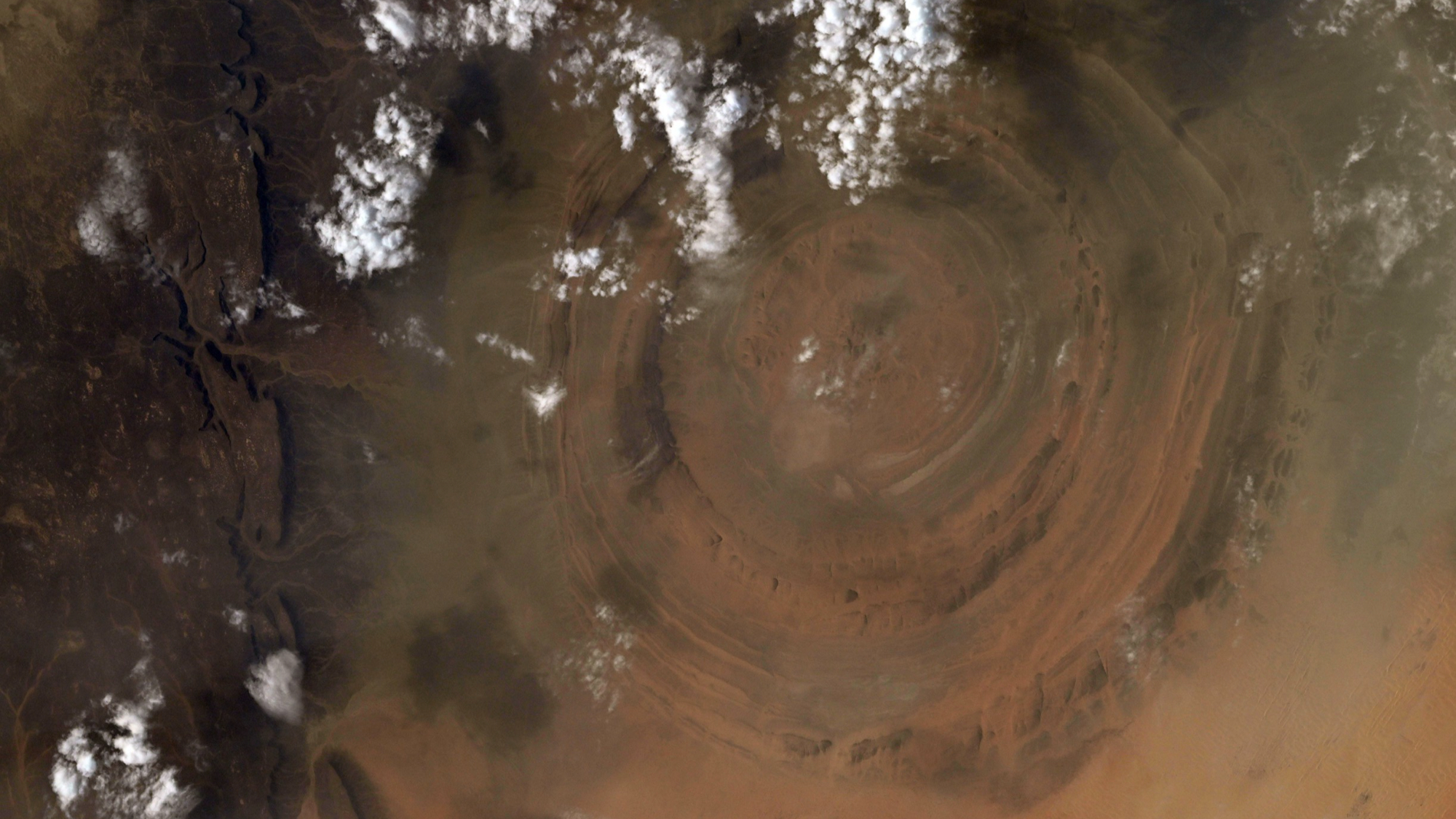
The Richat Structure (also known as the "Eye of Africa" in Mauritania in Africa as photographed by NASA astronaut Jessica Meir from aboard the International Space Station. (Image credit: Jessica Meir/NASA)
The "Eye of Africa" swirls across Mauritania in a hypnotizing snapshot captured from space.
What is it?
A 25-mile-wide (40 kilometer-wide) circular structure made up of concentric ridged rings sticks up from the Earth in Mauritania, a country on the coast of northwestern Africa. While it might look like an elaborate, hand-carved piece of artwork, it's actually a natural geologic feature.
Formally known as the Richat Structure and nicknamed the "Eye of Africa," this geologic formation can be seen clearly from space.
The first time this feature was seen from space was in 1965 when NASA astronauts Ed White and James McDivitt photographed it during the Gemini IV mission.
61 years later, NASA astronaut Jessica Meir has photographed the feature from aboard the International Space Station where she is working as part of Expedition 75.
Why is it incredible?
Meir shared the photo of the structure on social media along with other photographs from that region.
"The Richat Structure (or Eye of Africa) in Mauritania is photographed from above by many astronauts, but something about the lighting and coloring on this day captured my artistic eye. This palette and textures of this region of Africa scream pure Earth Art, at least in my brain!" Meir said in the post where she shared her photos.
Amazingly, because of its massive size, this geologic feature is perhaps most clearly seen from space. While astronauts aboard the ISS are orbiting our planet from hundreds of miles away, theit vantage point actually allows them to see the full, expansive circles that make up the "Eye of Africa." And while we've been seeing it from space since 1965, the view really never gets old.
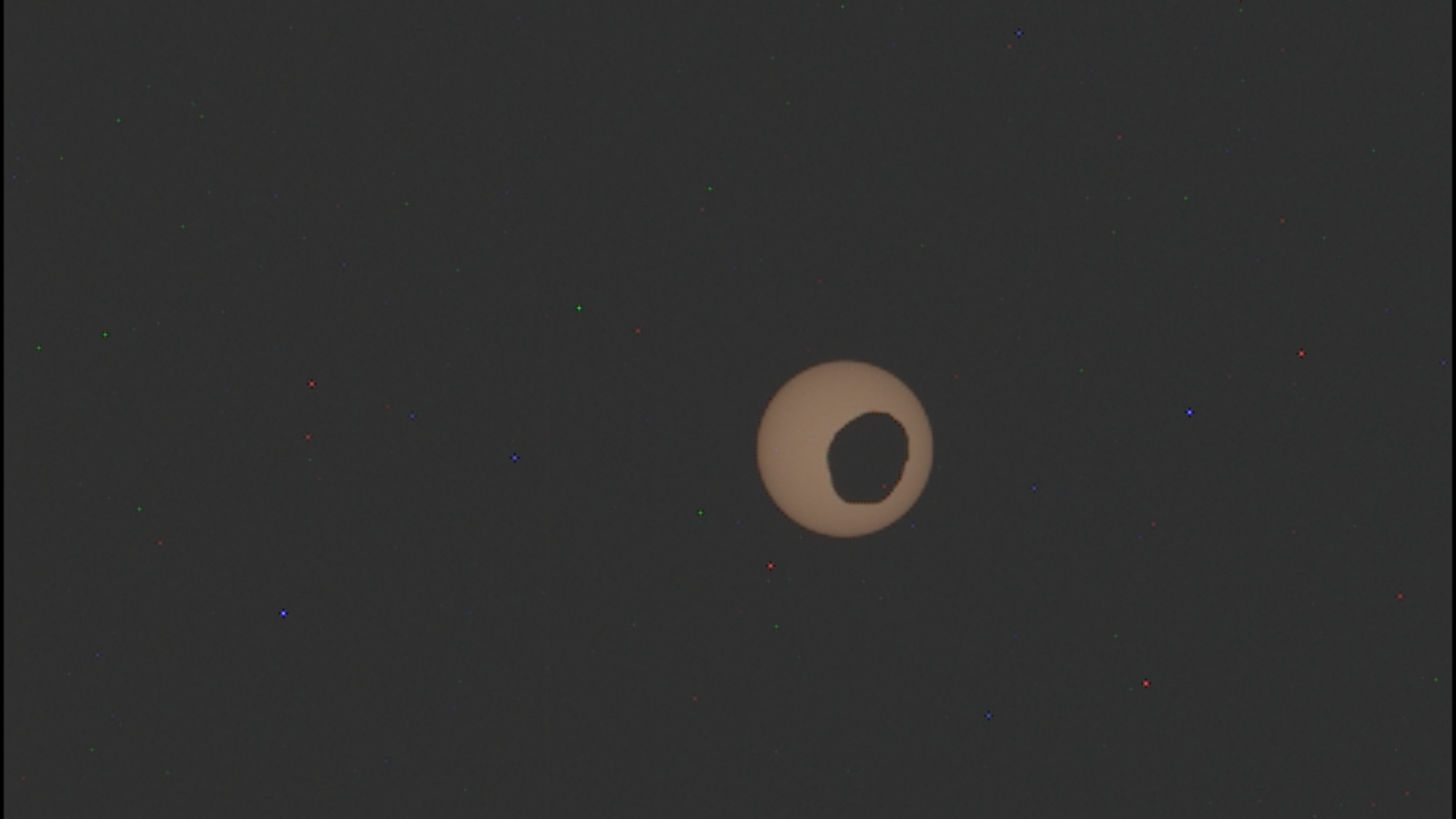
NASA's Perseverance Mars rover saw a solar eclipse from the Martian surface. (Image credit: NASA/JPL-Caltech/ASU)
People around the world enjoyed stellar views with last week's total solar eclipse.
And the day after we looked up to see the moon obscuring out sun, NASA's PerseveranceMars rover looked up to see its own Martian solar eclipse.
What is it?
Solar eclipses aren't unique to Earth. In theory, any planet with at least one orbiting moon would have times where that moon might eclipse some part of its sun to anyone looking up from the planet's surface.
Looking up with its left Mastcam-Z camera, Perseverance snapped this image of one of Mars' two moons, Phobos and Deimos, partially eclipsing the sun. This appears to be Phobos — the larger of the pair — eclipsing the sun.
Why is it incredible?
So far, we humans have only directly had vantage points on Earth, in Earth orbit and on the moon. We have not yet landed humans on Mars, and it remains unclear how long it might be before that happens.
But robotic explorers like Perseverance allow us to travel where we can't go ourselves. Such travelers have taken us into interstellar space and all throughout our solar system. From Saturn's rings to Neptune's distant, icy neighborhood, robotic probes have allowed humanity's reach to stretch far through the cosmos.
And thanks to Perseverance and its two "eyes," the two Mastcam-Z cameras located high on its mast, we can travel right to the surface of Mars, look up and see an alien solar eclipse. What an amazing thing that is.
Is it a rocket car? Tearing across the Utah desert at over 400 mph (644 kph), a hydrogen-powered car has set a new land speed record.
Wing Commander Andy Green, a retired British Royal Air Force fighter pilot, just set a new world land speed record at the Bonneville Salt Flats in the JCB Hydromax vehicle. On two different runs on Aug. 11, the car went 400.623 mph (644.740 kph) and then 412.135 mph (663.267 kph), which averages out to 406.320 mph (653.909 kph).
That's the fastest that any car with a hydrogen internal combustion engine has traveled. "It was an amazing experience," Green told Space.com on Aug. 12 about his record-breaking drives.
"Anything above about 350 miles an hour [563 kph], we'd have gone away really pleased," he added. "It is performing better. It was more reliable than we expected, and it has blown away the hydrogen record. It's in every way a real thrill for all of us yesterday to see that happen."
Green is no stranger to breaking records. In 1997, he drove a jet-powered car 763.035 mph (1,227.985 kph, or Mach 1.02), setting a new land speed record while also becoming the first person to break the sound barrier on land.
About 20 years ago, Green also set the land speed record for a diesel-powered vehicle, going over 350 mph (563 kph). Until now, the fastest hydrogen-powered vehicle didn't come close to that, topping out at 303 mph (488 kph). But this new record shows the promising capability of hydrogen-powered engines on land.
The hydrogen engine doesn't produce carbon dioxide like a traditional gasoline or diesel engine does. And while it's not the most traditional car engine on Earth, hydrogen has powered some rocket engines for decades. For example, NASA's Space Launch System (SLS) launcher, which has two successful Artemis moon mission liftoffs under its belt, burns liquid hydrogen and liquid oxygen. (The SLS core stage employs RS-25 engines, which also powered NASA's now-retired space shuttle.)
The JCB Hydromax isn't exactly a rocket on wheels, but it does demonstrate an incredible technological feat. And the "rocket car" probably has more in common with an actual rocket than we might think. For example, while it's not as fast as a rocket, pushing a vehicle to its limits requires many of the same preparations.
"There is a countdown and a checklist," Green told Space.com. "And several times we've had to stop the countdown, reheat something, adjust something, restart the countdown and launch it off the start line."
However, despite its speed, hydrogen-powered engine and countdown clock, this "rocket car" isn't going to space anytime soon.
"These are built for the construction industry," Green said about the engines. "They normally kick out 74 horsepower," he added, so they put "two of them in a race car to show how tough, how adaptable [and] how capable they are."
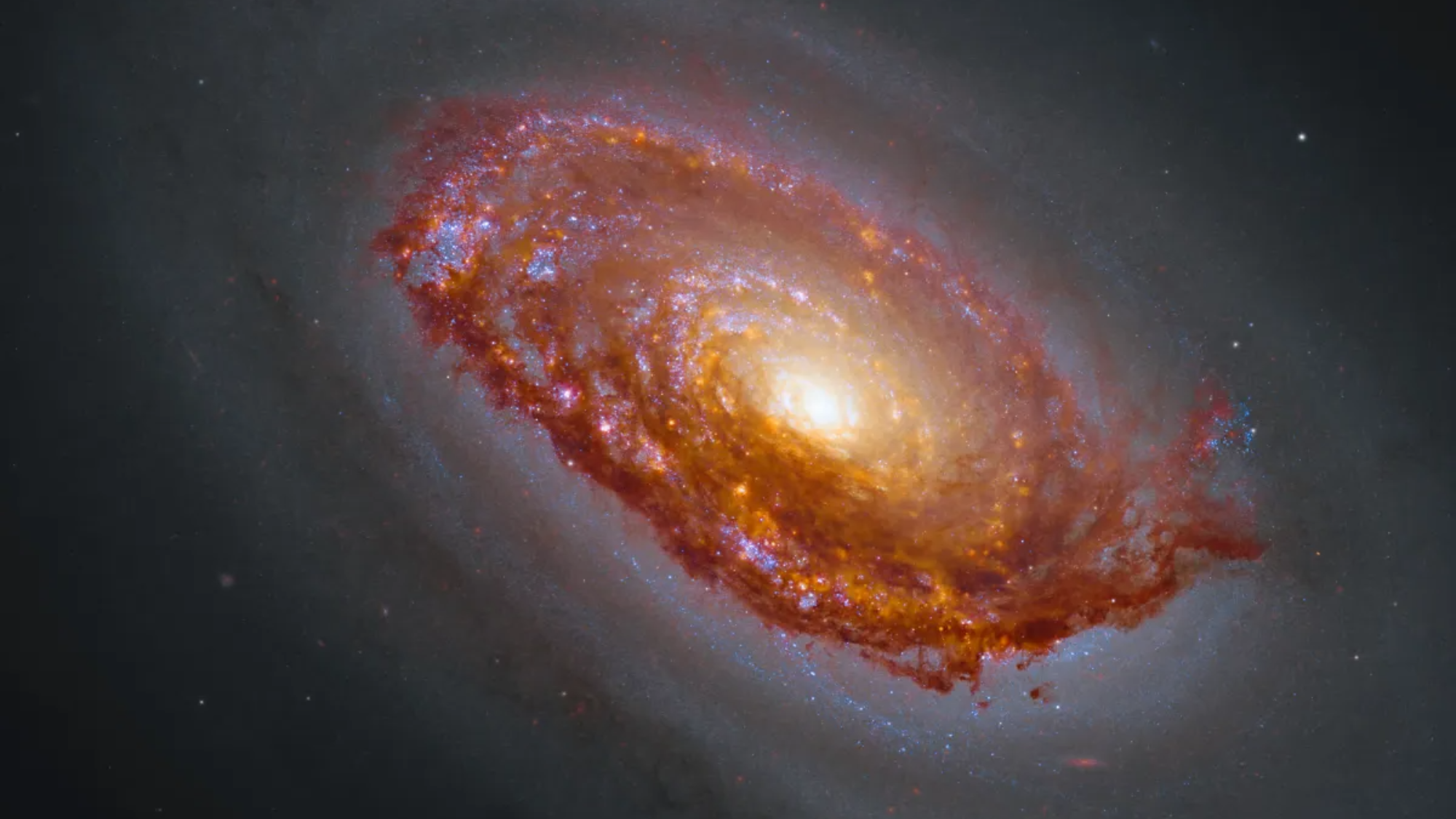
The "Black Eye Galaxy" is captured in this new composite image from the Hubble Space Telescope and JWST. (Image credit: NASA, CSA, ESA, F. Belfiore (European Southern Observatory – Germany), J. Lee (Space Telescope Science Institute), A. Leroy (The Ohio State University), and D. Thilker (The Johns Hopkins University); Processing: Gladys Kober (NASA/Catholic University of America))
Sometimes, incredibly powerful space telescopes work together to accomplish amazing things. Recently, observations made by both the James Webb Space Telescope and Hubble were combined in a composite image that shows the incredible nature of the "Black Eye Galaxy," more formally known as Messier 64.
What is it?
The Black Eye Galaxy is a strange spiral galaxy located 17 million light-years from Earth, in the constellation Coma Berenices, a name that means "Berenice's Hair" in Latin.
Discovered in 1779, the Black Eye Galaxy is fairly isolated from other galaxies and is known for its hypnotizing "stare." This look is created by the galaxy's internal, swirling motion. However, unlike many other spiral galaxies, the gas in the outer reaches of this one rotates in the opposite direction to the gas and stars closer to its center, creating an especially unusual motion.
To capture this incredible composite view of the galaxy, astronomers combined near and mid-infrared wavelength observations made by JWST and ultraviolet, visible and near-infrared observations made by Hubble.
Why is it incredible?
As we look forward to observations from NASA's upcoming flagship space observer, the Nancy Grace Roman Space Telescope, this collaborative effort shows how such powerful instruments don't replace one another; rather, they bring different capabilities to the table and can complement each other.
And, while this new image is the result of a team effort of cutting edge-technology, the Black Eye Galaxy is also a favorite target for backyard astronomers because it can often be spotted in small telescopes.
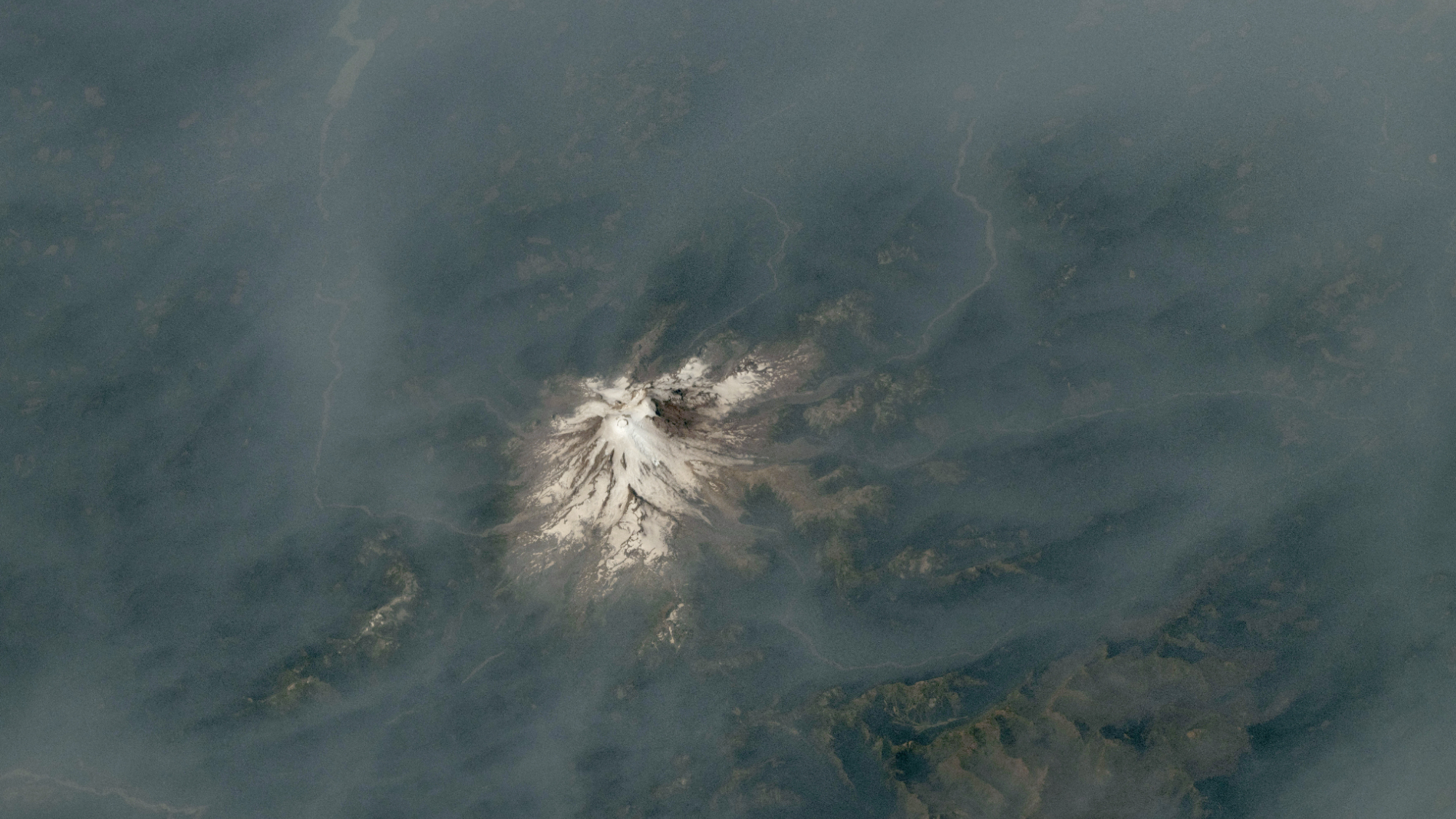
Imagine orbiting hundreds of miles above Earth and seeing your home planet below — up in smoke.
That was the reality recently for astronauts aboard the International Space Station (ISS) who captured this image of the volcano Mount Rainier covered in smoke from nearby wildfires.
What is it?
This past July, hundreds of wildfires devastated a number of regions across Canada. But unfortunately, this was not the end of wildfires decimating North America this summer.
Recently, wildfires have spread across Washington and Oregon, burning over 84,000 acres (34,000 hectares) as of Aug. 12, according to NASA.
This image, captured by astronauts aboard the ISS, shows smoke blowing from wildfires in central and eastern Washington to the volcano Mount Rainier. The astronauts also captured imagery of Mt. Hood about 100 miles (160 kilometers) south. With Mt. Hood, you can also see thick plumes of smoke coming from the Grasshopper fire, which was ignited by a lightning strike.
Why is it incredible?
This is the worst fire season the Pacific Northwest has seen in over 30 years, CNN has reported. The wildfires have forced many to evacuate their homes, shut down major roads and more. In addition to the immediate dangers presented by the wildfires themselves, as we can see from these images, the smoke from the fires extends far and wide and has created unhealthy air quality levels.
As of Wednesday (Aug. 12), over 2.7 million acres (1.1 million hectares) had already burned, and by Friday (Aug. 14), the region still had dozens of uncontained wildfires, CNN reported.
While tackling the problem of wildfires — which is increasing as climate change worsens — takes place on Earth, we can learn a lot from seeing things from above. The vantage point of outer space allows for views like this, which can give a larger perspective. And satellite views can provide even more in-depth information to support wildfire fighting activities back on Earth.