On this day in space! Oct. 17, 2016: Private Antares rocket returns to flight after catastrophic launch explosion

On Oct. 17, 2016, Orbital ATK (now Northrop Grumman Space Systems) returned to flight, successfully launching a cargo shipment to the International Space Station (ISS) after its previous cargo mission failed to launch.

The private spaceflight company was contracted by NASA to fly cargo to the ISS, and stakes were high for this launch. Orbital ATK's last attempt nearly two years earlier ended in a catastrophic explosion a few seconds after liftoff.

Despite some delays, the newly upgraded Antares rocket flawlessly blasted off into the night sky from NASA's Wallops Flight Facility in Virginia. Six days later, the Cygnus cargo spacecraft arrived at the ISS to deliver food, supplies and science experiments to the crew.
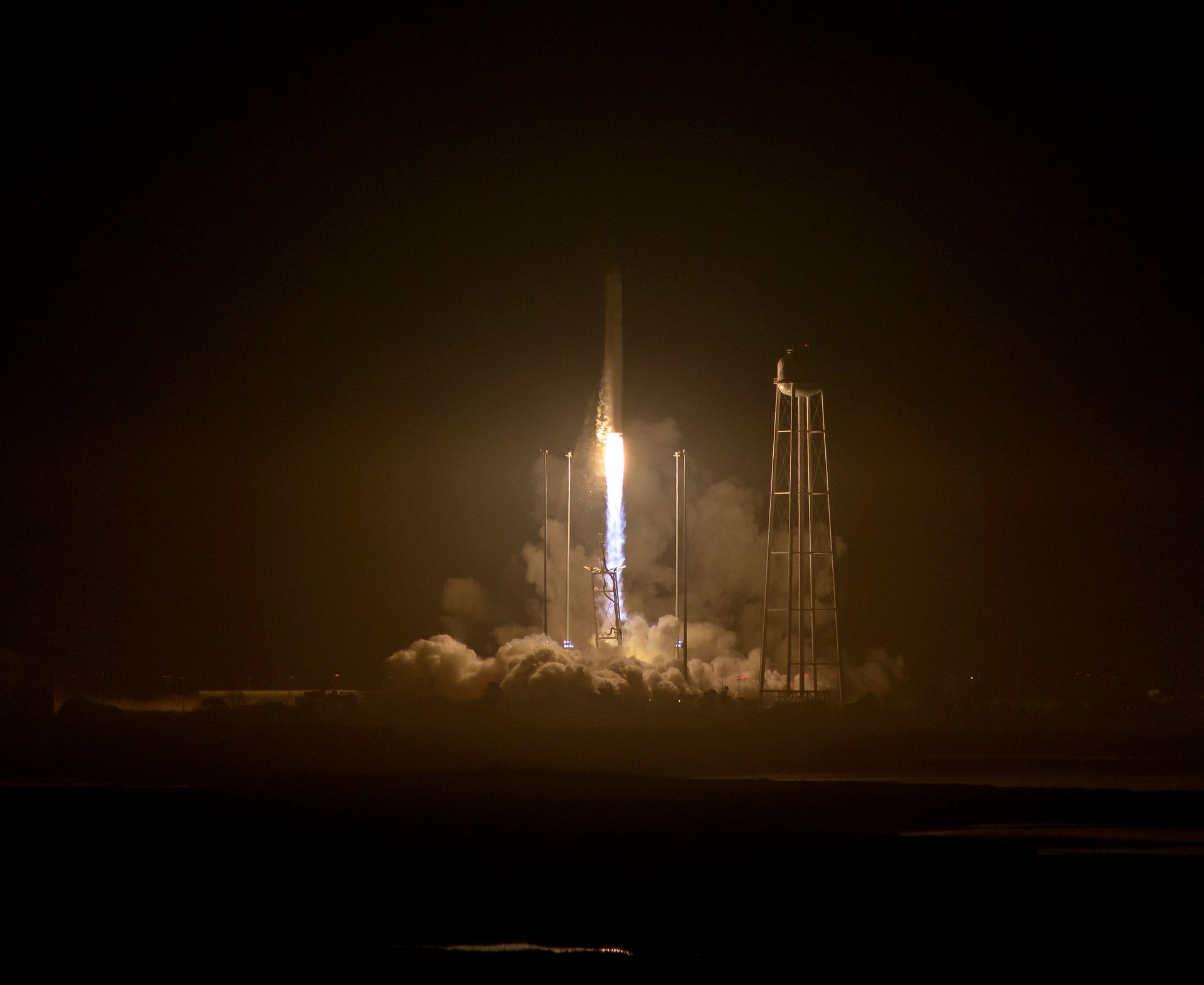
An upgraded Orbital ATK Antares rocket soars into the night sky over NASA's Wallops Flight Facility on Wallops Island, Virginia on Oct. 17, 2016.

An upgraded Orbital ATK Antares rocket soars into the night sky over NASA's Wallops Flight Facility on Wallops Island, Virginia on Oct. 17, 2016. (Image credit: NASA/Bill Ingalls)

Why it mattered

For the International Space Station to be able to sustain a continuous human occupancy, periodic cargo deliveries are needed. Russia fulfills part of this requirement with its Progress spacecraft, and both ESA (European Space Agency) and JAXA (Japan Aerospace Exploration Agency) have contributed with their Automated Transfer Vehicle (ATV) and H-II Transfer Vehicle (HTV), respectively.

For its part, NASA contracted with Orbital (today, Northrop Grumman) and SpaceX to fly commercial resupply service missions. Both were needed to keep the U.S. operating segment of the station well supplied and with the science and research materials needed for the crew's work.

Below is a video of the explosion

Though adjustments can be made to go without one or more of these vehicles for a short period of time, the Progress, Cygnus and Dragon are key components of the ISS's continuous operation. So returning a vehicle to flight after a catastrophic exploration is important to well-being of the International Space Station program.

As it happened, Antares would fly another 12 times before having to stand down again to be redesigned, but that is for a different This Day in Space entry.

Want more space history? Check out our full On This Day In Space Story archive and watch our On This Day In Space videos on YouTube.
On this day in space! Oct. 16, 1975: NASA launches the 1st-ever GOES weather satellite to watch Earth from space

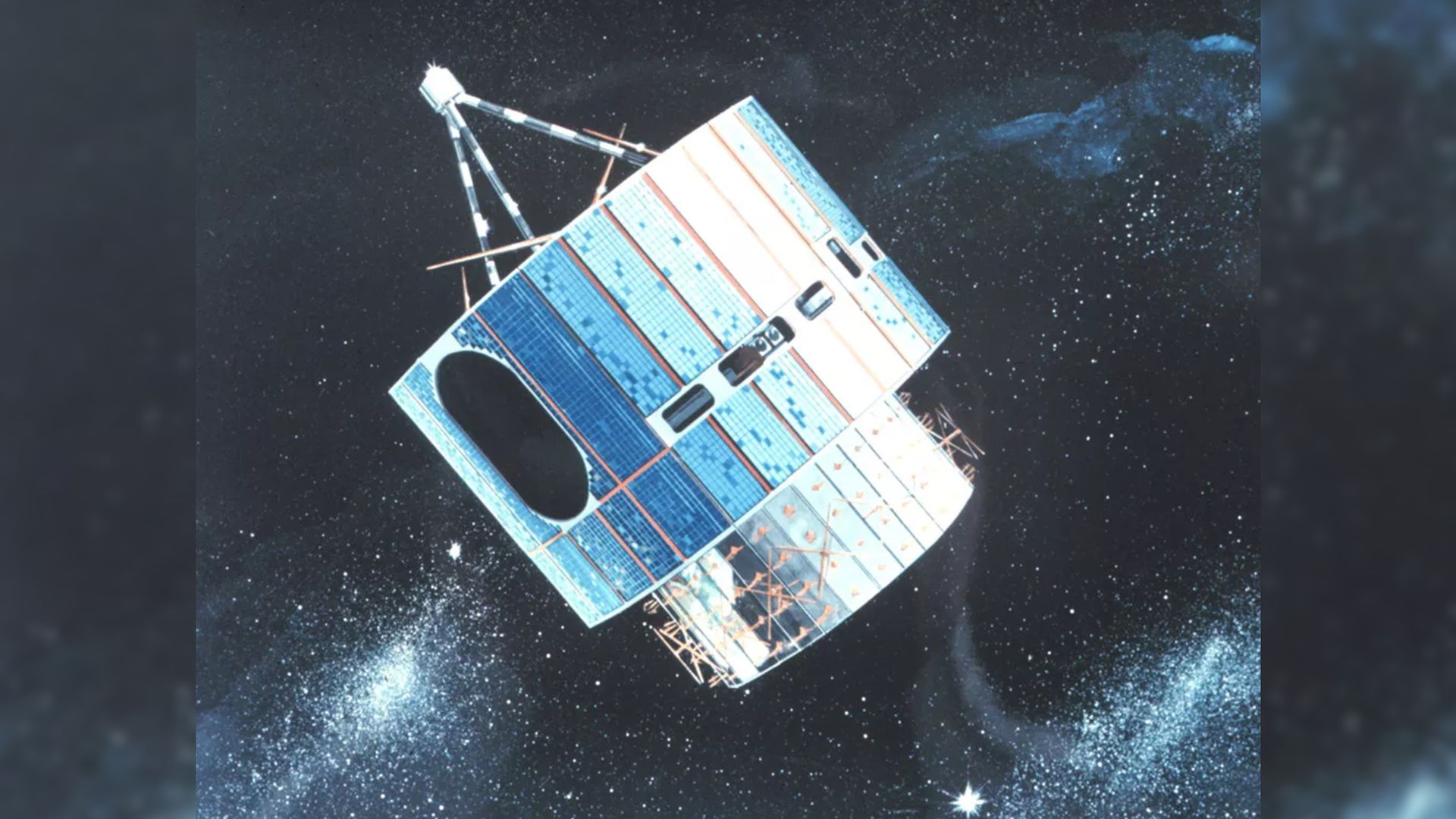
On Oct. 16, 1975, NASA launched the first operational GOES satellite!

GOES-A was the first in a series of weather satellites that NASA jointly operated with the National Oceanic and Atmospheric Administration (NOAA).

The name is short for Geostationary Operational Environmental Satellite. GOES-A launched on a Delta rocket from Cape Canaveral, Florida. GOES satellites all have a geostationary orbit, which means they always face the same part of Earth — in this case, the Indian Ocean. Once GOES-A became operational, it was renamed GOES-1.

The GOES satellite fleet has grown over the years, and is a critical link in the chain of satellites tracking Earth's weather from space. In 2016, NASA and NOAA launched GOES-R, the first in a new next-generation series of GOES weather satellites, with more to follow in ensuing years.

An artist's illustration of the GOES-1 weather satellite.

An artist's illustration of the GOES-1 weather satellite. (Image credit: NOAA)

Why it mattered

With weather forecasts so prevalent (you can literally find them in the palm of your hand with a smartphone), it may be hard to think that such daily information wasn't always readily available. But that was the case when NOAA began building what has become an essential part of the U.S. weather monitoring fleet of satellites.

GOES-A, or GOES-1 as it was later called, "gave forecasters their first near-real time look at atmospheric conditions from a fixed location," NOAA officials said in an overview.

The satellite launched from Pad 17A at what is now the Cape Canaveral Space Force Station and returned its first photo just nine days after liftoff, on Oct. 25, 1975. The satellite was equipped with a Visible/Infrared Spin Scan Radiometer (VISSR) to capture Earth observations in daylight and nighttime to track clouds and surface temperature.

The spin-stabilized satellite was able to observe Earth just 10% of the time, but was still the most up-to-date satellite observations for weather forecasters.

GOES-1 was active until March 7, 1985, when it was ultimately decommissioned. But during that time, NASA and NOAA launched five more successors, GOES 2, 3, 4, 5 and 6.

"For 50 years, GOES data has been the backbone of short-term forecasts and warnings of severe weather and environmental hazards in the Western Hemisphere and forecasts and warnings of space weather hazards," NOAA wrote while celebrating 50 years of GOES satellites. "Each successive generation of GOES has brought improvements and new capabilities to monitor our part of the world."

Since the first next-generation GOES satellite, GOES-R, launched in 2016, NOAA has flown another three satellites, most recently with GOES-U weather satellite launch in 2024.

Want more space history? Check out our full On This Day In Space Story archive and watch our On This Day In Space videos on YouTube.
On this day in space! Oct. 15, 1997: NASA launches Cassini-Hugyens probe on 7-year voyage to Saturn

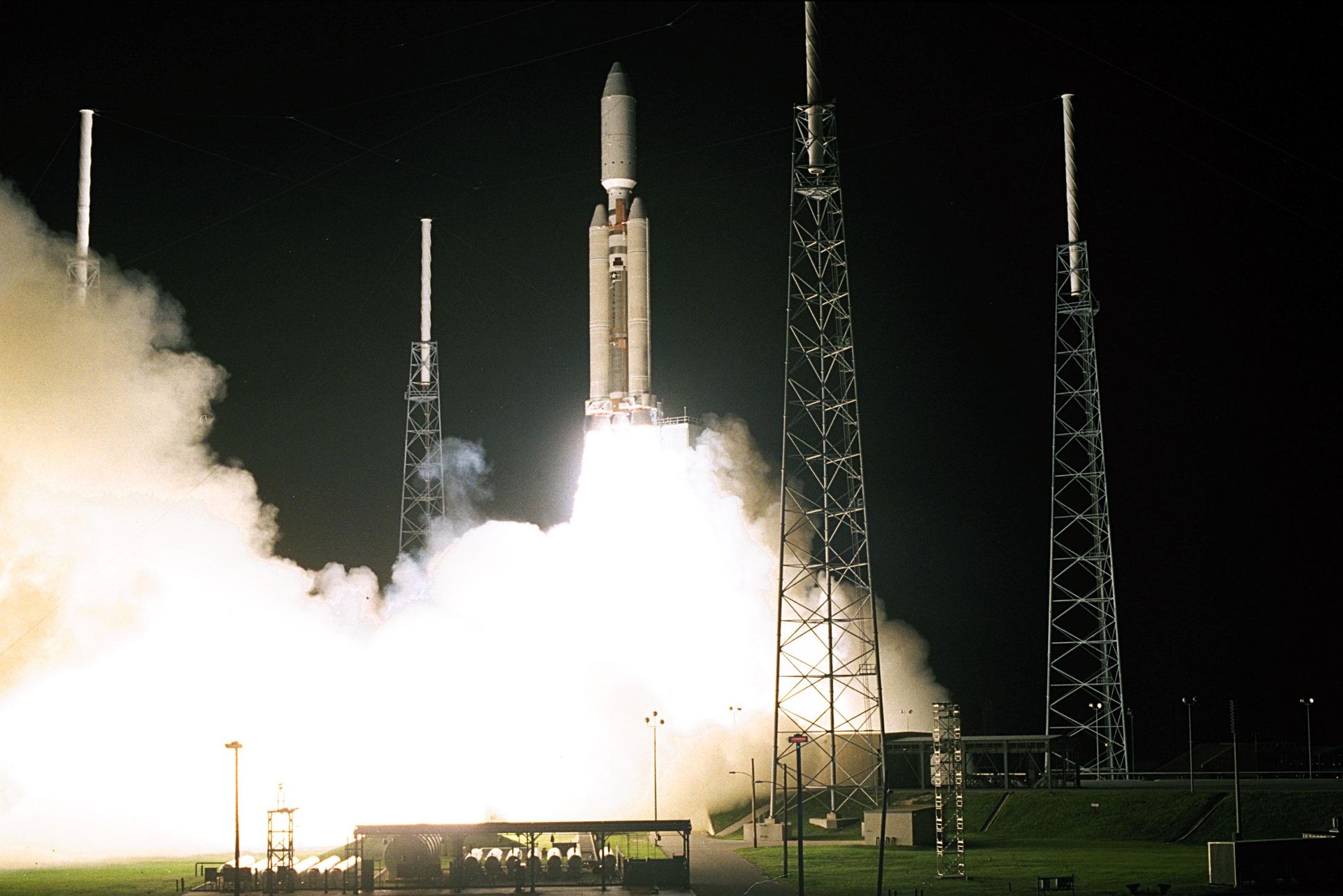
On Oct. 15, 1997, NASA launched the Cassini spacecraft on a mission to explore Saturn and its moons. It lifted off aboard a Titan 4B rocket from Cape Canaveral Air Force Station in Florida.

It took almost seven years for the Cassini spacecraft to reach Saturn, with the spacecraft entering orbit around the ringed planet in 2004. Another smaller spacecraft called Huygens hitched a ride with Cassini, and it landed on Saturn's moon Titan in 2005.

Cassini spent 13 years studying the Saturn system up close, and the mission lasted about 20 years before coming to an epic grand finale on Sept. 15, 2017.

Running low on fuel, NASA chose to steer Cassini straight into Saturn's atmosphere, where the spacecraft was destroyed.

NASA's Cassini spacecraft lifts off on Oct. 15, 1997, atop a Titan IVB rocket. (Image credit: NASA)

Why it mattered

NASA's Cassini mission to Saturn (which carried the European Space Agency's Huygens lander to Titan) was a flagship planetary mission like no other ever when it first launched toward the ringed planet.

The $3.26 billion Cassini spacecraft became the first probe ever to orbit Saturn when it arrived in 2004. It revealed Saturn's rings as active and dynamic structures, as intricate and complex as they are beautiful to observe.

And it delivered Huygens to Titan, then followed up with a series of Titan flybys that revealed the cloudy moon could have liquid hydrocarbon rain, rivers, lakes and seas.

Perhaps the most exciting discoveries were the most surprising.

Cassini discovered a strange hexagon-shaped jetstream encircling Saturn's north pole and revealed massive hurricane-like vortexes over both of the planet's poles. In 2010, Cassini watched as a giant storm formed in Saturn's northern hemisphere, then grew to encircle the entire planet through 2011.

The spacecraft also discovered icy plumes of water erupting from Saturn's moon Enceladus, revealing new clues into that moon's subsurface ocean of liquid water, complete with hydrothermal events like those found in Earth's oceans.

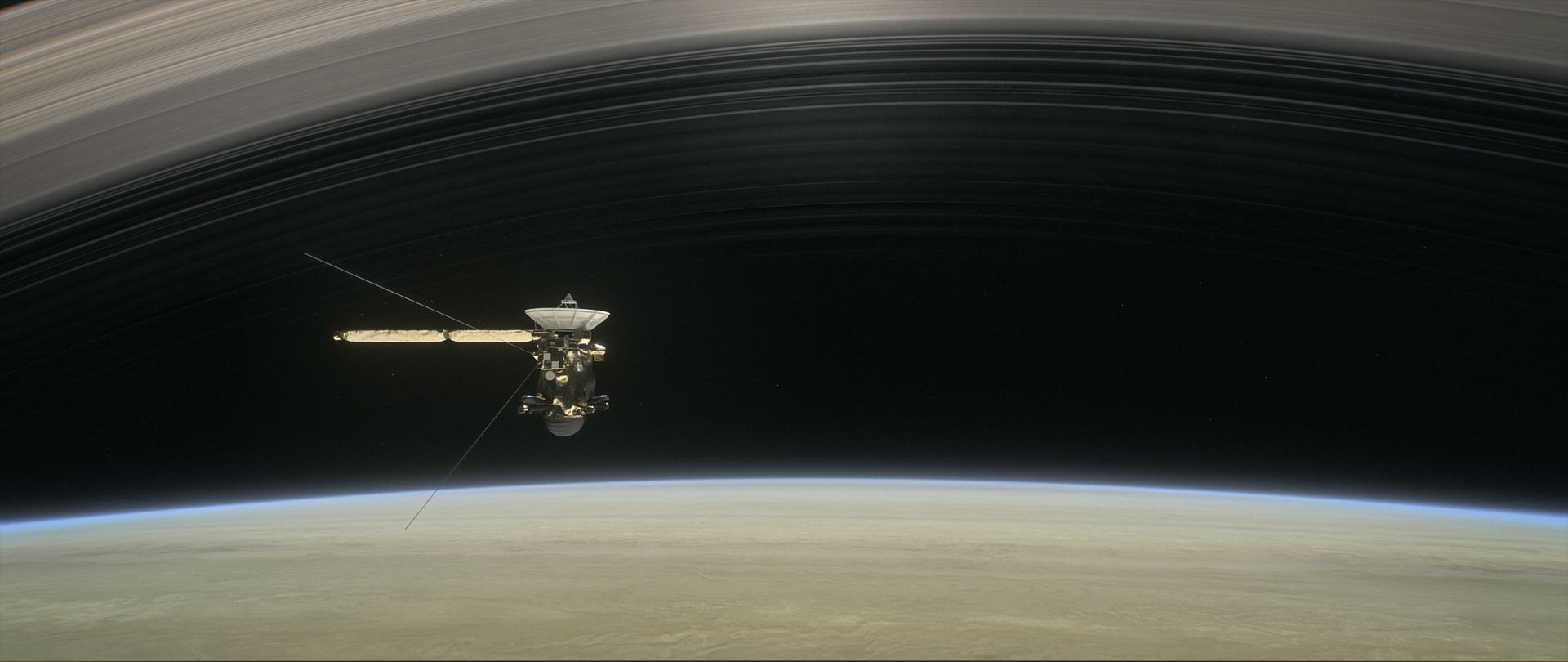
This artist's illustration shows Cassini making one of its final five dives through Saturn's upper atmosphere in August and September 2017.

This artist's illustration shows Cassini making one of its final five dives through Saturn's upper atmosphere in August and September 2017. (Image credit: NASA/JPL-Caltech )

It was to protect Enceladus, Titan and other Saturn moons that NASA ultimated sent Cassini into a death dive into Saturn at the end of its mission. The space agency wanted to prevent any chance of contamination at those pristine moons.

"NASA’s Cassini spacecraft and ESA’s Huygens probe expanded our understanding of the kinds of worlds where life might exist and eight more reasons the mission changed the course of planetary exploration," NASA said in an overview.

Want more space history? Check out our full On This Day In Space Story archive and watch our On This Day In Space videos on YouTube.
On this day in space! Oct. 14, 1947: Test pilot Chuck Yeager breaks the sound barrier in the Bell X-1, the first X-plane

On Oct. 14, 1947, Chuck Yeager broke the sound barrier for the first time!

Chuck Yeager was a test pilot for the U.S. Air Force who made history by flying an aircraft faster than the speed of sound.

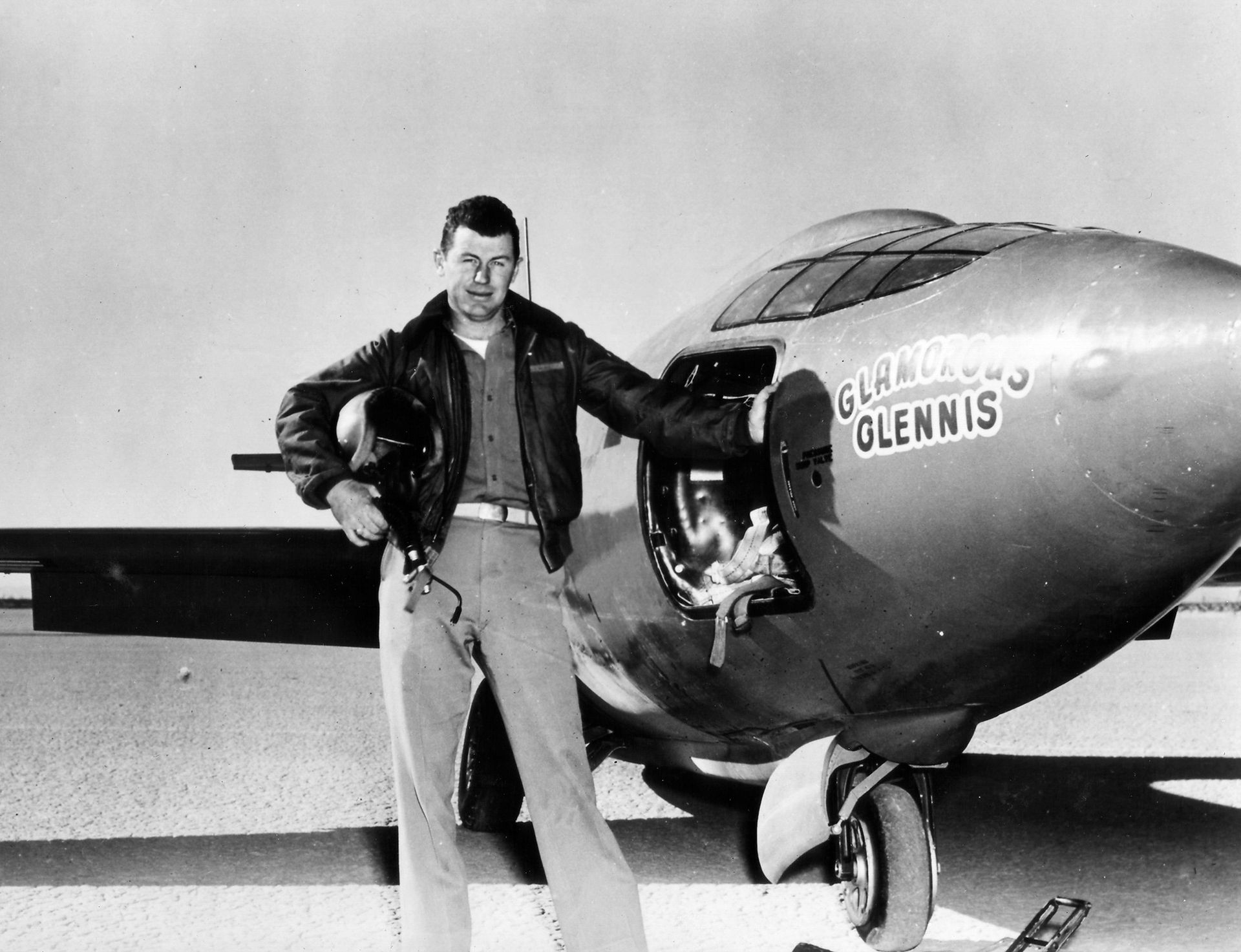
Yeager made his historic flight in a Bell X-1 rocket plane that he named "Glamorous Glennis" after his wife. Yeager had broken two ribs the night before when he fell off a horse, but that didn't stop him!

His aircraft was dropped from a Boeing B-29 bomber before accelerating to a speed of Mach 1.07, which is about 821 mph (1,321 km/h). The speed of sound, Mach 1, is about 760 mph (1,223 km/h).

USAF Capt. Charles E. Yeager (shown standing with the Bell X-1 supersonic rocket plane) became the first man to fly faster than the speed of sound in level flight on Oct. 14, 1947.

USAF Capt. Charles E. Yeager (shown standing with the Bell X-1 supersonic rocket plane) became the first man to fly faster than the speed of sound in level flight on Oct. 14, 1947. (Image credit: United States Air Force Archive)

Why it mattered

Before Yeager made his daring Bell X-1 flight, piloted supersonic flight was only a concept.

The Bell X-1 began its life as the XS-1, a cooperative project between NASA's predecessor the National Advisory Committee for Aeronautics (NACA) and the U.S. Army Forces, which would evolve later into the U.S. Air Force. Bell Aircraft won the contract to build the experimental plane in March 1945 and was delivered in December of that year.

The final vehicle was a single-piloted aircraft that was just over 30 feet (nearly 11 meters) long, had a wingspan of about 28 feet (8.5 m) and powered by a rocket engine using liquid oxygen and ethyl alcohol in water as propellant. Yeager's historic flight followed a series of unpowered glide tests, incuding three by Yeager himself in August of 1947, followed by ever faster subsonic powered flights.

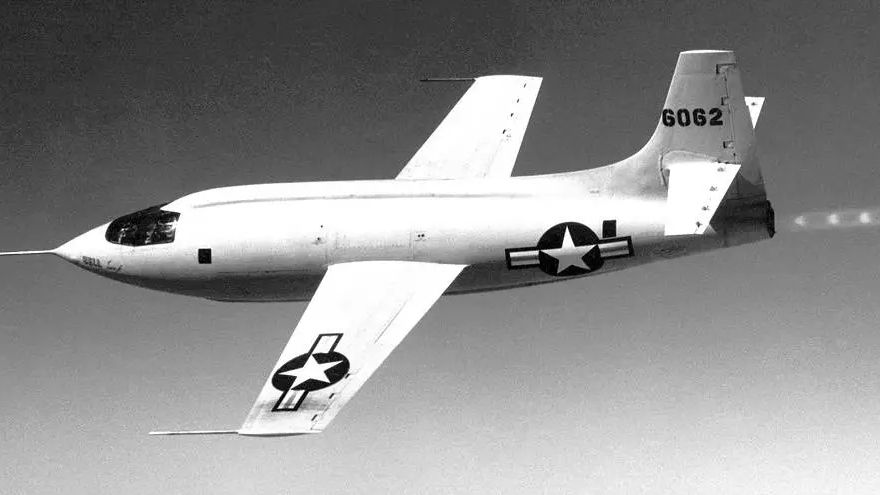
The Bell X-1 rocket plane was the first to break the supposed sound barrier (or Mach 1) on Oct. 14, 1947.

The Bell X-1 rocket plane was the first to break the supposed sound barrier (or Mach 1) on Oct. 14, 1947. (Image credit: NASA)

"The first generation X-1 aircraft changed aviation history in numerous ways, and not simply because they were the first aircraft to fly faster than the speed of sound," NASA wrote in an overview. "Rather, they established the concept of the research aircraft, built solely for experimental purposes, and unhampered by any military or commercial requirements."

According to NASA, Yeager's history-making flight wasn't immediately known to the public, a departure from the agency's X-plane tests today.

"Yeager reached a speed of Mach 1.06 at 43,000 feet, becoming the first man to fly supersonic. Air Force officials designated the flight and all data as Top Secret two hours later," NASA wrote. "Not until December 1947 would word leak of the achievement, and it was not until March 1948 that the U.S. Air Force officially confirmed the achievement."

Yeager's flight and the X-1 program laid the foundation for an ever-more-ambitious X-plane program that continues at NASA and in the U.S. military today.

NASA's latest X-plane is the X-59 supersonic plane, which is designed to test supersonic flight with quieter sonic booms as way to open up supersonic travel over land for wider commercial use.

Want more space history? Check out our full On This Day In Space Story archive and watch our On This Day In Space videos on YouTube.
On this day in space! Oct. 13, 1773: Astronomer Charles Messier discovers the Whirlpool Galaxy before we ever knew it was a galaxy

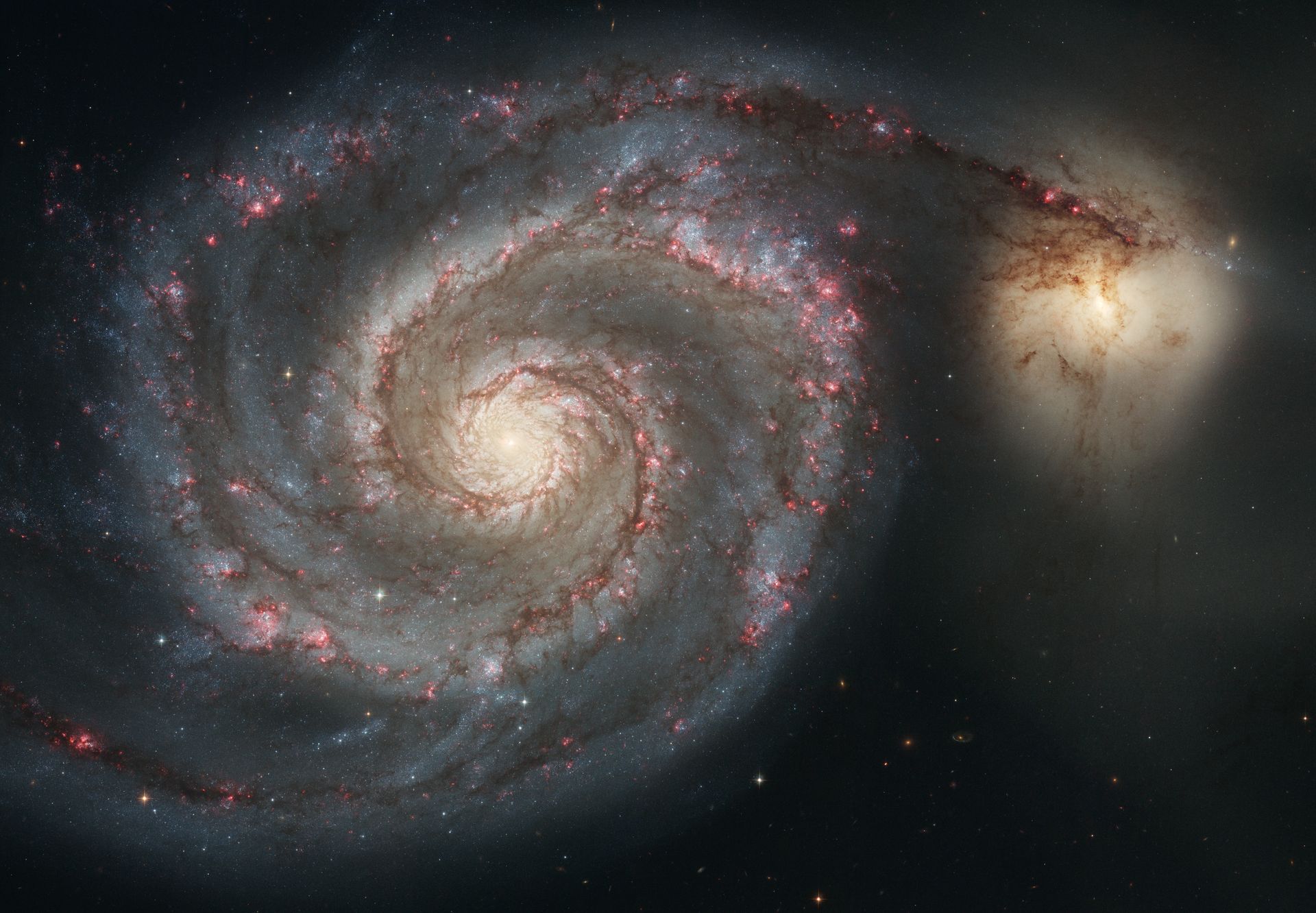
On Oct. 13, 1773, a French astronomer named Charles Messier discovered the "Whirlpool Galaxy," also known as Messier 51, or M51.

Charles Messier was scanning the sky for objects that could confuse comet hunters when he catalogued the galaxy as M51. However, Messier wasn't able to see the spiral structure, and he didn't identify it as a galaxy.

Seventy-two years later, another astronomer named William Parsons saw the whirlpool shape, but he thought it was a spiral nebula. Eventually, Edwin Hubble found out that M51 and other features like it were actually galaxies.

Spiral galaxy M51 (NGC 5194), The Whirlpool Galaxy, displays its long arms which consist of stars and gas laced with dust arranged in long lanes, in this view from the Hubble Space Telescope. The smaller galaxy to the right is NGC 5195, which is actually more distant than M51, and not next door. (Image credit: NASA/ESA/S. Beckwith/Hubble Heritage Team/STScI/AURA)

Why it mattered

The Whirlpool Galaxy is located about 31 million light-years from Earth and just might be the textbook case of a spiral galaxy. But in 1773, it was just one of 51 (at the time of its discovery) of "comet-like 'objects to avoid'" in the night sky.

The Whirlpool Galaxy's designation as M51 marks it as the 51st non-comet object catalogued by Messier, who was the chief astronomer of the Marine Observatory in Paris dedicated to studying comets. According to a NASA account, Messier stumbled across his first non-comet object, M1 (also known as the Crab Nebula), while studying a comet in 1758. The objects looked like fuzzy blobs like comets, but didn't move like a comet. By 1773, at the time he first spotted M51, he had catalogued over four dozen such objects to help prevent astronomers from mistaking them for comets.

The Whirlpool Galaxy appears as a dazzling spiral in images by the Hubble Space Telescope, and has a magnitude of 8.4 on the brightness scale used by astronomers. That means it can be observed through a small telescope ("most easily during May," NASA says) in the constellation Venatici (the Hunting Dogs) in the northern sky, just below the handle of the Big Dipper star pattern.

Scientists suspsect the Whirpool Galaxy gets is striking spiral shape from a close interaction with its neighbor galaxy NGC 5195, which may have passed through M51's main disk about 500 million years ago, scientists with NASA's Spitzer Space Telescope have said.

"This gravitational tug of war may also have triggered an increased level of star formation in M51," they added in a statement. "The companion galaxy's pull would be inducing extra starbirth by compressing gas, jump-starting the process by which stars form."

Want more space history? Check out our full On This Day In Space Story archive and watch our On This Day In Space videos on YouTube.
On this day in space! Oct. 12, 1964: The Soviet Union launches Voskhod 1, the 1st multi-person cosmonaut crew, into space

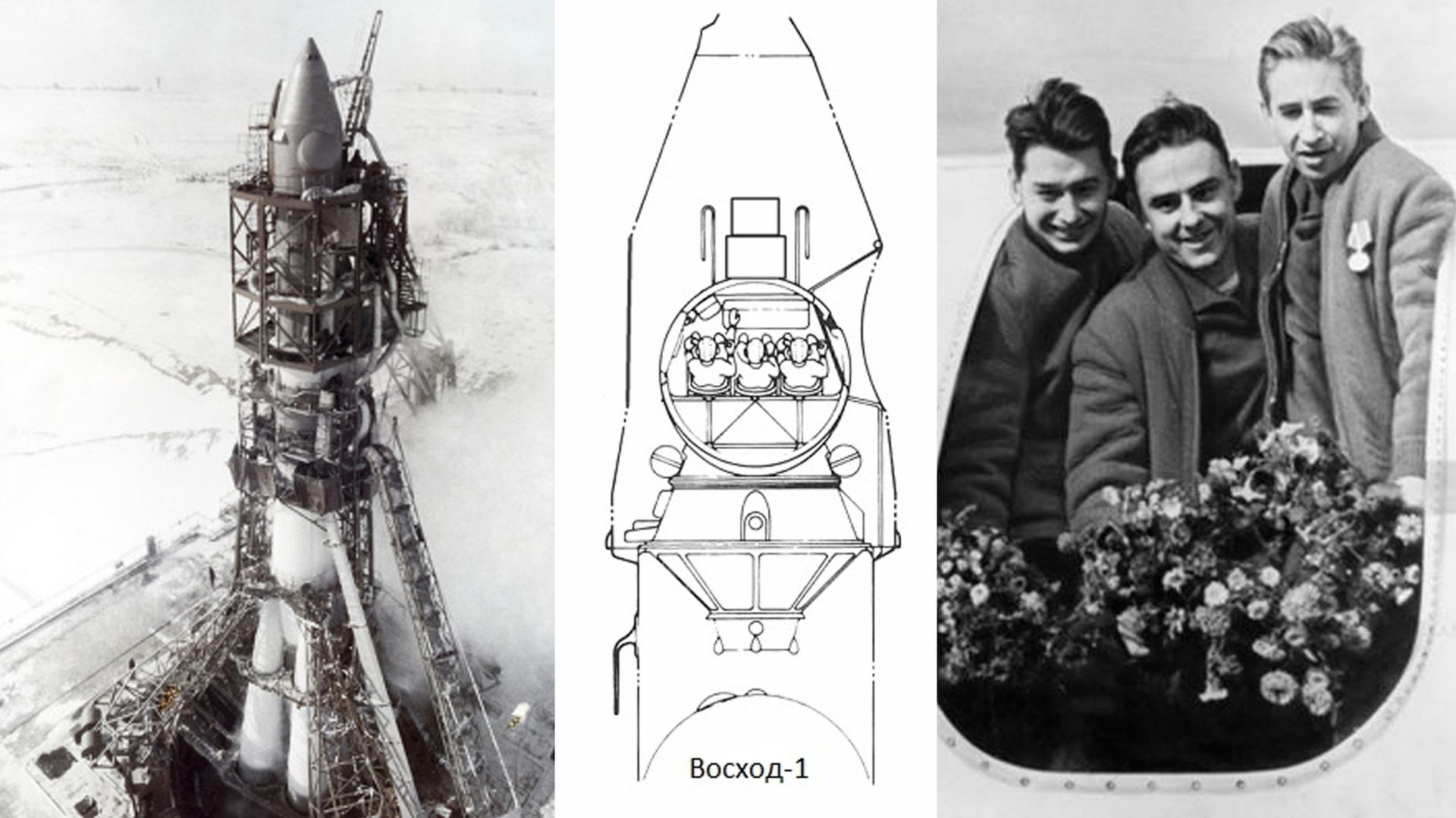
On Oct. 12, 1964, the Soviet Union launched Voskhod 1, a 24-hour crewed mission that achieved several "firsts" for human spaceflight. This was the first time that a spacecraft carried more than one person into orbit, with three cosmonauts packed inside the spacecraft.

Only two cosmonauts were originally supposed to fly on this mission, but Soviet politicians pressured the Russian space program to add one more. This left no room for spacesuits on board, so this also became the first spaceflight without spacesuits.

Two of the crewmembers, an engineer and a doctor, became the first civilians to go to space.

The Voskhod-1 crew included Vladimir Komarov (commander), Konstantin Feoktistov (engineer) and Boris Yegorov (doctor), shown at right.

On Oct. 12, 1964, the Soviet Union launched the first multiperson mission, Voskhod 1, which launched three Russian cosmonauts into space. The crew included Vladimir Komarov (commander), Konstantin Feoktistov (engineer) and Boris Yegorov (doctor), shown at right. (Image credit: Roscosmos)

Why it mattered

Voskhod 1 served as yet another first for the Soviet Union during a space race kicked off by the launch of Sputnik 1 in 1957 and followed up by the first human spaceflight with Yuri Gagarin in 1961. And while the United States did follow up with its one human spaceflights, until Oct. 12, 1964, every mission had one person on board.

That changed with Voskhod 1, which crammed three man into a spacecraft not much larger than the Soviet Union's one-person Vostok spacecraft. At the time, NASA was develoing the two-person Gemini spacecraft, which prompted the Soviet Union's then leader to push for an edge.

"Soviet leader [Nikita] Khrushchev contacted Korolev and ordered him to convert the Vostok spacecraft into a vehicle capable of carrying not two, but three cosmonauts," according to space historian Asif Siddiqi, referring to Sergei Korolev, chief designer of the Soviet space program.

In order to fit a three people inside, the Voskhod 1 cosmonauts - commander Vladimir Komarov and his crew Konstantin Feoktistov and Boris Yegorov - did not wear spacesuits traditionally used for launch and landing, adding substantial risk to the flight. They also stayed inside their spacecraft when it landed, unlike Vostok crews like Gagarin, who parachuted out of them after reentry.

The Voskhod 1 mission lasted just over 24 hours, during which its crew performed experimented with the behavior of liquids and gases in microgravity and photographed the Earth.

NASA's first multi-crew mission, Gemini 3, would launch about six month later on March 23, 1965.

Want more space history? Check out our full On This Day In Space Story archive and watch our On This Day In Space videos on YouTube.
On this day in space! Oct. 11, 1968: Apollo 7 launches into space, NASA’s 1st Apollo astronaut crew in orbit

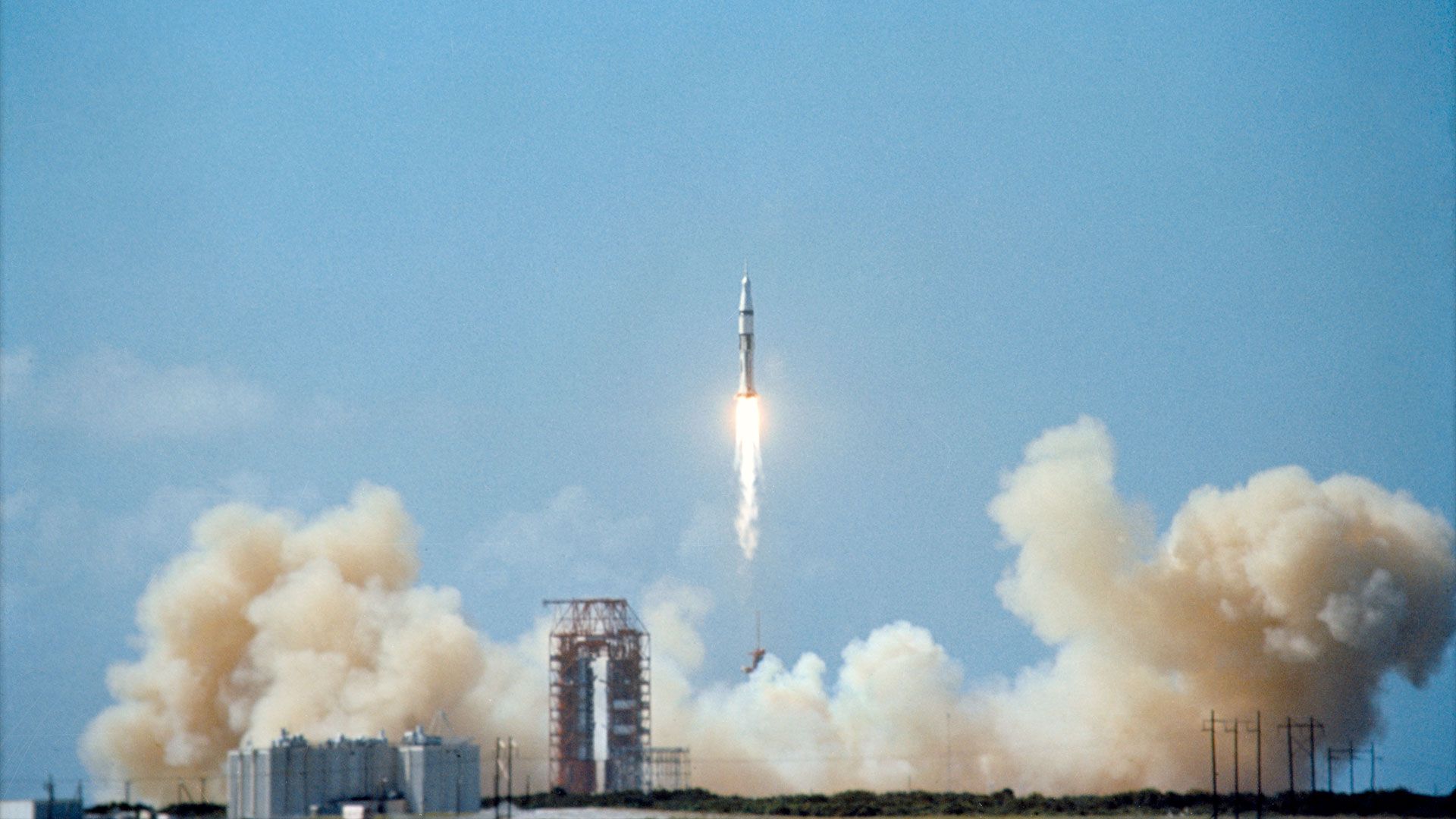
On. Oct. 11, 1968, Apollo 7 launched into space with NASA astronauts Wally Schirra, Donn Eisele and Walter Cunningham. This was the first mission of the Apollo program that carried a crew into space.

Apollo 7 rebooted the Apollo program after a fire killed three astronauts during a launch rehearsal 20 months earlier.

NASA needed to prove that their Apollo spacecraft worked with this mission, which was really more of a test flight. Though the spacecraft seemed to work alright, the crew got a little snippy during their 11 days in space. First they suffered from motion sickness after launch, then Schirra came down with a cold, and the crew was constantly arguing with mission control and each other. None of the Apollo 7 astronauts went back to space after that.

a white and black rocket lifts off into a blue sky leaving behind a plume spread across its launch site

NASA's Apollo 7 astronaut crew launches into orbit on Oct. 11, 1968. (Image credit: NASA)

Why it mattered

Had Apollo 7 not succeeded, the chances of NASA being able to fulfill President John F. Kennedy's 1961 goal, "before this decade is out, of landing a man on the moon and returning him safely to the Earth" would be called into question — not just because the clock was ticking down, but because of increasing political pressure to shut down the expensive moon program.

In the wake of the January 1967 Apollo 1 fire, NASA and North American Aviation, the prime contractor for the Apollo command module, needed to overhaul the spacecraft to make it safe for crews to fly in space. Apollo 7 provided a "shakedown cruise" for the vehicle, to confirm the fixes worked and that the command module was space worthy.

"In its day, the Apollo command module was the most complex machine ever built by man to be operated by man," said Walt Cunningham, Apollo 7 pilot, on the 40th anniversary of the flight in 2008. "We launched on the longest and most ambitious engineering test flight in history, testing the spacecraft systems, verifying the operating procedures, checking out the worldwide tracking network, and that's not to mention testing our crew."

Apollo 7 was deemed by NASA to a 101% success, setting up the first lunar landing in July 1969.

"All of us in the flights that followed were dependent on the Apollo 7 crew doing their job," said Neil Armstrong, Apollo 11 commander. "So thanks Walt and Wally and Donn."

Want more space history? Check out our full On This Day In Space Story archive and watch our On This Day In Space videos on YouTube.
On this day in space! Oct. 10, 1967: The Outer Space Treaty is ratified to lay out how countries can use outer space

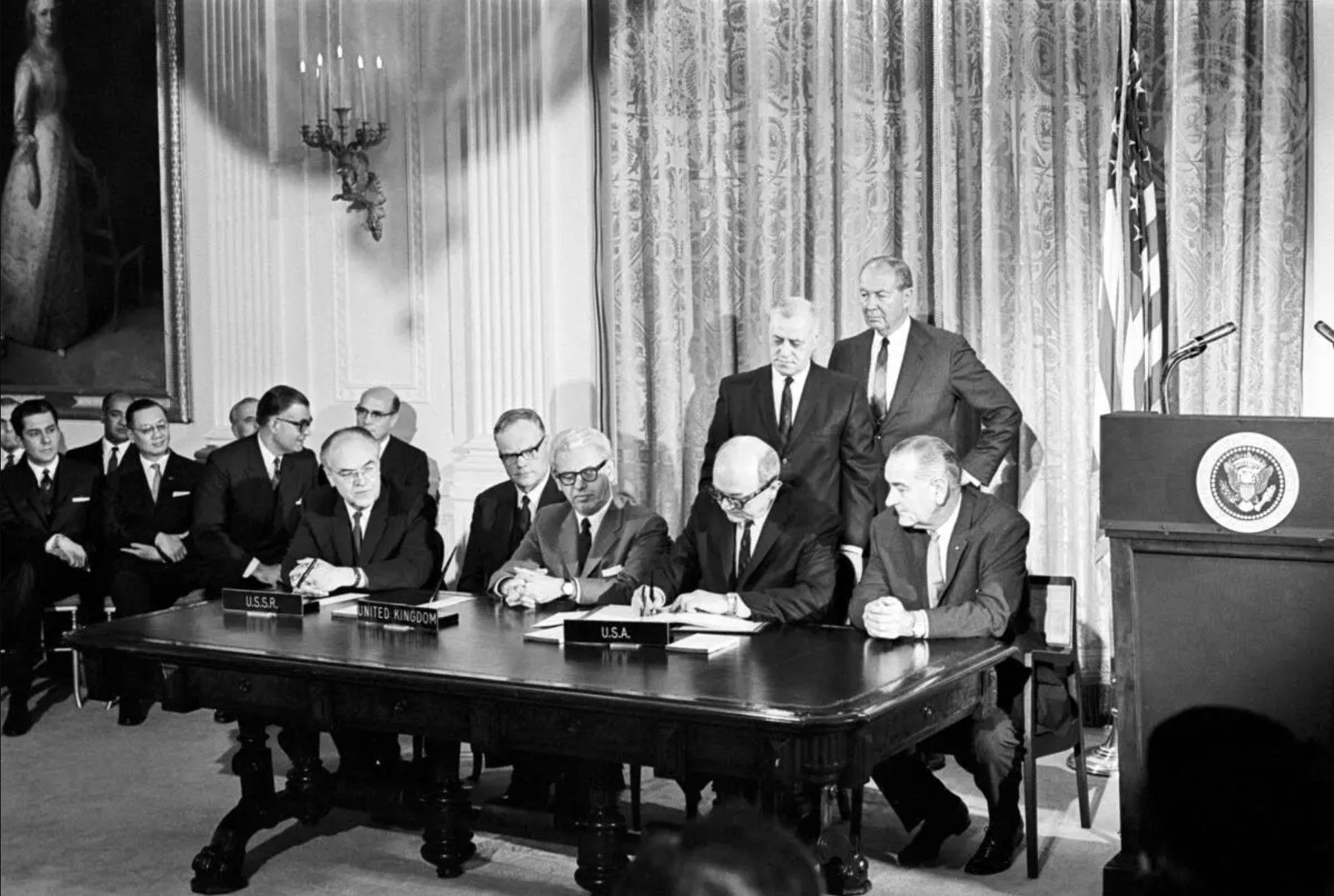
On Oct. 10, 1967, the international Outer Space Treaty was ratified. This treaty established a set of rules regulating how different countries can explore and use outer space.

Specifically, it says "the exploration and use of outer space shall be carried out for the benefit and in the interests of all countries and shall be the province of all mankind."

The treaty dictates that no one can claim territory in outer space and that other celestial bodies must be used "exclusively for peaceful purposes." More than 100 countries have ratified the treaty today.

a group of men in suits sign a document at a wooden table in front of the american flag

The Outer Space Treaty is signed on Oct. 10, 1967 to lay the groundwork for how countries can explore and use outer space. (Image credit: United Nations)

Why it mattered

Considered the "cornerstone" for modern space law, the Outer Space Treaty of 1967 (formally, the Treaty on Principles Governing the Activities of States in the Exploration and Use of Outer Space, including the Moon and Other Celestial Bodies) has provided more than a theoretical framework for future activities, but has been put to use and enforced for modern spaceflight activities.

The treaty's primary focus is on the peaceful use of space.

"First, it contains an undertaking not to place in orbit around the Earth, install on the moon or any other celestial body, or otherwise station in outer space, nuclear or any other weapons of mass destruction. Second, it limits the use of the moon and other celestial bodies exclusively to peaceful purposes and expressly prohibits their use for establishing military bases, installation, or fortifications; testing weapons of any kind; or conducting military maneuvers," reads a summary prepared by the U.S. State Department.

Beyond that, the treaty addresses the ownership of spacecraft and satellites, whether they are in space, on the surface of another celestial body or on Earth; lays the foundation for restrictions on off-Earth property rights; and calls for parties to the treaty to provide aide when needed to astronauts, whether they are in space or encounter problems during their landings.

Want more space history? Check out our full On This Day In Space Story archive and watch our On This Day In Space videos on YouTube.
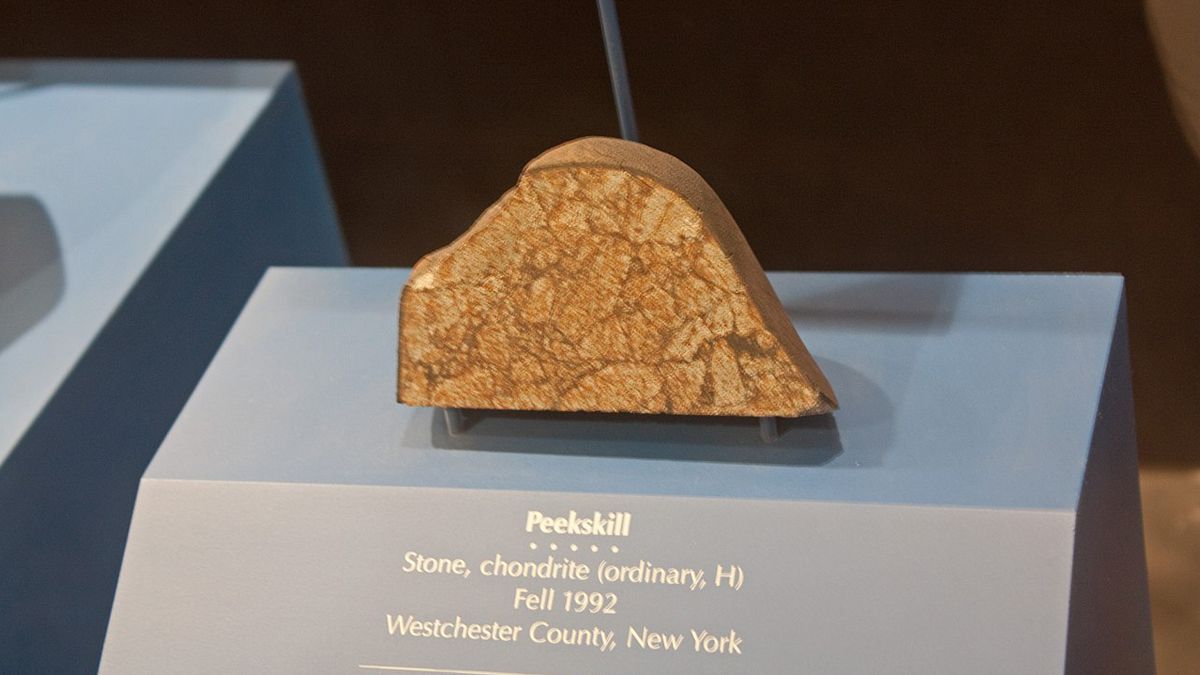
On this day in space! Oct. 9, 1992: Peekskill meteorite hits car in New York after streaking through the atmosphere

On Oct. 9, 1992, a space rock the size of a bowling ball fell out of space and crash landed on a woman's Chevy Malibu in Peekskill, New York.

Thousands of people along the U.S. East Coast witnessed the Peekskill meteorite blazing through the skies over Kentucky, West Virginia and Pennsylvania before it hit the parked car. Eighteen-year-old Michelle Knapp was sitting at home when she thought she heard a car crash outside.

When Knapp went to look, she found a hole in the trunk of her car and a smoking-hot meteorite beneath it. She had just bought the car for $300, and after it was damaged, she sold it for $10,000.

an orange and brown-striped chunk of rock with a smooth, rounded top edge and a flat cross-section face

(Image credit: Wknight94/Wikimedia Commons)

Why it mattered

Earth is no stranger to space rock impacts (farewell, dinosaurs), but it is pretty rare to see a meteorite fall as strange as the Peekskill meteorite car crash.

The meteor that ultimately led to the Peekskill meteorite was visible from Kentucky to New York, appearing as a "fragmenting fireball" at about 7:50 p.m EDT, according to the University of Alaska Fairbanks Geophysical Institute. The meteorite, which weighed 12.37 kilograms, crashed through the right rear edge of the trunk of Knapp's 1980 Chevrolet Malibu and left a dent in the driveway below.

The Peekskill meteorite fall captivated scientists and the public alike due to the high amount of film and photo coverage of its meteor descent.

"Video cameras trained on Friday night high-school football games turned skyward to capture the rocketing fireball. As a result, several scientific investigations were able to track the meteorite's flight path to Earth — including its orbit around the Sun," University of Alaska Fairbanks officials wrote.

Because of such a prolific amount of film coverage, which stretched from West Virginia to New York, scientists were able to calculate the meteor's flight path before impact. It crashed into the car at a speed of about 179 mph, they said.

"This is only the fourth recovered meteorite for which detailed data exist on its trajectory," the University of Alaska Fairbanks officials wrote.

A slice of the Peekskill meteorite sold for $4,375 in a Christies auction in 2021. You can see a large piece of the meteorite on display at the American Museum of Natural History in New York City today. Even Knapp's car has its own website, and is sometimes put on display.

Want more space history? Check out our full On This Day In Space Story archive and watch our On This Day In Space videos on YouTube.
On this day in space! Oct. 8, 1992: NASA’s Pioneer Venus probe burns up in Venusian atmosphere after 14 years orbiting the planet

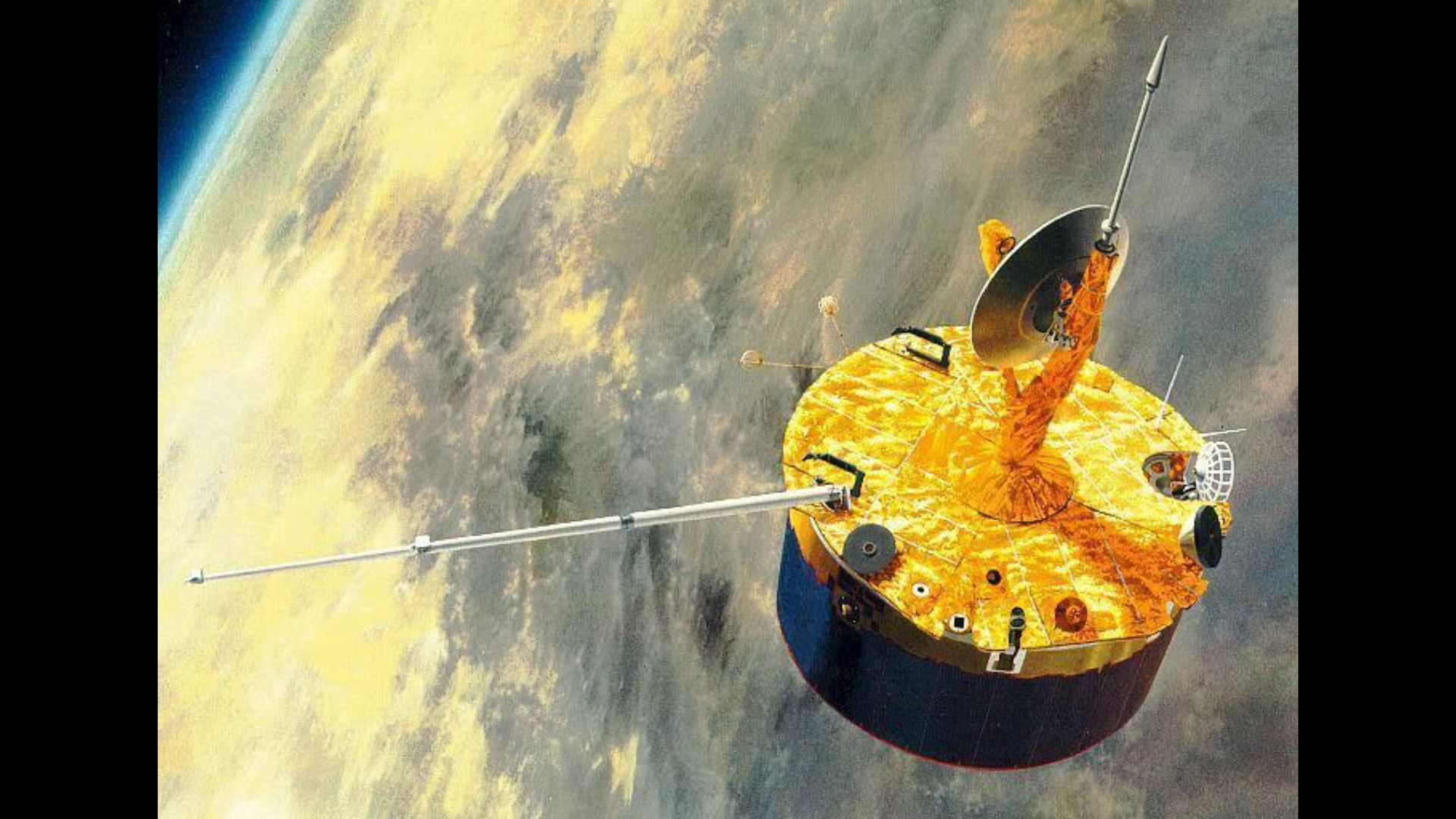
On Oct. 8, 1992, NASA's Pioneer 12 spacecraft burned up in the atmosphere of Venus.

Pioneer 12, also known as the Pioneer Venus Orbiter, spent 14 years orbiting Venus and studying the planet's atmosphere. It also investigated how the planet's ionosphere and magnetic field interact with charged particles from the sun called solar wind.

Pioneer 12 even got to check out Halley's Comet while it was in orbit around Venus.

When Pioneer 12 ran out of propellant, its orbit naturally started to decay, and it disintegrated in Venus's atmosphere.

pioneer spacecraft above Venus.

An illustration of NASA's Pioneer Venus, or Pioneer 12, above the Venusuan clouds. (Image credit: NASA)

Why it matters

Pioneer 12, also known at NASA as Pioneer Venus or Pioneer Venus 1 mission, was the first-ever American spacecraft to enter orbit around Venus. It launched on May 20, 1978 and arrived in orbit around Venus on Dec. 4 of that year.

The mission was part of a tag-team flight to Venus (a second probe, Pioneer Venus 2, would launch in August 1978), but as its name suggests, Pioneer Venus 1 was first, launching on an Atlas Centaur rocket from Launch Complex 36A at Cape Canaveral, Florida.

PIoneer Venus 1 carried 16 different instruments to study Venus from an orbit of about 99 miles (160 kilometers), with the probe taking just over 23 hours to circle the planet, according to a NASA overview.

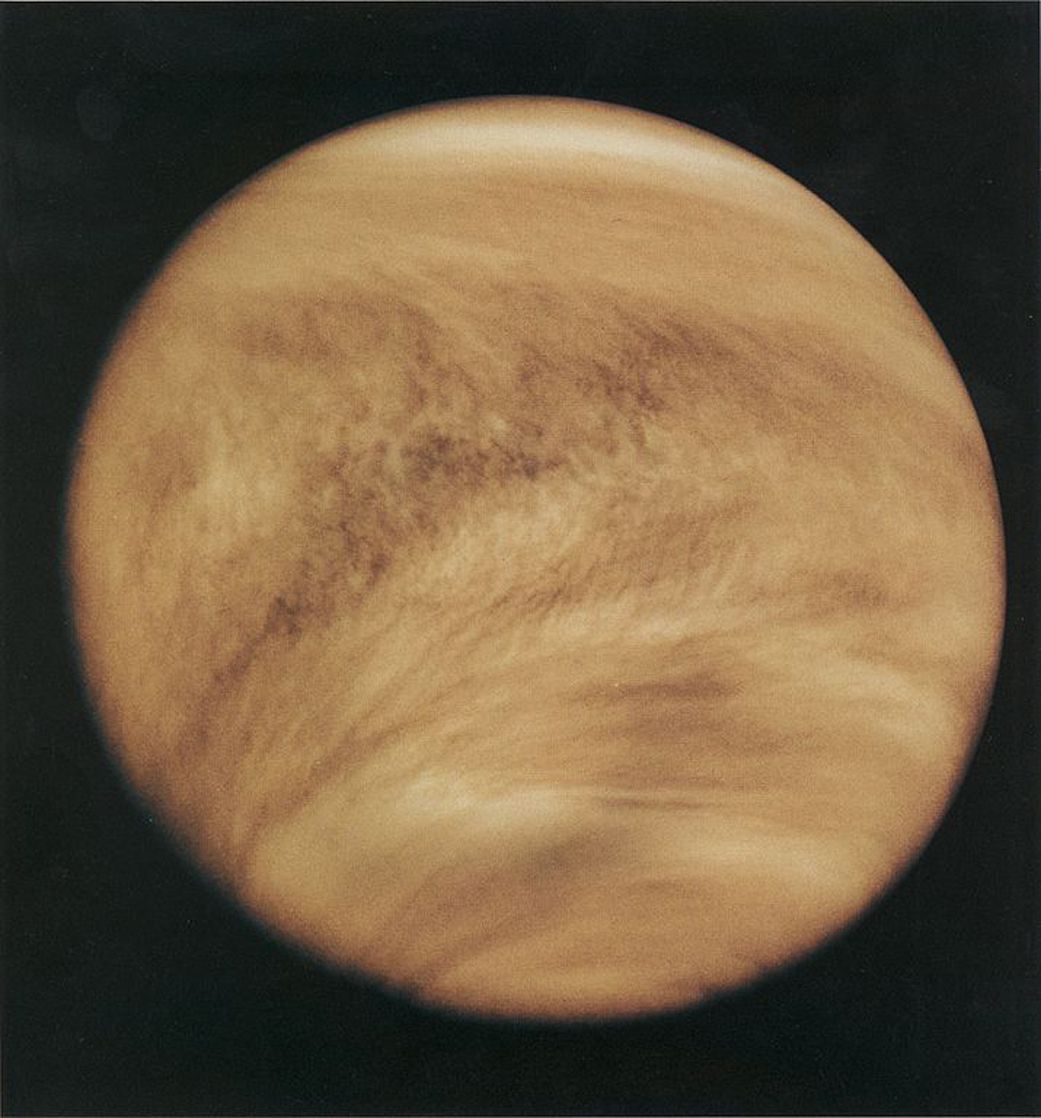
A photo of Venus from NASA's Pioneer Venus 1 orbiter. (Image credit: NASA)

The probe's instruments mapped most of the surface of Venus between the latitudes of 73 degrees north and 63 degrees south, at a resolution of 47 miles (75 km). Its data revealed a planet much rounder and smoother than Earth, with its highest point - called Maxwell Montes - rising 6.5 miles (10.8 km) above the surface. It had a peak higher than Mt. Everest and a canyon deeper than the Grand Canyon on Earth, NASA said.

"Cameras also detected almost continuous lightning in the atmosphere. The spacecraft confirmed that Venus has little if any magnetic field," NASA wrote.

By March 19, 1981, Pioneer Venus had mapped 93% of the area within sight of its instruments, so NASA switched its mapping radar off. But in 1991, the probe could then see new parts of the southern Venus area, leading NASA to reactivate the mapping radar a full 13 years after launch to glean more data from the probe.

Halley's Comet was also not the only comet Pioneer Venus observed. The probe managed to study comets Encke in 1984, Giacobini-Zinner in 1985, comet Wilson in 1987, and comets NTT and McNaught (both in 1987).

Want more space history? Check out our full On This Day In Space Story archive and watch our On This Day In Space videos on YouTube.