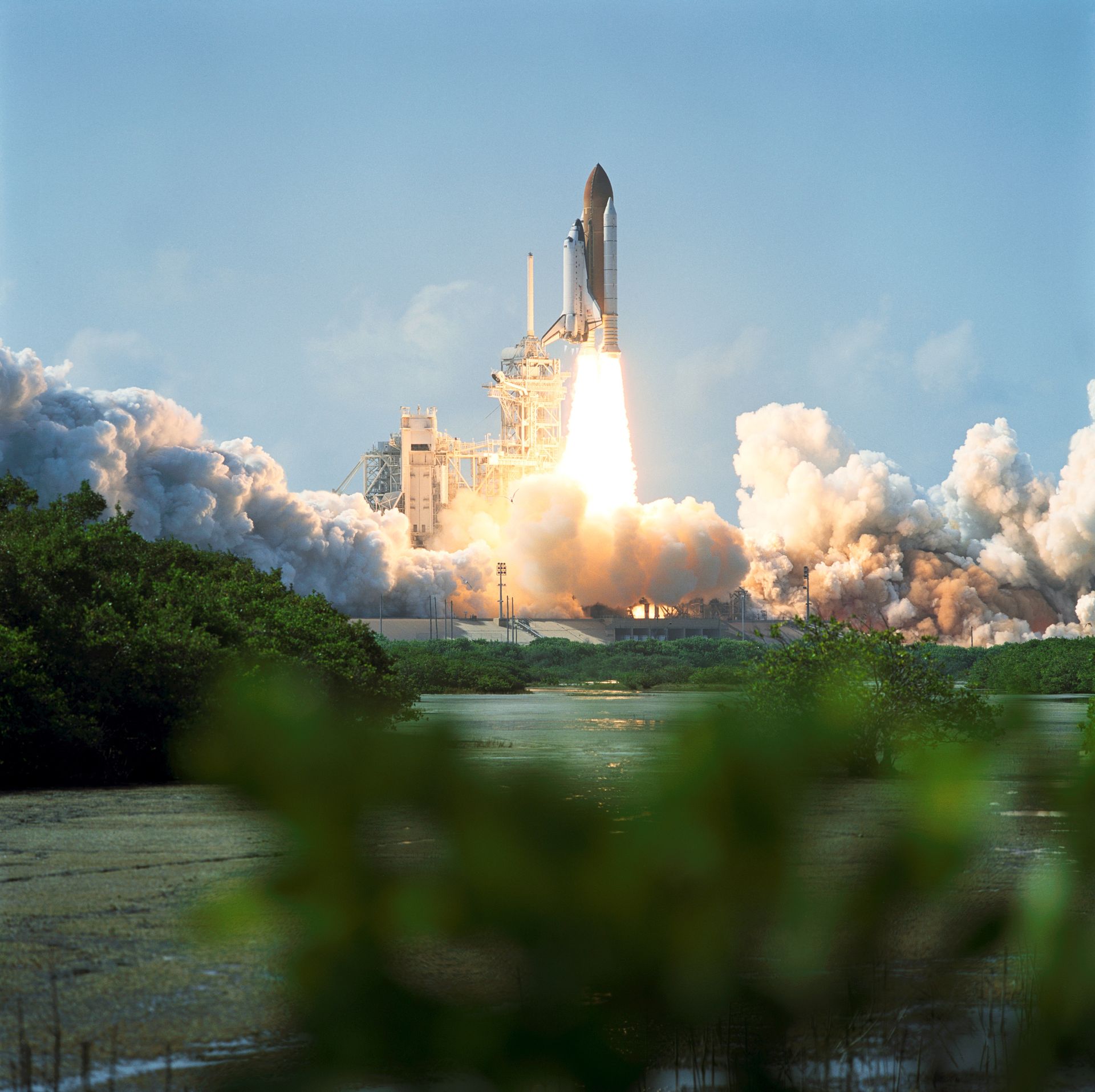
On Oct. 7, 2002, thespace shuttle Atlantis launched from Kennedy Space Center on mission STS-112. This mission brought the Starboard 1 (S1) truss segment to the International Space Station.
The S1 truss is part of the backbone of the space station, and it provides structural support for the thermal control system. During the launch, a chunk of insulating foam broke off of the external tank and hit the bottom of the rocket booster, leaving a huge dent.
Luckily this didn't pose any problems for STS-112, but this was the same thing that caused theColumbia shuttle disaster just three months later. NASA later redesigned the shuttle to prevent this problem.
NASA's space shuttle Atlantis launches the STS-112 construction mission to the International Space Station from Kennedy Space Center's Pad 39B in Cape Canaveral, Florida on Oct. 7, 2002. (Image credit: NASA)
Why it mattered
The 11-day mission of NASA's STS-112 flight aboard the shuttle Atlantis delievered a key component of the International Space Station as well as critical cart for astronauts spacewalking outside the orbiting lab.
The primary goal of STS-112 was to deliver the 28,000-pound S1 truss to the station so it could be attached to the right side of the station's central S0 truss, the core of its 360-foot (110-meter) truss backbone.
The Boeing-built S1 truss contains a large ammonia-cooled radiator used to keep the station from overheating (its twin is on the opposite side's Port 1 truss), and is about 45 feet (13.7 m) It's made mostly out of aluminum and also carries power and cooling lines between truss segments.
NASA astronaut Jeffrey Ashby commanded the STS-112 mission, with Pamela Melroy as pilot. NASA mission specialists Sandy Magnus, David Wolf, Piers Sellers and Russian cosmonaut Fyodor Yurchikhin rounded out the crew.
The astronauts performed three spacewalks on the mission to install the S1 truss, attach the plumbing lines for its radiators and install a so-called CETA cart (short for Crew Equipment Translation Aid) on the truss rail system so future spacewalkers could use it to move gear around.
The mission also delivered about 1,800 pounds of cargo to the station and returned about the same amount of stuff back to Earth.
On Oct. 6, 1992, the United States and Russia signed an agreement to share astronauts and cosmonauts on human spaceflight missions.
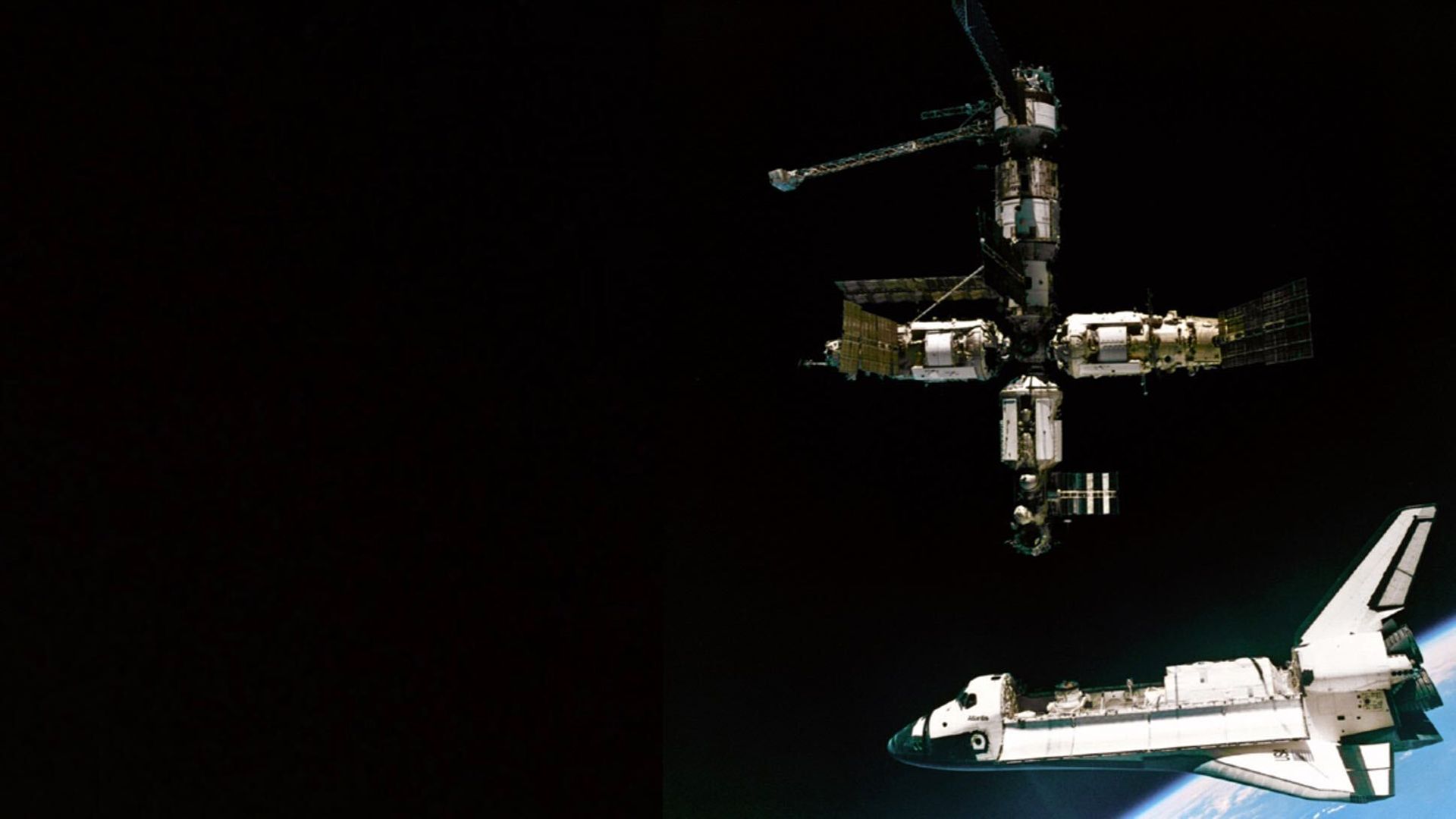
Known as the Agreement on Human Spaceflight Cooperation, this plan laid out the details for the joint Shuttle-Mir Program. Under this program, NASA's space shuttles would fly to Russia's Mir space station and carry Russian cosmonauts on board.
Space shuttle Atlantis departs the Mir space station during NASA's STS-79 mission. (Image credit: NASA)
Why it mattered
The signing of the Agreement on Human Spaceflight Cooperation between the United States and Russia set the stage for what has become over 30 years of international cooperation in space between not just the two countries, but over a dozen others as well.
At the time, the agreement was aimed solely at the Shuttle-Mir program, which sent seven American astronauts to the Mir space station between 1994 and 1998. During those years, 10 NASA space shuttle missions visited Mir.
Mir would eventually host 125 cosmonauts and astronauts from 12 different countries throughout its 13 years in orbit. Mir was deorbited on March 23, 2001, when it fell from space to burn up in Earth's atmosphere, with any surviving debris falling into the Pacific Ocean.
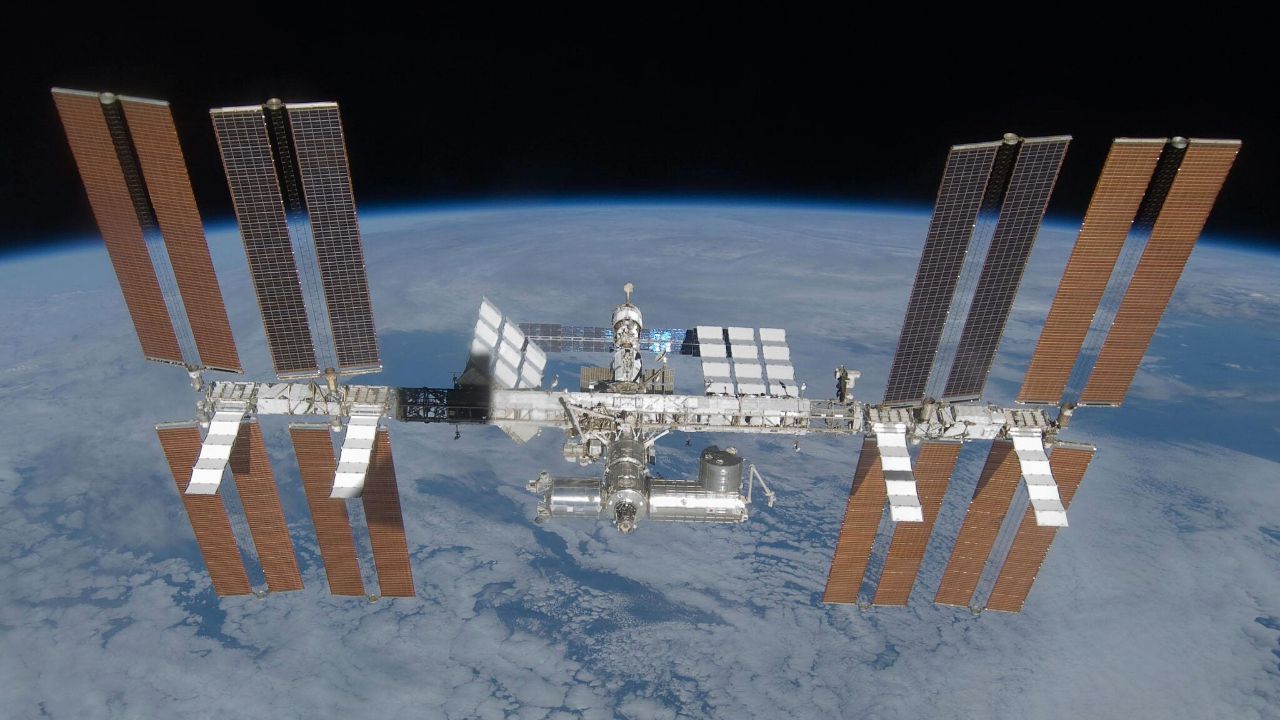
(Image credit: NASA)
In 1993, one year after the U.S.-Russia space agreement went into effect, Russia joined NASA in what would become the International Space Station, a cooperative project to build the largest single crewed spacecraft ever in orbit. NASA, Russia's Roscosmos and three other space agencies (from Japan, Canada and Europe), oversee a group of more than 15 countries working on the ISS.
Russia even launched the first component of the International Space Station in 1998.
On Sept. 16, 1949, the U.S. launched a V-2 rocket with a monkey named Albert III on board.
Albert III was the third monkey the U.S. attempted to launch to space. He was also the third one to be killed on the job. The U.S. precursor to NASA began launching monkeys into space in the 1940s to try to see what might happen to humans in space.
This testing started more than a decade before any humans were launched up there. The monkeys were all given anesthetics and covered with sensors and probes that monitored their vitals. While the other five Alberts that were launched on V-2 rockets were all rhesus monkeys, Albert III was actually a long-tailed macaque. Sadly, Albert III died when his rocket exploded 10 seconds after launch.
The two Alberts who came before him died differently, first by suffocation and then by a parachute that failed to deploy before landing. It wasn't until the Albert VI flew in 1961 that a test monkey survived a test launch. NASA stopped using monkeys for launch testing in the 1980s.
A small macaque monkey named Albert III was lost during a failed V-2 rocket launch test from White Sands Missile Range in New Mexico on Sept. 16, 1949. (Image credit: Future/NASA)
Why it mattered
In the late 1940s, the United States was just beginning to gain experience with large rocket and ballistic missile launches using a cache of V-2 rockets (and the German rocket scientists like Werhner von Braun that designed them). And while the U.S. military sought to develop rocket and missile weapons, animal launches like the failed flight of Albert III were aimed studying how the upper atmosphere and cosmic rays could affect living things (like future astronauts).
To do that, the U.S. Air Force formed Project Blossom, a series of V-2 rocket launches out of White Sands Missile Range in New Mexico that included five "biological flights" overseen by the Aero-Medical Laboratory at Wright-Patterson Air Force Base, according to a history by the White Sands Missile Range Museum.
Albert III's launch failed 24.7 seconds after liftoff, with the V-2 rocket flying at a slower speed than expected after liftoff, the museum account states. The rocket suffered an explosion in its tail section 10.7 seconds into the flight, then another one 14 seconds later (likely due to leaks in its alchol fuel system). It reached a maximum altitude of just 3 miles before the failure.
Despite the failure, military scientists took what they learned from Albert III's launch to make design improvements in future tests. There were still failures (the next monkey launch of Albert IV did not succeed), and three of the seven Project Blossom launch tests failed in all.
The first successful monkey launch carried Albert VI (and 11 mice) to suborbital space and back on a new Aerobee rocket on Sept. 20, 1951, NASA has said.
On Sept. 15, 1968, the Soviet Union launched the Zond 5 spacecraft on a mission to loop around the moon and return to Earth. There were no cosmonauts aboard, but there were several smaller vertebrates — including the first two tortoises to ever go to space!
Other passengers included wine flies, mealworms, plants and seeds. These were the first animals in deep space and the first to travel around the moon.
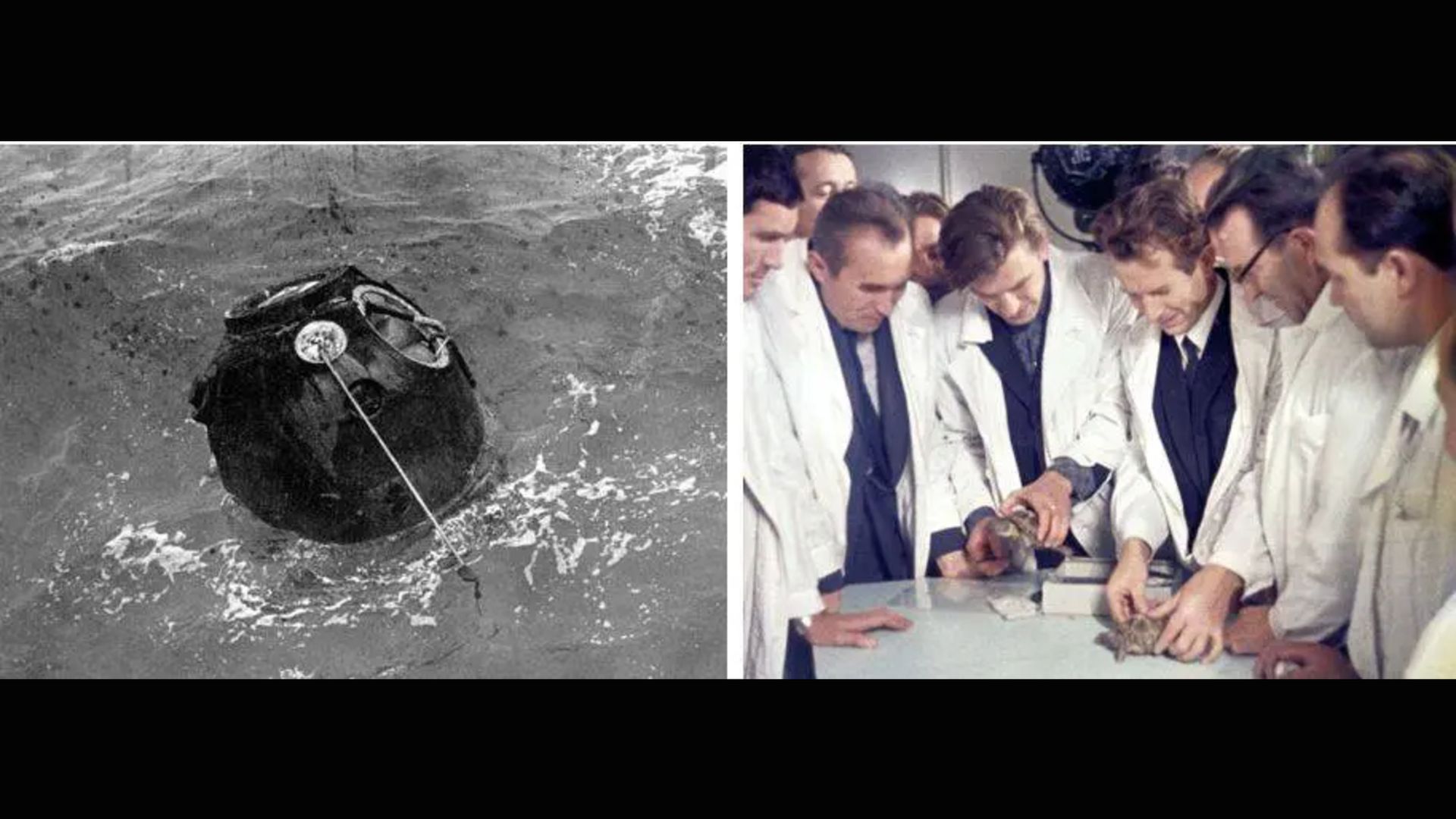
The Soviet Zond 5 rentry capsule in the ocean (left), Soviet scientists measure Zond 5 tortoises after their circumlunar flight in September 1968. (Image credit: RSC Energia)
After looping around the moon, the Zond 5 spacecraft turned around and came back to Earth. It was supposed to land in Kazakhstan on Sept. 22, but the spacecraft's guidance system failed, and it splashed down in the Indian Ocean instead.
The Soviets did recover the capsule and found that the tortoises and other critters were still alive, although they had lost some weight since the start of the mission.
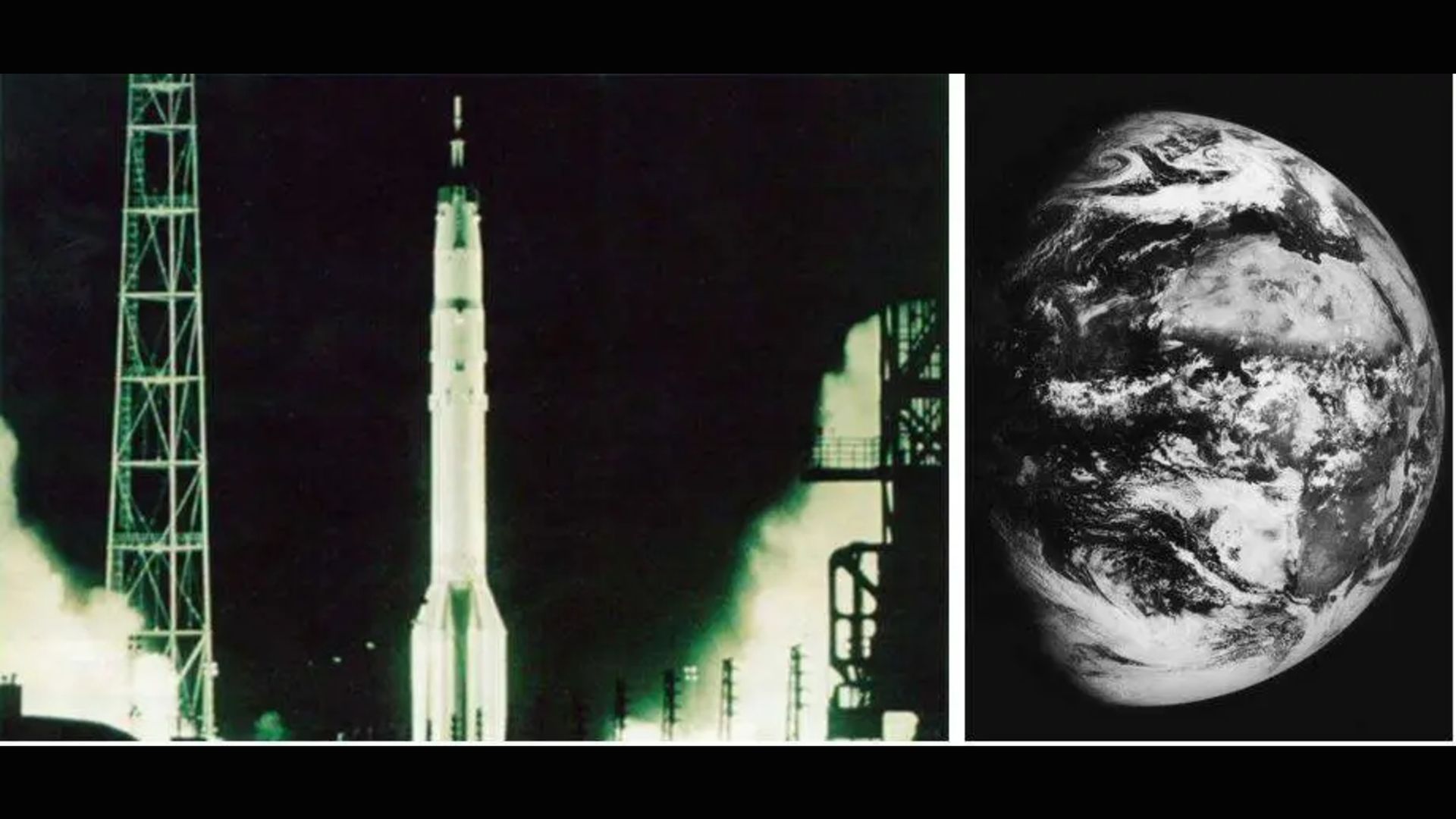
At left: The Soviet Union's Zond 5 mission launches on the first circumlunar flight on Sept. 15, 1968 from Baikonur, Cosmodrome. At right: A view of the Earth from deep space from Zond 5. (Image credit: RSC Energia)
Why it mattered
In September of 1968, the Space Race to the moon was in full swing. NASA was just three months away from the historic Apollo 8 mission, which sent the first astronauts around the moon in daring first-of-its-kind mission.
But with Zond 5, the Soviet Union scored an early win for the first circumlunar flight that launched from the Earth to the moon, then returned for a landing (or splashdown, in this case). In fact, the flight may have spurred NASA to launch Apollo 8.
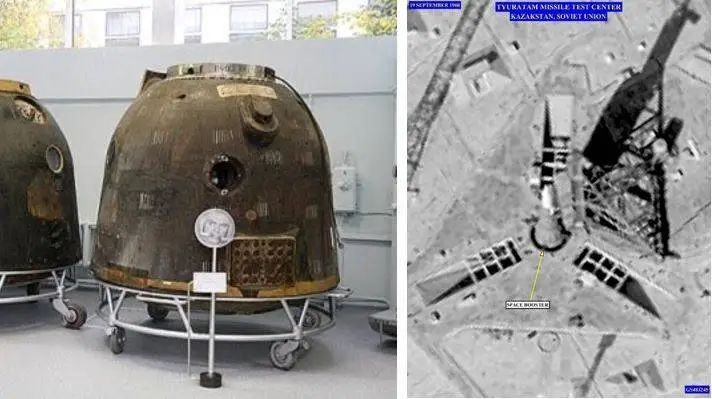
The Soviet Zond 5 rentry capsule (left) and a declassified U.S. reconnaissance photo of an N-1 moon rocket on the launch pad in September 1968. (Image credit: NASA/RSC Energia/NRO)
"The flight of Zond 5 caused concern in the U.S. that the Soviets would place cosmonauts aboard the next Zond and complete the first crewed circumlunar mission. At about this time, a U.S. Corona reconnaissance satellite photographed an N-1 rocket on its pad at Baikonur," NASA wrote in a report, adding that NASA's then-chief James Webb likely saw those intelligence reports.
"The apparently successful Zond 5 mission coupled with the photos of the Soviet lunar booster on the launch pad may have contributed to the decision to send Apollo 8 on its circumlunar mission in December 1968, bringing the moon landing one step closer."
Zond 5 launched from Baikonur Cosmodrome atop a Proton rocket and took three days to reach the moon. The two tortoises on board were, appropriately, Russian steppes tortoises, NASA has said. After looping around the moon, the critters spent a few more days in transit for the trip home.
It was a guidance system error that led the Zond 5 capsule to splash down in the Indian Ocean instead of landing on land as planned. But the landing on Sept. 21 wasn't the end of the road for the Zond 5 tortoises and other animals.
The Soviet recovery ship Vasily Golovnin plucked the Zond 5 capsule from the ocean and returned to port in what is now Mumbai, India on Oct. 3, weeks later! They wer ethen flown to Moscow on an Antonov-12 cargo plane before the capsule was finally opened to find the tortoises alive and in good health. You can still view the Zond 5 capsule at the RSC Energia museum in Korolev.
Cassini's Grand Finale death dive at Saturn in 2017
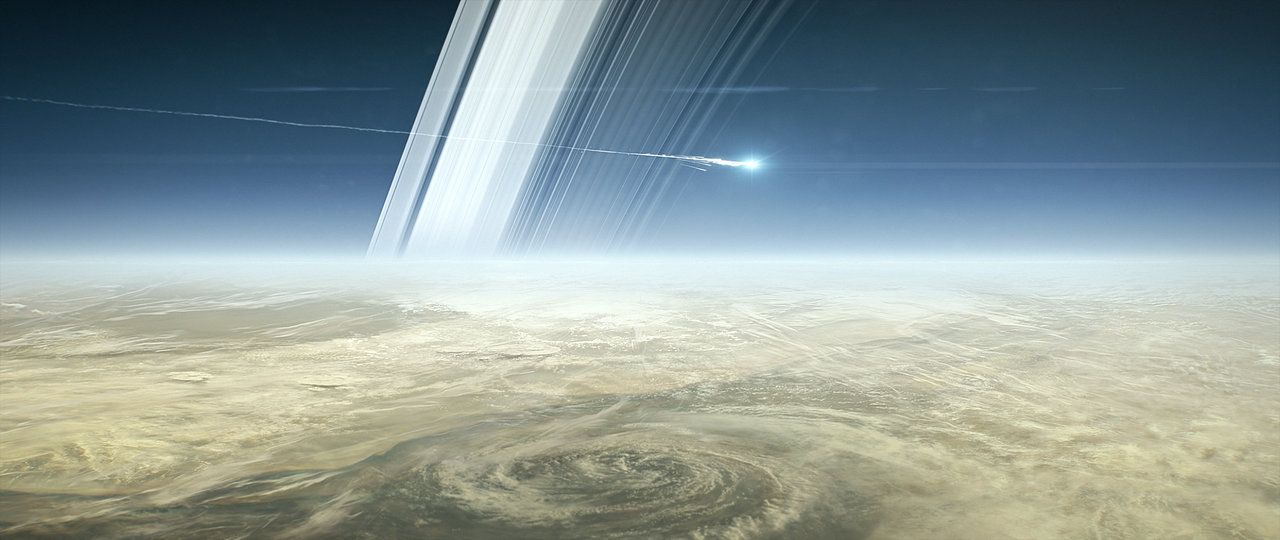
Artist's illustration of NASA's Cassini spacecraft plummeting through Saturn's atmosphere on Sept. 15, 2017. (Image credit: NASA)
A bunch of space traveling tortoises and other animals aren't the only notable space event that happened today in history.
Launched in 1997, the $3.26 billion Cassini mission entered orbit around Saturn in 2004 and dropped a European Huygens probe onto the cloudy moon Titan in early 2005. The mission was expected to last until 2008, but was extended twice, ultimately stretching through to September 2017.
During its mission life, Cassini discovered a trove if new Saturn moons, found a strange hexagon at the planet's north pole and tracked mesmerizing details of the planet's many rings.
"Congratulations to you all," Earl Maize, the Cassini program manager, said to the mission team after the spacecraft signal was lost."This has been an incredible mission, an incredible spacecraft, and you're all an incredible team. I'm going to call this the end of mission."
On Sept. 14, 1966, NASA's Gemini 11 mission set an spaceflight altitude record that lasted for nearly six decades when two astronauts reached an orbit of 850 miles above the Earth. It remained the highest altitude ever achieved by a crewed, non-lunar mission until 2024.
Gemini 11 command pilot Pete Conrad and pilot Dick Gordon spent three days orbiting the Earth in their cramped Gemini spacecraft. After launch, they performed the first-ever direct-ascent rendezvous with an Agena target vehicle.
Once the two spacecraft were adjoined, they used the rocket on the Agena target vehicle to ascend to their record-breaking altitude. They also created a little bit of artificial gravity while in orbit by using their thrusters to rotate the combined spacecraft.
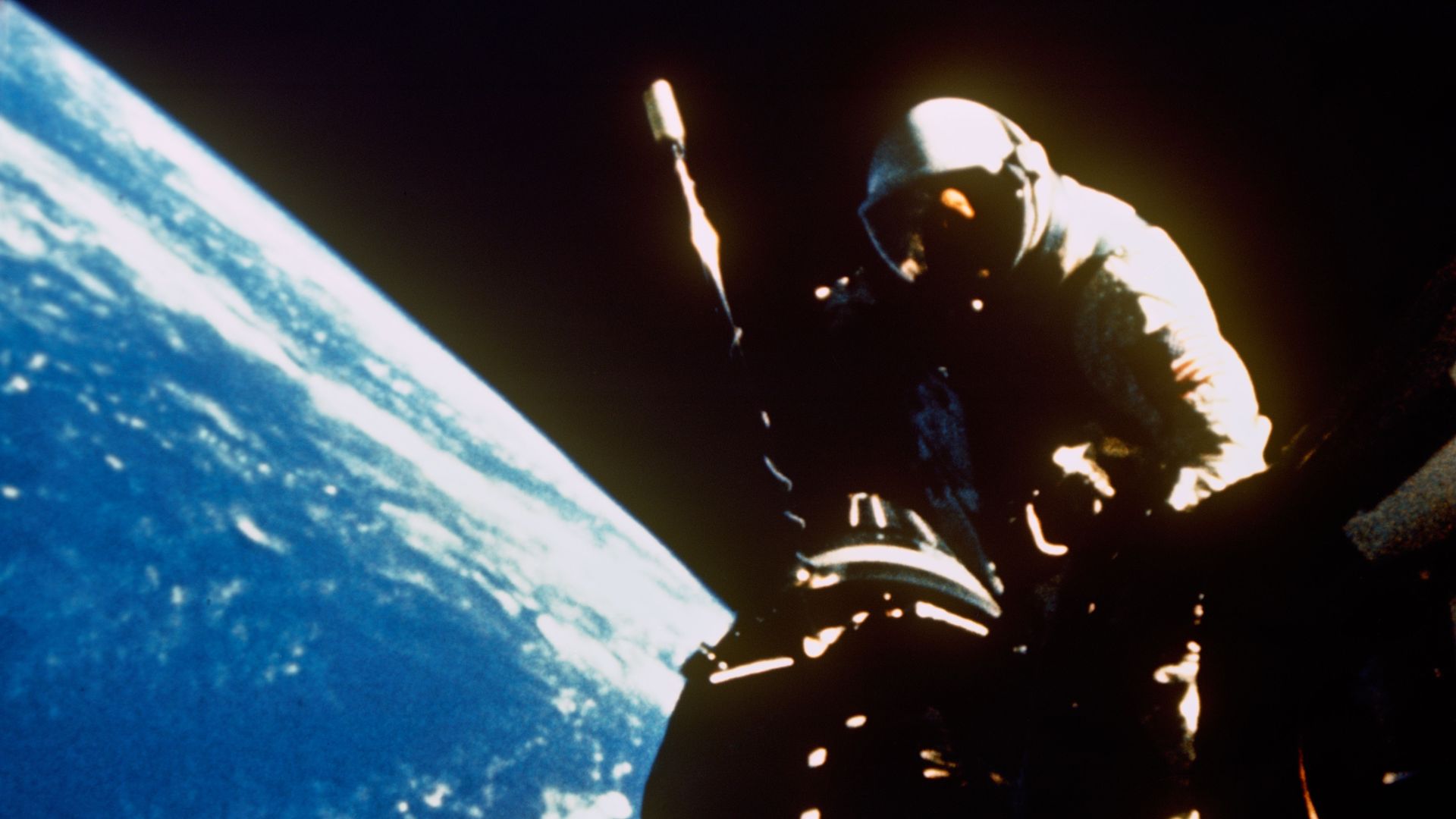
NASA Gemini 11 astronaut Dick Gordon works outside his space capsule while crewmate Pete Conrad waits inside during the Gemini 11 mission, which set an altitude record for a crewed flight in Earth orbit on Sept. 14, 1966. (Image credit: NASA)
Why it mattered
Despite its name, Gemini 11 (or Gemini XI) was actually NASA's ninth crewed mission of the two-person Gemini spaceflights. The mission was relatively short, just three days, and included two spacewalks, and what NASA calls the first orbital rendezvous and docking with an Agena target vehicle (the first in-space docking occurred three missions earlier on Gemini 8).
But for 58 years, the Gemini 11 mission marked the highest astronauts flew above Earth without going to the moon. The astronauts used the rocket engine on the Agena booster to raise the orbit of their docked spacecraft to reach a peak altitude of 853.8 miles (1,374.1 kilometers).
Conrad and Gordon performed eight different science experiments, but perhaps one of their most striking feats was the artificial gravity demonstration. During one of his spacewalks, Gordon attached a 30-meter tether from the Agena booster to the Gemini capsule. After reaching their peak altitude, Conrad undocked the capsule from the Agena, backing away them starting a rotation that created a very slight "gravitational acceleration," NASA said. They spun together for 3 hours, before the tether was cut loose and Gemini 11 left the Agena behind.
Conrad and Gordon also performed the first automated reentry during their landing, with their Gemini 11 capsule flying itself in a first-ever for NASA.
The Earth orbit altitude record set by NASA's Gemini 11 mission stood until Sept. 10, 2024, when the private SpaceX mission Polaris Dawn, bankrolled by American billionaire Jared Isaacman (currently serving as NASA administrator), launched into an orbit that reached 870 miles (1,400.7 kilometers).
That Polaris Dawn mission also included a spacewalk by Isaacman and SpaceX's Anna Menon, marking the first-ever private spacewalk.
On Sept. 13, 2007, Japan launched the Kaguya spacecraft on a mission to the moon. Formally known as SELENE, which is short for SELenological and ENgineering Explorer, it was Japan's second moon mission.
Kaguya launched from Tanegashima Space Center on a Japanese H-IIA rocket and looped around the Earth twice before heading to the moon. NOTE: While the launch occurred on Sept. 13 in the evening Eastern Time, it was actually 10:31 a.m. on Sept. 14 at the launch site. The spacecraft carried 14 science instruments and two tiny microsatellites to map the moon's surface and study its gravitational field.
After a 20-day journey, Kaguya arrived at the moon. The mission consisted of three spacecraft: a main orbiter, a small communications satellite, and a third small satellite to map the moon's gravitational field. After about a year of lunar observations, the mission ended with a planned crash landing on the lunar surface.
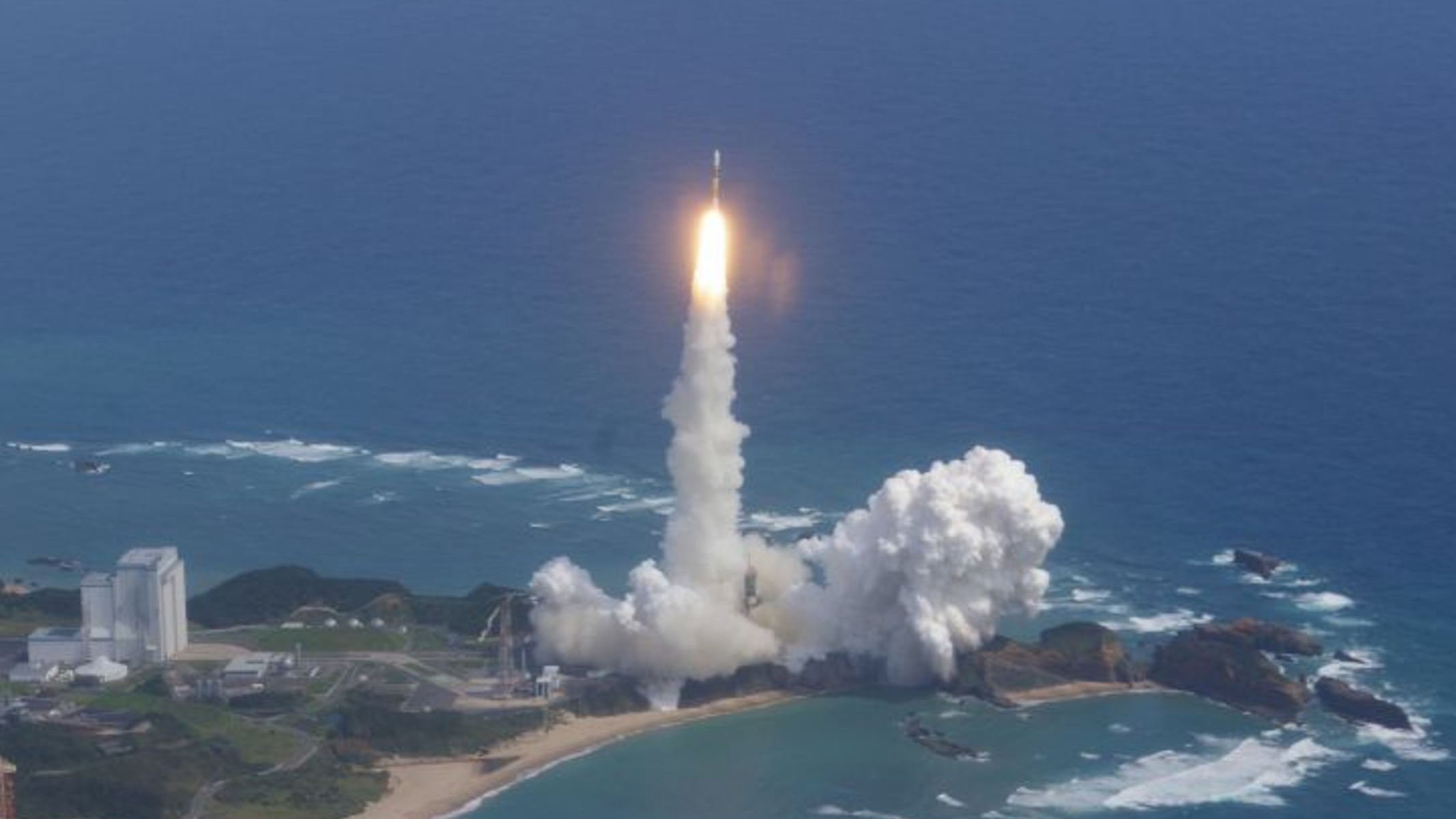
A Japanese H-IIA rocket launches the Kaguya spacecraft toward the moon from Tanegashima Space Center in Japan on Sept. 13, 2007. (Image credit: JAXA)
Why it mattered
The Kaguya moon mission was actually the second lunar probe launched by Japan, but it was the country's first spacecraft to actually orbit the moon. (Japan's Hiten spacecraft launched in 1990, but it flew in a highly elliptical orbit around Earth that allowed it to make 10 flybys of the moon before crashing into the lunar surface in 1993. It also released a small probe called Hagoromo near the moon.)
But while the Hiten and Hagoromo missions were designed to test technology for a future moon mission, Kaguya put all that tech into practice. The probe was renamed after the moon princess Kaguya-hime from a Japanese folktale shortly after launch as a result of a public poll. The two small satellites it carried were named Okina (a relay satellite) and Ouna (a radio source experiment).
While Kaguya carried an intricate set of science instruments, it was the views from its two primary high-definition cameras that wowed the public. With them, Kaguya captured the first-ever HD video and images of the moon, including spectacular new videos of Earthrise (the Earth rising over the moon) - something not seen since NASA's Apollo missions.
The spacecraft also created an complete topographical map of the moon, detected gravity anomalies on the near and far side of the moon and captured the first optical observations of the permanently shadowed interior of Shackleton Crater near the moon's south pole, according to a NASA review.
Kaguya completed its primary mission in October 2008 and JAXA mission planners had hoped to extend its moon flight through early 2009, but a faulty reaction wheel forced them to call off the extended mission early. They ultimately directed Kaguya to crash into the moon on Feb. 12, 2009, with the impact occurring near Gill Crater.
On Sept. 12, 1992, NASA astronaut Mae Jemison became the first African American woman to go to space.
In NASA's early days, women and people of color were never selected to go to space. NASA didn't send a woman to space until the seventh space shuttle mission in 1983. NASA launched the first Black man in space, astronaut Guion Bluford, on the following mission that same year.
But it would take another nine years for NASA to finally select a Black woman to fly on STS-47, the 50th space shuttle mission. Jemison was a trained engineer and licensed physician who served in the Peace Corps before applying to become an astronaut.
She worked as a mission specialist on STS-47 and logged over 190 hours in space. STS-47 was her only mission. In 1993, she retired from NASA and went on to found her own company, the Jemison Group, which is a technology consulting firm.
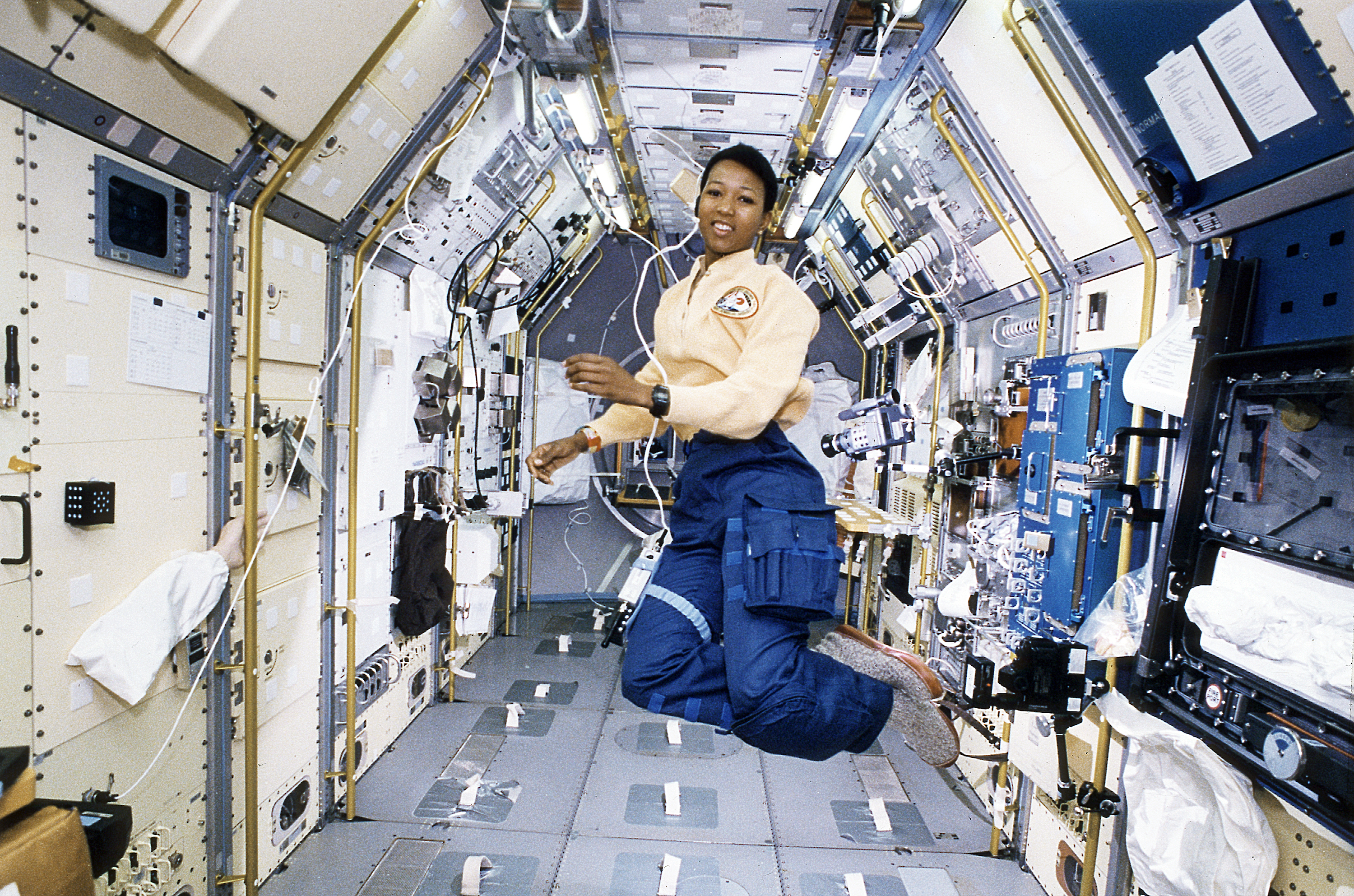
NASA astronaut Mae Jemison flew on space shuttle Endeavour in September 1992, becoming the first Black woman to travel to space. (Image credit: NASA)
Why it mattered
Mae Jemison's historic launch on STS-47 was a milestone for Black astronauts and NASA's growth into a more diverse space agency.
Jemison, who was born in Alabama and grew up in Chicago, joined NASA's astronaut corps in 1987 as an astronaut candidate after years working as a the Area Peace Corp Medical Officer for Sierra Leone and Liberia in West Africa (from 1983 to 1985). Before that, she earned a bachelor's degree in chemical engineering from Stanford University (where she also studied African American Studies), and later a doctorate in medicine from Cornell University. She was serving as a General Practitioner in medicine when she applied to be a NASA astronaut.
Jemison has said she was fascinated by space from a young age and found inspiration the Star Trek's Lt. Uhura, a Black woman in space on television, before going on to university. (We'll return to Star Trek in a minute).
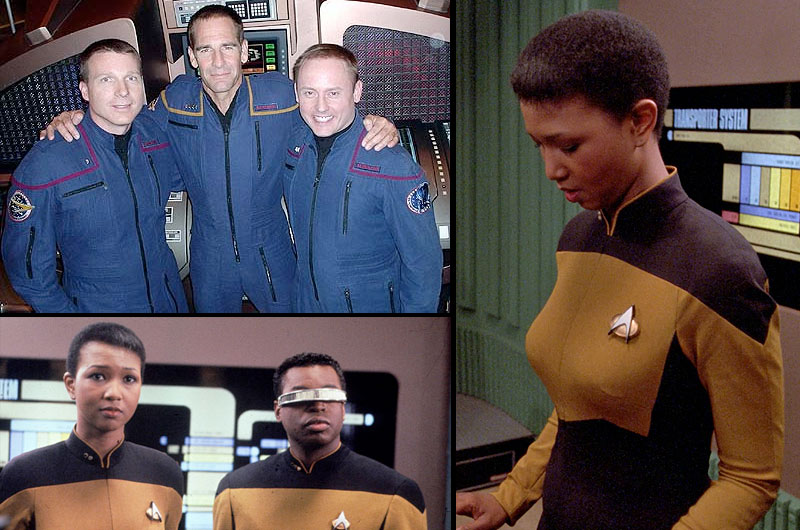
In 1993, Mae Jemison became the first astronaut to cameo in a Star Trek series as a lieutenant on Star Trek: The Next Generation. Astronauts Mike Fincke and Terry Virts (top right) would later appear in Star Trek: Enterprise. (Image credit: CBS/NASA)
As the science mission specialist on STS-47, Jemison oversaw 44 different experiments for Japan and the United States inside the Spacelab module aboard space shuttle Endeavour. She was also the co-investigator on a bone cell study that flew on the same mission.
Jemison spent eight days in orbit on STS-47, logging 190 hours, 30 minutes and 23 seconds in space, before returning to Earth on Sept. 20, 1992. It would be her only spaceflight.
Jemison retired from NASA in 1993 and founding her Jemison Group. as a consulting firm that same year. Remember Jemison's Star Trek inspiration? It came full circle in 1993 when Jemison appeared as a lieutenant on "Star Trek: The Next Generation" in the episode "Second Chances" during the sixth season.
On Sept. 11, 1985, the International Cometary Explorer, or "ICE," became the first spacecraft to fly by a comet.
Originally launched as the International Sun-Earth Explorer-3 in 1978, ICE was one of three spacecraft built for the International Sun-Earth Explorer (ISEE) program, a joint effort by NASA, the European Space Research Organization and the European Space Agency.
The program's purpose was to study space weather, or the interaction between the Earth's magnetic field and the solar wind. After completing its original mission, the spacecraft did a maneuver to steer it toward Comet Giacobini-Zinner. It flew straight through the comet's plasma tail, but it didn't stop there! Six months later, it flew by Halley's Comet, too.
An artist's illustration of NASA and Europe's ISEE-3 (ICE) spacecraft making the first-ever comet flyby on Sept. 11, 2011. (Image credit: NASA)
Why it mattered
The International Cometary Explorer has gone down in history as a mission of epic firsts, many of which occured after it completed its primary mission.
As mentioned above, NASA, ESA and the European Space Research Organisation teamed up to build and launch the probe in 1978, when it was called the International Sun-Earth Explorer 3, or ISEE-3. The mission was the third of three to study the sun-Earth environment, with ISEE-3 aimed at studying energetic particles, electric and magnetic fields and the plasma environment. It carried 14 different instruments, including a solar wind detector and gear to measure cosmic rays, X-rays and gamma rays.
For its primary mission, ISEE-3 flew to the L1 Lagrange point about 1 million miles (1.5 million kilometers) from Earth on the sun-facing side and spent three years conducting science. It was the first spacecraft ever to orbit a Lagrange (or libration) point, NASA has said.
Comet 21P/Giacobini-Zinner passes by the open star cluster M37 on Sept. 10, 2018, in this deep-space image by astrophotographer Miguel Claro. (Image credit: Miguel Claro)
But it was in 1981, once ISEE-3's core mission was over, that things got interesting for comet fans. NASA scientists at Goddard Space Flight Center in Maryland decided to squeeze more science from the probe by sending it through Earth's magnetic tail (another first), and then on to visit a comet.
That began in 1982, with the probe firing its thrusters and performing five flybys of the moon to set course for Comet 21P/Giacobini-Zinner. It was only then, once ISEE-3 was on course for the comet, that it was renamed the International Cometary Explorer, or ICE.
On Sept. 11, 1985, the spacecraft flew within 4,885 miles (7,862 km) of Comet 21P, confirming many theories about comets (including that they are dirty "snowballs" of the solar system) and collected detailed data about its tail. It also took a long-distance look at Halley's Comet on March 28, 1986, when it passed by at a range of 25 million miles (just over 40 million km).
While NASA shut down the ICE/ISEE-3 mission in 1995, it saw renewed interest in 2014 when a group of independent scientists attempted to reactivate the probe when its orbit brought it near Earth in August 2014. At the time, the probe still had five operational instruments and an active transmitter that allowed NASA to track it across the solar system. The group raised $125,000 in crowdfunding to support their effort.
Culbertson was commander of Expedition 3 to the ISS and led a crew that included Russian cosmonauts Vladimir Dezhurov and Mikhail Turin.
"I didn't know exactly what was happening, but I knew it was really bad because there was a big cloud of debris covering Manhattan," Culbertson said in a NASA video released in 2011. "That's when it really became painful, because it was like seeing a wound in the side of your country, of your family, your friends."
On Sept. 10, 2011, NASA's GRAIL spacecraft launched on a mission to the moon!
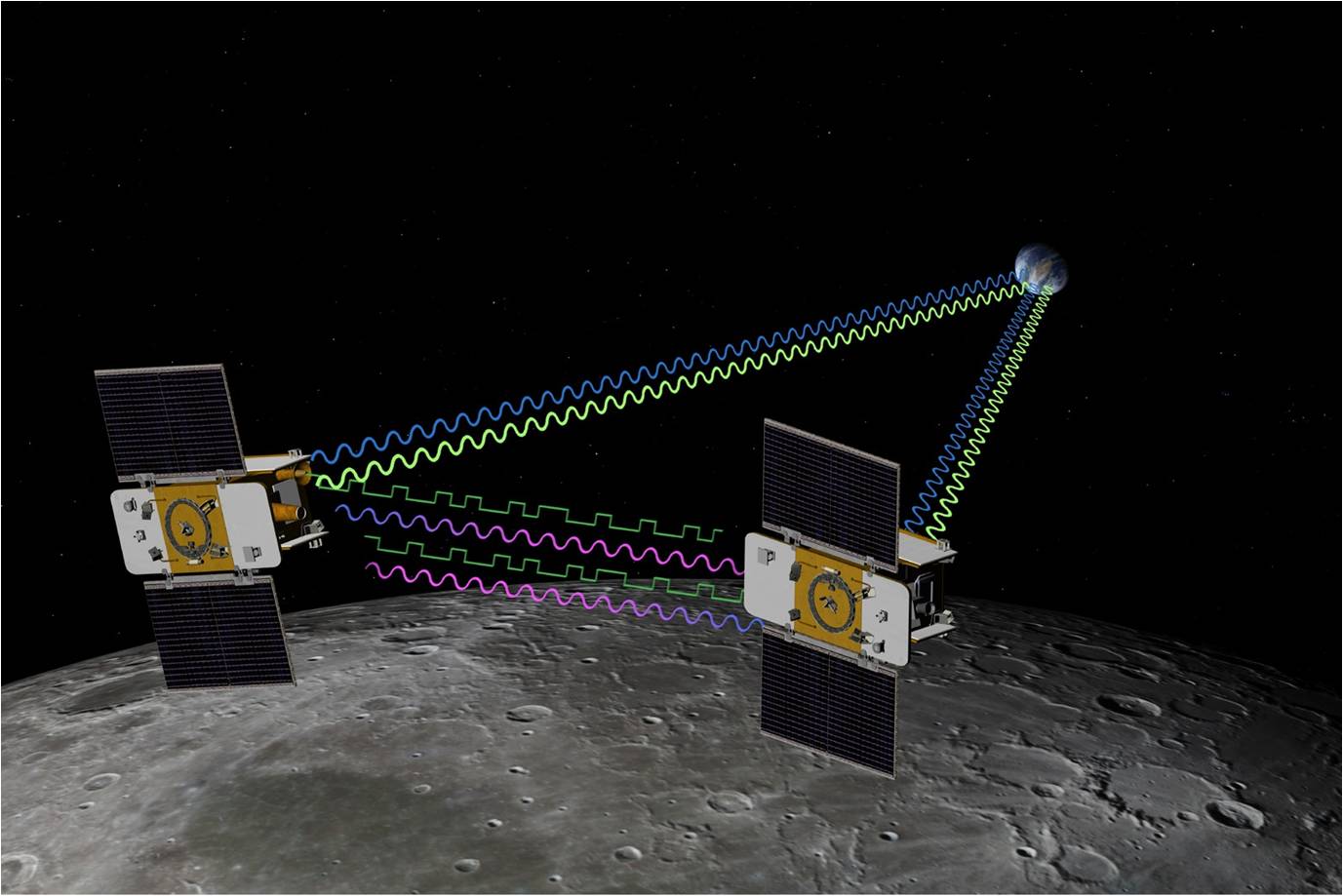
GRAIL, which stands for Gravity Recovery and Interior Laboratory, was sent to the moon to map its gravitational fields. Scientists could study the moon's interior structure by looking at maps of the moon's gravity.
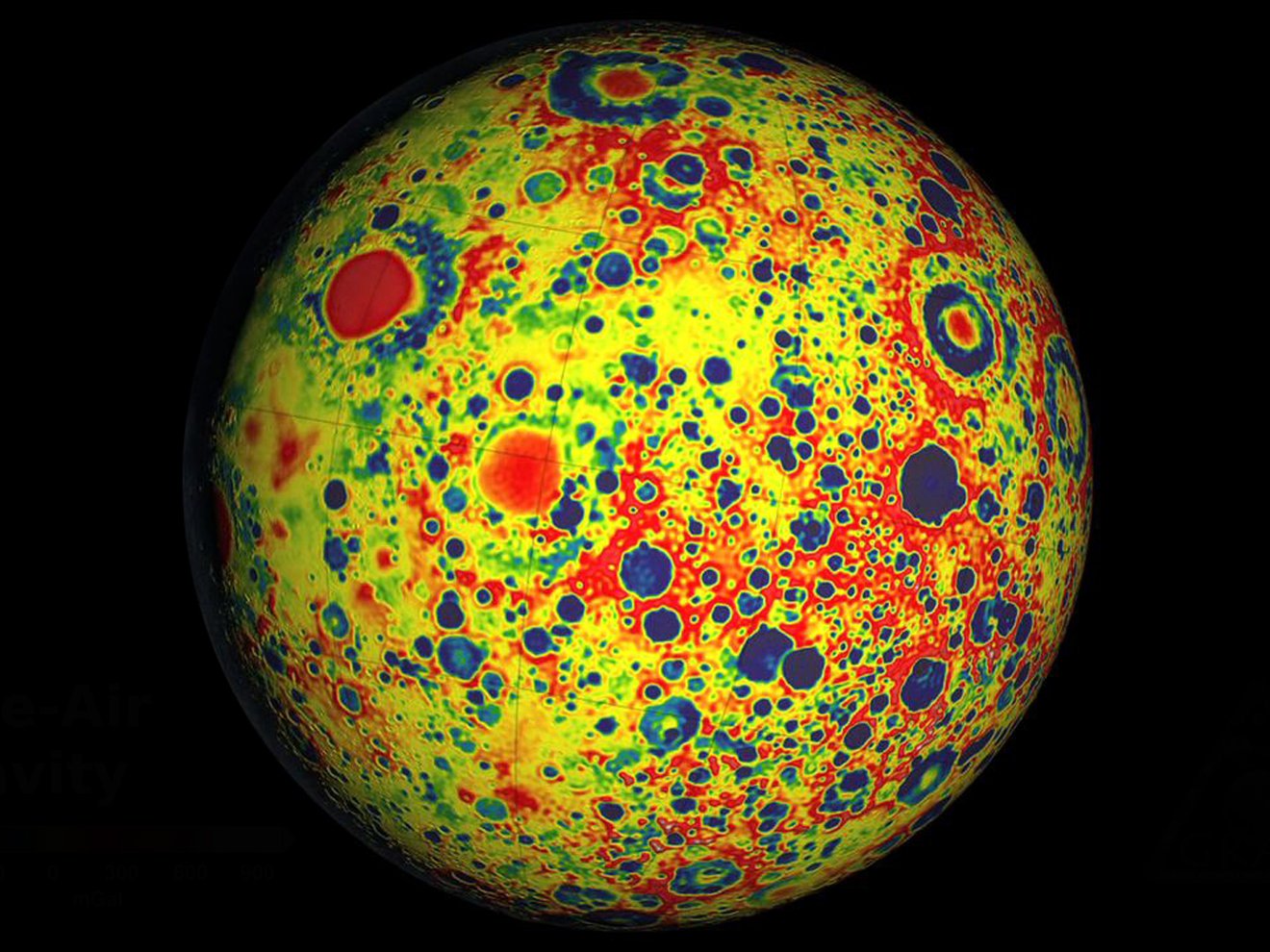
Asteroid impacts from billions of years ago left dense pockets of material under the lunar surface, which can exert extra gravitational pull on spacecraft orbiting the moon. So by measuring that gravitational pull, the GRAIL mission could reveal information about what lies beneath the surface.
The mission actually consisted of two twin spacecraft named Ebb and Flow, which would fly in tandem around the moon to map variations in its gravitation field. Both lifted off on the same Delta II rocket from Cape Canaveral, Florida and arrived in lunar orbit almost four months later.
They mapped the moon for about nine months before NASA decided it was finished with the mission, and the two orbiters crashed into the moon.
A Delta II rocket launches NASA's twin Gravity Recovery and Interior Laboratory (GRAIL) mission to the moon from Cape Canaveral Air Force Station in Florida on Sept. 10, 2011. (Image credit: NASA/Kenny Allen)
Why it mattered
The moon is a weird place. It may look like a cold, gray ball of solid rock, but its density varies from location to location due to odd "mass concentrations" (or mascons for short) buried under the lunar surface. That leads to a strange, lumpy gravity that's not uniform across the lunar surface.
That's where GRAIL's Ebb and Flow probes came in. Each of the twin spacecraft carried three instruments to map the interior of the moon. Those included a Lunar Gravity Ranging System, a Radio Science Beacon and a camera called MoonKam Lunar-Imaging system.
Together, the instruments mapped the mascons on the moon in extreme detail to monitor where lunar gravity increased from the norm. Astronomers had long suspected that mascons on the moon and other planets formed during violent asteroid impacts.
Artist's concept of NASA's Grail mission. Grail's twin spacecraft are flying in tandem orbits around the moon to measure its gravity field in unprecedented detail. NASA/JPL A visualization created using data from NASA's GRAIL spacecraft shows differences in the moon's gravity field.NASA/JPL-Caltech/MIT/GSFC
"GRAIL data confirm that lunar mascons were generated when large asteroids or comets impacted the ancient Moon when its interior was much hotter than it is now," Jay Melosh, a GRAIL co-investigator at Purdue University, said in a NASA overview.
The MoonKam tool was actually a student experiment (MoonKam is short for Moon Knowledge Acquired by Middle School Students). It was built by undergradutate students at the University of California, San Diego in partnership with the Sally Ride Science foundation to encourage younger students to study science and space. (The names Ebb and Flow as GRAIL probe names were also suggested by 4th grade students at Emily Dickinson Elementary School in Bozeman, Montana, as part of a national competition.)
The $496 million GRAIL probes orbited the moon in an extremely low orbit, coming within 30 miles (50 km) of the lunar surface at their closest approach. They were separated from each other at distances that ranged from 109 miles to 140 miles (175 km to 225 km).
NASA crashed the GRAIL probes into the moon on Dec. 17, 2012 once its fuel reserves reached the point that it could not maintain its low lunar orbit. They crashed into a crater rim near the moon's north pole to prevent them from randomly crashing uncontrolled into someplace like an historic Apollo moon landing site.