SpaceX will try for 1st Starship tower catch ‘in a few months,’ Elon Musk says

We'll have to wait a bit longer for a highly anticipated Starship milestone, it appears.

On Aug. 4, SpaceX founder and CEO Elon Musk said the company aimed to attempt the first-ever catch of Starship's upper stage on the vehicle's next test flight, which is tentatively targeted for late August.

But that doesn't seem to be in the cards anymore. "Looks like we will probably catch the ship with the tower in a few months," Musk said early this morning (Aug. 20) via X, the social media platform he bought in 2022.
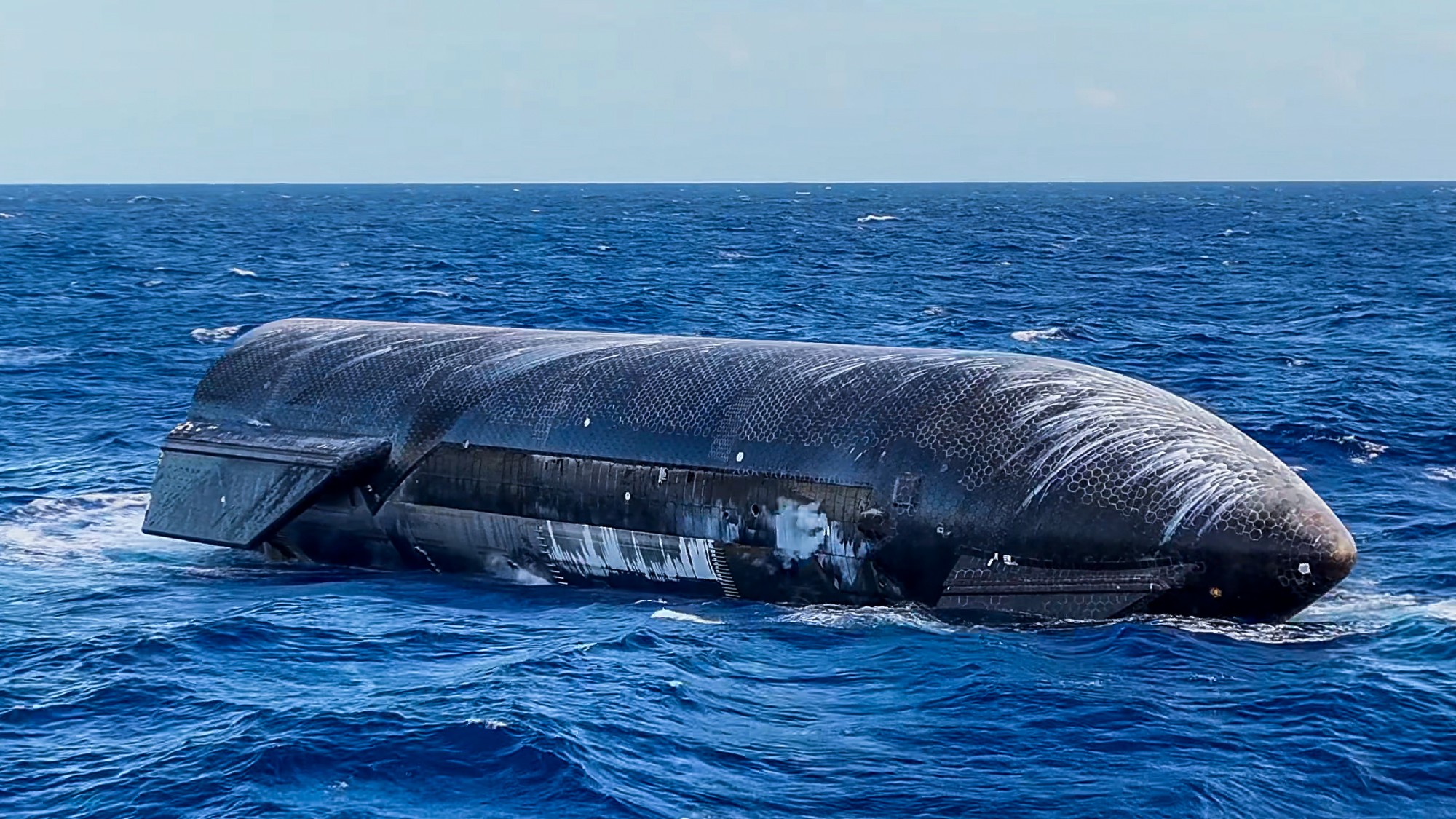
a large black cylinder with wing-like canards floats on top of a choppy blue sea

Starship's Ship upper stage floats in the Indian Ocean after surviving the vehicle's Flight 13, which launched on July 24, 2026. (Image credit: SpaceX via X)

SpaceX has high hopes for Starship, the biggest and most powerful rocket ever built. It consists of a giant first-stage booster called Super Heavy and an upper-stage spacecraft known as Starship, or simply Ship.

Both of these elements are designed to be fully and rapidly reusable. Rapid reuse will be enabled by landings directly on the launch mount, with the aid of the launch tower's "chopstick" arms.

SpaceX has already pulled off such chopstick catches with Super Heavy on three of Starship's 13 suborbital test flights to date. And two of those missions featured a used Super Heavy: Flight 9 used the same booster as Flight 7, and Flight 11 employed the one from Flight 8.

SpaceX has not yet tried to catch Ship, however, because it's a tougher ask: The upper stage comes back down to Earth from much greater heights, and at much higher speeds, than Super Heavy.

But the company has made progress toward this goal recently. For example, on Flight 13, which launched on July 24, Ship survived reentry through Earth's atmosphere and splashed down in its target zone, a patch of the Indian Ocean off the coast of Western Australia.

The vehicle even remained intact after toppling over, a feat none of its predecessors had pulled off. SpaceX subsequently towed Ship to Christmas Island and will study it in depth to inform future iterations of the vehicle.

This encouraging performance led to optimism about a coming tower-catch try for Ship.

"I'd say things look very good, and that's why we, assuming we receive regulatory approval to do so, will attempt to catch the Ship with the tower on the next flight, which is tentatively scheduled for the end of this month," Musk said on Aug. 4, during SpaceX's first call with investors as a public company.

As that quote indicates, however, a Ship tower catch is not entirely up to SpaceX. It also requires approval from regulators — specifically, the U.S. Federal Aviation Administration. It's possible that such approval has not yet been secured for Flight 14, and that's why the timeline has shifted.

After all, Musk has continued to voice confidence in Ship's abilities.

"If there had been a tower out to sea where we practiced landing the ship, it would have been caught," he added in this morning's X post. "First reflight of the ship will be either end of this year or early next. That will be a fork in the road of history for consciousness reaching the stars."

Even without a Ship catch attempt, Flight 14 should still feature some exciting action. During the earnings call, Musk said that Starship will go orbital on Flight 14, something it has never done before.
Rocket Lab launches private Japanese Earth-observing satellite to orbit (video)

Rocket Lab launched a private Japanese satellite to orbit this morning (Aug. 20), adding to a growing constellation of Earth-observing spacecraft.

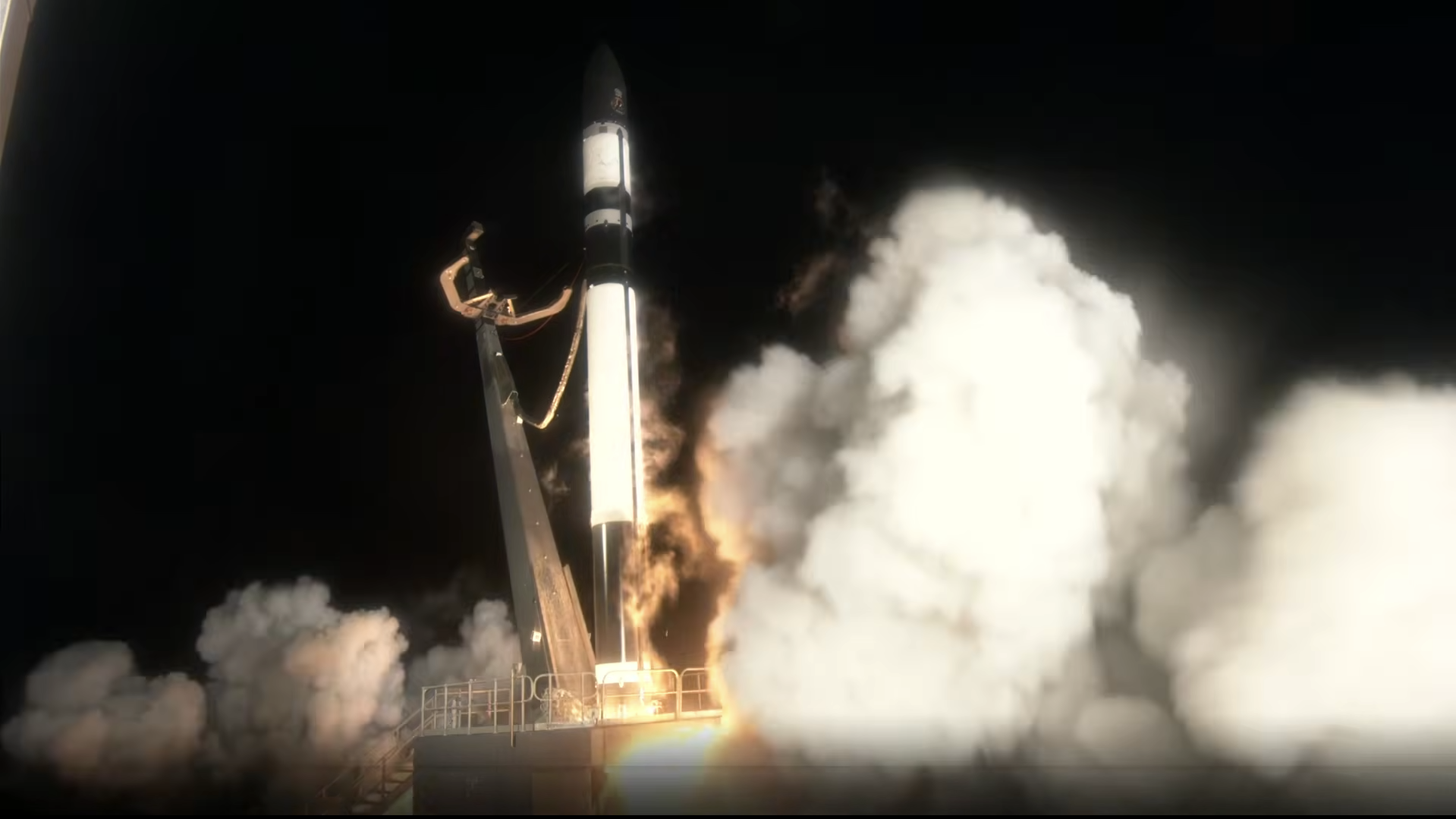
An Electron vehicle lifted off from Rocket Lab's New Zealand site at 9:04 a.m. EDT (1304 GMT; 1:04 a.m. on Aug. 21 local New Zealand time), carrying aloft a radar satellite for the Tokyo-based company iQPS.

The nine 3D-printed Rutherford engines that power Electron's first stage shut off as planned about 2.5 minutes after liftoff. Separation with the rocket's second stage immediately followed, which burned for another 6.5 minutes before releasing Electron's "kick stage" with the IQPS payload for a 40-minute coast phase.

A dark rocket ignites its engines, lifting off a launch pad in a dark night setting.

Electron lifts off from Rocket Lab's New Zealand launch site at 9:04 a.m. EDT (1304 GMT) on Aug. 20. (Image credit: Rocket Lab)

This was Rocket Lab's ninth launch for iQPS, which is building a constellation of 36 synthetic aperture radar (SAR) satellites in low Earth orbit (LEO). Such spacecraft can study Earth day or night, and they can peer through cloud cover as well.

The iQPS network "is being developed and deployed at a rapid pace to provide high resolution and near-real time SAR imagery to its global users," Rocket Lab wrote in a description of today's mission, which it calls "The Lightning God Defends."

That name is a reference to the satellite going up today: It's nicknamed SUSANOO-II, after a Japanese lightning god.

Following the 40-minute coast phase of Electron's kick stage, the rocket completed one final burn to circularize its orbit and successfully deployed SUSANOO-II about 50 minutes after launch, at an altitude of 357 miles (575 kilometers).

Today's flight was Rocket Lab's 14th of 2026 and 93rd overall. The company's most recent launch, on Aug. 6, also lofted an iQPS satellite to LEO.

The vast majority of the company's flights have been performed by Electron, a 59-foot-tall (18 meters) rocket that gives small satellites dedicated rides to Earth orbit and beyond. Rocket Lab also operates a suborbital variant of Electron called HASTE, which allows customers to test sensors and other tech in the hypersonic flight environment.

Touchdown! Private Chinese rocket aces landing on 2nd-ever flight (video)

China just notched another big spaceflight milestone.

The Beijing startup LandSpace successfully landed the first stage of its Zhuque-3 rocket this evening (Aug. 18), becoming the first Chinese company ever to do so during an orbital launch.

It was just the second Chinese orbital rocket touchdown overall. The first was pulled of on July 10 by a Long March 10B, which is built by the state-owned China Aerospace Science and Technology Corporation (CASC).

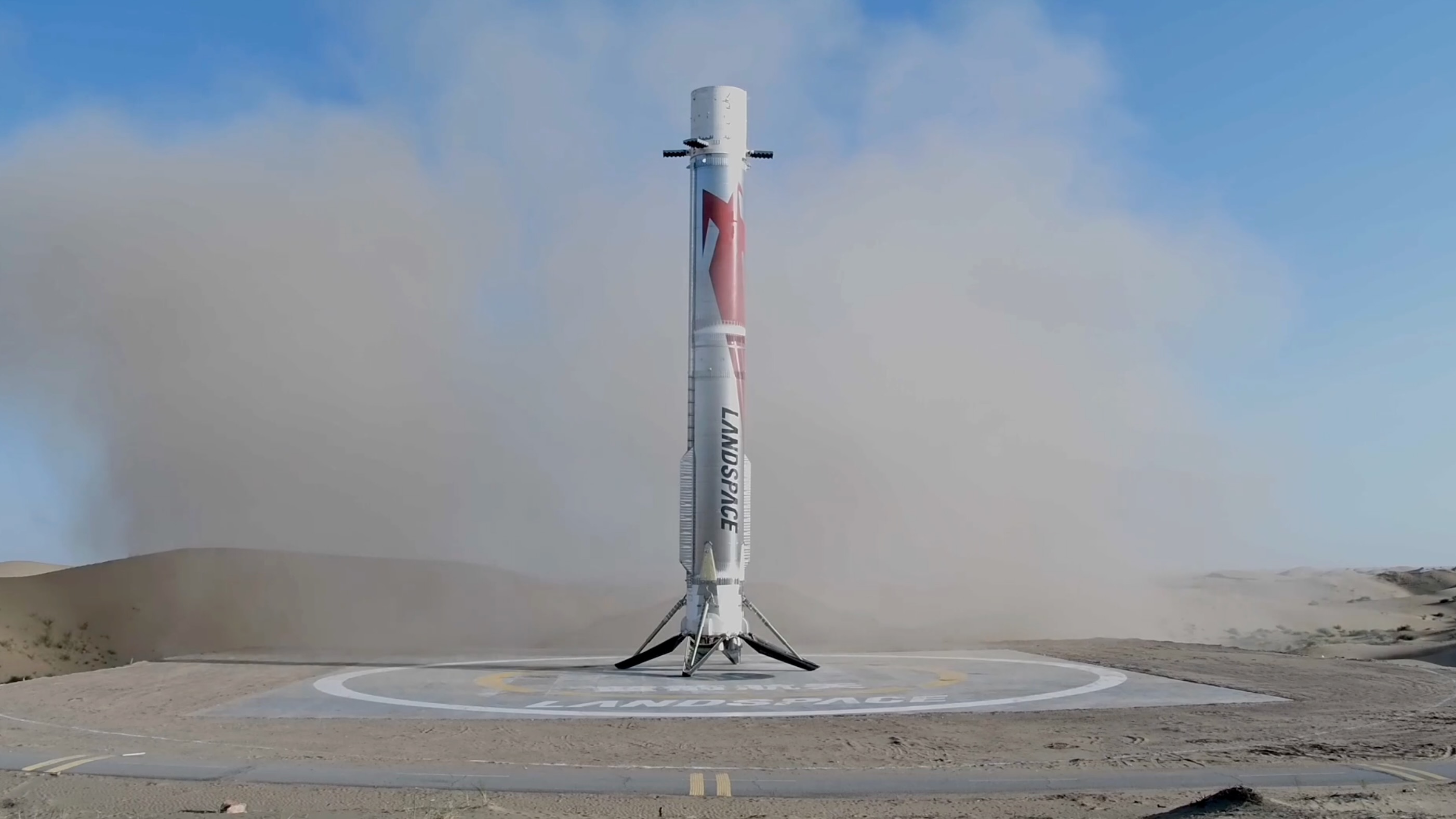
The first stage of Landspace's Zhuque-3 rocket rests on its landing pad shortly after its historic touchdown on Aug. 18, 2026.

The first stage of Landspace's Zhuque-3 rocket rests on its landing pad shortly after its historic touchdown on Aug. 18, 2026. (Image credit: LandSpace)

The Long March 10B had some help returning to Earth, settling softly into a net-like device affixed to a ship at sea. But Zhuque-3 came down on terra firma and stayed upright thanks to a set of landing legs, like those sported by SpaceX's workhorse Falcon 9 rocket.

"This mission marks China's first-ever successful recovery attempt of the first stage of an orbital-class launch vehicle using landing legs, and China's first successful booster recovery on land," LandSpace said via X this evening.

"It is a pivotal flight test for Zhuque-3 as it transitions from the technological demonstration and verification phase toward the engineering application phase of reusability," the company added. "This mission further verified the design correctness and reliability of the Zhuque-3 reusable launch vehicle system, validated its first-stage recovery capability and engineering maturity."

Zhuque-3 broadly resembles the Falcon 9, which made its first landing way back in 2015 and now has more than 600 of them under its belt. Both feature a reusable booster and an expendable upper stage, and they're about the same height — 230 feet (70 meters) for the Falcon 9 and 216 feet (66 m) for Zhuque-3.

Their lifting power is similar as well. Zhuque-3 can haul about 40,350 pounds (18,300 kilograms) to low Earth orbit, while the Falcon 9's LEO payload capacity is 50,265 pounds (22,800 kg).

The two rockets use two very different fuels, however — a combination of liquid oxygen (LOX) and rocket-grade kerosene for the Falcon 9, compared to LOX and liquid methane for Zhuque-3. This "methalox" mixture is also used by Starship, the fully reusable megarocket that SpaceX is developing to help humanity settle the moon and Mars, among other spaceflight tasks.

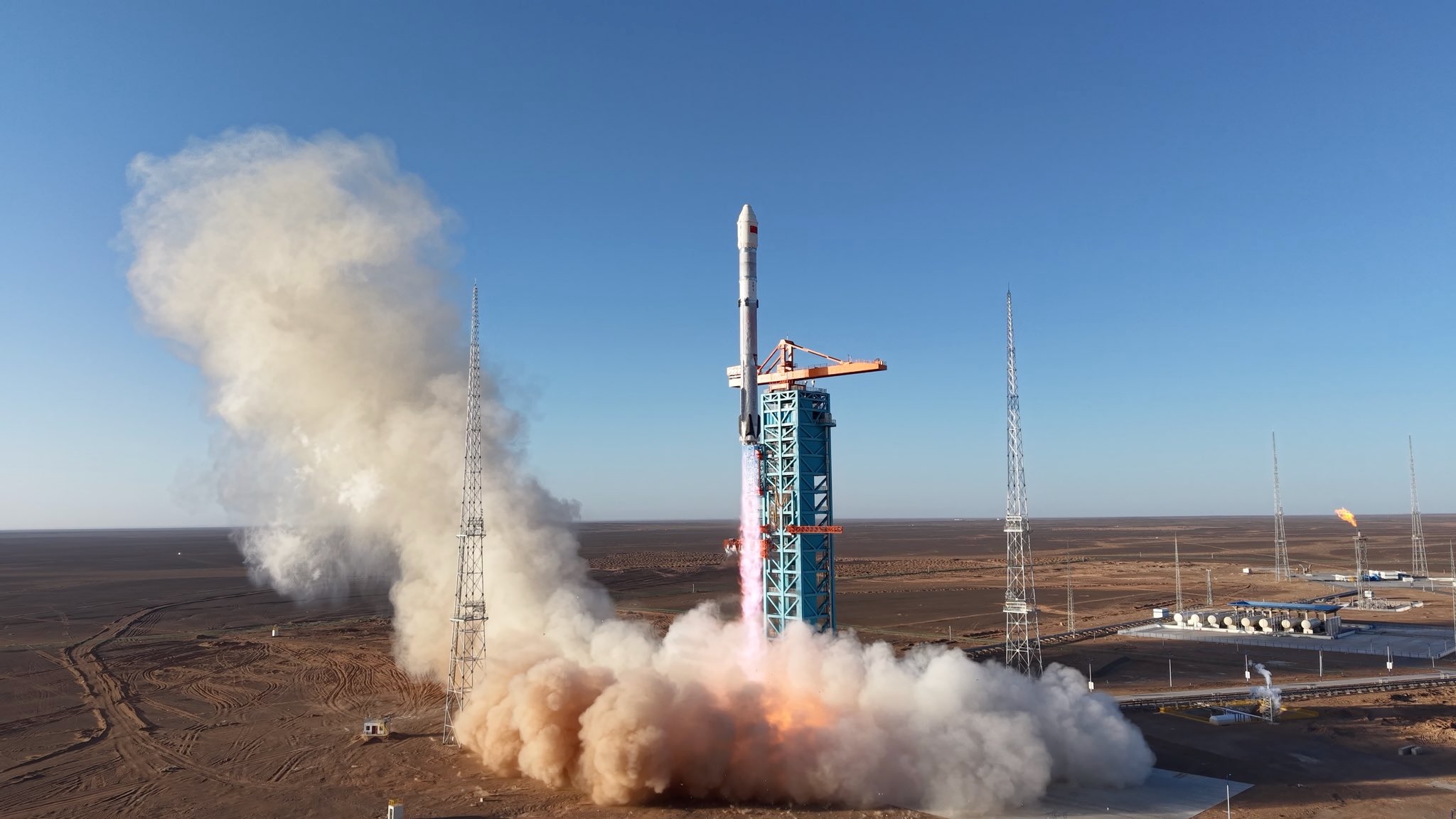
a white and red rocket launches from a desert spaceport

LandSpace's Zhuque-3 rocket launches on its second-ever mission on Aug. 18, 2026. The flight was a success, and Zhuque-3's first stage returned to Earth for a landing — the first ever for a private Chinese orbital rocket. (Image credit: LandSpace)

Today's launch — which occurred from the Dongfeng Commercial Space Innovation Pilot Zone in northwest China at 7:35 p.m. EDT (2335 GMT; 7:35 a.m. on Aug. 19 Beijing time) — was the second overall for the Zhuque-3. The rocket first flew on Dec. 2, 2025, on a mostly successful debut; Zhuque-3's upper stage reached orbit as planned, which is rare for a first flight.

LandSpace tried to bring the booster back for a touchdown that day as well, but the attempt failed. Zhuque-3 suffered "an abnormal combustion" as it neared the ground, according to the state-run outlet Xinhua (translation by Google), and ended up exploding near the designated landing pad.

Today's mission, however, was an unqualified success for the Zhuque-3: The rocket's upper stage delivered a satellite called Honghu 03, which was developed by Hongqing Technology, to its designated orbit, LandSpace wrote in another X post today.

Zhuque-3 is part of a concerted Chinese push toward rocket reusability, an efficiency-boosting feature that has helped make the Falcon 9 the world's leading launcher by far. (The SpaceX rocket flew 165 times in 2025, roughly equalling the activity of all other orbital launchers combined.)

For example, CASC isn't just working on the Long March 10 line (which includes the 10A crew-carrying variant); its Long March 12A and 12B rockets will also have reusable first stages. The Long March 12A has lifted off once to date, in December 2025, and its debut was similar to that of Zhuque-3: The Long March 12A second stage reached orbit successfully, but its booster failed to stick the landing.

And then there are the private rockets. A number of Chinese companies in addition to LandSpace are working on vehicles with reusable first stages, including CAS Space, Deep Blue Aerospace, Galactic Energy, iSpace, Orienspace and Space Pioneer. So Chinese rocket landings may not be a novelty for much longer.

SpaceX launches its 100th mission of the year, sends Starlink satellites to orbit (video)

SpaceX has hit the century mark for the third year in a row.

A Falcon 9 rocket lifted off from California's Vandenberg Space Force Base on Wednesday (Aug. 19) at 12:01 a.m. EDT (0401 GMT; 9:01 p.m. on Aug. 18 local time).

It was the 97th Falcon 9 launch of the year and the 100th mission of 2026 overall for SpaceX.

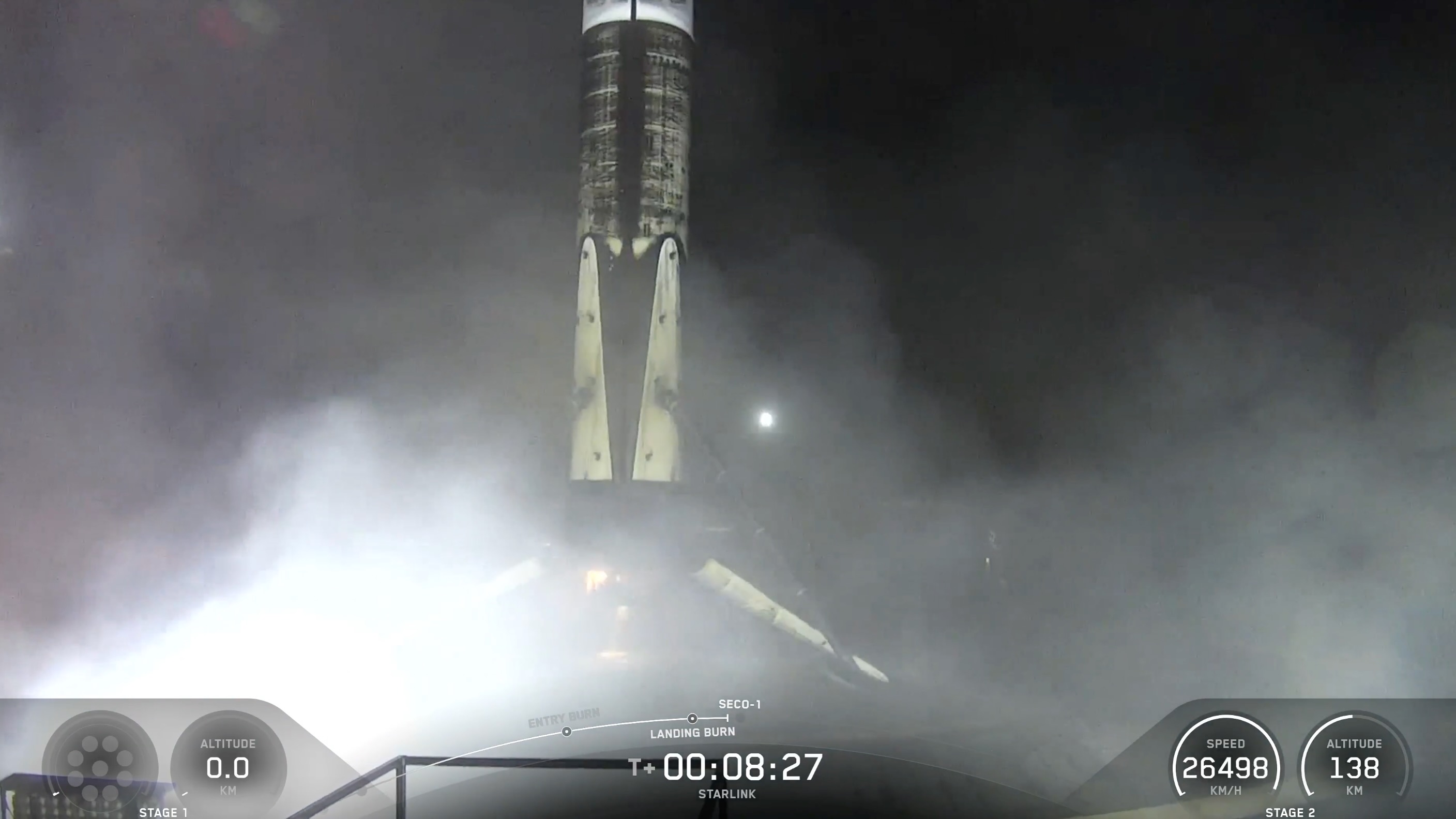
A black and white spacex falcon 9 rocket first stage sits on the deck of a ship at sea.

The Falcon 9's first stage rests on the deck of a drone ship after its successful landing on Aug. 19, 2026. (Image credit: SpaceX)

The mission is carrying 24 of SpaceX's Starlink internet satellites to low Earth orbit. If all goes according to plan, the Falcon 9's upper stage will deploy them there 61.5 minutes after liftoff.

The rocket's first stage, meanwhile, came back to Earth about 8.5 minutes into flight as planned, landing in the Pacific Ocean on the drone ship "Of Course I Still Love You." It was the 12th mission for this particular booster, which is designated B1097.

B1097 is no stranger to milestone flights. During a Starlink launch this past April, for example, the booster performed the 600th landing of an orbital rocket in SpaceX's illustrious history.

Previous Booster B1097 launches

Sentinel-6B | Twilight | NROL-172 | Transporter-17 | 7 Starlink missions

The vast majority of SpaceX's launches this year — at the moment, 74 of them — have been devoted to building out the Starlink megaconstellation, which currently consists of nearly 11,000 operational satellites.

One of SpaceX's three non-Falcon 9 launches of 2026 was performed by its Falcon Heavy rocket. The other two were suborbital test flights of Starship, the giant, fully reusable vehicle that SpaceX is developing to help humanity settle the moon and Mars, among other tasks.

SpaceX first topped 100 launches in 2024, when it conducted a total of 138 missions (132 by Falcon 9, two by Falcon Heavy and four by Starship). In 2025, the company flew a total of 170 times (165 by Falcon 9 and five by Starship).

Such numbers will jump dramatically in the coming years, if all goes to plan. SpaceX founder and CEO Elon Musk has said the company wants to launch Starship multiple times per day, boosting annual tallies to 1,000 or so. Falcon 9 and Falcon Heavy aren't part of this longer-term picture; SpaceX wants to phase them out and have Starship shoulder the load.

Editor's note: This story was updated at 12:20 a.m. ET on Aug. 19 with news of successful launch and rocket landing.

Watch European astronaut make history during spacewalk today

Sophie Adenot will make spaceflight history today (Aug. 18).

The European Space Agency (ESA) astronaut will become the first French woman ever to conduct a spacewalk, an activity she'll undertake with NASA astronaut Anil Menon.

The duo are scheduled to step outside the International Space Station (ISS) for a 6.5-hour excursion today at around 8:35 a.m. EDT (1235 GMT). You can watch it live here at Space.com, courtesy of NASA. Coverage starts at 7 a.m. EDT (1100 GMT).

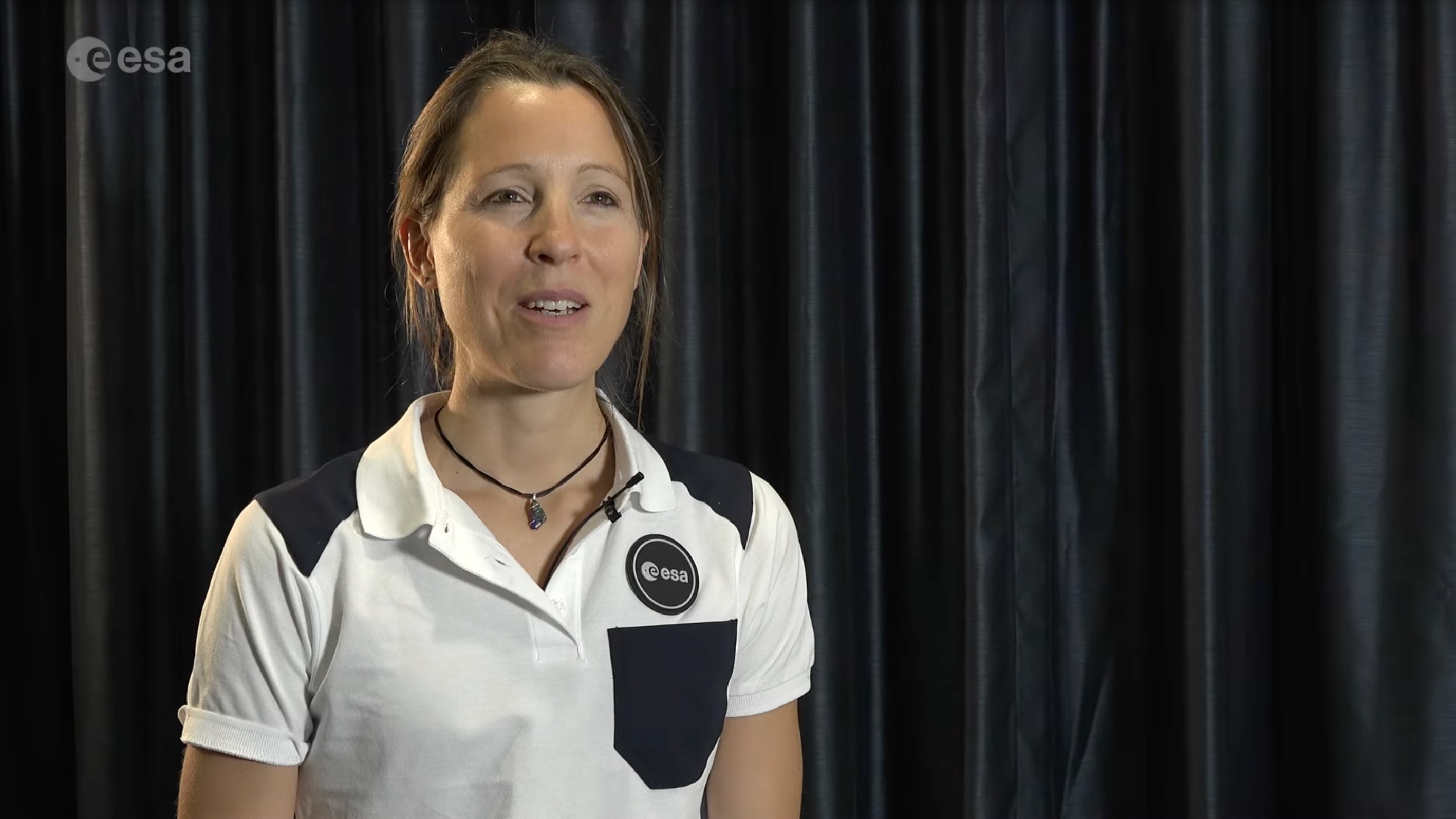
a smiling woman in a white polo shirt sits in front of black drapes

Sophie Adenot is part of the European Space Agency's 2022 astronaut class. (Image credit: ESA)

Adenot and Menon will "replace a space-to-ground antenna on the orbital complex," NASA officials wrote in a spacewalk preview.

"The antenna is a critical communications link NASA uses to transmit data, enabling high-speed communications between the Mission Control Center in Houston and the space station," they added.

This will be the second spacewalk for Menon; his first one, conducted with fellow NASA astronaut Jessica Meir, occurred on Aug. 6. During that extravehicular activity (EVA), a carbon dioxide sensor on Menon's spacesuit gave "an unexpected data reading," NASA officials wrote in an Aug. 7 update.

The sensor returned to normal after Menon doffed the suit, but NASA took some extra time to make sure there was no serious issue. As a result, the agency pushed his second spacewalk back a few days — from the originally planned Aug. 13 to today.

Today's spacewalk will be the 282nd overall in the long history of the ISS. Menon, who reached orbit on a Russian Soyuz spacecraft on July 14, will be "crewmember 1" on the EVA. Adenot — a member of SpaceX's Crew-12 mission, which reached the orbiting lab in February — will be "crewmember 2."

Adenot won't be the first French person overall to conduct an EVA. That distinction goes to Jean-Loup Chrétien, who performed a spacewalk outside the then-Soviet Union's Mir space station in 1988.

Other male French astronauts, including Philippe Perrin and Thomas Pesquet, later spacewalked outside the ISS. Pesquet also became the first French person to command an ISS mission, taking the reins in October 2021.

New record! SpaceX launches 2 Falcon 9 rockets just 38 minutes apart (video)

SpaceX keeps setting spaceflight records.

Elon Musk's company launches far more frequently than any other outfit, and it operates the largest satellite constellation ever assembled — the Starlink broadband network, which consists of nearly 11,000 satellites (and counting).

On Saturday evening (Aug. 15), SpaceX set another mark, for the shortest time between orbital flights: It launched two Falcon 9 rockets just 38 minutes apart, besting its old mark — set on Aug. 31, 2024 with two Starlink missions — by 27 minutes.

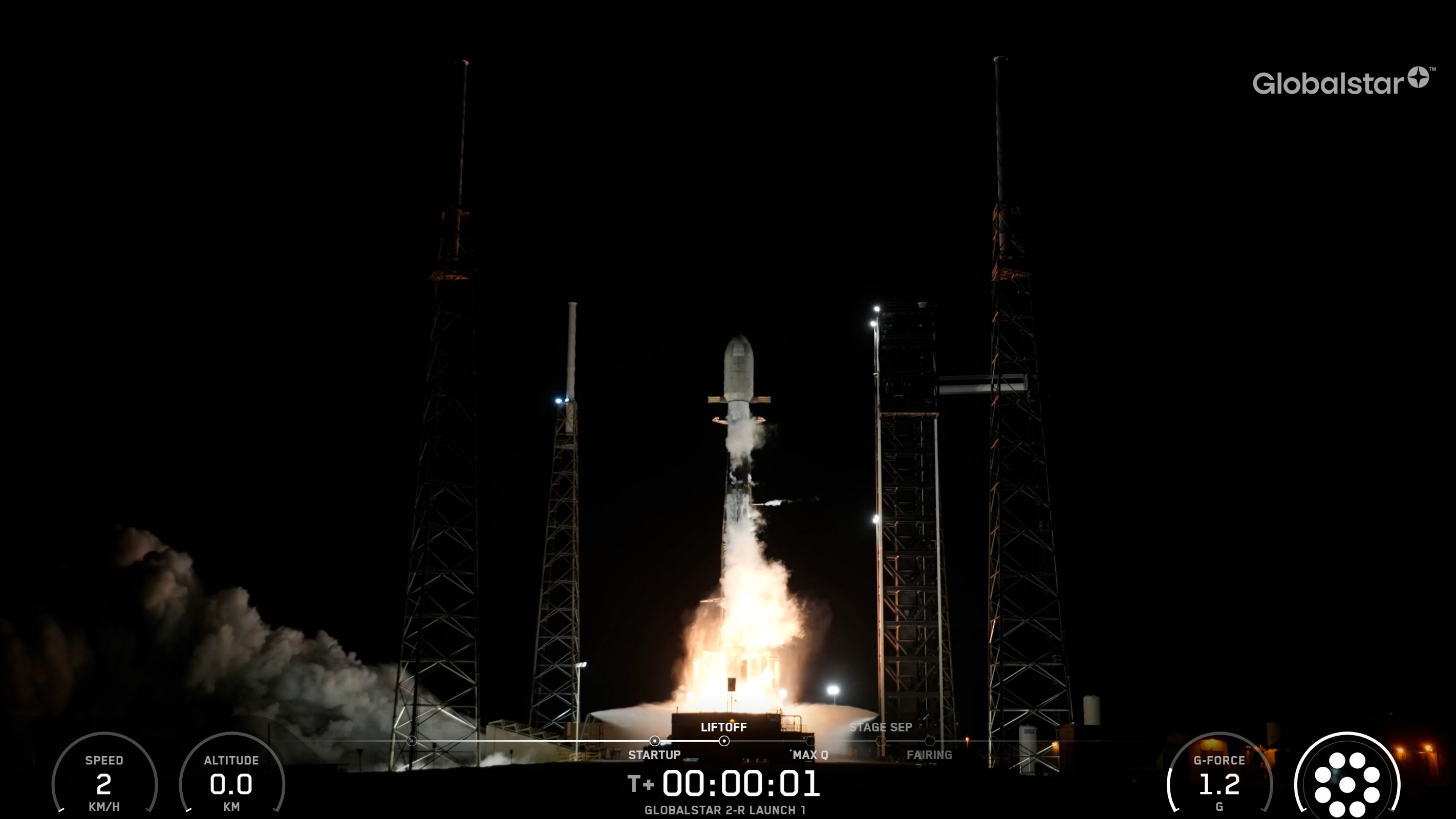
a black-and-white spacex falcon 9 rocket launches into a dark night sky.

A SpaceX Falcon 9 rocket launches eight satellites for the telecom company Globalstar from Florida's Cape Canaveral Space Force Station on Aug. 15, 2026. (Image credit: SpaceX)

The first liftoff, from Florida's Cape Canaveral Space Force Station, occurred Saturday at 9:12 p.m. EDT (0112 GMT on Aug. 16) and carried eight satellites to low Earth orbit (LEO) for Louisiana-based telecom company Globalstar.

All eight spacecraft were deployed successfully, separating over a six-minute span beginning 56.5 minutes after liftoff, SpaceX announced via social media.

While that Falcon 9 was powering its way to LEO, another one launched from Vandenberg Space Force Base, on California's central coast. That liftoff, at 9:50 p.m. EDT (6:50 p.m. local time; 0150 GMT on Aug. 16), kicked off a mission for the U.S. Space Force called USSF-366.

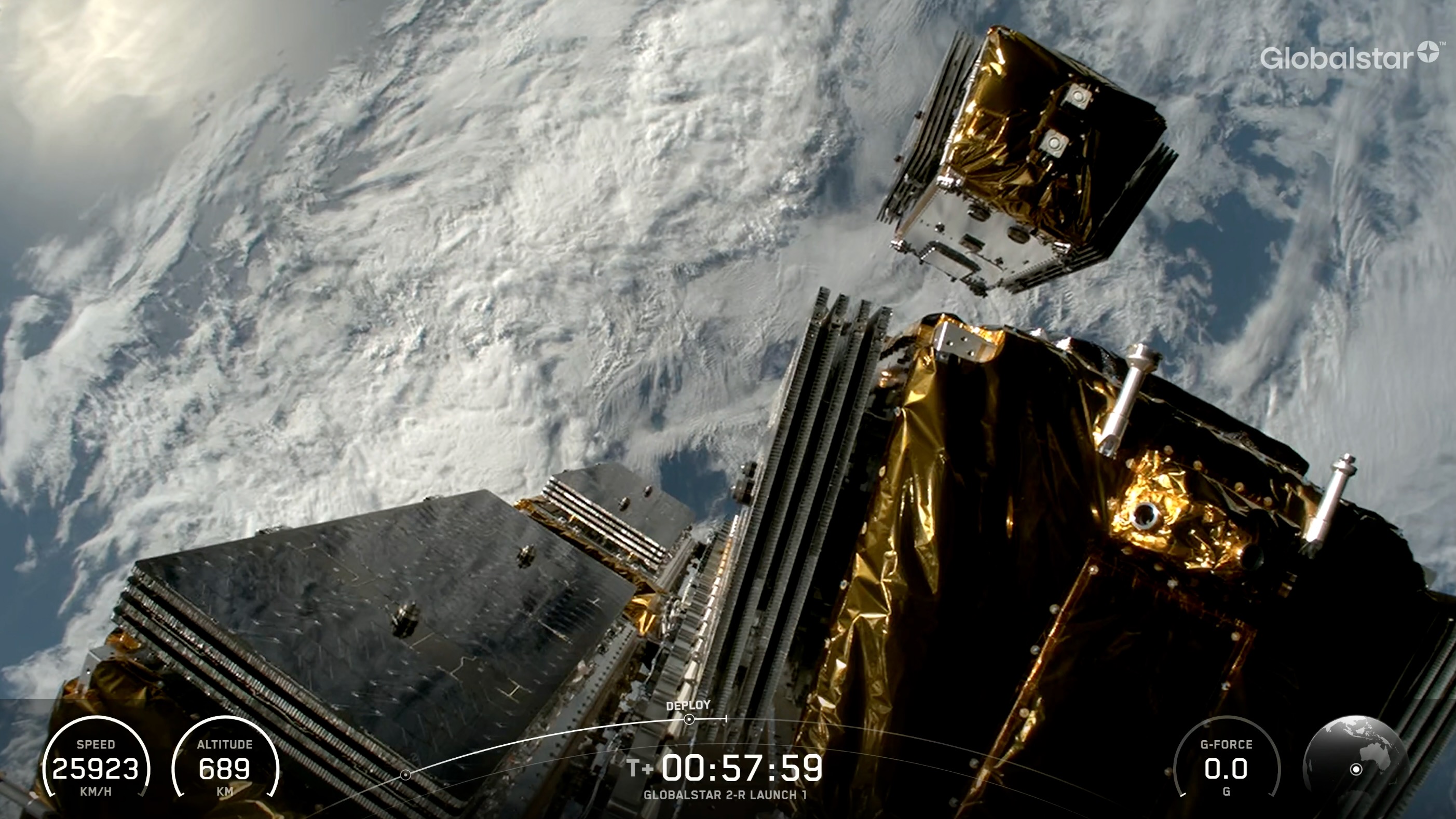
view from a rocket in orbit around earth showing a boxy satellite deploying

A Globalstar satellite deploys from the upper stage of its Falcon 9 rocket on Aug. 15, 2026. (Image credit: SpaceX)

We know very little about USSF-366, which isn't surprising given its classified status. However, rocket watchers have made a few inferences from the limited available information.

"It is possibly a batch of classified LEO satellites for a U.S. government entity based on SpaceX's Starshield satellite bus, based on locations of rocket stage drop zones being exact fits with previous Starlink Group 15 launches," NextSpaceflight.com wrote in its mission description. (Starshield is a SpaceX project that uses modified versions of Starlink craft to fly national security missions for the U.S. government.)

It's unclear when and where the rocket's upper stage will deploy the USSF-366 payload(s); SpaceX's mission description doesn't reveal that information. And the company ended its livestream shortly after the first-stage landing, as is typical for national security flights.

Both of Saturday's missions featured successful rocket landings. The Falcon 9 first stage that launched the Globalstar mission came back for a touchdown at Cape Canaveral about eight minutes after launch. It was the 14th flight for that particular booster.

The USSF-366 Falcon 9 first stage, meanwhile, came back to Earth about 8.5 minutes after its launch, touching down in the Pacific Ocean on the SpaceX droneship "Of Course I Still Love You." That booster now has 18 missions under its belt.

Saturday's doubleheader brought the tally of Falcon 9 launches in 2026 to 96. The vast majority of those — about 75% — have been Starlink missions.

‘Strap yourself in and feel the Gs’: NASA announces ‘Max Power’ aerospace expo

NASA will hold a two-day aerospace exposition this November, and it may draw a surprising number of "Simpsons" fans.

The event, which NASA announced today (Aug. 14), will be held Nov. 7 and Nov. 8 at Kennedy Space Center (KSC) on Florida's Space Coast. It's called "Max Power," which is also a famous Homer Simpson pseudonym.

In the 13th episode of the show's 10th season, which first aired in February 1999, Homer legally changed his name to Max Power. He wanted to disassociate himself from a bumbling character on the (fictional) TV show "Police Cops" who shared his given moniker.

Homer made the switch to Max Power — which he said he got off a hair dryer — without consulting his family, a move that did not go over well.

"Wait a minute!" his dad protested. "The family name is my legacy to you. I got it from my father, and he got it from his father, and he traded a mule for it. And that mule went on to save spring break."

Homer's wife Marge was also displeased.

"But I fell in love with Homer Simpson," she said. "I don't want to snuggle with Max Power."

"Nobody snuggles with Max Power," Homer — or rather Max — responded. "You strap yourself in and feel the Gs!"

NASA's Max Power expo is about feeling the Gs as well, at least in part.

"The two-day event will feature immersive experiences for all ages to enjoy, including air shows, skydiving stunts, technology demonstrations, spaceflight hardware, military aircraft and behind‑the‑scenes access to America's spaceport," agency officials wrote in a description of the expo. "Attend talks led by NASA experts and meet astronauts from some of agency’s most famous missions!"

NASA Administrator Jared Isaacman, an accomplished pilot as well as a private astronaut, said that he plans to participate in the expo's air show. And, if you're unable to attend this November, you'll likely have other chances down the road.

"Certainly, the idea is that this event, Max Power, becomes the first of many," Isaacman said during a press conference today.

Virgin Galactic delays next commercial spaceflight to 2027

Virgin Galactic's next customers will have to wait a bit longer to get off the ground.

The suborbital space tourism company hasn't been to the final frontier since June 2024. It had been targeting late 2026 for the resumption of commercial service, but that's not going to happen, we learned on Wednesday (Aug. 12).

"We've moved our first commercial spaceflight to this coming February to allow additional time to complete avionics and systems installations," Virgin Galactic CEO Michael Colglazier said on Wednesday, during a call the company held to discuss its financial results for the second quarter of 2026.

"No single issue is driving the schedule push," he added. "Rather, we have experienced modest time-duration extension across hundreds of relatively small but important installation tasks involved in the first build of our new spaceship."

The coming mission won't be Virgin Galactic's first commercial spaceflight overall. That occurred in June 2023 and was performed by the company's VSS Unity space plane, which was retired a year later following its seventh operational, customer-carrying flight.

Rather, Colglazier was referring to the debut of the company's first "Delta class" vehicle, an advanced iteration that's designed to fly much more frequently than Unity ever did — twice per week, if all goes to plan.

Virgin Galactic is currently building two Delta planes, which will be broadly similar to Unity in most ways. They will be piloted vehicles that seat six passengers, for example, and will take off beneath the wings of a carrier plane. That mothercraft will drop the Delta vehicles at an altitude of about 50,000 feet (15,000 meters), after which they'll ignite their rocket motors and head to suborbital space.

Their suborbital jaunts will likely last 60 to 90 minutes, and they'll end with a landing at the same runway where they started.

The second Delta spaceship is expected to join the first one at Spaceport America in New Mexico — Virgin Galactic's commercial hub — in March 2027, Colglazier said.

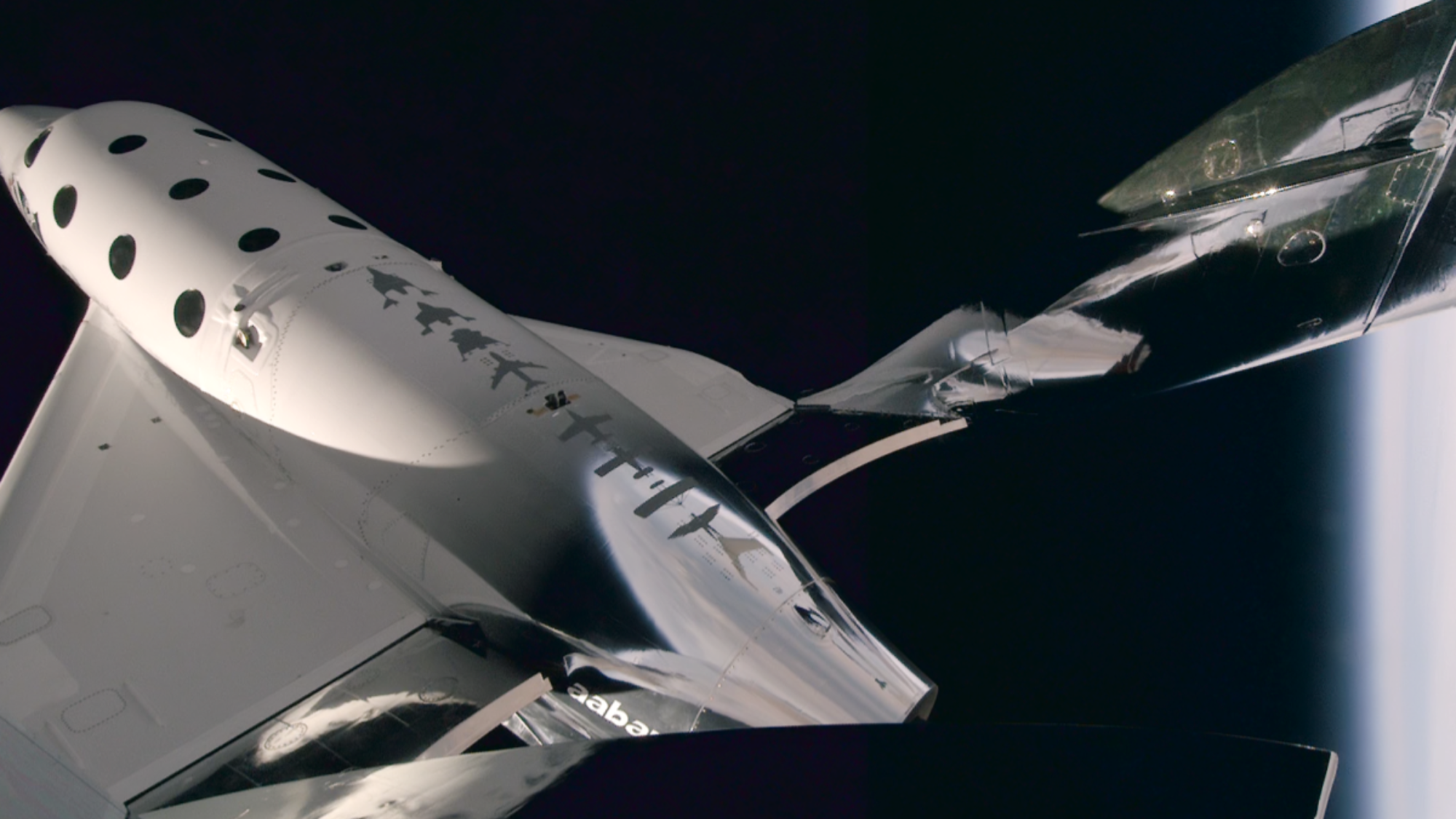
a white space plane soars high above earth

The view from Virgin Galactic's VSS Unity vehicle during one of its trips to suborbital space. (Image credit: Virgin Galactic)

Colglazier also announced that Virgin Galactic's latest "tranche" of passenger bookings was oversubscribed, demonstrating a continuing strong demand from customers despite the flight hiatus. The per-seat price for that tranche was $750,000 — a number that's no longer available.

"We have retired the $750,000 price point, and we plan to open a new tranche of spaceflight expeditions this fall at higher price points," Colglazier said.

He didn't say what the new price would be. But the jump could be considerable, based on recent history: The ticket price before $750,000 was $600,000, and the one before that was $450,000.

Virgin Galactic lost nearly $56 million in Q2 2026, the company announced in Wednesday's earnings call. That was an improvement over Q2 2025, when the company was about $67 million in the red.

But things should change considerably next year, according to the company.

"With our second [Delta] spaceship entering service, we continue to forecast that we will achieve a flight rate of 10 or more spaceflights per month by the end of the second quarter of 2027," Virgin Galactic Chief Financial Officer Doug Ahrens said during Wednesday's call.

"This flight rate is an unprecedented achievement in human spaceflight, and this is made possible with our highly reusable spaceship design," he added. "Given these flight rate expectations, we continue to forecast quarterly positive cash flow within 2027."

The outlook is even rosier over the long haul, Ahrens stressed.

"We expect each new spaceship to cost approximately $60 million to produce," he said. "Given a conservative lifetime estimate of 500 flights per spaceship, with six astronauts per spaceflight, average pricing of $600,000 per spaceflight expedition, and a contribution margin over 80% per spaceflight, each new spaceship has the potential to generate over $1.4 billion of lifetime contribution margin."

Virgin Galactic will be the only game in town once it gets back up and running. Its chief competitor in the suborbital space tourism business, Jeff Bezos' Blue Origin, recently put its flights on hold to focus on helping NASA return astronauts to the moon.

Blue Origin has never revealed its ticket prices, but Ahrens said they were believed to be in the $1 million to $2 million range.

"I don't think we need to be driving our prices up that quickly," he said. "But there is strong and solid demand, and we do expect each time we release a tranche of tickets, it will be priced higher than the tranche before. And that's appropriate, so I think you'll see us do that for a little bit longer."

New private ‘Perceptor’ probes will keep an eye on satellites high above Earth

Satellites high above Earth may soon have fewer places to hide.

San Francisco-based company Astranis announced today (Aug. 13) that it's developing a line of spacecraft called Perceptor, which will keep an eye on satellite activity in geostationary orbit (GEO).

GEO lies 22,236 miles (35,786 kilometers) above Earth, an altitude at which orbital speed matches our planet's rotational velocity. It's therefore a popular destination for communications, weather and reconnaissance spacecraft — and, increasingly, an arena for off-Earth spying, as space powers seek to keep tabs on their competitors' activities.

Astranis currently operates five satellites in this distant orbital realm, which "support the U.S. military, bring connectivity to remote areas and provide critical capabilities like GPS," according to the company's website.

It plans to leverage and extend this expertise with Perceptor, helping the U.S. government and other potential customers learn more about what's happening high above our heads. The new line will be based on Astranis' "MicroGEO" satellite platform, so named because it's smaller than typical GEO craft.

"Astranis provides mission-critical infrastructure for strategic higher orbits. What we found is our means to detect and respond to emerging threats to this infrastructure are sorely lacking," John Gedmark, Astranis' CEO and co-founder, said in a statement today.

"There are blind spots that will be used against us if not eliminated," he added. "With Perceptor, we're meeting the increasing demand for security in GEO with our proven on-orbit platform and ability to produce at scale."

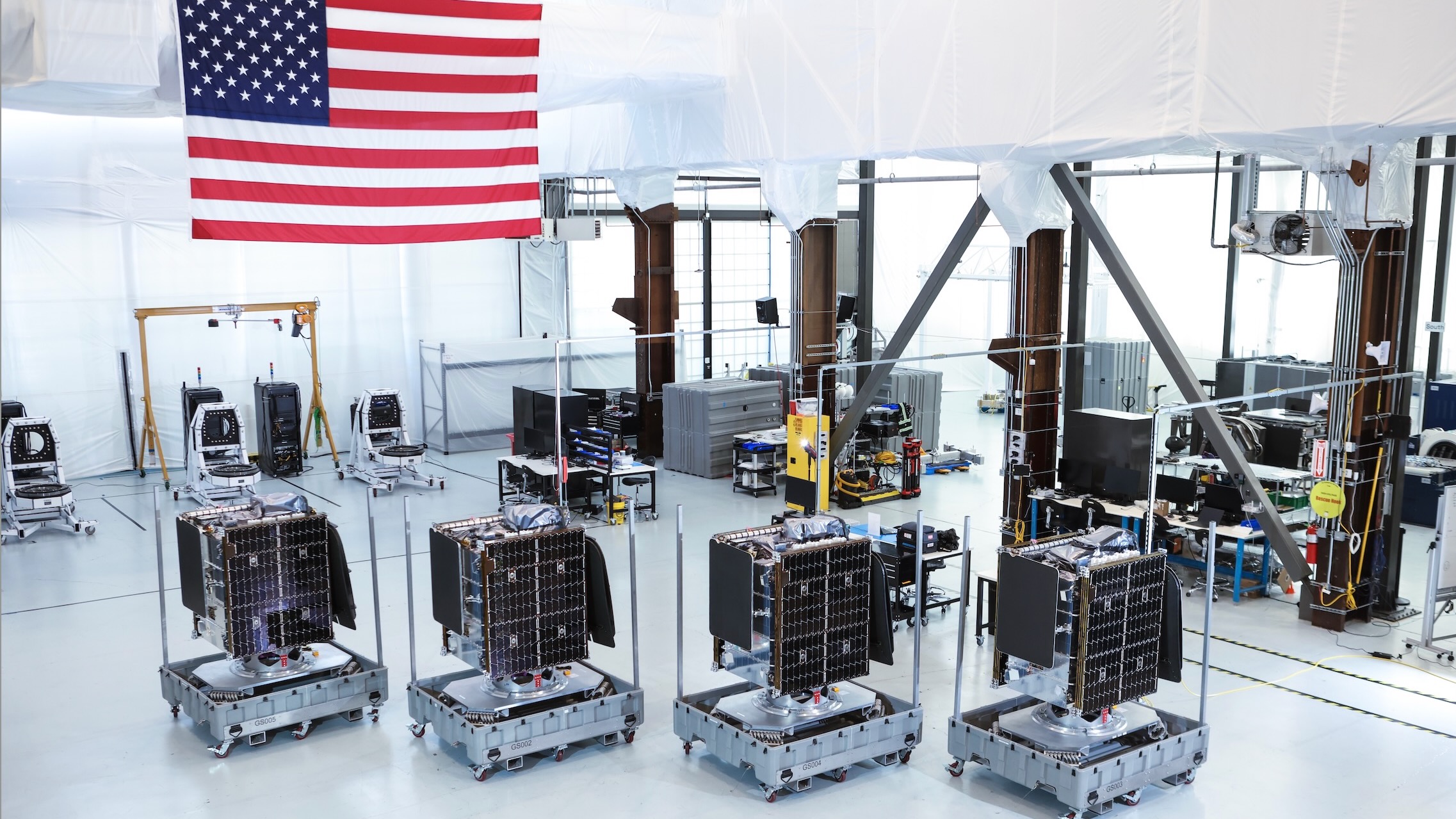
four cubical spacecraft sit inside a large white-walled clean room with an american flag in the background

Four Astranis MicroGEO satellites, which launched atop a Falcon 9 rocket in December 2024. (Image credit: Astranis)

Perceptor spacecraft will sport a variety of sensors, which will allow them to take the measure of other satellites and their broader GEO surroundings.

"Multi-angle flybys can assess spacecraft capabilities, help troubleshoot anomalies on friendly spacecraft, and provide additional eyes in a domain where awareness has historically been limited," Astranis' statement reads.

Each Perceptor will also be highly maneuverable, using electric propulsion "to traverse the full GEO arc, repositioning dozens of times over its mission lifetime," company representatives added.

The statement does not provide a target timeline for the first Perceptor missions. But the need for such a capability already exists, as the activities of certain Russian and Chinese satellites show.

In 2020, for example, officials with the U.S. Space Force announced that two Russian spacecraft got within 100 miles (160 kilometers) of an American spy satellite, behavior the branch's then-chief described as "unusual and disturbing."

And, in 2023, experts announced that China's TJS-3 GEO spacecraft had taken close looks at USA 233 and USA 298, both of which are thought to be Space Force spy satellites.

SpaceX could make $500 billion in 2028, Elon Musk says (video)

SpaceX isn't a launch company anymore.

SpaceX is famous for launching, and landing, its Falcon 9 and Falcon Heavy rockets and sending astronauts to space aboard its Dragon crew capsule. Recently, however, the company has been transitioning into an artificial intelligence (AI) outfit — and that journey is now mostly complete.

"Our AI revenue will exceed all other SpaceX revenue probably in September — like, next month — and will significantly exceed all other SpaceX revenue in in the fourth quarter," company founder and CEO Elon Musk said during an address to employees that the company posted on X today (Aug. 11). "So, AI has become an extremely important part of SpaceX's future."

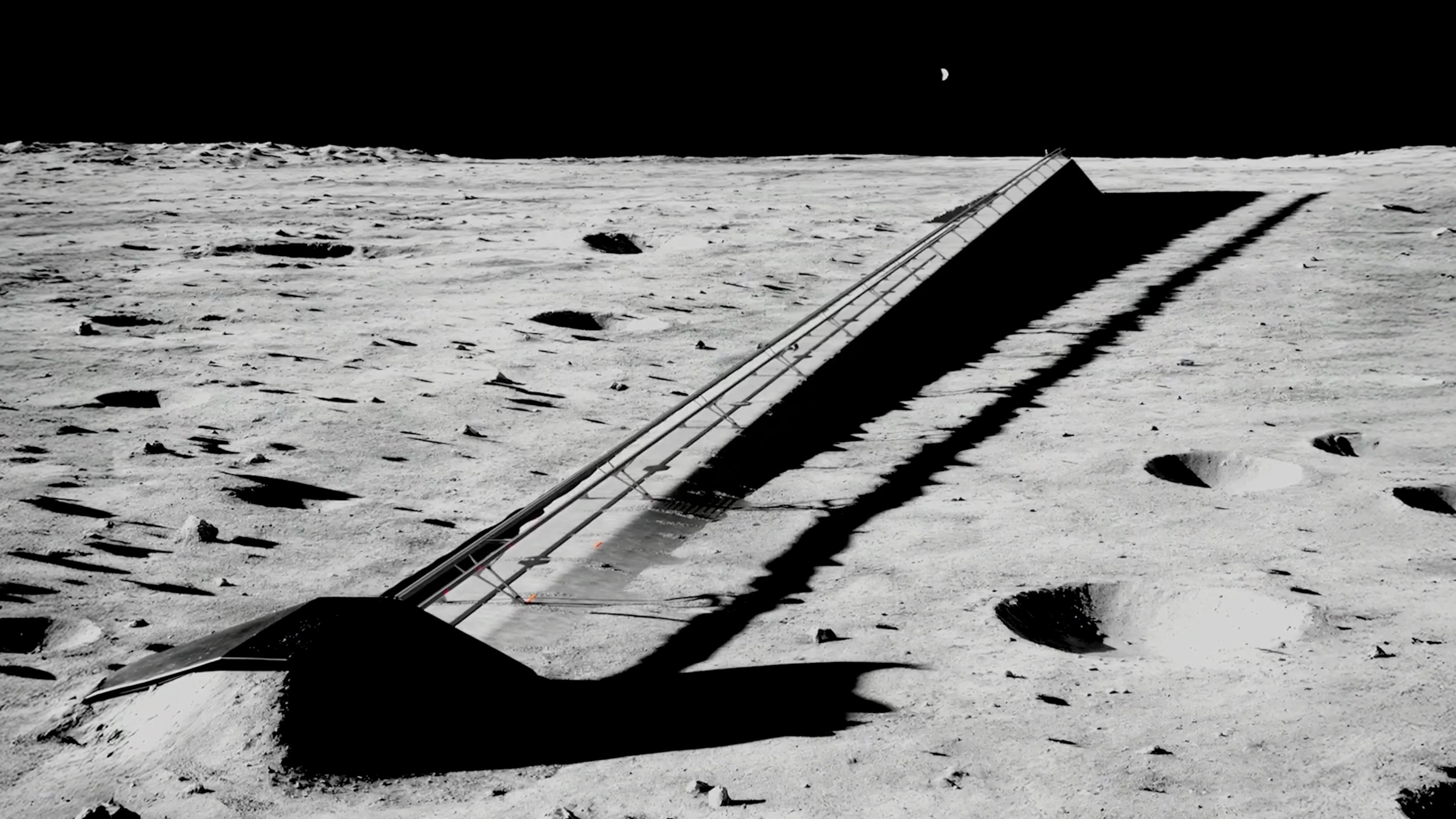
Illustration of an electromagnetic mass driver on the moon, which SpaceX plans to use to launch AI satellites into space.

Illustration of an electromagnetic mass driver on the moon, which SpaceX plans to use to launch AI satellites into space. (Image credit: SpaceX)

Earlier this year, SpaceX bought xAI, a startup that Musk founded in 2023. xAI created the chatbot Grok and also operates a powerful supercomputer cluster in Tennessee called Colossus.

But that was just the beginning. Musk laid out just how deeply SpaceX is diving into AI during his 29-minute talk, which came a week after SpaceX's first-ever quarterly earnings call as a public company.

"Probably in four or five years, AI will be 99% of the value of SpaceX; I'd say five years for sure," Musk said. "And the value of SpaceX will be some astronomical number."

Astronomical is right. According to Musk, the company aims to get 10 gigawatts of AI compute up and running by the end of next year. That's a big jump from its current 1.4 GW, which SpaceX sells to tech companies and AI labs.

"The value per watt is probably going to be 30 to $50, which means if we bring 10 gigawatts of AI online by the end of next year, it will be 300 to $500 billion a year in revenue," he said. "Big numbers."

And those numbers will get even bigger over time, if all goes according to plan. SpaceX just announced plans to build a gigantic complex in Texas called Terafab, a joint operation with Tesla that will manufacture advanced semiconductor chips for a wide range of applications. And the company aims to launch a million of its "Starmind" AI satellites to low Earth orbit in the coming years using its fully reusable Starship megarocket, which is still in development.

Over the longer haul, the company plans to establish factories on the moon that will build these off-Earth data centers. The satellites will be launched into space from the lunar surface via electromagnetic mass drivers — basically, high-powered rail guns.

SpaceX envisions Starmind and its other AI efforts as returning almost unimaginable profits down the road. For example, in paperwork the company filed just before its record-breaking IPO, SpaceX identified an eventual "total addressable market" of $28.5 trillion, nearly $23 trillion of it in the AI field.

For some perspective: The gross domestic product of the entire United States last year was about $30.8 trillion.

"The future is fundamentally AI and robots," Musk said during his address to employees. "Assuming civilization continues to progress, I think that AI will probably — the amount of digital intelligence will probably be more than a trillion times the amount of biological intelligence."

He also said he's not just in this for the money.

"It's important that we have an AI that cares about humanity, that fosters humanity and helps take us to other planets and other star systems," Musk said.

"This is why I think it's essential that SpaceX succeed not just with AI hardware but also with AI software," he added. "I think an AI that is sort of SpaceX's baby will be a very good AI. I think SpaceX is a collection of some of the very best humans on Earth, both in capability and morality and goodness."

He urged SpaceX employees to aid the company's AI efforts in any way that they can, stressing that success could lead to some amazing vacations.

"One of the nice benefits of this also is that anyone at SpaceX who wants to go to the moon or Mars will be able to go in the future," he said. "You have my word."

Editor’s note: The original headline of this story read “in 2027,” which was incorrect, given that SpaceX aims to get 10 GW online by the end of that year. It was corrected at 8:20 p.m. ET on Aug. 11.