Powerful Ariane 6 rocket launches European weather satellite to orbit (video)

Europe's most powerful rocket flew again today (Aug. 27).

An Ariane 6 launched the MTG-I2 weather satellite from Europe's Spaceport in Kourou, French Guiana today (Aug. 27) at 4:10 p.m. EDT (2010 GMT; 5:10 p.m. local time in Kourou), right at the beginning of a 2.5-hour window.

Everything went according to plan today: The Ariane 6 released MTG-I2 into geostationary transfer orbit (GTO) 36 minutes after liftoff.
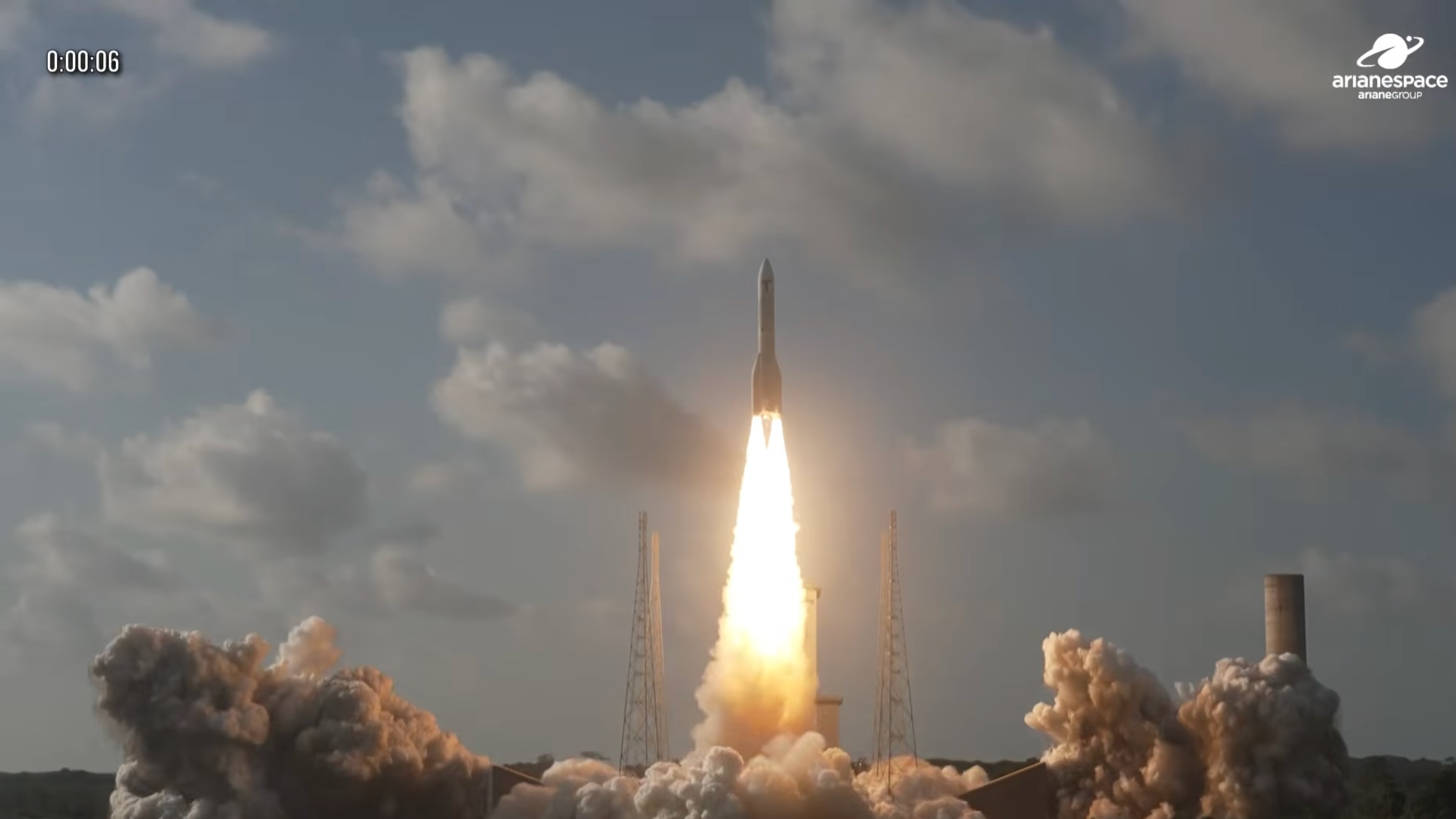
a white rocket launches into a cloudy sky

An Ariane 6 rocket launches the MTG-I2 weather satellite from Kourou, French Guiana on Aug. 27, 2026. (Image credit: Arianespace)

The 8,400-pound (3,800 kilograms) MTG-I2 is the second imaging satellite in the Meteosat Third Generation network (hence the name). It will complete the three-spacecraft constellation in geostationary orbit, which lies 22,236 miles (35,786 kilometers) above Earth.

Its companions, MTG-I1 and MTS-S1, launched in December 2022 and July 2025, respectively. MTG-I1 is an imaging craft and MTS-S1 is a "sounder," using an infrared instrument to probe different layers of Earth's atmosphere.

The MTG satellites are operated by the European Organisation for the Exploitation of Meteorological Satellites (EUMETSAT), an international group based in Germany. And they're very capable, according to Arianespace.

"The MTG system is part of a new generation of geostationary satellites providing imagery for the early detection of fast-developing severe storms, weather forecasting and climate monitoring," the company wrote in the MTG-I2 press kit, which you can find here.

Arianespace went on to describe MTG as "the most complex and innovative meteorological geostationary system ever built," citing its potential to improve the prediction and early detection of severe weather events.

"The data gathered will have a wide range of uses, from enabling aircraft to avoid storms and for earlier alerts of flooding, through to more precise monitoring of fires and fog," the company wrote.

Today's launch was the ninth to date for the Ariane 6, which can deliver up to 12.7 tons (11.5 metric tons) to GTO in its burliest configuration. For comparison, SpaceX's workhorse Falcon 9 rocket has a GTO payload capacity of 9.15 tons (8.3 metric tons).

The Ariane 6 debuted in July 2024. Before today, the rocket last flew this past June, when it successfully sent 36 of Amazon's broadband satellites to low Earth orbit.

Editor's note: This story was updated at 4:20 p.m. ET on Aug. 27 with news of successful liftoff, then again at 4:50 p.m. ET with news of satellite deployment.

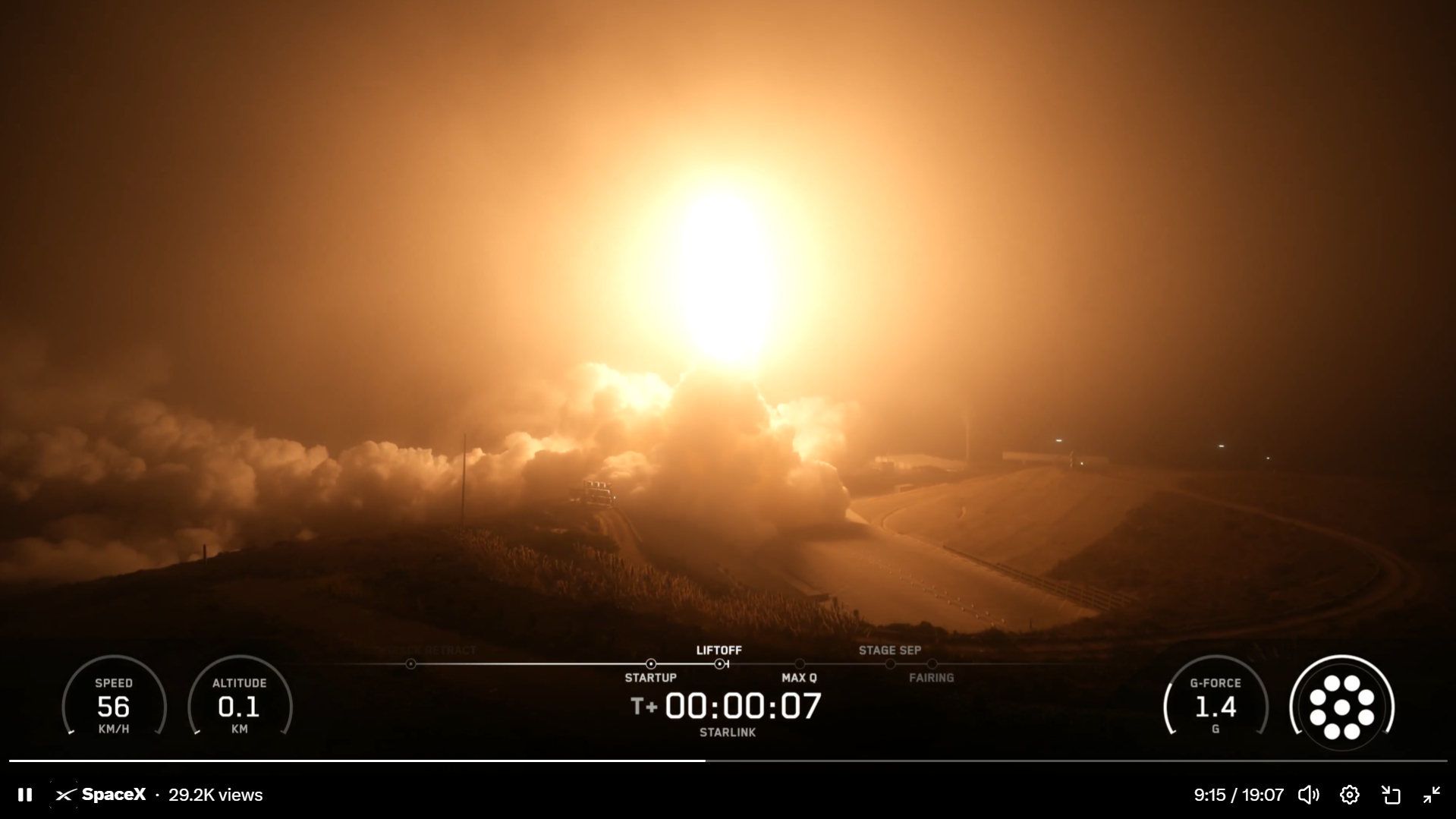
SpaceX’s final Falcon 9 Starlink launch from Florida creates gorgeous ‘jellyfish’ over New York City (video)

SpaceX's launch from Florida early this morning (Aug. 25) was memorable in more ways than one.

The mission, which sent 29 Starlink internet satellites skyward from Cape Canaveral Space Force Station at 5:33 a.m. EDT (0933 GMT), was the 100th flight of 2026 for SpaceX's workhorse Falcon 9 rocket. It was also the 37th flight for this particular vehicle's first stage, setting a new reuse record for the company.

And we learned a few hours after liftoff that it was also the last-ever Falcon 9 Starlink mission to fly from the Sunshine State.

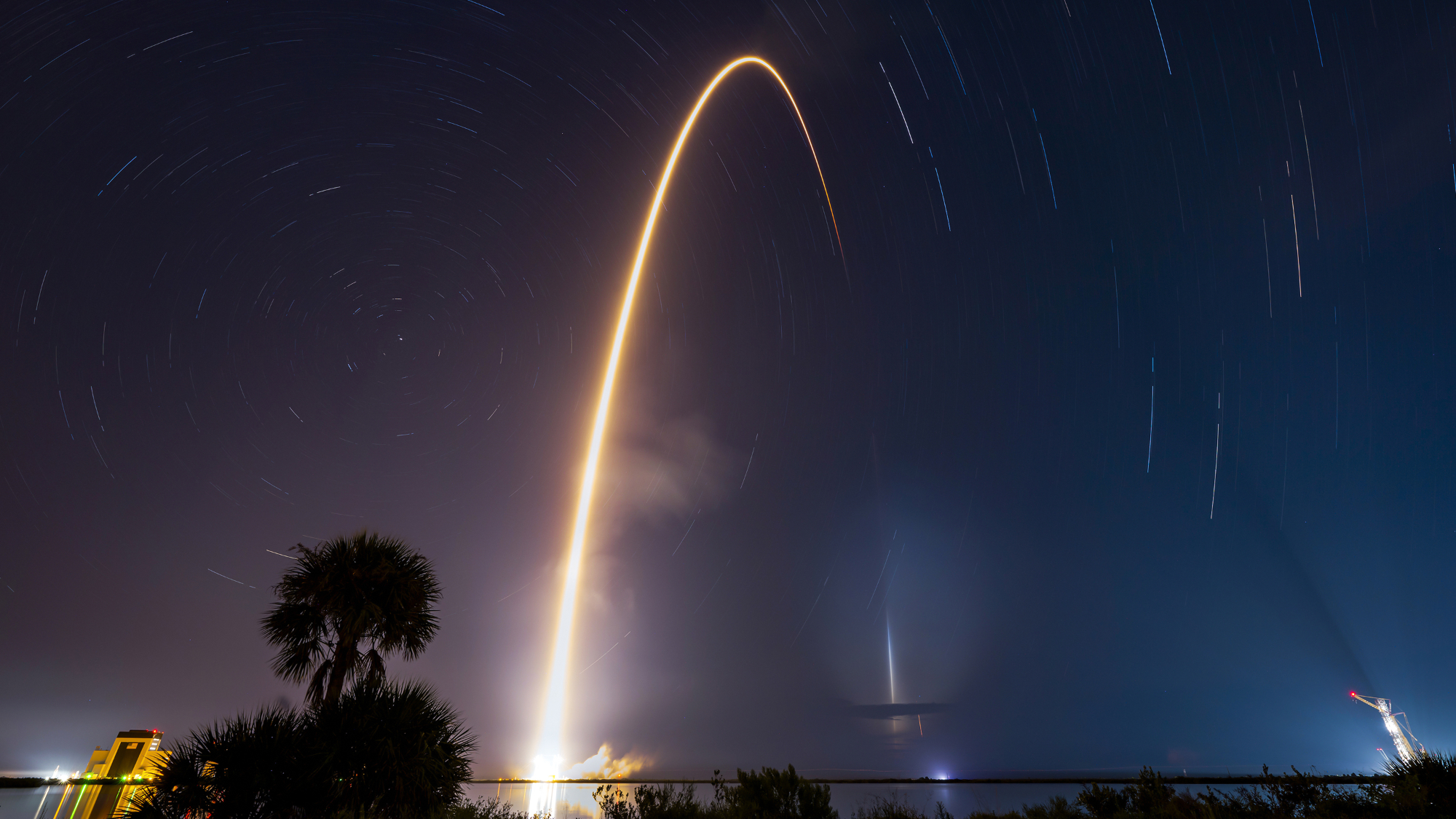
long-distance photo of a rocket cruising over the New York City skyline shortly before dawn. the rocket looks kind of like a comet

A SpaceX Falcon 9 rocket on the Starlink Group 10-49 mission passes by lower Manhattan and One World Trade Center just before dawn in New York City after launching from Cape Canaveral, Florida on Aug. 25, 2026, as seen from Hoboken, New Jersey. (Image credit: Getty Images)

"From here on, Starlink missions out of Florida will fly on Starship. The West Coast team will continue regularly launching Starlink from Vandenberg [Space Force Base in California]," Kiko Dontchev, SpaceX vice president of launch, said via X this morning.

"In the last seven years, Falcon has flown ~260 Starlink missions from the Cape … can't wait until we launch that and many more with Starship!" he added.

Starship, which stands more than 400 feet (122 meters) tall, is the biggest and most powerful rocket ever built, and it's designed to be fully and rapidly reusable. Starship remains in the testing phase; SpaceX has conducted 13 test flights with the vehicle to date, all of them suborbital.

Starship currently launches only from SpaceX's Starbase site in South Texas. But the company is already building pads for the giant rocket in Florida, and it announced today that it plans to break ground next year on Starbase Louisiana, which it says will be able to support thousands of Starship liftoffs per year.

SpaceX thinks Starship will revolutionize spaceflight when it comes online. The company plans to phase out the Falcon 9 and its heavy-lift cousin, the Falcon Heavy, after that happens, so the final Falcon 9 Starlink launch from the West Coast may be coming relatively soon as well.

The Falcon 9 made quite an impression on skywatchers during this morning's Starlink swan song from the Space Coast, creating a "jellyfish" in the sky visible to folks as far away as New York City. Indeed, some people in the Big Apple posted video of the Falcon 9 cruising over the city's famous skyline.

The jellyfish effect is a regular feature of Falcon 9 missions that launch shortly before dawn or not long after dusk. During these windows, sunlight illuminates the rocket's expanding exhaust plume while the sky itself remains mostly dark.

The buildout of the Starlink megaconstellation has driven Falcon 9's launch cadence to record highs over the past few years. In 2024 and 2025, for example, the rocket lifted off a total of 297 times, and 211 of those were Starlink flights. Seventy-seven of the 100 Falcon 9 launches this year have been Starlink missions.

SpaceX sends Starlink satellites to orbit on predawn launch from California

SpaceX launched 27 more of its Starlink broadband satellites to orbit today (Aug. 26), in a predawn liftoff from California's central coast.

The spacecraft rode atop a Falcon 9 rocket, which lifted off from Vandenberg Space Force Base at 5:35 a.m. EDT (0935 GMT; 2:35 a.m. local California time).

The rocket's first stage came back to Earth as planned about 8.5 minutes later, landing atop the SpaceX droneship "Of Course I Still Love You" in the Pacific Ocean. It was the 24th flight for this particular booster, which is designated B1082.

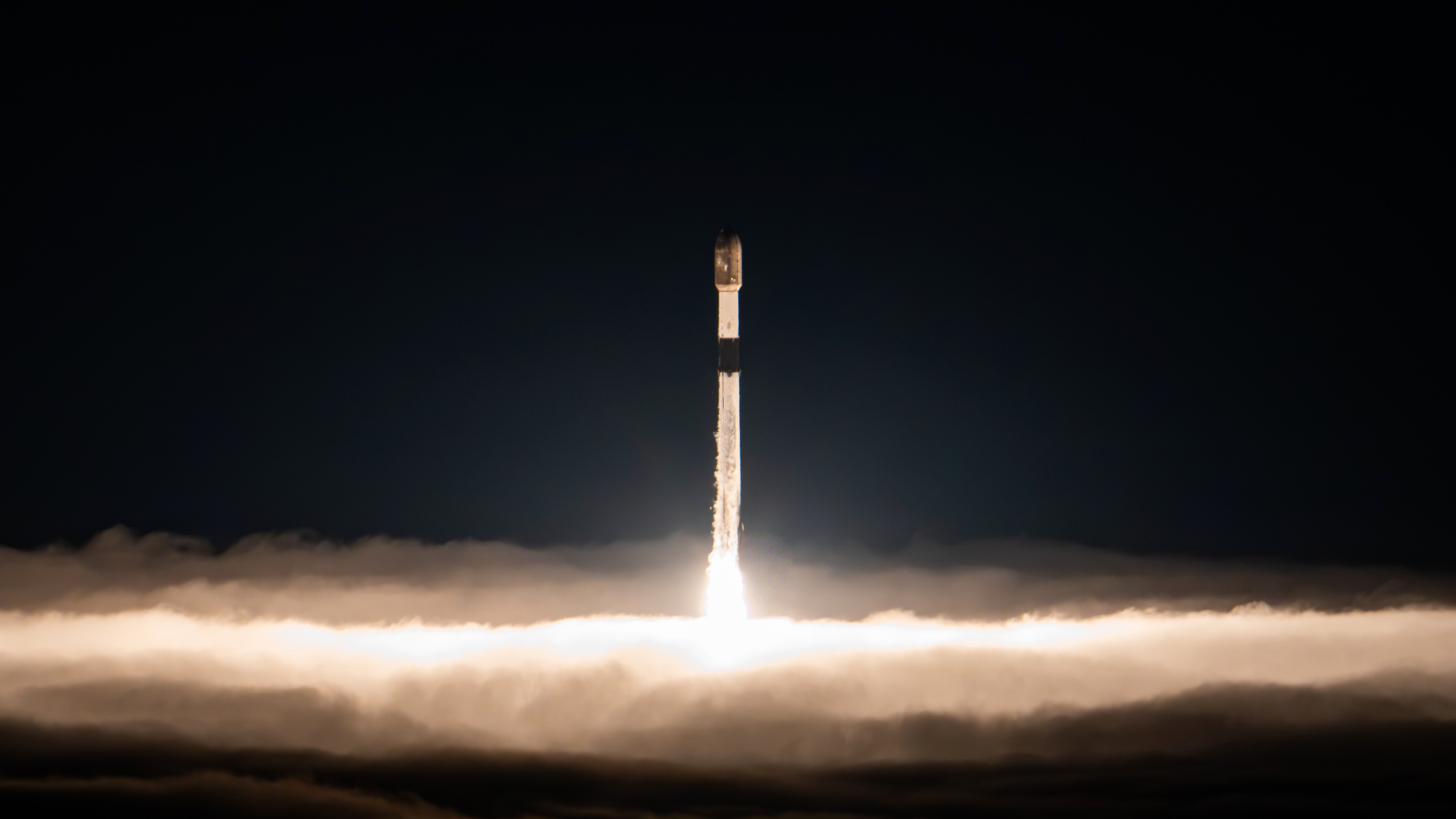
A bright fireball illuminates a dark predawn setting.

A SpaceX Falcon 9 rocket launches the Starlink 15-22 mission from Vandenberg Space Force Station on Aug. 26. (Image credit: SpaceX)

The Falcon 9's upper stage, meanwhile, continued powering its way skyward. It's scheduled to deploy the 27 satellites in low Earth orbit 62 minutes after launch.

There are already quite a few of them up there. The Starlink network — by far the largest satellite constellation ever assembled — currently consists of more than 11,000 active spacecraft.

Previous Booster B1082 launches

USSF-62 | OneWeb Launch 20 | NROL-145 | 20 Starlink missions

The Falcon 9 has now flown 101 times so far in 2026, and 78 of those launches have been Starlink missions. The workhorse rocket is on pace to fly about 155 times this year — quite a number, but a bit shy of its record of 165, which was set in 2025.

Falcon 9 Starlink missions have historically flown out of both Vandenberg and Florida's Space Coast (from NASA's Kennedy Space Center and Cape Canaveral Space Force Station, which are next door to each other). But Vandenberg will be the only Falcon 9 Starlink site from now on: SpaceX announced yesterday (Aug. 25) that it's pausing Florida Starlink launches until they can be performed by the company's Starship megarocket, which remains in development.

Watch 2 astronauts replace failed ISS antenna during spacewalk today

Two astronauts will do some repair work outside the International Space Station today (Aug. 25), and you can watch the action live.

NASA's Anil Menon and Sophie Adenot of the European Space Agency will conduct a spacewalk today (Aug. 25) to replace a space-to-ground-antenna. The extravehicular activity (EVA) is expected to start around 8:35 a.m. EDT (1235 GMT) and last 6.5 hours.

You can watch it live here at Space.com, courtesy of NASA, or directly via the space agency. Coverage will start at 7:00 a.m. EDT (1100 GMT).

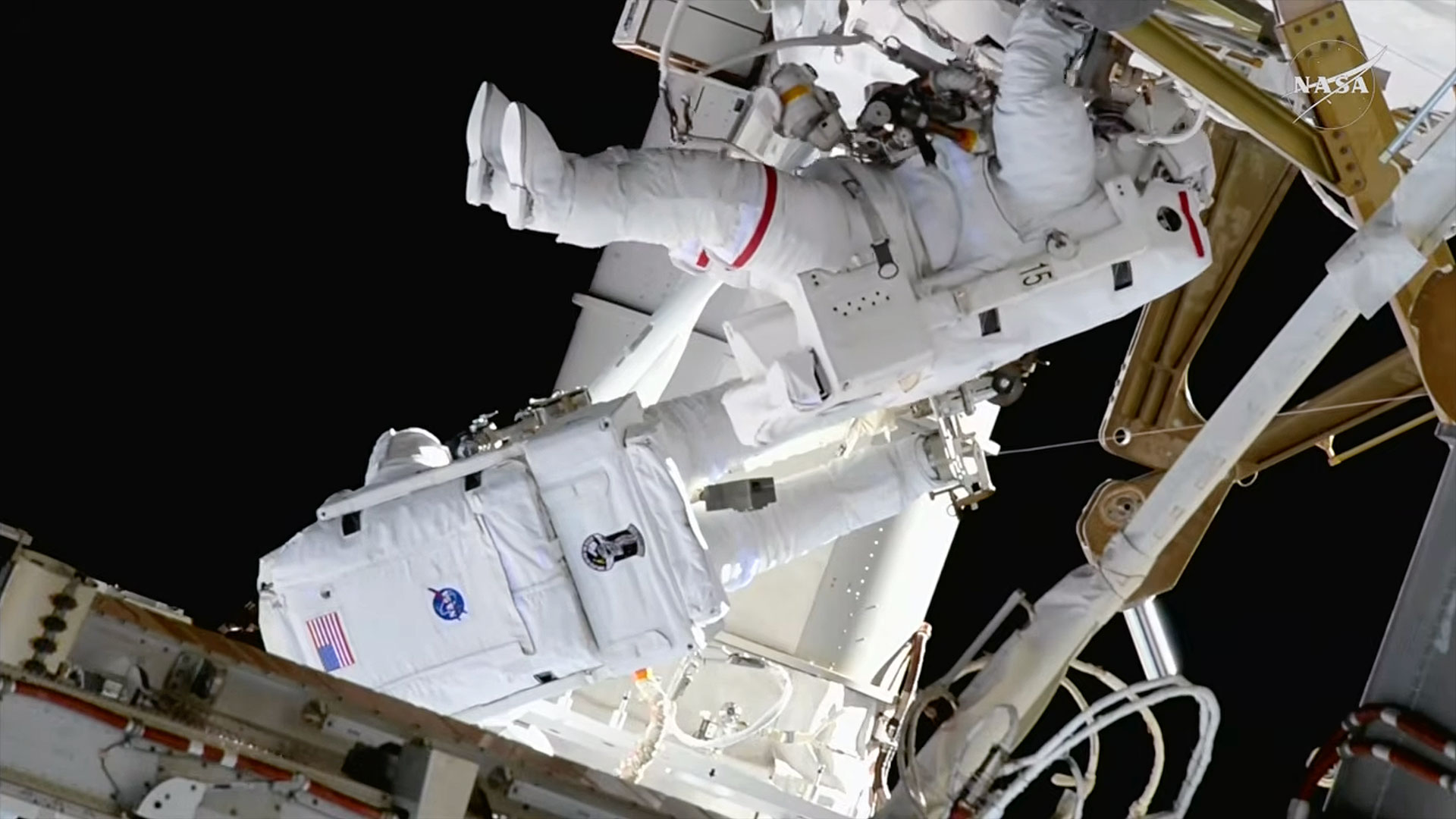
Two astronauts in white bulky spacesuits work outside a large space station set against the blackness of space.

NASA astronauts Jessica Meir (at right) and Anil Menon (facing away from camera) completed a 6.5-hour spacewalk to install solar array mounting hardware outside of the International Space Station on Thursday, Aug. 6, 2026. (Image credit: NASA)

This will be the third spacewalk for Menon and the second for Adenot, the first French woman ever to conduct an EVA. Her history-making first excursion occurred on Aug. 18, when she and Menon removed a failed space-to-ground antenna, a relay link that enables high-speed communications between the International Space Station (ISS) and Mission Control at Johnson Space Center in Houston.

The duo ran out of time before they could install a replacement antenna, however. They'll finish the job today, if all goes to plan.

"If time allows, Menon and Adenot also will attempt a get‑ahead task to replace a retroreflector on the forward port of the space station's Harmony module, which will improve navigation data for visiting spacecraft," NASA officials wrote in a spacewalk preview.

Adenot arrived at the ISS in February as part of SpaceX's Crew-12 mission, which also includes NASA astronauts Jack Hathaway and Jessica Meir and cosmonaut Andrey Fedyaev.

Menon came aboard on July 14, making the trip on a Russian Soyuz spacecraft along with cosmonauts Pyotr Dubrov and Anna Kikina. Menon performed his first-ever spacewalk on Aug. 6, with Meir.

Menon will be "crewmember 1" on today's spacewalk, and Adenot will be "crewmember 2." The EVA will be the 283rd in the history of the ISS, which has been continuously occupied by rotating astronaut crews since November 2000.

SpaceX sets rocket-reuse record on 100th Falcon 9 launch of the year (video)

Starlink launches may have become commonplace, but this one was definitely worth staying up for.

A SpaceX Falcon 9 rocket topped with 29 Starlink internet satellites lifted off from Florida's Cape Canaveral Space Force Station on Tuesday (Aug. 25), at 5:33 a.m. EDT (0933 GMT).

It was the 100th Falcon 9 flight of 2026 and the record-breaking 37th mission for this rocket's first stage, a booster designated B1067.

A bright arc streaks through the night sky

SpaceX set a new rocket-reuse record early Tuesday morning (Aug. 25), on its 100th Falcon 9 flight of the year. (Image credit: SpaceX)

The Falcon 9 is by far the busiest rocket in operation today. Last year, it flew 165 missions — more than all of the world's other orbital rockets combined. And all 165 of those flights were fully successful.

Extensive first-stage reuse is the Falcon 9's secret sauce, making it cheaper and more efficient to fly than its competitors. Those competitors are racing to catch up, however, and some are making strides. In the past six weeks, for example, two different Chinese rockets aced landings during orbital missions.

But neither one of those newcomers has made it back to the pad for a second flight. SpaceX, meanwhile, has six Falcon 9 boosters with at least 30 flights under their belts, led by B1067's 36. (The others are B1077 and B1078 with 30, B1069 with 32, B1063 with 34 and B1071 with 35).

And SpaceX plans to take reuse to even higher levels. The company's next-gen megarocket, Starship, is designed to be completely and rapidly reusable, with each vehicle capable of flying multiple times per day, according to SpaceX founder and CEO Elon Musk. (The Falcon 9 and its cousin the Falcon Heavy are only partially reusable; they have expendable upper stages.)

Previous Booster B1067 launches

After launch, B1067 returned to Earth for recovery and yet more reuse. About 8.5 minutes after liftoff, the booster landed on the drone ship "A Shortfall of Gravitas," which will be stationed in the Atlantic Ocean.

The rocket's upper stage, meanwhile, continued on to deliver its 29 Starlink satellites to low Earth orbit, deploying them there 61.5 minutes after launch.

Tuesday's liftoff was the 77th of 2026 devoted to building out Starlink, by far the largest satellite constellation ever assembled. It currently consists of more than 11,000 operational spacecraft, and that number is growing all the time.

The Falcon 9 isn't the only SpaceX rocket to have flown this year. The company has also launched one Falcon Heavy mission and two suborbital Starship test flights. Starship will try to go orbital for the first time on its next liftoff, which is expected in early to mid-September.

Bad weather delays launch of China’s historic Chang’e 7 mission to moon’s south pole

Poor weather has delayed the launch of China's latest moon mission.

According to reports, the growth of Tropical Depression Narra in the Gulf of Tonkin has prompted China's space agency to delay the liftoff of Chang'e 7 significantly — possibly until 2027.

"China's Chang'e 7 lunar probe does not meet launch conditions, and its launch therefore cannot take place during the planned window this year," the state-run Xinhua news agency reported today (Aug. 23), citing the China Manned Space Agency.

Chang'e 7 had originally been scheduled to launch today from the Wenchang Space Launch Site on the island of Hainan. But then Narra started brewing in the Gulf of Tonkin, just to the island's west.

Launching a rocket into a howling gale is less than ideal. Chinese space officials initially pushed the launch back a day, to Monday (Aug. 24), before concluding that the new target was unattainable as well.

It's now unclear when Chang'e 7 might lift off; messaging on the topic has been characteristically murky. (China is fairly tight-lipped about its space activities, revealing far less publicly than, say, NASA or the European Space Agency does. For example, China announces who's flying on its crewed missions just one day before liftoff.)

The Chang'e 7 launch requires a certain lineup of Earth and the moon, so it cannot simply occur as soon as the skies around Wenchang clear. Some online reports suggest that Chang'e 7 could lift off as soon as September, while others — including today's Xinua story — have it launching sometime in 2027.

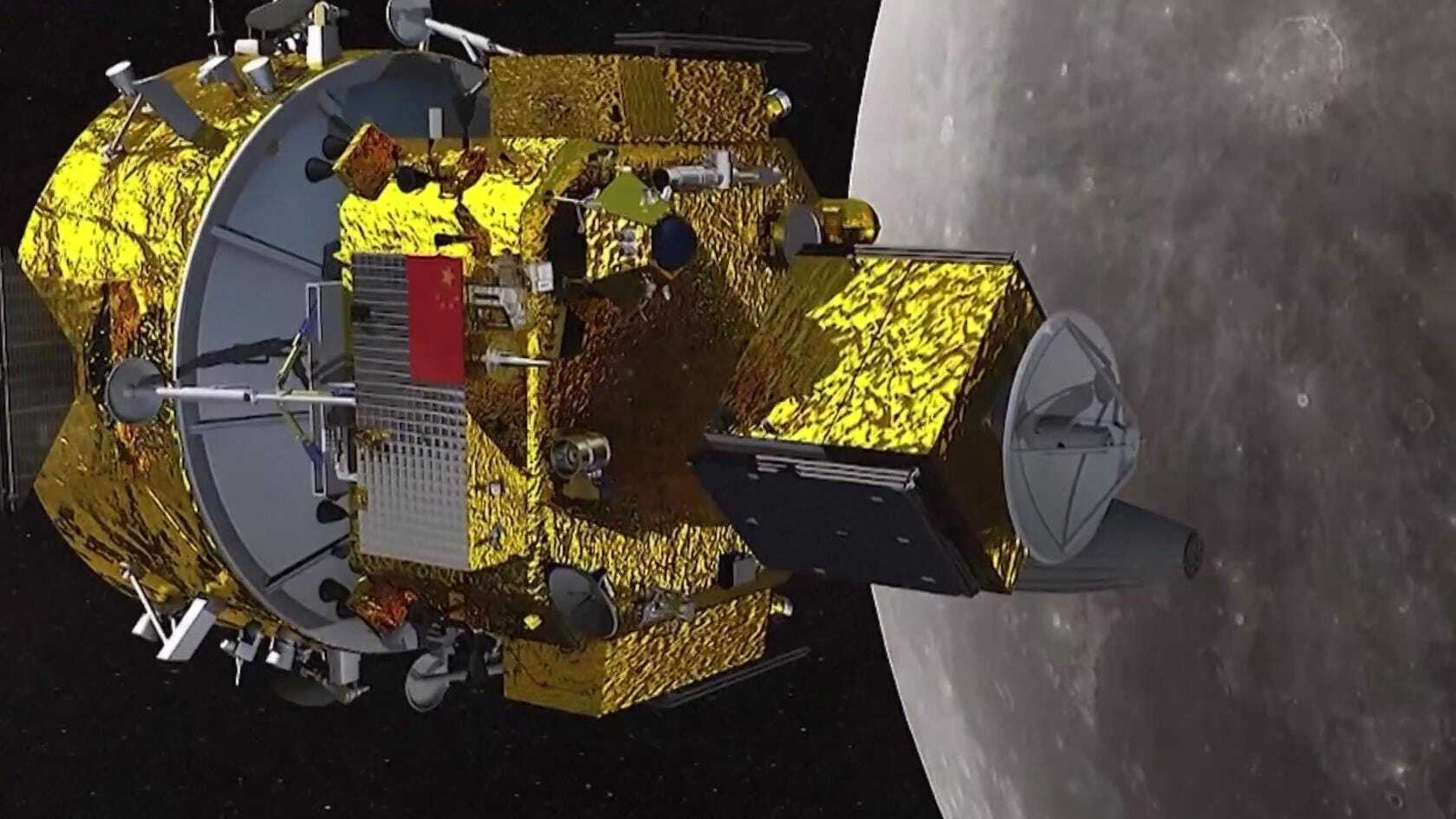
An illustration of a spacecraft covered in gold foil next to the moon in space

Artist's illustration of China's Chang'e 7 mission orbiting the moon. (Image credit: China Media Group)

Whenever it occurs, the liftoff will draw a lot of attention. Chang'e 7 is an ambitious and exciting mission, and it could have serious implications for lunar exploration down the road.

Chang'e 7 consists of an orbiter and a lander, which will likely touch down on the rim of Shackleton Crater, near the moon's south pole (though China has not announced an official landing site).

This region is thought to harbor lots of water ice, most of it on crater floors that have not seen the sun for billions of years. Chang'e 7's lander will deploy a rover and a hopping robot to hunt for this precious resource, which could help support human settlements in the area.

China aims to build such an outpost in the coming years, as does the United States, via NASA's Artemis program. U.S. officials have stressed the need for the nation to win this new space race so that it can establish the norms for living and working on Earth's nearest neighbor.

SpaceX sends 27 Starlink satellites to orbit on 100th Falcon rocket launch of the year (video, photos)

SpaceX launched another batch of its Starlink internet satellites this morning (Aug. 22) on a milestone mission for the company's Falcon rocket family.

A Falcon 9 carrying 27 Starlink spacecraft lifted off from Vandenberg Space Force Base in California today at 3:25 a.m. EDT (0725 GMT; 12:25 a.m. local California time).

It was the 99th Falcon 9 liftoff of the year, and the 100th Falcon mission of 2026 overall. The other flight was performed by a Falcon Heavy, which lofted the telecom satellite Viasat-3 F3 in April.

A SpaceX Falcon 9 rocket launches 27 Starlink internet satellites from California's Vandenberg Space Force Base on Aug. 22, 2026.

A SpaceX Falcon 9 rocket launches 27 Starlink internet satellites from California's Vandenberg Space Force Base on Aug. 22, 2026. (Image credit: SpaceX)

Hitting the century mark at this point in the year is impressive. But SpaceX has a ways to go to equal its single-year Falcon launch record of 165, which was set in 2025. All of those were Falcon 9 missions.

The Falcon 9's first stage came back to Earth today as planned. It touched down about 8.5 minutes after launch in the Pacific Ocean, atop the SpaceX droneship "Of Course I Still Love You." It was the ninth flight for this particular booster, which carries the designation B1100.

The 27 Starlink satellites, meanwhile, kept traveling to low Earth orbit aboard the Falcon 9's upper stage, deploying on schedule just under 62 minutes after launch.

Today's launch makes the largest-ever satellite constellation even bigger: Starlink already consists of more than 11,000 operational spacecraft.

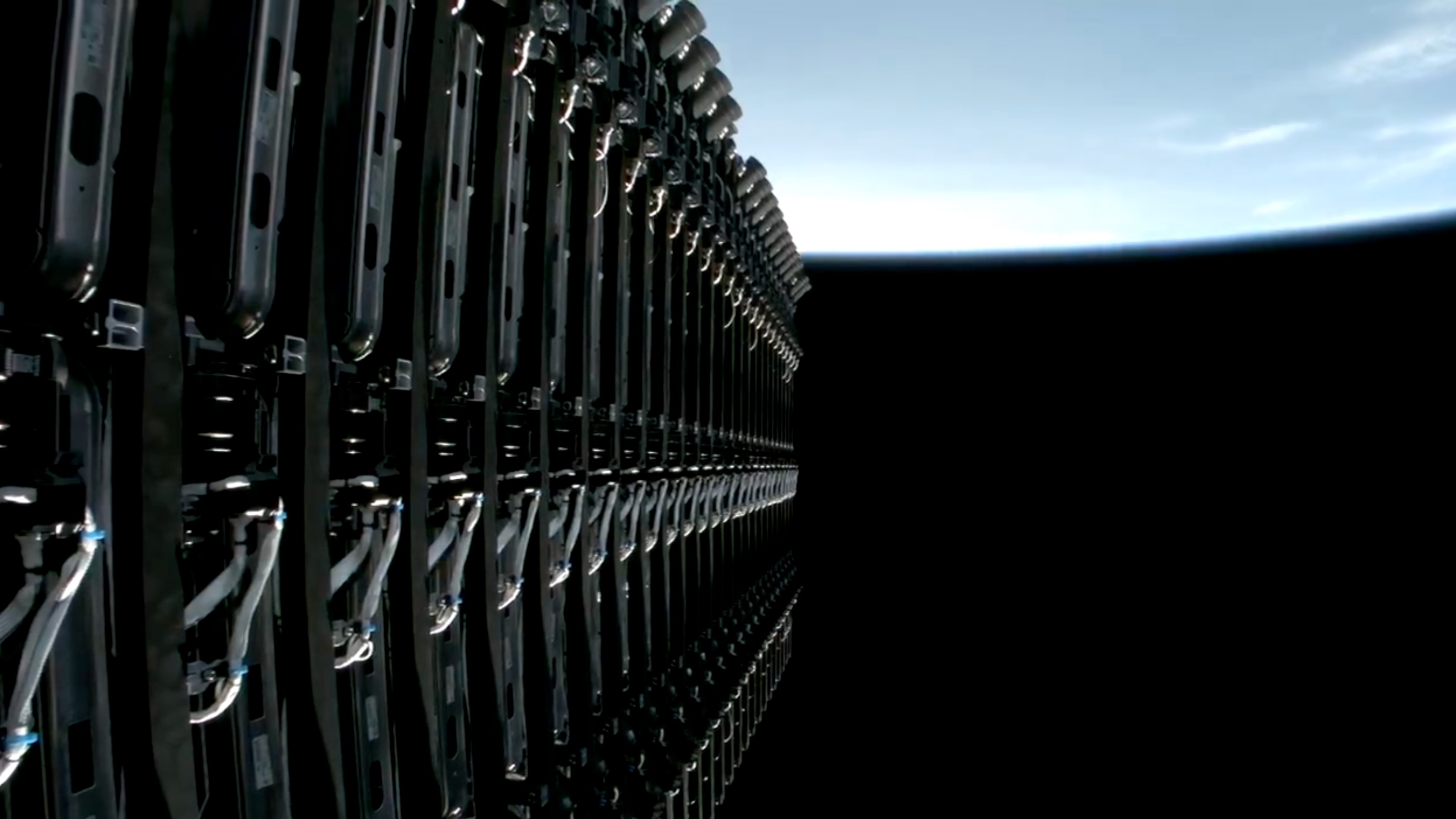
a stack of folded-up satellites are seen attached to their rocket's upper stage in orbit, with earth in the background

A stack of 27 SpaceX Starlink satellites are seen aboard the upper stage of their Falcon 9 rocket before deployment on Aug. 22, 2026. (Image credit: SpaceX)
Previous Booster B1100 launches

NROL-105 | 7 Starlink missions

As you might expect, Starlink satellites are SpaceX's most common payload; 76 of this year's 99 Falcon 9 flights have been dedicated Starlink missions.

And the number of SpaceX satellites is expected to rise considerably in the coming years. The company has said it wants to launch 100,000 of its next-gen Starlink V3 satellites and operate a constellation of one million data centers in Earth orbit. These spacecraft will fly atop SpaceX's Starship megarocket, which remains in development.

Trump to award NASA’s Artemis II astronauts the Congressional Space Medal of Honor

NASA's Artemis II moon astronauts will join a very exclusive club next week.

President Donald Trump will award those spaceflyers the Congressional Space Medal of Honor next Friday (Aug. 28) at Johnson Space Center in Houston to recognize their historic journey around the moon this past April.

The ceremony will begin at 11 a.m. EDT (1500 GMT) and will feature NASA Administrator Jared Isaacman, President Trump and the Artemis II astronauts. You'll be able to watch it live when the time comes.

Artemis II sent NASA astronauts Reid Wiseman, Victor Glover and Christina Koch, as well as the Canadian Space Agency's Jeremy Hansen, on a 10-day trip around Earth's nearest neighbor. It was the first crewed voyage beyond low Earth orbit since 1972, when the Apollo 17 astronauts returned home from the moon.

The mission's success was a huge step for NASA's Artemis program, which aims to establish a base near the lunar south pole in the coming years.

The Congressional Space Medal of Honor is the highest award that the U.S. government can bestow upon an astronaut. It's possible that only Wiseman, Glover and Koch will receive it next week; NASA's media advisory about the event states that Trump will give the medal to "each of NASA's Artemis II crew members," suggesting that Hansen might not be included. (The award is not limited to American citizens.)

Thirty people have received the Congressional Space Medal of Honor to date. They are:

  • Neil A. Armstrong
  • Frank Borman
  • Charles "Pete" Conrad, Jr.
  • John H. Glenn, Jr.
  • Virgil I. "Gus" Grissom
  • Alan B. Shepard
  • John W. Young
  • Thomas P. Stafford
  • James A. Lovell
  • Shannon W. Lucid
  • Roger B. Chaffee
  • Edward H. White, II
  • William M. Shepherd
  • Rick D. Husband
  • William C. McCool
  • Michael P. Anderson
  • Kalpana Chawla
  • David M. Brown
  • Laurel B. Clark
  • Ilan Ramon
  • Francis R. (Dick) Scobee
  • Michael J. Smith
  • Judith A. Resnik
  • Ronald E. McNair
  • Ellison S. Onizuka
  • Gregory B. Jarvis
  • Sharon Christa McAuliffe
  • Robert L. Crippen
  • Douglas G. Hurley
  • Robert L. Behnken

Japan unveils Mars moon sample-return spacecraft ahead of Oct. 19 launch (photos)

The world just got its first good looks at some hardware that will make spaceflight history.

Last Thursday (Aug. 13), Japan unveiled the spacecraft that make up its Martian Moons eXploration (MMX) mission, which aims to snag samples of the Mars moon Phobos and haul them to Earth — something that has never been done.

The big reveal came at Tanegashima Space Center, the site from which MMX will launch toward the Red Planet atop an H3 rocket. And we just got some clarity about when that liftoff will take place.

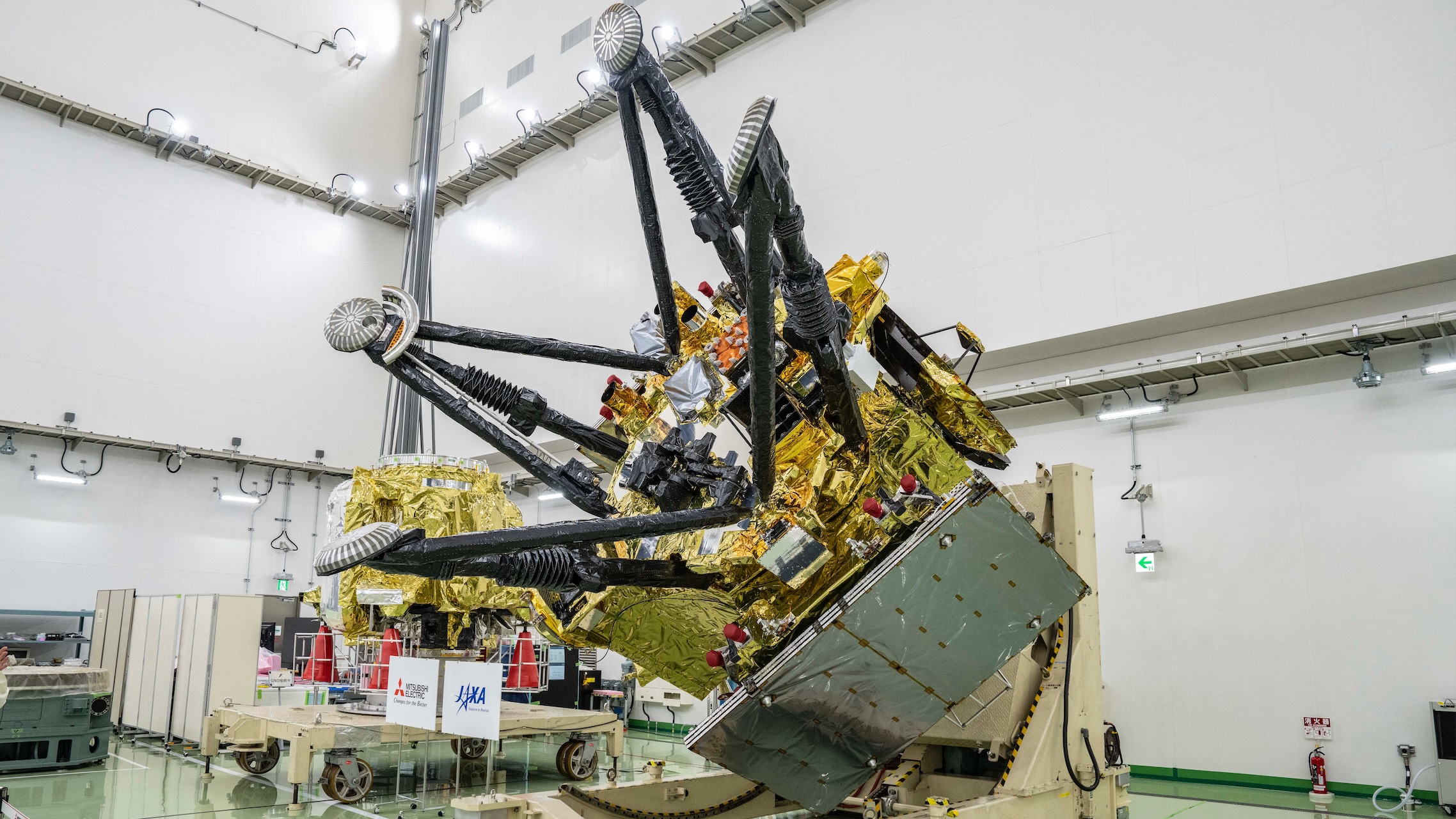
two large, gold-foil-wrapped spacecraft sit inside a large white-walled cleanroom

Another look at MMX's Propulsion Module (back) and Exploration and Return Modules (front) at Tanegashima on Aug. 13, 2026. (Image credit: Yuichi YamazakiI/AFP via Getty Images)

If all goes according to plan, MMX will launch on Oct. 19 at 3:41 p.m. EDT (1941 GMT; 4:41 a.m. on Oct. 20 Japan time), the Japan Aerospace Exploration Agency (JAXA) announced on Thursday (Aug. 20). That's the first day of the mission's launch window, which extends through Nov. 7.

JAXA originally intended to launch MMX in 2024 but had to stand down due to issues with the H3. Mars and Earth align properly for interplanetary launches just once every 26 months, so this was a significant delay.

MMX will spend about a year traveling to Mars. Once in orbit around the Red Planet, the mission will map and study its two small moons, Phobos and Deimos, which are just 14 miles (22 kilometers) and 7.5 miles (12 km) wide, respectively.

Part of this work will help the mission team pick a landing site on Phobos, where they'll drop a 55-pound (25 kilograms) French-German rover called Idefix. That little robot — which is named after the dog in the French comic "Asterix" — will study Phobos' surface in detail using a variety of instruments.

The MMX spacecraft itself will then spiral down toward Phobos, eventually making contact and collecting about 0.35 ounces (10 grams) of material. MMX will leave Mars orbit with these samples in 2030 and deliver them to Earth for analysis a year later.

The mission aims to shed light on the nature and origin of Phobos and Deimos.

"Understanding how Mars and the two moons formed is a heavily debated topic in solar system science," JAXA officials wrote in a mission description.

"Remote-sensing observations by the MMX spacecraft and the detailed analyses of the returned sample will determine whether Phobos and Deimos are remnants of early Mars created from debris produced by a giant impact with the young planet, or whether the moons are asteroids captured by Mars's gravity that brought material from outer solar system," they added.

To date, no spacecraft has returned material from the Mars system. Russia tried to do so with its Phobos-Grunt mission, which aimed to sample the eponymous Red Planet moon, but that effort failed shortly after its November 2011 launch. (The Soviet Union also launched two probes to Phobos in 1988, but neither one of them met its mission objectives.)

NASA plans to collect and haul home pristine samples that have already been collected on the Martian surface by its Perseverance rover, but it's unclear when or if that will happen. The agency has deemed its original sample-return architecture too expensive and is currently investigating other options.

There are good reasons to believe that Japan will succeed where others have failed, however. The country has a history of small-body sample-return success; its Hayabusa mission brought home pieces of the asteroid Itokawa in June 2010, and Hayabusa2 did the same with material from the space rock Ryugu in December 2020.

SpaceX launches 29 Starlink satellites, lands rocket on ship at sea (video, photos)

SpaceX launched yet another Starlink mission today (Aug. 21), sending 29 more of the broadband satellites to orbit from Florida's Space Coast.

The spacecraft flew aboard a Falcon 9 rocket, which lifted off from Florida's Cape Canaveral Space Force Station today at 11:14 a.m. EDT (1514 GMT). That was a day later than planned; SpaceX scrubbed a liftoff attempt on Thursday (Aug. 20) for reasons that were not immediately clear.

The Falcon 9's first stage came back to Earth as planned today, landing about 8.5 minutes after launch in the Atlantic Ocean atop the SpaceX droneship "A Shortfall of Gravitas." It was the 30th liftoff and touchdown for this particular booster, which is designated B1078.

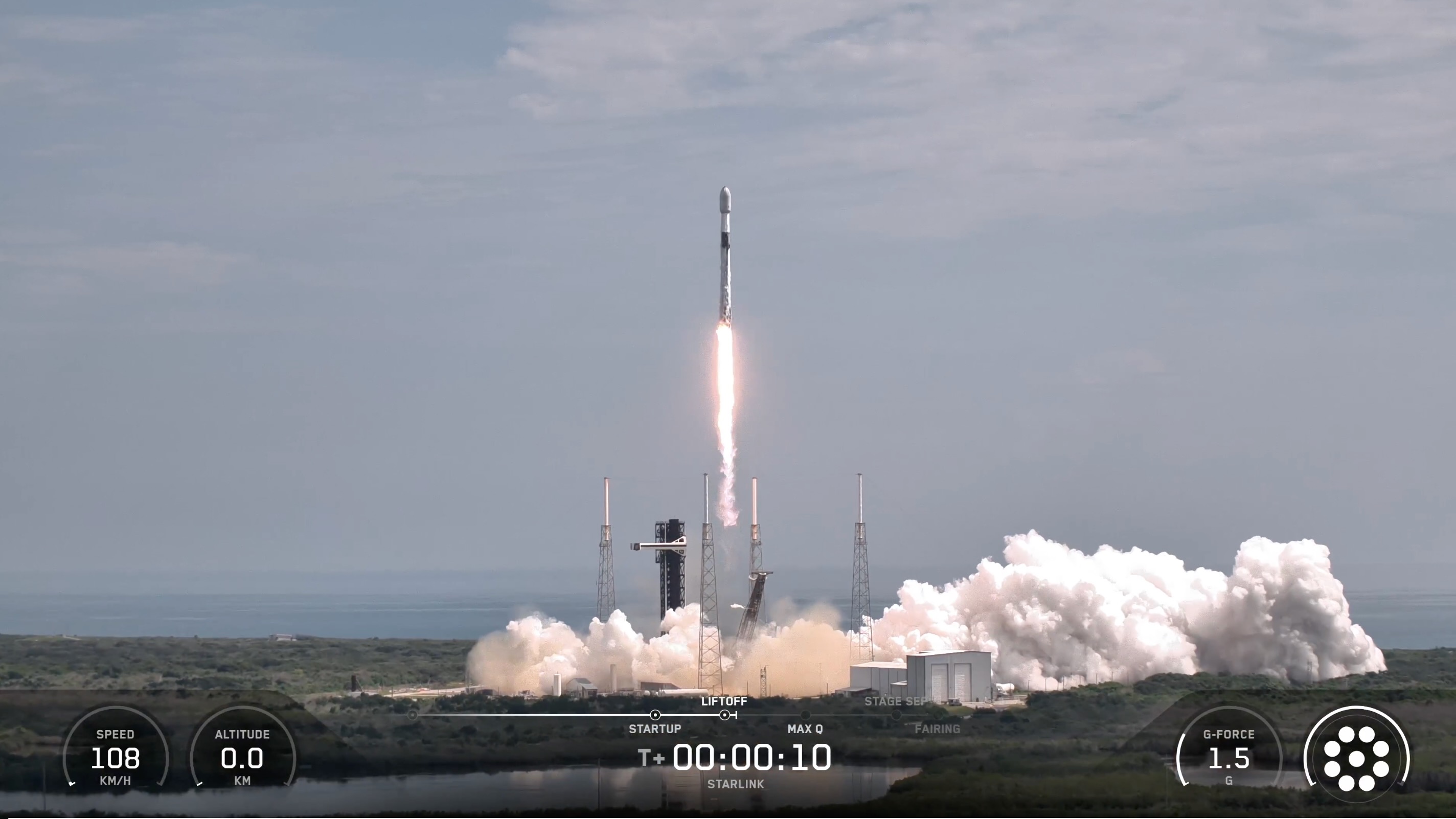
a black and white rocket launches from a seaside pad

A SpaceX Falcon 9 rocket launches 29 Starlink internet satellites from Florida’s Cape Canaveral Space Force Station on Aug. 21, 2026. (Image credit: SpaceX)

The Falcon 9's upper stage, meanwhile, continued hauling the Starlink satellites skyward. It will deploy the new batch into low Earth orbit 61.5 minutes after liftoff, if all goes to plan.

There are already quite a few operational Starlink spacecraft up there —nearly 11,000, in fact, according to astronomer and satellite tracker Jonathan McDowell.

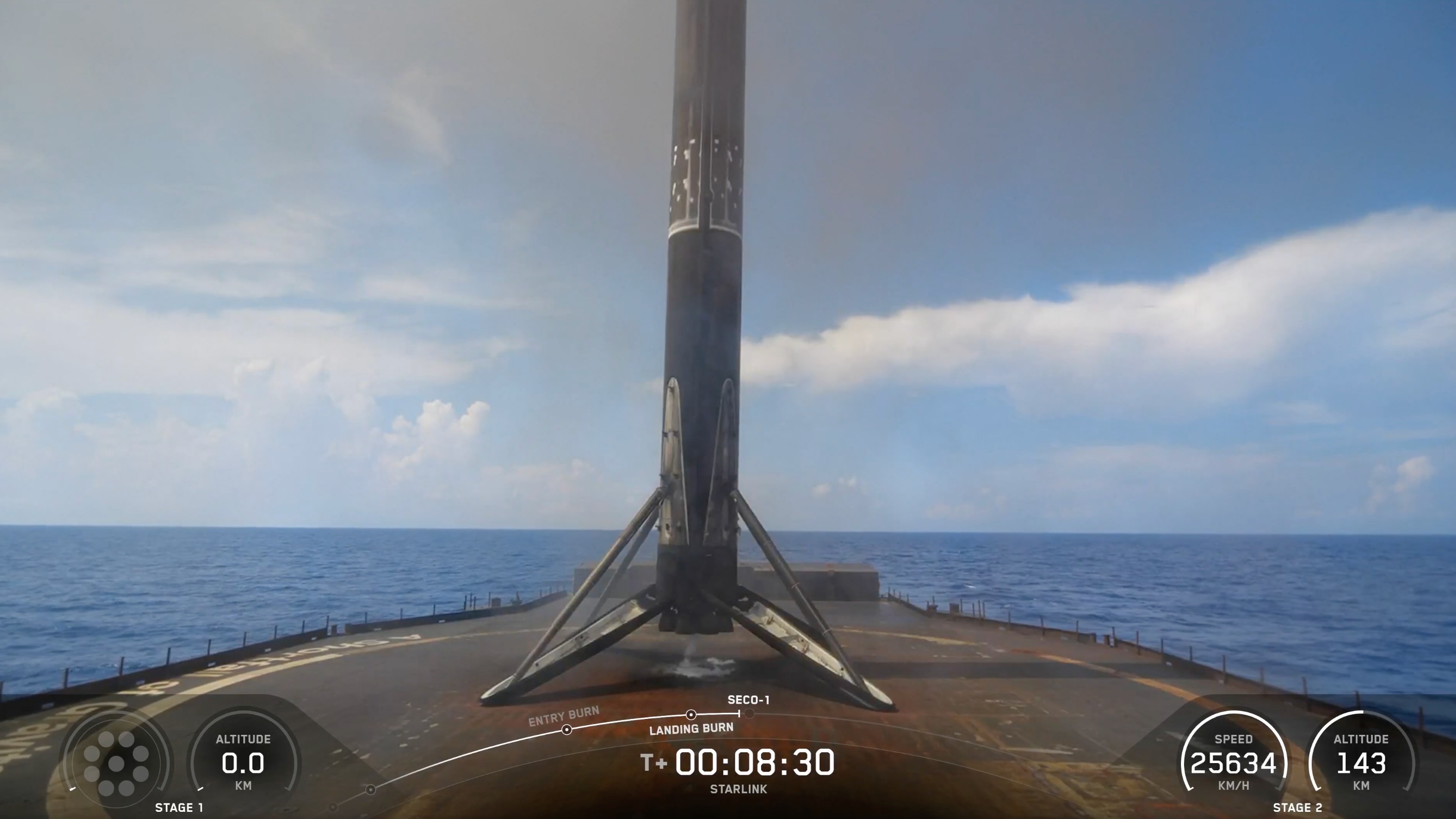
A black and white spacex falcon 9 rocket first stage sits on the deck of a ship at sea.

The Falcon 9's first stage rests on the deck of a drone ship shortly after its touchdown on Aug. 21, 2026. (Image credit: SpaceX)
Previous Booster B1078 launches

Today's launch was the 98th Falcon 9 flight of the year already. Seventy-five of them have been dedicated Starlink missions.

SpaceX also has three other liftoffs under its belt in 2026 — one launch of its Falcon Heavy rocket and two test flights of its Starship megarocket, which is still in development.