Update for 5:30 p.m. ET on June 30: During its Moon Base update today (June 30), NASA revealed a handful of new lunar-lander contracts and announced that it's considering launching a spare Mars rover to the moon. Read all about it here.
NASA will provide an update about its moon base plans this afternoon (June 30), and you can watch it live.
Agency chief Jared Isaacman and Carlos García-Galán, the manager for NASA's moon base program, "will discuss the next set of awards for new lunar lander missions and preview upcoming opportunities as the agency works toward building a sustained presence on the moon," NASA officials wrote in a media advisory.
The event will begin today at 2:30 p.m. EDT (1830 GMT). You can watch it live here at Space.com, courtesy of NASA, or directly via the agency.
The moon base is a core piece of NASA's Artemis program, which aims to establish a permanent, sustainable human presence on and around Earth's nearest neighbor over the next decade or so.
The Artemis architecture previously called for the assembly of a small space station in lunar orbit called Gateway. In late March, however, Isaacman announced that NASA was pausing its Gateway plans and instead focusing on building a surface outpost.
That base will be constructed near the lunar south pole, which is thought to harbor large amounts of water ice, a key resource that can be used for life support and also be split into hydrogen and oxygen to provide rocket fuel.
Construction of the base will require a variety of work by robotic lunar rovers and landers. Presumably, today's press conference will shine some more light on that work and reveal which companies will be contracted to do it.
NASA has launched two Artemis missions to date. Artemis 1 sent an uncrewed Orion capsule to lunar orbit and back in late 2022, and Artemis 2 launched four astronauts around the moon this past April.
NASA is currently gearing up for Artemis 3, a crewed mission that will test docking procedures between Orion and one or two privately developed lunar landers in Earth orbit.
The agency aims to launch Artemis 3 in mid-2027. If all goes well with that flight, Artemis 4 will land astronauts near the lunar south pole, potentially as early as late 2028.
Every year, millions of people travel to remote, protected "dark-sky parks" in search of experiences that depend on true darkness — photographing the Milky Way's heart arcing overhead, observing nocturnal wildlife in its natural rhythm, or simply standing beneath an ink-black sea of stars unblurred by artificial light.
Scientists have long warned that rising levels of artificial light — increasingly amplified by satellite megaconstellations orbiting our planet — are steadily eroding these nightscapes, disrupting ecosystems, affecting human health and dimming views of stars and distant celestial objects. Darkness itself carries no price tag, however, meaning its loss has largely been absent from the economic calculations that guide development and outdoor lighting decisions. Now, new research attempts to translate that loss visible in monetary terms.
A study combining satellite data with on-the-ground surveys of visitors at several "gold-tier" dark-sky sites found that people were less likely to choose parks with greater artificial skyglow or poorer night-sky conditions, and showed a clear willingness to pay more for darker skies.
On average, visitors would pay about $18 more per trip for marginally darker skies, and roughly $45 more per night for a one-step improvement on the Bortle Dark Sky Scale, a widely used measure of night-sky quality.
"This may seem really small at the per-visitor and per-trip unit estimate," said Jordan Smith, the study's lead author and director of the Institute of Outdoor Recreation and Tourism at Utah State University, "but when we scale through park-wide visitation, it becomes very, very significant."
Over a four-month period, the researchers estimated that light pollution reduced the recreational value of flagship dark-sky destinations in the U.S. by between $25 million and nearly $66 million.
The figures, presented at the 248th meeting of the American Astronomical Society in California, do not represent lost park revenue, but what economists call "welfare losses" — the decline in visitor satisfaction when environmental quality deteriorates. The concept is akin to paying for a concert expecting excellent sound and instead finding the speakers distorted; the performance still occurs, but it feels worth less than anticipated.
By assigning a dollar value to changes in night-sky quality, the researchers argue, policymakers gain a way to weigh the hidden costs of artificial lighting against the benefits of development and outdoor illumination.
"It's a foundational building block that allows that cost-benefit analysis to subsequently occur," Smith said.
Speaking at a press briefing during the conference, Smith said a central challenge is the gap between measuring light pollution and measuring what it costs in lived experience. Satellites and ground instruments can track where artificial light is spreading and how quickly it is increasing, he said, "but they can't tell us much about what that value is — what is actually lost due to anthropogenic light at night?"
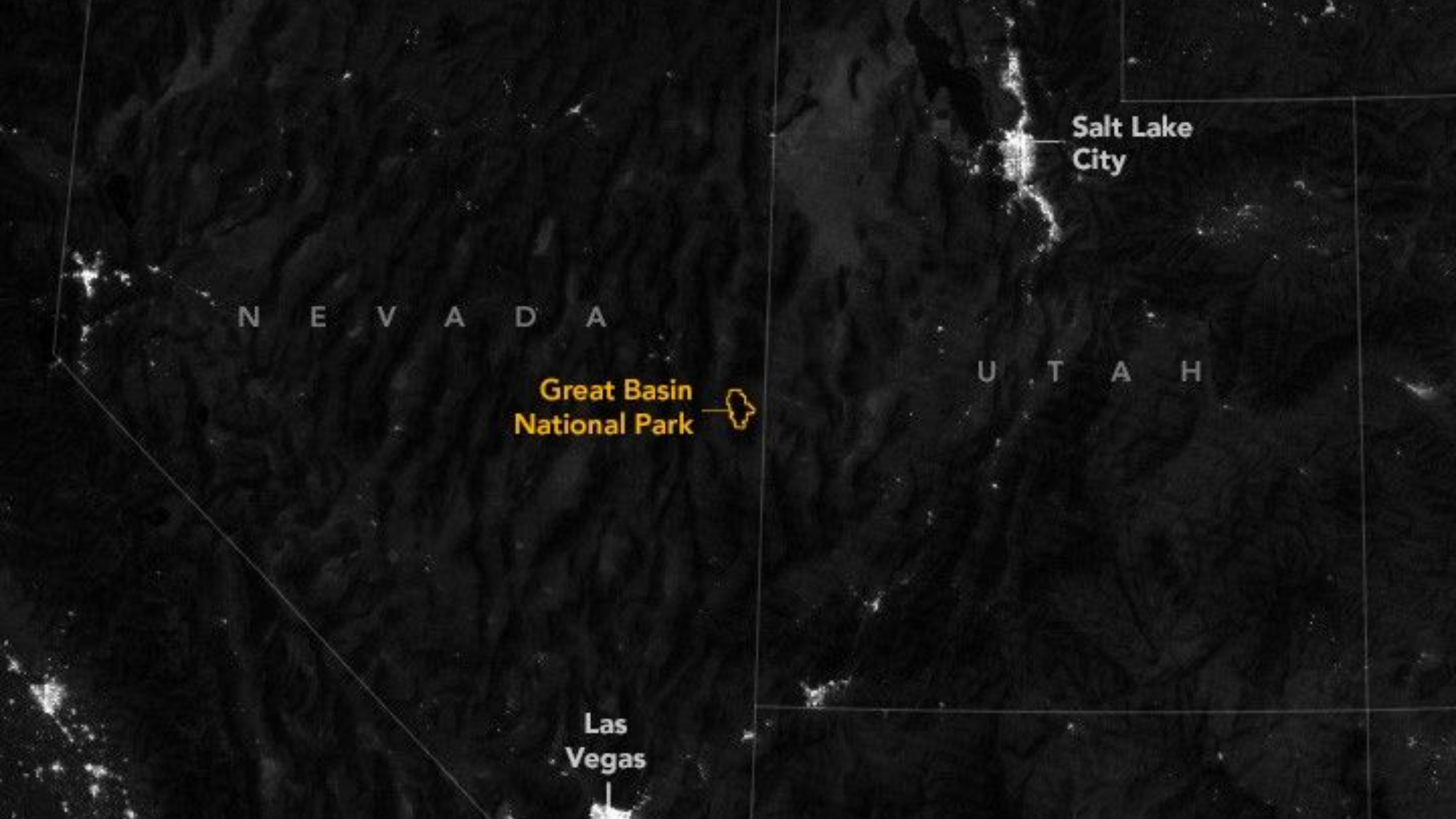
This image of Great Basin National Park, one of the darkest places in the U.S., was taken in 2025 by the VIIRS (Visible Infrared Imaging Radiometer Suite) on the Suomi NPP satellite. VIIRS can detect signals such as auroras, city lights and reflected moonlight. You can see the contrast between the dark sky zone and major light sources like Las Vegas and Salt Lake City. (Image credit: NASA)
To bridge that gap, Smith and his colleagues focused on the Colorado Plateau, a rugged region spanning Utah, Arizona, Colorado and New Mexico that contains one of the world's highest concentrations of "gold-tier" dark-sky sites, a designation that signifies the darkest and clearest night skies on Earth.
Over 82 nights in April, May, September and October, researchers interviewed visitors after dusk at campgrounds, scenic overlooks and parking areas. In total, they surveyed 634 travelers across nine destinations, including Arches, Bryce Canyon, Canyonlands and Natural Bridges National Monument, focusing on visitors whose trips depended specifically on high-quality night skies, the study notes.
By pairing survey responses with satellite measurements of nighttime brightness and local atmospheric conditions — including humidity, moonlight and airborne particles, all of which affect sky visibility — the team found a consistent preference for darker skies and a willingness to pay more for them.
The highest projected welfare losses, the researchers found, were heavily concentrated at premier destinations, led by the Grand Canyon and Zion national parks. Smaller or more remote parks showed comparatively modest total losses, a result driven by fewer visitors rather than an absence of dark-sky value, the study notes.
The researchers suggest that extending this kind of monitoring across a full year and over multiple years could help treat the night sky not only as a scientific and cultural asset, but as a measurable economic asset whose value changes with lighting policy, development and conservation.
As cities expand and artificial light continues to spread, studies like this are reframing a question once largely confined to science as an economic one: what is a star-filled sky worth?
Using the James Webb Space Telescope, astronomers have spotted a massive and densely packed galaxy cluster at "cosmic noon." The fact that this cluster is so highly evolved could change theories of cosmic evolution, as it seems to exist before such structures were thought to be possible.
Designated XLSSC 122 and first seen in 2014, the cluster immediately stood out to the team in James Webb Space Telescope (JWST) data because, being so large and concentrated, it resembled the galactic clusters found much closer to our own galaxy. However, this cluster is seen as it was around 10.4 billion years, just around 3.4 billion years after the Big Bang, a time when such structures were theorized to have only just begun to assemble.
Even more excitingly, XLSSC 122 is acting as a gravitational lens and is aligned with even more distant galaxies, amplifying their light and making them easier to study.
"When we got those first images back from JWST, we said, 'wow, look at this, there's strong lensing coming from this cluster!' XLSSC 122 has now set the record for the most distant galaxy cluster displaying strong lensing, which is a valuable tool for astronomers," team leader Kyle Finner of the California Institute of Technology said in a statement.
What is gravitational lensing and why is it so useful?
Gravitational lensing was first predicted by Albert Einstein in his 1915 theory of gravity, known as general relativity. General relativity says that objects with mass cause the fabric of space and time to warp. Think of this as being akin to placing a bowling ball on a stretched rubber sheet. Gravity arises from this curvature.
The greater the mass of the object, the more extreme the curvature and thus the greater the gravitational influence of that object.
But there is another consequence. Light normally travels in a straight line, but spacetime is the track that it follows. If spacetime is curved, then the path of light is also curved. The closer that light travels to an object of great mass, the more its path swerves.
That means when an object of great mass, in this case XLSSC 122, comes between Earth and a more distant light source, light from that background source arrives at our telescopes at different times based on the path it took around the intermediate object. This amplifies light from the background source and has been used by the JWST team to great effect in the study ofancient galaxies.
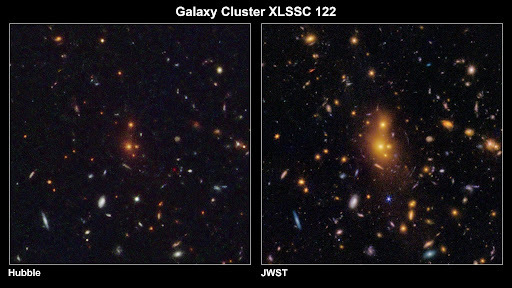
When the Hubble Space Telescope previously studied XLSSC 122, it wasn't able to capture images that showed it was a strong gravitational lens; it took the tremendous observing power of the JWST to determine this.
Two-panel image shows a distant galaxy cluster as it has been observed by NASA's Hubble Space Telescope and JWST. (Image credit: NASA, ESA, CSA; Kyle Finner (Caltech/IPAC) Image processing: Robert Hurt (Caltech/IPAC-SELab) )
The strong lensing of this early galaxy cluster could also help unravel the mystery of dark matter. Effectively invisible because it doesn't interact with light, dark matter does interact with gravity. Plus, because it outweighs the "ordinary matter" that makes up stars, planets, moons, and gas clouds in galaxies by a ratio of five to one, dark matter makes the largest contribution to the lensing effect of galaxies and galactic clusters like XLSSC 122.
This means that gravitational lensing can be used to study the distribution of otherwise invisible dark matter in galaxy clusters, which is a vital element of galactic evolution, as it is thought that galaxies and galaxy clusters gather along vast filaments of dark matter. The hunt is now on for more lensing clusters like XLSSC 122, and if they are found so early in the universe's history, a major revision of cosmology may be on the cards.
"Strong lensing is a way to measure the dark matter without actually seeing the dark matter. It gives us a sensitive probe of our cosmological models,” said Finner. "It's still early in the JWST era, and if we can start to get data on tens or hundreds of these types of objects at this stage in the universe, then we can really start putting our cosmological models to the test."
The team's results were presented on June 17, 2026, at the 248th meeting of the American Astronomical Society. The research is available as a paper published in The Astrophysical Journal Letters.
Japan's Hayabusa2 sample-return spacecraft is on target to make one of the closest ever flybys of a near-Earth asteroid in early July, as part of its extended mission campaign.
Hayabusa2 launched in December 2014 and rendezvoused with the asteroid Ryugu four years later. The spacecraft collected samples and delivered them to Earth in 2020, completing its primary objectives. But the hardy spacecraft still has bold plans to deliver new and exciting science data.
The spacecraft has been operating well, despite needing to briefly enter a protective safe mode last year, and now is set to make a flyby of the asteroid Torifune on July 5, Satoshi Tanaka of the Japanese Aerospace Exploration Agency (JAXA) said in a presentation on Hayabusa2 during the 35th Meeting of the NASA Small Bodies Assessment Group (SBAG) on June 11.
The flyby will see Hayabusa2 get within 1 to 10 kilometers (0.62 to 6.2 miles) of Torifune, using its instrument suite to study the roughly 450-meter-wide (1,476 feet) asteroid as it whizzes past at 5.3 kilometers per second (3.3 miles per second).
"This is one of the closest asteroid encounters ever attempted by a mission of this class," Tanaka said. "By combining advanced navigation techniques and the engineering capabilities of Hayabusa2, we have made it possible to achieve a flyby at a distance of only about 1 kilometer."
Torifune was first given the designation 2001 CC21 before being named for a deity from Japanese mythology. Tanaka says the asteroid is somewhat similar to Itokawa — the target of Japan's first Hayabusa mission — but little is known for sure about Torifune, adding a level of uncertainty to this extended mission objective.
"It's still a risky operation, because they had not planned for this," Patrick Michel, the principal investigator for the European Space Agency's Hera asteroid mission and part of the Hayabusa2 science team, told Space.com. "The second thing is that we have a high uncertainty on the size of the object," he added, with the dimensions of the asteroid unknown.
The asteroid could, for example, be a contact binary, according to Michel, in which two separate bodies came together at low velocities. Known contact binary small bodies include the Kuiper belt object Arrokoth, imaged by NASA's New Horizons, and comet 67P/Churyumov-Gerasimenko, described as a "rubber duck" when visited by ESA's Rosetta spacecraft.
"We're going to discover what it looks like. And each time we have seen a new asteroid, we've been surprised," Michel said. "We're going to discover another beast to put in the zoo of asteroids."
The very high velocity of the flyby means there will be limited time to collect images and other data on the asteroid, but the rapid encounter will also provide a useful test for planetary defense, as well as adding to planetary science.
The flyby, using advanced navigation techniques to guide and control the spacecraft, will be a useful test of a rapid reconnaissance concept that could be used to determine the physical properties of an asteroid. Such reconnaissance could provide vital information before intercepting a threatening asteroid with a kinetic impact, as demonstrated by NASA's DART mission in 2022.
Tanaka said that Hayabusa2 has been busy during its deep space cruise phase, including making observations of the zodiacal light and exoplanets, and the Torifune flyby will, hopefully, not be its final act. The ultimate goal of the Hayabusa2 extended mission is to visit the tiny asteroid 1998 KY26 in 2031, which would be the smallest asteroid ever visited. The spacecraft could even attempt to land on the miniscule world, which is just 11 meters (36 feet) wide.
A bizarre radio galaxy discovered by a citizen scientist has left astronomers puzzled, revealing a never-before-seen "bow-and-arrow" structure that could offer rare insight into how galaxies are reshaped by colossal shock waves as they plunge through galaxy clusters.
Named RAD-BAARG (short for Radio Bow-And-Arrow Radio Galaxy), the object spans nearly 1.8 million light-years across, making it almost 18 times wider than the Milky Way. Its unusual structure was first identified by a citizen scientist participating in the RAD@home Astronomy Collaboratory, which allows volunteers to review telescope data and flag unusual features that might otherwise be missed.
Astronomers say they haven't seen anything like it. "The structure of this source is unlike that of any radio galaxy I have seen in the last 25 years," the University of Mumbai's Ananda Hota said in a statement published by the Royal Astronomical Society. The statement adds that astronomers believe the structure may be "one of the clearest known radio signatures of a giant bow shock generated by a galaxy falling supersonically into a cluster environment."
Following its discovery, researchers studied the object using observations from the LOFAR (Low Frequency Array) Two-meter Sky Survey (LoTSS), one of the deepest low-frequency radio surveys ever conducted and particularly well suited to detecting faint, diffuse radio emissions.
Unlike typical radio galaxies, which produce two relatively symmetrical jets of charged particles powered by supermassive black holes, RAD-BAARG has a dramatically lopsided appearance. One jet feeds a wedge-shaped region that curves backward into an enormous arc, while the other twists into an S-shaped structure before fading into a long tail. Together, the features resemble a bow with an arrow drawn across it, according to the statement.
The radio-emitting plasma from RAD-BAARG appears to illuminate an otherwise extremely faint, extended feature. At these low radio frequencies, aged and diffuse electron populations become more visible, allowing astronomers to trace structures that are otherwise invisible at optical or higher radio frequencies, making surveys like LoTSS especially powerful for identifying and confirming such diffuse emission.
Researchers believe the extreme asymmetry may be linked to the galaxy's motion through a dense galaxy cluster. As it falls toward the cluster's center, it likely moves at supersonic speeds through the hot, diffuse gas that fills the space between galaxies. This motion is thought to generate a bow shock that compresses magnetic fields and charged particles, reshaping the radio-emitting plasma into large-scale structures.
The LOFAR array in the Netherlands is the world's largest and most sensitive radio telescope. (Image credit: LOFAR/ASTRON/CC BY 3.0)
The team also found that RAD-BAARG resides in a complex "multi-halo" environment containing several overlapping reservoirs of hot gas, making it an especially valuable system for studying how galaxy clusters influence radio galaxies.
"LOFAR allows us to see this faint, low-surface-brightness emission in remarkable detail," Pratik Dabhade, co-lead author of the study from the National Center for Nuclear Research in Poland, said in the statement.
"With LoTSS DR3 and the future Square Kilometre Array Observatory (SKAO), we may find many more systems where radio galaxies reveal otherwise invisible interactions between jets, galaxies, and their environments."
If confirmed, RAD-BAARG could become a key example of how extreme cluster environments reshape radio galaxies, providing new insight into how supermassive black hole jets interact with their surrounding environments.
The findings were published June 22 in the journal Monthly Notices of the Royal Astronomical Society: Letters.
The loudest crash of gravitational waves ever heard has offered us insight into event horizons, the boundaries beyond which nothing can escape the grips of black holes.
The gravitational wave signal GW250114 was picked up in January 2025 by LIGO (Laser Interferometer Gravitational-Wave Observatory), Virgo, and KAGRA ( Kamioka Gravitational Wave Detector). The signal was created when two black holes with around 32 times the mass of the sun collided and set the very fabric of space rippling.
Now, a team of researchers assessed this signal and found a feature in the gravitational waves represents the collective event horizon of the involved black holes at the very moment of that collision.
"We measured the last sound the black holes made when they crashed. Hidden within that signal is a small component, called direct waves, that had not previously been well understood," research co-leader Neil Lu, from the ARC Centre of Excellence for Gravitational Wave Discovery (OzGrav), said in a statement. "Our new analysis allows us to decipher this component and extract unique information from close to the event horizon."
The team's research presents the intriguing possibility that scientists could use gravitational waves to study these mysterious black hole boundaries.
Event horizons and the point of no return
The concept of an event horizon first emerged through solutions to the equations of Albert Einstein's 1915 theory of gravity, general relativity. These solutions were developed by Karl Schwarzschild while serving with the German army on the Eastern Front in the First World War.
Schwarzschild found a point around a body with mass at which the escape velocity, the speed needed to escape the gravitational grip of that body, exceeds the speed of light. Also known as the Schwarzschild radius, the size of that boundary depends on the mass of the body. So the Schwarzschild radius for the sun would be about 1.86 miles (3 kilometers) from its center of mass; for the Earth, it would be just 0.35 inches (9 millimeters) from our planet's center of mass. That's the case with all planets and stars; the Schwarzschild radius is well within the bodies of those objects.
However, for a black hole, the Schwarzschild radius is far from the center of mass, acting as a light-trapping outer boundary: the event horizon. To escape the gravitational grip of a black hole from this point, matter would have to accelerate to a speed faster than the speed of light, which Einstein's theory of special relativity tells us would require infinite energy. Nothing in the universe travels faster than light; thus, nothing escapes the event horizon.
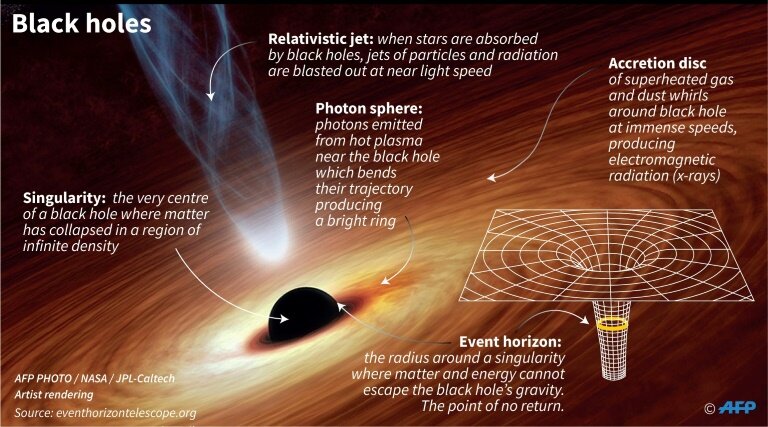
The anatomy of a black hole, including its outer boundary the event horizon. (Image credit: AFP Photo/NASA/JPL-Caltech)
To understand why that shrouds a black hole in mystery, consider how no signal can travel faster than light. That means the event horizon is a one-way barrier for information. A black hole can swallow it, but the event horizon prevents it from spitting information out. We can never observe the interior of a black hole.
It's little wonder scientists are so keen to study event horizons and what happens there. They don't only want to understand the physics of matter engaged on a one-way trip into the maw of a black hole, but the effect on the very fabric of space itself these cosmic titans have.
The immense gravitational influence of black holes means that, as they spin, they drag the very fabric of space along with them, a phenomenon called "frame-dragging" or the Lense-Thirring effect. This introduces another rule about event horizons — not only does nothing escape this boundary, nothing there sits still either. This research brings scientists one step closer to understanding those rules in greater detail than ever before.
"We studied GW250114, the loudest binary black hole signal observed to date, about three times louder than the first gravitational-wave signal detected a decade ago," team co-leader Ling Sun of OzGrav said. "Our analysis shows that this exceptionally loud signal can be used as a powerful probe of the remnant black hole's horizon, allowing us to measure its two fundamental properties: rotation frequency and surface gravity."
The results could also shed more light on the behavior of gravity in the most extreme environment in the universe, at the very edge of a black hole.
"These measurements mark a first step towards future tests of general relativity with direct waves," Lu said.
The research was published on Wednesday (June 24) in the journal Nature.
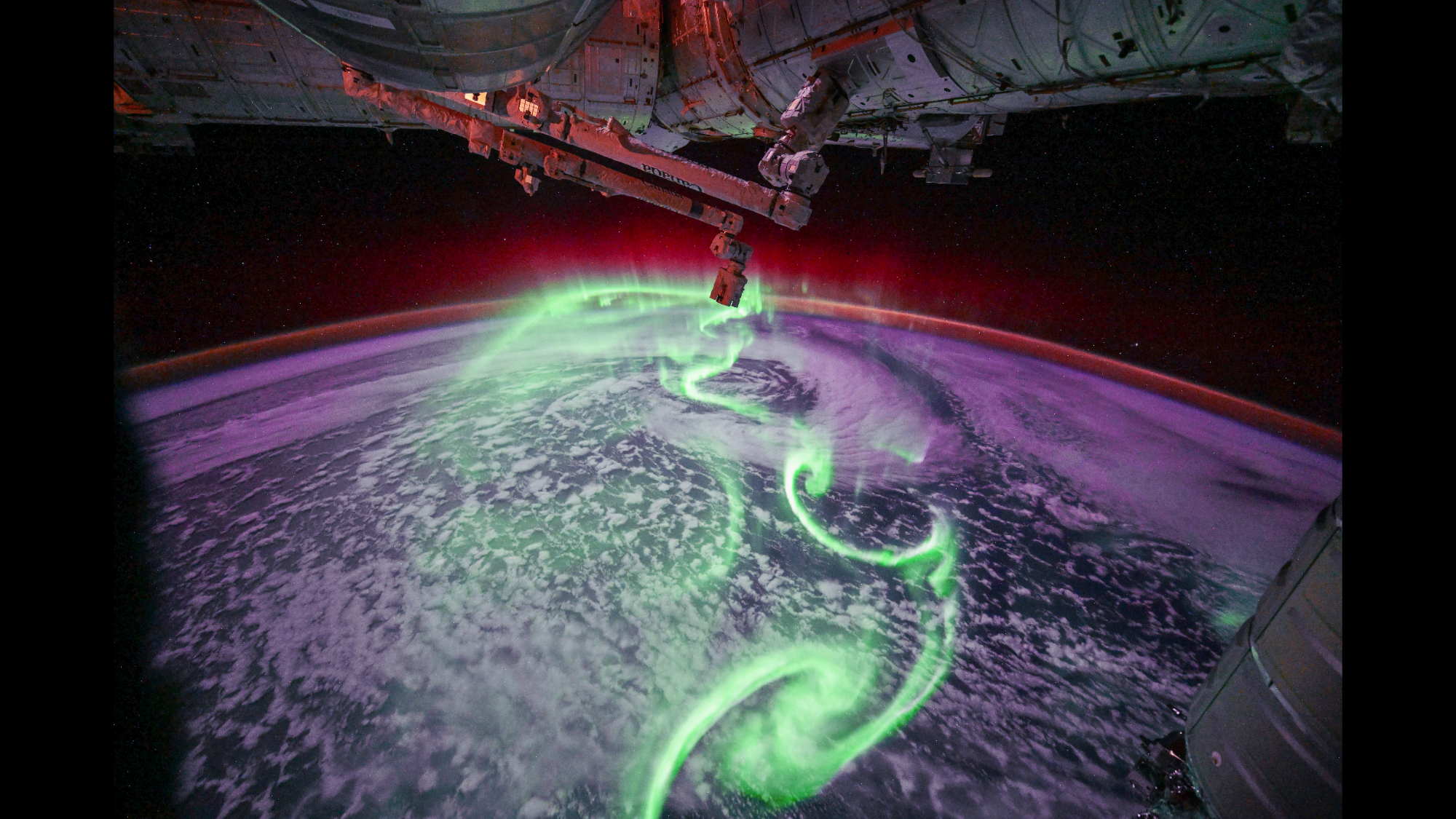
Auroras from space dazzle in this image captured from the International Space Station by ESA astronaut Sophie Adenot. (Image credit: ESA/NASA/S. Adenot)
If you've ever seen auroras in the night sky, then you are one of the lucky few who has enjoyed a view of one of nature's most colorful and spectacular phenomena. But for the very lucky, very few who've seen auroras from space, the view is on a whole other level!
What is it?
When charged particles streaming constantly from the sun, also known as the solar wind, reach Earth and interact with our atmosphere, it creates what we call auroras. Seeing these spectacular, colorful displays in the sky is on many people's bucket list, as auroras can light up the sky in a rainbow of colors. But this beautiful phenomenon happening in our atmosphere can also be seen from space.
European Space Agency astronaut Sophie Adenot, who is currently aboard the International Space Station as part of the εpsilon mission, spotted the aurora australis, or auroras over the Southern Hemisphere. (Lights in the Northern Hemisphere are known as the aurora borealis.)
And the image she captured of the moment really speaks for itself. Neon green swirls look truly otherworldly against a haze of bright purple blanketing Earth, which also seems enveloped in a ruby red glow. The reddish glow of the auroras can even be seen against the outside of the space station in this photograph.
Why is it incredible?
While her photograph speaks for itself, Adenot actually shared her own thoughts on the view via social media. One incredible thing about human spaceflight in the modern world is that, even from an orbiting laboratory, astronauts can share their experiences with the world in real time.
"Day 127, orbit 1968 — That aurora was absolutely spectacular… shimmering and dancing beneath us, stretching as far as the eye could see, and so intense it lit up the Station in shades of green," Adenot said. "We’ve seen several since the beginning of the mission, but this one was on a completely different level — far too bright for my usual aurora camera settings. Moments like these never get old up here; the whole crew suddenly find themselves vying for a good spot at a window!"
What is rarer than discovering a "super-puff" planet with densities much (much) lower than those of the solar system gas giants? Discovering two orbiting the same star.
That is exactly what astronomers have done, finding two extrasolar planets, or exoplanets, that are super-puff siblings orbiting the same star. Both planets, designated TOI-791 b and TOI-791 c, have densities lower than that of cotton candy, making them thelightest exoplanetsever seen.
"Only a handful of these super-puffy planets are known, and it is even rarer to find two in the same system," team leader George Dransfield of Oxford University said in a statement. "Their extremely low densities make them fascinating targets for understanding how planetary systems form and evolve."
The two planets orbit adwarf star called TOI-791, which is located around 1,110 light-years from Earth. Both planets are around the same size as Jupiter, but the solar system's most massive planet has a density 28 times greater than TOI-791 c and 35 times greater than TOI-791 b.
The low density of these exoplanets aren't their only remarkable quality, however. The super-puff siblings are also locked in a rare dance that sees the inner planet complete five orbits as the outer planet completes three orbits. This is known as a 5:3 mean-motion resonance.
As TOI-791 b and TOI-791 c complete this orbital tango, they gravitationally tug on each other, causing changes in their transits of their parent star, with transits representing the moments these planets cross the star's face from our vantage point. These transits are some of the longest ever seen, lasting 11 hours per planet, and were integral to discovering the worlds.
If you cross me....
TOI-791 b and TOI-791 c were first identified as candidate planets in 2019 and 2023, respectively, when the Planet Hunters citizen scientist group assessed data from NASA's exoplanet-hunting spacecraft TESS (Transiting Exoplanet Survey Satellite).
TESS hunts planets using the transits they make of their host stars from its position around Earth. These planetary transits cause a tiny dip in light from the star that TESS can detect.
Dransfield and colleagues then measured the size and density of these planets using data from telescopes across the globe, including the ASTEP(Antarctic Search for Transiting ExoPlanets) telescope at Concordia Station in Antarctica, to discover the planets are rare super-puff gas giants.
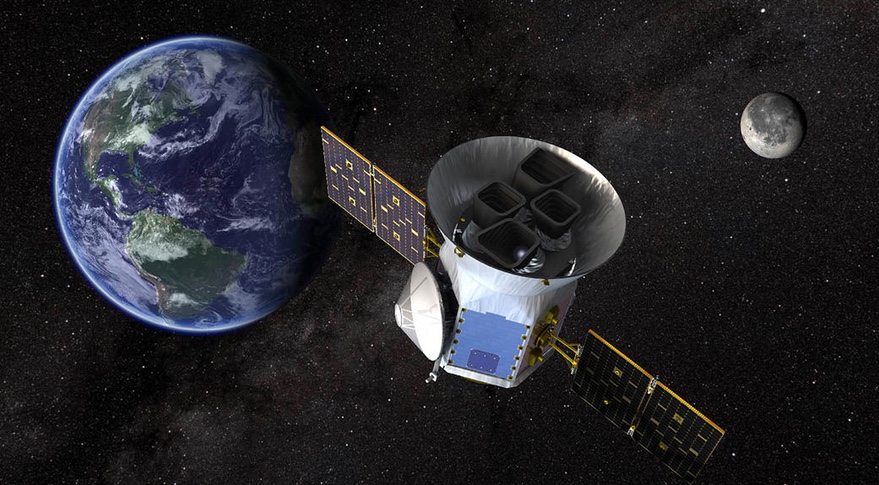
An illustration of the TESS exoplanet hunter orbiting Earth (Image credit: NASA)
The discovery could help solve the puzzle of how super-puff planets actually form. The prevailing theory suggests super-puff planets form in distant, cold regions in the disks of gas and dust that surround their parent stars. This allows gas to accumulate around small solid cores, leading super-puffs to gather vast atmospheres of hydrogen and helium.
Further investigation of TOI-791 b and TOI-791 c could help sort between this formation route and other birth mechanisms for super-puffs.
"This system offers a unique laboratory for understanding how super-puff planets form and evolve," team member Amaury Triaud of the University of Birmingham said in the statement. "We propose to carry out space-based observations using the James Webb Space Telescope to assess if the puffy atmosphere contains carbon, nitrogen, and oxygen-bearing species, revealing new insight into how these unusual planets formed."
An intense demolition derby of at least six galaxies smashing into one another has been found lurking in the early universe by the James Webb Space Telescope. This merger is also expected to fuel the growth of a supermassive black hole and trigger the formation of what will eventually become one of the most massive galaxies in the cosmos.
"What makes this special is that we can follow both the build-up of a giant galaxy and the growth of the black hole at its center," Huub Röttgering, an astronomer at the Netherlands' Leiden Observatory, said in a statement.
The discovery came after a tip-off from radio astronomers who had noticed emissions that seemed to be coming from an undiscovered active black hole. When the James Webb Space Telescope (JWST) looked closer, it found a surprise.
"We didn't find a single galaxy, but an entire complex of at least six galaxies," said Aayush Saxena of the University of Oxford.
These six galaxies sit at a redshift of 4.0, which equates to a time about 12 billion years ago, just 1.8 billion years after the Big Bang.
Through the vision of the JWST's Near-Infrared Camera the six galaxies appear fuzzy, reminiscent of a faraway version of Stephan's Quintet, which is a collection of five galaxies, four of which form a compact group that are on course to merge to become a giant elliptical galaxy.
Similarly, the six galaxies spotted by the JWST, and collectively termed TGSSJ1530+1049, will undergo a series of rapid mergers to become what is known as a 'brightest cluster galaxy,' which is an enormous elliptical galaxy of the kind found at the center of galaxy clusters.
"We call structures like this protoclusters: the precursors of the vast collections of galaxies we see today," said Leiden's Roderik Overzier. "These are places where matter came together very early on. We think we are seeing a rare moment when several massive galaxies still exist separately, but are already in the process of forming one much larger galaxy."
Already a supermassive black hole has formed at the heart of this galactic maelstrom, and radio observations with the European VLBI (very long Baseline Interferometer) Network and the U.K.'s e-MERLIN (enhanced Multi-Element Remotely Linked Interferometer Network) at a resolution on the scale of a 100 milliarcseconds have identified radio lobes and hotspots typical of an active black hole's jet interacting with the gas surrounding it.
"Using a network of connected radio telescopes, we were able to produce a very sharp image of TGSSJ1530+1049," said Krisztina Gabányi of Eötvös Loránd University in Budapest, Hungary. "The radio emission is produced as material falls into the black hole, while some of it is expelled again at high speed."
The jet doesn't seem to extend as far as all the galaxies in TGSSJ1530+1049 yet, implying that the black hole is still fairly young.
The six galaxies of TGSSJ1530+1049 span a volume only a few tens of thousands of light-years across, which is smaller than our Milky Way galaxy — and yet, they pack in a humungous amount of stars, equivalent to hundreds of billions of solar masses and a star-formation rate somewhere between 70–163 solar masses per year. That's a frenetic pace compared to the Milky Way, which produces much less than ten solar masses per year.
TGSSJ1530+1049 is one of the densest collections of heavyweight galaxies found in the early universe so far, and is giving exciting clues as to how the most massive galaxies, clusters and black holes in the universe formed.
Earth's moon is due for a human-made impact this August courtesy of a spent SpaceX Falcon 9 upper stage.
The Falcon 9 upper stage is left over from the launch that sent Firefly's Blue Ghost-1 lander to the moon on Jan. 15, 2025 by way of NASA's Commercial Lunar Payload Services (CLPS) initiative. Also sent moonward on that flight was the Hakuto-R Mission 2, called Resilience, a robotic lunar lander developed by the Japanese company ispace.
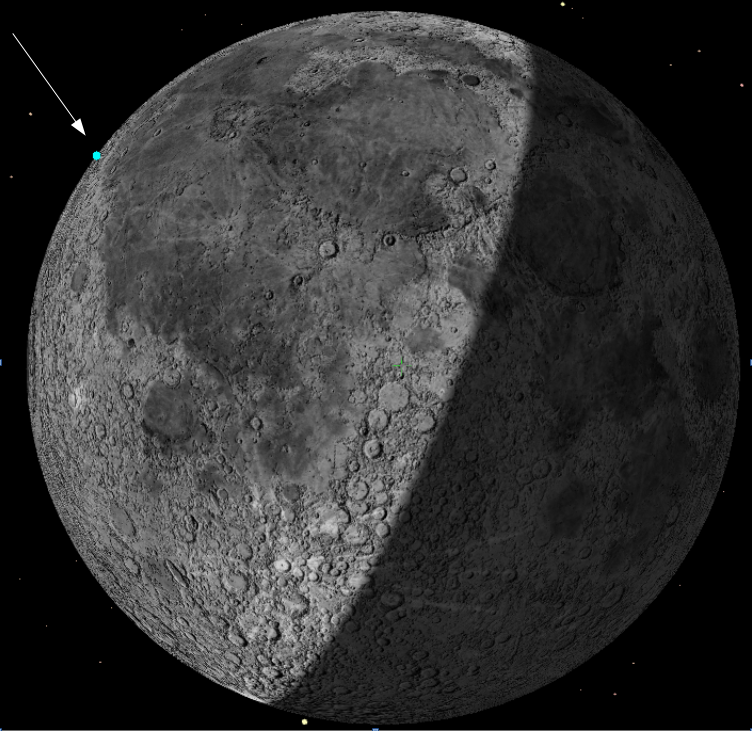
This striking event is expected to occur close to Einstein Crater near the moon's western limb and could be visible by ground and space-based telescopes. Varying forecasts have sparked debate on whether or not we'll be able to see the rocket body slam into the moon on Aug. 5, and, if so, how both citizen scientists and astronomers can best observe it it.
'This wonderful environment of the moon'
The consequences of this rocket mission's leftover hardware is on target for a "limb shot," meaning it could strike the far western edge of the moon. Another possible impact site is Bell Crater, just out of sight on the moon's far side.
Earlier this month, NASA's Solar System Exploration Research Virtual Institute (SSERVI) hosted a discussion with experts regarding the approaching impact. Taking part in the meeting of moon-watching specialists was Brian Day, SSERVI's lead for citizen science and community development.
"One of the things that is really important here with this impact that is coming up is it serves as a reminder to us that the moon is a dynamic environment. We think of it as being static. It is not. It is being whacked. It is changing," Day said.
Citizen scientists can actually get involved to help understand the dynamic environment of the moon thanks to the Impact Flash! program, said Day.
"And that can be done either with instrumentation you have in your own backyard or you can use ours in orbit around the moon," Day added. "This impact is a great reminder of this wonderful environment of the moon."
Moon viewing maybe
But will the impact be visible from Earth? Any assured answer is in a hedge-your-bet, yes/no mind bender.
"I've gone from 'probably' to 'probably not,' and more recently, to 'maybe,'" said Bill Gray of Project Pluto, creator of a telescope-tracking application used worldwide by professional and amateur astronomers alike to keep tabs on asteroids, comets, and other near-Earth objects.
It was Gray's work with Project Pluto that got the word out about the roughly four metric ton Falcon 9 upper stage intersection with the moon at over two kilometers a second. In September 2025, his software for computing orbits analyzed the observations and projected an impact with the moon on Aug. 5, 2026.
"Even though we have tracked it since launch, our idea of when and where it's going to hit are currently fuzzy by minutes and dozens of kilometers," Gray said. "But we will refine that and get an idea of where it's going to hit."
An illustration of the moon with an arrow pointing to a predicted impact site for the Falcon 9 upper stage 2025-010D in August 2026, courtesy of Project Pluto. (Image credit: Project Pluto)
Out on a limb
"I think it's going to be very subtle. I think it's going to be very, very hard to see, if not impossible. But there's always a chance," said William Cooke, program manager of NASA's Meteoroid Environment Office at Marshall Space Flight Center in Huntsville, Alabama.
Cooke quickly added that, along with a rapid-fire impact flash, the upper stage impact will kick up huge amounts of lunar regolith, the dust that coats the surface of the moon.
"It will excavate that out of the crater and this may create a plume that will be illuminated by the sun," Cooke said. "So, it's not only important to look for the impact flash, but if this occurs close enough to the limb, you may be able to see that plume of material rising, and that would be significant as well."
Time and inclination
Still, concerning the spotting of that over-the-limb plume, it remains a guessing game.
How much material might be lofted, and how high will it go? Given the moon's one-sixth gravity, how long will it take for that material to fall back onto the lunar surface?
"So, no good feeling for how long the plume will be up there," Cooke said.
Putting aside all the unknowns, it is Cooke's view that "if you've got the time and the inclination, it might be worth a look."
Regarding the possibility of seeing the ejecta plume, Gray of Project Pluto, later told Space.com he agreed. "We pretty much shrugged about this and said "we dunno' and we should look and see if we can observe it."
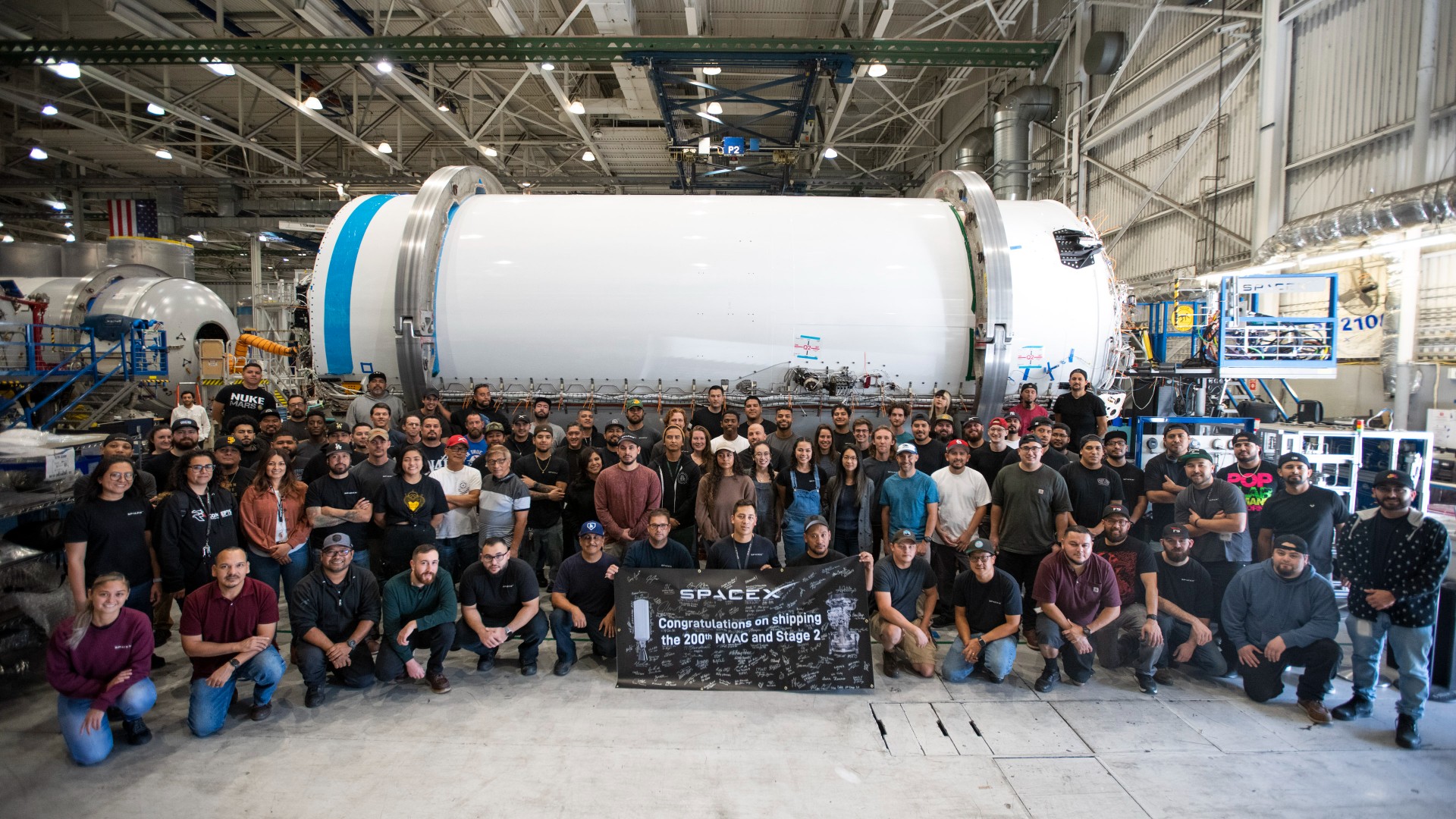
A SpaceX photo of one of the company's Falcon 9 second stages, taken in 2022. A similar second stage is expected to impact the moon in August 2026. (Image credit: SpaceX)
On-location orbiters
Speaking of time and inclination, there is an on-location witness to the before and after results from the rocket stage plummeting into the moon.
Brent Garry is the project scientist for NASA's Lunar Reconnaissance Orbiter (LRO) at Goddard Space Flight Center in Greenbelt, Maryland. LRO will be passing over the projected crash site about seven days prior to the impact and about seven days after the impact, Garry said.
"After the impact we might have a little bit more knowledge of where it is. We can do some additional targeting about a week after the impact and get some targeting over where the site is," said Garry.
Different observers
This event emphasizes that when you're looking for impact flashes on the moon, either anthropogenic or natural, there's a need for as many observers as possible, said SSERVO's Day.
"Because these flashes are so short, they can very much mimic a cosmic ray impact on your detector and just be a sudden blip," said Day.
What really helps researcher's distinguish between cosmic ray impacts and actual flashes on the moon is to have different observers in different locations observing that flash at the same time, Day said.
"And if you see that, if you have that coincidence of events," Day said, "that's one of the reasons why we like to have as many people looking as possible."