“The Ninth Jedi” is a bold new Star Wars anime project hitting Disney+ next month, and it looks sick!

Disney+’s imaginative anime anthology series, "Star Wars: Visions", is getting a standalone expansion next month with "Star Wars: Visions Presents –The Ninth Jedi".

This 8-episode limited series is a continuation of the saga of Lah Kara, Margrave Juro, and their ragtag crew in the search for her kidnapped father. "Star Wars: Visions Presents – The Ninth Jedi" debuts on Disney+ on Aug. 5, 2026.

Fans were first introduced to the intriguing story in "Star Wars: Visions" Volume 1’s chapter titled "The Ninth Jedi", and now writer/director Kenji Kamiyama and his animation studio Production IG will revisit Kara’s world to elaborate more on the mythology behind lightsabers of different hues.

In the original 2021 episode, viewers met a bright Force-sensitive girl named Kara and her sabersmith father, Zhima, as they harvest Kyber Crystals to forge new lightsabers for Margrave Juro, the leader of an outer rim planet called Hy Izlan.

Juro is collecting worthy Jedi to help repopulate the Jedi Order, but evil Sith mercenaries are hiding within his candidates’ ranks. Kamiyama’s short initially presented the cool notion of lightsabers changing colors to reflect their users’ true links to the Force.

A direct sequel to Kamiyama's episode, "The Ninth Jedi: Child of Hope," was delivered by anime master Naoyoshi Shiotani and premiered on Oct. 29, 2025, for "Star Wars: Visions" Volume 3. Lucasfilm's new show takes place shortly after the events seen in the two "Star Wars: Visions" shorts as Kara advances her training and searches for her father.

(Image credit: Disney+)

"Every time we finished one of the anthologies, the first conversation would be, 'God, I’d love to expand that story,'" James Waugh, Lucasfilm Senior V.P. and "Star Wars: Visions" executive producer, told TechRadar last year after the project was announced at Star Wars Celebration Japan.

"We love the shorts, but Kathy [Kennedy] heard that, and there was a moment to say, 'Let’s see what could happen if we expanded this.' That’s really where 'Visions Presents' comes from. If we could give a bigger canvas to paint on, what would we get? We’ve been so impressed with what Kamiyama and his Production IG team has delivered so far."

Directed by Shunsuke Tada and with Kenji Kamiyama acting as supervising director, "Star Wars: Visions Presents - The Ninth Jedi" arrives Aug. 5 on Disney+ and Hulu.

Watch The Ninth Jedi on Disney+:
Disney+ (With Ads): $11.99/month
Disney+ Premium (No Ads): $18.99/month or $189.99/year

Watch The Ninth Jedi on Hulu:
Hulu with Ads: $11.99/month or $119.99/year
Premium (No Ads): $18.99/month

Why space games still struggle with the scale of the universe

Space is incomprehensibly vast. So huge that the human mind struggles to even conceptualize it. The observable universe spans roughly 93 billion light-years. Even our own humble galaxy, the Milky Way — a few tiny stitches of the universal canvas — stretches across 100,000 light-years and contains hundreds of billions of stars.

It's no wonder, then, that space video games struggle so mightily with anything approaching a "realistic" interpretation of those incredible distances, especially in an age where we have yet to invent a technology that can traverse them in a reasonable time.

The Artemis 2 mission's Orion module got up to speeds of around 25,000 mph during its trans lunar injection burn. Ignoring fuel and safety concerns, at those speeds, it would still take us at least 80,000 years to reach our nearest neighbor, Alpha Centauri.

So how do game developers manage to distill some of the awe of the vastness of space while making it feel like a manageable space? How do they shrink space to a navigable size without making it feel small or claustrophobic?

I spoke to astrophysicist Dr. Jeffrey Bennett, founder of Big Kid Science and author of "The Scale of the Universe", to get a sense of the scope of the problem.

The true scale of space

(Image credit: wasan prunglampoo/Getty Images)

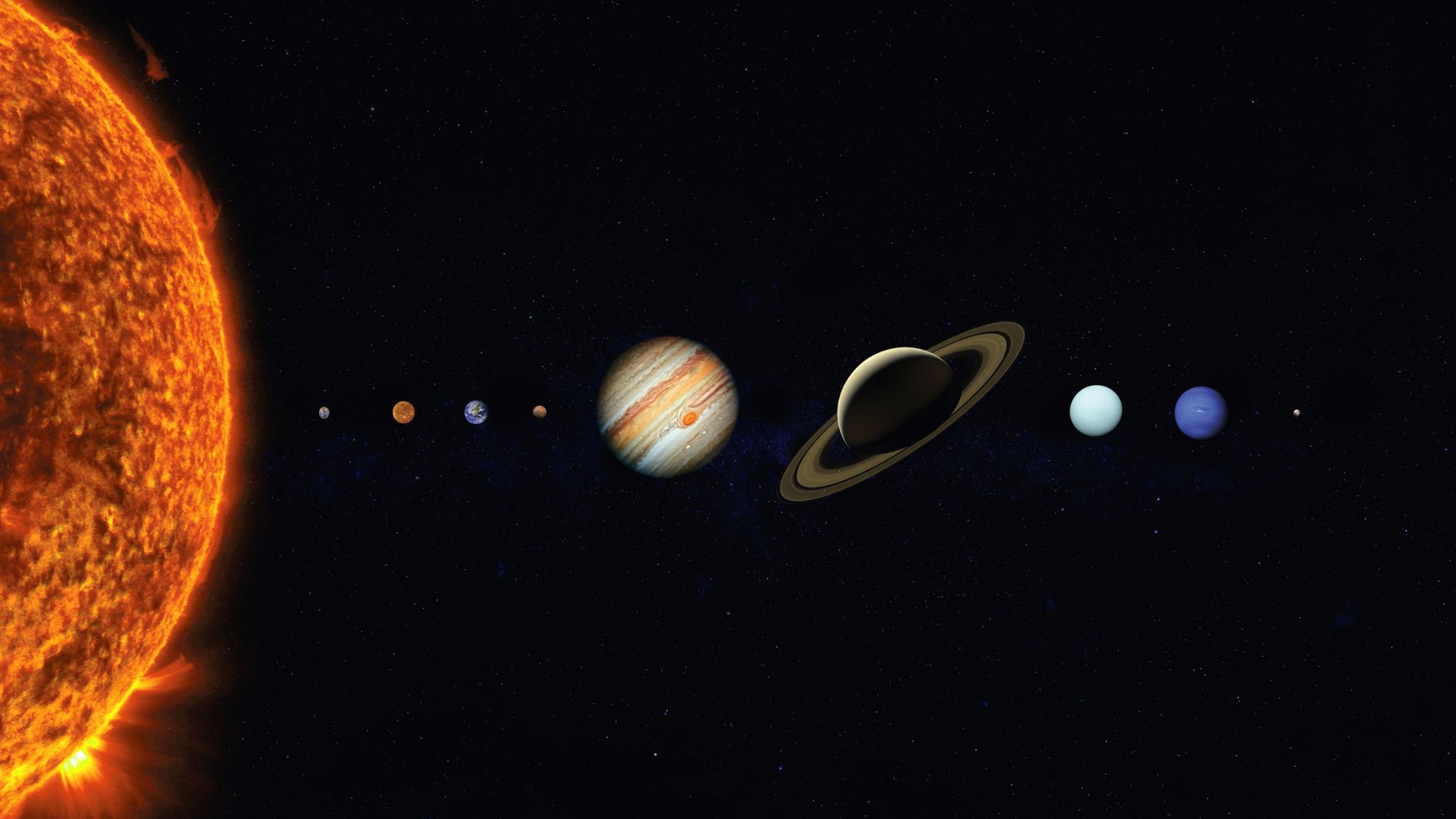
"On a 1 to 10 billion scale — which makes the Sun about the size of a large grapefruit — Earth is smaller than the ball point in a pen and located about 15 meters (49 feet) away from the Sun," explains Bennett. "On that same scale, the Moon — the farthest a human being has ever traveled — lies only about 4 centimeters (1½ inches) away from us. The planets of our solar system are much farther, though you can still walk to the outermost planets in only 10 minutes or so."

Bennett said most science fiction films and games get the scale wrong by making long-distance travel look too easy. Considering the above 1-to-10 billion-scale representation, for instance, and given that reaching the outermost planets in our system — far further than any human being has ever travelled — would take ten minutes, "to reach the nearest stars, you’d have to walk the distance across the United States."

Just simulating a small part of the existing universe would push current hardware to its limits, even with crutches like procedural generation. Developers use various techniques, like level-of-detail scaling, instancing, and streaming, to create the illusion of vastness without melting hardware.

Bennett also talks about how scale works in the case of interstellar objects like asteroids and maneuvering around them.

Films and games, he says, "tend to make it look very difficult to avoid collisions with asteroids, with spacecraft having to dart this way and that to pass through an asteroid region safely. In fact, while there are many millions of asteroids in the asteroid belt of our solar system, the full region is so large that it would take incredibly bad luck to crash into an asteroid by accident. That is why spacecraft studies of asteroids require careful planning to get a spacecraft close enough to any asteroid to get photos and other data."

The reality is that even in its most populated regions, asteroids are typically hundreds of thousands to millions of kilometers apart in our system's asteroid belt. Standing on one of the asteroids, it would be incredibly unlikely that you'd be able to see even one of the largest other asteroids with the naked eye.

How games cope with the enormity of space

(Image credit: Egosoft)

"This absolutely IS a design conflict that all space games have to solve," said Bernd Lehahn, Founder and Managing Director of Egosoft, the company that makes the successful X franchise of space simulators (most recently X4: Foundations).

"On the one hand, space must feel very large, or else players will feel cheated. Space and sci-fi have always been about the dream of infinite distances and exploration in a seemingly endless universe. At the same time, most games, the X games included, do not want to force players through unnecessarily long flight times or, god forbid, boredom."

Lehahn says his studio tries to strike a balance between areas that feel more content dense with regions that feel more like an unsettled frontier, to impart a sense of the true emptiness of space.

(Image credit: Egosoft)

"There should be room for both extremes: dense, highly populated regions, often with artificial means of transportation that allow the player to find and visit many important places relatively quickly, but also the empty, remote, fringe areas of space, where the experience is much slower, but where exploration happens, and the uncharted map allows for mystery and secrets."

Finding a solution to modeling and traversing the vastness of space has been an issue for Egosoft from the release of the original X game back in 1999, and continues to be something the studio grapples with today. The reality is that most of space is empty, so empty that you don't even have visual cues to indicate you're moving through it. Traveling through it without some kind of cheat or compression would involve unimaginable stretches of black emptiness with nothing happening, but too much compression begins to feel artificial.

"X4: Foundations probably has the most sophisticated solution to this conflict," Lehahn said. For the latest game, the team combines a number of solutions. It starts with scaled tiers of engine technologies with increasingly limited steering. Faster, more powerful engines allow for increasingly speedy, but more straight-line or on-rails travel.

(Image credit: Egosoft)

The team also uses the conceit of "jump gates" to leap across huge swaths of the universe in a blink, as well as teleportation and time acceleration to similarly compress travel. There are also space highways with slipstream acceleration to hurry things along.

Importantly, the X games also often give players things to do during the downtime of space travel. Giving players minor, uneventful tasks or other distractions can help fill out long stretches of uninterrupted travel. Above all else, Lehahn wants to ensure players are enjoying themselves.

"X4: Foundations is still a game. We want it to feel as realistic as possible—allow players to experience the universe and truly believe the 'sectors' are endless, planets are real size, and you can move in relation to planets and even larger celestial objects. But sometimes, if there is a conflict between fun gameplay and realism, then we may have to compromise on realism a bit."

A different approach

(Image credit: Frontier Developments)

Rather than compress space into a manageable slice, the Elite Dangerous team at Frontier Developments takes on a much more ambitious challenge.

"We have a 1:1 scale Milky Way," says Executive Producer Gauthier Verquerre. "Roughly 400 billion star systems."

To create that vast canvas, the team uses a technology called the Stellar Forge, which uses real astronomical catalog data and models phenomena like the collision of stellar systems and the way stars and planets form to procedurally generate systems. The systems are generated once when a system is discovered and regenerated in the same way whenever a player visits them.

(Image credit: Frontier Developments)

One of the most daunting challenges Elite Dangerous faces is that the game doesn't just model the galaxy on a macro scale. It also has to generate planetary surfaces and space station interiors for players to explore.

"Throughout the universe, we have these spectacular stellar phenomena which players are out there discovering every day," said Verquerre. "The flip side of that is that we have players meeting in the same star systems, or on the planetary surface. We have to represent both the huge 1:1 scale of space that we have in the game for interstellar elements like Lagrange clouds or nebulae, and the personal scale of 'I'm on foot in a planetary settlement.'"

Despite releasing way back in 2014, only a tiny fraction of the space the game simulates has been explored by players.

According to Verquerre, "There's still over 99% of the universe out there, waiting to be explored, where any Commander can be the first to add their name to the system and say 'I was the first one to see this'. We also added System Colonisation last year, allowing our players to construct space stations and planetary settlements. That's been really rewarding for us, seeing the rate at which the bubble has expanded."

(Image credit: Frontier Developments)

To empower players to explore that nearly infinite playground, Elite Dangerous (like X4) takes a tiered approach. Three methods of travel provide increasing compression of space/travel time.

"There's Deep Space, where ships move at ‘slow’ speeds (around 300m/s, under Mach 1) to access individual gameplay actions like combat or mining," Verquerre told me, "Supercruise, which is essentially a form of FTL travel within a system useful for scanning systems, and Hyperspace, where players travel between star systems through a tunnel."

The game also recently introduced a fourth tier of movement, dubbed Supercruise Overcharge, which allows players to navigate star systems at a much greater speed. Even with these many systems for speeding up transit, however, traversing such unimaginably vast distances can eat up a huge amount of time, and Frontier has tried to ensure that travel is peppered with events and resource management to keep players engaged.

"It's all about the player," Verquerre explains. "Explorers often want a little solitude, or an unexpected encounter, whilst our traders are considering the risk of what they're carrying. Fuel and heat management tend to be primary considerations; no one wants to be marooned out in deep space! There are also interdictions, where a Commander can be pulled out of a jump and find themselves hunted."

(Image credit: Frontier Developments)

"Additionally, those long trips that our players are taking out into deep space mean that small damage adds up, canopy cracks and moments of tension take the beauty of space and translate it almost instantly into abject fear."

The magic and awe of the staggering scope of space is a core part of the Elite Dangerous mystique, and it's not lost on Verquerre.

"I remember a journey I once made to Beagle Point, one of the most remote star systems found in Elite Dangerous, which I’d consider to be one of the most memorable gaming moments in my life. The sense of achievement in reaching a system that you’ve plotted out at the end of a journey is something very tangible, and it always makes me look forward to the next adventure."

A (nearly) infinite challenge

(Image credit: ESA/Hubble & NASA (D. Calzetti (University of Massachusetts) and the LEGUS Team))

Space games don't fail to simulate the scale of the cosmos because developers lack ambition or imagination.

The reality is that the universe operates on scales that challenge not only the capacity of the human behind them, but also that of our machines to reproduce them. Bridging that gap requires not just bigger maps, but smarter design, and a recognition that sometimes, the awe of the infinite matters more than the numbers behind it.

"X4: Foundations" and "Elite Dangerous" are both available to play now on PC. You can also pick up Dr Bennett's book, "The Scale of the Universe", on Amazon.

This Week In Space podcast: Episode 218 — Which Way to the Moonbase?

On Episode 218 of This Week In Space, Rod Pyle and Tariq Malik discuss NASA's new moonbase plans with planetary scientist Dr. Pascal Lee.

Starting with Artemis V (so far), the US plans to begin preparations for a permanent base situated in the south polar regions of the moon. Details are somewhat fluid, but one thing stands out: the poles are likely to be the most challenging places to set up shop in an already hostile environment. Pascal joins us to discuss moonbase siting options and why the poles may not be the best choice at first.

Download or subscribe to this show at: https://twit.tv/shows/this-week-in-space.

Get episodes ad-free with Club TWiT at https://twit.tv/clubtwit

Space news of the week

Model Falcon 9!

TOP TELESCOPE PICK:

A Celestron telescope on a white background

(Image credit: Celestron)

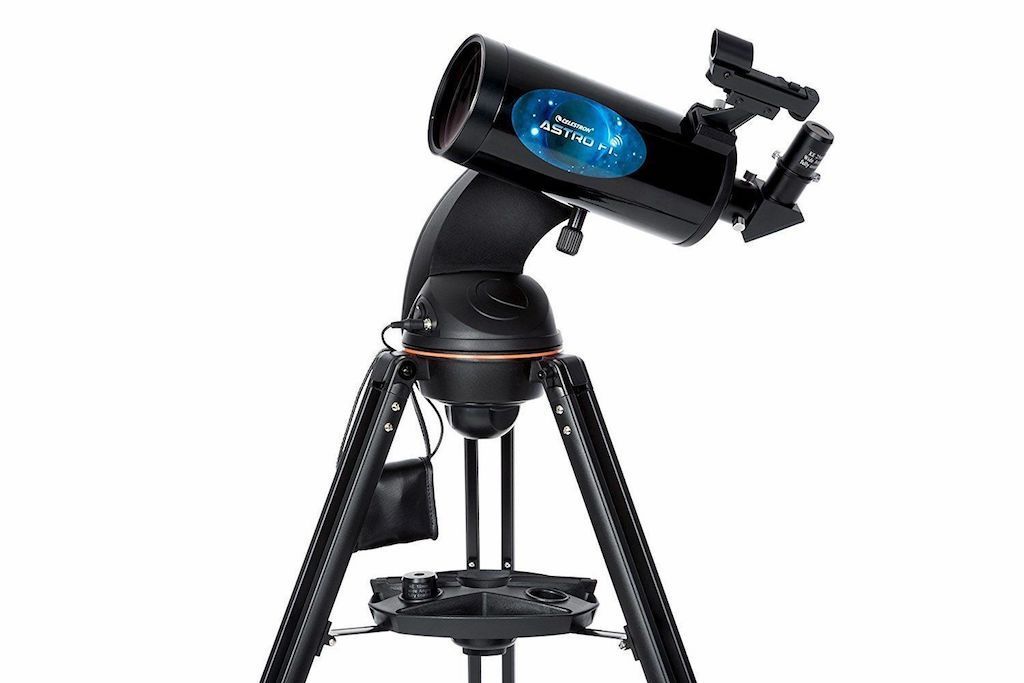
Looking for a telescope to see planets and comets? We recommend the Celestron Astro Fi 102 as the top pick in our best beginner's telescope guide.

Finally, did you know you can launch your own SpaceX rocket? Model rocket maker Estes' stunning scale model of a Falcon 9 rocket that you can pick up now. The launchable model is a detailed recreation of the Falcon 9 and retails for $149.99. You can save 10% by using the code IN-COLLECTSPACE at checkout, courtesy of our partners collectSPACE.com.

About This Week In Space

This Week in Space covers the new space age. Every Friday we take a deep dive into a fascinating topic. What's happening with the new race to the moon and other planets? When will SpaceX really send people to Mars?

Join Rod Pyle and Tariq Malik from Space.com as they tackle those questions and more each week on Friday afternoons. You can subscribe today on your favorite podcatcher.

Sci-fi action movies were better in the ’90s. ‘Independence Day’ is full of reasons why

We didn't realize it at the time — nobody ever does — but the '90s were a vintage era in Hollywood.

It was a time when major studios were happy to take a punt on original scripts, knowing that people would, as often as not, buy theater tickets to watch quality releases. Good movies will always be made, of course — just as even the most golden of ages produce their fair share of stinkers — but this was a time when the Venn diagram circles labelled 'acclaimed' and 'popular' intersected on a satisfyingly regular basis.

But beyond the critic-friendly fare produced by the likes of Quentin Tarantino, the Coen Brothers, Paul Thomas Anderson, and Martin Scorsese, this was also a peak period for popcorn-friendly action movies… and especially sci-fi action movies. Highbrow reviewers didn't always appreciate their brilliance back then, but looking back all these decades later, many of the best examples still stand up now.

"Independence Day" — which turned 30 last week — isn't even the best entry in the genre, but it repeatedly shows why the end of the 20th century was the perfect time to experience blockbuster thrills and spills in a multiplex. And, spoiler, there was barely a superhero in sight.

The '80s had teed up the subsequent decade's action explosion perfectly. On one side was the family-friendly fare championed by George Lucas and Steven Spielberg, timeless movies like the "Star Wars" sequels, "ET", "Back to the Future," and "Indiana Jones" that produced a generation of budding cinephiles. They were complemented by the more rugged, violent, and grown-up adventures popularized by the likes of "Aliens", "Predator", and "Die Hard".

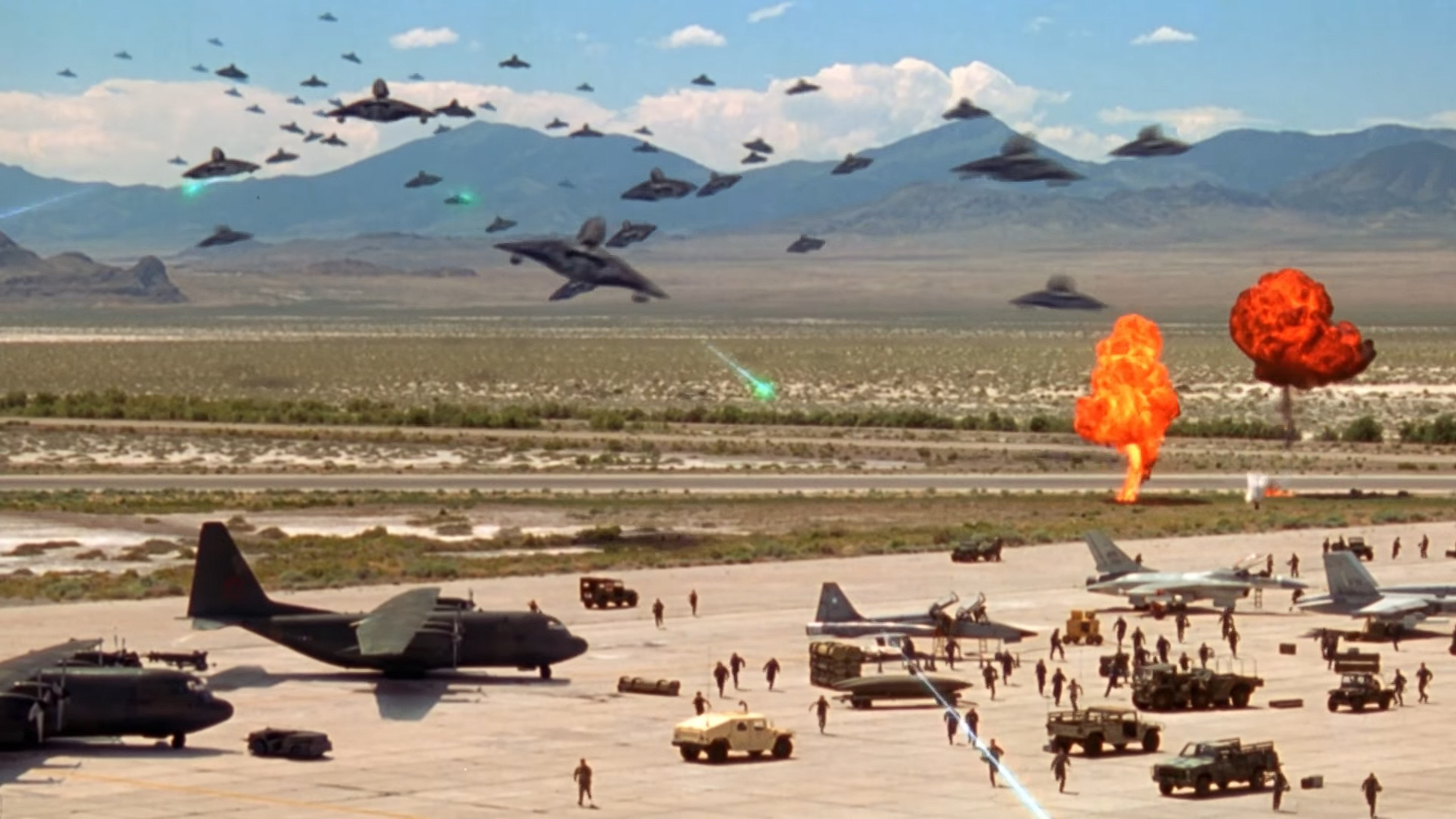
Alien spaceships attacking an airbase in Independence Day (1996)

(Image credit: 20th Century Studios)

Anything less than spectacular would no longer cut it in the blockbuster stakes, as the kids of the '80s got that little bit older and decided to take their new favorite genre with them.

It's easy to dismiss this kind of filmmaking as simplistic and dumbed down. Its poster boys were uber-producers Jerry Bruckheimer and his late filmmaking partner Don Simpson, whose "high concept" ethos distilled movies down to a pithy elevator pitch you could squeeze into a single sentence.

But the company's undisputed classics of the era make it obvious they were on to something — "Crimson Tide" (feuding submariners try to avert World War III), "The Rock" (rogue marines capture Alcatraz to hold San Francisco to ransom) and "Con Air" (a bunch of prisoners capture their transport plane). It's a formula that also worked for "Speed" (a bomb will explode if a bus goes under 50mph), "Twister" (scientists chase tornadoes across America), and "Under Siege" ("Die Hard" on a boat).

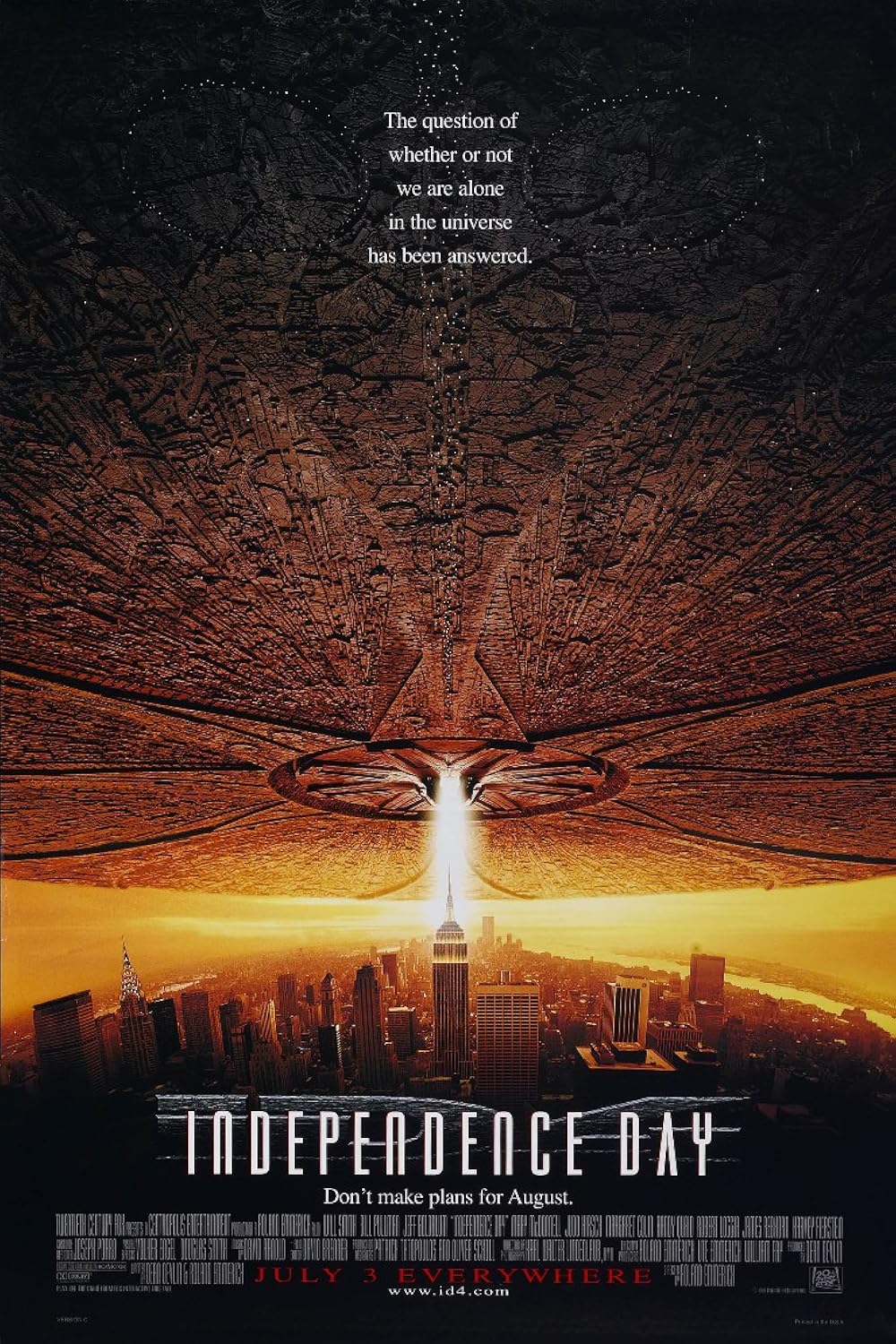
The movie poster for Independence Day (1996), showing a huge spaceship over New York.

(Image credit: 20th Century Studios)

The director/producer duo of Roland Emmerich and Dean Devlin were clearly paying attention when they made "Independence Day", their follow-up to 1994's "Stargate". Let's start with their own high concept, easily summed up as a modern-day spin on HG Wells' "The War of the Worlds", but with bigger spaceships and a more pronounced fetish for major landmarks.

Speaking to the Guardian, Devlin recalled Emmerich's original idea. "[He said], 'What if we woke up tomorrow morning and we walked outside to get the newspaper and above it was a 15-mile-wide spaceship blotting out the sun for an entire city?' Then he turned to look at me and goes, 'I think I have our next movie.'"

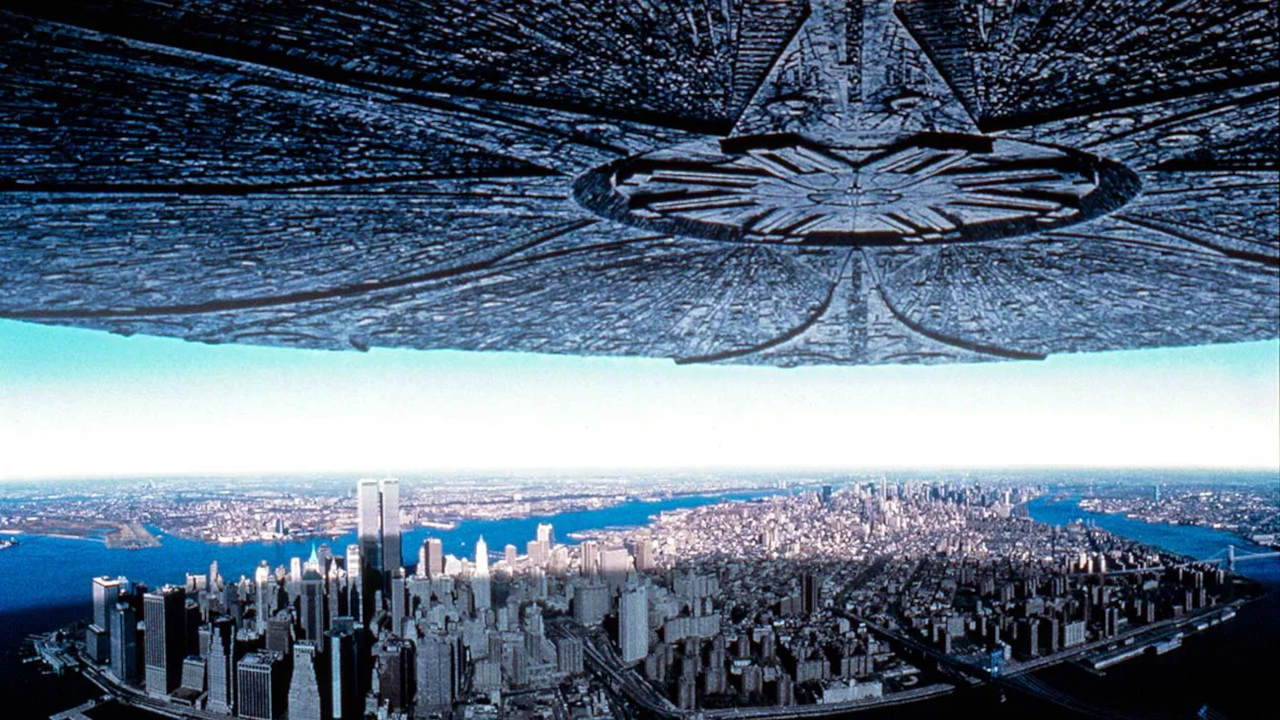
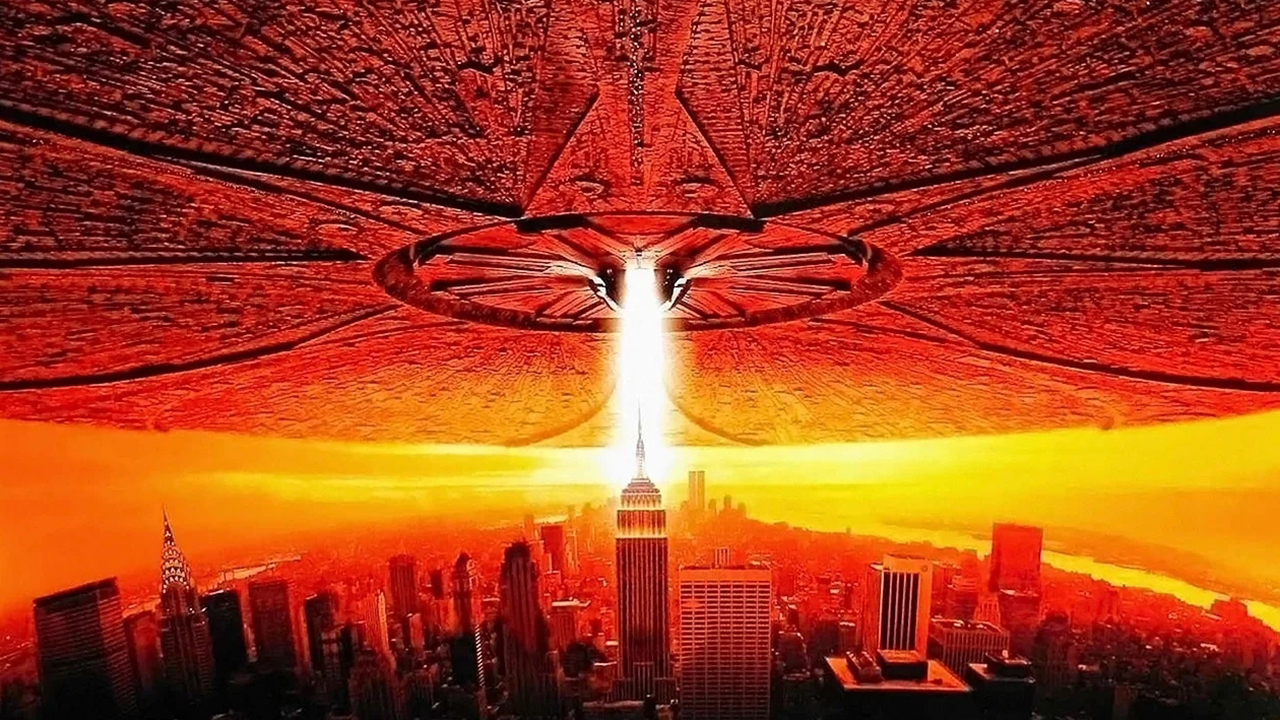
"Independence Day" didn't need to be part of a major franchise to get noticed. The teaser trailers, with their carefully choreographed moments of tourist hotspot destruction, were enough for that, as was the brilliant sci-fi movie poster, which saw Manhattan dwarfed by a flying saucer. "The question of whether or not we are alone in the universe has been answered," said the wonderfully doom-mongering tagline.

(Image credit: The Independent )

As with many of the other action movie classics of the era — not to mention the classic Irwin Allen disaster epics of the 1970s, such as "The Poseidon Adventure" and "The Towering Inferno" — "Independence Day" prioritized its cast over spectacle.

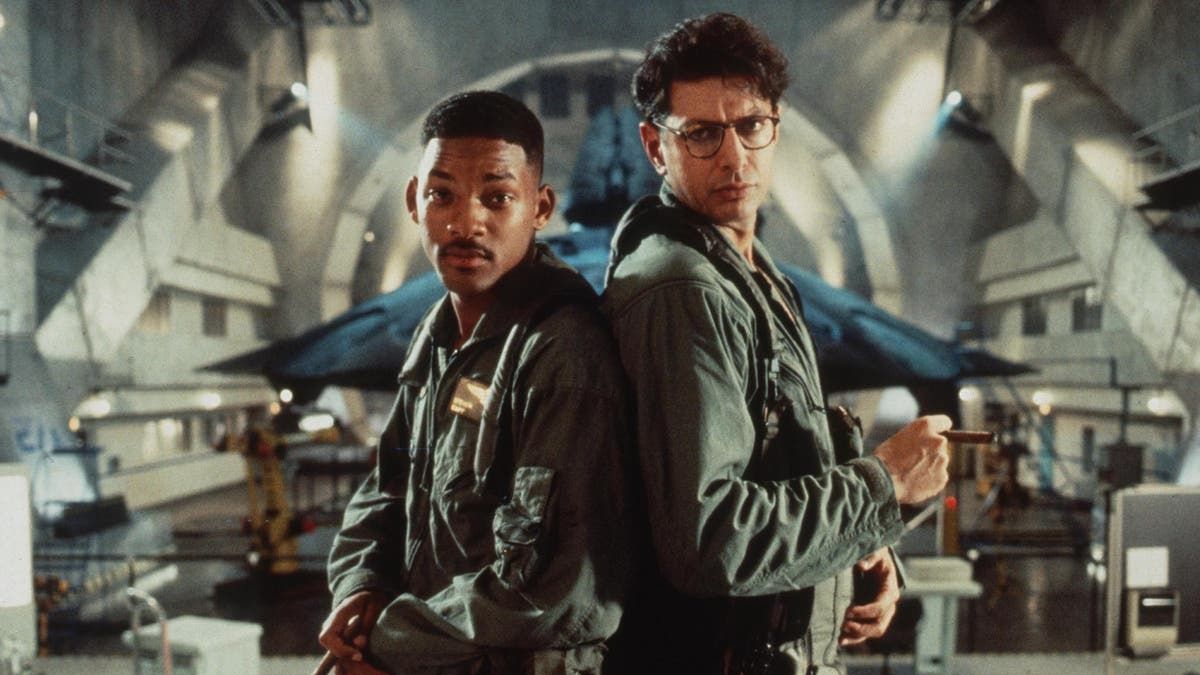
The biggest name on the roster was arguably Jeff Goldblum, who, thanks to the double whammy of "Jurassic Park" and "ID4", briefly had the two highest-grossing films of all time on his resumé.

But Emmerich and Devlin also spotted the star power of Will Smith before he became a bona fide A-lister, and packed out the vast supporting cast with familiar — though not necessarily movie star — names: "Taxi"'s Judd Hirsch as Goldblum's dad, Bill Pullman as an idealistic POTUS, and Randy Quaid as a former pilot with a bone to pick with ET. They also boosted the film's geek credentials by casting Brent Spiner ("Star Trek: The Next Generation"'s Data) as Area 51's eccentric head of ET research.

Populating the film with quality actors paid big dividends, helping to ground a film whose script rarely shied away from the ridiculous. In a screenplay that shifts from gung-ho action to self-aware gags to over-earnest, tub-thumping presidential speeches (and back again), it certainly helps if your cast can play their roles as if they're on stage at the Royal Shakespeare Company. In the same way, nobody could watch Ed Harris in "The Rock" or Gene Hackman in "Enemy of the State" and claim they were phoning it in.

Independence Day (1996)

(Image credit: 20th Century Studios)

There's also a lot to be said for the "Independence Day"'s deployment of practical effects. The mid-'90s were a dangerous time to be a filmmaker, when many were tempted to use computer effects when they should have known better. Look at the best action movies of the era, however, and they tend to use the CG to enhance, rather than replace, more traditional techniques.

As groundbreaking as "Jurassic Park" was, Steven Spielberg was remarkably sparing with the digital moments, while "The Matrix" — a film whose bullet-time effects quickly became ubiquitous — hung its action credentials on its live-action fights and wire work.

"Independence Day" was cut from the same cloth, using CG in the right places (most notably in its spectacular aerial dogfights) while also building (and subsequently blowing up) intricate practical models to deliver moments of pure, joyous cinematic carnage. These moments would undoubtedly be animated in a computer now, losing the tactile qualities — and the intrinsic gravity of the situation — you only capture in real life.

(Image credit: 20th Century Studios)

Thirty years on, "Independence Day" and its '90s action brethren have come to feel like relics. Sure, superhero movies, their most obvious descendants, still set their eyes on top acting talent, and the best directors (most notably Christopher Nolan) tend to make a point of shooting practically when they can.

But, aside from the numerous "Die Hard" spin-offs, the '90s generation were predominantly telling original stories, well away from the restrictions of franchise filmmaking, starting and finishing an entire story in roughly two hours. Indeed, it's remarkable how few of the classics of the era were followed up by a successful sequel. ("Independence Day: Resurgence" took 20 years to arrive, and when it did, didn't even make half as much at the box-office as its predecessor.)

And crucially, the action movies of the late 20th century were usually about people. Most of the time, they were ridiculous, over-the-top, broadly drawn, clichéd, cookie-cutter characters, but they also tended to — more or less — obey the laws of physics. Without superpowers or magic to fall back on, heroes had to rely on little more than implausible levels of ingenuity and resilience, a capacity to dodge bullets/laser fire, and a gift for making the right quip at the right time. "Independence Day" may just have been on to something.

"Independence Day" is available on Hulu in the US and Disney+ in the UK.

Watch Independence Day on Hulu:
Hulu with Ads: $11.99/month or $119.99/year
Premium (No Ads): $18.99/month

‘Silo’ season 3 showrunner Graham Yost explains the time jumps and turning half of the show into a political thriller (interview)

Apple TV’s riveting sci-fi series, "Silo," is stretching its narrative legs for its third and penultimate season. Juliette (Rebecca Ferguson) deals with amnesia after her fiery return to Silo 18, satisfying secrets are revealed, and we strap in for temporal jumps 352 years back to the "Before Times" to figure out how the apocalypse arrived.

"We rolled the dice a bit and hoped it would work and weren’t entirely sure, but felt it would," Executive Producer and Showrunner Graham Yost tells Space regarding the new season's time shifts. "After the fact, I heard some of the quibbles about too much time in 17, but we made our best guess on that one as well. What we did feel was that cutting back and forth was not a real problem. Even though it's 350 years separating the two stories, it's not like we're going back to Elizabethan times. It’s Silo world, which is its own crazy time. It's a place out of time.

"So when I saw the first episodes, I felt like this is okay. Part of the good thing about being outside, being people in modern clothing and cars, is you know immediately when you are and where you are. That really helped orient the story."

After Juliette’s harrowing ordeal in Silo 17 last season, audiences were left hungering for answers heading into this new batch of ten episodes. Fortunately, they shine the light of truth on matters — both in the doomsday bunker and back when Earth was still recognizable.

These time shifts allowed the production crew and cinematographers to tinker with the show’s visual style, including using different equipment to film each time period.

Ashley Zukerman in "Silo," premiering July 3, 2026 on Apple TV. (Image credit: Apple TV)

"I think they went to a different lens," Yost adds. "The choice was made to go from an anamorphic lens to something else, so there is a slight change and a slightly different framing. We've got the same production designer for both units, so there can be little flavors that Nicole [Northridge] would come up with that we don’t even realize are hints of what’s coming in the future. "

"But the origin story is a political thriller basically. We’re harkening back to 'Three Days of the Condor,' 'The Parallax View' and things like that of the '70s," explains Yost. "That sort of paranoid cinema. There are bits in there that let us feel way more cinematic because we equate that with cinema rather than television."

Alexandria Riley as Camille Sims in "Silo" season 3 (Image credit: Apple TV)

It's not all about the time jumps back to the past, though; Yost and his team have also been looking to up their game in the Silo's themselves, too.

"Then, in 18 with Juliette, the only expansion there was to spend as much time as we did within the algorithm room with Camille talking to the voice and making that interesting," reveals Yost.

"The answer to that was you cast Alex [Alexandria Riley]. She does such a compelling job that you’re just going to watch her talk to a wall. We knew how good she was from the scene she did in season one, and that's why this whole storyline developed, because we love her."

Apple TV's "Silo" season 3 premieres on July 3, 2026.

Watch Silo on Apple TV+:
Apple TV+: $12.99/month (7-day free trial)
Apple TV & Peacock Premium: $14.99/month

‘Project Hail Mary’ is finally streaming on Amazon Prime Video, and we can’t wait to watch it again

Amazon MGM Studios' "Project Hail Mary," the science fiction blockbuster starring Ryan Gosling that launched into theaters back on March 20, 2026 is now hitting its streaming stride on Prime Video after a stop on MGM+.

The $200 million outer space saga, directed by Phil Lord and Christopher Miller ("The Lego Movie," "Spider-Man: Into the Spider-Verse") and adapted from author Andy Weir's 2021 novel of the same name, made a respectable $630 million in its full theatrical run.

Despite a general jokiness and long runtime, the film was well-received by critics and audiences and now those who've held out from going to the multiplex to absorb the adventure will have a chance to catch it at home.

Gosling portrays Ryland Grace, a middle-grade teacher and molecular biologist who reluctantly gets recruited for a desperate deep space mission to try and solve a cosmic conundrum that's causing our sun to slowly dim.

Along the way to the Tau Ceti star cluster, Grace encounters a rock-skinned alien whose homeworld suffers from the same problem and together they hatch a plan to rescue their prospective planets from nasty sun-munching microbes called astrophages.

"Ryan added so much depth and layers to Ryland that I never had in the book," Weir told Space in a March interview. "And I was so happy about that because I consider character depth to be one of my biggest weaknesses as an author. I'm a plot-driven author. Seeing Ryan add all these layers, I'm like, 'Oh, good, he's covering the things that I didn’t do.' Then later I'll get credit for that character.”

"Project Hail Mary" has had a circuitous route onto home video in the aftermath of its big screen campaign, first rolling out on video-on-demand May 12, then leaping onto Amazon-owned MGM+ on June 18 for its streaming debut to help bolster subscriber numbers for that smaller platform.

And finally, the popular sci-fi epic is settling in for what's hopefully a long stay on Prime Video that started on July 3, just in time for the long Independence Day weekend in the United States. Amaze!

He-Man and beyond: 20 sci-fi cartoons (some iconic, some weird) that transported ’80s and ’90s kids to strange new worlds

Kids who grew up in the '80s and '90s couldn't enjoy the massive selection of live-action sci-fi TV available right now.

With the biggest out-of-this-world adventures likely to be found in theaters, many of the most memorable — and undoubtedly the weirdest — concepts tended to be found in Saturday morning cartoons.

This is a realm of exposition-heavy opening credits, relentlessly earwormy theme tunes, and heroes who, for no obvious reason, choose to hang out with cute/annoying [delete as appropriate] comedy sidekicks like Orko and Snarf.

The massive success of "He-Man and the Masters of the Universe" also established a symbiotic link between television screens and playrooms, as toy giants Mattel, Hasbro, and Kenner realised that a successful animated series could be the ultimate advertising opportunity for their latest product lines.

Below, we've picked out 20 sci-fi cartoons that brought outer space, time travel, must-own vehicles, and genre-defining villains into millions of living rooms every week. Just don't blame us if you get sucked into YouTube and Wikipedia rabbit holes, as you look back on classic (and not so classic) shows that helped shape a generation…

1. Battle of the Planets

Dates: 1978-1980 | Toy line? Yes | Cute/annoying sidekick: 7-Zark-7 (a robot)

Japanese anime series "Science Ninja Team Gatchaman" gets a US makeover, with most of the original show's more violent excesses toned down.

7-Zark-7, a robot whose design owes absolutely nothing (ahem) to R2-D2, was added to supply exposition and kid-friendly comedy, but the basic premise remains — five teens in bird-like superhero outfits (and a very cool spaceship) come together as G-Force, protecting Earth from the evil Zoltar.

2. The Fonz and the Happy Days Gang

Dates: 1980-1981 | Toy Line? No | Cute/annoying sidekick: Mr Cool (a dog)

A spin-off from nostalgia-heavy '50s-set sitcom "Happy Days" might seem an unlikely addition to this list, but — even more than live-action stablemate "Mork & Mindy" — this series is unashamedly sci-fi.

The Fonz, Richie Cunningham, and Ralph Malph end up travelling through time with a 25th-century woman named Cupcake, finding themselves in all sorts of 'hilarious' scrapes as they try to get back to 1957 Milwaukee. Iconic DJ Wolfman Jack (who also appeared in "American Graffiti") supplies the opening narration.

3. Ulysses 31

Dates: 1981-1982 | Toy line? Yes | Cute/annoying sidekick: Nono (a small, nail-eating robot)

Looking to take a crash course in Greek mythology? French/Japanese co-production "Ulysses 31" transfers Homer's Odyssey to the 31st century, as the titular starship captain kills a robot Cyclops, angers the gods of Olympus, and is sentenced to wander unknown stars until he finds the Kingdom of Hades.

While Ulysses looks like a Bee Gees tribute act and his laser sword is a "Star Wars"-shaped lawsuit waiting to happen, this show is bold, ambitious and — at times — surprisingly bleak.

4. SuperTed

Dates: 1982-1986 | Toy line? Yes (plush toys) | Cute/annoying sidekick: N/A

Undoubtedly the only show on this list to have debuted in Welsh, Brit cartoon SuperTed is the story of an ordinary teddy bear who's brought to life, and subsequently gains superpowers courtesy of some "cosmic dust". Former "Doctor Who" star Jon Pertwee voices the hero's jetpack-wearing alien bestie Spotty, who stays remarkably calm considering SuperTed effectively rips off his skin every time he activates his powers.

The character returned in a US co-production, "The Further Adventures of SuperTed", in 1989.

5. He-Man and the Masters of the Universe

Dates: 1983-1984 | Toy line? Yes | Cute/annoying sidekick: Orko (a floating Trollan magician)

As much of a colossus as its musclebound hero, "Masters of the Universe" is the ultimate '80s cartoon. Commissioned by Mattel as a blatant weekly half-hour commercial for its popular toy line, the show pits He-Man and his heroic chums against the evil (but strangely inept) Skeletor in a battle for control of Castle Grayskull. Eternia's residents are potential plastic playthings first, characters second, though they never forget to deliver a corny moral at the end of each episode.

The second live-action "Masters of the Universe" movie is in theaters now.

6. Bananaman

Dates: 1983-1988 | Toy line: No | Cute/annoying sidekick: Crow (a talking, er, crow)

Whenever youthful Acacia Road resident Eric Twinge eats a banana, an amazing transformation occurs… A superhero cartoon and a healthy eating campaign in one, this comic-book-inspired series is an unashamedly tongue-in-cheek British pastiche of Superman and other caped crusaders.

Legendary '70s comedy troupe the Goodies supply the voices, as Eric's fruity alter-ego, Bananaman, battles the villainous likes of General Blight, Doctor Gloom, and, of course, Appleman.

7. Challenge of the GoBots

Dates: 1984-1985 | Toy line? Yes | Cute/annoying sidekick: No

The Transformers weren't the only robots in disguise vying for kids' eyeballs in the mid-'80s. In fact, these robots — an amalgamation of Tonka's GoBots and Bandai's Robo Machine toys — made it to TV first, though the show's mythology (in which the heroic Guardians battle the villainous Renegades) never caught fire like its more successful mechanical cousin (see below).

That said, Peter "Optimus Prime" Cullen and Frank "Megatron" Welker have voice credits on both shows.

8. Transformers

Dates: 1984-1987 | Toy line? Yes | Cute/annoying sidekick: No

The only cartoon on this list that's even more toyetic than "Masters of the Universe", the original "Transformers" cartoon was the result of Hasbro's efforts to create a backstory for shapeshifting toys it had imported (and subsequently rebranded) from Japan.

It's that classic tale of good robots (Optimus Prime's Autobots) fighting evil robots (Megatron's Decepticons), using an unsuspecting planet Earth as their battleground, while transforming into planes, trains, and automobiles — not to mention tape players and dinosaurs.

The 1986 theatrical movie boldly killed off many of the franchise's most iconic characters in a bid to flog more toys.

9. ThunderCats

Dates: 1985-1989 | Toy line? Yes | Cute/annoying sidekick: Snarf (a cat-like child-minder)

"Masters of the Universe" and "Transformers" were the biggest beasts to emerge from the 1980s cartoon playground, but "ThunderCats" was never far behind. Indeed, it's had a couple of animated reboots, and is arguably crying (or should that be roaring?) out for a live-action movie.

On paper, its warrior cat people premise sounds like a disaster, but thanks to its timeless iconography — the Sword of Omens, ever-living bad guy Mumm-Ra, the catchiest theme tune in an era of catchy theme tunes — "ThunderCats" is a bona fide classic of the era.

10. Star Wars: Droids

Dates: 1985-1986 | Toyline: Yes | Cute/annoying sidekick: No

Lucasfilm attempted to keep the "Star Wars" flame burning with a short-lived animated double-bill of "Ewoks" and this more overtly sci-fi offering.

Subtitled "The Adventures of R2-D2 and C-3PO", it follows some (now non-canon) adventures of the droid duo before they meet Luke Skywalker on Tatooine. Anthony Daniels (inevitably) voices 3PO, R2-D2 stars "as himself", while The Police drummer Stewart Copeland provides the theme tune.

11. She-Ra: Princess of Power

Dates: 1985-1987 | Toy line? Yes | Cute/annoying sidekick: Kowl (a flying koala/owl hybrid)

1985 movie "The Secret of the Sword" revealed that, much like Luke Skywalker, He-Man's alter-ego, Prince Adam, has a long-lost twin sister of his own. And, even though she's been working for Skeletor's old boss Hordak on Eternia's sister planet, Etheria, Princess Adora is just as heroic as her brother – especially when she waves around a magic sword of her own to transform herself into She-Ra.

It's essentially "Masters of the Universe" with an all-new line-up of toy opportunities, though the story was rebooted as the acclaimed "She-Ra and the Princesses of Power" in 2018.

12. Jayce and the Wheeled Warriors

Dates: 1985 | Toy line? Yes | Cute/annoying sidekick: Oon (a tiny lance-wielding knight)

Future "Babylon 5" creator J Michael Straczynski was hired to create a "MOTU"-esque mythology for Mattel's existing Wheeled Warriors toys. The result was this short-lived cartoon, in which an evil race of sentient plants known as the Monster Minds tries to take over the universe.

For some reason, the aggressive flora have the ability to transform into a fleet of multi-purpose vehicles — it's a good job, then, that eponymous hero Jayce and his buddies have fancy wheels of their own.

13. M.A.S.K.

Dates: 1985-1986 | Toy line? Yes | Cute/annoying sidekick: T-Bob (an egg-shaped robot who transforms into a scooter)

With the popularity of "Star Wars" action figures on the wane, manufacturer Kenner made a bid for some of that lucrative two-toys-in-one "Transformers" action.

In this particular cartoon/toy commercial, the altruistic members of M.A.S.K. (Mobile Armored Strike Kommand (sic)) thwart the evil schemes of V.E.N.O.M. (Vicious Evil Network Of Mayhem) with their transforming vehicles —such as a motorbike that turns into a helicopter. The protagonists also wear helmets (or masks — geddit?) that give them unique abilities.

14. Centurions

Dates: 1986 | Toy line? Yes | Cute/annoying sidekick: Shadow (a dog), Lucy (an orangutan)

The impossible search for the next "Transformers" continued with this blatantly toyetic actioner.

Three implausibly named soldiers (ocean specialist Max Ray, land guy Jake Rockwell, and fly boy Ace McCloud) are the titular Centurions, who use their impressive arsenal of exosuits to save the world from Doc Terror, an evil cyborg whose name is an absolute PR disaster. The show is possibly most notable for having comic-book legends Jack Kirby and Gil Kane on its creative team.

15. Defenders of the Earth

Dates: 1986 | Toy line? Yes | Cute/annoying sidekick: Kisa (a telepathic black panther)

When Ming the Merciless relocates from Mongo to our very own North Pole, Flash Gordon joins forces with three other less famous characters from the King Features comic-book back catalogue to, well, defend the Earth.

Flash, the animal-whispering Phantom, Mandrake the Magician, and super-strong Lothar bring their unique skills to the table, along with their respective kids. The catchy-as-hell theme song features lyrics from a certain Stan Lee.

16. BraveStarr

Dates: 1987-1988 | Toy line? Yes | Cute/annoying sidekick: Deputy Fuzz (BraveStarr's Prairie Person deputy)

Years before "Firefly" and "Serenity" got in on the act, the "Masters of the Universe" dream team of Mattel and animators Filmation took the notion of a space Western very literally indeed.

Superpowered Marshal BraveStarr protects the planet of New Texas from various frontier bad guys, assisted by the eyes of the hawk, the ears of the wolf, the speed of the puma, and the strength of the bear. His 'Equestroid' steed, Thirty/Thirty, can also transform into a bipedal, gun-wielding form.

17. Visionaries

Dates: 1987 | Toy line? Yes | Cute/annoying sidekick: No

Like "Masters of the Universe" and "Star Wars", "Visionaries" straddles the line between sci-fi and fantasy.

When all technology stops working on the futuristic planet of Prysmos, magic becomes the dominant force. A wizard named Merklynn subsequently gifts two factions of "Knights of the Magical Light" (aka the Spectral Knights and the Darkling Lords) with the ability to transform into the animal totem they wear on the chestplates of their armor.

The good guys get to run around as lions, foxes, and bears. The villains? Well, they have to make do with beetles, lizards, and molluscs.

18. Fantastic Max

Dates: 1988-1990 | Toy line? No | Cute/annoying sidekick: Zoe (Max's five-year-old sister)

Effectively "my first sci-fi", this cartoon from the "SuperTed" stable makes the irresponsible move of sending a baby into space (without his parents) on a regular basis.

Max is accompanied on his adventures by anxious robot C-3PO AB Sitter, and FX, a magical alien masquerading as a toy who can turn the kid's implausibly impressive sand sculptures into fully functioning robots.

Max also has a tendency to yell "dirty diapers" at times of (very mild) peril.

19. The Pirates of Dark Water

Dates: 1991-1993 | Toy line? Yes | Cute/annoying sidekick: Niddler (a monkey-bird)

Just as BraveStarr plundered Westerns for inspiration, this show puts a sci-fi/fantasy spin on another classic Hollywood staple.

On the alien world of Mer (think "Waterworld", but with less Costner), an estranged prince named Ren leads a ragtag bunch of heroes on a quest to find the 13 "Treasures of Rule" — all the while hoping to save their planet from a sentient oil slick known as Dark Water.

20. Bucky O'Hare and the Toad Wars!

Dates: 1991 | Toy line? Yes | Cute/annoying sidekick: Does the human kid count?

It's basically "Star Wars" with animals, set in a parallel "aniverse" where the eponymous space captain Bucky O'Hare (a green hare) leads a furry rebellion against the evil Toad Empire.

The show only ran for 13 episodes, but it made a big impact, particularly in the UK, where it became a popular part of the after-school CBBC schedule. The theme tune is one of the most memorable out there — "Let's croak us some toads!" — and the Righteous Indignation is surely one of the best names for a spaceship, ever.

This Week In Space podcast: Episode 217 — America in Space

On Episode 217 of This Week In Space, Rod Pyle and Tariq Malik discuss the progression of American space efforts.

Since 1958, the United States has been part of the spaceflight adventure, and since the mid-1960s has led in just about any category that counts. In this episode, we review which flights launched or landed on July 4, and relive some of our very favorite US space missions of all time!

Download or subscribe to this show at: https://twit.tv/shows/this-week-in-space.

Get episodes ad-free with Club TWiT at https://twit.tv/clubtwit

Space news of the week

Model Falcon 9!

TOP TELESCOPE PICK:

A Celestron telescope on a white background

(Image credit: Celestron)

Looking for a telescope to see planets and comets? We recommend the Celestron Astro Fi 102 as the top pick in our best beginner's telescope guide.

Finally, did you know you can launch your own SpaceX rocket? Model rocket maker Estes' stunning scale model of a Falcon 9 rocket that you can pick up now. The launchable model is a detailed recreation of the Falcon 9 and retails for $149.99. You can save 10% by using the code IN-COLLECTSPACE at checkout, courtesy of our partners collectSPACE.com.

About This Week In Space

This Week in Space covers the new space age. Every Friday we take a deep dive into a fascinating topic. What's happening with the new race to the moon and other planets? When will SpaceX really send people to Mars?

Join Rod Pyle and Tariq Malik from Space.com as they tackle those questions and more each week on Friday afternoons. You can subscribe today on your favorite podcatcher.

30 years on, “Independence Day” still proves the versatility of the original “The War of the Worlds”

"Independence Day" definitely isn't "The War of the Worlds". The characters are all new, the alien invaders don't come from Mars, and HG Wells sure as hell didn't write about spaceships engaging in "Star Wars"-esque dogfights over Victorian England.

But here's the contradiction. "Independence Day" totally is "The War of the Worlds". It's about Earth being hopelessly outgunned by aliens from outer space and a human resistance fighting back against impossible odds. It also has, more or less, the same ending — the extra-terrestrials' demise by computer virus is a cunning update of the original book's microbial final twist.

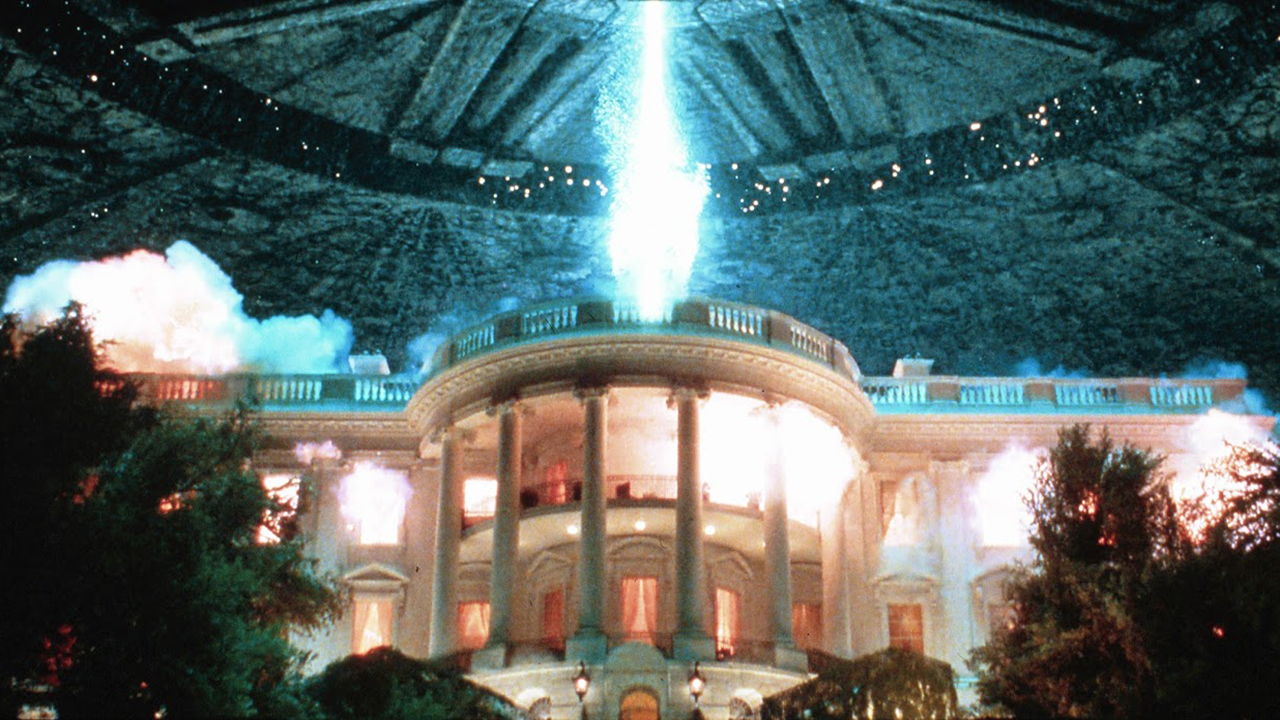
Director Roland Emmerich's genius, however, was reinventing Wells' sci-fi classic for the blockbuster age. His aliens had Hollywood in their blood, their entire plan built around delivering the perfect money shot. Let's be honest, there has to be a more practical way of flattening entire cities than blasting famous landmarks with a Death Star-scale super-lasers, but it wouldn't have been quite so popcorn- — or movie poster- — friendly.

(Image credit: 20th Century Studios)

Besides, nobody was going to believe that humanity's nemesis hailed from Mars after the Viking landers had sent back photos of a barren, dead world. Reinventing the aliens' origin story — as nomadic, resource-hungry scavengers — just made sense in the cynical '90s.

"The War of the Worlds" is cut from the same cloth as fellow genre pioneers "Frankenstein" and "Dracula" (the latter was, coincidentally, originally published the same year as Wells' alien invasion classic). Each story is so versatile that it can be reimagined again and again to reflect the hopes and fears of any time period. You can change a few names here and there — as "Nosferatu" famously did with Bram Stoker's vampire page-turner — but these plotlines have become archetypes within our collective consciousness.

(Image credit: 20th Century Studios)

More than a century later, we still can't get enough. They're also — to use that hoary old sci-fi/fantasy cliché — a brilliant way of pointing a mirror back at the time they were made.

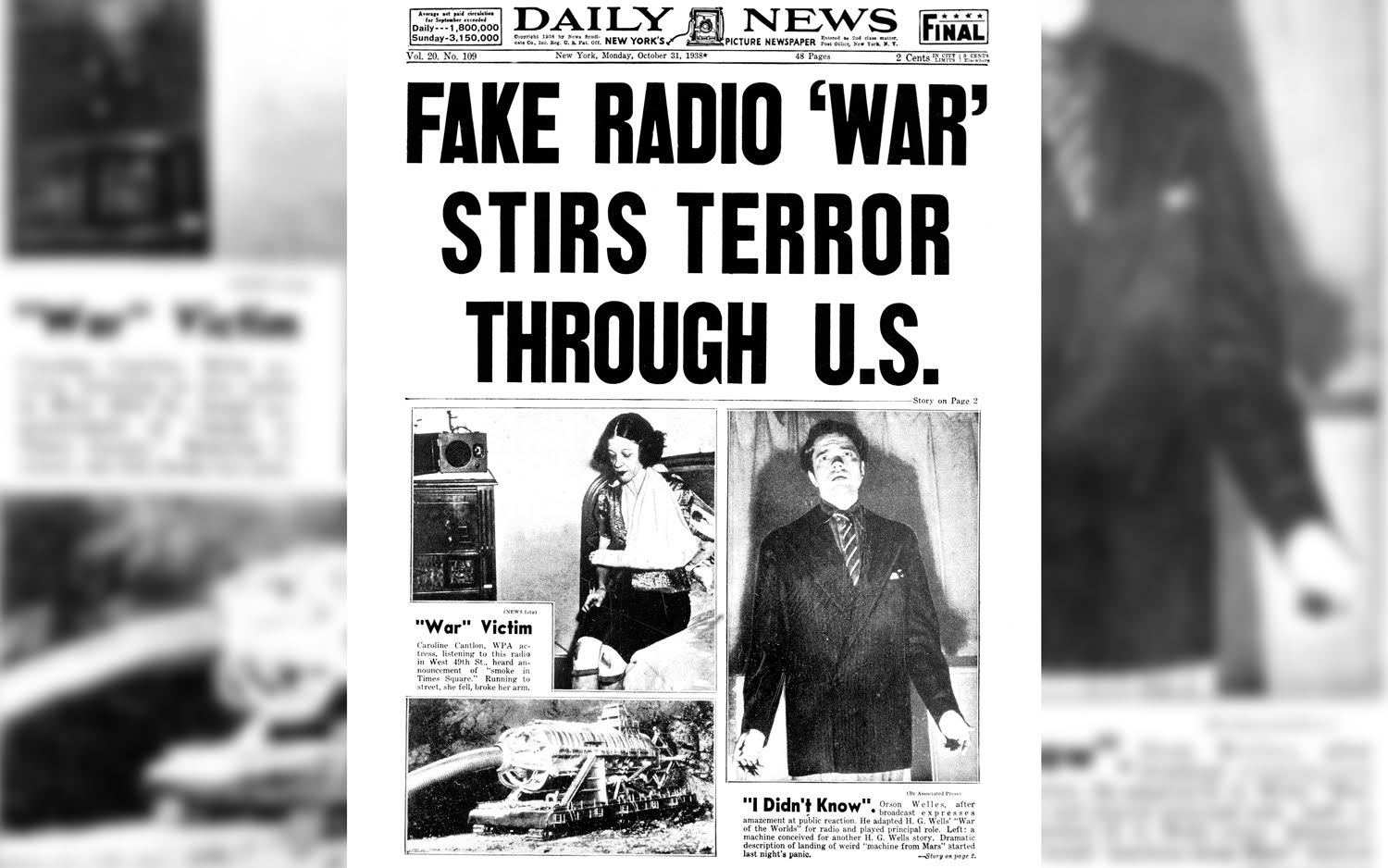
"The War of the Worlds" was less than 40 years old (and still in copyright) when a 20-something Orson Welles turned it into a radio drama in 1938. The cinematic immortality of "Citizen Kane" was still three years away when the Hollywood wunderkind went looking for a story to adapt as a fake newscast for Halloween.

Writer Howard Koch shifted the action from 19th-century London to contemporary New Jersey (coincidentally, also the location of Steven Spielberg's 2005 "War of the Worlds"), and the resulting broadcast became one of the most famous — and definitely most infamous — radio dramas in history. Indeed, it was so far ahead of its time that "Ghostwatch", the BBC's spooky primetime mockumentary, got itself into trouble for a similar, knowingly 'fake news' stunt over half a century later.

(Image credit: New York Daily News Archive/Getty)

Welles and co designed the adaptation to sound like a news bulletin — complete with weather reports and 'expert' analysis — as the aliens made their move on New York. And even though subsequent reports about the mass panic the broadcast generated in the real world were almost definitely exaggerated, some listeners who came to the show late really did believe that it was time to start welcoming their Martian overlords.

Welles' "War of the Worlds" was perfectly timed to capitalize on fears about the escalating threat of war in Europe. But the first blockbuster movie adaptation arrived in a very different political climate, when the Cold War was driving fears about the rise of communism and the threat of nuclear war.

When the Martians attack in George Pal's 1953 movie, the US army — unsurprisingly — drop an atomic bomb on their invasion fleet, but they're left unscathed thanks to their powerful forcefields. A powerful statement about the pointlessness of nuclear war, or simply an excuse to keep the story's common cold conclusion intact?

(Image credit: Paramount Pictures)

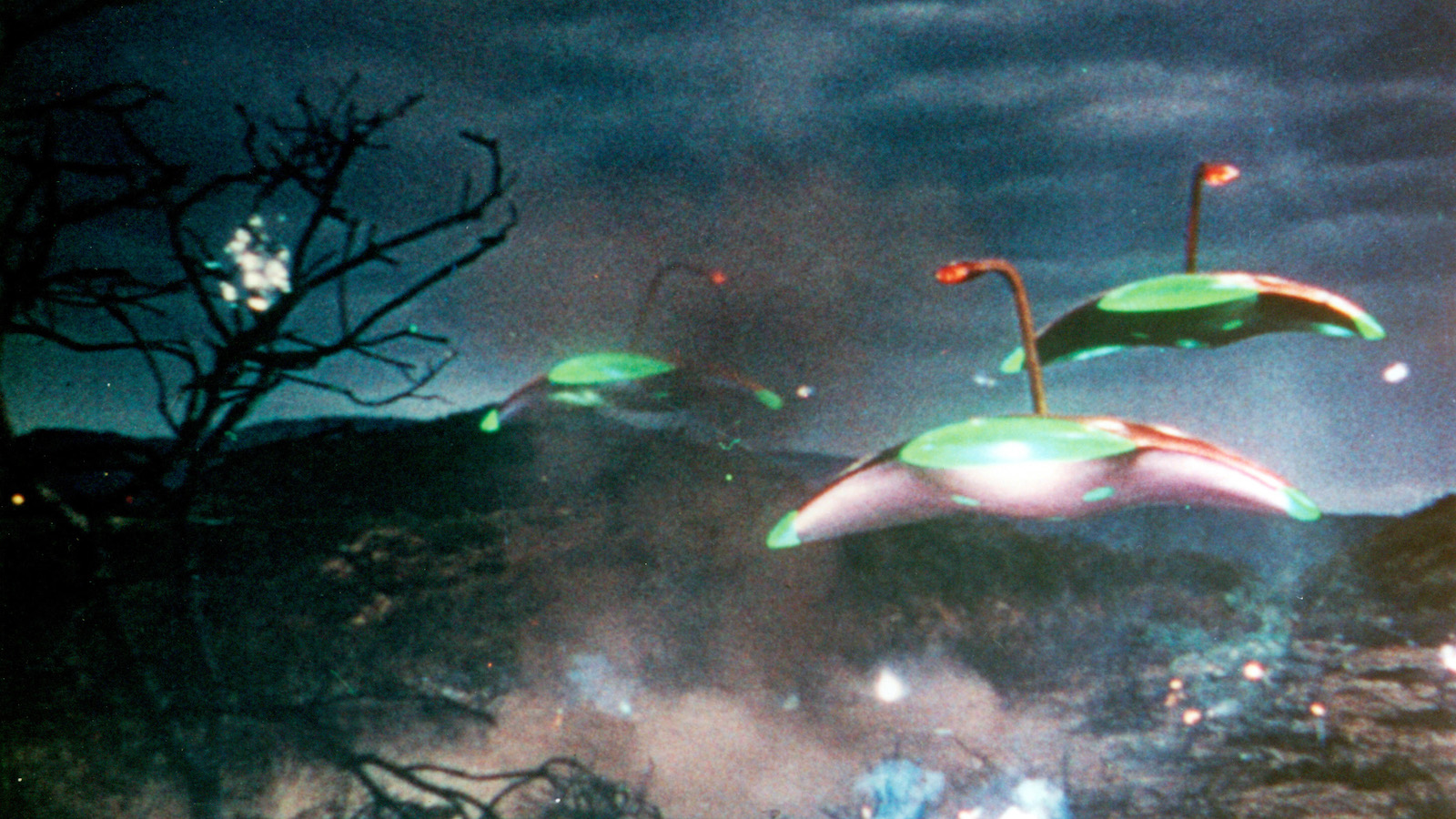
The movie is probably more important, however, as a precursor of the sci-fi blockbusters that would follow. Filmed in Technicolor, its visual effects were truly groundbreaking, as the movie imagined alien terrors that, before then, had only been possible on the page or on radio.

Anyone who's read the original book will note that Pal's floating Martian war machines don't quite match Wells' tripods, though the movie does subtly point out that — despite appearances — they're actually walking on invisible forcefield legs. Yes, really…

Wells' story got an unlikely new lease of life in the late 1970s when an American composer made a concept album that found its way into millions of record collections in the UK.

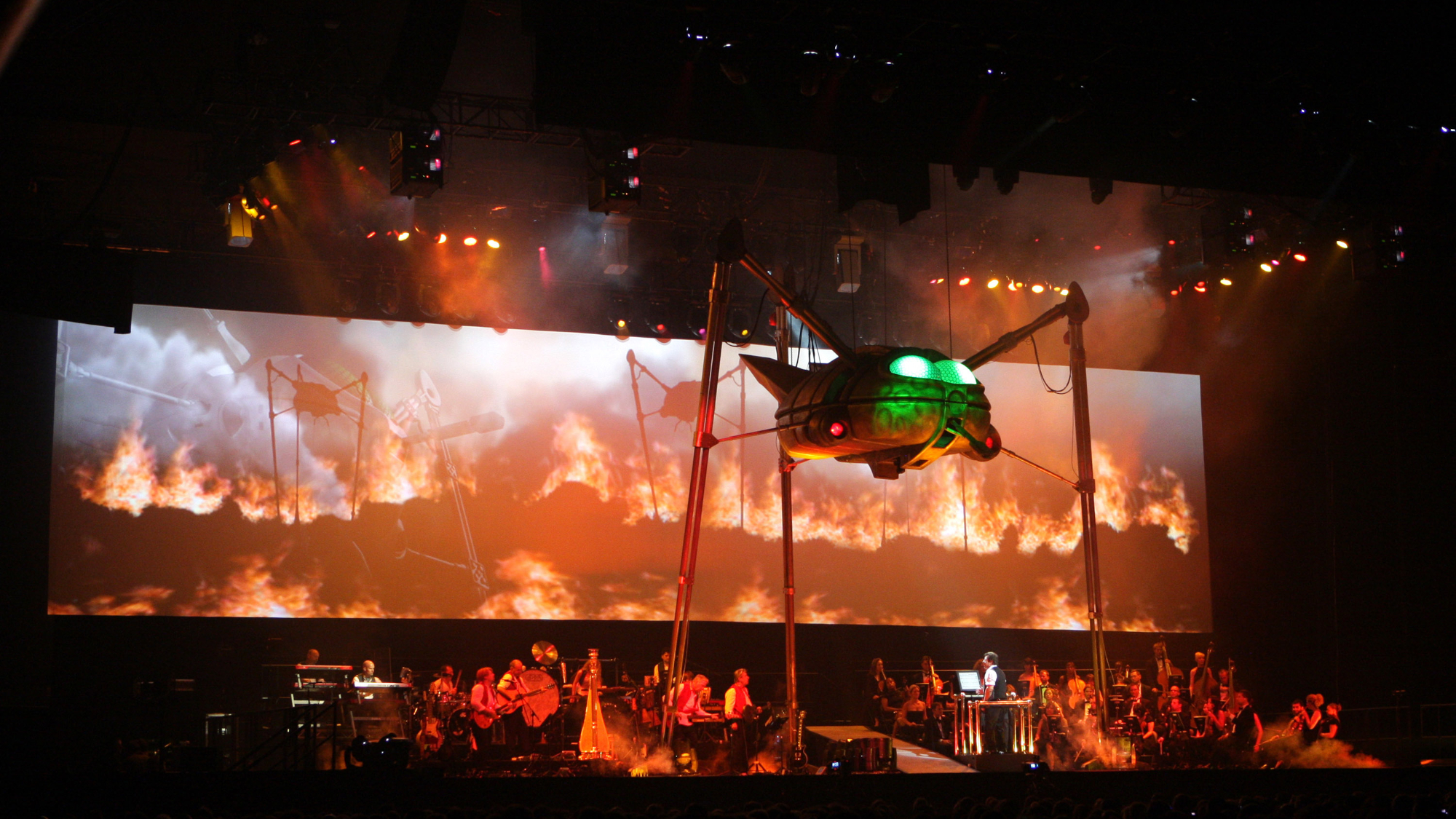
The snappily titled "Jeff Wayne's Musical Version of the War of the Worlds" reimagined the alien invasion as a prog rock opus, with Richard Burton as the journalist recounting the story, and '70s music stars Justin Hayward, David Essex, Phil Lynott (Thin Lizzy) and Julie Covington (who'd had a number one with "Don't Cry for Me Argentina") popping up on the soundtrack. Nearly 50 years later, Wayne is still touring his masterwork, finding new stage effects and guest stars (Liam Neeson has replaced Burton in later versions) to bring the invasion to life.

(Image credit: Getty Images (Mark Venema))

But even though the names were changed, "Independence Day" may just be the "War of the Worlds" that's had the biggest cultural impact of all. It was everywhere in 1996, with its superlative marketing campaign propelling it to the top of that year's box office chart. It was 1996's "Jurassic Park", the sci-fi epic that everybody went to see.

It arguably changed the rules of engagement for subsequent adaptations of Wells' novel, as any set-pieces featuring flying saucers flattening cities would now be judged against Emmerich's highly lucrative carnage. Spielberg's "War of the Worlds", released nearly a decade later, wisely took a very different route, keeping Wells' tripods and noxious red weed, and loading the invasion with powerful post-9/11 subtext.

In 2019, the BBC went down a path it had with many classic novels and adapted "The War of the Worlds" as a three-part period piece. The same year, another, longer-running TV version focused on the story of survivors after an alien apocalypse that had wiped out most of the Earth's population.

(Image credit: Paramount Pictures)

And then, in 2025, Wells' text finally met its match in the universally panned version that pitted a desk-bound Ice Cube against invaders who want us for our data. This was a "War of the Worlds" for the digital age, built on sledgehammer-subtle allegories for privacy and surveillance.

It wasn't the sci-fi classic's finest hour, but it did at least continue to prove the remarkable malleability of a 129-year-old novel. Like "Independence Day," it wasn't Wells' "War of the Worlds", but it also was, all at the same time.

"Independence Day" is on Disney+ in the US and UK.

Watch Independence Day on Disney+:
Disney+ (With Ads): $11.99/month
Disney+ Premium (No Ads): $18.99/month or $189.99/year

As ‘Terminator 2: Judgment Day’ turns 35, it’s time to accept the truth: Terminator shouldn’t be back

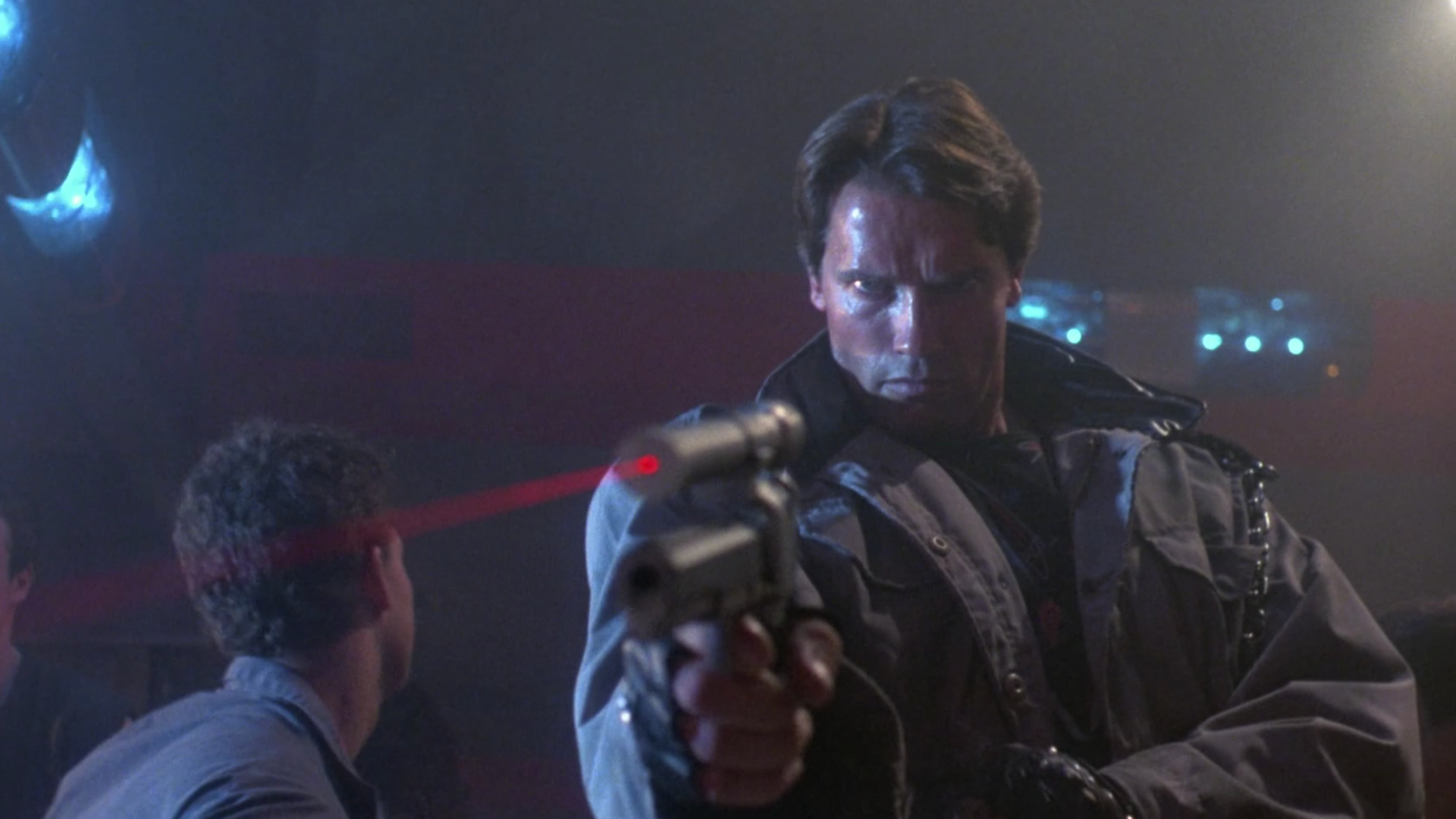
For a franchise where the main hook is time travel, "Terminator" probably wishes it could take us back in time… or just borrow the neuralyzer from "Men in Black" to wipe everybody's mind after everything post-1991. Now, as "Terminator 2: Judgment Day" turns 35 this month, we think it's time to call it: Terminator shouldn't be back.

The decline of the "Terminator" franchise might be one of the greatest falls from grace ever seen in cinema. The first two movies established themselves as genre classics, combining heart-stopping action with futuristic sci-fi that explored the threat of AI bringing about an apocalypse.

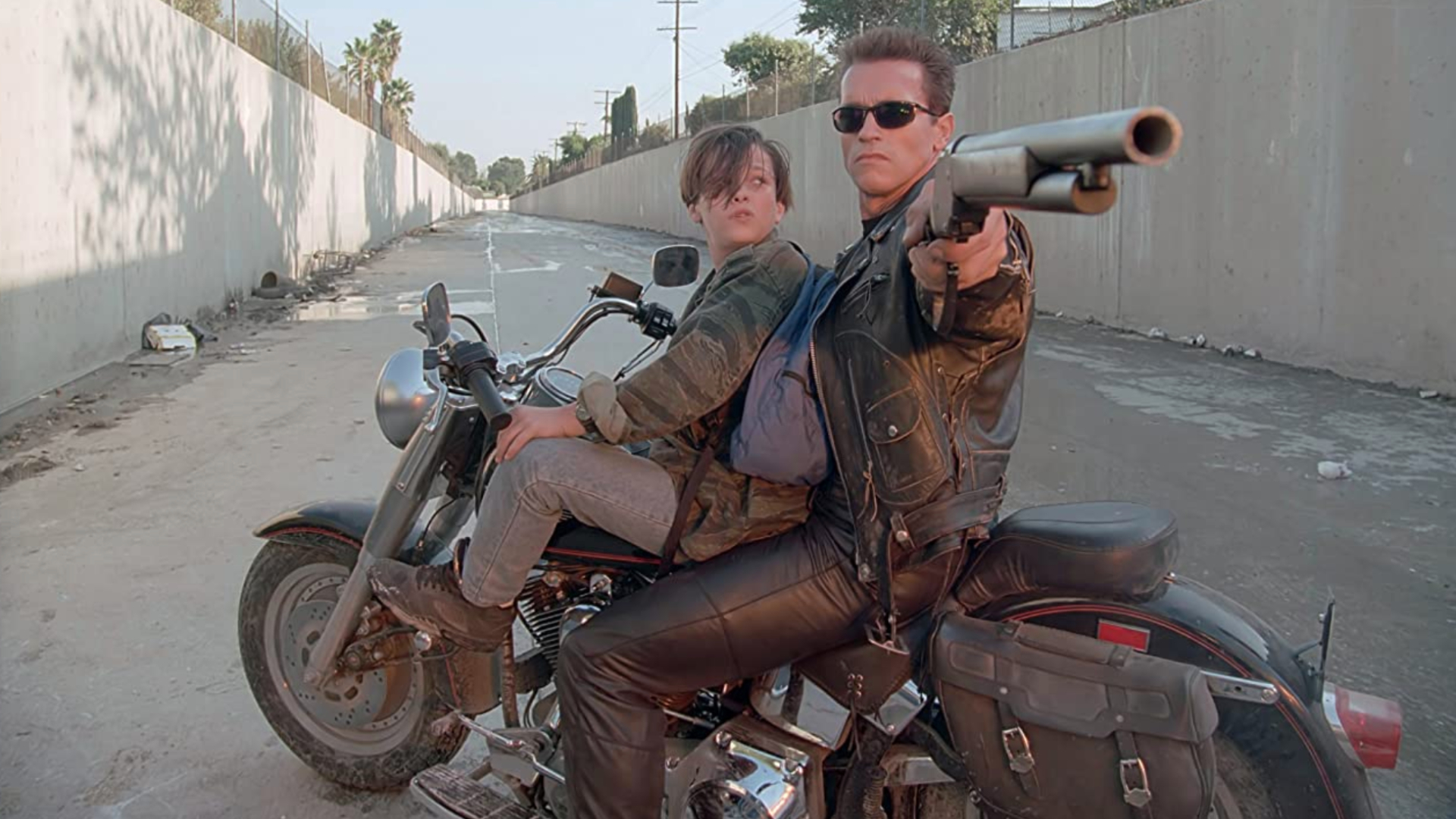
No one could get enough of the concept, with several clones such as Jean-Claude Van Damme's "Universal Soldier" and Mario Van Peebles' "Solo" copying James Cameron's homework and trying to ride its coattails. In the end, none of them were fit to lick the boots of Arnold Schwarzenegger's T-800. And as it turns out, neither were any of the subsequent Terminator sequels that followed.

1991's "Terminator 2: Judgment Day" is one of the best sequels of all time, but it also wraps up the story perfectly in retrospect. It nearly ended there, too, as the franchise sat in limbo for the next decade, buried in legal battles and rights disputes.

Cameron had plans for a third film, but he moved on to create "Avatar", leaving "Terminator 3: Rise of the Machines" to blast into theatres in 2003 without him. Is it an awful film? No, but it fails to do or say anything new. It's "a rusted robot compared to the first two films", as a fan referred to it in a Rotten Tomatoes review.

(Image credit: Carolco Pictures)

A TV series titled "Terminator: The Sarah Connor Chronicles" debuted in 2008. It ignores the events of the last movie, as Sarah Connor (Lena Headey) and her son, John (Thomas Dekker), continue to do everything in their power to stop the creation of Skynet. An interesting and alternate continuation of the story, but no one really watched the show, resulting in a quick pull of the plug after two seasons.

From there, the franchise shot forward into the future in 2009's "Terminator Salvation". Despite Christian Bale's spirited performance as John Connor, including an infamous leaked behind-the-scenes rant, there's no salvation to be found here – only the damnation of a soulless story and deliberate nostalgia-bait. And the less said about 2015's reboot-but-not-a-reboot "Terminator Genisys", the better.

(Image credit: Cinema '84)

Then, 2019's "Terminator: Dark Fate" arrived. Out of all the sequels, this is likely the best of the lot, as it attempts to inject fresh blood into the franchise, but it's still hamstrung by hanging onto the narrative threads of the past. The decision to kill John Connor is daft to the nth degree, effectively nullifying the entire point of the series. But the worst part about "Terminator: Dark Fate" wasn't the middling reviews or online hullabaloo about John; it was how it tanked at the box office. It's the lowest-performing "Terminator" sequel – all but killing the chances of more movies for at least the immediate future.

So, what did the franchise do? It pivoted. The murder bots headed back to the comics and video game arena, while an anime show, "Terminator Zero" arrived on streaming in 2024. Maybe the audience changed, so the franchise needed to change along with it? Well, about that…

In February 2026, news broke that Netflix had cancelled "Terminator Zero". It's a cruel move, especially since the Mattson Tomlin-created show attempted to do something different by telling a Terminator story that isn't about John Connor.

It's set in Japan and follows Malcolm Lee (voiced by André Holland), who attempts to stop the rise of Skynet by creating his own AI named Kokoro. The series isn't afraid of having tough discussions about humanity and if we're fated to destroy ourselves, no matter how many times someone tries to prevent it by changing the course of history. Should we even be saved from ourselves?

"Terminator Zero" proves to be a breath of fresh air, keeping the John Connor chronicles out of the picture and introducing new characters to propel the action forward. It's the shot in the arm that the franchise desperately needed; the core themes of Cameron's two movies are still in check, but the additional layers help to evolve and widen the landscape of the story. This is something the fandom had been calling out for many times before in the years prior. Yet, when originality finally arrived in the form of "Terminator Zero", the amount of eyeballs on the series didn't justify Netflix's continued investment in it.

If it wasn't clear before, it is now. The return of both Schwarzenegger and Linda Hamilton didn't make an iota of a difference in "Terminator: Dark Fate", while the decision to go in a bold new direction with the anime series hardly made a splash. The general public has lost interest in "Terminator" – and there's no coming back from it. No amount of time-traveling expeditions to reboot or create alternate timelines can save it now, because it's been done to the point of overkill.

(Image credit: Twentieth Century Fox)

It's not just that the movies failed to change with the times, though… we've changed. The "Terminator" movies are a warning about the dangers of technology and AI. The problem with watching it now is that it doesn't feel like fiction anymore. As the irresponsible use of AI escalates and an OpenAI smart model has already refused to follow instructions, Cameron's nightmare is turning into reality. Will ChatGPT be building humanoid robots to hunt us down in 50 years time? Probably not. Reality tends to offer less stylish and cinematic ends for its protagonists.

In August 2025, Cameron admitted that he's struggling to write a new "Terminator" film for this very reason. "I'm tasked with writing a new 'Terminator' story," he said. "I've been unable to get started on that very far because I don't know what to say that won't be overtaken by real events. We are living in a science fiction age right now.”

Despite this, Cameron confirmed that he's working on a new Terminator script — this time sans Schwarzenegger — in a December 2025 interview with The Hollywood Reporter. "It's time for a new generation of characters," said Cameron. "There needs to be a broader interpretation of Terminator and the idea of a time war and super intelligence. I want to do new stuff that people aren't imagining".

Terminator 2 Judgment Day_thumbs up_Carolco Pictures

(Image credit: Carolco Pictures)

And so we're destined to do this dance once more. Kyle Reese warned us as much in the original. "It absolutely will not stop... ever, until you are dead!" We thought he was talking about the T-800, but maybe what he was really warning us about was the dark fate of this iconic movie franchise.

The harsh truth is that every good story needs to know when to end. The obsession with turning everything into a franchise and extending it until it's limping along and slack-jawed needs to be curbed. Not everything needs to go on for all eternity. Look at "Back to the Future" as a prime example; despite repeated calls for "Back to the Future Part IV", Robert Zemeckis and Bob Gale have rejected it. Consequently, the legacy of "Back to the Future" seems far more secure than "Terminator's" in the modern era, because they know the story's done.

Schwarzenegger's T-800 famously said, "I'll be back," and he kept his promise for over three decades. This time, though, it's time for him to stay gone.